You’ve got the breakthrough product that could change everything. Maybe it’s a revolutionary gear housing that solves an industry-wide problem. Maybe it’s a sleek, modern bottle opener that reinvents a timeless tool. Whatever your innovation, you’re ready to move from concept to prototype, and you need it done right, done fast, and done within budget.
Now comes the critical decision that could make or break your project’s success. CNC machining and 3D printing both promise to transform your digital design into a physical reality, but they couldn’t be more different in their approach, costs, and capabilities. One offers unmatched precision and durability, while the other delivers speed and design flexibility. The choice you make here will determine not just your prototype quality and timeline, but your entire project’s trajectory. Because getting it wrong doesn’t just drain your budget, but it kills momentum, erodes stakeholder confidence, and can derail even the most promising innovations before they ever reach the market.
If you want to know more, for your project or firm, the leading agency Cad Crowd, is the best choice for you. They have 94,000 experts and professionals you can choose from at a very reasonable price with excellent service.
🚀 Table of contents
Difference between CNC vs. 3D printing
Let’s count costs, but before that, let’s make one thing clear: CNC machining design and 3D printing design aren’t two iterations of the same animal. They’re two distinct monsters in the realm of manufacturing, each with their own flair, positives, and attitude.
CNC machining? That’s the classic heavyweight titleholder. It’s a subtractive process, which means you start with a solid block of material, generally metal or plastic, then scrape away everything else that doesn’t fit. As a mission-focused sculptor, CNC machines are experts at precision cutting. Got something that requires heat, stress, or merely the tough demands of being out in industry? CNC’s your guy. And when tolerances must be tighter than last December’s holiday tight jeans, CNC is where it’s at.
3D printing is an additive manufacturing process, where rather than cutting things out, it adds your part piece by piece from the ground up, layer by layer. Whether spooled filament, liquid resin, or microscopic metal powder, 3D printers are masters of complexity. Want a prototype quickly? Need crazy-curved shapes and internal voids? 3D printing has that for breakfast. It’s perfect for rapid iterations, innovative designs, and tasks where speed and flexibility are more valuable than raw power.
RELATED: How 3D Printing for Rapid Manufacturing Is Pushing Boundaries at Product Design Services Firms
Both CNC and 3D printing are revolutionary. CNC provides muscle and accuracy; 3D printing provides imagination and quickness. Which one is correct? That’s entirely dependent on what you’re producing, how quickly you need it, and how much abuse your part will endure. Understand the difference, and you’re already halfway to making the intelligent (and budget-friendly) decision.
The cost breakdown: it’s not always what you think
Let’s speak in numbers, because when you’re dealing with prototyping or small-batch production, what you believe an item will cost and what it really costs can be two completely disparate tales. CNC machining, for example, will make your wallet quiver at first sight. That is because CNC takes a lot of setup before the first part itself is cut. You have CAM (Computer-Aided Manufacturing) programming, tooling, and fixturing services to keep you awake. It’s an entire production just to clamp down on your raw material. So, if you are placing a single aluminum prototype order, don’t be surprised to pay anywhere between $75 and $300. Ouch, isn’t it?
RELATED: Benefits of Outsourcing CNC Machining Services for Your Company’s Prototype Design
Enter 3D printing as a cost-effective hero now. There’s almost no setup fee. You’ve got your electronic file, you choose your material, and you’re racing off. Need simple thermoplastic component services? You could have it done for as little as $20 to $60, and less if it’s a small or hollow design.
But here’s the twist: CNC machining begins to excel with volume. The more you increase the products from 50 or 100 pieces, the setup fees are amortized. That $300 in tooling is now just a few dollars per piece, and CNC’s unit cost falls dramatically. With 3D printing, however, how many pieces you’re printing is irrelevant. The unit cost remains roughly the same, so it’s not very good for scaling.
So what’s the real takeaway? If you’re prototyping or making just a few units, 3D printing often wins on price. But for higher-volume production runs, CNC can sneak up and steal the cost-efficiency crown. It all depends on your goals and your quantities.
| Manufacturing Service | Hourly Rate | Per Project |
|---|---|---|
| 3D Printing | $2–$15 | $20–$150 per item |
| CNC Machining | $40–$150 | $75–$500 per item |
RELATED: The Advantages and Disadvantages of CNC Machining for Prototype Design
In the early stages, your concept is rarely perfect right out of the gate. You’ll tweak it. Then tweak it again and again. This is where 3D printing services become the MVP of prototyping without fanfare. Why? Because altering a design is as easy as revising a digital file. No production overhaul required. You send it to “print” before you head out for the day, and by the time you return to the office with your coffee cup in hand, the new prototype is ready to test. You can make another alteration before lunch and keep that creative momentum going.
Now compare that to CNC machining. Each design tweak usually means retooling, literally. You’ll have to reprogram the toolpaths, adjust the fixtures, and sometimes even swap out materials or cutting tools. It’s precise, yes, but every change adds time. And in this game, time is money.
But here’s the thing: whereas 3D printing excels at speed and adaptability, it may not always take home the endurance competition. If your working prototype has to endure high stress, support heavy loads, or survive heat, those plastic prints may not cut it. That’s when CNC machining takes the lead. It might take longer to change direction, but when performance is paramount, CNC still reigns supreme.
RELATED: How to Design 3D Models for 3D Printing & New Prototypes
So what’s the lesson? In today’s world of prototyping, 3D printing allows you to go fast and repeat frequently. But when the piece has to be as durable as possible, CNC’s your ticket. Finding the right time to use each is the key to staying within budget and on deadline.
From CAD file to physical prototype overnight
Product development services follow a strategic prototyping journey that matches the right technology to each stage. In early development, when you need quick visual prototypes for investor presentations or stakeholder buy-in, 3D printing delivers overnight results from your CAD files. It handles complex geometries effortlessly and provides affordable proof-of-concept models that demonstrate form and fit without significant upfront investment.
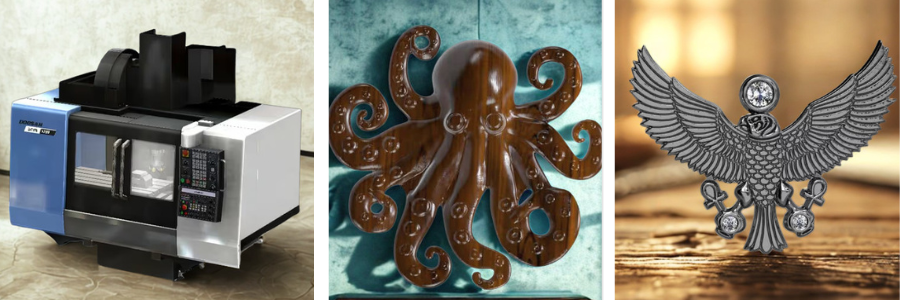
As your design matures and performance testing becomes critical, CNC machining takes over the prototyping process. Working with actual production materials like aluminum, stainless steel, or engineered plastics, CNC creates prototypes that can withstand real-world stress testing, temperature variations, and mechanical loads. This stage validates not just appearance but actual functionality, providing the performance data needed before moving to production. For small batch manufacturing and beta testing, CNC offers excellent per-unit economics with professional finish quality and tight tolerances.
The key to successful prototyping lies in understanding when each technology excels. When designs feature complex internal channels, organic shapes, or intricate geometries that challenge traditional machining, 3D printing returns as the optimal solution. It builds the most complex forms layer by layer without special tooling, setup costs, or geometry limitations. Rather than competing technologies, 3D printing and CNC machining work as complementary partners throughout the product lifecycle, ensuring faster time to market, reduced development costs, and more robust final products.
RELATED: 3D Printing Technologies for Modeling and Prototyping
The materials game
Let’s discuss materials, because when it comes to prototyping or production, your project’s success can depend on what it’s made of. Selecting the proper material isn’t just a checkbox, it can make or break your entire design.
CNC machining is the clear winner in terms of diversity. Imagine a buffet of metal and plastic: aluminum, brass, stainless steel, titanium; name it. You can even opt for carbon fiber-reinforced nylon if you want to get fancy. And the best part? You’re working with real-world materials, so you can test your design in the real world. Will it bend? Will it break? CNC provides you with real answers, not approximations.
On the other side of the ring, we’ve got 3D printing. And yes, it’s come a long way. Entry-level FDM printers work with familiar thermoplastics like PLA, ABS, PETG, and nylon. SLA printers offer amazing surface finishes, though their resins tend to be more fragile. Step up to industrial 3D printing like SLS (Selective Laser Sintering) or MJF (Multi Jet Fusion), and you’ll get stronger, more usable parts. Metal 3D printing design is also a thing, and it’s jaw-droppingly cool but be warned: it’ll burn through your budget fast.
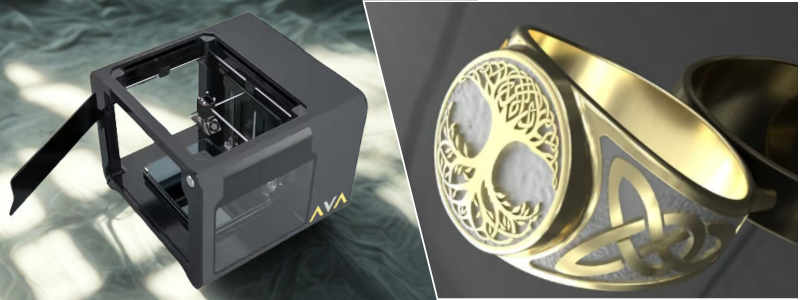
Here’s the bottom line: if you’re building a complex internal structure that would make a machinist cry, metal 3D printing might be worth it. But if your goal is to create a strong, functional metal bracket or housing? CNC is still the smarter, faster, and more cost-effective option.
In the game of materials, it’s not only what you can do, it’s also about what you can afford. Pick wisely.
Post-processing and finishing
Now let’s discuss a cost that enjoys catching you off guard: post-processing and finishing. It’s not the most glamorous aspect of production, but if you neglect it, it will creepily eat into your wallet. Let’s say you’ve just 3D printed a prototype. Awesome, right? Wait, before you can put it to any kind of useful work, you’re not really finished. That raw part could require support structure removal, sanding, curing, or coating for strength or cosmetic purposes. And if you’re getting ready to shoot some product photos or make an investor presentation, you’ll likely want it to be showroom material. That kind of polish isn’t quick work, nor easy work, and often requires other materials or tools. Translation: more money.
And what about CNC-machined parts services? They tend to look much cleaner coming off the machine than their 3D-printed equivalents. But even so, there are usually deburred edges, surface finish, or anodizing to factor in, if the part is going to be handled by a client, at least. That smooth, professional finish you’re expecting? It doesn’t magically occur. Incorporate it into your budget upfront, even if you’re only prototyping. The time you invest in polishing and refining could very well be the difference between something that “works” and something that really blows away. Precision Matters- So Does Purpose!
Let’s cut to the chase, if your design depends on sheer precision, CNC machining remains the champion. This is no marketing rhetoric. We’re speaking of tolerances as tight as ±0.001 inches or tighter. That’s the accuracy you require when parts need to fit each other exactly, as in mechanical assemblies, sliding parts, or press-fit components that cannot risk shifting.
Yes, 3D printing is catching up and some high-end printers are surprisingly precise, but your typical print will fall somewhere in the range of ±0.005 to 0.01 inches. That’s fine for a rapid concept model or a snap-fit plastic enclosure. But if you’re making a part for a jet engine or a medical device, “good enough” won’t do.
RELATED: 3D Printing Technologies for Modeling and Prototyping
So, how do you decide? It all depends on your purpose. If you are at the early stage of prototyping design and only require something tangible to hold in your hand or present to the team, 3D printing is quick, adaptable, and affordable. You can experiment rapidly and check form and fit without burning through your budget.
But when you’re beyond the napkin sketch and require actual, testable, engineering-grade parts? CNC is your best bet. You’ll have the accuracy, ruggedness, and material selection that high-performance components require. Long story short, each tool has its application. The key is recognizing which phase you’re at and what your design really requires. Because in product development, precision is important. But so is purpose.
The freelancer factor: getting help on Cad Crowd
Now here’s the good news, you don’t have to do it all alone. If you’re not sure whether your prototype would be better suited to be 3D printed or CNC machined, Cad Crowd’s got you covered. Seriously. You’ve got choices, and more importantly, you’ve got specialists who know just how to assist.
RELATED: How to Improve Product Development For Your Company with Engineering Firms & Design Consultants
Need CAD files design perfectly optimized for CNC machining? No sweat. Need a designer familiar with the nitty-gritty of SLS printing and how to modify your model in response? No big deal. Need someone to do the actual printing or machining so you can work on the grand scheme? Done and done.
Cad Crowd makes it ridiculously simple to reach out to seasoned designers and engineers who’ve done it all and who can assist you with striking the right balance of quality, budget, and tight deadlines without sweating a drop. If you’re still brainstorming or you already have a prototype that only requires a little tweaking, Cad Crowd has someone who can take your concept and get it moving in the right direction. It’s like having your own dream product development team, waiting to pounce when you need them most. So smart build, don’t hard build.
Final takeaway: use the right tool for the right job
The choice between CNC machining and 3D printing isn’t about finding a winner, it’s about selecting the right tool for your specific stage of development. 3D printing excels in early prototyping with its speed, flexibility, and low setup costs, making it perfect for rapid iterations and complex geometries. CNC machining dominates when precision, durability, and real-world materials are critical for functional testing and production-ready parts. Smart product developers leverage both technologies strategically throughout their development cycle, using 3D printing for concept validation and CNC for performance testing. The true cost of precision lies not just in dollars, but in making informed decisions that accelerate your path to market success.
RELATED: How CAD Modernizes Product Concept Design at Industrial Design Services Companies
Ready to build your perfect prototype: Cad Crowd can help
Stop second-guessing your manufacturing choices and start building with confidence. Whether you need rapid 3D printing for early concepts or precision CNC machining for functional testing, expert help is just a click away. Connect with experienced professionals who understand exactly when and how to use each technology for maximum impact. Contact Cad Crowd today for your free quote and transform your ideas into reality; smartly and efficiently.