One of Meta’s Offices Was Briefly Overtaken by a Rogue Squirrel


Meta’s year so far hasn’t exactly been a picnic. But that didn’t stop one nut-loving creature from seeking some joy inside one of the company’s offices this week.

A squirrel apparently got loose inside a building in Bangkok, Thailand, where some of the tech giant’s regional teams are based. The critter spent at least 20 minutes darting past staff, according to an internal memo seen by WIRED. It noted that the squirrel minorly injured a janitor before finally being caught.

The rodent’s adventure in the office—while potentially terrifying to some—brought a moment of levity to Meta staff around the world who have been dispirited by recent restructurings, mass layoffs, and the launch of an initiative to train AI using employee data without their initial consent. Meta executives have acknowledged the current morale crisis and begun trying to lift the mood internally by funding boozy social outings and promising to improve office food, according to current employees and an internal memo.

In recent years, some Meta workers have complained about losing access to healthy office snacks, like nuts, which they said had been replaced with less nutritious options such as chips. Whether the animal marauder in Bangkok found anything to its liking couldn’t be learned.

The squirrel was delivered to the office inside a package, but it ended up escaping, according to the internal memo. A janitor from a cleaning company accepted the delivery. The reasoning behind the squirrel’s delivery and where it now resides weren’t mentioned in the memo, but some people keep the animals as pets or eat their meat.

Meta declined to comment on the incident.

The injured worker, who was scratched on the finger, received first aid and was later taken to the hospital for a medical examination, according to the memo. The janitor “responsible for bringing the animal onto the premises” formally acknowledged their misconduct and committed to adhering to office regulations to ensure “such an incident does not recur,” the memo added.

New York Times journalist Mike Isaac first reported the incident in a social media post on Tuesday, without specifying the location or the janitor’s role. “Employees are predictably having a field day with it internally,” he wrote. “One person created an AI-generated video mimicking an HR training course on squirrel-related office best practices.”

Squirrels looking for a suitable home in Meta’s empire might find better luck invading Hawaii, where CEO Mark Zuckerberg’s personal cattle dine on home-brewed beer and macadamia nuts.

Additional reporting by Lauren Goode.
No One Knows How Far Bird Flu Has Spread


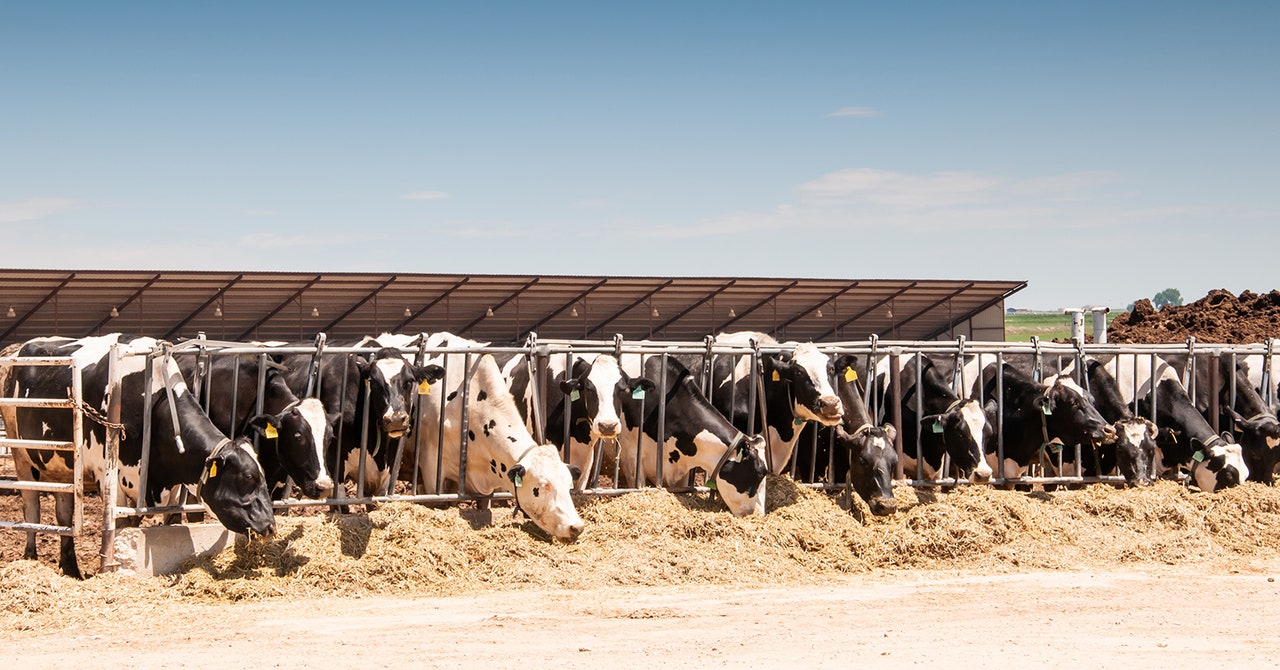
In late March, the US Department of Agriculture (USDA) announced it had detected cases of bird flu in dairy cattle. Initially discovered in dairy farms in Texas, Kansas, and New Mexico, there are now 36 confirmed outbreaks in dairy herds in nine states.

Although the H5N1 virus circulates widely in wild birds, it is now circulating among dairy cattle in the US. The USDA has confirmed transmission between cows in the same herd, from cows to birds, and between different dairy cattle herds.

But the reported outbreaks are likely to be a major underestimation of the true spread of the virus, says James Wood, head of veterinary medicine at the University of Cambridge. “It’s likely there is going to be a fair amount of underreporting and underdiagnosis,” he says.

Tests by the Food and Drug Administration (FDA) of retail milk samples might give some indication of how widespread the virus is. The agency found viral fragments in one in five samples of commercial milk, although this virus had been deactivated by pasteurization so was not infectious.

So far there is only one confirmed human infection in the outbreak: someone in Texas who had close contact with dairy cattle. Their only reported symptom was conjunctivitis, and the individual was told to isolate themselves and take an antiviral drug for flu. But anecdotal reports of illness on dairy farms hints that infections among humans may be more widespread than official data suggests. Although human infections have tended to be rare, the virus is dangerous—just over half of the human cases recorded by the World Health Organization over the past two decades have been fatal.

Dairy workers are most at risk of possible infection in the current outbreak, but understanding the extent of any infections is extremely tricky, says James Lawler, professor of infectious diseases at University of Nebraska Medical Center. More than half of workers in the US dairy industry are immigrants, and many of them are undocumented.

These undocumented workers are unlikely to want to put themselves at risk by coming for testing, Lawler says. “There’s an inherent disincentive that many of the workers, because of their status as undocumented immigrants, are not raising their hands.” The result, Lawler says, is that it’s difficult for scientists to track any possible spread of the virus through humans.

Another issue is incentivizing owners of dairy farms to report when their animals seem sick. The USDA Animal and Plant Health Inspection Service specifically provides payments for poultry farmers who have to kill their livestock due to bird flu infections. Dairy farmers don’t get compensated for reporting infections, which incentivizes producers to keep quiet, upping the risk that outbreaks get out of hand and spread to other cattle or farm workers.

This presents a major problem for tracking the spread of the disease. “From the perspective of a producer, how is it going to benefit them to share or even test and understand if there’s a virus circulating in their herd?” Lawler says.