Naukri exposed recruiter email addresses, researcher says


Naukri.com, a popular Indian employment website, has fixed a bug that exposed the email addresses of recruiters using its platform to search and hire talent online.

The issue, discovered by security researcher Lohith Gowda, affected the API that Naukri used on its Android and iOS apps. The API exposed the email addresses of recruiters visiting profiles of potential candidates on Naukri’s platform. The issue did not appear to affect the company’s website.

“The exposed recruiter email IDs can be used for targeted phishing attacks, and recruiters may receive excessive unsolicited emails and spam,” Gowda told TechCrunch.

He added that exposed email IDs could be added to public breach databases or spam lists, and mass email address scraping could lead to automated bot abuse or scams.

TechCrunch verified the exposure after the researcher shared details about the bug. The researcher confirmed to TechCrunch that the issue was fixed earlier this week, which Naukri corroborated on Friday.

“All identified enhancements are implemented, ensuring our systems remain updated and resilient,” Alok Vij, IT infrastructure head at Naukri’s parent company InfoEdge, told TechCrunch over email. “Our teams have not detected any usual activity that affects the integrity of user data.”

Founded in March 1997, Naukri.com is India’s top classified recruitment website, helping connect recruiters, employers, and job seekers. Apart from India, the site exists in the Middle East as Naukrigulf.com.

“Certain features of our recruiter profiles are designed to be public to enable users to know who has access to their profile(s). We conduct regular audits and security assessments,” said Vij.

Apple Watch shipments surge in India


Smartwatch shipments in India dipped annually for the first time in 2024, as consumers moved away from cheap, unknown brands. Apple bucked the broader trend, however, with a reported 2.4x growth for the year.

According to data from analyst firm Counterpoint, India’s smartwatch shipments dropped 30% year-on-year in 2024. Signs of slowing sales emerged last year, as the market was flooded with unknown brands. The trend aversely impacted established domestic players, slowing the pace of innovation as a result.

As the broader market faltered, Apple Watch saw a 141% increase in its shipments last year. That growth bucked a 57% decline for the company in 2023, according to Counterpoint.

Counterpoint senior analyst Anshika Jain told TechCrunch that the Apple Watch saw an uptick last year as, “some experienced users gradually moved to advanced smartwatches” for better health insights, smartphone integration, and other features absent on cheaper devices.

“We expect this growing trend to continue in 2025,” she added.

The growth in Apple Watch shipments aligns with the the iPhone’s expanding marketshare in the country. Apple emerged as one of the top-five smartphone vendors in India last year, with a roughly 10% share in in Q4.

However, Apple Watch’s sizable growth ultimately had little impact on its overall share of the 35 million smartwatches shipped in India last year, according to IDC. Counterpoint, which does not share absolute shipment figures, told TechCrunch that the Apple Watch comprised roughly 2% of India’s entire smartwatch market in 2024.

Apple Watch’s success boosted overall premium smartwatch (priced above $230) shipments in India, with 147% growth. The Series 10 was the top model, followed by the Series 9. The Apple Watch cumulatively captured 50% of the total premium smartwatch segment in the country, per Counterpoint.

Samsung and OnePlus were the other top players in the premium segment last year, with a 4% and 1% market share, respectively.

The DOJ wants a Perplexity executive to testify in its Google antitrust case


A U.S. court ruled in August that Google has a search monopoly, and while Google appeals, the Justice Department is figuring out what kind of potential penalties to impose — like breaking off Chrome

As part of this process, the DOJ wants to call on a specific witness, according to a recent court filing: Dmitry Shevelenko, chief business officer of Perplexity, an AI search provider most recently valued at $9 billion, per Reuters.  

Perplexity and other generative AI tools like OpenAI’s ChatGPT Search have emerged as a potential replacement for searching the internet, as they can offer direct answers to complicated queries (albeit, sometimes with made-up or inaccurate information). Google has responded to the threat with its own AI search tools, such as AI Overviews, which provide AI-generated answers above search results.

The DOJ wants to ask Shevelenko about “generative AI’s relationship with Search Access Points, distribution, barriers to entry and expansion, and data sharing.”

“Search access points” is a term the DOJ uses to describe things like Google Chrome — places where people go to search the internet.

While the filing doesn’t spell out exactly why the DOJ wants to ask Perplexity about these topics, it could help its argument that Google monopolizes the search business and closes out potential competitors, and thus deserves stronger penalties. 

TechCrunch asked Perplexity whether it has agreed to have its executive testify and for its thoughts on the antitrust case. Perplexity didn’t respond immediately to a request for comment, and neither did Google. 

Perplexity is effectively caught in the middle of the dispute, as both sides want information from it that could help their cases. Google subpoenaed Perplexity in October for company documents to make its own case that it has viable competition in the search field. (Google subpoenaed Microsoft and OpenAI as well.)

However, Perplexity has yet to provide “a single document” to Google as of December 11, the tech giant lamented in a court filing, claiming that there is “no conceivable justification for further delay” after two months of waiting.

For its part, Perplexity says in the filing that it has already agreed to fulfill 12 out of Google’s 14 document requests but is “still evaluating the burden associated with collecting such a potentially expansive universe of documents.”

Perplexity also says that while it has agreed to provide copies of licensing agreements “related to AI training,” Google wants all of Perplexity’s licensing agreements and that it has asked Google to “meet and confer” about this. 

Buddy.ai is using AI and gaming to help children learn English as a second language


In 2014, Ivan Crewkov moved his family from Serbia to the U.S. as his startup, Cubic.AI, was preparing to launch a Kickstarter campaign for its smart speaker. A week before the campaign was supposed to go live, Amazon launched its Echo smart speaker, rendering Cubic.AI essentially dead in the water.

“It was a disaster,” Crewkov told TechCrunch. “It made zero sense to compete with Amazon and Google; we ended up selling the company [two years later].”

But the experience wasn’t a total loss. Moving his family from Serbia to the U.S. meant putting his daughters, used to speaking Russian at home, into English-speaking schools. His eldest daughter started working with an online tutor, and when Crewkov realized that the tutor was reading scripted answers, the idea behind his next and current startup, Buddy.ai, was born.

“I just realized that we could probably create an AI character that would do the same things if lessons are scripted,” Crewkov said. “My daughter struggled; she was our first tester and our first user.”

Buddy.ai is an animated, multimodal, conversational character tutor meant to help children learn English as a second language. The company works as a subscription app that consumers can download. The company has also started working with schools in countries like Brazil as well.

Crewkov said that despite their background working in voice-based AI, it was challenging to get the business off the ground. When they started, they thought they would be able to get the product to market within six months, a goal Crewkov now refers to as “naive.” Instead, it took years.

Because the product is aimed at children, the company had to navigate the Children Online Privacy Act (COPA) and similar laws in other countries. Plus, it’s a tough problem to crack. The AI had to be trained not just to understand human voice, but understand children’s voices speaking in languages they didn’t fully know yet.

“We are trying to understand a 4-year-old Brazilian girl who is trying to say her first words in English at the same time is a 4-year-old Arabic girl from Saudi Arabia,” Crewkov said. “Completely different accents and completely different languages. We just started collecting data in countries that there were no hardcore regulation like COPA and trained the first model on that data.”

But the company prevailed, and now seven years later the company is approaching 55 million downloads and works with more than 22 million students annually.

Buddy.ai just raised a $11 million seed round led by BITKRAFT Ventures with participation from One Way Ventures, J Ventures, and Point72 Ventures, among others.

Crewkov said that fundraising for Buddy.ai was tough from the beginning, and despite the rise of interest in AI, this round was still a slog. He said they spoke to 186 investors to close this seed round. BITKRAFT just happened to be the second firm they spoke to, and Crewkov said that they were the perfect fit for what his company was doing.

“We were specifically interested in finding a fund with expertise in the gaming field and that’s why we are so in love with BITKRAFT,” Crewkov said. “Children treat Buddy as a game. A fun fact is most of the downloads are actually made by children who just want to play with buddy.”

The company plans to invest all of the capital into product development. Crewkov said that despite the company’s age and traction, thus far he considers the tech to be pretty underdeveloped. Buddy.ai plans to hire a head of game design and a head of UX design with this latest round.

Crewkov added that a big push for the company is to add on more languages and continue to build out its relationships with schools.

Buddy.ai is not the only company looking to use AI characters to help people practice a new language. Univerbal is another that has raised $2 million in venture capital. Loora has raised $21.3 million. Buddy.ai’s approach of focusing on children learning English as a second language helps it stand out.

“We just believe that the future is hybrid where AI tutors and AI agents can really help teachers,” Crewkov said. “You just need to provide a lot of practice, practice daily. We will never had enough teachers to do that, it’s the prefect applications to AI.”

Zepto eyes $100M from Indian offices in third funding in 6 months


Zepto is in advanced stages of talks to raise $100 million in new investment, its third in the last six months, as the leading Indian quick commerce startup looks to rope in more domestic investors, sources familiar with the talks told TechCrunch.

The Mumbai-headquartered startup, which delivers grocery items and office stationery to customers’ doorsteps in 10 minutes in multiple Indian cities, is raising the new investment from Indian family offices and high net worth individuals.

Motilal Oswal, the asset management giant that earlier invested $40 million in Zepto, is running the mandate for the new funding deliberation, the sources said, requesting anonymity as the matter is private. The financial services firm has already received commitments for more than half of the allocation, according to another source familiar with the situation.

The new investment values Zepto at a $5 billion post-money valuation, the same value at which it recently closed a $340 million financing round in August. Zepto has raised more than $1 billion in the last six months and all of it remains in its bank.

Zepto is planning to go public next year and the new fundraise is aimed at expanding the base of domestic investors on its cap table. Zepto counts Avra, Lightspeed, Nexus, StepStone Group, YC Continuity, Glade Brook and Contrary among its backers.

Even as quick commerce startups are retreating, consolidating or shutting down in many parts of the world, the model is showing encouraging signs in India. Quick commerce startups are on track to do a sale of more than $6 billion this year, according to TechCrunch’s analysis.

In response to the fast rise of quick commerce, which is increasingly shaping the consumer behavior in India, many e-commerce incumbents — including Flipkart, Myntra and Nykaa have been forced to scramble ways to lower the time they take to deliver items to their customers.

Shares of Dmart, which runs one of the largest brick-and-mortar retail chains in India, fell this week after the firm confirmed that it was losing some business to quick commerce startups.

“We believe Quick Commerce players are expanding cities, categories, SKUs, AOVs and discounts, and creating parallel commerce for convenience-seeking customers,” analysts at Morgan Stanley wrote in a note this week.

Zepto – which competes with Zomato-owned BlinkIt, Prosus-backed Swiggy’s Instamart, and Tata’s BigBasket – has grown its annualized net runrate considerably in recent months, according to sources and an internal document reviewed by TechCrunch.

Zepto co-founder and chief executive Aadit Palicha told a group of investors in August that the startup projects to grow at 150% in the next 12 months, TechCrunch earlier reported.

XP Health grabs $32M to bring employees more affordable vision care


Antonio Moraes, the grandson of a late prominent Brazilian billionaire, was never interested in joining the family-owned conglomerate of construction companies and a bank. Shortly after graduating from college, he founded one of Brazil’s first impact funds, which invested primarily in companies that made healthcare more accessible and affordable.

But while attending Stanford University, where Moraes received a master’s degree in business administration and healthcare policy, he realized that instead of investing in impactful companies, he wanted to start his own. 

As a part of an entrepreneurship class, Moraes and his co-founder, an engineering grad student, James Wong, visited multiple eyeglass manufacturing factories in China. They discovered that designer frames that sell for as much as $600 in the U.S. cost only about $10 to produce. “We thought there’s something very wrong with these markups,” Moraes told TechCrunch.

Because vision care and eyeglasses are expensive, many employees buy frames with their vision insurance, but the benefits typically don’t cover all the costs, Moraes said. “With vision insurance, people expect not to pay anything, but then they leave the optician’s office with a $300 out-of-pocket bill.” 

Moraes and Wong started XP Health in late 2018, but during the pandemic, they shifted the startup’s focus to a digital-first, AI-driven platform that offers employees eye exams and eyewear benefits at significantly lower costs than existing vision insurance plans. 

On Thursday, XP Health announced a $33.2 million Series B led by QED Investors with participation from Canvas Ventures, American Family Ventures, HC9 Ventures, Valor Capital Group and Manchester Story. The round comes less than two years after XP Health’s $17.1 million Series A. 

XP Health members who buy eyeglasses virtually can save as much as 69% off the retail price, Moraes said. The company claims not to mark up the frames or lenses sourced directly from factories in Asia. Instead, XP Health generates its revenue through recurring membership fees.  

“In many cases, our members pay $0 for a pair of high-quality designer frames with the best-in-class lenses, and for the eye exam as well,” Moraes said.  

XP Health’s AI-powered platform uses facial recognition to recommend glasses that fit the member’s style and face shape.  

Members can also buy glasses from physical eyewear retailers at a discount, but Moraes emphasized that a similar frame can cost as much as two to three times less if purchased from the company’s online platform.

Over the last two years, the company has expanded its business customer roster from 30 to over 3,000 business customers, including Docusign, Navistar, Chegg, and Sequoia Consulting, who offer XP Health as a benefit to their employees. XP Health also has formed strategic partnerships with insurance providers such as Guardian Life Insurance, which provides vision benefits to small businesses. 

Of course, XP Health is not the only company that’s taking out the middleman in eyewear. This is already a crowded market. Warby Parker sells directly to consumers as does Eyebuydirect, Firmoo, Pair Eyewear, and Zenni, to name a few other options. But Moraes claims XP Health is the only startup that’s taking on incumbent vision insurance providers, a market that’s dominated by VSP and EyeMed Vision Care. 

Yet, XP Health doesn’t consider itself to be an insurance company. That’s because what these companies offer is not insurance in a traditional sense. “There’s no real risk,” Moraes said. “It’s a corporate benefit.”

Hardware companies dominate a list of promising climate tech startups


What will it take for a startup to make a dent in climate change?

The most promising candidates tend to be hardware startups that have spent years developing and proving their technologies, according to a new report. Oh, and it helps to specialize in energy or raw materials.

The report, published by Congruent Ventures and Silicon Valley Bank, surveyed over 50 experts in academia, finance and private sector businesses to assemble a list that was then whittled down to 50 North American companies in four categories: agriculture and food, energy, buildings and mobility, and manufacturing and materials. 

The majority of the final 50 were manufacturing and materials startups (18), with energy startups not far behind (13). Agriculture and food were not well represented, despite the sector being responsible for about a third of carbon emissions, suggesting that the space still has plenty of room for new founders and investors. Nearly all of the startups focus on hardware, cutting against most generalist VC’s preference for software.

That promising climate tech startups are mostly hardware companies may not come as much of a surprise. Climate change is a real world problem. Software can only change so much about the way people interact with their physical world; if the hardware still relies on fossil fuels, then software can only nibble at the margins.

The average startup in the report is 7 years old and has raised $374 million. The latter figure is skewed by some particularly well-funded startups like Commonwealth Fusion Systems, Impossible Foods, Redwood Materials, Sila and TerraPower, which have each raised north of $1 billion. The median company is a bit different, though, having been founded six years ago and having raised $114 million.

The split between the mean and median is reflected in the fact that the majority of companies on the list sit on either side of the so-called commercialization valley of death. Early stage climate tech startups might be successful in proving their technology works, but when they move to commercialize it, the cost of a first-of-a-kind facility is often far greater than many investors are willing to stomach. In the Congruent/SVB report, 28% of companies have raised less than $50 million while the same proportion have raised over $500 million. In other words, if companies are successful in crossing the valley, investors often reward them for it.

It’s also unsurprising that the typical company on this list has been around for the better part of a decade. Early stage climate tech startups frequently have to prove the science that underpins them, a process that takes a while. After that, hardware can take years to build and refine. The end result is that climate tech startups can take longer to mature than classic software startups.

For investors who don’t specialize in climate, placing long, expensive bets on risky hardware startups can be a tough pill to swallow. But the potential upside is significant: A McKinsey partner recently noted that the market for climate tech is already $1 trillion and is expected to double every decade. As the specter of climate change looms, companies that have the best shot at reducing emissions could snag a significant portion of that market, and their investors stand to benefit.

With the Polestar 3 now “weeks” away, its CEO looks to make company “self-sustaining”


Thomas Ingenlath is having perhaps a little too much fun in his Polestar 3, silently rocketing away from stop signs and swinging through tightening bends, grinning like a man far younger than his 59 years of age.

“You really can push this car,” the Polestar CEO says as he cruises the roads alongside other enthusiasts near Spanish Bay north of Pebble Beach during Monterey Car Week. Throughout the drive, he praises the SUV’s ability to be both comfortable and smooth while still delivering the engaging handling that buyers of the brand’s first two cars, the hybrid Polestar 1 and electric Polestar 2, have come to know and love.

In his neutral-hued suit, he almost blends into the pale interior of the full-size SUV, the yellow seatbelt across his chest providing the only contrast. It’s an aesthetic that matches the attitude of the car itself: a premium, minimalist feel with the sharp performance typical of Polestar machines.

Safe EV ground, shifting political sands

But the Polestar 3 marks a new way forward for the brand on U.S. streets. Though the car that Ingenlath hustles through traffic in Monterey was built in China, the first American-assembled Polestar 3 SUVs are just starting to roll off the factory lines at Polestar’s plant in Ridgeville, South Carolina.

Image credits: Polestar

That same factory has long made cars for Volvo, which is owned by China’s Geely Holding. Polestar — a spinoff of Volvo that’s headquartered in Sweden and also under Geely — now shares the space as it zooms forward in the United States amid headwinds from the recently imposed tariffs on Chinese EVs. 

Indeed, while the company’s Polestar 2 is built in Gothenburg, all American-market Polestar 3 SUVs will come from South Carolina.

“Polestar 3 production is, I call it, on safe ground,” Ingenlath says. 

Safe ground, perhaps, but undoubtedly shifting sands. Ingenlath sees EV demand in the U.S. market as evolving and requiring some patience: “How fast will that develop? We have to see,” he says. “but it’s certainly not something that worries me about the purpose of our company.”

Ingenlath says he would love for adoption rates to be even higher here, of course, but he’d be happier if United States politics could be “a bit more consistent.”

He’s watching the election closely. “All the noise around it is just disturbing,” he muses. “When you do a premium car brand, you need consistency. You need consistency in your model politics and your pricing and stuff, and of course, we would love, as well, for us to have a much more stable base for decision-making. And you cannot, you know, react on a weekly, monthly basis. You need years… to make meaningful economic decisions.”

Cars like the Polestar 3 take upwards of five years to design and develop. Moves like the new tariffs on Chinese-made EVs imported to the U.S. — which sprung up practically overnight — are a real threat.

Funding for EVs

That’s just one challenge Polestar has faced lately. At the beginning of 2024, Volvo divested a significant portion of its holdings in the company. It’s a move that Ingenlath downplays, noting that Volvo still holds roughly 18% of the company. “That’s not insignificant,” he says. “If you own 20% of a company, you’re pretty interested in how the company is doing.”

Polestar has turned to banks for a $1 billion loan to keep things on track. Ingenlath says that this change in ownership hasn’t resulted in his running the business differently. Still, he says, it’s always good to focus on the fundamentals.

“It’s important now to show them execution capability,” Ingenlath remarks of his obligations to the banks, “that we have these superb cars coming out, that we have the markets successfully launching a car, delivering and selling.”

Ingenlath declines to say whether Polestar might need more financing to execute that plan but says his focus now is making Polestar “self-sustaining.” 

A bet on SUVs

The Polestar 3 is integral to that plan. Though the Polestar 2 is a sweet-driving, clean-looking sedan, it’s playing in a market dominated by SUVs in the U.S. Ingenlath calls it “rather a compact European sedan here, which will not fulfill the needs of a family.”

The Polestar 3 should fare better in that regard, at least for families that can afford its $73,400 starting price. The vehicle is much larger, more upright, and roomier than the Polestar 2, and still promises a taste of the same driving character.

Importantly, sales growth is required to set the stage for Polestar’s next releases. 

The iterative nomenclature continues with the Polestar 4, a smaller SUV that trades some of the Polestar 4’s volume (and all of its rearward visibility) for a dramatically sweeping roofline and a more affordable price point, starting at $54,900. 

Image credits: Polestar

After that comes the Polestar 5, a sporty, stylish sedan that ties into the brand’s design-forward focus, an attribute that Ingenlath says is more important to the business than federal EV subsidies. “We should lure people behind the wheel of a Polestar, buying our products, because they’re just so damn desirable, and they want to have them,” he says. 

The Polestar 4 is set to arrive later this year, with the Polestar 5 coming in 2025. It’s an aggressive timeline considering the Polestar 2 has effectively been the company’s lone offering in the U.S. market for nearly four years. 

That wasn’t supposed to be the plan. The Polestar 3 has seen significant delays thanks to software issues that has also sidelined its corporate sibling, the Volvo EX90. Still, Ingenlath says that technology sharing with Volvo is a key part of Polestar’s ability to iterate quickly. 

“Why would we develop ADAS systems ourselves?” he asks. “Of course, Volvo delivers here a technology base which is excellent for that premium vehicle that we want to build.”

That technology sharing will continue despite Volvo’s partial divestment. Volvo isn’t its only partner. Polestar was an early adopter of Android Automotive, effectively handing all the in-car interface over to Google. 

“That’s one of the nicest and smoothest success stories of actually implementing technology,” he says, a decision that was initially met with skepticism. “People were like, ‘Oh, what are you doing? Are you really going in bed with Google? Blah, blah, blah.’ There were so many raised eyebrows about that. Jesus, our customers love it. It’s such a step forward in terms of ease of use.”

The real step forward for Polestar will be the long-awaited release of the Polestar 3, something that Ingenlath says will now happen within “weeks.”

Uber now lets users in India book three trips at once


Uber is rolling out concurrent rides in India, a feature that allows users to book up to three trips for any of their contacts, TechCrunch has exclusively learned and confirmed with the company.

The concurrent rides feature is the latest example of Uber developing products that will capture more customers, including those who don’t have the app or even a smartphone. In India, Uber even allows concurrent ride users to pay drivers directly with cash or via the app.

Uber quietly launched the concurrent rides last year in several global markets, including the United States. An Uber spokesperson confirmed the new feature is now available in India and will be rolled out in the country in a phased manner. The spokesperson would not confirm the exact details of the cities in which it is currently available.

“As we understand that one may need to book a ride for their loved one at the same time as they are in an Uber — we launched concurrent rides late last year globally. It allows riders to book and track up to three concurrent rides,” an Uber spokesperson said in a statement shared with TechCrunch.

Once a user books a ride for a guest, those trip details can be shared over WhatsApp or a text message. The message contains the driver’s full name, cab model and registration number, Uber’s contact number to reach the driver, a link to track the ride, and a four-digit PIN to start the ride. This eliminates the need for guests to use the Uber app.

The new feature could help Uber expand its market reach. Before the update, Uber was allowing only one ride booking at a time, and users had to request another vehicle after their current trip ends. It also pushes Uber ahead of rivals that were already offering customers to the ability to book concurrent rides.

Uber’s Indian competitor, Ola, which counts Softbank, Warburg Pincus and DST Global among its key investors, has allowed two concurrent rides for some time. However, the experience offered by Ola is limited as it does not allow users to make two bookings simultaneously using a single online payment method. You need to either choose two different online payment methods or pay for your concurrent rides via cash.

UK’s Zapp EV plans to expand globally with an early start in India


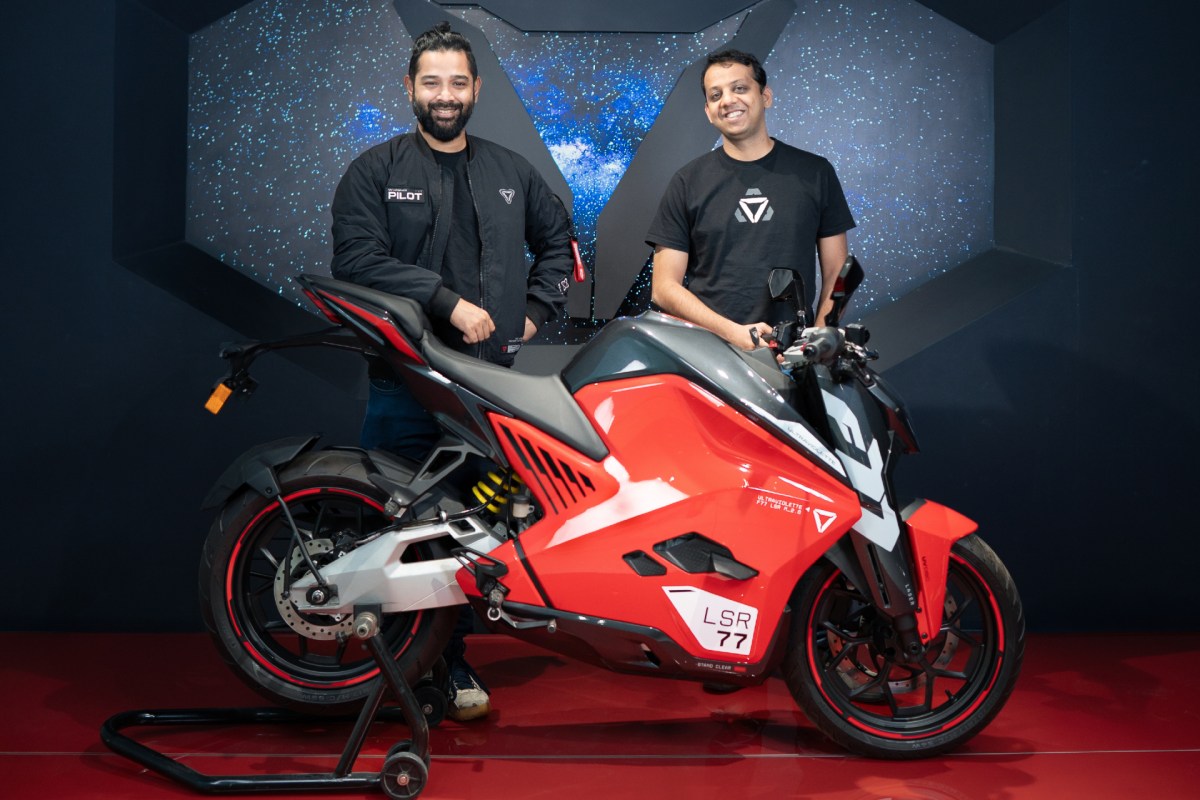
Zapp Electric Vehicles wants to turn its London-based electric two-wheeler brand into a global EV company. And India will be one of its launchpads, TechCrunch has exclusively learned.

The company will launch its first product — an urban electric two-wheeler called the i300 — in the UK as early as next month, followed by Thailand. The company is now adding India into the mix, a massive market that will provide a true test to its international global expansion strategy, Zapp founder and CEO Swin Chatsuwan told TechCrunch in an interview.

The Nasdaq-listed company advanced its plans for India after Chatsuwan noted the country’s potential. The world’s most populous country not only witnesses millions of two-wheeler sales annually, it’s also the second-biggest two-wheeler manufacturer worldwide after China.

“We thought India would be phase two for us when we did our research a few years ago, but we made a decision earlier this year that it can’t wait,” Chatsuwan said.

Zapp has named Indian electric two-wheeler maker Bounce Electric 1 as its contract manufacturer to produce and sell the i300 locally in the country. After completing the homologation process, sales are expected to begin in 2025. The British company aims to have a minimum capacity of 5,000 units per year in India as part of its broader global goal of 25,000 units by 2026.

Of the 17 million two-wheelers sold in India last year, Chatsuwan told TechCrunch that 2.8 million were high-speed vehicles, and 36% of those high-speed vehicles were heavy-weight cruiser motorcycles from the Chennai-based brand Royal Enfield. Zapp wants to duplicate Royal Enfield’s success with its step-through model, which was unveiled first in 2018.

“We’re not trying to conquer the world. We’re not trying to take half Royal Enfield’s market share and sell 500,000 bikes in India. We’re not. We would see that our quality and performance peer is BMW, particularly their CE 02 and CE 04 step-through electric scooters,” the executive told TechCrunch.

The India launch of Zapp’s i300 will help the company expand its total addressable market (TAM) of 60 million units annually by 25%. By adding India to the map, the TAM of its first phase of market debut has reached 30 million annually, the company said.

The early launch in India will help Zapp understand the “breadth, depth and quality” of the country’s supply chain, Chatsuwan stated. This may help export vehicles from India to global markets over time.

Unlike electric two-wheelers by key Indian manufacturers Ola Electric, TVS Motor and Ather Energy that sell between $1,000 and $1,800, Zapp’s i300 will be a pricey option. The two-wheeler will debut in Europe with a base price of $7,590, excluding taxes.

The India pricing is yet to be decided, though Chatsuwan said it wouldn’t be “more than a million rupees, but I doubt it will be lower than 500,000 rupees.”

The i300 is hitting the streets soon

Zapp unveiled the i300 as its first two-wheeler in 2018. The vehicle comes with an aerospace-grade alloy load-bearing exoskeleton and a chrome-moly steel underbone design. It also carries an air-cooled electric motor with a peak power of 14kW and packs two portable batteries, each with 720Wh capacity.

The company started taking pre-orders for the i300 soon after its unveiling, charging a reservation fee of 100 euros. It promised to begin deliveries in the fourth quarter of 2019. However, the COVID-19 pandemic halted production and deliveries.

Image Credits: Zapp EV

Nonetheless, Zapp is set to start delivering the i300 in the U.K. in the next few weeks. It also plans to begin selling in Thailand this year through a facility in Bangkok.

Zapp set to become ‘complete motorcycle company’

“We’re not a one-hit wonder. We want to show the world that we’re a complete motorcycle company, but let’s begin with executing the first product first,” Chatsuwan told TechCrunch when asked whether Zapp looks to expand its product lineup.

The company also plans to stack up the i300 with “loads of” personalization options and accessories. It already offers the two-wheeler in four distinct versions and lets consumers customize its color and wheel design based on their preference and add accessories, including a hidden storage and fast charger.

Zapp plans to expand its market by entering Spain, Italy, Vietnam and Indonesia in phase two and expand to countries in the Middle East and South America over time.

“We want to be the 21st-century version of Triumph and Royal Enfield and Norton,” Chatsuwan said.