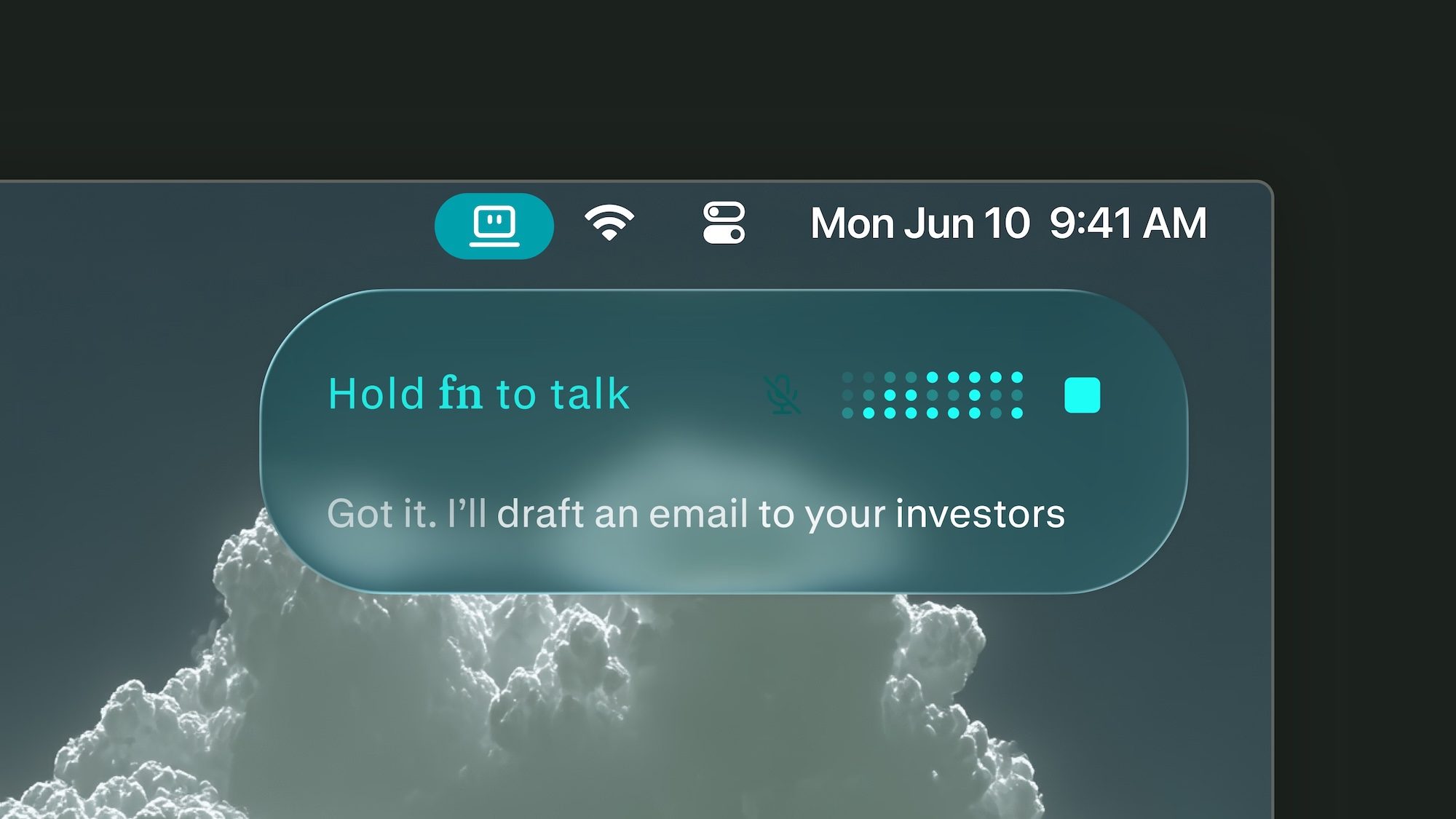
Perplexity’s Personal Computer can work autonomously on your Mac, and it’s now available to all


Perplexity has finally launched its Personal Computer Mac app for everyone, and it could genuinely change how you get things done on your Mac.

Personal Computer is an AI agent system that works directly on your Mac. It can dig through your local files, work inside native Mac apps, browse the web, and connect to over 400 tools, all on its own. 

You give it a task, and it gets to work. You step in only when it needs your approval. It’s similar to how Claude Cowork works and can handle tasks on your computer. 

What can Personal Computer do for you?

If you have ever lost an hour jumping between apps, hunting for a file, or manually pulling information from different sources, Perplexity’s Personal Computer is built for exactly that frustration. It can work across your local files, native Mac apps, connected tools, and the web, all in one go.

Here is a fun example Perplexity showcased. Open Notes, press both CMD keys, and ask it to do your to-do list. It figures out each task and get them done. You can also ask it to clean up a messy folder and sort everything into properly named project folders.

The best part is that you stay in control. It checks in when a decision matters, and every action it takes is reversible. Think of it as a capable assistant, not an unsupervised one.

What’s the best way to run Perplexity Personal Computer?

According to Perplexity, a desktop Mac is the best way to run it, and since the entry cost of a Mac mini is relatively low, it’s the best option. Running Perplexity’s personal computer on a Mac mini is ideal because it can operate continuously, even when you’re away from your desk.

You can kick off a task from your iPhone, and the agents keep working on your Mac back home. You can also approve requests from any device and let it run overnight for complex projects.

That said, the Mac mini is in short supply, so you might have to wait or grab any available model. The new Perplexity Mac app is available today for all users. Everyone gets everyday features like search, attachments, and dictation. 

Note that it is not yet on the App Store, so you will need to download it directly from Perplexity’s website.

Perplexity’s New Mac App Brings Personal Computer to Pro Users


Perplexity today launched a new Mac app with support for its hybrid local-cloud AI agent Personal Computer, plus it expanded Personal Computer access to Pro and Enterprise users, so it is no longer limited to just Max subscribers. Perplexity describes Personal Computer as a “personal orchestrator” that hybridizes local and server environments for security and productivity.

perplexity mac app personal computer
Personal Computer is available in the new Mac app, which Perplexity says gives users access to queries, conversations, and dictation. While all Mac users can download the new app, access to Personal Computer still requires a paid subscription.

Personal Computer can access the Mac’s file system and native Mac apps to create and execute entire workflows, plus it can access the web. It can see active apps and work across any Mac app, but files are created in a secure sandbox, and its actions are auditable and reversible.

When paired with the Comet browser, Personal Computer can operate web-based tools without the need for direct connectors.

Pressing both Command keys on a Mac activates Personal Computer, and it responds to text or voice commands and displays useful quick actions automatically. Personal Computer can do things like complete each task on a to-do list, sort a messy downloads folder, compare local files against information on the web, and more.

Though it has access to what’s on a user’s Mac natively, Personal Computer processes intense tasks on Perplexity’s servers, so a high-performance Mac isn’t needed to run it. Personal Computer works on any Mac with macOS 14 Sonoma or later, though Perplexity says running Personal Computer on a Mac mini creates the best experience because it allows the agent to run continuously.

Perplexity’s older Mac app will be deprecated in the coming weeks.

Perplexity Can Now Access Your Apple Health Data to Answer Medical Questions


AI company Perplexity today introduced Perplexity Health, a suite of connectors that allow Perplexity to access your health data.

perplexity health
Perplexity suggests that the feature is useful for aggregating health data from across different portals, apps, and devices. It is able to track metrics and trends over time across biomarkers, with information shown on a personalized dashboard.

When asked a health-related question, Perplexity Health can answer based on medical records, lab results, and wearable data. With Perplexity Computer (Perplexity’s AI agent tool), AI agents can use health information to build personalized fitness plans, nutrition plans, and more. Perplexity Health on Computer is rolling out to Pro and Max users in the U.S. first.

Perplexity says that Perplexity Health draws from “premium medical literature” like clinical guidelines and peer-reviewed journals. Perplexity has established a Perplexity Health Advisory Board with physicians, researchers, and health tech experts who will “pressure-test” product decisions, content quality, and clinical safeguards against evidence-based medicine standards.

Perplexity Health is able to connect to Apple Health, so it can integrate data collected by the Apple Watch and added to the Apple Health app. It also supports Fitbit, Ultrahuman, and Withings, along with electronic health records from more than 1.7 million care providers. Oura and Function integrations are coming soon.
Health data is encrypted, and Perplexity says there are strict access controls and tools to manage or delete information at any time. Health information is not used to train AI models or sold to third parties.

Perplexity is the second AI company to integrate with Apple Health. OpenAI introduced a ChatGPT Health feature with Apple Health support in early 2026.

Perplexity sees India as a shortcut in its race against OpenAI


While OpenAI has cemented its lead in the U.S., Perplexity is taking a different route — quietly expanding into India to compete in the next phase of AI adoption. The search-focused AI startup is rapidly adding millions of users in the world’s second-largest internet and smartphone market, positioning itself for mass-market scale.

This week, Perplexity partnered with Bharti Airtel, India’s second-largest telecom operator after Reliance Jio, to offer a free 12-month Perplexity Pro subscription — normally worth $200 — to all 360 million Airtel subscribers. Airtel confirmed to TechCrunch that the deal is exclusive, meaning no other telco in the country can offer Perplexity’s services, including free access, to their subscribers.

The Airtel partnership is one of Perplexity’s most significant moves yet in a global expansion strategy that includes partnerships with more than 25 telcos globally, including those recently announced with SoftBank in Japan and SK Telecom in South Korea. It comes down to volume. India, the world’s most populous country, brings a mass market that the San Francisco-based startup will not find in other geographies.

Perplexity is already gaining major traction in the country. In Q2, Perplexity’s downloads in India surged 600% year-over-year to 2.8 million, according to Sensor Tower data shared exclusively with TechCrunch. In comparison, OpenAI’s ChatGPT saw a 587% increase, reaching 46.7 million downloads in the same period.

The growth trend extended to active users as well: Perplexity’s monthly active users (MAUs) in India increased by 640% year-over-year in Q2, while ChatGPT’s MAUs grew by 350%. India was also the largest market by MAUs for Perplexity in the last quarter, per Sensor Tower. However, ChatGPT maintained a significant lead in absolute numbers, with 19.8 million MAUs versus 3.7 million for Perplexity.

Image Credits:Jagmeet Singh / TechCrunch

Building on earlier partnerships, Perplexity has been working to leverage India’s user base to leapfrog Western markets, where OpenAI dominates paid subscribers. Earlier this year, Perplexity partnered with the Indian fintech giant Paytm to offer access to its AI-powered search through the Paytm app, which has over 500 million downloads and is among the top-three apps on the Indian government’s Unified Payment Interface network, processing over 1.2 billion transactions worth over ₹1,34,000 crores (approximately $15.6 billion).

Perplexity CEO Aravind Srinivas has also taken direct steps to expand in India. In January, he announced plans to hire an Indian executive in the country, which he later put on hold after receiving an “overwhelming” response. He further announced a $1 million investment and a commitment of five hours a week of his time to a group building AI in India.

Techcrunch event

San Francisco
|
October 27-29, 2025

Image Credits:Jagmeet Singh / TechCrunch

The startup has also internally discussed offering its AI search engine to Indian students to grow its reach, sources told TechCrunch.

One reason Perplexity views India as a key growth market is the relatively limited number of local AI startups, particularly in the AI search space. At the same time, the country has a large and active base of tech-savvy users — a fact that has even prompted Perplexity’s archrival, Google, to launch AI-powered search features like AI Mode and AI Overviews in India ahead of many other markets.

Monetizing that large user base remains a challenge. Perplexity still lags far behind ChatGPT globally in terms of revenue, even as both offer the same $20-per-month starting price. In Q2, ChatGPT’s in-app purchase revenue worldwide surged 731% year-over-year to $773 million, while Perplexity saw a 300% increase, reaching $8 million, per Sensor Tower.

Image Credits:Jagmeet Singh / TechCrunch

The revenue challenge is particularly acute in India, where consumers are notoriously price-sensitive. Still, there are promising signs. ChatGPT saw an 800% year-over-year increase in in-app purchases to $9 million in the country in Q2. Perplexity has not generated any notable in-app revenue from India, but the startup has room to expand its paid subscriber base through India. Deals like the one with Airtel could help Perplexity effectively increase its subscriber base, at least in the short term.

Strategic partnerships in markets like India could help Perplexity catch the eye of investors who value user growth and geographic diversification. But to turn that attention into long-term backing, the startup will need to show that it can convert its expanding user base into revenue.

Srinivas did not respond to requests for comment.

Perplexity has its own ‘Deep Research’ tool now too


In a on Friday, Perplexity introduced a new tool called Deep Research that it says can conduct “in-depth research and analysis” to deliver detailed reports in response to your questions, and it’s free for limited use. It comes just a couple of weeks after OpenAI announced its own users… which itself followed Google’s December announcement of . Perplexity’s tool is available only on the web to start, but it will hit the iOS, Android and Mac apps soon too.

To view this content, you’ll need to update your privacy settings. Please click here and view the “Content and social-media partners” setting to do so.

Perplexity says its Deep Research “excels at a range of expert-level tasks — from finance and marketing to product research” and takes about 2-4 minutes to come up with an answer, during which it “performs dozens of searches, reads hundreds of sources, and reasons through the material.” Once finished, its reports can be shared or exported as a PDF. The company claims it outperforms competitors — like OpenAI’s o3-mini and o1, and DeepSeek-R1 — on the Humanity’s Last Exam benchmark, earning a 21.1 percent accuracy score (though this is lower than OpenAI’s Deep Research scored).

Free users will be limited to five queries per day, while Pro subscribers will get 500, according to a tweet from the company.


The DOJ wants a Perplexity executive to testify in its Google antitrust case


A U.S. court ruled in August that Google has a search monopoly, and while Google appeals, the Justice Department is figuring out what kind of potential penalties to impose — like breaking off Chrome

As part of this process, the DOJ wants to call on a specific witness, according to a recent court filing: Dmitry Shevelenko, chief business officer of Perplexity, an AI search provider most recently valued at $9 billion, per Reuters.  

Perplexity and other generative AI tools like OpenAI’s ChatGPT Search have emerged as a potential replacement for searching the internet, as they can offer direct answers to complicated queries (albeit, sometimes with made-up or inaccurate information). Google has responded to the threat with its own AI search tools, such as AI Overviews, which provide AI-generated answers above search results.

The DOJ wants to ask Shevelenko about “generative AI’s relationship with Search Access Points, distribution, barriers to entry and expansion, and data sharing.”

“Search access points” is a term the DOJ uses to describe things like Google Chrome — places where people go to search the internet.

While the filing doesn’t spell out exactly why the DOJ wants to ask Perplexity about these topics, it could help its argument that Google monopolizes the search business and closes out potential competitors, and thus deserves stronger penalties. 

TechCrunch asked Perplexity whether it has agreed to have its executive testify and for its thoughts on the antitrust case. Perplexity didn’t respond immediately to a request for comment, and neither did Google. 

Perplexity is effectively caught in the middle of the dispute, as both sides want information from it that could help their cases. Google subpoenaed Perplexity in October for company documents to make its own case that it has viable competition in the search field. (Google subpoenaed Microsoft and OpenAI as well.)

However, Perplexity has yet to provide “a single document” to Google as of December 11, the tech giant lamented in a court filing, claiming that there is “no conceivable justification for further delay” after two months of waiting.

For its part, Perplexity says in the filing that it has already agreed to fulfill 12 out of Google’s 14 document requests but is “still evaluating the burden associated with collecting such a potentially expansive universe of documents.”

Perplexity also says that while it has agreed to provide copies of licensing agreements “related to AI training,” Google wants all of Perplexity’s licensing agreements and that it has asked Google to “meet and confer” about this.