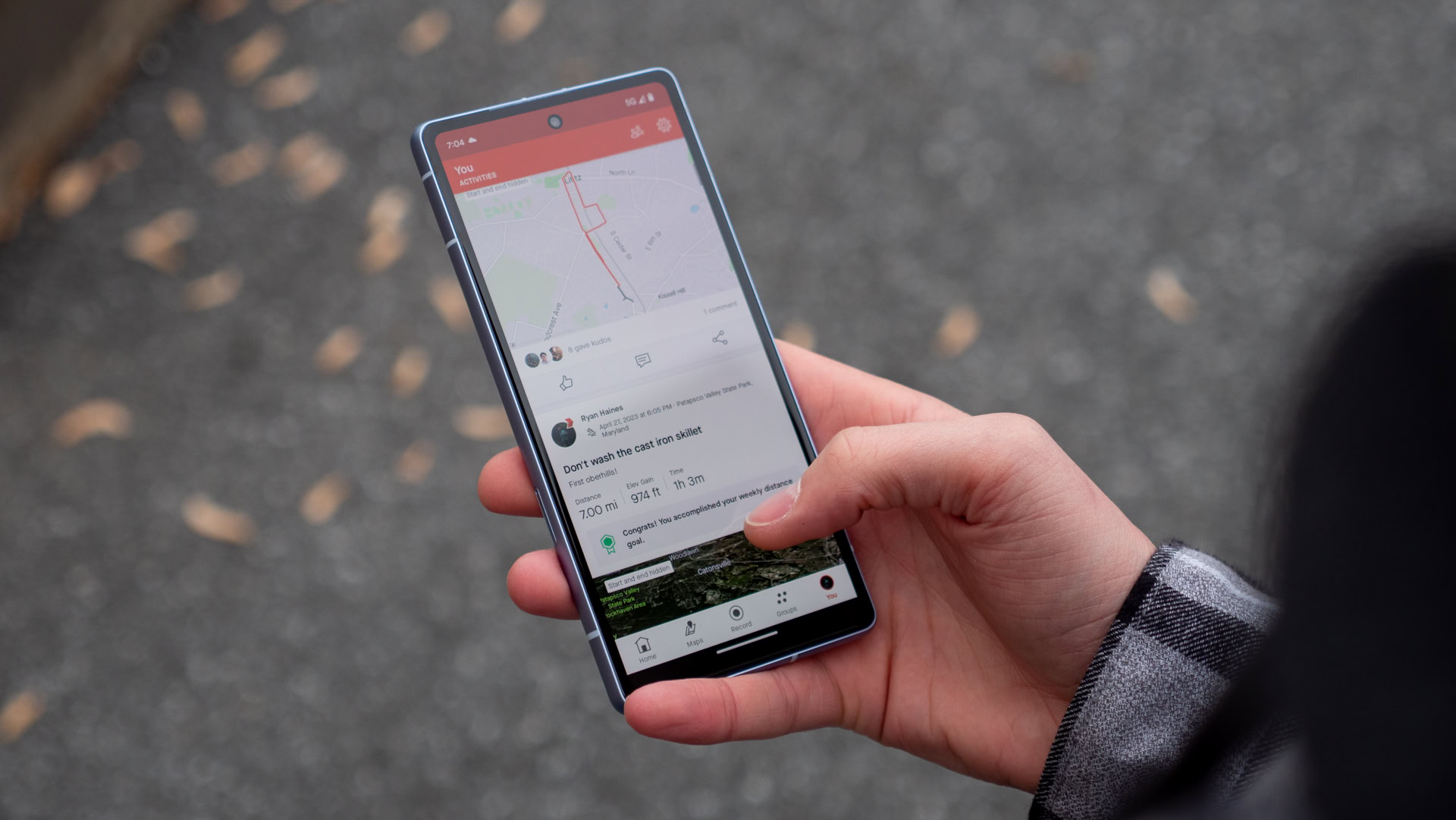
Your Strava runs might feel private, but a new Strava military data leak shows how easily that information can reveal more than your workout. In the latest case, activity logs have been linked to more than 500 UK military personnel, connecting everyday exercise to sensitive locations.
This goes beyond visible routes. Shared histories and account details can be combined to identify people and map where they live and work. Known locations become more revealing once behavior is layered on top.
A recent incident showed how a single tracked session revealed the position of a naval vessel. Routine posts can carry real consequences. The issue comes down to visibility and how much is left open by default.
Public runs tied to real people
The investigation uncovered shared routes connected to personnel across several UK bases, including Northwood, Faslane, and North Yorkshire. These weren’t abstract traces. Account histories made it possible to link sessions to specific individuals.
Once identified, an account can reveal habits, frequent routes, and social connections through shared features. That expands the scope quickly and makes tracking easier over time.
In one case, a run label hinted the user understood the risk, yet it stayed accessible. That gap between awareness and action is part of the problem. Analysts warn that small fragments of information can still be combined into something far more detailed.
Small details build a bigger picture
The real danger builds over time. Repeated uploads create a trackable footprint that becomes easier to follow with each new entry.
Even if locations aren’t secret, surrounding behavior adds meaning. Movement between sites, timing, and consistency can all be inferred. For an outside observer, that’s enough to map routines and spot patterns.
At a submarine base, shared logs helped identify personnel and even family members through linked accounts. That kind of exposure extends beyond the original user and makes the data more valuable.
One setting can reduce the risk
The fix is already available, but many users skip it. Strava includes privacy controls that limit who can view your sessions and routes. Leaving those settings unchanged keeps your activity visible by default.
Switching activities to private reduces exposure right away. It limits how easily routes can be traced and makes long-term patterns harder to build. Or you can check out other fitness apps.
The bigger takeaway applies to any fitness app that shares location data. If you use Strava, it’s worth checking your settings now and locking down what others can see. A small change can keep your routine from becoming a signal.
At this point, I’m not sure I could tell you how much time and money I’ve put into Strava. Yes, I paid for a membership for several years, and yes, it’s spent time as my number one form of social media, but I don’t really want to think about any of that right now. Why not? Well, I can’t shake the feeling that Strava has changed. It’s become like that friend from high school who became just a little too popular and was no longer fun to hang out with.
Strava being Strava pushed me to cancel my membership, and here’s why I don’t see myself going back any time soon.
Do you pay for Strava?
13 votes
It’s my data, why can’t I have it?
Kaitlyn Cimino / Android Authority
The first thing I’ll say about Strava is that, honestly, I forgot just how much of the platform is tied to its premium subscription. I’d grown so accustomed to having access to everything that I didn’t realize how much would be lost once I switched back to the free version. And, among all of the things that I lost, the one that surprised me most was my own data.
Yeah, when you take a step back from your Strava subscription, you lose a lot of your history. And no, I don’t just mean you lose Strava’s AI-generated breakdowns of your workouts — you do, but they were rocky at best. Instead, I mean that you can no longer see your own personal bests. You can’t go back and check on your fastest mile, fastest 5K, or fastest half-marathon. Strava has them, you just can’t see them.
I’m not asking for a free training plan, just access to my own data.
Also considered off-limits are your weekly goals, your training log, and most of your monthly recap. If you’re sticking with the free Strava experience, it also means you’re sticking to your hours of activity and monthly miles as your go-to metrics, and that’s it. Oh, and that includes the Year in Sport — you know, that record of all the data you’ve given Strava since the start of the year.
I won’t lie, I’m shocked at how Strava treats its Year in Sport recap. I actually cannot believe that it decided to put it behind a paywall, because nobody else does that. Spotify is more than happy to give you your Wrapped recap, as are YouTube and LinkedIn (if you really want that). Even the Dunkin app will run you through how many lattes you sipped and Munchkins you, well, munched, and you don’t need a premium subscription to see it — you just have to get yourself a little sweet treat.
So, for Strava to decide that its recap is for premium subscribers only feels like a bit of a slap in the face. After all, I ran the miles, skied the runs, and climbed the boulders, letting Strava build up its database along the way. I helped make it what it is in my own small way, and now it wants more money from me to tell me how I compare to my friends. And, if a real person put together the Year in Sport, I might oblige, but you and I both know it’s an AI-generated report these days.
Maps should be about safety, not money
Ryan Haines / Android Authority
One thing that I knew I would lose when I stopped paying for Strava was its extensive access to routes and maps. And yes, I’ve written several times about how much I liked having those maps — I don’t regret it. I really do think that they’re a good way to see a new place, and they make it much easier to know what roads are safe to run at night or are popular on a given week due to construction.
As soon as you leave, though, you get knocked back to the Global Heatmap with access to basic maps and points of interest. It’s still better than nothing — you can easily make out the most popular streets in a given place — but I don’t like that it puts a price on safety. At the very least, I’m surprised that Strava keeps its Night Heatmap locked up for subscribers. It’s not like a vast number of users will be running in unfamiliar territory after dark, but for those who do, I think that Heatmap should be open to the public.
Don’t expect access to your Personal Heatmap — that’s going to cost you, too.
To make matters worse, or at least more annoying, Strava isn’t always clear about the maps you do get. If you jump over to the Maps tab in the app, it will provide you with a couple of custom-made options, making it almost look like you could hop in and save them to your watch or phone. You can’t. You can view them and zoom in, but you can’t keep them without paying.
Don’t expect to make custom routes, either — that’s for subscribers only. Sure, you can feed your data into those maps to create routes for other people, but you can’t then use them for yourself. But hey, at least Strava isn’t only trying to gatekeep data from its users — it tried to start beef with Garmin, too.
Yes, somehow Strava decided that it was the king of maps, routes, and segments, and it thought it could push Garmin — whose maps, routes, and segments it uses — out of the picture. As a Garmin user, that put a pretty bitter taste into my mouth. I mean, if Strava thinks it’s more important than the devices that feed it, where does it end? A Strava-built wearable with its own monthly subscription?
These days, I only want Strava for its social aspects
Ryan Haines / Android Authority
When you strip out, well, all of the data-heavy bits of the Strava experience, what’s left? As far as I can tell, little more than the social media core. And you know what? That’s good enough for me. Instead of spending my days on Strava joining challenges and trying training plans and making routes, I’m just going to deal kudos from here on out. It’s a… less exciting existence, sure, but it doesn’t put money into pockets that I don’t think deserve it.
Besides, if I step back from all the things I’ve grown accustomed to paying for, I can finally remember what brought me to Strava in the first place: everyone else. I signed up because I wanted to see what my friends were up to and support them with comments and kudos along the way. And sure, there can be a toxic cycle of competition that comes out of that, but it’s also a good way to get my butt off the couch.
Treat Strava like the social media it is and free yourself from that sense of competition.
I’m replacing deep dives into training histories with funny captions and meaningful photos, and it’s making me enjoy running in the same way that I used to. I’m taking my workout planning off Strava (but not going to Runna, because that’s just Strava in disguise), and I’m taking a break from competing with friends. I can’t set my own weekly goals anymore, which means I can’t stress about hitting or missing those goals, and it’s bringing the fun back to running.
Would I still like to see Strava treat its free tier as something more than a data farm? Yes, absolutely, but until it does, I’ll be spending my time with running shoes on my feet and a Garmin on my wrist, waving to runners as I pass them in real life rather than waiting for proof on Strava.
Thank you for being part of our community. Read our Comment Policy before posting.