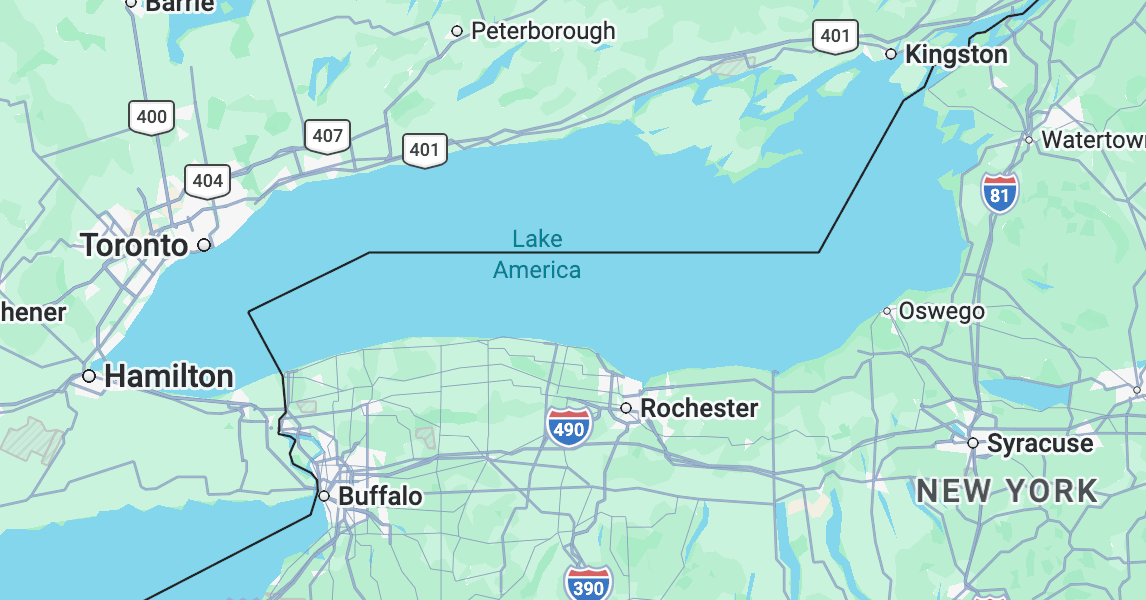
Google Maps Now Shows ‘Lake America’ Instead of Lake Ontario


Lake Ontario is no more on Google Maps in the US. Google changed the name of the easternmost of the Great Lakes to “Lake America” late Saturday, days after President Donald Trump ordered its rebranding in official government databases.

Trump issued the executive order on Thursday as part of an ongoing feud over tariffs with Canada, whose province of Ontario borders the lake. It followed a similar order he issued in January 2025 to rename the Gulf of Mexico as the Gulf of America as part of a fight with the US trading partner to the south.

Google, Apple, Microsoft, and other maps providers adopted the Gulf of America naming as soon as the US Department of the Interior updated its records, which came a couple of weeks after Trump’s order. So it was no surprise that when those records—which are used to determine names on roadway signs and in government literature—reflected Lake America, digital maps from Google also quickly took on the new name.

Apple Maps and Bing Maps have not yet reflected the change but are expected to. In fact, the map for the federal government’s Geographic Names Information System database, which informs these changes, still showed Lake Ontario as of Sunday morning, with a note that the maps are “in the process of being updated to reflect this name change.”

While Google and other private organizations that provide maps are not bound by law to use official names, they generally follow government databases like GNIS. The location names a user sees depends on their own geography.

“People using Maps in the US will see ‘Lake America,’ those in Canada will continue to see ‘Lake Ontario,’ and those outside of the US and Canada will see both names,” Google said in an unsigned statement. “These updates follow our long-standing policy for bodies of water with names that vary from country to country, and are starting to roll out now.”

Trump’s efforts to rewrite maps have generated considerable public debate in open-source mapping communities such as OpenStreetMap, whose technology is used by companies such as Uber and Lyft. Ultimately, OpenStreetMap recognizes both the US and foreign names and gives organizations using its maps the choice over which to show.

One map provider that has so far declined to make the change is MapQuest, which said in a social media post in response to Trump’s order, “We’re not changing it.”
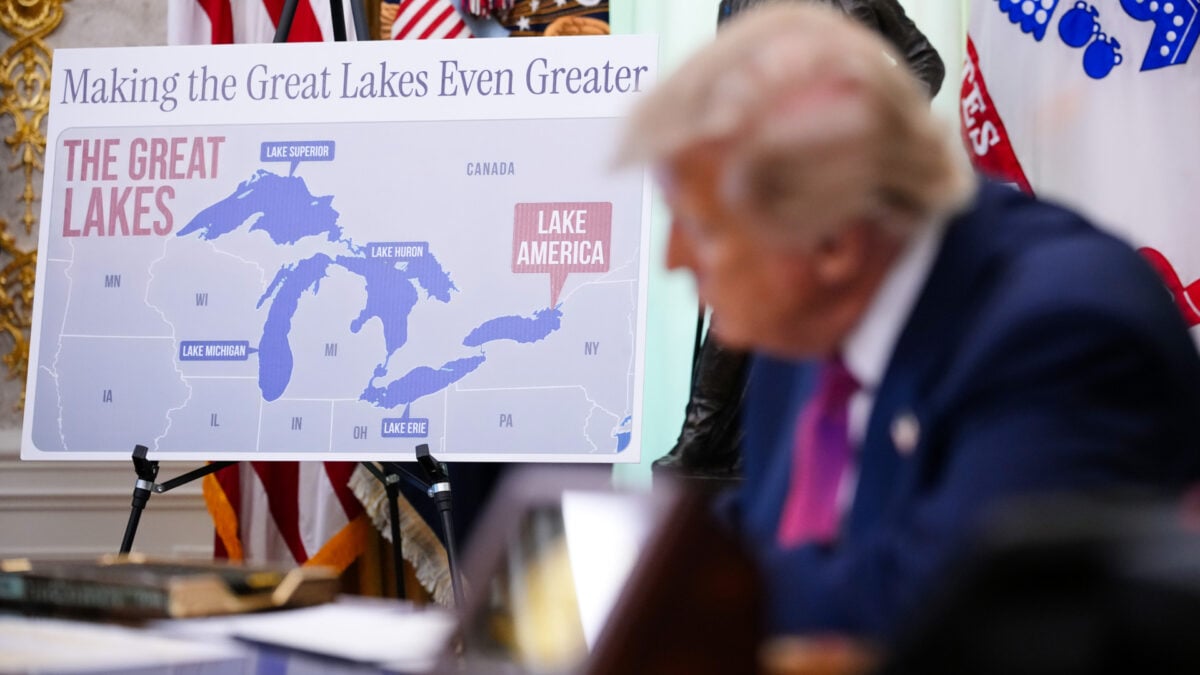
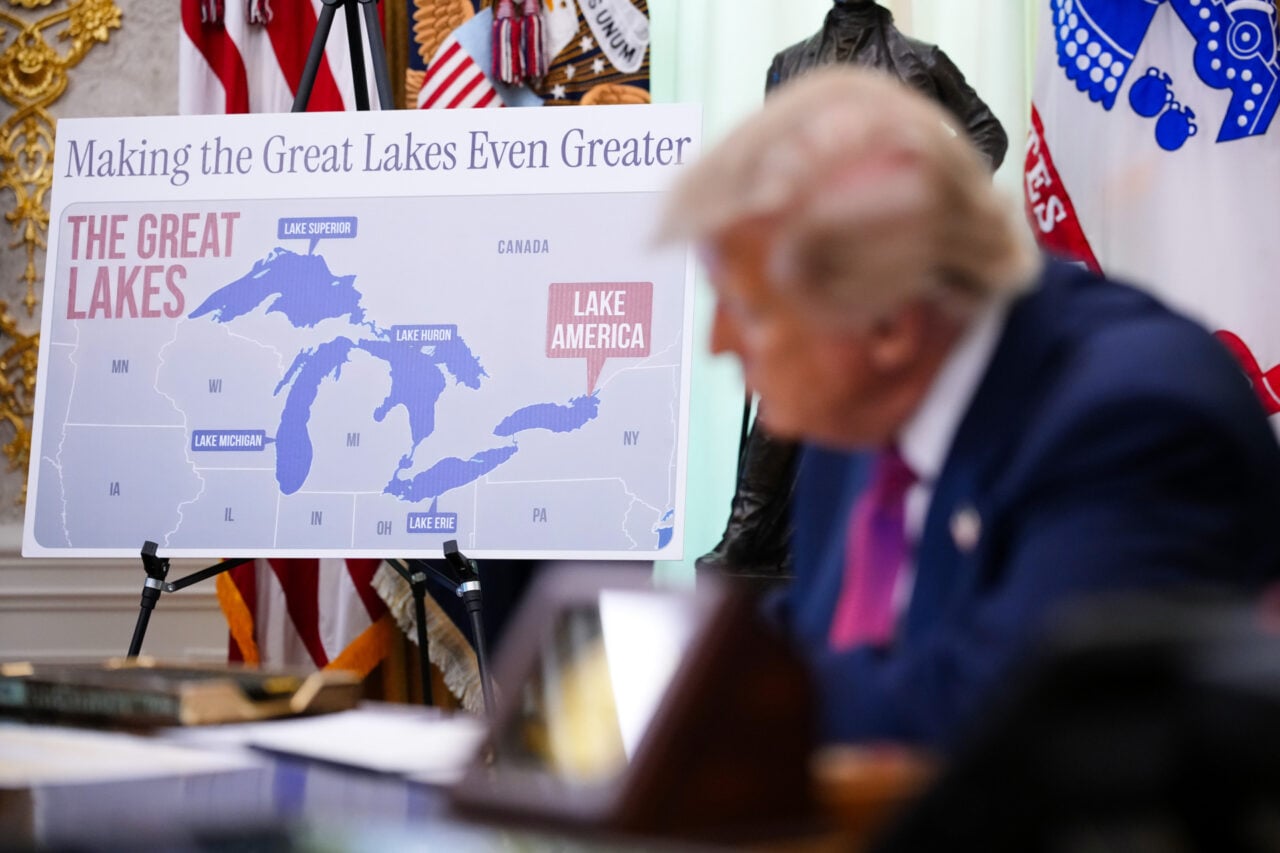
Google Caves to Trump Again, Renames Lake Ontario


Google has caved to Trump’s whims again. Less than two years after controversially relabeling the Gulf of Mexico to the “Gulf of America,” Trump has now attempted to formally rename Lake Ontario “Lake America” by executive order following a trade standoff with Canada. Google quickly followed suit with the changes

Over the weekend, Google officially began displaying the lake on its Maps as “Lake America” for users in the U.S. and as “Lake Ontario (Lake America)” for users abroad. Canadians will still view the lake on Maps as “Lake Ontario.”

Google made a similar concession when Trump renamed the Gulf of Mexico. The decision drew ire from many people around the world, including the Mexican President Claudia Sheinbaum, who said that the United States did not have the authority to change the naming convention of an international sea. The decision led to so many users leaving negative reviews on the “Gulf of America” that Google Maps felt the need to disable the feature.

The tech giant said it always updates Google Maps “to reflect name changes in official government sources.” For the United States, that government source is the U.S. Geographic Names Information System, which recently formally changed the name to “Lake America.” Google Maps indeed displays naming conventions and even some borders differently based on users’ geographic locations. For example, last year, the company drew significant criticism for not displaying the disputed border separating Western Sahara from Morocco but only for Moroccan users.

But notably, Google is deciding to heed Trump’s orders even while other American government figures are choosing not to. New York Governor Kathy Hochul, aka the governor of the only U.S. state that actually borders Lake Ontario, said in a post on X that she would not be calling it Lake America.

Apple Maps, which changed the Gulf of Mexico’s name, has not yet renamed Lake Ontario on its platform.

Ever since he took office, Trump and the rest of his administration have been making clear jabs against Canada and specifically its autonomy by calling the country the 51st State. The one-sided renaming came as Trump upped the ante on his trade war against the neighboring country. Once strong allies not that long ago, the relationship between the two countries has quickly declined under the Trump administration, at times even pushing Canada closer to China. Last week, the trade issue took a turn for the worse when Washington announced 50% tariffs on Canadian goods worth billions of dollars after trade talks broke down. Canadian Prime Minister Mark Carney promised to match the tariffs “dollar for dollar” and announced similar up to 50% tariffs on about $20 billion of U.S. imports earlier this week.

Then on Thursday, Trump signed the executive order renaming Lake Ontario. At an Oval Office press conference unveiling the renaming, Trump blamed the trade talks for his decision, claiming that Canada is “the worst to deal with on trade.”

He also seemed to (jokingly, but you never truly know with him) entertain the idea of renaming the Atlantic and Pacific Oceans. Far-right MAGA trolls on the internet have suggested that Trump should rename the Atlantic Ocean to “East American Ocean” and the Pacific Ocean as “West American Ocean.”

“We have a gulf, and we have a lake, now all we need is an ocean,” Trump told reporters on Thursday. “So, maybe, we’ll have to change the name of the Atlantic and/or the Pacific. Maybe we’ll change them both.”

Eager to see what Google Maps would do if Trump ever goes through with that bizarre claim.

Google Maps may make it easier to recall the places you visited (APK teardown)


google maps go search place

Rita El Khoury / Android Authority

TL;DR

  • The You tab in Google Maps has a new section called “Your recent places.”
  • This section shows a list of all the recent places you visited.
  • You can sort through locations with various types of filters, save a location, share a location, and delete a location from your history.

Having trouble remembering the store you went to a few days ago? Or maybe you want to share the location of a restaurant you ate at the other day. Google Maps is getting a feature that will show all the places you recently visited in one place.

When you tap on the You tab in Google Maps, you’ll see a section called Your lists, which contains various lists like Friends, Favorites, Saved trips, and so on. While exploring the app’s version 25.34.00.796159725, we discovered that a new section has been added above the Your lists section. This new section is called “Your recent places.”

Don’t want to miss the best from Android Authority?

As the title suggests, the Your recent places section will show you a list of all the places you visited recently. Above that list sits a carousel of filters, including Area, Category, Saved, and Maps history. Each of these filters provides multiple ways to filter. For example, when you tap on Category, you’ll see options to filter by Food & drink, Culture, Shopping, Attractions, and Hotels.

Off to the right of each listed location, you’ll see a Bookmark icon and a three-dot menu. As you can probably guess, Bookmark allows you to save a location to a list. Meanwhile, the vertical three dots open up a menu where you can share that location, see visits and Maps history, or delete a location from your history.

This new You tab section isn’t the only new feature we found hiding in Google Maps recently. We also learned that Google is working on something to make it easier to share a list of search results with others.

⚠️ An APK teardown helps predict features that may arrive on a service in the future based on work-in-progress code. However, it is possible that such predicted features may not make it to a public release.

Thank you for being part of our community. Read our Comment Policy before posting.