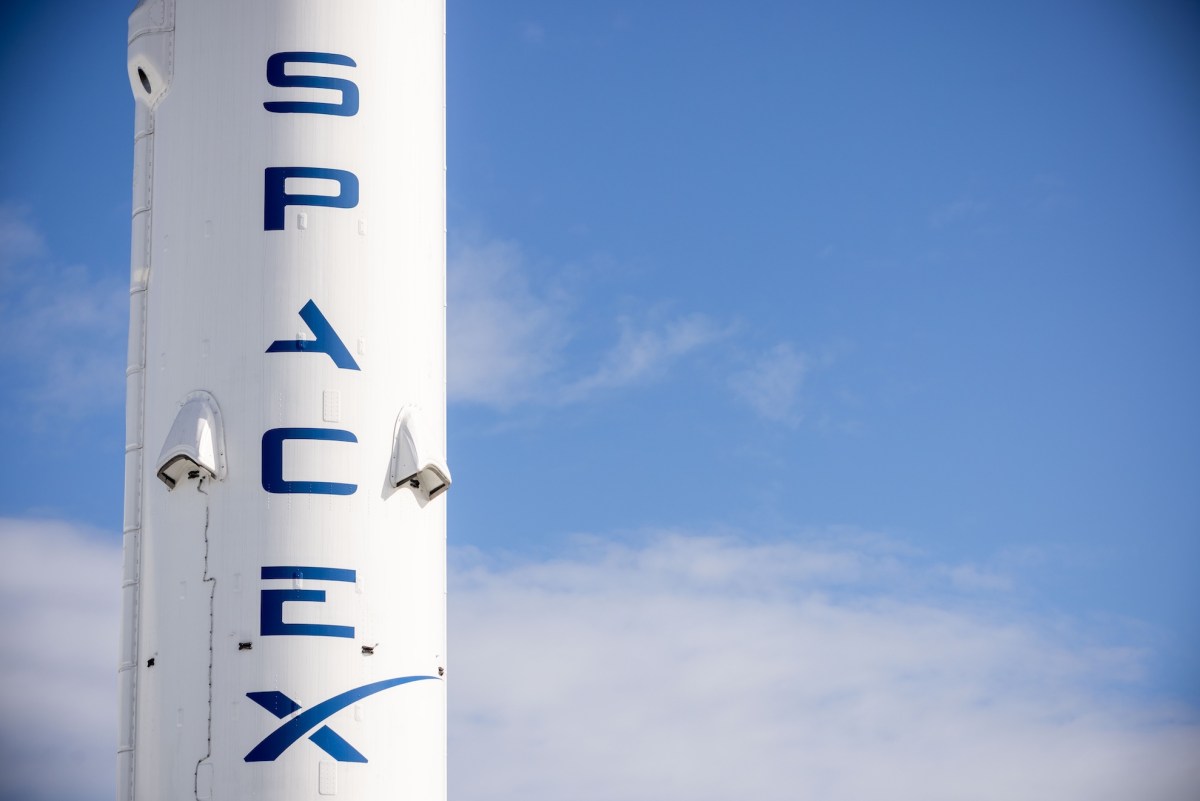
SpaceX, the aerospace company founded by Elon Musk 24 years ago, has finally made its IPO filing public.
The hefty filing, posted after markets closed Wednesday, shows a company that has developed far beyond its initial pursuit of reusable rockets — although its long-term mission to create a multi-planetary species remains intact. SpaceX is now a technology conglomerate working on satellites and AI, and has become one of the world’s most valuable private companies.
When it goes public later this year on the Nasdaq exchange, it will become one of the most valuable publicly-traded companies. (Nvidia currently holds the crown with a market cap of $5.4 trillion.) SpaceX has chosen the ticker “SPCX” for the listing.
The regulatory filing, known as an S-1, offers the most vivid and financially illuminating public dissection of SpaceX’s business to date. And it comes just weeks ahead of what’s expected to be the largest IPO ever, both in terms of potential money raised (expected to be around $75 billion) and overall valuation (reportedly $1.75 trillion).
Many of the headline details have been reported in the weeks since SpaceX first submitted a confidential version of its S-1 filing to the Securities and Exchange Commission on April 1. The company lost about $4.9 billion in 2025 on revenue of more than $18 billion, as Reuters reported last month.
The filing details a business that is currently dominated by SpaceX’s Starlink satellite internet offering, which generated more than half of the company’s revenue last year. It also shows how much SpaceX has burned to get to this point: more than $37 billion lost since inception, according to the S-1.
XAI, the artificial intelligence company Elon Musk created and recently merged into SpaceX, is not helping on that front. The filing shows SpaceX directed around 60% of its capital spending in 2025 to its AI division, or around $20 billion. And yet that division — which houses the chatbot Grok — lost billions last year, and only grew revenue by about 22%. That’s far below the reported revenue growth rates at frontier AI labs.
Despite SpaceX’s complex business, much of its future is pegged to the success of Starship, the fully-reusable heavy lift rocket that has had a series of explosions and technical revamps over the past several years. The company is expected to conduct the 12th launch of Starship as early as this week.
S-1 filings are hundreds of pages long, and this one in particular is likely to be stuffed with interesting numbers, risk factors to SpaceX’s business, and other previously private information. TechCrunch will be pulling out the most interesting details all day, so stay tuned.
This story is developing…
When you purchase through links in our articles, we may earn a small commission. This doesn’t affect our editorial independence.

