Earlier this month, T-Mobile started testing messaging via Starlink satellites with select Samsung users.
The latest iOS 18.3 update brings the satellite texting feature to eligible iPhone users on T-Mobile.
Interested users can sign up for the beta on T-Mobile’s website.
In 2022, Apple partnered with Globalstar to enable its Emergency SOS via satellite tool on the iPhone 14 and newer models. With iOS 18, the firm expanded satellite texting beyond emergency services, letting iPhone users reach their friends and family when off the grid. To give users more options, iOS 18.3 introduces support for T-Mobile’s own version of the feature, which relies on SpaceX’s Starlink satellites.
A couple of weeks ago, T-Mobile started rolling out satellite messaging support to those using the latest Samsung phones. According to Bloomberg, the carrier has been working with Apple and SpaceX to implement the perk on iPhones, and the recently released iOS 18.3 update finally activates it. While T-Mobile’s satellite connectivity feature is initially limited to texting, a future update could allow iPhone users to make phone calls and access the web using Starlink’s service.
The most notable difference between the Globalstar and Starlink satellite connectivity tools is that the latter doesn’t require you to point your iPhone to the sky in a specific direction. Eligible users can receive texts in areas lacking network coverage without taking their phones out of their pockets. Unlike the former, though, the feature only works in the US.
To enable satellite texting on your iPhone, you must sign up for the beta on T-Mobile’s website. Once the carrier rolls out the feature to your account, you’ll find new options to manage it in the Settings app on iOS 18.3. Although the exact timing remains unclear, T-Mobile aims to launch the perk to all users in 2025.
Got a tip? Talk to us! Email our staff at news@androidauthority.com. You can stay anonymous or get credit for the info, it’s your choice.
Home screen widgets have been a part of Android from the very beginning and the first T-Mobile G1 in 2008. And for a long time, widgets were one of the first answers when you asked an avid Android user why they wouldn’t use an iPhone. They ranked high on my personal list of reasons to use Android back in the day. Times have changed since 2008, though, as has Android, and what used to be one of Android’s greatest strengths feels like an afterthought today.
Apple added widgets to iOS in 2020 with iOS 14, and it’s impressive how quickly they have been embraced by users and developers alike. Almost every app on my iPhone has a useful, high-quality widget that I enjoy using, which isn’t something I can say about my Android phone these days.
But perhaps that shouldn’t surprise us when Google, the mastermind and commander of all things Android, seems to put more effort into its app widgets on the iPhone than it does for its own operating system. I would call that a problem, wouldn’t you?
Google’s Android widgets lack a consistent design
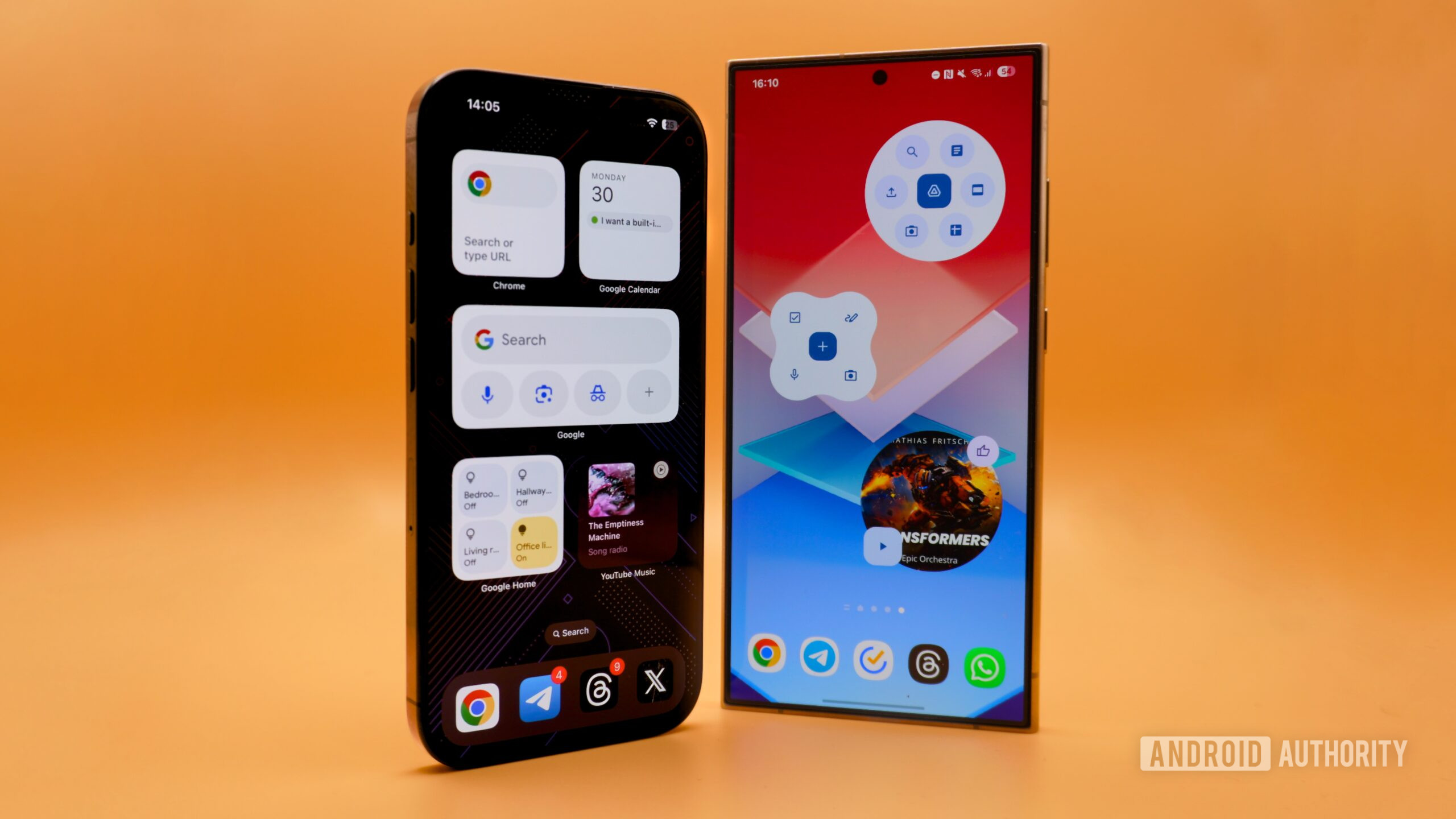
Let me start with something simple. Above, you see two iOS home screens that use Google’s app widgets. The first thing that stands out here is their consistent design. They follow the same design rules and have matching shapes. If I try replicating these same setups on Android, the problem will immediately become obvious.
Where do I even begin with Google’s Android widgets? To start with, the only YouTube Music widget that can fit into a 2×2 grid is the turntable, which is quite possibly the ugliest widget Google has, although there are plenty of other contenders for that crown. The spacing on the calendar widget is all wrong; the add button is too large, the month looks isolated on the top left, and the decision to put a circle around the date makes the whole thing look like a random collection of shapes. The worst offender, though, is the Google Drive widget. The dip between the search bar and recent files almost looks like an accident rather than an intentional design choice.
Google apps on iOS offer consistently designed widgets that fit well next to each other on my home screen. Not on Android, though.
The second set of widgets has a whole other slew of issues. Why does the Google Drive widget become a circle when you set it to a 3×2 or 2×2 grid size? Sure, you can’t have the iOS widget that small, but I’d take no widget at all over this incomprehensible abomination. The nearby traffic Google Maps widget doesn’t look too bad on Android, but the one I want to use doesn’t exist: Google Maps on iOS also offers a widget that can be assigned to a commonly traveled route and provide traffic information that matters in real-time, which isn’t available at all on Android.
Beyond design, Google’s iOS widgets are more useful than their Android counterparts. Many of them can be configured by the user to show different information. The Google Drive widget has a “show suggested files” toggle. When enabled, the widget shows recently uploaded files like its Android counterpart. Turn this toggle off, and those files are replaced with more useful, in my opinion, upload and camera shortcuts.
Between the design inconsistencies, missing widget types like the route traffic widget, and user-configurable options, I prefer Google’s widgets on iOS. They might not be perfect or “fun,” but I privilege functionality over funky designs. If you do like the different shapes the Android widgets offer, you’ll be as unimpressed by Google’s iOS widgets as I am by their Android counterparts.
What should Android widgets look like?
Do I really want Google’s Android widgets to match the iPhone? While I prefer a more consistent design, that doesn’t mean I want Google to enforce stringent design rules on everyone like Apple does. What I want is more customizable options and a clearer direction from Google. I was trying to picture how that would look, and then came Samsung’s One UI 7 beta, which perfectly illustrates a balance between options and consistent design.
Samsung’s first-party widgets in One UI 7 have plenty of options that govern their function and design. As can be seen above, you can choose between six different background shapes for many widgets like weather, time, and calendar, and then change the opacity and color of the background.
I’m not surprised that Samsung is the one to make a bigger push on widgets before Google. The company focused on them pretty hard in One UI 5, redesigning all of its own widgets and adding widget stacks, a feature I think all Android phones should have. One UI 7 has taken that solid foundation and built upon it. So, what kind of home screens can you make with Samsung’s new widgets?
Play around with the widget shapes and the icon theming available through Samsung’s Theme Park, and you can make some fun home screens. I’ll admit I’ve never been the most imaginative when it comes to this kind of theming, even when I was an active member of the custom launcher communities back on Google+. The first screenshot is what I came up with after some playing around with icons and widgets, while the second image is the everyday setup I tend to use.
Again, these aren’t perfect. I like them a lot, but perhaps the available shapes aren’t quirky enough for fans of Google’s widgets. They illustrate my point, though. Having options like this is better than locking a user into one of the two extremes. Making matters worse, at least one team at Google seems to understand that, as the clock app lets you choose between several shapes and transparencies for its widgets.
Widget Stacks is a feature that would hold me back from switching to a Pixel phone.
What I love most about Samsung’s widgets, though, are Widget Stacks. It’s a copy of a similar feature from iOS, but I don’t care who came up with the idea first because it’s something I couldn’t give up at this point. Being able to scroll through widgets without leaving my main home screen has become a part of the way I use my phone every day.
Unfortunately, I’m not surprised when I see Google lag behind in developing features it pioneered. Remember when the Pixel launcher allowed you to change the shape of your icons? As a fan of Samsung’s squircles, I used to love this feature, but in its infinite wisdom, Google removed it in Android 12. Google also used to have a hidden menu in Android that let you tweak the UI of your phone, like hiding certain status bar icons. Once again, it removed the System UI Tuner from Android.
These two features have something in common — Samsung brought them back to its phones through Good Lock — and I still use them. Theme Park has adaptive icon shape and icon pack support, and QuickStar lets you choose which system icons you want to see in the status bar.
In short, Google is no stranger to fumbling excellent features it helped pioneer and letting Samsung and other OEMs pick up the pieces. Android will continue to have problems with consistency compared to iOS until Google understands that it needs to set an example regarding things like widget design. But hey, at least we’re getting plenty of new AI features! What could possibly go wrong by focusing on that instead of paying attention to the fundamental parts of the operating system?
Am I completely out of line? Do you love Google’s widgets on Android exactly as they are? Let me know in the comments.