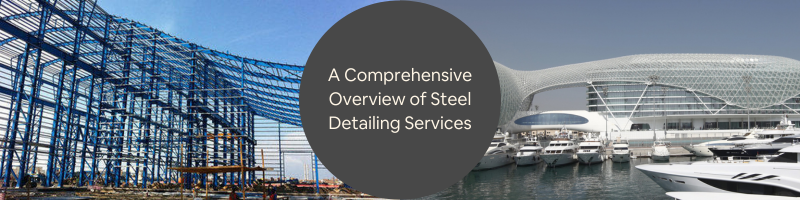
A Comprehensive Overview of Steel Detailing Services and Its Importance for Construction Companies


There’s nothing quite like seeing a skyscraper rise up into the skyline or watching the aerodynamic steel skeleton of a contemporary stadium unfold. But each bolt, beam, and bracket is supported by a secret but essential force: steel detailing services. It’s the behind-the-scenes hero of building projects, translating dreams into workable blueprints. To construction firms, steel detailing isn’t a frill—it’s the keystone holding everything together, literally at times.

So, just what is steel detailing? Why the fuss? And where do you find the best of the best? Buckle up, put on your steel-toed boots (virtually), and let’s dive in-depth into the fascinating world of steel detailing services.


🚀 Table of contents


Why steel detailing matters (More than you might think)

Steel detailing may not be a headline-grabber, but it’s one of the most important steps in translating architectural visions into rock-solid realities. Behind each stunning steel creation—bridges, stadiums, high-rises—is a carefully detailed plan laid out with precision accuracy. This is where steel detailers come into the picture, filling the gap between structural engineers and construction teams.

Think of steel detailing as the blueprint’s next evolution. It transforms broad engineering concepts into ultra-specific instructions—how each beam should be cut, where every bolt goes, and exactly how it all comes together. These aren’t just simple line drawings. They include shop drawing services, 3D models, erection plans, bolt schedules, and connection diagrams that leave zero room for guesswork.

And here’s the kicker: even a minor oversight, like a single misaligned bolt hole or an incorrectly placed plate, can grind an entire construction project to a halt. That means lost time, blown budgets, and in extreme cases, structural issues that threaten safety.

It’s not only about accuracy—it’s about being accountable. Every beam and joint needs to be flawlessly planned and exactly carried out. Without quality steel detailing, an elegantly conceived structure could just as well stay a design.

So the next time you gawk at a sparkling skyscraper or marvel at the superstructure of a huge industrial facility, recall this: it would all be gone without the unheralded accuracy of steel detailers. They may not be on site, but their labor is completely everywhere.

RELATED: Ultimate guide in choosing freelance structural engineer for companies and firms

steel detailing services example by Cad Crowd design professionals and experts

Cad Crowd – The freelance powerhouse

Where recruiting proficient steel detailers is concerned, Cad Crowd takes center stage—and rightly so. The site has turned into a go-to source for construction firms that desire expert work without the recruitment of permanent employees. Whether it’s intricate Tekla work or precise SDS/2 and Advance Steel projects, Cad Crowd has a talent pool of screened steel detailing freelancers waiting to handle projects of any scope.

One of the most persuasive things about Cad Crowd is the incredible variety of talent that’s available. You aren’t confined to in-region hires or inflexible contracts. Rather, you get access to a worldwide pool of talented steel detailers that offer flexibility, efficiency, and experience to your building workflows. Whether you’re laying out a small warehouse or coordinating the steel infrastructure of a 40-story high-rise building, there’s a freelancer—or even a whole team—waiting to come in and get the work done.

This level of flexibility is a lifesaver for businesses with tight deadlines or variable project volumes. Need an individual for a singular task? No problem. Looking to ramp up with a virtual team for a big project? Piece of cake. Cad Crowd makes it easy to hire and deliver high-quality outcomes—no sacrifice required.

In an industry where speed and timelines are paramount, Cad Crowd provides a clever, scalable solution. It’s more than an employment platform—it’s a growth resource, driving efficiency and quality design.

Punch-packing boutique studios

In the constantly demanding construction world where deadlines are tight and precision is paramount, two steel detailing firms are raising the bar on excellence—Enginerio and Tesla Outsourcing Services.

Enginerio is carving a niche as a fast-rising star in the structural steel universe. Renowned for their precision engineering and keen attention to detail, their steel detailing division combines technical know-how with top-drawer 3D modeling design services. They’re not merely sketching lines—building a framework of smooth construction. Catering to mid-sized and large companies from North America and Europe, Enginerio has developed a strong reputation for being more than a service company. Their blog delves deep into subjects such as clash detection and site coordination, showing tangible know-how that speaks to project managers in the field.

Then there’s Tesla Outsourcing Services—a company name that’s been around long enough to be equated with trustworthiness. Their crew pairs Tekla Structures and Revit with strict project management techniques to deliver precision on a regular basis, especially on big commercial and industrial projects. They aren’t showy, but they are quick, meticulous, and reliable.

What binds the two firms together is the ability to succeed in adversity. Building doesn’t wait, nor do they. When the project requires close coordination between disciplines and lightning-quick turnarounds, Enginerio and Tesla Outsourcing Services are the go-to problem-solvers. Their attention to detail and teamwork make them go-to allies in the high-stakes, high-speed world of structural steel.

RELATED: Fundamentals of BIM & modeling design services at building information modeling companies

Seasoned detailing giants with a global presence

Steel detailing is more than a matter of drawing lines on paper—it’s a matter of providing stone-cold accuracy for intricate structures that define skylines and neighborhoods. That’s where firms like Flatworld Solutions excel. They’ve been around long enough to understand that any project requires precision and quick turnaround times. Their workflow is smooth: design validation initially, 2D/3D drawings services for clarity, CNC-ready data for manufacturing, and rigorous quality checks along the way. The outcome? Projects that get done quicker without sacrificing an ounce of quality. For general contractors balancing massive infrastructure projects, that’s not only impressive—it’s necessary.

And then there’s Indovance, a name that’s heavy with reputation in the realm of BIM-integrated steel detailing. What makes them stand out is their deeply ingrained engineering experience and a communications system that functions—no black hole email chains or misplaced revisions. Their model—headquartered in the U.S. with a skilled production team in India—means clients get high-level collaboration at a cost that doesn’t break the budget. It’s a win-win, especially for projects where detailed coordination can make or break the schedule.

And don’t forget Shalin Designs. This company packs a punch above its weight when it comes to bespoke steelwork. From structural and miscellaneous metals through precast pieces, they’re an intelligent choice for specialty contractors undertaking unusual builds—imagine custom canopies or ornamental staircases. They’re flexible and individually customized, so they’re a favorite of architects and builders with an artistic bent.

They embody, collectively, the changing craft of steel detailing—accurate, interdisciplinary, and ever progressive.

BIM-first steel detailing companies

Construction is quickly digitizing, and steel detailing is along for the ride. Firms such as QeBIM are at the forefront, placing steel detailing at the core of BIM processes. With extensive experience with Tekla BIMsight and Revit Structure, QeBIM provides more than accurate drawings—they provide fully coordinated models that reduce RFIs and reduce site confusion, particularly on complex commercial construction projects.

On the same wavelength, Excel Steel leads the way with its intelligent, 3D steel detailing models. Its detailers design fully connected layouts that go seamlessly from architectural design services to construction. Imagine error-free construction plans, clean construction drawings, and CNC-ready information—all optimized for high-tech clients and giant construction projects. These companies aren’t detailing steel; they’re reshaping how steel interacts within the overall construction universe. In an age of tight deadlines and tighter profit margins, that kind of coordination is gold.

Specialists in industrial and complex structures

Building huge industrial buildings—be it a mining complex, a power station, or an offshore platform—generic detailing just will not work. Such projects require profound, industry-specific expertise, and that’s precisely the area where companies like Weldform Structures excel. Australasia-based Weldform applies specialist precision to steel detailing for intricate projects like massive industrial sheds and mining facilities. Their staff works closely with fabricators and contractors, focusing strongly on the detailing of connections and material optimization for peak efficiency.

Meanwhile, Construction Placements operates from a different angle. Rather than providing services themselves, they serve as a vital industry connector, aggregating valuable resources and pointing construction companies toward firms with specialized expertise in infrastructure and public works. Whether you’re sourcing a specialist in bridge design or seeking steel detailing veterans, their curated listings and insights help decision-makers find the right fit for highly technical builds.

Up-and-comers with a tech edge

There are newer firms making some big waves in the steel detailing industry through the use of AI, parametric modeling, and intelligent workflows.

Xcavate Engineering and Trimble Tekla consultants are betting big on automation to decrease manual labor and enhance the speed of delivery. Use of live model coordination with MEP and architectural groups in their workflows prevents rework and expensive changes on-site.

There’s Silicon Valley Infomedia, a service provider based in India offering structural drafting services and steel detailing together for medium-sized projects in Europe and the U.S. They’re quick, technologically sophisticated, and extremely cost-effective—a winning combination for construction firms requiring responsive assistance.

expert steel detailing CAD desgin by Cad Crowd design professionals

RELATED: How architectural CAD drawings help modern design and construction companies

What makes a great steel detailing partner?

Not all steel detailers are alike, and selecting the right one can sink or float a project. Below are the most important aspects construction companies should be looking for when considering steel detailing companies:

Accuracy and adherence to standards

The best companies are familiar with AISC, OSHA, and international building codes. They are as meticulous about flange thickness as chefs are about salt. They are as careful about bolt grade as a good chef is about salt.

Collaborative communication

Steel detailing companies need to be as at home on Zoom meetings as they are on Tekla. Ongoing interaction with structural engineers, architects, and site contractors is crucial.

Multi-software skills

Be it Advance Steel, Tekla, Revit, or AutoCAD Structural Detailing, companies should be conversant with the tools your crew works with. Extra credit if they can export to CNC-friendly formats or interface with fabrication management software.

Turnaround time and scalability

Some projects need hundreds of detailed drawings within weeks. Can your chosen architectural design expert ramp up resources or pivot quickly? Scalability is key.

Quality assurance systems

Whether it’s internal checks or external audits, strong QA processes make the difference between a model that installs flawlessly on-site and one that triggers panic calls at 3 AM.

Common mistakes construction companies can avoid

While the detailing company is answerable for the drawings, construction firms tend to falter when they fail to give crisp inputs. Unclear design intent, late change orders, or poor coordination can devastate schedules.

Tip: Begin with a good set of structural drawings and have a kick-off meeting with your steel detailer. Present your expectations, timelines, site tolerances, and change-order procedures early.

Also include fabricators in the review of detailing. They tend to find things others do not, particularly shop capabilities.

The future of steel detailing: Smarter, faster, safer

Tech is revolutionizing steel detailing. Cloud-based collaboration software, AI clash detection, and real-time visualization are making detailing smarter and more efficient. Visualize a project where the steel detailer, the structural engineer, and the fabricator are all working on the same live model in real-time. That future is within reach.

Firms such as Autodesk, Trimble, and Bentley Systems are creating platforms that merge detailing with fabrication and even delivery logistics. The construction firms that invest in technologically aware steel detailers are well-placed to deliver on time, save money, and steer clear of construction mayhem.

Small enterprises can now punch above their weight due to CAD design outsourcing platforms such as Cad Crowd or cloud-based Tekla sharing, making it easier than ever to access steel detailing.

RELATED: As-built drawings vs shop drawings: What freelancers and service providers need to know

Final thoughts

Steel detailing isn’t simply an item in your construction budget—it’s the hub that keeps your whole project together. The most precise detailing work is unseen when executed well, but its lack can bring a site to a halt. For building smarter and quicker, construction companies need to invest in a proper steel detailing partner. It’s not a choice—it’s a necessity. And with choices that run from powerhouse platforms such as Cad Crowd to specialty companies with the best technology at their disposal, there’s never been a more opportune time to get your steel detailing done.

Get a free quote today.

author avatar

MacKenzie Brown is the founder and CEO of Cad Crowd. With over 18 years of experience in launching and scaling platforms specializing in CAD services, product design, manufacturing, hardware, and software development, MacKenzie is a recognized authority in the engineering industry. Under his leadership, Cad Crowd serves esteemed clients like NASA, JPL, the U.S. Navy, and Fortune 500 companies, empowering innovators with access to high-quality design and engineering talent.

Connect with me: LinkedInXCad Crowd

The Complete Guide to Structural Steel Detailing and How It Can Help You Design Your Buildings


In this article, we will be covering how to use a structural steel detailing program, what they can do for your design, and how they can help you create your buildings.

Structural steel detailing is the process of defining the steel members in a design and detailing their sizes, shapes, locations, and connections. The process of structural steel detailing is the backbone of any design. We will look at why you might want to take on this practice by yourself and how it can help you design your buildings.

Structural steel detailing is crucial for any building project because it entails producing drawings that specify the shape, size, location, and connection of metal beams or columns to form a frame for buildings. Structural Steel Detailing also provides information about the materials used in structural framings like sheet metal or pre-cast concrete panels.

Structural steel detailing will play an important role in designing your buildings because it gives you control over how your building can be constructed. It gives you unprecedented flexibility and unparalleled design opportunities.

Introduction: Structural Steel and its Importance

Structural steel is an important ingredient in any construction project. It provides the framework for buildings to stand, bridges to span, and skyscrapers to rise.

Steel is not just a building material. It is also an engineering marvel that can be manipulated into any shape or size imaginable.

Structural steel is used to construct everything from the house you live in into the bridge you cross when you are on your way to work. Steel shapes are created by cutting and rolling sheets of metal until they are flat enough for construction needs.

Structural steel is a key component in the design and construction of buildings, bridges, highways, and other structures. It can be made of many different materials – steel, stainless steel, aluminum alloy.

Structural engineering is the application of science to produce structures that are safe and have desirable properties. The structural engineer must consider all loads that might act on the structure as well as comment on its stability.

The use of welded steel structures has increased significantly in recent years. This is due to the quick erection time, less amount of material needed for construction, easy to customize based on project needs, and reduced cost.

Steel Detailing Services

How to Get Started with Tekla Structures

Tekla Structures is a 3D design program that can be used for designing many kinds of structures, including buildings. The program provides a wide range of tools for creating architectural models, including 3D modeling tools, 2D drawing tools, and 3D animation tools.

In Tekla’s own words: “Tekla Structures is a powerful building information modeling (BIM) program that allows engineers, architects, and designers to work together to create accurate and life-like designs before construction starts. It includes all the features needed to create the model of any building type, from residential homes to complicated office buildings.”

The user interface is very friendly and well-organized which makes it very easy for beginners who want to get started with this application.

Tekla Structures is a 3D design program for architects and engineers. It allows the users to create and share drawings of buildings, construct models, and create animations.

Tekla Structures is a 3D design program created by experts for experts. The interface is very easy to use with great tutorials available online for those who would like more instruction. It also has a pricing plan for professionals as well as an affordable price point for beginner designers.

What is Tekla Structures

Tekla Structures is a 3D structural design program. It supports steel and reinforced concrete design.

Tekla Structures offers easy-to-use parametric modeling tools that let you quickly model, analyze, and document your structure in the shortest possible time.

Tekla Structures provides engineers with 3D views of their project for construction staging, load modeling, detailing, and visualization of the final project to stakeholders.

The program comes with pre-set templates that can be modified by the user to fit his or her needs. It also provides standard auto-features such as automatic welding of structural members, spans between members, etc.

Tekla Structures for Beginners – 8 Things You Need to Know

Tekla Structures is a BIM program for designing and documenting buildings. It has been designed to make your design process as easy as possible. It is a powerful yet simple tool for professional architects, engineers, and contractors who do not want to compromise on quality.

In this article, we will discuss the 8 features that you should know about Tekla structures.

– It is a powerful BIM program

– It has been designed for easy use for professionals

– Tekla structures is an intelligent tool that reduces errors and requires minimal training before becoming efficient at it

– You can build anything you want with Tekla Structures because it supports all kinds of projects, from single-family dwellings to large-scale developments;

– All your drawings should start with a sketch;

– Make sure you save your sketches regularly;

– The canvas size is the space where you will draw or construct your building;

– You can use photos as inspiration for your drawings;

Tekla Structures is a program for designing and building structures. It is an advanced 3D modeling program that can be used across various fields from architecture, civil engineering, mechanical engineering to the simulation of pedestrian-level environments.

Tekla Structures can be used across various fields from architecture, civil engineering, mechanical engineering to the simulation of pedestrian-level environments.

How to Detail Your Design in Tekla Structure

Tekla Structure is a building design program that allows you to create a 3D model of a building.

The designers use the program to plan the shape and size of the structure and then add other necessary elements, such as windows, doors, etc. The architects can also use the program to see how different shapes and sizes will look at one another.

Tekla Structure is easy to use and it can be downloaded from their website. The only thing needed is an idea of what type of structure you want to build.

There are many benefits to using 3d modeling program. It allows architects to see what the design will look like before they start building. These programs also allow architects to be more efficient because it speeds up the design process.

The first thing you want to do is set up your scene, which is where you place all of your objects in space. Next, you want to determine the lighting and atmosphere of the scene. Then, you can start adding buildings and other objects that go into designing a scene for a project. Finally, once everything is set up, you can export it as a 3D PDF or send it directly to someone through email or an upload site like Dropbox.

The Complete Guide to Structural Steel Detailing and Tekla Structures


Structural steel detailing is a process where the structures are designed to resist loads and support other structures or any other loads that they may be subjected to. The main components of the structural steel detailing are the columns, beams, and trusses.

Steel detailing is not an easy process. It requires expertise and knowledge of how to design for different load cases and what should be done in each situation. Tekla Structures is a programming tool that helps designers to visualize and analyze their designs and work more accurately than before concerning design considerations such as environmental constraints, dimensions, materials, loadings, etc.

Structural steel detailing is the process of designing the location, size, shape, and type of steel needed to support a structural system for building or bridge construction. It is an important part of the design process because it allows engineers to show how materials will be assembled to create a complete structure that can withstand loads up to 1 million pounds per square inch (MPa).

Tekla Structures is an architectural BIM program that creates 3D models that can be exported into building products like Tekla Structures, Autodesk Revit Architecture, and Google SketchUp. This program provides architectural designers with an integrated 3D modeling platform.

Introduction: A Design Overview of Structural Steel Detailing and Tekla Structures

Structural steel detailing is an important process for the design of a structure. Steel detailing services plays a key role in this process as it provides an easy way to design structures.

Some of the most popular options in this field are Tekla Structures and Autodesk Etabs.

Tekla Structures is a 3D modeling program that offers unique features such as Tekla Structures Insite, which allows you to create accurate drawings from your models. This program can be used by professionals and students alike for designing structures from scratch or existing models with ease.

In comparison, Autodesk Etabs offers an easy-to-use interface that lets you construct structural elements by using a library of common shapes and components, which makes it easier to create detailed designs.

Tekla Structures is a program that helps engineers to design steel structures with the use of Autodesk products. Tekla Structures is used for designing and detailing steel structures, fabricating detail drawings, and more.

Tekla Structures provides a complete range of tools and deliverables for structural engineers and designers. The program is used mainly in the construction industry and is best suited for general structural engineering.

The purpose of this paper is to explain the process of structural steel detailing. Structural steel detailing consists of all the design and manufacturing activities that are necessary to detail a structural steel member or assembly for fabrication, erection, and service. The program used for structural steel detailing is Tekla Structures. Tekla Structures is a 3D modeling program that allows users to design structures with ease by providing predefined templates that can be used as a starting point or customized.

civil engineering

What is a Detailer’s Role in the Construction Industry?

Detailers are often required to be onsite for the duration of the project, which may last anywhere from 6 months to 5 years. They are aware of all facets of construction and steel fabrication, and they ensure that the constructed building meets its design goals.

Steel detailers not only keep an eye on what is being built but also provide input on what needs to be done before it is erected. A steel detailer can help with customer service by reviewing architectural drawings before installation, checking for errors in construction plans before any work begins, and providing clients with consultation services about their project.

A steel detailer is a person who is responsible for designing and drawing up construction plans of an object such as bridges, buildings, and machines. A good detailer will be able to get the most out of the available materials and time without compromising on quality or safety.

Steel detailers can work in any industry that requires construction drawings. The role may differ from job to job so potential applicants need to know what they are in for before accepting a position. For example, in some cases, a steel detailer will have to design models of objects too while in others, they might only need to draw up blueprints with specifications.

How to Use Tekla Structures for Building Designing and Project Management for Construction Projects?

Tekla Structures is a program that allows you to design and manage building projects with ease. It is a powerful structural designing and project management program that makes designing and building easier for designers, contractors, engineers, architects, contractors, and owners.

Tekla Structures offers a lot of benefits to the users. It helps in the designing process by providing a framework for building structures. Tekla Structures also streamlines the construction process by giving professionals access to all the plan information needed to execute it efficiently without any errors or delays.

The program includes many features such as 3D views of buildings from any angle, checking for structural integrity during initial stages, enabling collaboration among teams on projects with different phases of the project life cycle due to its cloud-based nature.

Tekla Structures is a project management program created for construction projects and building designs. It has various features such as Tekla Structures 360, Tekla Construction, Tekla 3D Reviewer, Tekla Building Designer, and more.

It has an intuitive interface that can be used by anyone without any experience in construction or architecture. You can also use it on mobile devices as well as PCs and Mac computers.

Conclusion: The Importance of Using Steel Detailers for Faster Building Designing & Project Management

Steel detailers make a significant contribution to the construction process. It is important to note that steel detailers are necessary to ensure compliance with codes and standards during the construction process.

In conclusion, steel detailers are one of the most critical roles when it comes to ensuring quality design and management in a construction project. Steel detailers have been known for providing accurate calculations which help with making decisions on what materials should be used within a project.