Elon Musk reportedly fired a key Tesla executive following another month of flagging sales


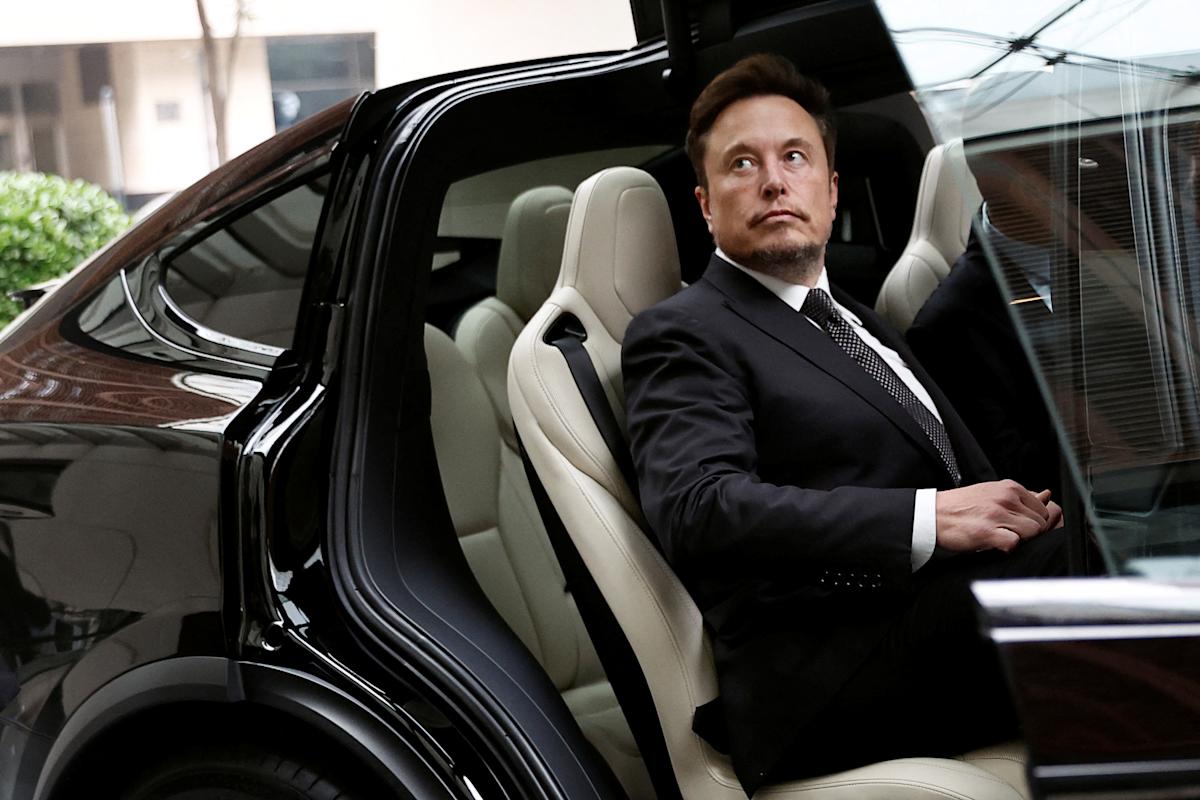
Elon Musk has reportedly fired Omead Afshar, Tesla’s head of manufacturing and operations in North America and Europe, according to Forbes. Both CNBC and Bloomberg corroborated the report. Afshar’s exit follows Milan Kovac, the head of engineering on Tesla’s Optimus robot, who left the company in early June.

Afshar was promoted to the role last year, Bloomberg reports, after working for multiple different Musk-owned companies since 2017. The timing of his exit isn’t particularly surprising given the trouble Tesla has faced selling cars. Sales in Europe have shrunk for a fifth consecutive month and the European Automobile Manufacturers’ Association reports that registrations of new Teslas dropped by nearly 41 percent in May. The company is also struggling in China, where sales fell 15 percent in the same month.

While Musk appears to be holding Afshar responsible, the blame clearly lies at Musk’s feet. Helping to fund President Donald Trump’s re-election in the US, running the destructive DOGE cost-cutting efforts after his election and just generally maintaining a noxious public presence have permanently tainted Musk and his companies. While SpaceX still benefits from government contracts, Tesla’s sales are vulnerable to public opinion, something the Tesla Takedown movement has been leveraging to its advantage with protests outside of the company’s dealerships.

Firing Afshar, leaving his position in the US government and launching Tesla’s robotaxi service in Austin are all different attempts from Musk to change the narrative around Tesla. It’s not clear yet whether they’ll actually help.

Hyundai is giving away free Tesla NACs adapters to its EV customers


Hyundai said Monday it will send customers who have bought or leased an EV before January 31 a free charging adapter that will let them access Tesla’s supercharging network.

The Hyundai-authorized adapter will give CCS-port-equipped Hyundai EV drivers access to more than 20,000 Tesla Superchargers in the United States, according to Hyundai. Free adapters will be available to eligible owners of the model-year 2024 and earlier Kona Electric, Ioniq hatchback, Ioniq 5, and Ioniq 6 vehicles. Hyundai said that model-year 2025 Ioniq 6, Ioniq 5 N, and Kona Electric vehicles are also eligible.

Customers have to request the free NACs adapter through the online MyHyundai owner portal.

Support for Tesla’s charging connector and charge port — called the North American Charging Standard — has accelerated since Ford and GM announced plans in 2023 to integrate the technology into the next generation of EVs and sell adapters for current EV owners to gain access. Up until then, every EV, with the exception of Tesla, used Combined Charging System (CCS) connectors.

Virtually every other automaker followed, making their own partnerships with Tesla to offer customers a NACs adapter. Some, including Lucid, have made plans to integrate the charging port into future EVs.

The rollout hasn’t been as smooth as some hoped, with many non-Tesla customers still waiting for the adapters. However, some automakers have started to ship the adapters in recent months.

Tesla is testing a robotaxi service that Elon Musk claims will launch next year


Elon Musk said he hopes to launch a service that will let people hail self-driving Tesla vehicles in California and Texas sometime in 2025 — and claims his company has already been testing the service in the Bay Area with employees.

The comments, made Wednesday on Tesla’s third-quarter earnings call, go farther than what Musk promised two weeks ago at its Cybercab unveiling event. On that stage, Musk promised that Model 3 and Model Y owners would be able to use an “unsupervised” version of Tesla’s Full Self-Driving software in California and Texas. But he made no mention of the ride-hailing network, despite Tesla having teased the idea for years.

It’s unclear if Tesla would be required to get permission from California’s Department of Motor Vehicles to conduct the tests Musk said his company is already performing. The DMV did not immediately respond to a request for comment.

David Lau, Tesla’s VP of software engineering, said on the call that the cars employees have been hailing have had safety drivers at the wheel. And to be clear, no Tesla vehicles can currently drive themselves without human intervention.

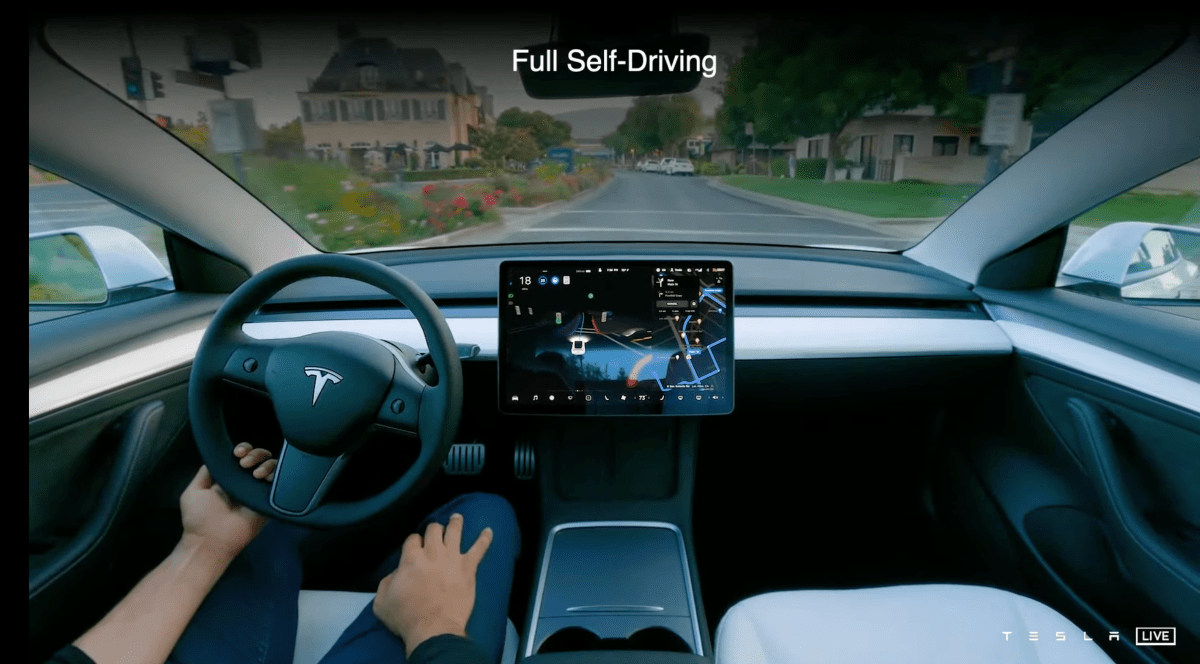
Today, Tesla’s Full Self-Driving software, or FSD, is considered an advanced driver assistance system — not a self-driving system like the one Waymo uses in its robotaxis. FSD offers some automated features that are available on highways and city streets, however the system still requires the driver to pay attention and take control.

Musk said on the call that Tesla would go through the proper regulatory approval process in California before opening such a service to everyday consumers, though he lamented the red tape and said he expects smoother process in his home state of Texas. The regulatory process in California to launch a commercial robotaxi service has multiple tiers that require approval from the DMV and the California Public Utilities Commission. Waymo is the only company currently allowed to operate a commercial drvierless robotaxi service in San Francisco.

Musk also opined that Tesla might launch the service in other states by the end of next year, too.

These claims come after years of Musk overpromising on Tesla’s ability to develop software that can autonomously drive cars. He originally promised in 2016 in a since-deleted post on Tesla’s website that “All Tesla Cars Being Produced Now Have Full Self-Driving Hardware,” and in the following years made it seem that it would only take the flip of a switch to fill the streets with self-driving cars.

Even the hardware part of that promise has not borne out.

Tesla has had to upgrade cars with those early version of the so-called “Full Self-Driving” hardware. And Musk admitted on Wednesday’s call that cars equipped with what Tesla calls “Hardware 3” — which it started building into its EVs in 2019 — may not ultimately be able to drive themselves. If Tesla does someday get to the point where its software can drive vehicles without supervision, and it doesn’t work on Hardware 3, Musk promised to swap out that hardware at no cost to owners.

Tesla says ‘Full Self-Driving’ will be ready for Europe and China in early 2025


Tesla has tweeted its roadmap for the remaining months of 2024 and early 2025, revealing that Full Self-Driving could be available in Europe and China in the first quarter of next year, if it gets the proper approval from each region’s respective regulators. Company chief Elon Musk previously said that he expects to receive regulator clearance from the regions by the end of the year. The Wall Street Journal reported in April that authorities in China had already tentatively approved the launch of Tesla’s Full Self-Driving software in their country. It’s not quite clear where the company stands with European Union regulators at the moment.

In a response to the original post, Musk added that he’s hoping for FSD to be approved in Right-Hand Drive markets by the end of the first quarter or by early second quarter next year. Since he’s presumably talking about RHD markets in Europe and China, then he’s pertaining to the UK, Hong Kong and Macau.

The automaker has also revealed that Full Self-Driving will be available for Cybertrucks sometime this month, along with the Autopark capability. In October, Tesla is adding unpark, park and reverse functions to FSD, as well. The FSD software isn’t free, and buyers will have to pay to be able to unlock its semi-autonomous driver assistance capabilities. In the US, Tesla owners can buy the software outright for $8,000, though they can also pay a $99-per-month subscription fee for the supervised version of the feature.

This article contains affiliate links; if you click such a link and make a purchase, we may earn a commission.


Tesla recalls the Cybertruck for faulty accelerator pedals that can get stuck


Tesla is recalling all 3,878 Cybertrucks that it has shipped to date, due to a problem where the accelerator pedal can get stuck, putting drivers at risk of a crash, according to the National Highway Traffic Safety Administration.

The recall caps a tumultuous week for Tesla. The company laid off more than 10% of its workforce on Monday, and lost two of its highest-ranking executives. A few days later, Tesla asked shareholders to re-vote on CEO Elon Musk’s massive compensation package that was struck down by a judge earlier this year.

Reports of problems with the Cybertruck’s accelerator pedal started popping up in the last few weeks. Tesla even reportedly paused deliveries of the truck while it sorted out the issue. Musk said in a post on X that Tesla was “being very cautious” and the company reported to NHTSA that it was not aware of any crashes or injuries related to the problem.

The company has now confirmed to NHTSA that the pedal can dislodge, making it possible for it to slide up and get caught in the trim around the footwell.

Tesla said it first received a notice of one of these accelerator pedal incidents from a customer on March 31, and then a second one on April 3. After performing a series of tests, it decided on April 12 to issue a recall after determining that an “[a]n unapproved change introduced lubricant (soap) to aid in the component assembly of the pad onto the accelerator pedal,” and that “[r]esidual lubricant reduced the retention of the pad to the pedal.”

Tesla says it will replace or rework the accelerator pedal on all existing Cybertrucks. It also told NHTSA that it has started building Cybertrucks with a new accelerator pedal, and that it’s fixing the vehicles that are in transit or sitting at delivery centers.

While the Cybertruck only first started shipping late last year, this is not the vehicle’s first recall. But the initial one was minor: Earlier this year, Tesla recalled the software on all of its vehicles because the font sizes of its warning lights were too small. The company first unveiled the truck back in 2019.

Tesla layoffs hit high performers, some departments slashed, sources say


Tesla management told employees Monday that the recent layoffs — which gutted some departments by 20% and even hit high performers — were largely due to poor financial performance, a source familiar with the matter told TechCrunch.

The layoffs were announced to staff just a week before Tesla is scheduled to report its first-quarter earnings. The move comes as Tesla has seen its profit margin narrow over the past several quarters, the result of an EV price war that has persisted for at least a year. The company delivered a record 1.81 million vehicles in 2023. Its margins, however, took a hit after Tesla repeatedly slashed prices in a bid to drum up sales and undercut the competition.

Tesla informed employees that more than 10%, or about 14,000 workers, will be laid off across the global organization that has operations in the United States, Europe and China. In a regulatory filing, Tesla referred to the l layoffs as a “company-wide restructuring.” The layoffs, which affected employees across all departments and seniority levels, were made to reduce costs and increase productivity to prepare for its “next phase of growth,” according to an internal email from CEO Elon Musk that TechCrunch has viewed.

High performers also cut

Many of the laid-off employees were high performers, according to two sources who spoke to TechCrunch on condition of anonymity. One source expressed shock at the number of talented employees cut and noted that many of those affected were working on projects that have fallen lower on Tesla’s priority list. The source declined to specify which projects.

Some departments saw layoffs beyond the 10% outlined in the companywide email, according to sources. One manager told TechCrunch that 20% of their employees were cut.

“I lost 20% of my team, some really good players too,” they said.

The shakeup also comes as Musk continues to bend the company’s trajectory toward building fully self-driving cars. Tesla recently dropped plans to build a lower-cost EV that would retail starting at around $25,000, opting instead to use the underlying platform being developed to power an alleged robotaxi that Musk said will debut August 8.

Musk previously tried to prioritize the dedicated robotaxi vehicle project, according to his biographer, Walter Isaacson. In 2022, he told employees that he wanted a “clean robotaxi” with no steering wheel or pedals. Tesla lead designer Franz von Holzhausen and engineering VP Lars Moravy kept running the low-cost EV project in secret and eventually convinced him to make both — that is, until last week when it was reported that Musk changed his mind.

Top execs leave

Two high-profile executives — Drew Baglino, Tesla’s SVP of Powertrain and Energy, and Rohan Patel, VP of Public Policy and Business Development — also left the company.

Patel told TechCrunch he decided Sunday evening to leave Tesla because of “[b]ig overall changes” at the company. Patel, who had been engaging regularly with Tesla customers and fans on X in recent months, declined to be specific. He noted in a message that it would be “Better for me not to speculate.” “Tesla is going to be stronger than ever, and change is good,” he added.

Baglino told TechCrunch that after 18 years it was time to leave Tesla. “I feel good about the impact I’ve been able to achieve, my leadership team is strong, the energy businesses I’m responsible for are doing well, etc.,” he wrote in a message to TechCrunch.

“Baglino was in charge of powerdrives and new battery projects, and there’s a sense that there isn’t a whole lot of innovation that’s sustainable at this point, which is probably why Baglino is leaving,” Sandeep Rao, head of research at London-based financial services company Leverage Shares, theorized in an interview with TechCrunch.

Baglino’s departure comes just a few months after Tesla’s previous CFO, Zachary Kirkhorn, stepped down. In January, Musk posted on X, formerly Twitter, that he would want to have around 25% voting control of Tesla in order to focus more fully on the company, rather than on his other companies, and help the EV-maker become a leader in AI and robotics.

This article was updated to include information from a regulatory filing that refers to the layoffs as a “restructuring.”