Noctua aims to release its first liquid CPU cooler in 2026, working with Asetek to make the quietest water pump around, though it’s not the thermosiphon project


Noctua, purveyor of ultra-quiet brown/beige fans and massive CPU coolers for twenty long years, has resolutely stayed away from one specific medium, when it comes to keeping chips cool: water. However, at this year’s Computex 2025, Noctua showed the progress it’s making with its liquid thermosiphon system, but that won’t be the first to market: instead, it’s going to be a collaboration with Asetek, and possibly be the quietest AIO liquid cooler you can buy.

The nameless-so-far product will be based around Asetek’s best liquid cooler platform, the G8 V2, so it will be offered in 420, 360, and 240 mm radiator formats, all using the industry-standard 30 mm thickness.

(Image credit: Future)

Naturally, the flow of air through said radiators will be handled by Noctua, with NF-A14x25 G2 140 mm or NF-A12x25 G2 120 mm fans being the specific models chosen for the cooling duties. While these aren’t even remotely cheap ($45 for the 140 mm version), they are exceptionally good, arguably more than their predecessors, the AF-A12/A14x25, shifting plenty of air, all while creating very little noise.

My top 5 Google I/O demos, from Gemini robots to virtual dressing rooms


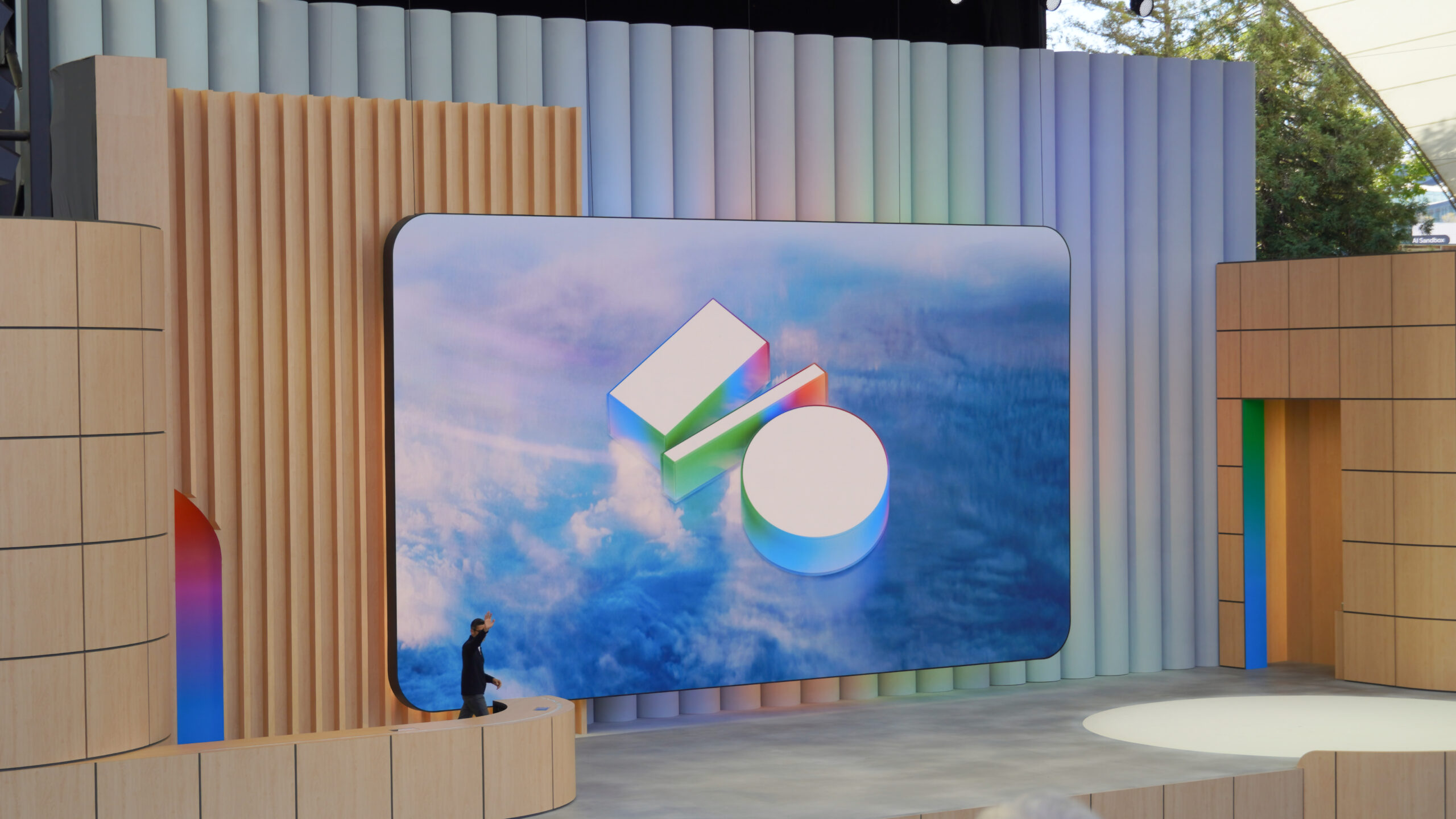
The headlining event of Google I/O 2025, the live keynote, is officially in the rearview. However, if you’ve followed I/O before, you may know there’s a lot more happening behind the scenes than what you can find live-streamed on YouTube. There are demos, hands-on experiences, Q&A sessions, and more happening at Shoreline Amphitheatre near Google’s Mountain View headquarters.

We’ve recapped the Google I/O 2025 keynote, and given you hands-on scoops about Android XR glasses, Android Auto, and Project Moohan. For those interested in the nitty-gritty demos and experiences happening at I/O, here are five of my favorite things I saw at the annual developer conference today.

Controlling robots with your voice using Gemini

Robot arms picking up objects with Gemini.

(Image credit: Brady Snyder / Android Central)

Google briefly mentioned during its main keynote that its long-term goal for Gemini is to make it a “universal AI assistant,” and robotics has to be a part of that. The company says that its Gemini Robotics division “teaches robots to grasp, follow instructions and adjust on the fly.” I got to try out Gemini Robotics myself, using voice commands to direct two robot arms and move object hands-free.

The demo is using a Gemini model, a camera, and two robot arms to move things around. The multimodal capabilities — like a live camera feed and microphone input — make it easy to control Gemini robots with simple instructions. In one instance, I asked the robot to move the yellow brick, and the arm did exactly that.

Gemini's robot arms picking up a gift bag.

(Image credit: Brady Snyder / Android Central)

It felt responsive, although there were some limitations. In one instance, I tried to tell Gemini to move the yellow piece where it was before, and quickly learned that this version of the AI model doesn’t have a memory. But considering Gemini Robotics is still an experiment, that isn’t exactly surprising.

AI Promised to Help – A Reality Check for Small Business Owners


Business-Owners
Freepik

AI was supposed to simplify our workdays. For small business owners, that promise was especially appealing — finally, tools to automate the busywork and free us up to focus on what matters most.

But for many entrepreneurs and home-based professionals, the opposite is happening. Instead of reducing stress, AI is adding a new layer of pressure.

You’re Still Doing the Human Work

AI can write emails, schedule meetings, and manage your inventory. But it can’t build relationships with clients, manage conflict with a contractor, or make tough leadership decisions. That’s the emotional side of business — and it hasn’t gone away. In fact, it’s more central than ever.

The irony is that the more tasks AI takes off your plate, the more your time is filled with the kinds of decisions and conversations only you can handle. And that emotional labor? It’s exhausting.

Burnout isn’t just about being busy — it’s about being stretched thin in ways that feel invisible but deeply draining.

Change Is Hard, Even When It’s Helpful

Adopting AI tools means reworking your systems, learning new platforms, and rethinking how you run your business. That kind of change can be energizing — but it’s also disruptive.

In my book Does Change Have to Be So HARD?, I explain why even good change creates stress. It pulls us out of routine, demands constant adaptation, and often happens before we’re emotionally ready.

If you’re a solopreneur or managing a small team, you probably don’t have a tech department to walk you through the updates. You’re doing it all yourself — and that adds up.

Three Things You Can Do to Stay Grounded

1. Respect the emotional labor.

Managing people — including yourself — takes real energy. Give yourself credit for the emotional heavy lifting, and build space into your schedule for recovery and reflection.

2. Don’t rush tech adoption.

Just because a tool is available doesn’t mean you need it today. Choose the tools that truly support your workflow, not just the trendiest ones. Let your business grow into AI at your pace.

3. Prioritize self-leadership.

Mindset, energy, and emotional clarity are your most valuable business assets. Invest in habits that support your focus and well-being. Whether it’s coaching, journaling, or just stepping away from your desk, these practices protect your most important resource — you.

AI can be a game changer — but only if we integrate it with intention. It won’t replace the need for connection, creativity, or compassion. As small business owners, we need to stay grounded, lead with clarity, and manage both the technical and emotional sides of our work.

The future of business isn’t just about working faster. It’s about working smarter — and more humanely.

Find a Home-Based Business to Start-Up >>> Hundreds of Business Listings.

AMD’s Radeon RX 9060 XT Could Do Budget GPUs Better Than Nvidia


We’ll need to see if a 9060 can beat the RTX 5060, but what’s more important is if it manages to maintain its price after launch.

In the battle of the low-end, 60-class graphics cards, AMD wants to see if it can pull off the same sucker punch of price and performance it gave Nvidia during the launch of its mid-range GPUs. The graphics card maker offered the first, sparse details on its Radeon RX 9060 XT graphics processors late Tuesday at Computex. The card may offer enough power for your PC to hit solid gaming performance at 1440p resolution, similar to the $450 Nvidia GeForce RTX 5060 Ti, on cheaper gaming rigs. The real inflection point of this latest card will be whether you can actually buy it for its base price.

The Radeon RX 9060 XT is the step down in GPU performance from the RX 9070 that AMD launched back in March. It’s based on the same RDNA 4 microarchitecture of the mid-range cards, but with 32 of the company’s latest compute units compared to the 56 on the higher-end card. The GPU comes with two options: one with 8 GB and another with 16 GB of GDDR6 VRAM. The version with more memory will be better for your rig long-term, especially if you plan to hook your PC up to a 1440p monitor and run the latest, more graphically intensive games.

AMD did not offer us the full range of specs, which makes it hard to pin down just where this GPU will land in terms of raw performance compared to Nvidia’s latest cards. While the number of RDNA 4 compute units—the core clusters on AMD cards that process the thousands of calculations necessary for graphically intensive tasks—offers a vague impression of performance compared to the RX 9070, AMD didn’t provide any charts to compare FPS between games. The GPU runs on a 3.13GHz boost clock and has between 150W and 182W of board power compared to the 2.54 GHz clock and 304W board power on the company’s Radeon RX 9070 XT.

Without a price tag, it’s impossible to judge how much of a step down the latest card is compared to the RX 9070. AMD didn’t offer any word on a non-XT variant, either. The card will require a PCIe 5.0 x16 interface, the same as its other cards. AMD doesn’t craft its own GPUs and instead relies on AIC (add-in card) makers to produce its cards. We’ll update this article if AMD announces details on price or availability during its Computex keynote.

The crown jewel of AMD’s current lineup of graphics cards is the RX 9070 XT. AMD made headlines when it set the suggested sale price of the GPU at $600, only $50 more than the 9070, but it packs enough performance to get playable framerates out of multiple intensive games at 4K with a fair amount of ray tracing settings turned up. Unfortunately, because of a combination of tariffs and stock woes, the 9070 XT ended up priced at over $800 and as high as $1,000 at some online retailers.

We’ve seen prices fluctuate regularly over the past several months, but a near 20% price inflation to what should be a mid-range card is simply too much to stomach. However, the lower-end GPUs are faring better. The RTX 5060 Ti MSRP is set at $450, and the lowest price we’ve seen so far is $480. The $300 RTX 5060 is sitting closer to $320 from some AIC makers like Gigabyte. A fair number of Nvidia’s lowest-end GPUs are currently listed as “Out of Stock” or “Coming Soon” on sites like Newegg and Best Buy. Those buying a lower-end GPU are more price sensitive than people who can drop $2,000 on an RTX 5090 without blinking. AMD has even more impetus to set a price people can afford, and make sure it can keep costs level when the card finally hits store shelves.

How Is 5G Technology Impacting Mobile App Development?


How is 5G Technology Impacting Mobile App Development?

As the reach of 5G technology starts to expand globally, businesses in all sectors realize the evolutionary benefits and implications thereof. For mobile app developers, 5G means more than just speed. It represents a completely new level for app planning and building and experiencing.

With this technology, apps will be able to deliver smoother experiences with responsiveness to end-users, especially for real-time communication applications, games, and mobile applications relying on the Internet of Things.

In this article, we will take a view of how 5G has implications on mobile app development and why it is essential to remain ahead of the curve for success. 

5G Technology India

What is 5G Technology?

5G is the fifth-generation technology related to the mobile network, planned to offer faster data throughput, lower latency, and improved connectivity. It is faster than 4G and ensures download rates at a speed up to 100 times than other previous generations. Its capacity to send data in real-time with low delay, handle more connected devices, and deliver more bandwidth transforms mobile apps. These characteristics are particularly crucial for app developers working with technologies such as augmented reality (AR), virtual reality (VR), and the Internet of Things. 

How Does 5G Technology Impact Mobile App Development? 

  1. Faster Speed

The ultimate standout of 5G technology is its unmatched speed-a clear advancement compared with the already outstanding 4G. With the potential for data transfer speeds at as high as 10 Gbps, mobile applications will be able to perform operations and distribute material much better. Apps will load faster, seamlessly update, and give a much more fluid user experience and this will be so even for data-intensive applications.

For mobile gaming, streaming platforms, and multimedia-rich apps, 5G’s speed transforms how users interact with content. Games with high-definition graphics or complex multiplayer environments can run without lag, and video streaming apps can deliver ultra-high-definition (UHD) videos with virtually no buffering. This also enhances interactive aspects to assure more fluid engagement with comments in social media, live streaming, and gaming apps.

As compared to earlier networks, 5G offers more speed. Due to this, mobile application developers can provide more innovative and dynamic experiences.

faster speed

  1.  Minimal Latency

Ultra-low latency is one of the greatest innovations in 5G technology. Compared to 4G networks, 5G networks could even provide a latency as low as 1 millisecond whereas, on most 4G networks, the latency is found to take from 30 up to 50 milliseconds.

Augmented and virtual reality applications require low latency. For example, for smooth and interesting streaming, AR applications need data to be sent in quickness. Similarly, low latency ensures there will not be any kind of lag or motion sickness in VR applications hence it becomes helpful in entertainment as well as educational sectors.

With 5G’s low latency, these apps can deliver high-quality video and voice calls with minimal delay, making remote meetings and consultations more fluid and reliable.

For businesses, the ultra-low latency of 5G opens up new possibilities for developing apps that offer seamless real-time experiences, whether it’s live collaboration, gaming, or AR/VR applications.

  1. Expansion of IoT-Connected Mobile Apps

5G supports a large number of devices at once, which makes it perfect for the Internet of Things (IoT). While 4G struggles with multiple connections, 5G can handle them smoothly. This means IoT apps will run better, with fewer delays or interruptions.

Mobile apps can now easily connect with smart devices like home appliances, wearables, and industrial tools. For example, smart home apps can control things like lights and security in real time. Wearable devices, such as fitness trackers, can give instant updates on health data because of 5G’s fast processing.

Cost To IoT Mobile App Development

  1.  Improves cloud-based mobile applications

Cloud-based mobile applications benefit the most from 5G technology. Its speed and low delay let the apps run smoothly while relying on the cloud for data storage and processing. With 5G, apps can access data from the cloud faster, leading to better performance and less waiting time for the users.

This is especially crucial for businesses that use apps for data-heavy tasks. For example, companies that use real-time collaboration tools or apps that need large amounts of data, like video editing or graphic design platforms, will see improvements. It allows users to upload, download, and access files much quicker, even when working with high-quality content.

Additionally, 5G supports edge computing, where data is processed closer to the source instead of in a distant cloud server. This reduces the time it takes for apps to respond, making them more efficient. For industries like healthcare or logistics, where quick access to data is critical, this improvement can be a big advantage.

USM Cloud Support

  1.  Security and Privacy of Mobile Apps

Security has become a major issue as 5G connects more devices. As more data moves between apps and networks, hackers now have more opportunities as a result. To secure apps developed for 5G, developers must take additional precautions. The main challenge is the increased data traffic. With 5G’s fast speeds, hackers can quickly steal large amounts of data if security measures are weak. Encryption becomes more important to protect sensitive information. Developers should also focus on securing communication between multiple devices, especially in IoT apps.

The increased quantity of attack points is further cause for concern. Since 5G links more devices, every one of them becomes a possible target. The network’s developers are responsible for ensuring the security of each device. This means implementing strong authentication procedures and routinely upgrading the guidelines.

App developers can create more secure and safe apps for the 5G era by keeping these issues in mind. Security needs to be the main concern as more businesses and consumers use 5G-enabled apps.

AI can do cybersecurity blo2


The Future of 5G in Mobile Application Development

Although 5G is still in its early stages, it has enormous potential. As more organizations and industries adopt 5G, mobile apps are expected to evolve. Developers can design complex apps that run faster, interact in real-time, and perform more efficiently. This opens up new opportunities for apps in sectors such as healthcare, gaming, and education.

We will also see an increase in AI-powered applications requiring real-time data processing. Because of 5G’s low latency, apps may provide instant feedback and predictive analytics, allowing businesses to make more informed decisions. AR and VR apps will prosper, offering more immersive experiences.

Businesses should remain ahead of the curve by implementing 5G technology now. Those who adopt it early on can develop apps that provide better services and get a competitive advantage in the market.

As 5G becomes the mainstream, it will change what people expect from mobile apps, requiring developers to create quicker, smarter, and more imaginative solutions.

Conclusion

5G is more than just a high-speed network, as it represents a fundamental transformation in how mobile apps are created and utilized. With its fast speeds, low latency, and capacity to connect more devices, 5G is creating new opportunities for mobile app developers and enterprises. 5G is transforming the future of mobile technology by enhancing real-time experiences and performances of cloud-based and IoT apps. Businesses using 5G can develop innovative apps, improve user experiences, and remain ahead of the competition.

As 5G expands globally, its impact on mobile app development will only rise, opening up new avenues for innovation and growth. To truly benefit from everything 5G technology has to offer, developers and businesses must embrace it and reconsider their app strategy.


Paramount officially renews “cultural juggernaut” Yellowjackets for season 4


It’s official – Yellowjackets has been renewed for season 4 on Paramount Plus. The high-concept cannibal drama is coming off a particularly successful season 3, so the renewal isn’t exactly a shocker, but for the cult series’ many fans, it’s a sigh of relief.

Season 3 left off on one of the flashback timeline’s biggest cliffhangers yet, with the surviving Yellowjackets finally making contact with the outside world. And in the present day timeline, things ended in an even more shocking place with surprise deaths, and escalating stakes that may leave just one Yellowjacket standing by the end of the series.

Why can’t Visual Studio find the Node.js runtime installed by the Visual Studio Installer?


EDIT

It turns out that the nodejs version installed by Visual Studio, should not be used, but that nodejs should be installed separately. It seems that enabling nodejs for visual studio, just enables the templates. You have to install nodejs yourself. The nodejs version installed by visual studio, is used internally by visual studio, and messing with it may corrupt our visual studio install.

Below follows the original question.

Here is what I did

  1. I installed Node.js with the Visual Studio Installer:

I installed Node.js with the Visual Studio Installer

  1. I closed the installer, opened Visual Studio, closed Visual Studio and rebooted the PC.

  2. I searched my Visual Studio installation to see if Visual Studio has installed the Node.js runtime:

Where Visual Studio has installed Node.js

  1. I opened Visual Studio again to create a "Blank Node.js Console Application":

Creating a Blank Node.js Console Application

  1. When I create the project, Visual Studio claims that the Node.js runtime can’t be found:

Visual Studio can't find the Node.js installation

Question

Why can’t Visual Studio find it – is it a bug? I already know how to configure Visual Studio to find it. Should I configure Visual Studio to use the Node.js runtime installed by the Visual Studio Installer?

Thoughts

  • I noticed that the Node.js runtime is not in the path when you start a Visual Studio Developer Command prompt.
  • I wonder, if I use the Node.js runtime I found above (update it, add global packages), if it will interfere with the operation of Visual Studio.

Chocolate Peanut Butter Poke Cake


This Chocolate Peanut Butter Poke Cake recipe creates a rich chocolate cake that’s baked to perfection, then poked all over so it can soak up a creamy peanut butter filling. The filling seeps into the holes, making every bite extra flavorful.

finished chocolate peanut butter poke cake on a countertop

This post may contain affiliate links. Please refer to the terms page for more information.

The cake is topped with a fluffy peanut butter whipped cream that adds a light, sweet finish. It’s the perfect mix of chocolate and peanut butter—like your favorite candy in cake form!

slice of chocolate peanut butter poke cake on a plate
Jump to:

Ingredients

To make this Chocolate Peanut Butter Poke Cake, you’ll need to make three tasty layers:

  1. A rich chocolate cake
  2. A creamy peanut butter sauce to pour into the holes
  3. A fluffy whipped peanut butter frosting to top it all off

Following are the ingredients you’ll need for each part of the cake:

Chocolate cake ingredients

ingredients needed to make chocolate cake including granulated sugar, flour, cocoa powder, baking powder, baking soda, cornstarch, eggs, vegetable oil and brewed coffeeingredients needed to make chocolate cake including granulated sugar, flour, cocoa powder, baking powder, baking soda, cornstarch, eggs, vegetable oil and brewed coffee
  • All-purpose flour
  • Granulated sugar
  • Cocoa powder – use Dutch-processed cocoa powder. Sift if necessary to remove any lumps
  • Eggs – use large eggs and bring to room temperature before starting the recipe
  • Vegetable oil
  • Cornstarch, baking powder and baking soda
  • Brewed coffee – Use room temperature coffee in the cake batter. You can use water instead if you want, but coffee really helps bring out the rich chocolate flavor in the cake.

See recipe card for quantities.

Peanut butter sauce

ingredients needed to make filling for chocolate and peanut butter poke cake including milk, sweetened condensed milk and creamy peanut butteringredients needed to make filling for chocolate and peanut butter poke cake including milk, sweetened condensed milk and creamy peanut butter
  • Sweetened condensed milk – you need one 14-ounce can for this recipe. You can usually find it in the baking aisle at the grocery store.
  • Creamy peanut butter
  • Whole milk

See recipe card for quantities.

Whipped peanut butter frosting

ingredients needed to make frosting for chocolate peanut butter poke cake including powdered sugar, heavy cream, creamy peanut butter and decorationsingredients needed to make frosting for chocolate peanut butter poke cake including powdered sugar, heavy cream, creamy peanut butter and decorations
  • Powdered sugar – sift through a wire sieve to remove any lumps
  • Heavy whipping cream
  • Creamy peanut butter – don’t use all-natural peanut butter. It’s usually too oily and might not whip up to the right texture.
  • Toppings (optional) – feel free to add any toppings you like! Try chopped Reese’s cups, peanuts, chocolate ganache, torched bananas—whatever sounds good to you.

See recipe card for quantities.

Instructions

Chocolate cake

eggs and vegetable oil in a glass mixing bowleggs and vegetable oil in a glass mixing bowl

1 – Place eggs and vegetable oil in a bowl. Whisk until well combined. Set aside for later.

dry ingredients needed for cake batter in a glass bowldry ingredients needed for cake batter in a glass bowl

2 – In a large bowl combine flour, cocoa powder, sugar, cornstarch, baking powder and baking soda. You can use an electric mixer or just stir it by hand—either works!

eggs and oil added to bowl to make chocolate cake battereggs and oil added to bowl to make chocolate cake batter

3 -Add oil and eggs to the mixing bowl. Mix until well combined.

pouring coffee into bowl while mixing chocolate cake batterpouring coffee into bowl while mixing chocolate cake batter

4 -Slowly pour brewed coffee into bowl while continuing to mix. The batter should be smooth and thin.

chocolate cake batter poured into 9 inch by 13 inch glass baking panchocolate cake batter poured into 9 inch by 13 inch glass baking pan

5 – Lightly grease a 9″x13″ cake pan by spraying with baking spray or greasing with butter. Pour the cake batter into the pan.

kitchen timer on a towelkitchen timer on a towel

6 – Bake at 350℉ (180℃) for 40 – 45 minutes. Cake will be well risen and a toothpick inserted in the center of the cake comes out clean. Make peanut butter sauce while the cake is baking.

Chocolate peanut butter poke cake assembly

peanut butter, milk and sweetened condensed milk in a glass measuring dishpeanut butter, milk and sweetened condensed milk in a glass measuring dish

1 – Place peanut butter, sweetened condensed milk and whole milk in a mixing bowl. Whisk well until combined. Tip: If the peanut butter isn’t blending well, microwave the mixture for 20 seconds, then whisk again.

using the end of a wooden spoon to poke holes into baked cakeusing the end of a wooden spoon to poke holes into baked cake

2 – After baking, place cake on a cooling rack for 10 minutes. After the cake has cooled for 10 minutes, use the handle of a wooden spoon or a large straw to poke holes all over it.

pouring peanut butter filling into holes made in a chocolate cakepouring peanut butter filling into holes made in a chocolate cake

3 – Slowly pour the peanut butter sauce over the cake while it is still warm, letting it seep into the holes. Gently tap the pan or jiggle it to help the sauce settle. Cool completely (about 30 minutes), then wrap in plastic and refrigerate for 1 hour.

powdered sugar and peanut butter in a glass mixing bowlpowdered sugar and peanut butter in a glass mixing bowl

4 – Once the cake has chilled, make the whipped peanut butter frosting. In a large bowl, beat peanut butter and powdered sugar with a whisk attachment on medium speed until smooth, about 2 minutes.

pouring heavy cream into a bowl while the mixer is running to make peanut butter frostingpouring heavy cream into a bowl while the mixer is running to make peanut butter frosting

5 – With the mixer running, slowly pour in heavy cream over a period of 2 minutes. Continue to mix until it reaches medium-stiff peaks. Take care not to overmix else the cream will look clumpy.

finished chocolate and peanut butter poke cake with chopped candies on topfinished chocolate and peanut butter poke cake with chopped candies on top

6 – Using an offset spatula, spread frosting evenly over top of cake. Optional – add any toppings you like. Consider chopped Reese’s cups, peanuts, chocolate ganache, torched bananas, etc…

Equipment

You need the following equipment to create this chocolate peanut butter poke cake:

Storage

Store the chocolate and peanut butter poke cake in an airtight container in the fridge for up to 4 days. It doesn’t freeze well, so it’s best to enjoy it fresh.

More chocolate peanut butter desserts

If you’re a fan of the chocolate and peanut butter combo, don’t miss my other recipes that use these two delicious flavors:

I hope you enjoy this chocolate peanut butter poke cake as much as my family and friends have over the years!

📋 Recipe

slice of chocolate peanut butter poke cake on a plateslice of chocolate peanut butter poke cake on a plate

Chocolate Peanut Butter Poke Cake

This Chocolate Peanut Butter Poke Cake recipe creates a rich chocolate cake that’s baked to perfection, then poked all over so it can soak up a smooth and creamy peanut butter filling.

Prep Time 30 minutes

Cook Time 35 minutes

Cooling Time 45 minutes

Total Time 1 hour 50 minutes

Course Dessert

Cuisine American

Servings 17 people

Calories 344 kcal

Ingredients 


Chocolate Cake

  • ¾ cup Cocoa Powder
  • 2 cups All Purpose Flour
  • 2 cups Granulated Sugar
  • 2 Tablespoons Corn Starch
  • 2 teaspoons Baking Powder
  • ½ teaspoon Baking Soda
  • ¾ Cup Vegetable or Canola Oil
  • 4 Large Eggs Room temperature
  • 1 ¼ Cup Brewed Coffee, may substitute water

Peanut Butter Sauce

  • 1 Cup Creamy peanut butter (don’t use natural peanut butter)
  • 1 Can Sweetened condensed milk 14 ounce can
  • ½ Cup Whole Milk

Peanut Butter Whipped Cream

  • 1 Cup Creamy peanut butter (don’t use natural peanut butter)
  • ¾ Cup Powdered sugar
  • 2 Cups Heavy Cream

Instructions 

Chocolate Peanut Butter Poke Cake

  • Preheat oven to 350℉ (180℃)

  • Lightly grease a 9″x13″ cake pan by spraying with baking spray or greasing with butter.

  • Place eggs and vegetable oil in a bowl. Whisk until well combined. Set aside for later.

    ¾ Cup Vegetable or Canola Oil, 4 Large Eggs

  • In a large bowl combine flour, cocoa powder, sugar, cornstarch, baking powder and baking soda. You can use an electric mixer or just stir it by hand—either works!

    ¾ cup Cocoa Powder, 2 cups All Purpose Flour, 2 Tablespoons Corn Starch, 2 teaspoons Baking Powder, ½ teaspoon Baking Soda, 2 cups Granulated Sugar

  • Add oil and eggs to the mixing bowl. Mix until well combined.

  • Slowly pour brewed coffee into bowl while continuing to mix, scraping the bowl occasionally. The batter should be smooth.

    1 ¼ Cup Brewed Coffee, may substitute water

  • Pour the cake batter into greased baking pan.

  • Bake for 40 – 45 minutes. Cake will be well risen and a toothpick inserted in the center of the cake will come out clean.

  • Place cake on a cooling rack for 10 minutes. Make peanut butter sauce during this time.

  • Place peanut butter, sweetened condensed milk and whole milk in a mixing bowl. Whisk well until combined. Tip: If the peanut butter isn’t blending well, microwave the mixture for 20 seconds, then whisk again.

    1 Cup Creamy peanut butter, 1 Can Sweetened condensed milk, ½ Cup Whole Milk

  • After the cake has cooled for 10 minutes, use the handle of a wooden spoon or a large straw to poke holes all over it. Tip: As soon as you poke the holes, start pouring the peanut butter sauce over the cake so it soaks in better.

  • Slowly pour the peanut butter sauce over the warm cake, allowing it to seep into the holes. Jiggle the pan or tap lightly on a countertop to ensure sauce seeps into the holes.

  • Let cake cool completely (approximately 30 minutes) then wrap in plastic and place in fridge for 1 hour.

Peanut Butter Whipped Cream

  • Place peanut butter and powdered sugar in a large mixing bowl.

    1 Cup Creamy peanut butter, ¾ Cup Powdered sugar

  • Using a whip attachment on your mixer, mix the peanut butter and powdered sugar on medium speed until smooth (approximately 2 minutes).

  • Scrape down bottom and sides of mixing bowl.

  • With the mixer running, slowly pour in heavy cream over a period of 2 minutes. Continue to mix until it reaches medium-stiff peaks. Take care not to overmix else the cream will look clumpy.

    2 Cups Heavy Cream

  • Using an offset spatula, spread frosting evenly over top of cake.

  • Optional – add any toppings you like. Consider chopped Reese’s cups, peanuts, chocolate ganache, torched bananas, etc…

Notes

  • Store the chocolate and peanut butter poke cake in an airtight container in the fridge for up to 4 days. It doesn’t freeze well, so it’s best to enjoy it fresh.
  • For best results, pour the peanut butter sauce over the cake while it’s still warm—this helps the sauce soak in easily.

Nutrition

Calories: 344kcalCarbohydrates: 54gProtein: 3gFat: 15gSaturated Fat: 3gPolyunsaturated Fat: 8gMonounsaturated Fat: 3gTrans Fat: 0.1gCholesterol: 0.04mgSodium: 119mgPotassium: 117mgFiber: 3gSugar: 34gVitamin A: 1IUVitamin C: 0.01mgCalcium: 51mgIron: 2mg

Keyword chocolate peanut butter desserts, chocolate peanut butter poke cake, poke cake

Project Astra Is the Secret Sauce for Google’s Gemini Live AI Advances


During its Google I/O 2025 keynote on Tuesday, Google tossed around the Gemini name nonstop, to no one’s surprise. It also spent some time talking about something called Project Astra, a key part of its visual AI technology. 

You can think of Project Astra as a testing ground, and its capabilities will eventually trickle down into products and services you’ll be able to use. We’ve seen this in the form of Gemini Live camera mode, which is getting its iOS debut starting Tuesday, but it’ll also make its way to other products, like AI Mode search. 

Google demoed a series of Astra-centric features during its keynote, and we’ll touch on some of the highlights below. 

For more, don’t miss Google AI Mode will help you buy tickets to events.

Gemini Live camera mode rolling out to iOS devices

Gemini Live’s camera mode was announced as rolling out to “everyone” on Android and iOS starting Tuesday. 

The feature lets you start a Live session with your phone’s camera enabled so you can talk with Gemini and ask it to identify objects and to answer questions about what’s in your environment. I put it through a series of real-world tests and walked away pretty impressed, not least when it called my attention to a pair of scissors I didn’t realize it had spotted.

Google first began rolling out the new Gemini Live camera mode to Samsung Galaxy S25 and Pixel 9 devices back in March and then made it available for all Android users with the Gemini app installed. Now, iPhone users will be able to join the fun. 

New Project Astra models will make Gemini Live smarter

During the I/O keynote, Google also showed off in a video the latest research model for Project Astra, detailing how it could help a guy who was trying to fix their bike. 

In a back-and-forth conversation, the guy doing the repair asked Astra to locate a user manual for the specific bike — a Huffy — and then to find the specific pages in the manual for fixing a certain part of the bike. Astra even brought up a YouTube video showing how to remove a stripped screw and called a local bike shop to see if a specific item was in stock. In the perfect world of the video, the person casually and naturally asked specific questions, and Astra responded seamlessly.

Not unlike some of the recent announcements for the Ray-Ban Meta glasses, Google highlighted Project Astra’s helpfulness as an accessibility utility. Another video showed how a low-vision musician could navigate his surroundings and get on stage to perform a show. 

Project Astra won’t be contained to Gemini

Project Astra’s visual prowess will eventually find its way to AI Mode in Google Search. While the demo looked similar to what’s currently available within the Gemini app (and likely is), some people may not be interested in downloading a dedicated chatbot app but wouldn’t mind having some AI visual assistance within a search itself. 

While you’re here, don’t miss Chrome to get big Gemini integrations, with a catch.


Why True AI Trust Requires Deterministic Reasoning


Amazon recently announced that they have extended their automated reasoning checks in Bedrock Guardrails. This acknowledges what we at Rainbird have long advocated — the critical importance of moving beyond pure probabilistic AI to achieve true reliability and trust in AI systems.

AWS’s move demonstrates the increasing market demands for more rigorous AI validation, although it’s crucial to understand the distinction between implementing guardrails and achieving truly deterministic AI reasoning. 

Let’s explore why this all matters.

Understanding the Evolution: AWS’s Approach vs True Reasoning

AWS’s approach focuses on validating LLM outputs against predefined rules and policies through what they call “Automated Reasoning policies.” These policies can be extracted from a simple policy document and can operate on a set of variables and logical rules that are translated into natural language for accessibility.

However, there are several key distinctions between AWS’s validation approach and true deterministic reasoning:

Static Validation vs Dynamic Reasoning

AWS Bedrock Guardrails implements an “allow-all” approach with selective validation. This means the system attempts to “catch” hallucinations post LLM where explicit policies are defined. 

In contrast, Rainbird reasons over a world model that you get to design and control, captured in a knowledge graph. Decisions are explicitly derived from the graph, not via a probabilistic LLM, so no predicted outputs, just reasoned answers. 

This amounts to a ‘deny all’ approach, with only verifiable decisions being created – a fundamental difference is crucial for applications where determinism, precision and completeness are non-negotiable.

Limited vs Complete Reasoning Chain

Whilst AWS’s solution can validate final outputs, it fundamentally operates as a validation layer on top of probabilistic LLM outputs. An LLM predicts an answer based on a distribution of probabilities, and then a rule checks if that prediction matches predefined criteria. This approach can catch obvious errors, but it cannot provide insight into how conclusions were reached or validate the reasoning process itself. 

In contrast, Rainbird’s knowledge graphs enable true causal reasoning from first principles. Rather than validating probabilistic outputs after the fact, our system builds deterministic logic chains that can explain not just what decision was made, but precisely how and why each step in the reasoning process was taken. This delivers complete visibility and validation of the entire decision-making process, not just its conclusion.

This distinction becomes particularly important in complex decision-making scenarios where multiple policies or rules interact. 

While a validation approach can check individual rules, it cannot understand or reason about their relationships and dependencies. For example, when evaluating eligibility for a financial product, multiple qualifying conditions might interact in subtle ways — income thresholds might vary based on employment status, which in turn could be affected by residency requirements. 

A validation-only system can check each rule in isolation but struggles to handle these interconnected relationships.

In contrast, a true reasoning system built on knowledge graphs can navigate these complex relationships naturally. Because the knowledge is explicitly modelled as an interconnected graph rather than a list of validation rules, the system can trace multiple paths through the knowledge, understand how different conditions influence each other, and arrive at conclusions that respect the full complexity of the domain. 

This means not just more accurate decisions, but also the ability to explain precisely how different factors influenced the outcome and why alternative paths weren’t taken.

The Rainbird Difference: Beyond Validation to True Reasoning

Whilst guardrails can help prevent errors that can be pre-determined, Rainbird’s approach fundamentally transforms how AI makes decisions. Our technology doesn’t just validate outputs – it represents rules as weighted knowledge graphs that unlock true causal reasoning. This means:

  1. Deterministic by Design: Rather than attempting to constrain probabilistic outputs, our systems are inherently deterministic. Every decision follows explicit, traceable logic paths.
  1. Complete Causal Chains: Instead of simply checking if outputs match predefined rules, Rainbird provides complete causal proof for every decision, showing exactly how each conclusion was reached.
  1. Knowledge-First Architecture: Our approach begins with structured knowledge representation, enabling organisations to represent regulations, policy and operating procedures as precise models that can reason, rather than attempting to retrofit precision onto probabilistic models.

The Power of Neurosymbolic AI

What truly sets Rainbird apart is a neurosymbolic approach, combining the best of symbolic reasoning with modern machine learning. This hybrid architecture:

  • Enables precise reasoning over complex knowledge domains
  • Provides complete auditability of decision processes
  • Maintains deterministic outputs whilst handling natural language inputs
  • Eliminates hallucinations through structured knowledge representation

Looking Forward: Noesis and the Future of Trusted AI

With our new Noesis platform, we’re taking this proven approach even further. Noesis will enable developers to:

  • Automatically convert unstructured documents into executable knowledge graphs
  • Deploy deterministic reasoning capabilities through simple API calls
  • Integrate trusted AI capabilities into existing ML pipelines
  • Generate complete audit trails for every decision

The Broader Implications

AWS’s move into automated reasoning validation demonstrates growing market recognition of what Rainbird has been delivering for years: the need for more reliable, explainable AI in enterprise settings. 

However, true trust in AI requires more than guardrails – it demands systems built on deterministic reasoning from the ground up.

As organisations increasingly rely on AI for critical decisions, the ability to provide not just guardrails but complete causal reasoning is becoming more critical. This is where Rainbird’s decade of experience in delivering deterministic AI solutions to major enterprises has proven invaluable.

Whilst we welcome AWS’s recognition of the importance of automated reasoning in AI systems, the future demands more than validation layers. It requires AI systems that are inherently precise, deterministic, and explainable. This is the foundation Rainbird has built upon, and with Noesis, we’re making these capabilities accessible to developers everywhere.

The race to trustworthy AI isn’t just about constraining what AI can do wrong – it’s about building systems that do things right from the start. 

That’s the Rainbird difference.

Want to learn more about how Rainbird can bring deterministic AI to your organisation? Register for early access to Noesis and see the future of trusted AI in action.