An anonymous reader quotes a report from UploadVR: Software developer Stijn Spanhove used the newest SDK features of Snap OS to build a prototype of [a real-world ad blocker for Snap Spectacles]. If you’re unfamiliar, Snap Spectacles are a bulky AR glasses development kit available to rent for $99/month. They run Snap OS, the company’s made-for-AR operating system, and developers build apps called Lenses for them using Lens Studio or WebXR.
Spanhove built the real-world ad blocker using the new Depth Module API of Snap OS, integrated with the vision capability of Google’s Gemini AI via the cloud. The Depth Module API caches depth frames, meaning that coordinate results from cloud vision models can be mapped to positions in 3D space. This enables detecting and labeling real-world objects, for example. Or, in the case of Spanhove’s project, projecting a red rectangle onto real-world ads.
However, while the software approach used for Spanhove’s real-world ad blocker is sound, two fundamental hardware limitations mean it wouldn’t be a practical way to avoid seeing ads in your reality. Firstly, the imagery rendered by see-through transparent AR systems like Spectacles isn’t fully opaque. Thus, as you can see in the demo clip, the ads are still visible through the blocking rectangle. The other problem is that see-through transparent AR systems have a very limited field of view. In the case of Spectacles, just 46 degrees diagonal. So ads are only “blocked” whenever you’re looking directly at them, and you’ll still see them when you’re not.
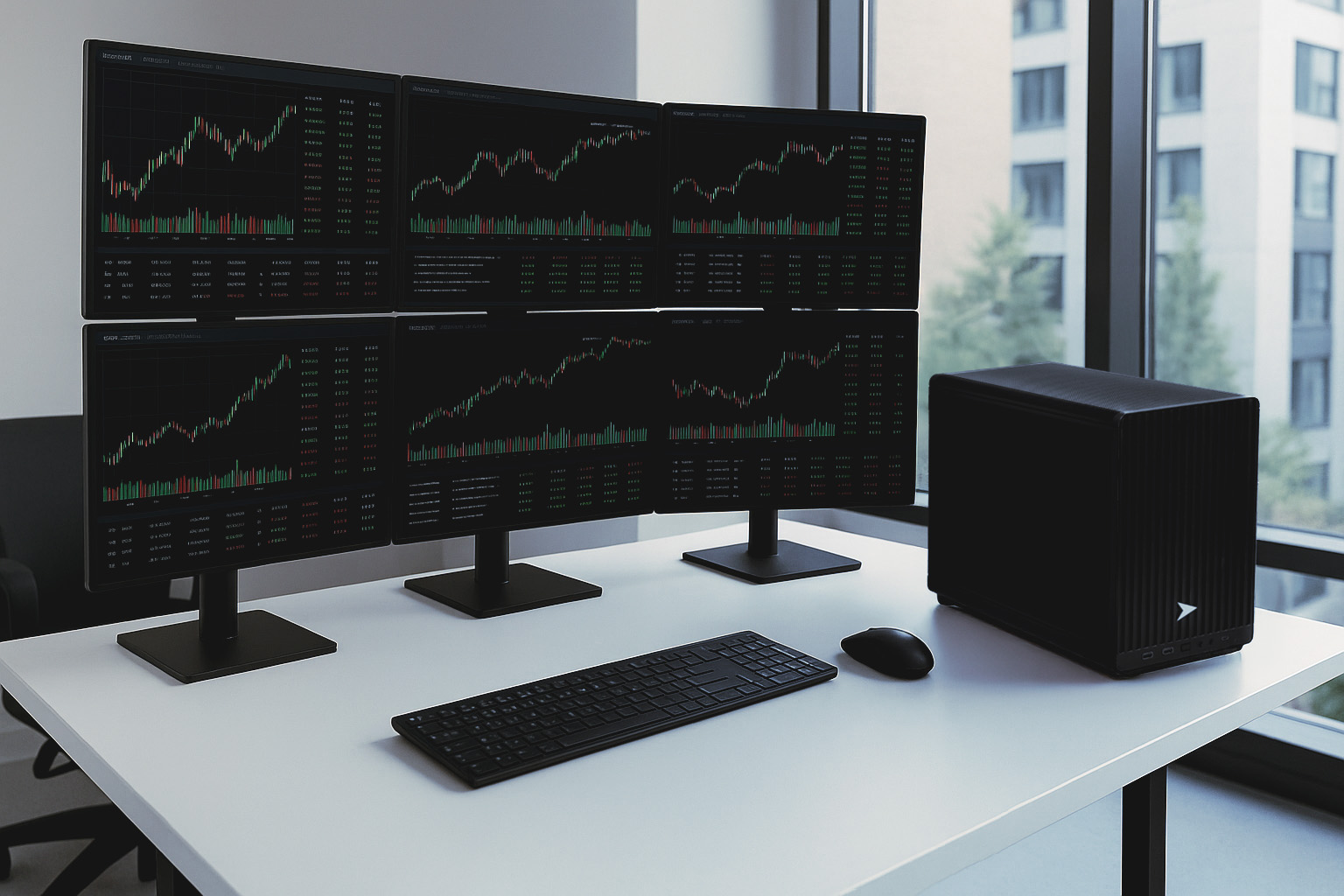
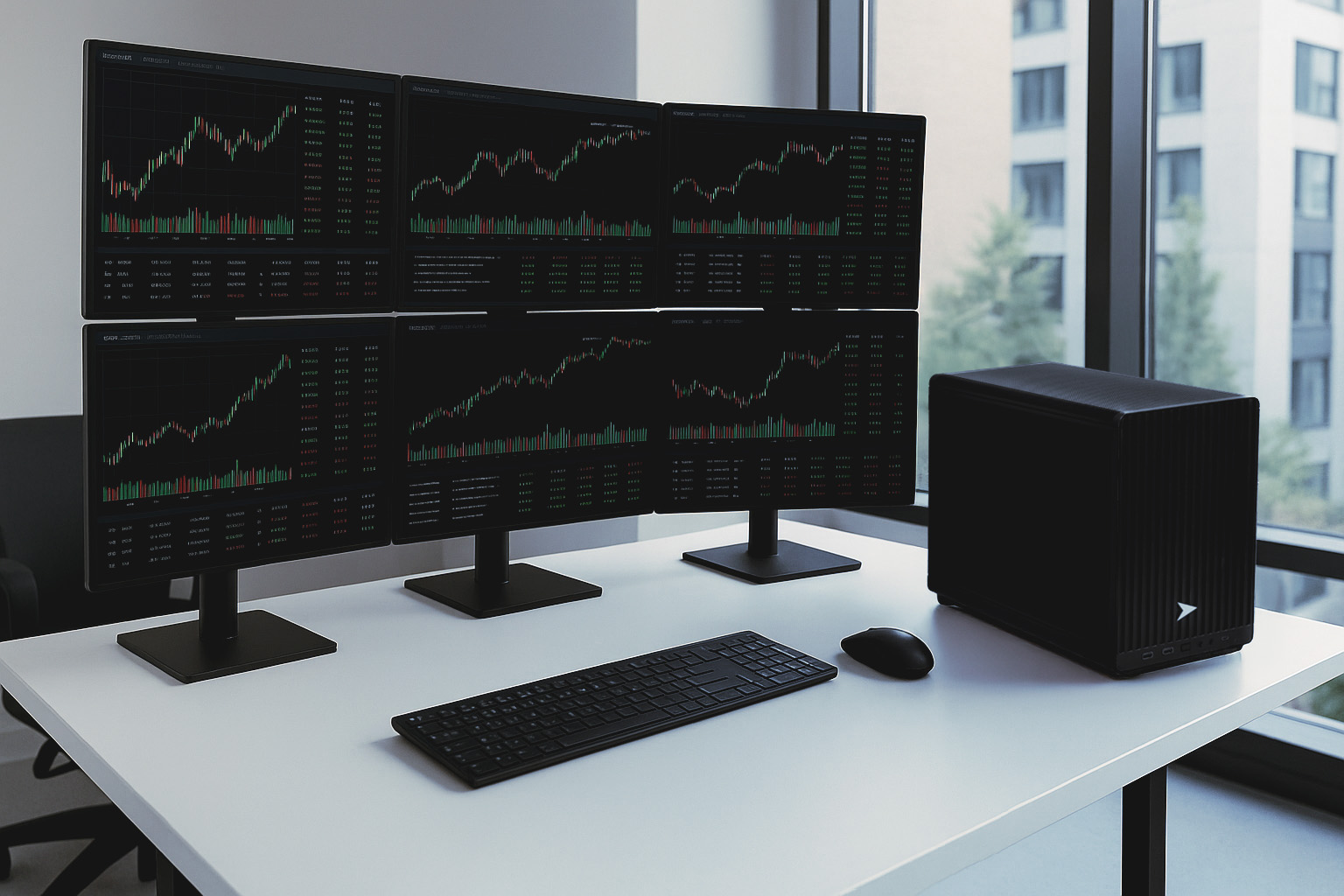
When it comes to building the best trading computers, performance isn’t just a luxury—it’s a necessity. In the fast-paced world of day trading, swing trading, or options strategies, your hardware needs to keep up with real-time data, complex charting, and multi-platform multitasking.
Unlike gaming or general-purpose desktops, trading computers are purpose-built to deliver speed, reliability, and multi-monitor support without compromise. Here’s what goes into building a high-performance trading rig that gives you an edge.
1. Processor: Speed Where It Matters
Most trading platforms—like ThinkorSwim, MetaTrader, or NinjaTrader—are not highly multi-threaded. That means single-core performance matters more than having dozens of CPU cores. The best trading computers use CPUs like the Intel Core or AMD Ryzen, which offer high clock speeds and fast responsiveness across open apps, charts, and market data feeds.
2. Multi-Monitor GPU Setup
Trading is a visual profession. Many traders run 4, 6, or even 8 displays simultaneously. To support this, you need GPUs designed for multi-monitor stability, not gaming performance.
Professional workstation cards like the NVIDIA A1000 support multiple high-resolution displays out of the box. You may want to avoid consumer gaming cards—they often max out at 3–4 screens and can become unstable when extended with adapters or USB display dongles. Pro cards like the A1000 are easier to scale to support 5+ displays too.
3. RAM & Storage: Fast, Not Flashy
Multitasking is constant in trading—so RAM matters. We recommend at least 32GB of high-speed memory to keep charts, browsers, chat tools, and trading platforms responsive.
Storage should be NVMe SSD—not a spinning hard drive. It ensures your system boots quickly and platforms load in seconds, not minutes. A 1TB drive is ideal for most trading setups.
4. Power, Cooling & Reliability
Unlike gaming PCs, the best trading computers are designed to run quietly and reliably for 10+ hours a day. Look for:
High-efficiency power supplies (80+ Gold or Platinum)
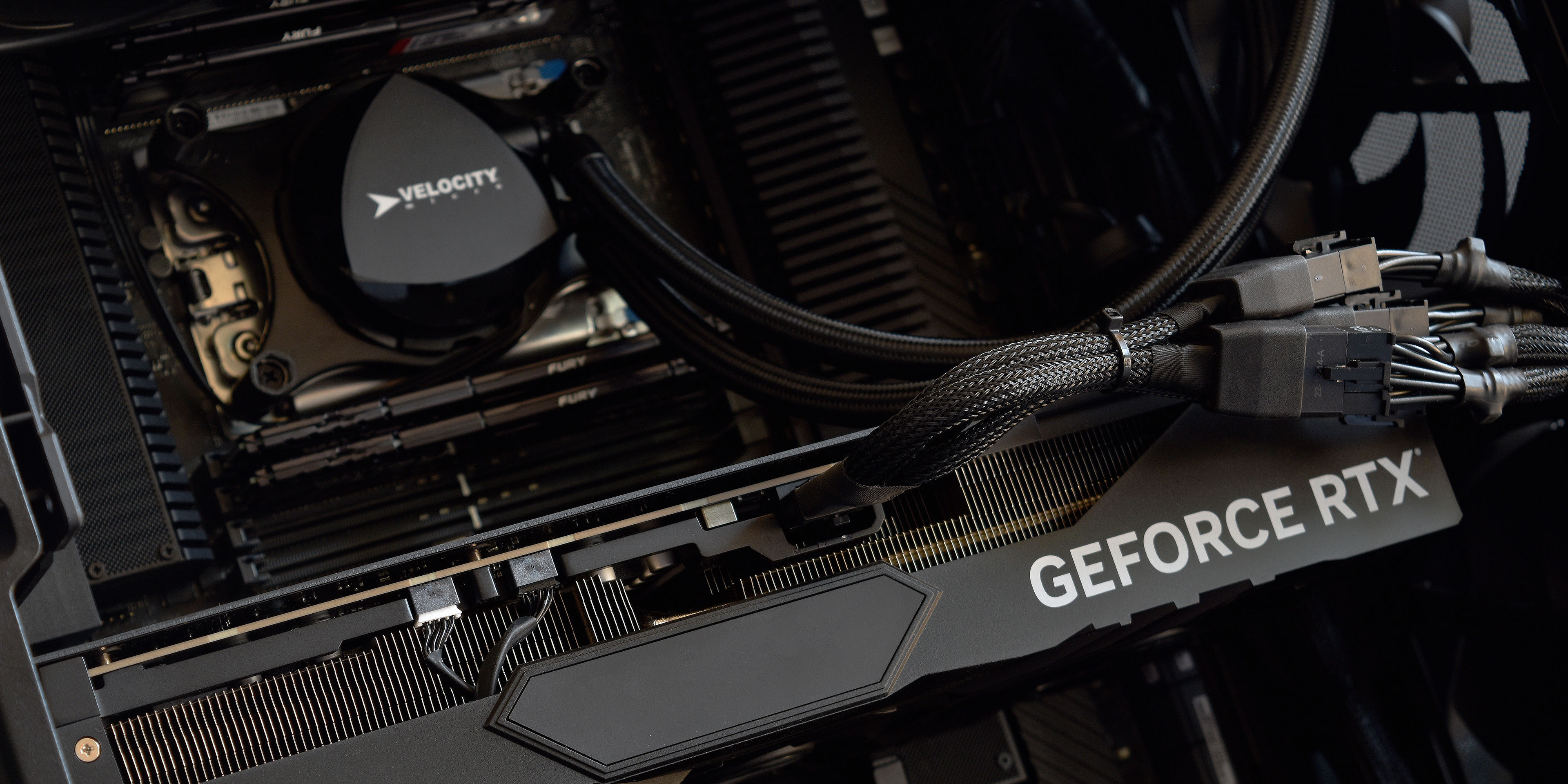
Quiet CPU coolers or closed-loop liquid cooling
Cable-managed, airflow-optimized cases
You don’t need flashy RGB lights—you need uptime and stability.
Build or Buy?
If you’re technically inclined, building your own trading computer gives you total control. But for many professionals, buying a pre-built, trader-optimized system saves time and ensures compatibility—especially when it comes to multi-monitor output.
Either way, the key is to choose components built for long-term reliability, not just benchmark scores.
Final Thoughts
Building the best trading computer starts with understanding what matters: fast CPUs, multi-monitor support, pro-grade GPUs, and rock-solid stability. Skip the gaming fluff—your hardware should work as hard as you do.
Ready to start building? Explore our Trader Pro Series—desktop workstations engineered specifically for high-performance trading.
The following two tabs change content below.
This content was written by the expert Velocity Micro staff.
Worlds collided recently as former PlayStation head Shuhei Yoshida joined forces with Nintendo of America’s former marketing leads Kit Ellis and Krysta Yang on an episode of their podcast.
They spoke about their time working at the respective companies, with the topic of the rivalry between the DS and the PSP naturally coming up during the conversation.
Shuhei Yoshida On What PlayStation ACTUALLY Thinks About Nintendo – YouTube
Despite being a player for the other team, Yoshida was extremely positive about the Switch 2, especially the Japanese-only edition that costs $110 less than the worldwide edition, with the caveat that you’ll only be able to play Japanese region Nintendo games on it. Yoshida said the direction from Nintendo was “mind boggling,” but an “amazing business decision.”
“I do not necessarily think other companies like PlayStation would emulate what they did,” he added. “It doesn’t make sense to me, you know, selling the same thing for such a different price for other consumers.” Yoshida notes “it’s clearly showing they want to keep the strong hold in Japan that they already have… that’s an amazing decision they have made.”
Handhelds are an extremely strong market in Japan, and pretty much always have been. It’s the reason Monster Hunter was pretty much a handheld-exclusive series for so long before the series took off worldwide. So Nintendo offering a cheaper way to get more handheld systems out to Japanese consumers is arguably a good plan, even if selling a console at a significant regional discount at launch is, as Yoshida said, “mind boggling.”
Asus has officially launched the new BTF versions of its RTX 5090 and RTX 5070 Ti graphics cards, each sporting the specialized GC-HPWR stealthed power connector. This unique way of powering the graphics card uses a small port module at the far end of the card and plugs directly into a specialized slot on the motherboard. That port delivers all the power the card needs, with no additional power cables required.
The Asus BTF, or Back to the Future, naming scheme might not seem relevant, but it’s supposed to be taken more literally than its movie namesake. BTF is about putting connectors out of sight, on the “back” of the board, mostly. All while pushing this new standard for the “future.” It’s a little clumsy, and probably why the brand is now using the BTF moniker instead, but the idea remains to make systems less cable-heavy, whilst giving a cleaner front look and feel. That should also enable easier system maintenance.
For graphics cards, that means hiding the ugly 16-pin Nvidia power connector or more traditional 8-pin PCIe power cables. The new RTX 5090 and 5070 Ti BTF editions sport the new GC-HPWR Asus power connector, which the company recently showed off as being able to handle well over 1,000W of power—far more than even the RTX 5090 pulls. They also have the 16-pin 12v-2×6 power connector as an alternative for those who prefer to use that.
Credit: Asus
That’s the main update for this generation of BTF cards: The new power connector design is optional. It comes with an attachable adapter that makes that connection with the additional power port on the motherboard. Without it, gamers can simply use the standard Nvidia 16-pin connector.
The cards themselves are relatively standard versions of the GPUs, though VideoCardz reports there’s an overclocked version of the RTX ROG Astral 5090, alongside a stock-clocked version. The RTX 5070 Ti only has one version, but it does come in an optional white color scheme.
With the ongoing issues Nvidia has faced with overheating of its RTX 50-series power connectors, the industry has been looking to alternative ways to manage power deliver. Although Asus’ is bespoke and requires a specific motherboard to use the unique connector, it could be something that catches on. It might be expensive, but the peace of mind that your $2,000 + GPU won’t break during regular use might just be worth it.
Digital money is changing how companies take payments. Businesses everywhere now see crypto as more than just an investment. People want to pay with digital coins, and smart business owners are listening.
More than just tech companies are doing this. Regular stores, service businesses, and websites now take crypto payments. Surveys show lots of people would pay with crypto more often if stores accepted it.
Why Businesses Like Cryptocurrency
Companies that take crypto payments see real benefits. Regular payment processing takes days, especially for money coming from other countries. Crypto payments often finish in minutes or hours. Business owners get their money faster, and customers stay happy.
Credit card companies charge a lot for international payments. Crypto transactions usually cost just a few dollars, no matter how big the payment or where it comes from.
Chargebacks disappear completely. Banks cannot reverse crypto payments like they do with credit cards. Business owners avoid losing money to fake disputes.
Top Cryptocurrencies for Business Payments
Not all cryptocurrencies work equally well for business transactions. Some coins have better features for different types of companies and customer needs.
Bitcoin
Bitcoin is the most famous cryptocurrency. Big purchases happen with Bitcoin, especially expensive stuff like luxury cars, houses, and artwork. For example, Home Depot lets customers buy tools and supplies with Bitcoin using an app called Flexa Spedn.
Ethereum
Ethereum runs thousands of apps that work with smart contracts. Companies that want to build blockchain apps like Ethereum. Smart contracts can automatically handle payments without people getting involved.
Businesses planning to do more than just take payments often pick Ethereum first. The network can do many different jobs beyond moving money around.
Stablecoins
Stablecoins fix the price swings that scare many business owners away from crypto. These coins stay close to dollar values because they back each coin with real dollars. Big financial companies like PayPal and Visa now use them.
Tether (USDT) is the most popular stablecoin worldwide. USD Coin (USDC) gets checked by auditors regularly, which appeals to business owners who worry about rules and regulations.
Litecoin
Someone made Litecoin faster than Bitcoin. Litecoin handles transactions about four times quicker than Bitcoin. The fees cost less, too, which helps when people buy cheaper items where Bitcoin fees might be too high.
Where Businesses Use Crypto
Different types of businesses have found crypto payments work well for them. Each industry faces different challenges and finds different benefits.
Gaming and Entertainment
Gaming companies love crypto payments. Online platforms, especially the best crypto casinos, lead the way here. BC.Game takes hundreds of different cryptocurrencies and has thousands of casino games. These platforms show other businesses how to accept many crypto options at once.
People are betting much more money on digital currencies now. The amounts have nearly doubled from last year. This growth proves crypto payments actually work in entertainment businesses.
Retail and Regular Stores
Regular stores increasingly take crypto payments. Printemps, a fancy French department store, partnered with Binance and a French tech company called Lyzi. Now, customers can pay with Bitcoin and Ethereum in their French stores.
Online stores have added crypto payment systems, too. BigCommerce takes Bitcoin and other cryptocurrencies through partnerships with BitPay and CoinPayments.
Service Companies
Professional service companies find crypto payments really helpful for international clients. Web hosting companies like Hostinger, Namecheap, and Evolution Host now take crypto payments.
Travel companies also jumped on crypto. Travala runs the biggest cryptocurrency-friendly travel website in the world. They sell hotel rooms and tours that people can buy with digital money.
How to Start Taking Crypto
Businesses have a few different ways to accept cryptocurrency payments. Your choice depends on how much tech knowledge you have and how many transactions you expect.
Payment Processing Companies
Payment companies like Triple-A make accepting crypto easy for businesses. These services handle turning crypto into regular money, tax paperwork, and all the technical stuff.
Popular processors are BitPay, CoinGate, and NOWPayments. These platforms charge much less than credit card companies do.
Website Plugins
Most modern payment processors make plugins for popular website builders. WordPress, Shopify, and Magento all work with crypto payment plugins.
API connections give you more control if you have specific needs. This works well for companies that want to keep their current checkout process but add crypto options.
Direct Wallet Payments
Businesses can take payments straight to their crypto wallets. You have to handle everything manually, but you avoid paying fees to middleman companies. Companies usually do this for expensive purchases, where they already give personal attention anyway.
What to Think About
A few important things should guide your crypto choices. These decisions will affect how smoothly your business runs and how happy your customers are.
Take Multiple Coins
Most successful businesses take several different cryptocurrencies instead of just one. This gives customers more choices and reduces your risk if one coin’s price goes crazy.
Convert to Regular Money
Many businesses immediately turn crypto payments into regular dollars. You get the benefits of crypto payments but avoid worrying about price swings. Payment processors usually do this for small fees.
Start Small
New businesses should figure out whether direct acceptance or payment processors work better for their situation. Payment processors are more convenient and convert money automatically. Direct acceptance gives you complete control.
Many successful businesses start by just taking Bitcoin and add other coins later based on what customers want. This slow approach helps companies learn without getting overwhelmed.
Your choice of which cryptocurrencies to accept depends on what kind of business you run, who your customers are, and how much risk you can handle. Companies with international customers often benefit from accepting multiple currencies. Local businesses might start with just Bitcoin and major stablecoins.
The Google Pixel Watch 3 is the first known Android device to support Bluetooth Channel Sounding, enabling precise, centimeter-level distance tracking.
This feature is more accurate than traditional Bluetooth signal strength for finding items and serves as a widespread, low-cost alternative to UWB.
While the watch supports Channel Sounding after its Wear OS 5.1 update, the feature is not yet in use, likely in preparation for a future Find Hub app release.
Late last year, the Bluetooth Special Interest Group (SIG) announced Bluetooth 6.0, introducing a feature called Channel Sounding that enables true distance awareness by precisely calculating the distance between two devices. This new capability has exciting implications for item trackers, most of which lack precision finding. The catch? It seemed no Android devices on the market supported Bluetooth 6.0 or Channel Sounding. As it turns out, there is one device that supports Channel Sounding: the Google Pixel Watch 3.
You’re reading an Authority Insights story. Discover Authority Insights for more exclusive reports, app teardowns, leaks, and in-depth tech coverage you won’t find anywhere else. These reports reflect developments at the time of writing. Some features or details uncovered in leaks may change before official release.
Most Bluetooth devices currently rely on measuring the signal strength between them to estimate distance. While simple to implement, this method is unreliable; it’s imprecise and susceptible to interference, making it frustrating for item tracking. In contrast, Channel Sounding calculates the time it takes for a signal to travel between two devices, achieving centimeter-level accuracy.
If you’ve ever struggled to locate an item tracker using your phone, it’s likely because it was relying on that same imprecise signal strength method. This is why the rollout of UWB (Ultra-wideband) support in devices like the Moto Tag was so significant, as UWB allows for far more precise location tracking than what Bluetooth’s signal strength can offer.
Left: Locating an item tracker using Bluetooth signal strength measurements. Right: Locating an item tracker using UWB.
However, UWB adds complexity and cost to a product. It’s also only preferable for a handful of use cases, which is why so few Android phones support it. In contrast, nearly every mobile device supports Bluetooth. This ubiquity makes Channel Sounding a viable alternative to UWB, even if it’s not quite as precise.
The only catch is that most existing mobile devices don’t support Channel Sounding and likely never will, as adding the feature requires a Bluetooth firmware update. To date, no Android phone — not even Google’s latest Pixel devices — has received such an update. The Google Pixel Watch 3, however, gained this capability with its recent Wear OS 5.1 update. Following the update, the watch now reports that it supports FEATURE_BLUETOOTH_LE_CHANNEL_SOUNDING, the specific Android feature flag that confirms Channel Sounding is supported. Given that Channel Sounding is a Bluetooth 6.0 feature, we can assume this means the Pixel Watch 3 was updated to support the new standard, but that hasn’t been officially confirmed.
Mishaal Rahman / Android Authority
Even with UWB, the Pixel Watch 3 still benefits from having Channel Sounding. The problem is there’s no evidence the feature is actually being used. That’s likely because Google hasn’t released its Find Hub app for Wear OS, though evidence suggests one is in the works. Find Hub would be the prime candidate for using Channel Sounding, as it would dramatically improve locating trackers that have Bluetooth 6.0 but lack UWB, like the Chipolo POP.
Google may be waiting for Android 16 to fully implement this. The new OS version adds generic ranging APIs that will simplify how apps like Find Hub use these tracking technologies. Speaking of Android 16, its compatibility requirements mandate a clear performance minimum. Google mandates that devices with Channel Sounding must “report the range accurately to within +/- 0.5m at the 90th percentile … at a distance of 1m.” This requirement sets a minimum performance bar, ensuring the tracking experience is reliable across different devices. Of course, whether that holds up in practice remains to be seen.
Got a tip? Talk to us! Email our staff at news@androidauthority.com. You can stay anonymous or get credit for the info, it’s your choice.
Here’s the thing about choosing an engineering firm: it’s nothing like picking a restaurant based on Google reviews. You’re not going to find testimonials saying, “Amazing structural analysis, would collapse bridges with them again!” But whether you’re developing the next breakthrough medical device, planning a LEED-certified skyscraper, or yes, even perfecting that game-changing smart toaster everyone’s been waiting for, the stakes are absolutely massive. Get this decision wrong, and you’re not just dealing with a disappointing meal; you’re looking at blown budgets, missed deadlines, and watching your brilliant concept turn into an expensive lesson in what not to do.
Make one misstep and you’re not only working with mushy tacos; you’re dealing with busted budgets, blown deadlines, and projects that go from vision to catastrophe quicker than you can say “Request for Proposal.
So, how do you screen an engineering design firm from industry giant Cad Crowd that won’t merely check the boxes but will actually advance your project with brains, boldness, and brilliance? Grab yourself a coffee (or something more potent, if your budget allows), and let’s dive deep into the most important factors you actually need to think about when selecting the perfect firm for your design and consulting needs.
🚀 Table of contents
Experience is more than a number on their website
All engineering companies have experience, typically with a neat round number on their website, such as “50+ years of combined experience.” Sounds great, but what does that actually mean? It might be one veteran engineer who’s been around since rotary phones, accompanied by two recent graduates who still call their professors for guidance. The number doesn’t tell you much.
What is more important is pertinent experience. If you’re designing a wearable health monitor, a group with expertise in aerospace work may not be the best fit, even if they assisted in putting a satellite into orbit. The technical proficiency may be similar, but context, user requirements, and regulatory requirements are all different.
Dig into the portfolio of engineering design experts. Have they solved similar problems before? Have they worked in your space? Look for evidence they’ve handled challenges like FDA approvals, LEED certifications, or tight form-factor constraints. If your idea involves smart sensors, advanced materials, or custom simulation work, make sure their experience supports that, not just on paper, but in practice. Flashy CAD models are nice, but they won’t help if your final product can’t function outside the render.
This is where the real narrative starts, the human beings behind the project. You’re not contracting a firm; you’re partnering with real human beings who’ll be sweating it out alongside you. So, just who are they? Who’s at the helm? Who will you be talking to each week? These aren’t little questions. Indeed, they can make or break your whole experience. Other companies present their A-players during the pitch, then assign your project to junior staff after you sign on the dotted line.
That’s a bait-and-switch you can do without. It’s chemistry, too. You’ll be working a lot of hours with this team on calls, in meetings, and in the trenches. If the chemistry doesn’t work in the early stages, it probably won’t improve. You require a team that listens, challenges constructively, and understands what you’re trying to create. If the talks already feel strained or stilted, it could be time to go somewhere else. A good working relationship based on trust and communication can save you considerable time, money, and anguish later on.
Pick wisely.
Technical breadth and depth: The engineering buffet
Today’s engineering is more of a smorgasbord than an individual course of action. Contemporary products don’t confine themselves to a single discipline; today’s products tend to integrate mechanical design, electrical engineering, embedded systems, industrial design services, software development, and even fluid dynamics. When you bring on a company that excels in only one area, it leaves you scrambling to coordinate a multitude of specialists. Now you’re having to juggle vendors like you’re bowling pins, praying nothing falls on the floor. And no, there’s no standing ovation for that show.
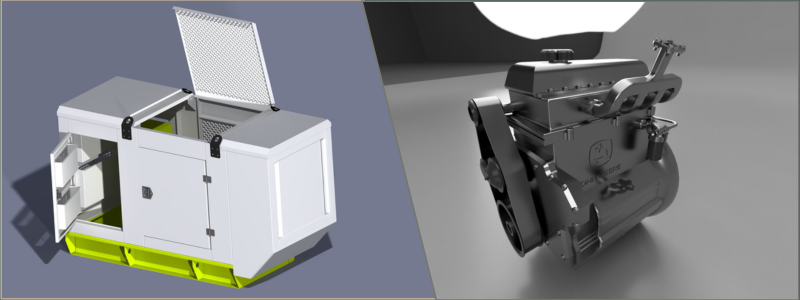
That’s why it is worth searching for engineering companies that have a complete range of experience to draw upon. Do they provide finite element analysis (FEA) and computational fluid dynamics (CFD)? Are they able to rapidly transition from concept sketches to working prototypes? Are they able to take you all the way to the manufacturing hand-off?
The more of these services that reside under one roof, the less bumpy your ride will be. It cuts down on miscommunication, accelerates development, and helps keep your vision from getting lost in translation. In the modern era of product development, technical breadth and depth are no longer an added value; they’re the entrée.
Communication: The underrated superpower
One of the most underappreciated assets of an amazing engineering company isn’t the tech stack, talent, or timelines—it’s communication. Transparent, no-surprises communication. If you’ve ever spent hours refreshing your inbox waiting for updates that never arrived, or gotten a project status email that reads like a Klingon-language novel from the planet Sto-Vo-Kor, you know exactly how infuriating poor communication can be.
Excellent engineering design firms don’t only construct, they clarify. They understand how to take complicated technical language and make it accessible to all, from investors to product managers, so everyone can comprehend it and take action. That is not merely politeness; it’s an art, and one that separates the great from the good.
High-end companies also adopt tools that allow staying in the know to be a breeze for all. Real-time collaboration environments, transparent Gantt charts that truly reflect tangible progress, and weekly updates that advance the project, not clutter up your calendar, are indicators of a team mindful of your time and priorities.
Amidst a sea of buzzwords and grandiose promises, actual communication remains the superpower that keeps everything on course.
Flexibility & problem-solving skills
Engineering isn’t a straight road. It’s a twisting road with potholes, detours, and the occasional missing bridge. Projects hit snags, pieces of equipment magically go out of stock, and timelines stretch like taffy. The true measure of an excellent engineering partner isn’t whether or not they encounter potholes, because they will, but how they react when things go wrong.
There are some companies that collapse at the first sign of trouble. Others return with a plan: “Here’s the problem, and here are three good ways to fix it.” That’s what you want to have in your head. The right team isn’t panicking or stalling. They adapt with confidence, troubleshoot quickly, and move the project forward.
It’s not about solving for X—it’s about welcoming flexibility from day one. Consider iterative design, rapid prototyping design services, and agile processes. These are not buzz terms—they’re indicators of a company that can change course in real time. You don’t require a company that gathers in a room for a week to get a bolt moved. You require engineers who spot an issue, roll up their sleeves, and fix it without skipping a beat.
Prototyping abilities: From napkin drawing to something you can drop
Renderings can charm souls on a screen, but in real-world performance, they tend to fall short. Similar to a dream date profile picture, a computer model can be filtered and polished far from the real thing. That’s where prototyping pays its dividends.
Whether a crude foam-core mockup taped together with duct tape, a machined part on a CNC, or a smooth 3D print, a prototype brings an idea to life in something you can touch, test, and yes, accidentally drop on the floor.
It’s not just about building something once. It’s about learning what works, what doesn’t, and iterating fast. When choosing a product design firm, ask about their prototyping capabilities. Do they build in-house or work with partners they trust? How quickly can they go from CAD model to physical object? Can they crank out multiple versions in a short time frame?
Faster, more accurate, and more flexible prototyping can be the key to a wow-inspiring investor presentation versus an opportunity lost. Particularly when there is little time, a company that can mock up, iterate, and refine in a hurry becomes your best friend.
Project management skills: The glue that holds it all together
Ever seen a project unravel because no one was clearly in charge? It happens more often than you’d think. Engineering firms may have top-tier technical expertise, but without strong project management, things can fall apart fast. Brilliant designs don’t mean much if they get buried under missed deadlines and ever-expanding scope.
That’s where project management expertise comes in—not a nice-to-have but the backbone of effective delivery. A competent firm should know what they are doing before anything starts. Are they tracking progress using tools such as Jira, Asana, or MS Project? Do you get milestone check-ins so that things are on track? Is there a roadmap that actually works from beginning to end?
Good project management doesn’t merely avoid chaos. It creates clarity, accountability, and order. A strong project manager anticipates issues ahead of time, keeps teams on track, and ensures deliverables are on schedule and of high quality. When these abilities are ingrained in a design engineering services company’s culture, they’re not constructing projects. They’re constructing trust.
Reputation & references: The Yelp review of the engineering world
Before booking a restaurant, you probably read three Yelp reviews, check the photos, and maybe even skim the menu. So why wouldn’t you do at least that much due diligence before hiring an engineering firm for your next big project?
Begin with customer testimonials, but don’t confine yourself to the carefully selected quotes on their website. Those are carefully edited for effect. Request the firm’s actual references, individuals you can speak with directly. Legitimate firms won’t mind introducing you to previous clients who can give you an accurate picture of what working together was like. You’ll want to ask: Were deadlines met? Was the project within budget? How was communication? If there were issues, how were they resolved?
Aside from customer testimonials, seek industry cred. Are they presenting at engineering conferences, writing opinion pieces, or receiving awards? That’s generally a good indicator that they’re not only effective marketers but committed engineering professionals well-regarded by their peers.
In an age where your project’s success rests on your ability to trust, don’t leave the background check behind. Research now can prevent a lot of regret later.
Cost structure & transparency: Show me the money (and the fine print)
Ah, yes, the infamous money talk. It’s not necessarily anyone’s highlight of initiating an engineering project, but it’s one of the most significant. Whether you’re introducing a new product or undertaking a structural rework, it’s wise to understand how your, say, for example, structural engineering company bills. Are they charging by the hour or quoting a flat fee? Are change orders readily including unexpected expenses? And what if a project extends beyond its expected duration or goes over budget?
A company that can’t articulate its price or won’t even talk about it is waving a giant red flag. You’re not merely contracting for brains and blueprints. You’re entering into a business arrangement, and transparent cost projections are essential to preventing drama down the road.
Seek out companies that are transparent with full-fledged proposals and itemize the “why” of each fee. They should also assist you in making decisions, such as between expensive components and less expensive options.
And don’t forget, the cheapest bid isn’t always the wisest. Bad engineering will end up costing you exponentially more in the end. Honest pricing may not be sexy, but it spares your wallet and your head.
Compliance and industry knowledge: Can they play by the rules?
If your product must navigate safety certifications, environmental requirements, or international compliance, working with a company that makes it up as it goes along is not a possibility. Understanding the rules is paramount. It makes sense to inquire beforehand which regulations they have experience with. Whether it’s submitting to FDA standards, ISO certification, UL testing, or even your local zoning regulations, the know-how counts.
Having worked through these processes before with a company saves you time, money, and grief. Bonus points if they’ve worked on projects in the highly regulated fields of medical devices, aerospace engineering services, or automotive. These don’t brook errors—one misstep may result in regulatory hell or government notices you don’t want to receive.
A compliance-savvy firm will more likely steer your product safely through the approval maze and inspection gauntlet. This skill not only guarantees that your product complies with regulations but also instills trust and customer confidence. In product development, following the rules isn’t simply intelligent, it’s a necessity.
It’s more than locating a capable engineering firm by skills and expertise. This is where you’ll know that cultural compatibility is a big deal. It’s all about how much you mesh with their organization and whether they really respect your company’s values, tempo, and vision. When dealing with an outside firm, it’s not just a matter of handing off work; it’s a collaboration. If the team makes you feel like a nuisance every time you have a question or doesn’t fit your working style, that tension can slow the whole thing down.
A company that feels like an extension of your own team makes the process smoother and, really, more fun. Communication works better, trust develops organically, and issues get resolved quicker. Pay close attention to those initial conversations, how they react, their demeanor, and vibe. If anything seems off, it likely is. You don’t have to accept just “meh” when there are amazing engineering companies that really resonate with your vibe. That special somebody can make the difference in your project’s success and your sanity.
Post-project support: Will they ghost you after launch?
When your product does finally ship or your build is complete, it’s tempting to believe that the hard work is behind you. But oftentimes, that’s when it really starts for consumer product design companies. Once the initial rush wears off, unexpected bugs will erupt, and what appeared to be a flawless version will require adjustments. Documentation updates become imperative, and suddenly, stakeholders have “just one more question” that no one saw coming.
After checking the dotted line, it’s wise to inquire about support after the project. Do they have warranty periods that will cover those inevitable repairs? Do they have maintenance packages that will keep things running in tip-top condition? It’s also good to know whether they’re prepared to assist with subsequent versions or upgrades, version 2.0 and all the rest. Expansion usually means new problems, so see whether the team can grow with your changing needs.
Having a company that doesn’t vanish after shipping is worth its weight in gold. A partner who hangs in there with you through the rough spots and iterates can spare you headaches and keep your project going strong long after it’s launched. Reliable help isn’t a nice-to-have; it’s frequently the difference between a good project and a great one.
Final thoughts: You’re not just hiring a vendor—You’re choosing a co-pilot
Choosing an engineering company isn’t like buying a product from a shelf. It’s more like choosing a co-pilot for a long flight across thunderclouds, time zones, and occasional rough air. You need someone to know how to fly, certainly, but also someone you don’t mind being stuck beside when things get rocky.
So ask the tough questions. Get into the weeds. Don’t rush it. The right partner will not only help you deliver your vision, but they’ll stretch it, test it, and make it better.
And when that prototype becomes a reality, when that system fits together like a puzzle, when your product starts shipping or your building opens to the public, you’ll know:
Partner with Cad Crowd Now!
Ready to find your engineering co-pilot? Don’t settle for just any firm when you could partner with a team that actually gets it. At Cad Crowd, we’ve helped countless innovators turn wild ideas into market-ready products. Let’s chat about your project, reach out today for your FREE quote!
MacKenzie Brown is the founder and CEO of Cad Crowd. With over 18 years of experience in launching and scaling platforms specializing in CAD services, product design, manufacturing, hardware, and software development, MacKenzie is a recognized authority in the engineering industry. Under his leadership, Cad Crowd serves esteemed clients like NASA, JPL, the U.S. Navy, and Fortune 500 companies, empowering innovators with access to high-quality design and engineering talent.
Elon Musk has reportedly fired Omead Afshar, Tesla’s head of manufacturing and operations in North America and Europe, according to Forbes. Both CNBCand Bloomberg corroborated the report. Afshar’s exit follows Milan Kovac, the head of engineering on Tesla’s Optimus robot, who left the company in early June.
Afshar was promoted to the role last year, Bloomberg reports, after working for multiple different Musk-owned companies since 2017. The timing of his exit isn’t particularly surprising given the trouble Tesla has faced selling cars. Sales in Europe have shrunk for a fifth consecutive month and the European Automobile Manufacturers’ Association reports that registrations of new Teslas dropped by nearly 41 percent in May. The company is also struggling in China, where sales fell 15 percent in the same month.
While Musk appears to be holding Afshar responsible, the blame clearly lies at Musk’s feet. Helping to fund President Donald Trump’s re-election in the US, running the destructive DOGE cost-cutting efforts after his election and just generally maintaining a noxious public presence have permanently tainted Musk and his companies. While SpaceX still benefits from government contracts, Tesla’s sales are vulnerable to public opinion, something the Tesla Takedown movement has been leveraging to its advantage with protests outside of the company’s dealerships.
Firing Afshar, leaving his position in the US government and launching Tesla’s robotaxi service in Austin are all different attempts from Musk to change the narrative around Tesla. It’s not clear yet whether they’ll actually help.
Braze is taking relationship-building within our communities to a whole new level. Join us for Grow with Braze in Chicago to get the inside scoop on how to accelerate business growth through the power of cross-channel customer engagement and literally….Grow With Braze.
Register today to hear from – and network with – your peers in Marketing, Growth, Lifecycle, CRM, Data, and more. You’ll learn how to get more value from your customers, while adding value to your customers.
Get ready to make valuable connections, share insights with the Braze community and learn from industry experts at leading brands.
Henrik Werdelin has spent the last 15 years helping entrepreneurs build big brands like Barkbox through his startup studio Prehype. Now, with his new, New York-based venture Audos, he’s betting that AI can help him scale that process from “tens” of startups a year to “hundreds of thousands” of aspiring business owners.
The timing certainly feels right. Mass layoffs across a variety of industries have left many workers reconsidering their career paths, while AI tools have markedly lowered the barrier to building digital products and services. At the center of that Venn diagram is Werdelin’s latest venture, with its promise to help “everyday entrepreneurs create million dollar AI companies” without requiring technical skills.
Werdelin’s journey from Prehype to Audos reflects the broader transformation happening in entrepreneurship right now. At Prehype, the focus was on working with tech founders to build traditional startups, the kind that might raise millions and aim for billion-dollar exits.
Now, he tells TechCrunch, “What we’re trying to do is take all that knowledge, all the methodology that we’ve created over the years of building all these big companies, and really trying to democratize it.”
The idea is that “everyday entrepreneurs” may sense a shift is afoot but may not be keen to experiment with so-called AI agents or know how to reach customers. Audos is more than happy to help them, supplying these individuals with AI tools to build sophisticated products using natural language, and taking advantage of social media algorithms to find them their niche customers.
“Facebook and a lot of these platforms, they are just incredible algorithms, and they’re incredible at figuring out [how to reach your customer] if you define a customer group,” says Werdelin, who co-founded Audos with his Prehype partner Nicholas Thorne. In fact, Audos uses this system to quickly test whether a founder’s business idea has sustainable customer acquisition costs.
The approach seems to be working. Audos has helped launch “low hundreds” of businesses since its beta launch, with its own customers discovering the platform through Instagram ads asking “Have you ever thought about starting something, but don’t know where to go?” Among them, Werdelin says, are a car mechanic who wants to help people evaluate repair quotes, an individual who is selling “after death logistics” services, virtual golf swing coaches, and AI nutritionists. In a winking reference to billion-dollar businesses, or so-called unicorns, he calls these one- and two-person teams “donkeycorns.”
All went through the same process: they clicked on Audos’s ad, its AI agent launched a conversation to figure out the problems these individuals want to tackle and who they want to serve, and, when it was satisfied with the answers, Audos got them in front of potential customers as fast as possible.
As for returns, Audos operates on a fundamentally different model than traditional accelerators or venture capital. Instead of taking equity, the company takes a 15% revenue share from the businesses it helps launch. In return, founders get up to $25,000 in funding, access to those AI-powered business development tools, and help with distribution, primarily through paid social media advertising.
“We’re not taking any equity in their business,” Werdelin says, partly because “we don’t think these companies might ever get sold. What we’re really inspired by are the mom-and-pop shops that are the backbone of our society.”
The revenue share continues indefinitely, similar to platform fees charged by Apple’s App Store. For founders, that means giving up a significant portion of their revenue in perpetuity — a 15% cut that could cost entrepreneurs hundreds of thousands of dollars over time. Some will undoubtedly see that trade-off as worthwhile; others might question whether the long-term costs justify the benefits.
Audos’s value proposition raises other questions given how quickly the landscape is changing. While Werdelin emphasizes helping founders build relationships with customers, it’s unclear how much of that work the AI agents can actually handle. There’s also the matter of differentiation. As Werdelin readily acknowledges, “the world is full of these tools” and they’re getting better rapidly. What happens when entrepreneurs can access similar AI capabilities without paying a permanent revenue tax?
Audos’s VCs don’t sound worried about those scenarios. True Ventures led Audos’s $11.5 million seed round, with partner Tony Conrad explaining the appeal in a Zoom call this week. In addition to having confidence in Werdelin and Thorne, says Conrad, “I think there are just lots and lots of people” who might eagerly embrace the opportunity to work with a platform like Audos.
Conrad draws parallels to Instagram’s $1 billion exit with just 13 employees, suggesting that AI could enable even more leverage, even if Audos — which itself employs just five people altogether currently — isn’t chasing unicorns. As Werdelin explains it, “What we’re after here is the millions of people who can create million-dollar businesses or half-million dollar businesses that are real and life changing.”
Adds Werdelin separately of why he spun up Audos, “What we’re trying to do is to figure out how you make a million companies that do a million dollars turnover. That’s a trillion dollar turnover business.”
It doesn’t sound crazy. Extending the benefits of entrepreneurship to people who traditionally haven’t had access to startup capital or technical skills is an increasingly compelling proposition as traditional employment begins to feel less and less stable. “We believe that there should be somebody who goes out and really helps these smaller entrepreneurs that are building something that is not venture backable,” says Werdelin. “We believe that the world is better with more entrepreneurship.”
Audos’s other investors include Offline Venture and Bungalow Capital, along with numerous high-profile angel investors – Niklas Zennstrom and Mario Schlosser among them.
Pictured above, left to right, Audos co-founders Nicholas Thorne and Henrik Werdelin.