I’ve been successfully publishing a Windows Forms application via ClickOnce to the same FTP server for years without any issues. About 2-3 months ago, this suddenly stopped working. No changes were made to our development environment, hosting, or application configuration.
The Problem
Visual Studio fails to publish via FTP with multiple “550” errors. After extensive troubleshooting and dozens of failed publish attempts, our hosting provider investigated and found that Visual Studio is not closing FTP connections properly. Since our hosting plan limits us to 8 simultaneous FTP connections, the publish process exhausts this limit and fails.
This is affecting our entire development team – the issue occurs on:
✗ All developer machines (5+ different PCs)
✗ Multiple Visual Studio versions (2017, 2019, and 2022)
✗ Different Windows versions (Windows 10 and 11)
✗ Different network connections
Error Messages
During ClickOnce publish, I get cascading errors like these:
Error copying file ‘C:[LocalPath]\GestionDePoligonos\bin\Debug\app.publish\Application Files\GestionDePoligonos_1_0_5_3\DevExpress.RichEdit.v19.1.Export.dll.deploy’
to ‘ftp://[ftp.domain.com]/[path]/Application Files/GestionDePoligonos_1_0_5_3/DevExpress.RichEdit.v19.1.Export.dll.deploy’.
Can’t add ‘Application Files/GestionDePoligonos_1_0_5_3/DevExpress.RichEdit.v19.1.Export.dll.deploy’ to the Web site.
Can’t change directory to Application Files/GestionDePoligonos_1_0_5_3: No such file or directory (550).
Error copying file ‘C:[LocalPath]\GestionDePoligonos\bin\Debug\app.publish\Application Files\GestionDePoligonos_1_0_5_3\System.Memory.dll.deploy’
to ‘ftp://[ftp.domain.com]/[path]/Application Files/GestionDePoligonos_1_0_5_3/System.Memory.dll.deploy’.
Can’t add ‘Application Files/GestionDePoligonos_1_0_5_3/System.Memory.dll.deploy’ to the Web site.
Ready to proceed (200).
Error copying file ‘C:[LocalPath]\GestionDePoligonos\bin\Debug\app.publish\Application Files\GestionDePoligonos_1_0_5_3\DevExpress.XtraCharts.v19.1.dll.deploy’
to ‘ftp://[ftp.domain.com]/[path]/Application Files/GestionDePoligonos_1_0_5_3/DevExpress.XtraCharts.v19.1.dll.deploy’.
Can’t add ‘Application Files/GestionDePoligonos_1_0_5_3/DevExpress.XtraCharts.v19.1.dll.deploy’ to the Web site.
Can’t change directory to Application Files/GestionDePoligonos_1_0_5_3: No such file or directory (550).
The errors vary between:
No such file or directory (550) – for most files
Ready to proceed (200) – for some files that manage to upload before hitting the connection limit
Hosting Provider’s Diagnosis
After multiple support tickets, our hosting provider (who has been excellent throughout this issue) confirmed:
“The issue is that Visual Studio is not properly closing FTP connections after each file transfer. Your account has a limit of 8 simultaneous FTP connections, and Visual Studio is keeping all connections open, quickly exhausting this limit. This is a Visual Studio bug – you need to contact Microsoft support for a solution on how to configure Visual Studio to properly close FTP connections.”
What DOES Work
✅ Publishing to a local folder: Works perfectly on all machines
✅ Uploading via FileZilla: Can upload the entire published folder without any issues
✅ FTP access: No problems connecting via any other FTP client from any machine
What DOESN’T Work
❌ Direct FTP publish from Visual Studio (fails after uploading a few files)
❌ Creating new publish profiles
❌ Different Visual Studio versions (2017, 2019, 2022)
❌ Publishing from different computers
❌ Fresh Visual Studio installations
Environment Details
Visual Studio: 2017, 2019, and 2022 (different developers using different versions)
Affected Machines: All development team PCs (5+ machines)
Project: Windows Forms App (VB.NET, .NET Framework)
Publishing: ClickOnce via FTP
FTP Server: Standard shared hosting (8 connection limit)
Timeline: Worked perfectly for years → Stopped working 2-3 months ago
Attempted Solutions
Over the past few months, our team has collectively tried:
Multiple Visual Studio “fixes” on all machines:
Registry modifications (looking for FTP connection settings).
Project file modifications
Complete Visual Studio reinstallations on multiple machines
The Question
How can we force Visual Studio to properly close FTP connections during ClickOnce publishing?
We’re looking for:
Hidden Visual Studio settings that control FTP connection pooling
MSBuild parameters that might help
Registry keys that control .NET FTP behavior
Any workaround that doesn’t involve manual FTP uploads
This seems to be a long-standing Visual Studio bug (found similar reports from VS2010 era), but we desperately need a solution as it’s severely impacting our deployment workflow across the entire team.
If you’ve experienced this issue, please share:
What version of Visual Studio you were using
When the issue started for you
Any workarounds you’ve discovered
I’ll update this post with any working solutions found.
I’m always looking for tricks and tips to save money in my shopping budget, every dollar counts, especially when it comes to saving money on groceries. Not so much out of necessity, but more because I don’t like the idea of some fat cat millionaire having another expensive lunch on me! Let it be that I am wiser in keeping my hard earned money where it belongs…in my pocket! Are you ready to hear the one weird trick that saves me $125/m in groceries?
One Weird Trick Saves Me $125/m in Groceries
So, every month (or every other month, depending on how selfish I get 😛 ) our family likes to play a game called CHOPPED. Maybe you’ve heard of it. It’s a show on the Food Network, where the contestants take 4 mystery ingredients and try to make a meal out of it. The person who transformed the items the best, has the best presentation, and who’s food tastes the best WINS.
Usually in our pantry and fridge, there is a myriad of things that are left over, maybe things that I stocked up on when they were on sale, shelf stable things that I could use in a pinch, and so on.
One week out of the month, I forbid myself to go grocery shopping. I use only what is in the fridge, freezer, and pantry. No going to the store for anything! Not only does this save me a bit of gas, but it also saves me about $125-$200 on groceries without coupons! The kids and I love to get creative. Since they are still young and not old enough to cook, whoever comes up with the best IDEA wins. It’s a fun game with frugal living in mind, rather than a chore. And it gets rid of a lot of food that probably would have gone to waste if we didn’t do it!
I encourage you to try it. If you’re just starting out and you absolutely can’t do an entire week, start small. Try 3 or 4 days the first time and see how it works. I mean, don’t starve. Go to the store for pete’s sake, but if you have the food there, but just don’t WANT to do anything with it, that’s where I would encourage you.
Be sure to stock up on the things you absolutely need to be able to do this as well. For example, my kids have cereal every morning, so I know when I’m going to do this plan, I need to grab an extra milk jug to get us through. If there’s anything your family uses every day like that, be sure to have enough of that item, and supplement with all the other foods in your pantry and fridge.
Still aren’t motivated to try it? Think of it like this…If you do this once a month, every month for a year, you will have saved yourself, drumroll please…….$1,500-$2,400!
Do you know how many bills can be paid with those new-found funds!?!?!?!?! Simple tricks like this add up to HUGE savings throughout the year, and it’s how our family ‘beats the system.’ And if you’re looking for real life advice on how to get out of debt and become financially free, check out my new book here on Amazon!
Update:This post has become so popular, that the story was picked up by CBS and Rachael Ray! They asked me to be on the show. Check out my video here.
Want my recipes that were featured on Rachael Ray?
Chicken Pot Pie (as seen making on the show with things I already had in my pantry closet):
Ingredients:
1 can of corn and 1 can of string beans (I usually use 1/2 frozen bag of mixed veggies)
12.5 oz can of chicken (I usually use left over fresh chicken that I’ve diced and frozen to use later)
Add all ingredients to bowl, except for Bisquick and milk. Stir well and pour into a greased oblong Corningware dish. Make the biscuits according to the directions on the box of Bisquick and shape the biscuits into round circles. Place the biscuits on top of the mixture. Cover with aluminum foil (My favorite is Reynolds wrap) and bake for 30 minutes at 350 degrees. Uncover, add butter to the top of the biscuits (this will brown the tops of the biscuits and make the dish taste better) and continue baking for 15 minutes until biscuits are completely done.
Apple will reportedly offer scratch-resistant, anti-reflective coatings on the iPhone 17 Pro and Pro Max.
This comes months after a report that Apple has decided against using this tech due to yield issues.
The Samsung Galaxy S24 Ultra and Galaxy S25 Ultra already offer protective glass with an anti-glare coating.
The Samsung Galaxy S24 Ultra and Galaxy S25 Ultra both use Corning’s Gorilla Armor display protection. In addition to improved durability, Gorilla Armor drastically reduces screen glare. It looks like Apple could also jump on the anti-glare bandwagon later this year.
A “reliable source” told MacRumors (spotted via SamMobile) that the iPhone 17 Pro and Pro Max will get scratch-resistant, anti-reflective glass on their screens. Unfortunately, the standard iPhone 17 and iPhone 17 Air aren’t tipped to get this feature.
This isn’t the first time we’ve heard about Apple potentially copying Samsung in this regard. We initially heard this rumor back in March 2024. However, a MacRumors source noted in April that Apple had yield issues and may have canceled it for the iPhone 17 line. So it seems like Apple’s supplier has now improved production to the point where it can actually be used.
We hope Apple’s anti-reflective tech is as good as the Gorilla Armor and Gorilla Armor 2 coatings seen on Samsung’s last two Ultra phones.
It is shockingly glare-free, to the point that you start noticing how bad the light reflections can be on other competing devices.
In any event, we’re glad to see Apple apparently embracing anti-glare tech on iPhones. But we hope this is just the beginning and that more smartphone makers adopt these coatings soon.
Got a tip? Talk to us! Email our staff at news@androidauthority.com. You can stay anonymous or get credit for the info, it’s your choice.
Some Minisforum mini PCs are being recalled due to incorrect capacitor materials, but let me ease at least some people’s concerns right away. This problem doesn’t apply to Minisforum mini gaming PCs. It applies only to a specific batch of NAB9 mini PCs.
Minisforum explains (via VideoCardz) that the “potential issue” affects “some NAB 9 Mini PC units manufactured between September 19, 2024, and March 14, 2025.” The NAB9 isn’t a gaming PC, as it lacks a dedicated GPU and doesn’t have an integrated GPU capable of proper gaming.
The company continues: “In extreme cases, these devices may experience startup failures, specifically abnormal shutdowns or failure to power on after a normal shutdown, with no indicator lights turning on. Our investigation revealed that this issue is due to a mix-up in the capacitor materials supplied by our vendor for this batch.”
If you do have one of these mini PCs, you can check if yours is affected by reading the serial number on the white label on the underside. If the third to fifth numbers are between 386 and 526, or between 017 to 117, and if you’re experiencing startup issues, then you might be affected by this capacitor issue.
I’m a little sceptical of the range that Minisforum suggests, though, because after looking into the NAB9 I found that a fair few online users claimed to have had startup problems before September 19 2024.
A Minisforum AtomMan G7 Ti mini PC. Neither this model nor the Venus UM790 Pro pictured at the top of the article are known to be affected. (Image credit: Future)
Although it seems like replacing the CMOS battery helped these users, this fix only lasted a few months before the PCs wouldn’t boot again. This could be a separate issue, of course, but it does make me question whether the problem might span wider than the time frame Minisforum suggests.
At any rate, if you think you’re affected and your PC was manufactured in that time span, you can contact Minisforum (support@minisforum.com) or submit a report “through the original purchase channel”, whatever that means.
Keep up to date with the most important stories and the best deals, as picked by the PC Gamer team.
Affected units, the company says, will need to be returned for verification, and then once it’s confirmed a replacement unit will be shipped out to you with an additional 12-month warranty.
This wouldn’t be the first time dodgy capacitors have caused an issue for manufacturers of electronics. They may be tiny, but pick the wrong capacitors and it can quickly turn into a catastrophe. One famous event spanning the early 2000s, dubbed the ‘capacitor plague‘, saw widespread issues due to faulty capacitors. Y2K never happened, but this was very much a real nightmare.
Oh, and in more recent history, capacitors were the likely culprit for various issues on some graphics cards, such as EVGA’s RTX 3080.
On-time project delivery is critical in the architecture, engineering, and construction industries. With shorter deadlines and increasing project complexity, businesses look beyond usual in-house talent. Offshore 2D drafting teams are emerging as a practical, cost-effective, and scalable solution to keeping design and documentation processes on schedule.
These offshore staff do more than just offer drafting services. They bring 24-hour productivity, global expertise access, and flexibility, allowing companies to meet tight deadlines with assurance.
Why Offshore 2D Drafting Makes Sense
Offshore 2D drafting is an innovative solution for companies looking to boost efficiency, reduce costs, and stay competitive. It offers access to skilled talent, faster turnaround times, and greater flexibility, all while maintaining high-quality standards. Here’s why it works so well.
1. 24/7 Productivity Using Time Zone Advantage
Offshore draftsmen are in a different time zone, meaning your project will continue even when your local crew packs up for the day. The steady work stream equates to faster turnaround times, reduced congestion, and a more predictable schedule.
2. Cost Savings Without Compromising Quality
Maintaining an in-house drawing team entails massive hiring, training, software, and infrastructure expenses. Offshoring eliminates all such overheads. Offshore customers estimate 40 to 60 percent cost savings, which can be utilized to fuel core business or innovation.
3. Scalability and Flexibility
Project demands change quickly. Offshore drafting services allow you to increase or reduce your staff without long-term commitments easily. From doubling your drafting capacity for a month to obtaining specialized skills for a single project, offshore support allows flexibility to react.
4. Worldwide Access to Expertise
Offshore teams consist of CAD experts trained on international drafting standards and software. They specialize in delivering expertise over residential, commercial, millwork, manufacturing, and infrastructure projects and excellent drawings that satisfy customer needs and local regulation requirements.
5. Smooth Technology and Security Integration
Modern CAD workflow is cloud-based collaboration software, VPN connections, and secure file sharing. Offshore personnel specialize in syncing your systems to ensure your intellectual property remains secure and workflows continue unabated.
Why Remote Drafting Support Keeps Your Schedules
Remote drafting support offers a reliable way to keep your projects on track, even under tight deadlines. By bridging time zones, streamlining communication, and enabling fast resource deployment, offshore teams help maintain momentum without disrupting quality or control. Here’s how remote drafting keeps your schedules moving smoothly.
Ongoing Workflow across Time Zones
When the local team closes out its workday, the offshore team can start independently, which leaves off from the prior team. This handoff means work continues virtually 24 hours daily, cutting back on idle time and speeding up delivery.
Software such as shared dashboards, version control tools, and cloud-based storage enables team members across locations to remain current without waiting for sync or meetings.
Faster Resource Deployment
Seamless projects may not allow hiring full-time staff. Offshore staff have skilled drafters who can be sent within days, resulting in faster start-ups and smoother implementation. This rapid mobilization avoids recruitment lag or training gaps.
Quality Through Process and Experience
Offshore staff have formal QA procedures in place for producing correct drawings. Utilizing industry-approved CAD packages with experienced personnel, offshore drafting minimizes rework, enhances constructability, and facilitates faster approvals.
Real-Time Communication and Collaboration
Real-time collaboration environments like Slack, Microsoft Teams, and Zoom offer immediate updates, screen sharing, and rapid issue resolution. Offshore teams can coordinate with in-house staff and external stakeholders using properly defined documentation procedures and version histories.
A Typical Offshore Drafting Workflow
Step
Description
Initial Consultation
Define the project scope, timeline, preferred tools, and deliverables.
Team Allocation
Assign experienced drafters with domain expertise.
Secure Access Setup
Connect through VPNs or cloud platforms to ensure secure data access.
2D Drafting Execution
Use CAD tools to generate precise, standards-compliant drawings.
Quality Review
Conduct internal audits for dimension accuracy and compliance.
Client Feedback and Finalization
Share drafts for review, apply changes, and deliver final files.
This structured workflow ensures that offshore teams align with your processes while maintaining high quality and communication standards.
Real-World Benefits
Offshore 2D drafting assistance-using companies experience concrete benefits, such as:
Up to 60 percent reduction in drafting expense
Reduced project schedules through continuous workflow
Fewer reworks due to increased quality control
Enhanced ability to meet client or regulatory schedules
Offshore support can help you grow faster, reduce overhead, and stay on schedule, whether you’re an architectural firm, millwork expert, interior designer, or cabinet maker.
How Remote Staff Maintain Schedules
Remote drafting support is based on more than just execution. It hinges on open planning and prior communication to ensure no interruptions.
Clear Expectations
Having deliverables, formats, and timelines defined upfront keeps everyone aligned. This prevents confusion and sets the stage for smooth collaboration.
Using Project Management Tools
Tools like Trello, Asana, and Jira facilitate task centralization. People can view deadlines, statuses, and dependencies, enabling project managers to catch issues early.
Regular Check-Ins
Daily standups and video conferencing clarify requirements and identify potential bottlenecks. They also create accountability and keep things moving regardless of time zones.
Coordinated Scheduling
Tools like World Time Buddy allow teams to overlap, enabling real-time collaboration at critical stages. This guarantees smooth handovers and encourages unbroken progress.
Trust and Cultural Awareness
Cultivating rapport with remote teams initiates transparency, speedy feedback, and better responsiveness. Cultural awareness in communication also prevents misunderstandings that may lead to delays.
Proactive Planning Evites Delays
Successful remote drafting assistance depends on forward thinking. A proactive planning strategy keeps teams ready to adapt and deliver on time. This is how:
Risk Anticipation: Spot bottlenecks in advance and develop backup plans.
Defined Milestones: Break down the project into sprints with review points to gauge progress.
Flexible Scheduling: Schedule holidays, reviews, or changes in scope if necessary.
Redundancy Planning: Introduce duplicate resources in case they are unavailable.
Transparent Communication: Encourage teams to report blockers in advance to avoid missing deadlines.
Preparation as a priority helps remote teams avoid disruptions and easily adapt to altered project requirements.
Stay Ahead With the Right Offshore Partner
The value of offshore 2D drafting support extends beyond labor cost savings, but also includes the ability to open up predictability of high-quality output without compromising on timelines. Offshore drafting is a seamless extension of your in-house capability if done with the right partner.
At IndiaCADworks, we offer personalized offshore engineering solutions from 2D CAD drafting, 3D modeling, and millwork detailing to others. Our skilled drafters, engineers, and project managers collaborate with U.S., Canadian, British, and Australian companies to deliver timely, precise, and safe drafting services according to your specifications.
Behind schedule on your projects?
Contact IndiaCADworks today to learn how our offshore 2D drafting staff can help your business.
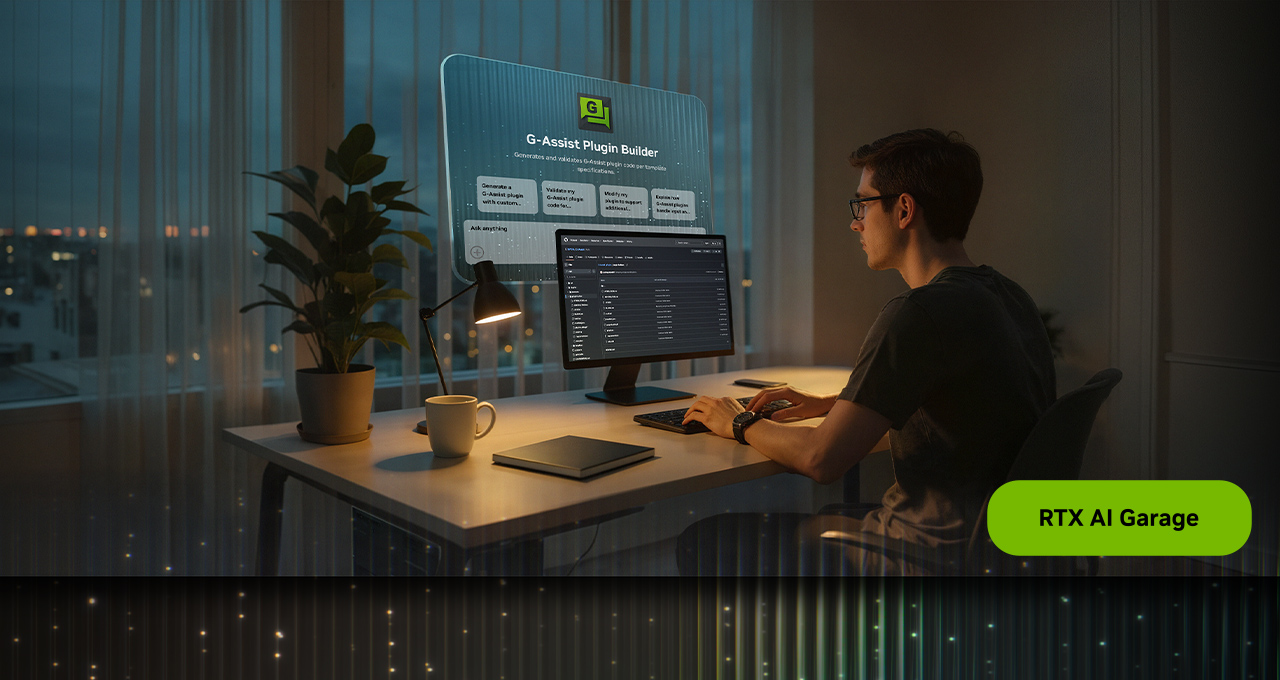
The hackathon invites the community to expand the capabilities of Project G-Assist, an experimental AI assistant available through the NVIDIA App that helps users control and optimize NVIDIA GeForce RTX systems.
Entrants gain the chance to win a GeForce RTX 5090 laptop, or a limited NVIDIA GeForce RTX 5080 or RTX 5070 Founders Edition graphics card, plus NVIDIA Deep Learning Institute credits. Finalists may also be featured on NVIDIA’s social media channels.
Register for the hackathon and check out the curated technical resources below to bring these submissions to life.
(G-)Assist With AI
When in the heat of a gaming moment or the flow of a creative project, interrupting one’s focus to navigate complex PC settings menus is a common frustration. For example, manually tweaking GPU performance or optimizing system parameters often requires leaving the user’s current application, which breaks concentration.
Enter Project G-Assist, which allows users to control their RTX GPU and other system settings using natural language. It’s powered by a small language model that runs on device and can be accessed directly from the NVIDIA overlay within the NVIDIA App — no need to tab out or switch programs.
Users can also expand its capabilities via plug-ins and even connect it to agentic frameworks such as Langflow. G-Assist plug-ins can be built in several ways, including with Python for rapid development, with C++ for performance-critical apps and with custom system interactions for hardware and operating system automation.
Project G-Assist requires a GeForce RTX 50, 40 or 30 Series Desktop GPU with at least 12GB of VRAM, a Windows 11 or 10 operating system, a compatible CPU (Intel Pentium G Series, Core i3, i5, i7 or higher; AMD FX, Ryzen 3, 5, 7, 9, Threadripper or higher), specific disk space requirements and a recent GeForce Game Ready Driver or NVIDIA Studio Driver.
Cross the Finish Line
As the hackathon’s submission deadline approaches this weekend, RTX AI Garage is providing resources that can help:
Sydney Altobell, a senior software engineer at NVIDIA, offers tips and tricks for working with G-Assist plug-ins in this on-demand webinar. The presentation and Q&A are available on the NVIDIA Developer YouTube channel and embedded below.
Fellow community developers are collaborating and sharing notes in the NVIDIA Developer Discord server. Altobell and the G-Assist engineering team have already answered many questions about plug-in submissions — keep the questions coming.
Plus, explore NVIDIA’s GitHub repository, which provides everything needed to get started developing with G-Assist, including step-by-step instructions and documentation for building custom functionalities. Take inspiration from sample plug-ins, which include code for using G-Assist to integrate into Discord, IFTTT, Google Gemini and more.
Learn more about the ChatGPT Plug-In Builder to transform ideas into functional G-Assist plug-ins with minimal coding. The tool uses OpenAI’s custom GPT builder to generate plug-in code and streamline the development process.
NVIDIA’s technical blog walks through the architecture of a G-Assist plug-in, using a Twitch integration as an example. Discover how plug-ins work, how they communicate with G-Assist and how to build them from scratch.
Find submission details and requirements on the Hackathon entry page.
Each week, the RTX AI Garageblog series features community-driven AI innovations and content for those looking to learn more about NVIDIA NIM microservices and AI Blueprints, as well as building AI agents, creative workflows, productivity apps and more on AI PCs and workstations.
Apple’s upcoming iPhone 17 lineup is likely to include a new model, the iPhone 17 Air, which is said to be a thinner-profile iPhone. But according to industry analyst Jeff Pu, who shared an investor note with equity research firm GF Securities this week, the iPhone 17 Air’s frame will consist of an unexpected material: titanium. Pu notes that the iPhone 17 Air will be the only device in the lineup using titanium, while the iPhone 17, iPhone 17 Pro, and iPhone 17 Pro Max are all said to have aluminum frames.
This would be a change from the current iPhone 16 Pro models, which use titanium; the base iPhone 16 and 16 Plus already use aluminum. Apple’s decision to move back to aluminum for the high-end Pro models could be based on factors like weight, costs, or durability goals.
But then again, why titanium for the iPhone 17 Air? Aluminum is lighter. On the other hand, titanium is stronger, which may be important for the iPhone 17 Air’s ultra-thin design. Weight won’t be an issue for a thin phone, but durability definitely will be.
Since 2017’s iPhone X, Apple’s most expensive phones have used stainless steel or titanium. If the iPhone 17 Pro and Pro Max return to aluminum, it would be a big material change, as reported by MacRumors. Apple is likely to expand on its design team’s thought process when it officially announces the iPhone 17 this fall.
The changing seasons in Pennsylvania can have severe impacts on commercial roofs. As a small business owner, you must stay ahead of damages caused by the winter snow and ice and the intense summer heat. If you don’t do maintenance regularly, leaks and structural problems can quickly follow. You can make a big difference by following simple steps like seasonal inspections and debris removal. Understanding these basics can help protect your property, minimize repair costs, and increase your roof’s durability.
Why Commercial Roof Maintenance Matters in Pennsylvania
If you run an Airbnb business or some other small enterprise in Pennsylvania, maintaining your commercial roof is vital for protecting your property, clients, and profits. Let’s take a closer look at the benefits of commercial roof maintenance:
Pennsylvania’s weather, be it snow, rain, or freezing temperatures, can wear out roofing materials. Eventually, it could cause long-term damage if not addressed.
If you ignore minor roof issues, it could lead to major repairs and even unplanned business closures.
If your roof is well-maintained, it will help safeguard your clients, equipment, and the safety of employees.
Common Roofing Issues Faced by Businesses
The weather and seasonal extremes in Pennsylvania can cause severe problems for commercial roofs, particularly flat ones. The following are four common issues you should watch out for:
Poor drainage can leave standing water. This could result in leaks and early material failure.
Cracked flashing and worn overlays would let moisture drip into your building.
Snow buildup and refreezing water often cause leaks and structural stress.
Summer heat dries and cracks roofing surfaces. This could raise energy costs and damage risk.
Roofing Maintenance Checklist for Property Owners
If you want to keep your commercial roof in good condition, particularly with Pennsylvania’s unpredictable climate, regular maintenance is key. Below are things every property owner should include in their routine:
Inspect your roof in spring and fall to detect winter damage or prepare for snow.
Gutter and Downspout Cleaning:
Clear out leaves and debris to avoid water buildup and ice dams.
Check seals around vents and HVAC units for cracks or wear. Then reseal when required.
Look inside for stains, musty smells, or damp spots. These may signal hidden leaks.
When to Call a Professional
Knowing the right time to contact a professional can save you time, money, and stress. Look below to know what to watch for and why choosing the right contractor matters.
Signs You Need Expert Help
Search for stains on ceilings, sagging areas, or any missing roofing material. Persistent leaks, pooling water, or moldy smells are red flags that it’s time to contact local roofing companies in PA for inspection.
Choosing the Right Contractor
Always pick a licensed and insured roofing company. Confirm they carry general liability and workers’ compensation coverage. Also, go through reviews and check references to ensure quality and safety.
Why Do Maintenance Plans Matter?
Registering for roofing maintenance services in Pennsylvania would help you prevent major repairs. Frequent inspections will help you detect small issues early, prolong the lifespan of your roof, and minimize unplanned downtime. Maintenance plans also offer predictable costs. This makes it easier to plan and safeguard your investment over time.
Extend the Life of Your Commercial Roof
A few smart habits help protect your commercial roof and prevent expensive repairs. Take a look at the tips we’ve provided below:
Coatings protect against UV, heat, and moisture. Applying them adds years to your roof’s life.
You must avoid unnecessary walking on your roof to prevent stress cracks and wear.
Document every repair and inspection to detect patterns, support warranties, and plan.
Tax Incentives and Insurance Benefits for Roofing Maintenance
Commercial roof maintenance goes beyond preventing damage. It can also support your finances. Check this out:
Well-maintained roofs lower risk. Frequent maintenance and good documentation can result in minimized premiums and fewer denied claims.
Endnote
You must practice regular roof maintenance. In Pennsylvania, unchecked roof damage may cause business interruptions, costly repairs, and insurance claim denials. The IRS allows deductions for routine upkeep, and insurers reward documented care, so it’s vital to be proactive, not reactive. The condition of your roof directly affects your safety, finances, and the stability of your business in the long run.
Twitter co-founder and Block CEO Jack Dorsey isn’t just vibe-coding new social apps, like Bitchat and Sun Day, he has invested $10 million in an effort to fund experimental open source projects and other tools that could ultimately transform the social media landscape.
These efforts are funneled through an online collective called “and Other Stuff,” formed in May, whose team includes Dorsey; Twitter’s first employee, Evan Henshaw-Plath; “Calle,” creator of the e-cash platform Cashu; Alex Gleason, former engineering head at Truth Social; and Jeff Gardner, the fourth employee at Intercom.
Image Credits:and Other Stuff
The group originally met through collaborating on Nostr, an open, “apolitical” social networking protocol that has been receiving the bulk of Dorsey’s attention since Twitter’s sale to Elon Musk and his stepping down from social network Bluesky’s board. However, the team will experiment with other tools, too, like ActivityPub, the protocol that powers the decentralized app Mastodon and others, as well as Cashu.
As a result, the team at “and Other Stuff” is determined not to build a company but is instead operating like a “community of hackers,” explains Henshaw-Plath. Together, they’re working to create technologies that could include new consumer social apps as well as various experiments, like developer tools or libraries, that would allow others to build apps for themselves.
For instance, the team is behind an app called Shakespeare, which is like the app-building platformLovable, but specifically for building Nostr-based social apps with AI assistance.
Developments in AI-based coding have made this type of experimentation possible, Henshaw-Plath points out, in the same way that technologies like Ruby on Rails, Django, and JSON helped to fuel an earlier version of the web, dubbed Web 2.0.
Related to these efforts, Henshaw-Plath sat down with Dorsey for the debut episode of his new podcast, revolution.social with @rabble. (Henshaw-Plath’s handle on X is @rabble.)
Since Dorsey lives in Costa Rica and Henshaw-Plath lives in New Zealand, the two met up at a hackathon in Switzerland for the chat. In the nearly hour-long episode, Dorsey delves into Twitter’s history as well as his philosophies around where social media went wrong and how it can be fixed.
“It took me a long time to realize this…I didn’t really put it into words until I came back as CEO the second time. But it’s hard for something like [Twitter] to be a company, because you have corporate incentives when it wants to be a protocol,” Dorsey says. He notes that Twitter was at the mercy of its advertisers — something Musk also faces despite taking Twitter, now called X, private. Musk has even threatened advertisers with lawsuits over ad boycotts driven by their concerns over X’s lack of moderation and controversial comments Musk himself has made.
While Dorsey understands that catering to advertisers was correct for the business and for Twitter’s stock price, it was the “wrong thing for the internet.”
“They can just remove the money — your money — and your revenue goes down completely,” Dorsey says of advertisers’ power. “So if [Twitter] were an open protocol, if it were truly an open project, you could build a business on top of it, and you could build a very healthy business on top of it.”
Dorsey eventually funded an effort to build an open protocol inside Twitter, which later spun out to become Bluesky. But Dorsey believes Bluesky faces the same challenges as traditional social media because of its structure — it’s funded by VCs, like other startups. Already, it has had to bow to government requests and faced moderation challenges, he points out.
“I think [Bluesky CEO] Jay [Graber] is great. I think the team is great,” Dorsey told Henshaw-Plath, “but the structure is what I disagree with…I want to push the energy in a different direction, which is more like Bitcoin, which is completely open and not owned by anyone from a protocol layer. That’s what I see in Nostr as well,” he says. “That’s where I want to push my energy…rather into the more corporate direction, even if it is a public benefit corporation,” Dorsey adds.
In later episodes, Henshaw-Plath will interview others who have insight into how social media and tech have evolved, including journalists like Kara Swisher and Taylor Lorenz, former Twitter head of Trust & Safety Yoel Roth, Substack co-founder Chris Best, Medium CEO Tony Stubblebine, Cory Doctorow (who coined the term “enshittification” to describe the state of much of the current web), and renowned misinformation researcher Renée DiResta.
The team at “and Other Stuff” is also working on a social media “Bill of Rights,” says Henshaw-Plath, which spells out what social media platforms need to provide in areas like privacy, security, interoperability, transparency, identity, self-governance, and portability.
This, they believe, will help platforms, including Bluesky and others, remain accountable to their users despite any outside pressure.
Dorsey’s initial investment has gotten the new nonprofit up and running, and he worked on some of its initial iOS apps. Meanwhile, others are contributing their time to build Android versions, developer tools, and different social media experiments.
More is still in the works, says Henshaw-Plath.
“There are things that we’re not ready to talk about yet that’ll be very exciting,” he teases.
Imagine you’re a product manager or entrepreneur ready to take the next hot thing to market, whether a revolutionary gadget or a stylish, green piece of furniture. You’ve got the vision, team, and idea that can disrupt the market. But time is of the essence. Your competitors are already revved up, and your customers are anxiously waiting. If you don’t get your product out there quickly, you’ll be left behind.
That is where new and innovative product design services is needed. Cad Crowd, the leading agency, can help you choose from over 94,000 experts and product designers. These experts don’t simply help bring concepts to fruition; their help actually plays an imperative role in helping speed the overall product creation process along. What could be an otherwise protracted, fat-bloated undertaking, these designers transform into streamlined, quick-line paths for reaching the marketplace as fast as possible.
Let’s break down how these companies accelerate product development and how working with them can be a game-changer.
🚀 Table of contents
Mastering the art of streamlined design thinking
All successful products start with a good design, one that is thoughtful, purposeful, and focused on the end-user. In the old product development world, teams became mired in long loops of experimentation and error, multiple iterations of prototyping, and constant revisions. The process spirals out of control, takes too long, and costs too much. That’s where design thinking steps in to offer a more efficient solution.
Essentially, design thinking is a solution-finding process that revolves around empathy, ideation, and iteration. Instead of plunging headfirst into solutions, it encourages teams to start off by understanding the users’ needs and experiences beforehand. This human-centric approach allows companies to find pain points early on, eliminating unnecessary steps and making the development process focused on what really matters: the user experience.
Through design thinking, companies are able to avoid costly mistakes down the line. Consumer product design services firms, in particular, implement techniques like rapid prototyping to accelerate development. Rather than spending months finishing a product, they create quick, affordable prototypes that can be tested quickly and sent back to the designer to make changes. By this cycle of iteration, teams are able to modify their designs in real time, reducing development cycles by leaps and bounds and keeping projects on the go.
Ultimately, through the exercise of design thinking, companies not only enhance the quality of their product and customer satisfaction but also save valuable time and resources, streamlining the design process to success.
Applying agile methodology to attain speed and flexibility
In product development, flexibility is the name of the game. Those are the days of the rigid, waterfall approach, where each step of the process was dependent on the previous one. Gone are those days in today’s fast-paced world, where flexibility and responsiveness are a must, and that’s where agile methodology fits in.
Essentially, agile is about iterative development. Rather than spending months developing a product in a black box, agile teams break down the process into little, bite-sized chunks, known as sprints. That way, teams get to keep building, testing, and iterating a product, introducing feedback and market intelligence along the way. It’s all about being attuned to the evolving needs of the user and the market.
For product design services companies that are new to the market, agile thinking can be revolutionary. By bringing cross-functional teams, product design experts, engineers, and researchers together, they’re able to respond quickly, operate in concert, and respond as needed. This ability to adjust leads to fewer delays and a more efficient process of developing products.
The reward? A product that not only gets to market earlier but also meets the actual-world issues and needs of its users, too. Agile development is changing the way companies approach product development, offering flexibility, velocity, and a more user-centric design process. If you’re refining a product you already sell or creating one from the ground up, adopting agile can help you stay ahead and react better to what the marketplace is asking for.
Facilitating effortless teamwork with cross-functional teams
Product development acceleration isn’t just a matter of quick design cycles; it’s also a matter of making a culture wherein teamwork occurs naturally across all departments. Product designers, engineers, marketers, and business leaders must work together from day one to achieve the product vision on time and at a reasonable cost. Seamless teamwork is where it starts.
New product design services companies are designed to accommodate this kind of cross-disciplinary collaboration. These companies are inclined to bring together specialists with various areas of expertise, and this allows teams to approach the development process from various angles. From a product’s design, functionality, or positioning in the market, having many experts work together ensures a balanced approach to product development.
For example, when product designers and design engineering services firms work extremely closely together, it reduces the risk of design failures and technological blips later on. A designer might recognize that a design choice might be problematic for manufacturing, while an engineer might recognize a probable conflict between the product’s functionality that affects the user interface. Early interaction detects problems before they turn into expensive delays.
Also crucial is involving marketing professionals right from the start. They play an important part in creating the product’s messaging, so it resonates with the target market and aligns with branding plans. With marketing involved early, the product stands a better chance of being launch-ready for a successful launch.
By creating space for continuous collaboration, businesses can streamline the development process, resolve barriers faster, and get products to market in time.
Smart technologies and tools to streamline development
The modern world is rapidly moving, and technology is advancing at record speed in product development. The past reliance on ancient tools and slow manual processes is gone. The whole development process has been simplified with sophisticated technologies that automate and optimize each process because of the advancement of design services companies.
One of the strongest tools of this revolution is professional CAD services and 3D modeling software. These allow designers to create highly detailed and precise digital models of products no prototypes necessary. This makes it possible for designers to test, try out, and change their designs very quickly and simply, cutting development time by huge amounts. The simplicity with which the product is visualized from all angles and in varying contexts allows the fine-tuning of the design with ease in a matter of minutes, unlike when a long period is utilized when applying the traditional methods.
But there’s more. Several design services companies are also using advanced simulation and analysis software, taking the guesswork out of testing products. Designers can simulate a product in computer models of real-world conditions and detect flaws before the product ever hits the assembly line. Teams can then make adjustments to prevent costly mistakes by catching the flaws early.
With these state-of-the-art tools in their kit, design services businesses can move through the design process faster without sacrificing quality. The result is faster time-to-market, more innovative products, and a competitive advantage that keeps businesses ahead of the pack.
Ensuring consistency and quality assurance
In product design, speed is generally the name of the game, but that does not mean that quality should be sacrificed. Luckily, the new product design services companies today are masters at achieving the perfect balance between rapid development and top-notch results. They understand that while time equals money, quality sacrifice can result in more headaches in the long term.
How do they provide quality at top speed? It all depends on a combination of technology, testing, and experience. These companies use rigorous testing, prototype design engineering services, and validation processes to make sure the final product not only meets industrial standards but also exceeds customers’ expectations. Advanced automated tools detect potential problems early in the design process, reducing the risk of defects or costly recalls later on.
The secret to speed and quality control lies in their efficient processes. By efficiently managing timelines, budgets, and resources, they are able to meet deadlines without compromising on quality. This process ensures that no matter how tight the schedule is, the focus on quality never wavers.
To you, as the client, this promise of quality control means fewer errors, less rework, and fewer slippages, so you can deliver your product to market earlier than planned. In today’s high-speed world of product development, this difficult balance of both speed and better quality can often be the key to standing head and shoulders above others.
Minimizing time to market using existing expertise and experience
Product development is never a straight line. It’s a set of turns and twists, unanticipated bumps, and occasionally, having to swivel off from your original course. But this is the thing: with the right experience working for you, those barriers can become just bumps on the highway, and that’s where new product invention design services firms come in.
These are usually veteran veterans, with much experience to draw upon. They’ve already traversed the intricacies of product design, from conception through final production. Since they’ve done it all before, they’re aware of the obstacles that can develop and how to attack them full-on. That extensive industry expertise enables them to foresee pitfalls, shift gears at a moment’s notice, and act fast to resolve them, shortening precious time from your project timeline.
And that’s not all. Several of these design services firms come with a long-established network of good suppliers, manufacturers, and partners. With such a pre-established network, sourcing is easier, production can be accelerated, and distribution made easier. Thanks to their relationships and know-how, they can expedite the processes that can otherwise decelerate development and see your product onto the market faster.
Time to market may be the deciding factor between failure and success in a competitive market. Using the skill and capacity of an able product design service company can give you that competitive edge.
When it comes to speeding up product development, sourcing and supply chain optimization are elements that cannot be overlooked. An unproductive or slow supply chain can result in costly delays, missed deadlines, and lost opportunities in a competitive market. That is where product design services companies come in. These experts not only specialize in design—they are also versed in supply chain management and can help optimize this important segment of the process.
With their connections in the business, these companies know exactly where to get good parts and materials. They can use connections with established suppliers to get the best terms, so you get what you need without unnecessary delays. It’s not just a question of getting the right parts at the right price; it’s the timing. These design service professionals are familiar with ensuring the delivery of materials as scheduled, meaning you get to meet deadlines without incurring wasteful delays.
In addition, many design firms work with manufacturing specialists who specialize in rapid prototyping design services and low-volume production. This technology can be revolutionary, so you can test designs quickly, make adjustments as needed, and get merchandise to market faster than ever before. Streamline the supply chain, and product design services can push development forward and lead the way.
Risk management using early testing and validation
In today’s quick-paced product development world, the fear of failure can sometimes be a giant stumbling block. What if, though, this fear doesn’t have to hold you back? Companies that offer new product design services are revolutionizing the way we approach risk by emphasizing early-stage testing and validation, so that products are ready to succeed even before they are released.
Among the most influential resources these businesses leverage is user testing. Through direct feedback from genuine users, they can identify potential problems that could otherwise fly under the radar. Whether by means of A/B testing, trials of prototypes, or usability research, this preliminary feedback enables design teams to swiftly make adjustments, refining the product for optimal benefit. This preventive action not only solves potential issues before they turn critical but also saves time and resources in the long run.
The primary benefit here is that, by way of early validation of ideas, design services companies prevent costly setbacks that could otherwise delay the launch of the project. This strategy not only minimizes risks, but it also accelerates the development process so the final product is fully aligned with client expectations. It’s a smart, strategic risk control method that keeps the project on track for success.
Scalability and flexibility to respond to demand
With your product development going on, naturally, market trends and customer needs will transform. Either due to new fashion, innovative technologies, or unexpected changes in consumer trends, staying ahead of the curve is the only way to go. This is where your scalable and adaptable design services come into play. New product design services through engineering design companies are masters at helping you navigate these transitions smoothly, ensuring your product evolves along with the market.
Their strength is their ability to quickly adapt and implement necessary changes without affecting the overall development process. If customer feedback necessitates a design change or if market conditions suddenly shift, these companies can redesign your product, condense its features, or even change production strategies.
What distinguishes them is their capacity to quickly adapt, without upsetting the entire project timeline. They understand that change is a reality in business, and they are ready to make your product adjust to such changes seamlessly. This implies your product remains not only relevant but also competitive in an ever-changing landscape. With a design partner who can match the pace of change in the market, you’re ensuring long-term success for your product.
The competitive advantage: Coming to market first
Timing is everything in the success of a product. One of the single greatest advantages of hiring a new product design services firm is entering the market before your competition. In fields where speed matters, being first gives you a powerful competitive edge.
These design service companies bring forward new approaches and expertise to the table and make the whole process of product development easier. They use the latest technologies, such as 3D modeling design services, rapid prototyping, and advanced CAD tools, which allow them to identify and address potential issues early on and make sure the design is tuned before production is done. This reduces the waits that typically follow traditional development practices.
By working with industry experts who understand the quickly changing environment, you are able to take your idea from conception to market much quicker. This is crucial because getting your product out first compared to everyone else provides you with a greater chance to acquire market share and establish brand recognition before others can even react.
Ultimately, the faster you get your product to market, the more likely you are to capitalize on breaking trends, address consumer demand, and gain a foothold in a crowded marketplace. It’s a surefire method of making your product stand out above the competition.
Speeding up product development is not about going quicker; it’s about going wiser. New product design services companies provide the talent, tools, and team-oriented environments necessary to bring your product concept to life with velocity and precision.
Whether through agile development, rapid prototyping, or leveraging cutting-edge technologies, such companies play a critical role in ensuring your product reaches the market on schedule and with integrity. By partnering with the right product engineering services company, you are able to take your product to market quicker, outpace competitors, and eventually end up more successful.
How Cad Crowd can help?
Ready to transform your innovative ideas into market-ready products quicker than ever? Join forces with the experts at Cad Crowd today, the leading platform for hiring highly skilled freelance engineers, architectural designers, and more! You and your future customers will be grateful. Contact us now for your free quote and take the first step towards success!
MacKenzie Brown is the founder and CEO of Cad Crowd. With over 18 years of experience in launching and scaling platforms specializing in CAD services, product design, manufacturing, hardware, and software development, MacKenzie is a recognized authority in the engineering industry. Under his leadership, Cad Crowd serves esteemed clients like NASA, JPL, the U.S. Navy, and Fortune 500 companies, empowering innovators with access to high-quality design and engineering talent.