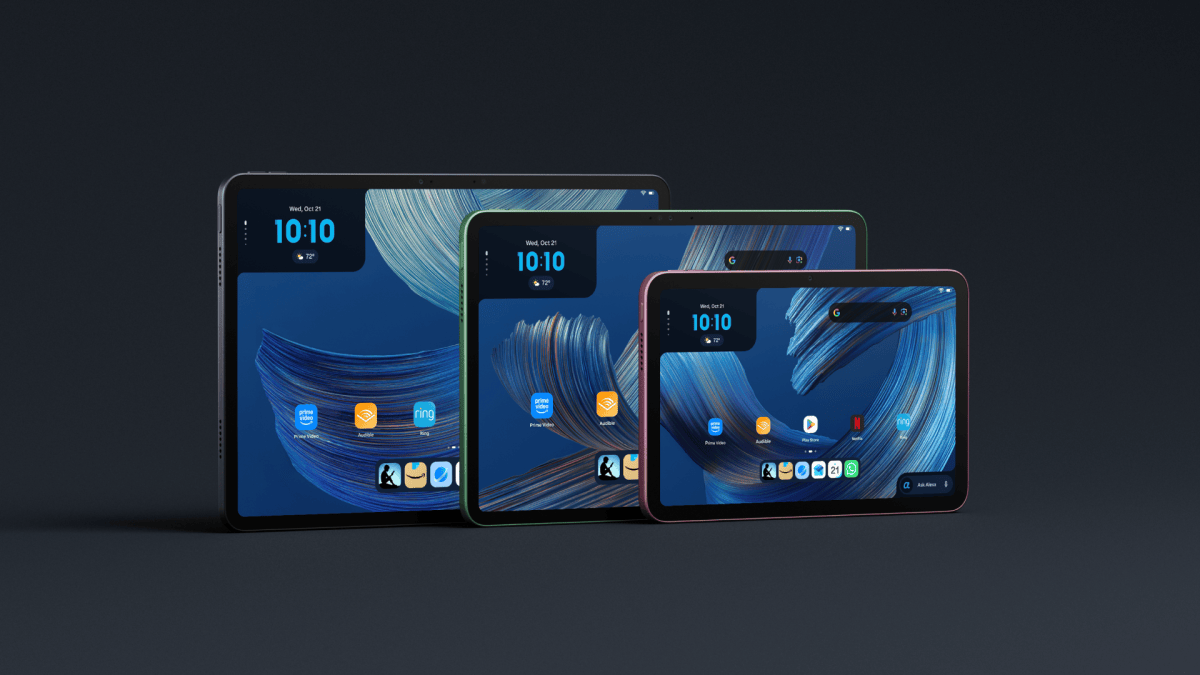
Amazon on Thursday unveiled a new lineup of Alexa tablets that feature personalized intelligence from its Alexa+ AI assistant and full access to the Google Play Store. The lineup includes three models: Amazon Alexa Tablet 12 Pro, Amazon Alexa Tablet 11, and Amazon Alexa Tablet 8.
The tech giant says each tablet features an aluminum unibody design, high-resolution displays, and runs on Android. Plus, with access to the Google Play Store at launch, users will be able to download millions of apps, including YouTube, Netflix, Gmail, and more.
Until now, Amazon’s tablets have run Fire OS and ship with its own app store. With these new tablets, however, Amazon is taking a different approach to reach a wider audience. An Amazon spokesperson told TechCrunch that these are an all-new product line with new hardware and a new OS, rather than a rebrand of Fire Tablets.
The Amazon Alexa Tablet 12 Pro measures 6.5 mm thick and is engineered for “perfect balance,” Amazon explained in a press release. It houses a 12-inch, 280 PPI display, a 120Hz refresh rate, and a 3:2 aspect ratio for more usable screen space, which the company says is perfect for reading, watching, or working. It comes in two display options: a standard display and a Nanomatte display with anti-glare.
Amazon says the Alexa Tablet 12 Pro delivers nearly three times the processing performance and nine times the graphics performance of any tablet it has shipped before. The company says the tablet can easily handle everything from multi-window multitasking and graphics-intensive gaming to 4K streaming. It features Dolby Atmos speakers, Wi-Fi 6E, and 16 hours of video playback.
Image Credits:Amazon /
The company also announced the Alexa Tablet Pro Pen and Pro Keyboard, which Amazon says are designed to turn the Alexa Tablet 12 Pro into a full workstation.
The new tablets are launching with built-in access to Alexa+. Users will be able to say “Alexa” or tap the “Ask Alexa” button to get answers to questions, control their smart home, and more. With On-Screen Intelligence, users will be able to ask Alexa to look at what’s on screen to receive contextual help. For example, while browsing a list of trails, users can ask Alexa, “Which of these hikes is best for me?”
The Alexa Tablet 11 is an 11-inch device with a 2.5K display at 276 pixels per inch, 90Hz smooth scrolling, and a 16:10 aspect ratio. The tech giant says it’s designed for streaming, gaming, reading, and browsing. It features 15 hours of video playback and dual Dolby Atmos speakers. It starts at $329.99 and comes in Graphite, Amethyst, and Matcha.
The Alexa Tablet 8 is the smallest and most portable of the three, featuring an 8.7-inch display and an all-aluminum design that weighs 329 grams. It’s designed to be held in one hand and carried anywhere for reading, browsing, and streaming on the go, Amazon says. It starts at $229.99 and comes in Graphite, Rosette, and Teal.
All of the new tablets are launching with a new Kindle reading experience. When users open the Kindle app, notifications are silenced, blue light is reduced, and battery life can last up to 20 hours.
Image Credits:Amazon /
The company also announced on Wednesday that it’s launching new Amazon Kids tablets, with 8.7-inch and 11-inch sizes available. Bundles include a tablet, a kid-proof case, and a year of Amazon Kids+, which provides access to thousands of kid-friendly books, games, videos, and apps in an ad-free environment.
There are separate versions for pre-K kids (ages 3+) and kids 6+, as younger kids get a soft bumper case in designs from franchises like Paw Patrol and Barbie, while older kids get a slim hard case with a built-in kickstand.
All three Amazon Alexa Tablets and the Amazon Kids Tablets will go on sale October 14, 2026, in the U.S., Mexico, and Canada. They’ll launch in the UK, Germany, France, Italy, and Spain on October 19, while the Amazon Kids Tablets will also be available in Japan starting October 14.
When you purchase through links in our articles, we may earn a small commission. This doesn’t affect our editorial independence.
AI slop is getting so good that it’s not always easy to distinguish a photorealistic forgery from a real photo. It’s no longer as easy as looking for the six-fingered renderings of just a year ago. Beyond looking for subtle clues, spotting AI images often comes down to a gut feeling that something simply looks off.
Now there’s another tool to help identify fakes, and it works with AI-edited audio and video, too. Google has opened its SynthID Detector to the public, so anyone with a Google, Apple or ChatGPT account can upload media to determine whether it’s been saved with a SynthID tag indicating manipulation using generative AI.
Google introduced SynthID in 2023 and, in late 2025, made it possible to query Google Gemini about whether images were created using Google’s AI. At the Google I/O annual developer conference this past May, the tool expanded to include detecting video and audio content in Google Chrome and Google Search.
The standalone SynthID Detector tool currently detects media generated by Google, OpenAI, Nvidia and Kakao. Not yet named is Apple, which announced it would support SynthID at its recent fall event announcing the iPhone 18 Pro and iPhone Duo.
(Disclosure: Ziff Davis, CNET’s parent company, in 2025 filed a lawsuit against OpenAI, alleging it infringed Ziff Davis copyrights in training and operating its AI systems.)
A spokesperson for Google, in an email to CNET, emphasized that working with other companies is crucial when it comes to identifying AI-generated content because no single company can solve the problem alone. They also said there’s no specific date for Apple support, but that it will be available soon.
Even so, the SynthID Detector seems already wired for Apple’s content. I uploaded a photo shot with an iPhone 18 Pro and edited using Apple’s Reframe tool, and it successfully detected the embedded SynthID tag. For an untouched iPhone-captured photo, the detector correctly did not detect a tag.
The original photo, captured with an iPhone, underwent a slight perspective shift using Apple’s Reframe tool, which then embedded a SynthID tag that was recognized by Google’s SynthID Detector.Screenshot by Jeff Carlson/CNET
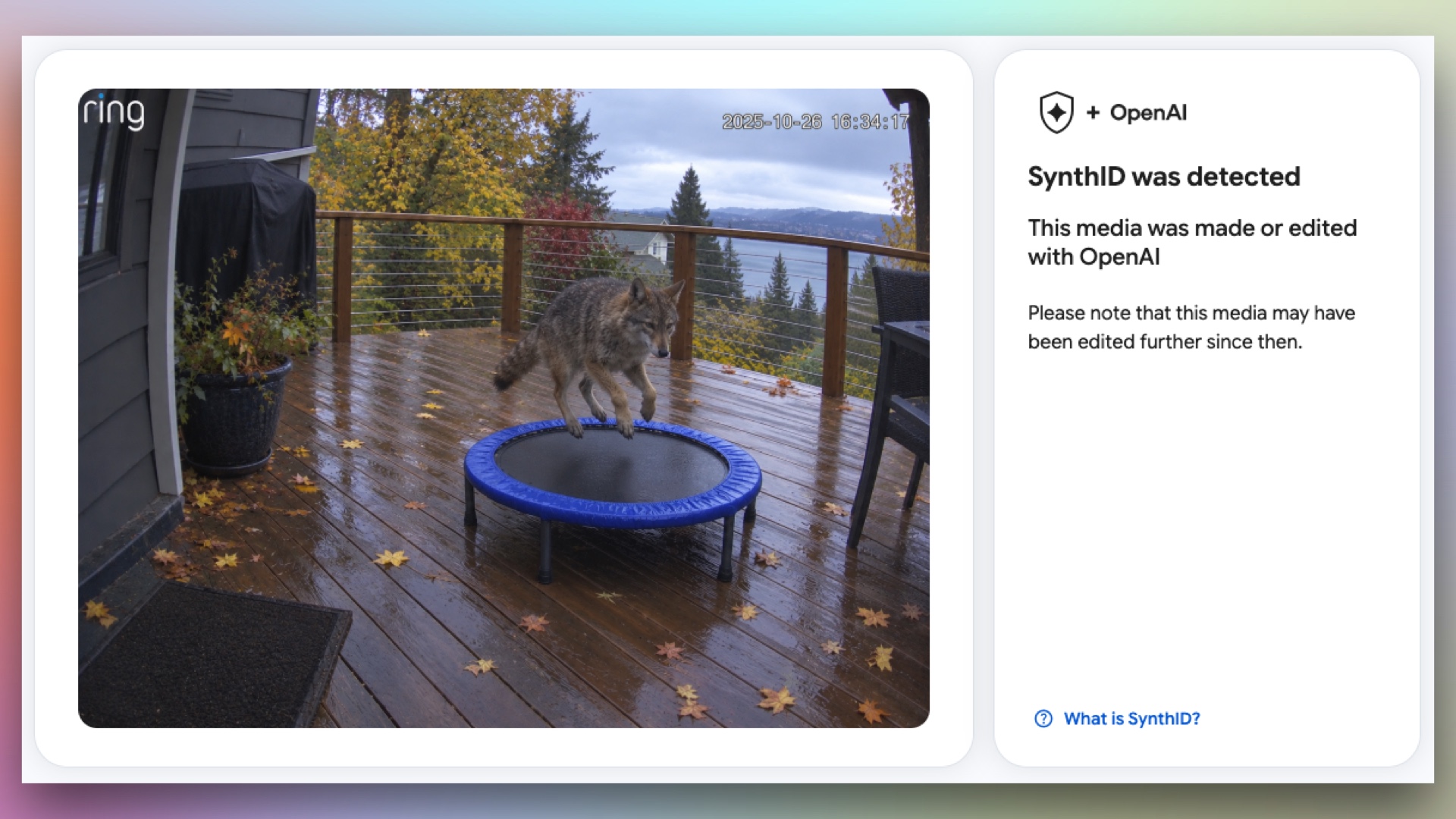
Images generated from prompts using ChatGPT were correctly flagged as including AI-generated content
This photo was entirely AI-generated from a prompt in ChatGPT. Although the SynthID tag was detected, the janky pattern of leaves on the ground gives it away, too.Screenshot by Jeff Carlson/CNET
To probe the level of Apple support in the tool, I created an entirely AI-generated image in Apple’s Playground app using ChatGPT’s image generation model, but the SynthID Detector did not identify it as AI-generated. It’s likely the Playground app does not yet have SynthID tagging wired in.
Apple’s Playground app was used to generate this variation, which was created with ChatGPT, but the detector found no SynthID metadata.Screenshot by Jeff Carlson/CNET
I also tested some photos captured using a Google Pixel 11 Pro. The company takes a two-pronged approach to image veracity on its own devices: embedding C2PA (or Coalition for Content Provenance and Authenticity) metadata in every image it creates to verify the accuracy of the original capture, and adding a SynthID when an image has been edited using AI.
I edited the original photo with a Pixel 11 Pro XL in Google Photos by asking Gemini to create a night version with an aurora, shown at right. The SynthID Detector correctly noted the SynthID tag in the edited version.
Although Apple is adopting SynthID, it has not signed onto C2PA. Instead, it’s using its own Reference Image technology to store a cryptographically verified original of an image. Those shots must be captured in the Reference mode in the iPhone’s Camera app, though.
It’s also encouraging to see Google handle the media in a sensible way. When you first visit the site, you must agree to terms of service that spell out that media files you upload are processed in real time and then deleted after the results are displayed. A digital signature of the media is mapped to your user identifier and then deleted after 24 hours.
OpenAI has its own verification tool, but it only looks for OpenAI watermarks; the AI-generated samples I tested with Google’s tool came up negative on OpenAI’s site.
Any tool that helps determine genuine content is welcome, but as usual, the responsibility falls on the viewer to make that determination — if not by noticing on sight, then by making the effort of downloading the media, loading the tool and uploading it. The upside is that tracking technology such as SynthID is finally making its way into more media and paving the way for more widespread detection of AI slop.
Jeff Carlson
Senior Writer
Jeff Carlson writes about mobile technology at CNET, from cellular phone plans to devices and emerging technology.
See full bio
The Adventures of Elliot: The Millennium Tales Direct Download
A brand-new action RPG from the creators of OCTOPATH TRAVELER and BRAVELY DEFAULT – The Adventures of Elliot: The Millennium Tales combines stunning HD-2D visuals and exciting action-adventure gameplay for the first time! Atomfall
The adventurer Elliot and his fairy sidekick Faie set off on a journey across four ages to fulfill a thousand-year mission.
Enjoy intuitive and rewarding action-based battles with strategic support abilities from a fairy as you reveal this world’s mysterious history.
• Seven Weapon Types and Fairy Magic
Arm yourself with up to two weapons at a time to do battle with the beast tribes that overrun the continent. Faie’s fairy magic will prove handy in clearing both the fiends and puzzles that stand in your way.
• The Four Ages of a Millennium
To lift the curse on Princess Heuria of Huther, Elliot and Faie will cross through the Doorway of Time to visit different periods in history.
Elliot’s home time, the Age of Safekeeping… The Age of Reconstruction, in which humans eke out a meager existence… Humanity’s height of prosperity in the Age of Magic… And the Age of Budding, the birth of human civilization.
Across every age, a terrible threat looms over Elliot and Faie’s adventure.
Screenshots
SystemRequirements
Minimum
Requires a 64-bit processor and operating system
OS: Windows® 11
Processor: AMD Ryzen™ 3 3100 / Intel® Core™ i3-8100
Memory: 16 GB RAM
Graphics: AMD Radeon™ RX 5500 XT / Intel® Arc™ A580 / NVIDIA® GeForce® GTX 1650
DirectX: Version 12
Storage: 20 GB available space
Additional Notes: 1280×720, Graphics Preset “Low”, 60FPS
Support the game developers by purchasing the game on Steam
InstallationGuide
TurnOff Your Antivirus Before Installing Any Game
1 :: Download Game 2 :: Extract Game 3 :: Launch The Game 4 :: Have Fun 🙂
Ultima is a foundational RPG series that’s long been left in the past by rights holder EA, but according to series creator Richard Garriott, that could all be changing as early as next year.
Garriott sold Origin Systems, the studio he co-founded with his brother and father, to EA back in 1992 along with the rights to the Ultima IP. He would continue working there for years to come, directing several Ultima RPGs and serving as producer on the seminal MMORPG, Ultima Online. In 1999, EA canceled all of Origin’s in-development projects partly due to poor reception to Ultima IX: Ascension, and Garriott left the company shortly after that. After a few years maintaining Ultima Online and working on another online Ultima game that would eventually be canceled, Origin was shut down by EA in 2004. 22 years later, Garriott says he’ll soon own the rights to the series once again.
“There’s a really weird United States copyright law that says, if you are the original holder of a copyright and you assign it or sell it to any publisher or any other entity, after 35 years you can just take it back,” Garriott tells Jesse Petrilla in a new interview. “There’s no money that you need to transfer, all you need to do is tell them a year before you take it back.
Latest Videos FromGamesRadar+
“And so, in April of this year, I told Electronic Arts, ‘by the way, I’m gonna take the copyrights to Ultima back,’ and they wrote back and said, ‘yeah, we know that’s the law, we will act accordingly.’ And so I’m now in discussions with them actively right now as to, ‘is there anything we should do together or not?'”
Will there will be more Ultima games? – Richard Garriott AKA Lord British – YouTube
As EA is still the rights holder as of now, there’s no guarantee on what form this potential Ultima revival will take. Garriott says “we’ll figure it out,” but “at the very least it means I could re-release the early Ultimas, but it also means I could sequel them… the point is, I have control again of the future of my seminal product line.”
“Sequel them,” you say? As in, the official steampunk Ultima Online 2 that was announced in 1999 and canceled in 2001? Ultima Online is probably the game I’ve put the most hours into in my whole life, and a sequel would be utterly surreal at the very least.
Assuming Garriott’s correct and he regains ownership of Ultima next year, I’ll be nervously excited to see what comes next. Simple remakes or remasters of early Ultima games would be easy winners as long as their core systems remain mostly untouched, but a whole new game with Garriott at the helm could go either way. While his influence on the RPG genre is undeniable, Garriott has occasionally tripped his way through controversy in his decades-long career, which includes attempts at an NFT-based MMO and a string of post-Ultima releases that haven’t all been well-received.
Regardless, I’d argue Ultima is in better hands with Garriott than it is under EA’s umbrella, where it would probably never be touched again.
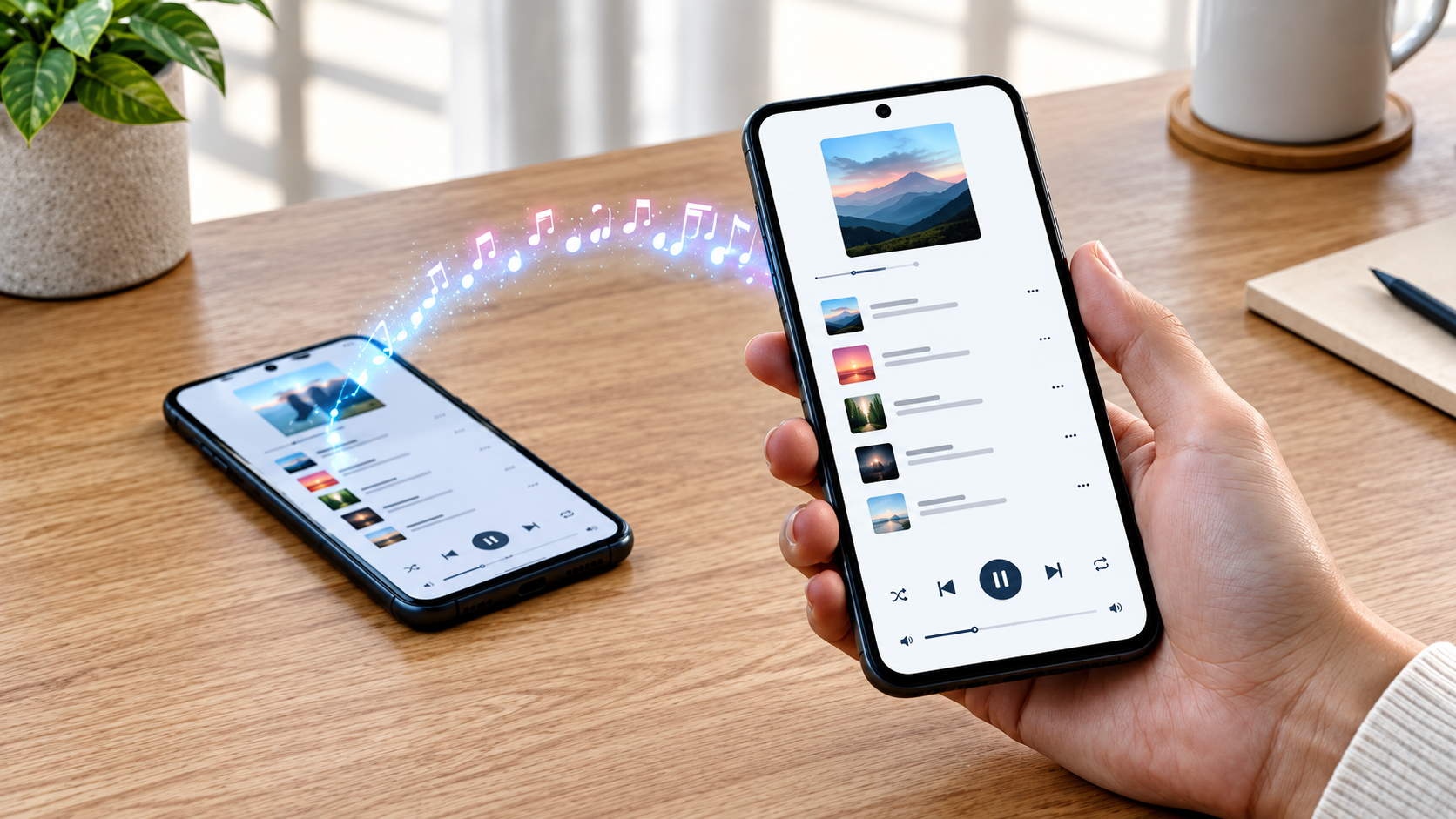
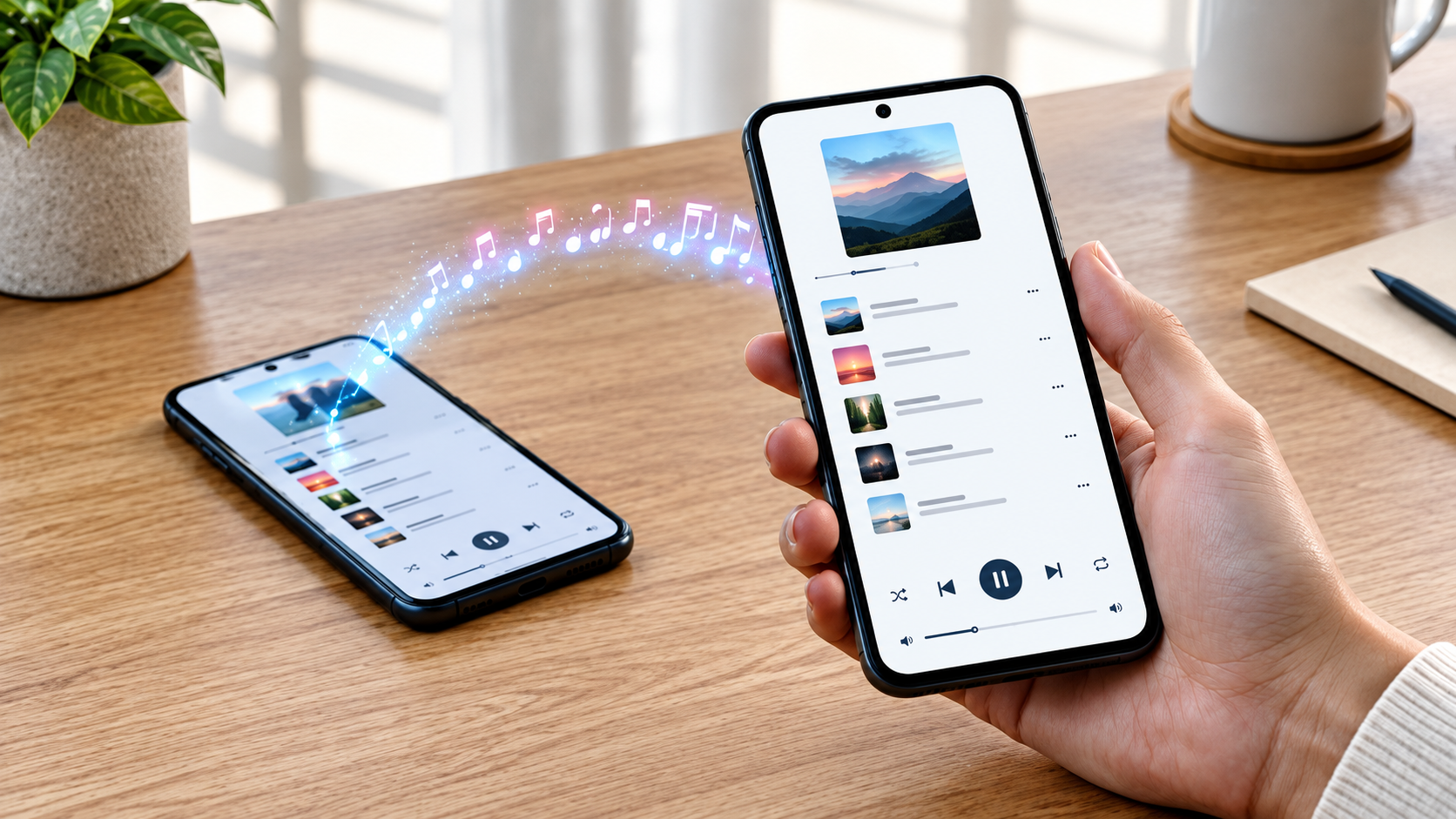
Two smartphones displaying a music player interface, with glowing musical notes arcing between them to represent wireless music transfer.
Transferring a music collection from one application to another does not necessarily mean starting again from scratch. Users wanting to shift a Spotify playlist to YouTube Music on Android can either create a new one through the YouTube Music app or rely on an online service capable of matching the tracks from both accounts in order to save the time required for the manual process.
Keep in mind that the transfer service merely duplicates Spotify playlists into YouTube Music and does not remove playlists or songs from Spotify in this regard. Given that track libraries may differ from each other, the newly transferred playlist should definitely be double-checked for missing songs, duplicates, or wrong versions.
What Is Transferred, and Why Would You Need to Use It?
The playlist transfer is able to copy track selections (and possibly their names and order, depending on the transfer method). Note that the manner of transfer should also affect the output of the process. Some users prefer YouTube Music because it integrates with their common YouTube experience or because they would rather have their music library and video music exploration in a single app.
Why Is YouTube Music Attractive for Spotify Users?
YouTube Music is a combination of a streaming library and music videos, as well as legal and unofficial versions from YouTube. This feature is appealing to users in search of live performances, covers, and recordings that are hard to find among regular streaming catalogs.
Using the app, people can access their playlists organized in their Library, where they can keep and listen to saved music. Existing YouTube users may continue listening in a single environment without mastering new interfaces or accounts.
What Can Be Transferred in Playlists and Liked Songs?
A transfer service, such as the spotify to youtube playlist service by Paradify, enables the transfer of Spotify playlists to YouTube Music, including the playlist title and order, provided the transfer tool has access. Some services also enable the migration of liked songs and saved albums and artists. The selection of items available for transfer may differ between transfer services, so it is advisable to check which options are available on the selection screen.
The items being transferred will appear in the library of the new service, but the originals on Spotify will remain intact. No automatic synchronization between the two libraries will take place, which means that changes made to one playlist will not be transferred automatically to the other. In case a playlist undergoes constant changes, an independent mechanism for updates may have to be established.
Reasons for Missing and Inaccurately Matched Tracks
A transfer application searches the destination service’s catalogue to find a match according to the song title and artist’s name. Yet, some matches may fail due to licensing, catalogue entries, or differences in metadata.
For instance, a live performance might be confused with the studio version, a clean version might be mistaken for the explicit one, or remastered recordings might have a different name. Using the match report can also show which tracks were not transferred or were mismatched.
How to Re-create a Playlist in YouTube Music on Android
The manual approach can be applied either to a short playlist or to a playlist that requires meticulous checking. The user must create a new playlist in the YouTube Music application and search for tracks on Android, adding matching tracks to the new playlist based on their titles and artists’ names.
Searching for Tracks and Adding Them to a Playlist
On YouTube Music, the user can find a track, open the menu, and select the option to add the track to a playlist. It is possible either to create a new playlist from the menu or to add the song to an existing playlist. The newly created Spotify playlist will be available in the library once it is created.
To find the appropriate track, it is recommended to search using the song title and the artist’s name at the same time. The existence of many search results can be dealt with by searching for additional information, such as the album and version of the track, as well as the warning that the song may contain explicit content. The process is lengthy since the tracks have to be added one by one, but it makes it possible to ensure accuracy.
Using a Web-Based Application for Transferring Playlists
A web-based application for transferring playlists is capable of moving music from different music accounts by transferring the music catalogue. Similar to the regular application, the web-based service makes use of two steps: granting permission to access the two accounts and selecting the transfer option.
Link Your Spotify Account With Your YouTube Music Account
The user opens the migration service on a mobile browser or on a computer and selects Spotify as the source and YouTube Music as the destination. Each account must be verified through the relevant authorization process before being able to access information about the tracks selected for migration.
The application permissions must be checked before acceptance. The migration service may ask for permission to access the playlists in the destination library. After the migration has been completed, the user can check the permissions of connected applications in the settings and, if needed, revoke them.
Select the Playlists and Follow the Migration Report
As soon as both accounts have been connected, the user will need to select the playlist or playlists to be transferred.
The report shows the number of transferred, skipped, and matched tracks. The user will need to pay attention to the skipped tracks and the songs with a different title or version. It can help in analysing the work done, though verification by reviewing the playlist in the Android app will still be necessary.
How to Review and Correct Your Playlist on Android
The transferred playlist will need to be quickly analysed in YouTube Music to see whether there are any discrepancies in terms of quantities and matches. Doing this through the mobile device will help verify that the playlists are available in the account and play normally.
Make Sure the Track Count and Order Match
Open the playlist from the Library and compare the number of tracks with the original in Spotify. A lower number of tracks might indicate that some were unavailable; a larger number points to duplicates.
Search for the Missing Tracks and Correct Titles
For a skipped title, look for its name in YouTube Music and check the album where you can find it. If the track itself is not available, you can use an alternative version for your purposes. It is also possible not to include the track in the playlist if none of the options suit your needs.
A Quick Review Will Help You Keep Your Playlist
The migration service makes life easier, but rebuilding the playlist manually brings greater accuracy.
Frequently Asked Questions
Is It Possible to Switch Spotify Playlists to YouTube Music Without Paying Any Fee?
Certain online applications have a free option for the transition process. However, in such cases the features or limitations of the items that can be transmitted differ for each service. There is a way of rebuilding everything manually in the app and not using the service, but in this case the user will have to add the songs to the playlist one by one.
Can I Expect to See All My Liked Songs Moved to YouTube Music With Spotify Playlists?
Liked songs can be transferred only if the selected option has an enabling feature. A typical transfer process does not mean that liked songs will be included as well. It is important to check this point during the transferring.
Why Do I Have Missing Titles After the Transferring Process?
A song title can be missing because it is not listed in YouTube Music database or it is impossible to find all the details about it in the YouTube Music database.
Keep an eye on your furry, feathered or scaly friends when you leave the car.
Rivian
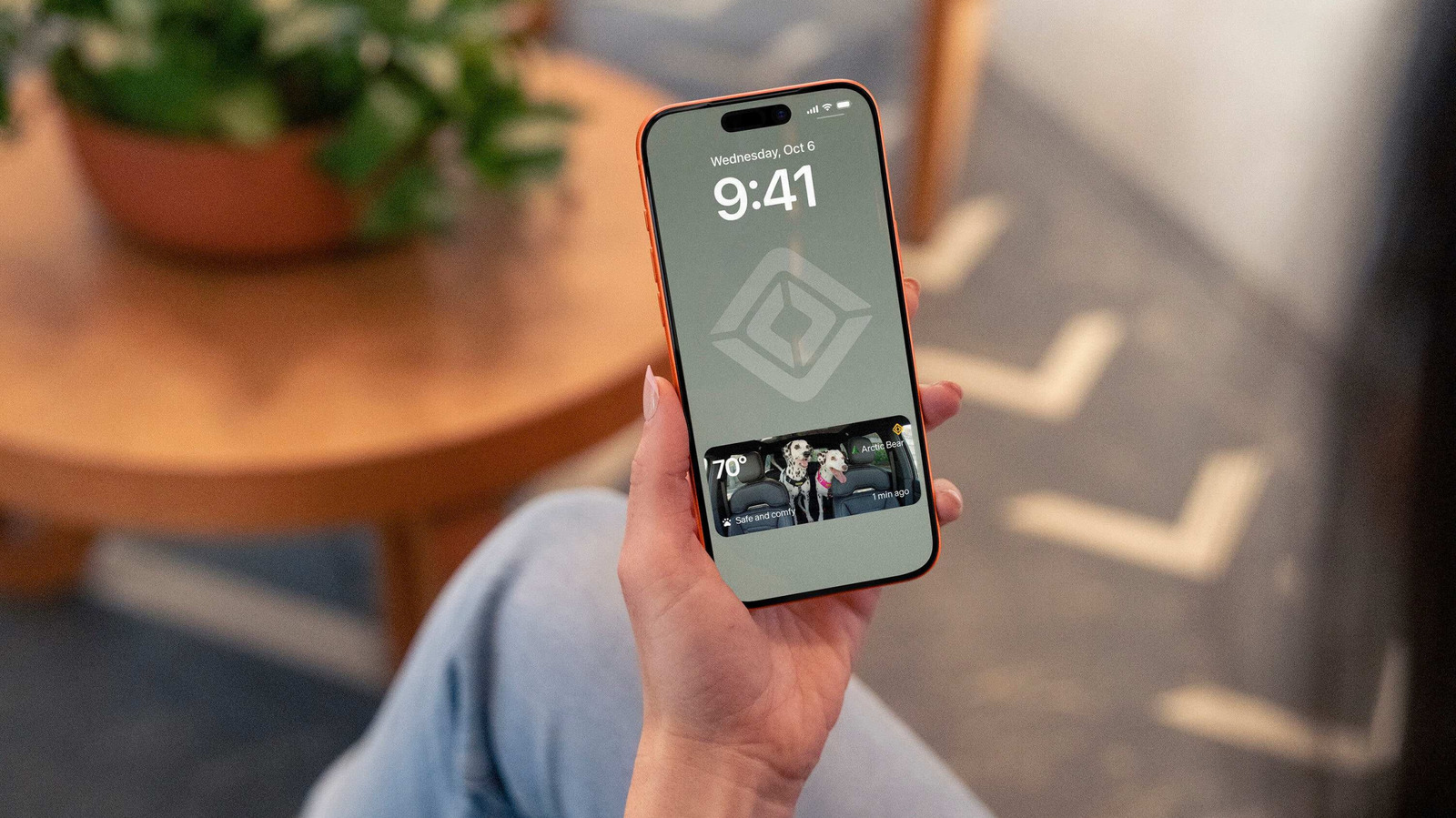
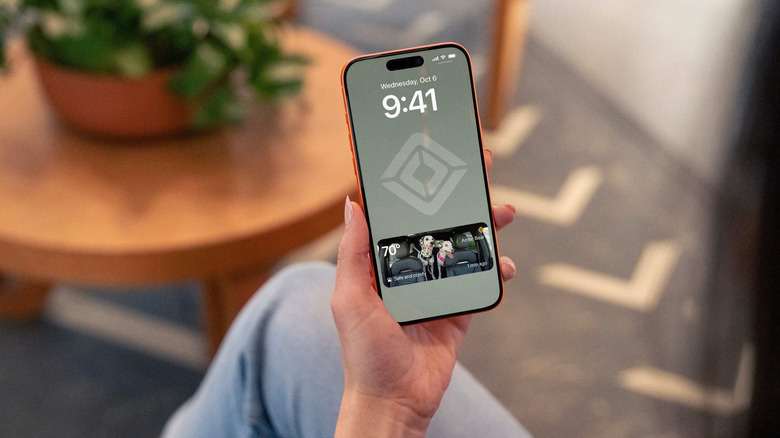
Rivian’s latest software update is one many pet parents will be very pleased to see. Following the latest 2026.36 update, R2 vehicle models will have the option to put a Pet Cam on your phone’s lock screen in case you need to step away from the car while your critter is still inside. This feature leverages the high-definition interior camera in R2 models to show the vehicle’s interior in the Rivian app. You’ll be able to see a full livestream if you don’t want to miss a minute of whatever your pet gets up to, or just see a regularly refreshed snapshot in the app dashboard or on your lock screen for a quick check. The Pet Cam can be stopped with a tap on the vehicle’s main display.
The next software update also has further improvements coming to the Pet Mode that Rivian already made available for animal-friendly climate control when you’re not on board. Now you can enable Pet Mode from the Rivian app, in case you forget to turn it on before leaving the vehicle. There will also be a confirmation prompt when toggling Pet Mode on or off from the app to avoid accidental changes that could put your canine companion, feline friend or awesome avian at risk. These controls will be available in all models from the company.
In non-pet news, R2 vehicles will also be seeing the debut of Rivian Assistant. The AI voice assistant is already available in R1 models, and it can be directed to handle simple tasks around navigation, entertainment and climate in the vehicle.
🔥 The Dark Arisen expansion releases on October 8 or 9 depending on your timezone.
🔥 There is no preload currently available.
🔥 The DLC size is about 25GB.
The Dark Arisen expansion for Dragon’s Dogma 2 releases this week, over two years on from when the base game launched back in 2024.
The DLC arrives on October 8 in the US, but October 9 for the UK, Europe, and the rest of the world. Here’s exactly when you can play:
West Coast US: 5 pm PDT (October 8)
East Coast US: 8 pm EDT (October 8)
UK: 1 am BST (October 9)
Europe: 2 am CEST (October 9)
Australia: 11 am AEST (October 9)
New Zealand: 1 pm NZDT (October 9)
You can see the rest of the release times in the image above. If you’re looking for PlayStation instead, then the game releases at midnight local time on October 9 everywhere except PST, where it releases at 9 pm on October 8. The size of the DLC is 25 GB and you can view its current requirements on the Steam page.
Latest Videos FromPC Gamer
Keep up to date with the most important stories and the best deals, as picked by the PC Gamer team.
Product Packaging design services undergoes a thorough process other than just creating to make it visually appealing. It taps different factors to protect it, improve shipping, and supports customer satisfaction. A good packaging design needs the right materials, accurate and detailed structures, and testing to ensure it works properly. From the developing CAD dielines stage to building detailed prototypes, every step significantly contributes to creating packaging that is not just beautiful, but also strong, practical, and ready for the market.
In this article, we’ll walk you through the complete structural packaging design process, starting from planning, selection of materials, CAD development, testing, and production preparation. We’ll also highlight how packaging engineers and designers, especially the experienced professionals available through Cad Crowd, help businesses in creating effective and market-ready packaging.
Structural packaging is important simply because it serves as the main determinant of how well a certain product is protected, transported, and presented. While graphics mainly focus on the product’s visual appeal, packaging structure takes more into account the influence on product storage efficiency, packaging durability, strength, and manufacturing process. A well-designed package helps in reducing product damage, control material costs, and supports efficiency and manufacturing.
What are the key steps in the structural packaging design workflow?
The structural packaging design process involves multiple stages, which guide a product from the very start until its final production. Each stage plays an essential role in making sure that every packaging delivered is efficient, protective, and suitable for its intended use.
Requirements Planning
Establishes the foundation for packaging decisions based on product needs and shipping conditions.
Format Selection
Determines the most suitable packaging structure for protection, usability, and presentation.
Structural CAD Design
Creates accurate digital packaging designs needed for prototyping and manufacturing.
Material Selection
Ensures the package has the right balance of strength, cost, and performance.
Prototyping and 3D mockups
Allows designers to evaluate fit, function, and appearance before production.
Testing and validation
Confirms that packaging can withstand handling, transportation, and environmental conditions.
Print production handoff
Prepares final files and specifications for efficient manufacturing.
What needs to be considered before designing structural packaging?
Before developing a packaging structure, designers must first keep in mind the importance of careful requirement planning, understand handling conditions, and distribution needs. Planning early helps determine the right level of protection, structural approach, and material needed for the specific package. Factors like size, weight, fragility, and shipping method affect how packaging will be designed and tested.
This stage defines the foundation of the overall process of packaging design. This is where designers start to evaluate the product’s dimension, fragility, mass, and how it will move through the supply chain before finalizing the packaging solution.
Key considerations include:
Product mass and dimension. Products that are larger or heavier require stronger structures and materials that are more durable in order to prevent any potential damage during carrying and transport.
Product fragility. Items that are soft and delicate require additional protection for internal support, cushioning, or reinforced packaging structures.
Retail vs. DTC shipping path. Retail packaging should consider shelf presentation, customer interaction, and stacking. Direct-to-consumer packaging, on the other hand, should handle shipping and delivery conditions.
By identifying these important requirements early, designers can make packaging that meets the standards and balances cost efficiency, protection, and Manufacturing design services practicality before finally moving into the next stage, which is format selection.
How do designers choose the right packaging format?
Choosing the right packaging format is an essential step in the process of structural packaging since different products require different materials and levels of protection, functionality, and presentation. Designers must consider several factors like weight, type, durability, shipping requirements, and customer experience when selecting the most appropriate structure for the product. By applying the right format, designers can ensure that the package performs effectively while also meeting the standard manufacturing and market needs.
Stage 2. Format selection
Format selection stage mainly determines what type of packaging suitable for the specific product and its requirements. Designers evaluate options according to its cost, appearance, protection, and production feasibility.
Common packaging formats:
Folding cartons- It is commonly used for retail products like food, cosmetics, and consumer goods since it is made with lightweight paperboard.
Corrugated packaging- It’s appropriate for heavier products and shipping applications since it provides stronger protection, especially for e-commerce and transportation.
Rigid boxes- It offers quality presentation and durability, which is mostly appropriate for high-value items and luxury products.
Blister packaging- It’s a packaging that uses a transparent plastic cavity with a backing material, which displays and protect small products.
Pouches- It is often used for products that require portability, lightweight, or resealable designs since it is flexible.
Choosing the right packaging format helps in ensuring that the delivery of final design balances its visual appeal, product protection, and cost efficiency.
How are structural CAD and dielines used in packaging design?
After choosing the most suitable packaging format for a specific product, designers then create the structural design services that best defines how the package will be presented and produced. This stage converts concepts into a detailed and precise digital model that manufacturers can use for folding, cutting, and production. It is best to create accurate structural design since it significantly affects the entirety of the package, and we ensure that it fits the product properly and functions accordingly.
Stage 3. Structural CAD design
Structural CAD is used to create accurate packaging layouts, which is also known as dielines, that define the package shape and construction. The digital drawings specifically include flaps, folds, panels, and cutlines that are needed to manufacture the final product package.
Key elements of a packaging dieline include:
Panels. It is the main surface that forms the exterior part of the package.
Flaps. Extensions that are used for securing, closing, or assembling the package.
Cut lines. They indicate where the material will specifically be cut during production.
Crease or fold lines. It marks where the packaging material will be folded and shaped accordingly.
Industry standard software like ArtiosCAD is mostly used for professional packaging structure development. Freelance packaging designers that are experienced in the field are allowed to create production-ready dielines that significantly meet its required manufacturing standards. This way, businesses can smoothly move from concept to production.
How do materials influence structural packaging performance?
Material selection is a very crucial stage in the process of packaging design since the material must be suitable to the product as it affects its protection, strength, appearance, cost, and sustainability. Designers are encouraged to select materials that support product during transportation, shipping, and manufacturing, and satisfy customers’ expectations. With the help of the right material, packaging stays durable and performs effectively throughout the life cycle.
Stage 4. Material selection
In this stage, designers evaluate several materials according to the product’s fragility, weight, usage, and distribution standard requirements. Most of the packaging materials are chosen to properly provide the balance between flexibility, visual quality, and durability.
Common material considerations include:
Paperboard. It is usually measured by GSM or grams per square meter, with higher GSM generally provides greater thickness and strength for retail packaging and folding cartons.
Corrugated board. It uses various flute types like E, V, and BC flutes, which provides different levels of stacking strength, cushioning, and protection.
Coatings and finishes. Different options like gloss, matte, and protective coatings significantly improve packaging’s appearance, durability, and resistance to moisture.
It’s really a must to appropriately select a material design services that’s best for a specific product so it can guarantee quality protection, support manufacturing needs, and deliver customer satisfaction appropriately.
Examples of packaging materials and specifications:
Used for selecting paperboard thickness and strength
Corrugated flute
E-flute
Small retail boxes, electronics, display packaging
Corrugated flute
B-flute
Shipping boxes, retail packaging
Corrugated flute
C-flute
Heavy products, protective shipping cartons
Coating
Matte finish
Luxury packaging, cosmetics, specialty products
Coating
Gloss ifnish
Retail boxes, promotional packaging
Coating
Aqueous coating
Food cartons, product packaging
Coating
Soft touch finish
Premium cosmetics, electronics packaging
Need help in designing production-ready packaging?
Worry no more as Cad Crowd packaging designers can help you in creating detailed die lines, optimized packaging structures, and designs that are equipped for production. Creating effective packaging requires not just structural design knowledge, but also proper CAD expertise and manufacturing understanding, where you can find at Cad Crowd. Through professional CAD services, Cad Crowd teams can guarantee in transforming packaging concepts into a real functional digital model that don’t just meet your standards, but also market requirements.
Why are prototypes and 3D mockups important before production?
Before a package proceeds into the production, designers create accurate prototypes and 3D mock-ups so they can evaluate how the design performs in real-world applications. This stage is very helpful in a way that it verifies if the design is fit and functional, and identifies possible issues that can be corrected before manufacturing. Early validation is very important since it helps reducing costly revisions and improves overall confidence in the production of final design.
These two allow designers, stakeholders, and manufacturers to review the final packaging before mass production. Both virtual and physical models help in confirming that the specific structure meets the standard design and production requirements accordingly.
Common uses of prototypes and 3D mock-ups:
Checking product fit. It ensures that the package is secured enough to hold product with the correct clearances.
Evaluating assembly. It verifies that the package locks, folds, and assembles appropriately.
Reviewing appearance. This allows teams to assess the package’s proportions, structure, and entire presentation.
Gathering feedback. It supports design reviews with manufacturers, clients, and other stakeholders before launching.
Through proper validation, teams can have better time allowance to improve any issues before investing in tooling and large-scale manufacturing design services. In this way, they can save both time and energy while ensuring it fits best to the appropriate product standards and requirements.
To ensure a package can significantly protect a product, it must be tested throughout the process since it needs to handle transportation, storage, and carrying. Validation testing mainly helps in identifying structural weaknesses before leading to production, reducing the potential risk of product damage, costly redesigns, and returns. Industry testing standards are also helpful in verifying that a package meets its standard performance requirements.
Stage 6. Testing and validation
Engineers and designers perform several tests in evaluating how a package will perform in the real-world application despite unpredictable conditions. These tests simulate the stresses a particular package may deal and experience throughout the supply chain.
Common packaging validation tests:
Drop testing. It evaluates how a specific package will protect a product from potential drops and impacts.
Vibration testing. It simulates movement during product transportation to identify possible damage from continued vibrations.
Compression testing. It measures how a specific product packaging will hold against heavy stacking loads during shipping and storage.
Climate cycling. It tests packaging under the unstable temperature and humidity conditions to secure its long-term performance.
A lot of companies follow a recognized testing standards like ASTM D4169 and ISTA in validating packaging for distribution and transportation. By completing these tests, proper packaging is ensured to be reliable, durable, and ready for production.
How does packaging move from design to production?
The final stage of the process of product packaging is a very crucial part as it prepares the overall complete design for manufacturing. After significant testing and validation, designers finalize everything, the packaging structure, specification, and production files, making sure that the package is ready to be manufactured and delivered consistently and accurately. A prepared handoff helps in preventing major errors during cutting, printing, and assembly.
Stage 7. Print production handoff
In this final stage, designers provide manufacturers with all the necessary files and specifications required in producing the final packaging. In this stage, CAD design experts connects with the large-scale manufacturing.
Key elements of the production handoff:
Final dielines. It provides the detailed folding, cutting, and assembly instructions that serve as a reference for the manufacturers.
Artwork files. It includes all the branding elements, graphics, and print-ready designs.
Material specifications. It defines the selected kind of paperboard, coatings, corrugated type, and finishes to avoid mistakes in attaching everything together.
Production guidelines. It provides the entire details about the printing methods, quality expectations, and assembly requirements.
Providing detailed and complete production handoff ensures that the packaging design can be manufactured efficiently while also maintaining its intended structure, performance, and appearance.
What common packaging design mistakes should be avoided?
Loose panel fit
Weak structure and poor assembly
Weak crease geometry
Folding issues and reduced strength
Complicated locking
Difficult production and usability
Oversized boxes
Higher material and shipping costs
Dimensional weight shipping
Increased transportation expenses
Poor material selection
Reduced protection and durability
Loose panel fit: why is structural accuracy important?
Loose panel fit usually happens when packaging components do not properly align because of dimension inaccuracy or poor planning of packaging structure. These can possibly result in gaps, unstable package, and weak connections that negatively affects both the appearance and the protection of the product.
One effective thing to do to avoid this is by using accurate CAD design process and creating detailed prototypes before production, since it ensures that every panel fit correctly and the final product package would perform properly as intended.
Weak crease geometry: how folding design affects packaging strength?
Weak crease geometry mostly happens when fold lines are not appropriately designed based on the thickness of the material and packaging structure. Incorrect placement of crease or excessive stress on folding points can lead to uneven folds, cracking, or weakened areas that mainly affects the package’s appearance and durability.
One thing designers must do is analyze folding behavior during the CAD stage and testing prototypes before finalizing into production. Suitable materials, manufacturing-friendly designs, and proper crease placement help best in creating clean folds while also maintaining its structural strength.
Complicated locking: why should packaging closures be simple?
Complicated locking on product packaging mostly happens when its design prioritizes security without taking into consideration the user’s experience. Overly complicated closures really increase production time, make the assembly more difficult, and create confusion for customers when opening the package.
What’s best to do is to develop locking systems that are not just secure but also simple to manufacture and use. Designers should evaluate several closure methods of prototypes in finding a balance between efficiency, protection, and ease of use.
Oversized boxes: why can excess packaging be a problem?
Over-packaging happens when the package design is significantly larger than the product it is designed to hold. This kind of mistake leads to wasted materials, inefficient storage, and increased shipping costs. Through this excess space, the product may also shift during handling, which increases the risk of damage.
What designers do to avoid this kind of mistake is develop packaging that relatively matches the product’s size and shape. Using structural design services and proper cushioning, they can invent a more efficient package that balances sustainability, protection, and cost-effectiveness.
Dimensional weight issues: why does package size affect shipping costs?
Dimensional weight issues mostly happen when a certain package takes up more shipping space than it requires. A lot of carriers calculate shipping fees based on its package volume, which means oversized designs may result in higher transportation costs even when it’s a lightweight product.
To help reduce these costs, designers must consider shipping requirements during the early packaging process by optimizing package dimensions, ensuring no unnecessary space, and choosing efficient structures, which helps improve shipping performance and lower their transportation expenses.
Poor material selection: why is choosing the right material important?
Poor material choice occurs when packaging materials do not appropriately match the product’s fragility, environment, weight, or shipping conditions. When the materials being used are too weak, it can possibly lead to product damage, while overly strong materials can also increase their costs and waste.
The most effective solution for this kind of problem is to properly evaluate material performance before proceeding to the product development services, and consider its cost, durability, strength, and sustainability. Selecting the right corrugated board, paper board, coatings, or other materials ensures the reliability of the packaging as it meets standard business requirements.
Are you now ready to turn your packaging ideas into reality?
Successful packaging goes beyond creativity; it requires a significant combination of expertise and a thorough process of planning. Here at Cad Crowd, we connect you with experienced packaging designers who are experts inrealistic 3D rendering design services, accurate dielines, and structural CAD.
Don’t waste your time; bring your packaging vision to life with the help of the right expert design support.
Frequently asked questions
What is a packaging dieline?
It is a technical layout showing cut lines, crease lines, and folding areas, which are significantly needed in product manufacturing.
What is the difference between graphic and structural packaging design?
It differs in a way that graphic design is more focused on designing visual elements like branding and artwork, while structural design, on the other hand, focuses on the package’s construction, functionality, and strength.
How does structural packaging reduce product damage?
By using proper materials, dimensions, and protective features to ensure products handle handling, transportation, and storage conditions.
Can structural packaging design help reduce costs?
Yes, it can. Designing packaging structures can reduce material waste, optimize shipping space, and improve manufacturing processes, helping lower overall costs.
Product packaging design is not just about creating a container for a specific product. It involves careful planning, engineering, and testing to successfully develop solutions that both protect and support the product. With the help of structural CAD, designers can create accurate and detailed packaging models, and selecting appropriate materials ensures its durability, strength, and cost efficiency. Through testing, package performance is guaranteed before production, leading to fewer risks during handling and shipping. With the support of experienced and professional packaging designers, businesses can deliver functional and market-ready packaging solutions. That is why it is very important to partner with the right CAD professionals like Cad Crowd, who help in transforming packaging ideas into realistic and reliable designs that are thoroughly created for real-world manufacturing.
How Cad Crowd can help
Cad Crowd connects businesses with experienced packaging designers and CAD professionals who specialize in structural packaging, production-ready dielines, material selection, prototyping, and manufacturing support. Our experts help create durable, cost-effective packaging that is optimized for production, shipping, and real-world performance. Contact Cad Crowd today for a free quote and bring your packaging design to market with confidence.
MacKenzie Brown is the founder and CEO of Cad Crowd. With over 18 years of experience in launching and scaling platforms specializing in CAD services, product design, manufacturing, hardware, and software development, MacKenzie is a recognized authority in the engineering industry. Under his leadership, Cad Crowd serves esteemed clients like NASA, JPL, the U.S. Navy, and Fortune 500 companies, empowering innovators with access to high-quality design and engineering talent.
It took a while for controllers to work as well as they do today without cables.
Thank You For Your Assistant/Getty Images
If you’ve been a gamer for a while, you might know that wireless controllers have been used as far back as the 1980s. Those who grew up in the PS2/Xbox/GameCube era likely have a different gamepad in mind when they think of early wireless controllers. While wireless pads were tried in various iterations over the decades, they were only perfected within the last few console generations.
The history of non-wired controllers is fascinating. Here’s the story of how your current console has unleashed you from the couch.
When did controllers first become wireless?
Mikkelwilliam/Getty Images
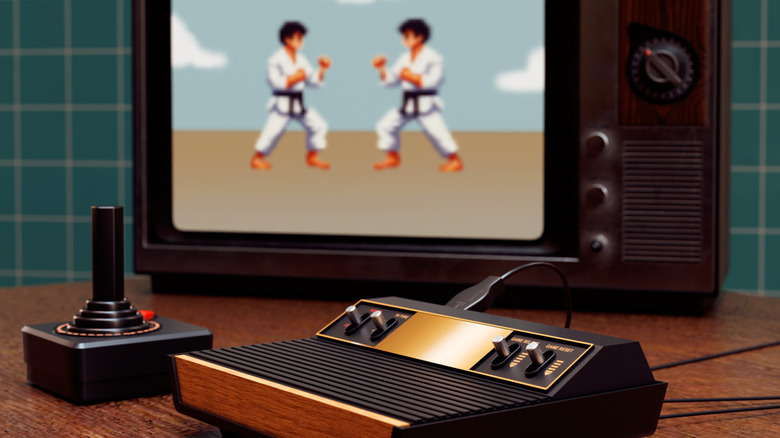
As a 41-year-old, I’m slightly relieved that the first wireless gaming controller is older than me: enter the Cynex Game Mate 2. Released around 1982, this is an Atari 2600 peripheral widely regarded as the first wireless console-compatible gamepad. It was the debut of an evolving, genre-defying tech, albeit one that wouldn’t be fully realized for some time to come.
The Game Mate 2 used radio frequencies. By embracing RF technology, this pioneering pad gave gamers more freedom than lesser IR alternatives that would launch later in the decade. Unlike the Acclaim Remote Controller that launched for the NES in 1989, you didn’t need to point the Game Mate 2 directly at your Atari 2600 for its signal to be recognized.
Whereas early infrared pads could easily lose signal if any objects came between their sensors and the receiver on the console (much like IR TV remotes), the more flexible Game Mate wasn’t bound by these restrictions. Indeed, that early RF tech worked well enough that it reportedly boasted a range of up to 20 feet.
While these were ahead of their time, they weren’t perfect. They were weighty and clunky, being essentially a standard 2600 controller on top of a heavy base. They also drained the required 9V battery quickly. Once Atari took over distribution a year after this peripheral launched, it was rebranded as the CX42 Remote Control Wireless Joystick. Catchy, right?
What was the first mainstream wireless controller?
Lightspruch/Shutterstock
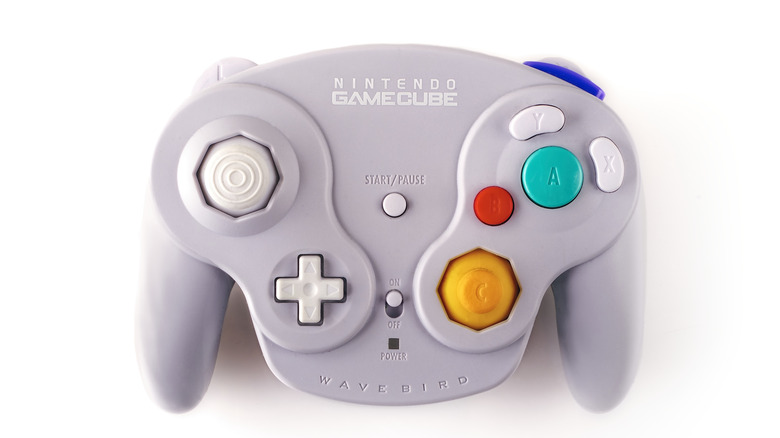
The GameCube’s mini discs weren’t the only notable part of the console’s legacy. The WaveBird wireless controller arrived in 2002 and was the first mainstream wireless pad that wasn’t weighed down by tons of compromises. I have vivid memories of waiting in line on a semi-balmy May evening in my native Edinburgh back in 2002 to pick up the Big N’s wondrous purple box, then buying the little console’s wireless controller around Christmas that same year.
And what a bulky but beloved brute it was; the WaveBird was anything but subtle. Adding serious girth to the GameCube’s standard controller, it came with an equally chunky receiver to plug into the sixth-gen console and required you to match a channel with sliders on each. If you have any affection for the best of the GameCube’s library, there’s a good chance you played some titles with a WaveBird.
Using radio 2.4G frequency tech for the first time in a controller, the WaveBird had a range of around 20 feet at minimum. It’s hard to explain what a big deal it was to have a gamepad that untethered you from a console. No longer did you have to precariously perch within six feet of your beloved gaming box. Instead, you could lean back or even move around the room, which was great for multiplayer sessions so everyone didn’t have to crowd onto the same couch.
To maximize battery life, the WaveBird didn’t have rumble support, but it ran for up to 100 hours on a pair of AA batteries. The freedom it gave you in controlling games paved the way for future gamepads, leading to all the fabulous wireless controllers from Sony, Microsoft and others that have launched over the last quarter-century.
Which PlayStation had the first wireless controller?
Dion Chandra/Shutterstock
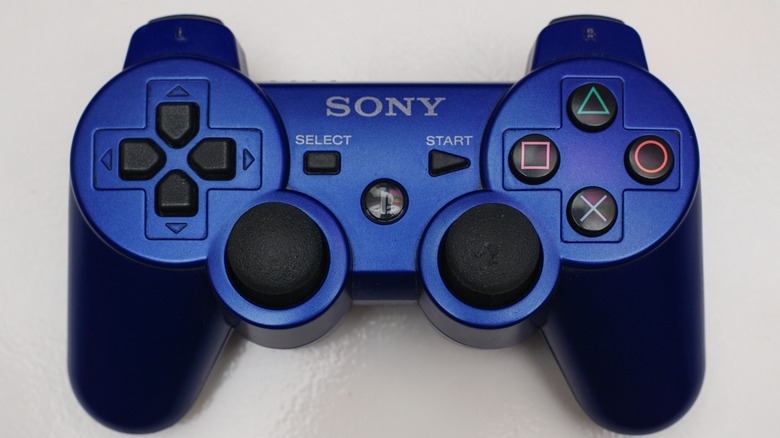
Before learning this history, you might have thought that the first wireless gaming controller was a PlayStation product. That’s understandable, since Sony has (mostly) dominated the console market since the PS1 arrived stateside back in 1995. As it turns out, Sony’s debut wireless peripheral wasn’t introduced until the PS3 era. With the benefit of hindsight, we can say it was a bit of a stinker.
The Sixaxis is perhaps the most infamous Sony controller of all time, minus the banana-shaped “Boomerang” prototype PS3 gamepad that never saw the light of day. As the initial controller model for the PS3, the Sixaxis dropped rumble for half-baked, early, never-fully-realized motion controls.
Not long after the Sixaxis debuted in 2006, Phil Harrison said Sony didn’t incorporate rumble into Sixaxis not because of a lawsuit over patent rights, but because it was a “last-generation feature.” That was a pretty bold (fairly craven) statement, considering Phil was the President of Sony Computer Entertainment Worldwide Studios at the time.
Although PS3 launch title Resistance: Fall of Man was among the first games to support Sixaxis features, it was really the dragon-riding Lair that came to define the controller. It was widely panned for its semi-botched motion controls, and folks made it clear that the lack of rumble was unacceptable. Sony quickly saw sense, and soon enough, titles like 2007’s Ratchet & Clank Future: Tools of Destruction would embrace the palm-shaking possibilities of the DualShock 3 after its 2008 release.
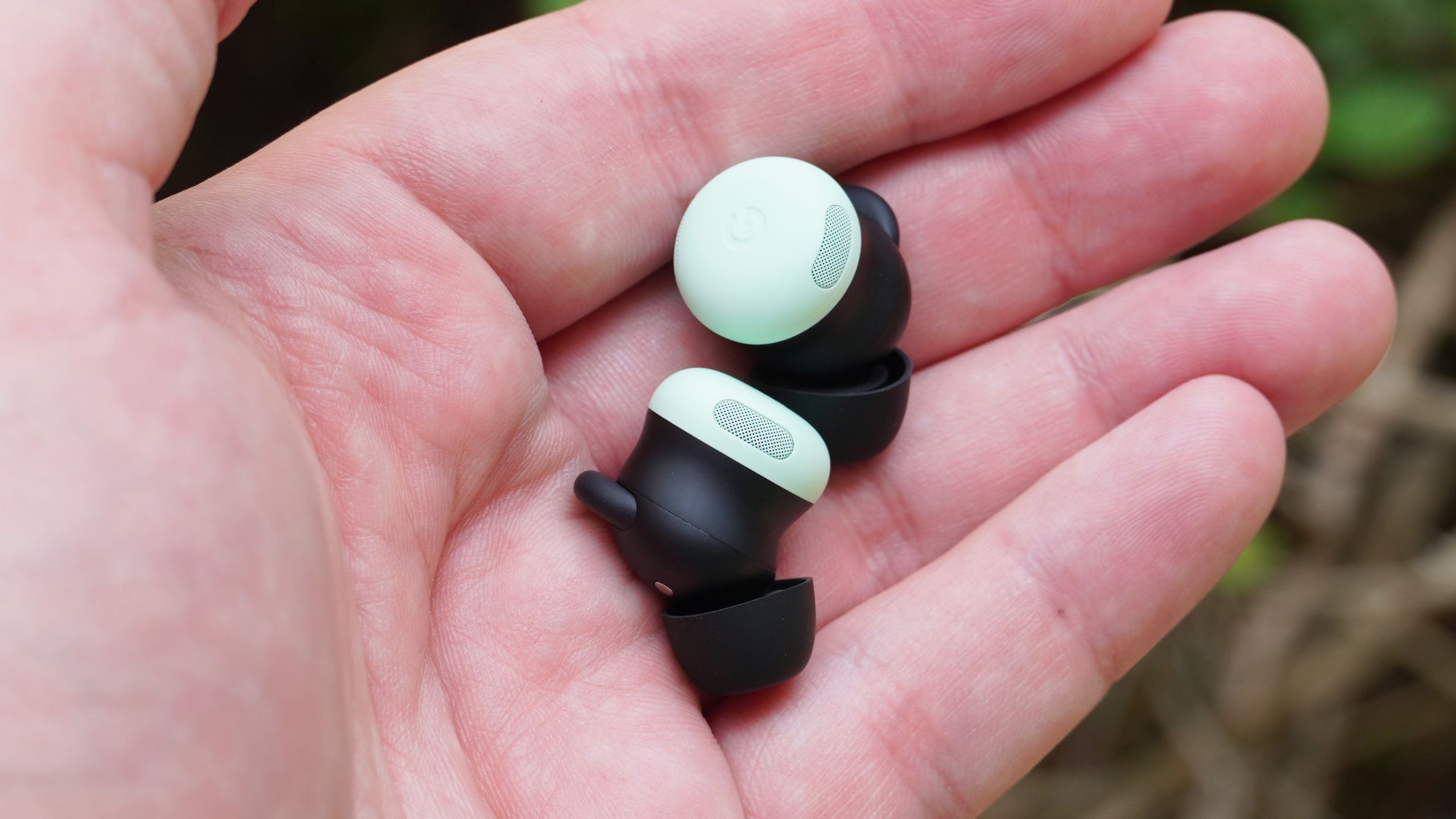
Google has started rolling out a new update for the Pixel Buds that brings several new features, and at the same time, the company has slashed $60 off the Pixel Buds Pro 2’s price.
Last month, Google started rolling out a feature for Pixel Buds that lets users control their earbuds’ settings just by asking Gemini. While you could already ask Gemini to do things like change the volume, the new integration goes much deeper, letting you adjust the EQ, enable or disable ANC, and change other Pixel Buds settings using your voice.
Alongside that, Google has now started rolling out another sizable update for the Pixel Buds Pro, Pixel Buds Pro 2, and Pixel Buds 2a. One of the biggest additions for the Pixel Buds Pro 2 is Dynamic Active Noise Cancellation.
Google previously explained that Dynamic ANC automatically adjusts the noise cancellation based on the seal of the earbuds in your ears. So, if the Pixel Buds move slightly and the seal changes, the earbuds can automatically compensate and adjust the ANC accordingly. That feature is now starting to become available on the Pixel Buds Pro 2.
✅ Recommended if: You use a Pixel phone, want strong ANC and Gemini integration, like Google’s latest Pixel Buds features, or want premium wireless earbuds for under $200.
❌ Skip this deal if: You don’t use Android, want the absolute best battery life, or don’t care about Pixel-exclusive features and ecosystem integration.
Google has also added a new tap-to-mute and unmute gesture for calls. So, if you’re in an online meeting or taking a phone call, you can simply tap the surface of your Pixel Buds to quickly mute or unmute your microphone.
The Pixel Buds can now automatically pause media playback when you fall asleep as well. This feature requires a paired Pixel Watch to detect when you’ve fallen asleep, after which your earbuds can pause playback, disable touch gestures, and silence notifications.
(Image credit: Andrew Myrick / Android Central)
Enhanced Live Translate is also starting to roll out. You can now leave your phone in your pocket and start translating using a gesture on the earbuds. Google says the Pixel Buds now work more seamlessly with the Google Translate app to make on-the-go translations easier.
To get these features, make sure you’re running the latest version of the Pixel Buds app and look for firmware version release_6.144. You can also manually check for the update by heading to More Settings > Firmware > Check for updates.
And if you’ve been thinking about buying the Pixel Buds Pro 2, this might be a particularly good time. Thanks to the ongoing Amazon sale, the Pixel Buds Pro 2 are currently $60 off, dropping from their usual $230 price to just $170.
So, not only are you getting them for considerably less right now, but Google has also made the Pixel Buds Pro 2 noticeably more capable with the latest software update.