Start from zero and discover the newest entry in the OCTOPATH TRAVELER series. Experience a story of restoration and retribution over the divine rings—an epic saga that unfolds across the realm of Orsterra.
Enjoy familiar features such as the series’ HD-2D graphics, a fusion of retro pixel art and 3DCG; the player’s ability to roleplay using Path Actions of their choice; and the Break and Boost system that can turn the tide of battle. Additionally, brand-new features such as character creation and town building allow you to create your own character and restore your hometown. RUNNING TRAIN | 走ル列車!
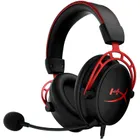
In my approximation, diminishing returns start for gaming headsets after around the $100-$150 mark. That’s to say the value per dollar starts to go down the higher up you go. With budget gaming headsets only getting better, it becomes harder and harder to justify spending $300+. And with the Stealth Pro II, you can tell that Turtle Beach is aware of that, because it throws everything at this set of cans. Super large drivers, a battery charger / wireless receiver, plus a spare receiver in the box. The Stealth Pro II really tries hard to get that cash out of your hand. In fairness, it’s doing a pretty good job of it.
The Stealth Pro II is hiding 60 mm Eclipse dual drivers in its cups, and though it’s pretty hefty at almost 400 grams, it’s comfortable. That’s thanks to squishy cups and a decent headband. It’s definitely a weight that takes a little while to get used to, but I’ve always quite liked the bulky build of Turtle Beach. I feel like I’m more fond of the Stealth 700 range than most for the same reason.
It’s a strong build, combining plastics, metals and fabric. Though I don’t often do it, I did find myself not hugely liking how the headband adjusts. It requires a significant amount of force to pull the headset out from the headband, and this means it stays in place well, but it also makes it hard to move while on your head. It just feels a little uncomfortable to have to yank it out. What’s more, the headband’s range is a tad limited when it comes to serving smaller noggins. Not a problem for me, though, as my head is unfortunately rather large.
Latest Videos From
But, outside of its cost, a love it or hate it weight and clamping force, and the headband, I have almost nothing bad to report about the Stealth Pro II. It’s a majestic headset, with plenty of sweet features, and importantly, it sounds glorious.
Turtle Beach Stealth Pro II Specs
(Image credit: Future)
Style: Closed back Drivers: 60 mm dual drivers Frequency response: 10 Hz – 40 kHz Microphone: Detachable unidirectional 9 mm mic (and one built-in) Battery life: 40 hours per battery Connection: 2.4 GHz, Bluetooth 5.3 Weight: 393 g (with mic attached) Price: $350 | £300
It’s also easy to set up. The box comes with the headset itself, a battery charging dock, a spare receiver, and a USB cable. Effectively, as the battery charger works as a receiver, you can pop the second receiver into a console and swap between console and PC with just a single click. It works really well, and was one of my favourite things about the Stealth 700 Gen 3.
To swap out one of the two batteries, the left cup has a magnetic plate, and a simple pull on the top will take it off. It’s not hot swappable, so the internal battery doesn’t keep the headset alive, though it takes so little time for the headset to connect that I only ever lose out around a second from a headset that does have an internal battery. Each battery has around 40 hours, and between the two, I’ve never managed to let the headset go dry. It’s a near-perfect amount of battery to feel pretty much limitless.
Image 1 of 3
(Image credit: Future)
(Image credit: Future)
(Image credit: Future)
This system isn’t particularly unique. SteelSeries has been doing it for a long time, with the likes of Arctis Nova Pro and the recent Arctis Nova Pro Omni doing it. However, I’m glad more brands are picking up such a handy system, and Turtle Beach have done it well.
The receiver looks good, too. It’s a simple puck, with a button to pop out the battery, and lighting which can indicate when you are muted or live, and that’s about it. The microphone can be popped up to mute, but the headset also has one built in, which means you can technically bring it out of the house, without having to bring a full-on microphone, and still chat.
The detachable microphone sounds lovely and full, with my voice not only coming through clear, but with such quality that I’d even happily record a video or podcast on it. Though AI noise reduction usually helps cover for the middling microphone of a gaming headset, I’d actually opt to turn it off here, as it flattens sound a little and generally doesn’t sound as good with it on. I can pick up more mouth sounds without the reduction, but it’s such a nice microphone that it’s worth that trade-off.
Above is without AI noise reduction. Bottom is with.
The black and gold model I’ve got my hands on looks lovely. It’s just a shame the receiver doesn’t also double as a stand (like the Fractal Scape), as it doesn’t quite feel right draping such a regal headset on the edge of my TV. It not only looks nice but is smartly designed too. The buttons on both earcups are easy to navigate, all coming with different tactile feels to differentiate themselves from each other, and a few of them can even be reprogrammed in Turtle Beach Swarm II, should you want even more control.
Swarm II is a solid bit of software now, too. As well as allowing me to get the latest updates, you can adjust volume, put on ‘Superhuman’ hearing, adjust chat mix, mess with ANC, and swap around the EQ. Generally speaking, I found the headset to be so clear that I never needed Superhuman hearing (Which raises footsteps and gun sounds), and ANC is super solid too. It managed to comfortably filter out the hum of my PC without adding artificial distortion.
Image 1 of 3
(Image credit: Future)
(Image credit: Future)
(Image credit: Future)
Generally, I find the Stealth Pro II’s EQ to be balanced and tuned well. The first time I played Counter-Strike 2 with it, and shot with the AWP, I instinctively took the headset off. That’s because the sniper thumped so much it practically rumbled on my head. Despite how that sounds, that’s a very good thing. It’s thunderous when it wants to, but footsteps are easy to make out, and it just has great atmosphere. It’s a super engrossing headset, from sound to feel.
On the universally loved and wholly uncontroversial game, Mixtape, I found that the headset contributes to the atmosphere really well. The roar of skateboard wheels on tarmac, with Lush’s Monochrome, is, as the game probably wants it to be, a ‘total vibe’.
Clair Obscur: Expedition 33’s sound design shines well too, with the pizzicato strings of Lumière never fighting for the spotlight against its twinkly guitar or lush vocals. The soundstage feels broad, with bass, mids, and highs all being invited to the party in equal measure. The vocal boost EQ mode could be a decent shout in conversation-heavy single-player games, but I quite like all its EQ modes.
That soundstage really comes through in music, with the likes of Aphex Twin’s Xtal sounding so full and deep that I could almost believe the song is playing right in front of me. Nothing can compare to the all-encompassing sound of live music, but the Pro II does a genuinely solid job at home.
Nothing can compare to the all-encompassing sound of live music, but the Pro II does a genuinely solid job at home.
I found putting on the ‘treble and bass boost’ EQ mode to be particularly overwhelming here. It’s not just a sound that you can hear but one you feel. Moving over to Aphex Twin’s relatively subdued and delicate Avril 14, the headset’s clarity works well in favour of the song’s brooding prettiness. The bass can be really cranked up, but it doesn’t falter when sound calls for something more subtle.
The Stealth Pro II’s 60 mm drivers aren’t just 60 mm drivers. They have a dual driver design, which separates the woofer and tweeter to give increased clarity for both. It works really well in use. The size of the drivers isn’t everything, and comparing them to the 90 mm planar magnetic ones in the Audeze LCD-S20, I’d actually pick Turtle Beach’s. They’re not necessarily better, technically speaking, but they have such a great presence that I’d pick them for gaming instead. The immersion factor here is top-notch.
I’ve also spent some time comparing the Stealth Pro II’s 60 mm drivers with the Audeze Maxwell’s 90 mm planar magnetic drivers. I do think the Maxwell is still an impressive headset, and cheaper too. However, as much as it may pain my colleagues who truly love the Maxwell, I think I’d pick Turtle Beach’s offering here for gaming. That’s because the Stealth Pro II offers a truly immersive and punchy sound experience.
Image 1 of 3
(Image credit: Future)
(Image credit: Future)
(Image credit: Future)
I’m definitely in the ‘both headsets are good’ camp, rather than thinking either is superior, and I’m very surprised it’s Turtle Beach that holds its own against the truly lovely Maxwell. I’d say the Stealth Pro II is a more traditional gamer headset than the Maxwell, offering a focus on its bass, where the Maxwell is more neutral. Audeze is perhaps a tad clearer, though not as immersive. I noticed, when comparing both headsets with their neutral EQs in Sweet Pill’s Blood, I could make out the chunky opening riff a little sharper on the Maxwell, though the Stealth Pro II hits harder.
It can also get monstrously loud. I rarely raised the headset above 60% (with it usually sitting between 30%-40%), and even then, I only got that high up when I wanted to really crank the music.100% turns the headphones into almost a mini speaker.
Given my connectivity issues with the Stealth Gen 3, I’m happy to report that the Stealth Pro II is an incredibly easy headset to use every day. It connects near instantly, has not cut out on me once, and even has a surprisingly great wireless range. I have never been able to walk into my kitchen with a gaming headset, thanks to the position of a thick wall, but the Stealth Pro II managed to cope with the interfering brickwork with ease.
Image 1 of 2
(Image credit: Future)
(Image credit: Future)
It still cuts out if I go any further, but it’s beaten every headset I’ve tried thus far. It can also connect via Bluetooth and 2.4 GHz at the same time, which is particularly useful if I’m on call with friends and need to do my Duolingo before I accidentally use a freeze streak. I’ve had pretty much no complaints in my days working and gaming with the headset, and it has fit into my everyday lifestyle with ease.
In my hubris to get photos of the headset in the hot British sun, I stumbled on a rock and dropped the headset pretty hard. It got some scuffs on the magnetic plate in front of the battery, as well as a light scuff on the microphone and headband, but it held up pretty well overall. I wouldn’t recommend flinging it around, but it handled a nasty bash pretty well.
That price point will always be tough, and for $350, your opportunity cost is the mighty Audeze Maxwell 2 and its 90 mm drivers (plus the first Maxwell). That’s a bit of a problem for Turtle Beach, but also, I entirely see where the cost of the Stealth Pro II is going into the product.
Buy if…
✅ You want top-notch sound and mic quality: The Stealth Pro II’s 60 mm drivers and detachable 9 mm microphone are both truly excellent in their own right, and significantly more than most gamers have / need.
$300 genuinely gets you into audiophile headphone territory, and if you’re willing to go wired, you can pick up something like the Sennheiser HD 550. If I wanted something for the studio, I could certainly see a good argument to go Sennheiser instead, but for hearing the thump of hooves in Red Dead Redemption 2 or explosions, well, everywhere in GTA Online, the Stealth Pro II is an excellent choice. And just because it packs a punch doesn’t mean it can’t handle the subtle intricacy of a flute high in the mix or sombre tones of a cello either.
I would certainly grit my teeth, handing over $350 for a gaming headset, and I think my partner might faint seeing it hit the bank account, but I’d be damned if Turtle Beach hasn’t done its darndest to earn the cash. One could argue that such an expensive purchase should come with zero caveats, and that’s fair, but one or two certainly isn’t bad. Especially when it sounds, and makes me sound, so lush.
ETH Zurich researchers say they have generated certified “perfect randomness” for the first time by using a quantum Bell-test setup with two entangled superconducting chips connected by a 30-meter cooled link. “In the long term, this work could play a similar role in digital security as atomic clocks do for timekeeping: a physically certified source of randomness that other systems can rely on,” reports Phys.org. “Possible applications range from the encryption of sensitive communications and digital identities to public randomness services for lotteries and blockchain applications.” From the report: They call their method randomness amplification. “This was made possible by an improved so-called Bell-Test with simultaneously high quality and high data rate,” says [Renato Renner and Andreas Wallraff]. He and his coworkers use a complex setup that consists of two superconducting chips, which they cool down to very low temperatures close to absolute zero. Each chip represents a quantum bit or qubit, which can take on the states “0” or “1” or any arbitrary superposition of these states. A 30-meter-long tube, which is also cooled down, connects the two chips.
Microwave photons can fly back and forth between them, thus creating quantum mechanical entanglement. This means that a quantum measurement on one qubit, which randomly yields the values “0” or “1,” influences automatically and at a distance whether “0” or “1” is measured on the second qubit. The separation of 30 meters ensures that, during the measurement, even at the speed of light, no information can be exchanged between the qubits. This would disturb the perfect randomness.
Wallraff and his team made the choice of the exact type of measurement (or “measurement basis” in technical jargon) on the two qubits depending on an imperfect random number generator. Renner’s coworkers could then amplify the randomness of the measurement results further using a special algorithm. “The resulting sequence of zeros and ones is now really perfectly random, and we can even certify that,” says Renner. He likens this result to crossing a ridge: “The technical improvements allowed us, for the first time, to create random numbers that will remain perfectly random for all eternityâ”no matter what analytical methods are used to assess their randomness.”
The findings have been published in the journal Nature.
What is it?: A follow-up to an excellent 40K strategy game. Expect to pay: $36/£31.50 Developer: Bulwark Studios Publisher: Kasedo Games Reviewed on: Windows 11, Intel Core i9, 32GB RAM, Nvidia RTX 4060 Multiplayer?: No Steam Deck: Unsupported Out: Now Link: Official site
Warhammer 40,000: Mechanicus was an evocative turn-based tactics game, accentuating the spookiness of 40K and the hypocrisy of its heroes through both writing and mechanics. You sent your tech-priests into tombs to recover lost knowledge and high-powered weaponry, with lesser cyborgs in front to soak up attacks from the necrons who lived in those tombs. There was no cover system. The necrons attacked whoever was closest, so you’d shove a skirmish screen of robotic zombies and work-experience kids out front, your overpowered tech-priests with force axes and plasma guns waiting safely behind.
As well as doing away with cover mechanics, Mechanicus introduced a cognition system where you’d earn points by learning things—studying monoliths, examining enemies, letting your servitors take hits to better understand the enemy’s guns—then spend those points to activate more powerful abilities. If you got the balance right you could steamroll missions, powering up gloriously busted combos.
But it only let you play as the tech-priests. Mechanicus 2 has two campaigns, and after the prologue introduces the two factions, it lets you play as either the Adeptus Mechanicus or the necrons. Getting to see things from the necron side stops them from being faceless robots—you get to know these dynastic intrigue-loving immortals at their most noble and their most petty. If you’re into necrons, if you collect an army of them in tabletop 40K for instance, you might want to play Mechanicus 2 just to see them get a turn in the spotlight.
Latest Videos From
It’s tougher to recommend for anyone else. Not because Mechanicus 2 is bad—it’s actually pretty good when it hits its stride—but because you could be playing the first game and having a better time.
Unfortunately, a lot of what made the original so special has been done away with. There’s cover now for starters, and the choose-your-own-adventure tomb exploration has been replaced with linear sections where your leader gets to make some token strategic decisions that adjust the balance of the next skirmish while just sort of taking a long walk across a map.
(Image credit: Kasedo)
Might & Mechanicus
The big change is the way it treats your leaders. Where the tech-priests used to be customizable and could be assigned different classes, then multiclassed to really break the system, Mechanicus 2 gives both the tech-priests and necrons five named leaders with their own upgrade trees—but kind of rudimentary ones. The guy who plays like a tank will always be best at tanking no matter how you spec him.
Instead of being able to bring several of them on each mission, you can only take one and they’re essential. If your leader dies that’s it—restart the skirmish or load a savegame. It reminds me of Heroes of Might & Magic 4, which might be a deep cut to reference but too late, I’ve done it now. In every other HoMM game the general stood off the side of the battlefield casting spells or shouting encouragement like a dad at the junior softball league. In HoMM 4 your generals could get stuck in, marching onto the battlefield where they were no longer perfectly safe and could fight and die like everyone else.
Keep up to date with the most important stories and the best deals, as picked by the PC Gamer team.
It completely changed the tactics, and made protecting that one guy the only thing that mattered. Mechanicus 2 is the same, which gets particularly rough once you encounter enemies who have jetpacks or can teleport. Rather than targeting your frontline they’ll deep-strike right next to your leader and take them out in no time flat. It warps the way you play, making every skirmish about making sure you clump more attractive targets together to draw out the assassins and then you just repeat that across every fight.
That’s true in both campaigns, and makes them feel less distinct than I was hoping. While tech-priests in Mechanicus 2 earn cognition points by using troops the most strategic way—rangers get a point for shooting someone at long-range, for instance—and that does work differently to the necrons ramping up their dominion level by causing damage, in both cases you’re just running protection for a named leader while earning points to activate their cool power. Like Voltron waiting till the end of the episode to bring out the big sword.
(Image credit: Kasedo)
Scrap code
I hit a bug where the subtitles for the necrons showed Adeptus Mechanicus dialogue, though the audio remained correct, and the performance isn’t great either. It’s worth turning down the volumetric fog if you want a decent framerate, though it’s a turn-based game so I didn’t mind the fact it often ran at just over 30 fps. Not worth bothering with on Steam Deck, though.
The atmosphere is lacking compared to the original as well. While you can turn off voice-acting in the options to get the tech-priests to talk in an approximation of the first game’s dialogue, a kind of Modem Simlish, the music doesn’t hit as hard. I still listen to the original Mechanicus soundtrack whenever I need an industrial monk rave-up, which is more often than you might think, but Mechanicus 2 sounds more muted. It’s closer to ambient menu music, and I didn’t hear a single pipe-organ drop.
(Image credit: Kasedo)
Mechanicus 2 has the novelty of playing as necrons going for it, which normally only happens in 40K games that contain basically every faction like Gladius or Dawn of War. And when I stopped trying to get as immersed in the vibe as I was in the original and just plugged away at it without paying much attention, treating it almost like a second-screen activity, I had a pretty good time in a “heavily modded XCOM” kind of way. But that’s a step-down from the OG, which was both absorbing and innovative in ways Mechanicus 2 is not.
Most enterprise data migration projects fail for the same reason: they treat the existing system as a problem to solve rather than an investment to protect. According to long-standing industry research from Gartner, 83% of data migration projects either fail outright or significantly exceed their planned budgets and schedules.
When you dig into why these initiatives stall, the culprit is rarely the new technology. It is the assumption that everything has to move at once. SSIS packages that have been running reliably for years—feeding critical data to reports that finance, supply chain, and operations teams depend on daily, get scheduled for total replacement before anyone has a clear, risk-mitigated cloud data migration strategy.
That framing creates immense, unnecessary risk. And for organizations evaluating Microsoft Fabric, it is also entirely unnecessary, because Fabric’s modern architecture does not require you to discard existing infrastructure to move forward.
The Case for a Phased Approach
The conventional legacy data migration model is strictly binary: you are either on the old system or you are on the new one. This high-stress “cutover” moment is where everything either works or breaks. That model made sense a decade ago when moving to the cloud required a complete, manual rebuild of all on-premise data logic. It does not reflect the modern data platform capabilities available to enterprise teams today.
With recent platform advancements, Microsoft has changed the migration playbook. As highlighted in the Microsoft Tech Community announcement on the Invoke SSIS Package Activity in Fabric, there is now a native architectural bridge between legacy SQL Server Integration Services (SSIS) infrastructure and the Fabric ecosystem.
This capability allows organizations to move workloads incrementally, validating each step against live production data before decommissioning legacy systems. Existing data pipelines keep running. New cloud capabilities come online alongside them. Business reporting stays continuous throughout.
Benefits of a Phased Microsoft Fabric Migration
Continuous Operations: Existing data pipelines keep running without downtime.
Risk Mitigation: Risk is bound to a single pipeline or department at a time rather than exposing the entire enterprise at once.
Strategic Sequencing: You can schedule your migration around your actual business calendar, avoiding major changes during critical periods like year-end financial close.
Faster Time-to-Value: Your first Microsoft Fabric workloads can go live in weeks rather than quarters.
How Hybrid Orchestration Works in Practice
Fabric Data Factory can run existing SSIS packages alongside modern cloud activities within a single pipeline. Organizations no longer have to choose between legacy stability and cloud capability during the transition period.
Consider a practical enterprise scenario. Cloud-native and SaaS data sources are ingested directly into Fabric’s unified data lake. At the same time, existing on-premise transformation logic runs as-is within the same pipeline, processing the data it was originally built to handle. Both streams converge inside Fabric, presenting downstream reporting tools with a single, consistent output.
For business teams, nothing changes. Their dashboards stay accurate and active. For the data engineering team, the migration is de-risked because core logic is not being rewritten under pressure. The organization has time to modernize legacy workflows natively in Fabric on a schedule that reflects actual complexity rather than an artificial deadline.
Know What Moves Before You Move Anything
Because Fabric’s native SSIS integration is highly capable, a successful migration depends less on engineering volume and more on a precise upfront strategy. The organizations that move smoothly are those that identify connectivity gaps and component dependencies before execution begins, not mid-project.
The first step is evaluating your existing SSIS catalog to determine:
What can move immediately.
What requires cloud environment preparation.
What should stay in place while higher-priority workloads go first.
This evaluation produces a sequenced migration plan organized around operational risk. Some pipelines lift to Fabric with minimal configuration changes. Others have dependencies-such as localized authentication models, custom third-party components, or on-premise file system references-that must be resolved before they are cloud-ready.
Knowing which package falls into which category before you start is the difference between a migration that builds momentum and one that stalls on the first complex workload. From there, both the old and new systems run simultaneously. Outputs are compared automatically using automated validation until the data matches perfectly. Only then does production traffic officially switch over.
The Business Reality of Fabric Modernization
No Forced Rewrites: The common fear of rewriting years of complex data logic at significant cost does not apply here. Existing packages run natively in Fabric from day one. Any refactoring happens on your timeline, not a vendor’s.
Zero Data Downtime: Anxiety around reporting gaps during the transition is eliminated through parallel execution, where automated validation confirms the old and new systems match before any switch is made.
Immediate ROI: Rather than a multi-year, disruptive project with uncertain returns, a phased approach means working Fabric pipelines go live within the very first phase of engagement.
A Practical Starting Point
The fastest way to understand what a Microsoft Fabric migration looks like for your enterprise is to start with an objective look at what you already have.
A Fabric migration assessment takes your current data environment as the baseline and produces a sequenced roadmap as the output: what moves first, what requires preparation, and what a realistic timeline looks like given your operational constraints.
If you want to understand how to move toward a modern data estate without disrupting what already works, we are ready to help you map out the journey. Connect with the BizAcuity team today to schedule your Microsoft Fabric migration assessment.
Path of Exile co-creator Chris Wilson has a message for developers considering surveying their players: don’t.
Wilson has some experience managing teams behind popular live-service games having founded Grinding Gear Games, directed the original Path of Exile, and served as company CEO until his departure in early 2025. He now runs his own small studio, Light Pattern, and is working on an unannounced project. Naturally, he’s seen the ebbs and flows of the temperature on a live-service game’s player base over many years heading up GGG, and there’s one thing he avoids when trying to decide on a path forward: surveys. Why? Well, he sums it up neatly with a quote from Magic The Gathering head designer Mark Rosewater: “‘Your audience is good at recognizing problems and bad at solving them.’
Elaborating on that, he says developers should avoid surveying players specifically when it comes to deciding on a game’s design direction.
Latest Videos From
“Now, that probably sounds strange because asking your community how to improve your game seems completely reasonable, and to be clear, I’m not saying you shouldn’t listen to your players. Of course you should,” he says. “You should solicit feedback about specific topics, watch how people play, pay attention to complaints, and take reported problems seriously. But there’s a big difference between listening to feedback and asking players to help you decide what your vision for the game should be.”
Wilson goes on to list four distinct reasons why you shouldn’t let your players dictate the general direction of your game. For one, he says, it makes it look like you don’t already have a direction in mind.
“As the game’s developer, you should have a clear vision of where the game is heading, and if you don’t, you should fix that while at least projecting the impression that you have one,” says Wilson. “When you ask players to choose between possible game features in a survey, it can make it seem like you just don’t have that vision. It gives the impression you are unsure about what matters, or that you don’t understand your own game well enough to assess what’s important.”
Per Wilson, the second big problem with surveys is that they can create false expectations for the features you’re polling players about.
Weekly digests, tales from the communities you love, and more
“The moment you put an idea in front of your players and ask them to weigh in on it, you imply that it’s on the table. You imply that it might happen,” Wilson says. “Once players believe that the only thing stopping an idea from becoming reality is persuading you to go ahead with it, they’ll campaign for it and expect it.”
And then there’s the issue at the heart of Rosewater’s quote from earlier in this story: players know how to find and report problems, but unless they’re professional game developers, they probably aren’t as good at finding solutions.
In Wilson’s words, player feedback regarding issues that feel “frustrating, unrewarding, unfair, or confusing” is “incredibly valuable,” but “the solutions they propose are often not the right ones, because unlike you, they don’t have to balance the entire game.”
This is something I’ve long worried about with Diablo 4. That game’s online community is extraordinarily vocal about everything from balance to loot to transmog and every other aspect of the game, and while the feedback coming from players should undoubtedly be taken onboard, it seems like some Diablo 4 updates are just lists of demands from streamers and the game’s subreddit, which aren’t representative of the overall community.
Back to Wilson. He says the issue with surveys that “worries [him] the most” is bias in the sample. “If the samples are biased, the answers are self-interested, the questions are focused on solutions instead of problems, and if you’ve already started giving up on the perception of having a strong vision, then the survey not only fails to help you, but may actively pull you in the wrong direction.”
In this scenario, Wilson says you’ll start “optimizing for the loudest players instead of the whole community,” and you’ll start “reacting to short-term discomfort instead of thinking about long-term health.” This is precisely what I was describing with Blizzard’s approach to balancing Diablo 4, which can leave more casual players feeling left out.
Even more dangerous to a game’s vision, you may even start “drifting toward safer, more obvious ideas instead of making the stronger creative decisions that your game may actually need,” according to Wilson. Instead, he says devs should stick to their guns, because “sometimes the things that players push back on the short-term are exactly the things that give a game depth, meaning, and memorability over time,” and that’s why “the design direction has to come from you, the developer.
Wilson reiterates that he’s not telling developers to stop listening to players, and that they definitely should continue doing that, but that there’s a “real danger to asking players to tell you how to change your game.” Instead, he advises you listen closely to your community to identify common pain points and then decide for yourself how they should be addressed, which sounds like reasonable advice.
Meta has announced plans for several new paid subscriptions.
Facebook Plus, Instagram Plus, and WhatsApp plus offer additional functionality for $3 to $4 per month.
Paid plans featuring additional AI functionality and tools for audience growth are also being tested.
Meta is rolling out a handful of new paid subscription plans for several of its services. The company’s announced new Facebook Plus, Instagram Plus, and WhatsApp Plus plans that add more features to each app. It’s also testing paid subscriptions for Meta AI.
As reported by TechCrunch, Meta Head of Product Naomi Gleit announced the new offerings in a video published this afternoon. Gleit doesn’t get into pricing details, but TechCrunch‘s report says plans for Meta’s individual apps cost $3 to $4 per month, while the company will test AI plans that cost $8 to $20 per month.
Don’t want to miss the best from Android Authority?
Instagram Plus and Facebook Plus will each cost $4 per month in the US. According to the report, the subscriptions will be geared toward power users, allowing subscribers more granular control over who sees which of their content, as well as better insight into who their posts are reaching. The $3 WhatsApp Plus plan “focuses on personalization and messaging,” with additional themes, exclusive stickers, and more slots for pinned conversations.
These plans will not replace Meta’s Verified program, which offers identity verification and impersonation protection (among other features) for between $15 and $500 per month.
In Singapore, Guatemala, and Bolivia, Meta AI will begin testing plans called Meta One Plus and Meta One Premium next month. The two plans, which will reportedly cost $8 and $20 per month in the US, respectively, apparently come with the same features, though the Premium offering features higher usage limits. Basic Meta AI functionality will remain free for now.
Later this week, Meta’s also planning to launch public testing for two additional Meta One plans, Essential and Advanced, in some markets outside the US. The plans seem tailored to profiles looking to build influence, and include both Verified status as well as exclusive features to help grow audiences.
Thank you for being part of our community. Read our Comment Policy before posting.
Why is it beneficial to outsource engineering design activities at your company to boost efficiency? Not so long ago, following the rather spectacular burst of the dot-com bubble, “outsourcing” was a pretty dirty word, associated mostly with work not very well done. We’re talking especially about online outsourcing, where businesses and companies sought help from small firms or individual engineering design freelancers they bumped into online to do specific tasks, often for ridiculously low prices.
Back in the early 2000s, you couldn’t realistically expect good quality work done through freelancing, and that’s why you weren’t supposed to outsource high-stakes jobs to complete strangers you barely knew about. Fast forward several years, and the narrative began to shift in the opposite direction to the point where today outsourcing is seen not only as an alternative method to increase productivity, but also as an essential strategy to improve efficiency. The basic tenet of outsourcing remains the same for the most part. You hire someone or a group from outside the company to handle one or more tasks for a fee.
But many things about outsourcing have changed over the last decade. Chief among these is that freelancers are no longer graduate students looking to make some money to fund their hobbies, or people seeking additional income who treat freelancing as a second job at best. Well, a good part of the freelancing world still consists of those groups, but overall, the workforce in the outsourcing environment has improved in many respects. Skillfulness and professionalism included. Many 3D engineering freelancers today are experienced specialists and experts in their respective fields.
They see freelancing as a form of professional service that bypasses the typical hiring process. In other words, you don’t have to hire a freelancer as a full-time employee to tap into their expertise. Freelancers today serve almost like subcontractors. And if your company is doing business in the AEC (Architecture, Engineering, and Construction) sectors, you understand how true the statement rings. Furthermore, the sheer number and variety of professional services you can get from outsourcing are pleasantly well-rounded.
It isn’t an exaggeration to say that even if you run a one-person architectural or design company, you’ll be pleased to know that you can practically outsource the entirety of a project’s engineering tasks and activities to design engineering freelancers and still make a good profit margin. The internet is loaded with all sorts of freelancing sites, from the general one-platform-fits-all kind to the trade-specific ones. A general platform likely offers a broad range of services and certainly a large number of freelancers, simply because there’s no limit to the industries they may serve.
A trade-specific platform has a much narrower focus, and in some cases, all the freelancers can be categorized into just a handful of business sectors. As far as specialized platforms are concerned, you really can’t do much better than working with Cad Crowd. Placing a heavy emphasis on the AEC industry, Cad Crowd makes itself home to thousands of the world’s most talented engineers who offer specialized services at competitive rates. Doesn’t matter if you’re renovating homes in an urban area, constructing greenhouses in the middle of a desert, remodeling a kitchen, retrofitting an old farmhouse, building bridges to connect castles, or anything else in between. Cad Crowd always has the right professional to handle the task.
Why outsource at all?
Outsourcing doesn’t mean you’ve given up on an engineering task and decided to spend extra money to have the workload handled by someone else. It isn’t a shortcut for people who don’t have what it takes to do the jobs themselves. Should anybody tell you otherwise, let them know in a calm and humble fashion that there’s something called evaluation and approval. This means that for every outsourced engineering activity, someone from the in-house engineering design team must scrutinize the work before approving it. You’re not simply handing the responsibility over to an external party.
You still maintain control and have the final say about the deliverables, in terms of accuracy and overall quality. If this sounds familiar, that’s only because outsourcing is just basically the same as subcontracting. It turns out some people like to point out that the two are quite different. Help yourself, and don’t bother with any of them. The big idea of modern outsourcing goes beyond meeting every deadline. Outsourcing allows you to be flexible and always ready no matter the scope of work the next project throws at you. It gives you the chance to work faster and win more clients without rushing to expand the in-house team.
While the payroll and overhead remain largely the same, as does your sanity level, the company becomes competitive enough to play in the bigger league against the bigger names. Even if you only have a small internal team, outsourcing opens the door to a massive network of design engineering experts and specialists ready to lend their expertise, for a reasonable fee of course. In case that’s not specific or convincing enough of a reason, here are some more to get you jumping on the bandwagon.
1. Summer burnout no more
Winter and spring are usually pretty quiet seasons for AEC companies. It’s a long six-month period of nothing but light projects, mostly plumbing repairs, electrical jobs, and landscaping. Not much happens from December to March because it’s difficult to do real construction work while wearing mittens, but things should start to improve in the next three months, despite the occasional rains, in which case using an umbrella makes things cumbersome at the jobsite. Summer, however, tells a different story. The season’s long dry days relieve workers from raincoats and beanies, allowing them to focus on the construction tasks at hand while wearing reflective vests and hard hats.
Summer makes for the ideal weather where all sorts of AEC projects can thrive, from masonry and roofing to excavation and brand-new construction. From winter and spring to summer and fall, most AEC companies experience a transitional period marked by a sudden shift in workload. But this is hardly a surprise. In fact, it’s a very welcome shift of gears and is expected to happen on an annual cycle. You can handle everything just fine during the first six months of the year, and then summer comes and throws too many balls in the air.
The AEC industry doesn’t get along all too well with a steady workflow. It’s either just another week of renovating a bathroom and kitchen, or a hectic schedule juggling between MEP (Mechanical, Electrical, Plumbing) system overhaul and foundation work. Your CAD engineers have to pull 60-hour weeks, get tuckered out by week three, start making mistakes, and cost you a pretty penny to fix. Outsourcing is the best way to prepare for potential summer burnout and keep everyone in the company levelheaded. Think of it as an overflow in a pool loaded with engineering tasks.
Hiring an external party to handle at least a small portion of the engineering activities can prevent your core team from drowning in an abrupt workload surge. But instead of letting the overflowing tasks fall by the wayside, you have an outsourced professional to help you get things done and keep everyone from panicking. You don’t want one of your senior engineers to get stuck on doing entry-level drafting tasks when there are actual engineering issues that can use a real engineer’s problem-solving skills. And when things are back to normal workload level, you can always scale back the headcount.
2.. An extra set of eyes
Sometimes, the most challenging engineering activity of them all is pointing out your own mistakes. For an AEC team that has been working together for years, it’s only natural for them to get too comfortable with how everyone does things. Being comfortable is good, except when they stop throwing constructive criticism at each other. For instance, a senior MEP engineer loves the Hunter’s Curve too much and has used the method for plumbing design. Everybody finds zero problem with it because it works great each time.
The problem is that Hunter’s Curve is overly conservative. It overestimates water demand even during peak use, leading to oversized pipes. It’s like building a 14-lane freeway in Wyoming. An outsourced engineer can bring fresh eyes to how things are done at your company. Because they’re not part of the groupthink, they have no problem questioning the decision to use the oversized pipes and proposing a more up-to-date calculation method.
The usual take on outsourcing is that you hire a freelancer or a smaller firm to handle simpler engineering tasks on a project. It doesn’t mean your in-house engineer isn’t willing to do the job. You just want their expertise used for the more important engineering activities. For instance, in a construction project where an engineer needs to provide both the HVAC design, 3D drafting & engineering services and plumbing systems with a looming deadline ahead, you don’t want to add “administrative support” to the already demanding workload. While you still see this to be the case today, the outsourcing landscape has changed quite a bit for the better.
Many freelancers and small AEC firms are just as qualified as those working for the big companies. They’re true professionals with respectable experience, portfolios, and specialized expertise. Take, for example, BIM (Building Information Modeling). It has been a while since the industry said that BIM would soon become the be-all and end-all of modern architectural planning. Years have passed, and the truth remains that the vast majority of AEC companies in the country remain reluctant to pursue full adoption. Most small and mid-sized AEC companies don’t have a full-time BIM expert on their payroll.
Some may argue that BIM is just another CAD drafting and documentation process, but this claim could only come from people who think they only use 10% of their brains or still believe that Einstein failed math. Quite the contrary, BIM is an integral part of engineering activities in all sorts of construction projects, including the MEP portions. Just about every aspect of architectural planning, from quantity takeoffs and cost estimation to material specification and clash detection, can be neatly handled within a single BIM file thanks to the model’s data-rich nature.
BIM is all that it promises to be. You’ll also be glad to know that there are dozens of BIM software options on the market today. But finding a professional trained to use the software is another matter entirely. BIM professionals are still considered rare in the US, and as the tool becomes more sophisticated, the skill gap in the workforce widens. Small and mid-sized AEC firms might not have the funds to invest in a training program. Not every project needs BIM, indeed, and you can always turn to non-BIM 3D CAD for the simpler visualization. But that would be like playing a shooter game that’s not Call of Duty or using Bing rather than Google. You get something out of it, but still missing a lot of good stuff.
Thankfully, outsourcing offers an easy solution. Perhaps your in-house structural engineering team excels at designing and constructing a single-family home of any architectural style, and they’ve completed many projects in record time, even during winter. But what happens when a high-paying client comes with an offer for a residential building project? There’s just so much money involved that it would be embarrassing to say you can’t take it because the BIM part is too difficult. Like it or not, BIM is still a niche expertise in the US. And the best place to find an expert with a niche skill set is a niche freelancing platform.
Once again, Cad Crowd easily comes to mind. There might not be tens of thousands of BIM professionals on the platform, but they’re there, at least in the range of hundreds, ready to lend their talents to everyone in need. As a bonus, you get instant credibility in front of the client for the simple fact that you can comfortably punch above your weight. Outsourcing can walk you right to the front door of a high-profile project that you would normally turn down because it seems like you’re biting off more than you can chew.
4. The right people for the right jobs
Still, you don’t want a senior engineer in your team to spend hour after hour every day during a busy summer month converting a technical architectural draft into a 3D floor plan. As important as photorealistic 3D visualization services are for design presentation and client communication, little engineering know-how is required to translate a standard 2D project plan into a more eye-catching photorealistic format. This is not to say that digital artistry is a second-degree expertise in the AEC sector. 3D modeling is a specialized skill that takes years to master, and proper rendering takes an in-depth understanding of CGI wizardry.
That said, it makes sense and is appropriate for your engineers to apply their technical chops to their core responsibilities. Things like designing the structural components of a building, managing the construction process, developing plans for MEP systems, and managing the budget are more right up their alley. Don’t you know they had to go to school to learn the stuff? And remember, you hired them in the first place to take care of those.
Much of outsourcing revolves around finding the right people for the right jobs without going through the usual tedious steps of a recruitment process. Making a high-level talent also handle entry-level responsibilities is a big waste of brainpower, and outsourcing keeps this tendency at bay, especially in small AEC firms that employ barely enough people to set up a proper division of labor. Engineers, more specifically, the senior ones, should be in charge of projects. They’re supposed to be the problem solvers, idea makers, design planners, supervisors, and leaders, not updating sheet indexes and tinkering with render settings for visualization.
5. Bigger workforce, minimum overhead
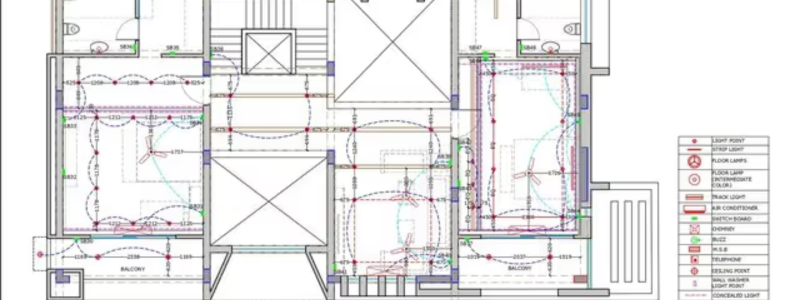
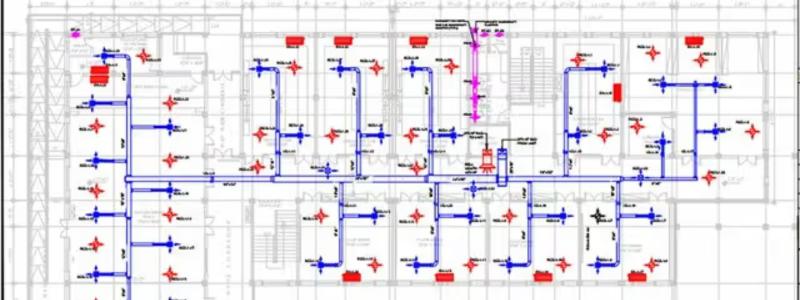
AEC business is pricey. Between office rent, software licenses, and high-end hardware to run those tools, the company’s overhead adds up to a sizable amount. Combine everything with employees’ wages in the payroll, and you come to really understand that it takes money to make money. Say you have a structural engineer as a full-time employee at the company. To keep the engineer working to their full potential, you’re paying not only their salary, but also for the tools and equipment necessary for them to do the job. In addition to the workstation and laptop they use, which cost thousands of dollars, there are software subscription fees of several hundred dollars per month.
Let’s not forget about health insurance and a 401k as well. Other recurring expenses include office utilities because they can’t work without electricity, the horrible-tasting coffee they can’t complain about, and, of course, broadband Internet for Windows updates. Hiring another full-time employee, for example, an MEP engineer, would be an invaluable addition to your company. But at the same time, you’ll be spending almost twice as much overhead as before.
Outsourcing also costs money, but at least the expense isn’t included in the fixed fee you pay every month. In many cases, a freelancer is happy to use their own laptop, so you don’t have to lend them one of yours. And when the project is over or the AutoCAD MEP engineering activities are finished, the overhead associated with the freelancer is no longer incurred. To put it simply, outsourcing is a way to increase your workforce size while keeping overhead at an acceptable level.
We’re not saying that hiring another full-time engineer or two is a bad idea. A reinforcement is always a welcome addition. New engineers bring a competitive advantage and allow you to handle bigger projects more comfortably. However, introducing new names to the payroll isn’t the solution to everything, and it doesn’t have to be the first thing to happen tomorrow morning. Scaling up a company isn’t a matter you can take lightly. It takes preparation and a whole lot of considerations to increase headcount, as it directly affects your profit margin on every project.
A professional engineering modeling designer is a qualified employee. And every skilled worker, like an expensive coffee machine, is a high-maintenance asset. An outsourced employee is, by nature, a temporary addition to the in-house team. In this case, “temporary” also means non-recurring overhead. Hiring a freelance engineer instead of a full-time one allows you to convert a fixed fee into a variable cost. During the slow months filled with snowy roads, rainy days, and smaller projects, the team has all the engineering tasks in control, and there’s no work to outsource, hence zero temporary bill.
Outsourcing affords you an easy way to scale up and down as needed. You get to keep the core team tightly small and the overhead manageable, making the company resilient and flexible in times of both downturn and upturn. For a small firm, such flexibility grants the power not to shy away from bigger projects. Even when a project appears to demand more horsepower than your core team has, outsourcing lays the path to immediate reinforcement.
7. Some relief from liability risk
We’re not just talking about reading the clauses in a terms and conditions paper, but the actual risk and liability associated with a project. No one really talks about it, so let us try to simplify the matter for you. In an AEC project, what appears to be a simple typo from the engineering drawing expert or a few millimeters misalignments in the blueprint isn’t always an honest mistake. It might be an honest mistake on your part, but the client has every right to see that as a potential lawsuit. Mistakes can lead to incorrectly sized truss beams, a fire sprinkler system that isn’t code-compliant, sewer odor due to an incorrectly installed plumbing vent pipe, or a failed home inspection that reduces property value.
Errors and Omissions insurance is expensive for a reason. You can’t always slip through the cracks of those liability clauses, but if you outsource some engineering activities to an established firm (as opposed to a stranger on Facebook who claims to have done millions of similar projects), you are distributing the risk in the process. Unlike a typical handyman who always skips the T&C page and just clicks the Accept button, a reputable engineering firm, more often than not, carries its own liability insurance, backed by an internal quality-control process.
When you outsource engineering activities to such a firm, all work is covered by the firm’s insurance policies as well. Your engineers get to sleep better at night, if they sleep at all, and you’re somewhat relieved from some of the burden of potential mishaps.
The bottom line
Engineering activities, no matter how small or trivial they may seem, hold some degree of importance to every AEC project and can definitely affect whether it’s going to be a success, finish as quickly as expected, or get stretched out to several more months because things don’t go quite as planned. Outsourcing helps ensure that every job is handled by the right person and minimizes the chances of your engineers feeling overworked, undervalued, or assigned to the wrong tasks.
Having some engineering activities outsourced to a freelancer or an external firm doesn’t necessarily mean you have an incompetent team. If anything, outsourcing can be one of the most effective ways to give your team the support they need, so they can maintain their focus on what they do best. Think of outsourcing as an affordable and surprisingly comfortable life jacket that prevents you from drowning when the tide is high and the deadline is drawing near.
Hiring additional brainpower, albeit on a temporary basis, will keep your head above water and the project running at a steady pace without a hiccup. And as the tide recedes from the shore and things are safe, you can take off the life jacket with a great sense of relief. Whether you’re in need of an individual freelancer or an engineering firm to lend a hand and fresh perspective for a project, Cad Crowd is here to help you connect with thousands of talented engineers and experienced architectural firms from all around the world. Contact us for a free quote.
MacKenzie Brown is the founder and CEO of Cad Crowd. With over 18 years of experience in launching and scaling platforms specializing in CAD services, product design, manufacturing, hardware, and software development, MacKenzie is a recognized authority in the engineering industry. Under his leadership, Cad Crowd serves esteemed clients like NASA, JPL, the U.S. Navy, and Fortune 500 companies, empowering innovators with access to high-quality design and engineering talent.
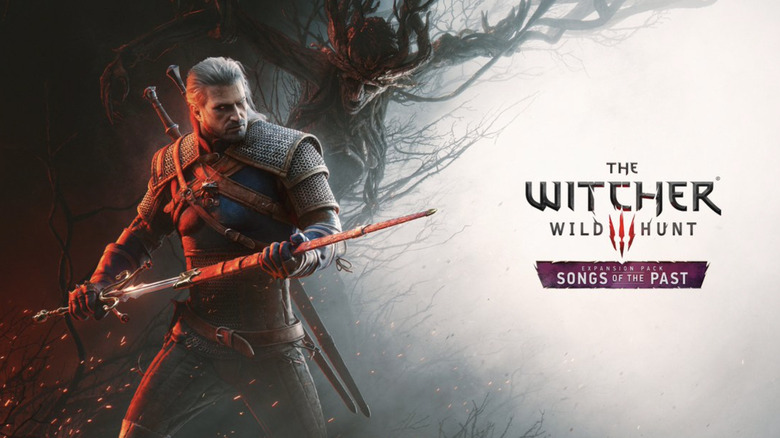
If you’re seeing the word “Witcher” in a news headline in 2026, you’d be forgiven for assuming it’s in relation to either The Witcher 4, or whatever season of the Netflix show we’re at now. But today’s news is actually about 2015’s The Witcher 3: Wild Hunt, which will receive its third full expansion next year, 12 years on from the beloved action RPG’s debut.
CD Projekt Red announced the expansion, The Witcher 3: Wild Hunt – Songs of the Past, on its official The Witcher X account, a day earlier than planned. The game’s previous DLC, Blood and Wine, is celebrating its 10th anniversary this week, and CDPR recently announced a “special” celebratory livestream on May 28, where it had intended to reveal the upcoming expansion.
“Medallion’s humming… that can only mean one thing! It’s time to announce The Witcher 3: Wild Hunt – Songs of the Past!” the studio wrote on X. “This brand new expansion for The Witcher 3: Wild Hunt will take you to the Path with Geralt of Rivia once more.”
We don’t currently have much more information to go on than that, but CDPR said that story content is being co-developed with fellow Polish developer Fool’s Theory. This is the same studio that is currently working on a remake of The Witcher. CDPR said we can expect to hear more later this summer.
Songs of the Past will arrive at some point in 2027 on PC, Xbox Series X|S and PS5. There’s no mention of Switch or Switch 2 at the time of writing, and CDPR is yet to announce whether The Witcher 3 will receive a Switch 2 upgrade in the future. Given how involved the studio was in the console’s launch with its impressive Cyberpunk 2077 port, it wouldn’t be a huge shock if a Switch 2 version of Geralt’s third monster-hunting outing did turn up eventually.
Songs of the Past‘s existence raises questions about the whereabouts of The Witcher 3‘s long-awaited sequel. We haven’t heard much about The Witcher 4 since it was shown off in an Unreal Engine 5 tech demo last year, following a cinematic trailer at the 2024 Game Awards the year before. The game doesn’t have a release date, but you can probably rule out 2027 now that we know that CDPR isn’t quite done with its predecessor yet.