The original lawsuit was filed in 2023 and claimed Twitter hosted thousands of cases of copyright infringement.
Donny Hery/Shutterstock
A three-years-long legal battle between X and major music publishers has quietly come to an end. In court documents filed by both X and a group of music publishers, both sides opted to dismiss their opposing lawsuits while not disclosing the terms of the settlement (via Reuters).
The feud began in 2023 when a group of music publishers led by the National Music Publishers Association (NMPA) sued the social media platform, which was still known as Twitter at the time. The $250 million lawsuit claimed that Twitter allowed for rampant cases of copyright infringement from its users, while also not doing anything to stop it. Notably, Twitter was one of the only major social media platforms that didn’t have a licensing agreement with music publishers.
In response, Twitter, now known as X, countered with its own lawsuit nearly three years later, claiming that these music publishers engaged in anticompetitive practices that would force the platform to license their songs for higher rates. Even before the latest agreement to dismiss both suits, X requested as recently as last month that the court dismiss the case claiming it shouldn’t be held responsible for user piracy.
So far, neither side has offered any explanation for the dismissals. However, court documents show that X and the music publishers requested to dismiss both suits “with prejudice,” so that they’re permanently dismissed and won’t be refiled. We’ve reached out to NMPA for comment and will update the story if we hear back.
AI labs are shipping new models nonstop. Besides being better and faster than their predecessors, every new model isn’t guaranteed to be a major step change, despite how the company’s PR may wax poetic about them. Model strengths really emerge in context: Where are competitor models lacking or excelling? Which models have outstanding specialties, and which are just catching up to industry standards?
Our Model Release Tracker helps you make sense of where models stand relative to each other, and whether they’re worth a deeper look. While we don’t test every model or model update on this list, we’ll always include the key elements you need to know, along with our hands-on expert test, where applicable. We also include an Expert Score for certain models. Curious about how we test AI? Check out this breakdown of our process.
Here are the biggest model releases of 2026 so far and what to know about them. We’ll update this list whenever a notable new model arrives.
Kimi K3
Moonshot | July 16, 2026
What it does: At 2.8 trillion parameters, Kimi K3 is the largest open-source model on the market, designed for “long-horizon coding, knowledge work, and reasoning,” according to Moonshot’s announcement. For context, that’s bigger than DeepSeek V4 Pro, from the company that first made US AI labs nervous back in January 2025, at 1.6 trillion.
Most notably, Kimi K3 topped Anthropic’s Fable 5 on the Arena benchmark for front-end coding, which measures complex agentic coding tasks. That said, Moonshot itself noted that Kimi K3’s overall performance doesn’t top Fable 5, though the model does rival it and OpenAI’s GPT-5.6 in several individual benchmarks.
Moonshot plans to release the model’s weights by July 27.
Why it matters: Kimi K3’s competitive performance and record-breaking open-source size revive discourse on whether proprietary American frontier models are worth the cost. Fable 5 is $50 per million output tokens, while Kimi K3 is just $15. Still, open-source models lack the safety guardrails that proprietary models have; those risks are amplified by the fact that Moonshot is a Chinese startup (the US government is consistently suspicious of Chinese tech).
GPT-5.6
OpenAI | July 9, 2026
What it does: Fresh on the heels of its new voice model, OpenAI released the GPT-5.6 family, which the company said it cleared with the government a few days earlier. The family includes Sol, a new flagship model, as well as Terra, built for everyday use, and Luna, the economical choice of the three. OpenAI said Sol should optimize cost without sacrificing performance, and works with a new “ultra” setting that calls on several agents to speed up task completion.
Sol beat Fable 5, the current darling of the AI race, in adaptive and medium reasoning on UC Berkeley’s Agents Last Exam benchmark. Terra and Luna also “outperform Fable 5 at around one-sixteenth the cost,” OpenAI said in the release. The model family is about on par with Fable 5 in most major performance areas, though, including coding, work tasks, and general applications, but is still faster and cheaper, according to OpenAI.
Why it matters: That the government was involved in the timing of GPT-5.6’s release signifies a shift — not in explicit regulation, perhaps, but around a sort of informal partnership between labs and the Center for AI Standards and Innovation (CAIS). Set in motion by the back-and-forth around Anthropic’s Mythos and Fable 5, the voluntary testing agreement laid out in the Trump administration’s June executive order seems to be going swimmingly.
(Disclosure: Ziff Davis, ZDNET’s parent company, filed an April 2025 lawsuit against OpenAI, alleging it infringed Ziff Davis copyrights in training and operating its AI systems.)
Muse Spark 1.1
Meta | July 9, 2026
What it does: An upgrade to Meta’s first model, Muse Spark, which it released in April, 1.1 scored above Anthropic’s Opus 4.8 and OpenAI’s GPT-5.5 — both impressive models — for job tasks humans delegate to AI and financial analysis. While the rest of its benchmark results were more scattered, those areas are especially relevant to AI’s potential impact on white-collar work and the broader job market.
Why it matters: Unlike GPT-5.6, Muse Spark 1.1 doesn’t rival Anthropic’s Fable 5, but it does appear to focus on advancing “personal superintelligence,” Mark Zuckerberg’s somewhat open-ended niche in the agentic assistant world. For example, Meta’s release mentions using Spark 1.1 for “agentic dinner party organization,” peeling off from Anthropic and OpenAI’s focus on professional use cases and aligning itself more with autonomous capability for personal use, similar to Gemini Spark. Keeping pace with new models from other major labs will allow for better simultaneous testing, which should put the race at an interesting inflection point.
GPT-Live-1
OpenAI | July 8, 2026
What it does: OpenAI said in the release that the new model, which is accompanied by a light version (GPT-Live-1 mini), should make talking to ChatGPT in Voice Mode seem”more like having a real conversation.” Because GPT-Live can listen and speak simultaneously, according to OpenAI, that means you should be able to seamlessly interrupt the assistant with questions, pause mid-sentence, and ask ChatGPT to respond more slowly if you need.
OpenAI added that with GPT-Live, ChatGPT Voice can delegate more complex asks to models like GPT-5.5 if Live can’t handle them. Everyone can access GPT-Live-1 and GPT-Live-1 mini in ChatGPT for Android, iOS, and in the browser.
Why it matters: While technically a narrower upgrade than a brand-new, highly capable general model, GPT-Live-1 should improve the user experience of talking to AI assistants, an increasingly popular way to engage with them on the go. Eventually, a better voice model could also handle longer, more complex tasks, but we’ll have to wait and see.
Fable 5 costs more to use, but Anthropic included it as a promotion at no extra cost for paid users, including those on Pro, Max, Team, andselect users on Enterprise plans. Anthropic had originally set Fable 5 to shift to token-based usage on July 7 for paid users, but has extended paid plan access to July 12.
“As before, you can use up to 50% of your weekly usage limit on Claude Fable 5. After that, you can keep using Fable 5 with usage credits, or switch to another model to keep working within your remaining limits,” Anthropic explained in an X post.
After Fable 5 and Mythos 5 were pulled on advisement from the government just days after their release, the government re-allowed access to Mythos 5 for certain partners on June 26. On June 30, the Department of Commerce lifted export controls on both Mythos 5 and Fable 5, and Anthropic began restoring global access to Fable 5 on July 1 (Mythos 5 is still only available to specific institutions).
Sonnet 5
Anthropic | June 30, 2026
What itdoes: Pivoting from its recent focus on Opus models, Anthropic released Sonnet 5. According to Anthropic, Sonnet 5 can “make plans, use tools like browsers and terminals, and run autonomously at a level that, just a few months ago, required larger and more expensive models.” The company said it performs similarly to Opus 4.8, released a month ago, but costs less. Sonnet 5 starts at $2 per million input tokens but will jump to $3 per million in September. It’s now the default in Free and Pro plans and available to all other plan types (Max, Team, and Enterprise).
In keeping with the agentic focus of the AI industry at large, Sonnet 5 scores notably high on computer use benchmarks and agentic coding — testing found it completed complex tasks that earlier Sonnet models couldn’t. It also comes with safeguards implemented automatically, a nod to both recent PR around Mythos and overall improvements in general intelligence.
Why it matters: With the rate of AI model development continuing to accelerate, it’s a fair bet that Sonnet 5 is in fact a significant upgrade over Sonnet 4.6, which was released back in February (eons ago in current shipping time). The timing of this release is also significant; Anthropic noted that Sonnet 5 “has a much lower ability to perform dangerous cybersecurity tasks than our current Opus models,” perhaps a stabilizing mention after the complex rollout of its powerful Fable 5 and Mythos 5 models. Ironically, however, Sonnet 5 showed a higher rate of misaligned behavior than Mythos Preview.
Fable 5 and Mythos 5
Anthropic | June 9, 2026
What it does: ZDNET senior contributing editor David Gewirtz called Fable 5 a “defanged” version of Mythos, made safe for public use. Anthropic released Mythos 5 to those who already had Mythos Preview access through Project Glasswing. Fable 5 is restricted from responding to high-risk queries about topics like cybersecurity and biological weapons, but still “Mythos-class,” which, by Anthropic’s telling, means a step change in capability. As for Mythos 5, Anthropic said it had plans to expand access beyond initial partners through a systematic program. But both models were pulled barely four days after their release on orders from the US government.
Why it matters: The models have created plenty of commotion, not just because of their supposed basis in Mythos and temporary restriction. Fable 5 beguiled safety testers who were unaware that the model was set to downgrade to Opus in response to certain questions, which created trust issues between researchers and Anthropic. Despite being guardrailed, we now know Amazon researchers jailbroke Fable 5 and communicated with the White House to alert Anthropic, though Anthropic framed this incident as “narrow” in their understanding.
While the details remain unclear, it’s a rare instance of government authorities intervening in an American AI product in public, which could mean Mythos-level models have caused a shift in the relatively hands-off approach to AI labs the Trump administration has had thus far.
MAI-Thinking-1
Microsoft AI | June 2, 2026
What it does: At its Build developer conference, Microsoft said that this new 35-billion-parameter model is, unsurprisingly, designed for multi-step agentic tasks. It scored similarly on the SWE Bench Pro benchmark test for coding as Anthropic Opus 4.6. The company also noted that enterprise users can trust this model for any use because it was trained only on clean, commercially safe data — an important tidbit given mounting AI copyright lawsuits.
Why it matters: This is the first reasoning model from Microsoft AI, a notable milestone for any AI lab, but especially so this late in this race. Most labs have created multiple advanced reasoning models at this point, so it’s unclear yet where Microsoft’s approach stands relative to those, though the company is focusing on appealing to enterprise clients specifically.
Claude Opus 4.8
Anthropic | May 28, 2026
What it does: Replacing Opus 4.7 starting May 28 (at the same price), Opus 4.8 offers faster thinking modes for one-third the cost of the earlier version, according to Anthropic. Like most of Anthropic’s models, 4.8 prioritizes coding abilities, scoring higher than 4.7 on two coding benchmarks but not fully besting OpenAI’s GPT 5.5. It also “reaches new highs on our measures of prosocial traits like supporting user autonomy and acting in the user’s best interest,” the company noted in the release, though definitions for what that means remain murky.
Why it matters: Anthropic has always prioritized model safety and interpretability, but appears to be further emphasizing that standard with this release. The company said Opus 4.7 had a 92% honesty rate, in addition to being less sycophantic and hallucination-prone overall. The fact that it claims 4.8 shows “substantially” lower rates of misalignment than 4.7 indicates an increasingly high standard for model safety, especially because Anthropic compared 4.8’s alignment to that of Mythos Preview.
Gemini 3.5 Flash
Google | May 19, 2026
What it does: At Google I/O, the company launched its 3.5 model family, designed for building agents (following suit with where all of the AI industry is focused at the moment). The first model available now is Gemini 3.5 Flash, which beat Gemini 3.1 Pro on a few coding and agentic benchmarks and now undergirds AI Mode in Search and the Gemini App as the default model. Like all Flash models, it’s optimized for speed and a cheaper, more lightweight user experience, but can still handle “long-horizon” agentic tasks, Google noted. 3.5 Pro should roll out in June.
Why it matters: The most important place 3.5 will operate is in Search. As Google doubles down on an AI-first search experience, the models running it shape the responses people will passively consume every day, meaning it has to be especially up to snuff in terms of accuracy and hallucinations. Notably, though, the System Card for 3.5 Flash lacks any mention of hallucination rate or sycophancy.
GPT-5.5 Instant
OpenAI | May 5, 2026
What it does: OpenAI said in its announcement that the lighter version of OpenAI’s just-released GPT-5.5 is less verbose than its predecessor, GPT-5.3 Instant. It also touted fewer hallucinations and improved factuality, saying “GPT‑5.5 Instant produced 52.5% fewer hallucinated claims than GPT‑5.3 Instant on high-stakes prompts covering areas like medicine, law, and finance.”
Why itmatters: GPT-5.5 Instant replaces GPT-5.3 as the default model in ChatGPT. Again, while the expectation is that each new AI model gets more efficient, easier to use, and makes up less stuff, a significant improvement in hallucinations for a model most people use for fast queries could mean less misinformation spreading among the masses. That’s especially critical given how many people are using ChatGPT for everyday health questions, for example.
(Disclosure: Ziff Davis, ZDNET’s parent company, filed an April 2025 lawsuit against OpenAI, alleging it infringed Ziff Davis copyrights in training and operating its AI systems.)
Nemotron 3 Nano Omni
Nvidia | April 28, 2026
What it does: The latest in Nvidia’s open Nemotron family, this model provides agents with multimodal input. That means they can “perceive and reason across visual, audio, and textual inputs within a single shared perception‑to‑action loop,” according to Nvidia, thereby unifying multiple capabilities into a single system.
Why itmatters: Normally, systems of agents need to use separate models for speech, vision, and text, meaning they jump across documents, video, and audio to complete multi-step tasks. That slows down workflows, undermines the context agents gather, and racks up inference costs. Nvidia’s approach, if it works, would streamline this process and reduce token use, saving you money. Try it on Hugging Face.
GPT-5.5
OpenAI | April 23, 2026
Expert Score: 93/100
What it does: ZDNET tester-in-residence David Gewirtz technically gave GPT-5.5 an A- score, but said it “can be reductively described as better and faster than GPT-5.4,” which is hopefully the bare-minimum expectation for a new model. Specifically, though, the model got better at agentic coding, clearly identifying concepts, scientific research, and factual accuracy.
Why it matters: While the model itself may not be leaps and bounds ahead of its immediate predecessor, the quick turnaround from 5.4 to 5.4 — less than two months — indicates how rapidly agentic coding is accelerating OpenAI’s model release cycle. As ZDNET’s David Gewirtz breaks down, the company, much like other frontier labs using AI to build AI, is shipping updates at an exponentially increasing rate.
ChatGPT Images 2
OpenAI | April 23, 2026
What it does: Soon after sunsetting Sora, its generative video model and social platform, OpenAI somewhat confusingly announced Images 2. ZDNET model tester David Gewirtz got an early look at Images 2 before its release and was impressed. While he didn’t give this model a formal Expert Score, he said it’s fun, a huge leap, and actually useful for work.
Why it matters: OpenAI seemed to be getting out of the more consumer-minded AI product game when it discontinued Sora, having been beaten by Anthropic at securing lucrative enterprise contracts. That OpenAI still came out with Images 2 within that redirection narrative indicates that it sees image generators as relevant enough to enterprise AI — especially on the heels of Anthropic’s Claude Design.
Claude Opus 4.7
Anthropic | April 16, 2026
What itdoes: Arriving relatively quickly after Opus 4.6, this model boasts new highs in honesty, reduced sycophancy, and hallucinations. It also appears to have a knack for cybersecurity, as it backs the new Claude Security, released shortly after the model itself — but no, it’s not Mythos, as many suspected.
Why it matters: Hallucinations and honesty are among the most difficult, hard-to-solve issues plaguing even the best models. For Anthropic to claim such significant gains in those areas is no small feat for an AI lab that takes safety seriously.
Claude Mythos (Preview)
Anthropic | April 7, 2026
What itdoes: This is a tough one because Mythos isn’t actually available to the public. Anthropic created quite a media storm when it positioned the new general-purpose model as too powerful to release as usual. While the model is apparently a step change from earlier Anthropic models, the company was especially alarmed because of the security threat it posed, stating that “it is strikingly capable at computer security tasks.”
In response to that, Anthropic spearheaded Project Glasswing, a collaborative effort with several rival AI labs, including Google, Nvidia, and Microsoft, as well as security authorities like Palo Alto Networks, “to help secure the world’s most critical software, and to prepare the industry for the practices we all will need to adopt to keep ahead of cyberattackers.”
Why it matters: If we’re to believe Anthropic’s guidance that Mythos poses a significant threat to the world’s software — so much so that only a select few partners can access it — cybersecurity apparatuses as they stand may not be prepared to meet the rapidly evolving frontier of model capabilities. Mythos may not be the only model of its caliber, but simply the first of many to come once other labs achieve similar breakthroughs.
What itdoes: OpenAI framed this new model, released barely three months after GPT-5.2, as specifically designed for professional work. According to the company’s own testing (which should always be taken with a grain of salt until verified by a third party), GPT-5.4 matches or outperforms human professionals 83% of the time.
Why it matters: As AI companies focus more on gaining enterprise trust (and contracts) while lauding what agentic AI can do, they need models that can handle complex work-related tasks with minimal risk, delay, or prohibitively high costs. Any model advancement that shows prowess in professional workflows has a better chance of being taken seriously by companies struggling to adopt AI, though nothing guarantees seamless integration.
What itdoes: This model quickly redefined the standard for autonomous agentic work, especially for coding. That’s no surprise given Anthropic’s authority in building models especially adept at programming tasks. Opus 4.6 also demonstrated improvement in complex, longer-running tasks overall.
Why it matters: Opus 4.6’s ability to handle tasks better on its own means you can reliably offload more of your workflow to it — something agentic offerings usually struggle with.
What itdoes: This new coding model — which OpenAI said helped build and debug itself — can be interrupted and redirected mid-task, which, if true, is a huge boon for developers using it on complex or shifting projects with tons of trial-and-error. GPT-5.3-Codex also boasts run times of over a day and a better grasp on user intent.
Why it matters: OpenAI is trying to catch up to Anthropic’s lead in agentic coding (and, coincidentally or not, released 5.3 Codex on the same day as Anthropic launched Opus 4.6). While ZDNET experts often prefer Claude Code to other tools for vibe coding, OpenAI’s rumored shift toward enterprise clients and away from fun consumer tools could eventually close that gap.
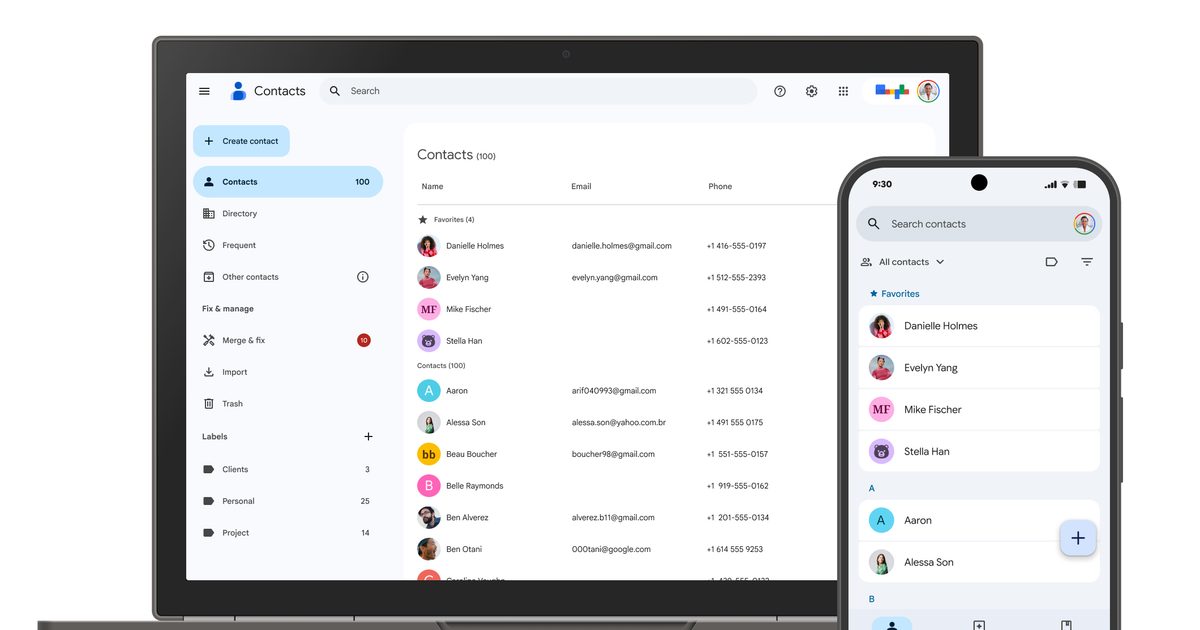
Google is rolling out a small but useful update to the Contacts app on Android that makes it much easier to find and share your own contact details. Instead of digging through settings or creating a separate contact for yourself, you’ll now see a dedicated ‘Your Info’ card at the very top of your contacts list.
The feature gives you quick access to your phone number, email addresses, and other personal details while also adding a faster way to share them with others. The update is arriving with Google Contacts version 4.83.13.940538822 and is rolling out widely (via 9to5Google).
What does the new ‘Your Info’ card do?
Daniel Romero / Unsplash
Tapping into the Your Info card pulls up your profile picture, phone numbers, email addresses, and any other details you have chosen to add. If your device has a number tied to it, that one gets labeled as your device number and automatically appears first in the list. Right next to your info sits a dedicated share button, letting you send your contact card as a VCard file to anyone who needs it.
If this setup sounds a lot like something you have seen before, that is because it basically is. iPhone users have had a nearly identical feature for years, called My Card, which also sits at the top of the Contacts app for quick access
This follows Google’s earlier rollout of the Calling Card feature, which lets you personalize how your own contact photo and name appear during calls. Google has also published a support page explaining how the feature works as it rolls out to more Android users.
Apple today added the iPad mini with the A17 Pro chip to its refurbished store in the U.S. and Canada for the first time since the device was released in October 2024. Other key features include an 8.3-inch display, a 12-megapixel Center Stage camera, and a Touch ID power button. There is no availability in any other countries yet.
In the U.S., refurbished pricing starts at $509 for a Wi-Fi model with 128GB of storage, down from $599 for the equivalent brand-new model. However, keep in mind that a new iPad mini started at $499 until Apple raised prices last month, so unfortunately the refurbished model costs $10 more than a new model did just a few weeks ago.
Apple says the refurbished iPad mini models include a new battery and outer shell, a plain new box, and all accessories, including a 20W USB-C power adapter and a USB-C charging cable. Apple says it puts refurbished devices through a “thorough cleaning process and inspection,” which typically results in a like-new condition.
All refurbished iPads are covered by Apple’s one-year warranty. AppleCare+ is available.
According to the latest rumors, Apple is close to launching its next-generation iPad mini. So what should we expect from the successor to the iPad mini 7 that Apple released over 20 months ago. Read on to find out.
Processor and Performance
Apple is working on a next-generation version of the iPad mini (codename J510/J511) that features the A19 Pro chip, according to information found in…
OLED panel mass production has reportedly begun for several upcoming Apple products, including the long-rumored OLED iPad mini and OLED MacBook Pro.
According to a Korean-language ETNews report, Samsung Display started mass production of OLED panels for Apple’s first OLED iPad mini this month. The report adds that production of OLED panels for the MacBook Pro is scheduled to begin in July,…
Apple today dramatically increased device prices across multiple product lines.
Subscribe to the MacRumors YouTube channel for more videos.
After temporarily taking it down earlier today, Apple’s online store is back up with a series of product price increases. The changes are as follows:
HomePod mini: $129, up from $99 (+$30)
HomePod: $349, up from $299 (+$50)
Apple TV: $199, up from…
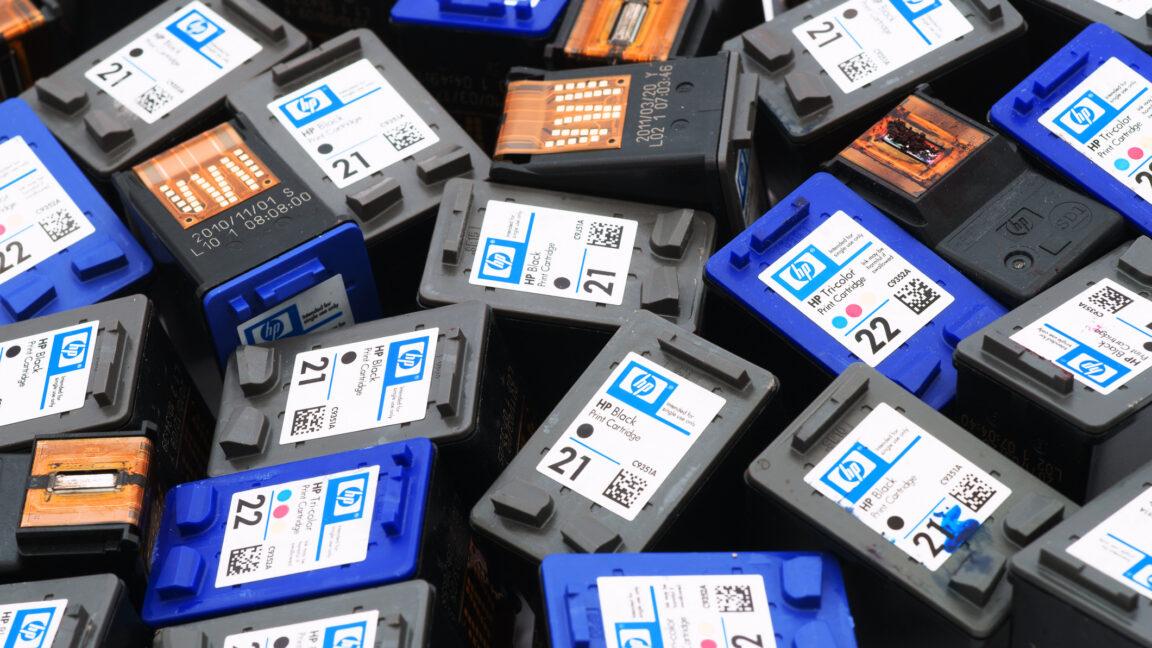
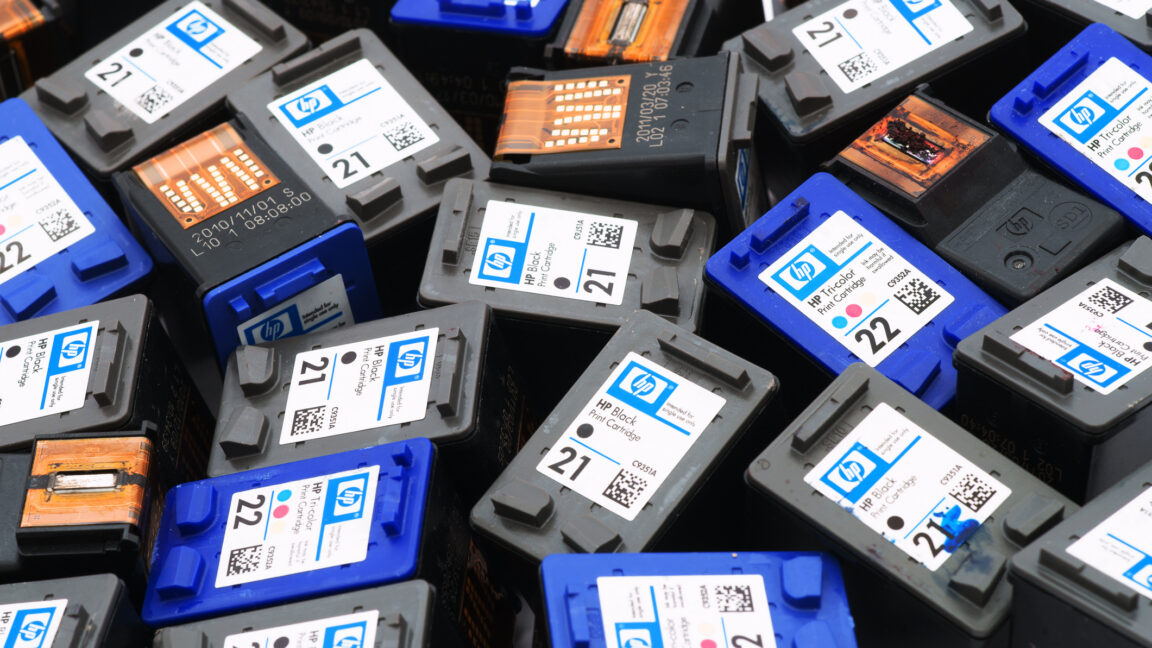
The agency also fined 21 HP resellers 35.2 million rupees (about $365,335).
In a separate order, the CCI said that WhatsApp records showed that HP and 16 of its Tier-2 reseller partners operated “in a collusive arrangement” and that the messages show the companies engaging in “bid rigging, including cover bidding, price fixation, and customer allocation during 2017–2020.” HP India played a central role, the regulator said.
Per the order, HP India said that high printing supply prices led some resellers to threaten to “shift to low-cost counterfeit products to compete on price.”
“HP India was commercially forced into a position where it had to support the collusive arrangement adopted by the Tier-2 resellers,” the order reads.
For its part, the order said that HP India “humbly objects to HP India’s role being characterized as a ‘kingpin’ of the entire collusive arrangement.”
Still, the revelation that some HP resellers are struggling with the exorbitant price of printer ink and toner underscores a problem many printer users face. The economic challenge is exacerbated by HP’s tendency to block third-party ink in already-purchased printers through firmware updates. At the same time, with even its own partners threatening to take their ink business elsewhere, HP is pressured to get more HP printer users to only use HP-brand ink and toner.
The CCI also ordered HP India and its channel partners to “cease and desist from anti-competitive conduct” and to hold competition compliance training programs within 60 days.
An anonymous reader quotes a report from Electrek: A Reddit post making the rounds this week claims the U.S. has experienced at least one major power outage every month of 2026 — but is it true? I dug into several outages, the extreme weather behind them, and what we can do to help keep the lights on. […] The claim that hundreds of thousands of Americans were without power over extended periods at least once per month, every month of 2026 surprised be in two ways. First, because I had no idea if it was true — and, second, because it felt true. We try to do better than writing about things that feel true around here, however, so I did a bit of research (translation: I Googled power outages by month) and came up with the following examples in about sixty seconds
… and that list is far from comprehensive, and how you feel about it might depend on what you consider a “major” outage, of course — but consider that there are tens of thousands of Americans without power right now, and that’s not making the news. […] The lesson here is that weather-related grid outages — whether they’re caused by wildfires, mudslides, derechos, tornadoes, ice storms, hurricanes, heat waves, or some other disaster I’m lucky enough to have forgotten about — read like statistics when they’re happening over there, but get personal real quick when they’re happening to you.
It feels like we can’t go more than a few days without hearing about some new problem Pixel phones are having; judging by user reports online, you’d think Google’s hardware is barely functional. But a lot of us use Pixel phones every day without incident, which makes it hard to gauge how widespread issues that crop up in places like Reddit really are.
In a poll running on Android Authority for the past couple of weeks, we asked readers about their experience with Google’s latest Pixel 10 Pro XL. Thousands of people responded — and it turns out that most of them haven’t had any significant problems with the phone. “There’s always background noise with Pixels,” our own Stephen Radochia wrote about his months-long experience using the Pixel 10 Pro XL, “but most of it is overblown.”
As Stephen tells it, though, he hasn’t had any real issues with the 10 Pro XL to speak of. Nearly 6,000 people responded to a survey running in his write-up, with more than 70% saying their experience lines up with Stephen’s: 4,110 respondents indicated that their experience with the Pixel 10 Pro XL has been “excellent.”
That leaves about 29% of respondents that have had real issues with the Pixel 10 Pro XL (the survey response specifically called out overheating, bugs, and poor performance). That’s nearly a third of a fairly large sample size, but it’s still hard to say what 1,700 people indicating they’ve had some combination of issues with a mass-market product really means for average users.
I haven’t used a Pixel 10 Pro XL at all, personally, but I’ve been using a Pixel 9 Pro for almost two years now, and I haven’t had any serious issues with it. I’ve had similar experiences with several prior models, too — but maybe I’m just lucky.
Have you had a good run with Pixel phones? Do you think online discourse over Pixel issues has gotten out of hand? Tell us about it in the comments.
Thank you for being part of our community. Read our Comment Policy before posting.
Miles Wang, an OpenAI researcher whose work includes using AI to accelerate scientific and biological discovery, is leaving the ChatGPT maker to launch a new startup focused on developing AI models for drug discovery, according to four people with knowledge of his plans. Several other OpenAI researchers are expected to join the new company.
Wang is in talks to raise about $200 million at a $2 billion valuation, two of the people said. Lightspeed is in discussions to lead the funding round, according to sources. Talks are ongoing, the deal may not be final and details could change.
Wang disputed the story’s funding figures and description of the company but did not specify the correct numbers or details. Lightspeed didn’t respond to a request for comment.
The funding discussions point to investor interest in applying AI to make breakthroughs in life sciences. Chai Discovery, a two-year-old startup developing AI models that can predict molecular interactions to identify new drugs, announced on Tuesday that it raised $400 million at a $3.8 billion valuation. (Co-founder Josh Meier also passed through OpenAI as a researcher.) Meanwhile, Google DeepMind spinout Isomorphic Labs, which also develops AI models for drug discovery, raised a $2.1 billion Series B in May.
Wang’s new startup may be working on AI models that will help find new uses for existing drugs and possibly those that previously failed in trials, a couple of sources told TechCrunch. Finding new uses for FDA-approved drugs can result in significantly faster time to revenue than developing new drugs from scratch, as these medicines have already been tested for safety.
Wang joined OpenAI in 2024 after dropping out from Harvard, where he was working on a bachelor’s degree in computer science. (In recent years, investors are once again comfortable betting on young founders who haven’t completed college.)
At OpenAI, he co-authored research papers, including evaluating how AI models can automate and accelerate scientific discovery.
When you purchase through links in our articles, we may earn a small commission. This doesn’t affect our editorial independence.
TL;DR: Plan and explore kitchen and bathroom renovations in 3D with a lifetime ArchiMaster license for $19.99 (reg. $59.99).
Credit: Richdale Ventures LLC
Renovation ideas can look great in your head but very different once the cabinets, countertops, and flooring are in the same room. ArchiMaster 3D Kitchen & Bath gives you a means to experiment before committing to a particular layout or wasting money on materials you might night need. A lifetime license for Windows is currently on sale for $19.99 (reg. $59.99), making it a savings of 67%.
This software allows homeowners and DIY renovators build kitchens and bathrooms in 3D without requiring a professional design experience. You can import photos of an existing kitchen or start a new layout from scratch, then test different configurations and see how the pieces work together.
Mashable Deals
By signing up, you agree to receive recurring automated SMS marketing messages from Mashable Deals at the number provided. Msg and data rates may apply. Up to 2 messages/day. Reply STOP to opt out, HELP for help. Consent is not a condition of purchase. See our Privacy Policy and Terms of Use.
There are more than 200 cabinet styles to choose from, plus a catalog of appliances and home electronics. A materials library lets you compare options for countertops, flooring, paint, stains, and fabrics, including granite, marble, slate, ceramic tile, and hardwood. You can preview the combination first instead of trying to imagine whether two finishes will work together or not.
Mashable Trend Report
Once your design starts taking shape, photorealistic 3D visualization lets you view it from different perspectives. Plus, there’s a VR mode for exploring your plans with compatible hardware, which is useful if staring at a floor plan doesn’t quite help you determine whether the finished space will feel cramped or not. The software works offline after installation, too, so an internet connection isn’t required every time inspiration strikes.
ArchiMaster is ideal for people planning their own kitchen or bathroom updates, whether that means testing a few aesthetic changes or working through a larger remodel. You can create unlimited designs, making it easier to compare ideas before settling on one, and have fun doing it!
The lifetime license includes a free upgrade to ArchiMaster 3D v3, (but future major releases starting with v4 will require a separate purchase). If you want to see your renovation ideas in 3D before making them real, ArchiMaster 3D Kitchen & Bath is currently available for $19.99 (reg. $59.99).
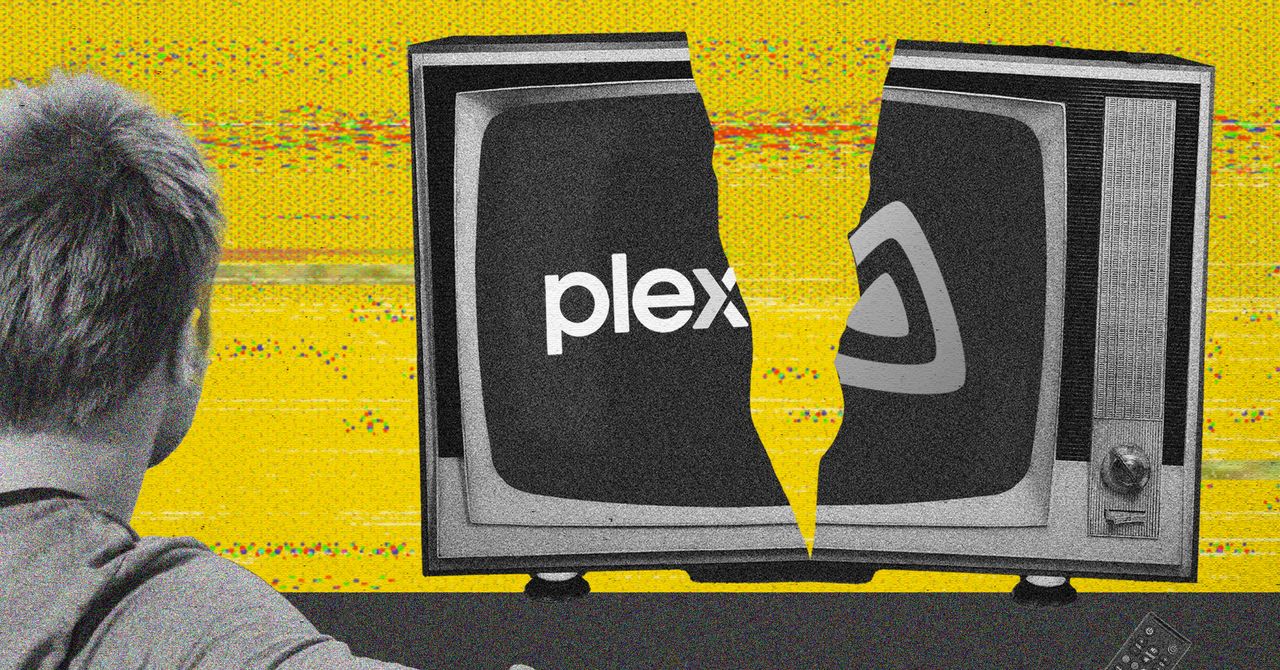
I use Plex every day. Lately, I’ve been wondering if I should stop.
The software, which lets you turn your personal collection of TV shows and movies into a Netflix-style streaming service, is extremely convenient. But Plex is offered by a company that, as of late, seems more focused on adding features than improving the cluttered user interface. Recently, it added a social platform and user reviews, two features I quickly disabled. I want to watch stuff—not talk about it with strangers (I have friends for that). The company keeps making design choices that push its ad-supported streaming choices over the personal media collection and DVR functionality I use the service to enjoy.
This might make sense from a business perspective. But it doesn’t make sense for my personal use of Plex, which is watching live TV and the TV shows I’ve recorded and stored on my own computer. I pay an annual subscription fee of $ 70 for this. I could avoid the annual subscription by buying a lifetime pass, but Plex just raised the price from $250 to $750. That’s more than a decade of annual passes, assuming Plex lasts the next decade.
All of which is to say there are reasons to be frustrated with Plex. And that’s enough to look into Jellyfin, a free and open source application that offers many of the features that make Plex so compelling. Is Jellyfin a good alternative? It depends.
Solid Basics, Rocky Remote Access
If the main thing you want is to watch your digital collection of TV shows and movies in your home, I have good news for you: Jellyfin works great. You can download the server, point it toward your media, and access that media on other devices on your network, all in a couple of minutes.
The scanning works well. In my case, a few things were labeled incorrectly, but I dealt with similar issues setting up Plex and know I can fix it without too much bother—it’s a matter of naming the files correctly.
You can access your server on the local network by typing the local IP into your address bar, which is handy. And there are Jellyfin clients for every major desktop, mobile, and smart TV platform you can think of. Put simply, you can get local media streaming working very quickly. If that’s your main use and you’re tired of Plex, I can confidently say Jellyfin is ready for you without fuss.
But sometimes you’re not home. Surprising, I know. One of the nice things about Plex is relatively simple remote access, which allows you to watch your media outside of your home network. With most modern routers, you won’t need to do much—the networking is taken care of. This is possible because Plex, the company, operates infrastructure that points other devices toward your home server.
Jellyfin has no such infrastructure. If you want to access your Jellyfin server when you’re away from home, you need to set up the networking infrastructure yourself. This could mean paying for a domain name and redirecting it to your server; it could mean setting up a VPN, or it could mean messing around with port forwarding. There are instructions, but they’re very clearly intended for power users.
Basically, you’re going to have to tinker. Now, the kind of person who runs their own Plex server can probably navigate all of this. But if you share access to your Plex server with others, Jellyfin will be harder for them to set up and use.