Best Buy is selling the LG C5 OLED for nearly 50% off – and I recommend it


lg-c5-oled-65in-08

Follow ZDNET: Add us as a preferred source on Google.


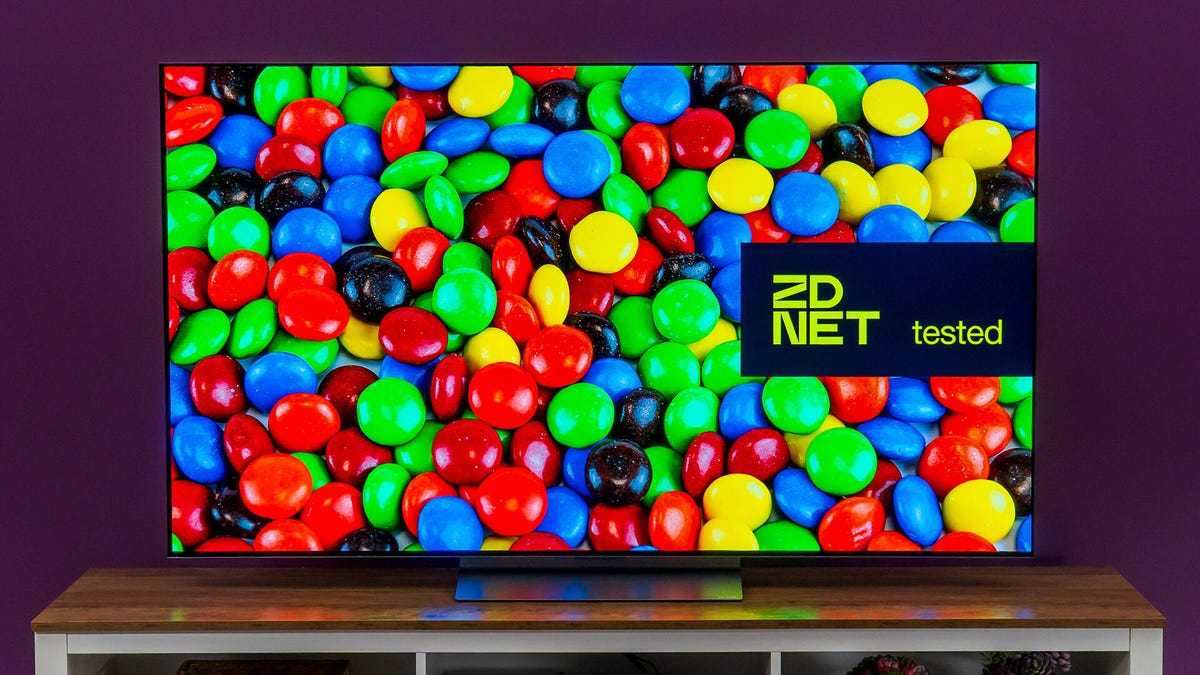
The LG C5 OLED is one of our favorite TVs here at ZDNET, and for good reason. You get signature OLED picture quality, VRR support for console gaming, built-in voice controls, and support for both Dolby Vision HDR and Dolby Atmos virtual surround sound, along with “dazzling brightness and color,” according to our reviewer. 

Right now at Best Buy during the Black Friday in July sale, you can pick up the 65-inch version for 48% off, bringing the price down to $1,399. The sale ends this weekend, and we aren’t sure if this deal will stick around.

Also: LG C5 OLED review

It may be last year’s flagship model, but the C5 OLED still gives you plenty of reasons to buy (aside from the discount). The OLED panel uses individually-lit pixels to create billions of colors, deep inky blacks, and bright whites. This creates sharper contrast, more accurate colors, and finer details than LED and LCD screens. It also works with built-in sensors that monitor ambient lighting and automatically adjust brightness for the best visibility in any room.

As our reviewer noted, “the C5 has a unique construction and a futuristic aesthetic,” including “one of the thinnest screens I’ve ever seen — at a mere 0.25 inches thick.” 

Also: LG C6 vs. LG C5

The 120Hz base refresh rate is perfect for live sports, as well as streaming, but it can be boosted up to 144Hz with support for both Nvidia G-Sync and AMD FreeSync VRR for console gaming. The dedicated gaming picture mode also automatically lowers input latency for response times as low as 0.1ms, bringing it on par with PC monitors purpose-built for gaming. 

You’ll also get premium sound to match your OLED picture, with support for Dolby Atmos virtual surround sound, native 2.2CH audio, and Bluetooth connectivity for setting up custom home audio equipment. Pair the LG C5 OLED with an LG-branded soundbar to take advantage of the LG Sound Sync feature, which makes the soundbar and TV speakers work in tandem for fuller, richer sound.

How I rated this deal 

This is one of the best deals I’ve seen on an OLED TV this year, bringing signature picture quality within reach of more shoppers. You’ll get a 120Hz refresh rate, built-in voice controls, support for both Nvidia and AMD VRR for console gaming, and both Dolby Vision and Dolby Atmos for enhanced picture and audio. All for half the price of what it would normally cost. That’s why I gave this deal a 5/5 Editor’s rating.

Deals are subject to sell out or expire any time, though ZDNET remains committed to finding, sharing, and updating the best product deals for you to score the best savings. Our team of experts regularly checks in on the deals we share to ensure they are still live and obtainable. We’re sorry if you’ve missed out on this deal, but don’t fret — we’re constantly finding new chances to save and sharing them with you at ZDNET.com


Show more

We aim to deliver the most accurate advice to help you shop smarter. ZDNET offers 33 years of experience, 30 hands-on product reviewers, and 10,000 square feet of lab space to ensure we bring you the best of tech. 

In 2025, we refined our approach to deals, developing a measurable system for sharing savings with readers like you. Our editor’s deal rating badges are affixed to most of our deal content, making it easy to interpret our expertise to help you make the best purchase decision.

At the core of this approach is a percentage-off-based system to classify savings offered on top-tech products, combined with a sliding-scale system based on our team members’ expertise and several factors like frequency, brand or product recognition, and more. The result? Hand-crafted deals chosen specifically for ZDNET readers like you, fully backed by our experts. 
Also: How we rate deals at ZDNET in 2026


Show more


Valve just gave Steam wishlists and gifting a major quality-of-life upgrade


Right on the heels of launching its anticipated Steam Machine gaming system, Valve has rolled out a solid update for Steam that tackles two things players have wanted improved for a while: gifting and wishlists. Let’s break down what’s new.

How much easier is gifting now?

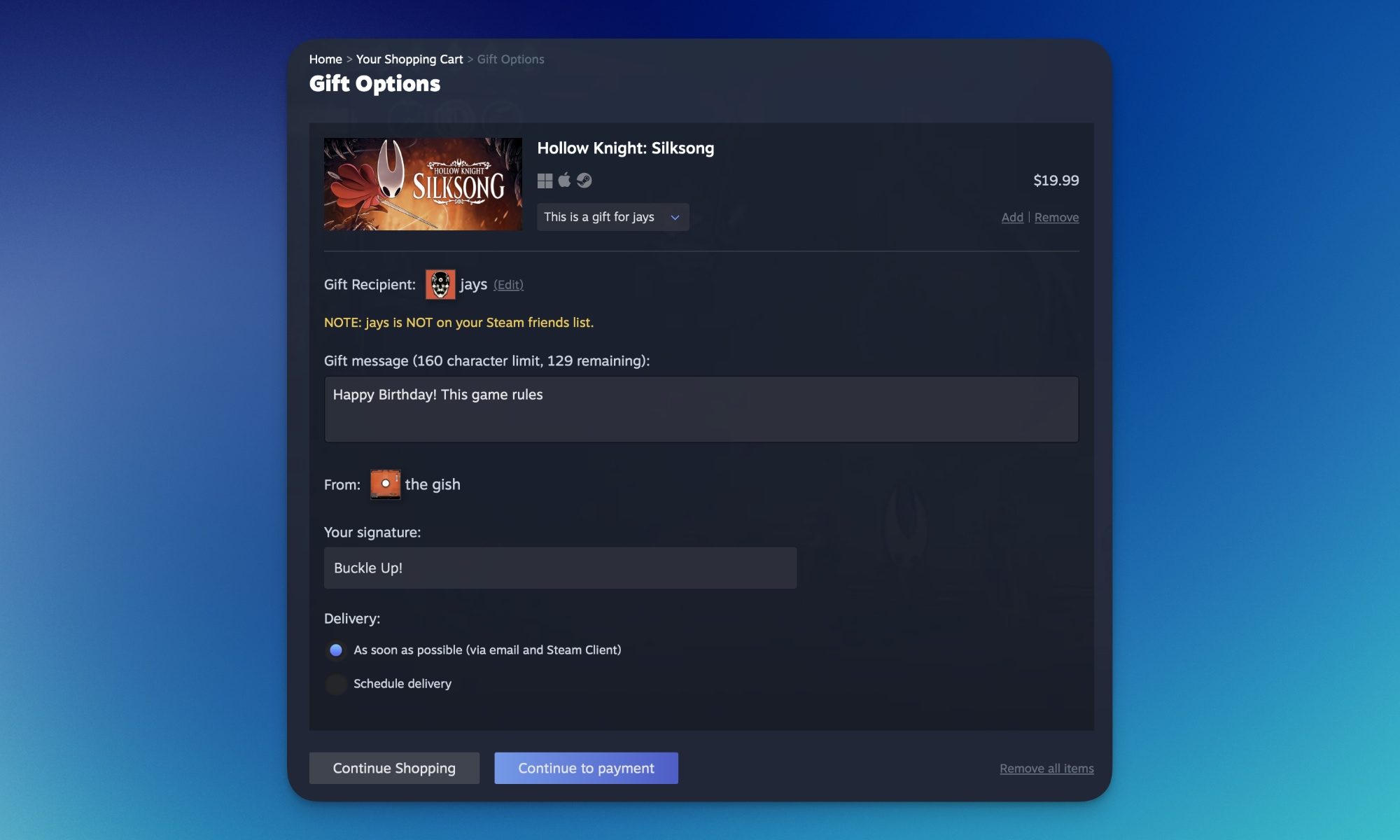
My favorite part of the update is that game gifting is getting a lot easier. Guest checkout used to only work for gift cards and hardware, but now it covers every game on Steam. If someone shares their wishlist with you, you can buy them a gift without ever creating an account. 

Want to keep it a surprise instead? You can now send both games and gift cards straight to an email address, even if you don’t know the person’s Steam username. Just keep in mind that unclaimed gifts get refunded after 30 days, and the recipient needs to live in your country.

Cross-region gifting also got a much-needed fix. Buying for a friend in a pricier region used to mean manually figuring out local pricing for a gift card. Now Steam handles the conversion automatically at checkout, as long as your friend is already on your friends list.

What’s new for organizing your wishlist?

Steam has finally added custom categories, allowing you to sort and filter your wishlist items. You can filter by category with one click, add games to your favorite categories right from the store page, and even set notifications for specific categories only.

Valve says that search has become faster too, with autocomplete added for quicker results. Steam now flags when a wishlisted game has a demo available, and hovering over a game’s capsule shows a quick microtrailer.

Sharing is better as well. You can generate a link to your entire wishlist or just a filtered category, and friends can gift straight from that link without needing a Steam account themselves. Between the smarter wishlist tools and the simpler gifting options, buying and managing games just got a lot less complicated.

Apple Store App Getting AI Shopping Assistant


Apple’s privacy policy for the Apple Store app suggests it will soon get a virtual shopping assistant to help users decide what to purchase.

Apple Store App Liquid Glass Feature
The app will have a chat interface where users can ask questions about Apple products, with Apple using data like account information, device identifiers, chat information, carrier information, and location data to offer a personalized experience. Transcripts of chats are saved for later reference.

Apple says that information is sent to its “partners” to help Apple provide a conversational response, which suggests Apple might be using a third-party AI model for the virtual assistant.

Where the Apple Store app virtual shopping assistant is available, Apple collects and stores your account information, device identifiers, carrier information, chat information, and where enabled, location data to personalize the chat experience, provide relevant responses, and if you opt in, to improve the virtual shopping assistant. Before sharing the chat with our partners, Apple scrubs personal identifiers from it. These partners will use this information only to help Apple to provide a conversational response. Apple will save these transcripts to make them available when you return to the Apple Store app, for our business analytics, and if you opt in, to improve the virtual shopping assistant.

The virtual shopping assistant interface is not live in the ‌Apple Store‌ app yet, though it is possible Apple is testing the feature with some users. Apple also added a virtual assistant to its Apple Support app, but that feature still hasn’t rolled out to everyone.

Popular Stories

Apple Store in Ann Arbor, Michigan is Moving Soon

Apple’s retail store at the Briarwood Mall in Ann Arbor, Michigan will be relocating to a larger space at the mall as early as the end of July, according to Bloomberg’s Mark Gurman. Simon Property Group has been redeveloping a portion of the surface parking lot at the Briarwood Mall, and previous reports have indicated that Apple will be moving its store to this new mixed-use…

Apple’s Online Store Is Down

Apple’s online store has gone down with the message “We’ll be right back,” for reasons that are currently unclear. The change could be due to the launch of Apple’s 2026 “Back to School” program, impending price increases, or the launch of new devices. Apple’s annual Back to School promotion for the U.S. and Canada is widely expected to launch any day now, since it still hasn’t gone live…

Apple Just Increased Prices on MacBooks, iPads, and More

Apple today dramatically increased device prices across multiple product lines. Subscribe to the MacRumors YouTube channel for more videos. After temporarily taking it down earlier today, Apple’s online store is back up with a series of product price increases. The changes are as follows: HomePod mini: $129, up from $99 (+$30) HomePod: $349, up from $299 (+$50) Apple TV: $199, up from…

TreeSize won’t renew perpetual-license support unless users subscribe


Making these available for download indefinitely and without restriction is something we consider a risk to our customers, particularly in business environments. There’s also the technical and organizational overhead of maintaining and supporting old versions and their associated keys indefinitely.

Although TreeSize says this is a long-standing policy, the backlash highlights the disconnect between what many people expect when buying a perpetual license and what they get when a software vendor shifts its business model toward subscriptions.

“To make sure customers aren’t caught off guard, we proactively notify them by email, well before their maintenance ends, to back up their installation file and license key themselves. This is meant to ensure no one loses access to software they’ve already purchased,” Christ said.

Should this be a subscription?

There’s also the question of whether it makes sense to subscribe to a disk space analyzer, especially when there are free alternatives like WinDirStat.

Christ admitted that the change has been “frustrating for some customers.” When asked about online requests for refunds, Christ said, “since our customers do receive what was agreed, namely indefinite use of the software version they purchased, we don’t consider a refund to be warranted…”

A free version of TreeSize exists, but it lacks some features, including the ability to search for duplicate files, deduplicate redundant files, and compare disk space usage over time. It is not for business use.

TreeSize’s evolution illustrates the growing subscription economy, particularly the software industry’s fixation on recurring revenue. Over the past decade, software vendors have increasingly shifted to subscriptions in pursuit of more predictable revenue streams.

In TreeSize’s case, JAM Software wanted to “continue offering our customers a relevant, well-maintained product over the long term,” Christ said.

“The broader economic environment is more challenging today than it was a few years ago, and we feel that too as a software vendor,” he added. “To continue meeting our own standards and our responsibility to business customers who rely on high-quality software, we are placing greater emphasis on predictability in development and support. A subscription model gives us that predictability in a way one-time purchases do not.”

The Galaxy Card Is Samsung’s Answer To the Apple Card


An anonymous reader quotes a report from Wired: Nearly seven years after Apple debuted the Apple Card, Samsung is following the iPhone maker’s footsteps with the Galaxy Card, aiming for its own slice of the credit card market. The announcement comes two days before Samsung’s second Galaxy Unpacked event of the year, where it’s expected to showcase new smartwatches and folding smartphones. The Galaxy Card is issued by Barclays on the Visa network; the Apple Card, originally issued by Goldman Sachs but now transitioning to Chase, is on the MasterCard network. There is a physical card — it’s not made of titanium but recycled steel.

The virtual card will be provisioned to a user’s Samsung Wallet account. With no annual fee, Samsung says cardmembers can earn 5 percent cash rewards on all in-store or online purchases made directly from Samsung in the US, 3 percent cash rewards on purchases made with the Galaxy Card using Samsung Wallet, 2 percent cash rewards on streaming service subscriptions, and 1 percent cash rewards on everything else with the physical card. The cash rewards can be redeemed as a statement credit or transferred to a checking or savings account. The annual percentage rate (APR) varies by cardmember, but the card has no foreign transaction fees. Other perks include a 20 percent discount on Samsung’s VIP Advantage membership, which offers extended device protection, specialized support, and exclusive deals, and $200 in cash rewards after spending $2,000 in the first 90 days.

Applications open up on July 22. The Samsung Wallet app is only available on Samsung smartphones and watches, so what happens if a consumer switches to a different smartphone brand? The company says Galaxy Card is not limited to Samsung device owners and that anyone can use the physical card, but you lose the key perks; the card can be managed through a BarclaysUS.com online portal. (Similarly, if an iPhone owner switches to Android, their physical Apple Card will still work, but they lose access to the Apple Wallet app and the 3 percent daily cash perk on Apple purchases; there’s a web portal to manage the account.)

Samsung Galaxy S26 FE and Galaxy Tab S12 evidence is growing


The stylus that comes bundled with the Galaxy Tab S11 Ultra.

Joe Maring / Android Authority

TL;DR

  • Samsung’s Galaxy Tab S12 and S26 FE just showed up referencened in the Google app.
  • Google compiles a list of future devices set to arrive with a free premium Google AI trial for new owners.
  • The new models may launch sometime this September — if not sooner.

We are just days — hours, even — away from Samsung’s next Galaxy Unpacked event, when, this Wednesday, we expect to see it introduce the latest Galaxy Fold, Galaxy Flip, and Galaxy Watch models. But for as excited as we are about those launches, they aren’t the only new Samsung products currently on our radar. Looking a little further out, we’re also anticipating some new tablets with the Galaxy Tab S12 series, as well as the next addition to the Galaxy S26 family with the launch of the Galaxy S26 FE. While those will likely have to wait for another Samsung event, we’ve already got some early evidence showing that prep work for their arrival is well underway.

You’re reading an Authority Insights story. Authority Insights brings you all the latest exclusive reports, app teardowns, leaks, and in-depth tech coverage from the Android Authority team that you won’t find anywhere else.

There are lots of places we can expect a new device to pop up and make its presence felt ahead of a formal launch. FCC certification paperwork is a prime example there, or maybe any of the various agencies that certify batteries. But there’s another where we see a certain class of new hardware show up over and over again: an internal list in the Google app of devices set to offer their owners a free trial of a paid Google AI account.

As you’d only expect, the Flip 8 and Fold 8 models are already in there. But we’ve also just spotted a couple new additions:

s26 fe tab s12 gemini trial watermarked

AssembleDebug / Android Authority

Sure enough, the Tab S12 and S26 FE (both appearing sans Galaxy) now make an appearance. While this doesn’t give us anything approaching a firm ETA for either, it sure supports the idea that we’re very quickly starting to close in on both of them going official.

That said, we can make a few guesses, and if Samsung sticks with anything resembling its past schedule, we’re probably looking at an introduction sometime this September, following last year’s September launches for both the Galaxy S25 FE and Galaxy Tab S11 series.

At least, that feels like the most likely outcome here, but it’s entirely possible we could see them land even earlier — the Fold 8 and Flip 8 only showed up in this list about a week ago, which could conceivably hint at Samsung planning to slide things up to sometime in August. Right now, though, that’s largely just speculation, and we’re probably going to want to wait for something a little more concrete before we start getting ready to place our pre-orders.

⚠️ An APK teardown helps predict features that may arrive on a service in the future based on work-in-progress code. However, it is possible that such predicted features may not make it to a public release.

Thank you for being part of our community. Read our Comment Policy before posting.

‘House of the Dragon’s Season 3, episode 6 trailer teases things getting worse for Rhaenyra


Turns out the Iron Throne isn’t all it’s cracked up to be.

It’s only be a few episodes now since Rhaenyra (Emma D’Arcy) made her big return to King’s Landing, but things only seem to be getting worse and worse for her. In the trailer above for House of the Dragon Season 3, episode 6 the walls are closing in, with the Small Council floundering in the wake of all those Gold Cloaks being murdered and Lord Ormund Hightower (James Norton) saying ominous things like “The patient hunter gets the kill.”

It’s not looking good for Team Black.

House of the Dragon Season 3 is now streaming on HBO Max, with new episodes premiering Sundays at 9 p.m. ET on HBO and HBO Max.

For all things House of the Dragon, Mashable has you covered.

How to Disable Music Videos in Spotify


Spotify, it’s fair to say, has made some weird user-experience choices.

There are a number of panels in the app, and the layout is confusing. The service constantly tracks your activity. The app also seems to have an odd hostility to playing actual albums. This all works to create a general feeling that Spotify’s designers are trying to push you into using the service in a particular way.

It’s understandable, then, that some people are annoyed with the way music videos have been added to the platform. For the most part, they would start to play by default, in the background, whenever an artist had uploaded a video for the song. Some music videos have very different audio from the original tracks, particularly if they include sketches or sound effects, which can prove distracting if you prefer the album version of the song. And even if you enjoy music videos (which I do), the decision to have videos play by default—using up bandwidth and battery power—upset a lot of people.

There are a few other quirks. On Spotify’s desktop app, the videos are barely visible; they stay contained in the tiny album art panel until you manage to find the hidden, extremely small Now playing button that enlarges them. Also, the selection of videos that are on the platform, and the ones that are mysteriously absent, seems totally random. Because of this, I check YouTube first when I really want to watch a music video.

The most annoying thing, though, had been a lack of any obvious way to disable all videos. That changed recently—there’s now a toggle in the settings to disable music videos in Spotify entirely, alongside controls that disable the Canvas feature (animated album art) and video podcasts.

On mobile you can do this by tapping your user profile icon in the top-left to bring up the side panel. Then tap Settings and privacy, followed by Content and display.

Image may contain Page Text Electronics Mobile Phone and Phone

Photograph: Justin Pot

In the Videos and Canvas section you will see three toggles: one for music videos, one for Canvas, and one for all other videos. This last toggle disables video podcasts, meaning you’ll get the audio-only version of podcasts instead. Turn all these off, and Spotify will use a lot less bandwidth.

On the desktop app, it’s a little different. Click your user profile icon in the top-right corner, then click Settings. Scroll down to the Videos and Canvas section to find the options to disable music videos and Canvas.

I tested this and it worked. The music video icon in playlists and albums disappeared, as did the collection of music videos on Artist pages. The only remnant of the disabled feature is a Switch to video button in the Now Playing sidebar, which appears below the album art. Click it and you’ll be told the video can’t play unless you turn videos back on in the settings. Odd, for sure, but for the most part turning this off means you don’t have to think about music videos in Spotify anymore.

I sincerely wish that Spotify would roll out music videos with more care. Sometimes I really do want to see a video—just not every time I play a track. Playlists of music videos might be welcome if they ran separately from the audio-only playlists. I just don’t want to get a music video when I’m looking for the album version of a song, and I don’t think I’m alone in that. I can only hope that Spotify’s future interface design choices will keep things more clearly separated.

What We’re Expecting at Samsung’s July Galaxy Unpacked 2026


Samsung’s mid-year Galaxy Unpacked is always a fun event. Whereas the year’s first Unpacked is focused on the latest Galaxy S series, the summer Unpacked is typically reserved for new foldables and smartwatches, which makes for a more product-packed gathering.

As we inch closer to the event on Wednesday, July 22, I figure it’s worth curating what’s already leaked out, because it’s damn near everything.

More durable foldables with less screen crease

Samsung Galaxy Z Fold 7 review
The crease should be less visible than it is on the Z Fold 7 (pictured). © Adriano Contreras / Gizmodo

The past few weeks have been nonstop leak after leak for Samsung’s next foldables. We’re expecting there to be three new models. The main upgrade across the foldables should be Samsung’s Flex Titanium technology, which both strengthens the durability of the screens and reduces the visibility of the crease on the inner screen.

The new Galaxy Z Flip 8 should be the successor to last year’s Z Flip 7. WinFuture has shared product images and what it claims are full details for the new flip-style foldable. While I was hoping for a thinner device, it looks like the Z Flip 8 will be marginally thicker, though it should be lighter at 180g versus the Z Flip 7’s 188g. Otherwise, we’re looking at more or less the same features, but with a newer Exynos 2600 chip. According to WinFuture, the Z Flip 8 will have a 6.9-inch Dynamic AMOLED 2X inner screen with 120Hz refresh rate, a 4.1-inch Super AMOLED cover screen, three cameras (a 50-megapixel main and a 12-megapixel ultrawide on the outside and a 10-megapixel selfie lens on the inside), the same 4,300mAh battery as before but now with faster 45W charging, and storage options of 256GB or 512GB paired with 12GB of RAM.

The middle foldable is expected to be the new shorter and wider Galaxy Z Fold 8. This is supposed to be Samsung’s answer to Apple’s upcoming foldable iPhone. We’ve been staring at leaked images of the Z Fold 8 for weeks, but now we have full specs, also hailing from WinFuture. When unfolded, the Z Fold 8 is said to measure 4.5mm thick, and the whole thing weighs 201g. The report says the Z Fold 8 has a 7.6-inch inner Dynamic AMOLED 2X screen with 120Hz, a 5.5-inch cover screen, dual rear cameras (both 50 megapixels), and two 10-megapixel hole-punch cameras (one on the cover display and one on the inner screen). It should be powered by a Qualcomm Snapdragon 8 Elite Gen 5 for Galaxy and have options for 256GB of storage (with 12GB of RAM) or 512GB and 1TB (with 16GB of RAM). Battery capacity is said to clock in at 4,800mAh, which would be pretty respectable.

On the high-end, we’re expecting to see the Galaxy Z Fold 8 Ultra. As its name suggests, it’s projected to have the better cameras (200-megapixel main camera, 50-megapixel ultrawide, and 10-megapixel 3x telephoto) and longer battery life (5,000mAh). WinFuture’s leak claims the foldable will slim down by 1mm (from 4.2mm to 4.1mm), but gain 3g (from 215g to 218g). The screen aspect ratios will match the Z Fold 7’s closely, with an 8-inch inner screen and 6.5-inch cover screen, both with 120Hz refresh rates. Chipset, storage, and RAM configurations appear to be the same as the Z Fold 8.

Smartwatches with bigger batteries

Samsung Galaxy Watch 8 Classic 10
We’re expecting a new version of the Galaxy Watch 8 (bottom) but not a new model for the Watch 8 Classic (top). © Adriano Contreras / Gizmodo

On the Samsung smartwatches front, we should be looking at two new models: the Galaxy Watch Ultra 2 and the Galaxy Watch 9. They’re both said to be thinner and lighter than before and use Qualcomm’s latest Snapdragon Wear Elite chip with 2GB of RAM, according to WinFuture.

The Galaxy Watch Ultra 2 will reportedly have an 800mAh battery, which would be a significant jump up from the 590mAh one in the first-gen Watch Ultra. Leaked specs include a titanium case with 10ATM water resistance, a 1.5-inch screen, Bluetooth 6.0, NFC, and LTE.

The Galaxy Watch 9 is expected to come in two sizes again: 40mm with a 1.3-inch screen and 44mm with a 1.5-inch display. Compared to the Galaxy Watch Ultra 2, the water resistance for the Galaxy Watch 9 could be lower at 5ATM. Battery life improvements could be more minimal year-over-year, too: the same 325mAh on the smaller model and a 445mAh for the larger version (a 100mAh bump up from the Galaxy Watch 8’s 435mAh).

It appears Samsung won’t have a new version of the Galaxy Watch 8 Classic, which returned last year with a physical rotating bezel. Maybe the bulkier smartwatch wasn’t popular at all.

More Galaxy AI

One thing that I am certain that Samsung will announce more of is additions to Galaxy AI, its own suite of artificial intelligence features. Whether it’s features from the Galaxy S26 Ultra being brought to the new foldable phones or smartwatches, Samsung has used every Unpacked in recent years to squeeze AI into its apps. It wouldn’t surprise me to see more predictive AI, automations using agentic AI, and generative AI for photo editing. Whether you’ll find them useful is a different question.

The wild cards

Samsung Google Intelligent Eyewear Thumbnail
© Samsung

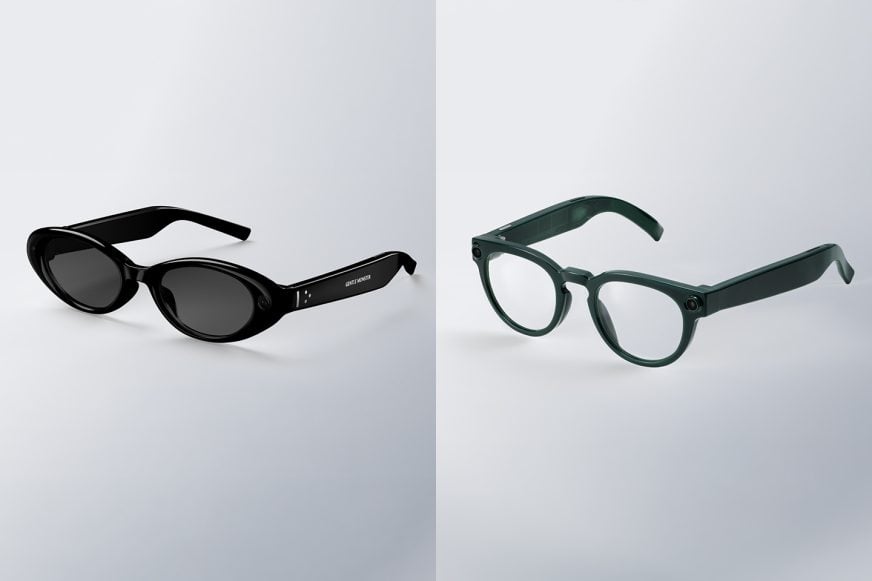
It’s a big year for smart glasses, and Samsung has been very tight-lipped about its plans. Other than a partnership with Google that announced “intelligent eyewear” created with Gentle Monster and Warby Parker at Google I/O this past May, there’s been little additional info. We know that both models have built-in cameras for photos and videos and speakers for music, calls, and audio notifications, which sounds exactly like Meta’s AI glasses. But how much will they cost and what kind of privacy policies will be in place? We have no clue. The latter is especially important considering how Meta keeps making it feel gross to wear any of its smart glasses.

Samsung Galaxy Ring
© PAU BARRENA/AFP via Getty Images

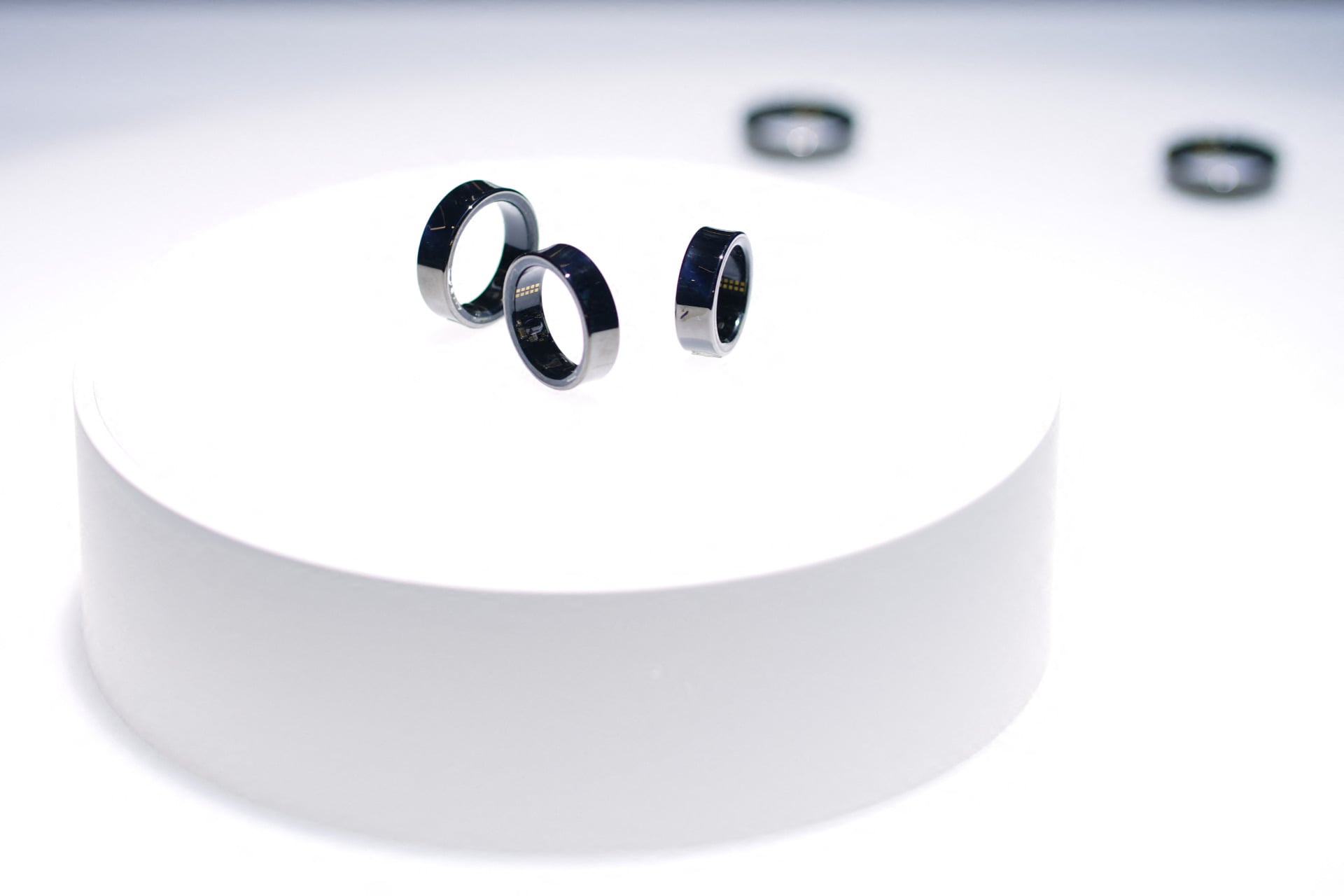
Then, there’s the smart ring. Might we get a tease for a Galaxy Ring 2? It’s been two years since the Galaxy Ring came out. Oura now has a slimmer and longer-lasting Oura Ring 5 and Vital Signals’ Signal Ring could be a game-changer, replacing traditional blood pressure cuffs. What’s next for Samsung’s smart ring?

Best Smart Speakers for 2026: Music to Our Ears


smart speakers on green grass with dry grass in background

The grass isn’t always greener on the other side.

John Carlsen/CNET

The smart speakers above are our current favorites, but you still have other options if you’re looking for something specific in audio performance. Options that didn’t make this list include:

Apple HomePod: I really like the HomePod’s sound, which is possibly the best in the business, but it’s simply too expensive for the average budget at over $250 to $300 — which is why Apple released a mini version. The smaller HomePod doesn’t have quite the same incredible sound, but it’s a whole lot more affordable, which is why it ended up on the list.

Echo Dot 4: I really like this Echo Dot and use it in my house, but it’s starting to become an older model and I’m not sure how much longer Amazon is going to sell it since there are new models like the Echo Dot Max.

Echo Show 11: This smart display offers surprisingly good sound with its updated design, but it’s more focused on the 11-inch screen, which is why it ended up on my picks for best smart displays instead.

Sonos Era 100: The Sonor Era 100 has incredible sound for its $199 price, but if you really want an elite model, why not go all the way and get the better Sonos Era 300? I chose the highest-end Sonos option for this list if your budget isn’t a problem, but the 100 is still an option for those who like Sonos features but want a lower cost.

Bose SoundLink Home: Bose’s home speaker sounds great but the “Home” moniker is a bit misleading. This is a portable Bluetooth speaker that doesn’t have any smart capabilities and can’t even link with the Bose app, so it’s a thumbs down for this list.

Wiim Pro: The Wiim Pro is an interesting smart speaker receiver if you already have speakers you like and want to give Alexa/Google/Siri capabilities, but it’s not actually a smart speaker itself, so it didn’t make this list. I’m also waiting on the Wiim Sound, which is its own standalone smart speaker and could win a spot if it tests well.

Google Nest Audio: The Google Nest Audio is Nest’s latest larger smart speaker attempt. There’s nothing wrong with it, especially with its $100 price tag, but I liked the design and sound of other larger smart speakers if you want to go big. For Nest fans, it’s still a viable option. Ultimately, I chose the smaller Nest Mini as a great desk side companion.

Denon Home 150: I chose the more versatile Sonos over the A/V-friendly Denon brand for this list. However, if your home entertainment system uses Denon products and you’re very happy with them, it’s well worth investigating this $199 smart speaker from the same maker.