I’ll admit, Tesla topping an efficiency ranking felt like a foregone conclusion until I actually saw the numbers. Turns out two Indian automakers just embarrassed both Tesla and the world’s biggest EV maker at their own game.
The first time I read the report, I couldn’t believe it, and I’ve been following the Indian automobile industry for a couple of years now.
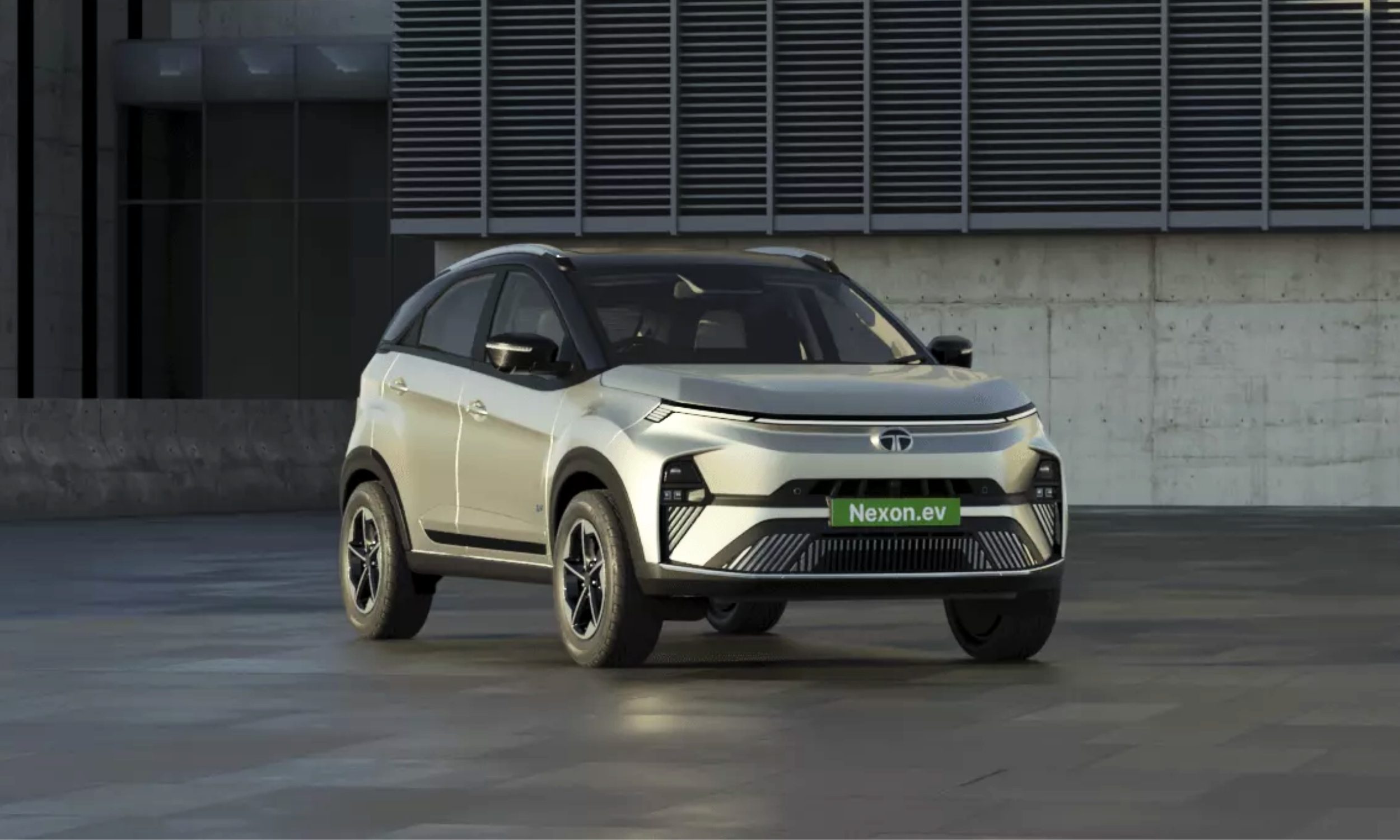
The owner of Jaguar Land Rover, Tata Motors, topped the International Council on Clean Transportation’s 2025 global ranking of the most energy-efficient battery EVs, with its fleet averaging just 106 watt-hours per kilometer (via Rest of World). To give you some context, Tata Motors has the country’s broadest EV lineup with a total of seven models.
Another leading auto manufacturer in the country, Mahindra, came in second at 113 Wh/km. Meanwhile, Tesla and BYD, the world’s largest EV makers, trailed in third and fourth place among 22 of the biggest automakers evaluated worldwide.
Industry-wide, though, progress has basically stalled. Average energy consumption barely moved year-over-year, sitting at 131 Wh/km in 2025. Only eight manufacturers actually improved their efficiency, while 12 saw declines, mostly minor.
While the efficiency figure still amazes me, the harsh reality is that EVs still make up less than 5% of new car sales in India, compared to 25% globally. And that is after the Indian government is chasing an ambitious 30% EV adoption target by 2030 to cut emissions, reduce oil imports, and boost domestic manufacturing.
India is already the world’s fourth-largest petroleum consumer, and ICCT’s India managing director, Amit Bhatt, called the country’s emission caps “progressive and ambitious,” with a tighter third phase of rules being shaped for 2027 through 2032.
Efficiency wins don’t tell the whole story, though. Tata Motors actually ranked dead last for charging speed and sixth from the bottom for driving range in this same report. This is proof that building an efficient battery and building a genuinely competitive EV are two very different engineering problems.
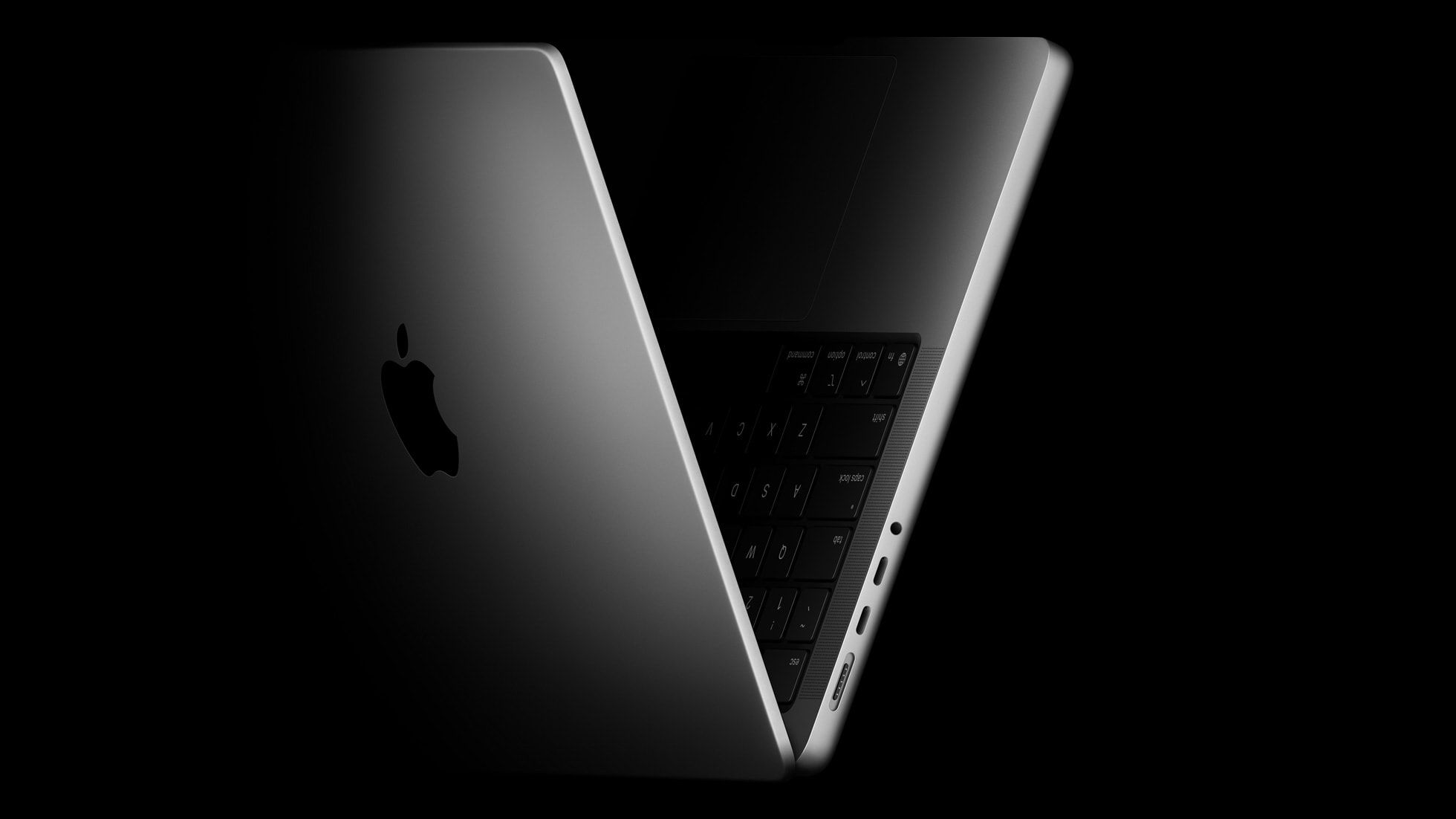
Apple’s next high-end laptop is expected to bring the most substantial external changes to the MacBook Pro line since 2021. No renders, case leaks, or dimensions have emerged, but a series of reports have established much of what is set to change.
Bloomberg‘s Mark Gurman has said there is a good chance the model represents a “true overhaul” for the laptop, thanks to the combination of an OLED display and a thinner design, and Apple is reportedly working toward the thinnest and lightest products in their categories across the tech industry. The design is also expected to extend beyond this machine, with the entry-level 14-inch MacBook Pro due in 2027 said to resemble it.
Every 14-inch and 16-inch MacBook Pro released since 2021 measures 0.61 inches (15.5mm) thick, a figure that has remained unchanged across four chip generations. The next model is expected to be noticeably thinner and lighter, though no credible figure has been reported. Replacing the mini-LED backlight with a hybrid OLED panel removes a physical layer from the lid, so the reduction may be most pronounced in the upper half of the machine.
The notch is expected to be replaced by a hole-punch camera, a change first indicated by a roadmap from research firm Omdia and subsequently corroborated by Bloomberg. The cutout is said to be pill-shaped to accommodate an interactive Dynamic Island.
The notch has been the most distinctive feature of the MacBook Pro’s display since 2021, and removing it would leave the menu bar as a continuous strip interrupted by a small island rather than divided in two. Apple appears to be preparing for the change in software, since the “Search or Ask” interface built into Spotlight in macOS 27 adopts a dark, pill-shaped design suited to a cutout of that shape.
The bezels surrounding the display may also shrink. Omdia claims Samsung Display will supply 14.3-inch and 16.3-inch panels, fractionally larger than the 14.2-inch and 16.2-inch displays currently in use, which within a largely unchanged chassis would result in narrower borders.
Apple is also said to be fitting a reinforced hinge so that the display does not wobble when tapped. Whether the lid will also tilt further back than the current model, which stops relatively early for structural reasons, is yet to be seen.
Several elements are expected to carry over. Bloomberg reported in February that the machine would look a lot like the current MacBook Pro, specifying that the keyboard and trackpad would be retained and that the device would remain a conventional clamshell in 14-inch and 16-inch sizes, rather than a detachable or convertible design. HDMI, MagSafe, and the SD card slot were reinstated in the 2021 redesign after an unpopular absence, and no report has suggested they will be removed again.
One of the Russian government’s most elite hacking groups has adopted an attack, known as Clickfix, to compromise devices belonging to sensitive organizations in Ukraine, the latter country’s CERT center is warning.
Clickfix has emerged as an effective attack technique that attackers, primarily financially motivated criminals, began using in the last year or so. Websites under the control of the attackers display a CAPTCHA that requires the visitor to copy a jumble of text and paste it into the terminal. The text contains scripts that, once entered, perform malicious actions, typically by installing malware or exfiltrating sensitive data. Ukraine’s CERT said Wednesday that Sandworm, an advanced hacking unit inside the GRU, Russia’s military intelligence arm, is now using the technique.
“GhettoVibe,” “ScoutCurl,” and many more
The Clickfix attacks began in the spring and have continued through the summer. The campaign has resulted in the network compromise of at least one organization when a connected device was found to be infected by FreakyPoll, the name of one of Sandworm’s custom malware packages. Ukrainian authorities discovered 10 compromised websites that displayed a PowerShell command as part of a fake CAPTCHA that said it had to be passed to ensure a real human was behind the visiting device’s keyboard.
Once the user entered the script, it could install malicious Visual Basic scripts and other malicious wares that went on to install a variety of Sandworm malware. Typically, the first malware to run was a reconnaissance program that gathered information from the infected device. Machines deemed important would then receive follow-on malware that backdoored the system.
“The command, as an example, could be intended to load and save a VBS file in the Startup directory,” a translated version of Tuesday’s advisory stated. “One of the variants of such a program was called GHETTOVIBE. At the next stage, in order to determine the importance of the cyberattack object, the SCOUTCURL software tool can be loaded onto the attacked computer, which is a PowerShell script that performs basic reconnaissance by collecting and exfiltrating information about the computer: basic characteristics, programs, files, Internet browser data, etc.”
There’s been a change to NASA’s launch of six satellites for solar storms research. Space.com reports that those satellites “were originally slated to lift off on a United Launch Alliance Vulcan Centaur rocket but have now been assigned a SpaceX Falcon Heavy, according to a NASA mission update.”
[NASA’s Sun Radio Interferometer Space Experiment mision — or SunRISE] will fly to space as part of a rideshare mission sponsored by the U.S. Space Force’s Space Systems Command. Though it’s not stated specifically in the NASA release, that may be a hint as to why the mission’s rocket was changed. On its most recent launch [U.S. Space Force mission USSF-87], Vulcan experienced an anomaly in one of its solid rocket boosters — the second such incident to occur during the rocket’s four launches to date. Vulcan succeeded in delivering the USSF-87 payload to its designated orbit on that launch, but the recurrence of the booster issue during ascent prompted the Space Force to pause national security launches on Vulcan until it could be addressed. Which mission SunRISE will be manifested on has not yet been released, but Space Force’s Space Systems Command [SSC] has already shifted other launches between Vulcan and SpaceX’s Falcon 9…
Falcon Heavy is SpaceX’s heavy-lift launch vehicle… that consists of three modified Falcon 9 first stages, and has launched 12 times since it debuted in 2018. Four of those have delivered national security payloads to orbit, with the most recent of those, USSF-52, launching in December 2023. Falcon Heavy’s most recent flight overall occurred this past April, when it sent the Viasat-3 F3 telecom satellite to orbit. Falcon Heavy’s next mission will lift off with NASA’s Nancy Roman Space Telescope, currently set for no earlier than Aug. 30. SunRISE is scheduled to launch later this year…
Sientists will use data collected by the satellites “to improve prediction models for impending space weather, which in turn could lead to mitigation plans to better thwart the effects of such solar events on orbital infrastructure.”
Thanks to long-time Slashdot reader schwit1 for sharing the article.
Samsung has pulled back the curtain on its new foldable phones, and there’s plenty to be excited about. The new Z Flip 8, Fold 8, and Fold 8 Ultra bring powerful silicon, slick software, and a few new camera tricks.
One of my favorite upgrades is the fact that all three devices are equipped with silicon-carbon batteries. This is the first time that Samsung is using this tech in its phones, coming a while after most rivals adopted it. While I’m happy to see silicon-carbon batteries in these new devices, I’m more excited about what this means for the Galaxy S27 series.
What do you want to see most from the Galaxy S27 phones?
63 votes
How is Samsung using silicon-carbon batteries?
Hadlee Simons / Android Authority
Silicon-carbon batteries offer higher energy density than conventional batteries. That means increased battery capacity without a physically bigger battery, or a physically smaller battery while maintaining the same capacity. Samsung seems to be taking both approaches on its new devices.
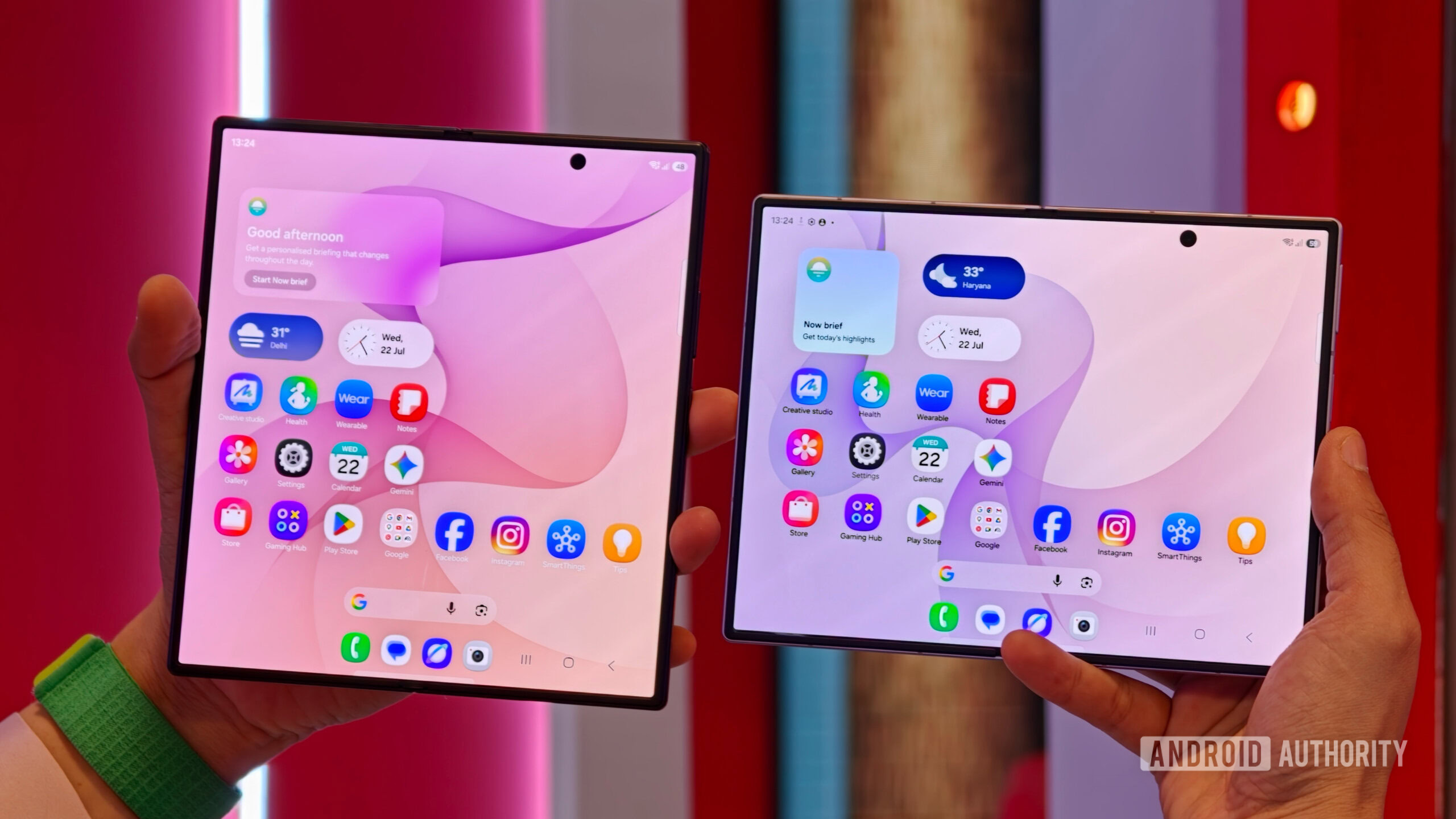
The Galaxy Z Fold 8 Ultra has a 5,000mAh battery in what is fundamentally the same chassis as the 4,400mAh Galaxy Z Fold 7. Meanwhile, the Galaxy Z Fold 8 features a short, wide form factor and an extremely thin design. Even so, it still ships with a respectable 4,800mAh battery. Finally, the Galaxy Z Flip 8 has the same 4,300mAh battery capacity as its predecessor, but in a thinner design.
The Galaxy foldables are the first Samsung phones to use silicon-carbon batteries, and this bodes well for the Galaxy S27 range.
Samsung hasn’t confirmed whether it’ll bring silicon-carbon batteries to the Galaxy S27 series. Nevertheless, it seems like a foregone conclusion that — unless we have another Galaxy Note 7 saga — the company’s next-generation flagships will have this new battery tech.
One downside to silicon-carbon tech is that it’s more prone to expansion than conventional batteries. Manufacturers address this issue by using only a small amount of silicon content, along with reinforced structures and other technologies. Needless to say, this is a complex endeavor. So if Samsung can safely integrate this new battery tech into its technologically advanced, ultra-thin foldables, then it shouldn’t be a problem for the Galaxy S27 series.
What does this mean for Galaxy S27 phones?
Joe Maring / Android Authority
I’m very intrigued to see which route Samsung takes with the Galaxy S27 range, especially with the base model. The vanilla Galaxy S26 brought a 4,300mAh battery, but this slightly larger capacity was accompanied by a small jump from a 6.1-inch display to a 6.3-inch panel. So it stands to reason that the base S27 could maintain this capacity while switching to a smaller screen and/or thinner design. Alternatively, the company could maintain the Galaxy S26’s design while increasing the battery size.
Silicon-carbon battery technology also bodes well for the rumored Galaxy S27 Pro. This phone is tipped to arrive with a 6.47-inch display, likely putting it between the S26 and S26 Plus. One questionable leak points to a 5,000mAh battery, matching the S26 Ultra. The claim doesn’t sound so unlikely now that Samsung has embraced this new tech.
Silicon-carbon batteries could theoretically enable a Galaxy S27 or S27 Edge without major endurance compromises.
As for the Galaxy S27 Ultra? I’m not expecting a 6,000mAh or 7,000mAh battery on par with rival brands, but a ~5,300mAh to ~5,500mAh cell doesn’t seem so far-fetched after the Z Fold 8 Ultra’s arrival. This would mark the first battery capacity upgrade for the Ultra series since 2021’s Galaxy S21 Ultra. Samsung could even offer a more modest upgrade to reduce the phone’s weight, thickness, or overall size. A ~5,400mAh battery would also be reaching the limit for single-cell batteries in markets like the EU, which enforce strict regulations on larger batteries. Any bigger, and Samsung would have to splash out on a dual-cell battery design in the unlikely event that it wants to compete with the likes of OnePlus, Xiaomi, and HONOR.
Silicon-carbon batteries would also be essential if Samsung decides to launch a Galaxy S27 Edge. Last year’s Galaxy S25 Edge brought an impressively thin and light design, but it was largely undone by the 3,900mAh battery. It’s no wonder that colleague Ryan Haines reported that the phone’s battery life “dropped like a stone.”
Even if the Galaxy S27 series only brings modest capacity upgrades, we could still see fantastic battery life thanks to Samsung’s battery optimization smarts. The company has long had a reputation in the Android space for wringing every drop of juice out of its phones. Colleague Zac Kew-Denniss also praised the S26 Ultra’s endurance despite the 5,000mAh battery. So imagine what the company could do with even larger batteries.
The hard part might be done for Samsung
Paul Jones / Android Authority
I’ve waited almost two years for Samsung to adopt silicon-carbon batteries. Instead, the company was content to stick with the same capacity, or offer a tiny increase at best. I’m sure that safety and reliability (and presumably costs) were at the heart of Samsung’s decision to wait, but now that the first Galaxy phones have this tech, the floodgates are open.
It seems like a no-brainer that the Galaxy S27 phones will adopt this new battery solution, given the complexities of integrating silicon-carbon batteries into foldables in the first place. But even if the S27 series doesn’t see much larger batteries, this paves the way for design improvements and smaller devices while freeing up space for other features.
Either way, Samsung now has the tools to fit bigger batteries into its phones. Now, we just need to see more of it.
Thank you for being part of our community. Read our Comment Policy before posting.
How to choose a red light face mask: Look at wavelength first
There are some ways to tell that a red light face mask won’t be effective before you buy it and use it for a few months.
Wavelength is the first factor anyone will tell you to consider. You want to find products that emit light within the therapeutic window, or the range of wavelengths that can be effective when treating common skin conditions. There is now an abundance of evidence that specific wavelengths of red light can be effective for:
Reduction of fine lines, dark circles, and crow’s feet
Improving skin texture
Fighting wrinkles
Boosting collagen production
Reducing inflammation and redness
To be effective, the light coming from the mask must penetrate different layers of your skin. There are optimal wavelengths for each type of light a face mask emits, and any reputable brand will put their mask’s wavelengths front and center in the listing. These carefully chosen ranges are strong enough to penetrate your skin, but gentle enough to avoid over-activating delicate face skin.
Red light does its work in the middle layer (dermis) of your skin, requiring wavelengths between 630 and 633 nm to reach past the top layer. There, red light stimulates cells to produce rejuvenating proteins like collagen and elastin, evening out surface redness, and preventing scarring or post-pimple red spots.
The Shark CryoGlow’s Better Aging routine combines red and near-infrared light. Credit: Leah Stodart / Mashable
The Shark CryoGlow’s Skin Clearing routine uses a special sequence of red, near-infrared, and blue light. Credit: Leah Stodart / Mashable
Most red light masks also use near-infrared red light therapy, which requires longer wavelengths to travel further than regular red light. Near-infrared light between 830 and 850 nm reaches into tissue under the dermis to further stimulate cell turnover, firm skin, and heal deep-seated spots or stubborn dark circles.
What about blue light therapy?
Blue light is often used to target acne, and some of the best red light masks use a combination of blue and red light therapy.
Blue light operates on the top layer (epidermis) of your skin, so its ideal wavelength is shorter than either red light standard. Blue light at 415nm has an antimicrobial effect, ideally killing the bacteria that cause acne before a breakout starts. If hellbent bacterial acne makes it past the blue light phase — or if you’re also dealing with hormonal or cystic acne not caused by bacteria — red light swoops in to neutralize inflammation and speed up the healing process.
The thing is, most mainstream LED face masks hit those wavelength marks. So, how do you choose between masks if their wavelength numbers are all the same?
The importance of irradiance
Irradiance is another major element that determines whether or not a red light mask actually works. While wavelength refers to the length the light can travel, irradiance refers to the amount of light energy that’s actually reaching your skin per session (not just the intensity of light being generated at the bulb). If wavelength numbers are correct but irradiance is low, the mask will still be kind of a dud.
Bulb placement is one of the key factors we considered in our test. Credit: Leah Stodart / Mashable
Comfort is another key factor, as consistent use is key to results. Credit: Miller Kern / Mashable
Irradiance is officially expressed as milliwatts per square centimeter. The optimal irradiance range for a red light face mask is pretty wide (anywhere between 30 and 100 mW/cm²), though many brands don’t directly provide that number.
Most brands do note the length of each session, which is one way to quickly gauge irradiance without getting into calculations. Dr. Mamina Turegano sums it up best on her YouTube account: “Higher irradiance means more effective energy delivery per minute of use.” Longer sessions don’t automatically mean that results will be more powerful — a mask with sessions that last for less than 10 minutes has higher irradiance than a mask with sessions that last for 20 to 30 minutes. Since a mask with lower irradiance needs to sit on your face for longer, you might be less likely to keep up with wearing it.
Are bulb count and bulb placement a big deal?
The number of bulbs and the placement of bulbs inside the mask can also impact efficacy, especially if you’re expecting results on a specific area of your face. Masks with more bulbs packed evenly across the face will provide more even coverage across every inch of your face than masks with more sporadically-placed bulbs.
Some masks also provide more light sources overall by emitting both red and blue light simultaneously from every single bulb, like the Shark CryoGlow. This would be a better option for full-face acne prevention than masks with blue and red LEDs only concentrated in certain spots, like the Dr. Dennis Gross DRx SpectraLite.
What red light masks worked for us?
Of course, you probably didn’t come here for a science lesson. You want to find the best red light masks Mashable’s testers used and loved.
After trying out 11 different products, we ultimately found six that we can recommend. These masks delivered visible results for our product testers.
Remember: Consistency is essential for the best results (or any results)with LED face masks. You’ll need to wear your mask consistently for at least 1-2 months.
Electrolyte powders, dissolvable tablets, and trendy ready-to-drink waters have graduated from the pockets of athletes to one of wellness’s buzziest categories.
And it’s a crowded market, worth an estimated $39 billion globally in 2025 and forecast to double within the next decade. Much of the growth has been fueled by wellness trends and influencer-fronted hype cycles, like Prime Hydration, created by YouTubers Logan Paul and KSI, which the company claimed pushed past $1 billion in sales in a single year. In other internet corners, dozens of celebrity and podcaster-adjacent brands are all promising a means of optimizing your way to hydration.
These products are marketed as daily essentials for everyone—from office workers to gym regulars—promising to combat brain fog, improve skin, banish fatigue, and aid recovery. Here’s everything you need to know about the electrolyte obsession, and when these products are actually worth buying.
What Are Electrolytes?
Electrolytes are essential minerals, among them sodium, potassium, calcium, magnesium, and chloride, that carry an electrical charge once dissolved in fluid. That charge is what lets the body do much of its basic work, such as helping muscles and nerves work correctly. They work to ensure fluid stays balanced inside and outside every cell, as a serious imbalance can cause headaches, muscle cramps, dizziness, fatigue, and weakness. In more serious cases, severe electrolyte imbalances can interfere with heart function and require medical treatment.
Who Needs Electrolytes?
For most healthy adults, the body has been regulating electrolyte levels perfectly well long before trendy, flavored hydration sticks landed on supermarket shelves. In fact, if you eat a reasonably balanced diet and drink water when you’re thirsty, there’s a good chance you’re already getting everything you need.
The sachet earns its place in roughly three situations. Studies from the American College of Sports Medicine suggest that water alone is sufficient for exercise lasting less than an hour, but electrolytes become increasingly useful during longer sessions of prolonged, sweat-heavy exercise, particularly in high temperatures or humidity. They’re also useful for illness involving heavy fluid loss, which is why oral rehydration salts are a recognized medical treatment rather than a wellness trend. And you should also consider them during long stretches of fasting, when the food that usually supplies these minerals is absent.
Are There Natural Electrolytes?
There are many sources of electrolytes in everyday foods. If you’re eating a reasonably varied diet (fruits, vegetables, lean protein, whole grains, nuts, seeds), your electrolyte stores are continually being topped up without the need for specialist drinks or powders.
Research by the Beverage Hydration Index shows that milk-based drinks can maintain hydration for longer than plain water. The combination of protein, natural electrolytes and small amounts of fat slows the rate at which fluid leaves the stomach, helping the body retain hydration for longer. Coconut water too can replenish potassium.
The Nutrition Source from Harvard’s School of Public Health notes that, essentially, “any beverage containing electrolyte minerals may be labeled an electrolyte drink. Some are very costly yet only contain a small amount of these nutrients, while others may contain a high amount of only one nutrient such as potassium or sodium.”
Can You Have Too Many Electrolytes?
For healthy adults, an occasional electrolyte drink is unlikely to cause harm. Daily consumption, however, can sometimes be counterproductive.
Many electrolyte products contain significant amounts of sodium, despite the fact that most populations already consume considerably more salt than recommended. The World Health Organization estimates the global average of sodium intake a day is more than double its recommended limit and roughly 1.89 million deaths a year can be linked to excess intake. Regularly adding extra sodium may not be ideal for anyone managing high blood pressure or cardiovascular risk. Some formulations also contain substantial amounts of added sugar, making them nutritionally closer to soft drinks than health products.
Anyone recovering from illness or sweating through an August shift outdoors has a fair case for supplementing. For everyone else, the best approach to hydration remains an unremarkable one. Electrolytes themselves are nonnegotiable. Electrolyte products are mostly just a lifestyle purchase.
Goodbye, The Vampire Lestat. Hello, Queen of the Damned. Interview With the Vampire has been renewed for a fourth season, based on the third book in Anne Rice‘s Vampire Chronicles series. Queen of the Damned revolves around Akasha (Sheila Atim), the mother of all vampires, and follows her from her time as a pre-Egyptian queen through to the modern day. No spoilers, but she’s less than pleased with pretty much everything, and she’s wildly powerful to boot. Check out a teaser trailer below.
AMC announced the news during its San Diego Comic-Con 2026 panel for The Vampire Lestat. In a press release, Chief Content Officer of AMC Global Media and President of AMC Studios Dan McDermott said, “In The Vampire Lestat, Mark [Johnson, executive producer], Rolin [Jones, executive producer], Hannah [Moscovitch, executive producer] and this extraordinary cast delivered an unforgettable season filled with propulsive storytelling that captivated the passionate and engaged fans of this franchise. We can’t wait to continue the journey with Queen of the Damned, one of the most iconic stories in Anne Rice’s mythology, and watch our established and beloved characters confront Akasha with their world, and ours, very much hanging in the balance.”
Moscovitch will serve as showrunner on Queen of the Damned, taking over from Jones, who created the series and was showrunner for the first three seasons. The Vampire Lestat just wrapped up its run last week, ending on a major cliffhanger that will lead right into Queen of the Damned. The Vampire Lestat stars Sam Reid, Jacob Anderson, Assad Zaman, Eric Bogosian, Atim, Delainey Hayles and Jennifer Ehle.
There is currently no release date for Queen of the Damned.
A new memory cartoon is waiting for me. When I open the app, I see a multipanel strip called Big Little Moments. It appears as soon as I plug the Looki AI device back in to recharge, after almost a month not wearing it. It shows moments of me at a bar with my friend in LA, watching a stage presentation, eating a meal, seeing a demo, two women sitting across from me and then just me, walking with a phone in my hand.
These moments are from two days in June, when I wore the Looki to the Augmented World Expo in Long Beach, California. I’d been wearing it almost nonstop since April. I wore it to Apple’s WWDC, to Google I/O. I wore it to my Princeton college reunion. I wore it at home and commuting. And then I stopped.
The Looki L1 is a little black pendant, sort of watch-sized, with a camera on the front and microphones hidden somewhere. It has a clip and a lanyard. It can be worn around the neck or left propped on a desk. It’s an AI wearable but, unlike smart glasses, it has a battery that can run a whole day while intermittently recording audio and video clips. My colleague Katie Collins tried it last year, but I never got to test one out until this spring and summer.
The Looki is a round-with-spiky-bits pendant with a magnetic back clasp. Buttons to trigger recordings are studded around the sides. There’s also a touchpad. (Scott Stein/CNET)
AI wearables of all shapes and forms are everywhere now. OpenAI may be next to offer one. Some of these devices come in glasses form. Some are pendants. Some are pins. Some are earbuds. As AI keeps spreading everywhere and trying to absorb more of our personal information that it can craft into patterns and narratives, wearables are the physical form of trying to give AI eyes, ears and, increasingly, memories of your own life.
The Looki device follows in a long line of lifelogging wearables that go back over a decade. In 2014, I reviewed an occasionally recording lifelogging camera called the Narrative Clip, which promised to capture our memories. I found its memory, in practice, to be full of holes. In 2026, that’s pretty much still the case.
The Looki L1 promises a fun way to remember and record life’s moments, to have a companion to travel with you and save moments without having to record them. To be an all-day wearable camera.
But when I wore one, it made me feel awkward, like I was being a jerk or a spy. At best, it’s odd; at worst, it feels like I’m a guy with, well, an always-on camera. Which, in 2026, isn’t nearly as “fun” as it was in 2014, it turns out. I tested the Looki because I was curious, and because I’m legitimately interested in the future of assisted memory tech.
What the Looki L1 is, and isn’t
Looki L1 is an odd duck product, as many AI wearables are. The $250 lifelogging camera has no subscription, although the product team I chatted with suggested that some services could be subscription-based down the road. It uses its own proprietary AI service, and can’t hook into any other platforms such as Google Gemini, ChatGPT or Anthropic’s Claude, although it borrows models from several sources.
I do like the snap-on magnetic pendant strap that doubles as a charging dongle and can serve as a desktop stand if you want to perch it somewhere to take photos or video. The magnetic clasp works through clothing, too, so the pendant could look like a clip-on pin. But I don’t like that the Looki’s active recording LEDs are small. They’re less noticeable than those on Meta’s glasses by far.
There’s a phone app that the Looki pairs with, just as a smartwatch or pair of smart glasses would. That’s how the pendant gets its firmware updates and uploads its recorded clips to your phone and the cloud.
Looki’s highlight video compilations feel pretty random at the events I wore them at, and of course, no one really knew I was recording. (Scott Stein/CNET)
Looki has an “AI Mode” that stays on and intermittently records short video clips (no more than about 5 seconds each), apparently picking moments of interest. In my three months of use, it didn’t seem to have any pattern. There are dedicated buttons to trigger manual audio recordings, still photos or video recordings. There’s also a front touchpad, which I could hold down to summon a voice AI to chat with for feedback on what I’d recorded, or anything else. I rarely used it.
The Qualcomm chip on the Looki is an older watch-oriented model, but it still lasts a day on a charge. The future for pendants like these is likely even longer battery life, based on the specs of Qualcomm’s newest AI-optimized chips, released this year. These types of pendants are probably going to do even more on-device without relying on the cloud at all.
But, for the most part, the Looki is a repository. It sucks up images and videos, and then syncs them over to its companion phone app (which takes several minutes) and cloud-analyzes them later (which can take up to several hours). It’s like burying a time capsule and then digging it up later that day to see what you’ve got.
And what did I get? Mostly a hot, sometimes fascinating, often awkward mess.
As a memory maker, full of holes
The best thing the Looki does is generate comic book-like generative AI images based on things it automatically captures. The results vary in style and structure, with absolutely no discrete controls to make anything turn into a comic if you’d like it to. You just have to get lucky, I guess.
A few images of people I met, comic-transformed, are fun. A few story panel-type comics tried to distill a day, or several days, into a narrative. Sometimes they were clever (one, a map of New York and New Jersey showing me commuting, seeing tech demos and going to a Princeton reunion) felt sharable. One, of my trip to WWDC, was weirdly focused on my pre-event breakfast with my colleague Bridget Carey rather than all the hours I wore it during Apple’s keynote, which was the whole point of the day.
Sometimes the Looki auto-inserted me into images, inventing a narrative. (Since I’m wearing the pendant, I was clearly not in the picture.) My comic portrait ranged from oddly accurate to something more like Marc Maron. One comic picture of me buying a coffee at a Hyatt was inexplicably done in Minecraft-style blocks.
As for the rest of the recorded memories? There are AI-made supercuts of videos, set to odd preselected music. The tone often felt generic, and the captured videos are frequently at bad angles. When I had coffee with friends, several of the clips were accidental crotch shots. Other times, faces were cut out of the picture. (Did I need to wear the pendant higher up?)
The Looki seems to take video clips but not photos automatically, which were harder to download and share with friends. Also, a lot of the captured clips were either too brief or the people in them were discussing things that nobody approved sharing in the first place. If you’re wearing a Looki, prepare to do a lot of warning, explaining and apologizing.
Do I like having them to look over? Sort of, but so few are actually good. You can just take photos and videos when you want, rather than having the intermittently recording AI mode on. But then, if you do that, the device doesn’t feel like a true lifelog.
Sadly, a lot of the captured supercuts just showed me on my phone. Which, of course, just illustrated a sad state of my own life. I am on my phone a hell of a lot. Too much. And the comics, the autocaptures, they all tended to have at least one shot capturing me looking at my phone, since the pendant was around my neck, over and over and over.
Besides keeping these lifelog videos and autocaptures and creating comic strips, it weirdly tries to analyze meals I’ve eaten (not to any true success), and also pops occasional random notifications based on location, I think, and what the camera sees. These notifications are meant to be smart and context-aware. Sometimes they’re oddly on point (telling me I’m at AWE and reminding me of the start of the opening keynote, even though I never told it I was at AWE). Other times it just noted a store or maybe someone standing nearby. Again, like everything else the Looki does, these notifications can’t be customized at all.
As a public device, it’s embarrassing
My son has told me to take off the Looki pendant more times than I can count. My wife shamed me about my decision to wear it in a Japanese supermarket (I didn’t). People who saw it at public events, like WWDC or Google I/O, were either mildly curious or mildly offput. I awkwardly took it off a lot and stuck it in my pocket on trains, in bathrooms and, increasingly, many other places.
At a Whole Foods, someone next to me noticed it as I was shopping for chocolate bars and asked if it was recording. I explained it might be and that I test tech products for my job. They said they weren’t that upset, they knew that people are wearing cameras more and more. I didn’t believe they weren’t upset. And that reaction, too, has stuck with me. I wear smart glasses at least half the time now. Where does that put me on the socially acceptable spectrum? Don’t tell me.
I still find smart glasses less personally embarrassing, because they look and function like actual glasses. And, in reality, Meta’s glasses very infrequently record anything. While Meta has an autocapture mode for the glasses now, running it would wear out the battery fast.
The Looki, meanwhile, does nothing at all except be a AI-enabled camera pendant on your neck. To remember to charge that up and wear it, like an odd necklace that nobody asked for… I just can’t justify it. I made myself wear it for more weeks than I thought I would. Now, it’s out of batteries and sitting in a bag somewhere. I gave up.
The Looki was really just my Memory Cartoon Generator, for the most part, as you can see from all the images I shared. They’re interesting, but I can’t choose when they happen, or how they happen. And they’re not enough to keep me wearing the Looki. As you can see above, sometimes it even captured when I went to my home bathroom. (I never kept it on in an actual public bathroom, but this is exactly the nightmare stuff that the Looki embodies.)
If devices like the Looki could be actual memory assistants, deeply aware and able to help see and guide you — Or, if they were better cameras, taking photos I’d actually use — Or, if it could hook into AI services I actually semi-trusted and recognized — well, maybe. Right now, the Looki is more like a harbinger. Of glasses that really and truly will have longer battery life, someday soon, and be able to record all day long, if intermittently. And more AI pendants.
When that day happens, then yes, maybe my glasses will truly be recording all the time. And yes, that’s concerning. But even more concerning is the lack of any tech company efforts to manage privacy and deeper control over these random AI wearables. Or to elevate them beyond just gimmicks.
What I learned is I hit my limit. The Looki is not on me anymore. But the spirit of the Looki is everywhere else, coming fast.
Scott Stein
Editor at Large
I started with CNET reviewing laptops in 2009. Now I explore wearable tech, VR/AR, tablets, gaming and future/emerging trends in our changing world. Other obsessions include magic, immersive theater, puzzles, board games, cooking, improv and the New York Jets. My background includes an MFA in theater which I apply to thinking about immersive experiences of the future.
See full bio
The breathalyzer identifies the amount of acetone in your breath to determine if your body is in ketosis.
Alivion
Smart scales and smartwatches often rely on bioelectrical impedance to calculate body fat percentage, a quick, though not necessarily accurate, way to get a sense of the amount of lean mass in your body without having to take multiple measurements. Accurately measuring when your body is burning fat is a whole other ball game, though, which makes new research into a handheld fat burning measurement device all the more intriguing.
In a study for the scientific journal Device spotted by New Scientist, researchers supervised by Andreas Güntner created a handheld breathalyzer that can detect when your body is burning fat by measuring the amount of acetone in your breath. The study measured when the bodies of 12 participants burned fat across a variety of diet and exercise scenarios, and found the breathalyzer closely matched traditional lab results.
Scientists identify ketosis, the term for when your body is burning fat for energy, by either measuring ketones in your blood or acetone in your breath — both are byproducts of fat being turned into fuel. As New Scientist notes, acetone tests are usually most accurate in a laboratory setting where things like humidity and breathing patterns can be controlled. The researchers in this study got around those limitations by creating a breathalyzer that can filter out excess moisture and contaminants, and using a companion app that can guide the user through the breathing process. The app was not only able to identify when users were applying too much or too little pressure, but also help adjust when the breathalyzer collected its sample to make sure the measurement was as close as possible to what would be observed with a blood-based test.
Nutrion, now the commercial name of the device the researchers used, is similar in concept to an older device called Lumen that aimed to spot fat burning using carbon dioxide rather than acetone. In either case, frequent metabolic measurements could be useful in a variety of health settings, from determining whether GLP-1 therapies are effective, to enabling athletes to fine-tune their metabolism.