
Sanuj Bhatia / Android Authority
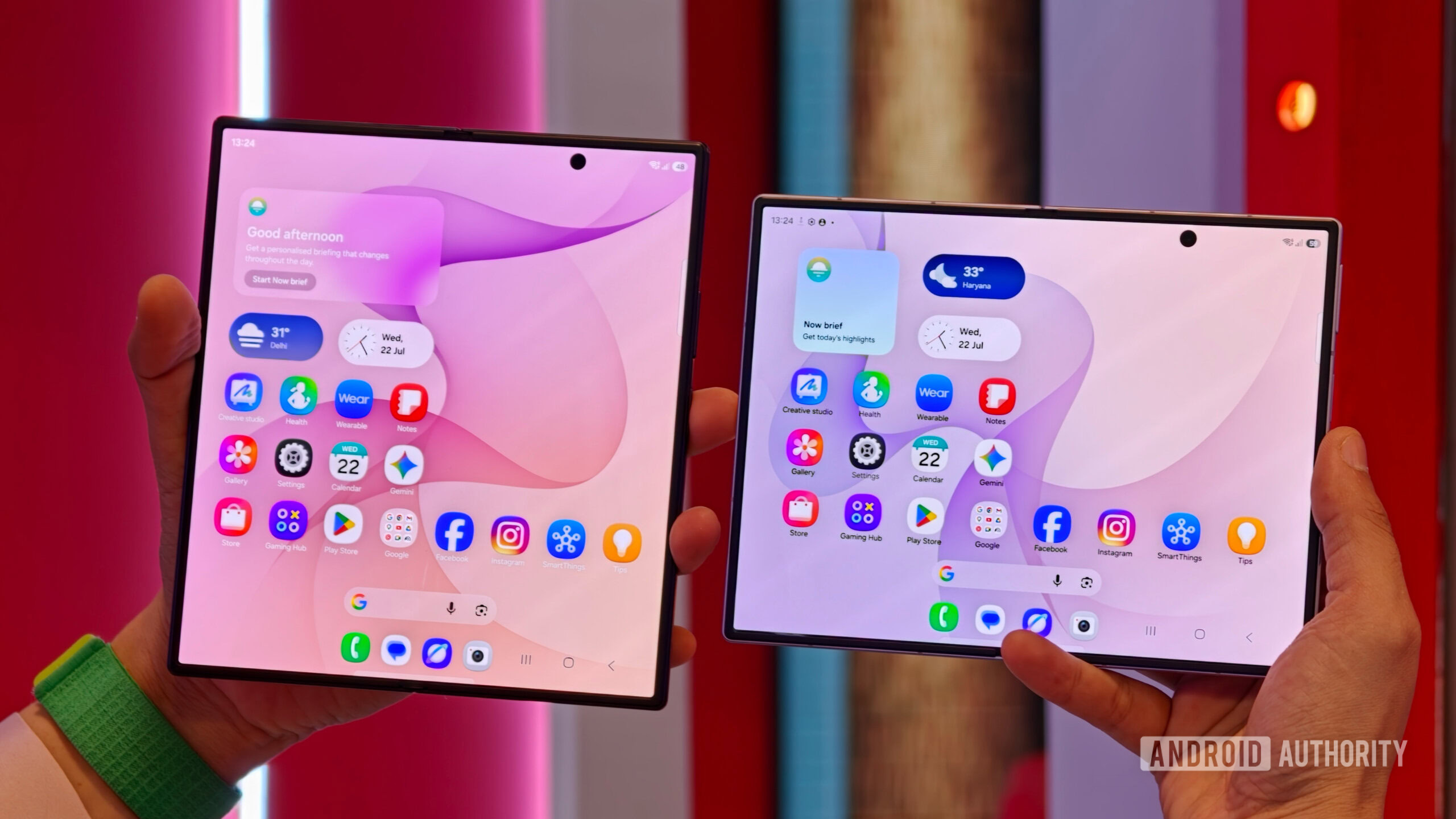
Samsung has pulled back the curtain on its new foldable phones, and there’s plenty to be excited about. The new Z Flip 8, Fold 8, and Fold 8 Ultra bring powerful silicon, slick software, and a few new camera tricks.
One of my favorite upgrades is the fact that all three devices are equipped with silicon-carbon batteries. This is the first time that Samsung is using this tech in its phones, coming a while after most rivals adopted it. While I’m happy to see silicon-carbon batteries in these new devices, I’m more excited about what this means for the Galaxy S27 series.
What do you want to see most from the Galaxy S27 phones?
63 votes
How is Samsung using silicon-carbon batteries?

Hadlee Simons / Android Authority
Silicon-carbon batteries offer higher energy density than conventional batteries. That means increased battery capacity without a physically bigger battery, or a physically smaller battery while maintaining the same capacity. Samsung seems to be taking both approaches on its new devices.
The Galaxy Z Fold 8 Ultra has a 5,000mAh battery in what is fundamentally the same chassis as the 4,400mAh Galaxy Z Fold 7. Meanwhile, the Galaxy Z Fold 8 features a short, wide form factor and an extremely thin design. Even so, it still ships with a respectable 4,800mAh battery. Finally, the Galaxy Z Flip 8 has the same 4,300mAh battery capacity as its predecessor, but in a thinner design.
The Galaxy foldables are the first Samsung phones to use silicon-carbon batteries, and this bodes well for the Galaxy S27 range.
Samsung hasn’t confirmed whether it’ll bring silicon-carbon batteries to the Galaxy S27 series. Nevertheless, it seems like a foregone conclusion that — unless we have another Galaxy Note 7 saga — the company’s next-generation flagships will have this new battery tech.
One downside to silicon-carbon tech is that it’s more prone to expansion than conventional batteries. Manufacturers address this issue by using only a small amount of silicon content, along with reinforced structures and other technologies. Needless to say, this is a complex endeavor. So if Samsung can safely integrate this new battery tech into its technologically advanced, ultra-thin foldables, then it shouldn’t be a problem for the Galaxy S27 series.
What does this mean for Galaxy S27 phones?

Joe Maring / Android Authority
I’m very intrigued to see which route Samsung takes with the Galaxy S27 range, especially with the base model. The vanilla Galaxy S26 brought a 4,300mAh battery, but this slightly larger capacity was accompanied by a small jump from a 6.1-inch display to a 6.3-inch panel. So it stands to reason that the base S27 could maintain this capacity while switching to a smaller screen and/or thinner design. Alternatively, the company could maintain the Galaxy S26’s design while increasing the battery size.
Silicon-carbon battery technology also bodes well for the rumored Galaxy S27 Pro. This phone is tipped to arrive with a 6.47-inch display, likely putting it between the S26 and S26 Plus. One questionable leak points to a 5,000mAh battery, matching the S26 Ultra. The claim doesn’t sound so unlikely now that Samsung has embraced this new tech.
Silicon-carbon batteries could theoretically enable a Galaxy S27 or S27 Edge without major endurance compromises.
As for the Galaxy S27 Ultra? I’m not expecting a 6,000mAh or 7,000mAh battery on par with rival brands, but a ~5,300mAh to ~5,500mAh cell doesn’t seem so far-fetched after the Z Fold 8 Ultra’s arrival. This would mark the first battery capacity upgrade for the Ultra series since 2021’s Galaxy S21 Ultra. Samsung could even offer a more modest upgrade to reduce the phone’s weight, thickness, or overall size. A ~5,400mAh battery would also be reaching the limit for single-cell batteries in markets like the EU, which enforce strict regulations on larger batteries. Any bigger, and Samsung would have to splash out on a dual-cell battery design in the unlikely event that it wants to compete with the likes of OnePlus, Xiaomi, and HONOR.
Silicon-carbon batteries would also be essential if Samsung decides to launch a Galaxy S27 Edge. Last year’s Galaxy S25 Edge brought an impressively thin and light design, but it was largely undone by the 3,900mAh battery. It’s no wonder that colleague Ryan Haines reported that the phone’s battery life “dropped like a stone.”
Even if the Galaxy S27 series only brings modest capacity upgrades, we could still see fantastic battery life thanks to Samsung’s battery optimization smarts. The company has long had a reputation in the Android space for wringing every drop of juice out of its phones. Colleague Zac Kew-Denniss also praised the S26 Ultra’s endurance despite the 5,000mAh battery. So imagine what the company could do with even larger batteries.
The hard part might be done for Samsung

Paul Jones / Android Authority
I’ve waited almost two years for Samsung to adopt silicon-carbon batteries. Instead, the company was content to stick with the same capacity, or offer a tiny increase at best. I’m sure that safety and reliability (and presumably costs) were at the heart of Samsung’s decision to wait, but now that the first Galaxy phones have this tech, the floodgates are open.
It seems like a no-brainer that the Galaxy S27 phones will adopt this new battery solution, given the complexities of integrating silicon-carbon batteries into foldables in the first place. But even if the S27 series doesn’t see much larger batteries, this paves the way for design improvements and smaller devices while freeing up space for other features.
Either way, Samsung now has the tools to fit bigger batteries into its phones. Now, we just need to see more of it.
Thank you for being part of our community. Read our Comment Policy before posting.