The Z Fold 8 may have just teased a massive Galaxy S27 battery upgrade


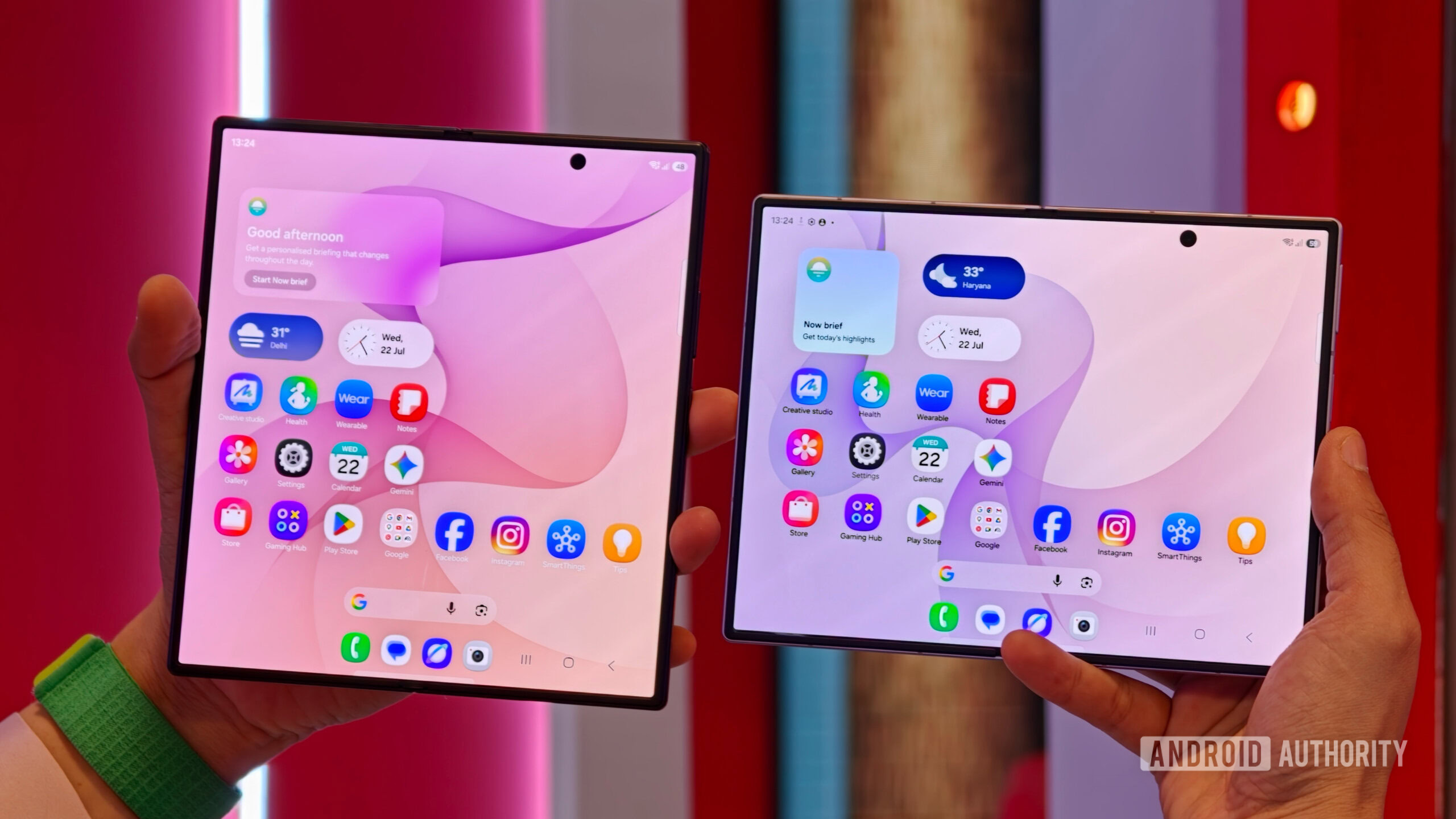
Two hands holding the Samsung Galaxy Z Fold 8 Ultra and Galaxy Z Fold 8 side-by-side to compare screen sizes and dimensions

Sanuj Bhatia / Android Authority

Samsung has pulled back the curtain on its new foldable phones, and there’s plenty to be excited about. The new Z Flip 8, Fold 8, and Fold 8 Ultra bring powerful silicon, slick software, and a few new camera tricks.

One of my favorite upgrades is the fact that all three devices are equipped with silicon-carbon batteries. This is the first time that Samsung is using this tech in its phones, coming a while after most rivals adopted it. While I’m happy to see silicon-carbon batteries in these new devices, I’m more excited about what this means for the Galaxy S27 series.

What do you want to see most from the Galaxy S27 phones?

63 votes

How is Samsung using silicon-carbon batteries?

Samsung Galaxy S26 series showing backs 1

Hadlee Simons / Android Authority

Silicon-carbon batteries offer higher energy density than conventional batteries. That means increased battery capacity without a physically bigger battery, or a physically smaller battery while maintaining the same capacity. Samsung seems to be taking both approaches on its new devices.

The Galaxy Z Fold 8 Ultra has a 5,000mAh battery in what is fundamentally the same chassis as the 4,400mAh Galaxy Z Fold 7. Meanwhile, the Galaxy Z Fold 8 features a short, wide form factor and an extremely thin design. Even so, it still ships with a respectable 4,800mAh battery. Finally, the Galaxy Z Flip 8 has the same 4,300mAh battery capacity as its predecessor, but in a thinner design.

The Galaxy foldables are the first Samsung phones to use silicon-carbon batteries, and this bodes well for the Galaxy S27 range.

Samsung hasn’t confirmed whether it’ll bring silicon-carbon batteries to the Galaxy S27 series. Nevertheless, it seems like a foregone conclusion that — unless we have another Galaxy Note 7 saga — the company’s next-generation flagships will have this new battery tech.

One downside to silicon-carbon tech is that it’s more prone to expansion than conventional batteries. Manufacturers address this issue by using only a small amount of silicon content, along with reinforced structures and other technologies. Needless to say, this is a complex endeavor. So if Samsung can safely integrate this new battery tech into its technologically advanced, ultra-thin foldables, then it shouldn’t be a problem for the Galaxy S27 series.

What does this mean for Galaxy S27 phones?

Someone holding the Galaxy S26, showing the back of the phone.

Joe Maring / Android Authority

I’m very intrigued to see which route Samsung takes with the Galaxy S27 range, especially with the base model. The vanilla Galaxy S26 brought a 4,300mAh battery, but this slightly larger capacity was accompanied by a small jump from a 6.1-inch display to a 6.3-inch panel. So it stands to reason that the base S27 could maintain this capacity while switching to a smaller screen and/or thinner design. Alternatively, the company could maintain the Galaxy S26’s design while increasing the battery size.

Silicon-carbon battery technology also bodes well for the rumored Galaxy S27 Pro. This phone is tipped to arrive with a 6.47-inch display, likely putting it between the S26 and S26 Plus. One questionable leak points to a 5,000mAh battery, matching the S26 Ultra. The claim doesn’t sound so unlikely now that Samsung has embraced this new tech.

Silicon-carbon batteries could theoretically enable a Galaxy S27 or S27 Edge without major endurance compromises.

As for the Galaxy S27 Ultra? I’m not expecting a 6,000mAh or 7,000mAh battery on par with rival brands, but a ~5,300mAh to ~5,500mAh cell doesn’t seem so far-fetched after the Z Fold 8 Ultra’s arrival. This would mark the first battery capacity upgrade for the Ultra series since 2021’s Galaxy S21 Ultra. Samsung could even offer a more modest upgrade to reduce the phone’s weight, thickness, or overall size. A ~5,400mAh battery would also be reaching the limit for single-cell batteries in markets like the EU, which enforce strict regulations on larger batteries. Any bigger, and Samsung would have to splash out on a dual-cell battery design in the unlikely event that it wants to compete with the likes of OnePlus, Xiaomi, and HONOR.

Silicon-carbon batteries would also be essential if Samsung decides to launch a Galaxy S27 Edge. Last year’s Galaxy S25 Edge brought an impressively thin and light design, but it was largely undone by the 3,900mAh battery. It’s no wonder that colleague Ryan Haines reported that the phone’s battery life “dropped like a stone.”

Even if the Galaxy S27 series only brings modest capacity upgrades, we could still see fantastic battery life thanks to Samsung’s battery optimization smarts. The company has long had a reputation in the Android space for wringing every drop of juice out of its phones. Colleague Zac Kew-Denniss also praised the S26 Ultra’s endurance despite the 5,000mAh battery. So imagine what the company could do with even larger batteries.

The hard part might be done for Samsung

Z Fold 8 Z Flip 8 & Z Zold 8 Ultra in hand

Paul Jones / Android Authority

I’ve waited almost two years for Samsung to adopt silicon-carbon batteries. Instead, the company was content to stick with the same capacity, or offer a tiny increase at best. I’m sure that safety and reliability (and presumably costs) were at the heart of Samsung’s decision to wait, but now that the first Galaxy phones have this tech, the floodgates are open.

It seems like a no-brainer that the Galaxy S27 phones will adopt this new battery solution, given the complexities of integrating silicon-carbon batteries into foldables in the first place. But even if the S27 series doesn’t see much larger batteries, this paves the way for design improvements and smaller devices while freeing up space for other features.

Either way, Samsung now has the tools to fit bigger batteries into its phones. Now, we just need to see more of it.

Thank you for being part of our community. Read our Comment Policy before posting.
Galaxy Z Fold 8, Fold 8 Ultra prices leak for US, and there might be bad news


samsung galaxy z fold 7 open on table

Ryan Haines / Android Authority

TL;DR

  • A Korean news outlet has revealed apparent US pricing for the Samsung Galaxy Z Fold 8 and Z Fold 8 Ultra.
  • The Galaxy Z Fold 8 Ultra is expected to start at over $2,000, with a $2,099 price tag being deemed likely.
  • On the other hand, the Galaxy Z Fold 8 is tipped to start at $1,899.

Samsung will launch its new foldable phones on July 22, and the company is tipped to offer the Galaxy Z Flip 8, Galaxy Z Fold 8, and Galaxy Z Fold 8 Ultra. We’ve already heard murmurings about European prices, but we might just have US pricing for the Fold models.

Korea’s SE Daily outlet reports that the Galaxy Z Fold 8 Ultra’s US price will exceed $2,000, citing industry sources. More specifically, the outlet says a $2,099 price tag is considered “likely.” By contrast, the Galaxy Z Fold 7 launched at $1,999.99. So the Z Fold 8 Ultra would likely be $100 more expensive than its predecessor.

What do you think of the leaked Galaxy Z Fold 8 Ultra price?

26 votes

This figure isn’t set in stone yet, as Samsung is reportedly conducting a final review of this price and its overall pricing strategy ahead of the July 22 launch. Either way, a price hike wouldn’t be unexpected given the RAM crisis and the Galaxy S26 family’s price increases earlier this year. This isn’t a huge increase, but the Galaxy Z Fold series wasn’t exactly cheap to begin with.

The outlet also reports that the Galaxy Z Fold 8 or Wide Fold will start at $1,899 for the 256GB model. The new foldable is expected to offer a 4:3 internal screen, making it more ideal for video playback than previous Galaxy Fold models. Samsung also effectively confirmed that it would be powered by the Snapdragon 8 Elite Gen 5 for Galaxy chip, while previous leaks point to a 4,800mAh battery and a dual 50MP rear camera setup.

Meanwhile, the Galaxy Z Fold 8 Ultra is expected to have a Snapdragon 8 Elite Gen 5 chip and a 5,000mAh battery. The phone is also rumored to pack a 200MP main camera, a 50MP ultrawide shooter, and a 10MP 3x camera.

Thank you for being part of our community. Read our Comment Policy before posting.

iPhone Ultra leak reveals Apple’s Samsung-inspired foldable design


iPhone Ultra in two colors

TL;DR

  • Apple’s rumored iPhone Ultra could debut in September with a wider foldable design that aims to feel like an iPhone when closed and an iPad when opened.
  • The foldable is tipped to feature a nearly crease-free display, an advanced hinge, and a 4.5mm unfolded profile — just 0.3mm thicker than Samsung’s Galaxy Z Fold 7.
  • With a rumored price above $2,000, the iPhone Ultra would enter a foldable market already dominated by Samsung’s Galaxy Z Fold 7 and upcoming Fold 8 series.

Fresh off WWDC 2026 and Apple’s cozy relationship with Gemini-powered Siri features, the rumor mill has already moved on to Apple’s next big swing: its first foldable iPhone. According to a new video and renders shared by Jon Prosser, the so-called iPhone Ultra could finally make its debut alongside the iPhone 18 Pro lineup this September.

If the renders are anywhere close to reality, Apple doesn’t appear interested in copying the narrow foldables of the past. Instead, the iPhone Ultra is said to embrace a much wider design philosophy. The idea is that when folded shut, it should feel like a regular iPhone in your pocket. Open it up, and it transforms into something much closer to a compact iPad.

iPhone Ultra when unfolded

The design philosophy also feels strikingly familiar. After years of criticism over the narrow cover screens on earlier Fold models, Samsung finally embraced a wider, more phone-like display with the Galaxy Z Fold 7. That change made the Fold feel much more like a regular smartphone when closed. Based on these latest renders, Apple appears to be borrowing that exact roadmap.

Prosser also claims Apple is preparing a remarkably thin foldable with a nearly invisible crease and a hinge mechanism reportedly imbued with Apple’s trademark obsession with over-engineering. Whether that translates into a meaningful real-world advantage remains to be seen, but Apple has rarely entered a new hardware category without first addressing the industry’s most obvious complaints.

The rumored dimensions are particularly ambitious. When unfolded, the iPhone Ultra could reportedly measure just 4.5mm thick, making it thinner than even Apple’s ultra-slim iPhone Air. That’s undeniably impressive, though it would still be around 0.3mm thicker than Samsung’s Galaxy Z Fold 7, which currently sits at an astonishing 4.2mm when unfolded. Even so, for Apple’s first foldable attempt, matching Samsung this closely on thickness would be a notable achievement.

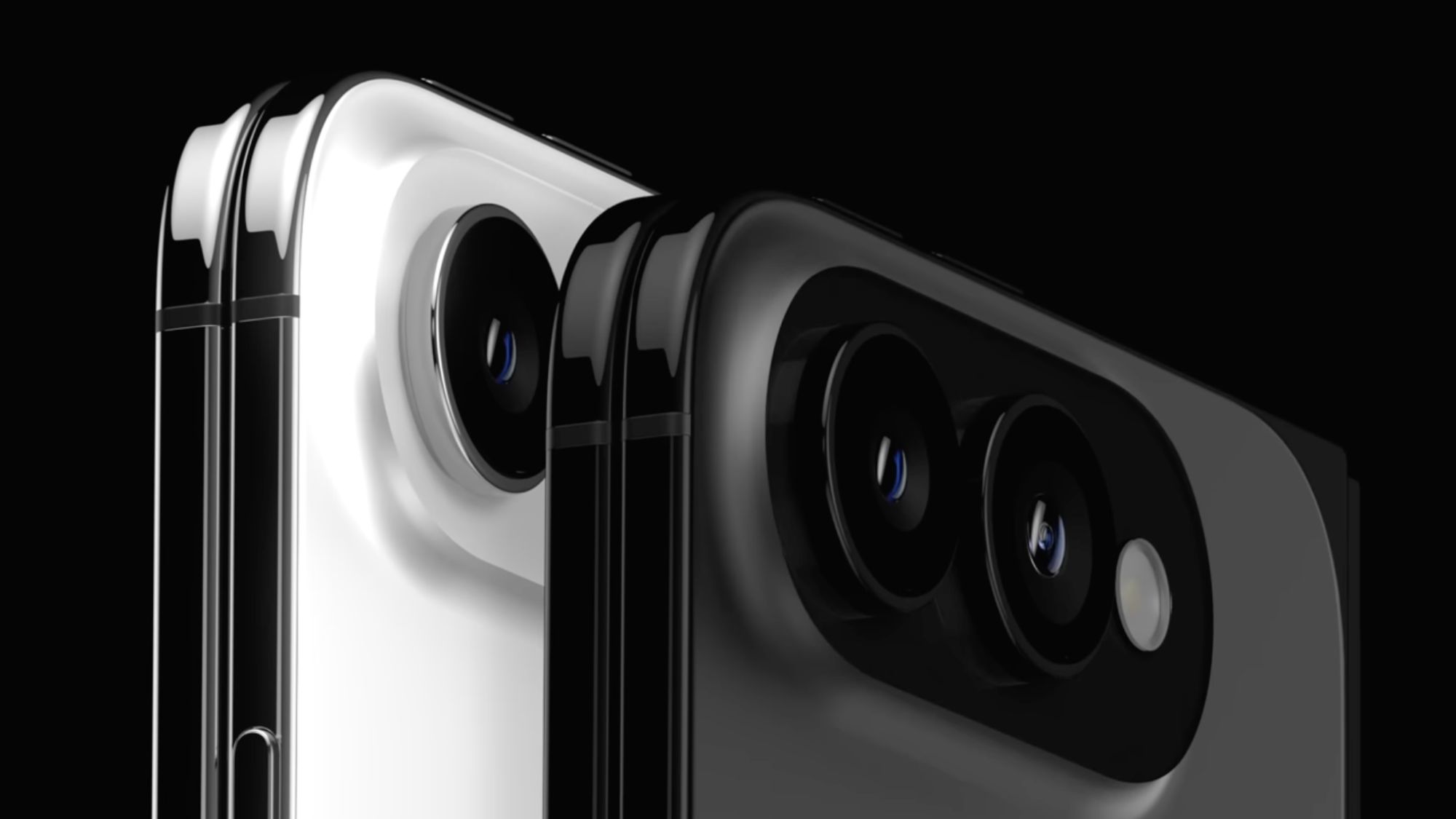
iPhone Ultra camera island

Of course, that kind of engineering won’t come cheap. Early whispers point to a price tag north of $2,000, putting it firmly in luxury-device territory. Then again, premium pricing has never stopped Apple fans before.

What’s particularly interesting is the timing; Samsung isn’t standing still. By the time Apple enters the foldable race, Samsung will have the Galaxy Z Fold 7 firmly established and will launch the next chapter with the Galaxy Z Fold 8 and the rumored Fold 8 Wide. If those devices continue Samsung’s push toward wider displays and thinner bodies, Apple won’t be entering an empty field — it’ll be stepping into a category that’s already rapidly maturing.

For years, foldables have largely been Samsung’s playground. The iPhone Ultra could change that overnight. Whether Apple ends up leading the category or simply joining it fashionably late is the question we’ll be asking for the rest of 2026.

Thank you for being part of our community. Read our Comment Policy before posting.