Inside ITSM 2026: Die Zukunft der internen IT


TOPdesk - SvG

Inside ITSM 2026: Die
Zukunft der internen IT

Von Tickets zur Strategie: Wie DEX, Kollaboration und KI die Rolle der IT verändern

Sie arbeiten nicht in der IT, um den ganzen Tag Passwörter zurückzusetzen oder das x-te Ticket zum Druckerproblem zu bearbeiten.

Aber irgendwie frisst das die meiste Zeit Ihres Arbeitstages.

Kleine Probleme häufen sich immer weiter an. IT-Teams werden für Probleme in Anspruch genommen, die Enduser eigentlich selbst lösen könnten. Und die wichtigeren Aufgaben wie die Beseitigung der Ursachen, die Verbesserung der Systeme und die Planung werden immer weiter aufgeschoben.

Das betrifft nicht nur Ihr Team.

Tatsächlich gibt mehr als die Hälfte der IT-Fachkräfte an, dass sie ständig mit kleineren Problemen zu kämpfen haben, die kostbare Zeit für wichtigere Aufgaben rauben.

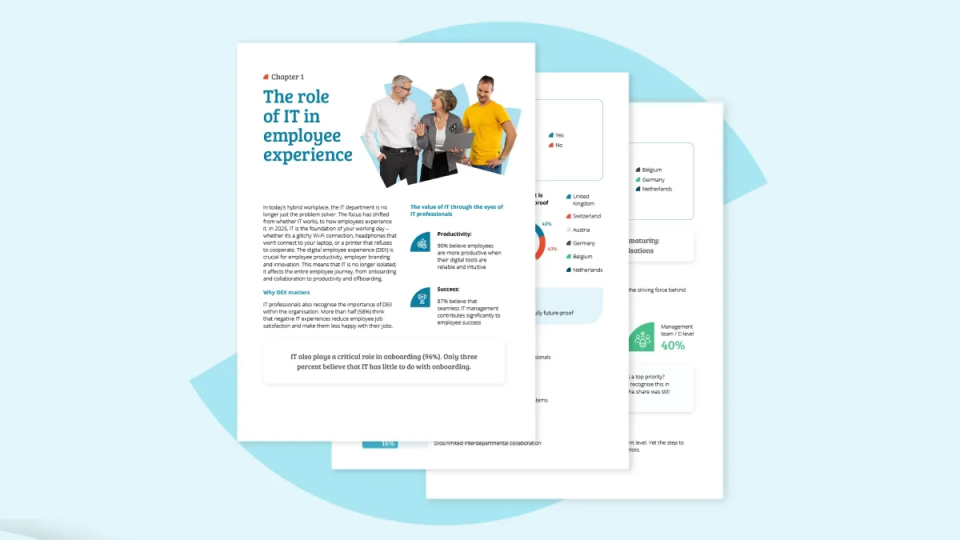
Genau diese Lücke beleuchtet dieser Bericht von TOPdesk.

Auf Grundlage der Erkenntnisse von über 3.000 IT-Fachleuten im DACH-Raum zeigt der Bericht, was sich derzeit in IT-Teams verändert: warum Servicedesks sich überlastet fühlen, warum die Employee Experience zunehmend in den Aufgabenbereich der IT fällt und warum KI die Arbeitsweise Schritt für Schritt verändert.

In diesem Bericht erfahren Sie:

  • Warum IT-Teams in reaktiven Aufgaben stecken bleiben, anstatt die eigentlichen Probleme zu beheben
  • Wo wiederkehrende Probleme unbemerkt die Zeit von IT-Teams beanspruchen
  • Wieso die Employee Experience zunehmend in den Zuständigkeitsbereich der IT fällt
  • Wo KI und Automatisierung helfen (und wo noch nicht)
  • Was überforderte Teams von solchen unterscheidet, die sich weiterentwickeln

Jetzt den kostenlosen Bericht downloaden

Jetzt den kostenlosen Bericht downloaden

Error: Contact form not found.

Über TOPdesk:

TOPdesk hilft Unternehmen, ihr Serviceniveau zu verbessern und ihre Abteilungen mit benutzerfreundlicher Servicemanagement-Software voranzubringen. Mit über 25 Jahren Erfahrung liegt der Fokus auf einer Lösung, die einfach zu implementieren und zu bedienen ist und skalierbar mit Ihren Anforderungen wächst.

TOPdesk - About Image

The post Inside ITSM 2026: Die Zukunft der internen IT appeared first on Tech Research Online.

Uber has always wanted to be more than a ride; now it has reason to hurry


For years, Uber talked about becoming a super app. Then Waymo started picking up passengers in San Francisco, and the conversation grew more urgent. The company has been trying to embed itself inside the AV industry — as a data provider, an investor, and a distribution platform — but the consumer-facing bet may be just as important.

Two weeks ago, Uber held its annual GO-GET product event in New York and announced something its executives had been circling for a long time: users in the U.S. can now book hotels inside the Uber app, through a partnership with Expedia Group, with access to more than 700,000 properties worldwide. Uber One members — the company’s subscription tier at $9.99 a month — get 20% off a rotating list of 10,000 hotels and 10% back in credits. Vacation rentals through Vrbo will follow later this year, along with restaurant reservations via OpenTable. In the meantime, a “Shop for Me” feature lets users order from stores that aren’t even on the platform.

The announcements, taken together, were the most concrete picture yet of something Uber has been trying to conjure since at least 2019: that an app with 199 million monthly active users could become the app they use for nearly everything.

Praveen Neppalli Naga, Uber’s CTO, offered the clearest explanation of the company’s thinking at TechCrunch’s StrictlyVC event late last month in San Francisco. The super app concept has existed for years in India and Southeast Asia, he noted, but U.S. versions have mostly flopped by bolting services onto traffic rather than building toward a reason to stay.

His answer to what fits? Membership. Every new category — food, groceries, now hotels — gives someone another reason to pay for Uber One. “I take Uber, go to the airport, take a flight, take another Uber, go to a hotel, go to a restaurant,” he said. “There is a flow you can actually build into it.”

Flights are not available yet, though Naga didn’t rule them out. Uber tried flight booking in Europe years ago without success. “First let’s get the hotel things done,” he said. Financial services sound like a possibility too — Uber already offers a debit card to drivers in Mexico — though how far that goes, or when, remains unclear. Said Naga: “Never say never.”

Uber isn’t alone in this race. Airbnb, arguably the company most directly threatened by Uber’s hotel push, announced its own transportation ambitions in late March — a partnership with Welcome Pickups to offer airport transfers in 125 cities across Asia, Europe, and Latin America, structured to keep users inside the Airbnb app rather than sending them to Uber. Meanwhile, Elon Musk has spent three years promising to turn X into an “everything app” in the WeChat mold, and is now nearing what he describes as a long-stated goal: X Money, a banking and payments platform built inside the social network, is expected to launch publicly soon. X claims 500 million monthly active users.

Techcrunch event

San Francisco, CA
|
October 13-15, 2026

The big question is how many super apps the American market will actually support. WeChat works in China partly because the alternative was a patchwork of inferior options. In the U.S., people already have apps they like for most of what Uber wants to do. Getting them to consolidate inside a single platform requires either a compelling reason — Uber One’s discounts, say — or a seamless enough experience that switching feels worth it.

Uber’s bet is that its installed base is the moat. Its users have already handed over a credit card. Convincing them to book a hotel, or order from a store they’d never find on Uber Eats, is an easy lift compared with convincing them to download something new. Its most recent earnings, reported a few days ago, suggest Uber Eats may be the strongest argument for that thesis: delivery revenue grew 34% year over year in the first quarter, to $5.07 billion, making it easily the fastest-growing part of the business and pulling almost even with mobility in gross bookings.

Uber’s stock is still down about 8% from a year ago — suggesting that Wall Street isn’t fully convinced. But the company says that 50 million people are now paying for Uber One, and together they account for roughly half the company’s total bookings.

When you purchase through links in our articles, we may earn a small commission. This doesn’t affect our editorial independence.

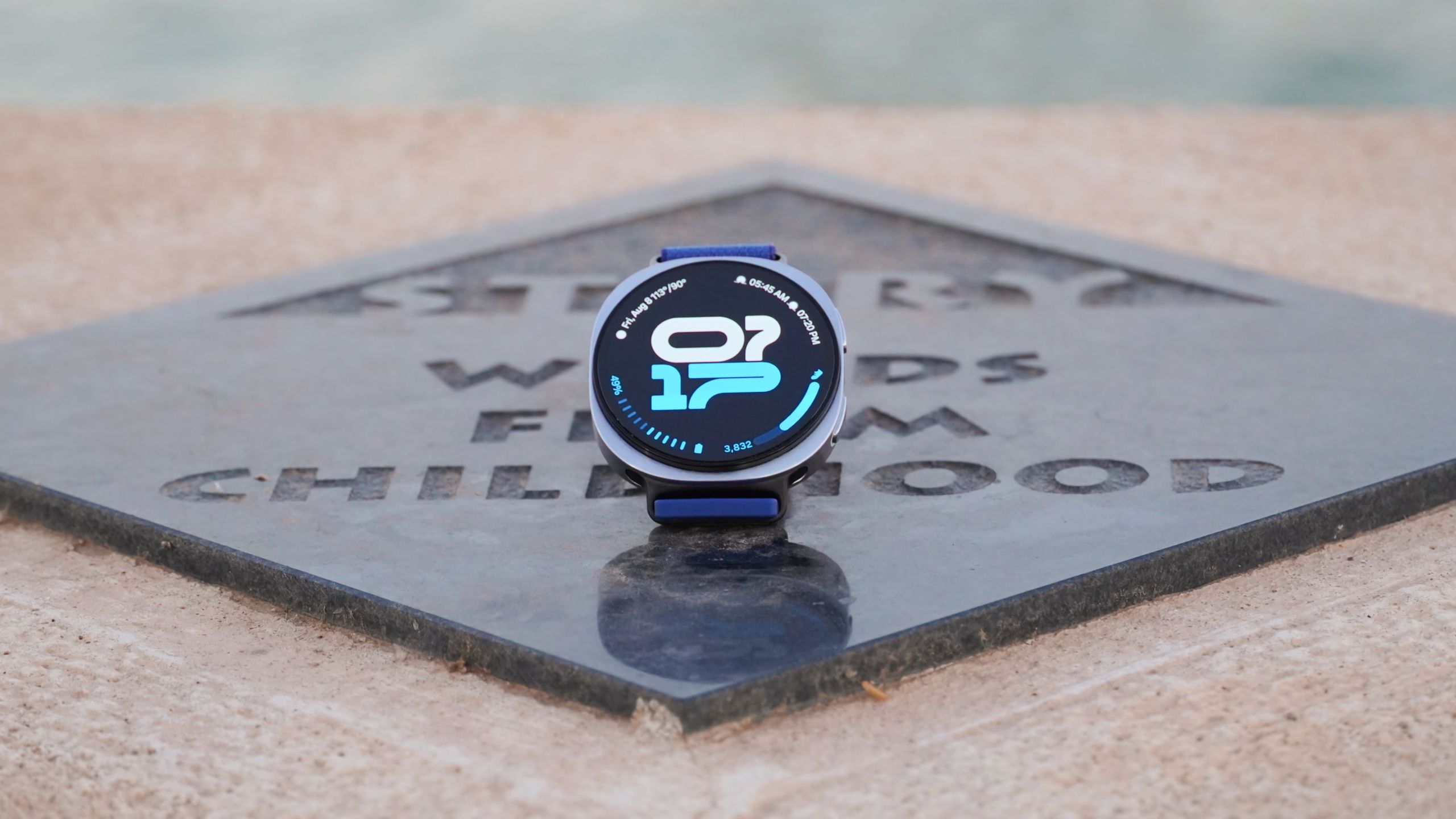
These are the 5 features that make the Samsung Galaxy Watch 8 worth it


Among the compelling options from Samsung, Google, and OnePlus, I went with the Galaxy Watch 8 as my Wear OS smartwatch of choice. The price was a big reason, since the Samsung Galaxy Watch 8 starts at $350, and discounts and trade-ins further lower the cost. Another factor was the watch’s design, which is much thinner and lower-profile than a Pixel Watch or OnePlus Watch. More than anything else, the Samsung Health suite won me over.

There are a handful of Samsung Health features that genuinely provide insight into your fitness and long-term health using the Galaxy Watch 8’s sensors. I can glance at my watch a few times daily and get instant snapshots of how I’m feeling using underlying sensor data. You can too, using these five Galaxy Watch 8 features. They’re also available on the Galaxy Watch 8 Classic and the Galaxy Watch Ultra.

Inside ITSM 2026: The Future of Internal IT


You didn’t get into IT to reset passwords and chase tickets all day.

But somehow, that’s where most of the time goes.

Small issues keep piling up. Teams get pulled into things users could’ve solved themselves. And the bigger work like fixing root causes, improving systems, planning, keeps getting pushed.

This isn’t just your team. It’s happening everywhere.

In fact, more than half of IT professionals say they’re constantly dealing with minor issues that take time away from more important work.

That’s the gap this report from TOPdesk explores.

Based on insights from thousands of IT professionals, it shows what’s changing inside IT teams right now: why service desks feel stretched, why employee experience is becoming part of IT’s job, and why AI is starting to shift how work gets done.

In this report, you will learn how to:

  • Understand why IT teams stay stuck in reactive work instead of fixing root problems
  • Identify where recurring issues are quietly draining your team’s time
  • See how employee experience is becoming part of IT’s responsibility
  • Understand where AI and automation are helping (and where they’re not yet)
  • Recognize what separates teams that are overwhelmed from those that are evolving

Gmail’s ‘Help me write’ can now mimic how you speak to create emails for you


What you need to know

  • Google announced two updates for Gmail’s AI “Help me write,” which help quicken the work process, while also increasing its capabilities.
  • Now, the company says the AI can mimic how you speak by looking at your writing style and tone from previous emails.
  • “Help me write” can now access your other Workspace apps to add relevant information to its draft without your manual input.
  • More people can get in on this feature, so long as you have Google AI Plus, Pro, and Ultra, alongside the usual Workspace accounts.

Gemini‘s involvement in Gmail can be quite the helping hand, and now Google states it’s trying to take that up a level (or two).

Announced this week, Google states in a Workspace post that “Help me write,” Gemini’s email drafting assistant, is receiving two important personalization updates. The first (and, quite honestly, most intriguing) update this week is “tone and style personalization” for Gemini’s help. Google says that when this is active, the AI can draft emails for you “that match the tone and style of your previously written emails.”

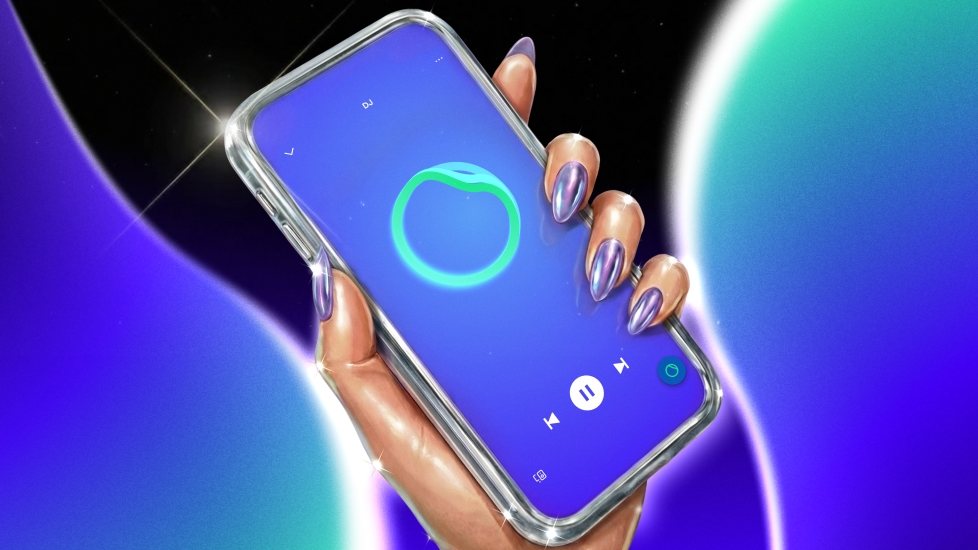
Spotify’s AI DJ now supports French, German, Italian and Brazilian Portuguese


Spotify said on Thursday that its interactive AI DJ feature now supports four additional languages: French, German, Italian, and Brazilian Portuguese. Until now, the feature, which you can interact with to request songs and get AI-powered spoken commentary, was only available in English and Spanish.

The company said the AI DJs have different names and personalities to suit their respective languages: Maia, Ben, Alex, and Dani.

Besides expanding support for new languages, the company is bringing the feature to Austria, Brazil, France, Germany, Italy, Portugal, South Korea and Switzerland. The AI DJ is now available in more than 75 countries.

Spotify’s initial version of the AI DJ used to just provide commentary on songs while playing tracks that users would like. But over the last few years, the company has made attempts to make the feature more interactive. In May 2025, the streaming service updated the feature to let users chat with the AI DJ and make requests to change the mood or genre. The company also added the ability to prompt the AI DJ to play tracks, similar to how ChatGPT, Claude, or Gemini operate.

The company has been adding more AI features to the app, such as the ability to create custom playlists of songs or podcasts by simply describing what they want to listen to.

Galaxy Ring 2 rumors say no to 2026, point us toward ‘an early’ 2027 reveal


What you need to know

  • Sudden Galaxy Ring 2 rumors suggest Samsung might skip over 2026, as well, and look to “early 2027” for its debut.
  • The report says Samsung is looking to improve the entire device, sinking resources into its sleep accuracy, temperature sensors, comfortability, and more.
  • Rumors from last summer said Samsung might utilize “dream batteries” to improve its battery life.

After a lengthy period of silence, rumors about Samsung’s next smart ring might sour any hopes you had for 2026.

This week, a report from EtNews (Korean) claims that Samsung might be forced to skip 2026, as it toils away at the Galaxy Ring 2 (via 9to5Google). While nothing’s certain, these rumors suggest Samsung’s January/February Galaxy Unpacked 2027 could be where we look next. The publication’s source alleges that it’s “likely” that Samsung could unveil the Galaxy Ring 2 “early next year.”

ASML CEO Christophe Fouquet: No one is coming for us


Every time you use AI, you are, in some small way, depending on a 42-year-old, 44,000-person Dutch company that spends €4.5 billion each year to advance its technology.

ASML, headquartered in the Netherlands, makes the machines that make the chips that make AI possible. More specifically, it makes the only machines in the world capable of printing the microscopic patterns on silicon wafers that define the most advanced semiconductors — a process called extreme ultraviolet lithography, or EUV. The machines are roughly the size of a school bus, take months to assemble, involve hundreds of suppliers, and cost anywhere from $200 million to upwards of $400 million apiece depending on the generation (prices that give even ASML’s biggest customers pause occasionally).

That monopoly has made ASML the most valuable company in Europe, worth over $530 billion. And with the four largest American tech companies — Microsoft, Meta, Amazon and Google — committing more than $600 billion in AI infrastructure spending this year alone, demand for ASML’s machines has surged to the point where the company has openly said the world won’t have enough chips for years.

All that demand has also made ASML a target. Substrate, a San Francisco startup founded by a protégé of Peter Thiel, has raised more than $100 million and been valued at over $1 billion on the claim that it can build a rival lithography machine. Separately, there have been reports that former ASML engineers in China have partly reverse-engineered the technology, a prospect with enormous geopolitical implications.

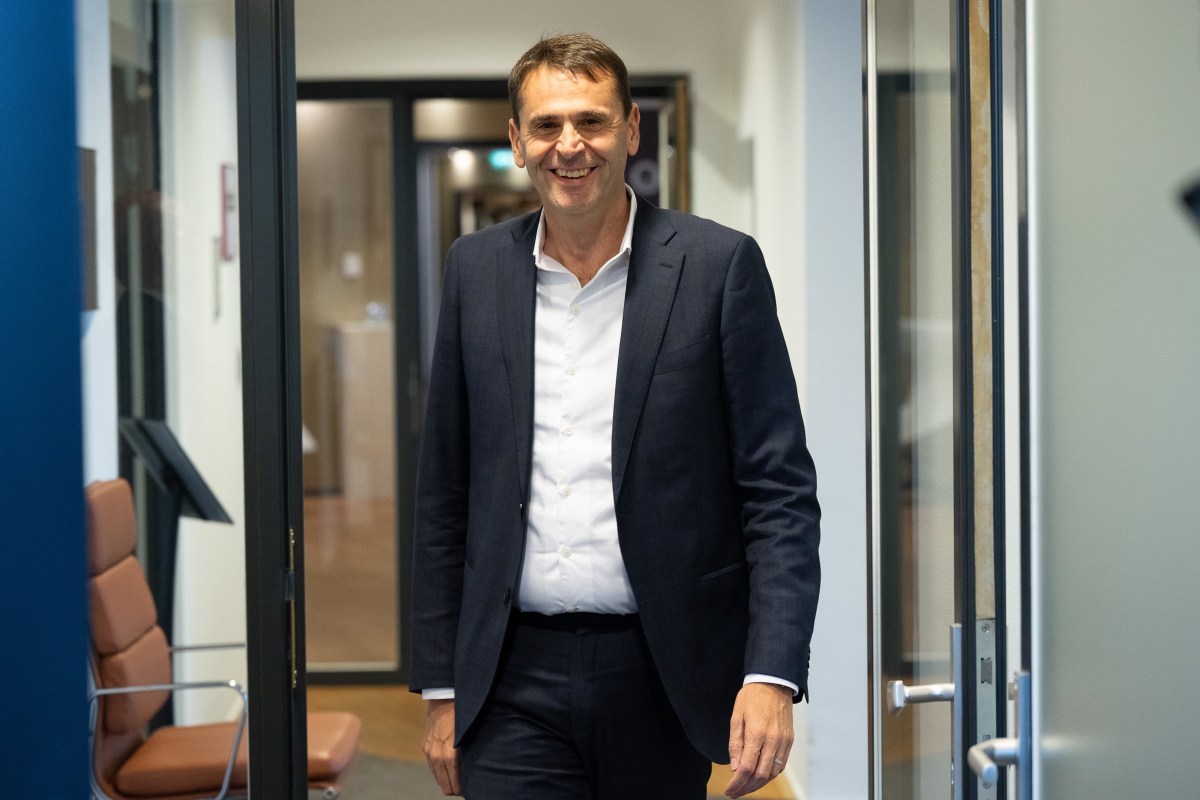
Christophe Fouquet, who became ASML’s CEO in 2024 after more than a decade at the company, sat down with this editor on the rooftop deck of his Beverly Hills hotel Tuesday morning ahead of his appearance at the Milken Institute Global Conference. Dressed in a blue suit and white shirt, he was relaxed — even when the conversation turned to the rivals.

This interview has been lightly edited for length and clarity.

TC: Did you see the AI explosion coming?

Techcrunch event

San Francisco, CA
|
October 13-15, 2026

CF: No, not at all. We worked very hard, but not with the idea that this would come. You went from a concept — something people thought would eventually arrive — to ChatGPT, which was really the first good example of what AI could do. And now I think we look at AI as the next revolution, not only industrial but societal. Did I see it coming? No. Sitting in the middle of it every day, sometimes we wake up in the morning and still check that what is happening is really happening.

The big question everyone has is whether the supply chain can keep pace with demand. Can it?

The demand is such that the market overall will be supply-limited for quite a bit. Right now, the biggest bottleneck seems to be in chip manufacturing. We, as an equipment supplier, follow our customers, and so far we’ve followed them pretty well — but we know we have to step up our entire supply chain and capacity. If you talk to the hyperscalers, I think they will tell you that for the next two, three, even five years, they’re not going to get enough chips.

TSMC made news recently saying your latest machines are too expensive. How do you respond?

An EUV system, if you look at the price, is going to be more expensive than a low-NA system, but the cost of making a wafer with this tool on some advanced layers will be cheaper. We can get 20%, 30% cost reduction.

[Editors note: both machines Fouquet is referring to here are EUV machines — the same fundamental technology. NA stands for numerical aperture, a measure of how finely a machine can focus light onto a chip. Low-NA EUV is the current generation; high-NA EUV is ASML’s newest generation, capable of printing even finer patterns but carrying a price tag of $350 million or more apiece. Fouquet is arguing that even though the new machine costs more, it produces chips more cheaply.]

I get a lot of questions about whether it’s going to be this month or next month or the month after. And I usually say it doesn’t really matter, because we designed high-NA for the next 10, 20 years. You can go back to the press from 2016, 2017, and you’ll find the same quotes — low-NA EUV was very pricey. We know what happened after that. The same will happen with high-NA.

There’s a startup called Substrate, backed by Peter Thiel, claiming it can build a rival lithography machine. What do you think of it?

Wanting to have it and having it — that’s still a huge difference. The challenges of lithography are many. Being able to make an image is a starting point, but you need to make that image in very high quantity, at very low cost, at high speed, and with nanometer accuracy. I always say the only reason ASML could build an EUV machine is because 80% of it already existed, based on previous knowledge and products built over time. We had to solve one problem — getting EUV light — and that alone took 20 years. When you start from scratch, the challenge is enormous. I’ve seen a lot of claims. I’ve seen a few pictures. But we had our first EUV picture 30 years ago, and we still needed 20 more years of hard work to turn it into a manufacturing system.

What about xLight, a laser startup partly backed by the U.S. government that wants to work with you?

xLight is focusing on one element of our EUV machine — the source that creates the light. The source we have can be extended for many years to come, and we know how to scale it. What xLight is doing is a new source that still has to be built and proven. The only question is whether it provides a performance or cost advantage over what we have. I think the jury is still out. We are working with them so they can demonstrate their technology — we feel that’s a responsibility on our side. But it’s still a very long journey.

There are also reports that former ASML engineers in China have reverse-engineered your machines.

To reverse-engineer anything, you first need to have the machine. And there is no EUV machine in China — we never shipped any tools there. All the tools we have shipped, we know where they are. They’re either in use with customers, and we track those, or they’ve been dismantled and came back to us. The idea that one of our systems is in China is simply wrong. And because our EUV technology has never been exported there, we also have no people in China trained on EUV.

Very early on, when restrictions came in, we created a complete separation within the company between those who can access EUV technology, documents and training, and those who cannot. Our team in China sits on the other side of that line. The facts point to very little, if any, progress at all. It’s hard for people to accept that because access to this technology is so important.

On export controls more broadly — Jensen Huang was here last night arguing that companies should sell globally, that more corporate revenue means more tax dollars for a company’s home country. He also said the important thing is to keep the best and latest closer to home. Do you agree?

I think he’s totally right. What he adds — and I think this is what Nvidia has done — is that you can keep a technological advantage by maintaining a generation gap in what you sell. Nvidia sells a few generations back, and that lets them find the balance between still doing business and not handing a strong competitive advantage to countries where you won’t sell the latest. We believe the same approach should apply to our products. Today we ship tools to China — allowed by export controls — but it’s a tool we first shipped in 2015. If you apply Jensen’s philosophy to our situation, Nvidia is working with roughly an eight-generation gap. We’re looking at two or three. There’s room for rationalization — finding the right balance between not doing business at all, losing a major opportunity, and strongly inviting others to compete with you.

How do you assess where things stand with the current administration on all of this?

There is a good dialogue, which is very important. I think there’s a genuine understanding of what business needs, but there’s still the challenge of finding the right balance between all the different voices and interests. The dialogue is there, and we appreciate that. I’ve been in Washington many times. At least the discussion is happening. But it’s a very complex topic.

You don’t seem concerned about anyone short-cutting your technology.

People like to have the greatest technology, but they tend to forget what it took to build it. It’s been many years of work — not only at ASML but with our suppliers. Many different groups of people solving very difficult problems, and then one company bringing it all together using decades of lithography expertise to turn it into a manufacturing system. This is in no way easy. And I think that’s also our best protection. It’s simply what it took to put it together.
When you purchase through links in our articles, we may earn a small commission. This doesn’t affect our editorial independence.

If your Pixel Buds ANC toggle is vanishing on you, you’re not alone


What you need to know

  • Pixel Buds users hit Google’s subreddit to report an issue with their ANC and Transparency mode toggles.
  • Users state their toggles are either gone entirely or take ~30 seconds to appear when using the Quick Audio settings menu.
  • After Google’s suggestions, users claim nothing has worked, meaning an alternative fix is required from the company.

Google’s Pro-level earbud users are running into an issue, as key features are going missing without rhyme or reason.

A few days ago, reports started popping up on the Google Pixel subreddit, as one user reported that they can’t see their Pixel Buds’ ANC, Off, and Transparency modes (via Android Headlines). This problem seems to have targeted the Quick Audio settings for their device. They provided a screenshot as evidence, which clearly shows the lack of these notable features.

We’ll take it: a TikToker rallies pledges to buy Spirit Airlines after its abrupt weekend collapse


When Spirit Airlines shut down overnight Saturday — canceling all flights, letting go of 17,000 employees, and telling ticketholders to just not come to the airport — people were flabbergasted but also bereft. For all its indignities, Spirit was cheap. Then one of them had an idea.

Hunter Peterson, a voice actor with frequent flyer grievances, posted a TikTok asking: what if 20% of American adults chipped in the price of a Spirit fare and just . . . bought it? He called it “Spirit 2.0: Owned by the People.” Within hours he’d thrown up a website — a janky, one-hour job, by his own admission — and by Sunday, 36,000 “founding patrons” had pledged nearly $23 million, crashing his servers in the process.

None of it is real money. These are non-binding pledges. Also worth noting: the actual cost of acquiring and relaunching an airline runs into the billions. Peterson knows this. In a video posted earlier today, he winkingly tried recruiting aviation lawyers, PR people, and lawyers with a one-word ask: “Help?”

“I know what I don’t know,” he told his followers, but “you’re committing to this bit, so I’m committing to this bit.”