Is the Oura membership worth it? 5 reasons why I think it is


The new Oura Ring 5 is out, and its smaller profile is definitely turning heads among current Oura users and prospective ones, myself included. However, in addition to the $50 price increase over the Oura Ring 4, there’s another cost to consider: the Oura Membership.

The Oura Membership isn’t required to use the Oura Ring, but the companion app’s functionality will be quite limited without it. The $5.99 membership brings a host of features to the app and unlocks a bevy of capabilities that you wouldn’t otherwise get.

New Google commercial imagines a Declaration of Independence written with help from AI


Two hundred and fifty years after the signing of the Declaration of Independence, a new commercial from Google asks: What if the Founding Fathers had access to Google Workspace?

With the tagline “Group project, but make it 1776,” the ad depicts a largely unseen Thomas Jefferson mid-draft when he gets a nagging text from Ben Franklin, leading to a very Google-centric collaboration process. Edits are suggested in Google Docs, a meeting gets scheduled in Google Calendar and conducted remotely via Google Meet (with every single attendee apparently turning their camera off?), then the whole thing is finalized with e-signatures; cue the fireworks.

Of course, since this is an ad from a tech company in the year 2026, AI has a role to play. The fictionalized founders use Google’s “help me visualize” AI tool to try out different animals on the national seal, Gemini takes notes on the meeting, and the founders also ask the chatbot for advice before declining King George III’s document access request.

The whole thing is very tongue-in-cheek (at one point, Sam Adams asks, “Can we settle this over beers?”), and the AI evangelism is relatively discreet when compared to many other recent ads. And unlike that infamous Google commercial in which a father uses Gemini to write a fan letter for his daughter, this one shies away from any suggestion that the actual text of the Declaration of Independence would be improved with AI. Perhaps the most AI-forward element of the ad is the footage itself, which to my eye has the uncanny glow of AI-generated video.

While viewer comments on YouTube and Instagram appear to be mostly positive, you may not be surprised to learn that the response on Bluesky has been far more critical. Posters declared the commercial “cringey” and “stunningly tone deaf,” and the AI angle was the biggest target — even as many users, including historian Angus Johnston, noted that it’s “amazing how little of this is actually AI.”

“Even in a corny fantasy joke, it’s impossible to make the case that AI is a useful tool for political organizing, writing, or human collaboration,” Johnston said.

When you purchase through links in our articles, we may earn a small commission. This doesn’t affect our editorial independence.


Google Home Speaker 2026 review: Getting back to the basics


Why you can trust Android Central


Our expert reviewers spend hours testing and comparing products and services so you can choose the best for you. Find out more about how we test.

Google is relaunching its smart speaker ecosystem for the “Gemini era,” as it has stated so many times with recent products. While I’m not fully convinced this new speaker is a truly revolutionary Gemini-powered speaker when compared to existing Google and Nest speakers, the overall quality of the Google Home Speaker is a great value for $99.

Whether you’re looking for a new music-playing speaker that understands basic commands or want an extra speaker to enhance your smart home, this is a solid choice with some annoying software issues that will hopefully be cleared up in the near future.

Google Home Speaker price, availability, and specs

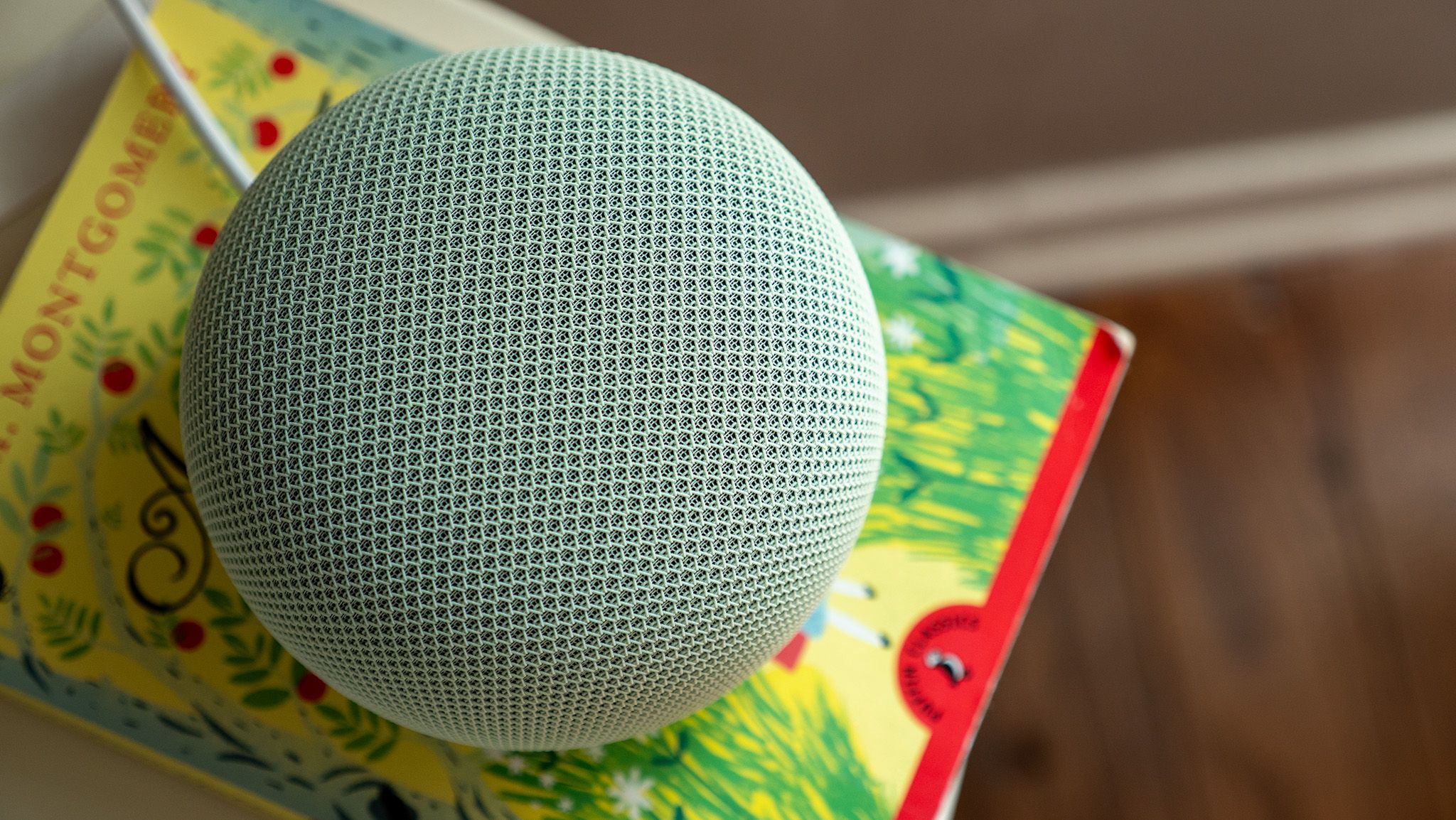
A Jade Google Home Speaker nestled into a bookshelf

(Image credit: Nicholas Sutrich / Android Central)

The 2026 Google Home Speaker is the first smart speaker from Google that’s designed “from the ground up for Gemini.” It’s the first Google speaker to include a proper NPU for AI processing, an upgrade over ML processors in the past few Nest releases. It retails for $99 and comes in two colors globally — Hazel and Porcelain — while U.S. customers can also choose from Berry or Jade varieties. My review unit is Jade.

Latest Videos From

Politician who investigated spyware abuses had his phone hacked with Pegasus spyware


Security researchers have confirmed that a European politician had his phone hacked with the Pegasus spyware while serving on an investigatory committee probing abuses of the notorious surveillance tool. This has reigniting fresh controversy over governments abusing spyware to collect information about their critics.

The researchers at the University of Toronto’s digital rights unit The Citizen Lab say the confirmed phone hacking of Greek journalist and former politician Stelios Kouloglou during 2022 and 2023 marks the first time that a member of the European Parliament’s PEGA committee, tasked with investigating phone spyware attacks by European governments, has been publicly identified as a victim of spyware.

Kouloglou told TechCrunch in a phone call that the deliberate compromise of his phone was “reckless.” One serving European lawmaker described the hacking of Kouloglou’s phone as a “direct attack on the rule of law,” and called on the European Commission to take concrete action by imposing strict limits on the use of spyware across the 27 member-state bloc.

While spyware attacks on lawmakers are rare, the timing and targeting of a committee investigator by way of the very spyware under his investigation suggests an intense focus on the committee’s inner workings ahead of a widely anticipated report detailing its findings. The hacks open fresh questions about how governments use spyware ostensibly needed for identifying serious crime, but then caught spying on the communications of journalists, lawmakers, and critics.

Citizen Lab’s researchers did not attribute the phone hacking to a specific country, but said that the government customer used the same Pegasus-loaded email address that was used in a previous campaign that hacked into the phones of journalists across Europe. The customer’s identity is not known, but the reuse of the same attacking email address implies that the customer had NSO Group’s authorization to use its Pegasus spyware to snoop on phones across multiple countries in Europe.

A spokesperson for the European Commission did not respond to TechCrunch’s request for comment. NSO Group also did not respond to a request for comment about the Citizen Lab report prior to publication.

In its report out Friday, Citizen Lab said Kouloglou was hacked in October 2022 and at least twice during March 2023 using an exploit that compromised a security vulnerability in Apple’s iPhone software. This vulnerability had been patched but the fix was not yet installed on Kouloglou’s phone. The exploit was a “zero-click” bug, meaning the spyware broke in and stole his data without needing any interaction on his part.

The bug abused a previously discovered flaw in Apple’s smart home software used in iPhones. It allowed the spyware to grab private data from Kouloglou’s phone without his knowledge, such as his text messages and other correspondence, location data, and photos.

The timing of the October 2022 hack coincides with intense discussions over email and text message throughout October and November 2022, ahead of the delivery of a first draft describing spyware abuses focusing in Cyprus, Greece, Hungary, Poland, and Spain. 

The hack also lines up at the exact time that Kouloglou was in the hospital at the time for a pre-scheduled surgery, which may have allowed the spyware operators to listen in to ambient audio discussing his healthcare or other conversations he had with visitors at the time.

Months later on March 6 and 7, Citizen Lab said Kouloglou’s phone was hacked again by the same Pegasus operator while Kouloglou traveled from Athens to Brussels, during a period of committee hearings and months prior to the committee finalizing and adopting their written draft report.

In a call, Kouloglou told TechCrunch that he didn’t know why he was specifically targeted but that he believes it was due to his work on the European Parliament’s committee investigating Pegasus abuses.

He described anger when he learned that his phone had been hacked. 

“You realize that all of your personal data [was taken] — not all the professional exchanges or messages with ministers — but also the very private things, like the happy moments and the sad moments,” he told TechCrunch.

Kouloglou said he plans to sue NSO Group, the Israeli-headquartered spyware maker. NSO remains largely banned from use in the United States following a Biden-era executive order that outlawed the government’s use of spyware that could violate people’s human rights. 

Last year, the spyware maker confirmed an unnamed American investment group funneled tens of millions of dollars into the company, likely as part of an effort to rehabilitate NSO’s beleaguered brand associated with enabling human rights abuses.

Kouloglou said he was going public with his story “for democracy, human rights, and the fight against corruption.”

“Corruption concerns everybody,” he said.

When you purchase through links in our articles, we may earn a small commission. This doesn’t affect our editorial independence.

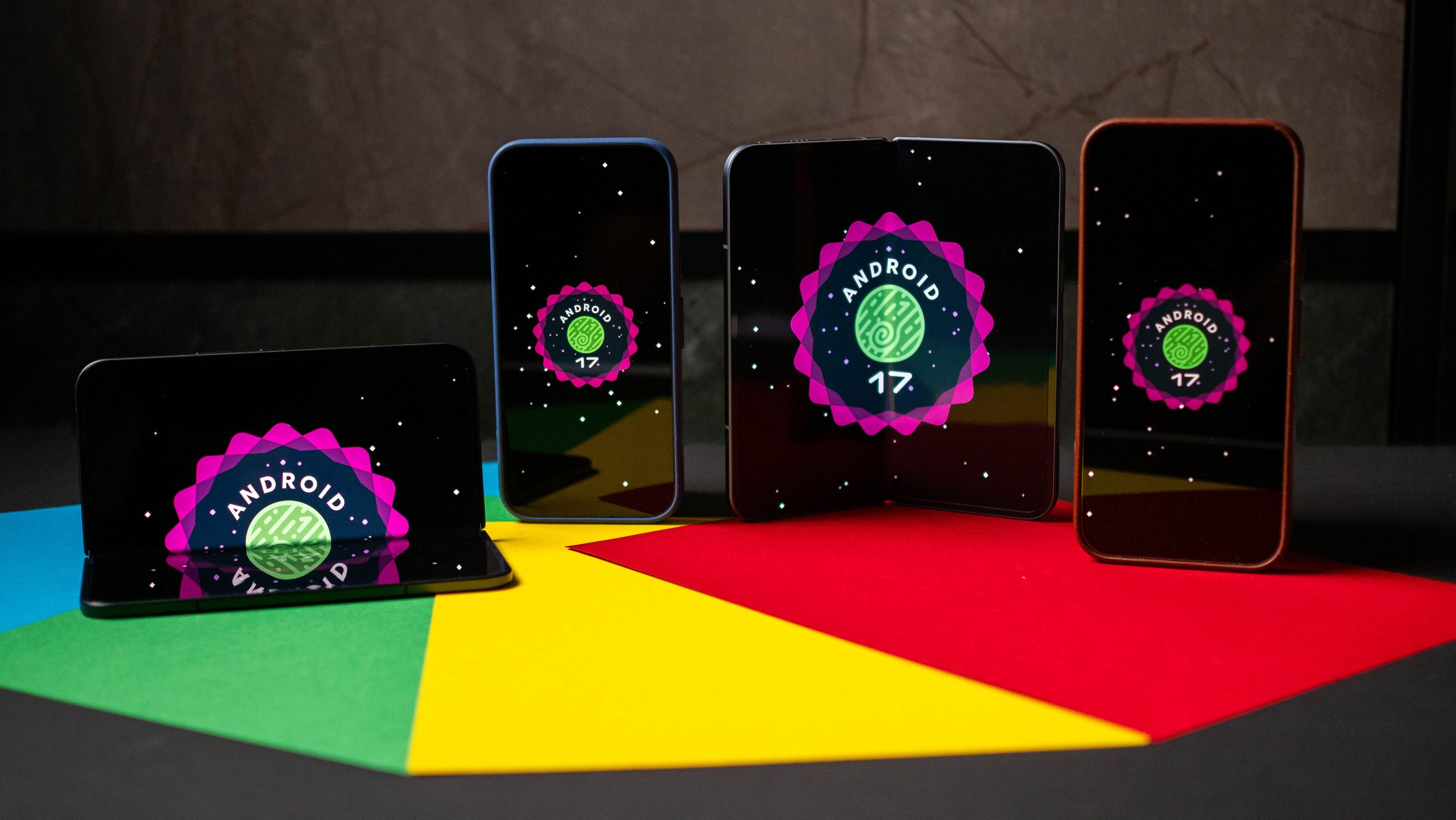
Platform Stability reached: Android 17 QPR1 Beta 6 is here for Pixels, quickly after Beta 5


What you need to know

  • Google announced Android 17 QPR1 Beta 6 is rolling out for enrolled Pixel testers a week after Beta 5 dropped.
  • The patch is lighter, focused mostly on fixing issues Pixel testers have been reporting on the Issue Tracker.
  • Beta 5 carried a significant number of fixes for Pixel users, such as solutions for vanishing widgets, the Game Dashboard, and more.

The next beta for Android 17’s first quarterly update has crossed a major developmental hurdle. Here’s everything Pixel testers can expect to find.

Google announced that Android 17 QPR1 Beta 6 is rolling out now for enrolled Pixel users. As vCP31.260618.005 rolls out to Pixel 6 and new phones, Google states Beta 6 means the quarterly update has reached Platform Stability. This is a key milestone, as Google looks to begin preparations for a wider (stable) launch for phones. This latest beta is a bit lighter. Google only appears to have a few bugs it’s looking to squash ahead of more testing.

The great VDI migration: Your path to a cloud-first workplace


Hybrid working is now the norm—but for many UK and Ireland organisations, supporting it securely and cost-effectively is getting harder. IT teams are under pressure to modernise legacy VDI and on-prem environments while managing tighter budgets, increasing cyber risk, and limited internal resources.

The reality? Most organisations can’t afford a full rip-and-replace. They need a practical way to evolve.

In this session, you’ll explore how IT teams are taking a phased, cloud-first approach to digital workspaces—using technologies like Azure Virtual Desktop and Windows 365 to modernise at their own pace, without disrupting users or overloading operations.

See experts from Nerdio as they share real-world strategies for balancing cost, control, and user experience in hybrid environments.

In this webinar you’ll learn:

  • Why many organisations are reassessing legacy VDI in today’s economic and security climate
  • Practical approaches to moving users to cloud desktops with minimal disruption
  • How to manage hybrid environments without increasing operational complexity
  • Ways to reduce IT overhead through automation and smarter cost management
  • How to build a sustainable operating model beyond the initial migration

Download to see how businesses are preparing for the next wave of AI-driven communication.

Venice AI becomes a unicorn with $65M Series A as its privacy-first AI platform takes off


Concerns over the impact of AI chatbots on mental health, personal safety, harassment, and disinformation have forced AI developers to implement safeguards to better control how and what their AI models are allowed to respond or do.

But concerns and worries can’t erode demand. AI offers a lot of promise, and people don’t want a faceless tech company to restrict their access to that potential. And if they can preserve their privacy while they use AI models however they want, why not?

Venice AI, which offers access to more than 200 AI models while allowing users to retain their privacy, is raking it in thanks to that demand. Just two years in, the company already has more than 850,000 unique visitors to its website, and serves more than 3 million active users and an average of 1.7 million API calls per day.

The startup hosts “uncensored,” open-source models on its own data centers, and routes queries to closed-source models, such as those by OpenAI or Anthropic. All user input is encrypted and unencrypted client-side, and routed through an external proxy before it is processed and returned, with no data stored on Venice’s own systems. It also provides end-to-end encryption on some models, though you have to pay for a subscription to get that feature.

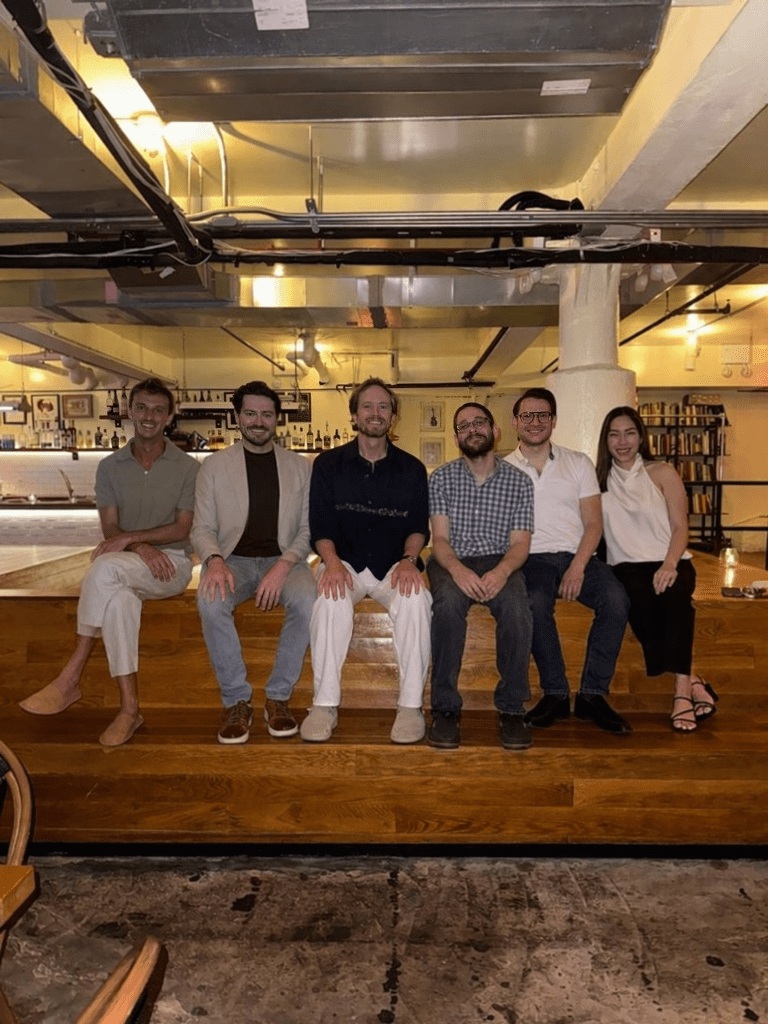
The company is already profitable, with annualized run-rate revenues of over $70 million, its CEO Erik Voorhees (pictured above, in the center) told TechCrunch during an exclusive interview.

Understandably, investors have flocked to get a piece of that traction. Venice AI on Wednesday said it had raised a $65 million Series A at a $1 billion valuation, its first external fundraise. The round was led by crypto-focused venture firm Dragonfly, with participation from Coinbase Ventures, North Island Ventures, and others.

The overlap between Voorhees, Venice’s focus on privacy, and its new crypto investors is hard to miss, especially given the CEO’s background and past work. An early bitcoin advocate, Voorhees has founded a few crypto companies, including bitcoin gambling site Satoshi Dice and cryptocurrency exchange ShapeShift, and has long advocated in favor of preserving users’ privacy.

In fact, when a Wall Street Journal investigation accused ShapeShift, which initially didn’t require its users to identify themselves, of processing millions of suspect funds, Voorhees reportedly said: “I don’t think people should have their identity recorded to catch an occasional criminal.”

He struck a similar note when asked how Venice AI thinks about offering access to AI models in light of recent cases of AI psychosis and resulting harm, saying his team treats their service as a “neutral tool or a neutral platform.”

“This is the same principle that you have in Bitcoin, where Bitcoin, as a neutral protocol, works the same way for all people,” he said. “I think it’s actually quite dangerous from a safety perspective, for the world to enter this next phase and have everyone be constantly watched. To me that is actually much more dangerous than any particular person asking a controversial question or something that might be considered bad.”

There’s a considerable focus on giving users agency, too. Users can freely choose from AI models that can generate text, images, audio, and video — all of which vary in their performance, quality, and the amount of censorship applied. The website prominently features several AI “characters” that you can customize and chat with, and the company proudly states it offers an “uncensored” experience.

“We’re optimizing for freedom and actually respecting users as adults, which is, I think, rare these days,” Voorhees said.

The founder said Venice also works on some open models’ system prompts to instruct them to answer more openly, though it doesn’t add any restrictions to the models.

Unsurprisingly, there are two crypto tokens associated with the effort. Venice launched a token called “VVV” in early January, in a bid to attract users, Voorhees said, and in August last year added another, called “DIEM.” Users can buy VVV and then stake it to mint DIEM, which generates $1 worth of AI credits per day that you can spend on Venice. However, Voorhees said only about 8% of the company’s users pay with crypto.

The founder credited the company’s growth to the good performance of the crypto tokens, though he said the strongest driver was getting close to feature parity with ChatGPT. “When we launched, we were very far away from what ChatGPT could do, but people would use us because it was private. And today, we’re very close to what ChatGPT can do […] so as we’ve closed that gap, it’s become an increasingly compelling alternative,” he said.

Looking forward, Venice AI wants to use the fresh cash to start buying GPUs and building its own data centers so it can stop leasing GPUs and increase its gross margins.

When you purchase through links in our articles, we may earn a small commission. This doesn’t affect our editorial independence.

Samsung hits restart with a viral marketing campaign ahead of the Galaxy Z Fold 8, Flip 8


What you need to know

  • The company has kicked off a new social media campaign on its Samsung Mobile and Samsung Mobile USA Instagram accounts after hitting reset and wiping every post.
  • Samsung says it’s looking to tell a new story ahead of its Galaxy Z Flip 8, Fold 8 launch with a series of cryptic posts that users will be required to unravel and “decode.”
  • It states that “when we’re ready” it will reveal everything we’re used to seeing about phones ahead of a major debut.

We’ve been anticipating the launch of Samsung’s next foldables for months. Tonight (June 30), the company’s kicked off a new social media campaign, and it’s completely wiped its Instagram.

Samsung says it’s “hitting reset” leading up to its Galaxy Z Flip 8 and Fold 8 launch. The company’s new social media campaign focuses on Instagram, as it states its account feed will be wiped completely. This will take place before Samsung’s wave of “cryptic teaser videos.” While this might seem a bit odd, Samsung says there’s a purpose behind this campaign.


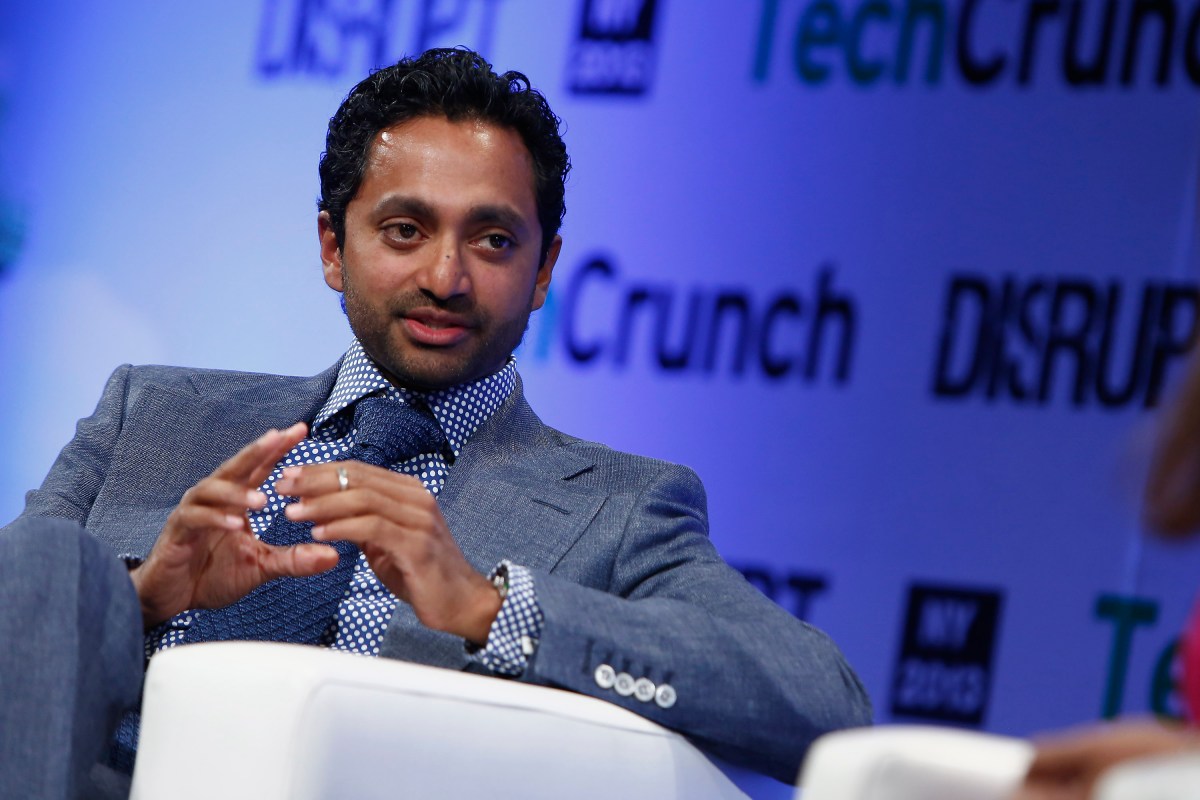
Chamath Palihapitiya raises $135M Series A for his AI coding startup, takes CEO role


Chamath Palihapitiya, best known for his venture capital firm Social Capital and the All-In podcast, announced Monday that the AI coding startup he founded raised a sizable Series A.

The company, 8090 Labs, closed a $135 million round led by Salesforce Ventures with participation from Jeffrey Katzenberg’s WndrCo; David Sacks’ Craft Ventures; fellow All-In hosts and “besties” David Friedberg (The Production Board) and Jason Calacanis (Launch); and angel investors like Palo Alto Networks CEO Nikesh Arora and Quora CEO Adam D’Angelo.

Palihapitiya founded 8090 Labs in January 2024 to offer an AI coding agent specifically for corporate programming teams. Its product, Software Factory, helps corporate coders use AI to build production-quality software, not just vibe-coded prototypes, with all the controls enterprises need, such as audit trails, the company promises.

With the raise, Palihapitiya also announced on X that he will lead the startup as CEO, rather than just serving as a board member.

He said the AI rush today feels like the rise of social media in his career as an early exec at Facebook, long before it became Meta. “Since I left Facebook, I was waiting for a moment like this to return to a full-time operating role,” he wrote. “I am convinced that what we are building now is even more important, so there was no decision to make except to be all in.”

It took a while, but Google’s finally fixing a SiriusXM radio issue on its smart speakers


What you need to know

  • Google states a fix is rolling out late in June for a bug that impacted several of its smart speakers and SiriusXM radio.
  • Users given multiple errors a month ago, when reports surfaced, and were unable to get their content to stream via a speaker.
  • While this issue gets resolved, Google’s also debuted its new Home Speaker and expanded Gemini for Home to more partners.

Google has been busy with new launches and bug fixes since May. This week, it’s been reported that a major fix is on the way for a satellite radio problem.

About a month ago, users on the Google Home subreddit reported a sudden problem attempting to listen to SiriusXM radio on their smart speakers (via Android Authority). Getting down to brass tacks, Google responded to this month-old thread this week, stating “We’ve resolved an issue impacting the ability to stream SiriusXM on some Google Home devices.” These “issues” Google refers to were highlighted by the thread’s OP (original poster), who states their smart speakers were unable to stream any content.