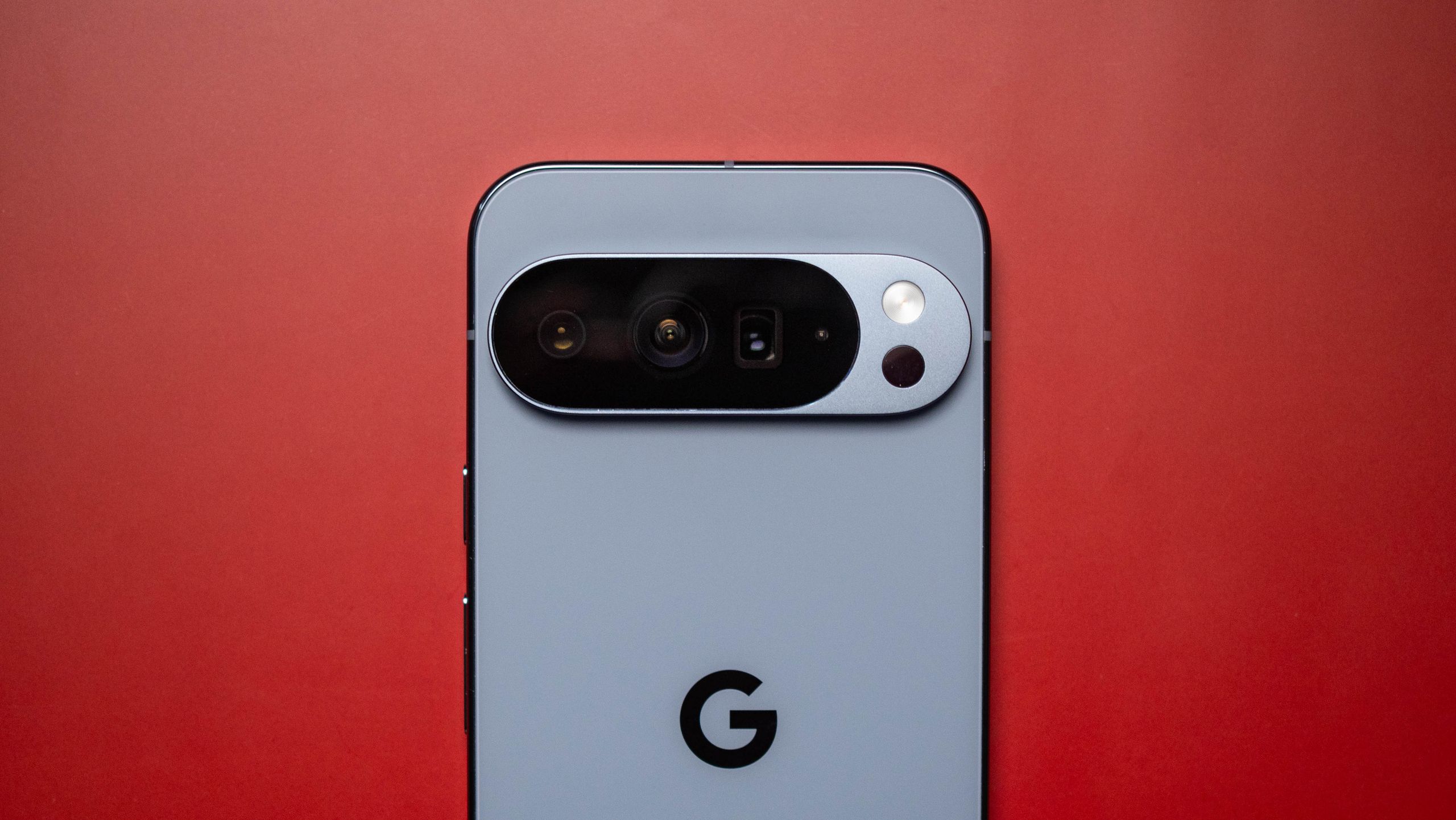
Massive Pixel 11 leak just revealed almost everything about Google’s next phones


What you need to know

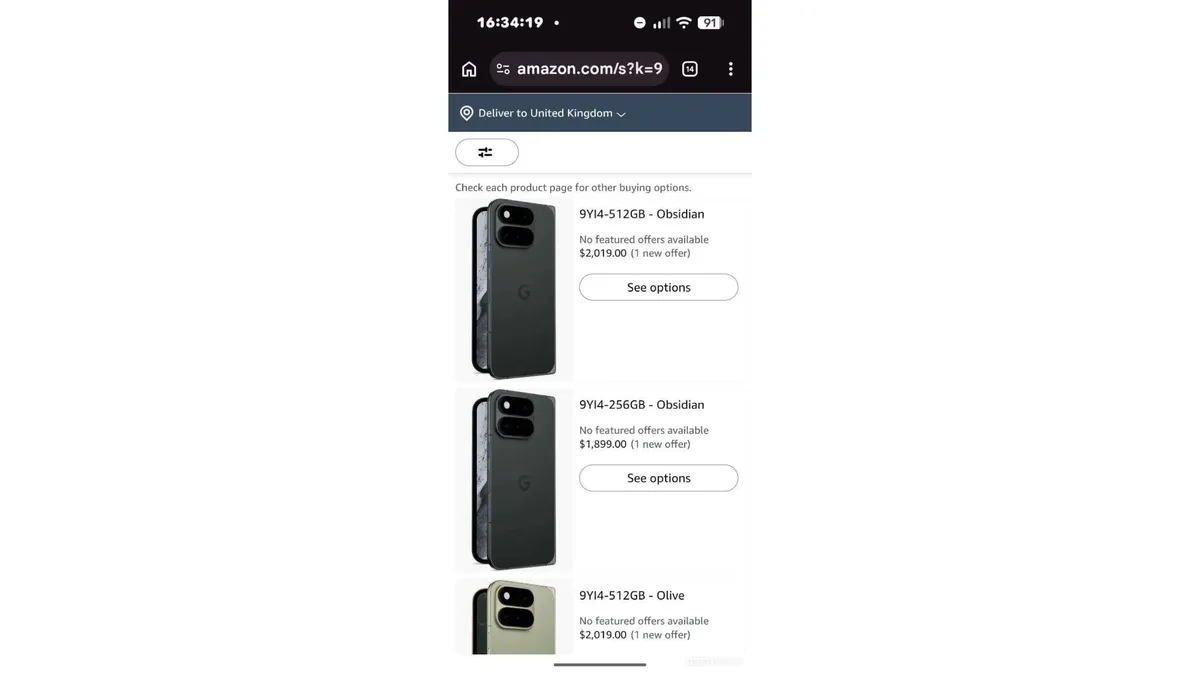
  • Google accidentally listed the entire Pixel 11 series on Amazon a month early, revealing pricing, specs, and colors.
  • Prices are rising by $100 across the board, with the base Pixel 11 now starting at $899 with 256GB of storage.
  • Google is hit by the memory crisis, with base Pro and Pro XL variants dropping to 12GB of RAM instead of 16GB.
  • The Pixel 11 Pro Fold starts at $1,899 but drops to a smaller 4,750mAh battery, down from last year’s 5,000mAh.

Ahead of the Google Pixel 11 series launch next month, a massive leak on Amazon has revealed almost everything you might want to know about the upcoming Pixel phones.

Google has officially confirmed that it’s launching “next generation of Pixel devices,” Which is expected to be the Pixel 11 series, on August 12 at 6:00 PM ET in New York. Surprisingly, there haven’t been many leaks about the lineup so far. Sure, we’ve seen renders and a few smaller leaks here and there, but not much concrete information. Well, that was the case until now.

A new leak from Android Authority has revealed pretty much everything about the Pixel 11 series, including US pricing, storage options, specifications, and more.

Lead Pixel 11 series specifications, USA price on Amazon listing.

(Image credit: Android Authority / Amazon)

According to the publication, the Pixel 11 series will once again consist of four models: the base Pixel 11, Pixel 11 Pro, Pixel 11 Pro XL, and the Pixel 11 Pro Fold. The listings were accidentally published by Google on Amazon, though the company has since taken them down.

In the official listing, you can see the new colors of the Pixel phones as well as the suggested pricing. It appears the Pixel 11 series will now start at $899 for the base variant with 256GB of storage. There seems to be no 128GB model this year, meaning Google is bumping the base storage to 256GB, though the starting price is also rising by $100.

Pixel 11 series leaked colors

(Image credit: 9to5Google)

According to the listing, the Pixel 11 will be available in four colors: Frost, Pistachio, Hibiscus, and Obsidian. There may also be a 512GB variant priced at $1,019 (via Droid-Life). Other specs for the base Pixel 11 include a 6.3-inch OLED display with up to 120Hz refresh rate, a sub-5,000mAh battery, and a 13-MP front camera.

Moving on to the Pixel 11 Pro, it also looks set to rise by $100. That means the Pixel 11 Pro will start at $1,099 for the base 256GB variant in the U.S. The 512GB variant may come in at around $1,219, while the 1TB variant will reportedly cost $1,449.

Lead Pixel 11 series specifications, USA price on Amazon listing.

(Image credit: Android Authority / Amazon)

Similar to the base Pixel 11, the Pixel 11 Pro is expected to come with a 6.3-inch display and up to 120Hz refresh rate. The battery will be slightly smaller than the base variant at 4,850mAh, though it will reportedly offer up to 120x digital zoom.

TechCrunch Mobility: A robotaxi ultimatum


Welcome back to TechCrunch Mobility, your hub for the future of transportation and now, more than ever, how AI is playing a part. To get this in your inbox, sign up here for free — just click TechCrunch Mobility!

I am back from vacation. What did I miss? Turns out, quite a lot — including the end of the Uber-Waymo partnership in Phoenix. Uber and Waymo still have robotaxi service partnerships in Atlanta and Austin. The question is not if, but when will these agreements end? But that isn’t the most intriguing question, in my opinion. I am far more intrigued by how these two companies will behave once the remaining partnerships end. 

There is already tension with Uber executives taking not-so-subtle shots at Waymo. I expect that once the partnerships end, these thinly veiled barbs will be replaced with more direct action. One battleground will be policy, specifically markets where robotaxi companies are angling to get access. 

This week, we saw another interesting development in the autonomous vehicle industry on the federal stage. National Highway Traffic Safety Administration administrator Jonathan Morrison issued a directive to autonomous vehicle developers, stating that it is unacceptable for their vehicles to interfere with first responders or law enforcement.

The money quote: “Let me be clear: the inability to detect and appropriately respond to such situations represents a functional insufficiency. Emergency scenes are not rare or extreme ‘edge cases.’ As such, NHTSA is today issuing a call to action for AV developers and operators to immediately focus their resources on fixing this issue.”

Morrison’s letter never calls out any one robotaxi company and it was sent to every AV developer listed in the Department of Transportation’s Standing General Order. But it sure seems like Morrison is directing the agency’s ire at Waymo.

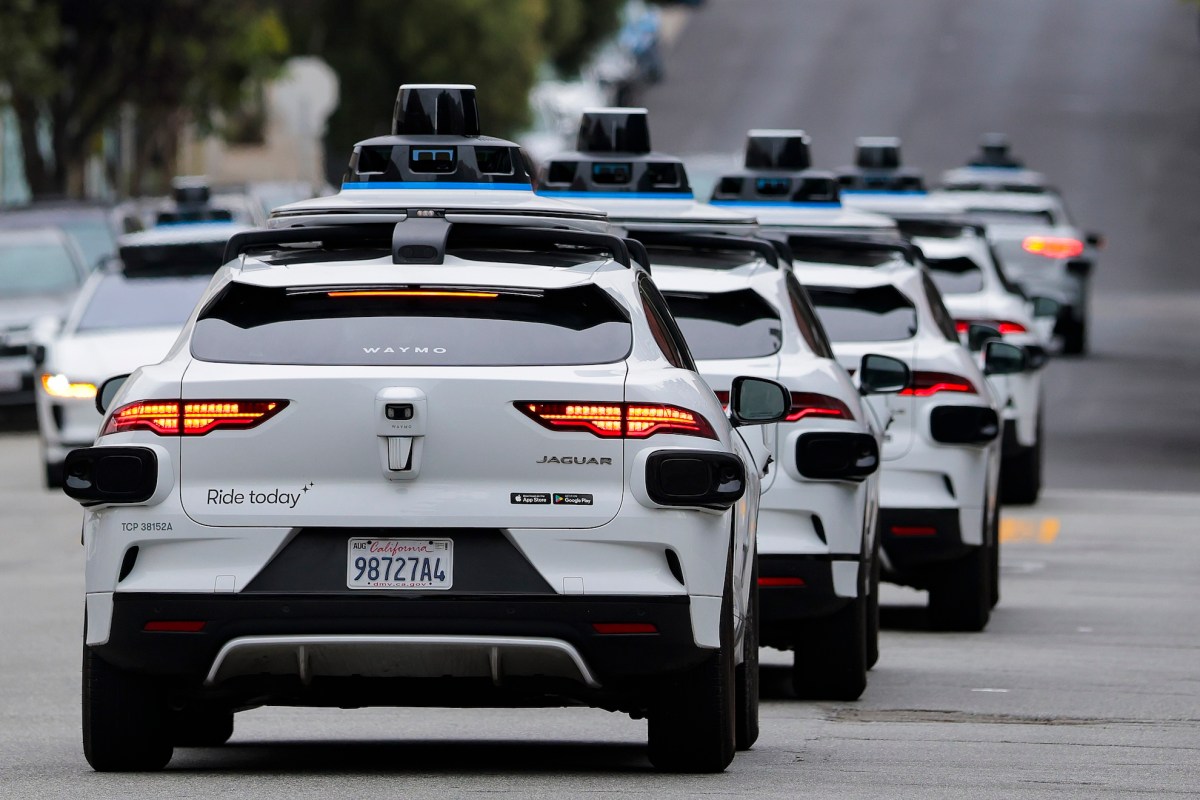
A previous TechCrunch investigation found that Waymo — which operates the largest robotaxi fleet in the United States, with vehicles in cities such as Los Angeles, Phoenix, and San Francisco — has had repeated run-ins with first responders. And just this week, San Francisco supervisor Bilal Mahmood said he plans to submit a letter of inquiry to examine how autonomous vehicles affected public transit services and emergency responders following a July 4 fireworks show that resulted in massive gridlock. Local news outlets reported that numerous Waymo robotaxis had to be towed after running out of power during the lengthy traffic jam.

Morrison’s letter has gravitas. But will there be substantive consequences for AV developers? It’s hard to tell at this point. For now, the NHTSA has demanded companies present the agency with “solutions” by the end of the month.

One more news item from the feds. Take a look at the new 2026 Regulatory Plan and Unified Agenda, which was updated last week. It contains a long list of proposed changes to Federal Motor Vehicle Safety Standards (FMVSS) requirements, which govern vehicle design and equipment requirements. These proposed changes could help autonomous vehicle companies like Tesla and Zoox, which are developing vehicles without steering wheels, pedals, or other features required on human-driven cars.

A little bird

blinky cat bird green
Image Credits:Bryce Durbin

Got a tip for us? Email Kirsten Korosec at kirsten.korosec@techcrunch.com or my Signal at kkorosec.07, or email Sean O’Kane at sean.okane@techcrunch.com.

Deals!

money the station
Image Credits:Bryce Durbin

We usually focus on venture deals, but this week I wanted to highlight Rivian and the sale of 86.25 million Class A common shares priced at $15.50 each (that includes an added 11.25 million in additional shares that underwriters opted to buy).

In all, Rivian said it expects to raise $1.32 billion in new capital. The raise comes at a notable time for the EV maker. The company started delivering its new R2 SUV last month and recently raised its sales forecast for 2026. The company said it now expects to deliver between 65,000 and 70,000 vehicles after outperforming its own expectations in the second quarter due to robust growth quarter-over-quarter in EDV and R1, coupled with the introduction of R2 deliveries. 

The company didn’t explain the reason for the raise. But as a reminder, Rivian is not yet profitable and scaling up production of the R2 — or any vehicle for that matter — isn’t cheap!

Other deals that got my attention …

Bidbus, a Los Angeles-based startup that built a digital marketplace where multiple dealers can bid on a car, raised $15 million in a Series A funding round led by Ibex Investors. Mucker Capital, FJ Labs, Motley Fool Ventures, Data Point Capital, Walter Ventures, and the Car Dealership Guy’s Yossi Levi also participated.

Lyft said it plans to acquire Serveo’s bike-share business in Spain. Terms weren’t disclosed, but the ride-hailing company said it is expected to close this year.

TaiSan, a U.K. battery startup, raised £4.65 million in a seed funding round co-led by Eos Advisory and the Midlands Engine Investment Fund II. InnoEnergy, AFI Ventures, EverQuest Capital Partners, Exergon, Heartfelt Ventures, Adeline Arts & Science, Techmind, angel investor François Badelon, and matched funding from Innovate UK also participated.

Notable reads and other tidbits

Image Credits:Bryce Durbin

AssuranceAmerica, a U.S. insurance provider, confirmed a data breach that affected the personal information and driver’s license numbers of 6.9 million people, making it the largest known spill of Americans’ driver’s license information this year.

Beta Technologies, the electric vehicle takeoff and landing developer, completed operational flights conducted under the U.S. Department of Transportation and Federal Aviation Administration’s new eVTOL Integration Pilot Program. The flights covered about 275 nautical miles covering Virginia and Maryland. 

Longtime followers of Tesla will remember the heady days when Elon Musk battled various short sellers of the company’s stock. Musk is more polarizing than ever, and one exchange-traded fund creator has found a way to tap into that negative sentiment with two new anti-Elon exchange-traded funds

GM brand Chevrolet built an all-American EV truck. Senior reporter Tim De Chant asks, Why is nobody buying it

Manna Aero, the Ireland-based autonomous drone delivery startup, is scaling up in the United States with a factory and operations center in Tulsa, Oklahoma, that it says will employ 1,000 in the next few years. 

Slate Auto teamed up with Crayola to offer its EV truck and SUV customers vehicle wraps in five crayon colors. (Reminder: The basic Slate EV vehicle isn’t painted. Instead, it comes in a gray composite material that can be customized with a vehicle wrap. The company has hundreds of options to choose from.)

One more thing …

TechCrunch podcast Build Mode just launched its third season, and it’s a banger. Build Mode is hosted by Isabelle Johannessen, who heads TechCrunch’s Startup Battlefield program. Unlike Equity — the TC podcast I co-host along with Anthony Ha and Sean O’Kane — Build Mode is designed to help early-stage founders. 

The new season kicks off with Precursor Ventures founder and managing partner Charles Hudson, who talks about what early-stage founders need to know before raising their first institutional round.

Check it out: The new rules of early-stage fundraising with Charles Hudson.

When you purchase through links in our articles, we may earn a small commission. This doesn’t affect our editorial independence.

Samsung may be ready to end the long wait for the Galaxy SmartTag 3


What you need to know

  • Galaxy SmartTag 3 may launch in September alongside the Galaxy S26 FE.
  • Reliable tipster Roland Quandt leaked the release window on Bluesky, though actual hardware specs and design details remain completely under wraps.
  • SmartTag 2 is due for an upgrade, with its Bluetooth 5.3 hardware and SmartThings Find network now trailing Apple’s Find My ecosystem.

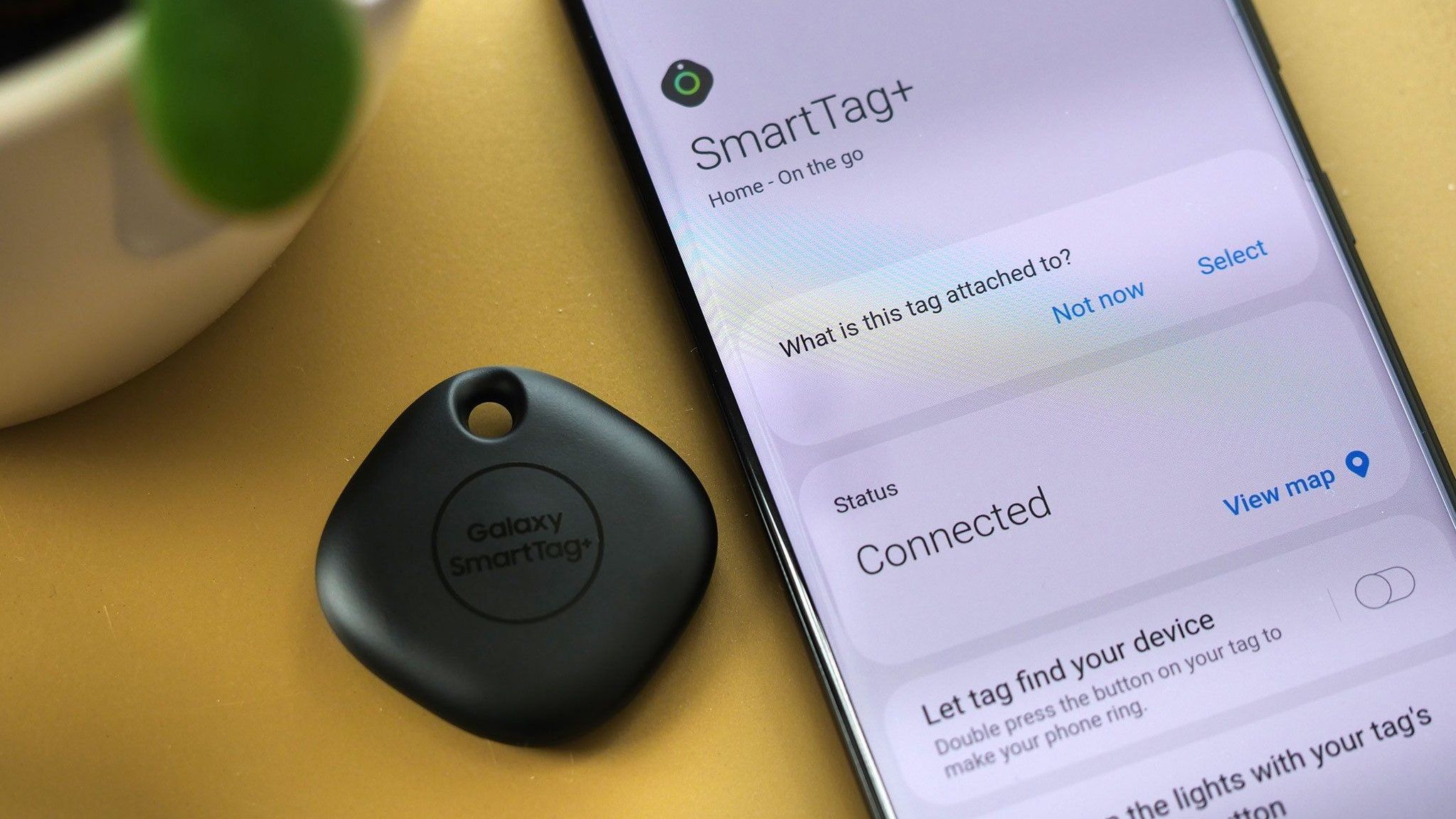
Samsung might finally be preparing to refresh one of its most forgotten Galaxy accessories. The Galaxy SmartTag 3 could be released as early as September, according to a new leak, finally ending a wait of nearly three years since the SmartTag 2 arrived in 2023.

The rumor comes from well-known leaker Roland Quandt, who shared on Bluesky that the SmartTag 3 is coming soon with the Galaxy S26 FE. If that timeline holds up, Samsung would likely announce both devices together at its expected September launch event for the Fan Edition phone. That’s all we know so far. The design and hardware of the tracker are still a mystery.

OpenAI bets on families as ChatGPT goes deeper into households


More than three years after ChatGPT’s launch brought generative AI into the mainstream, OpenAI is broadening its focus beyond individual users to families.

OpenAI is hiring a dedicated product manager in San Francisco to build experiences for families, caregivers, and older adults across its products. The role calls for experience building products for parents and families, and other trust-sensitive consumer experiences, according to the job posting.

The hiring comes as ChatGPT’s audience continues to broaden beyond younger users. According to Sensor Tower estimates shared exclusively with TechCrunch, the share of ChatGPT users aged 35 and older globally rose to 31% in Q2 from 26% a year earlier, while the share of users aged 18 to 24 fell to 29% from 34%. In the U.S., nearly one in four smartphone users who are parents used ChatGPT during the quarter, up from 16% a year earlier, the firm estimates.

OpenAI did not respond to requests for comment about the job posting.

A dedicated product role focused on families signals that OpenAI is beginning to think about its products less as tools for individual productivity and more as technology designed for households, said Ben Bajarin, chief executive of technology consultancy Creative Strategies.

“This is similar to the path Google, Apple, and Meta eventually followed as their platforms became embedded in everyday life, but AI raises the stakes because the assistant is not just mediating content or devices,” he told TechCrunch.

That shift also brings new trust and safety challenges. Stephen Balkam, chief executive of the Family Online Safety Institute, said the hiring reflects both the maturation of OpenAI and a growing recognition that AI products used by children and teenagers require different safeguards than those designed for adults.

“I see this as safety by redesign,” Balkam told TechCrunch. “You take the initial product or service that was released… not really with kids in mind… so this is a much-needed reaction and response.”

The comments come as new research published this week by the Family Online Safety Institute found that parents are underestimating how often their children use generative AI. While 27% of U.S. parents said their child had used generative AI in the past week, 38% of children reported doing so themselves, according to the survey of more than 4,000 families in the United States and Australia.

Balkam told TechCrunch that AI companies should build products differently for younger users, with stronger content controls, age-appropriate experiences, parental oversight, and reminders to inform users that they are interacting with an AI — and not a human.

Image Credits:Jagmeet Singh / TechCrunch

The hiring also comes amid growing scrutiny of how AI companies protect younger users. OpenAI has faced multiple lawsuits from parents alleging that ChatGPT contributed to harm suffered by their children, including in cases involving suicide.

In response to some of those concerns, OpenAI has introduced a series of safety measures over the past year, including parental controls for teen accounts, routing sensitive conversations to reasoning models designed to better handle signs of distress, and, more recently, an optional “Trusted Contact” feature that can alert a family member or caregiver in cases of potential self-harm.

AI companies, Balkam said, have an opportunity to avoid the mistakes made by social media platforms, which for years treated children much like adults before adding stronger safeguards amid mounting public pressure and regulatory scrutiny.

The hiring also aligns with OpenAI’s broader efforts around families. In a recent workshop organized with the San Antonio Spurs Community Impact organization and the Positive Coaching Alliance, the company said it aimed to explore AI’s role in learning, coaching, and youth engagement.

That said, the demographic shift is not unique to ChatGPT, though OpenAI’s audience is changing in some distinct ways.

Sensor Tower estimates that users aged 25 to 34 account for 40% of the global app audiences for Anthropic’s Claude and Google’s Gemini, matching ChatGPT, compared with 33% for Microsoft’s Copilot. Copilot, however, skews older, with 20% of its users aged 45 and above, compared with 14% for Claude, 12% for Gemini, and 11% for ChatGPT.

While ChatGPT remains relatively underpenetrated among older users, it is adding them faster than its rivals. The share of users aged 45 and above rose three percentage points year-over-year in the second quarter, compared with a two-point increase for Copilot and declines for Claude and Gemini, according to Sensor Tower.

Among U.S. smartphone users who are parents, Gemini had the widest reach at 32% in Q2, followed by ChatGPT at 24%, Claude at 4%, and Copilot at 2%.

For Bajarin, OpenAI’s decision to hire a product manager focused on families signals where consumer AI is headed. As AI becomes a technology shared across generations, he expects companies to roll out family plans, child and teen profiles, caregiver tools, shared household memory, AI tutoring, and stronger safety controls.

When you purchase through links in our articles, we may earn a small commission. This doesn’t affect our editorial independence.

Worries over a pricier Galaxy S27 might’ve caused S26 sales to surge for Samsung


What you need to know

  • Reports claim that the Galaxy S26 series has been shattering Samsung’s sales expectations, as the company holds “Appreciation Events” and more.
  • Sales for the Galaxy S26 have risen by “three times” the amount in recent history, and it’s likely consumer fear over a pricier Galaxy S27 that’s cultivated this boost.
  • Samsung reported a major boost in Galaxy S26 popularity and production earlier this year, but with soaring DRAM and NAND prices, cost

We’re caught at a midway point between the Galaxy S26 series and the upcoming Galaxy S27 series. These series are reportedly influencing one another, as fears mount over higher prices for Samsung’s next wave.

Late this week, ETNews (Korean) reported that Samsung is experiencing another surge in Galaxy S26 sales (via SamMobile). The publication’s sources claim that Samsung observed significant sales performance domestically and globally in June. What’s more, the company reportedly held an “Appreciation Festival” for consumers. If a Galaxy S26 series device were purchased, consumers would receive a 20% refund “in Digital Onnuri Gift Certificates.”

An AI agent startup just let its agent run its $100 million fundraise


There’s something almost too meta about this one, via Bloomberg. Lyzr, a three-year-old, Jersey City, New Jersey, startup that helps enterprises build AI agents, used its own AI agent to raise its own round. The system, SivaClaw, reportedly fielded questions from more than 130 investors, drafted investment memos, and even tracked which slides backers lingered on.

It basically ran point on the startup’s $100 million Series B (at a roughly $500 million valuation) while proving that the product actually works. It’s hard to imagine a cleaner sales pitch.

But the most telling detail, per Bloomberg’s retelling, is how little legwork was involved. Lyzr told the outlet it pulled in $400 million in interest from Silicon Valley, the Middle East, and financial-sector investors without a founder ever needing to fly out and do the traditional laps up and down Sand Hill Road for coffee meetings and warm intros. That may be the real story of this go-go moment: there’s so much capital chasing AI bets that startup founders with traction barely have to leave their desks to raise nine figures.

This upcoming Android phone just raised the bar for free battery replacements


What you need to know

  • The Redmi Note 17 Pro comes with a promise of free battery replacement if battery health drops below 80% within four years.
  • Durability gets a boost too, with an IP69K rating for strong dust and high-pressure water resistance.
  • The Pro model also gets a refreshed look, featuring a more prominent dual-camera island than the standard Redmi Note 17.

Smartphone makers love to talk about bigger batteries, but Xiaomi is taking a different approach with the Redmi Note 17 Pro. The company promises to keep that battery healthy for years, and it’s willing to replace it for free if it doesn’t.

Xiaomi has confirmed a new battery guarantee for the Redmi Note 17 Pro ahead of the phone’s July 14 debut in China. The battery is designed to retain at least 80 percent of its original capacity after four years of use. If it falls below that threshold during the coverage period, eligible users can receive a free replacement, Xiaomi Group President Lu Weibing revealed on Weibo (via Android Authority).

Final extension: Startup Battlefield Australia applications now close July 20


One last chance to apply

Due to overwhelming interest, we’ve extended applications for Startup Battlefield Australia to July 20.

If you’ve been thinking about applying, do it now. There won’t be another extension.

One application could change everything

Since the first Startup Battlefield Australia in 2017, there have been 26 alumni companies that have collectively raised over $147 million, with three successful acquisitions. They’ve been backed by some of the world’s most respected investors — including Y Combinator, Blackbird Ventures, Square Peg Capital, Khosla Ventures, Microsoft, AirTree Ventures, Startmate, Techstars, and SOSV.

It all started with one decision: They applied.

Why apply now?

If you’re building something ambitious, this is a fast track to the people who can move your startup forward.

Selected founders will pitch live to:

  • Top-tier investors.
  • Global media.
  • Australia’s leading founders and operators.
  • Potential partners, customers, and hires.

This is more than a pitch competition. It’s a chance to earn visibility, credibility, and connections that can take years to build.

What’s at stake?

On August 19, 2026, eight startups will pitch live at Stripe Tour Sydney.

The top three will receive up to $15,000 in Stripe fee credits.

The grand prize is even bigger:

Automatic entry into Startup Battlefield 200 at TechCrunch Disrupt in San Francisco this October.

No second application. No extra round. Just a direct path to one of the world’s biggest startup stages.

Who should apply?

We’re looking for early-stage startups across Australia and New Zealand that are:

  • Pre-seed to Series B.
  • Building a real product or showing strong traction.
  • Ready to scale.
  • Ready to tell their story.

You don’t need to be a household name.

We’re looking for the next one.

The deadline has moved — the opportunity hasn’t

This extension gives you more time, but not much.

Applications now close July 20.

If you’ve been waiting, this is the moment.

Submit your application before July 20.

Free to apply. No equity taken. One opportunity that could change everything.

When you purchase through links in our articles, we may earn a small commission. This doesn’t affect our editorial independence.

Rumors say Honor’s alleged ‘Wide’ foldable competitor has a top-notch battery


What you need to know

  • Honor’s alleged wide foldable finds itself in new rumors that say it could feature a 5.5-inch cover and 7.6-inch internal display.
  • A highlight in these rumors is its battery, which could arrive at 7,000mAh or higher, as Honor might look to do what others (Huawei) have not.
  • Wide foldable rumors have focused on Samsung; however, Honor and Vivo

There’s been a lot of talk about wide foldables, and funnily enough, the first one didn’t come from Samsung (Huawei did it first). Now, rumors continue old discussions, as Honor’s take has its specifications leak.

Tipster Digital Chat Station posted a series of alleged details about Honor’s rumored wide foldable (via NotebookCheck). Rumors suggest the phone will feature a 5.5-inch cover display, followed by a 7.6-inch internal screen. This follows along with the industry’s first wide foldable from Huawei, the Pura X Max. A major piece of these rumors is the phone’s suspected battery capacity.

Canadian spy agency says it hacked drug traffickers, extremists and a ransomware gang last year


Offering a rare glimpse at the priorities of a top spy organization, Canada’s Communications Security Establishment said it conducted a handful of state-authorized hacks last year in order to disrupt the operations of drug traffickers, violent extremists, and a ransomware gang.

The disclosures in the Canadian intelligence agency’s annual report underscore some of the main national security threats that face Canada and its closest allies: ranging from the import of illegal drugs to cyberattacks. The spy agency, CSE, is tasked with collecting foreign intelligence, defending government systems, and disrupting online adversaries.

Published last week, the report says the CSE last year carried out three foreign “active cyber operations” — the term agency uses to describe its cyberattacks on overseas operations that threaten Canadian national security and public safety.

One of the operations, per the report, targeted cybercriminals outside of Canada who were brokering the sale of chemicals used to create the synthetic opioid, fentanyl. The CSE collected intelligence on the brokers, then conducted an operation that “disrupted and diminished their ability to operate,” the report said.

Another active operation involved the collection of signals intelligence — data produced from electronics and internet-connected devices — on an overseas extremist group that was spreading violent ideology and recruiting members, including in Canada.

The report said the agency analyzed the group’s organization, reach, and potential vulnerabilities to conduct an operation that “successfully undermined the group’s credibility and limited their ability to radicalize and recruit new members.”

Another operation involved disrupting a ransomware-as-a-service operation that let hackers rent access to a ransomware gang’s infrastructure to launch destructive extortion attacks. The CSE said its signals intelligence unit identified how the gang worked against the healthcare, transportation, and business sectors in Canada, then used an active cyber operation that “rendered the group’s infrastructure inoperable.” The operation also deleted much of the data on the gang’s servers.

The agency said it undertook concurrent “technical disruptions” against 10 of the most significant ransomware gangs targeting Canada to “make parts of their infrastructure unusable.”

The report did not say where the hackers, extremists or the ransomware gang were located, or the specifics of the operations that the CSE used to target them. It’s not uncommon for spy agencies to conduct cyberattacks against their adversaries, but such operations are seldom disclosed or detailed to protect the methods and techniques used.

Fort Meade, Maryland-based Cyber Command, which conducts cyber operations for the U.S. government, regularly carries out “hunt forward” operations that involve sending cyber teams to allied nations to secure their networks and disrupt cyber operations launched by adversaries. The number of U.S.-led hunt forward operations have risen from a few handful during 2018 to more than two dozen during 2025.

Canada’s CSE said it also carried out one defensive cyber operation during the year to target a phishing campaign aimed at Canadian federal government institutions and other important systems. The agency said it disrupted the group’s infrastructure and “degraded their ability” to target Canadians.

When you purchase through links in our articles, we may earn a small commission. This doesn’t affect our editorial independence.