How Can Accurate 3D CAD Modeling Benefit to the Design Process of Your Firm


It appears that product development is at a stage and at a time that is so image and so technologically driven that it would appear that the napkin sketch would be worth so much less than it once would have. Yet it would appear that it is at precisely this stage that the next generation designs would have so much more definition, so much more precision, so much more sophistication, so much more detailed work that there would be no room for error. It would be here that a 3D CAD modeling solution would want to have so much confidence and so much enthusiasm that they could develop an idea, no matter if it were fuzzy, into something your whole organization would be happy with.

How you carry out 3D CAD modeling effectively is definitely not an “oh wow” thing that your competitors would be so envious they would be itching to demonstrate at a business presentation as if they are on the precipice. A 3D CAD model, on the contrary, signifies exactly the spine of an optimized process itself. It will enable your project members to conceptualize with a clear intention and communicate without being caught up in understanding discrepancies created using scribbled-out sketches on a piece of paper. That, my friend, clearly signifies an effortless glide from conceptualizing to completion without a hitch.

Give it a chance, and it will soon turn out to be your new best pal if your project serves as a productivity supercharger and astonishes your client before they might have even posed an inquiry. Sites like Cad Crowd are there so that you can get your own freelance 3D CAD modeling artists who not only have a great knowledge base about things they are talking about with regards to accuracy. These people will bring their own knowledge base with them into your own projects without your having to hire an entire staff. Companies will no doubt let out a collective breath at this alone.

So, let us start an exploration on how the proper 3D CAD modeling software solution can help your business succeed with your designs within today’s competitive market.


🚀 Table of contents


Intelligence-assisted visualization for all phases of development improvement

Nevertheless, there is something magical about seeing an idea develop out of a conception on a piece of paper and develop into something three-dimensional and optimal. It somehow becomes more feasible and possible with unlimited opportunities waiting to be discovered. The accuracy and precision that you receive with 3D CAD design services enable your design team to have designs conceived at a size scale that might have been impractical with conventional designs. You have perspective, size, scale, proportion, and even a sense.

Just consider having an idea for the very first time for a client or some executives at your own organization. You might be standing there with some 2D sketches on a board and hoping that everyone who understands it would be viewing it exactly the same as you. But with a 3D model with exactly what you want to build and giving you the functionality to pan, zoom, and rotate it from any side, you’re answering questions before people even have a chance to ask. That helps people who have to sign things off because they’re viewing it and having to picture what it might look like.

The reward for this will be enormous and will be achieved as you develop your designs. Your whole team will be aware of what needs to be done. You will be able to mess around with designs without having to rip apart your prototypes or even focus on designs that are brand new. It will be easier and more collaborative, as everyone will be viewing things from the same perspective, making your designs appear convenient.

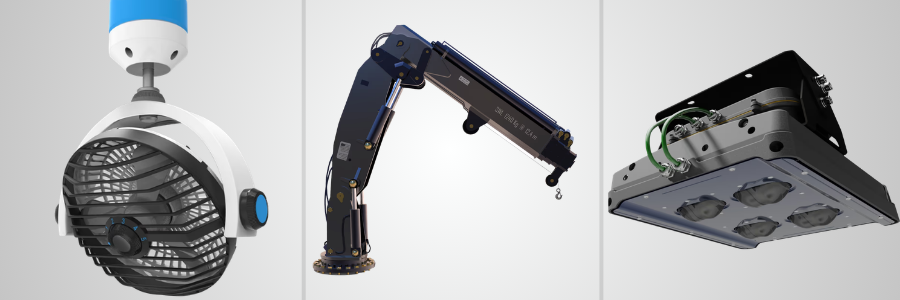
3D modeling of various products by Cad Crowd design engineering experts

RELATED: Tips for product design firms: Validate new product ideas & squash launch failures

Improve accuracy and prevent costly guesswork

But then again, if your business has ever had to deal with the presence of error measurement or with the sly short hoodlum named Misunderstanding lurking about, then it will all be up to 3D CAD modeling with its accuracy. The accuracy that is required and necessary for your business, and that your business can put stock in and trust and believe with regard to precision, will be there with 3D CAD modeling. There are no guesses as to anything being too general.

Accuracy will be your basis for designs. The error will be so small. The unexpected surprises will never be a surprise for production. Production will never be caught off guard. Prototypes will never be distorted or incompatible with systems. Engineering design experts will never be put into a position to have to hold everything back because they’re correcting something they could have very well prevented.

And all these with precision on this scale will be the challenge for industries as complex as your auto, aerospace, robotics, medical, and architectural industries. It will be your products with detailed components with specific safety needs that will make up your 3D CAD models. You will no longer have to wait on tenterhooks as you make your submissions for production because you will be aware that all the minute details were stipulated.

But if it’s not something your business already has an area for and designs with CAD skills commensurate with your industry, then Cad Crowd will be providing your business with extremely skilled professionals competent enough to provide your models with accuracy levels commensurate with your industry.
All departments will work seamlessly

A design will never be solo. It requires multiple teams for something as elementary as an article or an object. Engineering requires an approval check on feasibility, Marketing requires an approval check on designs, Production requires an approval check on production, and then an approval check on cost at the management level; it becomes a Telephone game without an instrument that can amplify all requests.

A correct 3D CAD model does not have these hurdles because there is a common goal that everyone can relate to. All communications are done within a universal language and without misunderstandings between 3D modeling design services. You will not be writing an email about changes and your colleagues pointing at a correct 3D model and talking about changes with reference to some components.

It will remove friction with communications so that collaboration will be an even better experience. The reviews for designs will occur within shorter periods because, believe it or not, there will be a better communications tool that will replace a document with pages and pages. The engineers will be able to spot regions with problems with structures. The designers will be able to create surfaces without creating problems with functionality.

The more your business requires specific 3D CAD modeling, the easier collaboration becomes. The feelings of understanding that result from a smooth workflow make it possible for a much higher level of collaboration and tension release that arises with completing a difficult project.

Enable quicker iteration and save time with a focus on encouraging innovation

Speed is a trait that truly requires a lot and is very necessary for competitive business. Those who will be able to sustain an extremely high speed from conceptual stages to approval will certainly have an edge. However, then every stage will be an enormous task, and it might be quite tough. You will be able to attain rapid product cycles with the proper 3D CAD modeling because your group will be working on a copy and making changes to something that already exists, instead of doing everything again and again.

Regarding things like some form of change on the client’s side, there are some changes that occur effortlessly. Due to some form of error noticed within some designs by 3D modeling design experts, some changes will be incorporated without having to start from scratch. Assuming your employees are interested in some designs, then accuracy within 3D CAD modeling will have you testing some routes without excessive investment in your schedules.

It promotes creativity

The justification for this is that, because it would be easy to modify, there would be confidence in making statements about very large designs. Even without physically prototyping, it would be possible for engineers to analyze various performances. It would make everyone in the community inventive because it would be cheaper to research designs.

However, things escalate even more into higher gear within an uninterrupted iteration process among various companies that have engaged with freelance professionals on relevant 3D CAD modeling. Cad Crowd helps you source experts with knowledge on rapid iteration and executing changes at an unimaginably fast rate. Productivity will increase as your company will be capable of producing results out of this world at unbelievably short times.

RELATED: Prototype cost Vs. production cost: Prototyping services rates and R&D pricing for firms

The cost of production process

Evidently, amongst perhaps some of the most encouraging benefits of an exact 3D CAD modeling process would be its economy. It truly is an undeniable fact that problems discovered at an early stage cost less compared to problems detected at a production stage. A tiny miscalculation made at an unnoticed modeling stage can turn out to be an economic headache at the ordering and production stage. It will allow your project participants, even engineering design services, to identify problems before they turn into disasters. You will be able to concentrate on your project and review it if necessary before checking for compatibility.

It will be your first line of defense against project failures because you employ 3D CAD modeling software. Both industries are pleased with the exact model due to its immense benefits. The industry will be able to check at once if it suits them. A disadvantage will be removed because they will have an easier chance of finding an approximate cost estimate. A timetable with high accuracy will be created. It would be very useful and advantageous for your business budgeting if there were a model that would enable verification of information, so that your business budgeting would be more efficient, even if your organization were doing the production.

It does not have to be pointed out that the more information your organization receives about budgeting, the better it would be, because then there would be no surprises. The more efficient your budgeting is, the more money an organization will3D CAD modeling and skills provided at Cad Crowd will make your production chain smooth and cost-effective. 3D CAD modeling and skills provided at Cad Crowd have already justified itself on visualization, accuracy, collaboration, rapid iteration, and cost savings.


But there’s more, as your business adopts this giant as a step within your production chain, you will reap more and more benefits. Your overall production chain will be smooth and cost-effective, and your entire staff will benefit. And as your creative staff people will no longer be working on guesses and old ways, creativity will bloom and surprise even the most seasoned and experienced executives.

A source of competitive advantage in turbulent markets

Fast-tracking business operations promotes value innovation and productivity. Delays caused by developments will be missed opportunities. Unproductive business operations will result in frustrated customers. At some point, there will be no business growth. Accuracy obtained from 3D rendering design services and modeling translates to good business as it boosts productivity and accuracy.

When your business presents clean graphics at an early stage, they appreciate it. When your models fit and work as they should, they appreciate it. When your employees express an idea not only clearly but also professionally, they appreciate it. It is because of these factors that your reputation will be made and your business will be honored among your competitors who engage in taking corners with wrong methods.

Effective 3D CAD modeling brings enormous opportunities for you, and you can be bolder without fear. Those designs that were hard for you to do are accomplished with the help of efficient modeling tools. It will be easy for you to get creative. It will be easy for you to enter new markets without taking any risk. Your business will be able to undertake projects that were hard for you.

This advantage will be made even better as your company will make use of freelance modelers from Cad Crowd. You will eventually get talent from all around the world without any commitment to be made. You will be more flexible and will scale at a very rapid rate as opportunities arise for you, and, hence, make sure your business is ready and up-to-date.

3d model of electronic products by Cad Crowd design experts and freelancers

RELATED: 13 reasons why companies outsource IoT design & development to product design firms

Higher accuracy levels in prototyping, thus fewer trial and error experiments

And then, of course, there’s the entertaining bit: your idea realized as a three-dimensional model. But it can be frustrating if there are discrepancies in your designs or if your designs aren’t assembled properly. A small mistake on your three-dimensional model, and before you know it, you have an issue on your hands with your prototype and need to fix it with the product engineering expert. It becomes a defect, and an error becomes a costly correction.

By using 3D CAD modeling, all these problems are removed and maintained at as low a level as possible. It allows creating a prototype that is similar to the actual thing. All specifications relating to size are correct. Components are in the correct places. So, it becomes an exact representation of an actual product.

It will result in an efficient process as regards two parameters: first, there will be fewer prototypes because error correction will be carried out digitally and not physically, and second, there will be more relevant testing on these prototypes because they will no longer be restricted to geometry testing. You will be able to test functionality as opposed to correcting errors.

These are some processes that require very detailed digital modeling. These processes are 3D printing, CNC machining, vacuum forming, and injection molding. The more detailed the design of a product, the easier it becomes to turn it into a product. It truly becomes an extremely critical stage requiring very detailed 3D CAD modeling. Freelance CAD technologists on Cad Crowd will mostly have designs for making prototypes. The experts will make sure that your prototype will be successfully realized as an actual product, either as an idea model or as a functional unit. 
Unlock the full potential of your design process

Among the most necessary technologies that should be implemented within any business at the current stage will be the implementation of accurate 3D CAD modeling. It will enhance visualization, accuracy, collaboration, rates of iteration, and simulation and prototyping design engineering services. It will also be extremely useful and apt for the minimization of production costs. It will prepare your business for success and will provide a foundation for your growth. 

All phases and stages of your business will be extremely efficient and delightful as soon as accuracy becomes your core business activity. You don’t have to employ an entire CAD staff on a full-time basis. It has become extremely easy and effortless for you to be introduced to highly skilled freelance 3D CAD model artists who will prove an unwavering level of accuracy and professionalism in what they do, thanks to Cad Crowd. 

How Cad Crowd can help

So, if you are interested in taking your process of designs and products to the next level and making your products have an increased backbone and achieve an unparalleled breakthrough from conceptualization to completion, then it’s about time you explored your options. You should check out Cad Crowd and check out highly skilled freelance 3D CAD model artists that will assist you in actualizing your vision. be able to spend on R and D. Request a quote today.


author avatar

MacKenzie Brown is the founder and CEO of Cad Crowd. With over 18 years of experience in launching and scaling platforms specializing in CAD services, product design, manufacturing, hardware, and software development, MacKenzie is a recognized authority in the engineering industry. Under his leadership, Cad Crowd serves esteemed clients like NASA, JPL, the U.S. Navy, and Fortune 500 companies, empowering innovators with access to high-quality design and engineering talent.

Connect with me: LinkedInXCad Crowd

5 Ways 3D Architectural Visualization Can Revolutionize Your Design Process


The practice of architecture is nearly as old as human history itself. Admittedly, the first humans probably didn’t bother themselves with building complex houses with proper indoor plumbing. Still, at least they had nests, huts, or some other kind of dwellings to stay warm and protected from other carnivores. Humans then learned how to use and craft tools, which enabled them to build more complex structures like semi-sedentary dwellings and wooden houses later on.

Fast-forward a couple of thousand years, and they figured out that building a proper home required planning, and that’s when architectural drawings came into existence. It turned out the drawings were found to be useful, and that modern civilizations all around the world still use the same practice now. Of course, ancient architectural drawings from the bygone millennia were nothing in comparison to construction plans created in today’s digital age in terms of clarity or complexity. What started as relatively simple illustrations and hand-drawn blueprints has now become sophisticated data-rich visualizations generated on computers.

We now rely on CAD software to ensure precision, perfect geometry, and error-free structural engineering calculations. And more recently, the advent of 3D architectural visualization services has introduced a massive improvement in how we plan, perceive, and execute construction projects. Instead of seeing a project plan as a complex two-dimensional image, 3D hyper-realistic rendering allows you to visualize just about every single detail of the construction process (especially with BIM) and how the final building should look and feel, even before the actual construction happens. 

RELATED: Architectural Illustrations vs. Architectural Visualization Services

Creating two-dimensional construction drafts is one thing, but transforming the plans into a realistic imagery of the structure is another matter. In fact, 3D architectural visualization has become a trade of its own. You need skilled professionals with the right tools to generate realistic imagery that accurately represents architectural designs. But renderings can be expensive.

One of the best places to look for those experts is the AEC-focused freelancing platform, Cad Crowd. Populated by hundreds if not thousands of experienced 3D render artists from every corner of the world, Cad Crowd is your one-stop shop to discover and connect with some of the most talented freelancers specializing in architectural renders, whether for residential, commercial, industrial, or civil projects – at affordable rates.

How accurate visualizations enrich the design process

Having realistic 3D architectural visualizations can improve the construction workflow and design process by leaps and bounds. Not just on the technical level, but the benefits touch on the communication process and collaboration, too.

All-around better clarity

In principle, 3D renderings transform construction drafts and two-dimensional design illustrations into photorealistic imagery of the finished structure. All the lines and shapes you see in a conventional 2D drawing are no longer there, and instead, you get an image that looks as if somebody has captured a photograph of the structure when construction hasn’t started at all. To some extent, the client gets to see how the project should materialize early on in the design process. If the rendering also includes 3D interior visualization services, taking a look at the imagery can feel like having a quick walkthrough inside a building that still only exists as a design plan. 

RELATED: Camera Angles in the 3D Architectural Visualization Realm for Your Projects

Conventional 2D architectural drawings are tricky to understand. The walls, doors, windows, appliances, and furniture pieces are outlined together on a two-dimensional plane visible only from a bird’s eye perspective. Unless you pay close attention to the symbols and annotations, it can be difficult to tell a table from a tub, because both are observed from a top-down view. There is no sense of height from the walls, and the drawing for the roof is probably on an entirely different sheet. In short, it takes some serious mental translation to have a good grasp of the design.

Architects, engineers, designers, and contractors are trained to build structures from 2D drawings, so they have no problem understanding all the details and visualizing the design at a glance. For the non-technical people, on the other hand, making a correct interpretation can be a monumental challenge. Photorealistic 3D architectural visualizations make such a cognitive barrier disappear in an instant. You can clearly see where the walls stand, the placement of furniture, the positions of doors and windows, and how every room is connected to the others. A 3D exterior rendering also clearly visualizes the roof, the facade, the wall paint, and even the landscape and the surrounding environment.

Architectural visualizations come in several different forms, including floor plans, aerial views, interior design, and more. Each of them provides an immersive view of design, allowing you to gain a clear understanding of the structure’s spatial relationships from a human-friendly, comfortable viewing angle. High-end visualizations even render the lighting, shadows, material textures, and surface patterns. Everything appears crisp, detailed, and yet completely natural to the point where you might think that you’re looking at a photograph. Advanced rendering software can simulate the position of the sun and artificial light sources along with light intensity and direction adjustment for contextual accuracy as well.

3d interior rendering firm

RELATED: Techniques for 3D Architectural Visualizations and Tips for Your Services Firm

Rapid design iterations

Render firms use 3D models (as opposed to photographs of physical artifacts) as objects in the final render. This allows architects and designers to experiment with practically limitless combinations. The configuration and specification of load-bearing components might not be as flexible, but everything else can be modified without altering the structural integrity. Suppose the design of a house features a sizable living room with a large glass window on the east-facing wall; because the homeowner isn’t fond of the idea of a single massive glass panel for sunlight, the architect decides to use two smaller windows instead.

Making this kind of change in a digital environment is easy (in the hands of professionals, of course), quick, and definitely inexpensive. 3D rendering for architectural projects cannot happen without 3D architectural modeling services first. In the best-case scenario, the rendering process happens only when the 3D models of the design have been finalized and approved by the clients. Unfortunately, this isn’t always the case because without the photorealistic render, there’s no hint at how the lighting works or if the furniture pieces blend well with the overall color accents. But even with the back-and-forth of reviews and revisions, making changes to the rendering is still much cheaper and quicker than altering an already constructed design.

This kind of rapid design iteration puts 3D visualization way ahead of traditional 2D drawings. Clarity has everything to do with this advantage. When clients can see and understand how the proposed design will materialize in the end, they feel eager to provide feedback and propose modifications if necessary. The architectural designer can also provide multiple design options to begin with, allowing the client to explore variations in interior layout, facade treatments, material options, rooflines, and more. But then again, everything can be modified to cater to every client’s specific requirements on a computer screen for design process efficiency. 

RELATED: Architectural Visualization Services: A Complete Comprehensive Guide to Mood and Atmosphere

Keep in mind that expensive redesign and rework can happen because the client only understands the design concept after the structure, or at least parts of it, have been constructed. When things don’t look exactly like what the client imagines in the first place, modifications are likely expensive. Photorealistic rendering moves this hassle (if any) to the design process, where corrections remain within the confines of digital space and are cheap.

Engineering and design coordination

There might be multiple instances of disagreement between the engineers and designers in the project. However, this is exactly what you should expect in a carefully put-together team of professionals, where all the members perform their roles to the best of their ability. For example, a designer may propose an intricate room layout for the interior or complex geometry for the roof and facade. While all of those ideas are far from impossible, they might be an engineering nightmare due to resource limitations. 3D rendering isn’t all about aesthetics, but it’s also a tool for objective technical review where an interdisciplinary team can coordinate and make educated design decisions.

Let’s say the windows in the living room are supposed to be made of stained-glass because the client requires a unique lighting effect when the morning sunlight shines through. There are many different types of stained-glass (opalescent, streaky, flashed, iridescent, etc.), and the client gives the freedom to the architecture designer to determine what’s best. Instead of physically testing every type of glass, it is much easier and cheaper to simulate the lighting effect using the PBR (physically based rendering) feature in the software. The architect can then show the client how each type produces its own lighting effects in the room in broad daylight.

Simulation isn’t limited to lighting effects only. Engineering software with an FEA (Finite Element Analysis) tool can simulate how materials behave under real-world conditions, including mechanical and environmental stresses. FEA isn’t actually a rendering tool, but a construction project can take advantage of the analysis to accurately predict how the physical characteristics of specific materials change over time. It can tell you whether the structural strength will degrade or remain intact after long-term exposure to real-world conditions.

RELATED: Top 6 Architectural Visualization and 3D Rendering Trends for Your Company to Follow

Furthermore, the combination of 3D rendering and BIM (building information modeling) facilitates early clash detection in construction design. BIM is essentially an accurate visualization loaded with detailed specifications of every element that forms the structure, including mechanical, electrical, and plumbing. The software can handle even the most complex structures and the interactions among the various systems in the building. Clashes may include improper placement of structural elements, the lack of geometric tolerance, construction scheduling conflicts, and more.

Permit approval

In most, if not all, countries around the world, the process of acquiring construction and building permits still requires the use of conventional 2D architectural drawing services. That being said, it doesn’t mean that 3D visualizations have no place in the procedure. Quite the contrary, photorealistic rendering can be a significant factor in the approval decision. Most large-scale projects require approval from local authorities like the planning commission, the city council, or community boards. Each of those bodies needs to scrutinize certain aspects of the architectural drawings to determine if they warrant a permit. Much of the approval process relies on the information provided by the 2D drafts, but 3D renderings might serve as invaluable additions.

One of the best things about photorealism is the lack of ambiguity in the image it represents. It tells the reviewing parties how the new structure will look after completion, where the external lights illuminate the property boundaries at night, and if the new building integrates well (doesn’t break any zoning law, for example) with the existing neighborhood. Imagine a scenario where a brand-new house is being built in a city or area that imposes strict requirements focused on eco-friendliness and sustainability. It’s either a green building or none at all. Photorealistic visualization designers have what it takes to showcase important features like natural ventilation, solar panels, and rainwater harvesting systems.

Not only does the visualization highlight the “green” features, but it also illustrates how everything works with pleasing visuals. For example, the ventilation design displays arrows and other symbols to show the direction of airflow in and out of the building, the drainage diagram shows where wastewater goes, and the solar panels include a diagram specifying their average efficiency year-round. Regulatory approval isn’t exactly an integral part of the design process, unless disapproval calls for design modification, in which case the building must be redesigned, remodeled, and re-rendered.

3d interior visualization services

RELATED: Turning Concepts Into Stunning 3D Renderings with Architectural Visualization at Your Services Firm

Digital fabrication

As mentioned earlier, 3D modeling is the underlying process that makes photorealistic rendering possible. In fact, you can say that 3D modeling designers provide the most important building block of modern construction planning because it also opens the door for parametric and generative designs. Visual design tools such as Dynamo and Grasshopper enable architects to explore and experiment with complex geometries and see the results through rendering. The method is usually intended for the design and construction of customized elements.

Both the visual programming and rendering tools allow verification that the addition of any unique element or design will not affect the structural integrity of the building. No matter how you put it, there’s no way you can do this with conventional 2D drafting, unless you’re willing to risk an expensive rework. 3D architectural modeling services are also useful for the off-site manufacturing of prefabricated components. Although most fabricators still use traditional shop drawings as standard documentation, rendering helps visualize how the final product should look and perform.

Things like custom millwork, sheet metal, and curtain wall systems are likely fabricated off-site. And the fabricators rely on shop drawings to build the elements as specified. Even if the realistic renderings have little technical information, they can at least provide visual hints to the aesthetic details of the finished products. Many large-scale projects use BIM software not only to render structural elements but also to digitally capture and preserve material technical specifications, such as reinforcement bar detailing.

RELATED: 13 Mistakes When Employing 3D Architectural Visualization Specialists for Companies

Takeaway

3D rendering isn’t just a trend in the architectural sector. Given the benefits of accurate visualization for the architectural design process, it appears the AEC industry at large is ready to adopt the technology as the next big change from conventional 2D-based construction drafts. A large chunk of the industry still cannot make the transformation right away; 2D construction drafts, including as-built and shop drawings, remain the standard used for construction permit applications, component prefabrication, and archiving, among others. But the future is bright for 3D visualization companies, partly thanks to the rapid development of computer technologies as well as the growing number of professionals specializing in the field.

Architects, engineers, and designers can also benefit from the faster iteration cycles and clear communication with clients. Accurate visualization improves the chances of the final structure being more closely aligned with the initial design plans, while reducing the risk of construction mistakes along the way. Cost-efficiency is also a big part of the equation here. Architects have the freedom to experiment with the design in a digital environment, meaning there’s no need for a physical model at all. 

In architectural projects, especially the complex and expensive ones, there might be a big time gap between ideation and execution. From the moment the initial design idea comes up, it can take quite a while before the actual construction begins. It is within that gap that the design is scrutinized for possible flaws and errors, analyzed for cost estimation and completion timeline, and reviewed for approval by the project owners. Also taking place during the gap is a series of feedback loops to bring about design improvements.

RELATED: From Concept to Client: The Power of Architectural Visualization Software for 3D Services

Proper integration of 3D architectural visualizations by expert 3D visualization designers both simplifies and accelerates progress significantly, without sacrificing accuracy. Realistic visualization ensures that clients and architects are on the same page throughout the design process. There’s practically no more language barrier; the client isn’t bewildered by the complexities of conventional 2D drafts, and the architects can explain every design decision without resorting to jargon. That being said, you don’t want the 3D renderings to be nothing but pretty pictures to impress clients.

How Cad Crowd can help

Renderings must serve a practical purpose of illustrating a structural design as accurately as possible. It has to be an effective tool that allows everyone involved in the project to accelerate the design process and make informed decisions. Precision is of the utmost importance, and Cad Crowd is loaded with just the right professionals to help you achieve that very objective. Get a free quote today!

author avatar

MacKenzie Brown is the founder and CEO of Cad Crowd. With over 18 years of experience in launching and scaling platforms specializing in CAD services, product design, manufacturing, hardware, and software development, MacKenzie is a recognized authority in the engineering industry. Under his leadership, Cad Crowd serves esteemed clients like NASA, JPL, the U.S. Navy, and Fortune 500 companies, empowering innovators with access to high-quality design and engineering talent.

Connect with me: LinkedInXCad Crowd

Top 51 Websites for 3D Modeling Contests, 3D Design Challenges & 3D CAD Competitions


There is something enticing about transforming an empty digital slate into a jaw-dropping 3D work of art, and being rewarded for doing so. Whether you’re a 3D sculptor, a product modeler, a CAD master, or an animation guru, there is a crazy, constantly transforming world of online competitions where design isn’t just about imagination – it’s about domination. Today’s blog is not a roster of any old sites that whisper “upload your model here.” This is a selective tour of the most exciting arenas of digital creation—places where bragging rights, prize cash, and even long-term deals await anyone brave enough to compete.

Some sites are laser-specific to 3D engineering. Some of them throw a wider net but still revel in the polygonal brilliance of modelers, architects, and animators. So, grab that Wacom pen, crank up that GPU, and extend those creative fingers, headfirst into the best 51 places that make 3D modeling services from an individual art form to a worldwide competition.

cadcrowd-logo

1. Cad Crowd — Where engineers and modelers engage creatively


If there’s one kingdom where freelance collides with ferocious 3D CAD competition, it’s Cad Crowd. This site doesn’t merely list jobs. It opens the field to crowdsourced engineering, architectural renderings, industrial modeling, and outright CAD warfare. Clients upload actual design challenges and wait as a horde of worldwide talent scurries to create the greatest 3D solution. Imagine Iron Man-level design combined with remote collaboration. From medical hardware to sci-fi furniture, competitions have legitimate prize money and publicity. Cad Crowd stands out specifically for being intensely focused on 3D design professionals, with industry-level precision CAD standards. Winning is not only enjoyable, it’s a defining moment for your portfolio.

Website: Cadcrowd.com

Arcbazar

2. Arcbazar — The architect’s solution to design battles

Imagine if architecture students, interior designers, and 3D visualizers totally went gladiator in a virtual sandbox? Arcbazar has the solution. Focusing on residential, garden, and interior problems, it challenges creatives to enter detailed 3D visualizations and walkthroughs based on actual homeowner specifications. The twist? You’re competing against international competition. Assignments may include redoing a kitchen, yard work, or glass-box-styled houses, each with client feedback and prize money. It’s half design contest, half architectural reality show, all presented on a streamlined platform where even second and third-place submissions sometimes capture client attention.

Website: Arcbazar

grabcad

3. GrabCAD challenges — engineering precision meets creative fury

GrabCAD’s Challenges feature is more than a fun aside. It’s a high-level proving ground. Backed by major-name tech companies such as GE, NASA, or Stratasys, each challenge targets 3D CAD design, mechanical parts, or product prototypes. Students could work on designing a satellite bracket, printing out a 3D prosthetic hand, or building a gear system with ridiculously tight tolerances. It’s engineering meets purpose, with some real-world challenges and real-world impact. What sets GrabCAD apart is the embedded community feedback mechanism: modelers receive exposure, critique, and even spotlighting on GrabCAD’s Engineering Blog. This isn’t amateur-level competition – it’s engineering with worldwide implications.

Website: Grabcad.com

RELATED: Best 50 Sites to Hire Freelance 3D Modeling Experts and Remote 3D Designers for Companies

myminifactory-1

4. MyMiniFactory contests — where makers meet their moment

To those immersed in 3D printing services, MyMiniFactory is Comic-Con and the Olympics in one. Their series of contests includes everything from miniatures of tabletop games to cosplay props, jewelry, and gadgets. They have to be 3D-printable and sometimes they come with actual prizes—such as cash, spools of filament, or licensing deals. The true prize? Exposure. Winners are sometimes showcased, partnered with companies, or showcased in specially curated collections. Whether you’re ZBrush-savvy or a Fusion 360 fanatic, MyMiniFactory brings a maker-centric vibe with challenges that are creative, weird, and wonderfully nerdy.

Website: Myminifactory.com

CGtrader

5. CGTrader challenges — high stakes for high-poly heroes

CGTrader is a familiar name for anyone selling 3D models, but its contest section is where things really heat up. Their challenges, frequently backed by sponsors like NVIDIA or HP-range from futuristic cityscapes to retro gadgets. The entry bar is high, often requiring clean topology, UV maps, and commercial-quality results. While some contests lean toward the artistic (hello, concept art-level visuals), others call for hardcore CAD precision. Best of all, winners don’t just get cash – they get clout. CGTrader often publishes post-contest articles showcasing winners, which means your name can travel far beyond the leaderboard.

Website: Cgtrader.com

Threeding

6. Threeding competitions — niche but nifty for print-ready design

Threeding may not share the branding of CGTrader, but it knows its market: 3D printable models. Its competitions are refreshingly simple, design functional, printable things that are interesting. Previous themes have consisted of household gadgets, art deco home accessories, and science toys. In contrast to sites that bog down with too many detail requirements, Threeding competitions are happily accessible to new users while staying rewarding for pros with an eye for manufacturability. The rewards aren’t huge, but the exposure is increasing, particularly for artists who prefer functionality to polygon numbers.

Website: Threeding.com

Cults 3D

7. Cults3D contests — pop culture meets design and innovation

Cults3D exists at the crossroads of geekdom and industrial design. You’ll be working on a Dungeons & Dragons dice tower in one month and a solar-powered phone stand in the next. Their contests are usually themed and utterly zany, with brands and pop culture IP sometimes thrown in for good measure. The site’s devoted maker community is a big part of the fun, as makers mobilize to vote, share, and remix submissions. Cults3D also promotes winners in email newsletters and blogs, providing contests with a serious shot in the arm. It’s the sort of site where a witty Batman lamp could possibly get you a 3D printer.

RELATED: Cults3d.com

Renderhub

8. RenderHub competitions — visual impact, technical polish

RenderHub excels at fantastic, stylized rendering, so its competitions require both artistic presence and 3D technical competence. Challenges could cover fantasy building, sci-fi vehicles, or hyperreal figures with well-defined judging standards and killer visual requirements. Unlike clean CAD sites, RenderHub promotes texture control, cinematographic lighting, and narrative. Awards range from cash to 3D software and RenderHub credits, but the actual bonus is eyeballs – winning models usually make it onto the homepage and even secure licensing agreements. If you enjoy mixing art and engineering, this is your virtual Colosseum.

Website: Renderhub.com

RELATED: Best 50 Sites to Hire Freelance 3D Artists & Remote 3D Rendering Service Experts for Companies

3D-Export

9. 3DExport contests — professional panache with Eastern European momentum

3DExport has continued to rise from a low-key Eastern European marketplace into an international platform for 3D modeling creatives, and its contests demonstrate that growth. With subjects such as sci-fi interiors, medieval armaments, or even dreamlike furniture, there’s an evident emphasis on clean, portfolio-quality output. The readers are professionals, the judges are typically designers themselves, and the site’s focus on quality modeling is evident. Though less showy than CGTrader, 3DExport draws experienced creators who are there for exposure as well as creative challenge.

Website: 3Dexport.com

Sketchfab

10. Sketchfab challenges — interactive models with a twist

Sketchfab doesn’t merely desire pretty 3D renders—it desires you to animate it, tell a story, and possibly even allow users to spin it around in real-time. Their contests are about WebGL-driven 3D scenes with subject matter varying from post-apocalyptic wastelands to adorable animal hamlets. What makes Sketchfab contests unique is that they are interactive in nature: audiences can examine every texture, topological detail, and lighting decision right within the browser. Winners receive cash rewards and legitimate internet stardom through social media shout-outs, blog posts, and even interviews. If your greatest asset is storytelling and interactivity, then Sketchfab’s where you leave your stamp.

Website: Sketchfab.com

Turbosquid

11. TurboSquid PixelSquid contests — hyperrealism with a commercial edge

TurboSquid is famous for selling best-in-class 3D assets to game studios, ad agencies, and game developers. But when they host a PixelSquid or modeling competition, the rules move into “Hollywood-grade modeling needed” territory. Think ultra-high-detail mechanical components, realistic animals, or modular architecture sets. Their challenges tend to require photo-real output, tidy mesh creation, and industry-standard file handover. These are not for beginners, but they are golden nuggets for 3D modelers who need to prove themselves at Pixar or EA standards. Winners typically receive generous rewards and sometimes even licensing agreements via the platform.

Website: Turbosquid.com

Hum3D

12. Hum3D competitions — automotive artistry at full throttle

Hum3D is now a brand name for 3D car rendering services. Its competitions are masterpieces of thematic complexity: concepting post-apocalyptic cars, garage interiors, or concept sports cars with visual narrative baked in. It’s not simply modeling a fantastic car – it’s world-building. Submissions are judged on realism, composition, texture, and imagination. Professionals from automotive design and engineering services, advertising, and even motorsports often participate. Prizes are impressive, things like software licenses, plug-in bundles, and cash, but so is the clout. Win one of these and you’re not just a great modeler; you’re a visual storyteller with horsepower.

Website: 3Dmodels.org

SketchUp

13. SketchUp 3D basecamp challenges — architectural modeling meets community fun

Though not a year-round competition venue, Basecamp events on SketchUp often contain mind-blowing design challenges. From designing energy-efficient houses to reinventing city space, competitions on SketchUp draw architects, students, and spatial thinkers who adore SketchUp’s elegant, straightforward modeling aesthetic. Judges are usually certified experts or even construction companies, and the actual prize is usually featured in SketchUp’s worldwide community. Participants might even end up presenting their models at live events or webinars. If you’ve ever wanted your 3D building to become part of a case study, this is your chance.

Website: Sketchup3d.com

RELATED: Best 51+ Sites to Find Freelance 3D Modeling Jobs, & Work for 3D Designer Projects

Daz3d

14. Daz 3D contests — dramatic characters, cinematic flair

If your 3D strengths lie in character creation, Daz 3D is your playground. Their contests revolve around expressive poses, dramatic lighting, and narrative-driven scenes, all created using Daz Studio’s massive content library. You’ll see digital humans mid-battle, futuristic cities glowing in neon, or fantasy warriors mid-swing. It’s not about polygon counts: it’s about emotion, impact, and rendering finesse. These contests often come with themes like “Heroic Moments” or “Dark Futures” and include rich prize pools: 3D assets, exclusive bundles, and premium memberships. It’s like dipping a movie still into the digital world and putting it in an art exhibition, with awards.

Website: Daz3d.com

Pinshape

15. Pinshape challenges — 3D printing with practical applications

Pinshape is where hobbyists meet pros on one key concept: design it today, print it tomorrow. Their design challenges are designed for FDM printing and resin printing, so whatever you send in needs to be support-conscious, watertight, and printable. Themes vary from home appliances to pandemic fixers (yes, there even was a face shield challenge), and judges appreciate utility as much as beauty. Bonus: entries also tend to become best downloads on the platform, which is passive income if your model wins and gains traction. Pinshape contests have that unusual combination of fun, functionality, and economic potential.

Website: Pinshape.com

Treatstock-logo

16. Treatstock design contests — marketplace meets maker innovation

Treatstock combines a market with a 3D printing service center, and their periodic modeling issues are a personalized mix of design and production. Submissions could be centered on functional home items, accessories, or even healthcare devices optimized for printing. Competitions tend to have an end in mind, something that individuals can actually purchase, use, or modify. The community is smaller than MyMiniFactory or Thingiverse, but the visibility is personal and gratifying. Winners receive product placements, manufacturing alliances, and sometimes direct access to Treatstock’s network of vendors. It’s not a contest, but rather a business launchpad in the making.

Website: Treatstock.com

Thingiverse

17. Thingiverse make-it challenges — community voting, maker magic

Thingiverse is a 3D printing giant, and though it doesn’t have design competitions often, when it does, the turnout is huge. Their Make-It challenges come in themes such as “Toys that Teach” or “Assistive Devices” and are usually social good-related. Submissions from experts like toy designers are community-voted and occasionally judged by brand partners such as MakerBot. Since models need to be downloadable and open-source, you also get long-term exposure – some winning designs have more than 100,000 downloads. If you wish to leave a mark and collect bragging rights, Thingiverse contests are the maker’s dream.

Website: Thingiverse.com

3Dcontest

18. 3DContest — small platform, high design standards

Even though 3DContest has little in the way of big-time branding, it features surprisingly competitive design fights. Typically centered around mechanical or industrial design, the site attracts a dedicated following of precision modelers who take great pride in geometry cleanliness and functionality. Themes could be mechanical gear systems, modular kits, or robot arms, and the award structure is performance-based: judges scrutinize efficiency, beauty, and even STL integrity. It’s a close-knit, half-underground scene, but that’s half the fun – grab a win here, and you gain niche cred in a hurry.

Website: 3Dcontest.com

CGArchitect

19. CGArchitect 3D awards — architectural visualization’s highest honor

Though CGArchitect’s awards aren’t open competitions with hundreds of entries, they still are the archviz Oscars. From across the globe, designers submit their breathtaking stills, animations, and virtual walkthroughs to be judged by a crème de la crème jury. Awards come in Best Student Work, Best Non-Commissioned Project, and Best Real-Time Experience. Winners receive international recognition, software awards, and career-defining limelight. If your area of strength is photorealistic rendering services of architectural wonders, this is the gold standard. Even a nomination here makes you a name to watch.

Website: Cgarchitect.com

RELATED: Freelance 3D Modeling Techniques: An Overview

Marvelous designer

20. Marvelous designer contests — fashion-forward 3D creativity

When clothing physics is as important as character posture, Marvelous Designer contests step in. This software is a master of dynamic fabric simulation, and its community has regular themed challenges with runway fashion, historical fashion, or game/film costume design. Submissions are evaluated on realism, draping skill, creativity, and quality of render. Awards typically consist of licenses, fabric packs, and money. It’s niche—but thoroughly rewarding for character artists, game designers, or anyone who’s completely fixated on stitching, seams, and silhouettes. These contests show that 3D design doesn’t just end at armor and engines, it can walk the runway, as well.

Website: Marvelousdesigner.com

HeroX

21. HeroX — moonshot 3D meets mission-driven design

If the old-fashioned contest is too boring, HeroX is your gateway to the universe of 3D design for space technology, disaster response, and humanity-scale challenges. Their challenges are crowdsourced solutions with heavyweight backing: NASA, XPRIZE, or Fortune 500 companies, and frequently require real-world prototyping. You might be asked to model a Mars habitat structure, a water filtration device, or surgical equipment. Prize pools can hit six figures. While not exclusively 3D-focused, many challenges absolutely depend on high-quality CAD and simulation-ready designs. Entering a HeroX contest means you’re not just trying to win – you’re trying to change the world (and maybe get published while doing it).

Website: Herox.com

Xprize

22. XPrize design challenges — radical innovation, 3D style

Few platforms are more internationally ambitious than XPrize. Their challenge designs have addressed carbon capture, ocean cleanup robots, and moon landers. These aren’t weekend projects—these are moonshot challenges with years-long deadlines and competition at the highest level. 3D modeling is frequently an important aspect of initial concept submission and prototype design development, particularly for teams that are creating hardware, drones, or autonomous platforms. Although not in the traditional format of single-winner contests with prizes, XPrize competitions offer funding milestones, mentoring by experts, and technical reviews. Win one of these and you don’t receive a prize, but you join a timeline of history’s great innovations.

Website: Xprize.org

Designsparkcom

23. DesignSpark challenges — where engineering meets DIY creativity

Organized by RS Components, DesignSpark periodically introduces innovative 3D modeling competitions that combine electrical and mechanical design. Consider IoT enclosures, home automation starter kits, or robot hardware that must support specific component specs. They have an engineers- and makers-skewing audience, so the tone’s closer to Raspberry Pi than to Pixar. Awards go from hardware and gift cards to development collaborations. Submissions are judged on real-world viability, so it’s an excellent testing ground for CAD modelers looking to stretch both design and problem-solving muscles.

Website: Designspark.com

Autodesk

24. Autodesk design contests — where tools, talent, and innovation come together

When you know Fusion 360, Tinkercad, and AutoCAD’s creator hosts a contest, you can bet it’s the real deal. Autodesk design challenges have covered anything from prosthetics to buildings to test cars. Some are internal competitions, some are on their forums or through school programs, but anyone with talent can usually participate. The beauty here is the software-native ecosystem: you’re expected to use Autodesk tools, which means sleek, multi-tool workflows and creative freedom. Winners often get shoutouts, swag, licenses, and sometimes mentoring from Autodesk partners.

Website: Autodesk.com

Blendernation

25. BlenderNation weekend challenges — fast, furious, fully blender

BlenderNation’s Weekend Challenge series isn’t high-stakes, but it’s high fun. Every week, a new theme is revealed, anything from “Ancient Ruins” to “Microscopic Worlds”, and Blender artists have only a few days to come up with their best render. It’s half speed sculpting, half creative warm-up, and half community flex. The prizes are small (usually just glory and bragging rights), but the exposure and practice are priceless. Top pieces are featured on BlenderNation’s front page, which is a huge traffic generator in the open-source 3D community. It’s raw creative hustle with a Blender-exclusive badge of pride.

Website: Blendernation.com

RELATED: Pros and Cons of Hiring a Freelance 3D Modeler

Pwnisher

26. Pwnisher 3D challenges — viral animation, unbelievable reach

Clinton Jones, aka Pwnisher, is a sole 3D force and runs viral monthly animation competitions on YouTube. A pre-defined camera movement or scene template leads off each challenge, and the international 3D community does the rest. Previous prompts such as “Infinite Journeys” or “Boss Fight” have received thousands of submissions, yes, thousands. And the compilation videos? Millions watched. These game challenges have gone wild in popularity because they mesh community atmospheres, narrative, creative expression, and rock-solid technical skill. Even without winning, getting showcased is like being shot into 3D internet fame.

Website: Pwnisher

Sketchio

27. Sketch.io 3D design tournaments — browser-based, wildly accessible

Sketch.io is primarily used for 2D and vector work, but its SketchUp add-ons and 3D extensions have ignited community tournaments that push the boundary between basic design and actual CAD modeling. The tournaments are user-friendly even for a newbie and tend to promote trying out browser-based tools. Though the depth of modeling is lighter than something like SolidWorks, creativity goes through the roof. Awards are variable, but the true prize is the feedback loop and game-like format, ideal for students or 3D designers wanting to push beyond the limits of conventional software.

Website: Sketch.io

Make48

28. Make48 challenges — 3D-infused hackathon-style prototyping

Make48 is a national invention competition on TV that routinely uses 3D modeling during its initial stages of prototyping. Designer, engineer, and maker teams have 48 hours to create a functional product with the help of CNCs, 3D printers, and other fab equipment. Though most of the action takes place in person, they sometimes leave open design prompts online for public involvement. The experience is Shark Tank-on-steroids meets 3D modeling marathon. And if your design gets selected by a team? You might even be credited when it reaches the prototype stage … or shelves.

Website: Make4.com

Tinkercad

29. Tinkercad Community contests — simple tools, smart challenges

Tinkercad is not just for hobbyists or children: it’s the on-ramp to solid 3D literacy. Their challenges (usually posted on blogs or education platforms) are bite-sized, such as “Design a Space Habitat” or “Design a Helpful Kitchen Device.” They are scored on creativity, usability, and printability. These challenges are great for beginners or teachers reviewing student submissions. The rewards usually come in the form of swag and public kudos, but the long-term prize is a developing portfolio, and the feeling of addressing real-world challenges with wonderfully simple tools.

Website: Tinkercad.com

Fabcafe

30. FabCafe global fab contests — art, tech, and 3D innovation

FabCafe is not an ordinary contest website – it’s a world of design cafés, fab labs, and creative hubs that host amazing, frequently theme-based, 3D competitions. Envision sculpting the future of furniture with sensors or creating a food-safe printable container for a zero-waste kitchen. Challenges blend sustainability, human-centric design, and concepts from the future. Most are co-sponsored by government agencies or design schools, and winners usually get showcased at exhibitions or asked to speak at FabCafe spots around the globe. It’s half Maker Fair, half TED Talk, half 3D design revolution.

Website: Fabcafe.com

Unity asset store

31. Unity asset store contests — game-ready models, big-time visibility

Though not common, official asset store design contests from Unity are a considerable opportunity for 3D rendering professionals aiming to sell to the indie gaming sector. These challenges tend to require participants to create optimized, modular assets, i.e., character packs, props, terrain sets, or particle effect models that developers can plug directly into Unity games. Quality in this context is defined as low poly count with high aesthetic value and usability. Top creators stand to earn store placements, revenue-sharing opportunities, or placement in Unity promo bundles. If your aspiration is to create models utilized by tens of thousands of developers, this is passion and a platform coming together.

Website: Assetstore.unity.com

RELATED: Top 3D Rendering Software Used by 3D Modelers

Unreal-engine

32. Unreal engine challenges — real-time rendering royalty

Epic Games doesn’t have casual modeling contests, but rather showdowns. Whether it’s the Unreal Engine Community Challenge or one of the mega-events featuring MetaHuman or Quixel, these competitions are about cinematic-quality 3D scenes, real-time shaders, and interactive modeling. You’re expected to build not just a beautiful asset, but one that runs flawlessly in a game engine. Winners get cash, dev grants, swag, and sometimes partnership offers or inclusion in Epic’s spotlight videos. The exposure is massive, so is the pressure. But for artists who dream in nanite geometry and lumen lighting, it’s worth every frame.

Website: Unrealengine.com

polycount logo

33. Polycount contests — veteran artists, brutal feedback, real growth

Polycount is a legendary forum for 3D artists, especially those in the game industry. Their art contests, often sponsored by big studios or tool developers and are a combination of critique battles, style challenges, and full-scale design tournaments. You’ll get the harshest but most helpful feedback on the web. Past themes have included boss characters, stylized props, and in-game UI kits, all requiring finished models, textures, and turntables. Prizes are great, but what’s even better is the clout. Win a Polycount challenge and you’ve got a ticket to job interviews at major studios.

Website: Polycount.com

Itchio

34. Itch.io game jams — the secret portal to indie 3D stardom

While Itch.io is known for indie games, its game jams are secretly an amazing outlet for 3D modelers. Most jams encourage collective submissions, and 3D artists are most sought after for character, scene, and effect modeling. Some jams have a theme (“Haunted Castle”), while others are experimental (“Games with No Text”). You can participate as part of a team or submit assets as an individual. Even if you do not win, your models may find their way into a full-fledged game that becomes popular and has thousands of downloads. Imagine it as building your portfolio within real, completed projects.

Website: Itch.io

Gamedevtv

35. GameDev.tv challenges — tutorials meet creative competition

GameDev.tv has game development courses, but their modeling challenges and competitions are a secret gem for Unity and Blender users. They’re usually bundled within their course forums or Discord community, where students compete head-to-head, building low-poly weapons, NPCs, or game-ready architecture. It’s accessible, encouraging, and educational, perfect for junior 3D artists leveling up. Winners often get free course access, store credits, or mentoring calls. But more than that, the feedback is gold. You’ll grow faster here than in most passive contests.

Website: GameDev.tv

topcoder logo

36. Topcoder innovation challenges — 3D meets system-level thinking

Topcoder is best known for coding and data science, but they’ve increasingly hosted hardware and 3D design challenges in areas like robotics, aerospace engineering services, and industrial tech. Expect briefs like “Design a drone arm joint” or “Model a surgical training simulator component.” These challenges often involve CAD, FEA integration, and manufacturing considerations. You’re not just building pretty things – you’re solving technical puzzles with real constraints. Prize amounts can reach five figures, and finalists frequently receive additional engineering contracts or advisory work. For the analytical 3D brain, Topcoder is an intellectual arena.

Website: Topcoder.com

freelancerarrowcom logo

37. Freelancer.com contests — bid wars with 3D in the mix

Freelancer.com is not all about writing and web development – it features ongoing 3D modeling competitions in its “Design Contest” category. Clients may request a bespoke shoe sole, furniture design, or game-capable vehicle design. The stakes are high, and in contrast to fixed-scope freelance work, these competitions pit dozens of designers against one another. Only the top designers are paid. It’s brutal, but offer an excellent way to hone reading briefs, pitching ideas visually, and producing portfolio-quality work under duress.

Website: Freelancer.com

99Designs

38. 99designs by Vista — logos and beyond, with 3D on the rise

Although 99designs founded its empire on 2D logo competitions, it has been quietly branching out into 3D modeling, particularly for product rendering designers, packaging design mockups, and industrial design. Brands provide briefs, and creatives battle by posting realistic 3D mockups and turntable renders. What is exciting here is the client-oriented atmosphere: it’s all branding-led. It’s well-suited to product visualizers and 3D modelers who gravitate toward e-commerce, Kickstarter visualization, or D2C product marketing. The crowd is professional, and the platform’s design-driven aesthetic favors polish and photorealism over complexity.

Website: 99Designs.com

RELATED: 3D Modeling Services – Factors Affecting the Speed of Your Project

Crowdspring

39. CrowdSpring projects — product meets personality

CrowdSpring is a creative marketplace that occasionally ventures into 3D contests, especially for physical products, packaging solutions, or experiential installations. The twist? Customers tend to be more concerned with storytelling and user-friendliness than super-detailed topology. You can create a candle stand with cultural significance or a clean-sleek speaker dock for Gen Z customers. It’s half product design, half brand expression, and always about how your model looks in context. CrowdSpring’s community is smaller than on other freelance sites, but its brief quality and payment dependability make it an attractive competitor.

Website: Crowdspring.com

Hatchwise

40. Hatchwise creative contests — elegant briefs for practical 3D

Hatchwise might not be highly visible, but its design contest area occasionally includes orders for 3D models, mostly product prototypes, POS displays, or corporate mascots. It’s mainly graphic designers, so 3D artists tend to stand out. Contests are relatively small, less competitive, and faster. For a new modeler or a person who wants to create a portfolio without stress, Hatchwise provides an inexpensive, enjoyable environment to post ideas, receive critique, and sometimes win cash or client follow-up projects.

Website: Hatchwise.com

Tinkercad

41. Tinkercad teachers hub challenges — education-driven modeling genius

Whereas Tinkercad’s overall competitions are lighthearted, its Teachers Hub goes a step further – teachers and students alike typically submit theme-based 3D challenges such as “Design a Monument of the Past” or “Create a Classroom Tool.” The most special aspect about this platform is the instructional spin: each entry is intended to creatively solve a problem, usually with a description or lesson plan. For teachers and early designers, it is both a stage to shine on and a springboard for in-class, lesson-based design experience.

Website: Tinkercad.com

Instructables

42. Instructables 3D printing contests — hands-on meets highly detailed design

Instructables is maker culture incarnate, and their 3D printing competitions are a testament to applied brilliance. Imagine phone stands with moving components, modular closet systems, or personalized gadgets. You’re encouraged to upload step-by-step build guides, STL files, and photos of real prints. The vibe is friendly but ambitious, and prizes include 3D printers, electronics kits, and even cash. Because it’s project-based, you’re not just judged on looks but on functionality, clarity, and printability. A perfect venue for creators who love to tinker and teach.

Website: Instructables.com

Thingiverse

43. Thingiverse education challenges — classroom creativity, maker-style

Thingiverse sometimes has 3D modeling contests just for students, schools, or education partners, where it asks users to submit functional, classroom-friendly projects. Topics might be centered around science experiments, mathematics tools, or green challenges. Educational worth, practicality, and creativity are the criteria upon which it judges. For educators or student designers examining 3D modeling inclusion, it’s a great place. Bonus: Most of the best submissions get incorporated into the site’s “Education” library, so participants know they’re affecting people.

Website: Thingiverse.com

Blender Artist

44. Blender Artists forum contests — underground renders, fierce skill showdowns

The Blender Artists Forum has a regular community-led modeling and rendering challenge with such creative themes as “Alien Ecosystems” or “Mechanical Mutation.” They are relaxed but challenging: users post wireframes, WIPs, and final renders for criticism and comparison. You won’t take home a yacht, but you’ll take home deep respect, extensive feedback, and an improved artistic eye. It’s particularly useful for Blender users who desire to move past tutorial-following into competitive artistry.

Website: Blenderartists.org

RELATED: Tips for Hiring and Managing Freelance CAD Design and 3D Modeling Pros

Fab Labs

45. FabLab challenges (Fab Foundation) — global, grassroots, groundbreaking

The network of FabLabs operated by the Fab Foundation organizes localized and international design challenges with social themes at their center. Contestants could be asked to design an emergency shelter, multi-functional furniture for confined spaces, or assistive devices for the visually challenged. This platform is perfect for designers, whether you’re a furniture rendering designer, architectural design expert, or medical device designer. Designs are not only evaluated based on modeling prowess but also on prototyping feasibility and impact on society. The competitions usually culminate in showcases, exhibitions, or even actual production through digital fabrication labs. This is the sweet spot where social innovation meets 3D.

Website: Fablab.com

Makerbot

46. MakerBot learning challenges — print-ready projects with purpose

MakerBot’s education division periodically organizes design challenges for K–12 students and educators that promote innovative modeling with practical uses. Recent contests involved designing assistive aids or COVID-specific safety gadgets. Judges consider creativity, problem-solving skills, and ease of printing with PLA. Prizes can include 3D printers, swag, and certificates, and the top designs usually find their way into MakerBot’s official curriculum bundles. This is ideal for young designers and instructors who are future-oriented.

Website: Makerbot.com

3d Hubs logo

47. 3D Hubs student grant contests — design meets manufacturing insight

Now owned by Protolabs, 3D Hubs (previously) ran yearly Student Grant competitions centered on product design, mechanical engineering, and 3D innovation. Entries ranged from robotic grippers to helmets for bicycles, complete with detailed CAD files and manufacturability in mind. Although now more commercial manufacturing-oriented, their grant-based competitions are still the inspirational benchmarks for competitions that combine prototyping, engineering, and human-centered thinking. Even if you can’t participate, their archives make excellent study material.

Website: Hubs.com

Onshape

48. Onshape design challenges — browser-based CAD with real-world vibes

From time to time, Onshape releases CAD design challenges, challenging participants to design models completely within its cloud environment. From mechanical linkages to foldable tools, the challenges emphasize parametric modeling and teamwork. Perfect for users who like tidy, browser-native workflows and high-end CAD design, Onshape challenges reward software credits, swag, or mentorship. Entries typically serve as demonstrations of proficiency in job portfolios.

Website: Onshape.com

Bldngai

49. Bldng.ai (previously One Community) — architecture, AI, and Open Impact

This not-for-profit-based site features regular competitions that challenge modelers and architects to create sustainable living spaces with the use of open-source software. Previous contests featured eco-villages, green homes, and food production schemes, all demanding sound 3D modeling based on actual-world data. Prizes are low or symbolic, yet the designs persist in the form of open-access schematics and community constructions. Perfect for makers who enjoy the crossover of sustainability, parametrics, and living in the future.

Website: Bldng.ai

Artstation

50. ArtStation contests — the Olympus of 3D concept and visual brilliance

ArtStation’s mythical community challenges—particularly those in the “Keyframe,” “Prop,” and “Character” design categories—have served as springboards to careers in film and games. Although they’re more juried like art competitions, 3D modelers have a significant impact by entering turntables, environment kits, and loops. Consider it the big leagues. You won’t only win a cash award – you might get hired at Blizzard, Riot, or Netflix Animation. These competitions are intense and time-consuming, but the visibility? Worth it.

Website: Artstation.com

RELATED: 3D Modeling vs. 3D Rendering Services

indiegogo logo

51. IndieGoGo design contests — crowdfunding meets functional 3D art

Although IndieGoGo is not exactly a competition platform, it has maintained promotional 3D modeling competitions as part of collaborations with hardware manufacturers and tech startups. These are requests for enclosure design, campaign visualization models, and reward-tier product designs. The best part? Winning designs may become part of actual crowdfunding campaigns. That’s royalties, licensing deals, or co-founder invites. It’s not merely competition – it’s making something tangible, marketable, and potentially mass-produced. That’s the ultimate 3D win.

Website: Indiegogo.com

Conclusion: From Polygons to Paychecks—The 3D Design World is Your Arena

No matter your aesthetic, whether technical, artistic, minimalist, cinematic, or printed in neon filament, there’s a 3D competition platform that’s just waiting for your expertise. From hard-core CAD troopers to tale-spun render kings, the choices are mind-boggling and the possibilities limitless. Some contests build your portfolio. Some grow your stature. And the best ones? They start your career, finance your startup, or even change lives worldwide.

It’s not about lifting trophies or earning prize money – it’s about being part of a community that feeds on creativity, critique, and courage. Each model you submit hones your craft, enhances your network, and draws you closer to the level of 3D mastery you aspire to. So whether you’re designing lunar landers, coffee cup holders, or fantasy dragons, you’ve now got 51 top-tier destinations to unleash your creativity. Fire up that viewport—because the next big 3D design legend might just be… you.

author avatar

MacKenzie Brown is the founder and CEO of Cad Crowd. With over 18 years of experience in launching and scaling platforms specializing in CAD services, product design, manufacturing, hardware, and software development, MacKenzie is a recognized authority in the engineering industry. Under his leadership, Cad Crowd serves esteemed clients like NASA, JPL, the U.S. Navy, and Fortune 500 companies, empowering innovators with access to high-quality design and engineering talent.

Connect with me: LinkedInXCad Crowd

Best 51+ Sites to Find Freelance 3D Modeling Jobs, & Work for 3D Designer Projects


In the United States, at least, the terms “freelancers” and “independent contractors” are often used interchangeably, simply because there isn’t much of a difference in how they operate. In the simplest of explanations, a freelancer is an individual who earns income on a per-project basis. Some projects are longer than others, and they might get paid on a certain hourly rate (instead of a fixed price) depending on the agreement with the client/employer. A freelancer isn’t officially an employee of the hiring party, so they’re at liberty to work multiple jobs at the same time, unless they’re contractually bound by a particular employer to refrain from such an activity until any given project is completed. Also, freelancers are regarded as self-employed individuals, meaning they basically work for themselves.

Cad Crowd has years of experience providing the best freelance 3D design talent to AEC companies, and we understand that some people are full-time freelancers, while others are freelancing as a side job to earn additional income.

And just like independent contractors, freelancers often (although not always) require signed contracts before they start working on a project. The contracts might include clauses about payment schedules, deliverables, copyright, intellectual properties, etc. In many cases, employers hire freelancers to work on a project that can be done remotely, and this includes a lot of possible jobs, from simple data entry tasks to complex 3D modeling services and graphic design projects. You can find freelancer jobs through social websites, referrals, networking, and online job boards. In the case of 3D modeling and designing, here are some of the most popular online platforms where you’ll find many projects relevant to your skills.

Cad Crowd

cadcrowd-logo

Everybody has their own reason to choose any particular freelancing platform over another. But if the freelance projects you’re looking for have anything to do with 3D CAD applications, few (if any) other sites across the World Wide Web are better than Cad Crowd. To state the obvious, the platform is built specifically as a place where CAD professionals, regardless of their specializations in the field, can connect with clients from all over the world in a design contest, 1-to-1 project, and hourly services.

A design contest is pretty self-explanatory: a client posts a 3D modeling project along with all the design requirements, timeframe, deliverables, and the amount of prize money for the winner. As long as the contest is posted as an open competition, every freelancer registered with Cad Crowd can participate and compete to deliver the winning design and earn the prize. On the other hand, a 1-to-1 project is part of Cad Crowd’s Managed Services feature, where the platform picks a pre-qualified 3D modeler to handle a project or design task posted by a client. If you want to be more of a proactive freelancer, navigate to the “find freelance jobs” page, where you get basically a job board with filter options to sort the listings based on category, payment (fixed, hourly, or milestone-based rate), and project length.

Cad Crowd gives you every feature you need to make use of your 3D modeling skills as a freelancer. Another good thing is that the site is free for freelancers. All the platform fees and payment processing fees are billed to the client.

WorkGenius

WorkGenius logo

Unlike Cad Crowd, which is built specifically for CAD professionals, WorkGenius is a general freelancing platform. You may get hired through two different methods: Projects and Bookings.

The former means you’ll be shown a selection of open projects that match your skill sets. For a general freelancing platform, the idea of having this kind of preset filter based on your qualification isn’t actually a bad idea. It saves you time from having to browse through irrelevant jobs every single time. Another thing to remember is that the jobs marked as “Projects” are usually short and have clearly defined deliverables. On the other hand, “Bookings” means the client reaches out to you directly via email, chat, or video call. It feels more like traditional hiring, albeit expedited, where an employer asks you some questions to get to know your work history, styles, preferred software, and other related information before inviting you to collaborate on a project.

Website: Workgenius.com

Freelancermap

Freelancermap logo

The first thing you need to know about Freelancermap is that the platform is all about connecting remote workers with clients looking to get their IT projects done. Despite the rather narrow specialization, the site says it has more than 3,000 projects available to freelancers every week. Mind you that many of them probably are not 3D modeling jobs, but you’ll find relevant categories like graphic design and creative services, too.

Another thing to know is the membership fee. While you can use Freelancermap as a free member, you’ll have to deal with a few limitations, such as a maximum of 10 applications per month and just three contact requests for the same period. If you think you’ll be busy freelancing on the platform, your only option is to purchase the premium account for around $14 a month. Premium members have an unlimited number of applications and unrestricted inbox access. But at least it charges no commission fee for every completed project.

Website: Freelancermap.com

PeoplePerHour

peopleperhour logo

It’s said that every application to PeoplePerHour is manually reviewed for approval by the internal moderation team to make sure only the best freelancers are registered with the site. Unfortunately, it doesn’t clearly say how they do the reviewing process. Once approved, you’ll have access to a stream of projects from clients. You also get to personalize your profile by adding details like educational background, skills, work history, and samples of work.

Much of the freelancer-client matchmaking process on PeoplePerHour is done by AI. But it doesn’t mean you can’t do a manual search, either. Every freelancer on the site is awarded 15 free proposals every month. In the event you run out of the freebies and still can’t win a bid, you will have to wait until the next month or purchase extra credit for additional proposals. Also, PeoplePerHour does take commission fees from your earnings. The more you earn, the lower the commission fee.

Website: Peopleperhour.com

Tongal

tongal logo

While Tongal doesn’t actually position itself as a freelancing platform, it operates in more or less the same way. Tongal makes no specific mention about being a job board for 3D modeling–it covers the broader scope of multimedia production, including video, 3D animation services, and design. Freelancers are welcome to register as community members.

Based on your profile (skills, software, experience, and portfolio), Tongal invites you to pitch your ideas to a project submitted by a client. Your pitches will first be reviewed by Tongal before they reach the client. According to the platform, the approach is to make sure only the best ideas are allowed to go through. The good thing is that for most projects, every freelancer can send up to five pitches/entries. Think of it as a studio that utilizes the power of crowdsourcing to help clients have their multimedia content projects done. Freelancers with the best pitches are selected to work on the project in its entirety and get the necessary funds to get the job done.

Website: Peopleperhour.com

Contently

contently logo

Your main priority when freelancing via Contently is, as expected, how your profile looks. Contently is another general freelancing platform, and it works by matching freelancers’ profiles with clients’ projects. In other words, you’ll only get assigned to work on a project if your profile absolutely matches the client’s requirements. One of the best things about Contently is that there’s no waiting period for payout. Once you submit your work and get it approved, you can immediately withdraw your earnings to a PayPal account.

Once you’ve become a shortlisted freelancer in a client’s team, you’ll be able to pitch ideas and accept assignment briefs. Ideally, the more projects you’ve done with more clients, the more proactive you can be in the job search. Contently also has an “Open Gigs” listing, but you can’t apply for a project without an account.

Website: Contently.com

RELATED: Why architects outsource 3D modeling services and the benefits for your design company

ClearVoice

clearvoice logo

Much like Contently mentioned previously, ClearVoice is all about freelancing in the content production market, meaning the list of jobs available on the site should cover everything from web copy to product 3D modeling and video animation. ClearVoice says that once you’ve become a registered freelancer with the platform, you’ll be given access to hundreds of jobs, although there’s no guarantee that all the jobs will always be related to 3D modeling.

The ability to set your own rate is a nice feature. You will need to be careful about the feature because ClearVoice’s freelancer-client matchmaking process takes into account the rate you set in your profile. Unfortunately, there’s very little you can do to take proactive measures with the project–hunting activity; until the platform matches you with a project, you can’t initiate communication with a client. After completing a project, you can immediately withdraw the earnings to your PayPal account.

Website: Clearvoice.com

Havenly

havenly logo

Everything in Havenly is all about interior design services. Again, it doesn’t specifically mention anything about 3D modeling, but chances are, interior design jobs need some 3D modeling expertise. Your portfolio and work samples matter the most in Havenly; clients are more likely to invite you to collaborate on a project if they think you’re good enough to produce the design they want. But before all that happens, first you have to be a registered designer, and it can be quite a challenge.

After the typical sign-up process and the initial introductory interview, you still need to go through three or more additional interviews to prove that you have good communication skills and real expertise in the field of interior design. If accepted, Havenly connects you with clients in need of interior design work when the opportunity comes.

Website: Havenly.com

AnyTask

anytask logo

The most appealing aspect of AnyTask is its simplicity. All you need to do is create a profile, explain what services you sell, and set your price. Not much you can do about initiating a conversation with a client, because the site appears to be designed mainly for customers looking for services, not the other way around.

All sellers accept payment in ETN cryptocurrency for every task sold. To be able to earn your pay, you need to use an ETN wallet (available via the ETN app or Wallet Manager). And yes, you can exchange ETN for your local currency. AnyTask doesn’t take commission or charge a payment processing fee for every transaction, so you get to keep 100% of your ETN earnings.

Website: AnyTask.com

RemoteHub

RemoteHub logo

One of the few similarities between RemoteHub and AnyTask is that you can easily create a profile and detail the services you offer. Also, the clients have easy access to freelancers’ profiles and portfolios. But that’s where the similarity ends. In addition to listing your services on the site, RemoteHub allows you to be proactive in the job search by browsing all the available projects posted by clients. You can use the good-old search function and filter options as well.

One of the few similarities between RemoteHub and AnyTask is that you can easily create a profile and detail the services you offer. Also, the clients have easy access to freelancers’ profiles and portfolios. But that’s where the similarity ends. In addition to listing your services on the site, RemoteHub allows you to be proactive in the job search by browsing all the available projects posted by clients. You can use the good-old search function and filter options as well.

Website: RemoteHub.com

Awesomic

awesomic logo

Interestingly enough, Awesome doesn’t refer to itself as a freelancing platform, but as a talent marketplace. But don’t get confused by all that because it still works in more or less the same way anyway. Once you’ve become a registered member, Awesomic helps you connect with clients in need of your expertise. In case the suggested project isn’t actually a good fit, you can simply tell the platform about the issue, and the AI system will send a new offer. Most of the projects are posted by startup companies.

Awesomic promises that every registered freelancer shall receive a fixed monthly payout, although it doesn’t mention the exact amount. Other benefits include paid time off and an Adobe Suite subscription. At the moment, there are only about 100 talents on the platform; it’s not yet a massive community, which means there’s still a good chance to bring something new and unique to the team.

Website: Awesomic.com

LatHire

lathire logo

Like any other general freelancing platform, LatHire welcomes everyone regardless of their skill set. However, the platform prioritizes remote workers based in Latin America for time zone reasons. Since most of the clients/employers posting the projects are located in North America, any potential conflict regarding work schedules can be more easily minimized for even the busiest engineering firms.

Apart from that, all other features are as you might expect here. The system matches you with a project relevant to your expertise, or you can just browse for projects and apply directly via the site by uploading your CV. LatHire charges either a one-time rate or a monthly subscription to the clients (not the freelancers) based on their hiring needs.

Website: Lathire

SolidGigs

solidgigs logo

The client-freelancer matchmaking in SolidGigs is handled by AI. The platform doesn’t claim to be a freelancing market, but a lead generation tool that scours the Internet to find the right projects relevant to your skills. While the matchmaking process is solely done by AI, the scouring itself involves an actual team of gig hunters to ensure that every project is real, from reliable sources, and of good quality.

Leads are sent to your inbox, and you still have to pitch your services to potential clients. SolidGigs is not free; a monthly subscription starts at $31/month (billed annually for a total of $382/year). The platform doesn’t charge a commission fee, so you get to keep 100% of your earnings for every completed project.

Website: Solidgigs.com

Fiverr

fiverr logo

There’s nothing particularly complicated about Fiverr. As a freelancer, you’re required to create a profile, add some details to showcase your expertise, set the price for your services, and get discovered by clients using the platform. As the name suggests, you must at least provide one of your services for $5, but you’re allowed to offer additional work for an extra cost. Unless you’ve been contacted first by clients (including getting hired for a project), there’s no way to initiate communication with them. Fiverr isn’t a job board where you can browse for projects and apply directly for them. The system is built as a talent marketplace where clients can browse for freelancers.

It’s said that every gig (or a service offered by a freelancer) is bought every four seconds on Fiverr. Bear in mind that the platform does take a commission fee and a payment processing fee for every transaction. Fiverr also offers helpful courses for freelancers to improve their success rate, project management, portfolio, profile-building skills, etc. Some sources are available for free, while others are not. It’s a pretty massive platform, so getting discovered can be quite a challenge for a beginner.

Website: Fiverr.com

3D character modeling of a warrior and 3D modeling of a luxury watch by Cad Crowd design experts

RELATED: How 3D rendering helps collaboration between clients and design services companies

Hubstaff Talent

hubstaff talent logo

For a zero-cost freelancing platform without commission or transaction fees of any sort, try Hubstaff Talent. It doesn’t even require you to bid on any project; instead, you can just apply via the platform after you fill out your details, including expertise, experience, and availability. The system is built to let the clients and freelancers, like Solidworks design freelancers, initiate the matchmaking process themselves. On the one hand, clients can browse freelancers’ profiles, evaluate portfolios, and invite them to collaborate on projects. At the same time, freelancers can use the search feature to hunt for jobs relevant to their specializations.

Some clients might ask you to track your time on the job with the platform. While you’re under no obligation to accept the request, it might help build trust during the project. If a client sends you the request, Hubstaff Talent will notify you about the matter.

Website: Hubstafftalent.net

Upwork

Upwork-logo

Formerly known as Elance and oDesk, the US-based Upwork is without a doubt one of the largest general freelancing platforms on the web. All skills of any specialization are allowed to join. But with a great number of freelancers registered with the platform, and because the system requires you to bid on a project, you have to deal with pretty tough competition to win a project. Unless you’ve spent enough time on the platform and built a respectable portfolio to the point where clients are interested in inviting you to collaborate on a project, the only way to get hired is to outbid many other freelancers.

It sounds like quite a challenge indeed because the client always wants to hire the lowest bidder for the most services. That said, it’s not impossible to bid a little higher than the others as long as you have the portfolio to back the proposal up. And there are plenty of new projects posted every week in every category, including 3D modeling. Upwork takes a percentage of your earnings, from 5% (for a total earnings of more than $10,000) to 20% if you haven’t earned more than $500 on the platform.

Website: Upwork.com

The Muse

the muse logo

Registration and full access to the job listing are provided free of charge in The Muse. It’s not like you have to register to use the site, either. The job board is, thankfully, as simple as it can be. There’s a search bar to insert specific keywords (job title, skills, etc.) and some filtering options such as locations, benefits, company, and experience levels. You can even display the jobs that accept remote workers only. Clicking on any of the jobs/projects listed will bring up a full description, including roles and responsibilities, as well as the technical requirements. Every job post is attached to a link to the original source, allowing you to apply for it directly via the employer’s site.

Website: TheMuse.com

Fairygodboss

fairygodboss logo

Membership with Fairygodboss is free. It’s a sister site of LatHire, and the biggest difference between the two is that Fairygodboss focuses on providing job opportunities (remote or otherwise) for women. Being a community-first platform, the site offers more than just simple job boards, but also support articles, advice from experts and peers, and discussions revolving around work struggles, salaries, and negotiations. There are links to webinars, virtual job fairs, and insightful podcasts hosted by the Fairygodboss Radio. One unique feature in Fairygodboss is that it has an extensive list of job postings from “sponsored companies,” which, according to the site, includes only employers committed to hiring more women.

Website: Fairygodboss.com

RELATED: How to hire freelance CAD design talent for your project: Tips for design companies and firms

ZipRecruiter

ZipRecruiter Logo

Rated as the #1 job search app on both Android and iOS, ZipRecruiter is used by more than 157 million job seekers from various backgrounds in all industries. It’s one of the biggest hiring sites in the United States, with over 4.3 million companies registered with the platform. The site does offer quite a lot of features to make it easier for freelancers to find their next big projects. For example, it tracks down job opportunities relevant to your skills or specific software such as Revit conversion services, sends alerts based on your search activities on the site, and delivers updates on a timely basis. Ziprecruiter says that it actively pitches job seekers and freelancers alike to companies and hiring managers, but details are scarce about how it actually does that.

Website: ZipRecruiter.com

Glassdoor

Glassdoor

You can find just about everything you can expect from a typical job board in Glassdoor, and then some. There’s the usual search function, along with the filtering options to help you browse through hundreds of available jobs sourced from all over the Internet. Many jobs in the listing come with an “Easy Apply” marking to indicate that registered users can apply for the jobs directly via the platform, given they’ve uploaded their CVs. Uploading your resume to Glassdoor should also make it easier for companies to find your profile, too.

In addition to all those, Glassdoor takes pride in how it offers useful insights into companies’ work cultures through reviews submitted by current and former employees. These reviews may include various subjects like diversity, inclusion, work/life balance, benefits, compensation, and more.

Website: Glassdoor.com

Crossover

Crossover Logo

By claiming to hire only 1% of all the talents registering for the site, Crossover does sound quite a bit ambitious. Every applicant is subjected to a series of tests, including cognitive aptitude, English proficiency, and hard skill evaluation, followed by an interview or two. If you pass and are given a job offer through the platform, you still have to pass a proctored test (according to Crossover, it’s the equivalent of CCAT) with at least the same score as the first one. Most projects available on the site are related to web or software development, but there’s a “product design” category, which might require 3D modeling skills.

Website: Glassdoor.com

Toptal

Toptal-logo

Based on the description available on the site, you can’t help but notice that Toptal is primarily geared toward clients/employers looking to hire freelancers. Toptal says it receives thousands of applications from freelancers on a monthly basis, but it accepts only the best 3% of them for the sake of maintaining quality for all services, such as 3D rendering services. It positions itself as an exclusive platform, with just a tiny fraction of freelancers getting their chances of selling their services here. Toptal claims to work only with some of the most reputable companies worldwide, such as Motorola, Hewlett-Packard Enterprise, Zendesk, The Kraft Heinz Company, Bridgestone, and hundreds more.

Website: Toptal.com

FlexJobs

FlexJobs logo

It might not be entirely accurate to say that FlexJobs is a freelancing site because it’s mostly a job board. You can browse some of the available jobs for free, but to unlock all the features and gain access to the full listing and actually apply for a job here, you have to be a subscribed member. Even if you want to take advantage of the trial period, it costs $2.95 for 14 days of full access.

Remotive

remotive logo

In some respects, Remotive suffers the same problem as FlexJobs in the sense that freelancers have to pay a premium just to gain access to the job listing. It’s a general job board, meaning there’s no restriction as to the type of projects that can be posted to the site; chances are you’ll be able to find some projects or jobs related to 3D modeling and designing, but it might cost you a $79 one-time payment for it.

Freelance UK

freelance uk logo

As the name suggests, Freelance UK is meant only for freelancers based in the United Kingdom. Bear in mind that the platform is neither a job board nor a freelancing platform, but a directory of freelancers’ profiles. The platform is to be used by companies/employers to browse talent on a single website. You’d think that a simple directory would be available for free. But no; Freelance UK charges new members £20+VAT (for a minimum period of four months), followed by a monthly bill of £5+VAT until you cancel the membership.

Maxlancer

maxlancercom logo

As a freelancing platform targeted at professionals with engineering backgrounds, such as civil engineering services, it makes sense that Maxlancer manually evaluates all the applications it receives from freelancers in order to maintain a high level of standards. Every application must include supporting documents to prove the claims you make about your work history and expertise. Once you’ve become a member, you’re given access to browse the available projects and apply from the site.

SkipTheDrive

Skipthedrive

It’s another job board, but SkipTheDrive is quite a refreshing one in an ocean of premium options by giving access to the search feature and the entire database of available jobs for free. You don’t even have to be a registered member to use them. Although there’s no mention of 3D modeling or any other kind of specialization, SkipTheDrive says the platform has a listing that contains more than 25,000 jobs. There just have to be more than a handful of 3D modeling jobs among all of those.

Dice

Dice logo

For a site that claims to provide a user-friendly job board for tech professionals, Dice is at fault for not specifying the exact types of tech jobs it caters to. The good thing is that it has a simple search function with pretty comprehensive filtering options to help you find the projects relevant to your skills. Not every job listed on the site is hiring remotely or specifically for freelancers, but you can make use of the filters to narrow down the search.

Wellfound

wellfound logo

Like in many other freelancing platforms, the most important asset you have when applying for a freelance job in Wellfound is your profile, such as a portfolio of your 3D modeling services. Once you find a project that piques your interest and click the apply button, you’re sending the employer/client a link that leads to your profile page. In the event you make it to the list of shortlisted candidates, the client will contact you for an interview.

Working Nomads

Working Nomads logo

If you’re using Working Nomads as a free member, you only get access to a partial list of remote jobs posted to the site. To get access to the full list, you need to register as a premium member and pay a subscription fee of at least $5 per month. Some projects are for full-time positions, while others are looking for contract workers and part-time employees, but everything is a remote job.

Virtual Vocations

Virtual Vocations logo

Like in Working Nomads, all the jobs listed in Virtual Vocations are for remote freelancers. But also like Working Nomads, you can’t have full access to the entire listing if you’re using it as a free member. The difference is that Virtual Vocations charges a little bit more; the subscription fee is $19.99 per month. The site says that subscribed members have the benefit of receiving a daily-updated and manually-filtered list of jobs, whereas free members get randomly-selected jobs from the database.

We Work Remotely

Weworkremotely

Every single job posted on We Work Remotely is attached with a link that leads to the employer’s email, meaning you can apply directly for the project, without even registering to WWR first. The site says it gets more than 1,000 new leads on a monthly basis, and you’re welcome to set an alert for new 3D modeling projects or anything related to that, sent to your inbox.

Blender Artist

blenderartistsorg logo

Mainly built as an online community for Blender (the software) users, the platform is also a surprisingly good job board for 3D artists. In the “Jobs” section of the forum, you should see an updated list of paid and voluntary projects posted by clients and community members alike. It’s not exactly a massive community, and every job post is heavily moderated, so all the projects are likely legit freelancing opportunities.

99Designs

99Designs

Although 99Designs focuses primarily as a graphic design talent marketplace, a good number of projects actually require some 3D modeling expert work as well. Book cover and flyer designs are probably two-dimensional, but many brand logos and digital illustrations can be three-dimensional. Freelancing through 99Designs is mostly about participating in design contests. Only the winners get paid, but it provides a good platform for you to build a 3D modeling portfolio even if you don’t win.

Dribbble

dribbble.com-logo

Established in 2009, Dribbble has now grown into a huge global online community where designers share their best ideas, join a network of professionals, and get hired. As per the usual, your profile–or more specifically, the work samples in your profile–will be your most valuable asset on Dribbble to attract clients. When applying for a project, clients will look at those samples and make their decision based on what they see.

3D modeling of a robotic factory arm and 3D printing machine by Cad Crowd design experts

RELATED: Cost breakdown for 3D rendering services: Pricing & rate highlights for 3D design services in 2025 & 2026

Behance

Behance logo

In terms of job categories, Behance is larger than Dribbble and 99Designs. Apart from graphic designs, you get more 3D-focused options like architectural renderings and modeling projects. The job listing is easy to navigate with simple filtering options and clear job descriptions as well. Because Behance is owned by Adobe, you can sign in using your Adobe account.

LinkedIn

LinkedIn logo initial

What was once known as LinkedIn’s “Job Seeker” feature is now called “Premium Career.” A free membership gives you the ability to build a profile, grow a network of contacts, get recommendations from other members, receive emails, and most importantly, search job openings. Premium membership, on the other hand, unlocks additional features like direct emails from/to employers, career courses from LinkedIn, and AI-assisted job search.

Design Hill

Designhill logo

You’ll find a lot of similarities between Design Hill and 99Designs. For example, both platforms are mainly geared toward graphic designers, but there are some design categories where your 3D modeling skills should bear good relevance. For example, a category you might want to be included in is for 3dS Max modeling services. You can make money in Design Hill by winning a design contest or by getting invited by a client to collaborate on the project. As a bonus, the site is also a marketplace where you can sell your digital art.

DeviantArt Forum

DeviantArt-Logo

The main site of DeviantArt is reserved for the online community of digital artists. You have to go to the forum section first, and then navigate to “Employment Opportunities” to get to the job board. The two categories listed there are simply called Artist for Hire and Hiring an Artist. You can use those to offer 3D modeling services and apply for projects.

Guru

Guru logo

Certainly one of the largest general freelancing platforms on the web, Guru gives you the platform to apply for projects through a bidding process. Needless to say, you must outbid other freelancers to get the chance of getting hired to work on a project. Remember that the lowest bidder doesn’t always win, especially if you have the kind of portfolio to justify your bid properly.

Gun.io

Gunio logo

Make sure you build your profile accurately if you decide to use Gun.io as the freelancing platform of your choice. There’s no way to apply for projects or bid on them here. You have to rely on the site itself to discover your profile and match it with open projects relevant to your skills. As for the job categories, Gun.io is all about engineering and software development, and when it comes to engineering, there just have to be some tasks or projects that require 3D modeling skills, such as for product design visualization and analysis.

Twine

twine logo

There are three major job categories in Twine: creative, digital, and marketing. In case you haven’t noticed yet, all three are likely the most common proving grounds for 3D modeling and 3D visualization services. Similar to the bidding process on Upwork, you have to pitch your services to the client when applying for a project. You can use the platform (as a freelancer) for free, but Twine also offers a premium membership to unlock additional features.

Freelancer

freelancercom

Browsing for 3D modeling projects on Freelancer is a pretty straightforward process. Just use the search bar and filter the results using the options on the left-hand side of the panel. You apply for a project by submitting proposals (basically bidding) to the client. In case you don’t feel like bidding and want to join the race immediately, Freelancer also has many open contests available for you to participate in.

Working Not Working

workingnotworking-logo

The tagline says that Working Not Working is the best place to hire the best creative talents. When it says “talents,” the platform refers to a pretty comprehensive list of professionals, from product designers and illustrators to animators and 3D artists. Signing up is a brief process, and you even get to set your rates from the get-go. It’s definitely a reliable choice for creative firms.

Jooble

jooble logo

Think of Jooble as a collection of job boards sourced from the entire web. It collects job opportunities from over 15,000 sources and websites in 67 countries worldwide. There’s nothing new or particularly unique about Jooble, but at least it is supposed to make your search a simpler task. Not only does it aggregate the job openings, but Jooble also scans and filters out potential fraud and spam.

JustRemote

just remote logo

One of the biggest selling points of JustRemote is the claim that it scans only the “unadvertised” job openings and collects them for you. JustRemote says that companies and businesses only post about 30% of all open projects to job boards combined. You can use the platform for free, but you must be a subscribed member to have access to the full listing. The subscription fee is $6 for the first month.

Workster

workster logo

If JustRemote is geared toward an international audience, the sister site Workster is aimed at job seekers based in the United States or eligible to work in the country; normally, this includes US citizens or foreigners with a work visa. All job openings are from companies or clients based in the United States, who might not be able (due to legal reasons) to hire remote workers from any other country. Subscription fee is $14 per month (or $10/month, billed quarterly).

PowerToFly

power to fly logo

With more than 40,000 jobs from over 150 companies, PowerToFly does look like a good place to start your venture into the freelancing world. While not all of those jobs are for remote workers or related to 3D design services, you can just use the search bar to find what you’re looking for. In addition, community members are granted access to monthly virtual job fairs and invite-only events hosted by companies committed to doing more DEIB hiring.

DesignCrowd

DesignCrowd logo

You can’t actually apply for projects in DesignCrowd. Freelancers make money by participating (and actually winning) contests and selling their digital arts on the platform. Your participation in the contest and the digital arts you sell on the platform basically function as your portfolio; the more you participate and the more digital models you make available for purchase, the higher your chance of getting invited to collaborate with a client in a “one-to-one” project.

Bark

bark logo

For a site that claims to be the Amazon of services, Bark does cater to quite a lot of job categories, from dog walking to structural engineering tasks. There’s no option to apply for projects on the site. Instead, Bark will notify you when new projects relevant to your skills become available. While the leads are provided for free, you need to pay a small fee to contact the clients.

RELATED: 5 reasons freelancing studios are the future of 3D visualization services

Why is Cad Crowd people’s favorite?

It goes without saying that 3D CAD has revolutionized much of the product development workflow, game designs, marketing, reverse engineering, and the manufacturing industry; almost certainly, more companies and design agencies find themselves in need of easily accessible 3D modeling talents at competitive rates. General freelancing platforms for sure offer a large assortment of talents from all over the world, but nothing comes close to Cad Crowd when it comes to CAD-specific skills, especially 3D modeling and visualization.

In most platforms, 3D modeling is merely one big category, but Cad Crowd delves deep into the field and provides thousands of skillful talents highly specialized in dozens of disciplines, with the category including solid surface modeling, sculpting, rigging, animation, rendering, 2D-to-3D conversion, printable models, architectural modeling, product modeling, and more. Being a highly specific freelancing platform has allowed Cad Crowd to thrive in a largely digitized world where businesses and companies of all industries are looking to get their 2D-to-3D transformation done and embrace the new, exciting world of 3D-based designs, prototyping, and marketing. And those companies have now found Cad Crowd as the only place they need to discover talented professionals to get the job done.

Get a free quote today.

author avatar

MacKenzie Brown is the founder and CEO of Cad Crowd. With over 18 years of experience in launching and scaling platforms specializing in CAD services, product design, manufacturing, hardware, and software development, MacKenzie is a recognized authority in the engineering industry. Under his leadership, Cad Crowd serves esteemed clients like NASA, JPL, the U.S. Navy, and Fortune 500 companies, empowering innovators with access to high-quality design and engineering talent.

Connect with me: LinkedInXCad Crowd