Microsoft to face higher competition scrutiny in Germany, including over its use of AI


Microsoft has joined an exclusive club of tech giants that are subject to a special abuse control regime in Germany. The country’s Federal Cartel Office (FCO) confirmed on Monday that the software giant could face restrictions if the competition authority deems an intervention is necessary.

The designation, which lasts for five years, is important, as it lets the German authority take a close interest in how Microsoft wields its influence through its activities around generative AI.

However, the regulator said it has yet to take any decisions on “possible proceedings.”

In recent years, Microsoft’s influence on OpenAI has landed the pair on antitrust regulators’ radars. The cozy relationship even saw Microsoft briefly hire OpenAI front-man Sam Altman and other key staffers last fall during a board dispute.

Although Altman ended up staying at OpenAI, the episode underscored the closeness between the two companies, and Microsoft even got a board observer seat at OpenAI (it gave it up this summer). However, careful structuring of their arrangement appears to have kept it flying for now.

The FCO has already looked at the two companies’ partnership, and it found last November that their relationship did not meet the threshold for a traditional merger review. However, now that the regulator is armed with more proactive and wide-ranging powers to regulate Big Tech, Microsoft’s dealings with OpenAI could face closer scrutiny in Germany going forward.

The FCO’s press release highlights how Microsoft’s Copilot AI assistant is used “in many parts” of its ecosystem. It also links the company’s strength in cloud computing to helping it enter partnerships with “highly innovative suppliers,” as it can “offer their AI models as services on Azure and integrate them into its own products.”

Commenting in a statement, Andreas Mundt, president of the FCO, also highlighted Microsoft’s long history of software dominance, adding: “Today, Microsoft’s ecosystem is stronger and more closely interconnected than ever before, because overarching all of its activities is the increasing use of the cloud and AI, key technologies in which Microsoft has consolidated its strong position by developing its own products and entering into cooperations.

The FCO began investigating whether the tech giant’s market power met the bar for the special abuse controls regime back in March 2023. And this confirmation that the company has “paramount significance for competition across markets” unlocks a range of powers contained in the 2021 update to Germany’s antitrust rulebook. The reform aims to counteract concerns that Big Tech’s market power is hampering rivals’ ability to innovate and compete.

The German law already applies to Amazon, Apple, Google and Meta, and predates the European Union’s Digital Markets Act (DMA), a similar ex-ante competition reform that is also being used to clip Big Tech’s wings.

However, the DMA applies operational controls only to named platforms, while the FCO has designated Microsoft as a whole. This means the German authority has greater freedom to impose controls on Microsoft’s activities, including around AI, if it judges the company’s actions are crimping competition.

The EU’s DMA was drafted before the boom in generative AI tools made ChatGPT a household name. Microsoft is designated as a gatekeeper, but only two of its platforms are directly regulated: the Windows operating system and its social network LinkedIn. That limits the European Commission’s ability to intervene in Microsoft’s activities in AI unless they specifically fall within these two “core platform services.”

“Our decision applies to Microsoft as a whole, not only to individual services or products,” Mundt emphasized. “Based on our decision, we can stop anti-competitive practices which are not covered by the DMA.”

Microsoft spokeswoman Sophie Thomas said in an emailed statement: “We recognize our responsibility to support a healthy competitive environment and we will strive to be proactive, collaborative and responsible in working with the Bundeskartellamt [FCO]. Microsoft is partnering with Germany’s most innovative companies, and we’re committed to investing in the growth of its digital economy.”
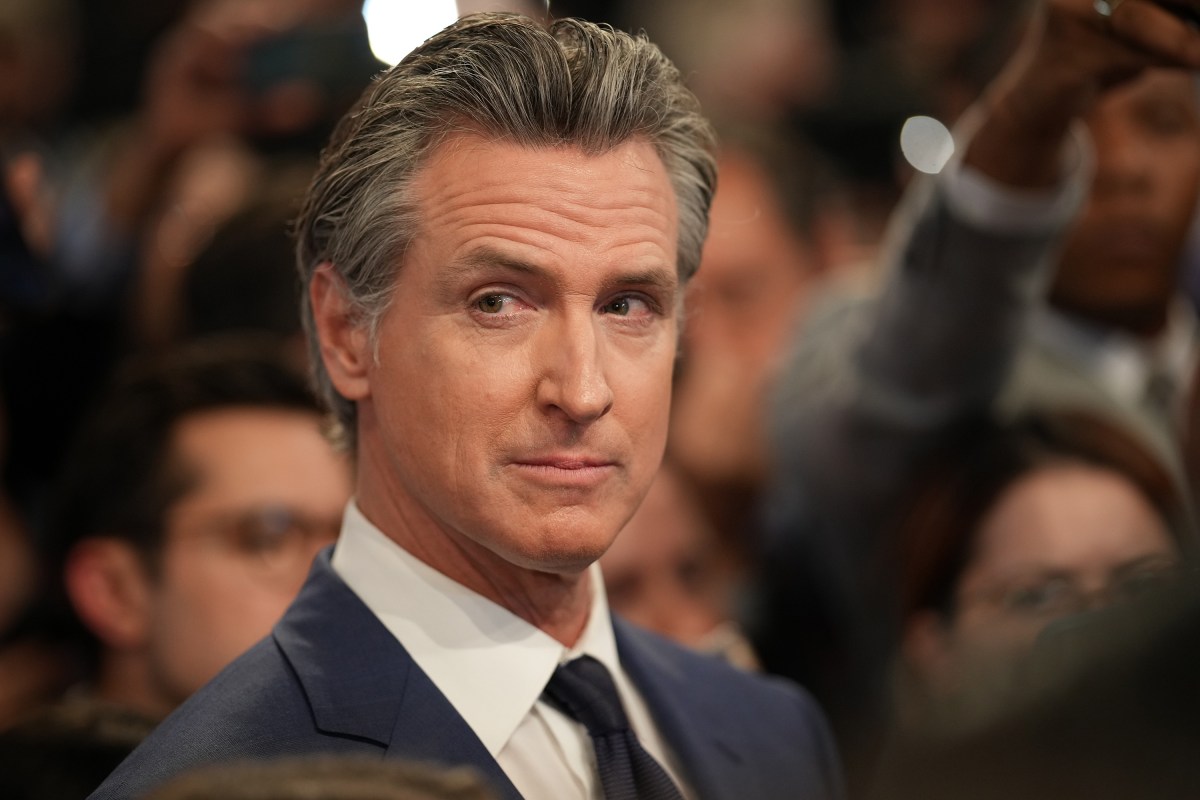
Here is what’s illegal under California’s 8 (and counting) new AI laws


California Governor Gavin Newsom is currently considering 38 AI-related bills, including the highly contentious SB 1047, which the state’s legislature sent to his desk for final approval. These bills try to address the most pressing issues in artificial intelligence: everything from futuristic AI systems creating existential risk, deepfake nudes from AI image generators, to Hollywood studios creating AI clones of dead performers.

“Home to the majority of the world’s leading AI companies, California is working to harness these transformative technologies to help address pressing challenges while studying the risks they present,” said Governor Newsom’s office in a press release.

So far, Governor Newsom has signed eight of them into law, some of which are America’s most far reaching AI laws yet.

Deepfake nudes

Newsom signed two laws that address the creation and spread of deepfake nudes on Thursday. SB 926 criminalizes the act, making it illegal to blackmail someone with AI-generated nude images that resemble them.

SB 981, which also became law on Thursday, requires social media platforms to establish channels for users to report deepfake nudes that resemble them. The content must then be temporarily blocked while the platform investigates it, and permanently removed if confirmed.

Watermarks

Also on Thursday, Newsom signed a bill into law to help the public identify AI-generated content. SB 942 requires widely used generative AI systems to disclose they are AI-generated in their content’s provenance data. For example, all images created by OpenAI’s Dall-E now need a little tag in their metadata saying they’re AI generated.

Many AI companies already do this, and there are several free tools out there that can help people read this provenance data and detect AI-generated content.

Election deepfakes

Earlier this week, California’s governor signed three laws cracking down on AI deepfakes that could influence elections.

One of California’s new laws, AB 2655, requires large online platforms, like Facebook and X, to remove or label AI deepfakes related to elections, as well as create channels to report such content. Candidates and elected officials can seek injunctive relief if a large online platform is not complying with the act.

Another law, AB 2839, takes aim at social media users who post, or repost, AI deepfakes that could deceive voters about upcoming elections. The law went into effect immediately on Tuesday, and Newsom suggested Elon Musk may be at risk of violating it.

AI-generated political advertisements now require outright disclosures under California’s new law, AB 2355. That means moving forward, Trump may not be able to get away with posting AI deepfakes of Taylor Swift endorsing him on Truth Social (she endorsed Kamala Harris). The FCC has proposed a similar disclosure requirement at a national level and has already made robocalls using AI-generated voices illegal.

Actors and AI

Two laws that Newsom signed on Tuesday — which SAG-AFTRA, the nation’s largest film and broadcast actors union, was pushing for — create new standards for California’s media industry. AB 2602 requires studios to obtain permission from an actor before creating an AI-generated replica of their voice or likeness.

Meanwhile, AB 1836 prohibits studios from creating digital replicas of deceased performers without consent from their estates (e.g., legally cleared replicas were used in the recent “Alien” and “Star Wars” movies, as well as in other films).

What’s left?

Governor Newsom still has 30 AI-related bills to decide on before the end of September. During a chat with Salesforce CEO Marc Benioff on Tuesday during the 2024 Dreamforce conference, Newsom may have tipped his hat about SB 1047, and how he’s thinking about regulating the AI industry more broadly.

“There’s one bill that is sort of outsized in terms of public discourse and consciousness; it’s this SB 1047,” said Newsom onstage Tuesday. “What are the demonstrable risks in AI and what are the hypothetical risks? I can’t solve for everything. What can we solve for? And so that’s the approach we’re taking across the spectrum on this.”

Check back on this article for updates on what AI laws California’s governor signs, and what he doesn’t.