Amid the TikTok shutdown, in a rare move, Apple published a statement and a support document listing all affected apps that are inaccessible in the U.S. The iPhone maker typically doesn’t publish information for when it blocks apps.
Notably, other ByteDance apps, including CapCut, Lemon8 — which surged in the last few months — and Marvel Snap, are also part of the blocked apps. Here is the full list of apps that Apple has removed:
TikTok
TikTok Studio
TikTok Shop Seller Center
CapCut
Lemon8
Hypic
Lark – Team Collaboration
Lark – Rooms Display
Lark Rooms Controller
Gauth: AI Study Companion
MARVEL SNAP
In the support document, Apple noted that the company is following the law by blocking all these apps.
“Apple is obligated to follow the laws in the jurisdictions where it operates. Pursuant to the Protecting Americans from Foreign Adversary Controlled Applications Act, apps developed by ByteDance Ltd. and its subsidiaries — including TikTok, CapCut, Lemon8, and others — will no longer be available for download or updates on the App Store for users in the United States starting January 19, 2025,” the company said.
The document also highlights that people who are visiting the U.S. and have the App Store set to a non-U.S. region won’t be able to update the app or purchase in-app items for these apps.
Data broker Gravy Analytics has been hacked, and location information from millions of iPhone and Android users is at risk, reports TechCrunch. Gravy Analytics’ parent company Unacast disclosed the data breach earlier this month [PDF], and said that its AWS cloud storage environment had been accessed by an unauthorized person using a “misappropriated access key.”
“Some files” were obtained, and preliminary findings suggest those files “could contain personal data” collected from users of third-party services that use Gravy Analytics. According to 404Media, hackers are claiming to have customer lists and location data from smartphones that shows peoples’ precise movements, with millions of users affected. Some of that data, which does indeed include the historical location of smartphones, has been published on private forums.
Gravy Analytics says that it tracks more than a billion devices around the world daily, and security researchers that saw a sample of the data collected by Gravy Analytics confirmed that the information can be used to track a person’s recent locations, with no anonymization.
In December, the United States Federal Trade Commission (FTC) prohibited Gravy Analytics and its subsidiary Venntel from selling, disclosing, or using sensitive location data in any product or service. The FTC warned that the two companies exposed consumers to privacy harms that could include disclosure of health information, political activity, and religious practices, and put people at risk of stigma, discrimination, violence and other harms.
The order required Gravy Analytics to delete all historic location data and any data products developed using data collected from consumers, but it was apparently too late because the company’s systems had likely already been breached at the time.
Gravy Analytics collects location data through a real-time ad bidding process that allows companies competing to buy an ad to see customer IP address and more precise location data if enabled. Gravy Analytics’ database had location data from iPhone apps that include FlightRadar, Grindr, and Tinder, and while the apps did not have a direct relationship with the data broker, user location information was collected through their ads.
Turning off app tracking in the Privacy and Security section of the iPhone’s Settings app keeps ads from being able to obtain a unique device identifier to link location data to a specific device, and preventing apps from using precise location data is also a way to preserve more privacy.
Baptiste Robert, CEO of security firm Predicta Lab, told TechCrunch that iPhone users that had app tracking disabled did not have their data shared.
Apple receives billions from Google for using Google Search as the default on iPhones, a declaratory filing in the ongoing Google antitrust trial revealed.
Developing a rival search engine would be costly and time-consuming for Apple.
Apple’s privacy focus also clashes with the targeted advertising model of search engines.
Google Search has been prolific in shaping the Internet in the same way that Android shaped the smartphone market. Google managed to leverage both its businesses to grow each other, and that creates an expectation from competitors to follow suit. However, notable competitor Apple prefers to pack in Google Search on iOS instead of working on a rival offering, and we’ve now learned more about the reason behind such a move.
Apple has asked to participate in Google’s upcoming US antitrust trial over online search, as Reuters reports. The company says it cannot rely on Google to defend its revenue-sharing agreements for making Google the default search engine on Safari on iPhones. Apple received an estimated $20 billion from Google in 2022 alone.
As Macrumors spotted in a declaration in the court filings, Apple’s Senior Vice President of Services, Mr. Eddy Cue, has explained why Apple does not want to create its own search engine. Developing a search engine would cost billions of dollars and take many years, diverting resources like capital and employees away from the company’s other growth areas. Further, Apple does not have enough specialized professionals and operational infrastructure to build and run a successful search engine business.
The declaration in the court filings explains that search as a business is rapidly evolving due to artificial intelligence, making such an investment economically risky. To create a viable search engine business, Apple would have to “sell targeted advertising,” which is not a core business for the company and would go against its longstanding privacy commitments.
Mr. Cue is asking the US court to allow Apple to defend its revenue-sharing agreement with Google by having its own witnesses testify during the trial. If the agreement can no longer continue, Mr. Cue mentions that it would hamstring Apple’s ability to continue delivering products that best serve its users’ needs.
It remains to be seen if the court would allow Apple to participate in the Google antitrust trial and defend the billions of dollars it could potentially earn from future revenue-sharing deals.
Got a tip? Talk to us! Email our staff at news@androidauthority.com. You can stay anonymous or get credit for the info, it’s your choice.
When it comes to originals, Netflix and Amazon have the deepest libraries of prestige movies. But ever since CODAwon the Best Picture Oscar, it’s become clear that some of the best movies are on Apple TV+.
As with any streaming service, not every film on the roster is a winner, but from the Billie Eilish documentary to Sundance darlings, Apple’s streaming service is building up a strong catalog to run alongside its growing slate of beloved TV shows.
Below are WIRED’s picks for flicks you should prioritize in your queue. Once you’re done, hop over to our list of the best movies on Netflix and the best movies on Disney+. If you’re feeling a little more episodic, our guide for the best shows on Amazon might be just the ticket.
If you buy something using links in our stories, we may earn a commission. This helps support our journalism.Learn more.
Fly Me to the Moon
So, you know that conspiracy theory about Stanley Kubrick faking the Apollo 11 moon landing? If you don’t, you really should go down a Wikipedia rabbit hole on that one. When you’re done, watch this Scarlett Johansson, Channing Tatum comedy about a marketing whiz (Johansson) who gets hired to film a mocked-up version of Neil Armstrong’s famous giant leap for mankind on the off chance the mission didn’t go off as planned. Wild stuff, but no less wild than looking for clues to Kubrick’s secret involvement with NASA in The Shining.
Blitz
Written and directed by Oscar-winner Steve McQueen (12 Years a Slave), Blitz shows World War II through the eyes of a 9-year-old boy named George (Elliott Heffernan). Sent by his mother Rita (Saoirse Ronan) to the safety of the English countryside, George escapes in an attempt to be reunited with his mom and grandfather in East London. What ensues is George’s harrowing quest to be reunited with his mom, but this is a McQueen film, so that’s only part of the story.
The Last of the Sea Women
On the coast of South Korea’s Jeju Island, women rule the sea. They’re called haenyeo, and for centuries they have gone diving to harvest seafood. Sue Kim’s new documentary follows these women—often referred to as real-life mermaids—as they struggle to keep their way of life in the face of societal and environmental changes. Emboldened by a new generation that wants to amplify haenyeo on social media, they may find a path after all. Produced by Malala Yousafzai, it’s a journey into cross-generational unity and the value of tradition.
Wolfs
If you heard anything about Wolfs, it probably wasn’t about its plot. Stars George Clooney and Brad Pitt were in the news a lot around its September release, but mostly because of their salaries and their goofing off in Venice. But if you want to know what Wolfs is about, the short version is that Clooney and Pitt play the kind of guys who make problems go away, and when they’re both called in for the same job, they get to bicker with each other about who is losing their edge more. Might be light on substance, but it’s still a pretty good time. The movie hits theaters on September 20, and lands on Apple TV+ a week later.
The World’s a Little Blurry
When it originally came out in 2021, The World’s a Little Blurry proved to be an unprecedented look into the life of pop phenom Billie Eilish as the then-teenager recorded her debut LP When We All Fall Asleep, Where Do We Go? Director R. J. Cutler got amazing access for the film, which chronicles everything from Eilish’s songwriting process with her brother Finneas to her frank talk about her Tourette’s. It also was only a small chapter of the singer’s life. Now that she’s won multiple Grammys and Oscars, started singing about eating girls for lunch, and performed at the Olympics Closing Ceremony, watching Blurry feels like opening a time capsule—in all the best ways. It’s the kind of music documentary that redefines the music documentary.
The Velvet Underground
You may think that director Todd Haynes only makes intense dramas like Carol and May December, but for this film he went deep into the art scene in New York City in the 1960s to unearth what happened when the Velvet Underground exploded a lot of people’s ideas of music. Piecing together new interviews with archive footage and even old Andy Warhol films, it captures a moment in music history that changed things forever.
Fancy Dance
Set on the Seneca-Cayuga reservation in Oklahoma, Fancy Dance follows the journey of Jax (Killers of the Flower Moon’s Lily Gladstone), a woman who has been caring for her niece Roki ever since her sister, Roki’s mother, went missing. After the authorities deem Jax unfit to care for her niece, Roki is sent to live with her grandfather. Looking for answers, Jax takes Roki on the road to try to find her mother and ends up trying to escape the same authorities, who aren’t putting the same effort into finding her missing sister as they are in trying to find her. An examination of life on colonized land, Fancy Dance is also a thoughtful look at protecting community.
Girls State
Do you remember the 2020 documentary Boys State, about a group of young men in Texas who attend a summer program where the are challenged to form their own government? Girls State is similar—it even comes from the same filmmaking team of Jesse Moss and Amanda McBaine—but it follows a group of people who have never seen someone of their gender hold the office of US president. It’s also set in Missouri, not Texas. Expect all the same wild ambition and hearbreak—and more than a few life lessons learned.
Napoleon
OK, so Napoleon didn’t exactly get critics’ pens flying, but sometimes you’re just in the mood for a big, prestige-y Ridley Scott historical drama, you know? This one stars Joaquin Phoenix as the title character, following his quest to conquer, well, as much as he possibly can. Rather than being a sprint to the Battle of Waterloo, however, this pic gives attention to the French emperor’s emotionally rocky relationship with his wife Joséphine de Beauharnais (Vanessa Kirby). What happens when a man can conquer most of Europe but not his own feelings? Watch and find out.
Killers of the Flower Moon
Martin Scorsese’s epic film is based on David Grann’s 2017 book about a member of the Osage Nation, Mollie Burkhart, who sought to get to the bottom of the deaths in her family. Set in 1920s Oklahoma, a time when many Osage were being killed for the money made from oil on their land, Scorsese’s film follows the relationship between Mollie (played by Lily Gladstone, who won a Golden Globe for her performance) and Ernest Burkhart (Leonardo DiCaprio) and what happens when the FBI comes to investigate the Osage deaths. When WIRED named it one of 2023’s best movies, we called it “a feel-bad masterpiece,” and we stand by that.
Fingernails
Can technology determine whether you’ve found The One? Probably not, but in the latest from writer-director Christos Nikou, an institute run by Duncan (Luke Wilson) claims that it has found the formula for true love anyway—and Anna (Jessie Buckley) wants to figure out if it’s real. The institute, you see, has determined that Anna and her boyfriend Ryan (Jeremy Allen White) are a match, but has doubts. While working at the institute, though, she meets Amir (Riz Ahmed) and finds someone who actually might be her match.
Flora and Son
Remember Sing Street, that charming indie about a kid in Dublin who starts a band as an escape from his complicated home life? What about Once, that charming indie about a pair that spends a week in Dublin writing songs about their love? If you enjoyed either of those—or if they just sound like something you might enjoy—let us suggest Flora and Son, a charming indie about a mother in Dublin trying to connect with her son through song. Like Sing Street and Once, Flora and Son comes from director John Carney and has all of his signature moves, plus something else: Eve Hewson, who plays the movie’s titular mom. She’s a force, and she hits all of her musician notes perfectly. Makes sense; she’s Bono’s daughter.
Stephen Curry: Underrated
Golden State Warriors point guard Stephen Curry might be one of the most beloved players in American basketball—and he is definitely one of the best players, if not the best player, in the league. He has been named the NBA’s Most Valuable Player twice and has won four championship rings. He also has more career three-pointers than anyone in the league. But in the late aughts, he was a kid at a small school, Davidson College, just trying to live up to the potential his coaches saw in him. Underrated, directed by Peter Nicks (Homeroom), chronicles that journey, showing how Curry bested the predictions of his own NBA draft (many said he didn’t have the size necessary for the league) to become one of the greatest to ever play the game. For basketball fans, it’s a must-watch.
Beastie Boys Story
One of the pioneering groups in hip-hop, the Beastie Boys have a story like no other. For this “live documentary,” filmmaker Spike Jonze filmed Mike Diamond (Mike D) and Adam Horovitz (Ad-Rock) as they told a crowd at Brooklyn’s Kings Theater about their rise to stardom. Complete with old footage, photos, and stories from the group’s decades-long career, the doc captures just how influential the Beasties have been since they started playing music together as kids in New York City in the late ’70s and early ’80s. It also features some wonderful memories of their third member, Adam “MCA” Yauch, who died in 2012 following a battle with cancer.
CODA
This is the one that put Apple TV+ on the map. The movie’s title is an acronym for “child of deaf adults.” It’s the story of Ruby, the only hearing person in a family that includes two deaf parents and one deaf sibling. When Ruby discovers a love of music, she’s forced to reconcile her own aspirations with those of her family, who run a small fishing business and often need her to help communicate. Warm and gripping, CODA is the kind of movie that will have you cheering and crying at the same time.
Still: A Michael J. Fox Movie
In 1985, Michael J. Fox was one of Hollywood’s biggest names as the star of a hit TV show (Family Ties) and the year’s highest-grossing movie (Back to the Future). Just a few years later, at the age of 29, Fox was diagnosed with Parkinson’s disease. In Still, Oscar-winning documentarian Davis Guggenheim offers a poignant portrait of Fox’s personal and professional life and his journey from teen idol to advocate for a cure.
Swan Song
Mahershala Ali stars alongside, well, Mahershala Ali in this romantic-sci-fi-drama. Yes, it’s all of those things. Cameron (Ali) is a loving husband (to Naomie Harris) and father who, after learning he has a terminal illness, must decide just how far he’ll go to protect his family from having to know the truth, or deal with the devastating aftermath.
Sharper
Sharper is one of those movies where the less you know about it going in, the better. Just know that no one is what they seem or who they say they are in this neo-noir starring Julianne Moore, Sebastian Stan, Justice Smith, and John Lithgow. This twisty little thriller flew largely under the radar when it was released in theaters for a half-second in early 2023.
Cha Cha Real Smooth
“Sundance hit starring Dakota Johnson”s are almost a dime a dozen, but this one, about a young bar/bat mitzvah party-starter is the, ahem, real deal. It also proves that Cooper Raiff—who writes, directs, and stars in the movie—is one to keep your eye on.
The Tragedy of Macbeth
Yes, most people already know the story of Macbeth—Scottish lord with an eye toward ruling his country—but not everyone has seen it through the eyes of director Joel Coen. Shot entirely in black and white and starring Denzel Washington as Macbeth and Frances McDormand as his powerful wife, the film was nominated for three Oscars and brought a very new twist onto a classic Shakespearean tale.
Louis Armstrong’s Black & Blues
Above all else, Louis Armstrong is known as one of the most famous jazz musicians of all time. But he was also a figure in the struggle for equality in America—albeit a complicated one. As director Sacha Jenkins illustrates in this documentary, while Armstrong broke racial barriers in entertainment he also faced accusations that he didn’t stand up as much for civil rights as other performers of his era. Jenkins got access to scores of photographs, clippings, and even recordings Armstrong made of his own conversations for this documentary, and that access provides a much fuller picture of the legendary musician than the world has ever had.
Tetris
One of the most popular video games of all time, Tetris was a phenomenon for Nintendo Game Boy owners in the 1980s. But Tetris (the movie) is the story of the people who made the game and brought it from the then-Soviet Union to the rest of the world. Part historical dramedy, part espionage flick, the movie doesn’t always hit its marks, but if you’ve never heard the story of how Tetris got out from behind the Iron Curtain, it’s worth a watch.
Causeway
Causeway kind of came and went when it was released in 2022, but that’s also the sort of movie it is. Focused on a soldier (Jennifer Lawrence) who returns home after suffering a brain injury in Afghanistan, the film from director Lila Neugebauer is about trauma and how people lean on each other to get through it. A worthy watch for the times when you have your own stuff to work through.
Sidney
Sidney Poitier died in 2022, the same year Apple TV+ released this documentary looking at the actor’s long-running career—In the Heat of the Night, Guess Who’s Coming to Dinner—and impact on American culture and politics. With interviews ranging from Spike Lee and Morgan Freeman to Harry Belafonte, the film goes beyond his time in Hollywood, starting with his upbringing in the Bahamas and ending with his massive impact on the civil rights movement and elsewhere.
Apple is reportedly thinking about bringing cellular connectivity to Macs and future XR products.
You might have to wait until 2026 to see the first Macs with this connectivity option.
The news comes as Apple gears up to launch its first in-house modem.
Apple has been working on its own cellular modem for years now, and it sounds like this component could debut inside the next iPhone SE and the iPhone 17 Air. However, it seems like cellular connectivity could come to more Apple categories.
Bloomberg reports that Apple is exploring the idea of bringing cellular connectivity to its Macs. The iPhone maker is also said to be considering cellular connectivity for future headsets, including follow-ups to the Vision Pro XR headset. If confirmed, these products would join the iPhone, iPad, and Apple Watch in supporting cellular connections.
The outlet suggests that cellular-enabled Macs are unlikely to launch before 2026, which is when Apple plans to launch a second-generation in-house modem with faster speeds and mmWave support.
Not the first time we’ve seen laptops with 5G modems
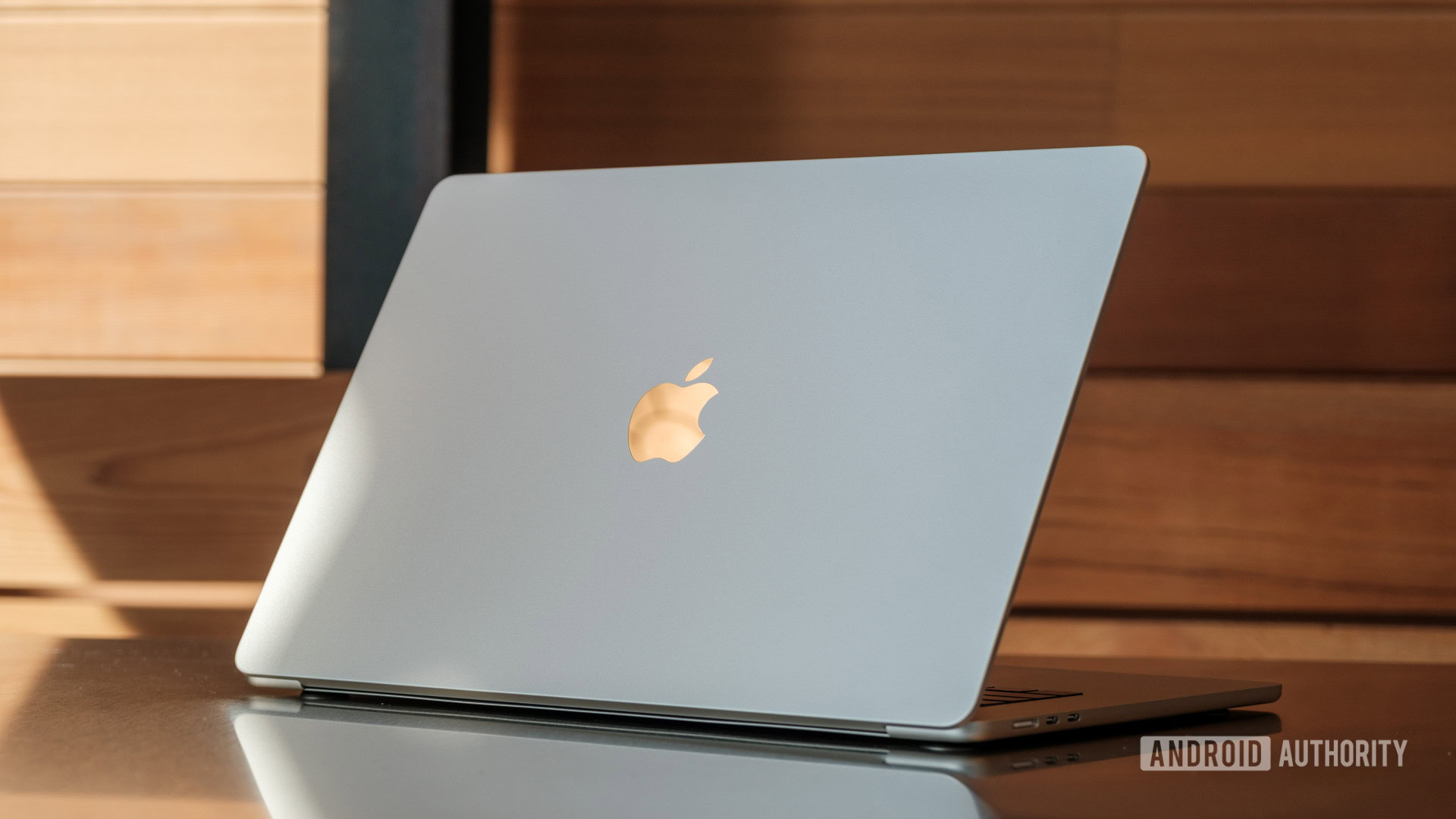
A MacBook with cellular connectivity would be a welcome upgrade, allowing users to get online without needing a Wi-Fi hotspot. In saying so, MacBook users can still take advantage of tethering via their iPhones to get connected. But having a dedicated mobile data plan for your MacBook could be a sensible move if you don’t want to drain your iPhone battery or deplete its data cap.
This wouldn’t be the first time we’ve seen cellular connectivity in a computer, though. The first Windows on Arm laptops offered 4G connectivity via Qualcomm modems, and we’ve also seen a few models with 5G support. However, we’ve only seen a few current-generation Snapdragon X laptops with 5G.
We’re less enthused about cellular connectivity in a Vision Pro follow-up, but this could be a great option for XR glasses. This would allow users to leave their phones at home while still making calls, live-streaming, streaming music, and more.
Got a tip? Talk to us! Email our staff at news@androidauthority.com. You can stay anonymous or get credit for the info, it’s your choice.
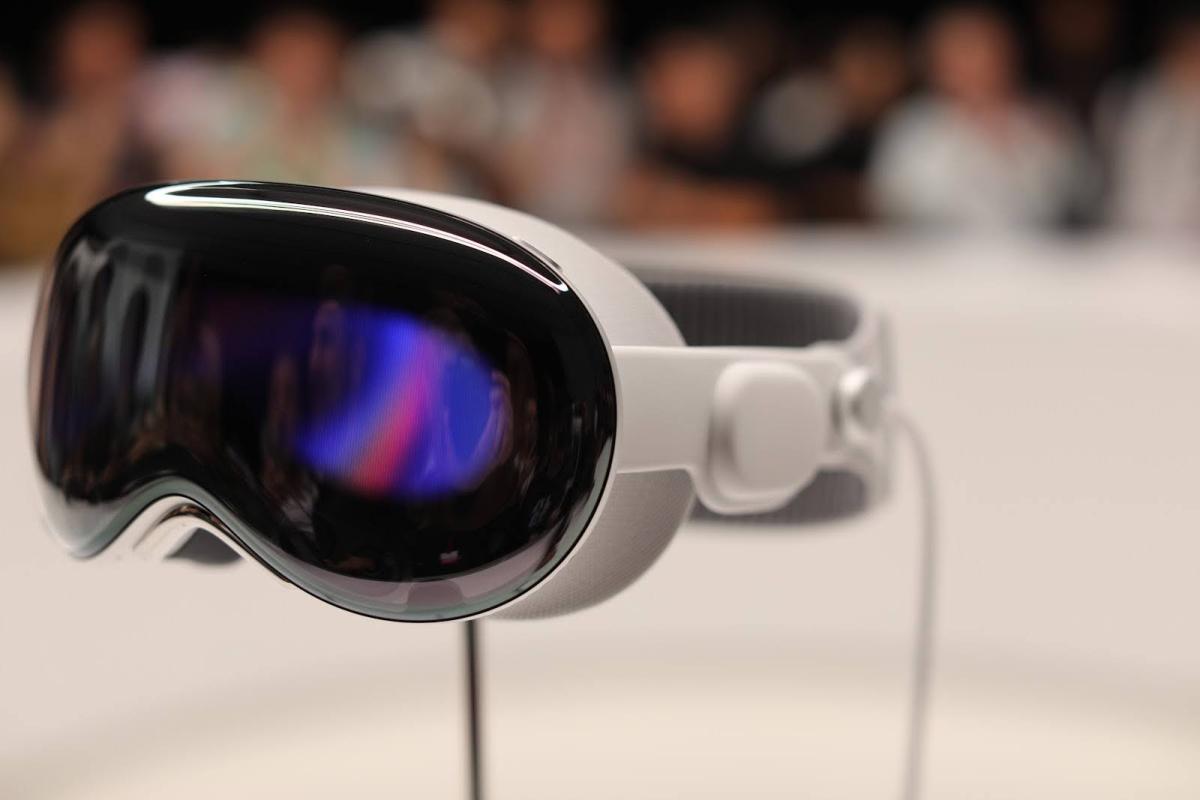
Apple is looking to make its Vision Pro mixed reality device more attractive to gamers and game developers, according to a new report from Bloomberg’s Mark Gurman.
The Vision Pro has been pitched as more of a productivity and media consumption device than something aimed at gamers, due in part to relying on eye and hand controls rather than incorporating a separate controller.
But Apple may need gamers if it wants to expand the Vision Pro’s audience, especially since Gurman reports that less than half a million units have been sold thus far. So the company has been reportedly talking to Sony about adding support for the PlayStation VR2’s hand controllers, while also talking to developers about whether they’d support the controllers in their games.
By offering more precise control, Apple could also make other types of software, like Final Cut Pro or Adobe Photoshop, usable on the Vision Pro.
Previous rumors indicated Apple would launch a foldable iPhone resembling a Galaxy Z Flip as early as 2026.
A new rumor suggests that the company may actually launch a Galaxy Z Fold rival in the second half of 2026.
It’s too early to tell what Apple’s first foldable will look like or whether it will experience delays.
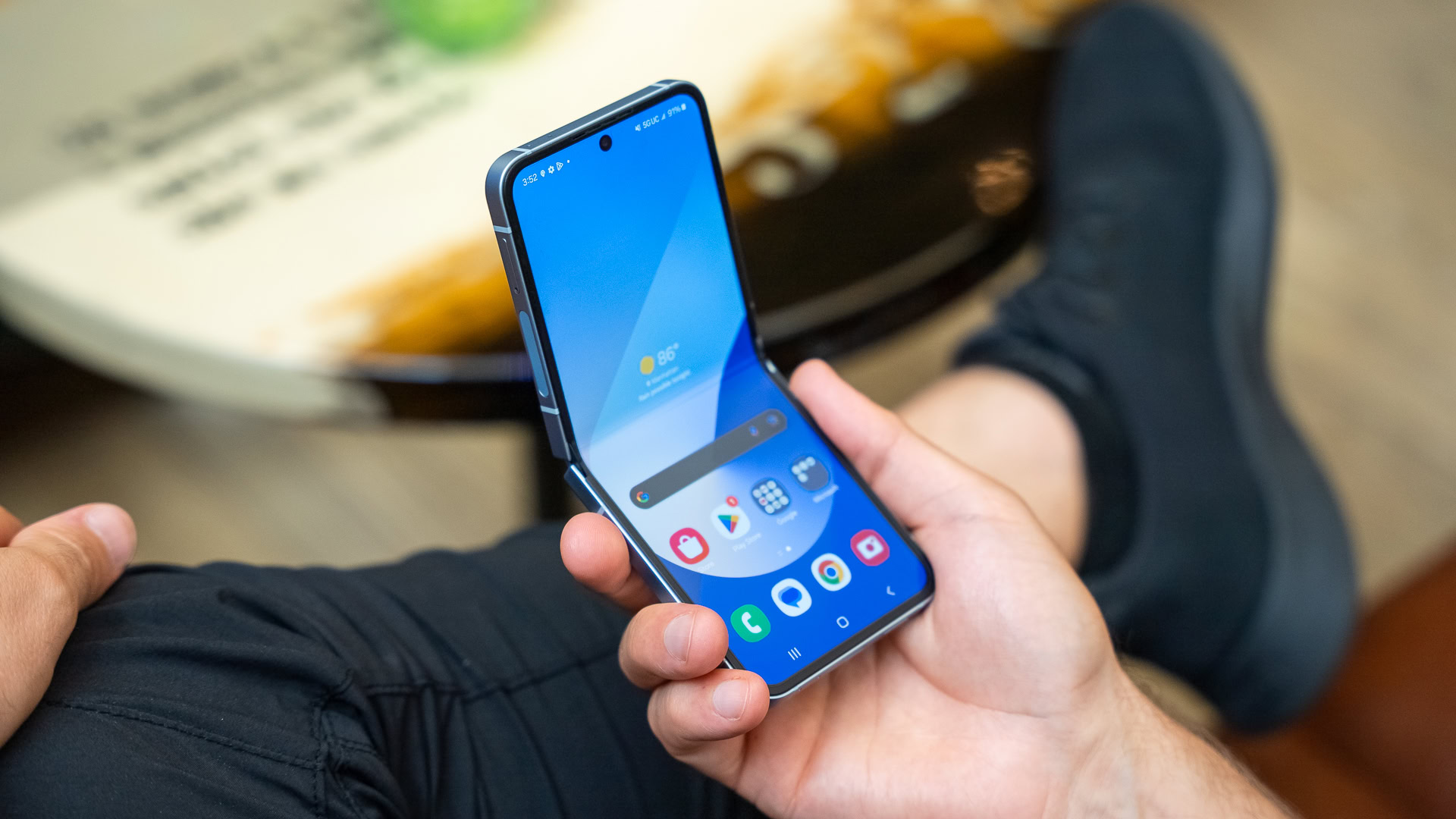
While triple-screen foldable phones have already hit the market, Apple has yet to release its first vanilla folding device. Initially, rumors suggested the iPhone maker would launch a Galaxy Z Flip rival as soon as 2026. However, a reputable display analyst is now claiming that 2026’s Apple foldable will, in fact, compete against the Galaxy Z Fold.
When asked about the form factor of Apple’s 2026 foldable, display analyst Ross Young replied with “Fold.” This suggests that the rumored Galaxy Z Flip rival may not launch that year after all. Instead, the iPhone maker will seemingly launch a device that folds on a vertically-positioned hinge during 2026’s second half.
If Apple opts for Galaxy Z Flip competitor, it will likely run an optimized version of iOS, similar to the one fueling existing iPhones. On the other hand, a Galaxy Z Fold-like device may run an iteration of iPadOS that takes advantage of the larger screen and supports more advanced multitasking features. For reference, iPhones still don’t support multi-window views, so running the same restrictive iOS on a Fold rival would be nonsensical.
Given how Apple generally operates, it’s challenging to predict what foldable, if any, will launch in 2026. After all, the company has reportedly faced some challenges in developing a durable product that meets its high standards. So, it may change its plans during the next two years or axe them altogether.
Got a tip? Talk to us! Email our staff at news@androidauthority.com. You can stay anonymous or get credit for the info, it’s your choice.
Little by little, countries around the world are taking steps to change how Apple’s App Store functions. The most recent development comes from Brazil, where the nation’s antitrust regulator Conselho Administrativo de Defesa Economica (CADE) on Monday issued Apple an ultimatum of sorts. CADE has given Apple 20 days to make changes that allows for purchases from third-party app developers without going through Apple or face a fine of 250,000 Real ($43,000) each day after. Candidly, given the amount of money Apple makes every, $43,000 could probably come from Tim Cook’s Diet Mountain Dew expense account.
More specifically, Apple must take steps such as allowing third-party developers to tell their users about alternative locations to purchase their goods or services and to include buttons, external links and other calls to action that show users alternative ways to access their products, rather than just in-app. Developers would also be able to use other in-app purchasing systems (Apple charges a 30 percent fee when using its system), distribute their apps in places other than Apple’s App Store, and more. The ruling stems from e-commerce company MercadoLibre’s 2022 filing alleging Apple restricts goods distribution and purchase methods.
This decision follows changes earlier this year to how Apple can operate its app store in the European Union. The bloc’s Digital Markets Act forced Apple to allow developers to receive payments and distribute apps outside the company’s App Store. Apple has also faced pushes to change its systems in the US, most notably through a lawsuit brought by Epic Games.
It’ll soon be possible to replace the speakers in recent MacBook Pro models without having to replace the entire top case, as has long been the procedure. A memo seen by reportedly informed Apple Stores and Authorized Service Providers this week that speakers will be available as standalone components for the 14-inch and 16-inch MacBook Pro with the M4 family of chips. A source also told the publication that this will be an option for repairs on earlier MacBook Pro models with Apple silicon as well.
The change should make for a less expensive repair. Up until now, the process entailed replacing the whole top case, including the battery and other parts, which works out to be pretty costly. It’s been that way since 2016. The with the new steps for speaker replacement is available online now from Apple Support. It may not necessarily be a simpler repair — the guide shows a process that’s rather involved — but not having to also replace other parts like the battery just to change out the speakers should cut costs significantly.
It may be hard to remember, but George Clooney and Brad Pitt co-starred in a movie, “Wolfs,” that Apple released just two months ago.
On Friday, the film’s writer and director Jon Watts said Friday that a sequel is no longer happening; in a follow-up interview with Deadline, he explained that he “no longer trusted [Apple] as a creative partner.”
The company is reportedly scaling back its movie strategy. “Wolfs,” for example, was supposed to get a big theatrical release, but instead, it played in a limited number of theaters for just one week before launching on Apple TV+.
Watts, who also created the new Star Wars show “Skeleton Crew,” said Apple’s shift “was a total surprise and made without any explanation or discussion.”
“I was completely shocked and asked them to please not include the news that I was writing a sequel,” Watts said. “They ignored my request and announced it in their press release anyway, seemingly to create a positive spin to their streaming pivot.”
As a result, Watts said he “quietly returned the money they gave me for the sequel” and canceled the project.