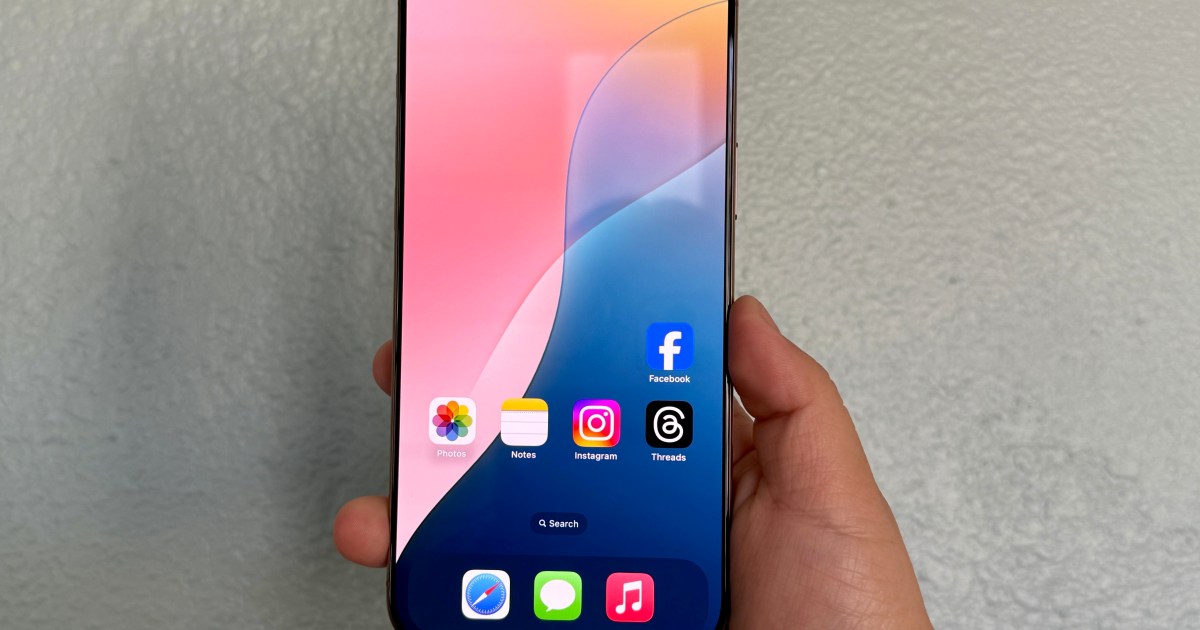
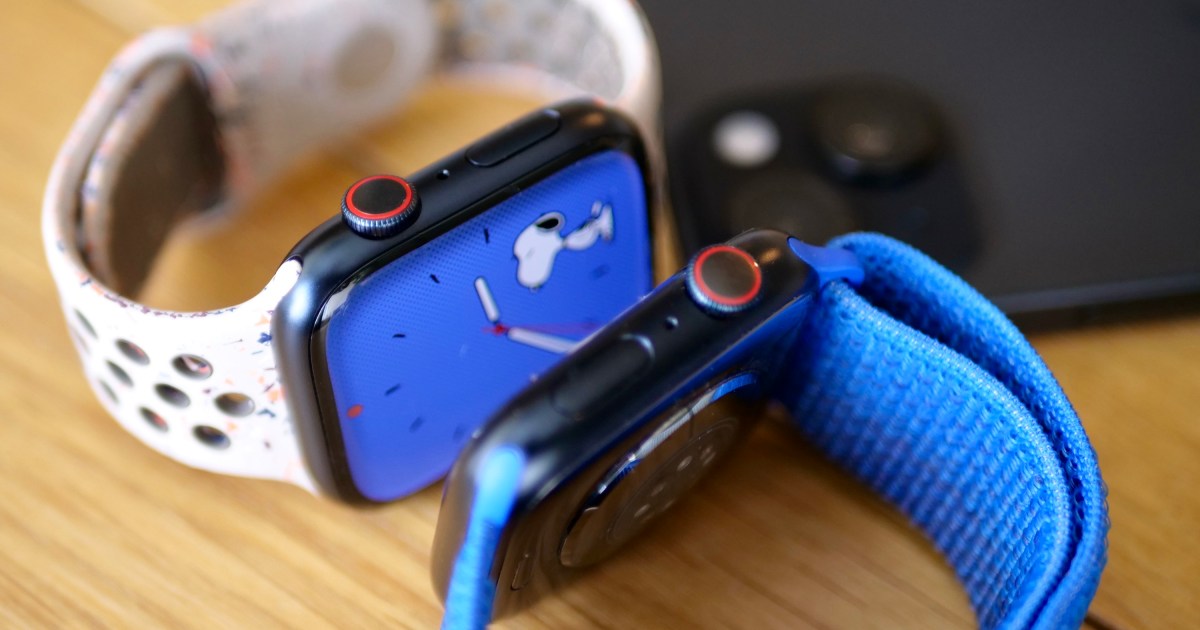
Previously, it was reported that confiscated iPhones were mysteriously rebooting themselves.
Experts are now piecing together the reason why these iPhones rebooted.
The answer appears to be linked to a new feature in iOS 18.1.
Earlier this week, it was reported that police were taken by surprise when confiscated iPhones suddenly began rebooting on their own. At the time of the report, it was unknown what could be triggering the reboot. However, experts are now starting to piece together the solution to this mystery.
When the report from 404 Media came out, we noted that there was a possibility Apple may have quietly released a security feature in the latest iOS update. We also pointed out that there was previously a bug in iOS 18 that caused iPhones to randomly reboot throughout the day. It seems that we weren’t too far off from the answer as a new report from the outlet says that experts are finding that the surprise reboots from this week are, in fact, a feature.
According to Dr. -Ing. Jiska Classen from the Hasso Plattner Institute, the tech giant gave iOS an “inactivity reboot” feature. Classen later confirmed this in a social post showing screenshots of the relevant code.
It was previously believed that the rebooting may be related to the devices being removed from the cellular network. But, according to Classen, that does not appear to be the case.
Additionally, Christopher Vance from Magnet Forensics revealed in a private group chat for law enforcement and forensic experts that they found code that triggers an inactivity timer. “When this timer runs out, the device reboots, moving from an AFU state to a BFU state,” Vance said.
This is a feature that can help prevent thieves from easily accessing user data on locked devices. But, at the moment, it seems the feature is also serving as a nuisance to law enforcement.
Got a tip? Talk to us! Email our staff at news@androidauthority.com. You can stay anonymous or get credit for the info, it’s your choice.
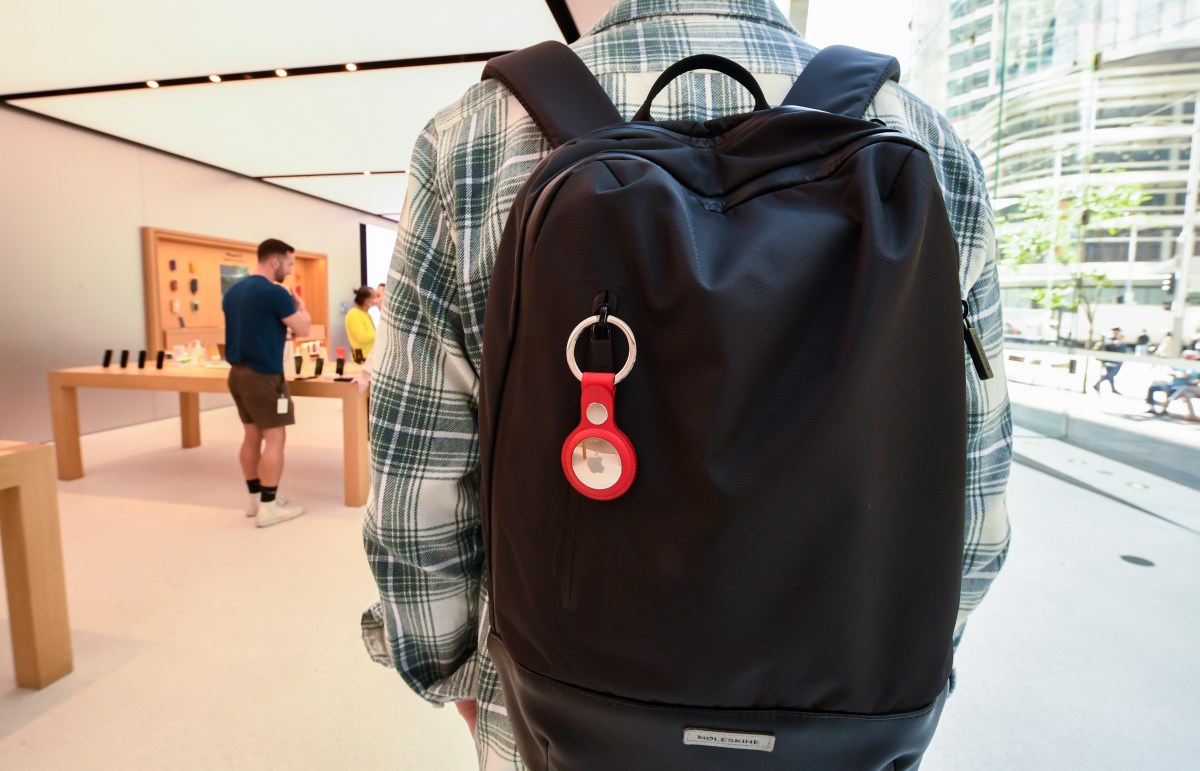
Apple could soon let users share the location of lost or missing items — such as an iPhone, Macbook, or something with an Airtag attached — via the Find My app with people who are not in their contacts using a link.
Macrumors spotted the updated feature in the iOS 18.2 developer beta, and noted that Apple says it’s intended to help locate your lost items by sharing the location with people such as a cab driver or an airline employee.
The Find My app on the iOS 18.2 developer beta has a new “Share Item Location” option, which gives you a shareable link to the location of the missing item. People can open the link on any device (including non-Apple devices) to try and track it. The link automatically expires after a week or when the item is back with you.
There’s also a “Share Contact Info” option that lets any phone connect with an item and open a website, which will show your phone number and email — if you’ve added those details to the item’s contact page. Seemingly, this is meant to help the person who finds the item contact you.
Find My already lets you share an item’s location with people in your contacts.
The update would also let users look at statistics like how many people visited the link.
Welcome back to Week in Review. This week, we’re coming at you right off the heels of TechCrunch Disrupt! If you missed it, we’re highlighting conversations from Perplexity CEO Aravind Srinivas, WordPress co-founder Matt Mullenweg, and Disney star turned space CEO Bridgit Mendler. Of course, we’ve got news from the rest of the tech world as well. Let’s do it.
Why did Wiz turn down $23 billion? Wiz co-founder and CEO Assaf Rappaport said at TechCrunch Disrupt that turning down Alphabet’s offer was “the toughest decision ever,” but they did so because they believed the cloud security space is a $100 billion opportunity for the company. At the time Wiz turned down the offer, the startup had a private valuation of $12 billion. The CEO admitted that they also had other offers, though none as big as Google’s.
Apple had a big week of reveals, including the latest additions to the M-series of chips. The company unveiled the new M4 Pro, which debuts alongside the tiny new Mac mini and the M4 Max, the latter of which is coming to the MacBook Pro line as an upgradeable option. Apple also gave a refresh to its desktop accessories, switching them from Lightning to USB-C. But the charging port for the Magic Mouse is still awkwardly on the bottom.
Dropbox is laying off 20% of its workforce. In a letter to staff, CEO Drew Houston said the cloud company is undergoing a “transitional period” and that the goal was to make cuts in areas where Dropbox has “over-invested” while designing a “flatter, more efficient” team structure. The reduction in headcount will affect 528 employees.
This is TechCrunch’s Week in Review, where we recap the week’s biggest news. Want this delivered as a newsletter to your inbox every Saturday? Sign up here.
News
Image Credits:Kimberly White for TechCrunch / Getty Images
What is plagiarism? At TechCrunch Disrupt, Perplexity CEO Aravind Srinivas was asked how the company defined “plagiarism.” Srinivas wouldn’t say directly, but he was adamant that Perplexity “always cites its sources” and doesn’t claim ownership of any content. Read more
OpenAI could be building its first AI chip: OpenAI is working with TSMC and Broadcom to build an in-house AI chip for running AI models, which could arrive as soon as 2026, Reuters reports. Read more
Turn your design into a reality: Arcade AI is a new type of marketplace that allows customers to input their ideas into a generator that then produces a variety of design options to be brought to life as tangible pieces of jewelry. Read more
From Disney Channel to CEO: Former Disney star Bridgit Mendler joined TechCrunch Disrupt to discuss how she founded Northwood Space and why the space startup is committed to solving “unsexy problems.” Read more
AI comes for recruiters: LinkedIn is taking the wraps off its latest AI effort: Hiring Assistant. The product is designed to take on a wide array of recruitment tasks, from ingesting scrappy notes to turn into job descriptions, to sourcing candidates and engaging with them. Read more
Matt Mullenweg makes his case: The WordPress co-founder and Automattic CEO said at TechCrunch Disrupt that he’s not worried that the recent legal drama between his company and WP Engine may lead to a fork of the open source WordPress software. In fact, he said he’d welcome it. Read more
Olivia Wilde, VC: Actor and director Olivia Wilde quietly launched venture firm Proximity Ventures late last year, according to Bloomberg. The firm has already inked four investments, including biotech company Pendulum Therapeutics. Read more
Slice makes its mark in India: Fintech Slice merged with North East Small Finance Bank, marking a rare instance of a startup successfully entering India’s tightly regulated banking sector. The merger transforms Slice into a banking entity following months of regulatory scrutiny. Read more
An easier way to code: Announced at GitHub’s annual conference in San Francisco, Spark is an experiment launching out of its GitHub Next labs that allows you to quickly build a small web app using nothing but natural language. Read more
Turn text into a podcast: Meta released an “open” implementation of the viral generate-a-podcast feature in Google’s NotebookLM. Called NotebookLlama, the project can generate back-and-forth, podcast-style digests of text files uploaded to it. Read more
Zoox calls Tesla’s bluff: Zoox co-founder and CTO Jesse Levinson is doubtful that Tesla will launch a robotaxi ride-hailing service next year. The “fundamental issue is they don’t have technology that works,” he said at TechCrunch Disrupt.Read more
And the winner is … : The winner of the Startup Battlefield 200 competition at TechCrunch Disrupt is Salva Health. The company’s Julieta device is a portable, AI-powered breast cancer detection device that eliminates barriers to early screening, ensuring access even in remote areas. Read more
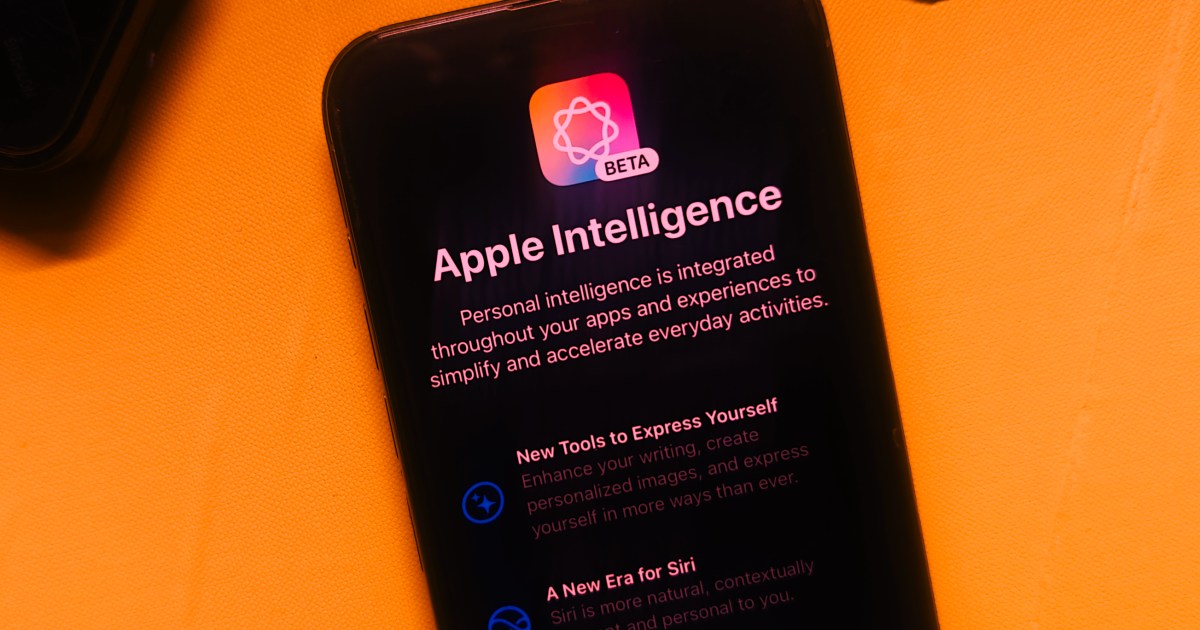
With the introduction of the new iPad Mini, Apple made it clear that a software experience brimming with AI is the way forward. And if that meant making the same kind of internal upgrades to a tablet that costs nearly half as much as its flagship phone, the company would still march forward.
However, its ambitions with Apple Intelligence lack competitive vigor, and even by Apple’s own standards, the experience hasn’t managed to wow users. On top of that, the staggered rollout of the most ambitious AI features — many of which are still in the future — has left enthusiasts with a bad taste.
Now, it appears that the reason behind the delays has something to do with quality and performance, as per Apple’s own testing. “The research found that OpenAI’s ChatGPT was 25% more accurate than Apple’s Siri, and able to answer 30% more questions,” says a Bloomberg report.
Apple
To recall, Apple’s position with Siri is quite unique. For example, Siri is getting enhanced natural language understanding and deeper integration with apps as well as local files. However, there are tasks it can’t quite accomplish, and for such situations, the queries will be seamlessly offloaded to ChatGPT.
That’s part of a deal Apple inked with OpenAI. Now, it would make sense that Siri can’t quite pull the same kind of internet-connected tasks as ChatGPT, primarily because Siri and ChatGPT are two entirely different products. However, Apple is deploying OpenAI’s tech stack in more places than just Siri.
According to OpenAI, the ChatGPT will also lend a hand to users with “image and document understanding.” The Writing Tools – which have already arrived in tools like Notes and Safari — are also tapping into the ChatGPT kitty. Moreover, image generation will also be handled by OpenAI’s tech.
With such deep reliance on ChatGPT, one might think that’s because Apple isn’t quite there on the leaderboard with its own AI tech stack, something that could rival the likes of Google’s Gemini or Meta. That assumption won’t be entirely implausible, and even Apple’s team seems to agree with the status quo.
“In fact, some at Apple believe that its generative AI technology — at least, so far — is more than two years behind the industry leaders,” adds the Bloomberg report. Yet, it’s not merely about advancements, but also the pace of rollout.
Siri will offload queries to ChatGPT for chores it can’t handle.Apple
Take a look at Galaxy AI, Samsung’s take on an AI ecosystem that has already appeared on a wide array of its phones and computing machines, with some help from Google’s Gemini stack. Chinese smartphone makers have already been offering generative AI features like image generation and a next-gen assistant for a while now.
At this point in time, it seems almost certain that Apple’s strategy with Apple Intelligence was hurried, apparently in a bid to quell investor concerns that the company was lagging in the AI race. So far, whatever little we have seen from Apple’s “AI revolution” has been far from revolutionary.
The best implementation of Apple Intelligence so far has been notification summaries and prioritization, but those are more utilitarian features than something that would reimagine the software experience for users. It would be interesting to see how Apple injects fresh energy into its AI approach next year.
But so far, the company hasn’t made any such announcements, and even the promises it made at its developers conference earlier this year are yet to materialize.
There are so many iPad accessories out there to help you get the most out of your tablet. Below, we’ve highlighted some of our favorites, all of which you can find in our Best iPad Accessories guide.
Zugu Case for $50: This is our favorite folio case for the iPad for multiple reasons. It’s not only durable (complete with a rigid bumper), but it has a magnetized cover that stays shut and a flap that allows you to position the screen at eight different angles. The case is magnetic too, allowing you to stick it on the fridge securely. It’s also reasonably priced, comes in an array of colors, and has a spot for your Apple Pencil.
Logitech Combo Touch (10th-gen) for $160: The Combo Touch comes with a built-in keyboard, trackpad, and kickstand, making it ideal for getting work done on your iPad. It’s also detachable, so you can easily remove the keyboard when you don’t need it. It connects via Apple’s Smart Connector, meaning you never need to tinker with Bluetooth or bother charging it.
Paperlike Charcoal Folio Case for $70: Paperlike is known for its screen protector, but the company also offers a great case. It’s designed to feel like a sketchbook, complete with a polyester fabric cover that feels lightweight and high-quality. You can also prop your iPad up at two different levels. It doesn’t come with an Apple Pencil slot, but there is a large flap closure that keeps it from falling out. I tested it with the iPad Air, but it’s also available for the iPad Pro (both sizes).
Apple Magic Trackpad 2 for $110: For a spacious trackpad, the Magic Trackpad 2 is a great choice. Instead of physical buttons, it has Force Touch sensors where you can feel different levels of pressure on the pad. With support for various iPadOS gestures, you won’t have to touch the screen as much. It automatically pairs with your iPad via Bluetooth and recharges with the Lightning port.
Logitech K380 Bluetooth Keyboard for $40: If you prefer an external keyboard, it’s hard to go wrong with the Logitech K380. It’s lightweight and portable and can be connected to up to three devices via Bluetooth (with dedicated buttons to switch between them). The keyboard is powered by AAA batteries, which lasted us around four months, so you don’t have to worry about carrying a charger around.
Twelve South HoverBar Duo 2.0 for $80: The HoverBar serves two purposes. You can mount it to the side of your bed, kitchen counter, or shelf (to view content comfortably and hands-free) or you can use the included stand at your desk. With the 2nd-gen version, you can now remove the arm from the clamp and attach it directly to the stand—making it easier to swap between both modes.
Twelve South StayGo Mini USB-C Hub for $60: Regardless of the iPad model, ports are limited. This hub from Twelve South has an 85-watt USB-C port with passthrough charging, a USB-A port, an HDMI, and a headphone jack. If you have trouble fitting it on an iPad with a case, the included socket-USB-C-to-plug-USB-C cable will fix this.
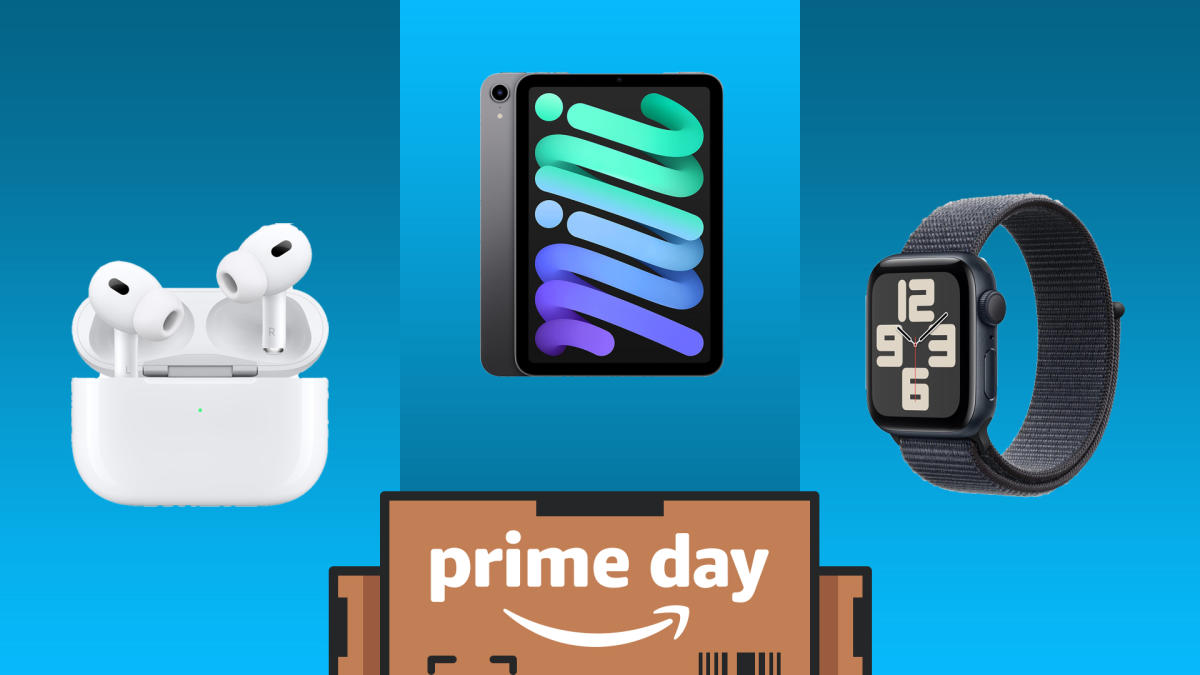
We’re into day two of Amazon’s October Prime Day sale, and you can still grab a handful of steeper-than-usual discounts on AirPods, MacBooks, iPads and other Apple devices. If you’ve been waiting on a discount before making an upgrade, allow us to help: We’ve sidestepped the fake discounts and picked out the best Prime Day Apple deals we can find below.
It’s worth remembering that Black Friday is around the corner, so we’ll almost certainly see more price drops in the weeks ahead. Apple may also launch updated MacBooks Pros and a new iPad mini by the end of the month. For now, though, several of the company’s gadgets are at or near the lowest prices we’ve tracked. We’ll be updating this roundup until the sale ends at 3AM ET; just remember that you’ll need to be a Prime subscriber to view some of the offers.
Apple AirPods Max for $395 ($154 off): This matches the all-time low for Apple’s over-ear noise-cancelers, though this price only applies to the older Lightning-based model, not the newer revision with USB-C. If you can live with the outdated charging port and somewhat bulky design, though, the old model still offers clean sound and top-notch ANC.
Apple AirPods 4 for $119 ($10 off): This modest discount has been available for a few weeks now, but it’s still worth highlighting given that Apple only launched its new wireless earbuds last month. We gave the pair a review score of 88, praising its improved fit, comfort and overall sound quality. This model doesn’t include active noise cancellation or wireless charging, however.
Apple Watch SE (2nd gen, GPS) for $170 ($79 off): It’s getting a bit long in the tooth, but the entry-level Apple Watch remains a fine choice for first-time smartwatch buyers, so long as you can live without the larger always-on display and more advanced health features of the pricier Series 10. This is another one of the lowest prices we’ve tracked for the 40mm model; the larger 44mm variant is similarly discounted at $200.
Apple MacBook Air M2 (13-inch) for $749 ($250 off): It’s a generation old now, but the M2 MacBook Air offers most of the same benefits as the latest model, minus the slightly faster chip, dual external monitor support and improved storage speeds in the base model. This discount matches the lowest price we’ve seen. Just be sure you can live with 8GB of RAM before pulling the trigger. And if you need more storage, the 512GB model is also on sale at $200 more.
Apple MacBook Air M3 (13-inch) for $849 ($250 off): If you’re willing to pay more for those upgrades, however, the latest and greatest MacBook Air is also discounted for $100 more. We’ve seen this discount a few times before, but it matches the entry-level model’s lowest price to date. In general, we consider the M3 Air to be the best laptop for most people.
Apple MacBook Air M3 (15-inch) for $1,044 ($255 off): The 15-inch Air is a half-pound heavier than its 13-inch counterpart, but it has a more robust speaker system, and the added heft may be worth it if you need the extra screen space. This deal only beats the previous low by $5, but it’s the best price we’ve tracked all the same. Note that this is the base model with 8GB of RAM and a 256GB SSD; a config with double the memory and storage is down to a low of $1,423 as well.
The 15-inch Apple MacBook Air with an M3 chip. (Photo by Devindra Hardawar / Engadget)
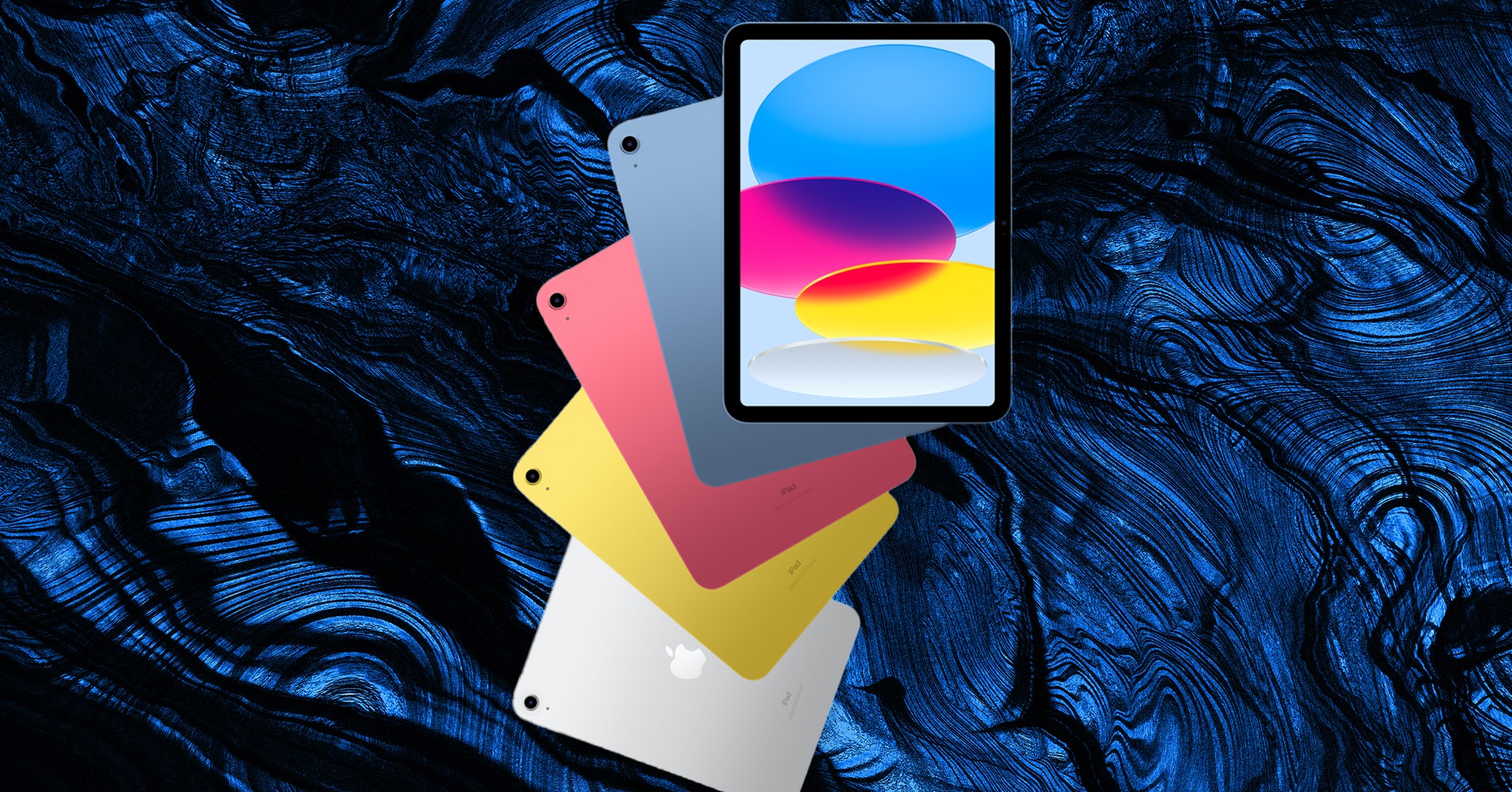
Apple iPad (9th gen) for $199 ($130 off): This model has technically been discontinued, and we’ve seen this discount for much of the last couple of months, but it bears repeating that $199 is a great price for an iPad that’s still perfectly competent for casual media consumption. You’ll have to put up with thicker bezels, the antiquated Home button and a meager 64GB of storage, but you get (almost) the same clean software and expansive app library as any other Apple tablet.
Apple iPad mini (6th gen) for $350 ($149 off): To be clear, this is a bad time to buy the iPad mini, as Apple is expected to launch a long-overdue refresh before the end of the year. But if you don’t care about owning the latest and just want a small iPad for (relatively) cheap, this is about $30 less than the 8.3-inch slate’s typical street price over the last few months.
Apple MagSafe Charger (25W) for $32 ($7 off): While not a huge discount, this is the lowest price we’ve seen for the company’s newest MagSafe charger, which now supports wireless charging speeds up to 25W with the iPhone 16 (and an appropriate power brick).
Follow @EngadgetDeals on Twitter for the latest tech deals and buying advice, and stay tuned to Engadget.com for all of the best tech deals coming out of October Prime Day 2024.
Three weeks later, on Friday, Apple released the first update to macOS 15, and it claims to have fixed those issues. In the macOS 15.0.1 release notes, Apple says that the update “improves compatibility with third-party security software.”
Apple flagged the update in an email to TechCrunch on Thursday, and a spokesperson did not respond to a follow-up asking for more information.
Patrick Wardle, the founder of macOS and iOS security startup DoubleYou, and a longtime expert on Apple security and the developer of several free security tools for macOS, wrote on X that the macOS update includes “a fix for the networking issues that plagued the initial macOS 15 release.”
“And to any Apple apologist who blamed 3rd-party vendors, you deserve to be slapped with a large trout as this was an Apple bug reported before [golden master],” Wardle wrote, referring to the first public release of the macOS 15 software.
When Apple first released macOS 15, several cybersecurity professionals said they were unable to use some security tools, such as CrowdStrike’s Falcon and Microsoft Defender, because of an apparent bug in the new macOS operating system.
At the time, CrowdStrike spokesperson Kevin Benacci said that the company was “waiting for a macOS Sequoia update” to provide official support for its cybersecurity products on Apple’s operating system.
Ugur Koc, a developer who works as a cloud engineer for for cloud managed service provider Glueckkanja, said on X that the new macOS update “resolves the issue with [Microsoft] Defender for Endpoint and other antivirus software, where the network filter was causing issues with the internet connectivity.”
Neither CrowdStrike nor Microsoft responded to a request for comment.
Apple just launched the iPhone 16 line, and it’s been quite an upgrade this year. Though the base models got some nice updates, like the A18 chip and some of the best colors I’ve seen from Apple in years, I’m still all about the Pro models. Once you go with 1TB storage and 120Hz ProMotion displays, it’s hard to go back.
This year, things are a little different. Ever since Apple introduced a Pro model, I’ve always gone for the smaller variant. After one year with a Plus model phone, I learned that I simply don’t care for large phones, so I never tried out a Pro Max. I’ve always just gawked at how humongous the size is, and this year, Apple went ahead and made it even bigger with a 6.9-inch display instead of 6.7 inches.
I have been spending some time with an iPhone 16 Pro Max, and while there’s one thing about it I love, another part of me can’t stand it.
Big phones are not meant for small hands
Christine Romero-Chan / Digital Trends
I’ve had every generation of iPhone so far, and one of my favorite models was the iPhone 5. For me, that 4-inch display was the perfect size for single-handed use, as I have petite hands. That’s why the first iPhone SE was a great compact phone, but the sequels that followed weren’t quite as perfect with the larger 4.7-inch display size.
Then, Apple moved to the 5.8-inch size with the iPhone X for a couple of years. I learned to manage one-handed use with that size, though it still required some finger gymnastics, but I put up with it. I was happy that Apple seemed to recognize the need for small phones when it introduced the mini size with the iPhone 12 and 13, but it sold so poorly that Apple replaced it with a large “Plus” model.
Apple eventually moved on to 6.1 inches as the standard “small” size while having a 6.7-inch display for the Plus and Pro Max. This year, the Pro Max got bumped up to 6.9 inches, which isn’t that big of a difference from the previous size.
But still, for someone like me with tiny hands, this is a behemoth of a phone, and I absolutely cannot use this one-handed at all unless I’m only scrolling through an app. When I hold the phone with one hand (typically from the bottom), the tip of my thumb barely reaches the middle of the bottom half of the screen. Reaching the top corners is impossible without two hands. And the phone’s weight causes fatigue in my hands (especially if my pinkie supports it from the bottom).
I can see why large phones like the iPhone 16 Pro Max appeal to those who are the opposite of me and have large hands, whereas the regular iPhone 16 Pro could be “too small.” But after spending time with an iPhone 16 Pro Max, my very first Pro Max model after all these years, I learned that I was right — it’s simply too big for me.
The battery life is great, though
Christine Romero-Chan / Digital Trends
I have to give credit where credit is due. The battery life on the iPhone 16 Pro Max has been fantastic. Out of the entire iPhone 16 line, the iPhone 16 Pro Max has the most battery, followed by the iPhone 16 Plus.
As someone who has been using the smaller Pro models for the past several years, I can definitely appreciate having a battery that can make it through the day and then some. It’s the same feeling I had when I went from an Apple Watch Series 5 to an Apple Watch Ultra.
My old iPhone 15 Pro, which I have had since launch day, already has a degraded battery that fell below the 90% threshold. That means I’ve been having to charge it up at some point in the middle of the day. I also have the regular iPhone 16 Pro, which appears to have better stamina with the battery, but the iPhone 16 Pro Max takes it to a whole different level. It’s like some of the larger Android phones I’ve tried, like the OnePlus 12 or Samsung Galaxy S24 Ultra.
Perhaps if I didn’t have trouble with such a large phone, the iPhone 16 Pro Max would be my personal device. The battery really is that good.
The Camera Control placement is wrong
The Camera Control button on the iPhone 16 Pro.Joe Maring / Digital Trends
One of the big selling points for the entire iPhone 16 lineup is the new Camera Control button, which is located at the bottom right of the frame on all models. A single press opens the Camera app (but you can change it if you want), another click captures your photo or starts recording, and you can do light presses and slide gestures to adjust various settings. The Camera Control button makes your iPhone 16 feel more like a standalone camera.
While I’ve tried using it on both the iPhone 16 Pro and the iPhone 16 Pro Max, the placement of the button itself is not practical. It’s even more of an issue with the Pro Max because of its larger size.
Christine Romero-Chan / Digital Trends
If Apple had just put the Camera Control a smidge lower on the frame, closer to the rounded corner, it would have felt more comfortable for landscape photos. When I use the camera in landscape orientation, my index finger is wrapped around the side. But with the current position of the Camera Control, I can’t reach it that way and need to obstruct part of the screen/viewfinder to press it.
Again, this issue isn’t just for the Pro Max model; it’s not great on the smaller Pro either. But the larger size of the iPhone 16 Pro Max just exacerbates the issue.
A powerful iPhone, but not for everyone
Joe Maring / Digital Trends
This is the first time I’ve used Apple’s large-size phone since the Plus versions, and while I love that extra battery life and seeing more on the display at once, the size just isn’t for me. Props to those who like the big size of the Pro Max, though! It’s just impossible for me to use it comfortably.
I am glad that Apple at least gives us a choice with the iPhone lineup. This year, there’s feature parity with both the iPhone 16 Pro and iPhone 16 Pro Max. That means those who prefer the smaller size aren’t missing out on major features, unlike last year. Now, the choice just comes down to whether or not you want a big phone or a small phone — and that’s how it should be.
If you have an Apple Watch, you need to be ready for watchOS 11 Apple’s next big software update for its smartwatches. Though watchOS 11 doesn’t have Apple Intelligence, it still has a ton of new features, including more customization for Activity Rings, overnight vitals, training load tracking, and much more.
But when will you be able to check out watchOS 11? Here’s everything you need to know about the watchOS 11 release date.
watchOS 11’s release date
Joe Maring / Digital Trends
The wait is over: watchOS 11 is finally here, with the release date having been confirmed at the Apple event that also brought us the iPhone 16, iPhone 16 Pro, and Apple Watch Series 10. The latest update for your Apple Watch is now available to absolutely everyone, and is no longer reliant on signing up for a beta. Yes, anyone with an applicable Apple Watch can now experience everything Apple has to offer in the latest version of its wearable OS.
It’s been a long road to get here, and a familiar one for those who’ve tasted of the waters of developer and public betas before. First, watchOS 11 was released as a developer beta shortly after the WWDC 2024 keynote in June. This beta was followed by a number of updates until it was finally taken away from developers alone, and released as the watchOS 11 public beta on July 16, 2024. As ever with public betas, this release was more stable than the developer beta, but still had its share of bugs. It was meant to show the public a taste of what’s to come and to provide feedback to Apple in order to shape the final release of watchOS 11.
But betas are notoriously fickle things, and come with plenty of bugs, issues, and ways to brick your watch or render it incapable of receiving aid from Apple. Thankfully, you don’t need to play with one any more, as watchOS 11 is now out for general release.
When will my Apple Watch get watchOS 11?
Joe Maring / Digital Trends
But none of this matters if your Apple Watch can’t run the newest update. Apple is generally quite generous where updates for older models are concerned, but whether it is where the Apple Watch is concerned is a question you’ll have to answer for yourself. The cutoff line for Apple Watches to receive the new watchOS update is … the Apple Watch Series 6. That means any Apple Watches older than September 2020 will not be receiving watchOS 11. That’s a real shame if you’re still using your older Apple Watch and it’s purring away nicely. But hey, if you’re happy to live without the latest software, then you can still get a few more years out of it. Otherwise, check out our list of the best Apple Watch deals to browse upgrades.
Talks between Apple and the union for the Apple Store in Oklahoma City have produced a tentative agreement that includes new benefits and protections for its staff. The Penn Square Mall Apple Store in Oklahoma City announced they’ve reached a “tentative labor agreement” with Apple and the Communication Workers of America (CWA), according to a released statement.
Terms are still being negotiated between both parties but the benefits for the store’s employees would be significant. The three-year agreement reached between the CWA and Apple would give employees a wage increase of up to 11.5 percent. An Apple spokesperson said by email that if the contract is ratified, employees would receive a 4 percent raise in the first year of employment and 3 percent in the second and third year each “based on employee performance.”
The agreement would also offer employees guaranteed paid time off and health and other benefits, allow employees to have a say in scheduling and the establishment of a “safer and more democratic workplace” through a grievance submission process with committees overseeing safety, health and working relations. An Apple spokesperson also noted the scheduling options “were provided to all other US stores in 2022.”
The Oklahoma City Apple Store had been working to form a union becoming the second Apple Store in the US to unionize. Employees passed a strike authorization vote in August that passed with unanimous support and started a picket in front of the store ahead of bargaining sessions in early September. Workers will vote to ratify the tentative agreement on September 22.
CWA District 6 Vice President Derrick Osobase called the agreement achievement “a historic day for our members who have now secured a contract at the world’s most profitable company.”
The Apple Store in the Towson Town Center in became the first location to unionize. Members approved the union in 2022 with the International Association of Machinists and Aerospace Workers (IAM). A store in the Cumberland Mall in tried to form a union in 2022 with the CWA but workers called it off accusing Apple of committing “repeated violations of the National Labor Relations Act.”