The Role of Cross-Functional Teams in Accelerating Product Design Innovation


A proper cross-functional team consists of individuals with diverse skill sets and fields of expertise who work together to achieve a common goal. Diverse backgrounds and, therefore, varied perspectives can contribute to a better understanding of problems, improving the chances of creating effective solutions. At its core, NPD (New Product Development) design isn’t that much different from a focus group discussion. You have multiple people in the room to discuss a pressing issue and, hopefully, reach a consensus at the end. The consensus can take the form of a conclusion, an answer, or a suggestion. To increase the likelihood of reaching an agreeable decision that benefits everyone, ensure the focus group includes members from diverse backgrounds, each with a unique perspective. The same thing can be said of a cross-functional team working on an NPD project. If the team is multidisciplinary, the resulting product is expected to be the brainchild of multiple creative minds working together to build an optimized design.

An NPD team typically consists of industrial designers, engineers, prototype fabricators, R&D personnel, and marketers. But even if you have all of them working on the same project, it doesn’t always mean the team instantly becomes a cross-functional one. The only way to ensure it and keep the project running at a healthy pace is to maintain good communication among the members. For this purpose, you will need another specialist, in this case, a project manager, to function as a bridge that facilitates smooth workflow, reconciles differences, and streamlines progress in general. A capable manager works to break the old-school siloed culture in an NPD project. Despite the varied specializations and perspectives among the individuals or even groups, the project manager should try to build a truly cross-functional team out of the differences, an effective team driven to fulfill the same purpose in a collaborative way.

RELATED: Innovation is Ongoing: Next-Gen Product Design Strategies with Industrial Design Firms 

And this is where Cad Crowd shines. Whether you want to bring in more experts to build a diverse team or a project manager to foster collaboration, look no further than Cad Crowd to discover and connect with some of the most qualified talents for your project. Backed by thousands of experienced NPD professionals from various backgrounds, the freelancing platform grants you easy access to the best the industry has to offer. 

🚀 Table of contents

Old linear days

Not so long ago, the NPD process was often associated with uneasy integration between supposedly related fields of expertise, such as engineering and design. As if the project wasn’t difficult enough, even with proper collaboration, the notion of each discipline being a stand-alone operation in a siloed development made things harder than they had to be. In some cases, such compartmentalization still exists today, and you might be surprised that many large companies suffer from it.

Say a company wants to build a new type of ceiling fan with colorful LEDs on the blades that produce psychedelic effects at full speed. The designers, with their own creative viewpoints, decide to keep the product small and wireless. They go so far as to suggest that the fan should be controllable via a smartphone app. Sketches and renderings design are sent to the engineering team, along with the desired tech spec. In this whole exercise, however, the designers are oblivious to how technically challenging it would be to make the product they describe. The engineers have to figure out the material, durability, RGB controller, wireless communication, not to mention the app development, and power consumption. Mind you, this is just an example. Maybe in the real world somewhere, there’s already a ceiling fan that can do all those our hypothetical designers say. We’ll just gloss over that. 

Cross-functional-teams-product-design-innovation-collaboration-process

In that strangely specific instance, the designers seem to see the engineering team as no more than a support group whose main function is to build whatever the sketch may suggest. This is especially true if the proposed design has already been submitted to someone higher up the administrative ladder, who, without so much as a memo to any of the engineers, gives the approval. Sometimes, things happen the other way around, as in the engineers write down the specification without input from the design team. The lack of communication means that both groups are unaware of each other’s constraints. They may misinterpret information because the briefs contain either too many or too few details. A lack of understanding leads to poor collaboration, putting development on hold.

RELATED: The Simple Secret To Unlocking New Product Innovation at Design Services Companies

It’s an old approach where an NPD project moves like a relay race. One team finishes its job at a certain point, passes the baton to the next in line, then sits back and enjoys the view. One of the good things about the old approach is the sequential progress, meaning the project moves from phase to phase. It begins with market research, concept development, prototype fabrication, evaluation, certification, and finally commercialization. The ugly thing is that every team involved in the project works in a segmented fashion. The research people are concerned with nothing but market demands; the engineers specialize in technical details; the designers are scrambling to put the spec sheet into shape; the fabricators are left to their own devices to build prototypes; and so forth. All the teams are highly specialized, which is always a good thing, but the segmentation forces them to work, for lack of a better word, in isolation. It’s ineffective at best.

Time for integrated NPD

But things are changing. Many product design companies have moved from the old linear approach to a more streamlined workflow, in which every NPD project is now assigned to a multidisciplinary team rather than a collection of highly specialized divisions. They’ve discovered that a cross-functional team is just as capable of churning out high-quality, profitable, and unique products as its sequential counterpart, but faster and more flexible. There’s no alternative, really. Product designs have become more complex, and the market is getting increasingly more competitive. Everybody wants their products to be the first to hit store shelves. No one needs the delays caused by poor communication, which happens far too commonly in a segmented NPD team. Companies have been exploring ways to improve efficiency.

A segmented team hinders that very idea, because so much time is wasted just waiting for somebody from another division to pass the baton. And when the baton finally gets handed over, progress can’t continue right away because the receiving group has to reanalyze it first to be able to decide what to do next. All the groups within a segmented team can be so different from each other, in terms of both specializations and principles, that they have no clear relationships and no single rulebook to determine who gets to do what and when. 

Some companies create a “task force” to handle specific NPD projects. Unlike the regular segmented team, a task force is supposed to be multidisciplinary and separate from the other groups. It can indeed be an effective answer, but the fact that a project requires a task force is a sign of poor efficiency in the existing design management. If your company’s business is all about making new products, why don’t you have a permanent cross-functional multidisciplinary task force to begin with? For example, in an NPD project where the “design group” has to work in a separate environment from the rest of the team, you’ll probably encounter too many unnecessary back-and-forth exchanges just for everyone to agree on the concept.

RELATED: How to Improve Product Development For Your Company with Engineering Firms & Design Consultants

You can describe the main role of a design group as creating or developing concepts that optimize a product’s functions, fabrication, aesthetics, and value. Don’t you think it would be nice if the design group also gets involved in the market research services and engineering phases? A segmented team means the design group only works at a certain phase of the project, let’s say following R&D and just before engineering. They’ll likely be able to develop a strong concept based on the R&D report, but what if the engineering group finds it too challenging to fabricate?

The next thing you know, there’s a lot of back-and-forth between the three groups, and by the end, the project makes little progress because so much time is wasted on documentation explaining why things won’t work. The engineering group suggests the form factor is too small, while the design group insists that anything larger would make the product difficult to use. A better approach is to integrate the different groups (design, engineering, marketing, research, etc.) into a single cross-functional team. No more segmented workflow, no more compartmentalization, no isolation, no siloed development. An NPD project has always been about design compromises and effective engineering backed by accurate market research. A multidisciplinary team, working under the watchful eye of a professional project manager, blurs the boundaries between specializations, allowing members to collaborate closely regardless of the project’s development phase. 

RELATED: Innovation Best Practices: Strategies for Better & Faster Product Design Services

An NPD project run with an integrated approach is highly likely to be much more efficient than the old linear method for one good reason: you have a multidisciplinary team where members work together from the beginning to the end. Although sequential product development offers structured phases and easily identifiable progress, the dynamics of a multidisciplinary, cross-functional team yield more refined concepts, more thoughtful decisions, and an overall better design, thanks to the interplay among members. Some of the development phases can even happen concurrently. For example, the designers produce sketches before the feasibility test results from the R&D people are in. Or, the engineers can start fabrications of a PoC (proof of concept) before the designers finalize the aesthetics. A cross-functional team also finds it easier to keep iterative development going through the latest phase of the NPD project. 

Product designers and others

We’ve all been found guilty of complaining about a bad product with, “Who designed this thing that now doesn’t work anymore?” Perhaps with an expletive or two in reality, but let’s leave that in the inner thoughts for now. Although the complaint really is an all-encompassing expression of criticism toward the entire development team and the company behind the product, it’s as if we’re only blaming the designers for whatever flaws the product has. Unfair as it may seem, there’s some truth to that, and it only shows how important designers are in an NPD project. A design, in its own right, is like the middleman that connects engineering expertise and product requirements. The designers work to build a medium to deliver useful technologies and features to users. This medium takes the form of a physical product design that users can touch and interact with.

A product can be as sophisticated as a lunar module, or as modular as LEGO bricks, but if the design is a mess with buttons all over the place, or a rechargeable battery with a charging port in the wrong place, no one is going to have a good time playing with it. Even the marketers would scratch their heads as they make up words describing how mind-numbingly difficult it is to use the product. Good-looking design shouldn’t come with a terrible user experience in the same way that useful features never have to hide underneath poor build quality. If the product actually is well-optimized for what it’s supposed to do, the marketers can do their jobs without having to sugarcoat the sales pitches. From the perspective of an NPD as a whole, all these conflicts are minimized, perhaps completely avoidable even, so long as there’s a cross-functional team working on the project.

RELATED: A Guide to Concept Design with Product Design & Engineering Companies

While it’s true that designers aren’t the only people working to develop a new product, almost everything they do is a central activity connected to the work of others on the NPD team. Research, engineering, manufacturing, and marketing services have their impact on design, but maybe not to the same extent that design affects them. Still remember how people blame “design” when something goes wrong with a product? The vast majority of people aren’t technical enough to think of a product, especially a physical product, as more than anything but either good or bad design. It’s probably not the main reason design is crucial, but it’s definitely one of the big ones. 

Within a cross-functional team, designers can comfortably take on an integrative role, where they can directly contribute to development while also taking into account what others (researchers, engineers, marketers) have to say. And the sentiment goes every other way. Members of an integrated team are naturally dependent on one another. It’s a collaboration in every sense of the word. An NPD project by a cross-functional team has the benefit of diverse information that’s “immediately” available in every stage of the process. Emphasis on the word immediate, because the team doesn’t suffer from the typical organizational red tape, which often causes delay at best and complete inaction at worst.

Improving-product-innovation-through-cross-functional-teams

Major interactions

All the various disciplines within a cross-functional team have no choice but to maintain close interaction with one another; there’s no point in being multidisciplinary to begin with. Since we’re talking from designers’ viewpoints, this close interaction happens mainly with three other disciplines: marketing, engineering (or R&D), and manufacturing services.

RELATED: Simple Strategies to Improve Your Product Innovation Process for Design Service Firms

  • For the designers to come up with a concept that makes sense, they need to know at least two things: the competitors’ products and their average prices. Designers can always use more detailed marketing information, such as characteristics of target demographics, consumer trends, business constraints, compliance standards, and emerging technologies. Marketers must ensure that all this data is consistently updated and available to designers at all times. It’s good to have more data, but some of them might not be entirely relevant to what the designers need. A cross-functional team runs efficiently because the designers are in continuous interaction with marketers to filter out any information that’s beside the point. The designers have only the information they need to know, nothing less, nothing more, allowing them to work faster with more accurate results.
  • Regular contact with engineers or R&D people in general can also improve the workflow. Since R&D personnel also communicate with other disciplines, the information they share may influence designers’ approaches to product development. For example, the engineers can keep the designers updated on many things, such as manufacturing methods, material choices, and prototyping technologies. Perhaps the designers wanted to make the product as light as possible while maintaining durability, and, thankfully, the engineers are aware of a newly developed alloy that is perfect for that purpose. For sure, the designers can find out about the material on their own, but the collaborative nature of an integrated team allows this whole information-sharing activity to happen quickly. No matter what concept and design emerge from the development, a cross-functional team ensures that they result from well-informed decisions.
  • And then there’s also the manufacturing discipline, which, of course, contributes to the idea of the DFM (Design for Manufacturing) approach. The endpoint of an NPD is mass production. But the problem is that many companies don’t have their own factories. Even massive corporations like Apple, Nike, and Walmart outsource their production to third-party manufacturers. And not every product or design can be easily mass-produced. It takes quite a lot of adjustments to the machinery, the assembly line, or perhaps brand-new tooling, depending on how complex the designs are. Sometimes, parts of the designs have to be revised to streamline the manufacturing. The idea behind DFM is to build a design that’s actually intended for mass production. With manufacturing professionals feeding relevant information to the designers, the NPD project can generate a design that’s already well optimized for production.

To reiterate our very first point at the beginning of the discussion, a team can be called “cross-functional” if the members come from different professional backgrounds and work together toward a common goal. In an NPD project, such a team may consist of industrial designers, engineers (electrical/electronics, mechanical, computer, etc.), marketers, researchers, and fabricators. The team can work to its full potential so long as everyone can leverage each other’s specialized expertise to address the often complex challenges of product development. Each discipline also offers a unique perspective, allowing the team as a whole to understand problems from all possible angles and generate optimized solutions. Specifically, designers in a cross-functional team typically serve as a link among all other disciplines, gather project-relevant data from them, and use that information to generate concepts that meet product requirements.

RELATED: The Simple Secret To Unlocking New Product Innovation at Design Services Companies 

Chances and challenges

One of the most obvious characteristics of a cross-functional team is spontaneity, or its willingness to try new ideas and see things from fresh perspectives. A shift from the old linear days to the modern integrated approach in NPD often signals an attempt to break down the traditional hardline of the siloed method. And any form of change where a company moves away from rigidity toward flexibility never fails to stimulate new kinds of thinking and learning, perhaps even a new culture of collaboration. As the disciplines previously segmented in a silo-driven development are now brought together without barriers, whether organizational red tape or isolated work environments, the sense of teamwork feels more literal, and every experiment feels more well-rounded.

It only makes sense that a diverse team composed of multidisciplinary members from various backgrounds has a better chance of coming up with creative solutions than segmented groups or individuals. This doesn’t necessarily mean that a cross-functional team can always generate optimized product designs; it’s just that the likelihood of it happening is noticeably improved thanks to the collective expertise. For better or worse, this kind of specialization diversity (which sounds like an oxymoron because it is) transforms the workspace into a real creative environment. Everyone challenges each other’s assumptions and explores all possible alternatives. It’s inevitable, and that’s why you may need an experienced project manager to prevent any design discussion from turning into nothing but noisy, meaningless debate. A project manager keeps things civilized and purposeful.

The traditional NPD project with a linear approach will never eliminate sequential handoffs between the segmented specializations. Repeated handoffs don’t necessarily indicate inefficiency, but there will be time wasted throughout the administrative procedures involved. We won’t say handoffs are inefficient in any way. Depending on how you handle the transition from one phase to the next, handoffs can be nothing but smooth sailing across the board, for example, when you have a qualified manager to keep the project somewhat centralized. But no matter how efficient the handoffs are, zero-handoff definitely takes less time. 

But it’s not without its challenges, too. Chief among these is to get everyone on the same page to begin with. A cross-functional team is prone to conflicts. If you fill a room with people from varied professional backgrounds and ask them to solve one problem, they may first argue about everything, which is understandable because they have different methods, focus on different things, and use completely different metrics for success. They’re not familiar with each other’s approaches to problem-solving, which can turn the NPD project into a mess.  It’s therefore important to remove all these potential issues right off the bat. You can do this by setting clear and measurable objectives to guide the team’s efforts. Collaboration in a cross-functional team only works well if everyone is aware of their specific roles. The team also needs good leadership not only to prevent and solve conflicts, but also to provide resources and acknowledge contributions. 

Closing thought

An NPD can take great benefits from a cross-functional team. The integration of a wide range of disciplines and knowledge, working on a project as a single group, brings the promise of an optimized product design, one that’s actually seen as the ideal solution after going through so much scrutiny by experts of varying specializations. But different professional backgrounds usually entail specific viewpoints, approaches, methods, and goals that are not perfectly aligned. And to overcome any conflict that may arise from these differences, the team can always rely on a capable leader, a project manager, or a captain to set the tone for teamwork and help everyone reach a common understanding of the job. 

Cad Crowd, a freelancing platform with a heavy emphasis on design, engineering, and the NPD sector in general, gives you easy access to some of the most capable talents in the business. Whether you’re looking to reinforce your existing team or build one from the ground up, Cad Crowd offers flexible hiring options with competitive rates to boot. Backed by more than 15 years of experience, a guarantee of accuracy, and a user-friendly interface, Cad Crowd stands as one of the top US-based platforms for finding experienced professionals for NPD projects of all kinds.

RELATED: How CAD Modernizes Product Concept Design at Industrial Design Services Companies

How Cad Crowd can help

Working with the right experts makes the dream work. Having clear communication and collaboration is a step toward making a product successful. With suitable and right deliberation, communication, and support, any simple idea can be turned into a fully made product that customers will trust and be happy to buy. Contact Cad Crowd today and start bringing your ideas to life with a free quote.

author avatar

MacKenzie Brown is the founder and CEO of Cad Crowd. With over 18 years of experience in launching and scaling platforms specializing in CAD services, product design, manufacturing, hardware, and software development, MacKenzie is a recognized authority in the engineering industry. Under his leadership, Cad Crowd serves esteemed clients like NASA, JPL, the U.S. Navy, and Fortune 500 companies, empowering innovators with access to high-quality design and engineering talent.

Connect with me: LinkedInXCad Crowd

How Innovative Design Techniques Can Supercharge Your New Product Concept


You just had a flash of inspiration for a new product that will change your game. It feels new, exciting, and like it could change the game. But then reality sets in: how do you turn that idea into something real that people will want to buy?

Most new ideas die in this space between a great idea and a successful product. The idea stays stuck in planning meetings that never lead to action.

Product design service innovation techniques fill in the gaps by providing structured ways to transform raw ideas into products that customers actively seek and purchase.

The Cad Crowd professionals’ innovative design isn’t just about how something looks or seems cool. As the number one freelance design marketplace, its experts possess a tactical force that combines creativity, technology, consumer knowledge, and smart problem-solving to turn a simple idea into a game-changing product. Think of it as a magic sauce that turns your idea from “just another idea” into something that people can’t imagine living without.


🚀 Table of contents


Human-centered design

Let’s talk about the real magic behind successful product design that puts people first. Think about this: trying to make something without knowing who will use it. Doesn’t that sound like a recipe for disaster? That’s exactly what innovative design wants to do by putting users in the spotlight.

Designing with people in mind is more than just making something that works well. It’s about really getting to know the users, what they need, what frustrates them, what makes them tick, and even the little things they might not even be aware of. The goal is to make things that not only work but also feel like they were made just for the user.

Consider a fitness tracker, for instance. A product design expert team may, at first glance, home in on technical aspects such as heart rate monitoring sensors, GPS precision, or battery endurance. But a people-first strategy challenges them to dig deeper. When exactly do people really want to check their numbers? What truly drives them to get going? How can the device slide into their daily habits seamlessly without being an annoyance?

By putting themselves in the user’s shoes, designers gain insights that result in smarter, more intuitive products. The outcome? Solutions that not only solve problems but also build emotional connections. And those connections? They’re what drive loyal customers who return again and again—not just for the tech, but for the experience.

To innovate in a way that truly connects with people, human-centered design is essential, not just good practice.

Rapid prototyping: Fail fast, learn faster

Remember the traditional school days when developing a product prototype was costly tooling, waiting for ages, and much guesswork? Innovation turned the tables by adopting rapid prototyping methods. Now, with developments in 3D printing design services, computer-aided design (CAD), and virtual reality (VR), designers are able to iterate designs in days or hours rather than months.

Rapid prototyping changes everything because it facilitates experimentation and early failure, which may not seem intuitive but is the ultimate path to winning. When you can rapidly flesh out sketches in three dimensions, try them on real people, and get reactions, you’re learning what’s going to succeed and what’s not nearly as you go along. It’s as if providing your product idea with a speeded-up option of trial and error.

This back-and-forth cycle tends to create breakthrough innovations. Perhaps that flexible piece you didn’t think you needed ends up being the key to user comfort. Or that small adjustment in the user interface makes the product instinctively easy to use. Without quick prototyping, these observations may never surface until it’s too late.
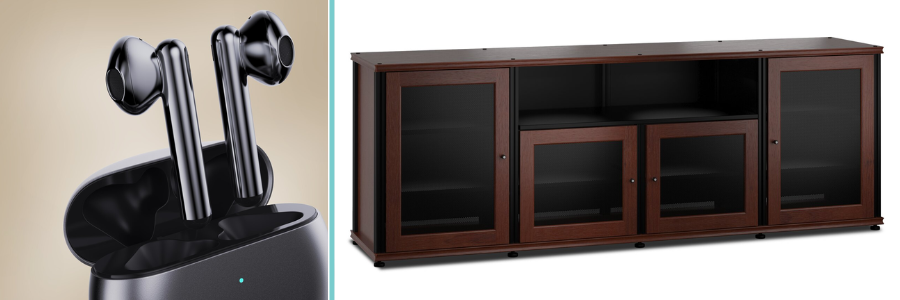
Cad Crowd design of a wireless earphone system and large TV stand by professional prduct designers

RELATED: Why most products fail and proven tips for success with new product design services firms

Taking advantage of cross-disciplinary collaboration

Think of innovation as a special sauce, and one of the things that makes it so powerful is when people from different fields work together. There was a time when teams worked separately, each in their own bubble. To really bring a new product idea to life, you need a wide range of skills, including designers, engineers, marketers, psychologists, and sometimes even artists, all working together.

What makes it so strong? Real innovation often occurs where these areas intersect. A designer might come up with a great design, but without engineering design services, it may not be possible to bring it to life, or it may be too costly to produce. Engineers can build something that works but doesn’t connect with users. Marketers tell us what customers really want, and psychologists help us understand how people think and feel.

From the start, teams can identify problems early, generate new ideas, and create products that the market loves, not just ones that work. Working together is what makes the difference.

Embracing digital tools and data-driven design

Welcome to the product development era of the digital age, where data and innovative tools are not niceties but necessary ones. Next-generation design leverages the capabilities of analytics, artificial intelligence (AI), and simulation software to build smarter products and smarter development processes.

Data-driven design lets you avoid using your gut or assumptions. Rather, you are able to dissect user behavior, preferences, and feedback at a very detailed level. For instance, by observing how users engage with an early prototype of an app or device, you will be able to discern pain points and areas for optimization.

AI-based systems can create several design options, optimizing for considerations such as cost, performance, or user comfort. Simulation software can simulate how a product will react under varying conditions without creating a physical prototype through prototype engineering services. This minimizes risk, reduces costs, and accelerates time-to-market.

In addition, digital solutions facilitate more engaging presentations to customers and stakeholders. Virtual and augmented reality allow individuals to try out a product idea before it is even made, creating buzz and insights that can guide its development in the right direction.

RELATED: From sketch to prototype with product design services for companies at Cad Crowd

Sustainable and responsible design: The future-proof strategy

Innovation these days is not about being flash or high-tech; it is about being responsible. Shoppers and regulators are themselves demanding products that have less environmental footprint and give back to the planet.

Having sustainable design methods integrated at an early stage can boost your product by aligning it with these expanding expectations. That could be selecting green materials, making products for simple disassembly and recyclability, or developing products that use less power.

Innovative design also means considering the whole product life cycle. How is it made? How long will it last? What happens after its useful life is over? This kind of thinking tends to create breakthroughs, such as modular designs where users can replace parts rather than the entire product, or packaging design services that minimize waste.

A product built with sustainability has the potential to build a strong brand story that deeply resonates with consumers and differentiates you from competitors.

Storytelling through design

Let’s discuss a hidden ingredient in wonderful products that most people miss: storytelling. Every product, regardless of how mundane, has a story to share. And clever, innovative design is the ideal method to tell that story in a manner that captures attention and resonates emotionally with your audience.

A great design has so much to say without having to say one word. A product’s form, color, texture, and even the manner in which an individual uses one all combine to tell a narrative. This narrative communicates what a product represents and how it needs to make individuals feel.

Consider legendary brands such as Apple and Tesla. Apple’s minimalist, sleek design communicates a tale of simplicity and refinement, whereas Tesla’s futuristic, bold design conveys innovation and eco-friendliness. Your product’s design can be just as compelling—a visual language that tells your story and makes your product resonate deeply with customers.

Thinking beyond the product: service and experience design

Yes! The smartest product innovation services no longer just care about creating a great product; they think much further ahead. It’s all about the whole experience, from the first time someone sees the product to how it fits into their life. This means that product design and service design must work together.

Consider how challenging it is for customers to receive assistance when they need it. Can customers customize the product to make it their own? There may be an app or extra feature that makes the product even better. All of these elements work together to ensure that customers return, providing them with a smooth and pleasant experience.

When you create something with the entire journey in mind, you open up new ways to sell it and build a larger ecosystem around it. That’s where real loyalty and innovation happen.
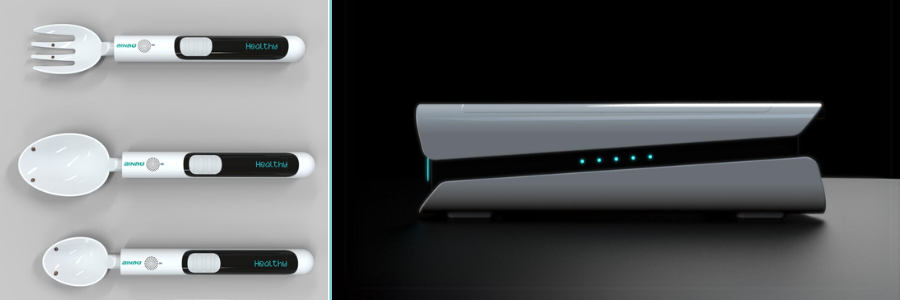
Cad Crowd design of medical devices by Cad Crowd design experts

RELATED: The simple secret to unlocking new product innovation at design services companies

A culture of innovation: the ongoing engine

Innovative design isn’t just a one-time thing; it’s a way of life and a way of thinking. Companies that push their products forward are the ones that make innovation a part of their DNA. This is making a culture where people can share their ideas, learn from their mistakes, and let their curiosity guide their decisions. It means putting money into learning new things, trying out new technologies, and always putting the customer first.

When you make innovation a habit, your new product ideas turn into a stream of new products that keep you ahead of the competition. What does all of this have to do with your new product idea? Design is not an extra step or an afterthought; it is the very heart of innovation. You can turn your idea into a product that people love, connect with, and last by using human-centered principles, rapid prototyping design services, cross-disciplinary teamwork, data-driven methods, sustainable innovation, storytelling, end-to-end experience design, and a culture of continuous innovation.

Cad Crowd is here to help!

Are you ready to supercharge your new product idea? Cad Crowd is the best freelance marketplace to find the best product, architectural, and engineering talent. Think of design not just as a way to beautify, but as a strategic engine that drives every phase of your product’s journey. Transforming your innovative idea into a market sensation. Contact us at Cad Crowd today for a complimentary quote, and let’s bring your vision to life!

author avatar

MacKenzie Brown is the founder and CEO of Cad Crowd. With over 18 years of experience in launching and scaling platforms specializing in CAD services, product design, manufacturing, hardware, and software development, MacKenzie is a recognized authority in the engineering industry. Under his leadership, Cad Crowd serves esteemed clients like NASA, JPL, the U.S. Navy, and Fortune 500 companies, empowering innovators with access to high-quality design and engineering talent.

Connect with me: LinkedInXCad Crowd