Top 5 Prototyping Mistakes to Avoid in Product Development (And How to Fix Them)


What are the top prototyping mistakes to avoid in product development? For every business that focuses on creating a product, prototype design services are an essential step that leads to the final product. It allows testing concepts, ideas, and other factors to make it feasible without having to spend a lot of money, resources, and time. But sometimes, it can be overwhelming as the final product does not always align with our vision. To make it all worthwhile, the concepts must be transformed into something significant and useful for the competitive marketplace.

In order to have a feasible product, all startups must undergo product testing, prototyping, and experimentation. However, not deeply knowing prototyping can be your business downfall. In this blog, you will be able to explore the top 5 prototyping mistakes as well as the solutions for them. 

What is a prototype?

A prototype is a version of a test product that has been produced for observation purposes. Prototypes help you simulate real scenarios and settings to gain better insight and to check if it is ready for mass production or if some parts still need to be improved for the market. A prototype does not have to be perfect, as it serves as a basis for identifying items that are not appropriate for the process. Prototypes are typically only preliminary versions of the finished product. It is a kind of trial and error where one learns; it is not utilized for marketing. These prototypes are usually basic and crude. As previously mentioned, it is simple because it is not flawless.

RELATED: How the Engineering Design Process Helps You Craft New Products for Consumer Goods Firms

Why is Prototyping Important? 

Prototyping is an important step as it focuses on improving the product for mass production. All of the required parts and components must be in optimal condition in order to avoid manufacturing delays and costly damage that might hinder progress before the market launch. Rapid prototyping firms also allow you to have a better perspective to identify faulty and defective parts and features that will give you plenty of time to reflect and iterate on your product. As the development progresses, you can refine more and explore your prototype and upgrade it to its optimal use. 

With prototyping, you also have the chance to examine every raw material to make sure it is appropriate for what you intend to produce. You must always remember that your raw materials can withstand extreme conditions, such as heat, cold, pressure, or force. Aside from having your own feedback on the prototype, your product design team or any market survey can provide feedback for you, as they will be the ones who will be using your product. This is a kind of fresh point of view that may help you identify weaknesses in the product aside from what you see.

You can also utilize the feedback to improve and expand upon something that any consumer or target user would want. It would be extremely difficult to accomplish all of the objectives without prototyping, as there would be no foundation for improving what is being built. It will result in a confused state where the product does not belong and is inappropriate for its materials and purposes. Despite the efforts, time, and money that were put into it, the result will be ineffective. 

RELATED: 38 Top Tips for Outsourcing Physical Product Development with US Product Design Firms

Types of prototype: 

  • Low fidelity prototype – The simplest of all prototypes. It usually consists of traditional sketching, paper drawings, and cardboard. Anything that can be used for sketching. It is the least expensive one because you are just utilizing what you already have. You are not just sketching, you are also exploring your idea. 
  • Mid fidelity prototype – Mid Fidelity Prototype involves the use of digital tools such as 3D printing services to have an improved and functional model for a client to see. It can have in-depth details that can serve as an overview of how a product will function. High Fidelity
  • Prototype – This is the most detailed and realistic version among the three prototypes. It looks like the replication of the product based on its design, appearance, and its function. 

Here are some common prototyping mistakes in product development and tips on how you can fix them:

1. Trying to make the prototype perfect too early

Prototyping can be a process that needs time to make it perfect, and some clients would want to have a perfect prototype in just one trial. The problem with this is that there needs to be a trial to actually visualize the materials used, functionality, features, and others.

How is this a problem? 

Although anyone would want to not waste a lot of money in a trial-and-error phase in new product design services, prototyping is not something that you can build in an instant. Prototyping is a phase for improvement, testing what ideas and concepts align with the goal of the product. When you only focus on making the prototype perfect rather than identifying what needs to be improved, you are wasting your own time and resources, and hindering the development process to have a unique product suitable for your target market.

RELATED: Top Product Usability Factors for Good Product Design Services & New Prototypes

How to fix it? 

Begin and create a prototype that is not expensive. A low-fidelity prototype is suitable for starters since it serves as the first physical version of your product. Paper, foam, clay, simple 3D printing design, bottles, and even cardboard may be used for this. To create a low-quality prototype, try not to spend too much on expensive materials and just utilize materials that you already have. After this, you can focus on the validation of the concept if it is attainable, practical, and functional. Once done, at a later stage, you can refine and build more on what can still be done to have a working product. 
Product designers

2. Ignoring user feedbacks

Feedback is a helpful way to gather opinions about your products and help you improve them. Owners should be taking advantage of the feedback given, whether it’s good or bad, to see what the things are that need to be focused on. 

How is this a problem? 

Sometimes, owners can be too confident that their ideas will work out perfectly. When it comes to product concept design services, they tend to forget market research and target customers based on what they want, and gather feedback. The presence of feedback is a helpful way of making it improve, yet when this is not considered, you are risking every chance of creating a product that is impractical and does not have any use. 

How to fix it? 

The prototype must be tested by the target or potential users, or even on people who can provide detailed and proper feedback without any bias. Test this as early as you make your prototype to know what things should be done on it. As you conduct interviews, don’t forget to ask them questions related to the prototype they used in terms of functionality, relevance, and what other factors they think must be improved. Using this as a foundation for your prototype can lead you to a product that will last not just in the market but also in the trend.

RELATED: Designing Prototypes: 3D Design Services for Inventors and Companies

Analyze every feedback and always remember that opinions can be given in a good or bad way, which any owner or client must take as constructive feedback. Constructive criticism must be handled carefully because this is where the improvements start. Target sales are attained when taking into consideration what motivates clients to buy and refer your product to others. When a customer feels heard, they are more likely to be satisfied with the way you handle the problem, and they will keep buying and have faith in the goods you are producing.

3. Skipping iteration

As the word of mouth gets around quickly, as a prototype manufacturing designer, be careful in making improvements and fixing any errors. If an individual has already tried your product and was not satisfied with it, they might not promote your product, therefore making the iteration useless and pointless. This can be an inefficient and costly expenditure on your part.

How is this a problem? 

Nothing is perfect in just one try. Skipping this part of the iteration phase means you are missing the opportunity to create an efficient prototype. Iteration is a state where you repeat the process, improve it to make it effective in the final phase. The chances of having to find out what the functional components are or those unnecessary features might be forgotten when iteration is being disregarded.

How to fix it? 

Make sure to learn and adapt the process of iteration where you build a prototype, test it, gather feedback from the users, and improve it based on the feedback, and then repeat the process until you make it a perfect one.  In each cycle, the product gets better, more accurate, and more reliable, leading to the product’s success. It comes from continuous improvement and not just a one-step process to perfection. Do not rush the time, what is a product done quickly when it is not up to the standards and gives a low quality. It can just be another waste of resources. Make sure that all of the components and parts are suitable with each other, it should be functioning and can be an aid to those who are the target market of the product.

RELATED: Complete Guide to Prototyping Methods Used in Product Development Services for Companies and Firms

4. Using the wrong type of prototype

How is this a problem? 

When you choose a prototype that does not align with what you want to create and does not match your aim, it can affect the product development process, which causes a delay. In addition, it wastes time and resources that can be used for other things. It should be taken into mind that as the stages develop, it also needs a different prototype.

How to fix it? 

Create a prototype that is identical to your desired outcome. You can then have a workable prototype because designs are already stable. Product rendering experts must choose the right prototype that is based on what you want to aim for, as well as your objective. Make a preliminary sample of the materials you intend to utilize for the product that are sufficiently robust. Additionally, utilize a structure that is already of high quality.

5. Not considering real-world constraints

Think about the cost, resources, and materials that are involved in the creation of the prototype. Sometimes, owners or clients tend to be ambitious about their idea, which can be complex and impractical. The expenses that may be required should also be taken into account. The cost of production per unit, packaging, and design should all be considered. Every element you will require, including materials, packaging, and logistics, has to be listed.

Determining the product’s total cost may be aided by listing it from beginning to end. Adhering to the budget isn’t always a smart idea. Although preparation is essential, it is better to account for the potential for unanticipated costs. When you know and confirm the price of your items, you are making money and not losing it.

RELATED: 10 Tips on How To Find the Best Prototype Engineering Firm Services

How is this a problem? 

The clients would want to have a high-quality product that is already optimal. They would just want to see the visuals, its aesthetics, without thinking about the factors that are involved in such materials. It is important to have a prototype that is not just aesthetically pleasing but also practical. When creating it, it must not be an impulsive decision.

How to fix it? 

From the beginning of conceptualization, consider the factors such as production costs, the materials and their availability, the manufacturing processes, as well as the durability and usability of the prototype. By having the chance to work with product modeling experts, such professionals can minimize errors as well as they can make a product that is more developed, which guarantees that the idea can be achieved in real life.
product engineering firms

Having a successful product is not just about making it look like a perfect one that can be used in an instant, yet it must be feasible and practical in order to mitigate all of the risks that can happen along the development process. Prototyping is not just about building, it comes with the learning experience, exploration of the one you are creating, which can lead to a product that is already improved and is maximized to its potential. All of the mistakes, errors, and risks are just part of the whole process, as they say, you are not building and creating a product when you have not undergone the process of failure.

Mistakes are a part of the development process, but this can be minimized and avoided, allowing you to have a significant and a big chance of success. When done correctly, prototyping acts as a tool that anyone would want to have and be part of their process, as the chances of succeeding are at their best. Prototyping is a crucial step since it provides a basis for understanding and improving what you already have. Every single version tells a story and motivates you to do more since you are learning every step of it. Make it with care, take your time, test it as necessary, and never stop honing it. There is no need to rush, as it takes time to create a successful product in this competitive market.

RELATED: Adaptive and Iterative Prototyping: Iterate on Your Product Design With Industrial Design Firms

All types of prototype expertise

One of the biggest advantages of connecting and having a partnership with Cad Crowd, is that they specialize in not just one area but all of the possible expertise you can think of. They can support all types of prototypes where product development is necessary. The designers found here can create sketches manually and quickly according to the client’s liking. It can also make layouts to help the clients visualize what they would like to happen. 

3D modeling and CAD design 

The professionals found in Cad Crowd from a low-fidelity prototype can assist you by having 3D models where you, as a client, can see a more detailed version of what you are trying to make. These professionals can allow you to have an overview of what the product will be, as it can be used for 3D printing, where you can just test it easily and then pinpoint what the components and parts need to be refined. 

Production ready designs

Sometimes, Cad Crowd vetted concept design professionals are ahead of you, as you are just thinking and conceptualizing what you would want to achieve, while they already have the sketches and plans about it. They can help and recommend the best things that could be a part of your product. These professionals are very flexible in that they can have technical drawings, precise dimensions about your prototype, as well as the suitable materials that must be used. In this phase of development, the work being aided by the professionals guarantees that the prototype is functional, accurate, and feasible when launched in the competitive market.

RELATED: Key Differences between Prototyping and Prototype Engineering for Companies & Firms

Risk reduction

Hiring those who are not right can have a negative impact on the product’s overall development and result in delays and failure. Cad Crowd is the solution since they already have qualified product design & development experts who are familiar with the projects and can provide guidance throughout the entire process. Safety is what motivates people to continue using any product; when safety is ensured, trust is already established, and any business or customer may prosper with that trust. When a prototype is repeatedly made, malfunctions can occur. It can hinder progress, as instead of moving into the next phase, you are going back to the start. Professionals found here are already experts in their own making, which means that risks are already mitigated despite the iterations.

Access to specialized talent

Another benefit that you can get with the freelancers of Cad Crowd is that you can have anything you need. As mentioned above, they do not just focus on one expertise but also on various ones, whether you might need mechanical works, product designers, or even CAD drafting experts. Cad Crowd connects you to people who match correctly based on the aim and goal of the product. They assist you in finding experts, independent contractors, and freelancers all around the world specializing in particular fields, such as project design, engineering, architecture, electronics, and more. You’ll be able to save more time and money by using Cad Crowd, because you’re hiring a skilled worker in addition to your team without having the stress and hassle of hiring an in-house member.

Flexibility and scalability

Conventional approaches frequently rely on having a long-term team, whether it is needed or not. However, you may only use Cad Crowd for brief periods of time, perhaps project-based. Long-term staffing may be quite expensive for a business, but with this, you just have to pay for the services you are using. Businesses that are just entering the market may benefit from this flexibility. In terms of scalability, you can only hire these professionals, product prototyping experts, and freelancers when necessary, otherwise, you may always create space for other teams that you need.

RELATED: The Importance of Iteration in Product Development & Working with Product Design Companies

Conclusion

Prototyping is a rigorous process, and it should be carefully planned out. It can be exhausting because you are figuring it out and exploring what things might need fixing. When done alone, it can cause a delay. In addition, the care of experts should be tapped so that it will be much more efficient and effective. Cad Crowd links you with the top specialists, both locally and internationally, to help transform all of your ideas into something tangible and ready for production. The Cad Crowd specialists, professionals, and freelance employees analyze the intricate process of the product’s creation.

How can Cad Crowd help?

Cad Crowd experts are a lifesaver when it comes to designing, prototyping, and preparing for mass production. Cad Crowd is a trustworthy platform that can help turn your idea into a reality. From a straightforward concept on paper to a solution like the product that people can use, one that can save their day, and one that they can trust. Your product is a reflection of your values and branding, and that’s why you should put your confidence in creating one. As the consumer’s confidence in a product is key to providing you with better feedback for its advancement and ongoing development.

If you are a company that does not have the internal team to work on this project or improve the process, or a startup that has limited resources and cannot afford to fail, it costs a lot. There is a platform where you can outsource and have teams that could really be a help and a use to what you are planning. Cad Crowd is a place you can never go wrong when outsourcing for expertise that might be quite helpful. Finding the proper talent may be difficult, having the right platform can make the process much more effective.

Having the right support team composition can make a big difference in achieving your goal. You may connect with pre-screened professionals who specialize in 3D CAD drawing services. You may choose whether it is a specialist in engineering, design, or any other assistance you need for your idea and prototype. Additionally, there are processes that genuinely screen out freelancers who fit your preferences or assignments.

If professionalism is important to you and you want an efficient business, Cad Crowd is the ideal choice. You may even employ someone for your tasks or hold a contest on this site where they can show you their work and provide the best rate regarding the product. In addition to producing the greatest experts and professionals, this approach has certain standards that must be met in order to keep its clients happy. Quality is their first priority. Contact us for a free quote.

author avatar

MacKenzie Brown is the founder and CEO of Cad Crowd. With over 18 years of experience in launching and scaling platforms specializing in CAD services, product design, manufacturing, hardware, and software development, MacKenzie is a recognized authority in the engineering industry. Under his leadership, Cad Crowd serves esteemed clients like NASA, JPL, the U.S. Navy, and Fortune 500 companies, empowering innovators with access to high-quality design and engineering talent.

Connect with me: LinkedInXCad Crowd

Adaptive and Iterative Prototyping: Iterate on Your Product Design With Industrial Design Firms


If you’re reading this, you might have already developed a concept for your product for months, perhaps even years, and today is the day that it all comes together at last. Then, with a snap, everything changed. Some people might say, “It has potential.” You just stand there, wondering whether to laugh, cry, or declare that this was just a “stress test” to demonstrate how much abuse your design can withstand.

Don’t panic. It is not a catastrophe. It is a journey of initiation. The successful things you’re familiar with now were initially embarrassing failures themselves. Adaptive and iterative prototyping engineering services are created for a reason. These approaches can flip your failure into a potential through enabling designers to learn rapidly, pivot intelligently, and hone their efforts without driving themselves mad.

Adaptive prototyping is versatile. It is the capacity to hear criticism, anticipate surprise, and to sharpen the plan. Iterative prototyping is tenacity. It is the process of taking small, consistent steps until you refine a clumsy initial idea into a refined product.

This is where the industrial design companies step in. They are like experienced expedition guides who have taken hundreds of travelers across tough countries. They know the shortcuts, the potholes, and how best to deliver your concept to market without breaking anything. Cad Crowd brings you into contact with the most experienced players so that you can learn from their experience and not have to reinvent the wheel yourself.

So, take a deep breath and maybe tidy up the broken remains of your first prototype. This part of your journey, and the second attempt, will be wiser, more ingenious, and far less likely to meet with a high-profile implosion.


🚀 Table of contents


Why prototypes fail spectacularly (and why that is perfectly fine)

To be realistic, nobody likes to fail, whether it’s about business or life. But in terms of product, some products need to fail, like an app for a smartphone that crashes even before the loading screen appears. Others fail with great fanfare, like a wearable product that was never heard of again. Similarly, mistakes can be painful for your ego and your industrial design company, yet they are essential to the design process.

Check out a few of history’s most legendary mistakes. Early versions of the Dyson vacuum were notoriously temperamental. James Dyson tried more than five thousand times before creating the design that revolutionized home cleaning. Thomas Edison allegedly tested thousands of materials for lightbulb filaments himself before developing one that reliably lit. If even Edison spent years testing and failing, you can excuse yourself for the backpack prototype whose straps gave out after ten minutes.

Why do prototypes fail? Occasionally, it is physics wanting to remind you that the universe has laws and they are not up for discussion. Occasionally, it is user behavior, and that is a heck of a lot more unpredictable than you’d realized. Maybe your self-stirred coffee mug performs perfectly in a lab setting, but turns into a horror when someone attempts to stir soup with it. There’s budget, material limitations, and good old human error, too.

Here is the glorious fact: every dramatic failure has within it the seeds of success. If your design doesn’t work, you learn precious information about what went wrong and how to correct it. Adaptive prototyping is powered by such information. Rather than considering failure as a definitive verdict, adaptive techniques suggest that you turn. Did your prototype kettle have the handle break off it? Adaptive thinking asks you why, proposes a test of another substance, and directs you to an improved design through rapid prototyping design services.

Industrial design companies understand this waltz. They’ve watched legs shatter on chairs, hinges become misaligned, and buttons not click. They understand that every failure is not the end of the road but a signpost toward the correct answer. This is why you can save yourself unwanted headaches by commissioning a professional team. They assist you in testing smarter, taking note of your findings, and making milestones.

Humor is involved here, too. A bit of laughter can defuse the sting of defeat and leave morale intact. Imagine a group of designers observing their robotic vacuum cleaner prototype drive itself into a wall, spin back in frustration, and try to climb the drapes. When the laughter dies down, the team is left with a useful realization: the navigation algorithm needs to be drastically rewritten. That single working observation can be followed by the next iteration that finally works seamlessly.

Without adaptive and iterative methods, designers fall into the trap of so-called “prototype perfectionism.” They spend years or months slaving over one gigantic prototype, hoping it will be perfect on the first shot. When it doesn’t work, they are devastated and typically give up. Adaptive prototyping advises, “Don’t put all your eggs in one basket. Build something small, test, learn, and try again.” Iterative prototyping is saying the same: “Inch by inch is a good way to win a fight. Take small steps and don’t make one giant leap.”

Industrial design companies can be worth their weight in gold here. With all they have done, they recognize when to push you to continue working with a solid idea and when to push you to hold back and reform. An engineering design company you find through Cad Crowd may tell you it’s worth trying out with an inexpensive foam prototype of your item before breaking out the big bucks for a pricey metal one to save thousands of dollars and endless tears.

A culture that accepts failure as learning will also draw in collaborators. Folks like to work on projects where attempting something experimental is o.k. and where nobody gets chastised for trying. When you mock up a broken prototype rather than losing it, you develop an atmosphere in which creativity can thrive.

Imagine a designer designing a new ergonomic keyboard. The initial prototype could feel like having to type on top of a stack of ill-fitting rocks. Instead of throwing it away in disgust, the designer experiments with angles, spacing, and making another one that is only slightly more bearable. After ten tries, the keyboard is a dream come true. That is the potential of welcoming failure as a friend instead of an enemy.

If one lesson you can learn from this chapter is to remember one, then let it be this: failure is not success denied. It is a step along the way to success. Iterative and adaptive prototype design services do not just accept mistakes; they celebrate them. From the advice of veteran industrial design companies and software such as Cad Crowd, your worst prototype failure today can be the springboard for your industry-changing product tomorrow.

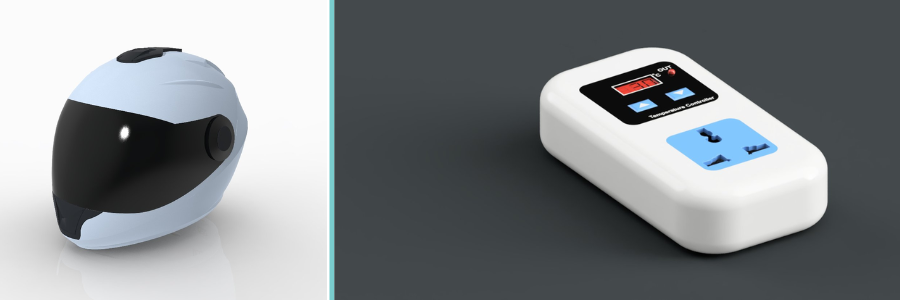
motorcycle safety helmet and temperature controlled power socket by Cad Crowd design experts

RELATED: Product-centric vs. customer-centric: Which is best for consumer product design companies?

Adaptive prototyping explained

Adaptive prototyping is similar to jazz improvisation. You have your theme song in mind, but you are aware of what is going on around you and improvise. In product design, adaptive prototyping implies that you don’t keep sticking to what you originally had in mind. You are open to surprise and to feedback.

Suppose you are designing a new kitchen appliance. On paper, it is great. In the world, you realize your handle design renders you unable to fit into most drawers. Adaptive prototyping causes you to learn to be flexible. You refine the handle design, try again, and perhaps even the general size. Rather than holding onto your original concept, you build the design based on what reality is instructing you.

This is a strong mindset because product design never goes as planned. Materials act strangely. People grasp things in peculiar ways. Manufacturing design company processes have unforeseen constraints. Adaptive prototyping makes these challenges work for you. When a particular plastic bends when it is warmed up, an adaptive designer does not give up. They move to different materials or modify the shape factor to release the stress points.

Industrial design companies do this best. They usually have material science, ergonomics, and manufacturing experts on staff. They can tell you exactly what went wrong with a prototype and propose innovative tweaks. Suppose, for instance, a company you discover on Cad Crowd tests your unstable chair prototype and recommends introducing a slight tweak to the legs’ angle so that it stabilizes without sacrificing looks.

Adaptive prototyping is also a defense against tunnel vision. If you’re too attached to your original idea, you might disregard crucial feedback. Adaptive prototype design experts put themselves out there for other people’s judgments, even hurtful ones. When a test user comments that your prototype is clumsy or confusing, adaptive thinking says “Why?” and “How can we improve it?” rather than killing the feedback.

A traditional metaphor for adaptive prototyping is a trip along a river. You have a sense of where you are headed, but the currents of water could wind up in directions you didn’t plan on. You don’t obstinately attempt to row against the current when you’re tired of fighting it. Rather, you turn, utilize the flow to your benefit, and wind up in the same place you are aiming for.

This method is particularly effective in those businesses where trends change very rapidly. A fitness wearable gadget that was groundbreaking a year ago can now look like an antique. Adaptive prototyping enables you to react to emerging technology, competitor moves, or customer feedback without having to begin anew. A tweak here, a rework there, and your product remains current.

Humor can also lighten the process, by the way. Adaptive prototyping is like having a cranky toddler to raise. You think you have it all mapped out, but things don’t always go as planned. Your newly acquired water bottle may decide to leak at the most inopportune moments. Adaptive thinking is, “Okay, let us experiment with another sealing method,” rather than abandoning hydration innovation altogether.

Adaptive prototyping has one more advantage, and that is resource efficiency. With fast adaptation, you save time and funds for concepts that clearly are not going to pan out. Rather than investing heavily in a flawed design, you pivot ahead of time. Industrial design experts help by catching problems early before they become expensive disasters.

Resources such as Cad Crowd have simplified finding companies specializing in adaptive methods. Whether designing consumer goods, medical devices, or furniture, there are people who will approach every prototype as a learning experience and not as a final product.

Iterative prototyping and why it works

And if adaptive prototyping is flexibility, then iterative prototyping is about rhythm. It’s the discipline of producing small, incremental steps until your product purrs. Think of it like learning to play a musical instrument. The first time you play a chord, it sounds clunky. After a dozen attempts and tweaking your fingerings ever so slightly, the music sounds smooth and confident.

Iterative prototyping is the same thing. You construct a version of your product, you test it, you notice what is wrong and what is right, and you construct another version slightly improved. Do that a few times, and you have a complete, functional product made by engineering design experts.

The virtue of iteration is that it minimizes risk. Rather than pouring all your resources into one sublime prototype, you disperse your risk around with loads of wee experiments. If an iteration crashes, you haven’t lost the farm. You’ve gained something valuable for the next attempt.

A real-world example: baking bread. Your initial loaf is too heavy. You adjust the quantity of yeast and try again. The second loaf is better, but it tastes wrong. You tinker with the baking time, and the third loaf is great. On the tenth loaf, you’re baking like the bakery. Iterative prototyping does the same.

Industrial design companies breathe this strategy. They apply rapid prototyping tools such as 3D printing design services, computer-aided design software, and virtual testing to develop rapid models of your product. A company on Cad Crowd can develop a few iterations of your device within a week, each with learnings from the earlier test.

This is not just a successful process but a revitalizing one. Seeing your idea become stronger with each attempt keeps morale high. Rather than sitting back and waiting for one recalcitrant prototype and becoming stuck, you’re able to see small victories along the path. A handle that initially felt clumsy now fits perfectly. A creaky hinge now slides smoothly. Each victory builds momentum.

Iterative prototyping is also great for gathering user feedback. Early beta testers will be able to try a minimal, crude prototype and inform you about bugs you weren’t aware of. Their suggestions become the next one, and it is friendlier. With many iterations, you have a product that is intuitive and elegant since it has been honed by real use.

Cost control is also another benefit. Iterative development never produces costly surprises in the future. By finding bugs early, you don’t waste money on significant redesigns. A product design company may notice, in the initial iteration, that a specific joint has a tendency to develop stress fractures. Fixing it then is much less expensive than finding the flaw after mass production.

This strategy also promotes innovation. As you are not hesitant to experiment and alter, you will risk risky ideas. If an insane idea fails, it is but one link in an infinite series of refinements, not some sort of doomsday failure.

Consider a team tasked with developing a new electric scooter. The first is too heavy. The second is lighter but not stable on bad road surfaces. The third is equipped with suspension to offer stability. By the fifth or sixth prototype, the scooter rides smoothly, safely, and sleekly. If the team had not developed prototypes iteratively, they would have probably taken months adjusting one design and discovering its faults after expensive production.

Product development experts impose order on this process. They manage schedules, track changes, and maintain good documents so that every change serves a purpose. They also ensure that insights earned in one draft are used to guide the next one, not repeating the same mistakes again and again.

Cad Crowd is an excellent ally in this context. The website gives you a lead on companies that already understand the iterative process. They know how to keep the process going without rushing it. They know when to push forward and when to put on the brakes to do more testing. They are your co-pilots in taking the process from rough idea to completed product.

Finally, iterative prototyping fosters resiliency. Each small victory makes you bolder, and each failure becomes less daunting because you know the next iteration is coming. Eventually, you become receptive to criticism and see failures as an opportunity for learning. That is where successful innovators differ from wannabe innovators who give up too quickly.

packaging bottle design for oil-based product and wireless cellphone charger by Cad Crowd industrial design experts

RELATED: Simple strategies to improve your product innovation process for design service firms

The magic of industrial design firms

Industrial design firms are the unsung heroes behind a whole lot of what you count on every day. That carefully crafted phone case, the chair that you become accustomed to after a couple of hours of sitting, or the blender that can handle your most abusive smoothies likely had new concept design specialists who sleep and snack on adaptive and iterative prototyping.

Picture a small startup group with an excellent idea for a portable air purifier. They possess napkin sketches, a cardboard box prototype that’s still rough around the edges, and dreams of bringing cleaner air to urban dwellers. Their first prototype is like a tin can with marbles inside. The airflow is tiny. The buttons feel cheap. Enter an industrial design company.

The business begins with a careful inspection of the existing design. They test air flow, test the materials, and watch the interface. They develop a second version, optimizing the placement of the fan and using a high-end yet durable material. The group tests receive criticism, and another round of changes is made. Each iteration brings the purifier closer to being a retail-ready product that consumers will accept.

Industrial design firms provide more than technical capabilities. They provide creativity, problem-solving, and attention to user experience. They understand that a product is not merely a piece of equipment but an experience. A stunning device that’s hard to use won’t be successful. Balanced thinking makes your product intuitive, solid, and attractive.

Another benefit is exposure to the best-of-the-best equipment and tools. Most businesses have on-site 3D printing facilities, high-end CAD software, and immediate proximity to manufacturers. They will be able to make high-quality prototypes at a fast pace, consuming less of your time. A firm on Cad Crowd might even connect you with specialists in a specific field, such as automobile design or consumer electronics, so your project ends up in the right hands.

Collaboration with CAD design professionals also reduces stress. Instead of grappling with every failure alone, you have a team to assist in brainstorming and dividing the workload. They can notice patterns that would be invisible to you and suggest improvements you never knew you needed. For example, they can suggest a design change that reduces the cost of production while increasing durability, a two-for-one benefit for your bottom line and your consumers.

Industrial design firms live in collaboration. They feel comfortable collaborating with inventors, engineers, marketers, and manufacturers in taking a product from the idea phase to market-readiness. They can serve as the facilitators between conflicting ideas so that your product will possess beauty, usability, and functionality.

Humor is typically the response to them. Veteran designers have witnessed too many prototype disasters to know freaking out doesn’t help. So they joke about it, grab a whiteboard marker, and get busy. A designer who witnesses a drone prototype crash nose-first following an inverted flight could respond by saying, “Well, at least it flies… just not in the direction we were envisioning.” That humor propels teams past tough obstacles.

Cad Crowd offers a convenient method of finding such businesses. The website has a community of vetted industrial designers who assist with iterative and adaptive prototyping. If you are completing a device through medical device design services, inventing a new kitchen item, or creating the next household furniture classic, Cad Crowd helps find the experts who will turn your design into reality.

RELATED: Innovation best practices: Strategies for better & faster product design services

Laugh, learn, and iterate your way to success

Recall how disastrous the prototype failure was at the start? Now you can laugh easily at it. What was a pathetic failure in the past now appears to be the first step in a learning, laughter, and discovery process. Adaptive and iterative prototyping is not about avoiding failures—it is about perceiving failures as stepping stones to greatness.

Industrial design firms are your business partners of choice in this project. They possess expertise, machinery, and a go-getter spirit that can mold primitive ideas into sophisticated products. They understand that all great designs have a series of failed prototypes, funny stories, and relentless hard work behind them.

With Cad Crowd, it’s easier to browse for new and fresh talent as the premier site to locate engineering and design talent. We can help you get in touch with people who are passionate about innovation and iteration, whether you’re designing a new medical device or the next big tech toy. Cad Crowd can match you with your ideal team.

So sweep away those failed prototype pieces, grab your sketchbook, and try again. Make fun of your failures, learn from every experiment, and iterate some more. Your next prototype can be the one that works sublime, and the world awaits to see it. Get a free quote today.

author avatar

MacKenzie Brown is the founder and CEO of Cad Crowd. With over 18 years of experience in launching and scaling platforms specializing in CAD services, product design, manufacturing, hardware, and software development, MacKenzie is a recognized authority in the engineering industry. Under his leadership, Cad Crowd serves esteemed clients like NASA, JPL, the U.S. Navy, and Fortune 500 companies, empowering innovators with access to high-quality design and engineering talent.

Connect with me: LinkedInXCad Crowd