NVIDIA Research Advances Robotics From Simulation to the Real World


Robotics is entering a new phase: moving from controlled demos and scripted automation toward generalizable, reliable embodied autonomy in the real world. 

At the International Conference on Robotics and Automation (ICRA), eight of NVIDIA Research’s 28 accepted papers show how simulation-to-real transfer is becoming a foundation for that shift, helping robots perceive, reason, plan and act across dynamic, unpredictable environments.

Together, the papers span the full stack of challenges robot developers face: coordinating multiple arms in parallel, building policies that generalize across robot bodies, grasping novel objects in clutter, performing precise assembly and developing vision-language-action models that reason before they move. 

The throughline is clear: sim-to-real is becoming a foundation for robots that can adapt, generalize, and operate with greater reliability outside the lab.

Coordinating Arms, Navigating Bodies, Grasping Objects

Picture a pharmaceutical lab run by robotic arms: picking up tubes, transferring liquids, mixing reagents — each step taking different amounts of time, all requiring careful coordination. 

Traditional robot scheduling software handles those steps sequentially, one arm at a time. 

ScheduleStream changes that by running computations on GPUs, letting multiple arms plan movements and operate in parallel. The result — a 3x speedup across multi-arm planning scenarios, on hardware like the NVIDIA Jetson edge AI platform. Code for the framework is available on GitHub.


A robot that learns to navigate through a space — avoiding obstacles and finding its destination — usually learns to do it in one body. Put the same navigation software into a differently shaped robot and it often falls apart, because its parts all move differently. 

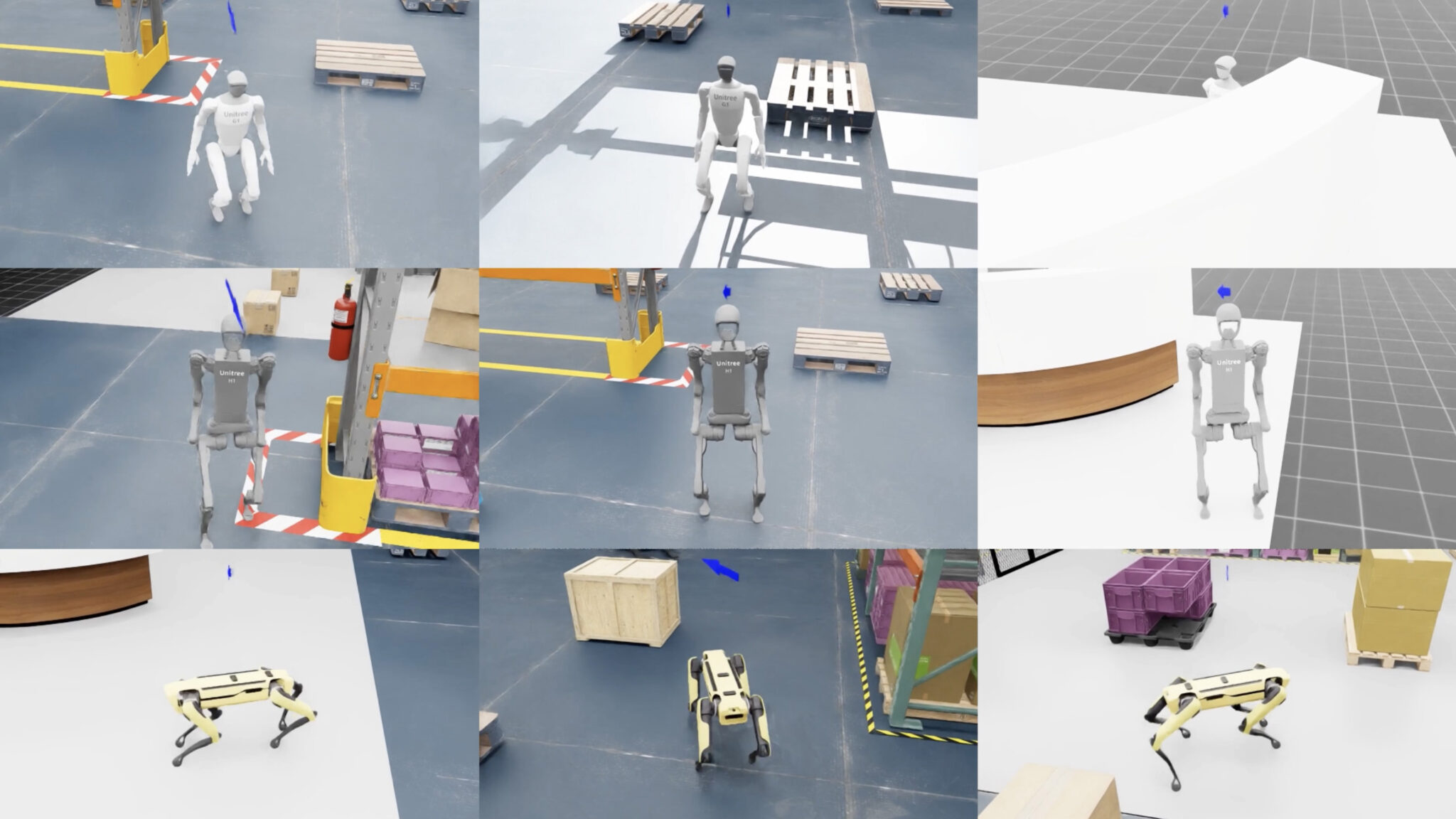
The COMPASS policy framework solves this by first building the baseline navigation functionality using imitation learning and then using residual reinforcement learning in NVIDIA Isaac Lab to build specialists for diverse robot embodiments. Crucially, no real-world robot data is involved at any stage: everything is trained in Isaac Lab simulation. 

Compared with an imitation learning baseline, COMPASS achieved a 4.5x improvement in average success rate. It also seamlessly transfers to real-world environments, demonstrating around 80% success across 20 real-world navigation trials on autonomous mobile robots and humanoids. 

COMPASS is agent-friendly, with dedicated skills — and developers can connect the pipeline with NVIDIA Omniverse NuRec to post-train and validate robots in a digital twin of a novel environment before deployment. 

Most grasping systems identify the object, predict a grasp, plan a path, then execute. But the last few centimeters are where small errors matter most.

Grasp-MPC adaptively computes robotic grasps, continuously correcting the robot’s motion as it closes in on the object, rather than carrying out a fixed plan — the way a person grabs something by feeling rather than calculating every joint angle in advance.

To build the policy, the researchers generated 2 million simulated trajectories across 8,000 objects using annotations from the GraspGen dataset and motion planning data from cuRobo, a CUDA-accelerated library for robot motion generation. 

After training on both successful and failed trajectories, Grasp-MPC learned to grasp novel objects in cluttered tabletops and shelves — achieving around 75% overall success on real robots, compared with a baseline of 41%.


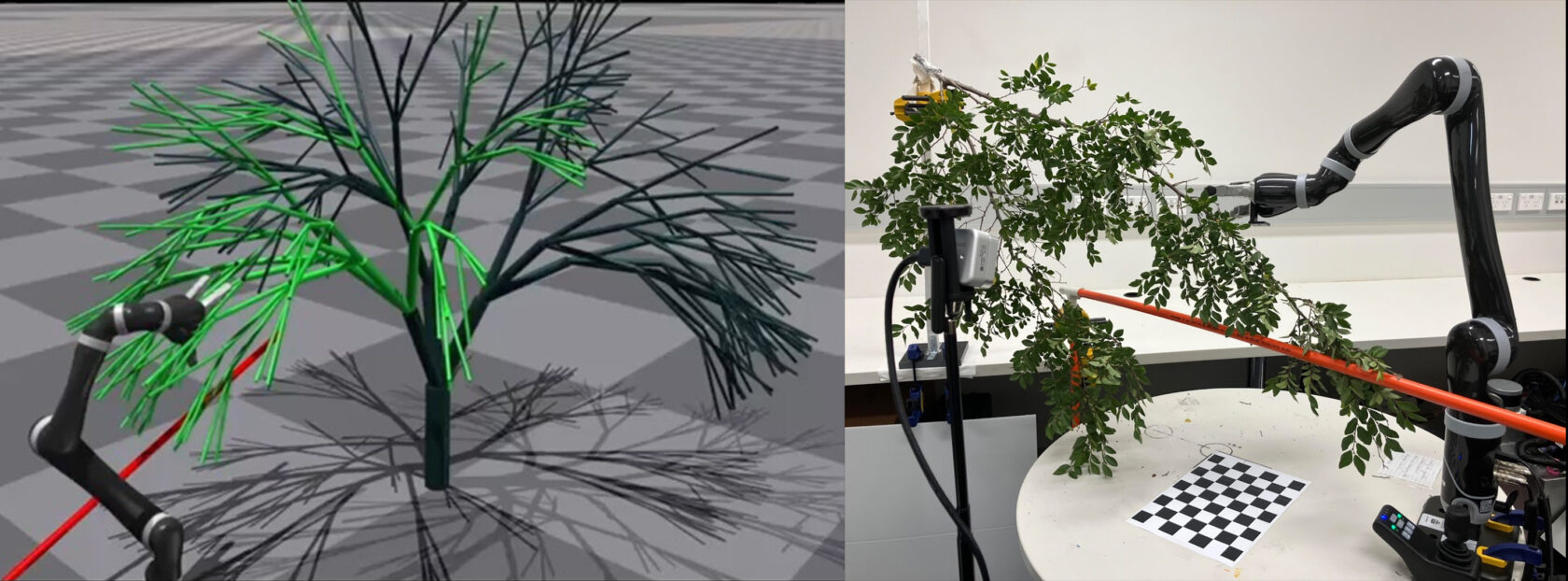
Deformable Cluster Manipulation introduces a framework that tackles a parallel challenge: enabling systems to grasp not just one object, but a whole bundle of flexible, tangled material at once. 

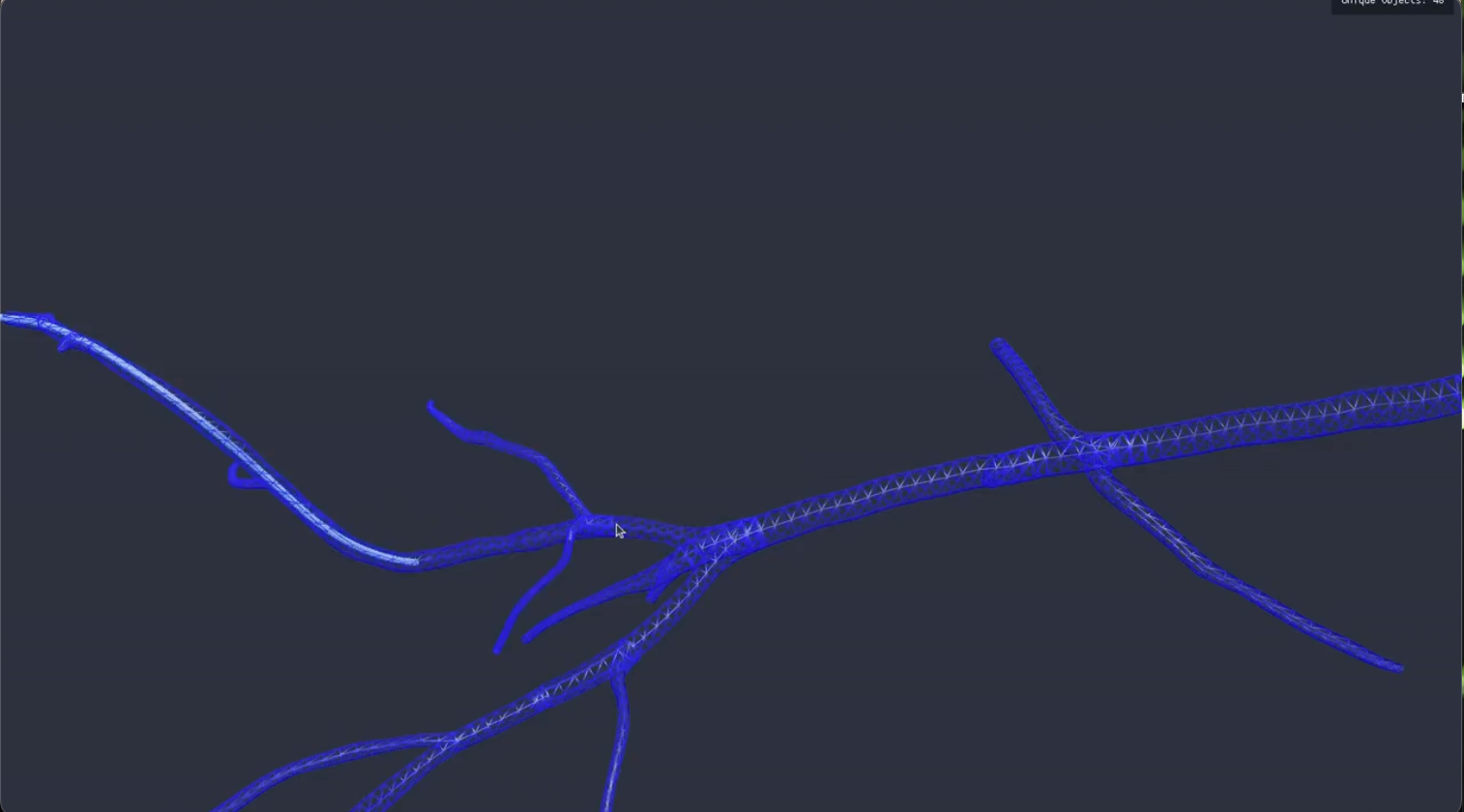
The framework was motivated by a real-world task: clearing a mass of tree branches that have grown over a power line, where there’s no single clean object to grab. The system uses its entire arm, not just the gripper: wrapping it around the branch cluster and sweeping it aside, the way someone might gather an armful of cables or push a tangle of brush out of the way. 

The researchers built a tree generator using biological growth equations to create synthetic trees of many different shapes and sizes — then trained the system across thousands of them in NVIDIA Isaac open simulation frameworks. 

The policy deploys to real branches zero shot. Beyond power lines, the researchers see potential in cable management, agricultural inspection and anywhere robots need to handle a tangle rather than a single graspable item.

Clearing tree branches in zero-shot sim-to-real deployment.

Assembling With Precision

Precise assembly — threading a nut onto a bolt, inserting a gear onto a gearshaft, pressing a peg into a hole — is notoriously hard to get right with simulation alone. 

The real world is complex. Real surfaces aren’t perfectly smooth. Sensors don’t behave as specified. Tiny discrepancies that a simulator ignores can stop a robot in its tracks.

The SPARR method addresses this by splitting the job in two. A policy trained in Isaac Lab learns the general strategy for the assembly task in simulation. Then, on the actual hardware, a second layer learns to correct for whatever the simulator got wrong — using the robot’s own camera and without any human demonstrations or guidance. 

SPARR improves success rates by 38% and reduces cycle time by around 30% compared with zero-shot sim-to-real baselines. 

On National Institute of Standards and Technology (NIST) assembly tasks not seen during training, success improves by nearly 75% — approaching the results of methods that require a human in the loop.

The Refinery framework takes on the next layer of difficulty in assembly: tasks with multiple sequential steps, where how step one is finished determines whether step two is even possible. It’s like assembling furniture — leave a panel at the wrong angle, and the next fastener won’t go in. 

By understanding how success varies across initial conditions and training across hundreds of simulated assembly scenarios, Refinery learns how to complete each step and leave each component in a position that sets up the next. It achieves 91% simulation success and a nearly 11% mean improvement over baselines with comparable real-world results — and its policies can be chained to handle long, multi-part sequences.

Action Models That Keep Their Word

The PEEK pipeline helps robots see past the clutter. In a typical manipulation task, the robot’s camera picks up everything in the scene — but most of it is irrelevant noise. 

One task demonstrated on the PEEK project page is “give the banana to NVIDIA founder and CEO Jensen Huang”: a photo of Huang sits on a table alongside a photo of Michael Jordan, a collection of unrelated objects and other distractors. 

A human doing the task instantly focuses on the banana and the right photo; a standard robot policy has to process everything and often gets confused. PEEK solves this by having a vision language model read the task instruction and focus the robot’s line of vision accordingly — showing a movement path, and highlighting around the objects that matter, while fading out everything else. 

The policy then acts on that annotated view rather than the raw scene. For a policy trained purely in simulation, adding PEEK produced a 41x real-world improvement in accuracy. For large VLA models and smaller policies, gains range from 2-3.5x. Because it works at the image level, PEEK integrates with any camera-based policy without modification.


Do What You Say — a collaboration with researchers at Carnegie Mellon University, University of Utah and University of Sydney — addresses a specific failure mode that matters more as robots tackle longer, more complex tasks. 

Give a robot an instruction like “store everything on this table inside the cabinet” or “prepare a Manhattan,” and it has to break that down into individual steps and execute them in sequence. 

The problem is that the AI model can correctly reason through what it needs to do — and then execute something different. 

The method, called SEAL, fixes this at runtime without any retraining: the robot generates several candidate action sequences, thinks through where each one would actually lead and picks the outcome that matches what it said it would do. SEAL delivers up to 15% accuracy gains over prior work, with robustness against rephrased instructions, changed objects, scene clutter and shifted camera angles.


In addition to papers, NVIDIA is expanding robotics research infrastructure with large-scale open datasets for robotics. The NVIDIA Physical AI Dataset is the world’s largest open dataset for physical development, surpassing 15 million+ downloads, while NVIDIA Isaac GR00T X Embodiment Sim has become one of the most-downloaded robotics datasets.  

Universities Accelerate Physical AI Research With NVIDIA Technologies

Robotics teams from universities such as Carnegie Mellon University (CMU), ETH Zurich, MIT and University of Texas at Austin are tapping NVIDIA technologies to move physical AI research from simulation to real-world systems — with nearly 50 accepted papers referencing NVIDIA-accelerated simulation, robot learning and compute.

Examples include a paper from CMU demonstrating a robotic control framework trained in NVIDIA Isaac Lab and MIT work on large language model-guided reinforcement learning powered by NVIDIA GPUs.

Explore NVIDIA Research’s physical AI work. Developers can get started with Isaac Lab and Isaac Sim.

Stay up to date by subscribing to our newsletter, and following NVIDIA Robotics on LinkedIn, Instagram, X and Facebook.

To start your robotics journey, enroll in our free NVIDIA Robotics Fundamentals courses today.


The Sims at 25: How an Iconic Series Kept Up with the Game of Life


25 years ago, The Sims made history with the first instalment of a legendary series that would go on to be one of the best-selling of all time. Few simulation games have enjoyed the success and longevity of The Sims – and the freedom and creativity to play with life however you want has afforded the series near-unrivalled appeal in the years since.

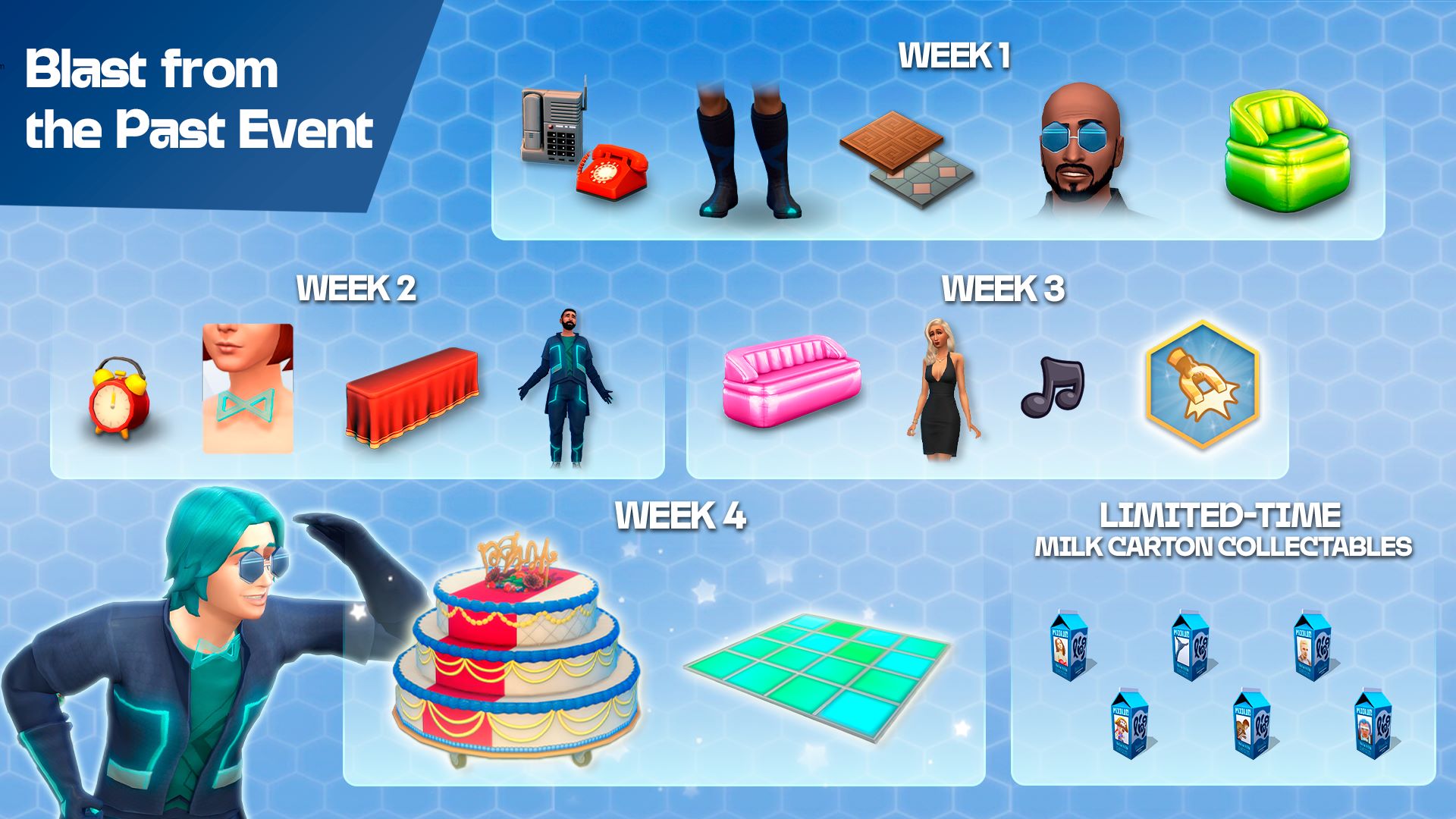
This week, Electronic Arts is celebrating this milestone and the history of the series in a big way, which includes a huge The Sims 4 Free Content Update containing new Create a Sim options, clothing, Build/Buy Items and much more. The festivities will also include the limited-time Blast From The Past Event, which lets players earn revamped versions of iconic items from the original The Sims game via in-game goals.

We had the opportunity to chat with Kevin Gibson, Production Director for The Sims at EA. Gibson has been working in production roles across the franchise since 2003, and has first-hand experience of how the series has evolved in that time. The studio is abuzz with excitement about the franchise’s birthday, and Gibson shares that digging deep into the series’ past to rediscover nostalgic highlights has been extremely rewarding.

“Our incredible players have shown us that no one does life like The Sims, and we wanted to celebrate this journey we have been on together,” Gibson says. “25 years ago there was a game with an idea that made big a splash at E3, and look where we are today! We’ve been part of multiple generations and touched millions of lives.

“We wouldn’t be here today without that, and we wanted to take a moment to pause and recognize all of our players – from those who were there at the E3 launch in 1999, to those that are brand new Simmers today enjoying The Sims 4 for the first time. All of the Simmers from all of the years and all of the different ways to play The Sims, are part of this 25-year journey, and this is our way of saying thank you.”

Blast From The Past

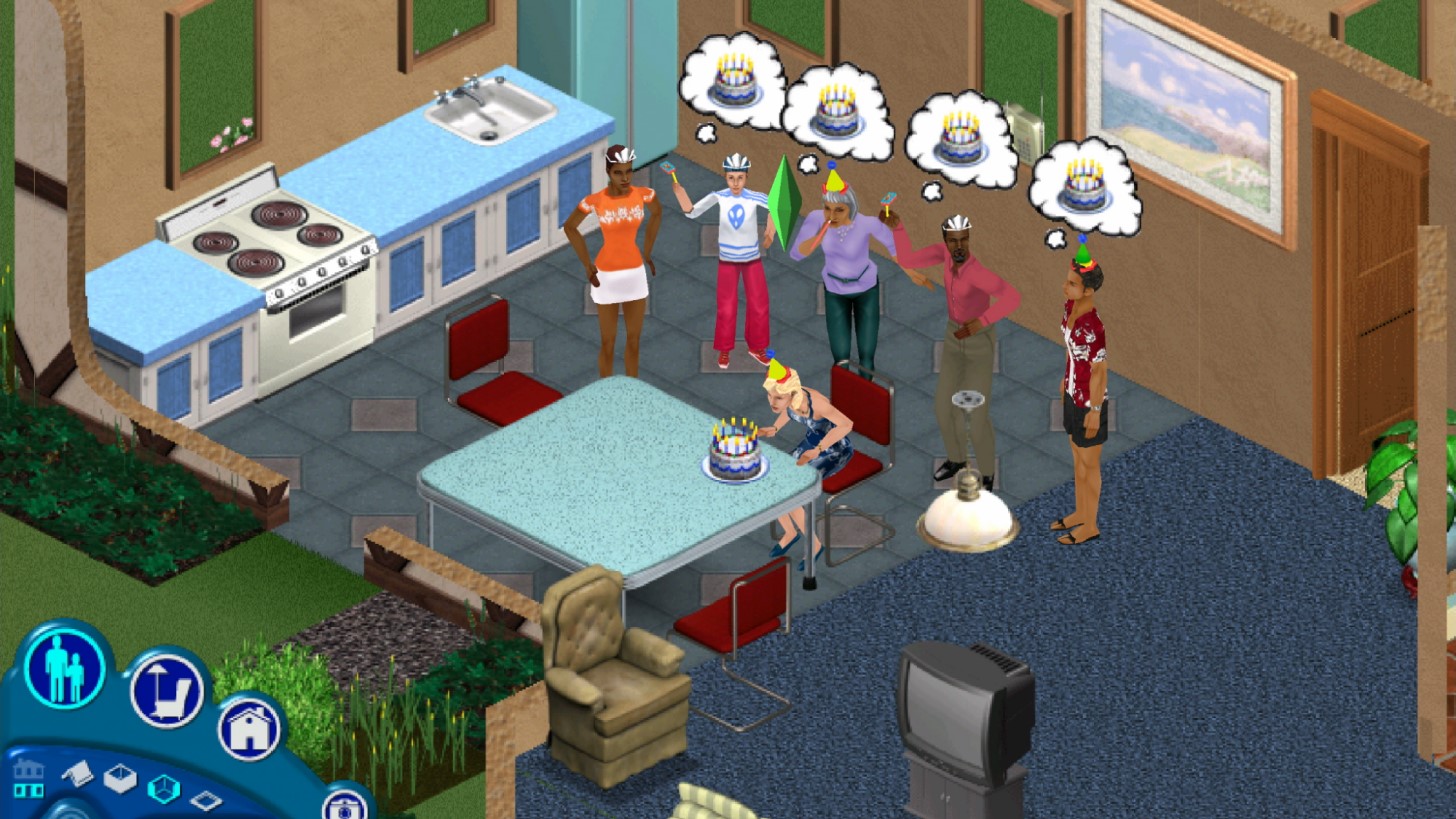
The Blast From The Past event is a particularly nostalgic look back at the early 2000s, bringing memorable clothing, furniture and decor from the early Sims games into The Sims 4. Among the items are some of my personal favourites, including two bold neon inflatable chairs, a three-tiered cake, and the fabulous light-up dancefloor where my young self also ordered many a Sim to boogie on down.

A lot has happened in the world in 25 years too – in the year 2000, The Sims created a simulation in the image of real life. Now, that original game serves as a time capsule to a past life. For example, in the first game, putting a wired phone inside your home was a necessity. In The Sims 4, Sims carry their own mobile phones, brimming with services that can be accessed anywhere, just like us.

“We’ve taken time to really explore the history of The Sims, going back to the roots and playing the original game, as well as exploring many of the previous game launches to remind ourselves of all the different ways people play with life,” Gibson tells us. “Everyone at the studio has had a different part of the franchise they cherish as meaningful to them, and the opportunity to share those moments with our players as part of the 25th birthday celebration has been a lot of fun.”

Preserving the Spirit of The Sims

The original The Sims was great fun, but often irreverent, difficult and downright wacky in the scenarios it presented. Your Sims could perish in freak accidents, their shrill screams piercing through your cheap PC speakers, all while another Sim is receiving a mysterious prank call about canoes. While The Sims has evolved to welcome a wider audience across two decades, its spirit remains largely unchanged, and this is something that the team has always wanted to preserve.

 “The Sims was hard. Your Sims died, a lot. However, a core concept of The Sims was that it was your story and the game provided the push back in a humorous way,” Gibson says, “The tradition of letting the player tell their story, while the game pokes at the edges with humor and challenge has been a key pillar of how we make decisions for the game.”

The Sims 4 continues in that original spirit of serving the needs of the player and the story they are telling, while using comedy to enhance the story in new and different ways – your Sims can die, they can be ghosts, they can romance the Grim Reaper… or even become a Reaper themselves.

Even at over a decade old, The Sims 4 continues to feel fresh, with a consistent roadmap of content packs and updates. The Sims as a franchise has always evolved over time, marking huge economical, societal and technological advancements inside its progression systems, and that is reflected in the recent Free Content Update.

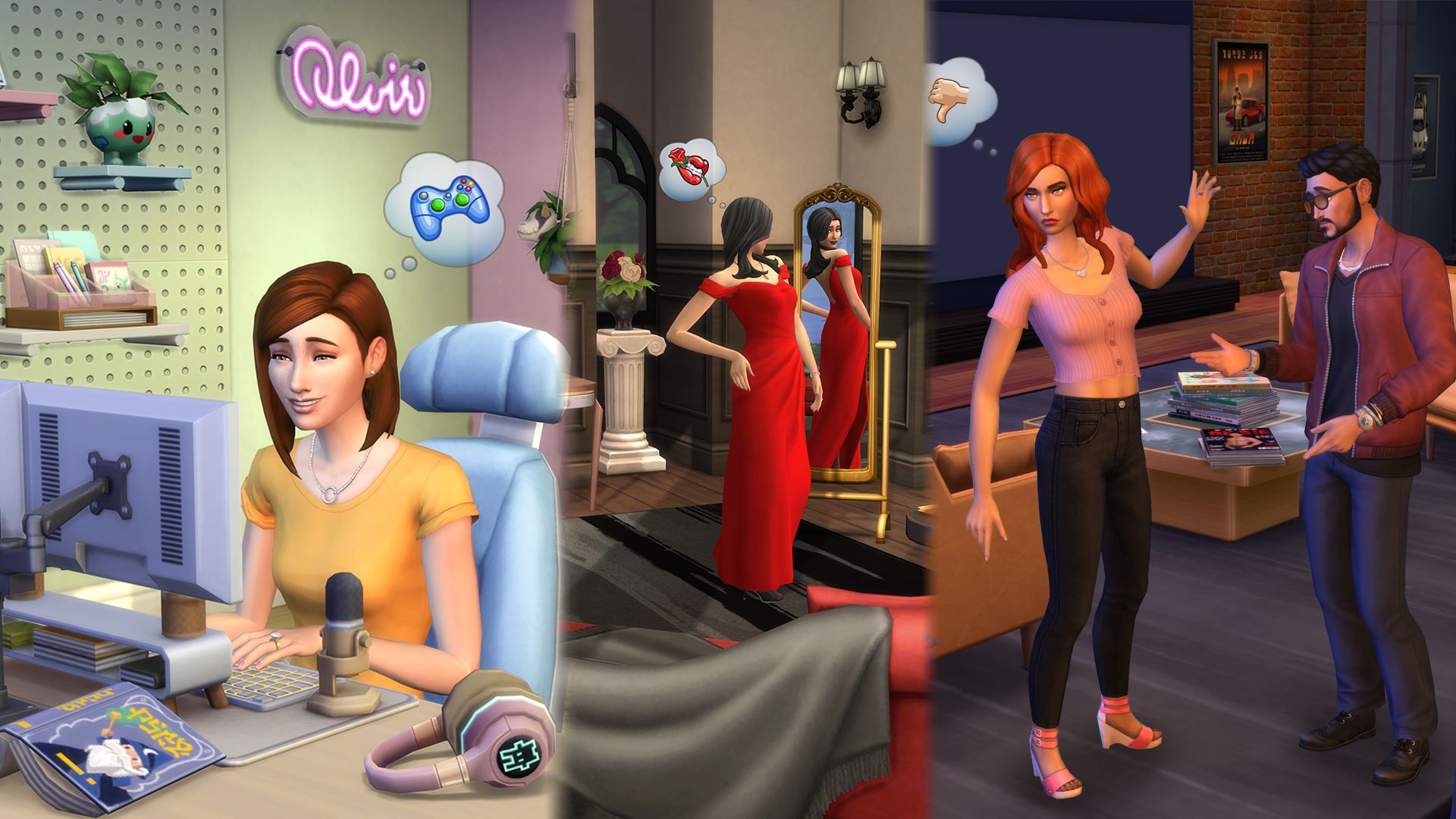
The Sims 4 team wanted to give our players something that felt more in line with today’s fashions and trends for clothing and decor,” Gibson adds. “We spent time doing a full review of our assets in the game, finding where there was room to draw inspiration from modern expectations of aesthetics and style that our players expect as part of the new content we wanted to add.”

The Sims can draw from reality, fantasy and science fiction, romance, home decor, world culture, travel and so much more,” Gibson adds. “We’re always building onto this ever-growing toybox of options and experiences within The Sims. In addition, we have a large group of people who are all eager to share moments from their lived experiences and help bring authentic nuances to the game to help tell stories players are interested in telling.”

The Sims team has also kept a close eye on community requests and discussions over the years, and lots of additions that have been made to The Sims 4 directly reflect what the players are asking for, a demonstrable commitment to building a game for everyone.

“Our evolution has been fuelled constantly through listening to our players,” Gibson adds. “The Sims is about the player, the story they are trying to tell, the creative space they are trying to build within, and the expression they want to have within the game. We have evolved the most in the need to change and grow to meet our players expectations of this franchise and to reflect the world we all live in.

“From the beginning, we’ve always sought to immerse our player community in this different version of the world we know, where they can experiment and explore, and express themselves. Across all our games and spin-offs, this core commitment to creativity and imagination has always remained true, and underlying it all is an enthusiastic, endlessly inspiring community.”

The new The Sims 4 Free Content Update and Blast From The Past Event are available to play in The Sims 4 now. There are lots more Sims celebrations going on this week – be sure to visit the official website for more information. The Sims 4 base game is also free-to-play on Xbox Series X|S and Xbox One.

The Sims™ 4

Electronic Arts


717


Unleash your imagination and create a unique world of Sims that’s an expression of you! Download for free and customize every detail from Sims to homes, and much more. Choose how Sims look, act, and dress, then decide how they’ll live out each day. Design and build incredible homes for every family, then decorate with your favorite furnishings and décor. Travel to different neighborhoods where you can meet other Sims and learn about their lives. Discover beautiful locations with distinctive environments and go on spontaneous adventures. Manage the ups and downs of Sims’ everyday lives and see what happens when you play out scenarios from your own real life! Tell your stories your way while developing relationships, pursuing careers and life aspirations, and immersing yourself in this extraordinary game, where the possibilities are endless. Play with life!

Download for Free – The base game of The Sims™ 4 is free to download. Get a plethora of options for building homes, styling Sims, and customizing their personalities. Craft their life stories while exploring vibrant worlds and discovering more ways of being you all at no cost.

Create Unique Sims – A variety of Sims are yours to personalize, each with distinct appearances, dynamic personalities, and inspiring aspirations. Use powerful customization features to bring your imagination to life. Create yourself, your favorite celebrities, your fantasy, or your friends! Change your Sims’ clothing to reflect your mood, develop stories that deepen your world, and give their lives purpose with traits and aspirations.

Build the Perfect Home – Effortlessly build and design homes for your Sims in Build Mode. Construct the home of your – and their – dreams by planning its layout, choosing furnishings, and altering the landscape and terrain. You can even add a pool, basement, and garden, or rebuild with new ideas and designs!

Play with Life – Control every moment of your Sims’ lives from their relationships to their careers. Your choices shape every aspect of their lives from birth into adulthood. Along the way, develop your Sims’ skills, pursue original hobbies, take them on adventures, start new families, and much more.

Add New Experiences – Use the Gallery to find inspiration from a community of players just like you. Download and comment on your favorite Sims, homes, and designed rooms.

Get More with EA Play – EA Play* members can expand their career possibilities with The Sims™ 4 Get to Work Expansion Pack

*Conditions, limitations and exclusions apply. See tos.ea.com/legalapp/eaplay/US/en/PC/ for details. Conditions & restrictions apply. See ea.com/legal for details.