NVIDIA BioNeMo Agent Toolkit Brings Accelerated AI to Life Sciences Researchers in Claude Science


Life sciences has entered an era of computational scale, and for more than a decade, NVIDIA has built the full GPU-accelerated computing stack — spanning hardware, frameworks, libraries, models, microservices and domain-specific tools — to help researchers run more sophisticated workflows and iterate faster.

This week, Anthropic announced Claude Science, an AI workbench for science research that lets scientists converse with agents in natural language to run their work end to end.

Claude Science integrates with NVIDIA BioNeMo Agent Toolkit as a resource that scientists can access within their workflow. The toolkit packages NVIDIA-accelerated capabilities as callable skills, enabling Claude Science to select the appropriate tool, prepare valid inputs and execute the workflow — all while connecting to NVIDIA compute resources deployed anywhere. This brings NVIDIA’s accelerated models, libraries and NVIDIA NIM microservices directly into the same environment where the rest of the research happens.

The world’s largest pharmaceutical companies use NVIDIA technologies to advance AI-enabled research across drug discovery, genomics, medical imaging, molecular design and protein engineering. Today, 18 of the top 20 pharmaceutical companies use NVIDIA BioNeMo, underscoring the breadth of its role across the ecosystem.

Advancing the Agentic Era of Scientific Discovery

Claude Science lets scientists use natural language to move their research from intent into action, without manually configuring models, endpoints, or software environments. NVIDIA BioNeMo Agent Toolkit extends that with access to accelerated workflows and models like Evo 2, Boltz-2 and OpenFold3, so the analyses that benefit from acceleration run faster. 

A scientist begins by describing a research task, such as analyzing a genomic sequence, predicting a protein structure or designing a potential binder, in natural language. Claude Science interprets the request and orchestrates the work through preconfigured domain-specialized agents that know established workflows across genomics, proteomics, single-cell analysis, cheminformatics and clinical research. 

BioNeMo Agent Toolkit gives these agents the context needed to connect each step with an appropriate NVIDIA scientific capability. Each skill includes information about its purpose and required inputs, helping agents prepare and execute the workflow and return outputs for review.

The result is an iterative loop between scientific reasoning and accelerated computational work. Scientists can inspect outputs, refine their questions and determine the next step while staying focused on the science.

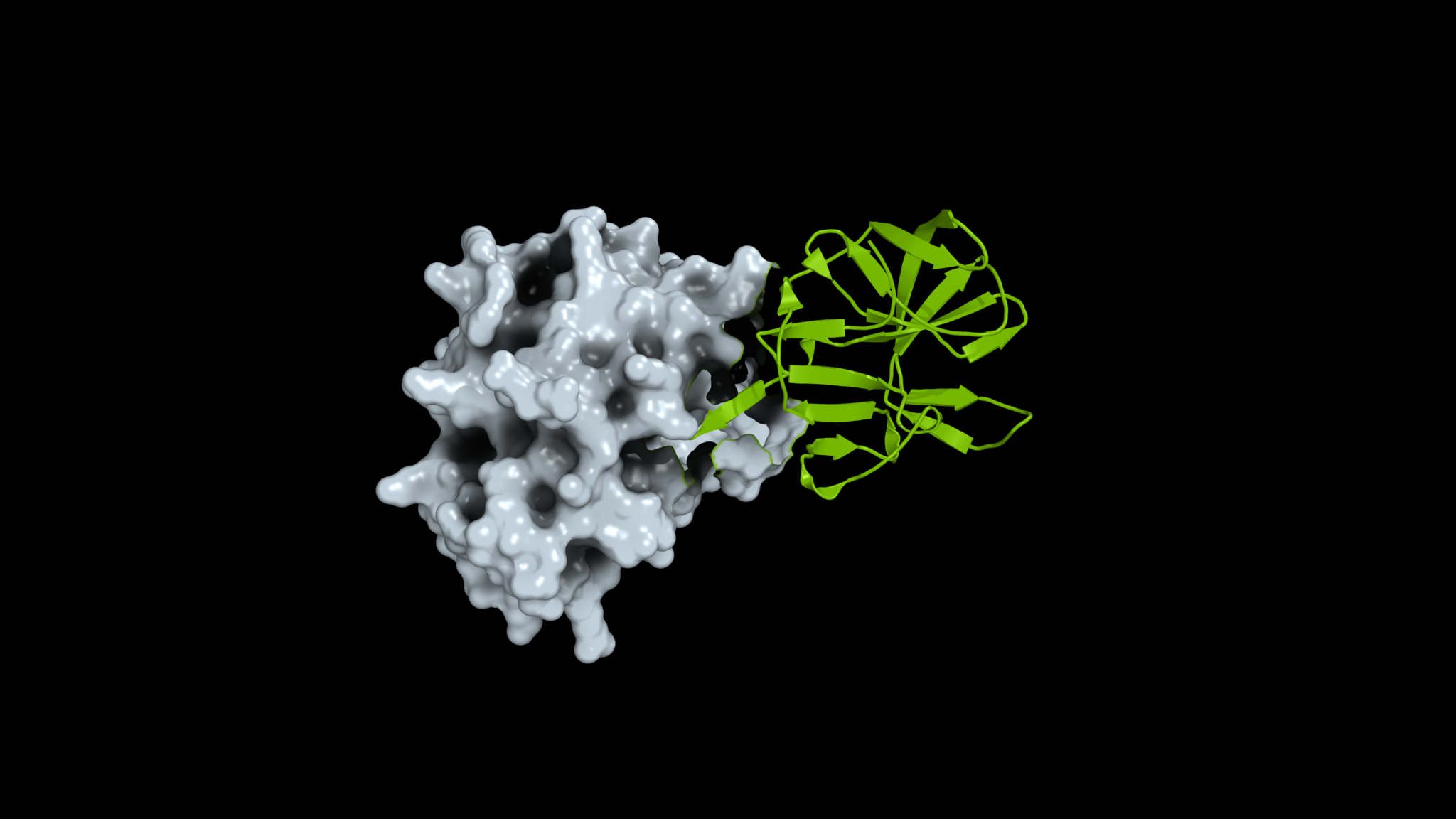
One powerful example is generating better inhibitors of common cancer targets. In this workflow, a scientist starts with a known cancer-causing antigen mutation and asks Claude to design numerous potential inhibitors. Claude Science integrated with BioNeMo Agent Toolkit and NVIDIA NIM microservices accelerates high-throughput inhibitor prediction, optimization and validation.

A Scientific Foundation Built for Agents

AI agents reason, plan and use tools to complete tasks. In life sciences, those tools are often specialized computational workflows. 

An autonomous AI scientist agent doesn’t reason in isolation. It may need to fingerprint a library of compounds, cluster promising hits, generate conformers for top candidates, analyze genomic context and compare perturbation responses before recommending the next experiment. 

Each step relies on a scientific tool, and the agent can only work as fast as those tools run.

NVIDIA BioNeMo Agent Toolkit gives scientific agents the accelerated tools they need to operate at the speed of science. It includes:

  • NVIDIA Parabricks accelerates genomic analysis from hours to minutes, so an agent can integrate genomic context into a decision in near real time.
  • RAPIDS-singlecell, developed by scverse, compresses a 1.3-million-cell preprocessing and clustering workflow from 52 minutes to 25 seconds, so single cell analysis becomes part of the reasoning loop rather than an offline batch of jobs.
  • nvMolKit accelerates cheminformatics operations like similarity search and conformer generation by up to 3,000x, so an agent iterating across a massive chemical space gets results at the speed of thought.
  • NVIDIA BioNeMo open models deliver core biomolecular capabilities accelerated by NVIDIA libraries, so an agent has a purpose-built scientific model for each step of a workflow.
  • BioNeMo NIM microservices package those models as enterprise-ready inference endpoints — containerized microservices with the full accelerated software stack pre-integrated and tuned for high-performance inference — so an agent can call a single stable application programming interface for production deployment.

NVIDIA BioNeMo Agent Toolkit is open and harness-agnostic, allowing the same scientific skills to work across agent frameworks and research platforms. The toolkit and its skills are available now through NVIDIA developer resources and GitHub.

Scientists can access BioNeMo-powered workflows through Anthropic’s Claude Science, which is entering public beta today. As part of the public beta, Anthropic is inviting researchers to provide feedback on additional domain specialists and integrations they need.

How Businesses Are Building Specialized AI They Can Trust


Companies are asking how to build specialized AI that fits with the way their workflows actually run. 

The first wave of enterprise AI was about access. Companies experimented with new frontier and open models, ran pilots and explored how AI can help. 

Now, specialized agents — systems of models that can reason, use tools and take action even for the most complex workflows — put more useful AI within reach of the people who already know the work best.

Agents are already helping life sciences researchers accelerate medicine discovery, security teams investigate vulnerabilities with more context and operations teams seamlessly coordinate supply chains. 

To tap into these specialized agents, businesses are using a foundation they can adapt and own: one built on models they can customize, tools that connect to systems they already use and infrastructure that lets agents operate safely at scale.

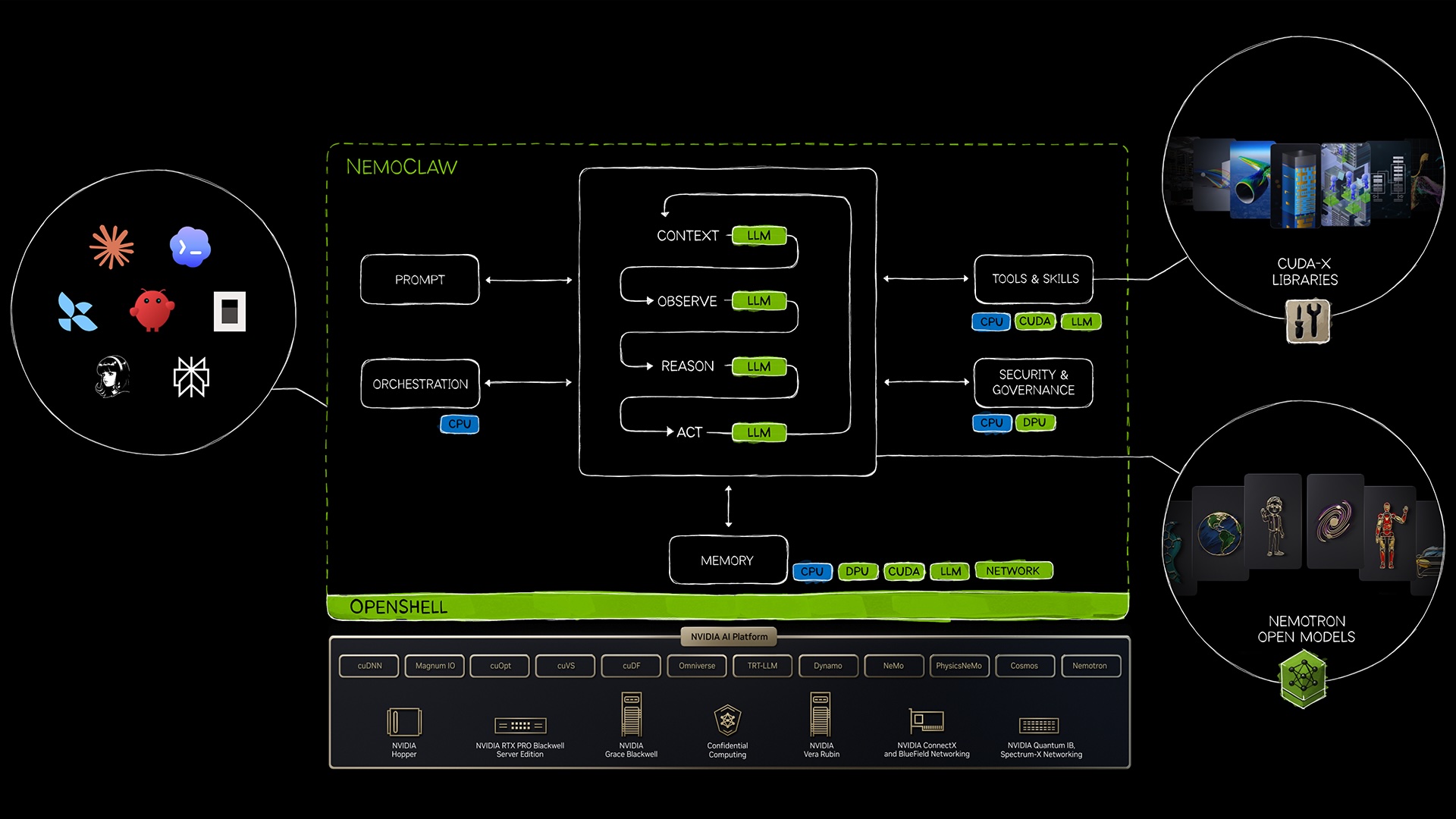
NVIDIA Agent Toolkit — comprising models, tools, skills and a secure runtime — provides an open, modular foundation for building safer, faster, lower-cost digital AI coworkers that enterprises and developers can customize, specialize, control and trust.

The Building Blocks for Specialized AI Coworkers

Enterprises and developers building secure, specialized AI agents require:

  • Models, which provide the reasoning foundation. 
  • Tools and skills, which connect agents to the actions and domain expertise needed to get work done. 
  • Runtime support, which helps agents execute workflows. 

NVIDIA Agent Toolkit includes all three:

  • NVIDIA Nemotron open models give teams flexibility to customize, evaluate and deploy agents for their own needs. 
  • NVIDIA NemoClaw blueprints provide patterns for safer agent behavior, delivering accurate results at lower costs, with tools and skills connecting agents to concrete actions.
  • The NVIDIA OpenShell runtime helps agents operate safely inside the systems where work gets done. 

NVIDIA technologies accelerate all the pieces needed to turn a powerful frontier model into a fully functional digital coworker. The toolkit’s users can work with third-party agent harnesses — or agent orchestration frameworks — of their choice, including Hermes Agents and OpenClaw.

This unlocks enterprise AI momentum with control. And that matters because the most valuable agents across industries will be specialized. 

Agents Take Shape Across Industries

The specialized AI foundation is already at work.

In life sciences, agents can help researchers call domain models for protein design, virtual screening, genomics analysis and biomarker discovery. The new NVIDIA BioNeMo Toolkit enables work that previously took months to be completed in days. 

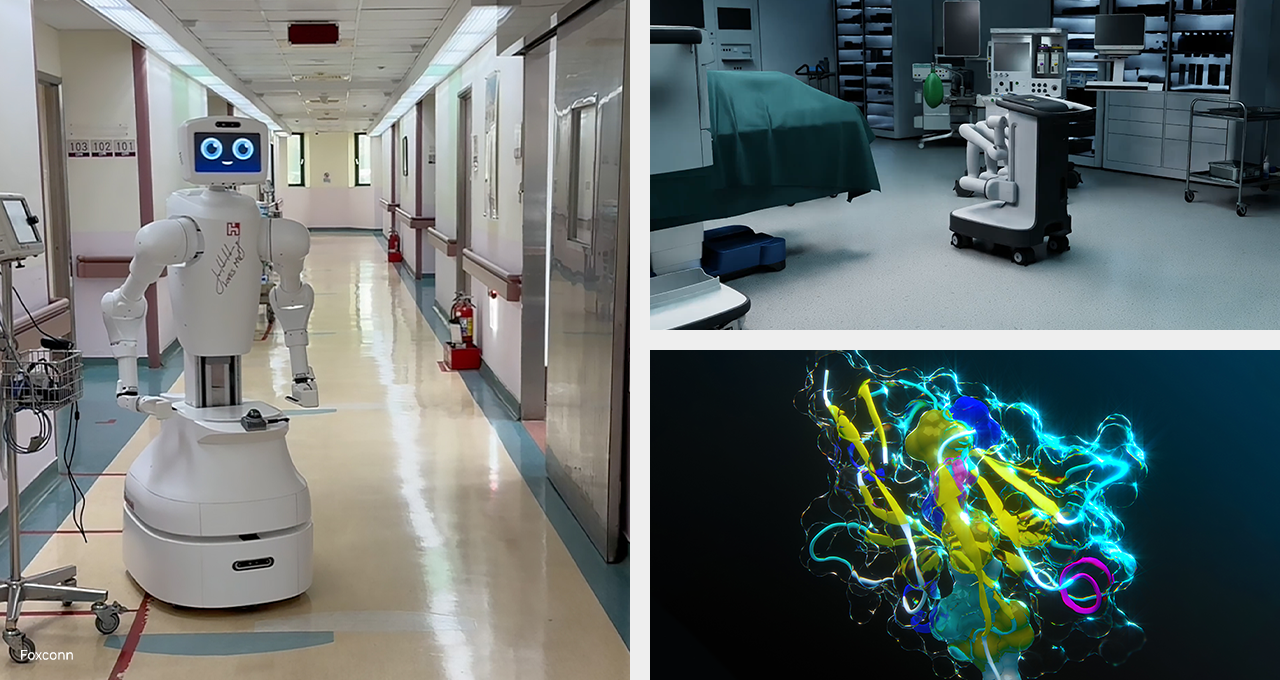
In healthcare, agents support clinical documentation, clinical decision support and care coordination. Plus, physical agents in robotics systems trained in digital twins of hospitals can scale surgical assistance and hospital automation to meet care demands.

In software, cybersecurity, industrial operations and customer workflows, agents can connect to the tools and data teams already use, helping people move faster through complex workflows.

For example, Cadence and Synopsys are building autonomous agents for chip design and engineering workflows. CrowdStrike is running specialized security agents that triage alerts with 98.5% accuracy. Palantir, SAP, ServiceNow, Siemens and Dassault Systèmes are embedding agent capabilities into the enterprise platforms where critical decisions get made. 

It all points to the same larger shift: Agents become more useful when they can combine models, tools, skills, runtime and infrastructure in ways companies can adapt to their own workflows. NVIDIA Agent Toolkit provides an open, modular foundation that enables this combination.

Learn more about NVIDIA Agent Toolkit and NVIDIA BioNeMo Agent Toolkit.

Survey Reveals AI Is Delivering Clear Return on Investment in Healthcare


AI is accelerating every aspect of healthcare — from radiology and drug discovery to medical device manufacturing and new treatment methods enabled by digital twins of the human body.

NVIDIA’s second annual “State of AI in Healthcare and Life Sciences” survey report reveals how the industry is moving from AI experimentation to execution, reaping return on investment (ROI) on core applications like medical imaging and drug discovery.

The industry is also embracing open source software and AI models to tackle specific use cases, as well as exploring using agentic AI to speed knowledge retrieval and research paper analysis.

Highlights from this year’s report include:

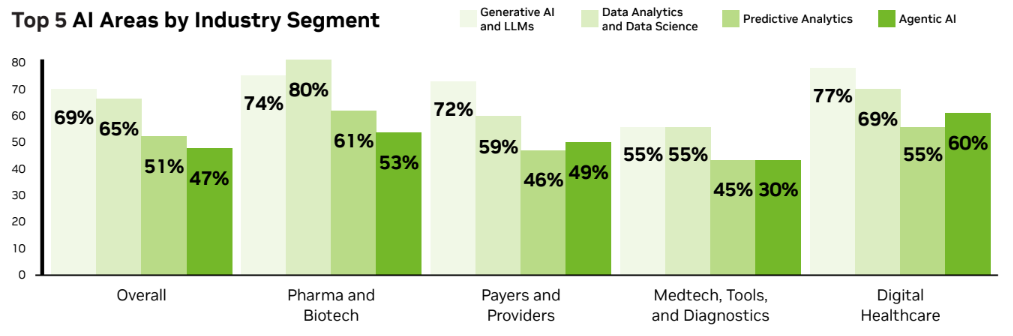
  • 70% of respondents said their organizations are actively using AI, up from 63% in 2024.
  • 69% said they’re using generative AI and large language models, up from 54%.
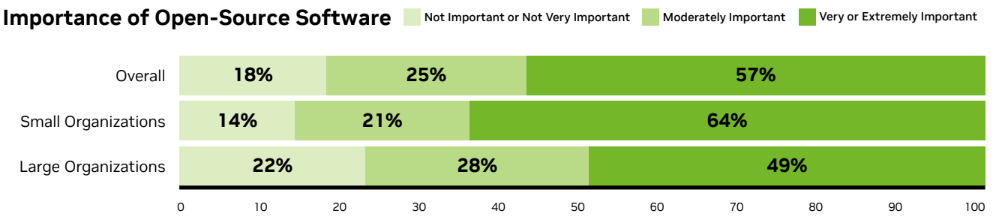
  • 82% said open source software and models are moderately to extremely important to their organizations’ AI strategy.
  • 47% said they’re using or assessing agentic AI.
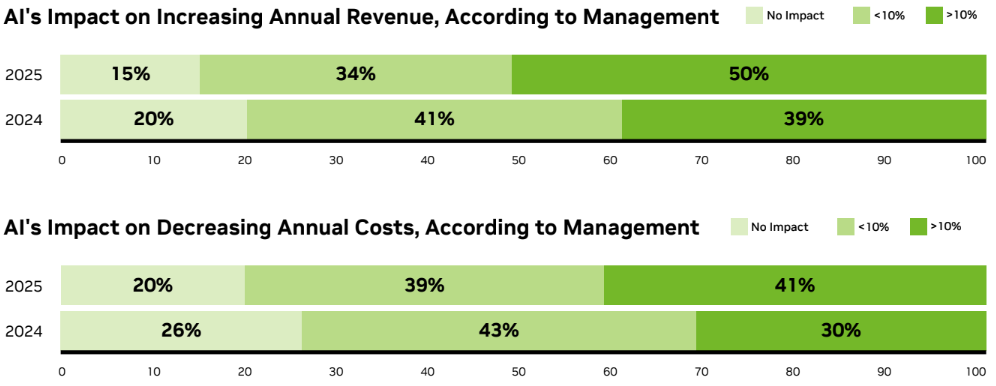
  • 85% of executives said AI is helping increase revenue, and 80% said it’s helping reduce costs.

“Over the next 12-18 months, the most visible and scalable impact of AI will come from logistics and administrative streamlining,” said John Nosta, president of NostaLab, a healthcare think tank. “That’s where adoption curves are already steep — scheduling, documentation, coding, utilization management and care coordination.”

Read more below on some of the report’s key findings.

AI Adoption Ramps Up Across Healthcare and Life Sciences

AI adoption is up across every industry segment in this year’s survey — spanning digital healthcare, pharmaceutical and biotechnology, payers and providers, and medical technology and tools — with digital healthcare leading at 78%, followed by medical technology at 74%.

The top industry workload was generative AI and large language models, according to 69% of respondents. AI for data analytics and data science was the second most-used workload, followed by predictive analytics. New to the survey, agentic AI ranked fourth, with 47% of respondents saying they’re using or assessing AI agents.

“Scaling generative AI in healthcare starts with focusing on real clinical and operational problems, rather than the technology itself,” said Dr. Annabelle Painter, clinical AI strategy lead at Visiba U.K. “The organizations seeing impact are those that embed AI into existing workflows instead of layering AI on top as a separate tool.”

Healthcare and life sciences organizations are deploying these AI workloads across a variety of use cases, each specific to their primary functions. For example, 61% of respondents from medical technology said they’re using AI for medical imaging, such as radiologists using it to work more quickly and efficiently, while 57% from pharmaceutical and biotechnology said drug discovery is being driven by AI.

For the entire industry, the top AI use cases were clinical decision support (such as radiologists highlighting areas of concern on a scan), medical imaging and workflow optimization.

AI Budgets to Increase With Strong ROI

AI is helping healthcare and life sciences organizations become even better at their core competencies — underscoring strong ROI.

In addition to increasing annual revenue and reducing annual costs, AI is boosting back-office productivity through workflow optimization and is scaling across other key business operations such as patient interaction and administrative tasks.

For example, 57% of respondents from the medical technology segment reported seeing ROI from deploying AI for medical imaging. Nearly half (46%) of pharmaceutical and biotechnology respondents said AI for drug discovery and development was among their top ROI use cases.

The top ROI use case for digital healthcare providers was virtual health assistants and chatbots, according to 37%, while 39% of respondents from payers and providers (which include hospitals, primary care providers and insurance companies) cited administrative tasks and workflow optimization as their top area of ROI.

As a result of AI’s positive impact, 85% of respondents said their AI budgets would increase this year, with another 12% saying budgets would stay the same. For almost half of respondents (46%), AI spending will increase significantly, by more than 10%.

“Healthcare organizations that successfully integrate AI are those that explicitly fund and prioritize evaluation as a core operational function, ensuring AI delivers measurable improvements in safety, quality and patient care over time,” said Painter.

Using Open Source for Domain-Specific AI Deployment

Leaning into open source models and software allows enterprises to build domain-specific applications, lending them greater flexibility and efficiency while boosting business returns.

The healthcare industry has embraced open source, with 82% of survey respondents stating it’s moderately to extremely important to their AI strategy.

“Open models will shape the intellectual field,” said Nosta. “They are essential for exploration and for keeping the field honest. But in clinical environments where safety, liability and accountability are nonnegotiable, proprietary systems will remain necessary for validation, integration and trust. The key insight here is that discovery will be open, and deployment will demand stewardship.”

Download the “State of AI in Healthcare and Life Sciences: 2026 Trends” report for in-depth results and insights.

Sign up for NVIDIA’s healthcare and life sciences newsletter.

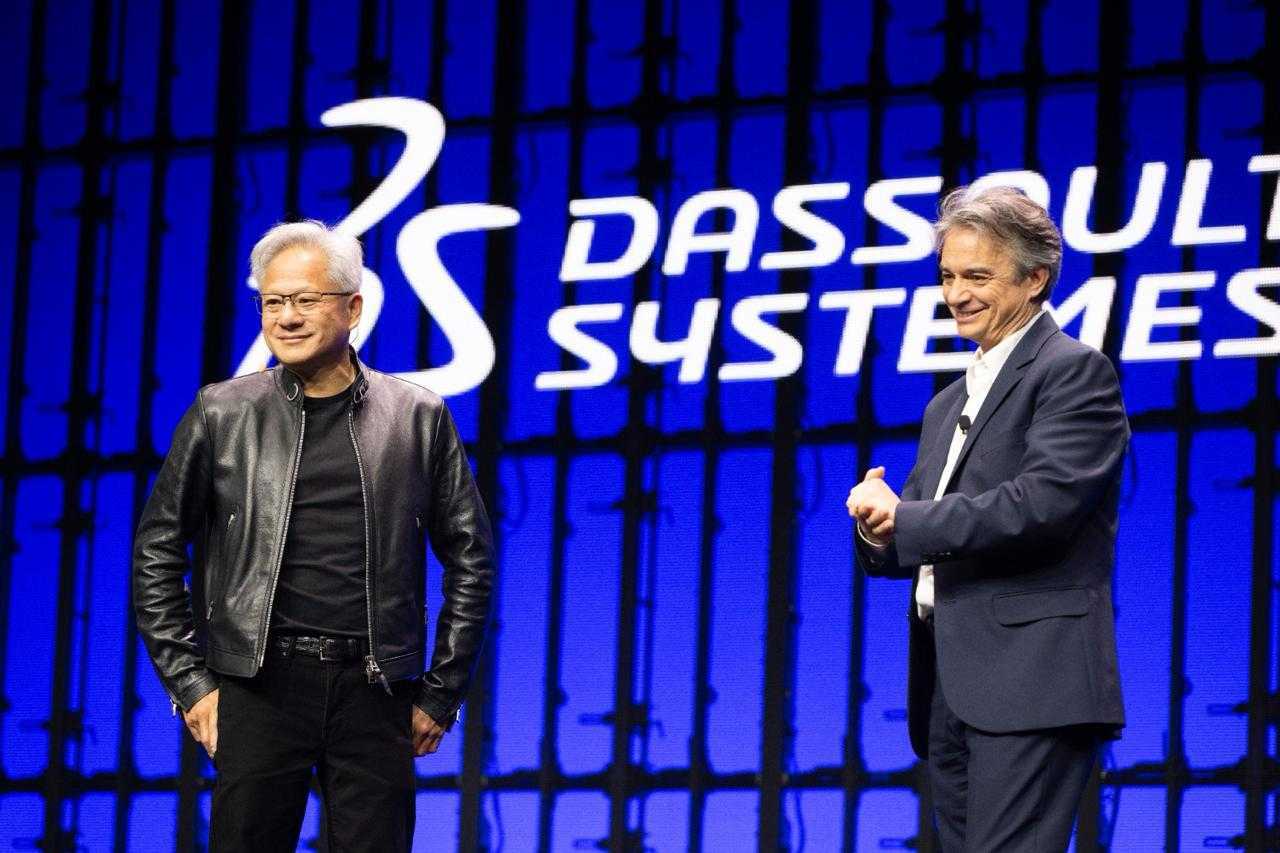
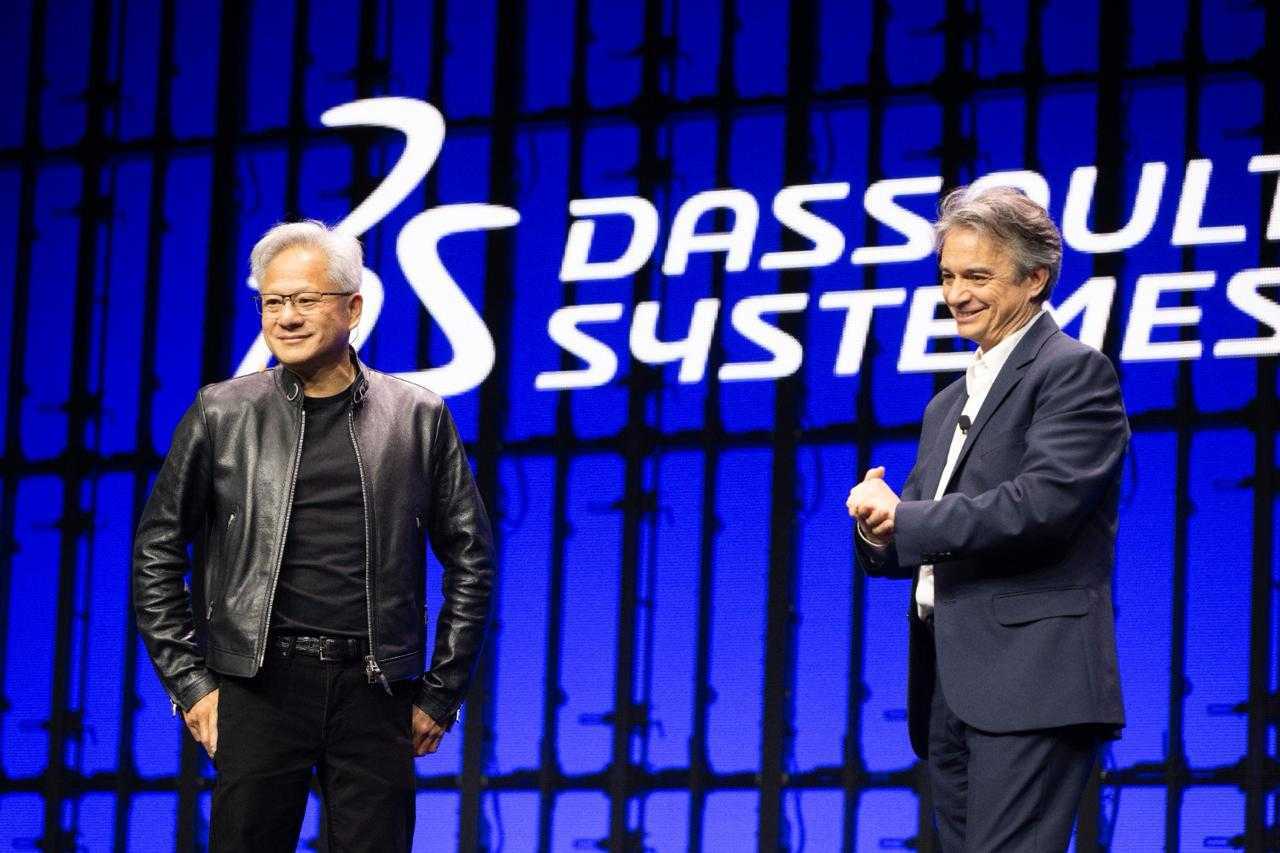
Everything Will Be Represented in a Virtual Twin, Jensen Huang Says at 3DEXPERIENCE World


At 3DEXPERIENCE World in Houston, NVIDIA founder and CEO Jensen Huang and Dassault Systèmes CEO Pascal Daloz laid out a blueprint for industrial AI rooted in physics-based “world models” — systems designed to simulate products, factories and even biological systems before they’re built.

“Artificial intelligence will be infrastructure,”  like water, electricity, and the internet Huang told the crowd, playfully referring to the engineering-heavy audience as “Solid Workers,” a nod to Dassault Systèmes’ SolidWorks platform.

The announcement continues a collaboration spanning more than a quarter century between NVIDIA and Dassault Systèmes.

“This is the largest collaboration our two companies have ever had in over a quarter century,” Huang said. “We’re going to fuse these technologies so engineers can work at a scale that’s 100 times, 1,000 times — and eventually a million times greater than before.”

The new partnership brings NVIDIA accelerated computing and AI libraries together with Dassault Systèmes’ Virtual Twin platforms to move more engineering work into real-time digital workflows, powered by AI companions that help teams explore, validate, prototype and iterate faster.

Huang framed the shift as a reinvention of the computing stack: moving from hand-specified, structured digital designs to systems that can generate, simulate and optimize in software — at industrial scale.

From Digital Models to Industry World Models

Virtual twins are not applications, “they are knowledge factories,” Daloz said.

The partnership aims to establish industry world models — science-validated AI systems grounded in physics that can serve as mission-critical platforms across biology, materials science, engineering and manufacturing.

In Daloz’s framing, the value moves upstream: virtual twins become the place where knowledge is created, tested, and trusted — before anything is built in the physical world.

Dassault Systèmes, whose 3DEXPERIENCE platform serves more than 45 million users and 400,000 customers globally, has long been a leader in virtual twin technology — digital replicas that let engineers simulate products and processes before building them physically.

The collaboration brings together accelerated computing, AI and digital twin technologies so engineers can design not only geometry, but behavior — and explore radically larger design spaces earlier in development.

Together, the companies outlined how this shared architecture will show up across science, engineering and manufacturing workflows:

  • Advancing Biology and Materials Research​: The NVIDIA BioNeMo platform and BIOVIA science-validated world models accelerate the discovery of new molecules and next-generation materials.
  • AI-Driven Design and Engineering: SIMULIA AI-based Virtual Twin Physics Behavior leveraging NVIDIA CUDA-X libraries and AI physics libraries empowers designers and engineers to accurately and instantly predict outcomes.
  • Virtual Twins for Every Factory: NVIDIA Omniverse physical AI libraries integrated into the DELMIA Virtual Twin enable autonomous, software-defined production systems.
  • Virtual Companions Supercharge Dassault Systèmes’ Users: The 3DEXPERIENCE agentic platform, combining NVIDIA AI technologies and NVIDIA Nemotron open models with Dassault Systèmes’ Industry World Models, powers Virtual Companions to tap into deep industrial context, delivering trusted, actionable intelligence.

Huang said that in domains like biology and materials, the frontier is learning the underlying “language” of complex systems and then generating new options that can be evaluated and validated in simulation.

Designing and Operating the Factory in Software

A central theme of the discussion was how factories themselves are changing — from static physical assets to living systems that are designed, simulated and operated as virtual twins.

As part of the partnership, Dassault Systèmes is deploying NVIDIA-powered AI factories on three continents through its OUTSCALE sovereign cloud, enabling customers to run AI workloads while maintaining data residency and security requirements.

Both executives emphasized that the goal isn’t to replace engineers — it’s to amplify them. As AI agent companions take on more exploratory and repetitive tasks, designers and engineers gain leverage and creativity, not redundancy.

AI Companions That Expand Human Creativity

Every designer will have a “team of companions,” Huang said — a shift he described as fundamentally positive for engineers, software platforms and the broader ecosystem built on them.

For the tens of millions of engineers who use Dassault Systèmes tools to design everything from aircraft to consumer packaged goods, the shift isn’t about replacing human creativity — it’s about expanding it.

“Success is not about automation,” Daloz said. “[Engineers] don’t want to automate the past — they want to invent the future.”

Looking ahead, Daloz framed the partnership as about more than performance gains – it’s an effort to open new possibilities, help companies eliminate bad choices before they become expensive mistakes, and create entirely new categories of products.

“Virtual twins and the 3D Universes are not applications,” Daloz said. “They are knowledge factories.”

The fireside conversation between Huang and Daloz was broadcast live from 3DEXPERIENCE World.

CEOs of NVIDIA and Lilly Share ‘Blueprint for What Is Possible’ in AI and Drug Discovery


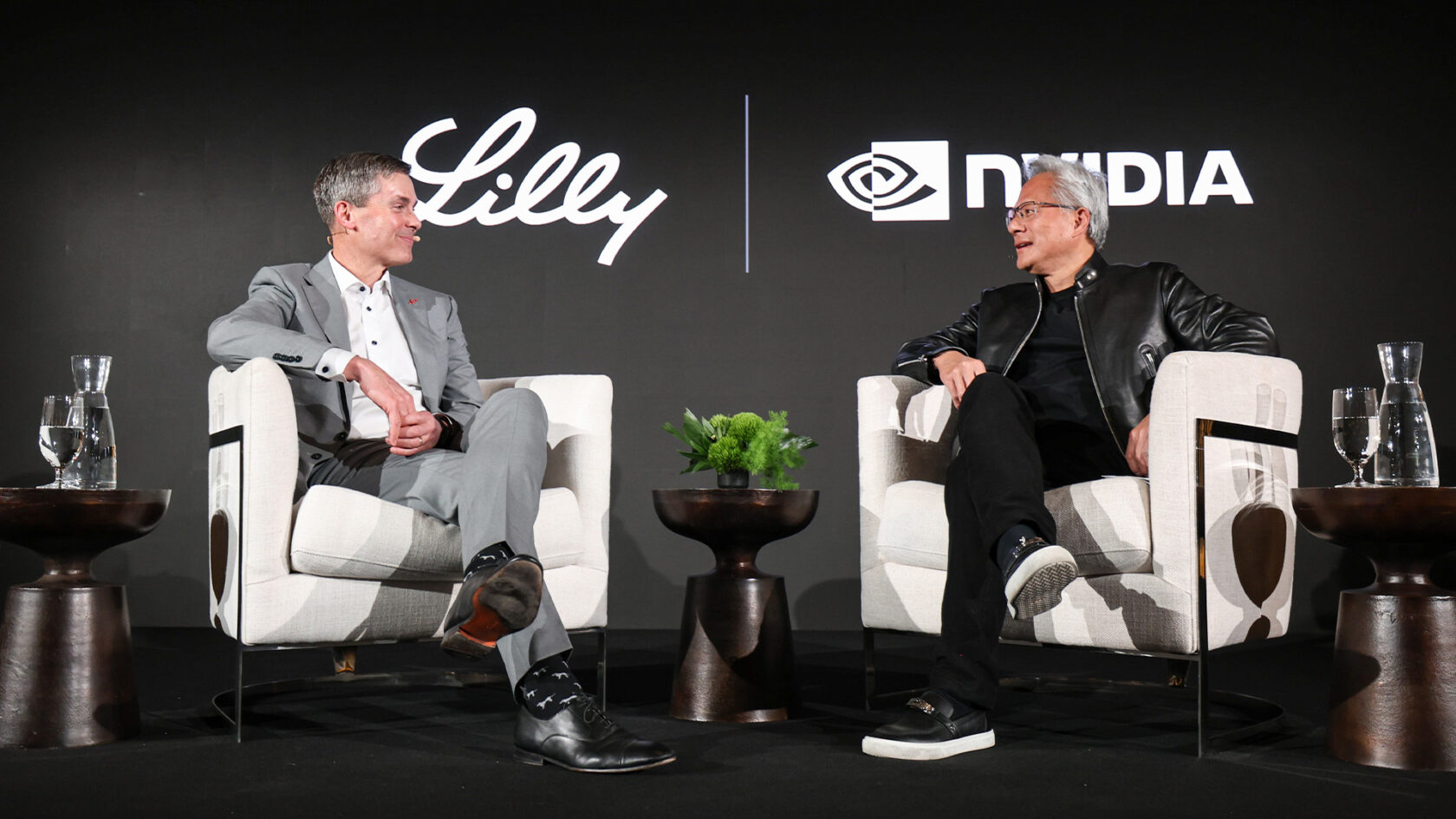
NVIDIA and Lilly are putting together “a blueprint for what is possible in the future of drug discovery,” NVIDIA founder and CEO Jensen Huang told attendees at a fireside chat Monday with Dave Ricks, chair and CEO of Lilly.

The conversation — which took place during the annual J.P. Morgan Healthcare Conference in San Francisco — focused on the announcement of a first-of-its-kind AI co-innovation lab by NVIDIA and Lilly.

“We’re systematically bringing together some of the brightest minds in the field of drug discovery and some of the brightest minds in computer science,” Huang said. “We’re going to have a lab where the expertise and the scale of that lab is sufficient to attract people who really want to do their life’s work at that intersection.”

The initiative will bring together Lilly’s world-leading expertise in the pharmaceutical industry with NVIDIA’s leadership in AI to tackle one of humanity’s greatest challenges: modeling the complexities of biology. The two companies will jointly invest up to $1 billion in talent, infrastructure and compute over five years to support the new lab, which will be based in the San Francisco Bay Area.

During the fireside chat, Ricks reflected on the painstaking work of drug discovery and AI’s potential to transform the cycle of pharmaceutical invention.

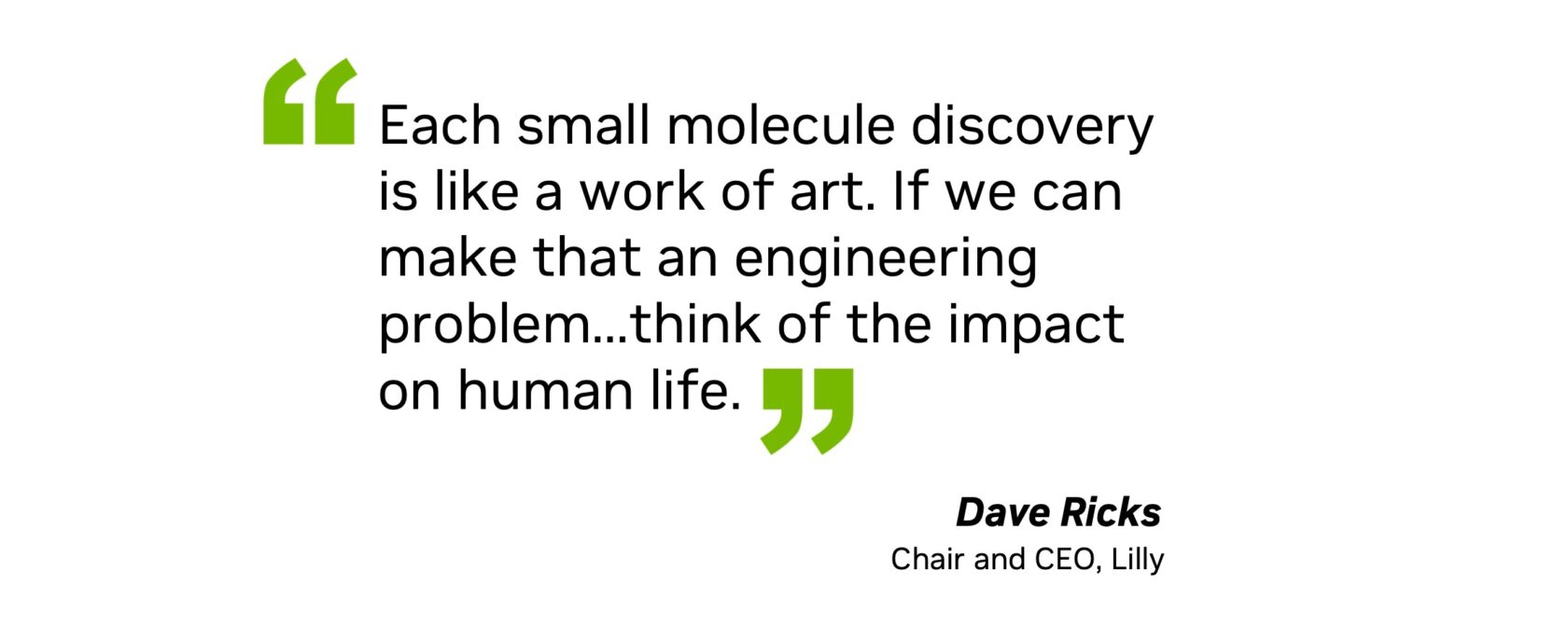
“Each small molecule discovery is like a work of art,” he said. “If we can make that an engineering problem, versus this sort of discovery, this artisanal drug-making problem, think of the impact on human life.”

The lab will operate under a scientist-in-the-loop framework, where agentic wet labs are tightly connected to computational dry labs in a continuous learning system. This framework aims to enable experiments, data generation and AI model development to continuously inform and improve one another.

“Machines are made to work day and night to solve this problem,” Ricks said.

The co-innovation lab builds on Lilly’s previously announced AI supercomputer — the biopharma industry’s most powerful AI factory, an NVIDIA DGX SuperPOD with DGX B300 systems — which will train large-scale biomedical foundation and frontier models for drug discovery and development.

By integrating AI into drug discovery, Ricks explained, pharmaceutical researchers can rapidly simulate a massive number of possible molecules, test them at scale in silico and filter out promising candidates. The next challenge is to find more biological targets using AI.

“The holy grail is that you put those two things together, and we can model the whole system at once,” Ricks said.

Huang and Ricks also discussed Lilly’s long history of harnessing computing for pharmaceutical research — and how diseases of the aging brain are the next frontier for drug discovery.

“I can’t imagine a more worthy field to apply computer science to,” Huang said. “Hopefully we can bend the arc of history.”

NVIDIA at J.P. Morgan Healthcare

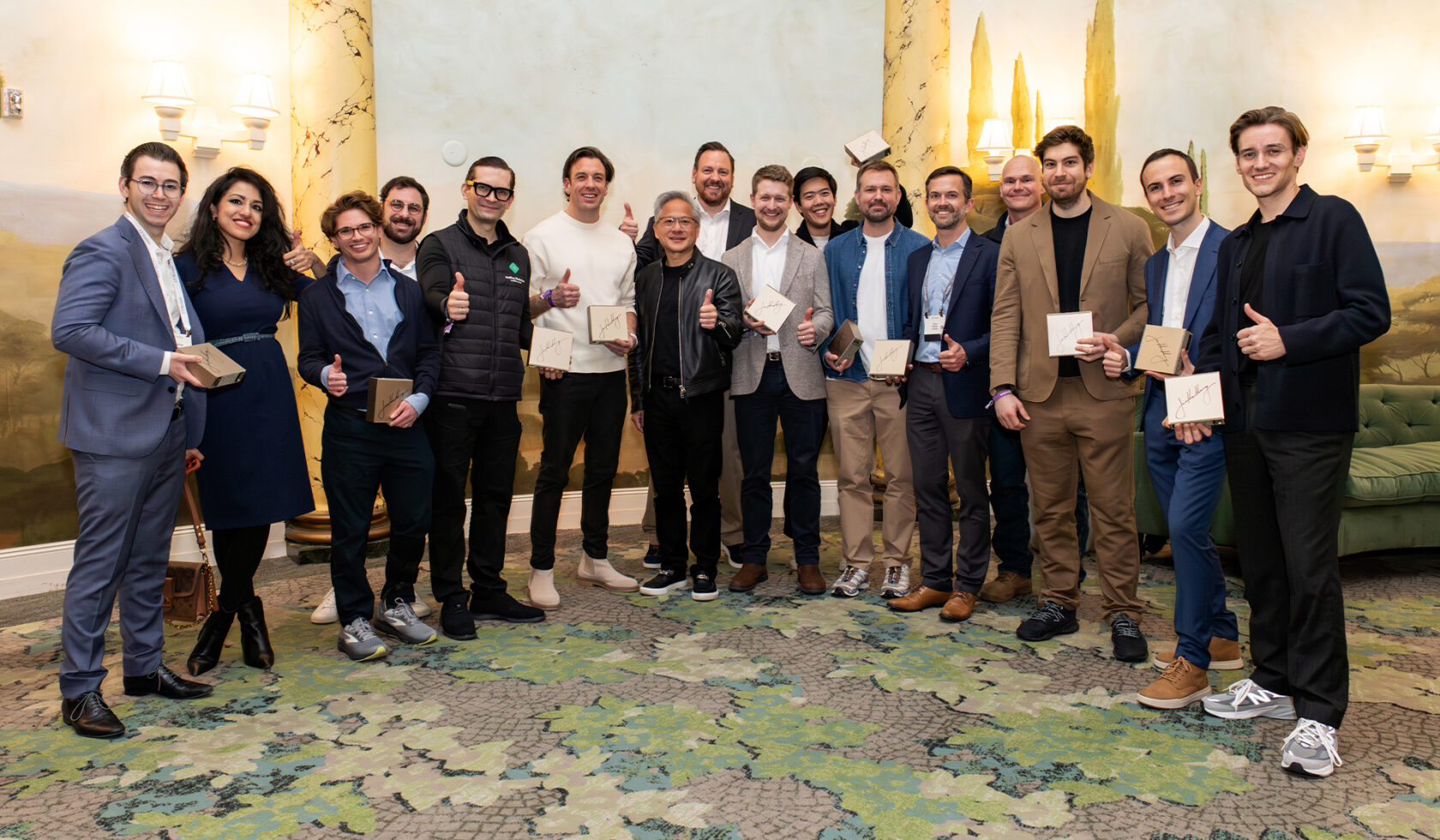
NVIDIA’s full-stack AI platform is accelerating the creation and deployment of leading foundation models across digital biology and drug discovery. To recognize some of the recent advancements, Huang raised a toast at J.P. Morgan Healthcare in honor of about a dozen leaders in the field — and the AI models they’ve pioneered.

“In the last 10 years, we’ve advanced AI 1 million times,” Huang said. “I believe that over the next 10 years, you will enjoy the same adventure that I’ve enjoyed in our generation … and so for each one of you — for your happy new year present and a thank you for everything that you do for the industry and for the future of humanity — I give to you a DGX Spark.”

Over a dozen leaders in AI and drug discovery received NVIDIA DGX Spark systems signed by NVIDIA founder and CEO Jensen Huang at the J.P. Morgan Healthcare Conference.

The honorees included:

  • Zach Carpenter, CEO of VantAI, developer of the Neo model family for co-folding and design across all biological molecules.
  • Gabriele Corso, CEO of Boltz, creator of one of the most well-established open-source families of biomolecular models.
  • Evan Feinberg, CEO of Genesis Molecular AI, which developed Pearl, a protein and small molecule structure prediction model.
  • Chris Gibson and Najat Khan, chairman and CEO, respectively, of Recursion, which developed the OpenPhenom vision transformer model for microscopy data.
  • Glen Gowers, CEO of Basecamp Research, creator of EDEN, a biodiversity-scale genome language model family.
  • Brian Hie, innovation investigator at the Arc Institute, which was a major collaborator in the development of Evo 2, part of the Evo family of DNA language models.
  • Max Jaderberg, president of Isomorphic, which is extending the capabilities of AlphaFold, the defining family of protein structure and interaction models.
  • Simon Kohl, CEO of Latent Labs, developer of the Latent-X family of generative models for protein sequence and structure.
  • Joshua Meier, CEO of Chai Discovery, which developed the Chai family of generative AI models for molecular structure prediction and design.
  • Tom Miller, cofounder and CEO of Iambic Therapeutics, developer of the NeuralPLexer model family for flexible, accurate and fast structure prediction for proteins and small molecules.
  • Alex Rives, head of science at Biohub, which created the ESM family of leading protein language models.
  • Alex Zhavoronkov, CEO of Insilico Medicine, which built Pharma.AI, an integrated model suite spanning target discovery, generative chemistry and clinical prediction.

At J.P. Morgan Healthcare, NVIDIA also announced a major expansion of the NVIDIA BioNeMo platform for AI-driven biology and drug discovery with tools including:

  • NVIDIA Clara open models for predicting RNA structures and ensuring AI-designed drugs are practical to synthesize.
  • BioNeMo Recipes to accelerate and scale biological foundation model training, customization and deployment.
  • BioNeMo data processing libraries such as nvMolKit, a GPU-accelerated cheminformatics tool for molecular design.

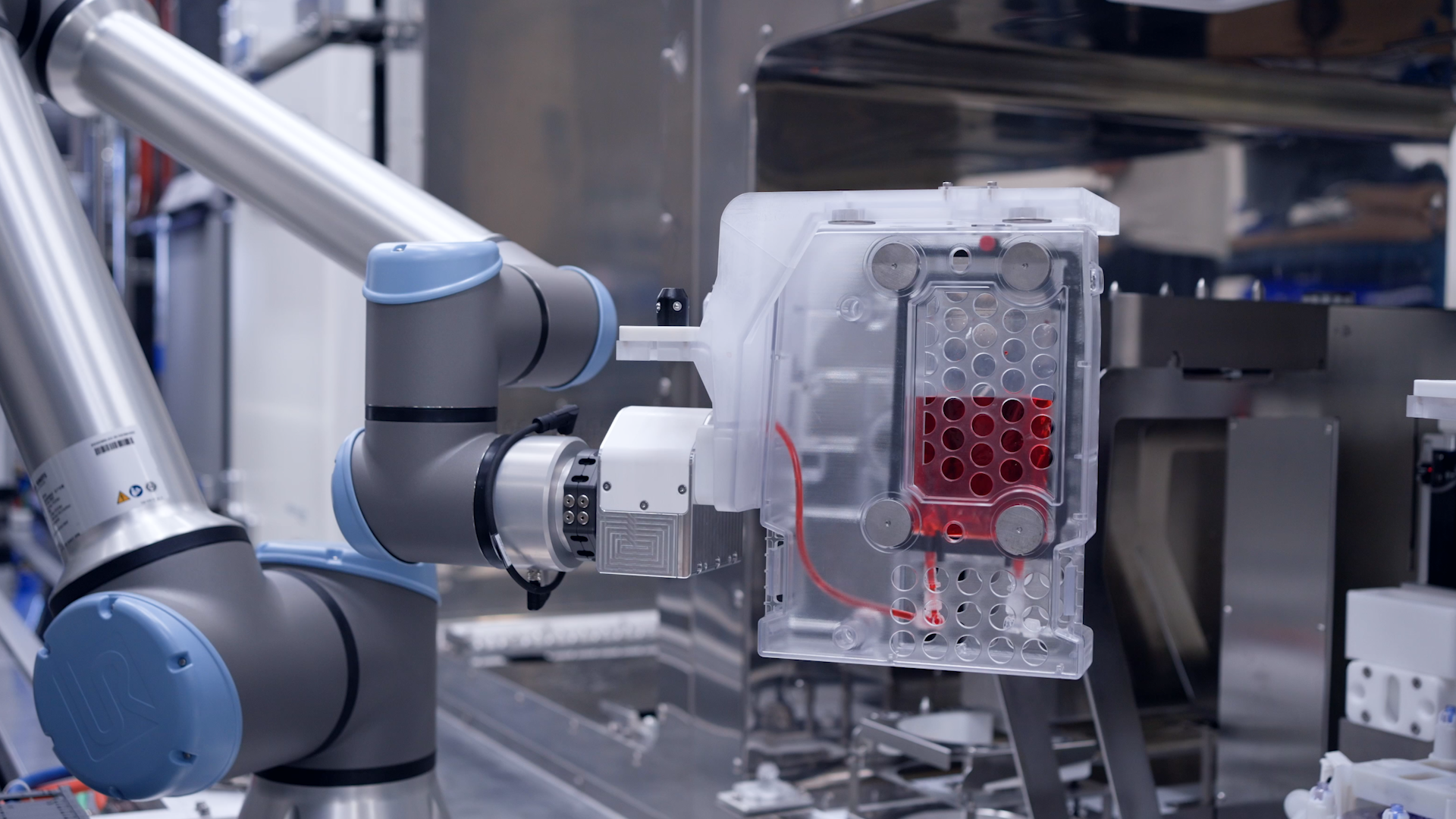
NVIDIA also highlighted a collaboration with instrumentation leader Thermo Fisher to build autonomous lab infrastructure using NVIDIA’s full-stack AI computing — and highlighted the work of Multiply Labs, a San Francisco-based startup that offers end-to-end robotic systems to automate cell therapy manufacturing at scale.

J.P. Morgan Healthcare is the world’s largest healthcare investment symposium, attracting over 8,000 global professionals including investors, policymakers and executives from across the healthcare industry.

For more from the conference, listen to the audio recording and view the presentation deck of a special address by Kimberly Powell, vice president of healthcare at NVIDIA, who discusses AI’s impact across healthcare.

Multiply Labs Is Scaling Robotics-Driven Cell Therapy Biomanufacturing Labs


Multiply Labs is doing for cell therapy labs what has already happened in the chip industry: It’s introducing robots to do the tedious, precision and hygienic work better, faster and cheaper.

The startup concept was sparked when Fred Parietti was at MIT doing PhD research in robotics and he met with Alice Melocchi, who showed him how these laborious labs lacked automation while risking contamination. 

“She showed me what she did in a lab and how difficult it was, and I couldn’t believe it — I thought drugs were made like chips, and this was insane but also real,” said Parietti, co-founder and CEO of Multiply Labs. “Next, I flew to Silicon Valley, and we started this at YCombinator.” 

San Francisco-based Multiply Labs, founded in 2016, today is automating cell therapy manufacturing with robots for leading companies, including Kyverna Therapeutics and Legend Biotech.

Multiply Labs offers end-to-end robotic systems that produce gene modified cell therapies at scale.

Similar to how the semiconductor industry has evolved from clean rooms with technicians in bunny suits, Multiple Labs is ushering in this new era for biosciences. Like with chips today, it promises precision gains, reduced contamination and advanced manufacturing with physical AI.       

Multiply Labs systems are bringing these therapeutics into the future using NVIDIA Omniverse libraries for developing digital twins of these lab environments and the NVIDIA Isaac Sim robotics simulation framework for training robots on the bespoke skills required to develop these treatments. It’s also developing humanoid robots using the NVIDIA Isaac GR00T humanoid foundation robot model for assisting in the labs with improved hygiene. 

Cell therapies are new and involve taking cells from a patient or donor and modifying them for treating patients to fight diseases or a patient’s own immune response. They show promise for treating cancers, genetic disorders, autoimmune diseases and neurological conditions. 

These artisanal treatments — one-offs for specific patients —  are expensive to produce and can easily be destroyed in the process by contamination or improper handling. Robots within the controlled biomanufacturing clusters of Multiply Labs help ensure more hygienic and precision processes.         

“It needs to be sterile, and you don’t want anyone breathing anywhere near the cells, so it was an obvious high value application of robotics,” said Parietti. 

Simulating Cell Therapy Manufacturing Skills for Improved Precision in Labs 

Cell therapy manufacturing is complex, costly, and prone to failure. Bioscience companies are turning to automation and simulation to reduce risk, scale output and preserve expert knowledge. A key development is imitation learning — training robots in Isaac Sim to replicate expert tasks by analyzing video demonstrations. This approach captures the tacit, often undocumented skills of top scientists and translates them into robotic control policies.