NVIDIA Research Advances Robotics From Simulation to the Real World


Robotics is entering a new phase: moving from controlled demos and scripted automation toward generalizable, reliable embodied autonomy in the real world. 

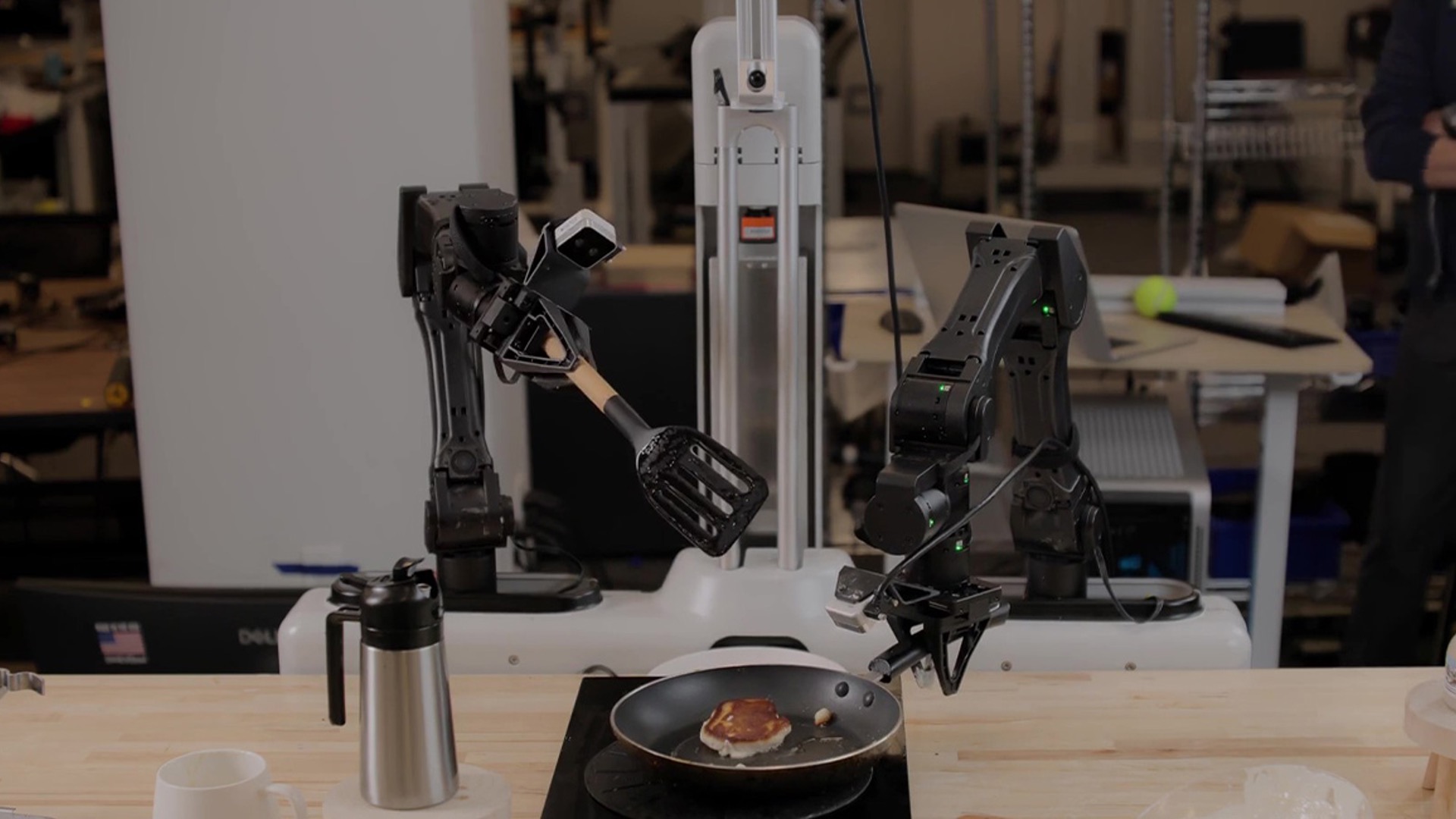
At the International Conference on Robotics and Automation (ICRA), eight of NVIDIA Research’s 28 accepted papers show how simulation-to-real transfer is becoming a foundation for that shift, helping robots perceive, reason, plan and act across dynamic, unpredictable environments.

Together, the papers span the full stack of challenges robot developers face: coordinating multiple arms in parallel, building policies that generalize across robot bodies, grasping novel objects in clutter, performing precise assembly and developing vision-language-action models that reason before they move. 

The throughline is clear: sim-to-real is becoming a foundation for robots that can adapt, generalize, and operate with greater reliability outside the lab.

Coordinating Arms, Navigating Bodies, Grasping Objects

Picture a pharmaceutical lab run by robotic arms: picking up tubes, transferring liquids, mixing reagents — each step taking different amounts of time, all requiring careful coordination. 

Traditional robot scheduling software handles those steps sequentially, one arm at a time. 

ScheduleStream changes that by running computations on GPUs, letting multiple arms plan movements and operate in parallel. The result — a 3x speedup across multi-arm planning scenarios, on hardware like the NVIDIA Jetson edge AI platform. Code for the framework is available on GitHub.


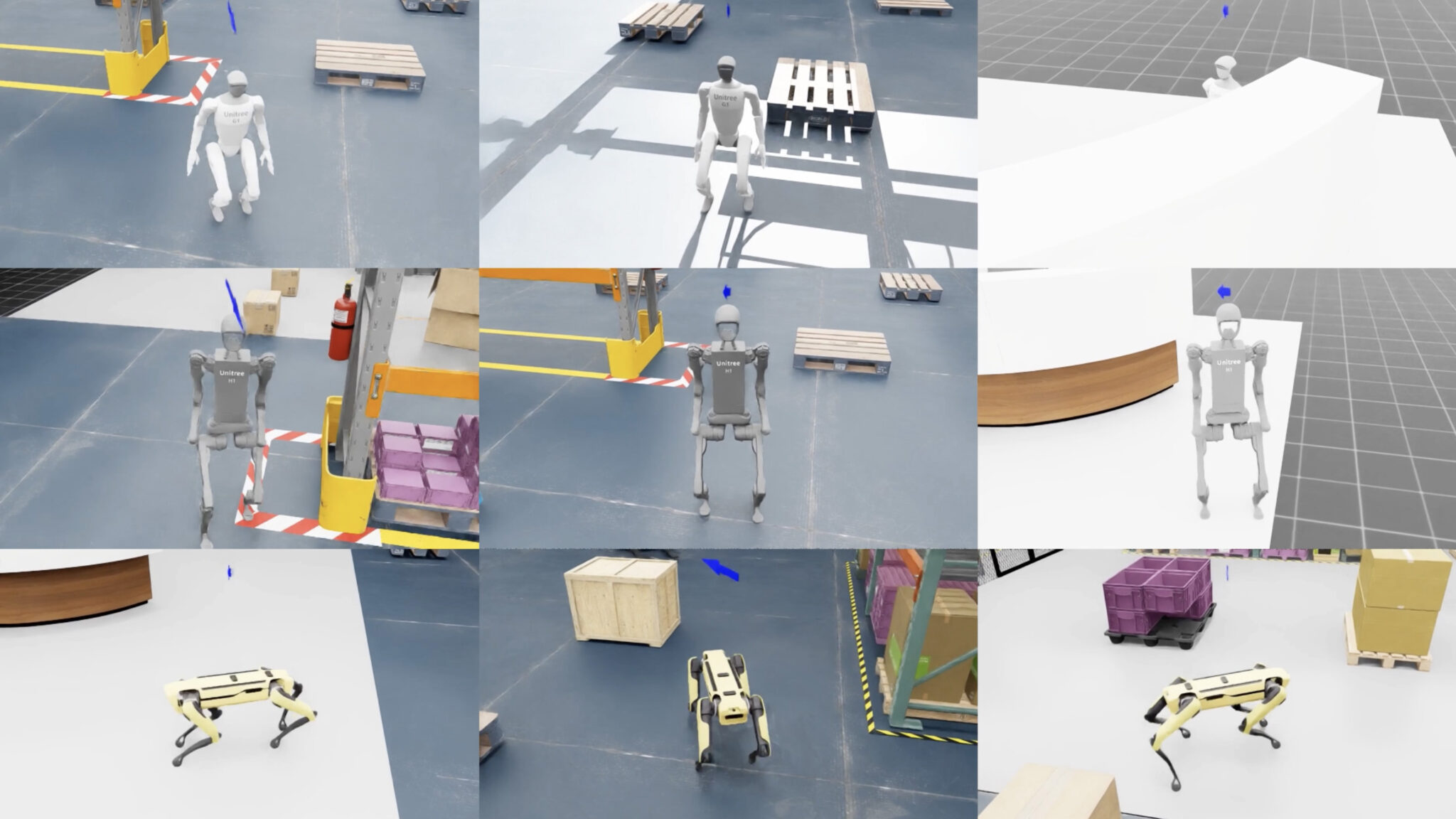
A robot that learns to navigate through a space — avoiding obstacles and finding its destination — usually learns to do it in one body. Put the same navigation software into a differently shaped robot and it often falls apart, because its parts all move differently. 

The COMPASS policy framework solves this by first building the baseline navigation functionality using imitation learning and then using residual reinforcement learning in NVIDIA Isaac Lab to build specialists for diverse robot embodiments. Crucially, no real-world robot data is involved at any stage: everything is trained in Isaac Lab simulation. 

Compared with an imitation learning baseline, COMPASS achieved a 4.5x improvement in average success rate. It also seamlessly transfers to real-world environments, demonstrating around 80% success across 20 real-world navigation trials on autonomous mobile robots and humanoids. 

COMPASS is agent-friendly, with dedicated skills — and developers can connect the pipeline with NVIDIA Omniverse NuRec to post-train and validate robots in a digital twin of a novel environment before deployment. 

Most grasping systems identify the object, predict a grasp, plan a path, then execute. But the last few centimeters are where small errors matter most.

Grasp-MPC adaptively computes robotic grasps, continuously correcting the robot’s motion as it closes in on the object, rather than carrying out a fixed plan — the way a person grabs something by feeling rather than calculating every joint angle in advance.

To build the policy, the researchers generated 2 million simulated trajectories across 8,000 objects using annotations from the GraspGen dataset and motion planning data from cuRobo, a CUDA-accelerated library for robot motion generation. 

After training on both successful and failed trajectories, Grasp-MPC learned to grasp novel objects in cluttered tabletops and shelves — achieving around 75% overall success on real robots, compared with a baseline of 41%.


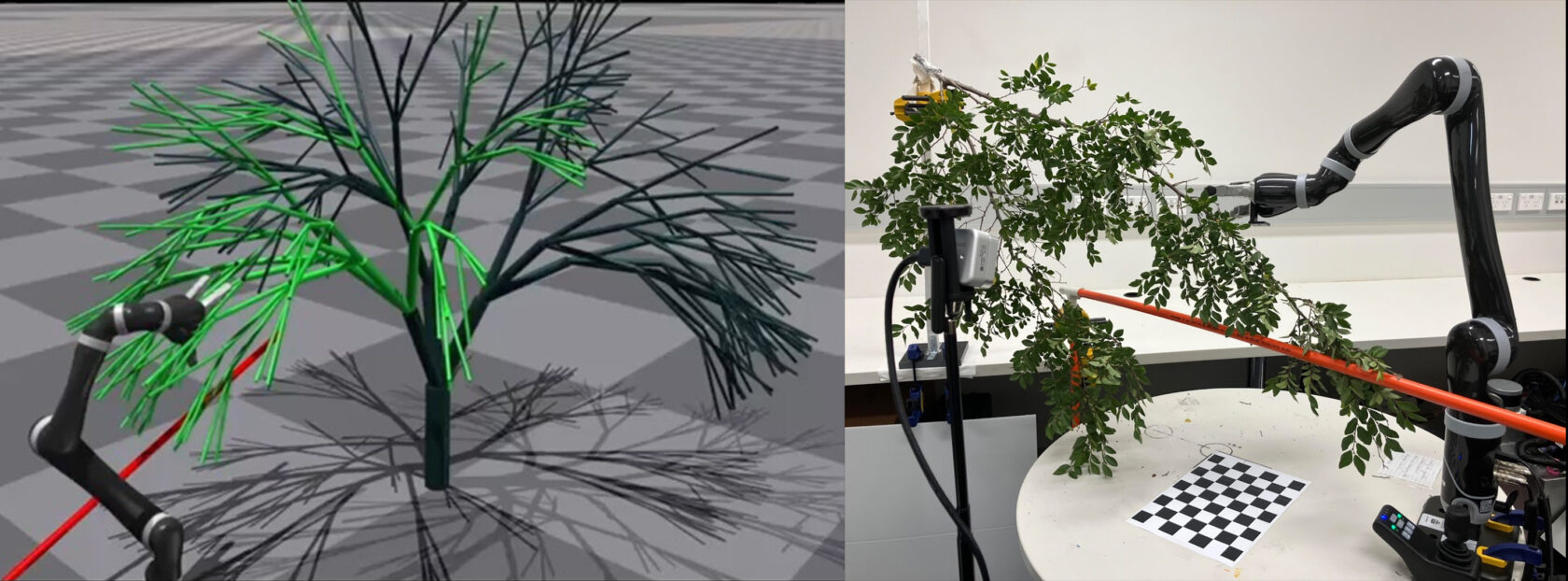
Deformable Cluster Manipulation introduces a framework that tackles a parallel challenge: enabling systems to grasp not just one object, but a whole bundle of flexible, tangled material at once. 

The framework was motivated by a real-world task: clearing a mass of tree branches that have grown over a power line, where there’s no single clean object to grab. The system uses its entire arm, not just the gripper: wrapping it around the branch cluster and sweeping it aside, the way someone might gather an armful of cables or push a tangle of brush out of the way. 

The researchers built a tree generator using biological growth equations to create synthetic trees of many different shapes and sizes — then trained the system across thousands of them in NVIDIA Isaac open simulation frameworks. 

The policy deploys to real branches zero shot. Beyond power lines, the researchers see potential in cable management, agricultural inspection and anywhere robots need to handle a tangle rather than a single graspable item.

Clearing tree branches in zero-shot sim-to-real deployment.

Assembling With Precision

Precise assembly — threading a nut onto a bolt, inserting a gear onto a gearshaft, pressing a peg into a hole — is notoriously hard to get right with simulation alone. 

The real world is complex. Real surfaces aren’t perfectly smooth. Sensors don’t behave as specified. Tiny discrepancies that a simulator ignores can stop a robot in its tracks.

The SPARR method addresses this by splitting the job in two. A policy trained in Isaac Lab learns the general strategy for the assembly task in simulation. Then, on the actual hardware, a second layer learns to correct for whatever the simulator got wrong — using the robot’s own camera and without any human demonstrations or guidance. 

SPARR improves success rates by 38% and reduces cycle time by around 30% compared with zero-shot sim-to-real baselines. 

On National Institute of Standards and Technology (NIST) assembly tasks not seen during training, success improves by nearly 75% — approaching the results of methods that require a human in the loop.

The Refinery framework takes on the next layer of difficulty in assembly: tasks with multiple sequential steps, where how step one is finished determines whether step two is even possible. It’s like assembling furniture — leave a panel at the wrong angle, and the next fastener won’t go in. 

By understanding how success varies across initial conditions and training across hundreds of simulated assembly scenarios, Refinery learns how to complete each step and leave each component in a position that sets up the next. It achieves 91% simulation success and a nearly 11% mean improvement over baselines with comparable real-world results — and its policies can be chained to handle long, multi-part sequences.

Action Models That Keep Their Word

The PEEK pipeline helps robots see past the clutter. In a typical manipulation task, the robot’s camera picks up everything in the scene — but most of it is irrelevant noise. 

One task demonstrated on the PEEK project page is “give the banana to NVIDIA founder and CEO Jensen Huang”: a photo of Huang sits on a table alongside a photo of Michael Jordan, a collection of unrelated objects and other distractors. 

A human doing the task instantly focuses on the banana and the right photo; a standard robot policy has to process everything and often gets confused. PEEK solves this by having a vision language model read the task instruction and focus the robot’s line of vision accordingly — showing a movement path, and highlighting around the objects that matter, while fading out everything else. 

The policy then acts on that annotated view rather than the raw scene. For a policy trained purely in simulation, adding PEEK produced a 41x real-world improvement in accuracy. For large VLA models and smaller policies, gains range from 2-3.5x. Because it works at the image level, PEEK integrates with any camera-based policy without modification.


Do What You Say — a collaboration with researchers at Carnegie Mellon University, University of Utah and University of Sydney — addresses a specific failure mode that matters more as robots tackle longer, more complex tasks. 

Give a robot an instruction like “store everything on this table inside the cabinet” or “prepare a Manhattan,” and it has to break that down into individual steps and execute them in sequence. 

The problem is that the AI model can correctly reason through what it needs to do — and then execute something different. 

The method, called SEAL, fixes this at runtime without any retraining: the robot generates several candidate action sequences, thinks through where each one would actually lead and picks the outcome that matches what it said it would do. SEAL delivers up to 15% accuracy gains over prior work, with robustness against rephrased instructions, changed objects, scene clutter and shifted camera angles.


In addition to papers, NVIDIA is expanding robotics research infrastructure with large-scale open datasets for robotics. The NVIDIA Physical AI Dataset is the world’s largest open dataset for physical development, surpassing 15 million+ downloads, while NVIDIA Isaac GR00T X Embodiment Sim has become one of the most-downloaded robotics datasets.  

Universities Accelerate Physical AI Research With NVIDIA Technologies

Robotics teams from universities such as Carnegie Mellon University (CMU), ETH Zurich, MIT and University of Texas at Austin are tapping NVIDIA technologies to move physical AI research from simulation to real-world systems — with nearly 50 accepted papers referencing NVIDIA-accelerated simulation, robot learning and compute.

Examples include a paper from CMU demonstrating a robotic control framework trained in NVIDIA Isaac Lab and MIT work on large language model-guided reinforcement learning powered by NVIDIA GPUs.

Explore NVIDIA Research’s physical AI work. Developers can get started with Isaac Lab and Isaac Sim.

Stay up to date by subscribing to our newsletter, and following NVIDIA Robotics on LinkedIn, Instagram, X and Facebook.

To start your robotics journey, enroll in our free NVIDIA Robotics Fundamentals courses today.


Adobe Agents Unlock Breakthrough Creative Intelligence With NVIDIA and WPP


AI agents are transforming how work gets done across all industries, accelerating everything from content creation to decision-making.

NVIDIA’s expanded strategic collaborations with Adobe and WPP are bringing agentic AI to the center of enterprise marketing operations across creative production and customer experience orchestration. 

As demand for personalized customer experiences surges, brands require intelligent systems that can plan, create, produce and activate content continuously — without compromising control, governance or brand integrity.

Consider a global retailer delivering the right offer, image, copy and price, across millions of product, audience and channel combinations — updated in minutes instead of months. 

For marketing and creative teams, that means moving from one-size-fits-all campaigns to tailored experiences that are always on, always relevant and on brand. All of it is powered by intelligent systems that continuously generate and deliver content without sacrificing control, governance or brand integrity.

The expanded collaborations bring together three complementary strengths: Adobe’s creative and customer experience platforms and the new Adobe CX Enterprise Coworker, WPP’s global media and marketing expertise, and NVIDIA’s accelerated computing and software stack, including NVIDIA Nemotron open models, NVIDIA Agent Toolkit and the NVIDIA OpenShell secure runtime for building and running secure agentic AI systems.

As these agents begin orchestrating multistep workflows, tapping sensitive data and triggering actions across marketing stacks, enterprises need a way to enforce clear rules of engagement so every operation remains compliant, on brand and within defined risk boundaries.

Powered by the NVIDIA OpenShell runtime, every agent operates within a secure, isolated environment, delivering enterprise-grade control, consistency and auditability across the entire marketing lifecycle, with verifiable policy management, answering the question, “What can the agent do?” and not just, “What policy is in place?” 

In governed environments, enterprises can also keep key workflows and intelligence services inside their trust boundary, including securely invoking Adobe CX Intelligence as part of customer experience agents.

A live demo of CX Enterprise Coworker — powered by NVIDIA Agent Toolkit, including the OpenShell runtime and Nemotron models — will be featured during Adobe Summit’s day-two keynote taking place Tuesday, April 21, at 9 a.m. PT.

The collaboration enables:

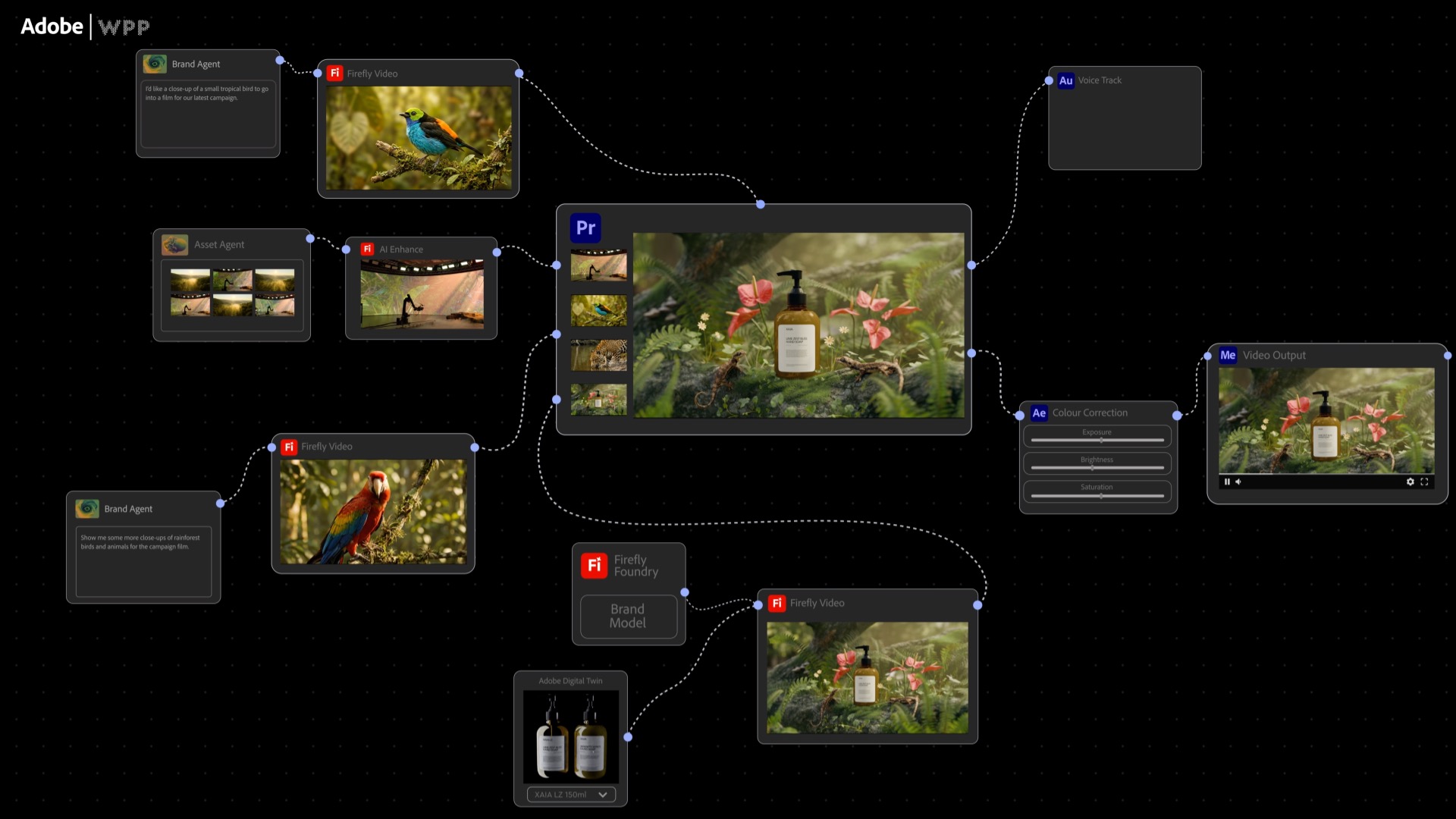
  • End-to-end agentic workflows: Adobe is developing creative and marketing agents that can generate, adapt and version on-brand assets. Adobe’s CX Enterprise Coworker orchestrates downstream customer experience workflows from personalization to activation, closing the loop between content creation and customer engagement.
  • Controlled execution with NVIDIA OpenShell: Agents run in a policy-based, containerized sandbox designed to keep execution governed, observable and auditable, helping enterprises safely deploy long-running agentic workflows on premises or in the cloud.
  • Commercially safe content at scale: Adobe Firefly Foundry, accelerated by NVIDIA AI infrastructure, can help organizations deeply tune custom models on their proprietary assets, enabling agents to generate commercially safe content at scale and aligned to brand identity.
  • A 3D digital twins solution for scalable marketing production: Adobe’s cloud-native 3D digital twin solution is now generally available, built on NVIDIA Omniverse libraries and OpenUSD. 3D digital twins serve as persistent product identities that agents use to automate and scale high-fidelity content creation across formats, markets and configurations.

Creative Intelligence Meets Performance Intelligence With Policy-Governed Agents

Governed environments such as the ones enabled by this collaboration act as a set of “guardrails” that keep AI operations observable and auditable, preventing the system from acting outside of a company’s specific data boundaries or brand rules.

By combining Adobe’s creative platforms, WPP’s media and marketing expertise and NVIDIA’s secure infrastructure with CX Enterprise Coworker, brands no longer have to choose between speed and safety. Autonomous agents can now generate, adapt and activate content at scale while operating within governed, policy-driven environments.

The result is a new foundation for agentic marketing — where creative intelligence, performance and trust are built in from the start and delivered at global scale.

Watch NVIDIA founder and CEO Jensen Huang’s Adobe Summit fireside chat with Adobe CEO Shantanu Narayen below.

NVIDIA GTC Showcases Virtual Worlds Powering the Physical AI Era


Editor’s note: This post is part of Into the Omniverse, a series focused on how developers, 3D practitioners, and enterprises can transform their workflows using the latest advances in OpenUSD and NVIDIA Omniverse.

NVIDIA GTC last week showcased a turning point in physical AI: Robots, vehicles and factories are scaling from single use cases and isolated deployments to sophisticated enterprise workloads across industries. 

At the center of this shift are new frontier models for physical AI, including NVIDIA Cosmos 3, NVIDIA Isaac GR00T N1.7 and NVIDIA Alpamayo 1.5. 

NVIDIA also released the NVIDIA Physical AI Data Factory Blueprint, designed to push the state of the art in world modeling, humanoid skills and autonomous driving, as well as the NVIDIA Omniverse DSX Blueprint for AI factory digital twin simulation.

Open source agentic frameworks such as OpenClaw extend the AI stack all the way to operations — enabling long‑running “claws” that use tools, memory and messaging interfaces to orchestrate workflows, manage data pipelines and execute tasks autonomously on dedicated machines. 

“With NVIDIA and the broader ecosystem, we’re building the claws and guardrails that let anyone create powerful, secure AI assistants,” said Peter Steinberger, creator of OpenClaw, in an NVIDIA press release from GTC. 

OpenUSD is a driving force behind the scalability of physical AI — providing a common, scene‑description language that lets teams bring computer-aided design (CAD) data, simulation assets and real‑world telemetry into a shared, physically accurate view of the world. 

Simulating the AI Factory Before It’s Built

Modern AI factories are complex — spanning thermals, power grids, network load and mechanical systems. Building them on time and on budget becomes much easier when using simulation technology. 

To tackle this, NVIDIA introduced the Omniverse DSX Blueprint at GTC, a reference architecture that unifies simulation across every layer of an AI factory through a single digital twin. This enables operators to optimize performance and efficiency before a rack is installed in the real world.

Compute Is Data: Real-World Data Is No Longer the Moat

Real-world data used to function as a moat for physical AI — but it doesn’t scale. The real world is messy, unpredictable and full of edge cases, and the pipelines to process, simulate and evaluate data are fragmented. The bottleneck isn’t just data — it’s the entire data factory.

To help address this, NVIDIA introduced at GTC its Physical AI Data Factory Blueprint, an open reference architecture that transforms compute into large-scale, high-quality training data. Built on NVIDIA Cosmos open world foundation models and the NVIDIA OSMO operator, it unifies data curation, augmentation and evaluation into a single pipeline, enabling developers to generate diverse, long-tail datasets from limited real-world inputs.

Leading physical AI developers including FieldAI, Hexagon Robotics, Linker Vision, Milestone Systems, Skild AI and Teradyne Robotics are already tapping the blueprint to speed up robotics projects, vision AI agents and autonomous vehicle programs.

Microsoft Azure and Nebius are the first cloud platforms to offer the blueprint, turning world-scale compute into turnkey data production engines.

“Together with cloud leaders, we’re providing a new kind of agentic engine that transforms compute into the high-quality data required to bring the next generation of autonomous systems and robots to life,” said Rev Lebaredian, vice president of Omniverse and simulation technologies at NVIDIA, in this press release. “In this new era, compute is data.”

From OpenUSD to Reality: Seamless Design to Deployment

Converting CAD files to OpenUSD is a critical step in the physical AI pipeline — transforming engineering data into simulation-ready assets that developers can use to build, test and validate robots in physically accurate virtual environments. 

Using tools like the NVIDIA Omniverse Kit software development kit and NVIDIA Isaac Sim, teams can optimize and enrich 3D data for real-time rendering, simulation and collaborative workflows.  

Companies including FANUC and Fauna Robotics are using this seamless CAD-to-OpenUSD workflow to speed up robotic system design and validation.

Transforming Manufacturing and Logistics Through Industrial Digital Twins

“Factories themselves are now robotic systems,” Lebaredian said during his special address on digital twins and simulation at GTC. 

All factories are born in simulation. The NVIDIA Mega Omniverse Blueprint provides enterprises with a reference architecture to design, test and optimize robot fleets and AI agents in a physically accurate facility digital twin before a single robot is deployed on the floor. 

KION, working with Accenture and Siemens, is using this blueprint to build large-scale warehouse digital twins that train and test fleets of NVIDIA Jetson-based autonomous forklifts for GXO, the world’s largest pure-play contract logistics provider. 

Physical AI Steps From Simulation to the Real World

NVIDIA is partnering with the global robotics ecosystem — including leading robot brain developers, industrial robot giants and humanoid pioneers — to enhance production-level physical AI. 

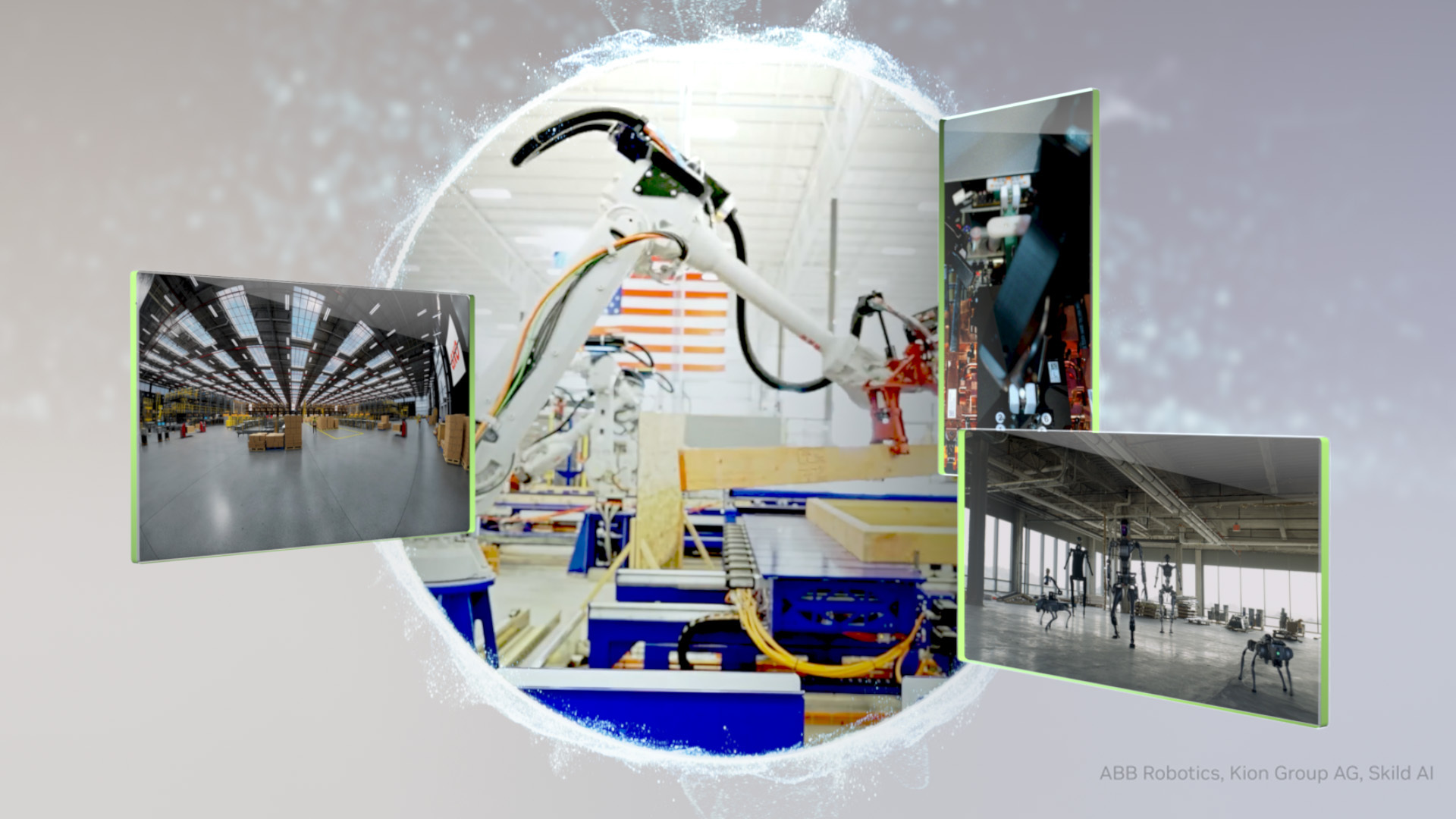
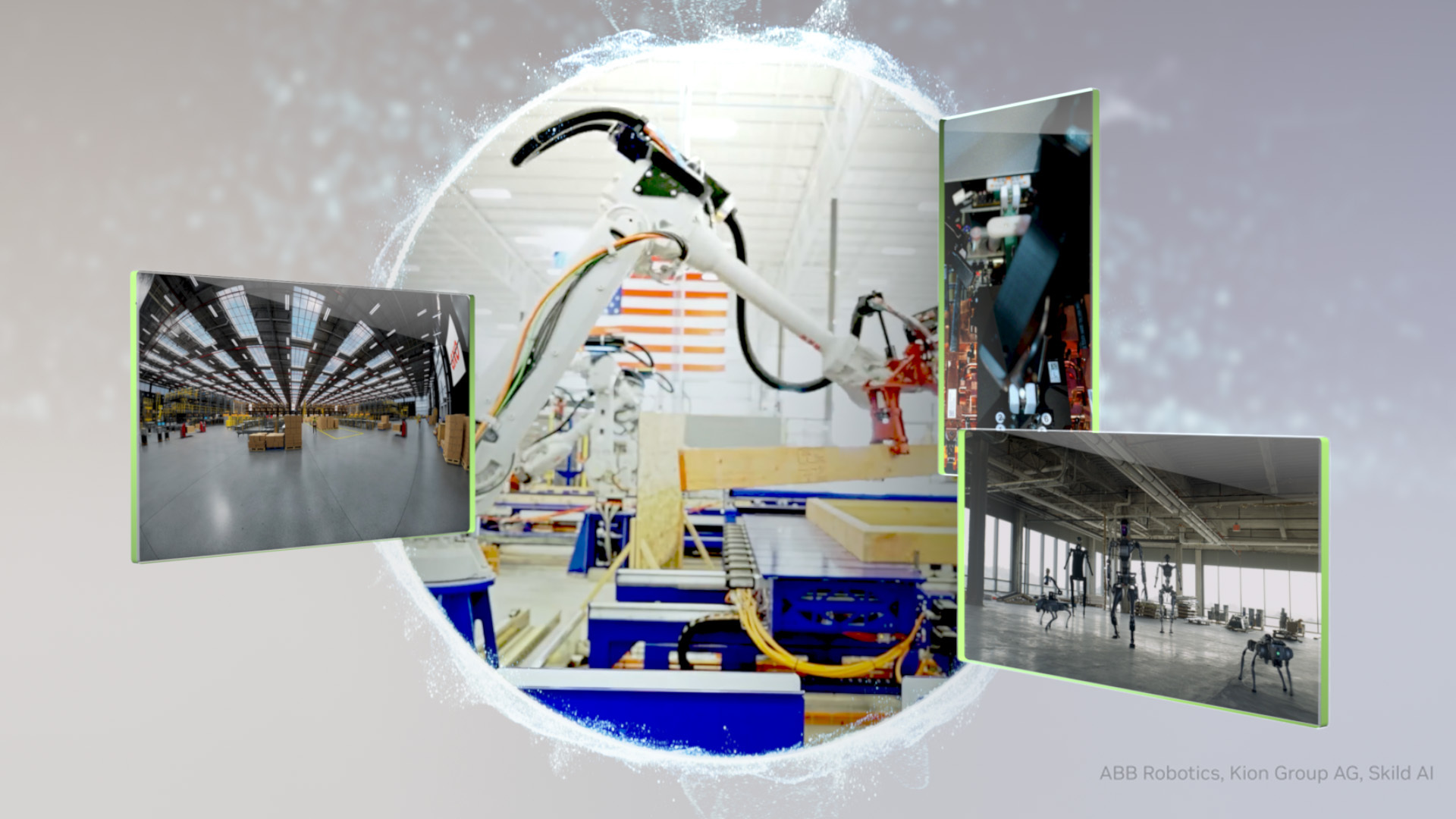
ABB Robotics, FANUC, KUKA and Yaskawa, which have a combined global install base of over 2 million robots, are using NVIDIA Omniverse libraries and NVIDIA Isaac simulation frameworks to validate complex robot applications and production lines through physically accurate digital twins. These companies have also integrated NVIDIA Jetson modules into their controllers to enable real-time AI inference. 

Robot development starts with the robot brains, which is why leading developers including FieldAI and Skild AI are building theirs using NVIDIA Cosmos world models for data generation and Isaac simulation frameworks to validate policies in simulation. 

Meanwhile, Generalist AI is using NVIDIA Cosmos to explore generating synthetic data. This combination allows robots to become proficient in any task — from supply chain monitoring to food delivery — at an exceptional pace. 

Read all of NVIDIA’s announcements from GTC on this online press kit and watch the keynote replay. Catch up on all Physical AI Days sessions from GTC and watch the developer livestream replay.

Into the Omniverse: How Industrial AI and Digital Twins Accelerate Design


Editor’s note: This post is part of Into the Omniverse, a series focused on how developers, 3D practitioners and enterprises can transform their workflows using the latest advancements in OpenUSD and NVIDIA Omniverse.

Industrial AI, digital twins, AI physics and accelerated AI infrastructure are empowering companies across industries to accelerate and scale the design, simulation and optimization of products, processes and facilities before building in the real world.

Earlier this month, NVIDIA and Dassault Systèmes announced a partnership that brings together Dassault Systèmes’ Virtual Twin platforms, NVIDIA accelerated computing, AI physics open models and NVIDIA CUDA-X and Omniverse libraries. This allows designers and engineers to use virtual twins and companions — trained on physics-based world models — to innovate faster, boost efficiency and deliver sustainable products.

Dassault Systèmes’ SIMULIA software now uses NVIDIA CUDA-X and AI physics libraries for AI-based virtual twin physics behavior — empowering designers and engineers to accurately and instantly predict outcomes in simulation.

NVIDIA is adopting Dassault Systèmes’ model-based systems engineering technologies to accelerate the design and global deployment of gigawatt-scale AI factories that are powering industrial and physical AI across industries. Dassault Systèmes will in turn deploy NVIDIA-powered AI factories on three continents through its OUTSCALE sovereign cloud, enabling its customers to run AI workloads while maintaining data residency and security requirements.

These efforts are already making a splash across industries, accelerating industrial development and production processes.

Industrial AI Simulations, From Car Parts to Cheese Proteins 

Digital twins, also known as virtual twins, and physics-based world models are already being deployed to advance industries.

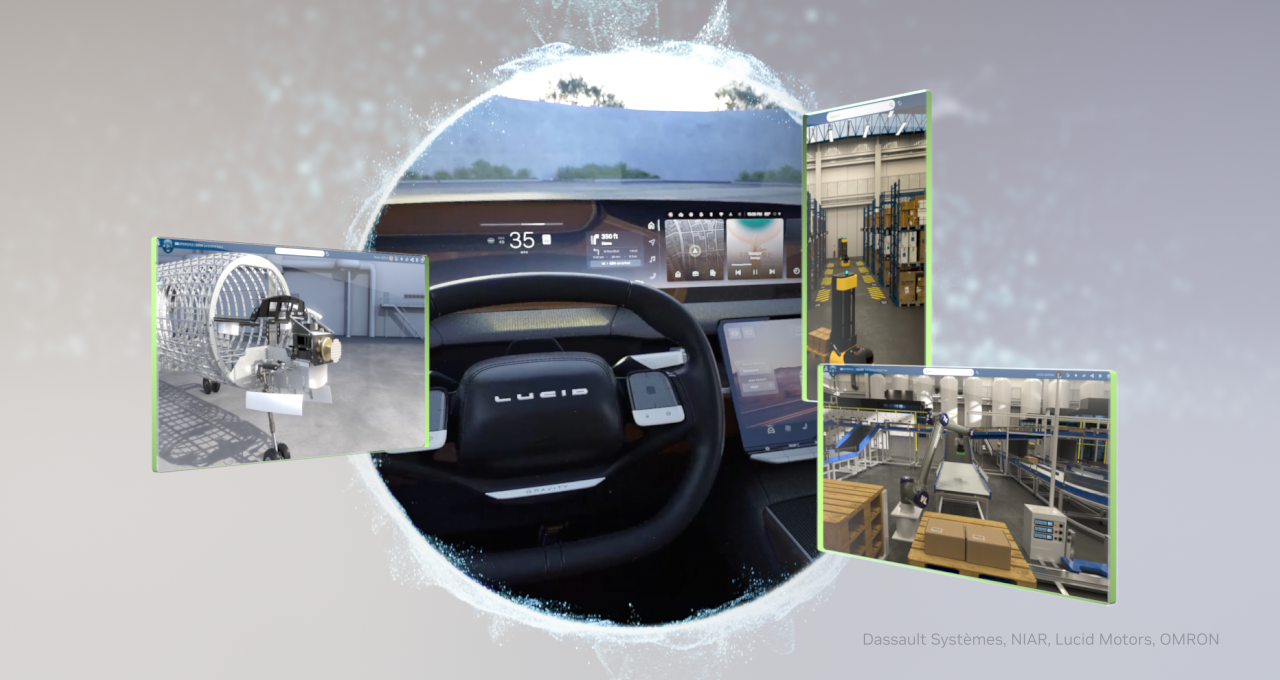
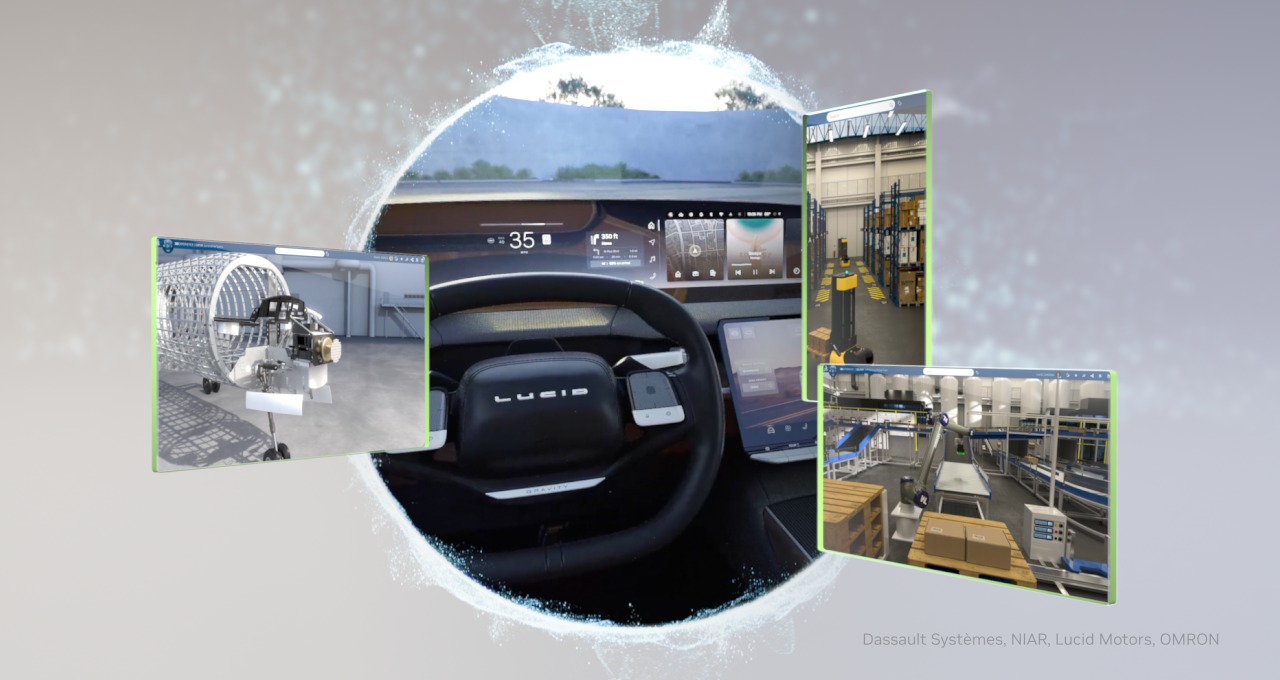
In automotive, Lucid Motors is combining cutting-edge simulation, AI physics open models, Dassault Systèmes’ tools for vehicle and powertrain engineering and digital twin technology to accelerate innovation in electric vehicles. 

In life sciences, scientists and researchers are using virtual twins, Dassault Systèmes’ science-validated world models and the NVIDIA BioNeMo platform to speed molecule and materials discovery, therapeutics design and sustainable food development.

The Bel Group is using technologies from Dassault Systèmes’ supported by NVIDIA to accelerate the development and production of healthier, more sustainable foods for millions of consumers. 

The company is using Dassault Systèmes’ industry world models to generate and study food proteins, creating non-dairy protein options that pair with its well-known cheeses, including Baybel®. Using accurate, high-resolution virtual twins allows the Bel Group to study and develop validated research outcomes of food proteins more quickly and efficiently.

Using accurate, high-resolution virtual twins allows the Bel Group to study and develop validated research outcomes of food proteins more quickly and efficiently.

In industrial automation, Omron is using virtual twins and physical AI to design and deploy automation technology with greater confidence — advancing the shift toward digitally validated production. 

In the aerospace industry, researchers and engineers at Wichita State University’s National Institute for Aviation Research use virtual twins and AI companions powered by Dassault Systèmes’ Industry World Models and NVIDIA Nemotron open models to accelerate the design, testing and certification of aircrafts.

Learning From and Simulating the Real World 

Dassault Systemes’ physics-based Industry World Models are trained to have PhD-level knowledge in fields like biology, physics and material sciences. This allows them to accurately simulate real-world environments and scenarios so teams can test industrial operations end to end — from supply chains to store shelves — before deploying changes in the real world. 

These virtual models can help researchers and developers with workflows ranging from DNA sequencing to strengthening manufactured materials for vehicles. 

“Knowledge is encoded in the living world,” said Pascal Daloz, CEO of Dassault Systemes, during his 3DEXPERIENCE World keynote. “With our virtual twins, we are learning from life and are also understanding it in order to replicate it and scale it.” 

Get Plugged In to Industrial AI

Learn more about industrial and physical AI by registering for NVIDIA GTC, running March 16-19 in San Jose, kicking off with NVIDIA founder and CEO Jensen Huang’s keynote address on Monday, March 16, at 11 a.m. PT. 

At the conference:

  • Explore an industrial AI agenda packed with hands-on sessions, customer stories and live demos. 
  • Dive into the world of OpenUSD with a special session focused on OpenUSD for physical AI simulation, as well as a full agenda of hands-on OpenUSD learning sessions
  • Find Dassault Systèmes in the industrial AI and robotics pavilion on the show floor and learn from Florence Hu-Aubigny, executive vice president of R&D at Dassault Systemes, who’ll present on how virtual twins are shaping the next industrial revolution.
  • Get a live look at GTC with our developer community livestream on March 18, where participants can ask questions, request deep dives and talk directly with NVIDIA engineers in the chat.

Learn how to build industrial and physical AI applications by attending these sessions at GTC.

Everything Will Be Represented in a Virtual Twin, Jensen Huang Says at 3DEXPERIENCE World


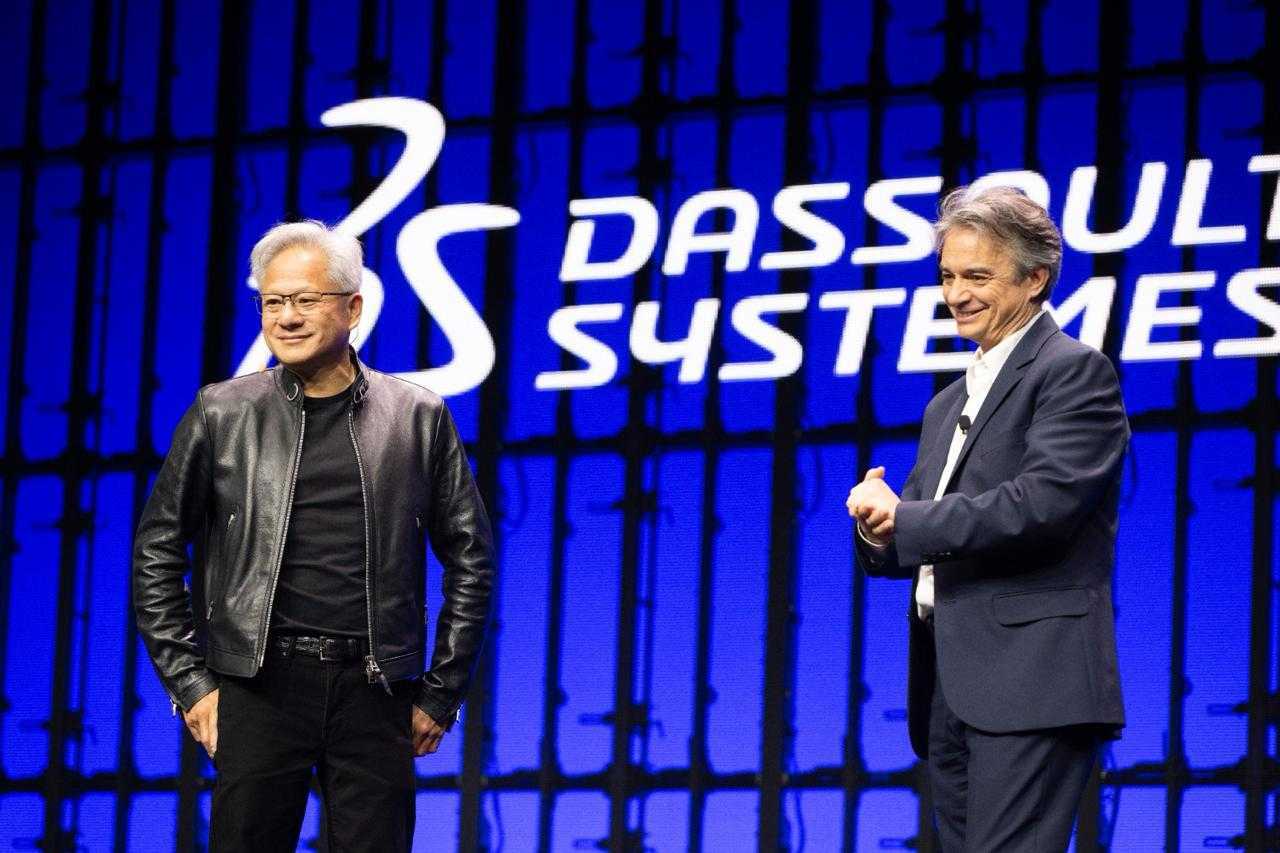
At 3DEXPERIENCE World in Houston, NVIDIA founder and CEO Jensen Huang and Dassault Systèmes CEO Pascal Daloz laid out a blueprint for industrial AI rooted in physics-based “world models” — systems designed to simulate products, factories and even biological systems before they’re built.

“Artificial intelligence will be infrastructure,”  like water, electricity, and the internet Huang told the crowd, playfully referring to the engineering-heavy audience as “Solid Workers,” a nod to Dassault Systèmes’ SolidWorks platform.

The announcement continues a collaboration spanning more than a quarter century between NVIDIA and Dassault Systèmes.

“This is the largest collaboration our two companies have ever had in over a quarter century,” Huang said. “We’re going to fuse these technologies so engineers can work at a scale that’s 100 times, 1,000 times — and eventually a million times greater than before.”

The new partnership brings NVIDIA accelerated computing and AI libraries together with Dassault Systèmes’ Virtual Twin platforms to move more engineering work into real-time digital workflows, powered by AI companions that help teams explore, validate, prototype and iterate faster.

Huang framed the shift as a reinvention of the computing stack: moving from hand-specified, structured digital designs to systems that can generate, simulate and optimize in software — at industrial scale.

From Digital Models to Industry World Models

Virtual twins are not applications, “they are knowledge factories,” Daloz said.

The partnership aims to establish industry world models — science-validated AI systems grounded in physics that can serve as mission-critical platforms across biology, materials science, engineering and manufacturing.

In Daloz’s framing, the value moves upstream: virtual twins become the place where knowledge is created, tested, and trusted — before anything is built in the physical world.

Dassault Systèmes, whose 3DEXPERIENCE platform serves more than 45 million users and 400,000 customers globally, has long been a leader in virtual twin technology — digital replicas that let engineers simulate products and processes before building them physically.

The collaboration brings together accelerated computing, AI and digital twin technologies so engineers can design not only geometry, but behavior — and explore radically larger design spaces earlier in development.

Together, the companies outlined how this shared architecture will show up across science, engineering and manufacturing workflows:

  • Advancing Biology and Materials Research​: The NVIDIA BioNeMo platform and BIOVIA science-validated world models accelerate the discovery of new molecules and next-generation materials.
  • AI-Driven Design and Engineering: SIMULIA AI-based Virtual Twin Physics Behavior leveraging NVIDIA CUDA-X libraries and AI physics libraries empowers designers and engineers to accurately and instantly predict outcomes.
  • Virtual Twins for Every Factory: NVIDIA Omniverse physical AI libraries integrated into the DELMIA Virtual Twin enable autonomous, software-defined production systems.
  • Virtual Companions Supercharge Dassault Systèmes’ Users: The 3DEXPERIENCE agentic platform, combining NVIDIA AI technologies and NVIDIA Nemotron open models with Dassault Systèmes’ Industry World Models, powers Virtual Companions to tap into deep industrial context, delivering trusted, actionable intelligence.

Huang said that in domains like biology and materials, the frontier is learning the underlying “language” of complex systems and then generating new options that can be evaluated and validated in simulation.

Designing and Operating the Factory in Software

A central theme of the discussion was how factories themselves are changing — from static physical assets to living systems that are designed, simulated and operated as virtual twins.

As part of the partnership, Dassault Systèmes is deploying NVIDIA-powered AI factories on three continents through its OUTSCALE sovereign cloud, enabling customers to run AI workloads while maintaining data residency and security requirements.

Both executives emphasized that the goal isn’t to replace engineers — it’s to amplify them. As AI agent companions take on more exploratory and repetitive tasks, designers and engineers gain leverage and creativity, not redundancy.

AI Companions That Expand Human Creativity

Every designer will have a “team of companions,” Huang said — a shift he described as fundamentally positive for engineers, software platforms and the broader ecosystem built on them.

For the tens of millions of engineers who use Dassault Systèmes tools to design everything from aircraft to consumer packaged goods, the shift isn’t about replacing human creativity — it’s about expanding it.

“Success is not about automation,” Daloz said. “[Engineers] don’t want to automate the past — they want to invent the future.”

Looking ahead, Daloz framed the partnership as about more than performance gains – it’s an effort to open new possibilities, help companies eliminate bad choices before they become expensive mistakes, and create entirely new categories of products.

“Virtual twins and the 3D Universes are not applications,” Daloz said. “They are knowledge factories.”

The fireside conversation between Huang and Daloz was broadcast live from 3DEXPERIENCE World.