NVIDIA and ServiceNow Partner on New Autonomous AI Agents for Enterprises


Enterprise AI has learned to generate. It has learned to reason. Now companies are asking the next question: How should AI act?

Early agent systems have shown what’s possible, moving beyond simple prompts to take on more complex tasks. The next step is bringing those capabilities into enterprise environments — where agents must operate with context, control and consistency across real workflows.

At ServiceNow Knowledge 2026, NVIDIA founder and CEO Jensen Huang joined ServiceNow chairman and CEO Bill McDermott during the opening keynote to discuss the next phase of enterprise AI. 

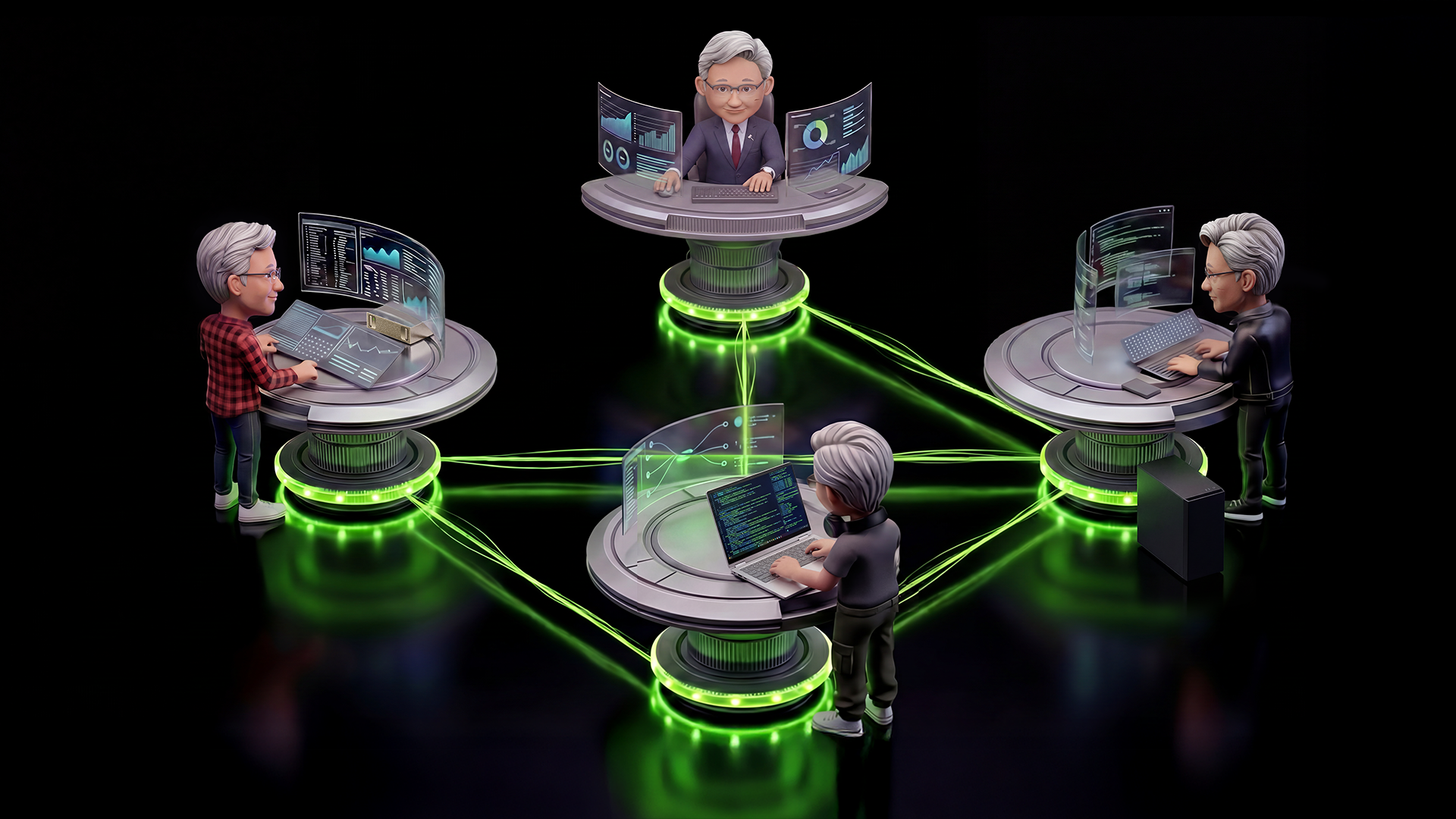
The companies are expanding their collaboration across the full stack, delivering specialized autonomous AI agents that are safe and easy to adopt — powered by NVIDIA accelerated computing, open models, domain-specific skills and secure agent execution software, and bringing together enterprise workflow context from ServiceNow Action Fabric and governance from ServiceNow AI Control Tower.

ServiceNow is introducing Project Arc, a long-running, self-evolving autonomous desktop agent designed for knowledge workers, including developers, IT teams and administrators. 

Unlike standalone AI agents, Project Arc connects natively to the ServiceNow AI Platform through ServiceNow Action Fabric to bring governance, auditability and workflow intelligence to every action the autonomous desktop agent takes. It can access the local file systems, terminals and applications installed on a machine to complete complex, multistep tasks that traditional automation can’t handle, but with the controls enterprises actually need to deploy AI at scale.

The work is designed based on three requirements every company will need for long-running, autonomous agents: open models and domain-specific skills that can be customized and security that helps agents act without exposing sensitive data or systems — all running on AI factories that deliver efficient tokenomics.

Bringing this level of autonomy to enterprises requires control from the start.

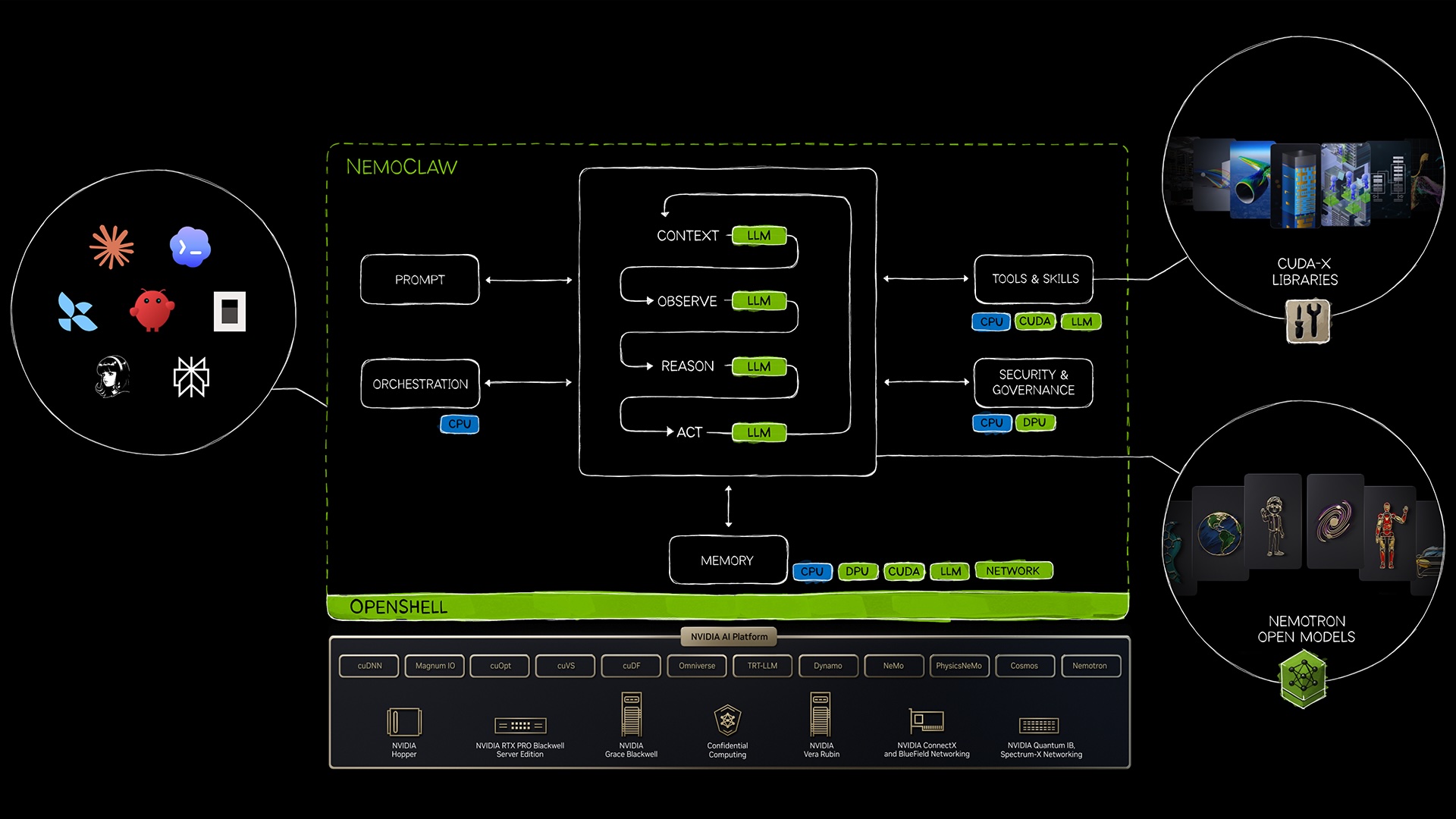
Project Arc uses NVIDIA OpenShell, an open source secure runtime for developing and deploying autonomous agents in sandboxed, policy-governed environments. ServiceNow is building on and contributing to OpenShell to advance a common foundation for secure, enterprise-grade agent execution. With OpenShell, enterprises can define what an agent can see, which tools it can use and how each action is contained. 

“Project Arc represents the next step in our ongoing collaboration with NVIDIA, bringing autonomous execution to the desktop,” said Jon Sigler, executive vice president and general manager of AI Platform at ServiceNow. “By combining OpenShell’s runtime layer with ServiceNow AI Control Tower, and powered by ServiceNow Action Fabric, we’re delivering the governance and security that enterprise AI requires.” 

Open Models and Agent Skills Scale Enterprise AI

To be effective, enterprise AI systems must be adaptable. NVIDIA and ServiceNow are building on an open ecosystem that allows organizations to tailor models and applications to their specific domains and data.

NVIDIA agent skills enable specialized agents, such as ServiceNow AI Specialists, to deliver targeted capabilities across enterprise workflows. For example, the NVIDIA AI-Q Blueprint for building specialized deep research agents empowers ServiceNow AI Specialists to gather context, synthesize information and support more complex decision-making across business functions. 

In addition, the NVIDIA Agent Toolkit, including NVIDIA Nemotron open models, provide flexible building blocks and specialized skills for developing customized AI applications. To support real-world performance that these systems can perform reliably, the companies are also advancing NOWAI-Bench, an open benchmarking suite for enterprise AI agents, integrated with the NVIDIA NeMo Gym library. NOWAI-Bench includes EnterpriseOps-Gym, one of the industry’s most challenging enterprise agent benchmarks, where Nemotron 3 Super currently ranks No. 1 among open source models.

Unlike general benchmarks, these evaluations focus on multistep workflows — where enterprise AI systems often encounter real challenges — helping teams build agents that perform reliably in production environments.

Efficient AI Factories

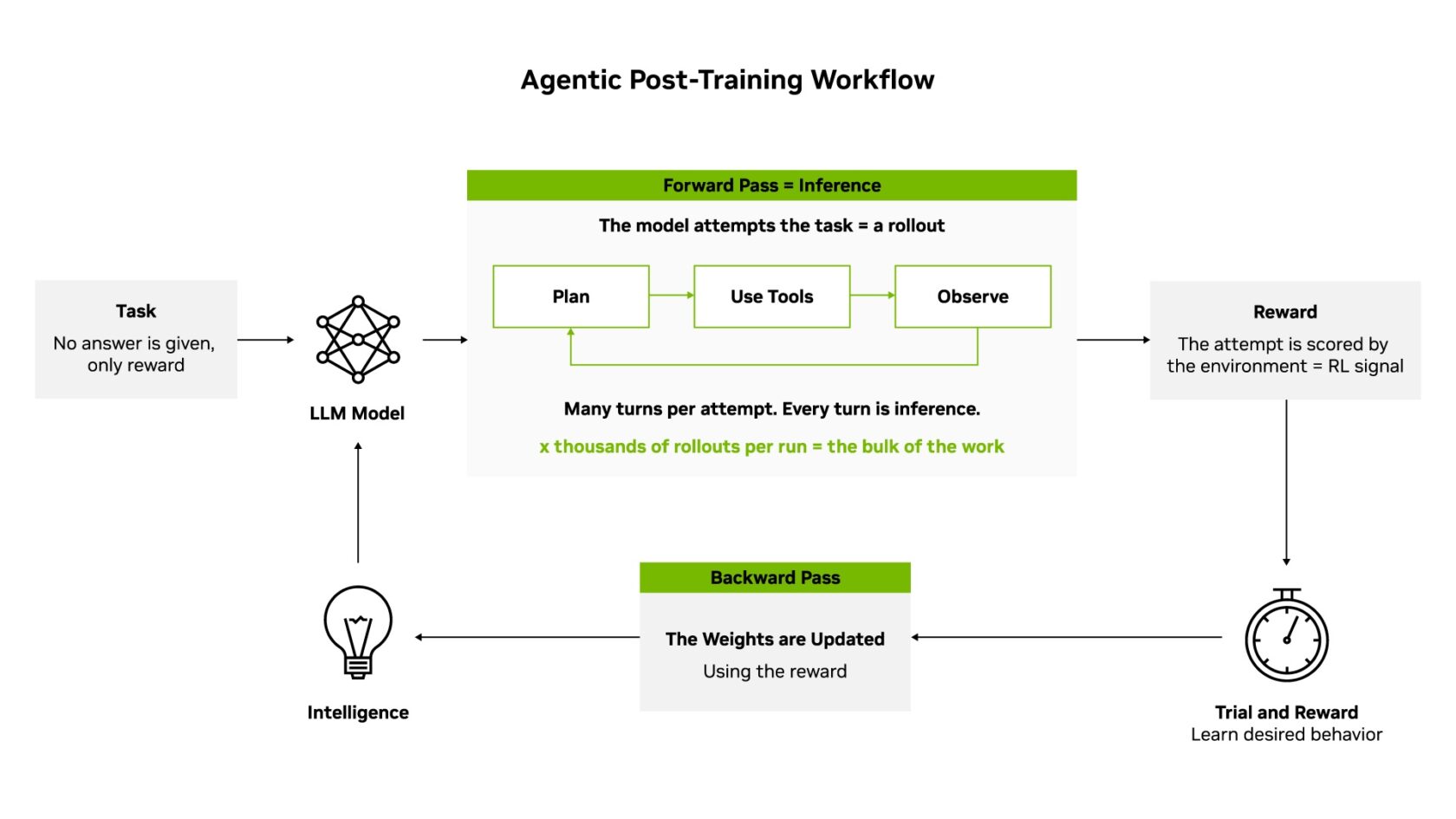
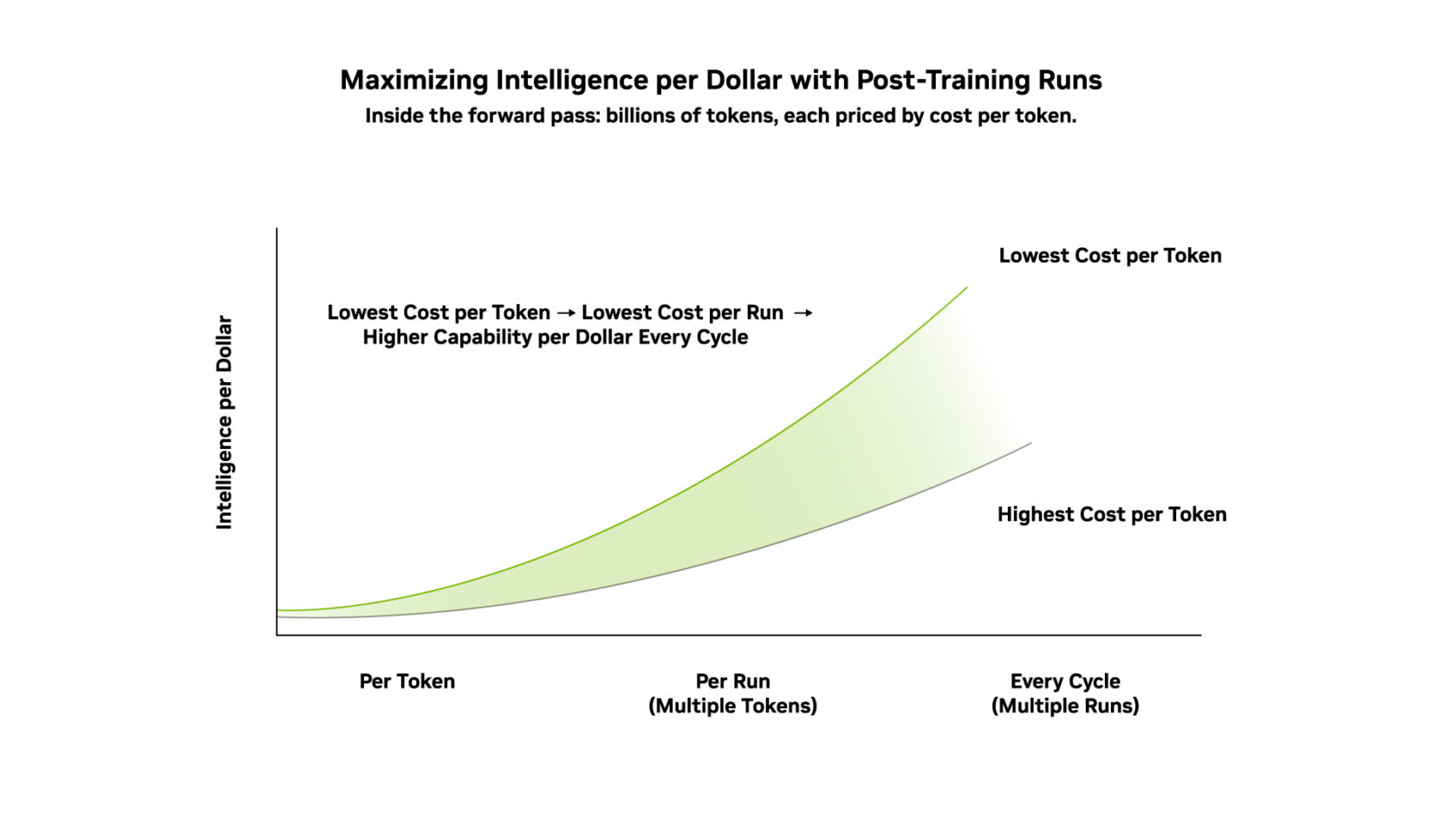
As AI agents become long running and always on, scaling them across millions of workflows requires not just capability but efficiency — making token economics central to enterprise AI.

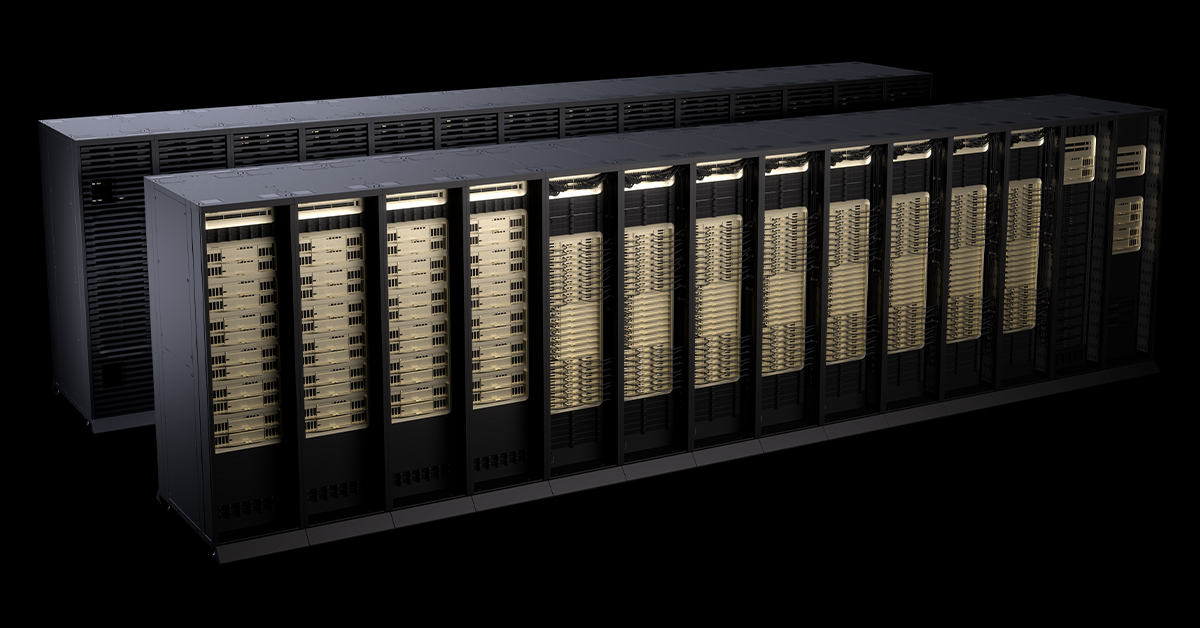
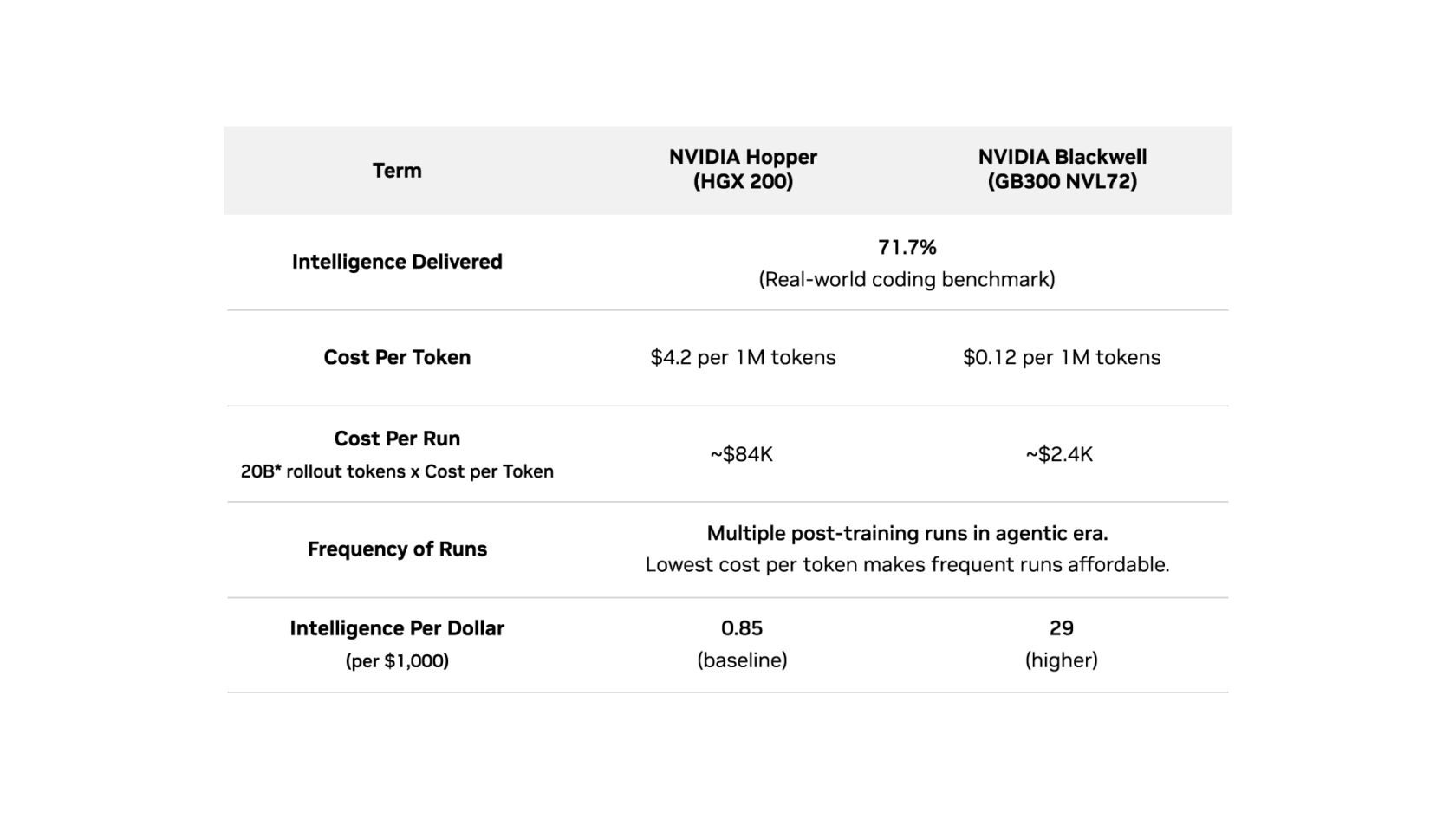
NVIDIA AI factories are built to deliver the lowest-cost, most-efficient tokenomics for production AI. The NVIDIA Blackwell platform delivers more than 50x greater token output per watt than NVIDIA Hopper, resulting in nearly 35x lower cost per million tokens. For enterprises running agents across millions of workflows, that efficiency can determine how quickly AI moves from pilots to broad production use.

ServiceNow AI Control Tower integrates with the NVIDIA Enterprise AI Factory validated design, extending governance and observability to large-scale AI workloads. With added agent observability capabilities, organizations can monitor behavior in real time and manage AI systems across their full lifecycle — from deployment to optimization.

AI is becoming a new way that work gets done. What’s changing now is that the core pieces required to deploy it at scale — capable agents, built-in guardrails and proven performance — are all coming together.

The companies that move fastest will be the ones that give agents the infrastructure to act, the context to make decisions and the governance to keep every action accountable — and NVIDIA and ServiceNow are making this a reality for the world’s enterprises.

Learn more about NVIDIA OpenShell and the NVIDIA AI-Q Blueprint

NVIDIA Launches Nemotron 3 Nano Omni Model, Unifying Vision, Audio and Language for up to 9x More Efficient AI Agents


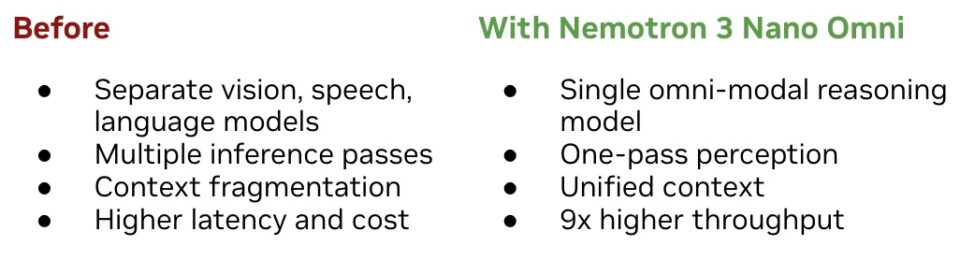
AI agent systems today juggle separate models for vision, speech and language — losing time and context as they pass data from one model to the other.

Unveiled today, NVIDIA Nemotron 3 Nano Omni is an open multimodal model that brings these capabilities together into one system, enabling agents to deliver faster, smarter responses with advanced reasoning across video, audio, image and text. This best-in-class model gives enterprises and developers a production path for more efficient and accurate multimodal AI agents with full deployment flexibility and control. 

Nemotron 3 Nano Omni sets a new efficiency frontier for open multimodal models with leading accuracy and low cost, topping six leaderboards for complex document intelligence, and video and audio understanding.

AI and software companies already adopting Nemotron 3 Nano Omni include Aible, Applied Scientific Intelligence (ASI), Eka Care, Foxconn, H Company, Palantir and Pyler, with Dell Technologies, Docusign, Infosys, K-Dense, Lila, Oracle and Zefr evaluating the model. 

“To build useful agents, you can’t wait seconds for a model to interpret a screen,” said Gautier Cloix, CEO of H Company. “By building on Nemotron 3 Nano Omni, our agents can rapidly interpret full HD screen recordings — something that wasn’t practical before. This isn’t just a speed boost: It’s a fundamental shift in how our agents perceive and interact with digital environments in real time.”

Nemotron 3 Nano Omni Enables Faster, Leaner Multimodal Agents

Consider an AI agent for customer support processing a screen recording while analyzing uploaded call audio and checking data logs — or an agent for finance tasked with parsing PDFs, spreadsheets, charts and voice notes. Today, most agentic systems accomplish these tasks with separate models for vision, speech and language. 

This approach increases latency through repeated inference passes, fragments context across modalities, and adds cost and inaccuracies over time.

By combining vision and audio encoders within its 30B-A3B, hybrid mixture-of-experts architecture, Nemotron 3 Nano Omni eliminates the need for separate perception models, driving inference efficiency at scale. It pairs this efficiency with strong multimodal perception accuracy, enabling AI systems to achieve 9x higher throughput than other open omni models with the same interactivity. The result is lower costs and better scalability without sacrificing responsiveness or quality.

In agentic systems, Nemotron 3 Nano Omni can work alongside proprietary cloud models or other NVIDIA Nemotron open models — such as Nemotron 3 Super for high-frequency execution or Nemotron 3 Ultra for complex planning — as well as proprietary models from other providers, to power sub-agents for agentic workflows such as computer use, document intelligence and audio-video reasoning.

  • Computer use agents — Nemotron 3 Nano Omni powers the perception loop for agents navigating graphical user interfaces, reasoning over onscreen content and understanding user interface state over time. H Company’s latest computer usage agent, powered by Nemotron 3 Nano Omni, uses a native input resolution of 1920×1080 pixels to achieve high-fidelity visual reasoning. In preliminary evaluations on the OSWorld benchmark, this integration showed a significant leap in navigating complex graphical interfaces and used Nemotron 3 Nano Omni’s ability to process very high-resolution images. 
  • Document intelligence — Interprets documents, charts, tables, screenshots and mixed-media inputs, enabling agents to reason across visual structure and text content coherently. Critical for enterprise analysis and compliance workflows.
  • Audio and video understanding — For customer service, research and monitoring workflows, Nemotron 3 Nano Omni maintains audio-video context, tying what was said, shown and documented into a single reasoning stream instead of disconnected summaries.

Open and Customizable, Deployable Anywhere

Nemotron 3 Nano Omni is released with open weights, datasets and training techniques — giving organizations full transparency and control over how the model is customized and deployed. 

Developers can use tools like NVIDIA NeMo for customization, evaluation and optimization for domain-specific use cases. Because the Nemotron family of models is open, organizations can deploy them in environments that meet regulatory, sovereignty or data localization requirements.

The Nemotron 3 family — including Nano, Super and Ultra models — has seen over 50 million downloads in the past year. Omni extends the family’s capabilities into multimodal and agentic domains. 

The model is available on Hugging Face, OpenRouter and build.nvidia.com as an NVIDIA NIM microservice and through a broad ecosystem of NVIDIA Cloud Partners, inference platforms and cloud service providers. 

Its open, lightweight architecture supports consistent deployment from local systems like NVIDIA Jetson modules, NVIDIA DGX Spark and DGX Station to data center and cloud environments. 

Visit the NVIDIA technical blog for tutorials, cookbooks and deployment guides for Nemotron 3 Nano Omni use cases. Stay up to date on agentic AI, NVIDIA Nemotron and more by subscribing to NVIDIA news, joining the community and following NVIDIA AI on LinkedIn, Instagram, X and Facebook.  

Explore self-paced video tutorials and livestreams.


Everything Will Be Represented in a Virtual Twin, Jensen Huang Says at 3DEXPERIENCE World


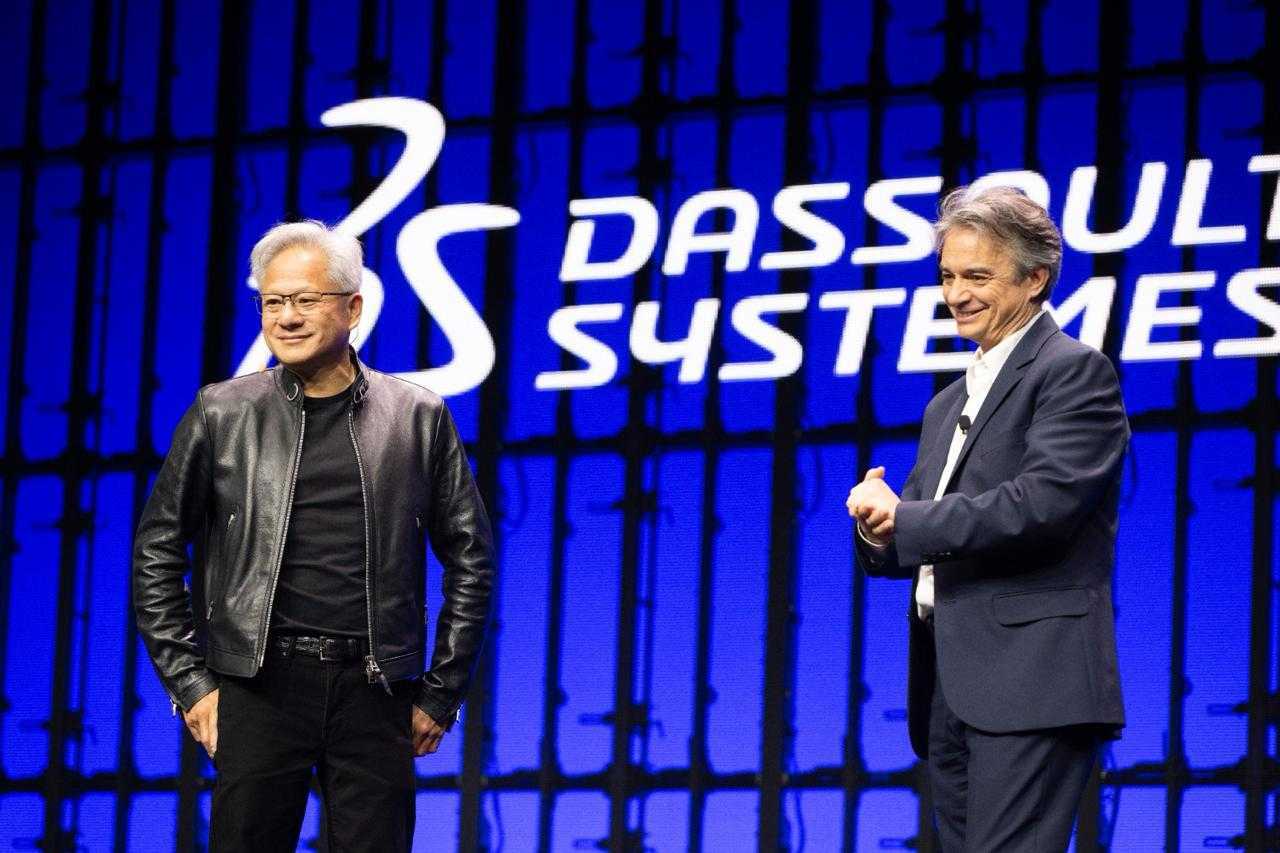
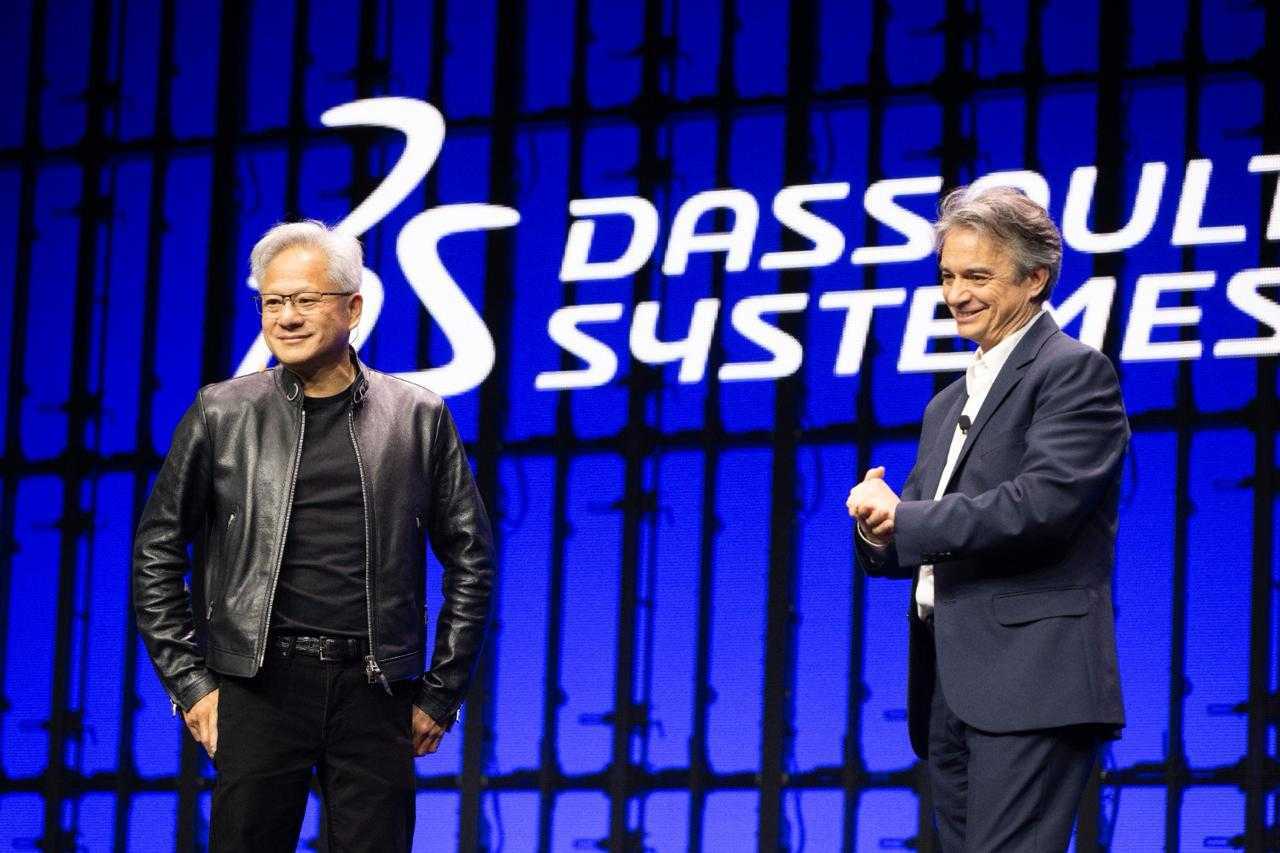
At 3DEXPERIENCE World in Houston, NVIDIA founder and CEO Jensen Huang and Dassault Systèmes CEO Pascal Daloz laid out a blueprint for industrial AI rooted in physics-based “world models” — systems designed to simulate products, factories and even biological systems before they’re built.

“Artificial intelligence will be infrastructure,”  like water, electricity, and the internet Huang told the crowd, playfully referring to the engineering-heavy audience as “Solid Workers,” a nod to Dassault Systèmes’ SolidWorks platform.

The announcement continues a collaboration spanning more than a quarter century between NVIDIA and Dassault Systèmes.

“This is the largest collaboration our two companies have ever had in over a quarter century,” Huang said. “We’re going to fuse these technologies so engineers can work at a scale that’s 100 times, 1,000 times — and eventually a million times greater than before.”

The new partnership brings NVIDIA accelerated computing and AI libraries together with Dassault Systèmes’ Virtual Twin platforms to move more engineering work into real-time digital workflows, powered by AI companions that help teams explore, validate, prototype and iterate faster.

Huang framed the shift as a reinvention of the computing stack: moving from hand-specified, structured digital designs to systems that can generate, simulate and optimize in software — at industrial scale.

From Digital Models to Industry World Models

Virtual twins are not applications, “they are knowledge factories,” Daloz said.

The partnership aims to establish industry world models — science-validated AI systems grounded in physics that can serve as mission-critical platforms across biology, materials science, engineering and manufacturing.

In Daloz’s framing, the value moves upstream: virtual twins become the place where knowledge is created, tested, and trusted — before anything is built in the physical world.

Dassault Systèmes, whose 3DEXPERIENCE platform serves more than 45 million users and 400,000 customers globally, has long been a leader in virtual twin technology — digital replicas that let engineers simulate products and processes before building them physically.

The collaboration brings together accelerated computing, AI and digital twin technologies so engineers can design not only geometry, but behavior — and explore radically larger design spaces earlier in development.

Together, the companies outlined how this shared architecture will show up across science, engineering and manufacturing workflows:

  • Advancing Biology and Materials Research​: The NVIDIA BioNeMo platform and BIOVIA science-validated world models accelerate the discovery of new molecules and next-generation materials.
  • AI-Driven Design and Engineering: SIMULIA AI-based Virtual Twin Physics Behavior leveraging NVIDIA CUDA-X libraries and AI physics libraries empowers designers and engineers to accurately and instantly predict outcomes.
  • Virtual Twins for Every Factory: NVIDIA Omniverse physical AI libraries integrated into the DELMIA Virtual Twin enable autonomous, software-defined production systems.
  • Virtual Companions Supercharge Dassault Systèmes’ Users: The 3DEXPERIENCE agentic platform, combining NVIDIA AI technologies and NVIDIA Nemotron open models with Dassault Systèmes’ Industry World Models, powers Virtual Companions to tap into deep industrial context, delivering trusted, actionable intelligence.

Huang said that in domains like biology and materials, the frontier is learning the underlying “language” of complex systems and then generating new options that can be evaluated and validated in simulation.

Designing and Operating the Factory in Software

A central theme of the discussion was how factories themselves are changing — from static physical assets to living systems that are designed, simulated and operated as virtual twins.

As part of the partnership, Dassault Systèmes is deploying NVIDIA-powered AI factories on three continents through its OUTSCALE sovereign cloud, enabling customers to run AI workloads while maintaining data residency and security requirements.

Both executives emphasized that the goal isn’t to replace engineers — it’s to amplify them. As AI agent companions take on more exploratory and repetitive tasks, designers and engineers gain leverage and creativity, not redundancy.

AI Companions That Expand Human Creativity

Every designer will have a “team of companions,” Huang said — a shift he described as fundamentally positive for engineers, software platforms and the broader ecosystem built on them.

For the tens of millions of engineers who use Dassault Systèmes tools to design everything from aircraft to consumer packaged goods, the shift isn’t about replacing human creativity — it’s about expanding it.

“Success is not about automation,” Daloz said. “[Engineers] don’t want to automate the past — they want to invent the future.”

Looking ahead, Daloz framed the partnership as about more than performance gains – it’s an effort to open new possibilities, help companies eliminate bad choices before they become expensive mistakes, and create entirely new categories of products.

“Virtual twins and the 3D Universes are not applications,” Daloz said. “They are knowledge factories.”

The fireside conversation between Huang and Daloz was broadcast live from 3DEXPERIENCE World.