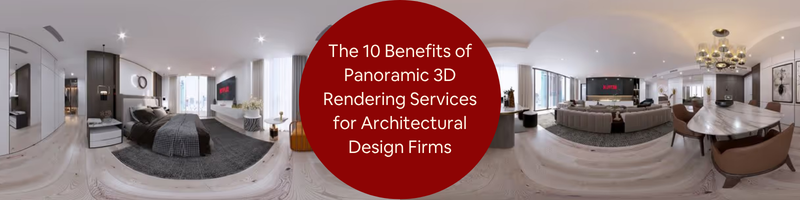
The 10 Benefits of Panoramic Rendering Services for Architectural Design Firms


In today’s post, we’re exploring the benefits of panoramic rendering services for architectural design firms. It’s so hard to understand and imagine buildings or any ideas that concern any architectural projects if we don’t see the whole picture or even its precise designs. In the past, designers relied only on drawings and standard 3D models to present their ideas and show the full picture. However, it doesn’t guarantee all the details, as it leaves clients confused and unable to recreate the exact experience from looking at it. They want to understand the space and the design, not just look at its sketch.

Benefit one: exploration through an immersive experience

Although these tools worked, yes, they lack the in-depth presentation, like how panoramic rendering services present its digital spaces to the clients. Instead of viewing a single image, clients can explore the entire environment through this, which means the design already explains itself. By placing viewers inside a creatively built digital environment, they remove the guesswork and make it easy for clients to understand every detail and view every angle at once.

The design communicates clearly on its own, making it so that architects no longer need lengthy explanations in every presentation. It helps create more confident approval and an engaging process in presenting plans and innovation to every project. Through panoramic rendering, which provides a 360-degree view, clients can explore ideas and feel more confident in their choices.

RELATED: Camera Angles in the 3D Architectural Visualization Realm for Your Projects

Benefit two: Enhancing client communication

It can be a challenge for architects or technical designers to present their ideas and projects to clients, especially when they only show drawings and models, since this doesn’t help clients understand or explore every detail. But with panoramic rendering, clients no longer need to imagine what the outcome will be after the project is done.

Through this, they will be able to experience how exactly it will look and how it feels to be there inside, since they can move through the design, look around, and understand how everything just works together. What’s nice about this is that clients are more involved, since they can try design options on their own. They can try out colors, compare materials with one another, and even move furniture inside it. Truly, the confusion can no longer find its place through this panoramic rendering.

Somehow, architects also benefit from it because once the client finally experiences its design, they can spot problems early and cannot make the production complicated since they can fix it as early as they can. It avoids costly damage and can really save time, as it also delivers quality results. Through the 3D rendering design process, everything becomes simpler and more enjoyable for everyone to feel involved in. A design that is smoothly processed from the very beginning up until the end.

Benefit Three: showcasing projects Globally

Showing design is no longer just about presenting static images, especially now that architectural firms are competing on a global level. And in presenting their projects to potential clients and investors, it’s very traditional to just bring sketches and images. Now that we are very technology-advanced, designers can no longer be limited to whom and where they provide their projects, since investors can already be found anywhere in the world.

RELATED: Learn About the Types of Architectural Rendering Services Available for Your Company

 With panoramic rendering, these 3D architectural rendering designers can present projects not only at a local scale but also reach opportunities across different countries. Virtual walkthroughs make presentations more experience-based and engaging, helping clients to easily remember every detail since they feel more involved through this interactive experience. By using panoramic renderings, firms and businesses can convey a clear message, help clients understand what they are trying to achieve, and lead them to the goal of a specific project that helps it stand out in the competitive global market today.

Benefit four: streamlining design approval

Getting designer approvals usually takes a lot of time, effort, and multiple meetings with clients and designers, providing repeated explanations and sketches, models, and digital pictures of what the project is trying to convey. But with the help of panoramic rendering, everything just becomes so easy and smoothly flowing, especially in today’s technical world. Instead of all those long meetings, clients can already imagine the project designs through this 360-degree view that allows them to explore the space and takes the confusion away. It helps make decisions easier and saves time throughout the approval process.

And even after the approval, this virtual model stays relevant since it acts as a reference for everyone that they can go back to anytime, as they can still have access to it, which makes every detail change, and they can provide updates more easily if they need to change something with it. Thus, it reduces revisions and makes the team work efficiently while keeping everything updated, and provides a smoother workflow for the entire production team.
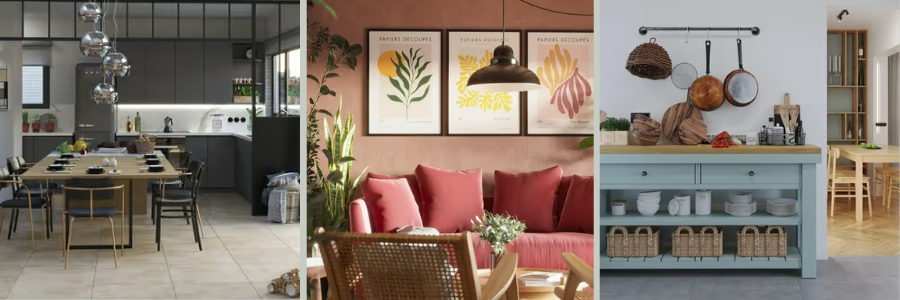
3d interior rendering services

Benefit five: enhancing marketing and presentation materials

The best way to market any architectural designs is to provide something that will leave people interested. Traditional images and designs can only show a little look nowadays, since everything is all about creativity that exceeds our imagination. In panoramic rendering, you could go further by even feeling that you are involved in a specific design. They let potential clients see how everything goes on and make everything easy to understand, which makes it a very effective way in marketing and promoting business designs. They hooked.

People with interactive presentations that will lead them to explore more into these virtual tours, unlike those typical images and long descriptions designs. This kind of creative content from expert 3D rendering designers doesn’t just show skills, but also a modern way of innovating something that keeps up with the modern world. With the help of this strong impact, they easily win over clients who value creativity that helps their brand stand out and can help them all throughout the way.

RELATED: How to Create a Virtual Tour of Homes with 3D Rendering Services

Benefit six: reducing construction errors

A lot of construction problems in creating a project, especially in terms of the rooms or buildings that it needs, are rooted in how the details are presented. It usually comes from confusion or something that is a miscommunication between the construction team and the 3D design teams. But with the help of panoramic rendering, it saves everything and everyone their time and effort, since through this you can view the project more clearly, for it shows you a clear virtual view of every detail, materials, and a more accurate quality in every space.

The early accuracy of the project presentation helps everyone with the planning to become more solid since it guides decisions and confirms little details, as it aligns everyone to be on the same track. Trades easily coordinate their work, making it less likely to encounter risks and errors along the way of constructing it. This result is best for the construction teams, for it will result in fewer delays and better quality, and everyone will be satisfied and happy with the process.

Benefit seven: supporting sustainable design

Sustainability is very important in creating design works, and it all starts with good choices. And with the help of panoramic rendering from 3D visualization designers, architects can have better and best choices for day percentages, real conditions as to how a certain project is going to be, just like how a building reacts to real sunlight and heat. They can test window positions, materials being used, and just using a virtual space, all before the construction starts. What’s amazing about this is that it really helps everyone involved. more satisfied since it tests ideas before anything is built.

It provides a realistic explanation as to how something behaves during different weather or times of the day. It makes the choice of what specific materials to use, what windows, what shading, and if any problems arise during the process, they can be fixed early on, for everyone to save energy, time, and costs. We really can see how sustainable features can work through this advanced presentation of a project, building everyone’s trust and showing that the firm really cares about providing valuable and responsible design that values sustainability and innovation.

RELATED: Selling Homes Remotely Using VR Architectural Services to Create Virtual Tours

Benefit eight: facilitating client customization

Every client has their own style, ideas, and preferences that greatly help in the process of building the design that they have envisioned in their mind. Through panoramic rendering, they are allowed to explore and test those ideas as they move through virtual spaces in their own space. They can just choose or test colors, layouts, even materials, and then they can see how it affects the space or the room of the project that they are about to build.

What’s nice about this as well is that they have more freedom this time, but also with the fact that they are not slowing the project down. This allows both the client and 3D designers to work collaboratively. As they don’t just focus on approving images, but also provide what will make the design appropriately aligned to what they want it to be. Architects also benefit from it since they can spot problems and issues early on, before construction begins. This all makes the process smoother, faster, and more affordable, which keeps track of both budget and time.

Benefit nine: improving team collaboration

In creating big architectural projects, a lot of professionals are involved, such as designers, constructors, engineers, consultants, and it just makes everything hard to communicate with one another since everyone has their own time and ideas, though specified within their own field. And undeniably cause miscommunication that will lead to delays. But through panoramic rendering, things are easily shared by the use of visual tools for the entire team. Everyone can explore the same space together, check designs, details, and plan construction steps early on.

With a 360-degree model, these professionals can have a look at themselves, wherever they are. Engineers can have a look at the structure. The designers can see through every furniture design. The constructors can be flexibly organized. And just by the use of one clear, interactive visual view, the mistakes can be lessened, decisions can be made, and the project moves smoothly. And that’s what makes this design tool a better choice for everyone, for it’s a platform that aligns architectural design teams all throughout the project.

RELATED: Virtual Tours vs. Static Renders: Which to Use for Your Real Estate Marketing

Benefit ten: standing out in a competitive market

Architecture is undeniably a competitive industry. Providing a design that stands out from everyone else is very important. It needs your design to catch attention. It leaves an impact on potential clients. And panoramic rendering helps these professionals to turn their traditional presentations into an interactive and impressive project that provides presentations that will really leave a memorable impact on potential clients.

By the use of virtual walkthroughs from walkthroughs professionals, clients can have a more involved and stronger impression of the creative. put together, unlike the usual static images or blueprints that are handed out. Using panoramic rendering makes every project firmer and modern. It attracts talented designers and wins projects in many cases. It really is true that this technology sets firms apart, stands out, and makes them unique, as they don’t rely on methods that are already outdated and not modern.

Conclusion: embracing the future of architectural visualization

In today’s modern world, where everything keeps on advancing, especially in the world of architecture, it’s really important to keep up with its technicality in order to provide clients with high-quality and accurate project designs. Panoramic rendering is essential for these modern design projects. It is a must-have tool for every architect nowadays since it helps clients to experience these specific designs before even finally having a touch of its outcome and before deciding to build or start the construction process.

It also supports marketing and client engagement since it doesn’t just stick to the usual static images or sketches that were provided in every repeated meeting. and long descriptions that are now too boring to present to clients, especially since they usually lead to miscommunication and errors in the long run. What’s really amazing about 3D photorealistic firms using panoramic design is that it lets the clients walk through a specific room, even just virtually. It creates accurate and easy-to-understand ideas, which leaves everyone in confusion. 

RELATED: 5 Types of 3D Visualization Used by Architectural Design Firms for CGI Projects

Through panoramic rendering, clients can see the colors, layouts, materials, and furniture, and can even spot design issues early on, which could help in saving both time and money in the long run. Truly, it helps attract talented designers and freelancers. Who wants to experience what it’s like to work with a firm that does not just provide quality designs but also embraces the modern tools that are very important today?

Firms and businesses that use panoramic rendering make presentations more impressive than their competitors. It attracts more clients and skilled talents, which helps them build a strong brand reputation in every project that they undertake. Panoramic rendering technically just turns your ideas into a more experienced flow. and demonstrates innovation with technological sophistication.

You don’t just provide clients with easy-to-understand projects, but ensure that every decision is made with confidence, and you make them feel involved in every part of it as they gain a clear advantage from these realistic experiences. And actually, these renderings are more than just creating visuals. They aim to communicate the intentions of every design, ensuring to enhance every step and stage as they go through the project.

How Cad Crowd can help

From reducing errors and developing marketing materials, which ensures a clear return on investment, it is clear that the process is ongoing. For any business firms that look for the best choice in elevating their designs and attracting clients through panoramic rendering services, they can explore CAD Crowd in order to be linked to multiple skilled architectural design freelancers across the world who could technically bring their visions to life in a more interactive and high-quality project.

They will never go wrong with CAD Crowd since it leads you with clear steps with smooth communication and collaboration for a secure place in the architectural market. Through 360-degree scenes that are creatively made by these experts, you can guarantee a top-notch service all throughout the process of bringing your concepts to life. Contact us for a free quote.

author avatar

MacKenzie Brown is the founder and CEO of Cad Crowd. With over 18 years of experience in launching and scaling platforms specializing in CAD services, product design, manufacturing, hardware, and software development, MacKenzie is a recognized authority in the engineering industry. Under his leadership, Cad Crowd serves esteemed clients like NASA, JPL, the U.S. Navy, and Fortune 500 companies, empowering innovators with access to high-quality design and engineering talent.

Connect with me: LinkedInXCad Crowd

Questions to Ask Before Hiring a 3D Virtual Tour Company for Architectural Design Firms


It should be noted that architectural design services are arenas of creativity as well as accuracy. Architectural design and build are not about carrying out the task of constructing an edifice, but deal with the experience itself, capturing a certain mood, and then understanding and expressing the space effectively before your clients. It is within this scenario that 3D virtual tours hit gold. Typically, not all 3D virtual tour businesses have what it takes to offer your architectural design the experience it requires, and there are a number of questions that should be asked before anyone is hired.


🚀 Table of contents


Could you elaborate on your experience from an architectural perspective with regard to the use of 3-D virtual tours?

Their experiences will help the business, not fancy software and portfolios. Your website should feature an abundance of cool graphics, but that doesn’t necessarily mean they understand the complexities and subtleties. You are looking for a group with an understanding of what constitutes a modernist cube and a brutalist monument, and someone who can effectively highlight the movement and light dynamics in 3D space. Ask for samples related specifically to architectural projects.

Experience also implies efficiency. The more experienced a group is, the better they will be at learning from common mistakes that result in an image that appears good but bad-looking, with bad camera angles and textures that look like wax melting instead of marble. Experience raises an understanding of an assignment and what an architectural firm would expect. It would be very tempting to assume cheaper and quicker would be better, but it would be more expensive.

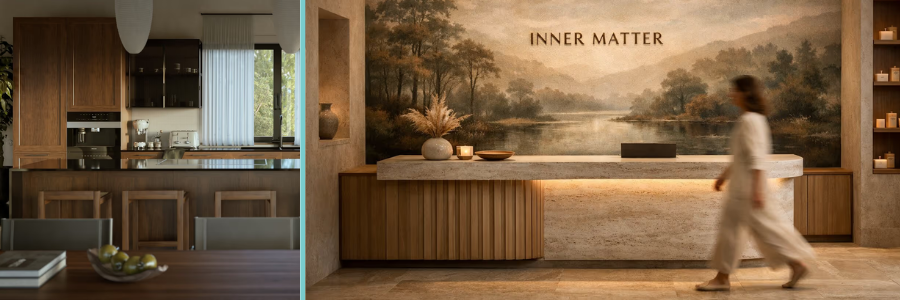
3D virtual tour of a kitchen and spa lounge by Cad Crowd virtual reality design experts

RELATED: CAD outsourcing: Architecture & BIM drafting strategies for architectural design firms

Do you have references and recommendations?

Referencing and testimonials are worth their weight in gold for any service business. It reveals what relationship they have, if they respect timing, and exactly how satisfied previous customers have been. A genuinely good 3D virtual reality provider will be very happy to display previous working associations with testimonials. You should be very alarmed if any business ever holds back on references or fails any form of credibility check.

But then again, references should not be padded with clichés. It would be very telling to know about references’ responsiveness, flexibility, and problem-solving skills. Did they deal with unexpected requests without a hitch? Did they surprise them with service beyond what was stipulated in an agreement? Testimonials might very well betray hints about the intangible side of working with an organization, which can be as vital as expertise.

What technologies and software tools do you use?

A virtual tour will only be as good as the technology it employs. Some vendors rely on ancient but arcane technologies that limit resolution and interactivity. Others employ cutting-edge technologies, with capabilities ranging from highly detailed renderings and dynamic lighting effects to smooth user experiences, all from desktop computers to smartphones.

For example, what about modeling, rendering, and tour software they might be utilizing within your project? How frequently do these tools get renovated? Could they be dabbling in emerging technologies like cloud hosting and VR readiness so your customers can take project tours from anywhere in the world? A well-read business will be able to discuss its technologies with ease, as they bring something special to your customer service.

How does customization proceed?

Every project is unique, and your design deserves infinitely more than a cookie-cutter solution. A truly proficient 3D virtual tour service will be able to customize for your unique vision via interactive spots, annotations, lighting effects, and multi-floor functionality.

It also goes into branding and customization. Your business might have a need to incorporate some logos, colors, or even customer messaging. You should be interested in knowing about the adaptability of the company and its capacity to meet your creative needs without undermining technicality. An architectural virtual staging business that lets customization be an afterthought will never be able to offer a smooth experience.

How do you see your projects transition from conceptual thinking to completion?

Understand their workflow, as it shows you how well-organized and professional they are. You should ask them to walk you through it step by step, from consulting to eventually delivering your project. It will help you learn how they get your project requirements. Also, it will allow you to know how frequently they share drafts.

A clear working workflow eliminates surprises and, at the same time, holds people accountable. You would not want to be at an assured midway point on a project and then learn your team just had not fully understood your vision as to what you wanted. A clean and working workflow exudes professionalism, communication skills, and appreciation for client time.

How do you check your information for accuracy and completeness?

Accuracy plays an essential role in architectural models. A small measurement or scale error would deceive and distort customers’ judgment. You need to inquire about the measures they are taking to achieve accuracy on these models. Whether they are taking designs from CAD files or blueprints and BIMs, and if they are checking a number of times.

Details go beyond the scope of dimensions. Lighting design services, textures, and reflections, among several other things, are what make a virtual tour realistic. A company with a focus on detail strives for perfection, an essential ingredient in making an architectural design project representation exactly as it should be.

Can you incorporate multimedia components for me?

A virtual tour alone is wonderful, but it’s with multimedia that the magic truly begins. Ask if they are capable of incorporating sound, video, and interactive text into your virtual tour. Would they be capable of including voice-overs that walk your clients through your space? Would it be possible that hot spots indicating design elements or materials might be included as an option?

Multimedia integration will bring about a heightened sense of your project. This will truly allow viewers to interact with your designs in a more detailed and educational way. Companies that know how to effectively convey a message in virtual tours will offer ideas for creative components that increase interactivity without overburdening user engagement.

RELATED: Strategic benefits of outsourcing architectural 3D rendering & critical scenarios for firms

In what way does ‘light and atmosphere’ evoke something within you?

Light, without a doubt, plays an extremely vital role within the arena of 3D architectural visualization services. Lighting significantly affects mood, perceptions of space, and materials. What about addressing the illumination aspect within the virtual tour offered by the company? Is it capable of demonstrating a change from morning to afternoon or evening?

 A virtual tour requires at least three main concepts, such as

  • Lighting
  • Materials
  • Water/Refractions

It merely lights up the room, whereas a good lighting and visualization crew establishes an ambiance, highlights centers of interest, and guides the viewer’s eyes on an aesthetic journey. The virtual tour, which would have otherwise been satisfactory, will be an unforgettable experience as it places your clients on the site as if they were physically walking on it.

How do you deal with revisions and comments?

Plans rarely turn out perfectly without any issues on the very first attempt. You might have some changes or adjustments needed within your architectural designs as you progress with your virtual tour. Does it have a revision policy for changes, and within what number of rounds and response rate would they address your requests?

It goes the extra mile because it supports and responds to changes. It is at this juncture that flexible and customer-focused thinking will emerge. Conversely, strict rules and additional costs associated with petty changes will be a recipe for frustrations that will work against the success and accomplishments of a project. It sets the stage for well-defined guidelines on changes; thus, there will be no room for ambiguity and suspicion that will stand against collaborative success.

Could you provide your pricing and payment terms?

Planning will always include some consideration on budget. Could you kindly request a breakdown of costs per project, per hour, or per complexity level offered within a tour? Do changes, inclusion of multimedia components, and preparation of high-resolution outputs correspond with additional costs?

Transparency regarding pricing must be maintained. A good architectural design expert should be capable enough to offer you a direct price and make it clear exactly what that price includes. Be cautious about these businesses that are very eager to offer quotes but have unexpected costs later on. It should be remembered that it might be worth your while to pay a bit more initially, as you might end up benefiting eventually because of the virtual tour’s abilities as an excellent selling tool.

Do you offer post-launch support services?

When your virtual tour becomes live, there are times when you will discover its need for support or updates. You might want to inquire about support Services after Launch as well. Could they provide some form of troubleshooting, software updating, or content updating for your virtual tour? And at what period after your project completion would they do these things for you?

By reliable support, I mean an investment that continues to reward with dividends. That thing that impacts the credibility and experiences of all customers within a short period of months is a buggy and obsolete virtual tour. It’s an undeniable fact that professionalism and accountability are shown by those businesses that stand by their work.

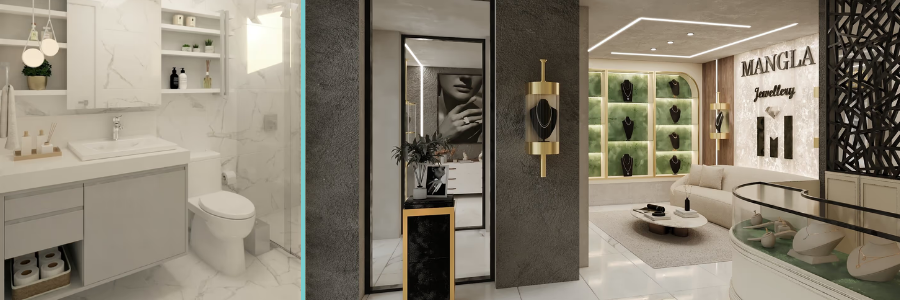
3D virtual tour of a quality bathroom and boutique jewelry store by Cad Crowd design experts

RELATED: How your firm can use 3D animation to present architectural designs & services

How do you check cross-platform compatibility?

By creating this virtual tour, your client can access it on a desktop, tablet, smartphone, or even a virtual reality headset. The question here would be how this company ensures that it goes smoothly on all devices.

Compatibility with all devices isn’t optional anymore. That tour might be amazing on the computer screen, but if it doesn’t work on a mobile device, that alone will narrow your list of people who get to experience your tour. Moreover, compatibility relates somewhat to “to what degree a company is and cares about accessibility.”

Do you have any insights from your analytics tools or viewer metrics that you can share with us?

These can be used as a foundation for a design or marketing strategy because they will demonstrate interactions your clients have with your virtual tour. You should ask if they have any analytics or insights they can provide, for instance, dwell times per room, and most commonly clicked hotspot locations, which can be useful information for your 3D AR/VR architectural firm.

These can be very valuable as proof points for stakeholder engagement or as input for planning and improving future projects. A business that shares analytics will position itself as a collaborator with your overall strategy, not a pure service provider, as with delivering some type of static product.

How would you safeguard your intellectual property and confidential information?

Architectural designs are intellectual property; these are years of experience, research, and creativity. Therefore, before disseminating the designs or CAD, it is essential to enquire from the 3D virtual tour provider about their measures within your organization for safeguarding your intellectual property. Do they sign nondisclosure agreements? How do they provide security for storage, transfers, and backups?

Just like an excellent company reputation, as it will be very sensitive about confidentiality, it will be about the integrity of the images it produces. You should be fairly sure about your designs’ safety against leaks, copies, or misuse. It would be very seriously important if your projects are A-list projects or exclusive architectural designs that would be easy to abstract and distribute. Protecting intellectual properties would protect your reputation.

Do you support working with existing CAD or BIM files?

Your company might be ready with CAD, BIM, and other designs that are already set up and ready for integration. It raises a question about your architectural design and drafting company’s ability to work with these documents without creating them from scratch. A lot of time will be saved and minor mistakes avoided because your original designs will be properly represented.

This immediately verifies the technical skills necessary for working with CAD or BIM files. It also confirms that for virtual tours, specifications will be correct, materials will be properly assigned, and floor plans will be shown as they appear. It should be noted that some vendors would like to recreate these models again with no knowledge of architectural best practices.

Do you have an approach for handling large or intricate projects?

Some projects involving architecture might be literally very large, with a very large number of floors, wings, or landscape designs. You should ask the company about how they will be able to tackle these sorts of complexities: Will they be able to break down a large project into several chunks very seamlessly? Will they be able to maintain performance and loading times without compromising graphics?

Large projects are, in fact, a challenge to an individual’s creative and technical skills. Simplicity might be applicable for a business organization that feels that campuses and detailed landscapes are hard for them to manage. It is primarily necessary that they have ways and means that would allow them to approach large projects with less frustration and an end result that would be very engaging and easy to navigate.

What is your timeline for completion?

These are very important, especially as regards architectural projects with an extremely tight deadline. For instance, your virtual tour project may include a client showcase, perhaps an advertising campaign, or even permit approval. You will be requesting a feasible timeline with some sort of progress toward draft reviews and so on.

By engaging a professional CAD designer, you will have a structured timeline, and they will be very transparent about the delays that may occur. Run away from people who promise you very high and optimistic timelines or schedules. A good timeline will help you reduce stress and keep your project on schedule.

How do you communicate within your project?

A good communication system is an important thing that separates an easy project from an aggravating project. So, it should be asked how this particular business maintains updates and communications. Do you have just one active project manager, with methods like email and project management software, regular progress reports, and communications via video conferencing or phone calls?

A business that cares about communication fosters transparency and trust; they would want to communicate with them and explain the job assignment needs clearly, letting them know every single move made. Lack of communication translates to misunderstandings, making changes over and over again, and an end result that is not as expected.

How do you bring about realistic details and textures?

Materials and textures add realism and life to your designs. Talk to them about realism and how they emulate wood grains, stone texture, fabric texture, and metal reflections. Do they simulate perfectly how light would interact with these materials at different times of the day?

Realism isn’t about realism itself but about communicating an intention on behalf of the virtual reality designer. A poorly communicated or unrealistically depicted surface interest will detract from viewing an artwork and will destabilize trust within a project. A business that understands that it matters what it depicts as material will display understanding and business acumen—it truly matters.

RELATED: Architectural visualizations vs. architectural renderings: A comparative guide for services

Would it be possible for you to provide any form of functionality in relation to virtual or augmented reality?

It also comes with an immersive experience that enhances customer interaction. You should ask a business if it supports VR headsets or AR overlays that enable customers to learn just how a design will look.

Finally, incorporate VR or AR to truly differentiate your business in a highly competitive market. The VR/AR format will allow your customers to appreciate scale and depth, something they would find hard to achieve with static images. It would be a signifier that your business stays ahead of current technologies.

How do you deal with file formats and distribution?

You have to be aware of how your end product will be delivered. You should ask about file type, hosting, and compatibility with your existing infrastructure. That is, can I embed my virtual tour on my website, share it via cloud-sharing services, or even export it for offline viewing?

Effective distribution requires access and usability. Also reflected from the customer functionality method and skills is that there will be a company offering a variety of formats aside from flexible hosting arrangements. Mismanagement of the files will bring frustration and hamper accessibility and use for 3D rendering design services.

Do you have any form of training or documents?

And then sometimes, once you have set up the tour, you have to explain it and train your remaining team members on how to work with it. You should ask your team members if they would like some training sessions or documentation on how your product could be used. And then they have to figure out how they will explain some specific navigation or some interactive element, or an update within it.

It allows your investment to be fully utilized. Without training, it will be hard for your clients or employees to make use of tours, which will thus affect their usage. Companies that offer training or very comprehensive manuals demonstrate that they have worries about usage and value.

How do you address accessibility?

Accessibility is an essential factor in any innovation or design. That’s why it became a common question to ask whether a virtual tour is designed by architectural rendering services for people with some form of vision or hearing impairment in mind.

It implies that an accessible company will help ensure your designs are accessible, so more people can be reached. It is more about professional and social responsibility, as it is about showing that they value every single client and stakeholder in their business.

Could there have been projects similar to ours that have previously existed and that we might be inspired by or learn from?

Examples demonstrate a great deal about promises. Request samples involving work that is closely related to your project type, either for residential, business, or government projects. Similar projects help identify the competence level of the firm in solving your specific design problem.

Be sure to note all the factors that offer you insights into their use of lighting, texture, interactivity, and overall presentation. Companies that have the ability to demonstrate relevant experience will put your mind at ease regarding your industry and your architectural style.

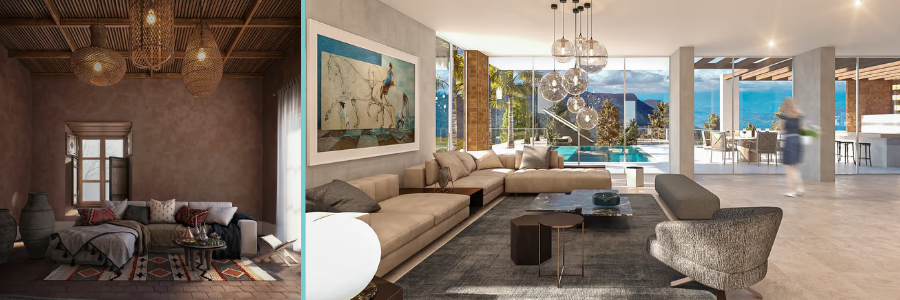
Virtual tour of a moroccan living room and seaside resort living room by Cad Crowd virtual reality designers

RELATED: How to maximize space for functionality: Home design tricks for modern living by interior design firms

To what degree are you flexible regarding project scope changes?

The reason is that most architectural works change as they progress, especially for high-definition rendering design services. You have to enquire about its adaptability on site if there have been changes to the scope. Is it possible to add new floors or new features and changes, also reflected as per demands and tight schedules?

Flexibility shows adaptability and customer focus. Many times, too rigid businesses have a hard time when confronted with appropriate project changes. In a flexible business, your virtual tour will adapt and develop as your project.

Are there maintenance or updates provided?

The designs are dynamic. Over time, there may be a need to incorporate changes to virtual tours and ideas regarding renovation, material use, and even new designs. It is important to learn about any ongoing maintenance that may be required.

With ongoing support, your virtual tour will remain fresh and up to date. A CAD design company that offers updates is, thereby, saying it will be your partner-and not your vendor. That implies your investment will work well for your business and its clients for several years.

Why Cad Crowd is the best site to discover freelance 3D virtual tour services

Looking for an appropriate company to carry out a 3D virtual tour is very depressing. And then Cad Crowd or something like that appears. Cad Crowd links excellent architectural practices with freelance professionals who have skills in 3D visualization, virtual tours, and architectural rendering.

Cad Crowd enables you to browse portfolios and allows previous works to be showcased so that you can select the freelancers you believe best match your design and project needs. Although some people ace highly detailed and very realistic works on Cad Crowd, some people ace interactive experiences. Via Cad Crowd, gain access to highly pre-verified talent who are creative and capable of turning your architectural dream project into a reality. 

Cad Crowd is also efficient at managing projects to implement tools for successful communication and collaboration, ensuring that file sharing is secure and that the entire project workflow remains organized. Whether for a single-family dwelling or for the most complex business undertaking, these freelancers will work effectively and produce outstanding outcomes. Request a quote today.

author avatar

MacKenzie Brown is the founder and CEO of Cad Crowd. With over 18 years of experience in launching and scaling platforms specializing in CAD services, product design, manufacturing, hardware, and software development, MacKenzie is a recognized authority in the engineering industry. Under his leadership, Cad Crowd serves esteemed clients like NASA, JPL, the U.S. Navy, and Fortune 500 companies, empowering innovators with access to high-quality design and engineering talent.

Connect with me: LinkedInXCad Crowd