How Virtual Staging is Shaping the Future of 3D Interior Design for Home Builders


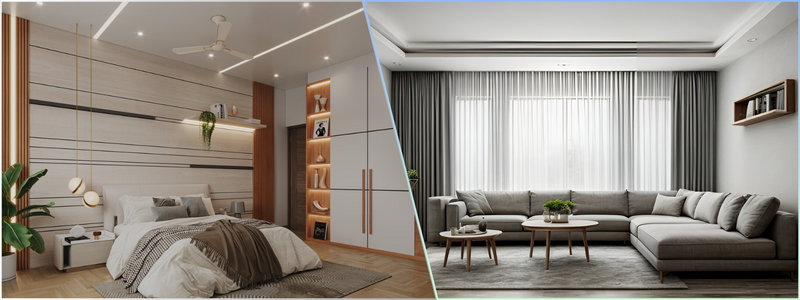
Empty walls are not enough for a person to think that the current space is going to be their future home. Let’s face it, empty rooms can feel cold and, honestly, a little intimidating. A bare living room doesn’t usually inspire people. Instead, it just makes them wonder if a sofa will even fit here or how they will make all the furniture and décor match. That’s where virtual staging comes in. By being able to add furniture and different style options to an empty room using digital software, a once blank space can turn into a welcoming and inviting home. It makes it much easier for someone to walk through the space virtually or in person and maybe even see themselves living there.

Virtual staging services are more than just carefully placing furniture into a photo. It’s a bit of an art form that takes the scale, color, and layout of the entire room into account. Virtual staging gives designers the freedom to try out different styles and see which elements combined can create the best output. With the help of digital software, it is possible to show off different possibilities of how a house can look without using actual heavy furniture and physically moving these pieces from room to room. All of a sudden, a small studio apartment looks brighter, more open, and spacious without having to remove walls or widen hallways. The power of technology can now make any apartment look like a well-designed space.

Virtual staging allows you to visualize the interior decorations, furniture, and fixtures without having to buy anything yet. It is more economical because you can change designs and textures instantly. In fact, a designer can decorate and furnish a home quickly using a computer while spending only a minimum amount. Even better, the designers can play around with different looks according to what the buyer wants and needs. It’s a simpler, smarter, and more convenient way to let the buyers feel the space without having to set foot inside the property.


🚀 Table of contents


The power of virtually staged spaces 

Humans are very visual creatures, and potential customers can appreciate and understand a space better if they can see it. They don’t buy because of the specifications or floor plans, but instead, they buy based on the positive feeling they get when they experience a space that has been arranged and decorated with actual things. An empty room is just a cold, four-walled box that forces a buyer to rely a lot on imagination. Instead of seeing a home, they see a bare space with numerous challenges about furniture placement, design themes, or decorations. 

Psychological studies have shown that both physical and virtual staged homes make it easier for buyers to imagine living in that space. Through digital technology, the once empty box now becomes a cozy retreat with some soft lighting and a few charming accents that make it very inviting. Designers can flex their creativity and show buyers different design options from a minimalist to Mediterranean theme, really quickly, without changing a single tile onsite. Once a room is staged, everything makes sense. Now, buyers don’t just see square feet but imagine their daily life in that space. Once buyers connect in a way that feels personal, decision-making gets a lot easier.

Lastly, virtual staging is also a better way for architectural design experts to present the different features that make a room or space unique. Based on their needs and preferences, everything can be showcased from the wall and floor finishes, furniture arrangements, lighting choices, and even how ceilings, nooks, and corners can be improved with the right design elements. That’s why virtual staging is very convenient and a great way to make buyers feel at home with what they are seeing.
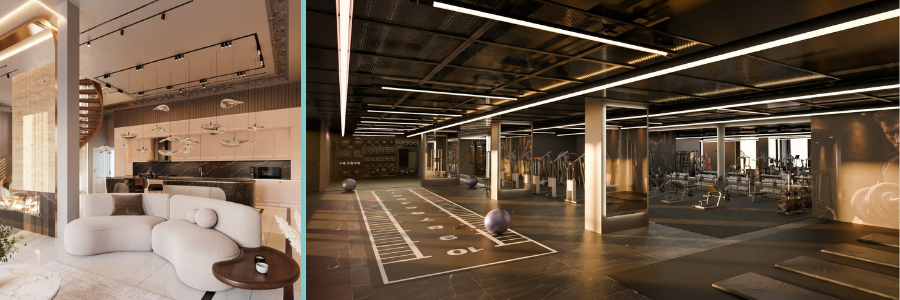
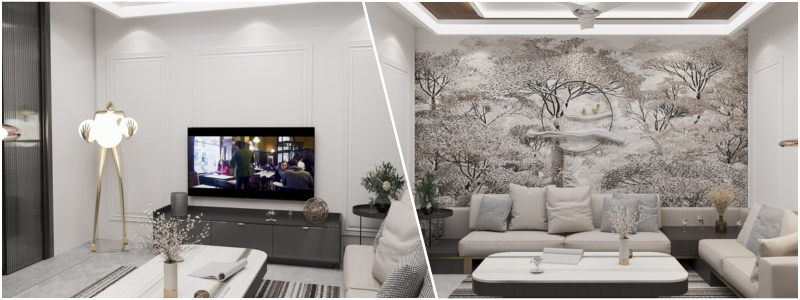
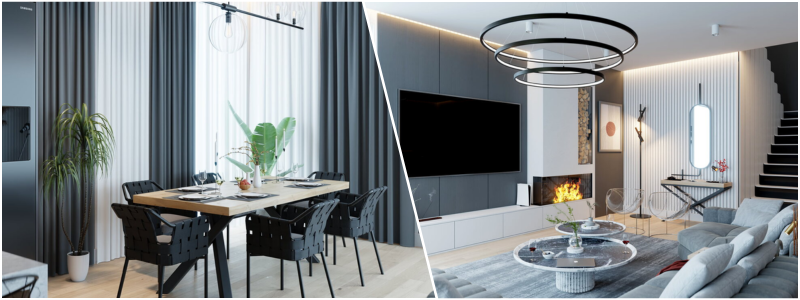
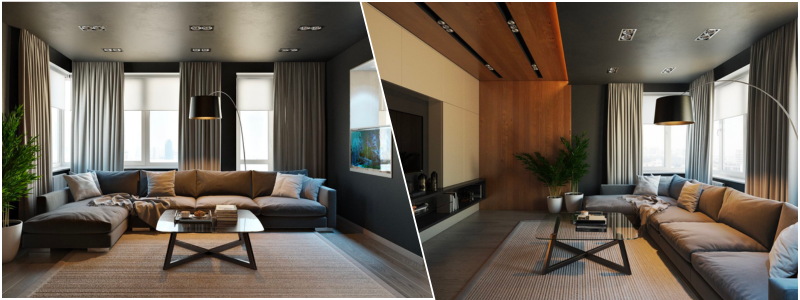
Virtual staging of a luxury home and gym space by Cad Crowd freelance design experts

RELATED: Freelance CAD jobs: Top platforms like Cad Crowd to boost your remote design career

From plain photos to realistic walkthrough experiences 

Virtual staging has come a long way from just photoshopping a couch into a corner. The technology has evolved and given way to this current era of 3D immersive tours. From looking at photo albums or catalogues of the spaces, prospective buyers can now digitally walk through a house, explore different rooms, check out the bathrooms, see how sunlight enters the kitchen through the windows, and get a realistic sense of scale without having to go to a showroom or visit the actual project site.  

This shift opens new doors for homes that are designed and presented. Designers have the power to think beyond the look of a space in one still image. They can now focus on how it feels from every angle. Details matter even more. Materials, lighting, and scale all work together to make the experience believable and inviting.

For both architectural design firms and builders, virtual staging is a whole new playground. They can experiment on floor layouts, wall and floor finishes, and make any kind of change without any costs. Want to see if a bold accent wall works? Curious if the dining table should move closer to the window? Any and all of those ideas can be tested in minutes without spending any money on construction or movers. Everyone can make faster and smarter decisions. 

Adding wow factor with less cost

Traditional staging can be expensive and time-consuming. In fact, it can even cost thousands per property for contractors with a lot of different properties under their belt. A lot of factors can make physical staging a financial and logistical headache, especially furniture rentals, movers, and even storage. Luckily, virtual staging simplifies all of that.

Different versions and looks can be designed digitally for a particular space, whether a bedroom, living room, kitchen, etc. This can deliver a strong visual effect while saving time and money. Any changes can be made on the spot to specific areas without having to erase everything and start over. Buyers can swap out different looks, designs, and even themes to specific rooms any day of the week, thanks to the power of software. If something doesn’t work, revisions are implemented right away.

Virtual staging also saves time and money without sacrificing variety. Buyers still have a choice to swap between different looks and colors. This allows designers to be flexible and agile, which can benefit them in a very competitive industry. 

Helping builders and buyers agree on things

Normal people, outside of construction design experts and similar professionals, cannot read or understand a blueprint. An empty house makes it difficult for buyers to feel like that space is right for them. Virtual staging allows the builder to present their ideas clearly to the buyer, bringing the vision to life in a way that the potential buyer can relate to. Blueprints and empty showrooms are transformed into something relatable and realistic. 

Seeing a furnished, realistic version of a home helps buyers understand what they’re getting and what’s possible. It clears up the “What will it actually look like?” confusion and turns the process into one of collaboration. 

Virtual staging can also showcase the potential upgrades, such as premium countertops or custom cabinetry. Different furniture layouts and wall finishes can be visualized by the buyer, which also helps them make informed choices without having to guess. In the end, it helps buyers see the full potential of their investment.

Technology as a design partner

At this point in time, technology has now become a designer’s best friend, not their replacement. High-res renderings, AI suggestions for furniture layouts, and other advanced tools that simulate lighting and materials allow designers to create very realistic presentations of the space. It allows designers the freedom to spend more time on the mood and feel of the room and ensure that the emotion and experience are clear to prospective buyers.

The goal of virtual staging software is not to replace designers but to act as a support system that takes care of the repetitive tasks. There is a collaboration between human creativity and AI automation to ensure that the designs are just beautiful but functional and fit the needs of the buyers.

Now, this technology can be easily accessible to anyone, not just to freelance CAD designers, contractors, and even commercial developers. It’s now possible to create professionally-made presentations without having to pay so much. Smaller-scale builders can now use these cloud-based tools to add better visuals to their materials. Virtual staging makes it possible for lesser-known companies to create polished and professional presentations.

Level up all marketing materials

Virtually staged homes actually are more interesting and attractive to look at online than a picture of an empty space. Since most people start searching on their phone, detailed, quality visuals and 3D walkthrough tours have better chances of getting someone’s attention on social media and on listing sites.

The secret is knowing when to stop. What’s important is to highlight the possible looks of a potential home, not bury it with so many elements. Over-staging a room with too much digital furniture can actually make the room feel smaller and more cluttered. Plus, it seems that there wasn’t enough thought or effort put into it, except for putting different things together. 

What people want is honesty. The goal is for a buyer to see the posts online and feel excited when they see the walkthrough and other 3D visualization services

When there is a consistent virtual-stage style and look across all listings, a sense of familiarity and relationship of trust is built with the potential buyer. 

RELATED: How virtual staging enhances 3D interior home design for freelancers and firms

Important things to take note of

There are a lot of challenges and considerations to keep in mind when virtually staging a space. First is to avoid over-staging. Do not add too many digital elements like furniture, different kinds of decorations, and lights, because it will make the space feel too cluttered and chaotic. The goal is to maximize the space available with the right mix of things that fit the buyer’s preferences and needs.

Next, be honest and transparent always. Make sure that the digital version of the room is the same size as the actual space when it is constructed. Do not hide any mistakes or issues because this will backfire eventually. Do not mislead buyers because this will break the relationship of trust. Always be ethical and try to show the home’s best version while always being practical and realistic. 

Lastly, stay ahead of the competition by keeping up with the latest software and digital technology trends, and motivate the team to always strive to continue learning new skills and techniques that can improve output. 

Real success stories from actual projects

There have been plenty of cases where virtual staging didn’t just look good but got results for many real estate teams and contractors. For example, one mid-sized developer decided to skip the furniture rentals for a new block of homes and went entirely virtual. They ended up cutting their marketing costs and selling the properties faster compared to their previous projects.

Virtual staging also saved the day on a historic renovation. Because of the delicate original floors and small, narrow spaces, bringing in heavy physical furniture was too risky for interior design experts. Virtual staging allowed buyers to see exactly how that historic charm could work with a modern lifestyle, all without a single scratch on the floorboards. Buyers appreciated how they were able to visualize the new home while care was shown for the property by preventing any risk or damage.

These aren’t just one-off success stories. Success stories like these show that virtual staging is a serious strategic tool that gives companies an edge. It’s a way to move faster, spend less, and still make spaces look nice while still allowing the buyers to see the vision amidst a very competitive industry. 

Moving towards a more 3D future

Virtual staging has improved the way companies present and sell homes to future buyers. The industry keeps on evolving, upgrading, and innovating technology that provides total immersion. Even better than a realistic 3D render, VR (Virtual Reality) or AR (Augmented Reality) services allow buyers to really experience a space as if they were a part of the scene in real life.

This kind of interaction does more than just look cool. It also helps the buyer feel more confident. When a buyer can experience walking through their future home, virtually open a cabinet, or move a sofa to see if it fits their vision, the house stops being a project and starts feeling like their very own home.

With technology being more accessible, there is no need for fancy equipment. AR allows buyers to just hold up a phone while standing in an empty room and be able to see virtual furniture pop up right where they’re looking. It lets builders and buyers experiment with colors and layouts anytime, anywhere. 

When spaces become more realistic

Due to the new techniques in 3D designing, flat and cartoon-looking renders are now considered old techniques. Virtually realistic designs that allow you to feel the texture of the sofa, hardwood, and walls have been the trending 3D design. It’s usually the smallest detail that you don’t usually notice, such as the stainless-steel faucet.

Also, flexibility is a major bonus. Floors can be swapped out immediately. Paint colors and types of finishes can be changed without ever touching a physical sample or going over the budget. 

Say goodbye to one-size-fits-all service

Using a generic design or look during interior design services is no longer relevant or convincing. Homes can be customized to fit the look that the specific buyer is going for. A young professional might even be presented with a minimalist setup made for modern, city living, while a family is presented with a warm, cozy version of that same house, but filled with big storage rooms and areas for the kids to play. 

Personalization shows the buyer that how they live matters. When a person sees a space that fits their specific lifestyle, they move one step closer to being a future homeowner. This isn’t just about pretty pictures but about making a direct connection. As AI gets smarter, it’s only going to get better by helping to suggest the perfect layouts or color palettes based on what people actually love. It makes a dream home feel a lot more attainable.

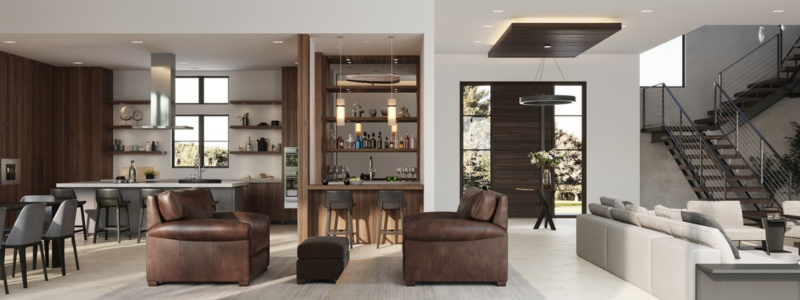
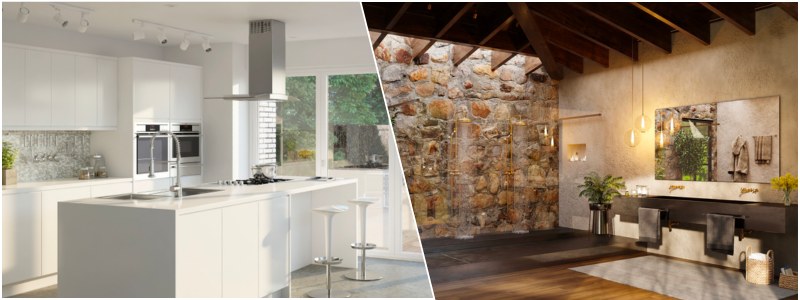
Virtual staging of a kitchen and modern cafe by Cad Crowd interior design experts

RELATED: Freelancing vs. in-house 3D visualization services: The best choice for companies

Bringing smart homes to life

The next step of virtual staging is about more than just picking out a nice sofa, but how a home actually functions when people live in it. By adding smart home tech right into 3D tours, a simple walkthrough becomes an interactive experience. It’s one thing to see a photo of a light fixture, but it’s another to virtually dim the lights or turn them on and off using an app on their phone just to see how the room feels. 

This approach is a big help for anyone who finds the idea of high-tech smart homes to be scary. Instead of wondering how automated shades close when it’s sunny or how a voice-command system works, people can just try it out for themselves. When the mystery is gone, people will start to think that technology is a convenient add-on. 

Combining style with real-world functions will make buyers stop and think of how these smart functions can be added into their daily routine, with lots of possibilities that can help improve their lives through the help of 3D interior rendering services and other visualization tasks.

How digital design promotes sustainability

These days, sustainability is so much more than just a trend, but something people are actually looking for when they buy or build a home. Virtual staging is good for the environment. Every room styled digitally means one less delivery truck on the road and one less set of fast furniture being manufactured. It’s a simple, low-impact way to minimize extra waste and emissions.

Digital tools not only save but also show off. Designers can easily highlight eco-friendly features like appliances that are energy-efficient or furniture and decorations that were reused and upcycled. The home can become both a green home and a stylishly designed one, too.

Plus, testing different layouts and materials digitally can avoid the waste of actual construction. This ensures that only the best, most sustainable ideas actually get built, which can lead to better environmental responsibility and accountability in the long run. 

Designing with clients, not just for them

Virtual staging is fundamentally changing how builders, 3D design experts, and clients talk and work with one another. Thanks to interactive 3D platforms, a client can jump into the design process from anywhere in the world. They aren’t just looking at a finished product and approving from afar, but they are part of the virtual process. The buyers can suggest furniture placements, types of stains for wooden floors, or new color combinations. This may make them feel seen and heard, which prevents miscommunication and helps build a strong trust relationship.

The client gets to experience the home as it’s actually going to look and can advise the design team to make changes early. When builders, marketers, and contractors all look at the same staged model, they stay on the same page, which cuts down on costly mistakes and keeps the project moving smoothly.

Marketing that makes an impact on people

The perks of virtual staging go way beyond just making a room look nice, but provide a massive boost for all marketing efforts. High-quality digital images and immersive tours are exactly the kind of content people love to share on social media. These days, most home searches begin on a phone screen, which means visuals need to work hard to catch the attention of buyers. 

Interactive tours work best in this situation because when sent to emails, shown on websites, or posted on social media, people have something to explore and not just look at in passing. Buyers have more time to go over things and imagine themselves in that room. This kind of engagement can hopefully translate to more increases and faster sales. Virtual staging also helps branding because a consistent look and feel will be remembered by the buyer. 

Earning buyers’ trust 

Buyers and contractors never trust the visual staging right away. Usually, they’re worried that the digital version will look fake or is hiding something. While all those concerns are valid, the only way to break down these barriers really comes down to being honest and transparent.

The goal is to make things look beautiful but with a sense of reality. Therefore, all the dimensions must be accurate and can easily be achieved in the real world. When people see how these tools actually work and are allowed to experience a 3D tour, play with the lighting design services, and other features, the tech stops feeling like a gimmick to them, and they start feeling like this is indeed a helpful tool that they can use to see their future home.

RELATED: 5 reasons freelancing studios are the future of 3D visualization services

Seeing through the designers’ eyes

For designers, virtual staging is just like a double-edged sword. On one hand, designers and builders can experiment with styles and materials that would be almost impossible to execute in a real-life space. Meanwhile, a whole new set of technical skills is required, including how to model with 3D and how to carefully use lighting techniques in a digital landscape. Designers are also constantly reminded to upskill and attend technical workshops to improve their digital software skills. 

The real challenge is to use common sense while coming up with creative ideas. A room might look stunning in a render, but it still has to be functional and realistic. Today’s designers are essentially bridging the gap between art and tech. Although one main benefit is that designers can work from anywhere. A contractor in one city can now hire a top-tier designer halfway across the country or abroad, which has opened up opportunities for companies to choose from top international talent and let them bring fresh outlooks to local projects.

Virtual staging now becomes the new standard

Virtual staging used to be something reserved for high-end luxury listings, but that’s changing fast. Because it’s so cost-effective, it’s becoming a part of everyone’s to-do list, from mid-level developers to low-cost apartments meant for entry-level budgets. Everybody is now on equal ground, and companies don’t need to have big budgets in order to have top-level professional presentations. 

In the very near future, if not right now, buyers are going to expect most, if not all, projects to use virtual staging. They want to see a home’s potential look and feel before they even visit the office, showroom, or site. For contractors, developers, and even agents, digital staging isn’t just an optional extra, service, or bonus. It’s an essential way to stay relevant and competitive in the 3D visualizer services industry. If the company isn’t offering an immersive, personalized experience, other firms will swoop in on potential buyers with their virtual capabilities. 

What’s in store for the future 

The next chapter for virtual staging is going to be very exciting. Soon, AI will be able to create fully set-up rooms with just a few instructions. For builders and virtual reality design experts, this means being able to create interiors that fit perfectly with a specific buyer’s tastes and needs.

AR and VR will also become a much more seamless part of the experience. More than looking at a space, people will be able to interact with it by changing finishes or testing new furniture layouts right then and there. The whole journey of choosing and buying a home will be more personalized and more fun. 

Sustainability will still be an important part of the conversation. With virtual staging being digital, it is naturally green and environmentally friendly because there is no waste and transport costs from actual, physical furniture. Designers can showcase eco-friendly features without any additional costs and resources. 

As these tools get better, they’ll make the entire process from the first meeting to when the client actually moves in easier and less stressful. Virtual staging will change how people connect with potential places and spaces that will eventually become their new home. Buyers can clearly see what they can do with their future. 
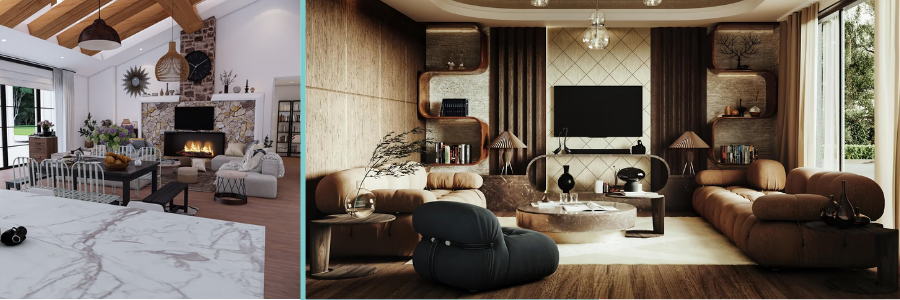
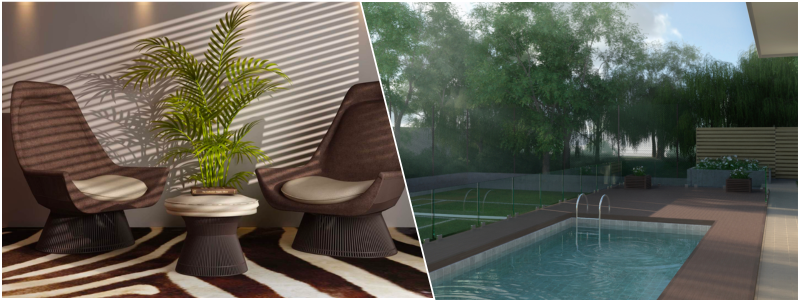
Virtual walkthrough and staging of a farm house and quiant living room by freelance architectural and interior design experts at Cad Crowd

RELATED: Top design & drafting tasks to outsource for architects and architectural services firms

Bringing it all together 

Applying modern techniques and knowledge on how people approach buying houses, virtual staging is the key to flipping that empty room into a lovable home. From simple photos to immersive 3D and AR experiences, virtual staging has completely changed the game. 

In a competitive industry, creativity is what’s going to set you apart. Designers who can use these tools effectively are able to do more than just sell an empty space, but an experience where buyers can feel like they are seeing their future home.

If you’re a designer, builder, contractor, or even real estate developer, Cad Crowd offers a wide pool of skilled and knowledgeable freelancers with expertise in 3D interior design, visual staging, and immersive home experiences. These talented professionals can help bring housing projects to life. Connect with us today! Here at Cad Crowd, we’ll help you find the best freelancer for your virtual staging needs. Request a quote today.

author avatar

MacKenzie Brown is the founder and CEO of Cad Crowd. With over 18 years of experience in launching and scaling platforms specializing in CAD services, product design, manufacturing, hardware, and software development, MacKenzie is a recognized authority in the engineering industry. Under his leadership, Cad Crowd serves esteemed clients like NASA, JPL, the U.S. Navy, and Fortune 500 companies, empowering innovators with access to high-quality design and engineering talent.

Connect with me: LinkedInXCad Crowd

When Do Companies Use Freelance 3D Virtual Staging Services vs. Traditional Staging?


First impressions are crucial in the world of real estate sales. Homeowners looking to sell their properties understand this, so they often invest in staging to enhance their chances of a successful sale. The challenge for companies is different. They must navigate the decision of how to stage their properties in the most effective way. This is where the dilemma of choosing between traditional and 3D virtual staging comes into play.

The million-dollar question is when do companies use freelance 3D virtual staging services vs. traditional staging?

Real estate staging at a glance

Staging is a term used to describe the process of enhancing the appearance of a property to increase its market value. The goal is to make the property as appealing and inviting as possible, allowing potential buyers to envision themselves living there. While there are many ways to do this, it typically involves arranging, decluttering, and depersonalizing the area to make it look and feel more appealing to buyers.

Traditional staging and 3D virtual staging are the two primary types of staging that real estate companies and property owners use today. Traditional staging involves using existing furniture, fixtures, and other items to stage the physical property. Virtual staging, on the other hand, uses photos or images of a partially furnished or empty property. These are then edited to include furniture, artwork, and other decorative elements.

Traditional staging

With traditional staging, professionals are hired to rearrange the décor and furniture to make the property look and feel more enticing for buyers. It can be a bit pricey, but it is also worth investment if it helps sell the property faster. This traditional route usually pays close attention to making the property look as inviting and spacious as possible. This may involve changing the furniture arrangement for more open spaces, adding accents with strategic placements that can add appeal and pop, and decluttering surfaces.

3D virtual staging

3D virtual staging refers to the process involving computer-generated images or CGI for staging a property and selling it digitally. With the help of 3D rendering services and other state-of-the-art imaging techniques, a virtual stager can create realistic images of what a property would look like with different décor, finishes, and furniture while still using authentic photos of the property captured by professional photographers.

Real estate developers can use 3D virtual staging to raise interest and generate buzz about a project before its completion. This allows curious parties to get a better feel of the property even if they haven’t seen it yet. In addition, newly built houses and similar projects that are still in their planning stages can also be staged virtually.

With the industry’s continuous growth, more real estate agents and companies will likely start offering these 3D virtual staging services to cater to their clients’ changing demands.

RELATED: Virtual Staging Costs, Service Fees & Architectural Pricing for Real Estate Companies

A quick comparison of traditional staging and 3D virtual staging services

1

You need to consider several vital factors when deciding when to use traditional staging and 3D virtual staging services. These include the following:

With freelance 3D virtual staging, your company can save more money since you no longer have to rent or buy furniture and other necessities. This cost-effectiveness provides financial security, especially compared to the potentially higher expenses of traditional property staging. However, a few real estate professionals claim that the ROI, or return on investment, is worth this extra expense because staged properties usually sell quickly and cost more than non-staged properties.

Freelance 3D virtual staging services offer improved adaptability. They allow you to quickly swap out the pictured décor and furniture if your client decides they no longer want it or it doesn’t fit well in the space. This flexibility empowers you to cater to your client’s changing preferences and needs. On the other hand, traditional staging has reduced adaptability because it is more difficult to rearrange the interior after installing or placing all furnishings.

3D virtual staging is less time-consuming since it eliminates the need to shop for furniture or place décor. As for traditional staging, it requires more time because of the need to buy and arrange furniture.

RELATED: The Ultimate Guide to Virtual Staging for Real Estate and Architecture Companies

Strengths and weaknesses of traditional staging

2

The in-person experience is the biggest strength of traditional staging. Sellers love the thought of potential buyers getting to walk through the property and experience it as a carefully arranged space meant to appeal to them. Traditional staging is also a more familiar concept to most consumers. After all, you can see staged properties no matter where you look. They’re on Facebook, Instagram, YouTube, TV, and magazines. After the staging process, You can see the procedure and the resulting emotions. However, the figures show that traditional staging is so valuable for real estate listings, so why do some real estate agents nottage all properties for sale?

For starters, it’s easy to overestimate the effectiveness of the in-person experience. Traditional staging has four main obstacles: cost, inconvenience and difficulty, design limitations, and turnaround time. Numerous factors determine the price of conventional staging, but you must be ready to spend at least $300 for a consultation alone. On average, traditional staging can cost approximately $6,000. If the property you’re trying to sell is worth $10 million, spending four to five figures on traditional staging might be worthwhile to maximize the sale.

This amount is far too high for most real estate agents in the country to spend on every listing.

One more significant concern with traditional staging is logistics. First, the owners have to declutter the property, including all their décor and furniture. The staging company will then schedule several days to bring in and set up all the furniture and décor. The staging process itself can also be complex and lengthy. It might take weeks for the seller or agent to look for a staging company, schedule a consultation with them, wait for the new design, wait once more for the seller to free the property of all their belongings, and bring in and set up all furniture. For most sellers, the inconvenience of traditional staging can be a real deal breaker.

Lastly, most agents aren’t aware of the limitations of traditional staging designs. Design quality depends on the staging company’s inventory and expertise. It’s also ideal to look for a stager with a massive selection of inventory and years of experience in the field. However, the truth is that most professional stagers have a minimal number of furniture items to select from. If the house is a penthouse or apartment in a metropolitan city, traditional stagers won’t carry heavy, oversized furniture that will not even fit through the door. They are forced to choose pieces that are logistically easier and more straightforward to move.

Traditional staging offers limited options compared to freelance 3D virtual staging services but at a higher price.

RELATED: Benefits of Virtual Staging Services for Architecture and Real Estate Companies

Top reasons to use 3D freelance virtual staging services

1-1

Here are more convincing reasons why your company should consider using freelance 3D virtual staging services over traditional staging:

Continuing from the abovementioned point, 3D virtual staging is more flexible because it can be used for any property type. It doesn’t matter if your company is working on a single-family home, a townhouse, or a condo; you can easily stage it in the virtual space and make it appealing to the eyes of prospective buyers. This level of flexibility is impossible with traditional staging because this is often limited and exclusively applicable to specific types of properties.

  • Increase interest among buyers

Freelance 3D virtual staging services generate increased interest from buyers in properties. It has been discovered that staged properties generated twice as many online views as those that weren’t staged. The heightened interest can result in a higher selling price and a faster sale simultaneously.

  • Eliminate physical limitations

Physical limitations can hamper the effectiveness of traditional stagings, such as the availability of furniture and the size of the property in question. However, these restrictions are non-existent in 3D virtual staging because it is suitable for all property sizes and using any piece of furniture. This makes this an ideal choice for homeowners and real estate companies who want to stage a property but are limited by physical constraints.

Another notable reason companies are now shifting to freelance 3D virtual staging services is that they are easy and quick. Unlike traditional staging, which is often completed within several days or sometimes even weeks, virtual staging is typically completed in just a few hours. This makes it an excellent choice for those who want to sell properties faster.

How Cad Crowd can help

If your company is looking for the best freelance 3D virtual staging services, Cad Crowd can connect you with the right people who can guarantee excellent results!

Benefits of Virtual Staging Services for Architecture and Real Estate Companies


Let’s face it: traditional staging isn’t cheap. For architecture and real estate companies, this means a severe commitment of effort, time, and resources. This is why it’s no longer a big surprise that most of these companies have now embraced a new tool to add to their arsenal in the form of virtual staging for architecture services. With the rise of this state-of-the-art technology, traditional staging has almost become obsolete. Virtual staging services are cost-effective options to maximize your vacant properties while optimizing your marketing campaigns if you’re a realtor or an architect whose budget is limited and who is dealing with some time constraints.

Thanks to virtual staging services, you can shine the spotlight on properties and give potential buyers, investors, and stakeholders a chance to glimpse what the place will look like.
This article delves into the benefits of virtual staging services for architecture, real estate companies, and future property owners.

RELATED: Virtual Staging Costs, Service Fees & Architectural Pricing for Real Estate Companies

Strengths and weaknesses of traditional staging

The traditional staging process showcases a property’s physical decoration and furnishings to prospective buyers using photos and real life. The following are some of the top benefits of using the traditional or actual staging process:

  • The actual staging of a property helps buyers envision what it would be like to use or live in the space.
  • This staging method allows faster selling of the property and usually for a higher asking price.
  • Decorated and furnished properties offer a good perception of the available space.
  • Traditional staging highlights the spaces of the properties to buyers.
  • This allows buyers to form an emotional connection with the property.

While traditional staging does offer some notable benefits, it also has several notable downsides that make realtors and architects wary of it. These weaknesses include the following:

  • It is expensive for real estate and architecture companies to place correctly and fully furnished items and other stuff in the space.
  • Time is necessary to create and demonstrate the right ambiance to potential buyers.
  • Traditional staging requires a longer turnaround time and a higher level of investment.
  • This form of staging needs labor to assemble and move all staged furniture.

There are instances when buyers might find it inconvenient to visit if some personal belongings and furniture pieces still need to be removed from the space.

RELATED: The Ultimate Guide to Virtual Staging for Real Estate and Architecture Companies

Virtual staging defined

staging3

Virtual staging from 3D architectural rendering experts refers to the process where vacant buildings are staged with furniture, decorative items, and others with the assistance and guidance of professional virtual stagers. Photos and images of the barren property are captured from various before they are virtually transformed into captivating interior designs.

Virtual staging vs. traditional staging

The key distinguishing factors between traditional and virtual staging are the cost and time involved in the processes. After all, ever since the pandemic hit the world, human interaction for most transactions has almost no longer been required for health reasons. There is also no denying that virtual staging is way cheaper and quicker than traditional staging. You can imagine how much cost and time are involved in getting a designer to evaluate and design the entire space and then hire movers who can bring furniture pieces and other stuff in and out of the property.

It is a good, easy, and quick alternative available. All you have to do is send the photos or the property that needs to be spruced up to your chosen virtual reality experts. They can then develop a virtual staging design in just hours. To make things even better, the sky is the limit regarding the choices of available decorations and furniture pieces in virtual staging.

Advantages of virtual staging services

Here are some of the ways that architecture and real estate companies benefit from virtual staging services:

Cost-effective

There’s no denying that the topmost advantage of virtual staging services is the incredible cost-effectiveness they offer. With the help of this technique, companies can save a lot, from hiring movers to buy pricey furniture pieces, paying for professional photographer fees, polishing, dusting, and cleaning, and logistics and transit expenses.

Furthermore, companies can save dollars compared to traditional or physical staging of properties. All you have to do is share high-real images of the actual space and vacant rooms with the service and wait for them to finish the work in just a few hours. If you compare the costs stated earlier, working with a virtual staging service is much cheaper.

RELATED: How to Create a Virtual Tour of Homes with 3D Rendering Services

Faster space decluttering and redecoration

People would only be interested in buying a clean property. Tidying up and removing all the clutter from a space involves many back-and-forth movements. On top of that, since architecture and real estate companies often work on packed schedules, the work could be better at the end of the day, even after all the prepping. The easiest way to resolve this is to show off the property with the help of 3D AR/VR architectural services. With their help, it’s possible to shift, remove, and redesign the interior decorations according to the specific preferences and requirements of the buyer. Thanks to this, you can look forward to displaying a decorative, stylish, clean, and neat property.

staging2

Close deals swiftly

It’s common for architecture and real estate companies to have tight schedules filled with property dealings, keeping them constantly on their toes around the clock. Quick closure of deals is critical for you and your entire team. In such cases, virtual staging services can help speed up the whole process, helping the agents put up their listings sooner rather than later. Professional virtual staging services provide a quick turnaround time, which can help you quickly show off the deal, open the communication lines, leave the buyers impressed, and close the deal at a fair price.

Reduced security concerns

It’s alarming that many burglars have this habit of checking for open houses. Real estate brokers hold open hours during open houses when the property becomes available for public viewing. Sadly, these vacant properties are an enticing target for burglars, thieves, and robbers. However, with the help of 3D architectural visualization companies can have peace of mind that their properties are safe since the whole process doesn’t involve actual products or items. Everything takes place virtually; potential buyers need to sit in front of a computer monitor to view the entire property from different angles.

More freedom to choose

Images used in virtual rooms are comparable to their actual image counterparts, which eventually helps potential buyers understand the function and purpose of the specific space.
The virtual feature allows buyers to configure the image using their personal choices and preferences of wall color. Virtual twilight features, for example, enable potential buyers to envision the property’s appearance when nighttime comes. These help architecture and real estate companies close deals quickly without delays.

RELATED: How 3D Virtual Reality is Changing the Real Estate Industry

More efficient communication

With the help of 3D rendering artists, the communication between potential buyers and companies gets better since the former can see how the rooms will look in the future. With simple tweaks and adjustments of the virtual images, interested buyers can see how the living room, bedrooms, dining area, kitchen, and children’s room will look in real life. To improve things, get some additions according to their liking and view how these add-ons will work. This aspect backs up the real estate companies’ claims and improves the buyers’ overall experience.

Eliminate concerns about damaged items

More often than not, furnishing a property with expensive stuff while occupants are still living in the space can give any realtor a significant panic attack because there is the possibility that the occupants may inadvertently damage the furniture items. Virtual staging services can help companies do away with these worries and anxieties.

staging1

No worries about moving

Real estate and architecture companies no longer have to deal with the hassle of working with packers and movers to shift furniture and other items from property to property, even more so if 3D high-rise rendering experts are needed. In virtual staging, everything takes place in the virtual realm, so no real-life heavy and bulky furniture pieces and decorations are involved. Otherwise, this could have been a cumbersome job for the real estate company, with other priorities.

How Cad Crowd can help

Cad Crowd can connect you with professional virtual staging services to help your company bring your ideas to life and entice more clients.

Hire a Virtual Renovation Services Company To Enhance & Revitalize Real Estate Marketing


This post covers helpful information on how to use virtual renovation services to boost your real estate marketing. Are you tasked with renovating a house to increase its value before listing it in the market? Does your client prefer a more eco-friendly home? Whatever the reason, you should first envision the expected result and proceed to the remodeling or renovation to save energy, money, and time.

In addition to the state-of-the-art innovation of the traditional method of home staging called virtual staging, there is another highly acclaimed and helpful technique in the world of real estate marketing that always proves its worth: virtual renovation services. Here are some top ways virtual renovation services can help enhance and revitalize real estate marketing efforts with tactics such as 3D real estate rendering services, 3D house rendering, 3D interior visualization, 3D architectural modeling, and more. 

RELATED: Learn how to renovate, remodel, & restore with architectural design firms

9 Ways to boost your real estate marketing with virtual renovation services

Take advertising campaigns to the next level with architectural presentation

Virtual renovations that are well-executed by a reliable studio look downright stunning. The best service providers can present final images that are vibrant, stylish, and photorealistic. Realtors can use these images on their stories and posts on social media to get more shares and likes from their current followers and attract new ones.

Virtual renovation services, including hiring freelance architectural presentation experts, provide multipurpose designs for listings and websites, offline and online ads, and social networks. A virtual renovation is also perfect for online ad campaigns. Real estate marketers can take advantage of these images and use them as part of their Facebook, Instagram, and Google ads. These renovations can also help them ensure prospects click on the ad immediately instead of scrolling down and passing over the property. 

Virtual renovation services can also produce high-resolution and high-quality professional images that work for offline and online ads. Realtors can use a single image to make a smaller version for online use or stick with the original quality for offline ads. What’s best here is that you can use the same image for Instagram and print it on a city lightbox without worrying about compromising its quality level. 

RELATED: How 3D house rendering services can help you plan your next renovation

Virtual renovations with the help of 3D architectural visualization firms are also the best option to solve concerns about the overall look and feel of the property. It’s a cost-saving and quick method that accommodates efforts to renovate the exterior and interior. Thanks to this, realtors must decide on any interior style depending on the target audience, their needs, and their income level. 

Sell homes faster with virtual staging for architecture services and designers

Virtual renovations are helpful for many reasons. Thanks to the immense popularity of virtual staging for architecture services and designers, property buyers can now envision the property and how it will look if the wrong furniture pieces are used or if it is bare without any accents and décor. Virtual renovation services eliminate the guesswork of properties that require severe and massive renovations. Despite the need to repair a few parts here and there, buyers continue to be fascinated by the sheer value it offers once everything is completed. 

RELATED: The ultimate guide to virtual staging for real estate and architecture companies

Infinite style possibilities 

With the help of virtual renovation services, realtors can have peace of mind knowing that CG professionals are equipped with all the necessary equipment, digital libraries, and software for virtual home remodeling. It just goes to say that the CG artists’ imagination and creativity are the limits here because they can use any décor, materials, or furniture they need. 

But architectural design experts can still go overboard with the style, too. Instead, they must pick a suitable home renovation that won’t make the target audience turn their backs. A skilled 3D artist, for instance, will never use expensive décor and luxury furniture pieces in a property designed to target middle-class families. Similarly, they won’t incorporate mediocre items in a house designed for high-end buyers. 

The client’s tastes and preferences are critical details that a realtor should state in the brief that they will submit to the CG studio before the start of a project. Skilled 3D architectural visualization experts will always have a good idea of creating a cozy and beautiful property that perfectly matches the client’s taste and preferences. 

RELATED: Types of 3D visualization for architectural design and CGI projects

3d-architectural-visualization-firm

Boost the competitiveness of listings 

Real estate listings with tacky exteriors and interiors will never catch the eyes of prospective buyers. Instead, they will scroll through them and focus on more enticing, competitive, and impressive options. 3D interior rendering and 3D exterior rendering services will stop prospective buyers in their tracks.

Prospects look for a future house that will become a source of great pride and joy and bring hope to their new life. This is why they find listings with more modern and beautiful interiors that feel homey and just right for them. If a realtor has been tasked to sell a property with outdated interiors, giving it a touch of modernization is essential. Most of the time, more time is needed to fix some details here and there to improve the property’s appearance. 

With the help of virtual renovation services, it’s possible to retouch and replace these elements in the image in just a snap of a finger. They can replace old wallpaper, spruce up the property with modern décor, or even polish the scuffs and marks on the floor. 3D virtual staging for architecture and using 3D interior rendering professionals to boost the appeal of real estate has never been as popular as it is today.

RELATED: How to use 3D models & CAD drawings to plan your home renovation

Establish credibility and partnership with the realtor 

It’s common for realtors to establish their credibility in the way they deal with prospective buyers over time. By presenting virtual renovation images, they can prove that they will sell the property in good faith and not hide any issues that might require repair when the buyer moves in. 

Allow more time for budgeting and decision-making 

Spicing up the listing with some renovation images will give buyers more opportunities to assess their options according to their budget and capacity. The main job of the realtor is to make sure that they know that a particular property requires this form of renovation. They must also be aware if they are willing to pay for the recommended repair. This will allow a more transparent transaction, helping the buyer reach a more educated decision. 

Guide buyers in finding their dream home

Homebuyers often need more funds to purchase a brand-new house. As a result, they look for alternative options in the form of properties that require repairs or the so-called fixer-upper houses. Buyers with a limited budget often go this route because it means they can save some money despite all the renovations, something that would have been difficult if they bought a new house. 3D home rendering services will allow homebuyers to see the home’s potential without requiring extensive renovations that they must save up to afford.

RELATED: 7 Benefits of 3D architectural rendering services for real estate

Budget-friendly and time-saving option

Physical renovation is a costly process. As far as home improvement is concerned, it’s not easy to tell how much the final cost will be, even if it’s only a minor renovation. It’s because of the contractors’ work and the materials involved. The furniture rental will also cost more, depending on the brands and number of rented items. 

But with the help of virtual renovation services, realtors no longer have to rent furniture and organize the renovation. All they have to do is take high-quality photos of the property in its present state and submit them to the CG studio. 3D interior renderings and 3D interior design touches can be added to these images to present the listing attractively.

Architectural visualizer companies only charge their services depending on how many images are involved. It means that the materials the CG artists chose and the number of objects they use don’t matter here. This is especially the case for 3D furniture models. Reliable CG companies have an extensive library of ready-made 3D items. Thus, artists only need to choose the models that match the client’s style and taste. 

RELATED: 5 Interior design CAD models that’ll rock your world

As for turnaround time, virtual renovation services are faster and easier compared to actual renovation. Work on a single 3D virtual renovation project only takes approximately 48 hours on average. But this depends on how complex the task is and how many images are there. This is why indicating a precise turnaround time is essential when ordering. 

Perfect for exterior and interior renovations

Interior design experts use special 3D software for a virtual renovation that helps them tweak the color of walls, choose specific finishing materials, update the flooring, and add and remove décor or furniture. Since most CG experts are also skilled interior designers, they know the color scheme that better highlights the property’s best features and other professional elements. 

Virtual reality rendering services are also ideal for home exterior improvements. Using 3D software, CG artists can eliminate distracting, unappealing objects such as garbage cans, add more greenery to the garden and lawn, fix the pain, place outdoor furniture, repaint the walls, include street décor, and more. The property’s exterior and interior will work and blend well with each other and cater to the market’s requirements and demands. 

RELATED: How AEC companies can leverage VR and AR simulations in architectural design

How Cad Crowd can help

Virtual home renovation services entice realtors, prospective buyers, and homeowners. Cad Crowd is a helpful platform where you can find the best freelance experts to make your company’s next virtual renovation project possible. Cad Crowd offers 3D interior rendering, 3D interior visualization, 3D landscape rendering, 3D construction rendering, virtual staging, interior design services, and more!