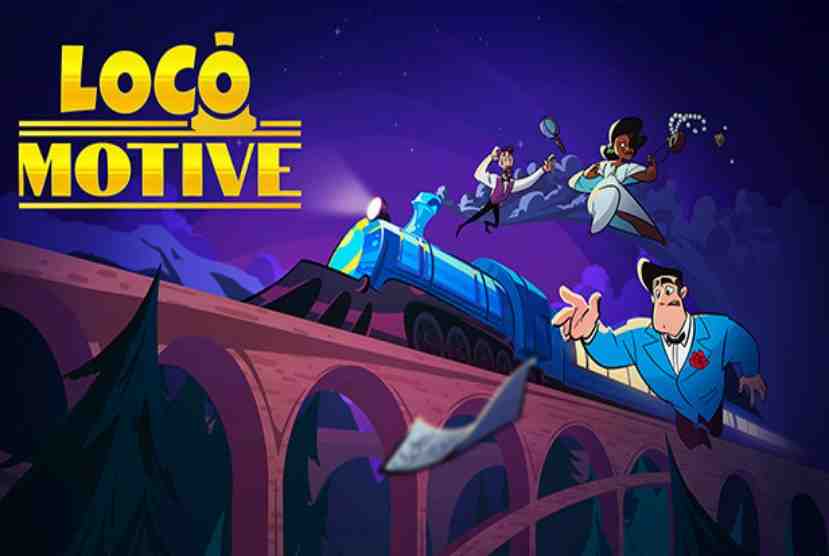
Welcome aboard the Reuss Express, a journey of a life-time derailed by an unexpected assassination. On the eve of a landmark speech by the wealthy heiress Lady Unterwald, a straight-laced lawyer, a crime novelist-turned rookie detective, and an undercover spy find themselves embroiled in a murder, a mystery, and worst of all… an adventure! Now stuck onboard a luxurious steam train, within stabbing distance of a cold-blooded killer, the race is on to prove their innocence once and for all! Play as Diana, Arthur and Herman to unwrap the mystery and put your point and click puzzle-solving skills to the test… Spirit Mancer
A true gem for point and click adventure lovers. From the art style to the story and voice acting, this game had me grinning from ear to ear and giggling at my desk. The story absolutely won me over. The non-linear narrative, how everything ties together, the variety of locations, and those unexpected twists and turns—it’s all great. Pair that with the marvelous visuals (oh, the opulent interiors of the Reuss Express!) and fantastic voice acting (yes, the game is fully voice acted!), and you’ve got a feast for the senses. Excitedly, I bought the game right away and jumped in. Let’s address the elephant in the room first: yes, the game can hardlock. But considering it’s fresh out of the dev oven and primarily made by two people, I’ll let that slide—just save often or wait for patches.
Features and System Requirements:
A comedy adventure that hits like smooth jazz, set onboard a 1930s express train.
Take control of three playable characters, in an interlinking comedic adventure.
Uncover a deadly mystery, full of twists, turns and slapstick humour.
Meet a train-full of quirky and somewhat suspicious fellow passengers.
Stop at nothing to solve item-based puzzles, that won’t leave you head-scratching for hours.
Choose how you play – take direct interactive character control, or opt for a classic point and click experience.
Beautifully detailed pixel art animations.
Need a little nudge in the right direction? Telephone for assistance with an in-game hint call-line!
Screenshots
System Requirements
Requires a 64-bit processor and operating system
OS *: WINDOWS® 7, 8.1, 10 (64bit)
Processor: Intel® Core™ i5-3570
Memory: 4 GB RAM
Graphics: NVIDIA® GeForce® GTX 660
Storage: 1 GB available space
Support the game developers by purchasing the game on Steam
Installation Guide
Turn Off Your Antivirus Before Installing Any Game
1 :: Download Game 2 :: Extract Game 3 :: Launch The Game 4 :: Have Fun 🙂
Hello reader who is also a reader, and welcome back to Booked For The Week – our regular Sunday chat with a selection of cool industry folks about books! This week, it’s Looking Glass Studios’ legend, Deus Ex director, and Otherside’s Warren Spector – who I suspect might have realised the very secret goal of this column. Cheers Warren! Mind if we have a nose at your bookshelf?
What are you currently reading?
Let me start by saying I have 17,000 “dead tree” books and 7,000 e-books, so I have a lot to choose from! That may be why I read several books at once – a lightweight read, a heavy read, a medium read, some fiction and some poetry. Or maybe it’s just that I’d go crazy if all I read was pap or pretentious heavyweight stuff. That out of the way… right now, I’m reading these:
Gamer Girls by Mary Kenney
There’s a huge chunk of videogame history I know nothing about. Reading this, I’m learning some more. A lightweight book, but informative and an easy read.
Introducing Walter Benjamin by Howard Caygill, Alex Coles and Andrzej Klimowski
I’ve been meaning to dive into Benjamin’s work but haven’t made it any further than The Work of Art in the Age of Mechanical Reproduction. I figure a quick overview of his life and work will ease me into the rest of his work.
Chilly Scenes Of Winter by Ann Beattie
A novel I’ve been meaning to read since I saw Joan Micklin Silver’s wonderful 1979 (I think) film of the same name. I rewatched it recently and it hasn’t entirely held up but I figured I should finally give the novel a try.
Poetry 180 edited by Billy Collins
For some reason I do not understand, I’ve become a poetry nut recently. It started with a course on Masterclass by ex-poet laureate, Billy Collins that was terrific. (If you don’t subscribe to Masterclass you might consider it. If nothing else, Will Wright does a terrific game design course…) Collins has become my favorite poet – funny, accessible and somehow pretty profound. If nothing else find his poem “The Lanyard.” It starts out being about trivialities but ends up being about so much more.
1001 Muscle Car Facts by Steve Magnante
I’m a car nut. Have been since I was a teenager. Steve Magnante makes me look like an amateur. Which I guess I am, actually. Anyway, I love the guy’s stuff. (Check out his “Junkyard Crawl” videos on YouTube. They’re awesome.) I didn’t include this book in my first pass “what I’m reading” list because it isn’t the kind of thing you sit down and read – you crack it open, read a factoid or three and put it back down. But it’s a book; I’ve been “reading” it for months; I learn lots of useless facts from it; so here it is.
What did you last read?
I’ve kept a list of every book I’ve read since 1989, so this is an easy one to answer. Given that I read more than one book at a time, I have several books in my finished list:
New York In The ’50’s by Dan Wakefield.
I grew up in New York, in the East Village, and was too young to experience what Wakefield writes about, but I’ve long been fascinated by the political/cultural/literary life of Columbia University, the jazz clubs of Manhattan and bohemian life in Greenwich Village. (Hey, I admit I’m nostalgic for a period I didn’t live through…) Wakefield is a terrific writer and he’s a Zelig-like figure who knew everybody from philosophers to poets to the Beats to jazz musicians to blacklisted writers to, well, everyone. Wonderful book describing an incredible life.
Signs And Meaning In The Cinema by Peter Wollen
Another book I’ve been meaning to read for decades. It’s a collection of three essays and a massive interview with the author. The first essay is an evaluation of the work and theories of Russian film director, Sergei Eisenstein; the second essay is an evaluation of the auteur theory and some evaluations of various film directors; the third essay is the one I really wanted to read – it’s all about semiotics as it applies to film. I’ve never understood semiotics, a fact that really bugs me. I’ve been reading a bunch about it over the last few months, but nothing that, to my limited knowledge, applied its precepts to anything other than literature and anthropology (and rarely even those). I figured Wollen might show me how the study of signs and signifiers might apply to film and, in that way, show me how it might be applied to an understanding of games in a new and interesting way. That didn’t quite work out, but I’m not done with semiotics. Some of it is sinking in and I’ve been enjoying the journey.
The Beauty Of Games by Frank Lantz
Not much to say about this other than STOP READING THIS AND GET A COPY! Frank’s a super smart guy who’s taught game design and game criticism as well as making games of his own. Here he offers ways to think about games that get far beyond good/bad and fun/not-fun. I’ve been saying for years that those ways of talking about games are useless – that “fun” in particular is a useless word that diminishes what we do. Frank goes way deeper in a book that’s an easy, accessible read. Required. Go. Now.
Play Nice by Jason Schrier
Jason may be the best games journalist around. His books Press Reset and Blood, Sweat and Pixels give the most accurate look at what game development is really like I’ve ever read. His latest, Play Nice, is a history of Blizzard. No, make that THE history of Blizzard. There’s basically no need to write another one. I thought I knew the story. I didn’t. Now I do. (Jason has a way of getting people – okay, ME – saying things on the record they shouldn’t say at all. I don’t know how he does it. But he does. That’s very much on display here.)
What are you eyeing up next?
I’ve got a ways to go in the books I’m currently reading so it’ll be a while before “next” rolls around, but I do have my eye on some books. I won’t read all of these of course, but these are the ones from which I’m going to choose. I reserve the right to change my mind on any or all of these before or after I give them a try. Oh, and before you read this list, know that I’m unashamedly pretentious. That said, these are legitimately the books by my bed. No fooling. So sue me. Or join me. And let’s talk about stuff.
Basic Writings Of Existentialism edited by Gordon Marino
I’ve been on a philosophy kick on and off for a year or so. Read a lot. For better or worse, Existentialism makes some sense to me but that’s on the basis of not very much. I want to broaden my range of reading. I’ll probably dip my toe into this over the course of time rather than read it all at once, but this seems like a good way to dive deeper.
Semiotics: An Introductory Anthology edited by Robert E. Innis
Anyone want to bet this is the first book to drop off my to-read list? Reading ABOUT semiotics is tough enough. Reading original stuff is almost impossible. I’m going to give it a shot, but I’m not hopeful.
Nexus by Yuval Noah Harari
Harari is a favorite of mine. He popularizes Big Topics in ways that bug a lot of people but I find enlightening, even soothing. This one is about the history of networks and their impact on humanity and society. I don’t know much more than that and don’t really care. I eat the guy’s stuff up.
The Virtual Life Of Film by David Rodowick
I actually went to grad school with Rodowick and understood, like, every fifth word he said. He was our resident semiotics nut. He’s gone on to an impressive career as an academic and I’m hoping – as I did with the Wollen book – I can learn something about practical application of a critical approach I find opaque (at best). I hate when I don’t understand something and I’m going to lick this semiotics thing if it kills me.
The Work Of Art: How Something Comes From Nothing by Adam Moss
I love reading books about creativity, the creative process and the creation of art works. I know very little about this book other than it got great reviews, I love the topic and the book itself is a work of art. I mean the way it’s bound, the quality of the paper, the beautiful illustrations. I’m in…
Impossible Creatures by Katherine Rundell
This is supposed to be the Next Big Thing in Fantasy. I’ll need something lightweight to balance out all the heavy stuff weighing down my night table. I’m hoping this is it. If not, there are a LOT of comics and graphic novels to read! (I’m not ALWAYS pretentious!)
Fight Me by Austin Grossman
This wasn’t on the first list I submitted, but that was just a foolish oversight on my part. I was boxing up a bunch of books for reasons that wouldn’t interest anyone and there was Austin’s latest novel, somehow unread. I know nothing about it other than that it was written by Austin Grossman, which is all I really need to know. If you don’t know who Austin is, check his game design credits – System Shock, Deus Ex and more. He’s helped me on most of my games. He also happens to be a wonderful novelist. Fight Me is his latest, but you should check out Soon I Will Be Invincible and, if you want a peek behind the curtain of game development, his novel You is a great way to see what it’s like at a game dev studio… with monsters.
The City And Its Uncertain Walls by Haruki Murakami
This was another late entry – it just came out the day I submitted this list but it had to be included. I love Murakami. His brand of magical realism just does it for me. I could recommend ALL of his books and hate to single any out but if you’ve never given him a shot, you could do worse than start with 1Q84. But, really, he hasn’t written a bad book so start anywhere and prepare to have your view of reality changed.
Playing With Reality: How Games Have Shaped Our World by Kelly Clancy
This book showed up in The Economist’s list of best books of the year this week and, given its title and subject matter, I pretty much had to make it a last minute addition to my list. It’s a history of games from a political, military, psychological, philosophical and, I understand, just plain fun perspective. Sounds both useful and, well, fun. It’s gotta be on my could-be-next list.
What quote or scene from a book has stuck with you?
I’ve been collecting quotes for decades so this is going to be both easy and hard. Easy because I have a lot to choose from. Hard because I have a lot to choose from. I’m tempted to pass on this for now – someday I’m going to start up a Quote a Day website where I provide a quote, talk about why it’s interesting in general and why it’s important to me, personally.
Okay, here’s one (out of, literally, thousands) in my collection. It sang to me. (Anyone I might work for should stop reading here!)
“I want everything we do to be beautiful. I don’t give a damn whether the client understands that that’s worth anything, or that the client thinks it’s worth anything, or whether it is worth anything. It’s worth it to me. It’s the way I want to live my life. I want to make beautiful things, even if nobody cares.” – Saul Bass
(As a note, Saul Bass created some of the most memorable film title sequences of all time. A second-to-none visual designer. Look him up. There’s lots of his work on YouTube…)
What book do you find yourself bothering friends to read?
Ack. Another one where I have to list several! I’ll list just six (and regret the ones I’ve forgotten immediately after I finish this!)
Time And Again by Jack Finney
I love time travel stories and this is a doozy. My sister read this first, reading it in one sitting. She passed it along to my father, who read it in one sitting. He passed it along… and, well, you get the idea. Totally fun. No more, no less. It’s a popcorn read, but nothing wrong with that.
Organizing Genius by Warren Bennis
This book by noted leadership thinker describes several what he calls “great groups” – teams that created great, innovative, world-changing things. He doesn’t offer instructions about how to create them, but describes their characteristics and the shared circumstances that allowed them to come into being and flourish. I LOVE this book. It describes a couple of teams I’ve been lucky enough to work with. That said, I’ll warn you that my current team, when I had them read it, HATED it. I won’t go into why here. (Hey, I want to intrigue you.) Read it yourself and see what you think. I’m happy to discuss it.
The Creative Habit by Twyla Tharp
Okay. This is simply the Best Book I’ve Ever Read About Creativity. Tharp is a world-renowned choreographer and, yes, there’s an element of autobiography here (that got me seriously obsessed with ballet for a while, about which I’m still simmeringly interested). The autobiographical stuff is fascinating. I mean, you wouldn’t believe the people Tharp has worked with. It’s like a who’s who of the arts community. But her discussion of her process and how it can be applied to any medium is just (insert four letter word here) brilliant. GO READ THIS!
The Creative Act by Rick Rubin
Rubin’s book shares some characteristics with Tharp’s Creative Habit, but it has its own – dare I say it? – “hippie” vibe. The first third of the book lays that stuff on pretty thick, to the point where I almost stopped reading. Man, am I glad I stuck with it! The last two-thirds of the book are (insert four letter word here) incredible. I said earlier that I collect quotes. I got a LOT of them from this book. There’s insight on every damn page.
The Timeless Way Of Building by Christopher Alexander
I keep a copy of Timeless Way of Building by my bed and read a passage when I need to lower my blood pressure. Alexander invented the idea of Pattern Languages, which have become an important part of software development, and that’s very much in evidence here. Be warned, Alexander was an architect and he had his hippie-dippie aspect, so there’s nothing about software in this book and there’s some stuff here that might send left-brain folks spinning off into some alternate universe. But if you can get past that, the writing is beautiful and the descriptions of spaces that are “alive” are pretty wonderful.
Designing Disney by John Hench
Disney’s Imagineers are among the smartest, most creative people on the planet. No fooling. This book, by an Imagineer who was there at the very beginning of the effort that led to Disneyland in 1955 has lots of lessons to teach us – especially world-builders. The creation of spaces that tell stories, ways of directing players without leading them around by the nose, color to create emotions… All that and more is here. There’s so much to learn in what’s a surprisingly compact read.
What book would you like to see someone adapt to a game?
This may be the toughest question of all. I’m not sure there are ANY books I want to see adapted to a game. I mean, books are wonderful as books, and games are wonderful as games. The two media don’t need each other. That said, let me see… okay, here’s one almost entirely selfish one:
Ok, Warren wins. Or, is at least tied with Dan. Book for now!
We’ve come a long way from the luminiferous aether. The speed of light, sometimes abbreviated as c, is a universal maximum posted speed that causality will enforce. It’s the greatest speed at which any known substance or object can travel. Even light itself can’t exceed its own speed limit: specifically, 299,792,458 meters per second, 186,000 miles per second, 1,080,000,000 kph, or 671 million mph.
Scientists measure the speed of light using the time-of-flight method. Because the speed of light is constant and finite, a pulse of light will take a finite amount of time to cross a given distance. From there, you can calculate the speed of light by measuring how long it takes a pulse of light emitted at one location to reach an observer or sensor elsewhere. Time-of-flight experiments have confirmed Einstein’s theory of relativity to great precision. However, a prism is a simple experiment that explores the speed of light with no moving parts.
Light and Color
Technically, c denotes the speed of light in a vacuum. Physicists use v for the speed of light through anything else. In a denser medium, such as glass, photons will still travel at a uniform rate—that rate is just slower than in a vacuum. Isaac Newton confirmed this with his prism experiments. For example, if you direct a beam of white light through a triangular prism, the white light will break up into the familiar rainbow spectrum of colors from red to deepest blue.
If the speed of light is constant within a medium, then the difference between the light before the prism and the light after is the length of its path. Traveling through the prism changes the path of photons from our source, with the red side of the rainbow traveling farther than the blue side. The discrepancy in path length through the prism is what breaks out a beam of white light into a rainbow.
This real-life prismatic shard captures and separates the visible light from behind it. Credit: Aubree Herrick, Unsplash
Rainbows hold other clues to the behavior of light and the speed at which it travels. Sir Frederick William Herschel discovered that if you put a thermometer in the red band of the rainbow cast by that prism, it will read a fractionally lower temperature than one in the yellow, which will be lower than one in the blue. This suggests the red component of visible light from the same beam has less energy than the blue.
Stretching out the same beam of light over a longer distance shifts it toward the redder, lower-energy end of the visible spectrum. The same principle is thought to underpin the redshift observed in sky objects that are very far away.
Lightspeed and the Observable Universe
For a long time, most humans believed that Earth sat dead center in the middle of the universe. But the truth is that we don’t necessarily sit at the center of the universe. We sit at the center of our sphere of causality, sometimes called our Hubble volume or simply the observable universe.
The observable universe is the whole of the space and matter that falls within the cosmological horizon, also known as the Hubble horizon—the farthest distance from Earth where any information created today will ever reach Earth. (A single photon released by spontaneous nuclear decay may be the simplest, lowest-bit-depth packet of information possible.) At the boundary between the observable universe and the great unknown lies the cosmic event horizon, the greatest comoving distance from which any light emitted today can ever reach the observer in the future.
Edwin Hubble and others noticed that light from stars and other sky objects moving toward us tended to be shifted toward the blue, and those moving away shifted toward the red—but far or near, approaching or departing, they all obeyed one principle. Every object in the sky appeared redshifted to a degree proportional to its distance from Earth. The farther away an object is, the farther its light is shifted into the red. In light of the Big Bang hypothesis that everything started out very close together, Hubble reasoned that if the speed of light in a vacuum is constant, then the only thing that explained these observations was that the universe must be expanding—and at a changing rate. Our estimates of the age and size of the universe are still related to one another by way of the speed of light.
Because space itself is expanding, the universe is getting bigger, and everything in it is getting farther away from everything else. However, space is expanding faster than the speed of light. One analogy is a rising loaf of raisin bread. Raisins in the dough that started close together will get farther away from one another as the dough rises and expands. This is how it can be true that the universe is 13.8 billion years old and our observable universe is some 92 billion light-years across.
Traveling Faster, With Light
Special relativity predicts that photons are massless. However, because they have energy (more or less in accordance with their wavelength), photons have momentum. This is possible because of the wavelike aspects of light. Considering light as a wave, the wavefront is traveling at c. Energy in the wave is embodied in the motion of the wave itself.
Quantum physics and Einstein’s relativity discuss light in terms of photons: individual, quantized packets of energy with momentum but no mass. To a particle physicist, a photon is the force-carrying particle of the electromagnetic force. The seeming paradox of massless particles exerting a physical force is also known as radiative pressure, and it’s how solar sails work.
Noticing that comet tails always point away from the Sun, Johannes Kepler proposed the idea of a “heavenly breeze,” which we know today as the solar wind. During the American Civil War, James Clerk Maxwell published his comprehensive theory of electromagnetism showing that light has momentum. To collide is to exchange energy, and when a photon interacts with the matter that makes up a solar sail, it imparts energy—including momentum.
Sadly, Maxwell wouldn’t live to see Pyotr Lebedev successfully demonstrate photon pressure with a torsional balance in 1899. But he and Kepler both would have been thrilled to learn that not only were their ideas proven about the nature of light, but they were also so accurate that just like the sails on a galleon, solar sails could change their directions by adjusting their sail attitudes—and their electrostatic fields.
NASA’s NanoSailD2 steered itself with physical attitude control and electrical fields. Credit: NASA
Today, we’ve taken our first steps toward deploying such a vehicle. Japanese aerospace agency JAXA launched its successful IKAROS mission in 2010 as a proof of concept for solar sails. Unlike its namesake, the mission was a resounding success. More recently, NASA’s NanoSail-D2 satellite and the Planetary Society’s twin LightSail cubesats have taken up the solar sail baton, with the latter mission successful enough to merit an extension.
Faster-Than-Light Travel
Fan favorite science fiction properties like Star Wars and Star Trek often rest on the idea of traveling faster than the speed of light. Sadly, to the best of our understanding, those speeds are simply not attainable with current materials and methods. The speed of light imposes an absolute minimum travel time, even for trips to nearby stars like Alpha Centauri or Tau Ceti—no ship can get there faster than it will take a photon to get from point A to point B. Tau Ceti is 12 light-years away. Unhindered by any collision, its path unaltered by electromagnetic interference, the shortest time anything—even information—can travel between us and Tau Ceti will be no less than 12 years. In practice, travel time is always longer.
Prepare ship for ludicrous speed! Credit: Adapted from Spaceballs (1987)
Of course, I can’t breach the concept of faster-than-light travel in our universe without mentioning the Alcubierre Drive. First proposed by physicist Miguel Alcubierre, the Alcubierre drive is a hypothetical spacecraft propulsion system that functions by “warping” spacetime around itself, allowing for faster-than-light travel. Fan trivia: instead of the Star Trek warp drive being inspired by Alcubierre’s ideas, Alcubierre himself told William Shatner via email that Star Trek‘s warp drive directly inspired his 1994 paper. In return, the Star Trek universe features the USS Alcubierre.
Alcubierre argued that instead of accelerating matter faster than the speed of light, perhaps we could warp spacetime between ourselves and our intended target. The laws of physics do not preclude it; instead, they suggest it in the way that a black hole warps spacetime to create its gravity well. But the difference between “does not preclude” and “can actually enable” can be quite vast. Even after refining Alcubierre’s conceptual math and discovering you wouldn’t need more energy than exists in the universe to make the drive work, an Alcubierre drive would still rely on exotic materials like antimatter (which we can create, albeit in minute quantities), and matter with negative mass.
We, uh, don’t know how to craft that yet.
Until such time as we do—or someone discovers a Stargate—faster-than-light travel will unfortunately remain science fiction.
Black Friday season has arrived and with it come hundreds of incredible deals. But great deals don’t have to cost a fortune! We’ve gathered some of the best finds under $50, so you can enjoy big savings without overspending. Take a look below!
Deals in the sub-$50 range include plenty of basic gadgets like speakers and power banks, as well as household basics like towels and small kitchen appliances. If you’re looking for even more affordable offers on everyday essentials, you can also check out our roundup of the best Black Friday deals under $25. And if you’ve got a little more room in your budget, you can check out the best Black Friday deals under $100 for savings on headphones, smaller TVs and more tech. We’ll continue to update this page (and our other roundups) throughout the holiday shopping season, so be sure to check back often for the latest batch of bargains.
Best Black Friday deals under $50
Unsurprisingly, we’re already seeing some excellent deals on Amazon’s own devices, like the 2023 Echo Show 5. This compact smart display has a 5.5-inch touchscreen, a 2-megapixel camera and a built-in microphone so you can check the weather, set timers, update your calendar and much more totally hands-free. And this bundle offer comes with a free Amazon Basics smart bulb, which is a $13 value on its own.
Details
The compact JBL Clip 5 is the latest generation of one of our favorite Bluetooth speakers on the market right now. It delivers powerful sound for its size, and boasts an impressive 12-hour battery life. Plus it’s IP67 waterproof and dustproof, and has an integrated carabiner so you can clip it to your bag and take it just about anywhere.
Details
Earning a spot on our list of the best video doorbells of 2024, this Blink model is one of the most affordable ways to keep an eye on who’s coming and going from your home. It boasts HD video and infrared night vision, supports two-way audio and will send you notifications when activity is detected. Plus, you can choose between a wired or wireless installation.
Details
This Gourmia air fryer is perfect for easy weeknight dinners and a serious bargain at just $50. It has a simple digital control panel, 12 preset cooking functions and an 8-quart capacity so you can feed the whole familly. Plus, the cooking basket is dishwasher-safe for an easy cleanup, too.
Details
These Soundcore by Anker earbuds are our favorite pair for under $70, and right now you can snag them for even less. They have adaptive noise cancelation, a 60-hour battery life and a unique charging case that doubles as a phone stand. All four colors are currently on sale, though some will require you to claim the on-page coupon to get the full discount.
Details
Are Black Friday deals under $50 a good value?
While most Black Friday sales tend to focus on bigger items like TVs, laptops and major appliances, there are plenty of more affordable items you can snag for less during this massive sale event. That includes everyday basics like pillows and towels, as well as more budget-friendly gadgets like smart home essentials, earbuds and small kitchen appliances, which make great gifts or stocking stuffers. You definitely don’t have to spend a fortune to take advantage of Black Friday deals, and the savings add up quickly.
Where can I find the best Black Friday deals under $50?
The Black Friday deals are already in full swing at most major retailers, including Amazon, Best Buy, Target and Walmart. You can shop thousands of bargains right now, with more on the way as we get closer to the holidays. If you’re on the hunt for a specific product, you’ll also want to check the manufacturer’s online shop as well. Plenty of brands offer their own deals for Black Friday, and you may find some direct discounts or coupon code offers that have flown under the radar and aren’t being matched elsewhere.
CNET is always covering a wide array of deals on tech products and much more. Start with the hottest sales and discounts on the CNET Deals page, and sign up for the CNET Deals Text to get daily deals sent straight to your phone. Add the free CNET Shopping extension to your browser for real-time price comparisons and cash-back offers. And peruse our gift guide, which includes a full range of ideas for birthdays, anniversaries and more.
The Steam Hardware Survey has become a critical resource for the games industry, allowing curious enthusiasts or practical-minded developers to get a sense of how the average PC gamer enjoys the hobby. To hear Valve senior engineer Jay Stelly tell it in Half-Life 2’s new 20th anniversary developer commentary, the Steam Hardware Survey first came about because Valve itself had no other way of accessing the information.
“During development, we faced numerous decisions influenced by our choice of minimum spec—the least powerful CPU and GPU combination that would still deliver a good experience for customers,” Stelly said in a commentary track located in the level Route Kanal. “In the early 2000s, there was far more variety among GPUs than today, with wide differences not only in speed but in fundamental approaches to rendering.”
That’s something that often seems forgotten when people pine for the good old days of PC hardware: There were exciting graphical breakthroughs all the time, but compatibility was not a given like it is today, with 3Dfx, ATI, Nvidia, 3DLabs, Xabre, and Matrox cards all floating around in the late ’90s and early ’00s and rarely playing nice with every single game. Obsolescence came on much faster as well—you can still get away with a 10-year-old GTX 970 in Dragon Age: The Veilguard. Now imagine trying to run Half-Life 2 on hardware from 1994.
“But at the time, we had no real data on the hardware our customers were using,” Stelly continued. “What CPUs and GPUs did they have? How much RAM? Which version of Windows? We reached out to Microsoft, hoping they might know answers to questions like, ‘How many DX7 cards are in use? Or DX8?’ Unfortunately, they didn’t have the data either.
“Realizing we were at risk of making bad decisions without these insights, we developed an analysis tool that allowed players to report their hardware specs to us, and integrated it into the early version of Steam. The data was so useful that we decided to make it public, launching the Steam Hardware Survey in April 2003. It’s been helping us—and hopefully other developers—make informed decisions ever since.”
The latest Steam Hardware Survey from October showcases a vastly different industry from at the initiative’s inception. Team Red and Team Green are still around, but ATI was acquired and subsumed by AMD while Nvidia is now a world-bestriding AI colossus, its consumer GPU business a quaint afterthought even as it dominates in market share. It’s still a dead heat between Intel and AMD for processors, but ARM is waiting in the wings to potentially overtake x86, and the numbers for core counts, storage, RAM, and clock speeds are all vastly higher. Steam itself is now how most people get PC games, and Linux is finally flexing its muscles as a PC gaming platform—largely thanks to Valve. Gaming on a Mac, well, it’s there.
Keep up to date with the most important stories and the best deals, as picked by the PC Gamer team.
Welcome to Next Week on Xbox! In this weekly feature we cover all the games coming soon to Xbox Series X|S, Xbox One, Windows, and Game Pass! Get more details on these upcoming games below and click their profiles for further info (release dates subject to change). Let’s jump in!
The year is 2053. The world as we know it came to an end in a war lost to time. Now, only inequality remains, in the form of Viridis, the great city that encompasses the dangerous Blind City and the luxurious Bright City. As former police detective Axel McCoin, you will become the key piece to unmask a plot of corruption and power that plagues the unstable peace of Viridis.
A lore-rich, hand-drawn 2D action-platformer with Sekiro-inspired, deflection-based combat. Embark on a journey through an Asia-inspired fantasy world, explore a land once ruled by an ancient alien race, and follow a vengeful hero on a quest to slay the 9 Sols—the powerful rulers of this forsaken realm.
You are pulled out of the water by a masked native. With his help, you begin a journey into the depths of a mysterious island. Face the challenges that await you and uncover yet undiscovered places like a dangerous volcano, mysterious figures, and mystical tribes. What will you do to survive?
The game has 50 levels, with increasing difficulty and the introduction of new mechanics as the player progresses. Players can have three distinct sizes: small, medium, and large, growing whenever they collect a seed and shrink one size when they take damage (see board tiles/enemies). If the character takes damage when small, the game ends.
Step back into Hanwell and discover the world beyond it, set in the deeper parts of London. Explore a rich, atmospheric take on Westminster and its various Locations, filled with lore and secrets to discover as you scavenge scarce supplies like weapons and ammo as you utilize the environment in creative ways to take out the Anomolies in a frantic effort to simply survive.
Enter the relentless world of Death Elevator, a sleek, low-poly FPS where every decision matters and every encounter could be your last. With a one-hit death mechanic and dynamic slow-motion, each battle demands precision and quick reflexes. Ascend through randomized floors, battling waves of enemies with ever-changing weapons, as you unravel the mystery behind the elevator.
Show your logical skills and quick mind to help Ada save Codeland by defeating enemies and clear dungeons in this fun and thrilling action adventure full of logical puzzles, loops, and fun visual algorithms suited for players of all ages.
After a 3-year break, the official game of the MXGP is back. All the official bikes and 20 tracks of the 2024 calendar await to give you the full championship experience. Over 50 riders are available, including those from official teams like Red Bull KTM, Red Bull GasGas, Monster Energy Yamaha, Honda HRC, Kawasaki, Nestaan Husqvarna, Monster Energy Triumph, Fantic and Beta MRT.
The Battle of Penguin’s Road is a fast and fun 3rd-person action shooter. The player is given an arsenal of weapons and tools to defeat enemies that attack from the land, sea and air. Master run-and-gun, cover-shooting, long aims, close blasts, melee and commanding tanks for victory!
A top-down rogue-like action game in which you play as heroes of tales and legends that must slay hordes of nightmarish creatures in nerve-racking fights. After the success of Curse of the Dead Gods, Passtech Games returns with an improved formula and a compelling game experience with endless replay value. It can be played solo or with up to four players in co-op.
A relaxing puzzle game where players work to restore the energy systems of a damaged spaceship. The main objective is to move reactors and activate the power grid, solving directional and color-based challenges. The game introduces new levels and obstacles that add depth while keeping the series’ accessible and easy-to-pick-up gameplay.
Embark on a chilling journey with the Thornvale family as they confront a malevolent force unleashed by their own patriarch’s archaeological discoveries. With each passing night, the family is tormented by terrifying apparitions and escalating paranormal activity, leading them to unravel dark secrets buried within the walls of their own home.
Explore nearly 180 territories and tens of thousands of cities. Build airports anywhere and start transporting passengers globally. Adapt your strategy to different regions: shorter routes are easier to manage in places like Europe, while long-distance connections in vast areas will require careful planning due to higher costs.
Blast through 30 high-intensity action-packed racetracks as you compete to be the fastest in every contest. Catch bursts of speed while avoiding slippery banana peels. Grab bottles of nitro to build up your vehicle speed. Collect coins to trade in for stylish new custom skins from the in-game store. Dodge punches and kicks and outrun opponents on different tracks around the world. The big Furious Biker trophy awaits you.
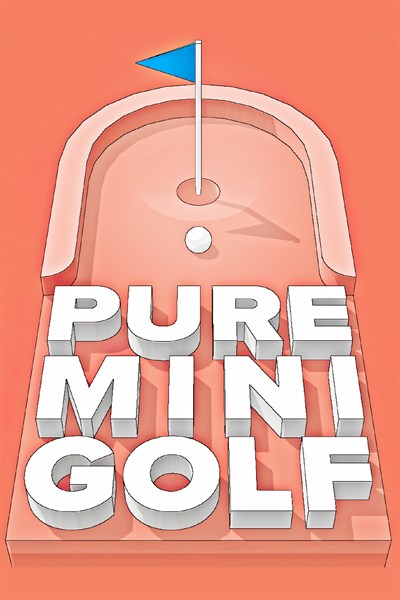
Enjoy over 50 unique levels, each with its own set of obstacles, twists, and turns. Its simple controls make it a snap to learn from the outset and through its three modes, you’ll soon go from fledgling to master putter.
Shines Over: The Damned will take you into a unique experimental horror experience in first person, where your senses will be tested and your reality questioned. You have no name, no memory, no weapons. There are no friends to protect you. You are alone except for your faithful German Shepherd dog, who will guide you through this dark world and stay by your side.
Why is my character floating in the air instead of standing on the ground in Unity?
I’m working on a Unity project and have implemented a character with a Rigidbody and Collider for physics interactions. However, I noticed that my character is floating or hanging in the air instead of standing properly on the ground.
using UnityEngine;
using UnityEngine.InputSystem;

[RequireComponent(typeof(Rigidbody2D))]
public class PlayerController : MonoBehaviour
{
    public float walkSpeed = 5f; // Walking speed
    public float runSpeedMultiplier = 1.5f; // Running speed multiplier
    public float jumpImpulse = 10f; // Jump force

    private Vector2 moveInput; // Movement input
    private Rigidbody2D rb; // Rigidbody2D component
    private Animator animator; // Animator component
    private SpriteRenderer spriteRenderer; // SpriteRenderer component

    public LayerMask groundLayer; // Ground detection layer
    private bool isGrounded = false; // Is the player grounded?

    public float CurrentMoveSpeed => IsRunning ? walkSpeed * runSpeedMultiplier : walkSpeed; // Current movement speed
    private bool IsRunning => Keyboard.current != null && Keyboard.current.shiftKey.isPressed; // Check if Shift is pressed

    private void Awake()
    {
        rb = GetComponent<Rigidbody2D>();
        animator = GetComponent<Animator>();
        spriteRenderer = GetComponent<SpriteRenderer>();
    }

    private void Update()
    {
        CheckGrounded(); // Update grounded state
        UpdateAnimations(); // Update animations
        UpdateSpriteDirection(); // Update sprite direction based on movement
    }

    private void FixedUpdate()
    {
        ApplyMovement(); // Apply movement based on input
    }

    public void OnMove(InputAction.CallbackContext context)
    {
        // Read movement input
        if (context.performed || context.started)
        {
            moveInput = context.ReadValue<Vector2>();
        }
        else if (context.canceled)
        {
            moveInput = Vector2.zero;
        }
    }

    public void OnJump(InputAction.CallbackContext context)
    {
        // Jump if grounded
        if (context.started && isGrounded)
        {
            rb.velocity = new Vector2(rb.velocity.x, jumpImpulse); // Apply jump force
            animator.SetTrigger("jump"); // Trigger jump animation
        }
    }

    private void CheckGrounded()
    {
        // Ground detection using OverlapCircle
        Vector2 groundCheckPosition = new Vector2(transform.position.x, transform.position.y - 0.5f);
        float checkRadius = 0.2f; // Slightly larger radius for consistent detection
        Collider2D groundCheck = Physics2D.OverlapCircle(groundCheckPosition, checkRadius, groundLayer);
        isGrounded = groundCheck != null;

        // Debug visualization
        Debug.DrawRay(groundCheckPosition, Vector2.down * 0.1f, isGrounded ? Color.green : Color.red);

        // Reset falling/jumping states when grounded
        if (isGrounded)
        {
            animator.SetBool("isFalling", false);
            animator.SetBool("isJumping", false);
        }
    }

    private void ApplyMovement()
    {
        // Apply movement with current speed
        Vector2 targetVelocity = new Vector2(moveInput.x * CurrentMoveSpeed, rb.velocity.y);
        rb.velocity = targetVelocity;
    }

    private void UpdateAnimations()
    {
        // Handle jump and fall animations
        if (!isGrounded)
        {
            animator.SetFloat("yVelocity", rb.velocity.y); // Track y velocity for transitions
            animator.SetBool("isFalling", rb.velocity.y < -0.1f); // Falling if downward velocity
            animator.SetBool("isJumping", rb.velocity.y > 0.1f); // Jumping if upward velocity
        }
        else
        {
            animator.SetBool("isFalling", false);
            animator.SetBool("isJumping", false);
        }

        // Handle running and movement animations
        animator.SetBool("isMoving", Mathf.Abs(moveInput.x) > 0.1f); // Ignore very small movements
        animator.SetBool("isRunning", IsRunning);
    }

    private void UpdateSpriteDirection()
    {
        // Flip sprite based on movement direction
        if (moveInput.x != 0)
        {
            spriteRenderer.flipX = moveInput.x < 0;
        }
    }

    private void OnDrawGizmos()
    {
        // Visualize the ground detection radius in the scene view
        Gizmos.color = isGrounded ? Color.green : Color.red;
        Gizmos.DrawWireSphere(new Vector2(transform.position.x, transform.position.y - 0.5f), 0.2f);
    }
}
The results are in – 92% of data leaders plan to make data observability a core part of their strategies in the next one to three years. Why is this becoming a key focus? Poor data quality, such as incomplete, biased or outdated data, can lead to flawed AI models, resulting in incorrect or harmful outputs.
So, data observability and data quality are critical if you want to build trustworthy AI initiatives.
In this report from CDO Magazine, you’ll learn:
Best practices of data quality management
Steps to build trustworthy AI initiatives
4 key aspects of data observability
How to foster a culture of data quality and observability
It’ll soon be possible to replace the speakers in recent MacBook Pro models without having to replace the entire top case, as has long been the procedure. A memo seen by reportedly informed Apple Stores and Authorized Service Providers this week that speakers will be available as standalone components for the 14-inch and 16-inch MacBook Pro with the M4 family of chips. A source also told the publication that this will be an option for repairs on earlier MacBook Pro models with Apple silicon as well.
The change should make for a less expensive repair. Up until now, the process entailed replacing the whole top case, including the battery and other parts, which works out to be pretty costly. It’s been that way since 2016. The with the new steps for speaker replacement is available online now from Apple Support. It may not necessarily be a simpler repair — the guide shows a process that’s rather involved — but not having to also replace other parts like the battery just to change out the speakers should cut costs significantly.
Professional architects, architecture students, and hobbyists alike are all aware of the importance of architectural models to visualize designs and communicate these with other people. Architectural models are also used to experiment with multiple design ideas. They even aid with the planning and construction stages of architectural projects. This article features 3D modeling services and is a comprehensive guide to architectural model making for companies and firms to give you a better idea of the important role they play in the world of architecture.
What are architectural models?
Architectural models are physical representations of architectural designs or ideas. An architectural model can either focus on a particular element, like a key space, or element in architecture, or on an entire design to showcase a proposal in its site context. Architectural models exist at different scales, with the model’s purpose usually determining the suitable scale. A context model, for instance, is often on a smaller scale since its purpose is to present the proposal in block form with its context and with the minimum detail required.
On the other hand, a detailed model of a complex façade will require a bigger scale to highlight the build-up of all the architectural materials and elements that produce a better architectural feature. Architectural models are traditionally made by hand with the use of materials including foam board, card, hardwood or balsa wood, plaster, and Perspex while utilizing power tools as well. Today’s state-of-the-art technology allows the use of laser cutters, CNC machines, and 3D printers to speed up the process of making models and produce models that are also more accurate.
Architectural models serve as visual aids throughout the design process. They are also used for presentation purposes during the final proposal. The model making’s physical act allows architects to understand their designs on a deeper level. Architects also get to explore the different physical qualities of the scale, form, and spaces they are making in a more tactile way. The models are also effective ways of representing the final proposal, with the stakeholders understanding the spatial relationships and architectural qualities of a proposal more easily through studying a miniature replica in 3D.
Why is the architectural model important for companies and firms?
It is very common to see architects examining architectural models at eye levels because this helps them imagine the design on a 1:1 scale. It doesn’t matter if you intend to make a presentation model or a conceptual model, it is important to have the ability to conjure the design at a 1:1 scale. An architectural model is a powerful tool for architectural design as it lets you explore the designs in a physical form.
Common uses and applications of architectural models
Architectural model making is used for several purposes and applications, such as the following:
Communication
3D Architectural modeling services facilitate and promotes communication among clients, contractors, and architects. At the same time, these models also help in conveying the intent of the design more effectively.
Architectural model making also gives architects the chance to evaluate the design proposal, pinpoint possible flaws, and improve the design throughout the development phase.
Presentation
Architectural models also improve the presentation of the final design by offering a more tangible physical focal point to entice viewers.
Visualization
An architectural model is a 3D representation of the designs to allow architects and the rest of the stakeholders to gain a better understanding of the spatial relationships, materiality, scale, and form of the proposal.
Types of architectural models
Architectural models come in different types, and these include the following:
Conceptual models
Conceptual architectural models are informal and fast. They help architects investigate and look into different holistic architectural ideas. These models are often made using low-budget materials with only primary tools required. A conceptual model often focuses more on simple forms with minimal detail.
Presentation of architectural models is effective in demonstrating final design proposals. These are usually for presentation and display to sell off the scheme to the rest of the stakeholders. Thus, these models are made by architectural presentation designers using quality materials in great detail.
Working models
Architects come up with working models to help them make informed design decisions throughout the design development phase. These are ready and rough exercises for experimenting in 3D form, scale, and spatial relationships. Mount board or cardboard are some of the common materials used for working models because these are easy to work with, not to mention low-cost as well.
Best tools for architectural model making
A crafter will never be able to craft with no tools to help him out. You will need a reliable set of tools that can get the job done to achieve the best results as far as architectural model-making is concerned. The good news is that there are now many companies out there that provide top-of-the-line tools that crafters can use. The best 3D model experts have an arsenal of excellent tools to produce scale models, especially if the models are made using wire or metal structures.
Sharp craft knives are essential to cut out shapes from the model materials.
Cutting mat
Cutting mats protect the work surface from cuts and scratches.
Glue
You can find a wide variety of glues in the market right now so make sure you choose the one that best suits the specific materials you are using or planning to use.
Paint
You can use paint to add more details and color to the architectural model.
Ruler
Rulers are important for accurate cutting and measuring.
Other tools
You might also require other tools as part of your architectural model making tool kit, depending on the specific type of model you’re making. These may include soldering iron, laser cutter, and hot wire cutter.
Now that you know the basics of architectural model making, it’s time to learn the steps involved in the process.
1. Conceptualize and plan
You have to decide on the purpose of your architectural model before you start building it. You will be able to determine it depending on what stage you are in the design process.
2. Collect reference materials
Research and gather architectural photographs, drawings, and examples of other similar architectural models that you can use as reference materials. These references can give you clearer objectives.
3. Identify measurements and scale
The purpose of the architectural model will dictate the suitable scale for it. A massing model, for example, would be a much smaller scale, like 1:200. This is because it is an exercise in spatial form and relationships. Meanwhile, a section model is on a larger scale like 1:25 because it requires a bigger level of detail.
Start by forming the base of the architectural model. See to it that you have an accurate representation of the topography and landscaping of the site. Your chosen materials should also be supportive enough as the foundation that you will build upon. Corrugated cards and foam boards are preferred here because of their cheaper price.
5. Build the structure
The type of architectural model you are making and the specific scale will determine the level of structure or detail required. A series of several smaller test models can serve as your guide in deciding on the modeling techniques and materials to use.
6. Add details
Adding fine details like textures, windows, and doors can improve the realism of an architectural model. This kind of detail is often more accurately and effectively modeled with the use of a laser cutter.
7. Consider the surroundings and landscape
Search for creative ways of representing your architectural model’s surrounding environment. Try making the trees by yourself using different materials because the worst thing you can do is buy artificial grass and model trees. Doing this will only make your landscape look similar to a train set.
Consider adding subtle elements of lighting to improve the overall impact of the architectural model. You can light up certain interiors or areas through the installation of small LED lights.
9. Photography and documentation
Capturing your architectural model in high-quality photos is one of the most valuable ways to document your entire design process as well as the final design in your presentation and portfolio references.
Wrapping It Up
Architectural model making is an excellent way to envision your design concepts, communicate these to the stakeholders, and learn more about the construction phase. But of course, many also find this a rewarding and fun hobby to have.
During architectural model making, it’s recommended to use a scale and a cutting mat. See to it that the tools are also sharp. Use only the highest quality tools for architectural model making to guarantee a hassle-free and stress-free process.
How Cad Crowd can help
Cad Crowd can connect you with the best architectural model making services that can help your company or firm bring your concepts and ideas to life.
MacKenzie Brown is the founder and CEO of Cad Crowd. With over 18 years of experience in launching and scaling platforms specializing in CAD services, product design, manufacturing, hardware, and software development, MacKenzie is a recognized authority in the engineering industry. Under his leadership, Cad Crowd serves esteemed clients like NASA, JPL, the U.S. Navy, and Fortune 500 companies, empowering innovators with access to high-quality design and engineering talent.