Welcome to the world of Unbridled: That Horse Game – a unique horse game simulator that gives you the freedom to make your own choices and shape your own destiny. As an Early Access title, we value player feedback and are actively working to expand and improve the game with your support. Competitions: Compete in large-scale events, including disciplines such as eventing and western riding. Estate Designing: Customize the appearance of your estate’s buildings and make it uniquely yours. Horse Breeding: Breed horses like never before in a horse game. More Horse Breeds: Discover additional horse breeds to enhance your herd. METAL SUITS: Counter-attack
Wild Animals: Encounter and interact with various wildlife species as you explore the world. Fishing: Enjoy the serene waters by fishing to catch a variety of species or other surprises. Western Riding: Explore a dedicated mode focused entirely on Western riding and enjoy the authentic atmosphere of this unique style. This is the horse game we’ve all been waiting for. Detailed horse care and riding mechanics, lovely environment, loads of tack and clothing options! There are still a lot of things to improve, build out, and add, being early access of course, but excellent for a base game.
Features and System Requirements:
Horse Creator: Design your dream horse with an incredibly detailed creation system, allowing you to customize everything from coat patterns and colors to features like mane style and unique markings.
Horse Care: Groom, feed, and care for your horses through systems that are easy to learn and feel realistic.
Training Sessions at the Riding School: Improve your skills on dedicated training courses designed to prepare you and your horse for future challenges or competitions.
Archery on Horseback: Test your precision with dynamic horseback archery gameplay.
Gardening: Grow plants, crops, horse feed, or flowers as a source of income.
Obstacle Course Builder: Train your horses your way by designing custom courses that suit your style and goals.
Jobs: Take on activities such as wood chopping and mining to earn money and gather resources.
Veilingen: Meet friendly NPCs and browse unique shops in the old town.
Screenshots
System Requirements
Recommended
Requires a 64-bit processor and operating system
OS: Windows (64-bit)
Processor: Intel Core i7 (7th generation or higher, 64-bit required)
Memory: 8 GB RAM
Graphics: NVIDIA GeForce GTX 1070 with 8 GB VRAM or equivalent
DirectX: Version 11
Network: Broadband Internet connection
Storage: 15 GB available space
Support the game developers by purchasing the game on Steam
Installation Guide
Turn Off Your Antivirus Before Installing Any Game
1 :: Download Game 2 :: Extract Game 3 :: Launch The Game 4 :: Have Fun 🙂
If creating successful consumer products were a sport, these 50 businesses are your all-star roster. Some are little scrappy boutiques pumping out great ideas from Brooklyn’s sunlit lofts or Portland’s factory floors. Others are innovation giants with international operations and patent portfolios that would make Edison blush. Whether it’s a sleek kitchen gadget, a smart wearable device, or a package that gets someone to say, “I want that,” these product design companies have been behind the scenes sketching, prototyping, testing, blowing it, fixing it, and ultimately getting it right.
1. IDEO – San Francisco, CA (and everywhere else, too)
IDEO isn’t a design company, but the name that comes up when a person wins a design thinking award or delivers a TED talk, culminating in “Now go create something meaningful.” From inventing the first Apple mouse to redesigning healthcare experiences, IDEO’s imprint is all over the contemporary consumer product world. They combine anthropology and engineering. Whether it’s a child’s toothbrush or a medical device that’s not medieval torture, IDEO injects that precious human focus that transforms ideas into movements.
Frog is referred to as the Miles Davis of product design—fashionable, creative, and continually evolving. Hatched in Germany, this legendary firm has expanded as an international powerhouse with significant U.S. locations. Their fingerprints can be found from the Sony Walkman to the newest smart home devices. What differentiates Frog isn’t design—it’s feeling. They are the go-to for clients such as Disney, Lufthansa, and Dolby for an experience that resonates more deeply. Renowned for industrial sleekness and systems thinking, Frog expertly integrates hardware, software, and UX. Its soulful design always redefines what a product should feel like.
RKS is the result of bringing cutting-edge innovation together with fearless, rockstar looks. They’re not your typical design agency—nay, they employ something referred to as “Psycho-Aesthetics,” an original model that melds emotion, psychology, and design thinking. It’s the way they’ve designed legendary products such as Harman Kardon audio systems, sexy Logitech devices, and otherworldly kitchen gadgets that wouldn’t be out of place on a spaceship. RKS delves deeply into user needs and market understanding to create products that people not only use but also desire. Their design resonates on an emotional level, showing that when form and feeling are combined, you don’t get just functionality, you get desire.
Altitude might fly under the Accenture banner these days, but their culture of boots-on-the-ground innovation remains as strong as ever. From Boston, this group has developed a reputation for creating sophisticated, functional consumer products that reach the market. They’re not merely concerned with looks, usability, and manufacturability are infused into everything they do. For startups pursuing retail ambitions and hoping to hit shelves at Best Buy, Altitude is the partner of choice. From initial sketches to production in full gear, they know how to go fast without going cheap. It’s product development with purpose, precision, and undeniable panache.
Breaking the rules for a second, Tangerine completely needs to be included on any design behemoth list, regardless of it being UK-based. Why? One word: Apple. Prior to Jony Ive revolutionizing tech design at Apple, he was creating bags at Tangerine. That alone is reason to investigate further. Now, this unsung studio crafts everything from cool consumer electronics to cutting-edge travel products, even high-tech toilets. What makes them unique is their dedication to merging stunning looks with the practical needs of real-world manufacturing. No gimmicks. No flair. Just careful, useful design that humbly drives some of the world’s most refined and surprising everyday items.
MNML—Minimal for short—celebrates minimalism with a fearless edge. Their design is clean, intentful, and provocatively modern, yet never sterile. Started by Scott Wilson, the company became famous when his LunaTik watch band escalated a modest Kickstarter into a multimillion-dollar phenomenon. Wilson infuses high-design skills into mainstream tech, wearables, and smart home devices. MNML collaborates with scrappy startups and industry behemoths alike, turning visionary ideas into gorgeous, market-ready gear. Imagine Apple’s beauty married to Bauhaus simplicity, topped with a spoonful of indie cool. MNML doesn’t only design products—they make cult-worthy icons with attitude and purpose.
If Portland is known for anything other than its passion for coffee and bicycles, it’s a passionate love of craft, and that vibe is alive and kicking at Matter. This diminutive but mighty studio has made a name in sustainable product design, and they are go-tos for up-and-coming brands with bold concepts. Circular design, creative materials, and lovingly crafted products are their niche. Whether it’s a prize-winning water filter or smooth, sustainable electronics, Matter demonstrates that amazing design can be gorgeous and sustainable. No mass-produced plastic, just well-considered objects crafted with care, intention, and a keen attention to detail. It’s Portland innovation at its finest.
Columbus might not be the first place that comes to mind for top-tier product development, but Priority Designs is changing that perception fast. Tucked away in the Midwest, this powerhouse blends serious engineering know-how with sharp industrial design. Their massive prototyping lab turns concepts into reality, and their client list, like Nike, Scotts, and Whirlpool, speaks volumes. What distinguishes Smart Design isn’t so much technical prowess; it’s their profound understanding of how everyday people actually use products in everyday life. Their approach hits the exact balance between hard facts and visionary imagination, so they are one of the region’s most compelling creative talents.
Smart Design really is smart. They’re the creative geniuses who created the original OXO Good Grips, a line of kitchen tools that revolutionized the category with their ergonomic, user-friendly handles. That groundbreaking design wasn’t just smart, it was rooted in understanding how actual consumers live and interact with products. Smart Design applies that same consumer-centric sensibility to everything from wearables to medical devices to high-technology products today. Their design is notable because it’s uncomplicated, readable, and ridiculously useful. If a product feels natural and welcoming, smart money says Smart Design was involved in making the experience happen.
Pensa is where industrial cool meets street smarts in the best possible way. This Brooklyn design studio makes everything from drones and bike locks to sophisticated home technology, always with a practical, get-your-hands-on-it attitude. Their office overlooks the Brooklyn Navy Yard, giving prototypes an opportunity to encounter the real world before hitting the market. Pensa integrates R&D, strategic design, and rapid prototyping into one razor-sharp, innovative hub. They’re also the brains behind Street Charge, those solar-powered charging stations popping up in parks and public spaces. For Pensa, awesome design isn’t only clever, it’s street-tested, fashionable, and designed to keep pace with life.
Whipsaw is the Hollywood of product design, sleek, visionary, and perpetually a bit ahead of its moment. Headquartered in the center of Silicon Valley, Whipsaw has served more than 800 customers in consumer electronics, robotics, medical devices, and more. Founder Dan Harden and his design team have created some of the most recognizable smart home devices, such as the original Google OnHub router and Arlo cameras. What makes them unique? They merge art, usability, and innovation into designs that appear futuristic but feel instinctively familiar. It’s no wonder they’ve accumulated over 300 design awards.
12. Enlisted Design – Oakland, CA / Salt Lake City, UT
Enlisted is effortlessly cool, a self-assured friend every startup wants on speed dial. Whether it’s stylish home technology or tough outdoor equipment, this team is able to bring a brand to life through product design. Their collaborations with brands such as Allbirds, Stance, and Nestlé are evidence that they are not only designing functional products but also creating experiences that tap into emotions. What truly sets them apart? They take their industrial design and carry it over seamlessly into packaging and brand strategy. The outcome is more than a product; it’s an integrated, memorable experience from shelf to unboxing. That’s the Enlisted signature.
Where UX/UI comes together with physical products, Momentum excels, which is why they’re a perfect fit for businesses creating smart, connected devices. From app-enabled air purifiers to cutting-edge fitness devices and easy-to-use baby monitors, they’re experts in hardware-software integration that simply feels natural and seamless.
Their design-first approach has them developing the user experience early, before they have any hardware in the works, resulting in a product that’s both delightful to interact with and functional. For brands walking the tricky tightrope between digital interactions and physical-world experiences, Momentum provides buttery-smooth transitions that almost feel otherworldly. It’s not about design—it’s an end-to-end product experience, designed from the inside out.
Baren-Boym is unique in the world of design as a studio that is just as comfortable creating beautiful curves as it is working with complex engineering specs. From baby monitors to sophisticated luxury cosmetics packaging and cutting-edge kitchen appliances, their client list is astonishingly varied. With studios in New York, they offer a no-nonsense, practical approach where function never takes a backseat to form. All of their projects are based on thorough research, user testing, and astute manufacturing practices. It’s this balanced, reflective process that brings Fortune 500 titans and nimble DTC disruptors back time and time again. When you require design that actually delivers, Baren-Boym is usually already at the table.
Atlanta’s THRIVE is one of the South’s most interesting design agencies in this national light. Their secret? A strategy-first approach that establishes the tone for all they do. Before diving into design, they invest in consumer insights, behavioral tendencies, and market trends. That groundwork powers a creative process leading to crisp, scalable industrial design. Whether connected health devices or performance athletic equipment, THRIVE produces work that’s functional and eye-catching. Industry giants like Coca-Cola, Philips, and Samsung have taken advantage of their skills, showing that well-considered design strategy isn’t only wise, it’s necessary.
Remember the Xbox 360? Astro Studios had a hand in shaping its iconic look. This San Francisco-based design firm has also collaborated with heavyweights like Nike, HP, and Beats by Dre. What sets Astro apart is its focus on creating products that drive culture, not just follow trends. Their design is aggressive, expressive, and willing to push boundaries, but never at the cost of usability. Every decision they make comes back to strategic branding and the way people really use the product. From wearables to gaming products, Astro creates the types of products that start conversations and make an impression.
If consumer electronics are your passion, Nuvation is the behind-the-scenes powerhouse. In contrast to design-led aesthetic companies, Nuvation goes all-in on engineering and it’s their secret ingredient to high-tech success. They do the hard stuff like PCB layout and embedded systems, so your product is not only sexy but bulletproof where it matters most. Their work may not see the light of day for end users, but it’s crucial to functionality and scalability. They’re the behind-the-scenes geniuses who ensure all the flashy devices actually function. In a cool tech world, Nuvation is the engineering foundation that holds it all together.
Seattle’s Tactile excels at its hands-on, detail-oriented process of product design. From creating smart fitness wear to experimenting with AR/VR technology, the team infuses highly technical products with a distinctly human touch. Their studio lives and breathes prototyping—imagine physical models, back-and-forth sketches, and ongoing user testing. This culture of ongoing refinement has each design naturally develop from real-world feedback. The payoff? Products that are intuitive, personal, and refined. With clients such as Microsoft, Panasonic, and Intel on their roster, it’s obvious that Tactile’s systematic creativity isn’t only respected, it’s sought after throughout the tech industry.
19. Veryday (Now part of McKinsey Design) – New York, NY / Stockholm, Sweden
Veryday is yet another globally born star that’s making waves within the American design community. Historically grounded in Scandinavians’ tradition of insightful and compassionate design, they’ve come to be an integral component of McKinsey Design’s global face. You may recognize them as the force behind the legendary BabyBjörn, but their portfolio now extends well beyond baby accessories. Now they focus on healthcare, lifestyle, and wellness products that have a human touch, such as home fitness equipment and medical devices with a gentle, user-friendly hand. Their skill is taking complicated products and making them feel accessible, so design always begins with the person using the product.
Cre8 is an agile, innovative industrial design force that consistently produces sleek, upscale products. From kitchen appliances and beauty gadgets to home tech and amazing DTC packaging, they assist emerging brands in creating a distinctive visual identity. The best thing about Cre8 is that they are able to transform raw, nascent ideas into production-ready designs that are desirable from the get-go. Their work exudes emotional draw, imagine flowing curves, tempting textures, and that leaping-from-your-eyes thing when a product simply clicks. It’s not design, it’s the creative process of getting people to fall in love with something they never realized they wanted.
RKS is one of those veteran shops that never gets complacent. They’ve got a portfolio that goes back to the 1980s, having launched everything from electric shavers to intelligent water bottles. What differentiates RKS is its dedication to “Psycho-Aesthetics®,” a patented approach fusing emotional connection with visual design. Sounds high-brow, but essentially: RKS does not simply design the appearance of a product, they design the way it makes you feel. Whether bridging an emotional connection for a wellness company or crafting high-impact consumer electronics, they’ve got personal connection down to a science.
A female-founded studio crafting a more beautiful future? Yep. Nonfiction is remaking the tech sector, prioritizing deep-tech and wellness technologies. Their catalog features cutting-edge wearables, intelligent medical devices, and sophisticated equipment for health enthusiasts and biohackers. From breath-training devices for top athletes to relaxing devices that might be mistaken as NASA prototypes, each piece of work feels futuristic, cautiously crafted with empathy and an element of sci-fi. Their clients are pioneers in biohacking, mental health, and climate-resilient technology. It’s not just product design, it’s future-forward innovation crafted to improve lives and push boundaries in some of the world’s most vital sectors.
Ever noticed how some gadgets just look like the future? MNML might be why. Started by former Nike designer Scott Wilson, this Chicago design firm is responsible for some of the coolest fitness trackers, drones, and e-bikes out there. Their clean design hides some serious tech, and elegance meets innovation. They initially shook things up with LunaTik, turning the iPod Nano into a proto-smartwatch before Apple even got in on the action. Since then, they’ve contributed to powering design for industry titans like Peloton, Samsung, and YETI. The outcome? Products that are effortless, inevitable, and always a step ahead of what you thought you were going to need.
Having joined Delve, Bresslergroup applies decades of experience translating human-centered research into award-winning consumer products. Their true area of strength is networked devices, smart thermostats, security systems, and pet technology that just works. They distinguish themselves through their fixation on usability. Their work sits in the background, integrating into life with such naturalness that you barely even see it. And that’s the idea. Bresslergroup doesn’t seek to be noticed; rather, their creations glow by refining mundane habits. It’s design for the sake of design and done with a demure confidence that advances the product—and not the designer—into the high-profile position where it should be.
Down in SoCal sunshine, DDSTUDIO is making waves with some simply exquisite work in healthcare and lifestyle design. Though they’ve built a reputation in med-tech, their portfolio extends far beyond, marrying beauty and function in consumer products where wellness and innovation intersect. They refer to themselves as an “innovation studio,” but they’re really so much more than just designers—they’re early-stage partners. Their group of researchers, engineers, and creatives immerses itself in the ideation process to craft solutions that intuitively feel, humanely feel, and even feel joyful. With a talent for distilling complexity into its most essential elements, DDSTUDIO shows that great design not only works but can also feel good.
Taking Frog Design’s place is Pushstart Creative, an Austin gem that’s been working in the background to assist consumer tech and lifestyle brands with making big design strides. They’re a small crew with lots of energy, most famous for turning high-level napkin sketch ideas into producible, marketable products. Whatever it is—smart kitchen appliances, wearables, or IoT products—Pushstart infuses every project with a contagious maker spirit. Their prototypes are neurotically spotless, their interfaces elegantly minimalist, and their packaging? Simply charming. And they work in close partnership with startups, so if you’re early stage and growth-hungry, they’re a great launchpad.
Prior to Oculus acquiring them, Carbon Design Group was already making waves in product design circles. Renowned for their clean design, impeccable engineering, and user-centric innovation, they established a legacy that prepped them perfectly for what would eventually be Meta Reality Labs. And today, their DNA continues to infuse some of the most cutting-edge VR and AR hardware available. Whether you’re crafting headsets, smart glasses, or next-gen controllers, Carbon’s legacy provides a masterclass in considerate design. It’s not so much about creating awesome tech, it’s about making it smart, lovely, and designed for actual people.
Worrell is one of those companies that strikes the perfect balance between consumer appeal and medical-grade innovation. Their sweet spot? Lifestyle and wellness devices, hydration-monitoring wearables, intelligent yoga mats, and therapy tools that feel spa rather than hospital. Their design language tilts clean and Scandinavian, prioritizing clarity and simplicity. But it’s not all about being pretty; Worrell is passionate about inclusive design, ensuring that their products function for everyone across all ages and abilities. Subtle yet powerful, they’re a best bet for businesses looking for functional, accessible solutions that enhance health tech without sacrificing style or usability.
Studio Red is the type of straight-shooting Silicon Valley company that takes crazy ideas and turns them into clean, producible prototypes quickly. From robotic vacuums, wireless speakers, to smart doorbells, they’ve helped bring to life some seriously awesome consumer technology. They’re renowned for their extremely iterative approach to design, and thus a startup favorite in a world where time is of the essence. They may take a leading role in engineering, but never at the expense of aesthetics, making each product both functional and stunning. If you’re planning a Kickstarter-ready launch and require something that is as elegant as it is efficient, Studio Red is your go-to team. Brevity is a hallmark of all they produce.
30. Design Partners – Dublin, Ireland / San Francisco, CA
Ireland-based Design Partners has been making serious ripples with US brands, designing incredible products for Logitech, Beats, and HP. Their secret? An intimate knowledge of user behavior and smooth, emotionally intuitive design. From ergonomic equipment to fashionable kitchen devices and high-spec gaming equipment, they infuse every product with a considered, intuitive feel. Their products not only look great, but they also feel instinctive. Rooted in a studio firmly based in California, they’re ideally placed to tap into the furious pace of Silicon Valley while holding fast to their European design heritage at the forefront.
Few studios ride the razor-thin line between elegant design and cutting-edge engineering like Whipsaw. These guys have worked on consumer products you’ve likely already touched—from Arlo security cameras to Brita water filtration pitchers. They’re designing Swiss Army knives: one day working on a smart medical device, the next refining a streaming remote for the next-gen couch potato. Everything they do screams precision. Their design aesthetic is clean, intelligent, and quietly futuristic—no splash, lots of functionality. If Whipsaw were human, it’d be the fashionably dressed engineer who just happens to be strangely skilled at interior design.
Y Studios is where East and West meet in a collision of intelligent design and poetic storytelling. Founded by Taiwanese-American designer Wai-Loong Lim, this studio brings cross-cultural richness to consumer product design. From stylish kitchen appliances to digital devices and beauty tech, their work is always infused with a signature element that is understated but profoundly human. Their approach to design is not just about more than function; it engages the way things feel, physically and emotionally. Through an emphasis on the material and psychology of use, each item communicates to the senses. “Designing with soul” is not a slogan—it’s the pulse of all they do.
Smart Design created the “design thinking” way before everyone else caught on to the bandwagon. Recall those OXO Good Grips your mom still adores? That was them making kitchen staples ergonomic in order to turn them into icons. Since then, they’ve continued innovating, putting their energy into inclusive design for consumer products and health & wellness. Whether a high-tech bathroom mirror or a precision-fit toothbrush, they’re all about designing products that simply make sense. No flashy gizmos, no exclusivity, just intelligent, intuitive design for regular people. Behind everything is a simple conviction: great design should work for everyone, not just the tech-savvy.
Hidden away in Manhattan’s Flatiron District, Prime Studio is a tiny squad with an enormous impact. Their products appear modestly on Target and Sephora shelves, as well as REI streamlined packaging, clever dispensers, and small electronics that simply feel right. Chances are you’ve already used their designs without ever knowing it. That’s the sorcery: products that appear effortless but are crafted with compulsive attention to detail. They marry beauty with functionality, forming concepts into things that individuals truly want to hold, use, and buy. Though small in number, Prime Studio’s design presence spans the retail world, evidence that great impact does not necessarily result from great companies.
Led by former Apple design mastermind Robert Brunner, Ammunition is the chic elder statesman of consumer product design. They’re most famous for designing the legendary Beats by Dre headphones, but their influence doesn’t end there. Ammunition combines chic industrial design with intelligent branding, producing products that don’t merely perform beautifully, they look like they were born to inhabit your world. From stylish health-monitoring rings to cutting-edge kitchen devices, their work is always visionary and emotionally stimulating. It’s the type of design that has people saying, “I need that,” without ever even knowing what it does. That’s the Ammunition magic.
Altitude was a quick, clever studio based out of Boston that was acquired by Accenture. But don’t be fooled by the corporate parent; basically, they’ve still got boutique innovation mojo. Altitude excels when the product problem is nebulous and requires macro-level strategy and user understanding. They specialize in consumer wearables, smart home appliances, and connected health devices. They create clean, engineered, and scalable designs, which is why Bose and P&G bring them in when they want it done correctly.
Tool doesn’t design products. They create them. With a strong focus on research and in-depth collaboration, Tool assembles industrial designers, engineers, and UI/UX thinkers to create an idea think tank. Their work varies from beauty gadgets to home technology and everything in between. They have a reputation for functional minimalism, a sort of Scandinavian-American hybrid aesthetic, but above all, Tool applies an inventor’s sense of curiosity to consumer goods. They excel at bringing to the surface user issues that really matter and solving them cleverly.
Fewer than a handful of agencies can merge industrial design with narrative as well as CleverCreative. Though most famous for packaging and branding, they’ve been getting their toes wet more and more in physical product design, particularly in personal care, food & beverage, and boutique lifestyle sectors. If your consumer good must be utterly Instagram-look-attractive, then CleverCreative is the studio for you. They specialize in designing for experience rather than function and are geniuses at crafting product ranges that feel and look like a live brand.
Crossing the pond again for an excellent reason, Morrama. This UK female-led studio creates award-winning consumer goods for health, fitness, grooming, and wellness markets. Consider razors that have the feel of sculpture, vitamins that appear like designer sweets, and yoga blocks with uses other than on the mat. Morrama’s look is inescapably chic, but sustainable design and circularity are its true powers. All material, texture, and mechanism selection is based on longevity and emotional connection. For companies that desire products that stop traffic while minimizing waste, Morrama is a design partner you’d like to have in your corner.
40. TEAMS Design – Chicago, IL (with offices worldwide)
A worldwide design firm with a Chicago presence, TEAMS makes waves in the consumer products industry, particularly where engineering intersects with design at scale. Founded in Germany, their organized, near-Bauhaus-type thinking comes through in their approach. From appliances to power tools to personal health devices, they create for durability, not tricks. TEAMS shines in products that are intuitive in feel, even when technically complex, making it a darling for multi-functional kitchen and personal care products.
41. Mindtribe (Part of Accenture Industry X) – San Francisco, CA
Mindtribe, now a part of Accenture, is one of those behind-the-scenes giants of hardware creativity. Though they may be occasional invisible players, their impact is gigantic. They are experts at the nexus of hardware, firmware, and design, so for intelligent devices, networked appliances, or wearables, they’re top problem-solvers. They’re the design thinkers engineers adore and the engineers design firms envy. Their capacity to take a prototype to production is unmatched in Silicon Valley.
Enlisted Design balances beauty and strategy with ease. This is the group responsible for some of the most cutting-edge packaging and hardware design in Target, Amazon, and big box retailers nationwide. They assist young brands in punching above their weight and large brands in feeling boutique. They work with Allbirds, Arlo, and Native, and they do a great job of making sustainable, sophisticated products. Bonus: Their branding and photography are so sleek, it’s practically cruel. They’ll make your toothbrush appear as though it should be in a high-end hotel.
Echo is a top-notch, from-start-to-finish product development company. They couple engineering prowess with industrial design for real-world outcomes, particularly in the home and kitchen market. You’ll usually find them in the trenches working out the real-world manufacturability: How do you make this safer? More cost-effective? Simpler to use? If you’re racing the clock to get a physical product to market and need cutting-edge design that won’t disintegrate during production, Echo’s your team.
Mako has established itself as the go-to launch partner for inventors and startups. Their expertise is in taking crazy napkin concepts and turning them into producible, crowdfundable, shippable consumer products. From Bluetooth devices to lifestyle products and pet technology, they guide you from concept design through prototyping and then some. Their founder, Kevin Mako, is an advocate of inventor-driven innovation, so they’re accessible even without a million-dollar VC cheque behind your back.
How to discuss consumer product design without genuflecting at the altar of IDEO? The pioneering design thinking behemoth requires little introduction. Though they apply their considerable skills in many sectors, their influence on consumer products is enormous, ranging from child-friendly toothbrushes to game-changing medical equipment. IDEO doesn’t simply design products; they design systems, services, and customer experiences. Their impact is intellectual, aesthetic, and cultural. If you desire your product to address actual human issues and be a part of something greater than yourself, this is your cathedral.
46. Lunar (Acquired by McKinsey) – San Francisco, CA
Lunar was once an independent force in Silicon Valley before being acquired by McKinsey. Today, they’re a hybrid creature of design innovation and management consulting size. They have a deep history of clean, compelling consumer design electronics, home goods, and their multidisciplinary process means each product is seen from 360 degrees: user need, market opportunity, business effect. Their industrial design is always clean, tactile, and quietly opulent.
Yes, we’re closing with another heavy hitter from across the Atlantic. Layer, led by the prolific Benjamin Hubert, is where future-forward industrial design meets user-focused experience. Their work in consumer electronics, smart furniture, wellness tech, and sustainable goods is nothing short of jaw-dropping. Consider headphones that adjust to your surroundings, chairs that recognize your posture, and bags that travel as if they belong to you. Layer isn’t inexpensive, but if you’re looking for the type of product that’ll have people whispering “Where did you get that?” they’re your ticket.
48. Tangerine – London, UK (Co-founded by Apple’s Jony Ive)
You know Jony Ive, the design minimalist genius who created the iPhone. But prior to Apple, he co-founded Tangerine. Although Jony’s long since departed, the company still retains that heritage of incisive, reductionist design thinking. Precision, elegance, and form following profound user logic are their hallmarks. Their work extends to consumer electronics, intelligent transportation, and, more recently, home and lifestyle technology. Tangerine is small-firm in feel but world-class in attitude.
If you desire Apple-quality design without Apple prices, they’re the ones to call.
StudioRed is a nimble design and engineering team in the center of Silicon Valley. They’ve made a reputation assisting health-tech startup companies and consumer electronics companies go from napkin to shelf. What separates them is their prototyping lab and iterative design skills; they’re fast, and they’re even faster, plus they ensure that what you ship is exactly what you truly wanted to create.
From smart water bottles to home health products, they assist clients in designing intuitive, visually clean, and scalable consumer technology.
We conclude with RKS Design, perhaps the most strategically oriented design company in the nation. This team pioneered the idea of “Psycho-Aesthetics,” a philosophy that combines psychology and emotional narrative with physical design. Their client list includes consumer electronics, packaging, and personal health. If you desire your product to engage with users on an emotional, not merely functional, level, this is the place. RKS is the unusual marriage of art, business strategy, and profound human understanding.
From sea to shining sea and yes, a few mythic stops overseas, these 50 product design studios are more than ad agencies. They’re the ones creating the next wave of objects we live with, work with, and lug around in our daily lives. Whether you’re a scrappy startup with a bold idea or a seasoned company looking to reinvent your product line, there’s a firm on this list ready to elevate your vision with empathy, precision, and a splash of wow.
So go ahead and favorite your favorites, contact us with that sketch or pitch deck, and let’s get to work on making your product idea come to life in a tangible, stunning, and globally ready form. Because in great consumer product design, the right partner matters.
How Cad Crowd can help
Cadcrowd has access to a network of skilled consumer product design firms and freelance designers. No matter how big or small your project, they are more than able to assist. Contact us for a free quote.
MacKenzie Brown is the founder and CEO of Cad Crowd. With over 18 years of experience in launching and scaling platforms specializing in CAD services, product design, manufacturing, hardware, and software development, MacKenzie is a recognized authority in the engineering industry. Under his leadership, Cad Crowd serves esteemed clients like NASA, JPL, the U.S. Navy, and Fortune 500 companies, empowering innovators with access to high-quality design and engineering talent.
The forecast this month is showing a 100% chance of epic gaming. Catch the scorching lineup of 20 titles coming to the cloud, which gamers can play whether indoors or on the go.
Six new games are landing on GeForce NOW this week, including launch day titles Figment and Little Nightmares II.
And to make the summer even hotter, the GeForce NOW Summer Sale is in full swing. It’s the last chance to upgrade to a six-month Performance membership for just $29.99 and stream top titles like the recently released classic Borderlands series, DOOM: The Dark Ages, FBC: Firebreak, and more with GeForce RTX power.
Jump Into July
Face your nightmares.
In Figment, a whimsical action-adventure game set in the human mind, players guide Dusty — the grumpy, retired voice of courage — and his upbeat companion Piper on a surreal journey to restore lost bravery after a traumatic event. Blending hand-drawn visuals, clever puzzles and musical boss battles, Figment explores themes of fear, grief and emotional healing in a colorful, dreamlike world filled with humor and song.
In addition, members can look for the following games to stream this week:
Here’s what’s coming in the rest of July:
The Ascent (New release on Xbox, PC Game Pass, July 8)
Every Day We Fight (New release on Steam, July 10)
One of the web’s longest-running tech columns, Android & Chill is your Saturday discussion of Android, Google, and all things tech.
Prime Day has always been the day when I tell myself I’m not going to buy anything I don’t need or waste money on stupid things. Then I do both.
This year will be different; it has to be because I’m broke. Even if I wanted to buy a bunch of gadgety toys, I can’t, because a life-changing medical issue and a whole lot of expensive water damage to my house have left me with no money, maxed credit cards, and bills to pay. The tank is dry, and now I have to fill it up again.
It’s not all bad. I have a phone that will last me until at least next year, a Chromebook that will be updated for a while, and a drawer filled with gadget junk I’ve already bought that I can tinker with all over again. You never know, I might be able to do something new and cool because ideas are free, and old stuff can be useful sometimes.
(Image credit: Derrek Lee / Android Central)
We’ll be buying a bunch of boring household stuff if we can find it in bulk and on a good sale. Stuff like trash bags, laundry detergent, and assorted crap that everyone needs. I figure between Amazon and Walmart — which you know is going to have a bunch of stuff on sale to compete — we can actually save a few bucks in the long run by spending it up front. Every penny counts.
However, I also need to ensure that the things I can’t afford to replace will last until I can. I have learned that it’s always better to spend a few dollars in advance to try and prevent breaking or losing your stuff, which will cost a lot of money to replace. Things like phones. Especially phones.
Your phones and watches need protection
(Image credit: Motorola)
I’m shopping for a good screen protector and a case for my phone, my work phone (or I can let it break and ask for a new one), and my wife’s phone. Usually we buy a new phone because we either really wanted one or because the one we have stopped working. My wife is especially hard on the screen and has busted more than a few over the years. She says that doesn’t happen to me because I’m lower to the ground, but I chalk it up to my jungle-quick catlike reflexes and superhuman speed.
Either way, a good screen protector and a case I can stand (I really don’t like either and never use them) will mean my phone has a better chance of surviving until I can afford to replace it. Same for my wife’s. If I have to spend $100 to potentially save $1,000, I’m good with that.
Get the latest news from Android Central, your trusted companion in the world of Android
A GArmin Vivoactive 6 (left) and Pixel Watch 3 (right). (Image credit: Derrek Lee / Android Central)
The same goes for our watches. I use a Garmin and my wife has a Pixel Watch, and both of them still work great. I’m sure they will keep it up for at least another year unless they get broken or lost. I know they make screen protectors for watches, and I’ll be buying a couple as well as a new silicone band for each. I’m also going to see what the case situation is. Yes, you can buy a case for your smartwatch.
Tablets, computers, and cables
(Image credit: Andrew Myrick / Android Central)
My wife uses a Galaxy Tab, and I have an iPad here as well as a Chromebook I use for work. All three need to keep running until I can afford to replace them.
I know they make cases and screen protectors for both tablets, and I have seen some for a laptop before. If there’s stuff to fit my Chromebook, I’m going to add it to my budget.
I know I’m quickly reaching the limit of what I can afford to spend, but I also want to buy two USB chargers and two new high-quality cables. They can sit in the package until I need them, and it will be cheaper than running out to Walmart after work and grabbing one because I need it right away.
All of this is going to cost me some money, and I know that. It will also help make sure I don’t have to spend more later, or even worse, need something and not have the funds to get it.
It’s okay to be cheap, and Prime Day is your time
My wife says I secretly love this because I’m a cheap bastard who never likes to spend money. She’s right and wrong — I am cheap, and that has taught me how to get more by spending less. I’m doing it because I have no choice, though.
Those fancy headphones I’ve been wanting will just have to wait.
The typical hiring process goes something like this:
Know the job you need to fill
Write a job description
Advertise
Interview
Hire
It’s a method that many organizations have used for decades. Yet how is it that your organization can’t find the right person?
Perhaps it’s in how you’re working the process. In fact, much of what goes into that hiring process will work if you approach each process with more intention. Here are some easy tweaks to help you find quality job candidates and improve your results and retention levels.
Know the job. Sue’s retirement left a gap in your claims department. You think the role you’re filling is someone with claims experience. While that’s true, it’s also true that Sue wasn’t just a claims examiner. She led a team of examiners and liaised with subject matter experts. Sue was also someone who could solve problems and communicate with all stakeholders in a way that ensured a cohesive, team approach to resolving claims.
That means your next employee should also have leadership skills, should be excellent at problem-solving, and should put communication at the forefront of every project.
Write the job description. The right job description telegraphs to all applicants what it is they need to highlight in their work experience. Todd may be a superb numbers guy, but is he someone who has worked successfully as a team participant? Highlight those skills that your organization needs that will benefit the business.
Advertise. Here’s where bias can hamper your best intentions. Hidden bias can creep into your job ads. Review ads, looking for phrasing that includes bias, such as “chairman” (not chairperson), or using words that are inherently masculine or feminine or point to age, such as “aggressively seeking” or “digital native” phrases.
Now is also the time to rethink the traditional employee pool. Because the insurance industry struggles to attract top talent, it makes sense to include remote workers, part-time job seekers, retired professionals looking to augment their retirement income, etc. Your next best employee could well be someone who lives five states away or who works evenings and weekends. Reconsider how you approach your employee work model – with an estimated 36.2 million Americans working remotely and 98% of job seekers wanting remote or hybrid work, you can attract more talent by simply offering hybrid or remote positions.
Interview. This is another area where hidden bias can creep in. WAHVE uses our proprietary software to qualify and match the right-fit talent for your position. We identify the top-scoring applicants, we help you find candidates whose skills and personalities best fit with your organization’s needs.
Hire. Once you’ve placed a new hire make sure to arm them with the tools they need to succeed. HR should be walking them through the first week, answering questions and helping them orient. From there, assign a mentor. Match your new person with the employee who can impart soft skills as well as job duties with equal importance. Stay present and connected with the new hire for the first six months, then on a regular basis throughout their tenure. Give all your employees access to a number of communication tools to help them collaborate no matter where they’re working from.
Now stand back and watch your employees grow. The hiring process works if you shift your perspective to those skills and people that will help propel your business forward. The changes are subtle, but the impact can be huge.
The suspense is finally over. Elon Musk, the visionary behind Tesla and SpaceX, officially declared the formation of a new political party on Saturday, July 5, 2025. His stated aim: to challenge the long-standing dominance of both the Republican and Democratic parties.
“Today, the America Party is formed to give you back your freedom,” the controversial tech entrepreneur announced on X (formerly Twitter) at 3:46 PM ET.
By a factor of 2 to 1, you want a new political party and you shall have it!
When it comes to bankrupting our country with waste & graft, we live in a one-party system, not a democracy.
The creation of the “America Party” is nothing short of a bombshell, particularly given Musk’s significant financial contributions and political alignment with Donald Trump in the lead-up to the 2024 presidential election. Last year alone, Musk spent nearly $290 billion to support Trump’s return to the White House. This timely alliance granted the self-described “Techno King” an unprecedented level of influence for a tech entrepreneur in American politics. Trump, in turn, entrusted Musk with a custom-created federal department: the now infamous Department of Government Efficiency, or DOGE.
DOGE, however, quickly became a lightning rod for criticism, seen by many as emblematic of the very dysfunctions it was meant to fix within the federal government. Its methods and decisions, including the closure of federal agencies and drastic cost cutting at essential institutions, provoked widespread rejection of the billionaire.
This backlash manifested in protests outside Tesla showrooms, a drop in the electric vehicle maker’s stock price, and a noticeable plunge in profits and sales. Tesla’s sales erosion continued into the second quarter of 2025, during which the carmaker’s global deliveries fell by 13.5%. Tesla’s reputation, and that of Musk, suffered significantly, especially as the carmaker’s customer base heavily includes progressives and liberals who viewed his political alignment as a sharp departure from their values. Under increasing pressure from the markets, Musk formally withdrew from his government role at the end of May.
His public fallout with Trump began almost immediately after his departure, marked by a public spat between the two powerful figures on June 5. After a few weeks of relative calm, Musk reignited the feud by sharply criticizing the “One Big Beautiful Bill,” President Trump’s signature piece of legislation. He then publicly vowed to launch a political party and do everything he could to defeat Republican elected officials who voted for it.
As promised, on June 30, Musk formalized the political party he had previously hinted at, following the bill’s signing into law. The initial post announcing the party’s formation generated more than 3 million views in less than an hour, signaling the immediate and widespread attention it commanded.
Reactions on X, Musk’s social network, were acutely mixed. Users who visibly supported the MAGA movement and the Grand Old Party (GOP) expressed palpable disappointment and anger. Many lamented that the billionaire’s decision would, at best, fracture the conservative vote and, at worst, pave the way for Democratic victories in upcoming elections, particularly the crucial 2026 midterms.
“Why not just try and take over the GOP with more America First candidates?” asked one user, clearly disheartened by the billionaire’s move.
Why not just try and take over the GOP with more America First candidates?
— Joey Mannarino 🇺🇸 (@JoeyMannarinoUS) July 5, 2025
Roger Stone, a long time ally of President Trump, weighed in, commenting, “I have huge respect for @elonmusk and everything he has done for free speech and to ferret out waste fraud and corruption in federal spending. But I would rather see him pursue his efforts at electoral reform within the Republican Party primaries rather than having a new party splitting the vote of sane people and letting the Marxist Democrats gain control again.”
I have huge respect for @elonmusk and everything he has done for free speech and to ferret out waste fraud and corruption in federal spending, but I would rather see him pursue his efforts at electoral reform within the Republican Party primaries rather than having a new party…
Another disappointed user questioned the legitimacy of the decision: “So a little over a million people across the entire world take your poll and you’re convinced this is what Americans want? And you do understand Democrats (who now despise you) would vote yes, knowing that you’ll end up splitting the Republican party. Don’t do this.”
So a little over a million people across the entire world take your poll and you’re convinced this is what Americans want?
And you do understand Democrats (who now despise you) would vote yes, knowing that you’ll end up splitting the Republican party.
“@elonmusk you need to rethink this one,” one user pleaded. “All you can hope to accomplish is to hand power over to democrats for decades with a successful 3rd party.”
@elonmusk you need to rethink this one. All you can hope to accomplish is to hand power over to democrats for decades with a successful 3rd party.
— @CharlesleeTX1911 (@Charles07788205) July 5, 2025
An angry user directly challenged Musk’s character: “Has anyone thought about the fact that Elon Musk turned his back on someone he called a friend because things weren’t going his way? This is the kind of person you want to get behind?”
Has anyone thought about the fact that Elon Musk turned his back on someone he called a friend because things weren’t going his way?
This is the kind of person you want to get behind?
“This will fracture the right and split the vote. I’m against this, and so should you,” another user declared.
This will fracture the right and split the vote. I am against this, and so should you.
— Michael Entropy — x/acc (@TimeInvarianceX) July 5, 2025
“I hope you know what you’re doing, Elon, because if you don’t, you’re about to hand over the Democrats to Congress, and then we’ll be completely out of options,” another user cautioned.
I hope you know what you’re doing Elon, because if you don’t, you’re about to hand the Democrats Congress, and then we will be completely out of options.
Conversely, other users, many of them avid fans of the billionaire, seemed amused by the announcement, which did not appear to surprise them. “You do throw a decent party 🎉😂,” joked Jason Calacanis, a well known tech investor and friend of Musk.
Prominent political scientist Ian Bremmer commented simply, “The people have spoken.” Another user expressed confidence in Musk’s judgment: “Your instincts have a good track record. I hope they are correct once again.”
Musk remains convinced that neither the Republicans, who currently control the government, nor the Democratic opposition adequately represent a significant portion of Americans. He appears confident that the political environment is favorable for a new movement. Data from a 2024 Gallup study suggests broad dissatisfaction with the two major parties: 43% of Americans identified as independents, while only 28% identified as Republican and 28% as Democrat.
With a net worth estimated at $361 billion by the Bloomberg Billionaire Index as of July 4, Musk certainly possesses the financial capacity to pursue his ambitious political endeavor.
The PC Gamer team and I have spent many a long day parking our posteriors on the finest seats around—and have also twisted our spines in many of the worst—to bring you the definitive list of the best gaming chairs you can buy in 2025. We’ve also spoken to a team of experts to help guide us in what to look for in terms of proper ergonomics, too, so we’re covering all bases. And we’re constantly reviewing new chairs, because one day we’ll find something to replace the Secretlab…
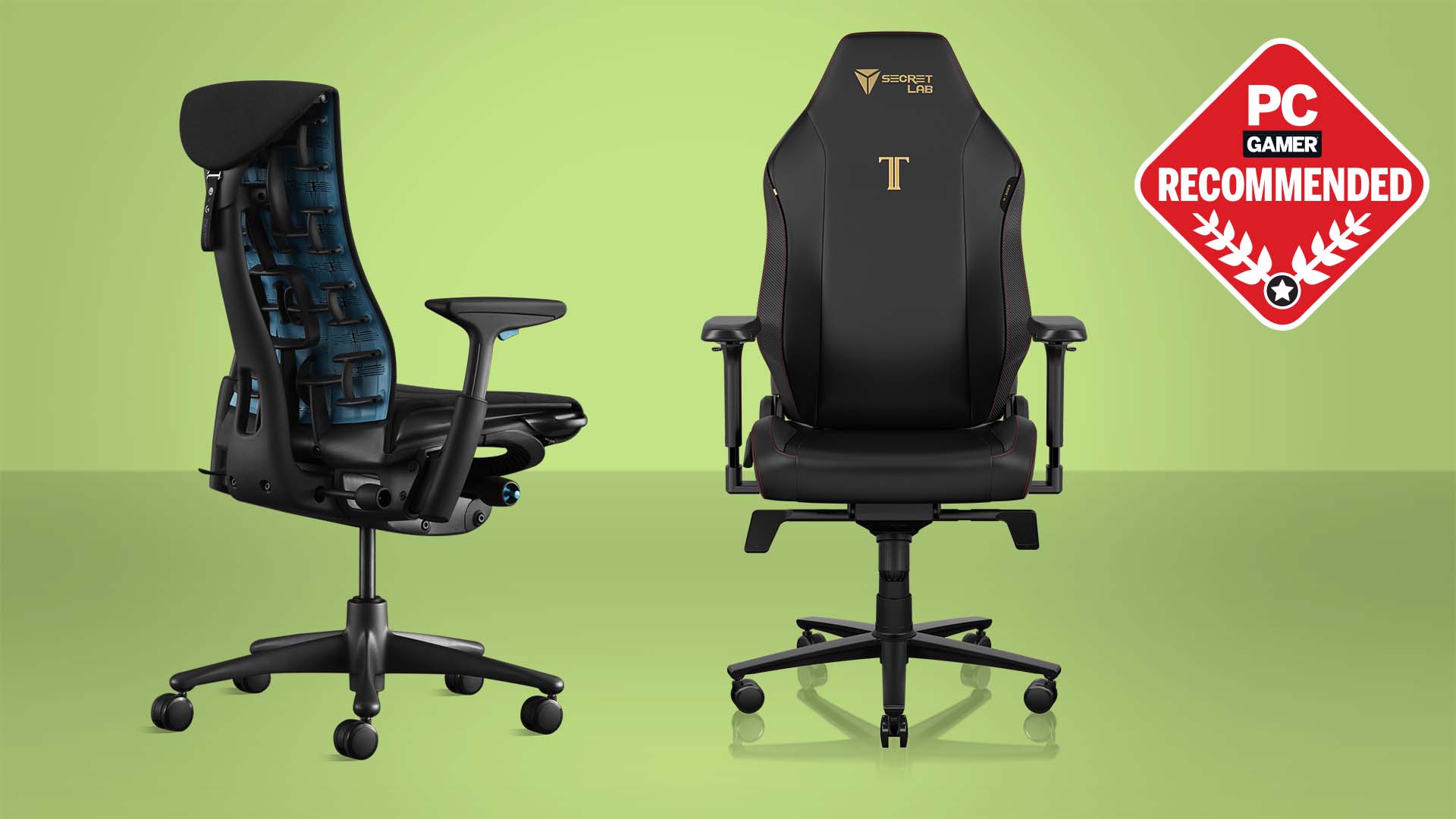
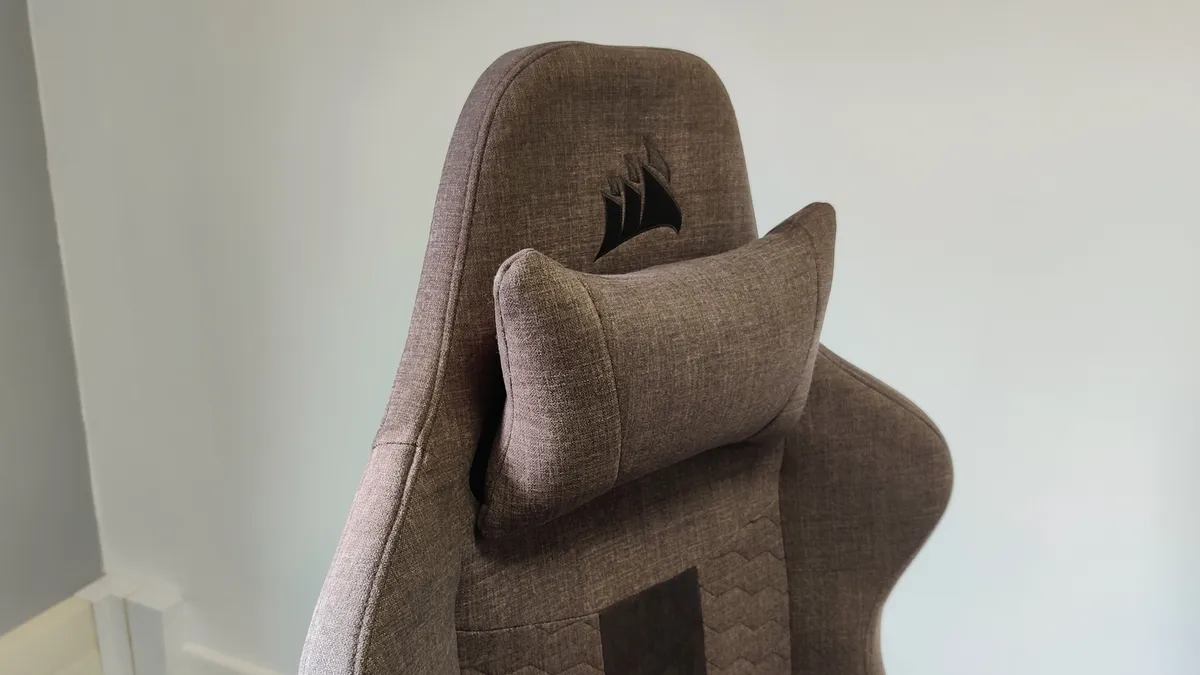
Yes, the best gaming chair, based on hundreds of human hours of testing myriad different chairs, remains one that we’ve been recommending for years: the Secretlab Titan Evo. And there’s good reason for that. It isn’t a cheap chair, for sure, but it is more affordable than the best office chairs, and still delivers a great level of comfort and support. And, almost as important, it’s incredibly durable, too. Our Titan Evo has been in the office, and well-used for 40 hours a week, all year round, and still looks as good today as the day it arrived. To be fair, so does our pick for the best budget chair, the Corsair TC100 Relaxed. It’s a very comfortable, supportive, and good-looking chair, especially for its relatively low price. And it’s often in the sales, too. Win.
We regularly test a range of different chairs, including the best office chairs, too. And we’ve put them all through rigorous testing to make sure we can thoroughly recommend all the picks that we have on this page and can honestly stand by each and every one of them. So, invest in something that’ll last and give your butt and back the comfort and support it deserves.
The Secretlab Titan is the benchmark by which we judge all other gaming chairs. To earn that role, it ticks all the boxes you could ask of gaming furniture: it’s comfy, supportive, and looks great too. The recommendation might be a regular one, but it’s a chair that has stood the test of time.
The thick cushion, broad design, and refined styling make this a good gaming chair, but the fact that Corsair has managed to get the price down without compromising on comfort is what makes the TC100 Relaxed a great gaming chair.
The Herman Miller Embody oozes premium, and you’d expect nothing less at this price. With superb comfort and a warranty spanning over a decade, it’s absolutely the chair of choice if you’re willing to invest in ergonomics.
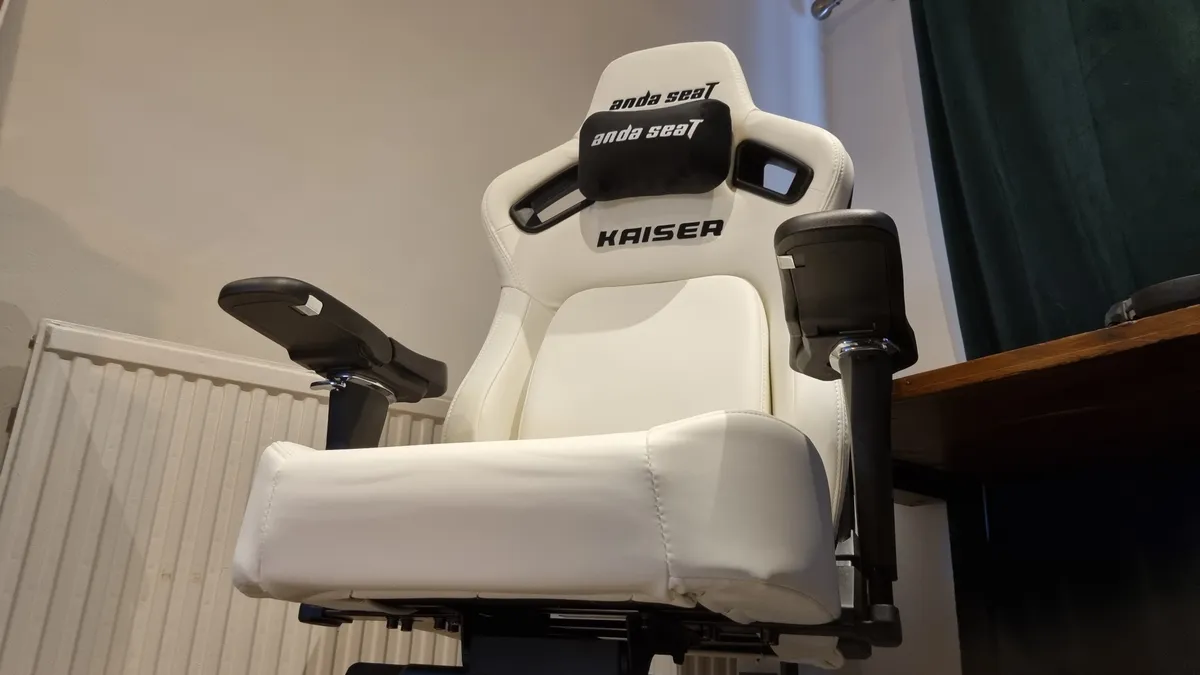
Available in two sizes (L and XL), the Kaiser 4 XL is the best gaming chair for anyone who finds most chairs a bit of a squeeze. It’s big and comfy, and the adjustable lumbar support is great. It looks the bee’s knees, too.
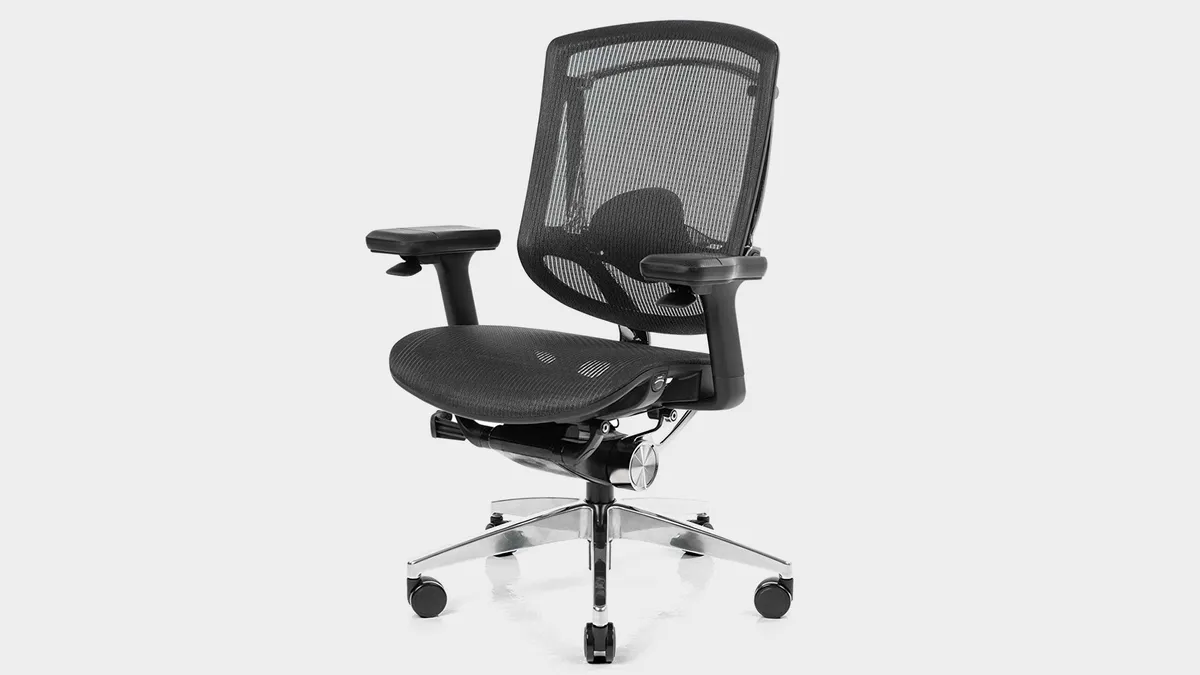
A brilliant option if you’re after something more traditional-looking, the NeueChair’s mesh design keeps you cool for long periods and offers elite build quality.
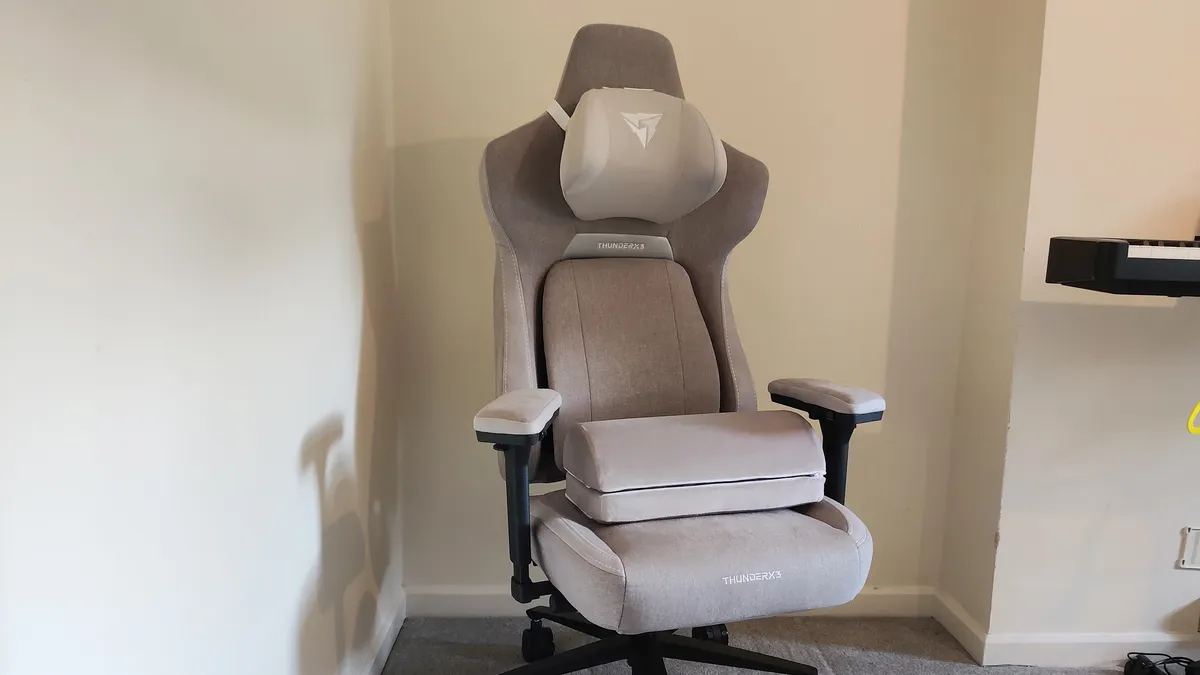
With slight confusion over whether it wants to be an office chair or a gaming chair, ThunderX3 has almost created the best office chair for gaming. It’s more affordable than a standard office seat with a lot of the same features.
I’m a human with a spine and a posterior. I’ve sat on chairs for longer than I can remember, and have been doing so in a professional capacity for many years, too. In fact I’ve probably sat in, and personally tested more gaming chairs than any person on PC Gamer. Which all makes me suitably qualified to tell you what the best gaming chair is when it comes to cost, comfort, and spinal support.
July 5, 2025: After a review of the new Razer Iskur V2 X, I’ve added the affordable chair to the also tested list, because it’s not going to topple the excellent Corsair TC100 Relaxed from our best budget gaming chair pick. I’ve also updated our notes on how we go about testing gaming chairs within the team.
June 12, 2025: Having spoken to a selection of certified ergonomists about posture at our desks, what annoys them about gaming chairs specifically, and what you should be looking for in your next chair, I have included their advice in our best gaming chair guide to help you make your choice. I have also added in a more affordable office/task chair design to the list, the ThunderX3 Flex Pro, and noted our review of the affordable, but slightly uncomfortable AndaSeat Novis.
May 1, 2025: We have checked over all the best gaming chairs right now and, rather predictably, the Secretlab Titan Evo still comes out on top. We have also checked our copy to make sure our information is as up-to-date as possible.
The best gaming chair overall
Image 1 of 12
(Image credit: Future)
(Image credit: Future)
(Image credit: Future)
(Image credit: Future)
(Image credit: Future – PCGamer)
(Image credit: Future – PCGamer)
(Image credit: Secretlab)
(Image credit: Secretlab)
(Image credit: Secretlab)
(Image credit: Secretlab)
(Image credit: Secretlab)
(Image credit: Secretlab)
The best gaming chair
Specifications
Seat type: Racing back, levelled seat base
Recline: 165 degrees
Weight capacity: Up to 180 kg (397 lbs, XL size only)
Weight: 37.5 kg (83 lbs)
Warranty: 3 years
Reasons to buy
+
Magnetic cushion and covers
+
Very comfortable
+
Everything we want in a gaming chair feature-wise
Reasons to avoid
–
Pricier than older Secretlab chairs
–
3-year warranty isn’t a match for some ergo chairs
Buy if…
✅ Adjustability is key: Getting a chair in just the right position is hugely important to your experience, and the Titan Evo makes tweaking until you find a comfy spot easy.
✅ You’re looking for something durable: Our review model continues to truck on in the office, with nary a mark to show for all the use it’s had over the years.
Don’t buy if…
❌ You want a long warranty: Three years isn’t terrible, but we’ve seen chairs with much longer warranties. Still, given the durability here, it’s not the biggest concern in the world.
The bottom line
💺 The Secretlab Titan Evo is the pinnacle of gaming chairs for a reason. Yes, it’s pricey, but it’s also extremely well-made and impressively long-lasting. There’s a reason every cheaper brand is trying to copy it and why subsequent models have barely changed the formula: it’s a great gaming chair.
The Secretlab Titan Evo is the best gaming chair. That’s it, recommendation over. Oh alright then, let’s get into the reasons why—and there are a lot of them.
We loved Secretlab’s previous chairs, and two of them used to rule the top spots in this very guide. Though nowadays we heartily recommend just the one model, the Titan Evo, as it does everything well.
There’s a slightly bigger curve to the seat base to keep you in a good sitting position all day long compared to previous models, and while we couldn’t quite tell if it was making a big difference, what we can say is this: the Titan Evo is extremely comfortable, even over very long periods of time. There are three models available, S, R, and XL, and while those looking for something extra-large would do well to check out the AndaSeat Kaiser 4 XL, for the rest of you, the Titan Evo should do very nicely.
Our initial review model came in a coating Secretlab called Neo Hybrid leatherette, which feels airy and cool over the course of a long day, and really looks the part. We have also recently reviewed the Titan Evo NanoGen edition, which is the latest addition to Secretlab’s lineup, and features a new approach to the materials it uses. Aiming to match two presumably mutually exclusive goals—namely being supportive and soft.
And it does that mighty well, creating a chair that ends up feeling even more comfortable than the standard Titan Evo. But with Secretlab asking another $200 for the privilege, it’s a fair bit extra to pay over the standard model.
The upholstery of both, however, is immaculate, and the overall quality of the fit and finish is pin-sharp perfect. Something as big and as dominating as a gaming chair should look good on all levels, and the Titan Evo certainly ticks the right boxes, no matter which finish you pick.
What’s more, the original chair has been in constant use in our office since we first reviewed it in 2021—gosh, has it really been that long? Since then, it’s been rolled around, bumped into, and carelessly caressed by many staff members, yet it’s still in excellent condition. That Neo Hybrid Leatherette is really holding up great. The chair’s not squeaky, either, which is a plus.
The detachable head cushion is magnetic and very supportive. For that matter, so are the armrests, which deliver 4D movement (up, down, forwards, backwards, side-to-side, and rotation) and should fit into most desks—and most arms, for that matter, as these are about as adjustable as they come.
Mechanically, the cavalcade of quality continues. The hydraulics are superbly smooth, as is the recline. You can also adjust the lean tension, which means finding a comfortable seating position is no problem at all. Everything here is customisable, good-looking, well-built and confidence-inspiring.
Prices start at $449/£379, which, if you’ve been looking at no-name gaming chairs on some of the bigger retailers’ sites, might seem like a lot for a throne. Let me say this with absolute confidence: If you’re ever going to spend up on a piece of equipment, make it the chair you sit in all day long. Compared to many of its rivals, it’s still well-priced, and the Secretlab Titan Evo really is worth the money.
It’s the best gaming chair we’ve ever tested, and believe me, we’ve tried the top contenders. The Titan Evo? Well, it beats them all.
✅ You like a subtle look: If you want a chair that simply blends into the room rather than looking like a gamer’s dream, this chair’s handsome aesthetics will suit you.
✅ You like to recline: The TC100 Relaxed tilts with the best of them and makes reclining a supportive and comfortable way to sit rather than a pain.
Don’t buy if…
❌ You want a lot of armrest adjustment: The 2D armrests here don’t offer a lot of options, and they’re a bit rickety, too.
❌ You want an easy time of assembly: Ok, so it wasn’t the most difficult task we’ve undertaken, but the TC100 relaxed was a bit fiddly to build.
The bottom line
💺 Good gaming chairs are expensive, yeah? Yet the Corsair TC100 Relaxed is one of the most affordable chairs you’ll find from a recognisable brand. And it’s not just a good, cheap model, it’s simply a brilliant gaming chair overall.
The Corsair TC100 Relaxed has entered the gaming chair space as a refined racer-style chair with very few compromises, which makes it our recommendation for the best affordable, budget-friendly chair. We were big fans of the Corsair T3 Rush, but the TC100 pips it to the post in many regards.
It’s shorter with an 81 cm backrest, but the TC100 Relaxed is in fact a fair bit broader. It’s got a wider backrest, a bit more cushioning in the seat, and gentler bolster angles, hence “relaxed.” It’s the sort of chair that asks you to settle in and get comfy, although that shortness does mean it’s perhaps not best suited to some larger frames.
If you’re very tall, you might need to reconsider your options. For the rest, though, the Corsair TC100 Relaxed should fit your frame nicely, and there’s always the AndaSeat Kaiser 4 XL to consider if you need something larger.
Concessions have been made to keep that cost down. You only get 2D armrests, for example, compared to something like the Secretlab Titan Evo’s 4D arm-holders. But I suppose the company had to make it affordable somehow, and it was the arm support that bore the brunt.
The construction does reveal the odd price concession, too. Some of the bolts are a bit of a struggle to get into their respective holes, due to some wadded material leftover from the manufacturing process. Otherwise, though, it’s still pretty easy to build, at least as far as gaming chairs go.
Where it shines, though, is in places where you’d expect to see budget constraints, but don’t. For example, the fabric version we tested feels fantastic on the skin and looks great, too. Material choice is often a revealing part of a chair’s construction, as so many manufacturers choose to skimp out on the important bits.
Here, everything feels quality, refined, and more expensive than you’d expect. Really, what most people will be looking for in an affordable but brilliant gaming chair is something that looks the part, feels the part, keeps you in a great seating position for long days, and doesn’t break the bank. Job done, we’d say, and then some.
Overall, what you’re getting here is a budget chair that doesn’t look nor feel like the budget option. It’s supremely comfortable, well-made, and looks the part in almost any setup. The TC100 Relaxed beats out every other chair in its price range by a large margin and is absolutely the best affordable gaming chair you can buy right now.
✅ You’re looking for luxury-level comfort: This chair is comfortable with a capital C, whether working, gaming or otherwise.
✅ You want build quality that stuns: It might be very, very pricey, but every inch of this chair screams quality, attention to detail, and fantastic design.
✅ You don’t want to build it out of the box: What, build your own chair? Not for the sort of money you’ve just spent. The Embody G comes ready to roll, no screwdrivers required.
Don’t buy if…
❌ You’re on a budget: Yep, the price is… excessive. You do get an excessively good chair though, but we sucked the air between our teeth when we first saw the price tag too.
❌ Armrest adjustment is key: While the rest of the Embody G is highly adjustable, the armrests are a bit limited in their movement.
The Bottom line
💺 Herman sure makes some comfortable chairs, and the Herman Miller Embody, with or without the Logitech G x branding, is an absolute stunner. It is super-expensive, but it has a very long warranty, is ultra-durable and incredibly comfortable. It also comes fully formed out of the box, so no messing around with hex keys or screwdrivers.
We love the Herman Miller Embody, and it occupied the top position in our best office chair roundup for a long time. But when it comes to the best high-end gaming chair, we simply have to recommend the slightly more gamer-focused version, the Herman Miller x Logitech G Embody, instead.
Let’s get one thing out of the way right out of the gate—it’s not cheap. It’s not even close to cheap. Nope, if you want one of these, be prepared to spend $1,830/£1,570.
I’ll wait for you to pick up your collective jaws from the floor. Welcome back! The good news is, however, that the Embody is a fabulous chair. Our Jacob loves his model very much, and that’s a man who has sat in every single good gaming chair you can think of.
If you do decide to treat yourself to one of these, upon delivery, you’ll receive a very large box. That’s because the Herman Miller turns up fully assembled. For this sort of money, no one expects you to get busy with a screwdriver, and that alone is worth a fair bit of cash.
Once opened, however, you’ll find that this chair is surprisingly compact. There’s no gigantic headrest, as Herman Miller reckons you shouldn’t need one if the back support is done properly, and thankfully, that is very much the case. The sprung-mesh design coated in Sync Fabric is extremely supportive, while still being very comfortable. Support and comfort can co-exist, and thankfully, this isn’t one of those chairs that tries to realign your spine against your will.
That fabric coating is remarkably hard-wearing, while still feeling great on the skin, too. The foam-layered seat cushion is designed to be comfy, cool, and posture-enhancing. You might shift around in your seat all day long from the top upwards, but your rear remains in roughly the same place. Herman Miller knows this, and the Embody is ready to deliver comfort and spinal bliss in equal measure—from top to bottom.
You might have to pay a high price, but you also get a 12-year warranty for your money. That covers just about everything about the chair, from the casters to the pneumatics, although perhaps the fabric might not qualify. Still, as we said, it feels tough enough to withstand the test of time, as does everything else about this chair.
In fact, just about the only thing that isn’t exceptional about the Embody is the armrest adjustment. You don’t get fancy 4D movement here, although they are adjustable to a degree and comfortable in their own right.
The Herman Miller Logitech G Embody is simply fantastic to sit in, looks great, and is built tough. It’s the best high-end chair by far. Yes, you’ll have to fork out. But what with that excellent warranty, and all the comfort and support on offer here, it’s still the one we’d have if we were looking to spend some serious cash.
✅ You want exceptional support for your back: Well, it is in the title after all. But seriously, the ergonomic mechanisms here are superb and will adapt to your every supportive need.
✅ You don’t want to overspend: The ThunderX3 core isn’t the cheapest chair in this list, but it’s still very well priced for the plush comfort and great build quality it provides.
Don’t buy if…
❌ You like to recline with arm support: The synchronous tilt mechanism here is very good, but it’s a shame the armrests don’t move with it.
The bottom line
💺 If you struggle with normal chairs, your spine might thank you for spending the cash on the ThunderX3 Core chair. The smart lumbar support cushion manages to follow you as you move, providing a level of comfort and support we’ve not found in any other chair. Certainly not in one that’s priced at this level.
While some chairs take a rigid approach to supporting your back, if you’re looking for something that’s supremely comfortable while also looking after your spine, you should really hunt down a ThunderX3 Core. It manages to be not only the best chair for back support but also one of the most plush and good-looking chairs we’ve tested, too.
That adjustability really is key. We all shift around in our chairs, and while some models try their hardest to push you into the correct shape, the ThunderX3 Core takes a different approach. It’s ready for your odd seating positions, choosing instead to employ a variety of mechanisms that allow it to conform itself to your particular seating styles for ultimate support.
The Lumbar 360° tech backrest is designed to move around with you as you shift your weight, meaning that it’s always ready to support your lower back when needed. 4D armrests are an increasingly common feature on modern gaming chairs, but they’re usually covered in a “soft-touch-esque” kind of material that’s less rigid than hard plastic but not what you’d call cushy. Not so here, as the ThunderX3 Core adds proper cushioning into the mix for arm leaners and forearm resters.
All of this adds to the feeling and look of a chair that invites you to sit down. The aesthetic is refreshingly sleek yet comfy-looking, and while it’s got stick-out “wings” that won’t be for everyone, it doesn’t look particularly gamer bling—meaning it’s unlikely to look out of place no matter where you put it. Some gamer chairs scream “I have hobbies” to the rest of the world, but this one is much more Scandinavian cool.
Back to back support. The clever Sync6 box underneath has synchronous tilt, which allows you to lean back while still keeping your feet flat on the floor. You can also tilt it forward to lean in, although the armrests will end up staying where they are. Speaking of leaning back, the backrest locks at four different angles, although you can’t lean it back all the way like some other chairs. Still, there should be a position there that suits most leaning styles.
Fabric and leatherette versions are available in various colors, all for an MSRP of $399. That’s a fair bit cheaper than a lot of other competing chairs, and since the ThunderX3 Core is up there for affordable back support, it gets a big thumbs up from us. A well-looked-after spine doesn’t have to come with an overly firm cost, and this chair proves it.
✅ You want plenty of room: The Kaiser 4 XL is appropriately named and appropriately sized.
✅ You like proper lumbar support: The new pop-out lumbar cushion is a real upgrade over the previous model, and is both extremely comfortable and plenty supportive, no matter your size.
Don’t buy if…
❌ You bang the rear of the chair into furniture on the regular: The plush rear backing looks great, but it does make this chair prone to damage from the back if you’re clumsy with it.
The bottom line
💺 The AndaSeat Kaiser 4 XL is a big boi chair for the larger human, but its comfortable, capacious surrounds mean that it’s also a fantastic chair for anyone who wants to be enthroned in a seat. And maybe doesn’t sit precisely how ergonomists recommend you should…
If regular gaming chairs are a bit tight, or you’re the sort of person who likes to spread all over a seat, then the AndaSeat Kaiser 4 XL is the gaming throne for you. Available in L and XL configurations, we were very impressed by our XL model—so much so that it had to go in this guide as the best chair for a larger frame.
First off, this is a good-looking seat. Lots of color options are available, but all of them will have wide shoulders, proper side bolstering and good attention to detail in the fit and finish. It’s very USS Enterprise, and despite its large dimensions for sittin,g it’s not too dominant in your average gaming setup.
Be warned, however: construction is not an easy task. That’s nothing to do with a lack of tools or bad design, but more that this chair is large, wide, and heavy, so we’d highly recommend bringing a friend. Or, if you want one of these because you’re covered in muscle, enjoy the free workout.
That being said, once you do have the Kaiser 4 XL together, you’ll find plenty of room. The wide seat cushion and flared shoulder sections mean most should fit very well, and even if you’re not a giant, you won’t feel too swallowed up. It’s very nicely judged in its dimensions. Larger than just about everything else, not so large that it looks cartoonish.
There’s lots of adjustability here, including a side-mounted lever for backrest adjustment that makes a whole lot of sense. Why some chairs choose to mount the tilt mechanism underneath is beyond us, but here you can lean and use the handle at the same time to find the perfect amount of recline.
The best bit, though, is the pop-out adjustable lumbar cushion. It’s very comfortable to lean against, but firm enough to provide proper, robust support, and it’s adjustable in a multitude of different ways. Combine that with a magnetic head pillow that can be adjusted easily, yet stays anchored in place once you’ve found the ideal spot, and this is a chair that’s easy to set up just the way you like.
It does have a couple of drawbacks. Firstly, the branding isn’t particularly subtle, so you’ll find the word “Kaiser” emblazoned all over it in big letters. And second, the rear backing material is a lovely textured plush material that looks great.
Doesn’t sound like a drawback? Well, as nice as it looks and feels, it’s prone to damage. You’ll be fine if you treat it gently, but if you bang the rear of the chair into your furniture, it’s likely to rip or leave a mark. And, if we’re being picky, the (otherwise huge and very comfortable) armrests do wobble rotationally a little more than we’d like.
Other than that, the AndaSeat Kaiser 4 XL is a bit of a winner all around. If what you really want is size and comfort combined in a chair, this is the one we reckon you should go for. Big, bold, and brilliant.
✅ You like the clean office look: It’s subtle, it’s clean, and it’ll blend into any professional environment—although those looking for a gamer aesthetic should venture elsewhere.
✅ You like proper support: While the NeueChair might not be the most relaxing of chairs, it’s highly supportive and feels like it does your spine some good over a long day.
Don’t buy if…
❌ You like to lean back and relax: It’s a focused, professional chair and doesn’t lend itself well to chilled-out sessions.
❌ You’re on a tight budget: It’s expensive, there’s no getting around it, and the headrest doesn’t come as standard. Bit mean that, but again, this is a chair that’s all business, little play.
The bottom line
💺 The NeueChair is very much an office or task chair, rather than a relaxed gaming chair. That means it’s incredibly comfortable and supportive in the ‘active’ position, keeping you engaged in your daily tasks better than any chair I’ve sat in. But when it comes to kicking back and relaxing, it doesn’t quite do the lounge thing as well as dedicated gaming chairs.
The NeueChair has been our best office/task chair recommendation for so long, it’s practically part of the furniture (boo, hiss). That’s because it’s got so much going for it in the support and build quality department; it simply hasn’t been bested, even here in 2025.
Let’s get one thing straight: this isn’t quite what you’d call a gaming chair. It’s a tasking chair, designed to make sure that over a long day at the office (or working from home, of course), you leap out of it feeling like you haven’t damaged your back.
Of course, it can be reclined, and it’s far from what you’d call uncomfortable. But this chair is all about keeping you supported and upright, with a sensation that lets you know it’s doing excellent things for your spine. It’s got a wide seat base with a good level of comfort, but this chair is all about getting down to business. And that, it does better than anything else on the market.
A good office/task chair should provide supreme support. The NeueChair is unmatched in this regard, and it’s still what we’d call comfortable. You only get one set of bones, of course, so you’d do well to look after them in the hours you spend sitting at your desk. Comfort isn’t just about sitting in squishy, armchair-like confines, but also about what you take with you when you get out of the chair.
Back pain, sore shoulders, and a numb posterior should not be any of those things. The NeueChair is designed to prevent or reduce them all, and it does an admirable job.
You get smart Controlshift controls located under each armrest that allow you to unlock or lock the recline, and raise and lower the chair for the optimum seating position. The armrests, however, don’t have a huge amount of adjustment, so if you’re looking for something with as many armrest settings as possible, the Secretlab Titan Evo might be more up your street.
The real kicker on top of that excellent spinal support, however, is the build quality. Its industrial-inspired design isn’t just to help it look great in a modern office setting (which it really does), but to ensure that this chair will go the distance. It’s remarkably tough and well-made, with a 12-year warranty that should go some way to offsetting concerns about its price.
At $1,169/£774, the NeueChair isn’t cheap. But like the Logitech G x Herman Miller Embody above, what you’re spending your money on here is something that is designed to stand the test of time, with a warranty to prove it. It’s handsome, robust, supportive, and business-like, which makes it the best office chair overall.
✅ You want endlessly adjustable comfort: The ThunderX3 Flex Pro moves in almost every dimension you can think of, mostly without you even having to think about it
Don’t buy if…
❌ You want an office chair that supports excellent posture: The lumbar support is great, but I struggled to get the Flex Pro to adjust around a really straight spine.
The bottom line
💺 The ThunderX3 Flex Pro maybe has a bit of an identity problem, being some sort of halfway house between a task chair and a standard gaming chair, but that actually works to its advantage. It has a lot of the benefits of an office seat, but the relaxed comfort of a leaning-back-to-play gaming chair.
Okay, maybe the ThunderX3 Flex Pro can’t quite make up its mind exactly what sort of chair it is, but honestly that actually plays right into a PC gamer’s hands. Or buttocks, even. With a dizzying total of 19 different “dimensions of adjustment” the chair is certainly playing to our choir of experts, offering consistent support as you move around in the Flex Pro.
With so many different moving parts you can really feeling it shifting around to accommodate you as you fidget around in the ergonomically recommended way every half hour or so.
And with lumbar and head/neck support, shifting seatpan, and continuous recline mechanism, the Flex Pro comes with a lot of different features you will generally find in serious office-based task chairs. Though, in reality, we found that it didn’t quite work as well as the Neuechair in terms of providing a true active posture for working at a desk, which would normlly earn it a black mark, and a place in the ‘Also tested’ section.
That’s not to say it isn’t supportive when you are in work mode, the back and lumbar support sections capably prop you up while you might be typing away, but, because of that incredible flexibility and the stellar lumbar support, as soon as you kick back and relax in it, the ThunderX3 Flex Pro becomes an excellent tasky gaming chair.
It’s an incredibly comfortable chair to sit back with a gamepad and play on, and still retains enough support to remain a decent option for the work day.
And even though there are myriad moving parts that doesn’t make it a nightmare to build. It doesn’t come fully realised, with fully six major components to put together, but it only took us around 30 minutes solo work to get it up, rolling, and reclining.
If you’re after the range of task chair features without paying Neuechair or Steelcase money, then the Flex Pro gets you most of the way there on a bit of a budget. Okay, it’s not cheap, but it is around half the price of those other brands. But where it stands out is that it can really compete with other primarily gaming chairs when it comes to reclined comfort, and not all office chairs are able to do that.
Let’s face it, we spend a lot of time here at PC Gamer sitting on our butts. And that makes us perfect candidates for testing gaming chairs. We will dedicate a significant amount of time to parking our posteriors in a variety of gaming and office chairs when it comes to testing them out, because it’s only really by using a chair over an extended period that you get to know where it supports you and where it might be lacking.
Of course, the first step is about building your chair; most gaming chairs come in various stages of disassembly and you’ll have to put them together yourself. This process can already tell an experienced reviewer a lot about both the quality of the materials being used in the chair, and about the finished article’s overall quality, too. If it’s stripping thread when you’re screwing in bolts, or parts are loose when they should be tight, then you can already tell something might be missing.
We also use each of the gaming chairs we test as our main working seat for the time that we are testing a chair. That way, we can get a feel for what it would be like to actually live with a particular piece of gaming furniture, as we would if we’d purchased it ourselves.
It also means that we can test the longevity of things like the different levers and controls over time, too. We’ve had issues where some cheaper brands had plastic levers that just wouldn’t last, and where seat materials fail when used for extended periods of time.
And it means we can tell how it makes us feel after using a particular chair for a while. Now, that’s not about some emotional connection with a seat, but with ergonomics being such a vital part of gaming chairs when it comes to your overall physical health, this long-term testing is important for us to tell when something doesn’t feel right in our own bodies while we’re using a chair. Conversely, when something fits you as though it’s been made especially for you, then you know you’ve found a genuinely quality gaming chair.
And value is key to us as well. A chair doesn’t have to be cheap, but so long as it feels like it’s worth the money you’re being expected to pay, then it has value.
Our panel of ergonomics experts
Collectively, here on PC Gamer, we’ve spent hundreds of human hours testing a host of different gaming chairs. We have a lot of experience and have built up a whole lot of expertise on the subject. That puts us in a great position to be able to let you know why some chairs are better than others, and to be able to pick out the absolute best options in the different categories.
But we can’t just rely on our own expertise when it comes to putting your body on the line when you’re spending hours sat in a seat. So we’ve recently got in touch with several trained and certified ergonomists, and interviewed them on what makes a great gaming chair, what you should be looking out for, and how to spend time at your desk without putting your body in peril.
Three of our experts are from companies that specialise in manufacturing ergonomically fit chairs, and one independent physical and occupational therapist.
Kevin Butler, MS, CPE, Fitwel Amb.
Kevin Butler is a Board Certified Professional Ergonomist who holds both a Bachelors and Masters Degree in Industrial Engineering. Although Kevin has extensive experience as an ergonomics consultant, for the last several years he has been almost completely dedicated to the holistic topic of Wellbeing. While Kevin’s primary role at Steelcase began in understanding the meaning of workplace Wellbeing by bench-marking and best-practice-sharing, it has evolved into maximizing his knowledge and expertise as a practitioner. This is realized by assisting organizations of varying sizes in the design and implementation of their Ergonomic and Wellness program development efforts, always striving to leverage the workplace as a resource to increase both individual and organization Wellbeing.
Jonathan Puleio, M.Sc. CPE
Jonathan is a board certified professional ergonomist who holds undergraduate and graduate degrees in human factors and ergonomics from Cornell University. He has extensive experience in the areas of occupational health & safety, musculoskeletal injury prevention, software usability and workplace design. Jonathan has worked with the International Standards Organization (ISO) on the development of international ergonomic standards for office environments and holds several U.S. patents for the design of ergonomic work tools.
Dr. John Gallucci Jr. MS, ATC, PT, DPT
Dr. Gallucci Jr. is President and CEO of JAG Physical Therapy, one of the fastest-growing comprehensive physical and occupational therapy practices providing rehabilitative care to patients and sports teams in over 160 locations throughout the Northeast. He has significantly impacted his field in the Tri-State area and holds a national presence in the sports medicine community. A noted published author, Gallucci released his first book, Soccer Injury Prevention and Treatment, in May 2014. His second book, Play Ball: Don’t Let Injuries Sideline You This Season, was released on May 1, 2018. His third book, The JAG Method, was released on October 10th, 2023.
Dr. Jordan Tsai
Dr Tsai started gaming at the age of five on the original NES and was immediately hooked. He served three years in the Army, including a deployment to Iraq before going back to school. He graduated from USC’s #1 ranked Doctorate of Physical Therapy program in 2018 and started working with Cloud9 that year. Since then, he has been on staff with three LCS Championship teams with five total titles so far. His mission is to help gamers of every level practice habits that will enable them to continue playing pain-free as long as possible.
What you should look for in a chair according to the experts
(Image credit: Secretlab)
Look for a chair that keeps you supported and moving.
Kevin Butler
We can provide advice on what gaming chair to buy based on our experience, comparative pricing, comfort, and build quality, but when it comes to the science of ergonomics there are clear, objective things that you should always be looking for in a new gaming chair purchase. Our ergonomic experts are unified on the main thing that you need to consider, though.
“Look for a chair that keeps you supported and moving,” says Kevin Butler. “Long gaming sessions demand a seat that adapts to your body, not the other way around.”
And that’s what Secretlab’s advisor, Dr. Tsai notes, too. “You want a chair that gives you room to naturally move about and able to provide support for your body at the same time. Because when you’re able to shift and change your sitting position regularly, you will naturally adopt comfortable positions as needed.”
Jonathan Puleio, global VP at Humanscale agrees, stating that: “Movement and postural variation are critical for maintaining long-term comfort and health. Consider chairs that have self-adjusting features such as weight sensitive recline mechanisms and form-sensing mesh.”
Dr. Gallucci, however, is more concerned with adjustability. “The most important thing to look for in a chair is ergonomic adjustability. A good chair should support your posture for long periods without causing discomfort or fatigue. That means it should allow you to adjust the seat height, seat pan depth, armrests, lumbar support and backrest tilt.”
“Because we’re all built differently,” agrees Dr.Tsai, “adjustments are key to tailoring the chair to best match your needs. That’s why it’s not just about whether they have certain features, but to what degree of adjustments said features actually give us.”
The advice has previously been that there is an ideal posture, but as Dr. Stuart McGill, Professor Emeritus of Waterloo and expert in back pain, notes in the study Secretlab links from its site: The science of stress: How to reduce back pain while sitting (.pdf warning), “this may be the ideal sitting posture, but for no longer than 10minutes!”
“Tissue loads must be migrated from tissue to tissue to minimize the risk of any single tissue accumulating microtrauma,” Dr. McGill continues. “This is accomplished by changing posture. Thus, an ergonomic chair is one that facilitates easy posture changes over a variety of joint angles.”
Therefore, you need to be looking for a chair that can accommodate a range of movement and a range of different seating positions. For years, I assumed that my favourite sitting posture, with one leg crossed beneath me, was dreadful. And yes, it would be if I stuck to it, but so long as you are changing positions regularly, sitting cross-legged can be an effective posture, too.
How you should sit at a desk
(Image credit: Federica Litrico)
We have spoken with ergonomists in the past about the ‘right’ way to sit at a desk, and the general guidelines remain largely the same, except with more emphasis now on movement being key to continued physical health.
Dr. John Gallucci Jr. CEO of JAG Physical Therapy, told me recently that “a good rule of thumb is to stand or move every 30–60 minutes. Even just a quick stretch, short walk or posture reset can reduce the strain on your back, hips and neck. During the workday, even on your busiest days, it’s good to get up for a micro-break—motion is medicine!”
Recommendations of these micro-breaks can be as simple as standing from the chair and maintaining a relaxed standing posture for 10 to 20 seconds. During this break if you perform some neck rolls and arm windmills you can help relieve neck and shoulder discomfort from sitting at your desk desk.
Secretlab’s advisor and founder of Respawn Therapy, Dr. Jordan Tsai, had similar advice on that point. “You want to create “micro-breaks” for your body by introducing movement, and switching between sitting positions is an incredibly effective way to do this. I usually recommend my patients to:
Vary their sitting positions every hour at a minimum. Listening to your own body is also key. If you feel like you need to raise a leg for a bit, then you should!
A simple exercise to do while sitting would be to move your trunk in each direction: forward, backward, and side to side—to the limit of their range of motion, ideally once every hour.
Stand up and walk around for a few minutes every 2-3 hours as well.“
But when you are sat down, there are some key things to consider to ensure that you are at least starting out with the ‘correct’ posture. Even if it is advisable to be constantly shifting around in your chair—fidgeting is good for you—considering these initial pointers is a great starting position for your seated posture.
Your knees should be bent at 90 degrees, and your feet flat on the floor.
Your elbows should be level with your desk and close to your body (meaning that you shouldn’t have to extend your arms to reach your mouse and keyboard).
Your shoulders should be relaxed.
Your lower back should be supported. If your chair doesn’t have built-in lumbar support, a small pillow can do the job.
Your monitor should be positioned such that you don’t have to tilt your head up, with the top monitor bezel level with your eyes.
Unlock the backrest of the chair and adjust the tension to allow for movement.
Adjust the seatpan such that there is at least two inches of clearance behind the back of the knee.
Stay in motion: Even small shifts throughout your session make a big difference.
A great gaming chair should support every move, from clutch plays to mid-match breaks.
One other bit of advice for the dudes out there is that if you still carry a wallet, and it resides in your back pocket, you should remove it before you sit down. We’ve been told that some experiments have even used a wallet in the back pocket to intentionally create back pain in a subject.
And finally, if you’re trying to avoid back pain from long hours of sitting at your desk, you ought to do some sort of physical exercise in the middle of the day, even if that’s just a short walk. Go walk the dog, for example.
Best gaming chairs FAQ
Five things I always tell people before they buy their first gaming chair
As gamers and office workers, we spend a significant chunk of each day sitting on our money makers in front of screens. Given that most of us don’t plan to change that anytime soon, it only makes sense to do so in a great chair. So that’s what I set out to find.
We wanted to find chairs that maximized comfort, support, and value. We spoke with Melissa Afterman, MS CPE, a Senior Principal Ergonomist with VSI Risk Management & Ergonomics, Inc., who specializes in workstation setups.
“Absolutely, chairs are still okay,” she told me. “Yes, we know that sitting too long is bad for you. The reality is that standing too long is just as bad for you, so the answer is movement. Taking breaks, getting up at least every hour and moving, or changing your position from standing to sitting every hour so that you’re not standing too long either.”
“If you’re typing and working at the computer, you really want more upright support so that you can maintain neutral spine posture and let the chair hold you up,” she said. “But when you switch to a gaming mode, you may want to recline a little bit to relax your lower back while still having good support in that position. So a locking backrest and/or some tension control is important.”
Another feature to look for, though it tends to be found on more expensive models, is a seat pan slider. This enables you to slide the positioning of your butt forwards or backward relative to the backrest.
Are gaming chairs really worth it?
The best gaming chairs will complete your PC setup, not just from an aesthetic point of view, but because you will likely be spending hours sitting in front of your machine, which means they will give you the support needed to keep your spine healthy, too.
Is a gaming chair better than an office chair?
Nope! You can find good or bad examples of both, and believe us there are plenty. That said, some office chairs are great for gaming and vice versa, and there are ‘office chairs’, like the Herman Miller Embody, that blend the line between both.
Really it’s about finding what’s right for you, and a lot of the time that’s a gaming chair because, let’s be honest, you like the look of it. That’s a perfectly good reason to make that decision, just make sure you’re not sacrificing comfort and ergonomics for style and flair.
A cheap office chair can be a great pick if you want to save cash and be comfy.
Are gaming chairs good for your posture?
The best gaming chairs look out for you and your back. When it comes to chair design, lumbar support is vital. The first thing you should look for in a new gaming chair is whether it has any built-in support to help your body maintain an ideal posture. Some even come with lumbar support pillows that work to some extent. Multi-adjustable armrests, upholstery, and general style are also important; note these features aren’t cheap.
That said, a gaming chair can’t do everything. The best gaming chairs encourage good posture, but the other half of the equation is on you to stick to it.
Does every gaming chair fit every body type?
Different chair models accommodate different heights and weights, so make sure to check your fit. Look at the width and depth of the seat, too. Some chairs claim that you should sit cross-legged, but that depends on your size and leg length.
It’s hard to pinpoint when exactly in the history of videogames we all decided that gold coins weren’t enough for us. What is certain is that for a very long time now we’ve been merrily shopping at merchants with a purse jangling with everything from bottle caps, to raw meat, to live bullets.
And yet it wasn’t until the rise of MMOs and live service games that we saw how truly bizarre things could get. These days, people think nothing of grinding for Mucus-Slick Eggs in Diablo 4 or looking up the best places to find Delirious Scouting Reports in Path of Exile. We have strayed far from both God’s light and Reagan’s capitalism.
(Image credit: Sega)
The thing is, you’ve farmed for them, you’ve traded them, you’ve bought stuff with them… but how well do you actually remember them? Do you truly value your Ordo Dockets and Gilded Undermine Crests, or are all those lovely adjectives just tears in the rain, to be forgotten as soon as you’ve finally got enough to buy that really cool hat you wanted?
It’s time to put yourself to the test with our latest quiz. For each game, you just need to choose the bizarre currency that has truly appeared in it, and dodge all my Brilliantly-Crafted Misdirects.
How well did you score? Do you have a favourite weird videogame currency? Are there any quizzes you’d like to see us do next? Let us know in the comments below!
Keep up to date with the most important stories and the best deals, as picked by the PC Gamer team.
Looking for the most recent Strands answer? Click here for our daily Strands hints, as well as our daily answers and hints for The New York Times Mini Crossword, Wordle, Connections and Connections: Sports Edition puzzles.
The theme of today’s NYT Strands puzzle isn’t terribly tough, but at least one of the words is unusual and really, really long to unscramble. If you need hints and answers, read on.
If that doesn’t help you, here’s a clue: Does anybody really know what time it is?
Clue words to unlock in-game hints
Your goal is to find hidden words that fit the puzzle’s theme. If you’re stuck, find any words you can. Every time you find three words of four letters or more, Strands will reveal one of the theme words. These are the words I used to get those hints but any words of four or more letters that you find will work:
These are the answers that tie into the theme. The goal of the puzzle is to find them all, including the spangram, a theme word that reaches from one side of the puzzle to the other. When you have all of them (I originally thought there were always eight but learned that the number can vary), every letter on the board will be used. Here are the nonspangram answers:
CLOCK, WATCH, SUNDIAL, HOURGLASS, CHRONOMETER
Today’s Strands spangram
The completed NYT Strands puzzle for July 5, 2025, #489.
NYT/Screenshot by CNET
Today’s Strands spangram is TIMEKEEPERS. To find it, look for the T that’s four letters down on the far left, and wind across.
Quick tips for Strands
#1: To get more clue words, see if you can tweak the words you’ve already found, by adding an “S” or other variants. And if you find a word like WILL, see if other letters are close enough to help you make SILL, or BILL.
#2: Once you get one theme word, look at the puzzle to see if you can spot other related words.
#3: If you’ve been given the letters for a theme word, but can’t figure it out, guess three more clue words, and the puzzle will light up each letter in order, revealing the word.
You can think of MCP like the USB-C port on a laptop. One port gives you access to multiple functions such as charging, data transfer, display output, and more, without needing separate connectors for each purpose.
In a similar way, the Model Context Protocol provides a standard, secure, real-time communication interface that allows AI systems to connect with external tools, API services, and data sources.
Unlike traditional API integrations, which require separate code, authentication flows, documentation, and ongoing maintenance for each connection, MCP provides a single unified interface. You write the integration once, and any AI model that supports MCP can use it directly. This makes tool development more consistent and scalable across different environments.
Why It Matters
Before MCP:
Every AI app (M) needed custom code to connect with every tool (N), resulting in M × N unique integrations.
There was no shared protocol across tools and models, so developers had to reinvent the wheel for each new connection.
After MCP:
You can define or expose multiple tools within a single MCP server.
Any AI app that supports MCP can use those tools directly.
Integration complexity drops to M + N, since tools and models speak a shared protocol.
Architecture
MCP follows a client-server architecture:
Client: An AI application (such as an LLM agent, RAG pipeline, or chatbot) that needs to perform external tasks.
Server: Hosts callable tools such as “query CRM,” “fetch Slack messages,” or “run SQL.” These tools are invoked by the client and return structured responses.
The client sends structured requests to the MCP server. The server performs the requested operation and returns a response that the model can understand.
In this tutorial, you will see how you can build a custom MCP server using FastMCP, test it locally, and then upload and deploy it in the Clarifai platform.
FastMCP is a high-level Python framework that takes care of the low-level protocol details. It lets you focus on defining useful tools and exposing them as callable actions, without having to write boilerplate code for handling the protocol.
Why Build a Custom MCP Server?
There are already many ready-to-use MCP servers available. For example, you can find MCP servers built specifically to connect with tools like GitHub, Slack, Notion, or even general-purpose REST APIs. These servers expose predefined tools that work well for common use cases.
However, not every workflow can be covered by existing servers. In many real-world scenarios, you will need to build a custom MCP server tailored to your specific environment or application logic.
You should consider building a custom server when:
You need to connect with internal or unsupported tools: If your organization relies on proprietary systems, internal APIs, or custom workflows that aren’t publicly exposed, you’ll need a custom MCP server to interface with them. While MCP servers exist for many common tools, there won’t be one available for every system you want to integrate. A custom server allows you to securely wrap internal endpoints and expose them through a standardized, AI-accessible interface.
You need full control over tool behavior and structure: Off-the-shelf MCP servers prioritize flexibility, but if you require custom logic, validation, response shaping, or tightly defined schemas tailored to your business rules, building your own tools gives you clean, maintainable control over both functionality and structure.
You want to manage performance or handle large workloads: Running your own MCP server lets you choose the deployment environment and allocate specific GPU, CPU, and memory resources to match your performance and scaling needs.
Now that you’ve seen why building a custom MCP server can be necessary, let’s walk through how to build one from scratch.
Build a Custom MCP Server with FastMCP
In this section, let’s build a custom MCP server using the FastMCP framework. This MCP server comes with three tools designed for blog-writing tasks:
Run a real-time search to find top blogs on a given topic
Extract content from URLs
Perform keyword research with autocomplete and trends data
Let’s first build this locally, test it, and then deploy it to the Clarifai platform where it can run securely, scale automatically, and serve any MCP-compatible AI agent.
What Tools Will This MCP Server Expose?
This server offers three tools (functions the LLM can invoke):
multi_engine_search Queries a search engine (like Google) using SERP API and returns the top 5 article URLs.
extract_web_content_from_links Uses newspaper3k to extract readable content from a list of URLs.
keyword_research Performs lightweight SEO analysis using SERP API’s autocomplete and trends features.
1/model.py: Your core MCP logic goes here. You define and register your tools using FastMCP.
requirements.txt: Lists Python packages needed by the server during deployment.
config.yaml: Contains metadata and configuration settings needed for uploading the model to Clarifai.
You can also generate this template using the Clarifai CLI:
Step 3: Implement model.py
Here is the complete MCP server logic:
Understanding the Components
Let’s break down each component of the above model.py file
a. Initialize the FastMCP Server
The server is initialized using the FastMCP class. This instance acts as the central hub that registers all tools and serves requests. The name you assign to the server helps distinguish it during debugging or deployment.
Optionally, you can also pass parameters like instructions, which describe what the server does, or stateless_http, which allows the server to operate over stateless HTTP for simpler, lightweight deployments.
b. Define Tools Using Decorators
The power of an MCP server comes from the tools it exposes. Each tool is defined as a regular Python function and registered using the @server.tool(...) decorator. This decorator marks the function as callable by LLMs through the MCP interface.
Each tool includes:
A unique name (used as the tool ID)
A short description that helps models understand when to invoke the tool
Clearly typed and described input parameters using Python type annotations and pydantic.Field
This example includes three tools:
multi_engine_search: Uses SerpAPI to search for articles or blogs. It accepts a query and options like search engine, location, and device type. Returns a list of top URLs.
extract_web_content_from_links: Takes a list of URLs and uses the newspaper3k library to extract main content from each page. Returns the extracted text (truncated for brevity).
keyword_research: Combines autocomplete and trends APIs to suggest relevant keywords and rank them by popularity. Useful for SEO-focused content planning.
These tools can work independently or be chained together to create agent workflows like finding article sources, extracting content, and identifying SEO keywords.
c. Define Clarifai’s Model Class
The custom-named model class serves as the integration point between your MCP server and the Clarifai platform.
You must define it by subclassing Clarifai’s MCPModelClass and implementing the get_server() method. This method returns the FastMCP server instance (such as server) that Clarifai should use when running your model.
When Clarifai runs the model, it calls get_server() to load your MCP server and expose its defined tools and capabilities to LLMs or other agents.
Step 4: Define config.yaml and requirements.txt
To deploy your custom MCP server on the Clarifai platform, you need two key configuration files: config.yaml and requirements.txt. Together, they define how your server is built, what dependencies it needs, and how it runs on Clarifai’s infrastructure.
Theconfig.yamlfile is used to configure the build and deployment settings for a custom model (or, in this case, a MCP server) on the Clarifai platform. It tells Clarifai how to build your model’s environment and where to place it within your account.
Understanding the config.yaml File
build_info
This section specifies the Python version that Clarifai should use to build the environment for your MCP server. It ensures compatibility with your dependencies. Clarifai currently supports Python 3.11 and 3.12 (with 3.12 being the default). Choosing the right version helps avoid issues with libraries like pydantic v2, fastmcp, or newspaper3k.
inference_compute_info
This defines the compute resources allocated when your MCP server is running inference — in other words, when it’s live and responding to agent requests.
cpu_limit: 1 means the model gets one CPU core for its execution.
cpu_memory: 1Gi allocates 1 gigabyte of RAM.
num_accelerators: 0 specifies that no GPUs or other accelerators are needed.
This setup is usually enough for lightweight servers that just make API calls, run data parsing, or call Python tools. If you’re deploying heavier models (like LLMs or vision models), you can configure GPU-backed or high-performance compute using Clarifai’s Compute Orchestration.
model
This section registers your MCP server within the Clarifai platform.
app_id groups your server under a specific Clarifai app. Apps act like logical containers for models, datasets, and workflows.
id is your model’s unique identifier. This is how Clarifai refers to your MCP server in the UI and API.
model_type_id must be set to mcp, which tells the platform this is a Model Context Protocol server.
user_id is your Clarifai username, used to associate the model with your account.
Every MCP model must live inside an app. An app acts as a self-contained project for storing and managing data, annotations, models, concepts, datasets, workflows, searches, modules, and more.
requirements.txt: Define Dependencies
The requirements.txt file lists all the Python packages your MCP server depends on. Clarifai uses this file during deployment to automatically install the necessary libraries, ensuring your server runs reliably in the specified environment.
Here’s the requirements.txt for the custom MCP server we’re building:
This setup includes:
clarifai, mcp, and fastmcp for MCP compatibility and deployment
anyio and requests for networking and async support
lxml and newspaper3k for content extraction and HTML parsing
google-search-results for integrating SERP APIs
Make sure this file is located in the root directory alongside config.yaml. Clarifai will automatically install these dependencies during deployment, ensuring your MCP server is production-ready.
Test the MCP Server
Step 5: Test the MCP Server Locally
Before deploying to production, always test your MCP server locally to ensure your tools work as expected.
Option 1: Use Local Runners
Think of local runners like “ngrok for AI models.” They let you simulate your deployment environment, route real API calls to your machine, and debug in real time — all without pushing to the cloud.
Option 2: Run Automated Unit Tests with test-locally
For a faster feedback loop during development, you can write test cases directly in your model.py by implementing a test() method in your model class. This lets you validate logic without spinning up a live server.
Run it using:
clarifai model test-locally --mode container
This command:
Launches a local container
Automatically calls the test() method you’ve defined
Runs assertions and logs results in your terminal
You can find the full test-locally guide here to properly set up your environment and run local tests.
Upload and Deploy MCP Server
After you’ve configured your model.py, config.yaml, and requirements.txt, the final step is to upload and deploy your MCP server so that it can serve requests from agents in real time.
Step 6: Upload the Model
From the root directory of your project, run the following command:
clarifai model upload
This command uploads your MCP server to the platform, using the configuration you specified in your config.yaml. Once the upload is successful, the CLI will return the public MCP endpoint:
This URL is the inference endpoint that agents will call when invoking tools from your server. It’s what connects your code to real-world use.
Step 7: Deploy on Compute
Uploading your server will register it to the Clarifai app you defined in the config.yaml file. To make it accessible and ready to serve requests, you need to deploy it to dedicated compute.
Clarifai’s Compute Orchestration, lets you create and manage your own compute resources. It brings the flexibility of serverless autoscaling to any environment — whether you’re running on cloud, hybrid, or on-prem hardware. It dynamically scales resources to meet workload demands while giving you full control over how and where your models run.
To deploy your MCP server, you’ll first need to:
Create a compute cluster – a logical group to organize your infrastructure.
Create a node pool – a set of machines with your chosen instance type.
Select an instance type – since MCP servers are typically lightweight, a basic CPU instance is sufficient.
Deploy the MCP server – once your compute is ready, you can deploy your model to the selected cluster and node pool.
This process ensures that your MCP server is always on, scalable, and able to handle real-time requests with low latency.
You can follow this guide or this tutorial to learn how to create your own dedicated compute environment and deploy your model to the platform.
Interact With Your MCP Server
Once your MCP server is deployed, you can interact with it using a FastMCP client. This allows you to list the tools you’ve registered and invoke them programmatically using your server’s endpoint.
Here’s how the client works:
1. Client Setup
You’ll use the fastmcp.Client class to connect to your deployed MCP server. This handles tool listing and invocation over HTTP.
2. Transport Layer
The client uses StreamableHttpTransport to communicate with the server. This transport is well-suited for most deployments and enables smooth interaction between your app and the server.
3. Authentication
All requests are authenticated using your Clarifai Personal Access Token (PAT), which is passed as a bearer token in the request header.
4. Tool Execution Flow
In the example client, three tools from the MCP server are invoked:
multi_engine_search: Takes a query and returns top blog/article links using SerpAPI.
extract_web_content_from_links: Downloads and parses article content from given URLs using newspaper3k.
keyword_research: Performs keyword research using autocomplete and trends data to return high-potential keywords.
Each tool is invoked via client.call_tool(...), and results are parsed using Python’s json module to display readable output.
Now that your custom MCP server is live, you can integrate it into your AI agents. The agents can use these tools to complete tasks more effectively. For example, they can use real-time search, content extraction, and keyword analysis to write better blogs or create more relevant content.
Conclusion
In this tutorial, we built a custom MCP server using FastMCP and deployed it to dedicated compute on Clarifai. We explored what MCP is, why building a custom server matters, how to define tools, configure the deployment, and test it locally before uploading.
Clarifai takes care of the deployment environment including provisioning, scaling, and versioning so you can focus entirely on building tools that LLMs and Agents can call securely and reliably.
You can use the same process to deploy your own custom models, open source models, or models from Hugging Face or other providers. Clarifai’s Compute Orchestration supports all of these. Check out the docs or tutorials to get started.