Google is making it easier to switch from a competing chatbot to Gemini in two ways.
You’ll be able to transfer user information from the other chatbot to Gemini by using a prompt and following a few extra steps.
Chats can also be imported, but they’ll need to be saved in a zip file that’s no larger than 5GB.
The more a chatbot knows about you, the better it gets at offering relevant responses. However, the more you use one AI service, the less likely you are to try out the other options. Who wants to spend all of that time training multiple chatbots? We learned back in February that Google is working on a solution that should make switching to Gemini from a competing chatbot less of a headache. Now we have more information on how the solution will work.
Our investigation into the Google app (version 17.11.54.sa.arm64) has revealed that there are two parts to this solution: import memory and import chats. Starting with the import memory option, you’ll be able to transfer user information from other platforms to Gemini.
When selecting the “Import memory to Gemini” option, you’ll be asked to copy a prompt and paste it into the input box of the other provider. The other provider will then give you a response with whatever it knows about you. You can then copy that response and paste it in the “Paste the response here” box within the Import memory to Gemini page. Tapping the “Add memory” button will tell Gemini to remember the following about you.
In the screenshots above, you can see an example of this process. The prompt provided by Gemini is pasted into ChatGPT and the response from ChatGPT is copied and pasted into paste here box on the Import memory to Gemini page. After tapping on Add memory, you’ll see the following response confirming that Gemini has stored the information into its own memory.
Don’t want to miss the best from Android Authority?
As reported last month, Google is making it possible to import chats from other platforms to Gemini. This will require you to download your conversations from the other AI client and upload them to Google’s service.
Through our APK teardown, we’ve learned that you’ll need to store those chats in a zip file before uploading. You’ll also need to make sure the file isn’t too big, as there will be a 5GB limit.
⚠️ An APK teardown helps predict features that may arrive on a service in the future based on work-in-progress code. However, it is possible that such predicted features may not make it to a public release.
Thank you for being part of our community. Read our Comment Policy before posting.
There’s nothing new about a processor architecture being ‘refreshed’, as AMD and Intel have been doing this for years, but where you’d normally expect a particular SKU line to get nothing more than some minor clock speed bumps and a sparkly new badge, Intel has done things a little differently for its Core Ultra 200S Plus chips, i.e. Arrow Lake Refresh.
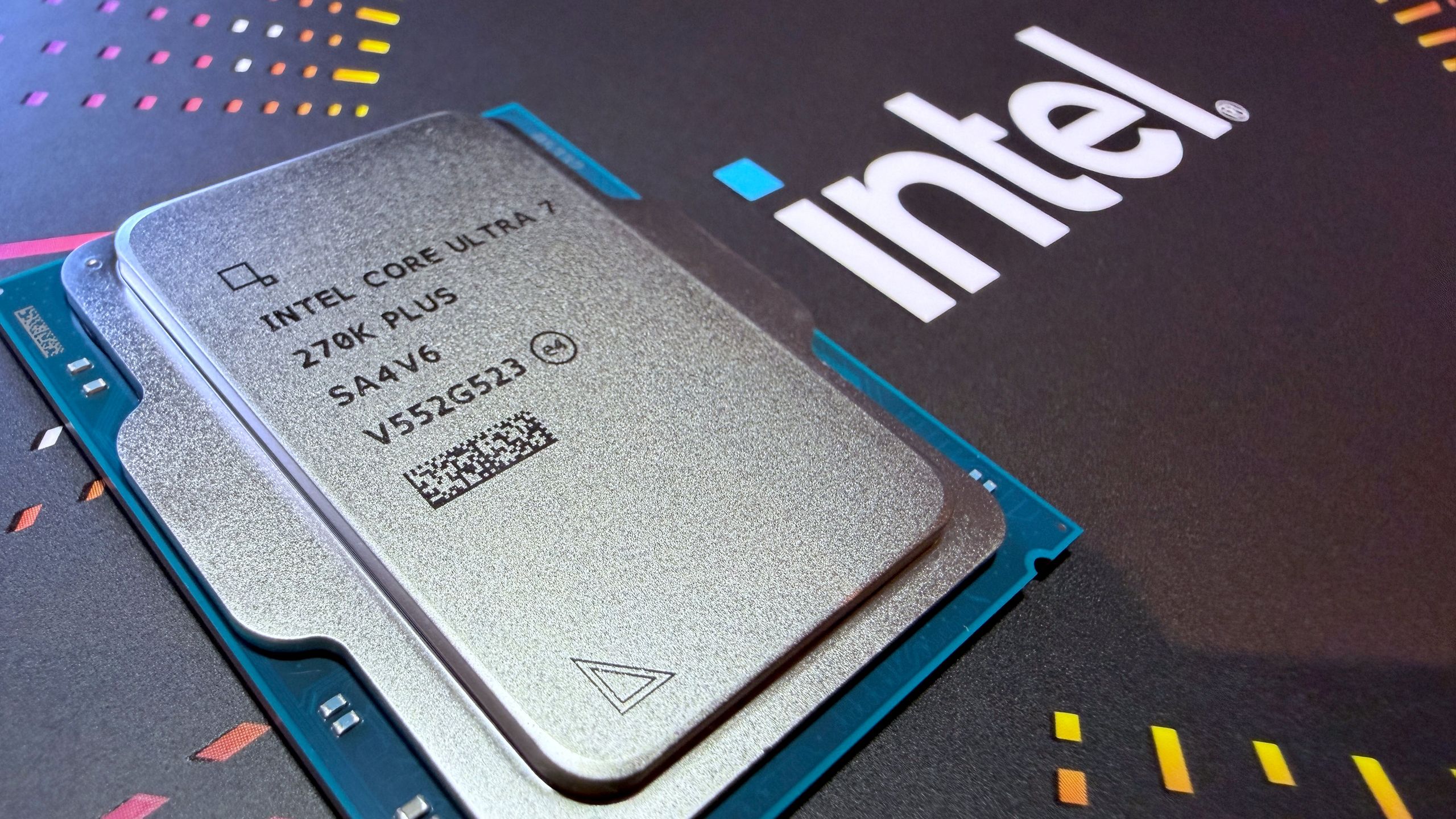
For a start, you’re only getting two new processors, the Core Ultra 7 270K Plus under review here, and the Core Ultra 5 250K Plus. In the case of the former, the family name (Ultra 7) would suggest that it’s merely a Core Ultra 7 265K with a bump to its clock speeds, but that’s not the case.
The 270K Plus sports eight P-cores and 16 E-cores (i.e. a full Arrow Lake compute tile), exactly the same as the Ultra 9 285K, and has higher maximum clock speeds for the P and E cores: 5.5 and 4.7 GHz, respectively. The 265K’s figures are 5.2 and 4.6 GHz, so you’re getting no more than 6% faster P-cores and just 2% speedier E-cores.
However, Intel has also given Arrow Lake’s other clocks a healthy bump, too. The maximum D2D (die-to-die) clock speed has been increased by an enormous 900 MHz (2.1 to 3.0 GHz), with the NGU (Next Generation Uncore) clock raised by a smaller, but still decently sized, 400 MHz (2.6 to 3.0 GHz).
Core Ultra 7 270K Plus specs
(Image credit: Future)
Cores (P+E): 8+16 Threads: 24 Base clock: 3.7 GHz (P-core) Boost clock: 5.7 GHz (P-core) L3 Cache: 36 MB L2 Cache: 40 MB (Total) Unlocked: Yes Max usable PCIe lanes: 24 Graphics: Intel Graphics (4 Xe cores) Memory support (up to): DDR5-7200 Processor Base Power (W): 125 Maximum Package Power (W): 250 Recommended customer price: $299/£299.99
The latter controls the speed of the fabric inside the SoC tile, whereas the former is for the bridges between each tile in Arrow Lake. Oh, and the clock for the cache ring bus inside the compute tile is also a touch higher: where the 285K and 265K peak at 3.9 and 3.8 GHz, respectively, the 270K Plus and 250K Plus are 4.0 and 3.9 GHz.
Additionally, Intel has given the integrated memory controller (IMC) a 400 MHz boost to its maximum clocks, hence why the 270K Plus supports DDR5-7200 without overclocking. It’s worth noting that the 200S Plus chips also support Intel’s 200S Boost mode, enabled via the motherboard’s BIOS, which raises the D2D and NGU clocks to 3.2 GHz and the IMC to support DDR5-8000.
To achieve all of this, Intel says it tweaked a variety of things inside the architecture and was keen to stress that the new Ultra 200S Plus chips aren’t simply ones that have been picked out of a particular manufacturing bin. The compute tile is a fresh wafer design, albeit one that isn’t substantially different from before.
Keep up to date with the most important stories and the best deals, as picked by the PC Gamer team.
Alongside the launch of the 200S Plus pair, Intel released a new piece of software, called Binary Optimization Tool (BOT), which basically plays a game of Tetris with thread instructions, helping the processor run them more efficiently. Some of the architectural tweaks involve hardware hooks to give Intel’s software engineers a better insight as to what code reshuffling will work best for a given game.
For the sake of consistency, and to get a sense of the ‘raw’ hardware performance, I’ve not employed BOT or Intel’s APO tool for the benchmarks below, but I will be examining the system in detail in a separate article.
Cyberpunk 2077 (1080p RT Ultra + DLSS Balanced) Data
Product
Value
Intel Core Ultra 7 270K Plus
119 Avg FPS, 98 1% Low FPS
Intel Core Ultra 9 285K
118 Avg FPS, 95 1% Low FPS
Intel Core Ultra 7 265K
117 Avg FPS, 90 1% Low FPS
AMD Ryzen 9 9950X3D
111 Avg FPS, 67 1% Low FPS
AMD Ryzen 7 9800X3D
112 Avg FPS, 76 1% Low FPS
AMD Ryzen 7 9700X
99 Avg FPS, 59 1% Low FPS
Intel Core Ultra 7 270K Plus
Baldur’s Gate 3 (1080p Ultra) Data
Product
Value
Intel Core Ultra 7 270K Plus
113 Avg FPS, 66 1% Low FPS
Intel Core Ultra 9 285K
108 Avg FPS, 67 1% Low FPS
Intel Core Ultra 7 265K
102 Avg FPS, 63 1% Low FPS
AMD Ryzen 9 9950X3D
147 Avg FPS, 84 1% Low FPS
AMD Ryzen 7 9800X3D
146 Avg FPS, 76 1% Low FPS
AMD Ryzen 7 9700X
94 Avg FPS, 56 1% Low FPS
Intel Core Ultra 7 270K Plus
Homeworld 3 (1080p Epic) Data
Product
Value
Intel Core Ultra 7 270K Plus
101 Avg FPS, 57 1% Low FPS
Intel Core Ultra 9 285K
97 Avg FPS, 53 1% Low FPS
Intel Core Ultra 7 265K
95 Avg FPS, 53 1% Low FPS
AMD Ryzen 9 9950X3D
101 Avg FPS, 54 1% Low FPS
AMD Ryzen 7 9800X3D
117 Avg FPS, 55 1% Low FPS
AMD Ryzen 7 9700X
91 Avg FPS, 49 1% Low FPS
Intel Core Ultra 7 270K Plus
Metro Exodus Enhanced Ed. (1080p High) Data
Product
Value
Intel Core Ultra 7 270K Plus
143 Avg FPS, 79 1% Low FPS
Intel Core Ultra 9 285K
149 Avg FPS, 79 1% Low FPS
Intel Core Ultra 7 265K
142 Avg FPS, 78 1% Low FPS
AMD Ryzen 9 9950X3D
148 Avg FPS, 91 1% Low FPS
AMD Ryzen 7 9800X3D
148 Avg FPS, 91 1% Low FPS
AMD Ryzen 7 9700X
146 Avg FPS, 77 1% Low FPS
Intel Core Ultra 7 270K Plus
Total War: Warhammer 3 (1080p High) Data
Product
Value
Intel Core Ultra 7 270K Plus
173 Avg FPS, 139 1% Low FPS
Intel Core Ultra 9 285K
173 Avg FPS, 139 1% Low FPS
Intel Core Ultra 7 265K
174 Avg FPS, 136.9 1% Low FPS
AMD Ryzen 9 9950X3D
150 Avg FPS, 79 1% Low FPS
AMD Ryzen 7 9800X3D
152 Avg FPS, 79 1% Low FPS
AMD Ryzen 7 9700X
151 Avg FPS, 79 1% Low FPS
Intel Core Ultra 7 270K Plus
3DMark Time Spy Data
Product
Value
Intel Core Ultra 7 270K Plus
20252 CPU index score, 17548 Overall index score
Intel Core Ultra 9 285K
19293 CPU index score, 17430 Overall index score
Intel Core Ultra 7 265K
18822 CPU index score, 17377 Overall index score
AMD Ryzen 9 9950X3D
17099 CPU index score, 17084 Overall index score
AMD Ryzen 7 9800X3D
16116 CPU index score, 17052 Overall index score
AMD Ryzen 7 9700X
13239 CPU index score, 16437 Overall index score
1 of 6
When Intel first launched Arrow Lake in October 2024, the new chips were disappointing from a gaming perspective. Slower than the previous generation Raptor Lake processors, as well as AMD’s Zen 5 range, the only thing they had going for them was the low power consumption in games. But that was because they weren’t working properly.
Fast forward 16 months and it’s a very different picture, thanks to a raft of microcode, BIOS, and operating system updates. Ryzen chips with 3D V-Cache are still the best for outright gaming, but compared to the rest of AMD’s offerings, Arrow Lake chips are a good match: better in some games, slower in others, but overall, pretty much on par.
The new 270K Plus chip, though, is something else entirely. While it’s still not good enough to knock the Ryzen 7 9800X3D off the top slot as being the best CPU for gaming, the Core Ultra 7 270K Plus really doesn’t disgrace itself. In fact, from a gaming perspective, it’s the best chip that Intel offers right now, and at $299, it’s substantially cheaper than the 9800X3D.
The best Arrow Lake processor for gaming used to be the Ultra 7 265K, for its balance of price tag and performance, but the 270K Plus easily demotes it to second or even third place now.
Content creation performance
Content creation performance
Cinebench 2024
Intel Core Ultra 7 270K Plus
Cinebench 2024 Data
Product
Value
Intel Core Ultra 7 270K Plus
143 Single-core index score, 2435 Multi-core index score
Intel Core Ultra 9 285K
145 Single-core index score, 2383 Multi-core index score
Intel Core Ultra 7 265K
135 Single-core index score, 1989 Multi-core index score
AMD Ryzen 9 9950X3D
139 Single-core index score, 2347 Multi-core index score
AMD Ryzen 7 9800X3D
133 Single-core index score, 1307 Multi-core index score
AMD Ryzen 7 9700X
131 Single-core index score, 1148 Multi-core index score
Intel Core Ultra 7 270K Plus
075150225300
Samples per minute
Blender 4.2.0 Data
Product
Value
Intel Core Ultra 7 270K Plus
179
Intel Core Ultra 9 285K
174
Intel Core Ultra 7 265K
146
AMD Ryzen 9 9950X3D
201
AMD Ryzen 7 9800X3D
101
AMD Ryzen 7 9700X
93
Intel Core Ultra 7 270K Plus
7zip Data
Product
Value
Intel Core Ultra 7 270K Plus
179 Compressing (GIPS), 200 Decompressing (GIPS)
Intel Core Ultra 9 285K
173 Compressing (GIPS), 195 Decompressing (GIPS)
Intel Core Ultra 7 265K
159 Compressing (GIPS), 165 Decompressing (GIPS)
AMD Ryzen 9 9950X3D
212 Compressing (GIPS), 273 Decompressing (GIPS)
AMD Ryzen 7 9800X3D
132 Compressing (GIPS), 141 Decompressing (GIPS)
AMD Ryzen 7 9700X
112 Compressing (GIPS), 131 Decompressing (GIPS)
Intel Core Ultra 7 270K Plus
037.575112.5150
UHD > 1080p60 (fps)
Handbrake 1.8.1 Data
Product
Value
Intel Core Ultra 7 270K Plus
123
Intel Core Ultra 9 285K
121
Intel Core Ultra 7 265K
115
AMD Ryzen 9 9950X3D
134
AMD Ryzen 7 9800X3D
92
AMD Ryzen 7 9700X
83
1 of 4
And thanks to the additional E-cores and clock speed increases, the 270K Plus is arguably the better Arrow Lake chip for content creation workloads. In theory, the 285K should be better, as it has a 200 MHz higher P-core boost clock, but when maxed out with threads, the 100 MHz faster E-cores in the 270K Plus tip the scales in favour of the new chip.
Naturally, there will be some workloads that do favour the 285K, such as image editing (as this involves heavy bursts and low thread counts), but if you do a lot of compiling, data handling, or offline rendering, then you should really be choosing the 270K Plus.
The Ryzen 9 9950X3D (and AMD’s non-X3D variant, the 9950X) is much more potent in content creation, of course, but that processor costs well over $600, more than double the price of the 270K Plus. Even the standard 9950X is over $500 and although it would make sense for professionals to be choosing these over Intel’s new chip, a PC enthusiast would be far better off going for the 270K Plus.
Power and thermals
Power and thermal performance
Average CPU power consumption in Baldur’s Gate 3
Intel Core Ultra 7 270K Plus
037.575112.5150
Avg package power (W)
Average CPU power consumption in Baldur’s Gate 3 Data
Product
Value
Intel Core Ultra 7 270K Plus
111
Intel Core Ultra 9 285K
108
Intel Core Ultra 7 265K
94
AMD Ryzen 9 9950X3D
108
AMD Ryzen 7 9800X3D
67
AMD Ryzen 7 9700X
75
Intel Core Ultra 7 270K Plus
020406080
Avg CPU temp (°C)
Average CPU package temperature in Baldur’s Gate 3 Data
Product
Value
Intel Core Ultra 7 270K Plus
67
Intel Core Ultra 9 285K
61
Intel Core Ultra 7 265K
57
AMD Ryzen 9 9950X3D
64
AMD Ryzen 7 9800X3D
51
AMD Ryzen 7 9700X
57
Intel Core Ultra 7 270K Plus
CPU power consumption in Cinebench 2024 multicore Data
Product
Value
Intel Core Ultra 7 270K Plus
240 Avg package power (W), 253 Peak package power (W)
Intel Core Ultra 9 285K
235 Avg package power (W), 243 Peak package power (W)
Intel Core Ultra 7 265K
213 Avg package power (W), 245 Peak package power (W)
AMD Ryzen 9 9950X3D
197 Avg package power (W), 200 Peak package power (W)
AMD Ryzen 7 9800X3D
109 Avg package power (W), 116 Peak package power (W)
AMD Ryzen 7 9700X
87 Avg package power (W), 88 Peak package power (W)
1 of 3
There’s only one thing that’s very slightly disappointing, and it’s the fact that the 270K Plus uses more power in gaming and content creation workloads than any of the other Arrow Lake processors. That’s to be expected, though, as all of the tiles are still manufactured on the same process nodes, and while the production routines have been streamlined over the past 16 months, you can’t just whack up clock speeds without having to pay some kind of a bill.
It’s worth noting that while the cheap Thermalright Peerless Assassin PA120SE cooler handled every CPU I tested just fine, it reached its limit of cooling with the 270K Plus in the Cinebench multi-core test, even with its fans running at 100%.
There was a brief moment where the chip throttled itself to stay within thermal limits (though not enough to affect the test score to any appreciable level), so it will be sensible to fit a more potent cooler if you plan on building a 270K Plus workstation.
Overall verdict
(Image credit: Future)
I have been using a Core Ultra 7 265K in my main PC, for work and gaming, since January of last year, and a Core Ultra 9 285K in a test rig for even longer. Over the months, I’ve spent many hours experimenting with various BIOS settings and clock speeds to see how much more performance I could extract from the processors, but to little success.
So it’s clear that Intel has done more than ‘turned up the dials’ to create the 270K Plus. It’s also obvious that the chip giant is very aware of the current PC hardware climate, as indicated by the $299 price tag. Intel has repeatedly expressed that things have changed quite a lot internally, with new staff, new division structures, and new ways of doing things.
I can’t say exactly how much of the Core Ultra 7 270K Plus can be attributed to this, but if this is a sign of what to expect from future processors, Intel’s future looks very rosy indeed. The new Arrow Lake Refresh is a truly excellent, all-round CPU that has almost no downsides to it.
The only thing to pay attention to is that the 270K Plus is likely to be Intel’s last desktop chip for its LGA 1851 socket. The next generation of Intel processors down the line, Nova Lake, uses a different socket, so if you buy a new Z890 or B860 motherboard, the 270K Plus is probably going to be the best chip you can fit into it.
If you’re the kind of PC enthusiast who likes to buy one motherboard and use it for many years, upgrading the CPU when funds permit, then choosing a new Intel chip isn’t for you. On the other hand, if you prefer to keep the same chip and board combination for years on end, updating both at the same time later on, then the 270K Plus is absolutely worth considering.
Yes, the Ryzen 7 9800X3D is still the best choice for just PC gaming (it is massively faster in some games), but if you want something that’s a jack-of-all-trades, master-of-many, then Intel’s refresh of Arrow Lake should be at the top of your shopping list.
The Securities and Exchange Commission has closed its investigation into electric vehicle startup Faraday Future, despite SEC staff on the case recommending an enforcement action last year, TechCrunch has learned.
Four sources familiar with the investigation, who were granted anonymity to speak about the government case, told TechCrunch that the SEC informed the company and people involved in the probe about the closure this past week.
The dismissal of the case comes amid a historic drop in enforcement actions by the SEC, which only initiated four cases against publicly-traded companies in its 2025 fiscal year, a recent report shows. The SEC did not respond to an after-hours request for comment.
The investigation into Faraday Future lasted for nearly four years. The SEC was looking at whether the EV startup made “false and misleading statements” when it went public in a 2021 merger with a special purpose acquisition company (SPAC), and was also probing whether Faraday Future faked the sales of its first electric vehicles in 2023 — a claim that’s been made by at least three former employee whistleblowers.
The financial regulator sent the startup multiple subpoenas, regulatory filings from Faraday Future show. The SEC also took depositions of multiple former employees and executives in 2024 and 2025, three of the people familiar with the case have told TechCrunch.
In July 2025, Faraday Future revealed the SEC had sent the company and multiple executives — including founder Jia Yueting — letters known as “Wells Notices.” The SEC sends Wells Notices when staff working a case have decided to recommend the agency take enforcement action.
“We can now put all our energy into strategy execution. Over the past five years, we had to spend a great deal of time, effort, and money on cooperating with the investigation,” Jia said in a statement Sunday. Faraday Future said the SEC informed the company that it won’t take action against any of its executives, either.
Techcrunch event
San Francisco, CA | October 13-15, 2026
It’s not clear if Faraday Future ever responded to the Wells Notices sent last year. As recently as February, the company disclosed in regulatory filings that it had not. “The Company and executives plan to engage with the SEC to explain why enforcement action is not warranted,” Faraday Future wrote in such a filing last month.
The Department of Justice also sent Faraday Future requests for information after the SEC opened its investigation in 2022. Faraday Future has referred to this as an “investigation” in regulatory filings; the DOJ has never confirmed if it opened a full probe, and it did not respond to an after-hours request for comment.
It is rare for the SEC to not pursue an enforcement action after sending a Wells Notice. One study done at the Wharton School in 2020 showed that around 85% of targets who receive a Wells Notice wind up in court with the SEC.
The SEC investigated nearly every electric vehicle startup that went public in a SPAC merger over the last six years. In almost all of those cases, the agency reached a settlement with the startups. It dismissed an investigation into Lucid Motors in 2023, and as TechCrunch first reported in February, the SEC ended a probe into bankrupt EV startup Fisker late last year.
Origins of the investigation
Faraday Future was founded in California in 2014 by Jia, a businessman who at the time was running a booming tech conglomerate in China known as LeEco. It was one of many new companies trying to become the “next Tesla” or, optimistically, a “Tesla killer.”
Faraday snapped up talent from Tesla, other automakers, and also tech companies like Apple, and at one point employed as many as around 1,400 employees. But things got bumpy quickly. The company turned heads, in both good and bad ways, at the 2016 Consumer Electronics Show, with a flashy concept car and the lofty goal of being as disruptive as the iPhone.
The company revealed its first vehicle the following year: a luxury electric SUV called the FF91. By the end of 2017, though the company was nearly out of cash and had laid off or furloughed hundreds of workers. Jia’s company in China had collapsed, and he self-exiled to California as the government in his home country placed him on a debtor blacklist. (It was at this time that a close business associate to Jeffrey Epstein pitched the sex criminal on investing in Faraday Future, as well as other EV startups, as TechCrunch recently revealed. Epstein never invested.)
Faraday Future was rescued by an investment from major Chinese real estate conglomerate Evergrande. But that relationship fell apart quickly, too, with Evergrande walking away by the end of 2018 and Faraday Future laying off even more employees.
Jia nominally stepped aside as CEO in 2019 and also filed for personal bankruptcy to settle billions of dollars of LeEco debt he had personally guaranteed. But behind the scenes, he was still largely in charge of the company.
This became an issue when Faraday Future went public in 2021 and raised about $1 billion. Members of the newly-appointed public company board believed that Faraday’s executives had misrepresented Jia’s control over the day-to-day operations — especially after a short seller report was published that scrutinized Faraday Future — and formed a special committee to investigate.
That committee hired an outside law firm and a forensic accounting firm, and within the first few months it started reporting its findings directly to the SEC, the three people familiar with the investigation told TechCrunch.
Between January and April 2022, Jia was sidelined as a result of the board’s investigation, a senior VP named Matthias Aydt (who is now co-CEO with Jia) was placed on probation for six months, and another VP named Jerry Wang (who is Jia’s nephew) was suspended. (Wang ultimately resigned after “failure to cooperate with the investigation,” according to company filings, but is now back with Faraday Future.)
The committee’s work also showed that Faraday Future had, in the two years before it went public, survived in part on multi-million-dollar loans made to the company by low-level employees with connections to Jia — known as “related party transactions” in legal parlance.
On March 31, 2022, Faraday Future disclosed that the SEC had opened its investigation. The startup revealed the requests for information from the DOJ in June.
Dodging another bullet
Through the rest of 2022, and amid the early stages of the SEC investigation, employees and people close to Jia waged a campaign to regain control of the board and his company. This eventually resulted in death threats against some directors, who ultimately resigned, paving the way for people close to Jia to run the company once more.
Faraday Future finally delivered the first few FF91 SUVs in early 2023. Former employees have sued the company alleging that these were not true sales, and that the company had misled investors. The SEC investigators working the case subpoenaed Faraday Future about issues related to these sales, filings show.
Former executives and employees were initially deposed by the SEC in 2024, according to the people familiar with the investigation. The SEC sat some of them for longer depositions in the first half of 2025, the people said.
The Wells Notice sent in July 2025 said SEC staff had made “a preliminary determination to recommend that the Commission file an enforcement action against the Company alleging violations of various anti-fraud provisions of the federal securities laws.”
Specifically, the Wells Notice referenced “purported false or misleading statements” made during the SPAC merger process about “related party transactions” and Jia’s “role in the Company.” Jia, his nephew Wang, and two other unnamed employees also received Wells Notices.
Faraday Future is still trying to sell the FF91, but it has also recently changed its business in a few ways. The company is importing more affordable hybrid and electric vans from China. It also appears to be selling re-badged versions of Chinese robots, and turned a publicly-traded biotechnology company into a firm focused on crypto.
Those efforts have not stopped the company’s struggles. On Friday, the company announced it had received a warning from the Nasdaq that its stock price was under the minimum of $1, which could eventually lead to the company being de-listed.
This story has been updated with a statement from Faraday Future.
You’re a skeleton shopkeep who hires adventurers to collect loot for you after your untimely demise. Send adventurers into battle, sell what they find, and build up your town in this laid-back idle game!
Story
Your dream was to be an adventurer. You were out questing one day when you encountered a poisonous snake. You won the fight handily, but the poison started wearing you down. You headed to the nearest town, but with no antidote actually there for sale, you died.
You come back as a skeleton. You decide that your fate should never beset another adventurer. Unfortunately, with your adventuring career behind you, you need to recruit others to gather loot for you. Hire adventurers, send them into battle, acquire loot, and SELL, SELL, SELL! Use the gold you get to upgrade your town and adventurers.
Gameplay
Skeleseller is laid-back and casual:
There’s nothing to rush you in the game, so take things at your own pace.
Experiment! You can change adventurer skills for free.
Skeleseller also bucks the trends of traditional idle games:
Finite gameplay: you won’t be waiting for hours or days to unlock the next big upgrade! The demo contains ~20-30 minutes of gameplay. The full game has ~5 hours for Story Mode and another ~5 hours for an extra mode that you can unlock. Scritchy Scratchy
No scientific notation needed—numbers stay within the realm of human understandability.
No systems just for the sake of them: prestige/ascensions, experience points, and equipment are eschewed in favor of mechanics crafted for Skeleseller’s design philosophy: keep the game fun and casual.
While most of the game is automated, you’ll perform high-level actions like:
Hiring adventurers, forming parties with them, and choosing where they’ll battle
Leveling up adventurers and choosing their skills
Prioritizing how you want to develop and upgrade your town
Helping out occasionally—stock shops or harvest crops manually to speed things up
Features and System Requirements:
Run a bizarre shop where you buy, sell, and manage skeleton-related items.
Handle customers and transactions while balancing prices and inventory.
Expand your business by unlocking new products and upgrading your store.
Deal with unusual requests that add humor and unpredictability to gameplay.
Enjoy a quirky experience with dark comedy and unique shop management mechanics.
Screenshots
SystemRequirements
Minimum
OS *: Windows 10 64-bit or later
Processor: x86_32 CPU with SSE2 support, x86_64 CPU with SSE4.2 support, ARMv8 CPU
Memory: 1 GB RAM
Storage: 350 MB available space
Support the game developers by purchasing the game on Steam
InstallationGuide
TurnOff Your Antivirus Before Installing Any Game
1 :: Download Game 2 :: Extract Game 3 :: Launch The Game 4 :: Have Fun 🙂
AI in Software Development: 25+ Statistics for 2026
Latest data reveals a troubling gap between AI adoption and actual productivity gains, plus what enterprise leaders need to know.
The software development landscape is experiencing its most significant transformation since the advent of cloud computing. Our comprehensive analysis of Stack Overflow’s 2025 Developer Survey, GitHub’s Octoverse report, and groundbreaking METR research studies reveals a striking paradox: while AI adoption among developers continues to surge, the actual productivity benefits are far from the promised gains.
For manufacturing and supply chain leaders who increasingly rely on custom software solutions, from IIoT implementations to supply chain optimization platforms, understanding this reality is critical for making informed technology investment decisions.
The Key Statistics Every CXO Should Know
The following data represents the current state of AI in software development based on responses from over 49,000 developers worldwide and rigorous controlled studies:
The AI Adoption Statistics — 2026
Key Metric
2024
2025
Change
Impact
Overall Adoption
76%
84%
+8%
Near-universal adoption
Daily Usage
45%
51%
+6%
Professional mainstream
Trust in Accuracy
40%
29%
-11%
Growing skepticism
Actual Productivity
Assumed +24%
-19%
-43% gap
Reality vs expectation
Code Acceptance Rate
Unknown
<44%
N/A
Quality concerns
Source: Stack Overflow Developer Survey 2025, METR Research Study
Three Critical Discoveries:
Perception vs. Reality Gap: Developers expect 24% productivity gains but experience 19% slowdowns in controlled conditions
Trust Erosion: Despite widespread adoption, trust in AI accuracy has plummeted 11 percentage points
Quality Issues: Less than 44% of AI-generated code is accepted without modification
Despite quality concerns, AI tools have achieved unprecedented adoption rates across the global developer community. The data shows clear momentum that enterprise leaders cannot ignore:
AI Tool Adoption by Developer Experience — 2026
Experience Level
Daily Usage
Weekly Usage
Monthly Usage
Never Use
Total AI Usage
Early Career (0-4 years)
56%
18%
12%
12%
88%
Mid-Career (5-9 years)
53%
17%
13%
13%
87%
Experienced (10+ years)
47%
17%
13%
17%
83%
Overall Professional Average
51%
17%
13%
14%
86%
Source: Stack Overflow Developer Survey 2025
Key Insights:
Early-career developers drive adoption, with 56% using AI daily—a critical factor for talent retention
Even skeptical experienced developers show 83% overall adoption rates
Only 14% of professionals avoid AI tools entirely, making this a mainstream technology
Geographic and Market Expansion
GitHub’s Octoverse data reveals explosive global growth in AI-capable development talent. Based on data from GitHub’s platform (separate from Stack Overflow’s survey data), we see significant developer population expansion:
Developer Population Growth by Region — 2024
Region
Developer Growth
# of Developers
Strategic Implication
India
28% YoY
>17M
Largest developer population by 2028
Philippines
29% YoY
>1.7M
Fastest growing in Asia Pacific
Brazil
27% YoY
>5.4M
Leading Latin American market
Nigeria
28% YoY
>1.1M
African tech hub development
Indonesia
23% YoY
>3.5M
Emerging Southeast Asia leader
Japan
23% YoY
>3.5M
Advanced tech infrastructure
Germany
21% YoY
>3.5M
European manufacturing center
Mexico
21% YoY
>1.9M
Growing North American hub
United States
12% YoY
Largest (>20M)
Mature market stabilization
Kenya
33% YoY
>393K
Highest growth rate globally
Source: GitHub Octoverse 2024
Note: This data reflects developer activity on GitHub’s platform and represents different methodology than the Stack Overflow survey responses. GitHub tracks actual platform usage while Stack Overflow surveys developer sentiment and practices.
For enterprise leaders, this global expansion means access to a larger pool of AI-capable developers, but also increased competition for top talent in key technology hubs.
Developer Usage Patterns: Where AI Helps vs. Where It Fails
The data reveals a clear pattern of where developers embrace AI versus where they resist its implementation:
AI Usage Patterns by Development Task — 2026
Task Category
Currently Using AI
Willing to Try
Won’t Use AI
Enterprise Risk Level
Search for answers
54%
23%
23%
Low – Learning/research
Generate content/data
36%
28%
36%
Low – Documentation
Learn new concepts
33%
31%
36%
Low – Training support
Document code
31%
25%
44%
Low – Maintenance tasks
Write code
17%
24%
59%
Medium – Implementation
Test code
12%
32%
44%
High – Quality assurance
Code review
9%
30%
59%
High – Critical oversight
Project planning
8%
23%
69%
High – Strategic decisions
Deployment/monitoring
6%
19%
76%
Critical – System reliability
Source: Stack Overflow Developer Survey 2025
Strategic Implications for Manufacturing:
Green Light Areas: Documentation, learning, and research tasks show high adoption with low risk
Yellow Flag Areas: Code implementation requires enhanced review processes
Red Zone Areas: Deployment, monitoring, and planning remain heavily human-controlled—exactly where manufacturing reliability demands are highest
Trust & Quality Crisis: The 46% Distrust Reality
Despite widespread adoption, developer trust in AI accuracy has hit concerning lows, creating a fundamental tension in the market:
Developer Trust in AI Accuracy — 2026
Trust Level
Percentage
Year-over-Year Change
Experience Level Most Affected
Highly trust
3%
-2%
Early career (4%)
Somewhat trust
30%
-8%
Mid-career (29%)
Somewhat distrust
26%
+3%
Experienced (31%)
Highly distrust
20%
+5%
Experienced (25%)
Net Trust
32.7%
-12%
All levels
Net Distrust
46%
+8%
All levels increasing
Source: Stack Overflow Developer Survey 2025
Critical Finding: More developers actively distrust AI accuracy (46%) than trust it (33%), with only 3% reporting high trust in AI-generated output.
Root Causes of Developer Frustration
The most significant quality issues driving this trust erosion directly impact enterprise software development:
Top Developer Frustrations with AI Tools — 2026
Issue
Percentage Affected
Impact on Development Time
Enterprise Impact
“Almost-right” solutions
66%
+15-25% debugging
High – Subtle errors in critical systems
Increased debugging time
45%
+19% overall slowdown
High – Hidden technical debt
Reduced developer confidence
20%
Unmeasured quality impact
Medium – Team capability concerns
Code comprehension issues
16%
+10% review time
High – Maintainability problems
No significant problems
4%
Baseline performance
Low – Rare positive experience
Source: Stack Overflow Developer Survey 2025
The Bottom Line: Two-thirds of developers report that AI generates solutions that are “almost right, but not quite,” leading to increased debugging time and reduced confidence in AI-generated code.
The Productivity Paradox: METR’s 19% Slowdown Study
The most groundbreaking finding comes from METR’s rigorous randomized controlled trial, which studied 16 experienced developers across 246 real-world tasks. This research represents the first scientifically rigorous measurement of AI’s actual impact on developer productivity.
METR Productivity Study Results — 2026
Metric
Developer Expectation
Actual Measured Result
Perception Gap
Study Conditions
Task Completion Time
-24% (faster)
+19% (slower)
43% gap
Real-world codebases
Code Quality
Assumed equivalent
<44% accepted unchanged
Significant quality gap
22,000+ GitHub stars avg
Review Time Required
Minimally increased
+9% of total task time
Major overhead
1M+ lines of code
Developer Confidence
Maintained high
Remained overconfident
Persistent delusion
Post-task surveys
Source: METR Early-2025 AI Study on Open-Source Developer Productivity
Time Allocation Breakdown
The study revealed precisely where AI productivity claims break down:
Where Development Time Goes with AI Tools — 2026
Time Category
Without AI
With AI Tools
Change
Manufacturing Impact
Active coding
65%
52%
-13%
Less hands-on implementation
Planning & design
15%
12%
-3%
Reduced strategic thinking
Reviewing AI output
0%
9%
+9%
New overhead category
Debugging & fixes
12%
18%
+6%
Increased maintenance burden
Idle/waiting time
3%
6%
+3%
Tool responsiveness delays
Documentation
5%
3%
-2%
AI assists with docs
Source: METR Research Analysis
Critical Finding: The 9% of time spent reviewing AI outputs often exceeded the time supposedly saved by AI generation, creating a net productivity loss rather than gain.
Most Used Programming Languages in Software Development — 2025
The most commonly used programming languages reflect the breadth of modern software development, from web applications to enterprise systems:
Python’s Dominance: For the first time since 2014, Python has overtaken JavaScript as the most-used language on GitHub, driven primarily by AI and machine learning projects, directly relevant to data analytics and predictive maintenance applications
TypeScript’s Growth: TypeScript continues rapid adoption as teams prioritize type safety in large-scale applications
Enterprise Stalwarts: Java and C#/.NET remain critical for enterprise software, with organizations modernizing these systems using AI assistance
JavaScript’s Evolution: While JavaScript adoption remains high at 66%, many developers are transitioning to TypeScript for enhanced tooling and safety
Enterprise AI Governance Framework
Based on the trust data and productivity research, manufacturing leaders need comprehensive governance frameworks. Here’s what the data suggests:
AI Governance Requirements by Risk Level — 2026
Risk Category
AI Usage Restriction
Required Safeguards
Measurement KPIs
Manufacturing Examples
Critical Systems
Prohibited or heavily restricted
Manual approval + senior review
100% human verification
PLCs, safety systems, real-time control
High-Stakes Code
Mandatory review + testing
Enhanced QA + security scan
<5% defect rate
ERP integrations, financial systems
Quality-Sensitive
Guided usage + oversight
Automated testing + lint
Standard quality metrics
Data pipelines, reporting systems
Development Support
Encouraged with training
Best practices + style guide
Developer satisfaction
Documentation, prototypes, learning
Recommended Enterprise Policies
Code Review Enhancement Requirements:
Current Review Process
AI-Enhanced Requirements
Additional Time Investment
Quality Improvement
Standard peer review
+Technical lead approval
+25% review time
Moderate improvement
Senior developer sign-off
+Security/quality scan
+15% review time
Significant improvement
Automated testing
+AI-specific test cases
+10% test development
High confidence gain
Documentation standards
+AI decision explanations
+20% documentation time
Long-term maintainability
Technology Investment Recommendations
Based on the comprehensive data analysis, here are specific recommendations for manufacturing leaders:
ROI-Driven AI Implementation Strategy — 2026
Implementation Phase
Investment Focus
Expected Timeline
Measured Success Criteria
Risk Mitigation
Phase 1: Foundation
Training + governance
3-6 months
Policy compliance >95%
Enhanced review processes
Phase 2: Limited Deployment
Documentation + learning
6-12 months
Developer satisfaction +20%
Low-risk use cases only
Phase 3: Selective Expansion
Guided implementation
12-18 months
Productivity neutral/positive
Objective measurement
Phase 4: Optimization
Advanced tooling
18+ months
Clear ROI demonstration
Continuous monitoring
Budget Allocation Guidelines
The trust and productivity data suggest a fundamental reallocation of AI budgets away from pure tooling toward the processes needed to manage AI effectively.
Enterprise AI Development Budget Distribution — 2026 Recommendations
Category
Recommended % of AI Budget
Justification
Expected ROI Timeline
Training & Change Management
35%
Address trust/adoption gap
6-12 months
Enhanced Review Processes
25%
Mitigate quality risks
3-6 months
Measurement & Analytics
20%
Track actual vs perceived benefits
6-18 months
Tool Licensing & Infrastructure
15%
Support expanded usage
3-6 months
Risk Management & Governance
5%
Prevent costly errors
Ongoing protection
This allocation reflects the reality that the largest costs and risks in AI adoption are not the tools themselves, but the organizational changes required to use them effectively.
Looking Forward: The Next 12-24 Months
Emerging Technology Trends
AI Development Tool Evolution — 2025-2026 Projections
Technology Category
Current State
2026 Prediction
Manufacturing Impact
Local/Private AI Models
15% adoption
45% adoption
High – Data security compliance
Specialized Industry Models
Rare
25% availability
High – Manufacturing-specific knowledge
Enhanced Code Review AI
Basic
Advanced quality detection
Medium – Improved catching of errors
Infrastructure Automation
Limited
Widespread deployment
High – IIoT system management
Strategic Recommendations for 2025-2026
Start with Data-Driven Pilot Programs
Focus on documentation and learning use cases
Implement comprehensive measurement frameworks
Build internal expertise before scaling
Invest in Quality Assurance Enhancement
Budget 25-30% more time for AI-enhanced development cycles
Train senior developers on AI code review techniques
Implement automated quality gates specifically for AI-generated code
Develop Manufacturing-Specific AI Policies
Create use-case matrices based on system criticality
Establish escalation procedures for AI-assisted development
Build relationships with vendors offering specialized manufacturing AI tools
Prepare for Competitive Advantages
The 84% adoption rate means AI skills will become table stakes
Focus on productivity measurement rather than perception
Conclusion: The Strategic Path Forward
The 2025 data reveals a development landscape where AI adoption is widespread but benefits remain unevenly distributed. For manufacturing and supply chain leaders, the key strategic insights are:
Immediate Actions (Next 90 Days):
Audit current developer AI usage and implement governance frameworks
Begin measuring actual productivity impact vs. developer self-reports
Establish enhanced code review processes for AI-assisted development
Medium-Term Strategy (6-18 Months):
Develop manufacturing-specific AI implementation guidelines
Invest in training programs that address the trust and quality gaps
Build partnerships with vendors focused on manufacturing use cases
Long-Term Vision (18+ Months):
Leverage AI for competitive advantage while maintaining quality standards
Develop internal expertise in AI governance and measurement
Position for the next wave of specialized manufacturing AI tools
The opportunity lies not in wholesale AI adoption, but in strategic implementation that leverages AI’s strengths while mitigating its documented weaknesses through proper governance, measurement, and human oversight.
Ready to navigate AI integration in your software development process?
USM Business Systems specializes in helping manufacturing and supply chain leaders implement AI governance frameworks that drive real business value. Our Agentic AI for SDLC services provide expert guidance on balancing innovation with operational excellence.
Palworld‘s head of publishing and communications, John Buckley, otherwise known as Bucky online, thinks AAA companies will probably borrow more ideas from survival crafting games very soon and reckons it’s about time before one of them tries to make another AAA survival game again.
“I think there’s an exciting future in survival crafting, and I think we’re going to see more and more people start to kind of borrow elements from it,” Buckley says in an interview with GamesRadar+ at GDC 2026. “And I think we’re a few years away from someone attempting a AAA survival crafting game. I think it’s coming.”
No surprise, there – survival crafting games have long been a massive subgenre on PC and, sometimes, beyond, but big publishers have rarely tried their hand at making ones with a sizable budget.
“It’s hard to imagine who would do it, but I think someone’s gonna try,” Buckley continues. Blizzard Entertainment notably took a stab at developing a fantasy survival game codenamed Odyssey, but Microsoft and Activision Blizzardcanceled it under an avalanche of layoffs across both companies. At the time, Microsoft exec Matt Booty said some Odyssey developers were being shifted onto other projects.
“Yeah, that was the one everyone – I was super excited for that,” Buckley adds. “I mean, we’ll see. I think someone’s gonna attempt it. I don’t know how it’s gonna work out. I think someone will attempt a big one. “
Samsung is upgrading Quick Share on the Galaxy S26 with AirDrop-style file sharing.
The update brings simple, tap-and-send transfers without relying on apps or cloud links.
Rollout starts March 23 in Korea, with the U.S. following later that week.
Samsung is rolling out a major update to Quick Share on the new Galaxy S26 series, adding built-in support for AirDrop.
Samsung says it’s updating Quick Share on the Galaxy S26 series to support AirDrop-style file sharing. Previously, sending files between Android and Apple devices has been more of a hassle than a smooth process.
This is nowhere more evident than when you tried to send photos from a Galaxy phone to an iPhone. Third-party apps are awkward and using cloud links feels like too much for a quick transfer. Meanwhile, Apple users have had AirDrop’s simple tap-and-send feature within their own devices.
Article continues below
Quick Share has worked well, but mostly just for Android users. With this update, Samsung is aiming for easier sharing across different platforms.
One-tap sharing, regardless of device
Now, Quick Share will work more like AirDrop, making it easier to send files between different devices without extra steps.
This update gives users a smoother way to share files between different types of devices, which people have wanted for years.
The update will launch in Korea on March 23, with the U.S. getting it later that week. At first, it’s only for the Galaxy S26 series, but more Galaxy devices should get it in the future.
Get the latest news from Android Central, your trusted companion in the world of Android
Samsung plans to bring this feature to more Galaxy devices, which could make a real difference. If it works well, other Android brands will likely add something similar.
Android Central’s Take
Honestly, I support this update, but let’s not act like Samsung has suddenly fixed cross-platform sharing. This feature should have been available years ago, not just now as a big upgrade in 2026. Still, if it really makes sharing between Android and iPhone as easy as tapping to send, I’m happy. In the end, users just want to move their files easily, without any extra hassle.
If you want the best of both worlds, you can now get all the best Microsoft tools on your Mac with this Microsoft Office Home and Business for Mac 2021 lifetime license. This edition comes with six powerful tools you’ll get access to forever, and now you can get them all for just $59.97 — just $10 each — until April 12.
Mac users, listen up. You can now enjoy all the perks of Microsoft’s best tools, while still enjoying the power and comforts of your Apple device. This Microsoft Office Home and Business for Mac 2021 lifetime license equips your Mac with six essentials, and lets you own them outright for just $10 each.
Mashable Deals
By signing up, you agree to receive recurring automated SMS marketing messages from Mashable Deals at the number provided. Msg and data rates may apply. Up to 2 messages/day. Reply STOP to opt out, HELP for help. Consent is not a condition of purchase. See our Privacy Policy and Terms of Use.
Microsoft Office Home and Business for Mac 2021 makes it easy to create documents with Word, build spreadsheets with Excel, manage your emails with Outlook, and design presentations with PowerPoint. You’ll also have access to newer staples like OneNote to help you modernize your note-taking and Teams to stay connected with friends, family, and coworkers.
You’ll receive an instant delivery and download with your purchase, so you can permanently access these tools for life with no cloud connectivity or subscription fees required. Just ensure your Mac is running macOS 14 Sonoma, macOS 15 Sequoia, or macOS 26 Tahoe.
By signing up, you agree to receive recurring automated SMS marketing messages from Mashable Deals at the number provided. Msg and data rates may apply. Up to 2 messages/day. Reply STOP to opt out, HELP for help. Consent is not a condition of purchase. See our Privacy Policy and Terms of Use.
Want to see more deals? Visit the shop and use code MARCH15 to save an extra 15% sitewide through March 29. Exclusions apply.
Have you ever stumbled onto an extremely popular artist that you’ve never heard of before, just to wonder if you’re so out of touch that a global phenomenon could pass you by? Well, in at least one recent case, there was a ‘musician’ with billions of streams that basically all came from bots—and if that wasn’t enough, the music itself was AI-generated.
The case is discussed in detail in a press release on justice.gov; the skinny is that North Carolina man Michael Smith “generated thousands of fake songs using artificial intelligence and then streamed those fake songs billions of times,” according to U.S. attorney for the southern district of New York, Jay Clayton. “Although the songs and listeners were fake, the millions of dollars Smith stole was real.”
Last Thursday, Clayton announced Smith’s guilty plea to one count of conspiracy to commit wire fraud. The scale of Smith’s operation is hard to fathom: “hundreds of thousands of AI-generated songs were streamed by his bot accounts billions of times, which allowed him to fraudulently obtain more than $8 million in royalties,” said the attorney’s office in a press release. Turns out, all those itty-bitty royalty payments add up if you just throw enough bots at the wall.
Article continues below
Smith won’t be sentenced until July, but the crime carries a maximum sentence of five years in prison. He’s also agreed to forfeit more than $8 million of his ill-gotten gains. It’s no secret that AI is already responsible for the RAMpocalypse and other tangible ills, but its potential for bizarre crimes and careless distortions of ethics—like cloning journalists without their consent—is something that we’ll probably be learning about for years to come.
Keep up to date with the most important stories and the best deals, as picked by the PC Gamer team.
Architectural design experts are often big on show. In fact, there is no better way to impress a client with a fluid walk-through animation of what a future lobby might look like, a rendering of what a pool deck might look like with sparkling lights, and a penthouse that might not even exist at least two years from now, from a physical standpoint.
Real-time rendering has now become the party trick that the architecture industry wants, which is poised to spark a full-blown revolution within the entire design process that is now poised to become faster, smarter, and a whole lot of fun. The best part is that architecture practices do not necessarily need a Hollywood-style staff to make this party trick a success. This can be easily accomplished with a whole lot of pizzazz with a freelancing rendering artist who is most aptly procured from the best freelance platform, Cad Crowd.
Real-time rendering is a phrase that means infinitely more than a marketing phrase for a solution—it means a real paradigm shift, full-blown, when it comes to the use and creation of the visualizations themselves. If people know people who know people with known clients who have fallen in love with a design solution because finally they were able to figure out what blueprints were trying to say, then they’ll know exactly what I am talking about.
Designers speak a language that is composed of drawings and computer graphics, which can be translated back to clients, but the client’s language is based on their feelings. And that is the best way to describe what that language is: “feel,” because when that client can walk around in a space as if he already was inside, design is a whole lot clearer, easier, and a heck of a lot more fun.
The best is yet to come, but it is high time that we spoke of what real-time rendering is, has been doing, and has been receiving so readily in architecture practices and 3D rendering services, because it is a renewed friend who went to design school, with skill sets that are mind-boggling, to say the least.
🚀 Table of contents
What real-time rendering truly means
Real-time rendering, of course, is a short way of saying ‘making an image, a misguided expert might continue, because from a purely technical standpoint, that is exactly what it is; but what is not supposed to come before one’s mind, however, is “the magic” that occurs behind the scenes, which is that traditionally, rendering has taken a long time, bogged-down computers, and design teams anxiously pacing around the office like actors waiting for their reviews,”
That is, one can walk around a virtual space, orbit a model, switch textures and lighting, with what is inside the borders of the picture changing in real-time. This is what one is doing, no different than when playing a high-tech video game, when buying a luxury condo unit or a richly landscaped public space, but not when buying a dragon or a starship.
High responsiveness is achieved with the help of intelligent algorithms as well as highly optimized graphics. It is unlike most common solutions, which are used in rendering, that most effects are calculated on almost every single detail with a high degree of cinematic detail, but aim to be faster with the use of solutions that are capable of rendering a picture realistically without consuming the entire eight hours of power. But with the shortcut of going faster, most solutions are highly capable of providing a look that is real.
The real reason real-time rendering runs so smoothly
Real-time rendering is very much linked with the power that has been built with the development of modern graphics processors. This is highly prized. After all, it is the highest form of innovation in silicon because it is linked with power in the sense that it has to do with a lot of detail work at the same time, from a graphic point of view, for HDR rendering design firms. The elements of lights, shadows, reflections, and textures that are moving inside the scene are efficiently handled by the computer so that the user is not distracted during their journey.
Despite all the factors that have been cited earlier, on this particular topic, it is not only a matter of power when it comes to hardware systems. Real-time rendering also uses tricks that make the process less intensive, taking into consideration factors such as fewer computations when it comes to light, pre-calculated shadows, and textures that are perfectly manipulated. This is considered a seamless process where the final environment that is used in rendering blends with a real environment.
Which is to say, from the perspective of the architect, what you’re left with is this incredible computer graphic that is “listening” to your commands the whole time. You’re not sitting there blowing steam for three hours while, for example, the computer is “sweating” the problem when, say, the client wants to see what it might look like with a different treatment of the ceiling, perhaps a different floor finish.
Real-time techniques vs. conventional techniques of visualization
Next came a point when architecture groups would spend nights rendering. The computers ran a hundred miles an hour, bees-at-work style, to crunch the numbers. Then came the morning, and with it two different feelings came into play: the feeling of relief that the rendering is exactly as it should be, but the despair that emerges when, within that rendering, a problem is identified, which indicates that another night with the computer is required.
Real-time rendering: In short, real-time rendering turns all of that on its head. The architectural design companies are not sitting around with bated breath, waiting for that great moment when things are revealed to them. This is a never-ending stream of views. No matter what happens, real-time rendering reflects the aftermath. Blunders are corrected before they become a matter of life and death.
The traditional process still has an existing need for rendering. In fact, it is considered the most demanded process when a photorealistic rendering is required from a cinematic point of view, such as when participating in the end marketing prints. Real-time rendering is considered the most innovative technique that has been introduced in terms of concept development, image rendering for clients, and reviews. The ideal application of real-time rendering is when speed is considered as a fundamental component, but a photorealistic detail is considered as a secondary component. This is because several practices are considered to have been applying real-time rendering efficiently in design development with the detail obtained from the still rendering process.
Real-time rendering is one of the most desired technologies used by architecture firms
The corporations that fall under the architecture practice use real-time rendering because it is a current trend. It is, therefore, a fact that real-time rendering is used by these corporations because it is a solution to a myriad of age-old problems. For instance, it provides clarity on the issue of communication. Every architecture student, as well as a professional, has been on the receiving end of a client who has responded with a statement that he or she has perfectly understood the design, only to be shocked when the structure is erected. Whether this is to be used for real-time rendering within architecture corporations in the future is yet to be seen.
It also aids in faster decision-making. The longer the design, the costlier it is. Real-time software has thus served as a massive support system for the team as well as clients concerning even a micro-level change that includes layouts, color, furniture, and lighting conditions, which are completed in a matter of a couple of minutes, not weeks. This has been a very critical part as far as massive commercial designs are concerned, as waiting even for a short while has been as expensive as a small fortune.
The freedom that is acquired from real-time systems is what meets the satisfaction of the architects. The architects find themselves in a situation where they are able to come up with alternative means of developing variations. This is because, with real-time systems, they are always thinking creatively; hence, making creative alternatives. This is because they are even capable of developing presentations through 3D architectural rendering services that are exciting to clients, as opposed to confusing them.
The second significant advantage is that real-time rendering has brought together a collaborative setting when working from a distance. This is because of the interactive models that are shared with the clients as well as the teams that work from distant locations, which is really useful sometimes. This is because it ensures that the presentations are made attractive enough, thus ensuring that everything is in line.
Customer feedback on real-time rendering performance
What clients want is clarity, simplicity, and anything that is going to make the process of making a decision easier. Real-time rendering certainly fills all of these needs. “The client is going to feel more at ease with his design when he can turn it, take a look at it in a room, see how things are all put together,” says John.
In fact, they find themselves actively involved from the onset once design commences, even though the customers may come later to say they don’t have the skills in that area of imagination. Secondly, they are capable of giving feedback on what is happening in relation to changes, capable of responding to graphic changes that are taking place within a real-time environment, and feel part of what is going to be produced in the end; therefore, they are satisfied with the project.
The cycles that are needed for approval are also reduced. This is because clients are now in a position to know what is going on, hence miscommunication doesn’t occur. This means that fewer emails between 3D visualization services and clients are received with the sentence “After reconsidering, I realized that.”
Real-time rendering: This has proven to be extremely useful for the clients because it gives them the chance to see how they might be able to come together in order to make a decision based on what is being rendered for them within that instance, rather than a full presentation.
Even more interactive presentation-less guesswork
This would mean a huge amount of freedom for the architects if real-time rendering is used for the purposes of rendering when presenting. It is not compulsory that the architects are limited to giving a slide show presentation of pictures; they take the client on a journey. The full setting can be altered by the lights/materials with only a click of a button. It takes a couple of minutes to change the furniture setting when the colors on the facade are changing.
Therefore, within such a process, some uncertainties are cleared. The clients who are watching the entire process taking place before their very eyes are learning what exactly they are setting themselves up for. The openness that has been brought within a process such as this is, in most cases, enough for the clients. The need is what decides whether people need to come up with what it is going to look like.
The presentation is no longer a lecture, but now an experiment that we are all embarked on together. The client wants to learn more, wants to be a part of it. The client begins asking the right questions, making decisions with a whole lot more certainty. This is what keeps a project from going around in circles on a single detail after another.
Free experimentation by architects
The creativity is with the architects, but that is reduced significantly because of reasons such as cost, rendering time, and because they are forced to do things within a certain amount of time. Real-time rendering design experts remove these factors. Experimenting is going to be a lot easier because of that; a rendering update is not going to result in a loss of a whole day.
Where architects might agree on a click of the mouse, with hopes that maybe a wood tone might go with a minimal theme, maybe because it’s a nice contrast, but maybe a graphic marble wall might be a little too bold with a certain theme, that theme is now only a click away, to add another element in seconds, this is design in the modern age that brings boldness, bold design detail, and challenges every single element of design to come up with what might never be thought of within a certain set of guidelines.
The development of creativity in the designers suddenly takes flight because of the availability of instant visual effects. This is because the designers are now capable of judging the effect of lighting, alternative design, and shapes & textures together in a relatively more creative manner. The most amazing part is that now the clients are capable of watching all these things. This is because now the clients are capable of judging the work that is being put in when designing, whereas in the previous situation, the client judged the design when it was displayed, thus giving a chance of acceptance/rejection.
The necessity of real-time technology within architecture
Real-time rendering has also improved due to advances in game engines, rendering software, and graphics card development. The two entirely unrelated fields to each other, within the initial point of consideration, are the gaming industry and the architecture industry. In the high-performance graphics side, these two are interrelated. The architecture industry has been made to realize that the power that is available within the development of the virtual world, which is offered by the gaming industry, can be harnessed.
In the end, cross-pollination brought the most significant improvements to the field of architectural visualization. The growth that game engine development had to make, mostly, even more real, more efficient, and more capable, brought architects on board to use game engines so architectural visualization services can add life to the render. The walkthrough is not complete with a gamelike setting, lighting, detail, and a seamless transition from one point to another.
It is a totally different setting in the sector! The young architects are not finding it a challenge because they have been playing with such equipment since childhood. The seniors are also satisfied with the equipment because it is much better than what is offered by the normal setting, which makes it easy to communicate intentions. The client is also satisfied with such advancements because the matter of visual ambiguity has been solved. It is a win-win situation because it meets a need that really exists.
Speed, efficiency, and fewer costly surprises
Perhaps one of the most underappreciated positive impacts that real-time rendering has on design is that, from a design perspective, architectural design has been made more efficient. The presence of time is essentially the most evident element. It takes what would take hours, even days, to complete, but now it takes only a couple of minutes. This is from a design perspective with a design team that is basically taking a couple of cycles of changes through email in order to accomplish what is now being accomplished in a real-time environment.
This efficiency has been proven to a great extent, especially with regard to the cost of a project. A few changes are experienced toward the end of projects, which bring decisions, thus resulting in fewer surprises that might affect the construction cost. Changes toward the end of projects are, as most people who have managed projects are aware, the sneakiest thieves of project budgets. Real-time rendering eliminates all surprises because problems are thus revealed with respect to spatial conflicts, design, and development, which might be introduced concerning changes in construction.
It also provides a better collaboration process between the architects, designers, engineering design experts, and clients. This is because, when they are all visualizing the models together, there is no way that miscommunication can occur. This is because the whole group is looking at the same thing, interpreting the same things, and in the same way, they refer to the same thing.
Competitive advantage of a modern architecture company
Technology is one of the subtle but very potent differentiators in a competitive environment where clients are weighing the alternatives of a practice. Moving ahead with that, real-time rendering has been one of the most appealing technologies that can be used within an architecture practice. Real-time rendering has an edge when it comes to upgraded thinking, or rather a familiarity with the technology, and most essentially a sense of transparency.
This is also true when the client has never gotten a real-time walkthrough before. They are going to learn that this is one office that provides them with what they never would have gotten from the drawings. The client has the opportunity to see the space that he or she is going to occupy in the future.
This competitive advantage is even more common than the presentations themselves. This increases the efficiency of the business, helps in the completion of projects quickly, and even helps in attaining a high level of overall client satisfaction. Overall client satisfaction is most probable to generate repeat business, referrals, and tell all the people that they know.
In most cases, the software is of less importance owing to overall client satisfaction with the entire process. Architectural planning and design companies with real-time rendering capabilities are setting a high standard by positioning themselves at the forefront of client interactions, rather than merely keeping pace.
The rising need to hire freelance artists
The sophistication that has been entailed in real-time rendering software has brought the situation to a crossroads where there is a need for people who are experts with that software. Architecture firms use rendering artists, freelancers, experts who are highly knowledgeable with the details, and experts who are known in a way that is necessary in creative real-time rendering software. Such people are not only designing a colorful scene.
This may perhaps be attributed to the flexibility that is entailed with freelancers, where organizations resort to freelancers for the visualization process. This is cheaper because, rather than setting up a whole department, the architectural firms are accessing expert skills when the need arises. The freelance artist brings a lot to the table in terms of skills.
For instance, there may be a CAD freelancer who is an expert in photo-realistic exterior, another who is very capable in taking atmospheric interior pictures, while another might still be learning how to develop an interactive environment. The firms would employ several experts, who would charge a pretty penny to the organizations.
This is exactly where a service such as Cad Crowd is necessary. The service, such as a Cad Crowd, connects architecture firms to freelancers who are experts in real-time rendering software, thus providing architecture firms instant access to a freelancer who would develop what is essentially a 3D walkthrough, an interactive marketing tool, as well as a full-blown real-time rendering visualization system.
The part played by Cad Crowd in the architecture visualization job
The service, Cad Crowd, is a tool that is more than just a freelancer directory; it is a tool that has been specifically set up to ensure that businesses are put in a position to find pre-selected freelancers with the capacity to be dependable, with the competence that is adequate to address certain requirements that might arise for a particular job. The tool provides cost transparency to architecture firms, which is directly linked with employment flexibility, along with ensuring that a freelancer can provide architectural consulting services.
The freelancer can be identified for a small assignment, a full-fledged project, or a long-term association partner. All are made extremely easy by the tool. The design teams are therefore capable of sharing, communicating, and tracking developments in all sectors without confusion. The efficiency introduced within the organizational structure, therefore, ensures that there are no hindrances within the development of all projects from the commencement stage itself until completion.
The freelancing community under the realm of the Cad Crowd has experts in real-time rendering, gaming engine visualization, photorealistic rendering services, and even more complicated 3D models. The freelancers are capable of taking care of the entire process, starting from the asset optimization, lighting simulation, and even the interactive presentations, to name a few. Hence, this is highly useful for design communities, who are thereby looking to harness the potential of existing technologies. The designers are now capable of designing, while the technical part of the visualization process is now taken care of by freelance artists. This is one highly profitable association, churning out highly superb production.
Conclusion
All of these, in turn, are resulting in a revolutionary shift within the architecture sector. This is because real-time rendering is highly capable of providing a clearer design, highly convincing, and highly efficient workflow. Real-time rendering, therefore, helps eliminate surprises, besides highly minimizing wastage of precious time, thereby encouraging architects to make uninhibited statements on the design aspect.
The clients are therefore actively taking part in the design process with a high degree of precision, besides an increased level of confidence, thereby enhancing the competitive edge within architectural practices. The highly capable freelance rendering artists are playing a highly significant role here. These are highly talented skills that are thereby used in the creation of interactive spaces, besides highly quality visualizations that are highly amazing to clients.
The most exciting part is that the most opportune location to look for a chance to win is at Cad Crowd. In short, this is a service that brings together architecture firms with highly adept 3D rendering artists who are highly adept with real-time visualizations, apart from how they might be used to realize designs. In this regard, therefore, if you are highly interested in taking your skills in the presentation of architecture designs to the next level, now is the most exciting part of your life to see what is offered by Cad Crowd to your advantage, which is a highly effective way of engaging professional freelance artists who might assist your design in 3D rendering. Request a quote today.
MacKenzie Brown is the founder and CEO of Cad Crowd. With over 18 years of experience in launching and scaling platforms specializing in CAD services, product design, manufacturing, hardware, and software development, MacKenzie is a recognized authority in the engineering industry. Under his leadership, Cad Crowd serves esteemed clients like NASA, JPL, the U.S. Navy, and Fortune 500 companies, empowering innovators with access to high-quality design and engineering talent.