Rival Stars Horse Racing Gallops Onto Xbox April 28


Summary

  • Multiple game modes including Flat Racing, Steeplechase and more.
  • Breed and train a stable of champion racehorses.
  • Genetic breeding system with detailed horse generation for ultimate realism.

What happens when you’re given the keys to a rundown ranch and asked to restore your family’s legacy? Rival Stars Horse Racing challenges you to take the reins and become a racing legend.

Prove Yourself

In Rival Stars Horse Racing, we wanted to capture the most authentic and in-depth horse racing experience for equestrian fans. Not content with just the regular racetrack, the game offers four different racing modes: In Flat Racing, you’ll burst out of the starting gate and aim to be the first across the finish line. Cross Country will have you navigating sharp turns and jumps, while Steeplechase combines the best of both modes into a challenging thrill. And for something a little more elegant, you can take to the arena in Show Jumping. Story Mode will take you through all game modes with a full campaign, meeting new friends (and rivals) as you seek to restore your ranch to glory.

Breed your Dream Horses

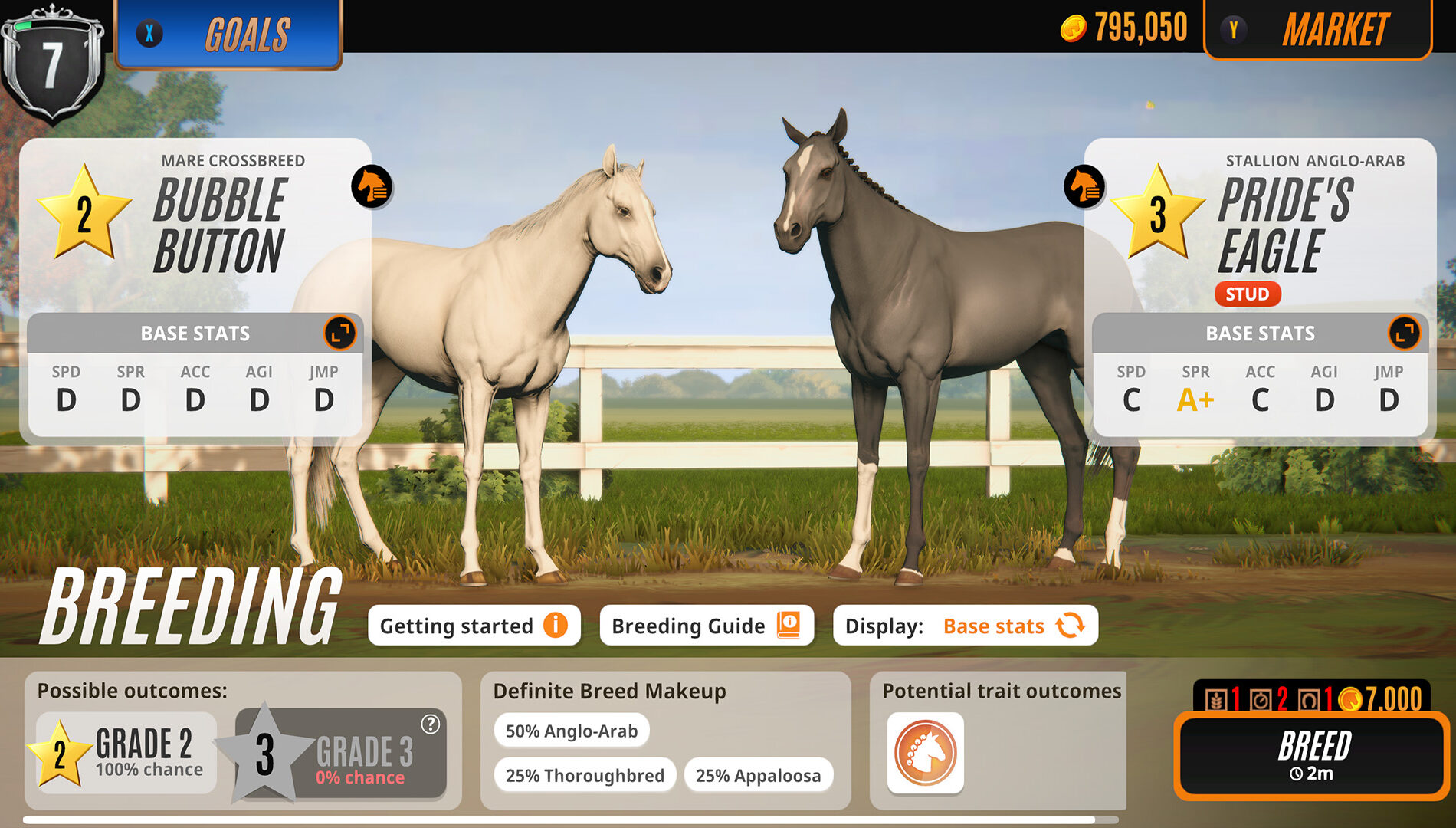
We’ve put a lot of love into the horses of Rival Stars Horse Racing. Beyond your standard thoroughbred, you can raise the elegant Arabian, the powerful Mustang, the otherworldly Akhal-Teke and six other popular breeds. With 270 coat patterns, 12 colors, 5 dilutions and over 60 markings, the genetics system means you can breed a whole lineage of champions, with dominant and recessive genes existing just like in real life. You can even crossbreed to get the best of the breeds you like most! Or create your own dream horse using Horse Creator, and customize everything from mane length to facial markings exactly the way you want them.

Cozy Meets Realism

There’s no anime girls here – we’ve used motion capture on real horses for an immersive, realistic experience that captures the beauty and power of these magnificent animals. Saddle up and feel the pressure of the racetrack, and then wind down by taking your horses out for a ride in Free Roam mode and use the in-game camera to capture beautiful shots of your favourite steeds. You can even share Free Roam mode with up to eight friends, and explore scenic locations like Switzerland or the American Southwest. We’ll see you on the track when Rival Stars Horse Racing launches on Xbox on 28 April.

Rival Stars Horse Racing

PikPok


Play Rival Stars Horse Racing for the ultimate horse racing and riding experience.

Handed the keys to a rundown ranch, it’s up to you to restore your family’s legacy and become an equestrian legend! With the help of a host of colorful characters, you’ll raise charming foals, manage your dream stable of horses, and bring the ranch back to its former glory.

Ride your way — take the reins to feel the thrill and thunder on the racecourse, hone your jumping skills on the Cross Country course, explore the ranch with your horses, and so much more.

Meet the former Apple designer building a new AI interface at Hark


A secretive AI lab founded by serial entrepreneur Brett Adcock shared new details about what it believes is a novel marriage of model-building and hardware design that will change how humans interact with intelligent software.

The company said in a statement it would design multi-modal end-to-end models, their hardware, and their interfaces in tandem to deliver a “seamless end-to-end personal intelligence product.” The system will have a persistent memory of your life and can listen, see, and interact with the world in real time.

How that will be executed remains unclear outside the company, but Hark’s ambition is representative of Silicon Valley’s ongoing hunt for the killer app that will make AI a desired consumer product, not features kludged dubiously into existing digital platforms.

“My view is simple: today’s AI models aren’t nearly intelligent enough, they feel quite dumb, and the devices we use to access them are fundamentally pre-AI,” Adcock wrote in a January internal memo shared with TechCrunch. “We’re moving toward a world that looks more like sci-fi characters Jarvis or Her, with systems that anticipate, adapt, and genuinely care about the people using them.”

Details are intentionally sparse, but Hark points to Director of Design Abidur Chowdhury as a key hire. Previously an industrial designer at Apple credited with leading the design team behind the iPhone Air and other recent models, London-born Chowdhury left last fall after meeting with Adcock and buying into his vision for updating the way humans automate their lives.

In an exclusive interview with TechCrunch, Chowdhury declined repeated invitations to spill the beans on Hark’s roadmap, only saying that the public can anticipate a first release of the company’s AI models this summer. Asked about different approaches to working and living alongside AI, the designer did offer a few clues. 


Techcrunch event

San Francisco, CA
|
October 13-15, 2026

“What was very clear for me at the time is that the world is clearly changing, but we’re using the same devices…everything’s been designed around these existing platforms,” Chowdhury told. “Very few people are really going after what the future is. There’s so much that we could be doing if intelligence was at the base layer of everything we touched instead of becoming an app or a website at that upper layer.”

Chowdhury points to the awkwardness of everyday tasks of filling out forms, sharing information between devices, or the mundane tasks of booking travel or planning home renovation.

“Those are entire evenings of time where I have to plan…the anxiety of, you know, I spend my work day thinking about this in the back of my head, oh, I have to do this,” Chowdhury said. “We genuinely believe that all of the small tasks that pile up to be kind of gargantuan things today can be sort of automated from our lives.”

Chowdhury says the company knows what it is building, but can’t yet say how users will experience it. His comments suggest that wearables, like Meta’s Glasses, seem unlikely.

“I’m not the biggest believer in a lot of the wearable AI platforms that people are talking about right now,” Chowdhury said. “I don’t think it’s appropriate to put a layer between humanity and the interfaces we use in the world. I have similar discomfort with pins, or that kind of stuff that is going around with cameras.”

When generative AI first arrived on the scene, Chowdhury at first saw it as a flash in the pan, but successive generations of models convinced him that it would change his work. Hark, the word, means to pay attention, which Chowdhury says offers a thoughtful framing for the company’s mission.

“Traditional user experience always is about finding the simplest thing for everyone,” he told TechCrunch. “The future user experience will be finding the right thing for each individual. And I believe that can happen. But it requires a lot of work.”

The focus on elegance and simplicity for users echoes the high points of Apple’s product design, and naturally brings to mind Jony Ive, the legendary former Apple designer who is now developing AI native-hardware at OpenAI. A comparison that a Hark’s spokesperson declined to explore. 

Another parallel that comes to mind is how Elon Musk’s xAI work on advanced models dovetails with Tesla’s work on autonomous vehicles and humanoid robots.

There is similar corporate synergy between Adcock’s humanoid robotics company Figure and the new AI labs. Hark’s models are already being trained on Figure’s robots, although it is not clear to what end. A person familiar with the companies’ plans says there is no intention to combine them.

Hark employs 45 engineers and designers, including former Meta AI researchers and designers from Apple and Tesla, all of whom are working on the same campus that hosts Adcock’s other companies. Hark expects to begin using a new cluster of thousands of NVIDIA GPUs in April.

Now Hark, backed by $100 million in personal seed money from Adcock, will join the scramble for talent as the world’s biggest companies try to figure out the format that brings deep learning models into daily life — and at a time when frustration with the existing models for digital life is hitting a fever pitch.

“It just feels like there’s an opportunity for better, and I’ve not felt like that since the iPhone came up,” Chowdhury said.

‘I don’t love AI slop myself’ says Nvidia chief Jensen Huang: ‘I’m empathetic towards what [gamers] are thinking. That’s just not what DLSS 5 is trying to do’


Jensen Huang: NVIDIA – The $4 Trillion Company & the AI Revolution | Lex Fridman Podcast #494 – YouTube
Jensen Huang: NVIDIA - The $4 Trillion Company & the AI Revolution | Lex Fridman Podcast #494 - YouTube


Watch On

After all the furore surrounding Nvidia’s DLSS 5 announcement, which was met with a mixture of curiosity around its AI capabilities and outright objection to the aesthetic changes it appears to make to existing games, CEO Jensen Huang has pushed back against the critique.

Best SAP Generative AI For Intelligent Business Solutions


SAP Generative AI: Enterprise Use Cases, Deployment Realities, and What to Expect in 2026?

The Conversation Happening in Every SAP Shop Right Now

Every major enterprise running SAP has had a version of the same leadership conversation in the past 18 months: we have invested heavily in SAP, our data lives there, generative AI is real — so what does GenAI on SAP actually look like for us?

The honest answer is more nuanced than most vendor pitches suggest. Generative AI on SAP is working well in specific use cases, producing real productivity gains, and expanding fast. It is also being deployed carelessly in others, producing outputs that undermine trust and slow adoption.

This article maps both sides: where SAP generative AI is producing verifiable business results, and what it takes to deploy it in a way that holds up inside a governed enterprise environment.

USM Business Systems is a CMMi Level 3, Oracle Gold Partner AI and IT services firm based in Ashburn, VA, with 1,000+ engineers and 2,000+ delivered enterprise applications. Our SAP AI practice integrates generative AI capabilities into live SAP environments across manufacturing, supply chain, pharma, and logistics.

What SAP Has Built — The Native GenAI Layer

SAP’s generative AI strategy centers on three interconnected components:

Joule is SAP’s AI copilot — a generative AI assistant embedded across S/4HANA, SAP SuccessFactors, SAP Ariba, SAP Customer Experience, and SAP Analytics Cloud. It interprets natural language requests, retrieves relevant SAP data, and executes tasks or surfaces insights without the user navigating transaction codes.

Joule launched to general availability in late 2023 and has been expanding its coverage across SAP applications steadily. By mid-2025, SAP reported Joule embedded in over 80% of its cloud revenue-generating applications. For enterprises on SAP’s cloud products, Joule is the fastest path to generative AI adoption because it requires no custom development — it is configured, not built.

AI Core is the managed runtime where custom generative AI models are deployed, governed, and operated inside the SAP ecosystem. An enterprise that wants to deploy a proprietary LLM, a fine-tuned model trained on their SAP data, or an agentic system that uses generative AI as its reasoning layer uses AI Core as the infrastructure. AI Core integrates with major model providers — Azure OpenAI, Anthropic, AWS Bedrock — through SAP’s generative AI hub.

AI Foundation on BTP provides the developer tooling, APIs, and pre-built AI services that allow enterprise developers to build generative AI applications connected to SAP data and workflows. It includes vector database services for retrieval-augmented generation (RAG), embedding models, and the API gateway that connects external LLMs to SAP data in a governed way.

Where Generative AI on SAP Is Producing Real Results?

  • Supply Chain Exception Handling

Operations teams receive hundreds of exceptions daily from SAP IBP and S/4HANA — demand deviations, supplier alerts, inventory flags. Generative AI systems trained on historical exception data and resolution patterns can classify incoming exceptions, retrieve the relevant context from SAP, draft a recommended resolution, and route it to the right team.

Enterprises using this pattern report 40-60% reductions in time-to-resolution for standard exceptions, with planners focusing attention on the complex cases the AI flags as requiring judgment [Gartner Supply Chain Technology Report, 2025].

  • Procurement Content and Contract Intelligence

Generative AI connected to SAP Ariba contract data can answer natural language questions about contract terms, flag compliance deviations, summarize vendor performance, and draft procurement communications. A procurement manager who previously spent two hours pulling contract data before a supplier review now gets a briefing document generated in minutes from the SAP source data.

  • Maintenance and Operations Narrative Generation

In manufacturing environments, SAP PM (Plant Maintenance) accumulates years of work order history, failure codes, and technician notes — mostly unstructured. Generative AI can synthesize this data to produce maintenance history summaries, predict recurring failure patterns, and draft work order instructions that incorporate historical repair context. Plants using this capability report meaningful reductions in repeat failures and faster technician onboarding.

  • Financial Narrative and Close Support

Finance teams using SAP S/4HANA Finance are deploying generative AI to draft variance explanations, generate management commentary on financial results, and produce first drafts of board reporting. These are tasks that previously consumed analyst time at month-end. The model reads the SAP financial data, interprets the variance against prior period, and drafts an explanation in the organization’s reporting format.

  • What is the difference between using Joule and building a custom generative AI capability on SAP?

Joule addresses tasks that SAP has designed it for — navigating S/4HANA, retrieving standard data, executing defined SAP workflows in natural language. Custom generative AI addresses problems specific to your environment, your data, and your workflows that SAP has not pre-built. Most enterprises will use both: Joule for general SAP productivity, and custom capabilities for the high-value, organization-specific problems.

  • How do you keep sensitive SAP data out of public LLM training data?

Enterprise generative AI deployments on SAP use private API connections to model providers — Azure OpenAI, Anthropic, AWS Bedrock — where data sent through the API is not used for model training. SAP AI Core manages these connections with enterprise-grade credential management and logging. For the most sensitive environments, models can be deployed entirely within the enterprise’s cloud tenant.

What 2026 Looks Like for SAP GenAI Adoption?

Based on current deployment velocity and SAP’s product roadmap, three shifts are materializing in 2026:

  • Joule coverage expanding to SAP Extended Warehouse Management and SAP TM, making generative AI accessible to logistics and distribution operations teams without custom development.
  • SAP AI Core adding support for multi-agent orchestration natively, reducing the custom engineering required to build agentic workflows on SAP.
  • Enterprises moving from pilot to production at scale. IDC projects that 65% of large enterprises running SAP will have at least one generative AI capability in production by end of 2026, up from roughly 28% at end of 2024.

Why USM Business Systems?

USM Business Systems is a CMMi Level 3, Oracle Gold Partner AI and IT services firm headquartered in Ashburn, VA. With 1,000+ engineers, 2,000+ delivered applications, and 27 years of enterprise delivery experience, USM specializes in AI implementation for supply chain, pharma, manufacturing, and SAP environments. Our SAP AI practice places specialized engineers inside enterprise programs within days — on contract, as dedicated delivery pods, or on a project basis.

Ready to put SAP AI into production? Book a 30-minute scoping call with our SAP AI team.


Get In Touch!

FAQ

Does generative AI on SAP require moving to SAP’s cloud products?

No. SAP AI Core and BTP services can connect to on-premise S/4HANA environments through SAP Integration Suite. The generative AI runtime and the SAP data source do not need to be in the same deployment model.

What is retrieval-augmented generation (RAG) and why is it important for SAP?

RAG is an architecture where the AI model retrieves relevant data from a source — in this case SAP Datasphere or HANA views — and uses it as context when generating a response, rather than relying solely on its training data. For SAP use cases, RAG is important because it grounds the model’s outputs in your actual enterprise data rather than general knowledge.

How do you measure ROI on SAP generative AI deployments?

The most reliable metrics are time reduction on specific tasks (exception handling time, reporting preparation time, document review time), error rate reduction on processes the AI is involved in, and throughput increase for teams using AI assistance. Tie each metric to a baseline measurement taken before deployment.

What SAP license or subscription is required for generative AI features?

Joule is included in SAP’s Business AI subscription, which is bundled with most SAP cloud products. SAP AI Core pricing is consumption-based. For custom deployments using external LLM providers, costs include the BTP services and the model API costs from the LLM provider.

Can generative AI work with SAP on-premise systems that are not on S/4HANA?

Yes, though the integration path is more complex. Older SAP systems — ECC, BW — can be connected through SAP Integration Suite and data extraction pipelines. The generative AI capability sits outside the legacy system and reads from a structured data extract.


Tecno taps OpenClaw to supercharge its Ella AI assistant with new automation features


What you need to know

  • Tecno has announced EllaClaw, a new mobile AI agent based on OpenClaw.
  • EllaClaw will include natural-language automation, cross-app data integration, and the ability to surface relevant information when needed.
  • Tecno will release more details about EllaClaw and user recruitment for the beta, which is set to release in the coming months.

As Tecno continues to evolve its “Practical AI” approach, the company is introducing its latest evolution with OpenClaw. The new EllaClaw AI agent is powered by OpenClaw, bringing the open-source AI agent platform to smartphones for the first time and aiming to bring more advanced AI functions to emerging markets.

OpenClaw is one of the latest AI platforms to garner significant interest from companies such as Nvidia. Unlike many typical AI chatbots, OpenClaw is focused on automation; completing tasks on behalf of the user and with minimal user input. It’s also open-source, so companies can take it and build upon it, which is what Tecno is doing for its smartphones.

EllaClaw on a Tecno phone

(Image credit: Derrek Lee / Android Central)

EllaClaw takes the Tecno’s Ella AI assistant and injects OpenClaw’s framework into it. This allows the new EllaClaw to integrate with Tecno phones at the system level, with capabilities tuned to the smartphone and its user. As a result, EllaClaw will be able to handle a few different use cases we’ve already seen on other smartphones. For example, EllaClaw will be able to handle multi-step actions from just a single sentence, using natural language.

Article continues below

But even more than that, EllaClaw will be able to handle multi-app integration, so a task can be carried over from one app to another while the AI agent performs it. This means managing data across your texts, calendar, notes, or weather apps, where you could, for example, have EllaClaw create an easily digestible schedule by aggregating all the available information.

EllaClaw on a Tecno phone

(Image credit: Derrek Lee / Android Central)

One popular use of AI is summarizing and prioritizing notifications from messaging apps, something we’ve seen with the latest Galaxy S26 series. EllaClaw can also accomplish this while taking it a step further by highlighting important messages and those you can probably delete.

Finally, Similar to features like Magic Cue and Now Nudge on the Pixel 10 and Galaxy S26, respectively, Tecno is turning Ella into a much more proactive assistant with OpenClaw. EllaClaw will learn about a user’s habits over time and surface relevant information when needed, reducing friction for consumers.

EllaClaw on a Tecno phone

(Image credit: Derrek Lee / Android Central)

Regarding user data, Tecno ensures that EllaClaw has built-in privacy safeguards, with user data isolated and inaccessible to third parties or unauthorized users, which should put Tecno owners at ease.

Trump Administration To Pay French Company $1 Billion To Stop Offshore Wind Farms


An anonymous reader quotes a report from NPR: The Trump administration will pay $1 billion to a French company to walk away from two U.S. offshore wind leases as the administration ramps up its campaign against offshore wind and other renewable energy. TotalEnergies has agreed to what’s essentially a refund of its leases for projects off the coasts of North Carolina and New York, and will invest the money in fossil fuel projects instead, the Department of Interior announced Monday.

The Trump administration has tried to halt offshore wind construction, but federal judges overturned those orders. Environmental groups denounced the TotalEnergies deal as an alternate way to block wind projects. President Donald Trump has gone all in on fossil fuels, which he says is the way to lower costs for families, increase reliability and help the U.S. maintain global leadership in artificial intelligence.

TotalEnergies pledged to not develop any new offshore wind projects in the United States. TotalEnergies CEO Patrick Pouyanne said in a statement that the company renounced offshore wind development in the United States in exchange for the reimbursement of the lease fees, “considering that the development of offshore wind projects is not in the country’s interest.” Pouyanne said the refunded lease fees will finance the construction of a liquefied natural gas plant in Texas and the development of its oil and gas activities, calling it a “more efficient use of capital” in the U.S. After it makes those investments, TotalEnergies will be reimbursed, up to the amount paid in lease purchases for offshore wind, according to the DOI.

Cad Crowd Freelance Experts: Transform Reverse Engineering with 3D Scan-to-CAD Services for your Company


Reverse engineering is one of the most critical processes in engineering, and it plays a key role in product development and innovation. Unfortunately, traditional reverse engineering methods tend to be expensive and require too much time. This is where 3D can enter the picture. Harnessing the power of 3D scanners allows engineers to accurately and quickly capture the geometry and dimensions of objects to make way for the production of a digital representation with different purposes and functions.

Cad Crowd is the leading platform and marketplace to find vetted experts in the AEC industry. This article discusses how 3D scanning to CAD services technology aids reverse engineering and unlocks new and exciting possibilities, together with the benefits they bring to the table.


🚀 Table of contents


Reverse engineering defined

Some parts managed to endure the test of time in the manufacturing industry. These parts might be necessary for older components or systems, but they may deal with some unique challenges. Such challenges may include deleted digital files, the absence of physical documentation, limited accessibility to the original design, or the original manufacturing company no longer existing.

Manufacturers take advantage of reverse engineering to overcome these challenges. Reverse engineering is a detailed process that involves the analysis of a technology or product to understand its construction, design, and functionality. This requires removing and inspecting the different components and exploring the algorithms and software driving them. The ultimate goal of reverse engineering is to gain more insights into the operational process of a product and possibly enhance or recreate it. This kind of approach allows the digital resurrection of these critical components.

What is 3D scanning?

3D scanning is a state-of-the-art technology that uses laser beams to meticulously capture complex spatial data and three-dimensional forms of objects. It is a type of non-destructive and non-invasive method that offers numerous benefits when working with intricate geometries. This makes way for the production of highly precise 3D models of objects in real life while preserving and maintaining existing products, designs, and artifacts.

The precision and speed of 3D scanning make it a critical tool to capture large areas and intricate shapes with outstanding accuracy. This is why 3D scanning is considered an indispensable instrument for modeling and data acquisition across different industries.

Benefits of the 3D scan to CAD services technology in reverse engineering

Blog post images Elize 2

RELATED: Hire freelance 3D scanning service experts for your company

The benefits of using 3D scanning services in reverse engineering lie in the expert handling of complexity, the seamless combination of flexibility and portability, and the efficiency of high-speed acquisition of data. These characteristics help manufacturers acquire and process important geometric data with increased speed and enhanced precision. 3D scanning offers excellent methodologies and tools in the reverse engineering world. Some of its benefits include the following:

Ability to handle complexities

3D scanners are known for their amazing ability to handle complexity, as they can measure and record millions of points on surfaces. This one-of-a-kind capacity allows adept management of intricate parts that include subtle details, surfaces, and curves. 3D scanning services, unlike conventional traditional contact measurement technology, can excellently capture the geometry of complex parts completely with better accuracy.

Quick and thorough collection of data

3D scanning services can provide you with critical high-precision data in a point cloud form that offers all pertinent measurements. The use of 3D scanning for reverse engineering is trusted because the recorded data includes both the outer and the inner diameters of the holes. It is difficult, if not impossible, to confirm it using traditional techniques in reverse engineering.

Most 3D scanners today can also detect even the tiniest details, some of which are not visible to the human eye. 3D data acquired during the scanning process is extremely detailed, and almost all aspects or areas are documented. This makes it an excellent choice for applications involving quality control. The risk of omission is reduced dramatically, and there are very few chances of mistakes and errors. 3D scanning technology for reverse engineering also eliminates worries related to human errors.

High-speed collection of data

Another remarkable benefit of 3D scanning is its high-speed ability to collect data. These scanners can rival contact technology because of their swift acquisition of significant amounts of three-dimensional data. This significantly reduces the collection and measurement time. This speedy process aids manufacturing design experts in the swift conduct of operations in reverse engineering, which speeds up the cycles of product development.

Flexibility and portability

The fact that 3D scanners are portable means that they can be used in different settings to offer unprecedented flexibility to manufacturers. Unlike traditional cumbersome equipment for measurement, 3D scanners can be transported and deployed more efficiently. This flexibility allows manufacturers to perform scans in different environments, whether in the laboratory, on the production line, or even out in the field, with no challenges or burdens at all.

Better quality of scanned files

3D scans are very handy for quality control thanks to the ability to envision potential problems before they get too challenging to address. The collected data on an existing part is reverse-engineered in a CAD file and compared to the existing files. There might be a significant difference in the actual project, such as visualizing damage to parts or manufacturing issues in service. Freelance 3D scanning experts are a practical and helpful maintenance plan to confirm the components and their safe operation.

RELATED: Top 3 reasons to hire a freelance CAD engineer

Time-savings

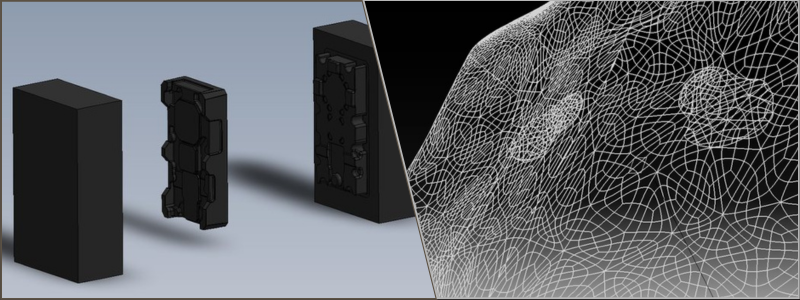
Gone are the days when calipers were used to try to reverse engineer a project. The use of 3D scans for reverse engineering significantly speeds up the process of collecting data with great accuracy and precision. A mesh file is made by passing lasers over the existing surface that reports surface details down to the thousandth of a millimeter. What once required long hours of guessing using calipers now just takes a few minutes with the help of 3D scanners.

The collected scanned data is reverse-engineered in the CAD software. An engineering design expert uses the mesh as the guide to draw the project to the precise measurement of the scanner data. A company can receive the project’s CAD models in just one business day rather than several days. This then leads to the faster manufacturing of prototypes. 3D scanning technology is still in its infancy, but it now helps businesses reduce engineering time, which can also increase profit margins in many ways. The 3D scanning process is non-invasive, with minimal to no downtime for the part being scanned.

Many companies today offer 3D scanning. A reliable 3D scanning service helps companies create accurate 3D models with precise dimensions. It eliminates engineering errors during manufacturing, which can cost significant man-hours and time.

Verify fitment of parts before actual production.

3D scanning for reverse engineering also comes in handy during the beginning of the design stage to produce a CAD model of a project that already exists through 3D modeling design services. It also allows the scanning of a component that will be built into or modified. Design engineers often adapt or work with designs to existing CAD models or already-existing items. This can result in discrepancies in fitment.

CAD files can help test the fitment within CAD software through the digitization of existing products before their actual manufacturing. 3D scanning technology assists in quickly recording all quantifiable metrics of a physical entity and ensuring that the pieces are made correctly to ensure a proper fit. This results in the correct fitting of parts right on the first attempt.

More benefits in the long run

3D scanning for reverse engineering also helps a design engineer validate designs during the progress of the project. It is common for a design process to have several variations. 3D scanning can be used to detect these changes and catalog the variants. The use of laser scanning during the process will ensure the recording of the data at critical stages during the evolution of the project.

The collection and monitoring of information is useful both during the processes of quality control and even after production is completed. Design engineers can easily refer to the original model to check when and where the parts of a project were placed precisely. The scanned data is also an essential resource for the management of assets during the life cycle of the project.

Since it eliminates the need to deconstruct the whole structure if a defect in the design is detected, the 3D model design made with the help of a 3D scanner can then be used for future remodels of the structure. Reverse engineering experts can just reverse-engineer the newly scanned data and then continue building on the existing model. It is essential for better alignment of parts and overall performance.

Blog post images Elize 2 1

RELATED: 3D scanning services: Complete cost breakdown for your company

Choose the best 3D scanner

Choosing and using the right 3D scanner is the first important step in initiating the process of reverse engineering. Getting a good idea of how 3D scanning technology improves reverse engineering is critical. Still, it is also equally important to look for a scanner that is aligned with your specific requirements. Make sure you also learn 3D scanning’s versatile applications in different production processes that further prove its transformative potential, not just in reverse engineering.

How Cad Crowd can help

Connect with Cad Crowd today, the world’s top platform to hire vetted freelance design and engineering talent to find the best 3D scanning services that can propel your reverse engineering projects forward with exceptional efficiency and precision. Get a free quote today.

author avatar

MacKenzie Brown is the founder and CEO of Cad Crowd. With over 18 years of experience in launching and scaling platforms specializing in CAD services, product design, manufacturing, hardware, and software development, MacKenzie is a recognized authority in the engineering industry. Under his leadership, Cad Crowd serves esteemed clients like NASA, JPL, the U.S. Navy, and Fortune 500 companies, empowering innovators with access to high-quality design and engineering talent.

Connect with me: LinkedInXCad Crowd

How Autonomous AI Agents Become Secure by Design With NVIDIA OpenShell


Autonomous agents mark a new inflection point in AI. Systems are no longer limited to generating responses or reasoning through tasks. They can take action: Agents can read files, use tools, write and run code, and execute workflows across enterprise systems, all while expanding their own capabilities. 

Application-layer risk grows exponentially when agents continuously improve and evolve. The NVIDIA OpenShell runtime is being built to address this. 

Part of NVIDIA Agent Toolkit, OpenShell is an open source, secure-by-design runtime for running autonomous agents such as claws. It works by ensuring each agent runs inside its own sandbox, separating application-layer operations from infrastructure-layer policy enforcement.

This means security policies are out of reach of the agent — they’re applied at the system level. Instead of relying on behavioral prompts, OpenShell enforces constraints on the environment the agent runs in — meaning the agent cannot override policies, or leak credentials or private data, even if compromised. 

With OpenShell, enterprises can separate agent behavior, policy definition and policy enforcement. Organizations gain a single, unified policy layer to define and monitor how autonomous systems operate. Coding agents, research assistants and agentic workflows all run under the same runtime policies regardless of host operating system, simplifying compliance and operational oversight.

This is the “browser tab” model applied to agents: Sessions are isolated, resources are controlled and permissions are verified by the runtime before any action takes place.

Securing autonomous systems requires an integrated ecosystem. OpenShell is designed to add privacy and security controls for AI agents. NVIDIA is collaborating with security partners, including Cisco, CrowdStrike, Google Cloud, Microsoft Security and TrendAI, to align runtime policy management and enforcement for agents across the enterprise stack. 

OpenShell Provides an Enterprise-Grade Sandbox for Building Personal AI Assistants

NVIDIA NemoClaw is an open source reference stack that simplifies installing OpenClaw always-on assistants with the OpenShell runtime and NVIDIA Nemotron models in a single command. 

NemoClaw provides enthusiasts with an open reference for building self-evolving personal AI agents, or claws. Since security needs vary, NemoClaw provides a reference example for policy-based privacy and security guardrails to give users more control over their agents’ behavior and data-handling. Users can customize it for their specific use cases — much like adjusting security preferences for applications on a phone. 

NemoClaw includes an example configuration of OpenShell that defines how the agent should interact with systems. NemoClaw uses open source models like NVIDIA Nemotron alongside OpenShell. 

This enables self-evolving claws to run more securely in clouds, on premises or on personal computers, including NVIDIA GeForce RTX PCs and laptops or NVIDIA RTX PRO-powered workstations, as well as NVIDIA DGX Station and NVIDIA DGX Spark AI supercomputers.

Both OpenShell and NemoClaw are in early preview. NVIDIA is building in the open with the community and its partners to enable enterprises to scale self-evolving, long-running autonomous agents safely, confidently and in compliance with global security standards.

Get started with NVIDIA OpenShell and launch a ready‑to‑use environment on NVIDIA Brev, or explore the open source project on GitHub.

Introducing the next generation of HP Z workstation desktops and laptops


Advanced workflows need more than a standard PC.

Tasks like AI model training, 3D design, simulation, and high-volume data processing require workstation-level performance built to handle demanding applications. HP’s next-generation Z Workstation desktops and ZBook laptops are built for technical and creative professionals who can’t afford bottlenecks. And for teams running serious AI workflows, the HP ZGX Nano brings supercomputing-level performance into a device small enough to sit on your desk.

With this infographic, you’ll learn how to:

  • Select the right HP Z Desktop or ZBook Laptop for your most challenging processes
  • Prototype, tune, and run inference with AI models with up to 200 billion parameters
  • Use the HP ZGX Nano with your existing Windows, Mac, or Linux environments for developer-grade AI performance
  • Speed up your AI processes from concept to delivery with the ZGX Toolkit’s open source tools, discovery, and export
  • Deliver real-time computer vision and edge AI at the source of the data

7 Things Pet Owners Should Know About Online Pet Shopping


Pet Owners Know About Online Pet ShoppingPet Owners Know About Online Pet Shopping
Deposit Photos

Have you ever thought about how easy it has become to shop for your pet without stepping out of your home?

These days, online pet shopping is becoming a normal part of daily life for many pet owners. From food to toys to grooming items, everything is available with just a few clicks.

But while it feels convenient, there are a few important things every pet owner should understand to make the most of it.

Why Online Pet Shopping Is Becoming So Popular

Online shopping for pets is growing because it saves time and offers more variety than local stores. You can explore different products, compare options, and choose what suits your pet best without rushing. It also helps in planning better for your pet’s daily needs.

1. Understanding Your Pet’s Needs Comes First

Before buying anything online, the most important step is knowing what your pet truly needs. Every pet is different. A puppy will have different needs compared to an adult dog. Similarly, a cat that stays indoors may need different products than one that goes outside.

When you understand your pet’s habits, age, and lifestyle, it becomes easier to choose the right products.

For example, selecting the right food is very important. Many pet owners take time to learn about nutrition before choosing options like best dog food that support overall health and energy.

Taking a little time to understand your pet helps you make better choices every time you shop online.

2. Reading Product Details Carefully Makes A Big Difference

Online platforms provide detailed descriptions for every product. These details are very useful because they help you understand what you are buying.

Look at ingredients, usage instructions, and product benefits. For example, when selecting treats, knowing what goes into them helps you pick something suitable and enjoyable for your pet. Many pet owners prefer natural options like best bully stick because they are simple and easy for pets to enjoy.

Reading product information gives clarity and helps you feel confident about your purchase.

3. Variety Helps You Find What Suits Your Pet Best

One of the biggest advantages of online shopping is the wide range of options available. You can explore different brands, types, and categories without any pressure.

Here is a simple comparison to understand how variety helps:

Category Options Available Online Benefit For Pet Owners
Pet Food Dry, Wet, Freeze-Dried Choose based on pet preference
Treats Natural, Chewy, Soft Suitable for different chewing habits
Toys Interactive, Plush, Durable Keeps pets active and happy
Grooming Shampoos, Brushes, Clippers Easy home care

4. Reviews Help You Make Better Decisions

Customer reviews are one of the most helpful parts of online shopping. Other pet owners share their experiences, which gives you a better idea about the product.

Reading reviews can tell you things like:

  • How much did pets like the product
  • How easy it is to use
  • How often do people buy it again

5. Exploring Different Food Options Can Improve Pet Care

Online platforms give you access to many types of pet food that you may not find easily in local stores. This allows you to try different options based on your pet’s taste and needs.

For example, some pet owners explore options like best freeze dried dog food because it offers a different texture and feeding experience. Trying different types slowly helps you understand what your pet enjoys the most.

Giving your pet variety in food can make mealtime more exciting and balanced.

6. Planning Makes Shopping Smoother

Online shopping works best when you plan a little in advance. Pets need regular items like food, treats, and grooming products, so keeping track helps a lot.

When you plan:

  • You avoid the last-minute rush
  • You can compare products calmly
  • You can explore better options

Many pet owners even create a simple routine for ordering essentials every few weeks. This keeps everything smooth and stress-free.

7. Easy Comparison Helps You Choose Smartly

One of the best things about online shopping is that you can compare products easily. You can look at different options side by side and choose what feels right.

You can compare:

  • Price
  • Ingredients
  • Size and quantity
  • Customer ratings

Making Online Pet Shopping A Comfortable Experience

Once you get used to online pet shopping, it becomes a comfortable part of your routine. You start understanding what your pet likes and what works best. Slowly, you build a system that fits your lifestyle and your pet’s needs.

It also gives you time to explore new things for your pet. Trying a new toy or a different type of food can bring small moments of joy to your pet’s daily life. And honestly, seeing your pet happy is always worth it.

Final Thoughts

Online pet shopping is a simple and practical way to take care of your pet’s needs. With a little understanding and planning, you can make thoughtful choices that keep your pet happy and comfortable. Over time, it becomes easier, smoother, and a natural part of caring for your pet every day.

Find a Home-Based Business to Start-Up >>> Hundreds of Business Listings.