As AV workflows continue to evolve, seamless integration has become just as important as hardware performance. Turtle AV has built its products around interoperability, ensuring they work smoothly with leading platforms likeQ-SYS, Dante, Dante AV, AES67, HDBaseT, and USB.
To make integration even easier, Turtle AV now offers native Q-SYS plugins across major product families, including Mineola, Phoenix, Chazy, Bluetooth Wallplates, Video Wall Processors, Dante Power Amplifiers, and JEF. The result is faster setup, simplified control, and more efficient workflows for users building connected AV systems.
Prince Alwaleed bin Talal Al Saud, a member of the Saudi royal family, has purchased a 5% stake in Lucid Motors, increasing the Kingdom’s overall ownership of the electric vehicle company.
A new filing with the U.S. Securities and Exchange Commission published Tuesday shows that the billionaire prince recently purchased a little more than 19 million shares. In a post on X, he wrote that his investment office made the purchase when Lucid’s market cap was below $2 billion.
That happened on July 14, when an electric vehicle blog published a report claiming that Lucid was considering either filing for bankruptcy protection or being taken private by Saudi Arabia’s sovereign wealth fund. Lucid strenuously denied the reports, and the company’s stock price has since rebounded.
“We don’t comment on individual investments, but we are aware and appreciate the independent vote of confidence,” Lucid Motors’ Chief Communications Officer Nick Twork said in a statement to TechCrunch.
The share purchase comes in the middle of a major restructuring effort kicked off by Lucid’s newly-appointed CEO, Silvio Napoli, who cut 18% of the workforce in June in an effort to “simplify the company.” That followed a similarly large layoff earlier this year before Napoli took over.
Lucid Motors has been majority-owned by the wealth fund — known as the Public Investment Fund, or PIF — since its initial investment in 2018. That investment came after Saudi Arabia considered, but ultimately abandoned, plans to take Tesla private. The PIF has owned roughly 60% of Lucid Motors since the EV maker merged with a special purpose acquisition company in 2021, a transaction that brought it to public markets and raised $4 billion.
The Saudis have remained a major source of financial support for Lucid Motors since it went public, buying up shares and lending billions of dollars as the company has struggled to reach a mass market of EV buyers in the U.S. and abroad.
Prince Alwaleed bin Talal has a history with investing in U.S. tech. Through his holding company, he was a major shareholder of Twitter when it was still public. In 2022, he initially balked at Elon Musk’s attempt to buy the social media company. But he quickly reversed course and cozied up to Musk, and became the second-largest shareholder of Twitter after Musk took it private. (It’s unclear whether he has retained that stake through the company’s evolution into X and its subsequent merger with xAI, and now into SpaceX.)
He also owns stakes in Snap and Deezer and is often referred to as the “Arabian Warren Buffet,” according to his website.
When you purchase through links in our articles, we may earn a small commission. This doesn’t affect our editorial independence.
Home-based businesses are one of the fastest-growing segments of the American economy. Freelance designers, consultants, e-commerce sellers, virtual assistants. Millions of Americans run profitable operations from kitchens, spare bedrooms, and home offices. Most handle their own marketing, accounting, and operations, and most significantly underestimate how much legal exposure comes with it.
The Legal Risks That Catch Home-Based Businesses Off Guard
Client contracts are the most common source of trouble. A verbal agreement or a one-paragraph email thread is not a contract that holds up in a dispute. When a client refuses to pay, claims the work was deficient, or demands a refund after receiving deliverables, the absence of a clear written agreement leaves the owner with almost no recourse. Intellectual property is a second persistent issue. Home-based designers, writers, and developers often create work that clients later claim ownership over, without ever addressing it in writing. Without a work-for-hire clause or IP assignment agreement, federal copyright law’s default position may not favor either side predictably.
Business Structure and Personal Liability
Many home-based operators keep running as sole proprietors long after it stops making sense. A sole proprietor carries unlimited personal liability for business debts and legal judgments. Forming an LLC or S-Corporation creates a legal separation between personal and business assets, limiting what creditors and plaintiffs can reach. The decision to restructure has tax implications too. Before making changes, guidance from ConsultantLM or a licensed business attorney can clarify which structure fits the business’s current size, growth trajectory, and state of incorporation.
Zoning, Insurance, and Local Compliance
Home-based businesses answer to local zoning ordinances that vary by municipality. Some permit client visits. Others prohibit any commercial activity in residential zones. Operating outside those restrictions can mean fines or mandatory relocation. A quick review of local codes before accepting clients onsite beats fixing it after a neighbor complains. Business liability insurance is another common gap. Homeowner’s or renter’s insurance typically excludes commercial activity. A client who trips during a meeting, or whose data is breached, may have grounds for a claim that standard residential coverage will not touch.
When to Bring in an Attorney
Not every legal question needs a full consultation. Many home-based owners just need thirty minutes of qualified guidance to review a contract template, understand a client demand letter, or clarify obligations on a specific project. Online legal platforms make that kind of focused, efficient access practical for businesses running on tight margins. Building a legal safety net before problems emerge is always cheaper than resolving them afterward. For most home-based businesses, the investment is modest. The protection it provides makes continued growth substantially less risky.
I’ll admit, Tesla topping an efficiency ranking felt like a foregone conclusion until I actually saw the numbers. Turns out two Indian automakers just embarrassed both Tesla and the world’s biggest EV maker at their own game.
The first time I read the report, I couldn’t believe it, and I’ve been following the Indian automobile industry for a couple of years now.
The owner of Jaguar Land Rover, Tata Motors, topped the International Council on Clean Transportation’s 2025 global ranking of the most energy-efficient battery EVs, with its fleet averaging just 106 watt-hours per kilometer (via Rest of World). To give you some context, Tata Motors has the country’s broadest EV lineup with a total of seven models.
Another leading auto manufacturer in the country, Mahindra, came in second at 113 Wh/km. Meanwhile, Tesla and BYD, the world’s largest EV makers, trailed in third and fourth place among 22 of the biggest automakers evaluated worldwide.
Industry-wide, though, progress has basically stalled. Average energy consumption barely moved year-over-year, sitting at 131 Wh/km in 2025. Only eight manufacturers actually improved their efficiency, while 12 saw declines, mostly minor.
While the efficiency figure still amazes me, the harsh reality is that EVs still make up less than 5% of new car sales in India, compared to 25% globally. And that is after the Indian government is chasing an ambitious 30% EV adoption target by 2030 to cut emissions, reduce oil imports, and boost domestic manufacturing.
India is already the world’s fourth-largest petroleum consumer, and ICCT’s India managing director, Amit Bhatt, called the country’s emission caps “progressive and ambitious,” with a tighter third phase of rules being shaped for 2027 through 2032.
Efficiency wins don’t tell the whole story, though. Tata Motors actually ranked dead last for charging speed and sixth from the bottom for driving range in this same report. This is proof that building an efficient battery and building a genuinely competitive EV are two very different engineering problems.
Capcom just released its Q1 2026 financial report, and to absolutely no one’s surprise, the company is doing well, really well. But to my surprise, so is Pragmata. As part of the report Capcom shared sales figures for its recent releases, and Pragmata sold more than 2.5 million copies since it was released earlier this year.
Now, to be clear this isn’t because I think Pragmata is a bad game—I liked its old-timey shooter vibes and QTE hacking when I played its preview way back when. And Justin Wagner really loved its puzzles, main duo, and “poignant” narrative moments in our Pragmata review. But even still it’s a completely new story from Capcom with no existing fanbase to go to bat for it.
(Image credit: Capcom)
I also felt that its release fell a little flat as hype seemingly petered out rather quickly—I certainly didn’t feel the need to tell the world about my adventures around the collapsing moonbase. Nevertheless, I’m happy that Pragmata was successful and that it translated into healthy sales numbers. Hopefully this gives Capcom renewed confidence when it comes to pursuing new worlds and ideas.
Latest Videos FromPC Gamer
Capcom also touts the Devil May Cry animated series and the latest Resident Evil game as facets that “helped to drive sales”, with Resident Evil Requiem selling over 8 million copies since its release—a sizeable jump from its 6 million units sold back in March.
All of this success means that Capcom is “on track to achieve its full-year earnings forecast” as net sales increase 54.7% year-on-year, alongside a 66.9% year-on-year increase in operating profits. It’s certainly a massive improvement on last year’s report which was hampered by cratering Monster Hunter Wilds sales, falling more than 95% from its launch quarter. It ended up selling fewer copies in Q1 2025 than Devil May Cry 5, Resident Evil 4 remake, and Resident Evil Village—so yeah, it’s only up from there.
Keep up to date with the most important stories and the best deals, as picked by the PC Gamer team.
Meccha Chameleon–a multiplayer prop-hunt game that’s been blowing up on Steam lately–seems to have hit its first real road bump since it launched in early June. As pointed out by a player who goes by Feint, some of the game’s player-made maps are basically just Trojan horses containing malware. One of Feint’s friends had mentioned briefly seeing a command prompt appear while they were downloading the map. Curious, Feint dug into the files and concluded that the map known as Lazer Tag Zero contained a “malware dropper.”
The map was quickly pulled from Meccha Chameleon’s Steam Workshop page after Feint published their findings in a Medium article. But the chaos was just beginning. Other malware-filled maps started appearing, and then the game’s official Discord server was hacked.
“Security was completely breached, the server creator’s account was hijacked, and all admins were banned, so we can’t take action from our side,” Meccha Chameleon creator Lemorion_1224 shared in an auto-translated X post over the weekend.
The news was also shared via an update on the game’s Steam page, clarifying that the game itself wasn’t a security risk, and could still be played safely as long as user-made maps weren’t used. Still, things were looking rough–the hackers even put up a fake listing for a Meta Quest-compatible version of the game, which doesn’t exist.
“Currently, a product called ‘Meccha Chameleon VR’ is available for preorder on the Meta Quest store, but we have not granted any production permission for it,” Lemorion_1224 explained in an X post shared early this morning. “We are currently submitting a request for removal, so please refrain from purchasing it. We will not handle any monetary issues arising from counterfeit products.”
But after a weekend of abject chaos, it seems things are finally stabilizing. A few hours after the announcement about the fake Meta Quest product listing, Lemorion_1224 revealed that a new update is now live for the game.
Mini-update 3.3.1 replaces the Discord link on the game’s title screen with a link to the correct server (which is now back in the possession of Mecca Chameleon creators Lemorion_1224 and Haganiero), fixes a physical collision issue, and perhaps most importantly, strengthens virus protection, though it’s not clear if the issue with player-made map malware has been fully resolved for good.
For now, the safest bet is probably sticking to the game’s default maps.
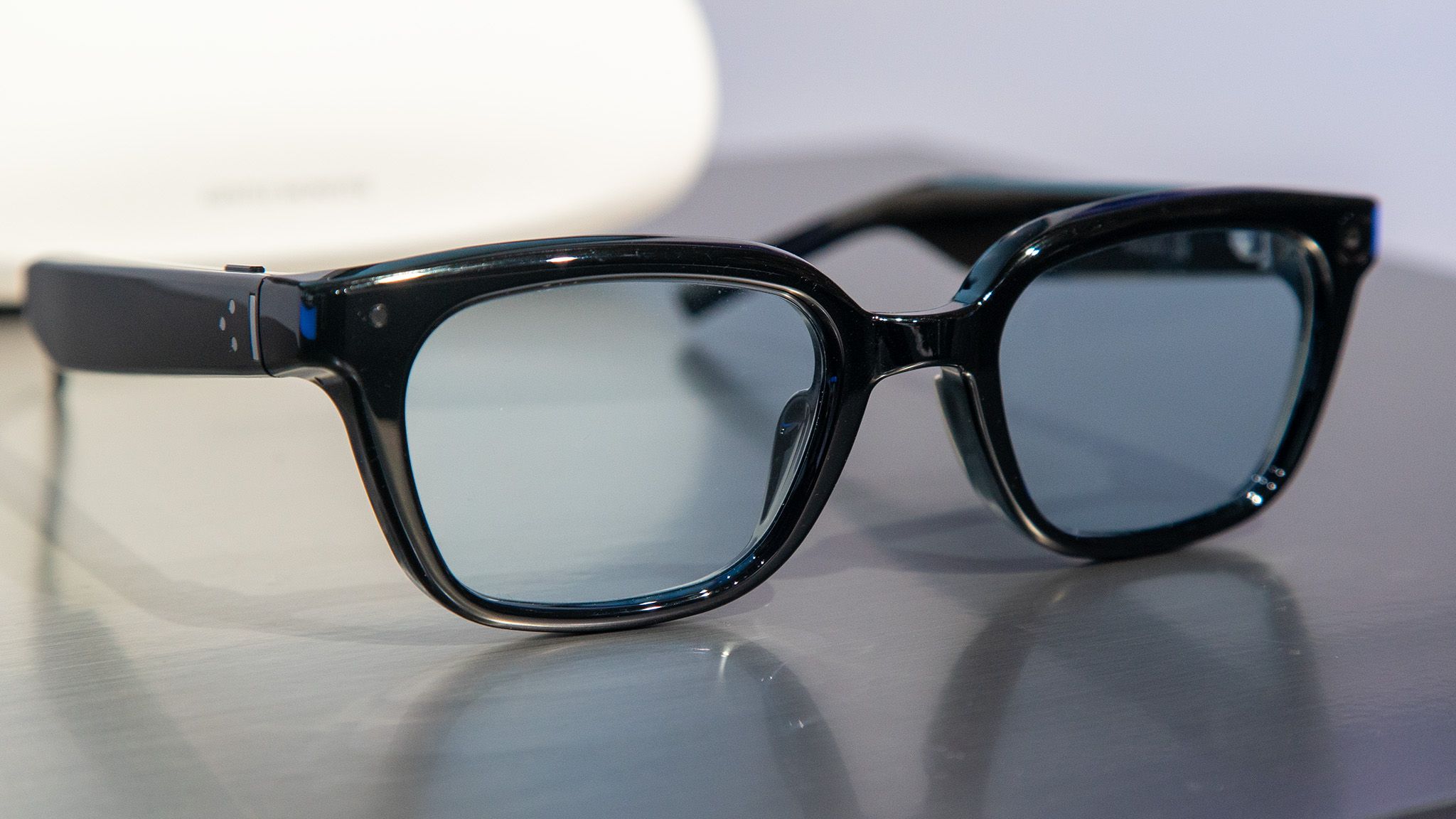
Samsung says its Galaxy Glasses will be priced at a “reasonable” premium, likely above the $300 Meta Ray-Bans.
The glasses are designed to work as an extension of Galaxy phones rather than as a standalone smart device.
Samsung is adding Galaxy-exclusive features like Watch gesture controls and instant photo syncing to your phone.
Samsung may not have revealed much about its Galaxy Glasses during Galaxy Unpacked in London, but the company has now shared a few more details about what we can expect to pay for its first Android XRsmart glasses.
Samsung is gearing up to launch its first pair of Android XR glasses later this year. The company has already confirmed that the glasses are being developed in partnership with eyewear brands like Warby Parker and Gentle Monster. We’ve even had some hands-on time with the device, but until now, Samsung hadn’t said anything about pricing.
Speaking with The Korea Times, Samsung has now shed a little more light on that (via 9to5Google). The company says it plans to price the Galaxy Glasses “at a reasonable level,” while still positioning them in the premium segment.
That doesn’t give us an exact price, but it does suggest Samsung’s glasses could cost a little more than the Meta Ray-Bans, which currently start at $300 in the U.S.
(Image credit: Derrek Lee / Android Central)
Samsung also believes its biggest advantage isn’t just the hardware, but the ecosystem around it. Unlike Meta’s smart glasses, which are largely designed as a standalone accessory, Samsung says its glasses are being built by a smartphone company first. The idea is for the Galaxy Glasses to feel like a natural extension of your Galaxy phone, rather than a separate device.
The company has already teased a few of those integrations. For example, you’ll be able to control the glasses using gestures on compatible Galaxy Watches, while photos captured on the glasses can instantly appear as notifications on your Galaxy phone for quick viewing and sharing.
Privacy is another area Samsung says it’s taking seriously. The company confirmed that the glasses will automatically disable recording if the privacy LED is covered or if the glasses aren’t being worn.
Get the latest news from Android Central, your trusted companion in the world of Android
That’s an interesting move, especially since Meta recently rolled out a mandatory update for its smart glasses that disables the camera if the recording LED appears to have been tampered with.
Samsung still hasn’t announced an exact launch date for the Galaxy Glasses, but we at least have a better idea of where they’ll sit in the market.
Apple’s next high-end laptop is expected to bring the most substantial external changes to the MacBook Pro line since 2021. No renders, case leaks, or dimensions have emerged, but a series of reports have established much of what is set to change.
Bloomberg‘s Mark Gurman has said there is a good chance the model represents a “true overhaul” for the laptop, thanks to the combination of an OLED display and a thinner design, and Apple is reportedly working toward the thinnest and lightest products in their categories across the tech industry. The design is also expected to extend beyond this machine, with the entry-level 14-inch MacBook Pro due in 2027 said to resemble it.
Every 14-inch and 16-inch MacBook Pro released since 2021 measures 0.61 inches (15.5mm) thick, a figure that has remained unchanged across four chip generations. The next model is expected to be noticeably thinner and lighter, though no credible figure has been reported. Replacing the mini-LED backlight with a hybrid OLED panel removes a physical layer from the lid, so the reduction may be most pronounced in the upper half of the machine.
The notch is expected to be replaced by a hole-punch camera, a change first indicated by a roadmap from research firm Omdia and subsequently corroborated by Bloomberg. The cutout is said to be pill-shaped to accommodate an interactive Dynamic Island.
The notch has been the most distinctive feature of the MacBook Pro’s display since 2021, and removing it would leave the menu bar as a continuous strip interrupted by a small island rather than divided in two. Apple appears to be preparing for the change in software, since the “Search or Ask” interface built into Spotlight in macOS 27 adopts a dark, pill-shaped design suited to a cutout of that shape.
The bezels surrounding the display may also shrink. Omdia claims Samsung Display will supply 14.3-inch and 16.3-inch panels, fractionally larger than the 14.2-inch and 16.2-inch displays currently in use, which within a largely unchanged chassis would result in narrower borders.
Apple is also said to be fitting a reinforced hinge so that the display does not wobble when tapped. Whether the lid will also tilt further back than the current model, which stops relatively early for structural reasons, is yet to be seen.
Several elements are expected to carry over. Bloomberg reported in February that the machine would look a lot like the current MacBook Pro, specifying that the keyboard and trackpad would be retained and that the device would remain a conventional clamshell in 14-inch and 16-inch sizes, rather than a detachable or convertible design. HDMI, MagSafe, and the SD card slot were reinstated in the 2021 redesign after an unpopular absence, and no report has suggested they will be removed again.
An new product design project typically involves a number of engineers with different specializations, such as industrial, mechanical, and electrical/electronics. They work as a team alongside designers, marketers, researchers, and a project manager. Depending on their field of expertise and specific roles within the team, they might be responsible for building and testing prototypes, ensuring compliance with standards and regulations, and applying the DFM approach to the project. In general, they act as a bridge linking conceptual design to an optimized product ready for mass production.
So long as you have one or two engineers on your team, creating a new product is going to be easy, right? Wrong. Even for a big development firm that employs dozens of engineers, a New Product Development (NPD) project isn’t always a smooth-sailing process. Lots of product concepts never saw the light of day, and many others tasted failure because they couldn’t live up to consumers’ expectations. Adding more engineers or bringing in a qualified project manager to the project will reinforce the teamwork and at least reduce everybody’s workload to some extent.
But instead of going through the traditional hiring process and causing delays to the project, you definitely want to turn to Cad Crowd, a US-based freelancing platform with a heavy emphasis on design, engineering, and NPD at large. Cad Crowd connects you with some of the most qualified and experienced NPD professionals (of various specializations) in the business to help minimize the chances of mistakes and errors in your project.
We’re not saying that all product development engineers are prone to making these mistakes. The more experienced the engineers are, the less likely they are to struggle with errors of any kind. But then again, every mistake listed below is worth mentioning because of how costly it can be for your company to rectify.
Aesthetic vs. performance disproportion
Every good product from an experienced product designer is designed to strike a nice balance among performance, aesthetics, and cost. An excellent performance is a must, but if the product as a whole looks aesthetically unappealing, buyers might not be interested in even trying it in the first place. This applies to just about every product, but even more so if the product is meant to be plainly visible when in use. For example, a pair of socks can look ugly from all sides, but you don’t mind as long as they work as intended. Also, very few people get to see the socks anyway, so aesthetics don’t really matter. In fact, your ugliest socks in the drawer might be the most comfortable to wear. But you can’t say the same about, let’s say, shoes. Chances are you don’t want to be seen wearing a pair of fish-shaped shoes.
They might be aerodynamic, ergonomic, and all that, but are you sure that’s the aesthetic you want to go for? The worst offender, however, is an aesthetically pleasing product that never seems to work as advertised. Say you’re making a robot vacuum in the shape of R2-D2. It does look great, but the machine gets clogged easily and has to recharge itself every 10 minutes or so. Within even a week has passed, the buyer no longer sees it as a functional appliance but as a novelty item sitting beside the TV. Such a product only shows you care so much about appearance while neglecting functions. It’s form over function, and this rarely goes well unless you’re a jewelry designer or designing other purely decorative products.
You need a good balance between aesthetic and performance. A product that’s aesthetically beautiful but underperforming in any other way isn’t going to win customers. Value for money is still the number one factor people consider when buying a product. At the same time, useful but ugly products won’t attract buyers to begin with. Either way, this balancing-act error can quickly send the product down the path to commercial failure, despite the time and money spent developing it.
Unmanaged expectations
An NPD project is full of great expectations. For now, we’ll focus on just two points: development timeline and test results. Setting a proper timeline is tricky. Every single aspect of the product, from the smallest design details to the internal engineering mechanisms, can change over the course of development. When the 3D designers propose changes, the engineers may have to modify some components to make it work. Or it can happen the other way around, as in the engineers’ decision to use different components requires design revisions. It’s all interconnected, and even minor adjustments can add weeks, if not months, to the finalization process.
Setting a strict development deadline is likely to cause more trouble than it’s worth. For instance, you’ve agreed with the contract manufacturer (CM) to start the first production run on a certain date. And then the inevitable happens. The engineers need more time to assemble some components to fit a new design, or the suppliers can’t send the parts on schedule because of bad weather. Depending on the terms of the agreement, you might be subjected to fines because you can’t fulfill your end of the bargain. Ideally, you agree with a CM once your product has reached a final production version. No engineer should get ahead of themselves and move forward based on nothing but unmanaged expectations around deadlines.
As for the test results, our second point is that unmanaged expectations usually occur when engineers fail to specify the correct metrics for the test. It can be an honest mistake, such as an input error, or they may unknowingly use lower quality standards. What they then get is a set of misleading data in which a bad product appears good on paper. For example, the product material is supposed to withstand heat up to 80°C, but the test metric is set to 60°C. This error goes unnoticed, and the engineers don’t bother to try another material. They proceed to build a prototype and only realize the mistake during the next test run.
It’s a rookie mistake, alright, and completely avoidable indeed, but that doesn’t mean it can’t happen. Keep in mind that the smallest mistakes are the most likely to slip through the cracks because no one cares enough to take a second look at a supposedly trivial matter. Everyone assumes somebody must have done it right, only to realize how wrong they were when the damage is already done.
Pushing it
The NPD project is a race against time and the competitors. Market trends change just as easily as buyers’ preferences. The research you completed last week will be irrelevant next month. Other companies launch new products and flood the market with options more quickly than ever to stay ahead of the race. While you’re still in a workshop prototyping a design, some other companies are probably preparing to release half a dozen similar products. A sense of urgency is always welcome in an NPD project, but don’t fall into the trap of finishing a design just for the sake of it. Quality over quantity is what wins customers in the end.
It takes time to develop a proper product, wherever it might be. You can’t create a robust electronic device in a few months or a pair of shoes in just several weeks. There needs to be detailed market research, experiments with materials, design considerations, iterative prototyping, engineering testing, problem-solving, optimization for manufacturing, and so forth. The problem is that every single one of those steps can fail, meaning you probably won’t always get things right on the first try. As a rule of thumb, the more complex and sophisticated the product, the longer the development time.
Despite feeling like you’re in a race, you shouldn’t simply make a foolish leap, for example, jumping from the ideation phase directly to rapid prototyping, skipping the entire design validation work in the process. There’s nothing wrong with getting overwhelmed with the excitement of a new project. Being overly confident in an idea is what you should take issue with. Some ideas are outright terrible, so you shove them all the way to the bottom drawer, never to be seen again. Good ideas, however, are somewhat trickier. When an idea sounds feasible, it always looks great on paper, and that’s where the impulse to rush the project comes in. There are times when getting things done quickly isn’t the best path to move forward, especially if it involves skipping important development steps.
A design idea must be validated to assess its technical feasibility and its manufacturability at scale. It also offers an insight into DFM (Design for manufacturing services) approaches, which reduces the risk of major revisions during the final stages. Before you get to build the prototype, you will at least need a Proof of Concept, detailed technical drawings using CAD, analysis of usable materials, a review of possible patent issues, regulatory/compliance research, and the lot. Rushing into the prototyping phase usually comes with a muddle-headed “It’s only the first prototype” attitude. It does hold some truth, as the first prototype will most likely need many revisions to improve it. But this “We’ll fix it later” mentality will eventually catch the engineers off guard.
No one expects the prototype to be even remotely perfect in every way, but the right thing to do is to build it based on the data from the design validation phase. While this is a prototype, every good engineer strives to create the best possible iteration using the latest available data. Professional engineers don’t just brute their way into making a prototype. It’s an absurd exercise that leads to nothing but wasted time and materials. And by the time they figure out the prototype is all wrong, they have to do it all over again. So why bother with rushing it in the first place?
Making design changes at a later stage is almost always more expensive than refining in the earlier design phase, when development still mainly revolves around the CAD file rather than a physical prototype. It’s not like reviewing an idea or concept is a particularly challenging phase, either. Of course, you need a cross-functional product concept design team, consisting of people from different disciplines, to offer their takes on the idea. The good thing about a multidisciplinary group is that each member focuses on specific design aspects and likely has a unique viewpoint on why something will and won’t work as a product. Say your new product idea is a fitness tracker.
The designers have drawn raw sketches of the product, in colors for clarity, and everything looks excellent on paper. The mechanical engineers take a glance and rush to the workshop floor to build a quick prototype using readily available materials, including an off-the-shelf PCB. A few weeks after the prototype is ready, the marketers come back to say that the diameter needs to be smaller to attract more buyers, and that the strap should be made of stainless steel rather than plastic, so it’s more durable. Not to mention that a smaller diameter requires a custom PCB with reduced functionality to improve battery life. So what happens to the prototype now? It’s discarded at a moment’s notice. Rushing to prototype isn’t exactly the way to cut development time. If anything, it will send you back to the drawing board after wasting a good portion of the budget on a failed prototype.
Overlooking IP issues
Among the most ridiculous errors design engineers can make in a new product development is when they can’t be bothered with checking the patent database. It might be a direct result of rushing the project as discussed in the previous point, or a downright screw-up on the engineers’ part. Not many new product designs are completely brand-new. Most are at least partly based on previous inventions or on already patented technologies or mechanisms. If you develop a product while being completely oblivious of the matter, there’s a good chance that you’re actually copying someone else’s solution.
Let’s say you’ve finalized the new product after a lot of laborious effort in a workshop. You then set up the first production run for several thousand units and launch it to market. All of these were happening without anyone telling you that one or two technologies in the product are actually registered Intellectual Properties. The patent holder files a complaint, demanding that you either pay a hefty royalty for every sale or recall the product from the market entirely. It’s a costly error that’s otherwise easily avoidable if you’re just willing to do some preliminary IP research.
Let’s be blunt about it. As a 3D product designer, you don’t know your customers that well to think that whatever product you’re building will get them to line up at the door. A lot of people want different things from the same product. They can’t even agree on what the best-looking color for a smartwatch strap is, and they rightfully shouldn’t, because aesthetics is subjective. That’s why you make multiple versions of a product. You might even want to make sure there are different materials available to give customers options. And we’re not talking about the features yet. Some people want a colorful screen, others prefer a monochrome display.
A good percentage of the target market wants a full touchscreen, but the rest expect physical buttons. On the other hand, from a business perspective, it doesn’t seem like you can afford to develop two different products at once. Even with extensive customer research, you’ll still have a difficult time generalizing on what the vast majority of the customers really need. Imagine doing it with minimum data. Engineers are indeed supposed to be making the new product for customers, but it would be a mistake not to experience the product before launch. Have you actually spent some time using the product and making sure everything works as intended?
Does the product do what it promises to do? Is it an effective solution to the problem you’re trying to solve? Have you tried the product in different use cases? Engineering design experts have to experience the product as if they’re users who spend their hard-earned money on it. Think of the process as stress testing for performance, reliability, durability, repairability, and all that. If you find flaws, your customers will too.
Product that just works
Finalizing a design that “just works” sure sounds like a brilliant idea. After all, everything you’ve done so far is aimed at making something that works. So by that logic, you can call your product “ready” just as soon as it is in working order, right? Wrong. Remember that you have competitors and are in a race to be the first to launch a product to the market. Your company probably isn’t the only one with a new product development project. If every company only aims to make a product that works, how would they set themselves apart from each other?
Also, there won’t be real product choices for people to buy because everything is basically the same. Nothing is really better or worse. No matter what they buy, the product just works, and that’s good, right? Wrong again. “A product that works” should be the bare minimum of anything you’re trying to accomplish. And you don’t want to launch a product that only barely meets the requirements. You need to make refinements wherever possible in both functionality and aesthetics through iterative prototyping, giving the product a better chance of outselling competitors. Customers appreciate value-added features.
With 3D printing services and CNC machines, it’s easy to get carried away with the prototyping process and think that every single thing is as manufacturable as the next. Well, no one is going to blame you for saying that advanced additive manufacturing methods can fabricate even the most complex design imaginable. It’s true, but at the moment, the technologies haven’t reached a point where they’re effective for mass production. People think additive manufacturing is affordable only because they use it for very low production volumes, sometimes no more than two or three units at a time.
If the product is to be mass-produced at scale, engineers have to put manufacturability into account right from the beginning of the development. The idea is to make a product or a design that requires minimal tooling investment for a high-volume production run. You want to manufacture the products efficiently and consistently while keeping production costs low. Take our word for it: DFM is easier said than done. Engineers, designers, and the factory partner must work together to determine the most effective way to optimize the product for mass production. Sometimes it involves breaking the product down into multiple parts and assemblies, using custom materials, simplifying the mechanism, and so on.
Reinventing the wheel
One of the most common bottlenecks in an NPD project is the obsession with being innovative in everything. While product engineers naturally are creative people and want to be appreciated for what they do, there’s just no need to try to reinvent the wheel in every project. Companies and engineers can work to their full potential by simply playing to their strengths, rather than focusing on areas where they’re inefficient. They just have to do what they do best, in the best way possible. Never let yourself get bogged down in tasks beyond your field of expertise.
Take, for example, the DFM approach. Mechanical engineers are probably aware of the practice and understand pretty well what it takes to build a product that’s easy to manufacture. That being said, the real experts here are manufacturers, people with years of first-hand experience in mass-production matters. As professional engineers, you’re indeed required to strive to devise creative measures to solve complex problems and make things work, but this isn’t the same as trying to figure everything out, knowing full well that your attempts to reinvent DFM services are going to be unproven at best.
Even if you’re not trying to reinvent the wheel, thinking that you can handle every little detail of the NPD project by yourself is a recipe for disaster. An NPD project is a multifaceted undertaking. It involves not only engineering expertise but also an in-depth understanding of design and detailed consumer research. From a business standpoint, achieving commercial success (whether in the form of profits or greater market share) is the primary driver, which means the project needs a marketer, too. A multifaceted undertaking may also mean you need more than one type of engineer to get the job done. Some engineers specialize in electronics design projects, while others specialize in industrial processes, mechanical systems, chemicals, and more.
Depending on how your product is supposed to work and what your specialization is, you may need other engineers to strengthen the team. As mentioned earlier, a partnership with a contract manufacturer also plays a significant role in NPD. You might think that doing it all yourself can save a sizable amount of money and resources, but often the opposite happens. Instead of lowering development cost, all the mistakes and blunders you make because you don’t have the right team on your side cost you a lot of money.
Running an overall inefficient operation
Just about every NPD project (specifically for physical products) follows more or less the same progression. It starts with research or ideation, followed by concept development, design validation, prototyping design, evaluation, refinement, and finally production. But that’s on paper. In the real world, all the steps are interdependent and can create a jumbled workflow, like an entangled string. You’re doing a lot of reviews that cause delays and engineering refinements that send you straight back to square one. What about a fully-functional prototype that turns out to be a manufacturing nightmare? Do you know how complex it can get when the development budget runs thin, and you have to secure more funding?
You might think it won’t happen to you, but there is always a chance something will go wrong during development, and it takes a restart to fix it. Engineers are supposed to be the smartest, most creative, and most practical people on the team. Don’t be the bottleneck because you can’t keep things in order. Make the effort to detail and document your process, update the workflow with every completed milestone, and avoid making any uninformed decisions. More importantly, never jump the gun and skip to phases the project isn’t ready for, even if it looks like you can make it. By being simply procedural, you can prevent the project from going sideways.
For every engineer, the prospect of bringing mere ideas of a product to life is almost like an instant rush of dopamine. It brings excitement, pleasure, and that oddly satisfying sense of welcoming a good challenge. You live for it, and having the opportunity to prove your innovative and inventive nature is a chance you just can’t miss. But at the same time, an NPD is riddled with likely missteps. Most of the errors listed above probably won’t happen to experienced engineers, although you can’t be too careful with everything you do when it comes to product development. There’s just too much money and time involved in the process to let some otherwise rookie mistakes ruin the whole project.
How Cad Crowd can help
Tap into Cad Crowd to minimize the risk of errors and bolster your team with experienced engineers and NPD professionals. The US-based freelancing platform helps you connect with some of the best-qualified product development specialists from all around the world at affordable rates. Call us today for your free quote!
MacKenzie Brown is the founder and CEO of Cad Crowd. With over 18 years of experience in launching and scaling platforms specializing in CAD services, product design, manufacturing, hardware, and software development, MacKenzie is a recognized authority in the engineering industry. Under his leadership, Cad Crowd serves esteemed clients like NASA, JPL, the U.S. Navy, and Fortune 500 companies, empowering innovators with access to high-quality design and engineering talent.
Like Doctor Strange himself, Marvel Studios has its eyes set on the future with tactically scheduled releases following the highly anticipated events of Avengers: Secret Wars, which is currently set to hit theaters in December 2027. At San Diego Comic-Con, the shape of the MCU’s next era emerged as Marvel Studios unveiled a tantalizing look at what’s in store for 2028 and beyond. Marvel has already locked in several major projects, including Black Panther 3 slated for Dec. 15, 2028, and the Ryan Gosling-starring Ghost Rider, which hits theaters sometime in 2028, while a few claimed slots in the theatrical calnedar remains a mystery.
Marvel’s release calendar is always subject to change, but the studio’s plans after Secret Wars are becoming even easier to read following SDCC. The next era of the MCU won’t be built around the same heroes who carried the Infinity Saga, as X-Men and supernatural characters could be stealing the limelight soon.
Based on Marvel’s announced projects, Kevin Feige’s comments, and the studio’s current direction, here’s what Phase 7 might look like. Keep in mind that while the specific dates have already been booked by Marvel, these movies remain largely speculative.
1
Avengers: Secret Wars (Dec. 17, 2027)
Image: Marvel Comics
In the wake of Doomsday, Marvel’s Secret Wars will drop the heroes into one of their most harrowing situations yet. Although nothing is confirmed yet, the story pulls from two of the most beloved storylines in the comics, which involve a full rewriting of the Marvel multiverse, typically at the hands of Doctor Doom. The multiverse essentially turns into “Battle World,” a massive planet that incorporates most of the Marvel pantheon into smaller kingdoms.
It’s ripe territory to lead into a full timeline reset, as most of the world as we once knew it is forgotten, and all that’s left is a world similar to the Void from Loki, a wastebin of multiverses. Exactly how the entire timeline will be reforged is anyone’s best guess, but it should lead to a clean restart with both new and returning characters for X-Men, Avengers, and the like.
2
X-Men (May 5, 2028)
Image: Alex Ross/Marvel
The safest bet for the first major Phase 7 release is an X-Men film in some capacity. It’s inevitable, but also expected sooner rather than later. Marvel has spent years preparing audiences for the return of mutants, from Ms. Marvel revealing Kamala Khan’s heritage to Deadpool & Wolverine officially bringing the X-Men back into the fold.
Following Avengers: Doomsday and Secret Wars, which are both set to include their own slew of Fox Universe X-Men, the studio has a rare opportunity to launch a completely new status quo, especially in the wake of a “full reset.” Introducing a new X-Men team would be the clearest way to signal that the MCU has entered its next era, and Feige hasn’t been afraid to highlight the future of the MCU being led by the mutants.
A solo X-Men movie has repeatedly been named as one of the most important projects to get out the door following the end of Secret Wars, so it only makes sense to kick Phase 7 off with a mutant-focused blockbuster. A summer release for an X-Men film also makes sense. Marvel has historically used its May slots for major franchise launches and event movies, and a fresh X-Men film is arguably the closest thing the studio has to a new Avengers-level centerpiece.
3
Ghost Rider (July 28, 2028)
Graphic: Polygon | Source images: Focus Features; Sony Pictures
The next major Phase 7 pillar appears to be Shawn Levy’s Ghost Rider, which Marvel has positioned as one of its biggest supernatural swings. Gosling’s involvement has only increased interest in Johnny Blaze’s return to the big screen, especially after Marvel spent years slowly building out its darker corner of the universe with shows like Moon Knight and Werewolf by Night.
Thus far, Marvel Studios has only slated Ghost Rider for a release sometime in 2028, but since the studio already has July 28 booked, that’s most likely when Ryan Gosling will make his debut. There aren’t any major story details available for this project yet, but the actor did approach Marvel with a specific vision for the role, so it could be a promising start for a character in the same way Deadpool was with Ryan Reynolds in the costume.
4
Black Panther 3 (Dec. 15, 2028)
Image: Marvel Studios
Black Panther 3 is already set for Dec. 15, 2028, continuing Marvel’s tradition of placing major Wakanda stories in the holiday season. Ryan Coogler is returning to helm the next installment, which also gives Marvel one of its most reliable creative partnerships moving into the post-Secret Wars era. With the Avengers landscape changing, Wakanda could become one of the MCU’s most important political and technological powers, and it’s hard not to be excited to see Denzel Washington as the antagonist.
The story is supposed to follow a young Prince T’Challa II, played by David Jonsson, in a coming-of-age tale as he eyes the throne of Wakanda. It’s unclear how Washington might fit into the premise, but it’s sure to be exhilarating.
5
Shang-Chi 2 (May 4, 2029)
Image: Marvel Studios
Moving into 2029, it’s tough to chart where Marvel might land next, but the strongest candidate to fit here would have to be Shang-Chi 2. By 2029, it will have been nearly eight years since Shang-Chi and the Legend of the Ten Rings, making its highly sought-after sequel long overdue. Shang-Chi remains one of Marvel’s most successful yet underutilized new heroes, and bringing him back into the MCU would help Phase 7 build out the new status quo of the MCU.
Director Destin Daniel Cretton and star Simu Liu have previously confirmed that the sequel is still in active development, and the recent Doomsday trailer makes it look like Shang-Chi will have a significant role to play in the movie.
6
Fantastic Four 2 (July 13, 2029)
Photo: Marvel Studios/20th Century Studios
Marvel’s First Family is likely to become one of the MCU’s most important franchises after 2025’s The Fantastic Four:First Steps, which managed to rake in roughly $520 million globally. Depending on how these characters fare in Secret Wars, a direct sequel could strike a nice balance as earthbound heroes face cosmic threats. It’s a solid movie to slot in after two relatively grounded heroes like Black Panther and Shang-Chi, but it’s so far out that it can realistically be anything that fits under Marvel’s Phase 7 strategy.
7
Other Possibilities
Image: Firaxis/2K Games/Marvel
There are still plenty of other possibilities for the unclaimed dates, as well. A new Deadpool spinoff, an X-Force project, or even another major solo hero, like Blade (arisen from the dead) or Thor 5, could slot into one of these dates.
Stephen Strange is another option. The Sorcerer Supreme has become one of Marvel’s most important connective characters, and after years of dealing with incursions, alternate realities, and the consequences of the Multiverse Saga, a third movie could finally tell a more focused story with the character — one that actually takes its horror to the extreme. Rumors have been circulating since early 2025 that Doctor Strange 3 is in early development with Benedict Cumberbatch set to return to the titular role, but it all depends on how things shake out in the fallout of Secret Wars.
However, given that Ghost Rider will be released sometime in 2028, Marvel could try a Midnight Sons team-up movie featuring Strange alongside Ghost Rider, Blade, Moon Knight, and other darker heroes. That would give Marvel a new ensemble franchise without immediately needing another Avengers-level threat. Admittedly, though, this kind of film might slot better in September or October, dates that aren’t currently earmarked under Marvel’s plan.
Image: Marvel
With the Guardians of the Galaxy trilogy complete and The Marvels floundering at the box office, the studio needs a new cosmic hero capable of carrying that part of its universe. Thor and Doctor Strange could potentially fit that role, but Marvel needs a hero that can capture all sides of its cosmic pantheon in a new and interesting way without feeling forced. A Nova film, which was just officially announced at the end of SDCC, would allow the studio to rebuild its cosmic mythology from the ground up and potentially set the stage for larger stories like Annihilation or War of Kings, but where exactly it fits in Marvel’s timeline is hard to know.
Those films set a nice balance for Marvel’s Phase 7 slate, offering a good mix of earthbound stories while widening the scope to include mystical and cosmic forces in equal measure. There’s always room for a bit of change, but these films seem the most likely to follow Secret Wars and succeed at the box office.
After the chaos of the Multiverse Saga, Marvel’s Phase 7 slate appears to be moving toward a simpler structure, rebuilding around the strongest corners of its fantastical world, including the mutants, supernatural heroes, Wakanda, and cosmic wanderers. The next era of the MCU might not be about expanding outward, but about finally giving its biggest characters room to breathe.