Former Rare design director Gary Napper has shared a little about what his forthcoming dinosaur survival project The Lost Wild shares with Rare’s mysterious nature fable Everwild, which was cancelled by Microsoft during a round of Xbox cuts last summer. He’s also said more about how The Lost Wild compares to the game Napper is best known for, Creative Assembly and Sega’s Alien: Isolation. According to Napper, Isolation was in some ways an “easier design challenge” than both Everwild and The Lost Wild, because there was less need to make the Alien feel like it had an agenda besides trying to murder the player.
I’ve been wondering about connections between The Lost Wild and the abandoned Everwild since reading Napper’s thoughts from June about wanting players to “respect” The Lost Wild’s dinosaurs. Everwild, from what little we knew of it, was about tending to nonhuman animals while exploring and cultivating a Fern Gully-ish paradise. True, Everwild’s creatures are a lot cuddlier in trailers than the terrible lizards that throng The Lost Wild’s island setting, but both games want you to live and let live, to some degree.
All this comes with the caveat that Napper joined Lost Wild developers Great Ape years after the project began life – he didn’t come up with the concept, but his previous experiences are certainly relevant.
“I feel very fortunate to be in a position where I can draw from my experience on two big games that I’ve worked on with both Alien: Isolation and Everwild,” Napper told me, in a fresh interview. “Both were trying to create games which presented creatures in new and interesting ways and had very different goals in what those end experiences would be!
“I feel like Alien: Isolation had the easier design challenge because at the end of the day if the Alien got close, it killed you and you restarted from the last save,” he went on. “There was no great need to make it feel believable or consistent up close. Trying to create animals or creatures that when observed behave in a realistic and believable way and seem to have their own drives and purpose can be a much harder task.
“I feel there is an argument to say that The Lost Wild is actually closer to Everwild in this way,” Napper said, “because we are trying to depict fantastic, incredible, yet grounded and believable creatures in a way that shows intelligence and character but also results in a compelling gameplay experience. However, this team already had a great handle on this challenge way before I joined.
“The thing that keeps sticking out to me as unique in this game is the mantra of ‘Animals, not monsters’,” he concluded. “I want there to be a form of awe and respect in being around these creatures and one that could lead to emotional conflict in the player. I think if some of our players feel the want to avoid our dinosaurs and not kill them, but let them be free, then we will have succeeded in our goal of presenting them as believable animals.”
I would love to hear from more former developers of Everwild. I find the game interesting because it seems out of synch with Xbox first party’s vision for gaming at large – there are no guns or cars or swords, just pocketfuls of seed. “But what do you DO in the game,” I can imagine a Microsoft executive asking, like a Dalek confronted by a flight of stairs. That said, I’ve long had misgivings about Everwild’s portrayals of druidic humans living in harmony with other animals. In a world where billions of nonhuman creatures are slaughtered daily, I just find this kind of escapist and idealistic imagery risible, however heartfelt.
That’s an opinion derived from a couple of trailers and screens, of course. Besides, who died and made me Pope of Animal Rights? In any case, I find The Lost Wild more “honest” as a portrayal of creaturely coexistence, because there’s some antagonism between you and the beasties you’re encouraged to “respect”, not kill. You aren’t just being soft-served Wholesome scenes of friendly salamanders.
Look out for a full Lost Wild interview feature soon. Amongst other things, Napper spent some time correcting my guesses about the dinos in the trailer. The cheek of the man! I once made a whole pterodactyl out of LEGO, you know. Anyway, you can find The Lost Wild on Steam. It’s out in 2027.
This flash sale will run all week, up until Friday, August 7 at 11:59 p.m. PT. This discount will mark your last chance at a bonus deal before our next pricing tier kicks in on August 21.
If you need to learn more before locking in your plans, Disrupt takes over Moscone West from October 13–15, bringing more than 10,000 founders, VCs, tech industry innovators, and builders for three days built around one thing: creating momentum for future success.
This isn’t a passive conference you simply watch — it’s a curated itinerary of speakers, workshops, network opportunities and post-event excitement for those actively building, investing, and looking for what’s next.
The Disrupt Stage: The conversations everyone will be talking about
The Disrupt Stage is our flagship programming, and we just revealed the initial lineup. We’ll dig into the biggest shifts in tech right now, whether it’s a post-smartphone future with Amazon’s SVP of Devices and Services Panos Panay; the real implications of a world in which everyone can develop their own software, with Replit founder and CEO Amjad Masad; and much, much more.
But that’s just one stage. Disrupt 2026 also features the:
AI Stage, covering the security gaps and business model shifts AI is forcing on every SaaS company.
New Smart Money Stage, tackling stablecoins, instant payments, and AI’s role in financial trust.
New Smart Systems Stage, with a perspective on fusion breakthroughs and grid strain powering AI’s next decade.
Builders Stage, the long-standing favorite stage where founders and investors get tactical about raising, hiring, and scaling.
Image Credits:Slava Blazer Photography
Beyond the stages
Most Disrupt passes also unlock Startup Battlefield, where 200 startups will compete live for the Battlefield Cup. You’ll also get access to networking opportunities driven by your needs as a founder, investor, or learner, plus our Expo Hall, where hundreds of startups showcase their work.
This flash sale ends Friday
After 11:59 p.m. PT on Friday, August 7, this extra $100 savings goes away. Regular discounted pricing ends on August 21. If Disrupt is on your radar for this year, this is the best deal you’ll get between now and the event.
AI video can help an independent creator produce scenes without a studio, but video generation is a costly place to make every creative decision. If character, location, wardrobe, and lighting remain unresolved, each attempt becomes an experiment.
A better workflow starts with still images. Character references and AI video storyboard frames are faster to compare than full clips, helping home-based filmmakers settle the visual direction before spending credits on motion.
Why Still Images Should Come Before Video
Every video model interprets many details at once. A prompt may describe the action without defining how a character looks from different angles, what belongs in the room, or how shots connect. The result can be attractive yet wrong for the story.
Still-image planning separates those decisions. A creator can establish a character sheet, approve the setting, and choose each major composition. Weak ideas are rejected as images, while selected frames become production references.
This does not remove generative variation, but it narrows the model’s room for interpretation and can reduce unnecessary reruns.
Build the Visual Foundation in Renoise
The practical starting point is an AI photo editor that generates and revises images in the same workspace. Renoise Canvas places references, results, and later video clips on one visual board.
Begin with a brief defining the tone, period, palette, and camera style. Then build three asset types:
Character references showing the face, clothing, proportions, and important accessories
Environment references defining the location, lighting, and recurring props
Story frames representing the opening, turning point, and ending of each scene
Different models serve different jobs. Midjourney can establish art direction, while GPT Image 2 supports instruction-based creation and editing with multiple references. Seedream, Nano Banana, and Grok provide other interpretations in the same workspace.
Turn a Script into Character and Story Frames
Renoise AI works here as a connected pre-production workspace rather than a single prompt box. Creators can save character references in the asset library and reuse them across tasks. Supported models also allow named asset references in prompts.
Produce a neutral character reference before dramatic poses. Generate front, side, and three-quarter views using the same clothing description. Select one version, then reuse it for close-ups and full-body frames.
Next, break the script into shots. Each frame should show who is visible, where they are, what happens, and what the camera emphasizes. For example: “Medium close-up, the same detective from the reference image, beneath a flickering hallway light, tense expression, shallow depth of field.”
Keep character descriptions and visual language consistent. Approve only the essential frames that determine continuity, performance, and pacing.
Edit Weak Frames Instead of Starting Over
When a frame is almost right, regeneration may create new problems. Renoise’s AI image editor can remove objects, replace backgrounds, expand compositions, repaint selected areas, or adjust mood while retaining useful elements.
A creator might expand a close-up into an establishing shot, remove a prop, or change daylight to night. Refining that frame gives the video prompt a clearer target than starting over.
Generative editing is not pixel-perfect retouching. Review faces, hands, and continuity details at full size before approval.
Enhance Only the Frames That Move Forward
Not every draft needs high-resolution processing. First choose the references that will guide video generation. Then use an AI image enhancer when a selected frame is soft, noisy, compressed, or too small.
Renoise enhances images to 1080p, 2K, or 4K. It reconstructs plausible detail rather than recovering missing pixels, so compare against the source. Regenerate or repaint severe blur and distorted features.
Explore at normal quality, refine the winners, and enhance only references entering production.
Once the plan is stable, chosen images can guide Renoise video models. Use a character image as a reference, an AI video storyboard frame as the starting image, or two planned frames as a shot’s beginning and ending when supported.
Canvas preserves relationships between assets. Creators can extract one clip’s final frame and use it to open the next. The clips still require assembly in editing software, but production begins with approved visual targets rather than blind generations.
Final Thoughts
For independent creators, the biggest advantage of AI image tools is not simply producing attractive pictures. It is making video decisions earlier and more cheaply. Renoise combines image generation, editing, enhancement, references, Canvas organization, and video models in one workflow. By approving characters and story frames before animation, creators can reduce trial and error while keeping more control over the final narrative.
FAQ
What Is an AI Photo Editor?
An AI photo editor uses generative models to create or modify images through prompts and references. It can support tasks such as object removal, background replacement, composition expansion, localized repainting, and visual restyling.
Why Create Storyboard Images Before AI Video?
Storyboards define the character, location, composition, and key action before motion is generated. They give the video model clearer visual targets and make it cheaper to reject weak ideas at the image stage.
Can Renoise Keep a Character Identical Across Every Shot?
No generative workflow can guarantee perfect identity across every result. Reusing character references, keeping descriptions consistent, and connecting shots with first and final frames can improve stability and reduce unwanted changes.
When Should an Image Be Enhanced?
Enhance a frame after it has been selected for production and only when softness, noise, compression, or resolution is the problem. Regenerate or repaint frames with major structural errors instead of trying to fix them through sharpening alone.
Longtime Slashdot reader AmiMoJo shares a report from Electrek: Waymo co-CEO Dmitri Dolgov laid out the clearest technical case yet for why cameras alone can’t take a self-driving system to full autonomy, arguing that “weak sensing” hits a safety ceiling long before it reaches superhuman performance. […] Dolgov made the comments in a talk at Y Combinator’s Startup School, walking through the lessons Waymo has learned building its driver over close to two decades. He put the sensor question on the table plainly: “there’s been a long-standing debate about what kind of sensors do you actually need for autonomous driving.”
His answer draws the line that camera-only advocates tend to skip right past. “Humans of course can drive with just eyes, so there’s that proof of existence,” he said. “If the goal were to just approximately match human performance or to build an assist product, that’s a very reasonable way to go.” Then the catch. If you’re targeting full autonomy and strongly superhuman performance, he said, “you find that weak sensing just leads to a safety curve that flattens out way too early.” Dolgov said that cameras, lidar, and radar are complementary rather than redundant: “These different sensing modalities, they’re not backups to each other,” and combining them produces a view “vastly superior to what you get with any one sensor.” He said multiple sensor types also protect against physical failures, such as a leaf or branch blocking a camera, while helping Waymo climb the “exponential ladder of nines” required for fully driverless safety.
Dolgov warned that camera-only systems may improve quickly before plateauing “way before the performance that is required by your product.” He also pushed back on the cost argument against lidar, calling it “a number that has a fairly short shelf life” as hardware costs continue to fall.
Todays post features the best platforms to hire IoT product development service experts for companies. Creating a new IoT idea? Oh, it’s never “plug and play” in any sense. Creating IoT products involves fighting with circuit boards, firmware, cloud backends, and that one enclosure design that’s perpetually two millimeters short. Identifying the talent to take your product from concept to reality? That’s where things get ugly. The issue: gig platforms are mostly a free-for-all.
You sift through scores of profiles, half of which claim to be “expert at everything” but have never so much as laid hands on an IoT project in their entire life. That’s where vetted platforms step in; the websites that screen their engineers, verify their skills, and spare you the hire roulette. At the top of that list? Cad Crowd. Need people who’ve shipped real hardware? They’ve already bridged a gap from PCB schematics, firmware, to user experience. And they’re just getting started.
Let’s go through the top platforms, beginning with the ones that pre-screen for you.
1. Cad Crowd
Cad Crowd leads because it’s not some generic gig platform; it’s an IoT-powered product design ecosystem. You’re not slogging through generic freelancers that say they’re going to “do everything.” Each of their engineers is pre-vetted, track-recorded, and matched so you’re working with individuals who actually know how to get the hardware accomplished. PCB layout? Check. Enclosure design? Yes. Antenna placement? Check. Firmware basics? Yes. What you’re paying for here is risk reduction: real engineers with an understanding of IoT complexity and who can get you from concept scrawl to functional prototype faster than most generalist sites would ever dream.
Toptal built its brand by proudly declaring that just the top 3% of applicants make it in and backing that up. To build for IoT, that involves firmware gurus familiar with real-time operating systems, engineers who’ve gotten real devices into production and shipped them out into the wild, and cloud integration specialists familiar with scaling it and locking it down. The real perk is their hands-on matching process. You don’t browse forever through profiles; you say what you need, and Toptal matches you with someone who is technically and culturally a good fit. It costs more than a few alternatives, but if your mission-critical IoT project requires it, Toptal provides confidence with every single hire.
Gun.io doesn’t sift only for technical skills; it looks at the whole professional package. Their talent pool is filled with design engineers who not only write elegant firmware but also communicate well, collaborate effectively, and understand production-ready systems. For IoT, this means specialists in embedded systems, firmware architecture, and hardware-software integration who already know about compliance headaches and scalability requirements. Gun.io also stands out because you’re personally matched with talent by an account manager, not left hunting through profiles. Think of it as boutique hiring, which means a service that narrows the field down to proven, trustworthy pros without wasting your time.
Formerly CodementorX, Arc.dev is the expertise of finding companies with pre-vetted developers who are great remotely. Their talent pool is general software development, broad-based, but also has deep IoT skills, from embedded C engineers through to engineers who can assemble device-to-cloud integrations into AWS IoT Core or Azure IoT Hub. Full-stack proficiency is common with most Arc. dev engineers to enable them to work on firmware, cloud pipelines, and backend infrastructure simultaneously. The engineers focus on quality in the long term as opposed to temporary fixes, and the matching is tailored. If your IoT gadget comes with cloud security, firmware updates, and scalability, Arc.dev is the solution.
Lemon.io started out as software-heavy platform but has evolved to become high-speed, reliable means for IoT engineers. Their freelancers will code embedded firmware to deploy MQTT brokers and get devices into the top cloud platforms. They filter primarily based on communication and technical ability so you can be confident you are hiring someone who can deliver the work without needing to babysit. Velocity is also theirs to boast about: Lemon.io generally pairs you with talent in 24 hours or less. That’s gold if your IoT deadlines are looming ahead. Their talent pool tilts towards full-stack developers with embedded capability, so they’re a good match for startups that require flexibility.
If you’re based in North America and fed up with sleeping all day to receive calls, CloudDevs’ business model is to pair Latin American remote developers with firms. Though cloud and backend are their specialty, some IoT engineers have also become adept in firmware updates, device data dashboards, and APIs. They can get good at installing the systems that get your devices online, secure, and scalable without becoming hardware experts. Because the engineers are pre-screened, the matching is quick, and resume roulette is a no-go. Perfect if your IoT project has more code than solder.
Upstack is for companies that need to scale their team by hiring pre-screened developers who will behave less like freelancers and more like long-term partners. They use firmware, backend development services, and embedded systems for IoT professionals as engineers, and you’re able to work with them in any phase of the product lifecycle. To make it easy to integrate into your workflow, Upstack extensively screens potential employees for technical ability and for culture fit too. They are therefore perfect if your IoT project is a new product line but not a one-off prototype. Basically, Upstack assists you in employing for your team without the HR burden that it includes.
Turing matches you with engineers from around the world by leveraging a state-of-the-art process of matching using AI-driven screening and matching. Their engineers undergo rigorous screening on technical and communication skills. Their IoT division is comprised of firmware engineers, cloud integration specialists, and embedded Linux specialists who can assist with device management, security, and sensor data pipelines. Though they are software-oriented rather than hard-coded hardware, hybrid engineers also exist if you want to hire both. Turing specifically is for companies that want talent that is stable and long-term, remote-able, and still fully integrated.
Braintrust differs from the usual freelance networks in that it’s a talent network owned by users. That’s cheaper, yet still with strict quality screening. Firmware engineers, data scientists, and cloud experts with specialization in protocols like Zigbee, LoRa, and Modbus are among their IoT team. You’ll get the top expert talent here if you’re developing devices that have to communicate with one another without a hitch. Because the community-based structure is reward-for-responsibility, independent contractors stand to gain from delivering tangible outcomes. Braintrust is a solution for businesses that are eager to hire high-level IoT talent without agency fees.
Contra provides a fresh, modern freelancing experience with transparency, rich profiles, and paradigm-breaking flexibility at its very heart. It’s especially great for startups or quick-turn IoT work where you need people who can turn on time and handle a dozen things at once. With Contra, you’ll get designers who know how user experience works with connected equipment and 3D engineers who are comfortable with firmware, device testing, and cloud integration. The platform layout allows easy assessment of fit by presenting work already done in a portfolio-like format. Contra is great if you like working with agile, multi-talented freelancers who relish working together and testing novel solutions.
Hubstaff Talent is a free platform for businesses to find remote freelancers or agencies. For IoT companies, this is extremely attractive if you have a limited budget but want access to international talent. You can advertise for embedded engineers, IoT cloud specialists, or even entire teams of individuals that specialize in end-to-end development. Since Hubstaff does not charge a commission, it is also possible to directly hire from the freelancers at a lower cost than most other platforms. The site also comes with the time tracking and productivity tool of Hubstaff, which can help make remote IoT teams work more easily. Cheap, transparent, and efficient.
Scalable Path is both a managed service and freelance marketplace. When you define your IoT project, the platform constructs a team of pre-screened developers, project managers, and even designers to suit your needs. The emphasis put on quality and cooperation here is why it is such a wonderful option if you require more than one freelancer. For IoT, this could be embedded software engineers, backend developers, and UI designers who all work together. You possess project foundation experience with timely support, allowing for seamless delivery. Scalable Path is well suited for advanced IoT projects.
Workana is like the hum of the digital marketplace where companies and talented freelancers meet, and yes, IoT product development experts are included. If your business wants to create the next smart device, connected platform, or innovative IoT solution, Workana makes searching for that talent as simple as can be. The site allows you to post jobs, scan expert profiles, and review ratings before making that deal. With its robust foothold in Latin America (and increasing worldwide), Workana is ideal for businesses seeking affordability as well as quality. It is your playground for talent, where IoT concepts cease to be concepts and begin being a reality.
If you’re looking for IoT talent with a spark of creativity and fresh perspective, Outreachy might just be your secret weapon. This platform connects companies with skilled interns from underrepresented groups in tech, offering unique opportunities to collaborate on real projects. What makes it stand out is its global reach and mission-driven approach. Companies don’t just get freelancers, they get passionate problem-solvers eager to innovate. For developing IoT products, it translates to innovative thinking, new vigor, and some real technical expertise. It’s a win-win situation: companies receive diverse talent, while interns gain meaningful experience that can help define the future of connected technology.
Hubstaff Talent is another hidden gem to discover remote freelancers and agencies without expensive platform fees you’ll find elsewhere. It’s completely free to use, making it budget-friendly for firms not wanting to pay extra fees on top of engineering fees. Their IoT talent pool includes embedded developers, PCB designers, and backend engineers who know how to make connected products run smoothly. Because it’s open and global, you’ll need to do your own screening, but the trade-off is cost savings and transparency. If you’re comfortable vetting candidates yourself, Hubstaff Talent is an efficient way to source IoT specialists worldwide.
WorkGenius takes a structured, tech-driven approach to freelancing. Instead of aimless browsing, the site uses AI to match your IoT project with the right screened professionals. It saves time and puts only the ideal candidates before you. For IoT, their pool of talent consists of firmware engineering, embedded systems, and cloud development with technical skillset honed to your very project requirements. Contract and payment handling is also taken care of by the platform, leaving your time focused on developing products. WorkGenius is more likely suitable for companies that want easy, trouble-free hiring with the benefit of a technology-backed approach.
Flexiple is dedicated to providing the best freelance developers and designers to growth-stage and startup companies. They have a very stringent screening process that only approves a minute fraction of candidates. For IoT, it has resident software engineers, device-cloud integration specialists, and hardware interface engineers. Flexiple is unique compared to other freelancing platforms in that it considers long-term partnerships over short-term projects. Freelancers are shortlisted based not just on technical abilities but also on communication abilities, professionalism, and collaboration skills. It’s best suited for IoT startups that build products with evolving forms over time. Flexiple helps you scale with credible talent that is an extension of your own team.
Arcadia is a handpicked, niche platform with verified connections to the best freelance developers. Smaller in scale than giant Upwork or Fiverr, the competitive edge of Arcadia is its handpicked list of developers. For IoT, that means engineers with proven experience in embedded systems, PCB design services, and IoT cloud solutions. The platform values quality over quantity, so you are not overwhelmed with a batch of resumes. You get a concise list of highly vetted candidates aligned with your project. Arcadia is best for businesses that do not have time to dive into profiles and prefer good matches on high-stakes IoT development projects.
Indiez is a managed platform instead of a common freelance marketplace. Instead of swiping through a wave of CVs, you input your specification for your IoT project, and Indiez will find a team specifically for you from its network of designers and engineers. For IoT, that might involve combining a firmware engineer with a cloud engineer and UX designer to build the whole product pipeline. The platform emphasizes quality and project success, often assigning project managers to keep everything on track. It’s an excellent fit if you’d rather avoid micromanaging freelancers and instead want a ready-to-go, organized team for IoT development.
Revelo is all about pairing companies with Latin American technical talent for long-term remote positions. Their developers are thoroughly vetted for technical and communication skills, and Revelo even handles HR operations like compliance and payroll. With IoT, that means bringing in rapid embedded engineers, firmware engineers, or cloud integration engineers without administrative headaches. Another enormous benefit is time zone syncing with North America so that collaboration can be seamless. Revelo is totally awesome for companies that take development of IoT from a long-term focus and need long-term stable partners and not short-term freelancers. It’s borderless hiring, but with counsel.
X-Team is a firm that brings together a group of developers worldwide, but with a difference, it invests in ever-motivating and mentoring its talent. In IoT, this translates to working with engineers who not only possess technical expertise in embedded systems or device-cloud integration but who are are also highly motivated and driven. The site pairs you up with long-term contributors and not gigs if your IoT roadmap is going to take months or years. X-Team handles contracts and payment on your behalf so that you may focus on product development designers. It’s a good fit for scaling teams that must hire incentivized, stable engineers.
CloudPeeps doesn’t immediately spring to mind when IoT is mentioned, but it’s a great choice if your project will have technical as well as community-facing requirements. Most IoT devices will need not only firmware and hardware development, but also user support, content, and customer interaction. CloudPeeps provides you with freelancers who are bringing technical ability, communications, and ops ability to the table. You hire project managers, technical writers, and even marketers familiar with IoT ecosystems. It’s not purely engineering-centric, but it completes the gaps by allowing you to hire an IoT team that is technical and product and customer experience-focused.
HiredPlace Recruitment is not just an open marketplace for job boards because it’s actually a managed recruitment platform in which you upload jobs and reach out to talent from around the globe directly. For IoT projects, that means being able to hire embedded systems experts, hardware engineers, or IoT cloud experts without having to sift through a tide of irrelevant CVs. Efficiency is the core of the platform, and it is easier to screen candidates with some skills, availability, and levels of experience. Unlike gig-type platforms, HiredPlace is more appropriate for companies that would prefer to hire full-time or extended-contract engineering design experts. If your IoT product roadmap is a couple of years ahead, this platform helps you find long-term talent.
Codementor is one great place to look for freelancing developers when you require some special talent in an emergency juncture. For IoT, you can look for embedded systems, hardware integration, and device-cloud communication experts who either advise your in-house team or complete the projects themselves. The most costly feature is having access to real-time consulting for debugging or troubleshooting IoT code issues. Codementor is ideal for startups that need high-level advice from time to time without signing multi-year contracts. Having an IoT sage on speed dial.
Outsourcely’s mission is to match businesses with remote experts for full-time, permanent jobs and not just gig-based work. For IoT, that would mean having a salaried embedded engineer, hardware designer, or backend developer who is compatible with your team. The site is concerned with cost-effectiveness and simple communication without additional fees so you can make investments in long-term collaborations with engineering design freelancers. Outsourcely is especially well-liked by startups and small organizations that require experienced resources but do not want to invest in the overhead of utilizing typical recruitment processes. It is a low-touch, no-frills choice if you are creating IoT solutions and you need long-term collaboration with serious professionals.
Gigster works somewhat differently from the majority of freelancer websites by being more similar to a managed development house. When you deploy your IoT project, Gigster assembles a bespoke team from its current pool of seasoned engineers, designers, and project managers. This way, your project receives end-to-end attention from ideation to deployment. To create IoT development, Gigster has access to a pool of talent that includes firmware engineers, data scientists, and system architects who will help you develop end-to-end connected solutions. It’s a premium service, so it’s costlier, but you’re paying for guided direction and guaranteed delivery. Gigster is ideal for businesses that desire enterprise-grade delivery without needing an in-house team.
Kolabtree is a freelancer site that is tailor-made for scientists, researchers, and technical design engineering experts and is, hence, highly niche. For IoT, that means you can find and hire specialists who bridge the middle ground between engineering and specializations like biomedical devices, environmental monitoring, or industrial automation. Here, freelancers are likely to have higher degrees and specialized expertise that is hard to find on mass-market platforms. Whether researchers are developing scientific prototypes or analyzing IoT sensor data, Kolabtree offers a world-class pool of talent. It’s the finest platform if your IoT project involves research or scientific elements at a high level.
Pilot is not your typical freelancer platform; rather, it assists businesses with remote worker logistics such as benefits, compliance, and payroll. It doesn’t directly give you IoT engineers, but it’s actually really helpful once you’ve discovered talent on some other platform. It’s not unusual for IoT startups to build geographically dispersed teams, and Pilot assists you in hiring and compensating remote developers legally in foreign nations. Think of it like the skeleton that holds your global IoT talent in line. By removing HR frustrations, Pilot allows you to concentrate on being innovative. It’s a priceless sidekick for burgeoning startups that hire IoT experts globally.
RemoteOK is an in-demand remote-first job board with thousands of developers internationally. It’s a great platform for IoT businesses to place job advertisements for embedded engineers, device firmware experts, or IoT cloud developers. Because it’s a job board rather than a curated platform, you’ll get a wide variety of applicants, which means more filtering on your end. The upside is reach: your listing gets in front of a massive global audience of tech workers. RemoteOK is especially valuable if you’re comfortable running your own recruitment process and want maximum visibility.
Working Nomads hand-curates remote job postings in various disciplines, such as engineering and technology. Organizations list jobs, and the site sends them to an existing pool of location-independent experts. For IoT, it’s a good method to reach developers and engineers who work comfortably in distributed environments and are accustomed to asynchronous collaboration. You’ll likely attract experienced engineering freelancers and full-time candidates who are self-motivated, perfect for IoT projects that require initiative. Since the listings are curated, the quality of applicants tends to be higher than on broad job boards. It’s a simple, effective way to find dedicated IoT professionals.
SkipTheDrive is built with remote work in mind, with a clean and uncomplicated layout that is not bogged down by the quantity of bigger job boards. For IoT roles, businesses can post opportunities for embedded programmers, hardware engineers, or data integration specialists looking for flexible work arrangements. The platform’s remote-only emphasis ensures your job will be viewed by candidates who are actively looking for flexible work arrangements. Even though it does not contain talent filtering like more expensive websites, it’s inexpensive and allows you to reach people directly. SkipTheDrive is perfect for IoT startups and SMEs wanting highly targeted visibility without enormous prices such as big marketplaces. Simple, easy, and remote-friendly.
Authentic Jobs is renowned for tech and creative job listings, and it has been around long enough that it has a track record as a trustworthy hiring website. While it does favor creating design and dev roles, IoT companies can hire embedded systems engineers, backend engineers, or hardware-software integration specialists. The website gets serious professionals, so it’s a good option for startups in need of refined, reliable professionals. Authentic Jobs also provides flexibility regarding listing promotion, so in case you are experiencing a time constraint, you can make the listing more visible. It’s a high-end solution for hiring IoT specialists.
Dice is an old, respected tech job board, so it’s a good source of highly technical developers. For IoT, you can advertise for embedded engineers, systems architects, or cloud specialists familiar with device ecosystems. Dice’s strength is its big, tech-savvy audience and sophisticated search features that allow candidates and employers to filter by specialized skill sets. While competition can be high for top talent, the platform ensures you’re fishing in the right pond. If your IoT project requires seasoned design engineering professionals rather than generalists, Dice is a dependable resource for building your tech team.
AngelList Talent is the preferred hiring destination for startups to recruit diligent professionals, and it’s a suitable option for IoT companies that set the pace with innovation. It enables you to post on developers, engineers, and designers eager to work on revolutionary technology. The founders are usually interested in the startup culture and are comfortable with a high-paced, nimble environment, one that most IoT projects need. You can get people to handle everything from embedded to cloud integration, and most times from people actually interested in working for an early-stage business. AngelList works perfectly for IoT startup founders who are not only interested in finding talent, but entrepreneurial talent as well.
FlexJobs has become a sanctuary for flexible and remote-work-friendly career opportunities. In contrast to freestyle job boards, all the posts done here are screened for validity, so it’s a safe platform for companies and job seekers as well. For IoT, it’s a trustworthy platform where they can hire developers, hardware experts, or cloud experts who can have flexibility but possess expertise to deliver. FlexJobs is found to be helpful particularly to find grown individuals who want to work freelance or part-time. If the IoT project includes trusted remote authorities without all the complications of distinguishing suspicious postings, FlexJobs simplifies everything and legitimates it.
PeoplePerHour helps organizations to acquire individual freelancers who will deliver quality work without wading through a large number of proposals. IoT developers can package services with their “hourlies” feature, for instance, “two weeks of prototype design engineering development” or “device-to-cloud secure communication development.” This makes setting project scope and cost quite straightforward in advance. If you require decent time zones, the platform’s leaning towards European talent is an extra benefit. For IoT development, you’ll get a combination of firmware developers, electronics engineers, and cloud specialists. It’s ideal for milestones with instant project delivery and easy pricing.
Fiverr has long since moved on from its “five-dollar gigs” past and is nowadays a ginormous market where you can commission however much you desire for serious IoT expertise. The catch? You’ll need to sift through many profiles. Downside: Revie allows you to fast-track screening out engineers who’ve published real firmware, PCB layouts, or IoT deployments. Fiverr is perfect for small, well-scoped tasks such as “create a simple sensor PCB” or “implement firmware for a temperature logger.” Prices are budget to high-end, and if you’re selective in your choice, you’ll be able to find qualified freelancers who do surprisingly good IoT work.
Upwork is a freelancer giant, and a giant is a blessing and a curse alike. There are hundreds of thousands of Upwork developers, from cloud specialists to PCB engineers and firmware developers, who say they are Internet of Things experts. The problem is digging through profiles to reach the real experts. Luckily, Upwork client feedback, comprehensive portfolios, and filters make it easier. It’s particularly well-graded for start-ups with flexible commitments – brief contracts to try the water, then bigger, longer ones once there is trust. While it is work to sift through applicants, Upwork provides raw diversity unmatched by most other platforms.
Freelancer is much like Upwork, but with a more active bidding system. As engineers from all over the globe submit bids on your IoT project, sometimes at wildly disparate price points, you sit back and observe. If you’re tight on cash, this can be a cost-saver, but you’re not exactly bringing on board someone who just filled out a resume template. The silver lining is that Freelancer has a deep pool of IoT skill sets to select from, ranging from cloud architects to embedded C coders. It is suitable for organizations that do not mind wading through proposals in order to acquire the ideal candidate that is appropriate for their IoT needs.
After testing over 40 platforms, one can confidently say the world is not short of options when it comes to recruiting IoT engineers and developers. From expert scientific communities like Kolabtree to name-brand boards like Dice, they all have their place. But for that single location where talent, vetting, and dependability all boil down to one and done without the guessing, Cad Crowd is still the best bet. Through its pool of trusted and proven professionals and process aimed at matching you up with just the right professional, Cad Crowd leads to smarter, faster, and trouble-free hiring. Contact us for a free quote.
MacKenzie Brown is the founder and CEO of Cad Crowd. With over 18 years of experience in launching and scaling platforms specializing in CAD services, product design, manufacturing, hardware, and software development, MacKenzie is a recognized authority in the engineering industry. Under his leadership, Cad Crowd serves esteemed clients like NASA, JPL, the U.S. Navy, and Fortune 500 companies, empowering innovators with access to high-quality design and engineering talent.
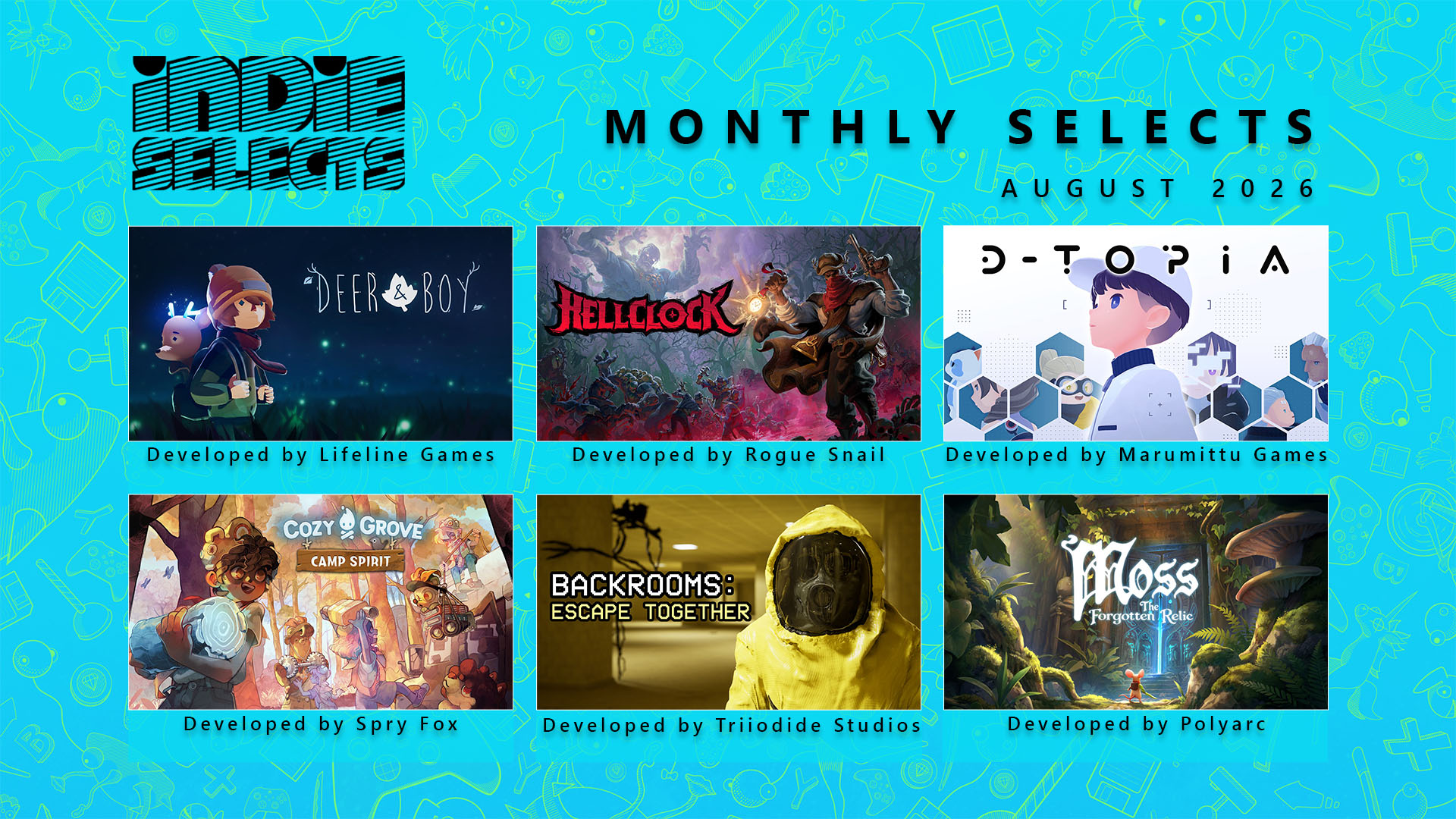
Every Wednesday, dive into the Indie Select Hub — your gateway to a fresh, curated indie collection plus four themed spotlights that rotate weekly! You can always find this collection hub in the XBOX Store and on XBOX.com/IndieSelects.
The year is flying by, and summer has brought no shortage of standout games. With so many great releases competing for your attention, choosing what to play next can feel like an adventure of its own. Trust us, we get it. That’s why the ID@XBOX team has handpicked six Indie Selects to help guide your next unforgettable journey.
Whether you’re looking for a cozy escape, a pulse-pounding challenge, or something in between, this month’s lineup has you covered. Expect friendly ghosts and frightening ones, relaxing retreats and high-stakes adventures, with stories both intimate and epic in scale. So trust your instincts, take the leap, and answer the call! August’s Indie Selects are ready when you are. Here’s what we’ve got for you this month (in no particular order):
Deer & Boy
Dear Villagers
☆☆☆☆☆ 8
★★★★★
$19.99
Deer & Boy is a beautiful reminder that some stories don’t need words. There are games that impress you with spectacle, and then there are games that quietly stay with you long after you’ve put the controller down. Deer & Boy is firmly in the second category. It also brings to mind XBOX titles like Ori and the Blind Forest, which similarly uses wordless storytelling, emotional music, and expressive animation to create a deeply moving experience. While Ori leans more into fast-paced platforming and precision, Deer & Boy takes a gentler, more reflective approach, focusing on companionship and emotional growth over challenge.
This cinematic adventure tells its story without a single line of spoken dialogue. Instead, every emotion is carried through expressive animation, breathtaking environments, and a beautiful musical score. It feels less like playing a traditional platformer and more like stepping into an animated film where every action carries meaning. You play as a runaway boy who forms an unlikely friendship with a vulnerable fawn. As your journey unfolds, that tiny companion gradually grows into a majestic deer, transforming not only the relationship between the two characters but also how you explore the world and solve puzzles. Early on, you’re the protector. Later, you’re partners, relying on each other’s unique strengths to overcome obstacles.
What surprised me most was how effectively Deer & Boy communicates without dialogue. Every glance, every quiet moment, and every piece of environmental storytelling invites you to interpret the emotions for yourself. That silence becomes one of the game’s greatest strengths, allowing players of all ages to connect with its themes of friendship, healing, loss, and hope in their own way. The platforming and puzzles remain accessible throughout, making the experience welcoming whether you’re looking for a relaxing afternoon adventure or a heartfelt story to share with family. It’s not interested in testing lightning-fast reflexes—it wants you to slow down, observe, and appreciate the journey.
Deer & Boy is proof that some of gaming’s most memorable experiences don’t come from epic battles or endless dialogue trees. Sometimes all you need is a quiet world, a loyal companion, and a story that trusts players to feel rather than be told. If you’re looking for an adventure with heart, Deer & Boy is well worth taking the time to experience.
– Steven Allen
Hell Clock
Mad Mushroom
☆☆☆☆☆ 59
★★★★★
$24.99
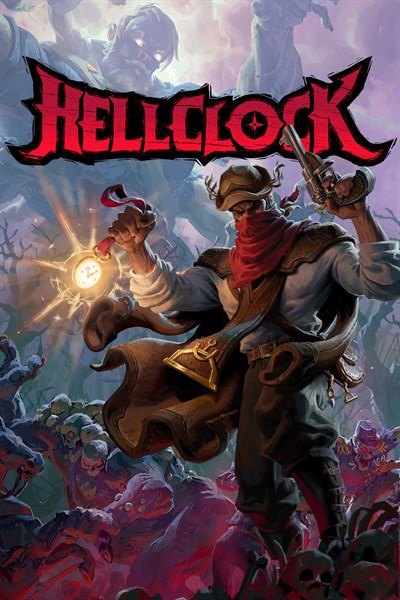
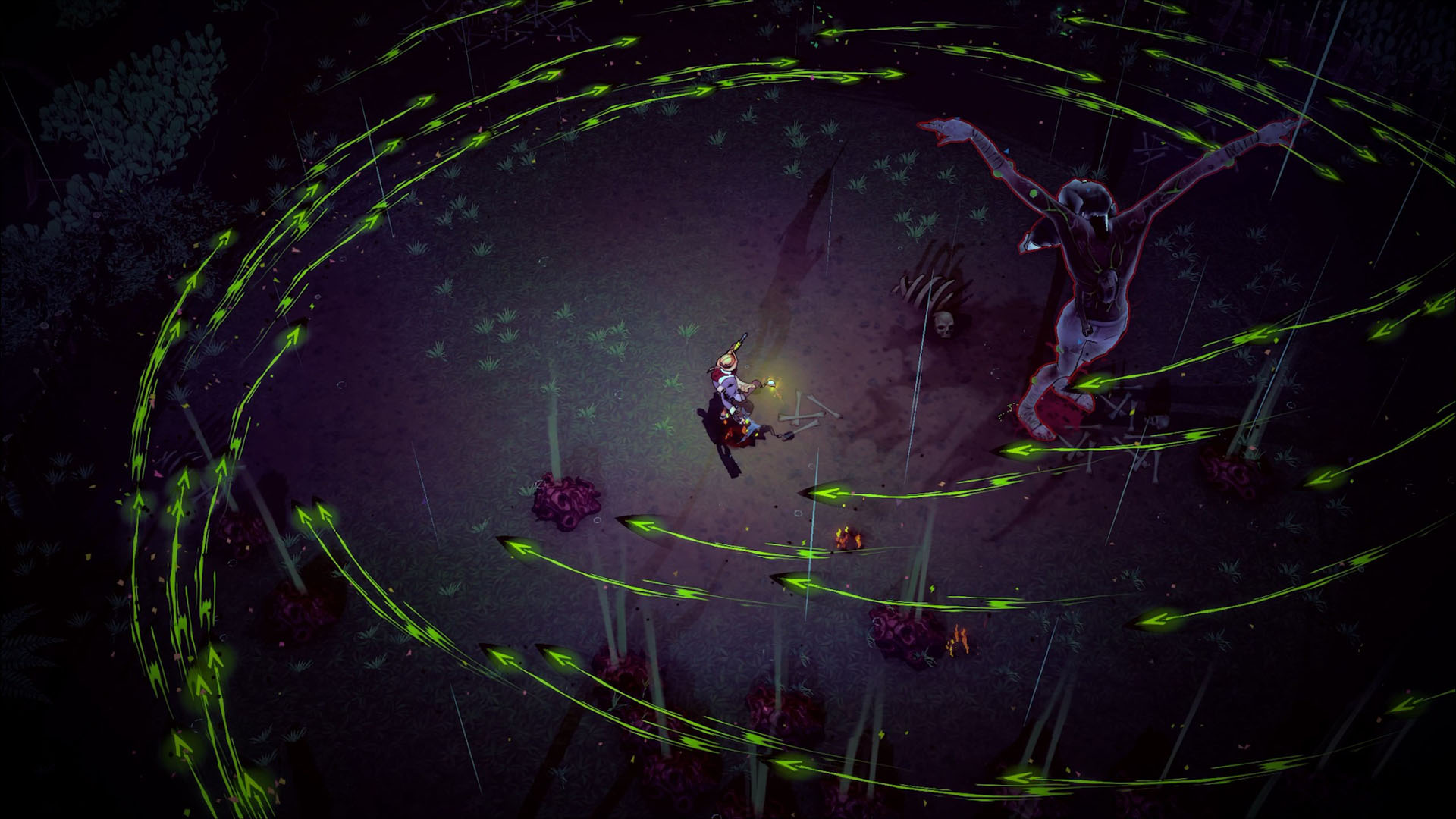
Hell Clock is a roguelite ARPG wrapped in Brazilian-inspired dark fantasy. Players take on the role of Pajeú, a survivor of Canudos, as he descends into purgatory to save the soul of his mentor, The Counselor.
What I love most is how proudly the game wears its inspirations on its sleeve. It feels like a clever ode to Diablo, with the pacing of Hades or even Vampire Survivors. Hellish world? Check. Demons? Of course. Min-maxing? Sure. Loot spilling all over the floor when you bust open a chest, driving insane amounts of dopamine? Now we’re talking! None of this is new, but I can’t shake the thought that the developers were diehard fans who saw an opportunity to bridge a grim story with a format that feels this familiar and, honestly, kind of perfect for it. As for the roguelite mix, you’ve got a central hub filled with lore and NPCs, in-run progression, and a deep meta-progression system. The real kicker, though, is the clock. Players begin with seven in-game minutes to explore, fight, loot, and progress, creating constant risk-reward pressure throughout every run. It’s fun, challenging, and, quite frankly, addicting.
Where Hell Clock really separates itself, though, is how it ties all of this back to its narrative, reimagining the historical War of Canudos through dark fantasy from the perspective of those who survived and resisted. Rogue Snail’s use of fantasy makes such a grim story more palatable without stripping away its weight, while bosses like the Merchant and the Head Cutter feel less like random monsters and more like twisted embodiments grounded in the real exploitation and violence of the conflict. The loot, builds, and absurd damage numbers pulled me in, but it was the history—and how it was presented—that made Hell Clock stick with me.
– Deron Mann
D-topia
Annapurna Interactive
☆☆☆☆☆ 3
★★★★★
$19.99
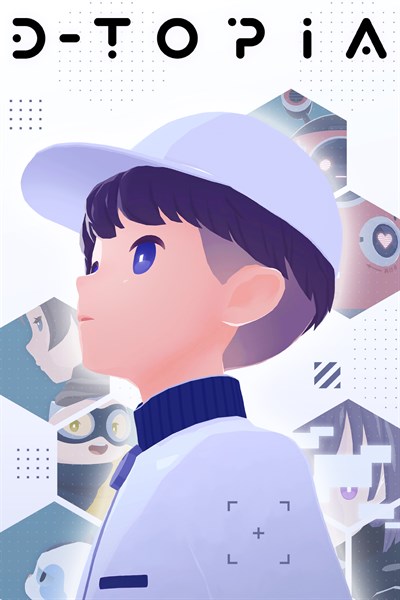
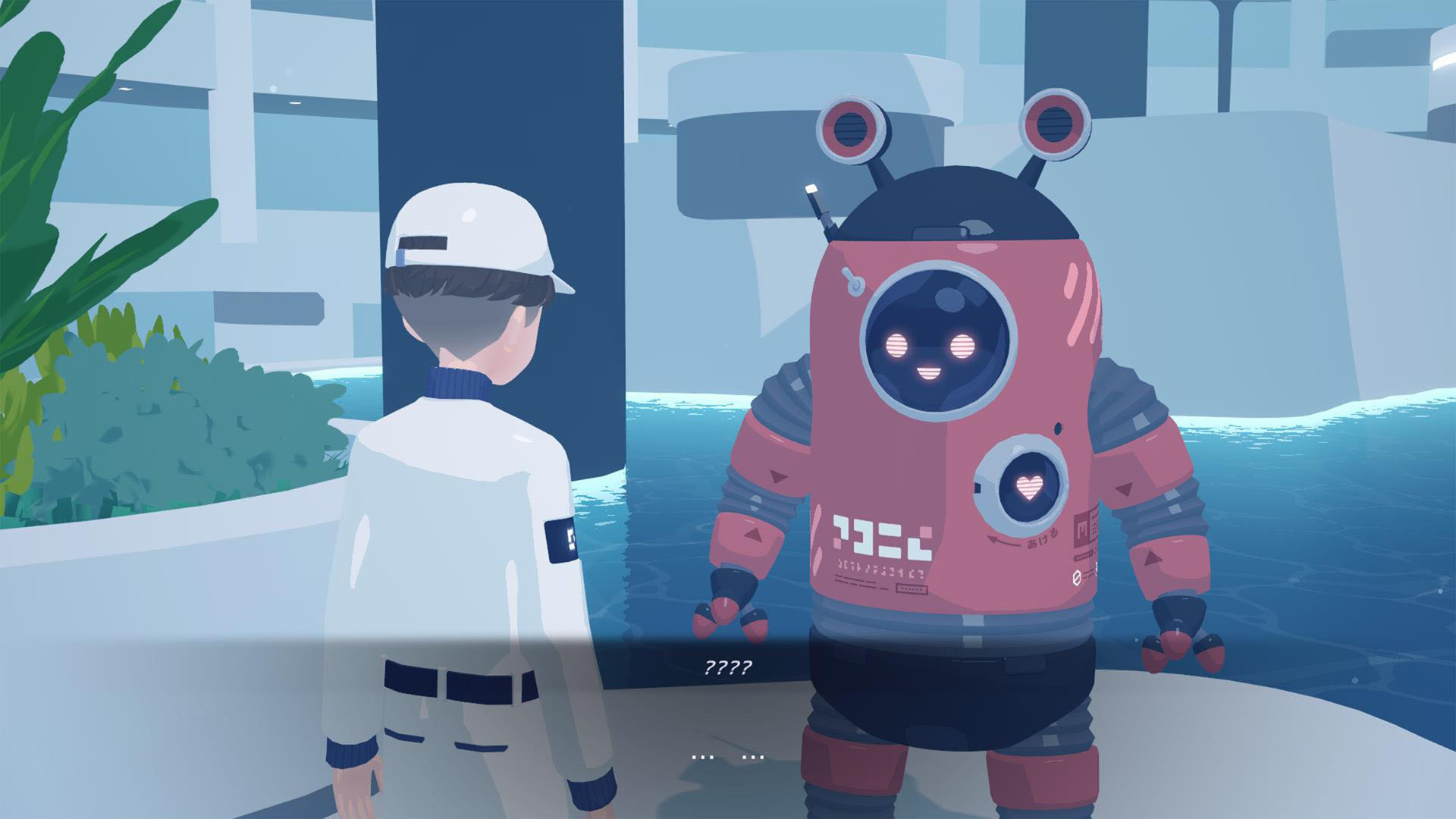
D-topia asks whether a perfectly happy life is really perfect. At first glance, the game appears to offer exactly what its name promises: a peaceful, carefully maintained society where artificial intelligence has optimized life around human happiness. The weather is pleasant, robots handle the difficult work, and everyone’s needs are supposedly taken care of. What could possibly go wrong?
D-topia places you in the role of a newly appointed Facilitator. Your job is to keep the community running by repairing machinery, solving logic-based puzzles, and helping residents navigate problems that the city’s technology cannot resolve on its own. The puzzles are approachable and thoughtfully integrated into the world. Rather than feeling like isolated challenges, they become part of your daily responsibilities—redirecting connections, restoring systems, and gradually uncovering more about how this seemingly flawless society operates. The relaxed pacing gives you space to explore, speak with residents, and appreciate the game’s clean, colorful presentation.
But underneath that cozy exterior is a much more interesting question: If an artificial intelligence can remove every inconvenience from our lives, what happens to freedom, individuality, and the experiences that help us grow? That tension is where D-topia became most compelling for me. It never needs to transform into a loud technological nightmare to make its point. Instead, it quietly asks you to notice the small compromises hidden beneath all that comfort. Conversations and decisions gradually reveal people who may be happy according to the system’s measurements, but who still long for creativity, purpose, and the ability to choose something imperfect.D-topia is a gentle puzzle adventure with something meaningful on its mind. It is relaxing without being empty, thoughtful without becoming overwhelming, and increasingly relevant in a world where we are already asking how much control we should hand over to technology. Sometimes paradise does not need to be escaped. It simply needs to be questioned.
Cozy Grove: Camp Spirit
The Quantum Astrophysicists Guild
☆☆☆☆☆ 5
★★★★★
$19.99
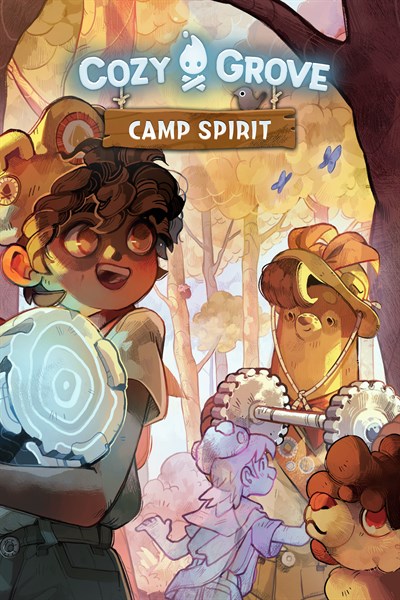
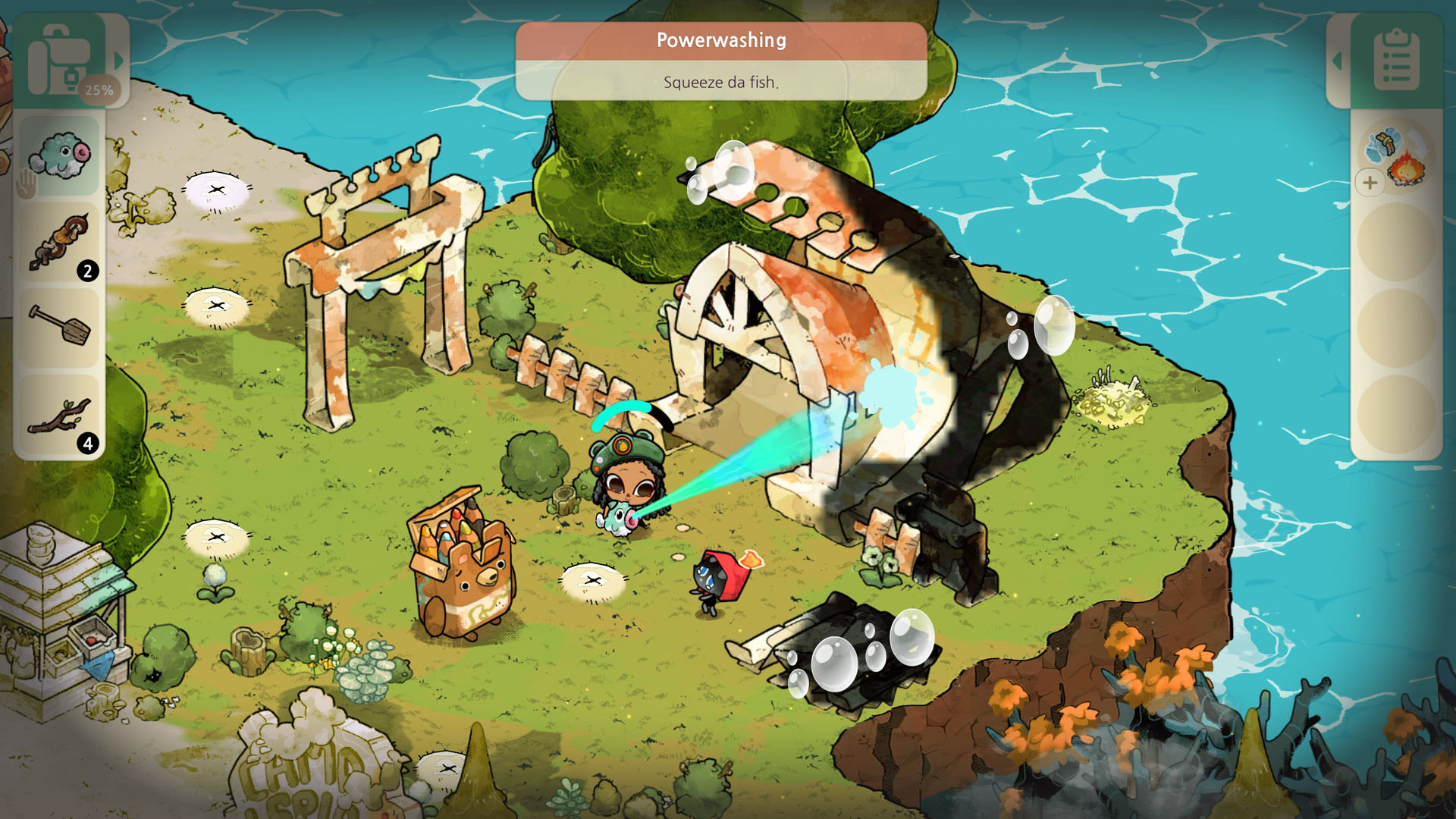
As a fan of exploration and casual life-sims like Stardew Valley I was very excited to jump into the Cozy Grove franchise’s new entry, Cozy Grove: Camp Spirit. After a quick character creation, a bus crash has left you stranded on a mysterious but delightfully adorable island filled with ghostly spirit bears who need your help remembering their past and find peace. The first thing I noticed (apart from the cute art style) is the real-world time mechanics, which are perfect for casual or busy gamers that want a relaxing batch of quests, making it an ideal companion routine rather than a time drain.
One of Cozy Grove: Camp Spirit’s strengths is the writing; the ghost bears aren’t just simple and always happy NPCs. Instead, they are complex, funny, and sometimes heartbreaking and existential characters. Helping them gives the narrative an emotional weight to the quests. I was surprisingly impressed with the characters—at first, they appear to be mostly standalone, but interconnections soon become clear as you play through.
Cozy Grove: Camp Spirit succeeds in creating a tranquil, low-stress daily ritual that respects your mental well-being by delivering a touching narrative. Packing your bags for this spirit camp is well worth your time.
– Oscar Polanco
Backrooms: Escape Together
Triiodide Studios
☆☆☆☆☆ 262
★★★★★
$19.99
Apparently, I drew the short straw this week. Full disclosure: horror games are not my thing. I am what you call “not a brave man.” So, when I sat down with Backrooms: Escape Together, a co-op horror game built around endless, claustrophobic office mazes, I was less than thrilled. Thankfully, a few friends joined me, giving me some familiar voices to cling to as we wandered through a fluorescent-lit nightmare.
You can play solo (you psycho) or with up to six players. After an elevator malfunction leaves your group stranded in the procedurally generated Backrooms, the only way out is deeper in. There’s little story or explanation—just unsettling environments and creatures, far smarter than you expect, lurking beyond the next corner.
Beneath the horror is a solid survival game focused on exploration, resource management, and teamwork. Limited inventory space, cooperative puzzles, and an excellent proximity voice chat system make communication essential. As players split up, voices fade through hallways and walls, creating both tense and hilarious moments when someone inevitably gets lost—or chased. Encounters with dynamic creatures require stealth, strategy, and quick thinking, encouraging everyone to stick together.
The visuals and sound design are superbly unnerving, while procedural generation keeps each run fresh. If you love horror, streaming scary games, or hearing your friends panic, this is an easy recommendation. All jokes aside, I had a great time… I will never do it again.
– Raymond Estrada
Moss: The Forgotten Relic
Polyarc
☆☆☆☆☆ 8
★★★★★
$19.99
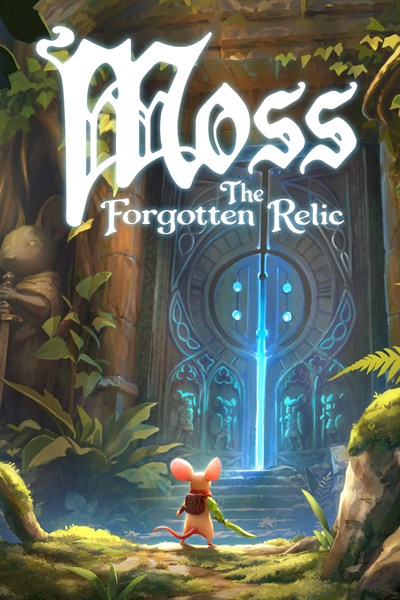
Moss: The Forgotten Relic is a charming storybook adventure wrapped in myth, magic, and heart. Set within a living fairy tale, the game invites you to experience the story alongside its hero rather than simply watch it unfold. Clever fourth-wall breaks make you feel connected to Quill’s journey, creating a unique bond between player and character. While its accessible design makes it ideal for younger audiences, its beautiful world, heartfelt storytelling, and clever presentation make it just as enjoyable for older players, such as myself.
Originally released as the VR titles Moss and Moss: Book II, The Forgotten Relic reimagines the experience as a traditional adventure. I happened to play it on VR way back and this feels like a completely different, but great experience. Players control both Quill, a brave young mouse, and the Reader, a magical presence within the world that serves as an extension of the player. Quill handles the combat and platforming, while the Reader manipulates the environment, moves obstacles, and temporarily restrains enemies to help solve puzzles and overcome challenges. The result is a satisfying blend of action, exploration, and puzzle-solving, with some of the most memorable moments requiring both characters to work together in the middle of a battle.
What truly elevates The Forgotten Relic is its presentation. The game is filled with gorgeous, diorama-like environments, an enchanting orchestral soundtrack, and exceptional narration that feels like a beloved fantasy tale being read aloud. A single narrator brings every character and story beat to life with warmth and personality, adding to the game’s sense of wonder. Combining engaging puzzles, approachable combat, and a heartfelt story into one beautifully crafted package, Moss: The Forgotten Relic is a delightful adventure for younger players (and the young at heart) especially those who enjoyed imaginative journeys like The Plucky Squire.
HUAWEI has just released the Watch GT 7 and GT 7 Pro featuring largely unchanged hardware.
Both smartwatches in the Watch GT 7 series retain their week-long battery life while gaining new colors and updated wristbands.
The Watch GT 7 Pro will be available in China for 2,688 CNY (~$398), whereas the 41mm Watch GT 7 will start from 1,588 CNY (~$235) in the region.
HUAWEI is no stranger to smartwatches, having set high benchmarks with the Watch GT 6 and its Pro sibling last year. It’s nearly that time of year when the company refreshes its smartwatch lineup, and right on schedule, the Watch GT 7 and the Watch GT 7 Pro are going official.
Following days of teasing their arrival on social media platforms, HUAWEI has finally taken the wraps off the smartwatches, but only for the Chinese market. While the Watch GT 7 and GT 7 Pro don’t differ much in the design department from their predecessors, HUAWEI now offers them in updated colors and revamped wristbands.
Starting with the GT 7 Pro, HUAWEI has retained the 1.47-inch, 466 x 466 AMOLED screen with a maximum brightness of 3,000 nits, housed in a titanium case. All of this is virtually identical to the Watch GT 6 Pro, as are the wide array of health-tracking sensors, including SpO2, ECG, heart rate, as well as a skin temperature sensor.
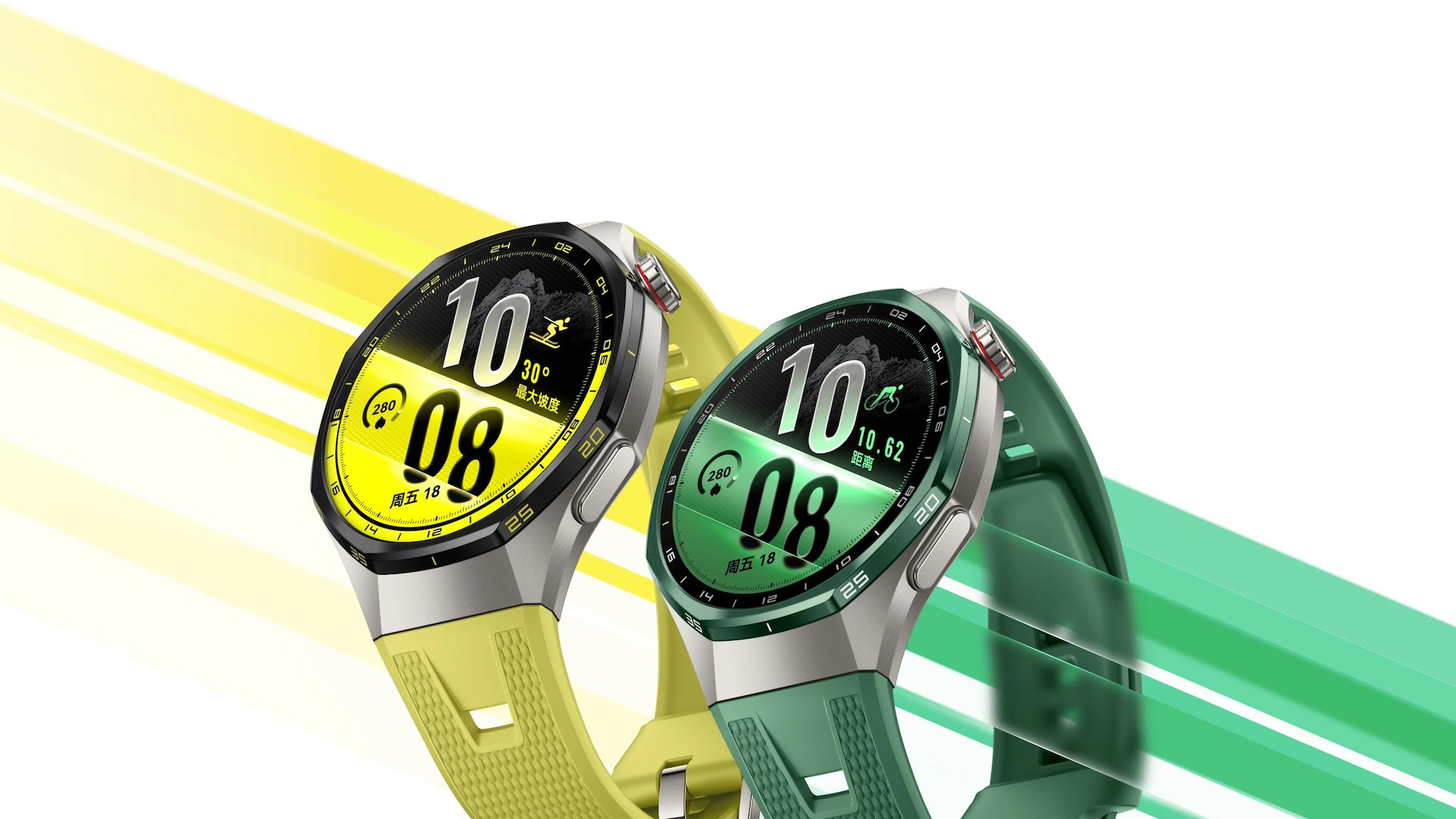
HUAWEI is offering a Pro Ski mode with the Watch GT 7 Pro along with updated sports and activity-tracking modes. The smartwatch offers 21 days of battery life with light usage, 12 days with regular use, and seven days with the always-on display (AOD) enabled, the company says. This wearable will be available in new yellow and green colorways paired with a silver case, in addition to the existing black/silver variant from the last-gen model.
Meanwhile, the manufacturer will offer the vanilla Watch GT 7 in 41mm and 46mm variants (pictured below), featuring a 1.32-inch and 1.47-inch AMOLED screen, respectively. The smartwatch lacks an ECG sensor, but includes SpO2, heart rate, and skin temperature sensors.
Similar to the Watch GT 7 Pro, buyers can expect the 46mm variant to last up to 21 days on a full charge with light use and up to seven days with AOD enabled. HUAWEI says the 41mm model offers a 14-day battery life with light usage and five days with always-on display turned on.
The Watch GT 7 in the 41mm version will set customers back by 1,588 CNY (~$235), while the 46mm model will sell for 1,688 CNY (~$250) in China. The premium Watch GT 7 Pro will cost 2,688 CNY (~$398) in the region. HUAWEI’s Harmony OS is the software of choice for the Watch GT 7 series, which means it will miss out on some of the benefits available to Wear OS smartwatches.
HUAWEI hasn’t revealed when (or if) an international launch is on the horizon, though we’d be surprised if the two smartwatches didn’t appear on global retail shelves sometime soon.
Thank you for being part of our community. Read our Comment Policy before posting.
Dassault Systèmes’ CATIA (Computer Aided Three-dimensional Interactive Application)—spanning both CATIA V5 and the 3DEXPERIENCE platform—remains the industry standard for high-end aerospace, automotive, and industrial mechanical engineering. Unlike consumer-grade CAD applications or video editing suites that scale heavily across generic parallel threads, CATIA relies on a strict combination of high single-thread CPU execution, OpenGL driver-certified GPU rendering, and severe memory bandwidth requirements during large-assembly manipulation and Finite Element Analysis (FEA / SIMULIA).
This hardware analysis provides empirical recommendations and Catia system requirements for building or configuring a CATIA workstation using modern hardware platforms.
Catia System Requirements: Hardware Component Analysis
Processor (CPU)
The CPU is the primary bottleneck for parametric modeling, assembly recalculation, and geometry generation in CATIA.
Single-Core Clock Speed & IPC (Instructions Per Cycle): The vast majority of CATIA modeling tasks (Part Design, Generative Shape Design, Assembly Design) execute serially. Core clock speed (specifically single-core boost clock) and modern microarchitecture IPC are the dominant factors in geometry regeneration speed.
Multi-Core Scaling: Multi-threading in CATIA is primarily leveraged during specific tasks:
SIMULIA / FEA Mesh & Solve: Linear and non-linear structural solves scale strongly up to 16–32 cores.
Rendering (3DEXPERIENCE / Live Rendering): Multi-threaded ray-tracing.
Best Overall for Modeling & Medium Assemblies:Intel Core Ultra 9 285k or AMD Ryzen 9 9950X. Both chips offer single-core boost clock speeds approaching 5.7–6.0 GHz, yielding maximum responsiveness in interactive viewports and feature trees.
Best for Heavy FEA, SIMULIA, & Extreme Multi-Body Assemblies:AMD Ryzen Threadripper 9000 Series (9970X / 9980X) or Intel Xeon 6 Series. While single-thread boost is slightly lower than consumer flagship processors, 4-channel or 8-channel memory architecture and higher total PCI-E lanes prevent memory bus saturation during complex matrix solving.
Graphics Card (GPU)
CATIA utilizes custom OpenGL display pipelines that behave differently depending on GPU architecture and driver validation.
Workstation (NVIDIA RTX Pro / Quadro) vs. Consumer (GeForce RTX):
CATIA requires official Dassault Systèmes workstation certification for full hardware acceleration features (including Real-Time Shader FX, ambient occlusion, anti-aliasing without artifacts, and stability under heavy geometry loads).
While consumer GPUs (e.g., GeForce RTX 5080 / 5090) offer substantial raw compute power, consumer Game Ready/Studio drivers lack CATIA-specific OpenGL profile optimizations, resulting in viewport stutters or visual artifacts in large assembly modes. For this reason, we recommend Pro cards over Geforce in this application.
VRAM Requirements:
Standard Assemblies (<5,000 parts): 12 GB – 16 GB VRAM.
Large Assemblies (>10,000 parts / Complex Surfaces): 24 GB – 48+ GB VRAM.
Tier 2 (High-End Professional): NVIDIA RTX Pro 5000 (48GB GDDR6 ECC) or RTX Pro 4000 (24GB GDDR6)
Tier 3 (Mainstream CAD Workstation): NVIDIA RTX Pro 2000 (16GB)
Memory (RAM)
Insufficient RAM causes CATIA to spill memory address space onto system storage, inducing catastrophic performance drops during parametric tree updates.
Workload Scope
Part/Assembly Complexity
Recommended Memory (RAM)
Memory Type
Standard Modeling
< 2,500 parts, single surfaces
32 GB
DDR5-5600 MHz (Dual-Channel)
Large Assembly / Automotive
2,500 – 15,000 parts, complex Class-A surfaces
64 GB – 128 GB
DDR5-5600 MHz (Dual/Quad-Channel)
Extreme Assembly & FEA
> 15,000 parts, structural mesh SIMULIA
128 GB – 256 GB+
DDR5 ECC Registered (Quad/Octa-Channel)
Storage
CATIA projects involve reading thousands of discrete .CATProduct, .CATPart, and CGR (CATIA Graphic Representation) files simultaneously. Read latency and IOPS (Input/Output Operations Per Second) directly affect file open/save times and assembly load speeds.
Primary Drive (OS & Application): NVMe PCIe 4.0 or 5.0 M.2 SSD (e.g., Samsung 990 Pro 1TB/2TB or Samsung 9100).
Active Project Storage: NVMe PCIe 4.0 M.2 SSD configured as a dedicated cache drive.
Archive / Large File Vault: High-capacity SATA SSDs or 10GbE Network Attached Storage (NAS).
Estimated Benchmarks & Performance Metrics
The benchmarks below summarize internal workstation testing utilizing standard SPECapc for CATIA V5/3DEXPERIENCE workloads, measuring composite scores across Viewport Graphics (CGR rendering, shading, wireframe) and CPU Geometry Processing.
CPU Benchmark Performance (Composite Score – Higher is Better)
Key Takeaway: For pure geometry manipulation and viewport interaction, the Ultra 9 285k and Ryzen 9 9950X lead due to higher single-core frequency. However, for engineering workloads that involve continuous SIMULIA/FEA matrix solves, the multi-core scaling and memory bandwidth of Threadripper 9000 cuts simulation wait times by more than half.
GPU Viewport Performance Comparison (FPS at 4K Resolution – High Real-Time Shading)
GPU Architecture
VRAM
CATIA Viewport Composite Score
4K Viewport FPS (10K+ Parts)
Dassault Certification
NVIDIA RTX Pro 6000 Blackwell
96 GB
285.4
118 FPS
Fully Certified
NVIDIA RTX Pro 5000 Blackwell
48 GB
248.1
102 FPS
Fully Certified
NVIDIA RTX Pro 4000 Blackwell
24 GB
192.6
81 FPS
Fully Certified
NVIDIA GeForce RTX 5090
32 GB
174.2 (Uncertified)
72 FPS (Driver Artifacts)
Not Certified
NVIDIA RTX Pro 2000 Blackwell
16 GB
138.5
58 FPS
Fully Certified
Catia System Requirements: Workstation Configurations
AI-Powered Video Streaming: Turn Your Viewers into Loyal Fans
Artificial Intelligence (AI) has emerged as a transformative force, enabling video streaming platforms to deliver personalized experiences, enhance content discovery, and drive user engagement. As the media and entertainment industry continues to expand, integrating AI into video streaming services has become essential for remaining competitive and meeting the growing demands of viewers.
The Impact of AI on User Engagement
Harness next-gen streaming with AI, where growth and user engagement meet. AI technologies such as Machine Learningand Natural Language Processing have revolutionized the dynamics of how streaming services interact with users. Through big data set analysis, AI provides customized recommendations for content that increase user satisfaction and retention. The top video streaming applications, including Netflixand YouTube, leverage AI to suggest videos based on watch history, behavior, and interests, leading to increased watch time and user engagement.
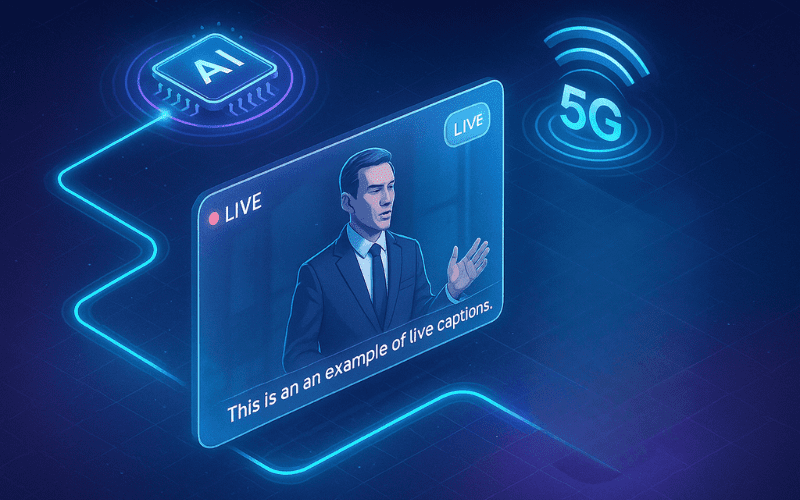
Furthermore, AI-powered features such as voice search, auto-subtitles, and live language translation have enhanced the availability of content to a broader international audience. These innovations not only enhance the user experience but also expand the reach of streaming services to diverse demographics.
Driving Growth Through AI Integration in Video Streaming Apps
AI Integration into video streaming apps and platforms has been at the forefront. According to a Grand View Research report, the video streaming market globally is projected to grow to USD 416.84 billion by the year 2030 with a compound annual growth rate (CAGR) of 21.5% between 2025 and 2030.
Increasing AI adoption is the major driver that improve the consumption of content, optimize advertising, and enhance user engagement.
AI can also contribute significantly to content creation and curation. It automates processes such as video editing and metadata tagging, accelerating automated content creation and reducing the operational costs. Additionally, AI analytics provide insights into viewers’ interests and actions, enabling platforms to personalize their content strategies.
Interesting AI Features Transforming Video Streaming Apps
AI is transforming how viewers interact with video content. From personalized recommendations and real-time subtitles to predictive streaming and immersive AR/VR, these features boost engagement, retention, and revenue. Key features include:
Personalized Recommendations: AI analyzes viewing habits, search history, and engagement patterns to suggest content uniquely tailored to each user.
Smart Thumbnails & Previews: AI generates eye-catching thumbnails and short previews optimized for higher click-through rates.
Automated Subtitles & Translation: Real-time captioning and multilingual support make content accessible to global audiences.
Dynamic Ad Personalization: AI delivers targeted ads based on viewer behavior, boosting monetization and user satisfaction.
Predictive Bandwidth Optimization: AI predicts user demand and optimizes streaming quality dynamically, reducing buffering and improving playback experience.
Interactive & Immersive Features: Integration with AR/VR, voice search, and gesture-based navigation for next-level engagement.
The Average Development Cost of AI Video Streaming Applications
The AI-powered video streaming app development would require an initial investment of $80,000 to $250,000+. AI features like personalized recommendations, dynamic ad targeting, predictive bandwidth optimization, and real-time content moderation not only enhance user engagement but also increase subscription retention and ad revenue.
The cost of developing an AI-powered video streaming appdepends on several factors, including the complexity of AI features, platform choice (iOS, Android, or Web), design, backend infrastructure, and scalability requirements. Key cost drivers include:
AI Features: Personalized recommendations, real-time content moderation, subtitles, translations, predictive bandwidth optimization, and AR/VR integration can increase development complexity and cost.
Backend Infrastructure: Cloud storage, content delivery networks (CDNs), and server architecture for smooth streaming and scalability.
UI/UX Design: Intuitive and engaging interfaces tailored for a wide range of devices.
Security & Compliance: Protecting user data and adhering to regional regulations adds development overhead.
Maintenance & Updates: Ongoing AI model training, app updates, and feature improvements.
Partnering with an experienced AI development company like USM Business Systems ensures cost-effective solutions that balance advanced features with performance and scalability, delivering maximum ROI.
Conclusion
AI is no longer a luxury but a necessity in the video streaming industry. By harnessing the power of AI, platforms can offer personalized experiences, optimize operations, and drive growth. For businesses looking to stay ahead in this competitive landscape, integrating AI into their video streaming services is a strategic move that promises substantial returns.
For businesses in the video streaming industry, partnering with AI development experts can unlock new opportunities for innovation and growth. AI solutions can be customized to address specific business needs, whether it’s enhancing content discovery, improving user engagement, or optimizing monetization strategies.
At USM Business Systems, we specialize in developing AI-driven solutions tailored for the video streaming industry. Our expertise in machine learning, data analytics, and cloud technologies enables us to create scalable and efficient AI applications that drive business success.