Developer S-Game’s action-RPG Phantom Blade Zero launched on October 29 and had a massive start across PC and PS5.
The game sold more than 4 million copies over its first 72 hours. That works out to 926 units sold per minute or about 15.4 per second over the first three days.
“Thank you everyone from the bottom of our hearts for all the love and support,” the studio said in a social media post.
Phantom Blade Zero has sold over 4 million copies in just 72 hours!🔥
Thank you everyone from the bottom of our hearts for all the love and support! pic.twitter.com/XPhq14v9YN
The 4 million figure counts copies sold across both PC and PS5–the game is not available on Xbox. The game reached a record of 833,921 peak concurrent users on Steam on November 1.
If you’re looking to get started, you can check out our Phantom Blade Zero guides hub for many walkthroughs on increasing your power and finding rare items.
“S-Game’s Wuxia-inspired combat puts you in the middle of a Chinese action movie,” Richard Wakeling wrote in GameSpot’s Phantom Blade Zero review.
Imagine walking into your local supermarket and finding the freezer aisle blowing hot air. That’s what happened at dozens of grocery stores across Europe last night, after hackers remotely cranked up the temperature of their fridges and freezers to a scorching 50°C (122°F).
What is happening?
According to the BBC, around 40 Delhaize stores in Belgium and Luxembourg, several ICA and Coop stores in Sweden, and 13 SuperValu shops in Ireland were hit. El País adds that 15 Carrefour and five Spar stores in Belgium were affected, and stores in the Netherlands, Estonia, and Finland ran into the same trouble.
“I was woken up by alarms that started appearing on my phone around 3 a.m.,” the manager of several Delhaize stores in Brussels told Belgian broadcaster RTBF. By then, the food was already spoiled. One Delhaize store in Hoeilaart told Het Laatste Nieuws it had to bin €100,000 worth of food.
“We can’t regulate the temperature, we can’t change it. Hot air is getting into the freezers. Everything is ruined,” Rickard Nilsson, manager of an ICA store in Sjöbo, told Swedish newspaper Aftonbladet, according to El País.
Haven’t we seen this before?
Last month, the BBC reported that around 400 French supermarkets, including Intermarché, Coopérative U, Carrefour, Monoprix, and E.Leclerc, were hit in a similar attack. The hackers went after refrigeration software from Danish firm Danfoss, which explained that the hacked units were older machines it could no longer patch against the threat.
A few stores reported small fires. Coopérative U’s CEO called it an “extremely serious and unprecedented” attack, and French prosecutors are now treating it as a cybercrime case. According to Reuters, the Pentagon is taking a second look at fridges that failed at several US military bases this summer, suspecting hackers may have been involved.
What does this mean for you?
Nobody knows who is behind these attacks yet, but stores are binning the spoiled food, so it shouldn’t reach your cart. The bigger worry is that a boring supermarket freezer is now a target. Experts cited by El País believe stronger cybersecurity and regular software updates could have prevented this. As EU Food Commissioner Christophe Hansen put it, “the weaponisation of food has become a reality.”
Having a product that expands into global and international markets is challenging. It is not as simple as transporting one package to another, or changing a plug. A product that works in one country may not work in others, as it may require a lot of redesigns, such as electrical changes, additional safety testing, or adjustments in aesthetics. There are a lot of things that should be considered before it becomes successful.
Designing for the market, especially in global markets, requires understanding what actually changes between various regions, such as electrical standards, regulatory marks, labeling and units, climate conditions, and cultural preferences. Some companies have already anticipated these variations, avoiding costly redesigns, delays in certification, and complicated inventory. Cad Crowd connects businesses with vetted engineers and CAD design professionals who can help evaluate these market-specific requirements and prepare products for different regions from the early design stage.
At first glance, the strategy utilized by the global product may seem straightforward, as it builds on the product and sells anywhere. However, in reality, the target market has its own expectations and technicalities. The key is to be able to identify the market-specific variables before making a design decision to proceed with tooling and production.
In the US, a countertop appliance might have to run at 120V/60Hz, but in Europe, it might have to run at 230V/50Hz. When a consumer electronics device passes FCC testing in the United States, it might still need UKCA marking in the UK and CE marking in Europe. At the same time, the materials that meet RoHS or REACH regulations in one market might be prohibited in another.
What changes between markets?
Electrical requirements
The electrical standards are one of the most obvious and technically significant differences between the markets. The electrical design services varies from one location to another. A product might work in a specifically designed environment, and sometimes it may not work safely when used in other places.
In the United States and Canada, most household power uses 120 volts at 60 hertz (120V/60Hz). In the United Kingdom and European Union, it utilizes 230 volts at 50 hertz (230V/50Hz). In Japan, most households have a power of 100 volts with a frequency of 50Hz or 60 Hz, and it depends on the region. In Australia, 230 volts at 50 hertz is utilized in household power.
As electrical components like motors, transformers, heating elements, and power supplies are made to function within particular voltage and frequency ranges, these variations are important. A 120V product may overheat, malfunction, or pose a safety risk if it is connected straight to a 230V outlet. Thus, it is important to know what the suitable needs are to avoid hazards.
Plug types
The physical plug has its own significance despite having compatible voltage and frequencies. In North America, it uses plugs like Type A and Type B, while in Europe, commonly used are Type C, E, and F plugs. The UK utilizes Type F, while Australia makes use of Type I, and lastly Japan primarily uses Type A plugs. To solve this challenge, there are a lot of existing products that use modular cord sets or interchangeable plug adapters rather than the need to redesign the entire product only for it to meet the needs of the market.
As we all know, European countries operate in different voltage ranges, and their low voltage directive is also applicable to the goods sold there. This regulation helps ensure that the products do not pose risks such as electric shock, fire, or overheating by focusing on electrical safety.
Regulatory marks and compliance standards
Each region has its own regulatory marks and might require various products to meet local safety, electromagnetic compatibility (EMC), and performance requirements. Every product must pass a standard compliance or evaluation, and this is usually shown with regulatory marks. Also, it is necessary for gaining access to the legal market, as these marks foster consumer trust.
Region by region Comparison
Region by region Comparison
Region by region Comparison
Region by region Comparison
Region
Typical Voltage
Safety Marks
EMC requirements
United States
120V, 60Hz
UL or ETL
FCC
European Union
230V, 50Hz
CE
EMC Directive
United Kingdom
230V, 50Hz
UKCA
UK EMC regulations
Canada
120V, 60Hz
CSA
ICES requirements
Japan
100V, 50/60Hz
PSE
VCCI
Australia
230V, 50Hz
RCM
RCM EMC requirements
North America
– In North America, the FCC governs electromagnetic interference for electronic devices.
– A product’s UL and ETL marks show that it has been assessed for safety in accordance with relevant standards.
– In Canada, CSA is frequently used for safety certification.
– A product bearing the CE mark is in compliance with the applicable directives and regulations of the European Union.
– The Low Voltage Directive, EMC Directive, and RoHS Directive may be included in CE compliance, specific to the product.
United Kingdom
– The UKCA marking is needed for a lot of products that put a great emphasis on the Great Britain market.
– Companies that sell both the EU and UK may be required to manage both the UKCA and CE requirements.
Materials and chemical restrictions
– The RoHS restricts the utilization of hazardous materials, especially in electrical and electronic equipment.
– The chemicals in goods sold within Europe are being regulated and governed by REACH.
With the use of these rules, it affects how the selection of materials, supplier documentation, and manufacturing deign processes flow. It is important to note that not every product is applicable to all regions; a material that is acceptable in one market might be restricted in one place and may require additional tools to use.
A product needs to have information and must communicate it to avoid confusion. Having information allows for clear and legal acceptance in the market.
Units of Measurement
– In the United States, it is seen that the units of measurement used are imperial units such as inches, pounds, and Fahrenheit.
– Most markets completely use similar metric units like millimeters, kilograms, and Celsius.
An example of this is when the package of the product is designed for the United States market; it is noted that the dimensions should be in inches, while having the same package for another country like Europe, the units used should be millimeters or centimeters. It may be necessary to incorporate both systems into product specifications, packaging dimensions, and user instructions, or to localize these elements for the intended market.
Many countries require product instructions, warnings, and labels to be made in the official language of the market. By doing so, it will help avoid any confusion and misinformation. The safety warnings must have approved and authorized symbols and language when it is necessary. In addition, the product and packaging design services must accurately provide and display the manufacturer information, voltage ratings, disposal symbols, and regulatory marks. One example of this is that a product sold in Europe may need multilingual instructions, and when a product is sold in Canada, it should have both English and French labels.
Anthropometrics and sizing norms
Anthropometrics is the study of human body measurements, like height, hand size, reach, and body proportions. The product’s ergonomics and sizing may be influenced by certain measurements, which can differ among various populations.
Examples of anthropometric considerations
Handheld devices: The button placement and the grip size should be able to accommodate the target market or the user population.
Wearables: Adjustments should be present for the strap lengths, as the fit ranges from one person to another; this is also needed in various markets.
Furniture and appliances: The dimensions of the product should match the usual living spaces and the body sizes.
Protective equipment: Region-specific sizing requirements may apply to safety equipment and gear.
Local consumers may find the product to be uncomfortable and challenging to use. If the need for anthropometric differences is disregarded, the users may not trust the product in the long term.
The durability of a product design can be compromised as well as its performance when environmental conditions are not considered. Before a product made for a mild climate can function consistently in a tropical, desert, or cold environment, it might need to be modified.
Humidity and corrosion
Regions, especially tropical and coastal regions, may have products that can be exposed to high humidity and salt air. Therefore, designers should be required to use materials such as corrosion-resistant, sealed enclosures, and protective coatings to prevent damage to the product.
Temperature extremes
In cold climates, materials that retain impact resistance at low temperatures may be necessary. In a hot climate, there should be improved ventilation, thermal control, and heat-resistant plastics.
Higher IP ratings are needed for dust and water protection for products that are found to be outdoors. On the other hand, products that are directly exposed to sunlight may be in need of materials that are UV-resistant to ensure that fading and degradation will not take place.
Cultural and aesthetic preferences
A successful global product design involves more than just technical compliance. The products must also meet cultural norms and appeal to local consumers, as they are the ones who can make the product flourish.
Colors
Some cultures tend to associate red with luck, love, and celebration. With that, they prefer that what they are buying integrates with what they believe. In contrast, other cultures believe that white symbolizes purity and peace, and for some cultures they tend to see white as a color of mourning.
The icons used in providing instructions, warnings, information, and controls may have various meanings depending on the region. It is important to avoid symbols and icons that may bring confusion or can be seen as inappropriate in culture to minimize challenges.
Product appearance
Some consumers and markets may want to have a product that is minimalist and has a clean design. While others prefer it to be in bold colors, have decorative features, or have a bright and colorful theme. For those regions with a small living space, products that are compact are favored more.
Why do these differences matter?
The following are some of the factors that can significantly impact how a product should be used:
The target market is safe when using the product.
It is legally compliant with local laws.
The product should be durable and resilient in the local environment.
Simple to comprehend with proper labeling and documentation, and avoids confusion.
It is appealing to local buyers and comfortable when in use
When these factors are disregarded, it will lead to failure in getting the certifications, product recalls, poor customer experience, and redesigns may be expensive as production has already started. It is important to acknowledge that evaluation should take place before the production of the product to ensure that everything is in place.
Product teams can inquire when assessing a new market. The following are the guidelines that a team can use in evaluating:
Is it safe for the product to use in the local electrical system?
Which regulatory marks or certifications are necessary?
Are the materials compliant with local environmental and chemical regulations?
Do the local buyers understand the instructions, labels, and units?
Does the product meet users’ ergonomic and physical needs?
Can the product survive the climate in the area?
Are local consumers drawn to the product’s appearance and symbolism?
By having the chance to understand and be informed of the changes in the early design process, companies can establish or plan a product that is safe, compliant, and durable even if it is used in various regions.
Engineering tactics for global market design
Universal power supplies
Having a product that is designed to be used universally in any region is one of the effective ways to reduce variation in places. Many markets can be served by a power supply that accepts 100–240V and 50/60Hz with little electrical redesign.
Modular cord sets and plug adapters
Rather than having to redesign the entire product for each plug type, it is important to note the use of modular cord sets. With the use of this, it will be easier to have one common product that answers the needs while accommodating the regional interfaces.
The One Global SKU functions well when the product meets all the required target markets without the need to change the physical properties. On the other hand, region-specific SKUs are needed when there is a difference in plug types, labeling, or language. Lastly, a hybrid strategy can be utilized when the common core of the product is all about the local packaging, accessories, and documentation services.
Plan compliance before tooling
An essential lesson in the making of a global product is that the planning for compliance should be taken care of before the tooling takes place. When it is done at a later stage, it will be expensive and time-consuming to do so, as the molds can be cut again.
The early compliance should consist of the following:
Identifying and determining all the target markets and relevant laws.
Defining the material, safety, electrical, and EMC requirements.
Checking the enclosure area for regulatory markings and labels.
Verifying that components and materials adhere to REACH, RoHS, and other regulations.
Coordinating early in the development process with testing facilities and certification organizations.
Creative product design services especially for the global market is not simple; it is more than selling the same product in various countries. There are a lot of considerations that must be analyzed, integrated, and evaluated. Each region has its own preferences and required electrical systems, safety regulations, material restrictions, labeling requirements, environmental conditions, and, lastly, cultural expectations. It is important that teams know all of the factors for the product to be able to succeed in a market. Adjustments take place, as one product in the market might not work in another market. These adjustments must still be able to follow legal compliance and needs to launch and sell it to the market. Companies can lower their costs, especially in redesigning, when proper planning for the voltage and plug variations is done correctly.
How Cad Crowd engineers support multi-market compliance
Bringing a product into life, especially globally, is more than just its design. Its function should be understood, and there should be a clear understanding of the target market requirements, especially since one market varies from another. Before expensive tooling, production, or certification delays arise, Cad Crowd engineers with multi-market compliance experience can assist businesses in identifying these requirements.
Cad Crowd engineers can extend their support to companies whether their goal is to pursue a standardized global product or a localized regional adaptation strategy. An example of this is that they can recommend a universal power supply option for products that are intended to be used in various regions with different voltages.
What an early compliance review includes
It evaluates the voltage, frequency, plug type, and power supply needed for the target regions, whether it will be in the United States, Europe, the United Kingdom, Canada, Japan, or Australia. Safety and EMC assessment can also happen, as checking the compatibility requirements is needed, which includes the FCC, CE, UKCA, CSA, PSE, and RCM considerations. Finding and identifying the design changes that can make certification easier and lessen the possibility of post-tooling changes. All of these are needed to ensure that risks and hazards will not happen, as well as to ensure the safety of the users.
The earlier compliance planning is done, the easier it is for the process to be completed in a short period of time. It is important to consider that waiting until production is finished will have a significant effect on the next processes. Such delays in getting certifications, redesigning, and opportunities might be missed.
By collaborating with the Cad Crowd experienced engineers, especially during the concept, prototyping services, and pre-tooling stages, businesses and companies can incorporate compliance planning straight into the process of developing new products. This helps guarantee that the product is ready for the particular needs of each target market in addition to being functional and manufacturable.
Compliance planning can be integrated directly into a company’s new product development process. This helps ensure that the product is not only functional and manufacturable, but also prepared for the specific requirements of each target market.
Addressing problems at an early stage, especially issues, will be more efficient since solutions can be provided early. Products will likely meet the standards and regional expectations for safety, performance, labeling, and durability as evaluation happens. On the other hand, the teams can determine what SKU should be used, whether one global, region-specific, or a modular product architecture is the most effective and efficient approach.
Businesses can develop products that not only satisfy requirements but also thrive in a variety of global markets by approaching global market adaptation as a strategic component of product development.
Conclusion
In a world where competition takes place, it is important to have the right balance of aesthetics and safety. Integrating technical compliance and the relevance of the product can gain the trust of the consumers. When a product performs well, it can achieve long-term success. Businesses will be better positioned to grow internationally and create products that genuinely resonate across regions if they approach global market adaptation as a strategic design priority. It is not just about meeting the standards and the technical regulations, but it is more about providing service that is safe, reliable, and efficient for buyers across regions.
Cad Crowd can connect businesses with experienced engineers who can support global product adaptation, compliance planning, prototyping, and design development process services. With the right engineering expertise involved early, companies can build products that are not only functional and manufacturable but also ready to meet the needs of customers around the world.
How Cad Crowd can help
Making informed engineering decisions early can have a major impact on a product’s cost, performance, development timeline, and overall success. Cad Crowd connects businesses with vetted engineers and design professionals who can evaluate design options, identify potential challenges, and provide practical guidance throughout product development. Whether you need support with PCB design, mechanical engineering, prototyping, DFM, product development, or cost optimization, Cad Crowd can help you find the right expertise for your project. Getting experienced engineering input before major design decisions are finalized can help reduce costly redesigns, avoid unnecessary development issues, and create a better balance between performance, speed, and cost. Contact Cad Crowd today for a free quote and find the engineering expertise you need to move your product forward with confidence.
MacKenzie Brown is the founder and CEO of Cad Crowd. With over 18 years of experience in launching and scaling platforms specializing in CAD services, product design, manufacturing, hardware, and software development, MacKenzie is a recognized authority in the engineering industry. Under his leadership, Cad Crowd serves esteemed clients like NASA, JPL, the U.S. Navy, and Fortune 500 companies, empowering innovators with access to high-quality design and engineering talent.
Since its 2018 debut, Rian Johnson’s The Last Jedi has sparked heated debate over whether it was a fantastic or terrible Star Wars film for Luke Skywalker. Still, whatever your opinion, it’s hard to deny that Johnson’s take on the greatest Jedi ever came with some truly epic quotes. And no, we’re not talking about the zinger, “Amazing. Every word of what you just said was wrong.”
The Last Jedi gave us Luke Skywalker’s best quote, perfectly capturing the poignancy at the heart of a galaxy far, far away.
Luke’s best Star Wars moment isn’t the one you think
Luke has delivered plenty of incredible quotes throughout Star Wars’ 50-year history. Many fans consider his declaration to Emperor Palpatine — “I am a Jedi, like my father before me” — in Star Wars: Return of the Jedi his best. And they’re not wrong: it’s a phenomenal line that defines Luke’s identity as a Jedi. Still, it doesn’t quite seal the deal for us as his best.
That honor belongs instead to one of Luke’s most underrated moments: when he briefly projects his image through the Force on Ahch-To to comfort his sister Leia. During the exchange, Leia expresses deep sorrow that she’s lost her son Ben Solo, also known as Kylo Ren, to the Dark Side forever.
Lucasfilm
Luke, bright-eyed and once again full of belief after his meeting with Rey, reassures her with this beautiful quote:
“No one’s ever really gone.”
After so long in guilt and shame, Luke’s quote shows how far he’s come since the beginning of The Last Jedi.
Why Luke Skywalker’s best quote is all about redemption
A string of words can sometimes reveal wisdom in a way we hadn’t considered before. This is especially meaningful in a franchise like Star Wars, where mythological forces such as the Force, the Jedi, and the Sith play a central role, and we, the audience, are eager to uncover answers to many of the galaxy’s major mysteries and themes.
Walt Disney Studios
Redemption is a central theme in Star Wars. Across its films, TV shows, comics, novels, and even video games, one idea remains clear: anyone can be redeemed. Redemption looks different for each character, and what one character sees as redemption doesn’t necessarily align with what others feel or believe. For example, while Anakin Skywalker was redeemed in the eyes of his son, Luke, his role as Darth Vader and the destruction of Alderaan ensured that his daughter, Leia, didn’t share her brother’s feelings towards Anakin.
Regardless, Luke’s quote to Leia reassures her that no matter how much someone changes, who they were before is never entirely out of reach. As we learn from many Star Wars spin-off works, such as Han Solo: Hunt for the Falcon, Ben was kind and caring as a child, a far cry from the mass-murderer he became as a man.
Yet, just because the Ben Solo that Luke, Han Solo, and Leia knew growing up isn’t recognizable right now, doesn’t mean Ben is lost forever.
Alternative meanings to Luke Skywalker’s best quote
Image: Lucasfilm Ltd.
Great quotes can also have multiple meanings, which makes Luke’s best quote a perfect example of how The Last Jedi addresses not only the theme of redemption but also the Force’s spiritual essence. Though death may take away a person’s physical body, they become one with the Force and can never truly die.
Taken more literally, Star Wars fans know that those strong in the Light Side of the Force can manifest physically as Force ghosts, as seen in Ahsoka and Return of the Jedi. Given the tagline “no one’s ever really gone” and the appearance of several Jedi in Star Wars: The Rise of Skywalker, it’s not much of a stretch to see this as Johnson’s way of reflecting on how even death can’t stop the will of the Jedi.
Last but not least, taken even more metatextually and literally, the quote could be a tongue-in-cheek reference to the idea that Lucasfilm will find a way to bring back any character it truly wants to, no matter who or what. While sometimes it may make sense, as with Anakin’s involvement as a Force ghost in the Ahsoka TV series, other times it can lead to truly head-scratching moments, such as Zeb’s involvement in The Mandalorian and Grogu.
Ultimately, whatever the quote means to you, there’s no denying that Luke’s best quote is one reason The Last Jedi — for all its faults — remains among the best Star Wars films.
Data centers are deeply unpopular. But what if we called them something else?
Axios reports that OpenAI is preparing a “PR blitz” for after the midterm elections on Tuesday, as Democrats seem likely to win back the House of Representatives, and possibly the Senate, too.
The company’s chief global affairs officer Chris Lehane told Axios that the midterms will be “a bit of a movie trailer for what you’re going to see in 2028,” when he expects AI to be “the issue” in the presidential election.
So OpenAI is to influence the AI debate moving forward, with Lehane discussing several proposals, including the development of AI “speed limits”; finding ways to help people see AI as empowering them in their daily lives; pushing the U.S. to take a role in developing global standards — and yes, rebranding data centers as “AI compute campuses.”
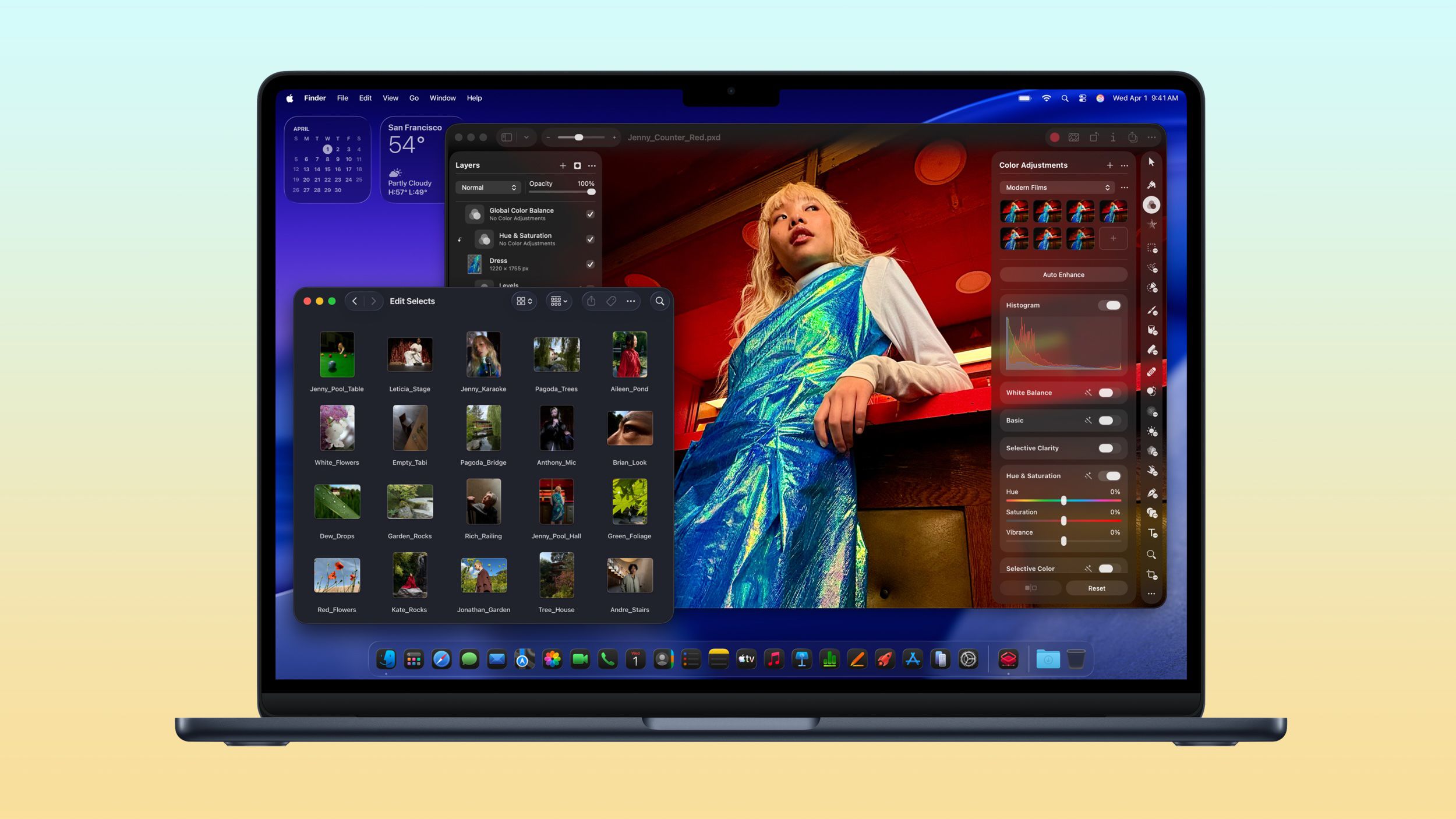
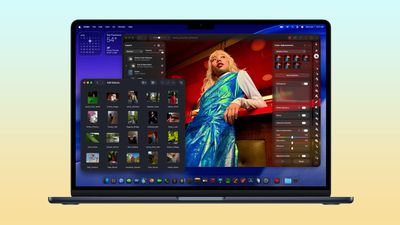
Amazon is taking $200 off nearly every model of the M5 MacBook Air this weekend, with matches of the best post-hike prices we’ve ever seen on the computer. Prices now start at $1,099.99 for the 512GB 13-inch model and $1,299.99 for the 512GB 15-inch model.
Note: MacRumors is an affiliate partner with some of these vendors. When you click a link and make a purchase, we may receive a small payment, which helps us keep the site running.
Not only is every storage configuration on sale at these all-time low prices, but Amazon has nearly every color in stock as well. Free delivery estimates place most computers arriving around early next week, while Prime members should see it sooner.
For the 15-inch M5 MacBook Air models, prices start with the 16GB/512GB model for $1,299.99, down from $1,499.00. You can also get the 16GB/1TB model for $1,599.00, down from $1,799.00, all $200 off and the best prices we’ve seen in months.
If you’re on the hunt for more discounts, be sure to visit our Apple Deals roundup where we recap the best Apple-related bargains of the past week.
Deals Newsletter
Interested in hearing more about the best deals you can find as we head into the holidays? You can sign up for our Deals Newsletter and we’ll keep you updated so you don’t miss the biggest deals of the season!
Earlier this week, we began tracking early Prime Day deals on Apple-related accessories, and now Amazon has introduced major early deals on Apple products as well. This includes AirPods, iPads, MacBooks, and more, all available at some of the lowest prices of the year so far.
Note: MacRumors is an affiliate partner with Amazon. When you click a link and make a purchase, we may receive a small…
Amazon’s Prime Big Deal Days is in its second day, offering shoppers the first chance to save on holiday shopping from a major retailer. Similar to last year’s fall Prime Day, it will last for two days, and you can find a large selection of deals across Amazon’s storefront, covering savings on tech, clothing, video games, groceries, and much, much more.
Note: MacRumors is an affiliate partner…
Following in the footsteps of a small pre-order discount on the HomeView, Amazon is now offering the first cash discount on the brand new A19 Apple TV 4K. You can get this model for $289.99, down from $299.00.
Note: MacRumors is an affiliate partner with some of these vendors. When you click a link and make a purchase, we may receive a small payment, which helps us keep the site running….
If you’re something of a Portal or Half-Life head, you’ll probably already be familiar with F-Stop, an unreleased Portal prequel that remained quite mysterious for many years. Back in 2020, a much deeper look was revealed in a semi-official capacity, revealing a pretty neat concept (that isn’t so dissimilar to that of Superliminal). Now, all these years later, assets and source code for the game has leaked, and what exists of F-Stop is fully playable.
As spotted by Kotaku, the Valve Cut Content team and a number of leakers have been able to put together a playable version of F-Stop so that you can try it out for yourself. Mechanically, it works like so: you take a picture of an object, and said object disappears, turning it into a photo. You can then use this photo to rematerialise the object, sometimes changing the scale of it to help you navigate particular puzzles. It’s cool! Just not something Valve thought was worth going all in on, evidently.
So the story goes, Valve overlord Gabe Newell did actually quite like the early version of the game that never was, it’s just it didn’t test all that well. I do kind of think that this is a lesson in not always listening to test audiences; the aforementioned Superliminal really is quite similar in execution, even tonally it’s on the same kind of wavelength, and it ended up being quite a tight little experience that ended up being received quite positively, generally. In the end, bits of F-Stop were Frankensteined into Portal 2, so, at least we got that out of it!
The reason for the delay in being able to play F-Stop in this unofficial capacity is because of the crucial source code and map data. Back in August about 12TB of Steam data leaked, but that only contained the assets for F-Stop. Mods in the Valve Cut Content Discord server said that the person who leaked the F-Stop mapsrc asked for $1000 before just handing over the data in any case. Glad they did, $1000 bucks is a lot, I wouldn’t pay it myself. Cool little bit of history to be found here, shame it never materialised in the way it was meant to.
A good AI video often starts with a strong image. Nano Banana 2.1 can create detailed characters, products, backgrounds, and keyframes. Vidu Q4 can then animate those visuals with motion, dialogue, sound, and camera changes. Used together, they offer a practical workflow for social media, product ads, short films, and branded content.
This guide explains how to use Nano Banana 2.1 with Vidu Q4 together on Pollo AI to create clear and consistent videos.
Why Use Nano Banana 2.1 With Vidu Q4?
Image and video models solve different parts of the creative process.
Nano Banana 2.1 offers up to 4K image output and can blend as many as 14 reference images. It also provides improved text rendering, layout accuracy, composition, and realism. Its Flash-class speed makes it useful for testing different visual directions.
Vidu Q4 supports image-to-video generation with synchronized audio. It can use up to 15 image references and three audio references. The model also handles character acting, lip sync, shot transitions, and scene-based visual effects.
Step 1: Define a Simple Video Concept
Start by deciding what the video needs to communicate. Do not begin with a long prompt that includes several unrelated ideas.
A useful plan should answer four questions:
Who or what is the main subject?
Where does the scene take place?
What happens during the clip?
What should viewers understand or do next?
For example, a skincare ad could show a person picking up a serum bottle, applying one drop, and smiling at the camera. The final frame could display the product and a short call to action.
Vidu Q4 clips can last up to 16 seconds, so keep the action focused. If your story is more complex, divide it into several scenes.
Step 2: Create the Main Visual in Nano Banana 2.1
Open https://pollo.ai/im/nano-banana-2-1 to access Nano Banana 2.1 on Pollo AI. Describe the first frame, including the subject, environment, composition, lighting, camera angle, and visual style.
Here is a basic product prompt:
A premium glass skincare bottle on a light stone counter, soft morning sunlight from the left, green leaves in the background, realistic commercial photography, close-up shot, natural shadows, clean composition, 16:9.
Keep the prompt specific but readable. You do not need a long list of decorative terms. Clear instructions usually make revisions easier.
Nano Banana 2.1 produces more natural images with richer details than its previous version. Still, inspect small features carefully. Check faces, hands, product shapes, reflections, labels, and background objects before moving forward.
Step 3: Use References to Improve Consistency
Reference images are useful when your video must follow an existing design. You might upload photos of a product, a character, an outfit, a location, or a brand color palette.
Nano Banana 2.1 can combine up to 14 references. This can help you build coordinated campaign assets while preserving important character and object details.
Generate a few options and select the image that best captures the core identity. This chosen image will become the visual foundation for your Vidu Q4 video.
Step 4: Prepare Text and Layouts Carefully
Nano Banana 2.1 offers clearer text and more accurate layouts. This is helpful for posters, title cards, product ads, and infographic-style scenes.
However, avoid placing too much written information inside the source image. Long text can be difficult to read once the image starts moving. A short headline, product name, or price is usually enough.
If the exact wording is important, consider adding it during final editing. This gives you more control over spelling, timing, placement, and brand fonts.
For wide website banners or cinematic scenes, Nano Banana 2.1 can generate ultrawide images at up to 4K. Its improved handling of wide compositions also reduces unwanted repeated or tiled elements.
Step 5: Animate the Image With Vidu Q4
Upload your finished image to Vidu Q4. Then describe the motion you want to see.
A useful motion prompt might be:
The camera slowly moves toward the bottle. Sunlight shifts gently across the glass. The leaves move slightly in a soft breeze. Keep the bottle label and shape unchanged. Natural commercial style.
Focus on actions rather than repeating the full visual description. The source image already defines the appearance. Your prompt should explain what moves, how fast it moves, and how the camera behaves. For character scenes, describe facial expressions and body language.
Step 6: Add Voice and Synchronized Audio
Vidu Q4 can generate audio alongside the video. This makes it useful for dialogue, character content, product scenes, and short narrative clips.
You can provide up to three audio references to guide voices and emotional delivery. Voice cloning may help a recurring character maintain the same vocal identity across scenes.
Vidu Q4 also supports lip sync and expressive acting. For better results, state who is speaking and describe the intended tone, such as friendly, calm, excited, or concerned.
Step 7: Direct Camera Changes and Effects
Vidu Q4 can create action-aware transitions between close-ups and wider shots. These changes can reveal a location, show a product detail, or highlight a character’s reaction.
Avoid requesting too many camera moves in one short clip. One or two clear changes are often enough. Constant movement can make a product video difficult to follow.
The model can also integrate smoke, particles, explosions, light, dust, and debris into a scene. These effects are useful for fantasy content, action anime, game promotions, and dramatic product reveals. Use them only when they support the idea.
Nano Banana 2.1 and Vidu Q4 create a clear two-stage workflow. Use Nano Banana 2.1 on Pollo AI to design consistent, detailed source images. Then use Vidu Q4 to add character performance, camera motion, audio, and effects.
The key is to work in small steps. Build the visual identity first, test simple movement, and review every output. This approach saves time and produces more reliable AI videos than trying to generate a complete campaign from one oversized prompt.
An official extension for Anthropic’s Claude model was backdoored and threatened as many as 5,000 developers’ machines, multiple sources reported Friday. Anthropic so far has yet to warn customers of the incident.
The compromised package was a VS Code extension available in the marketplace of Cursor, a maker of AI-assisted developer tools, the company said Friday. The malicious version, 2.1.313, subsequently affected “at most 5,000 users,” presumably when they either downloaded it or their systems automatically fetched and installed it. Anthropic pushed version 2.1.314 several hours after the previous version became available on Cursor, according to independent researcher Kevin Beaumont. Both Beaumont and the CTO and co-founder of security firm Phorian said that version 2.1.313 was distributed through Anthropic’s official account on Cursor. So far, neither Cursor nor Anthropic has explained how the attackers gained control of the account.
In search of cloud credentials
“It was a supply-chain compromise where the attacker gained access to the official distribution channel,” Phorian CTO and co-founder Luke Roberts told Ars. “The malicious version 2.1.313 was posted to the official Anthropic account, effectively superseding 2.1.312. Extensions auto-update in Cursor by default, but users can configure this in settings.” Phorian has more details here.
Anthropic has yet to issue public notice of the incident to customers.
Cursor said that the malicious extension attempts to install a persistent SSH backdoor using an added attacker-controlled SSH key, enabling the local SSH service, and opening a reverse SSH tunnel. The code was written to work on Windows, macOS, and Linux. Because Cursor extensions run with the permissions of the tool’s Integrated Development Environment, the backdoored version likely would gain access to local files, source code, and developer tooling once it was installed.
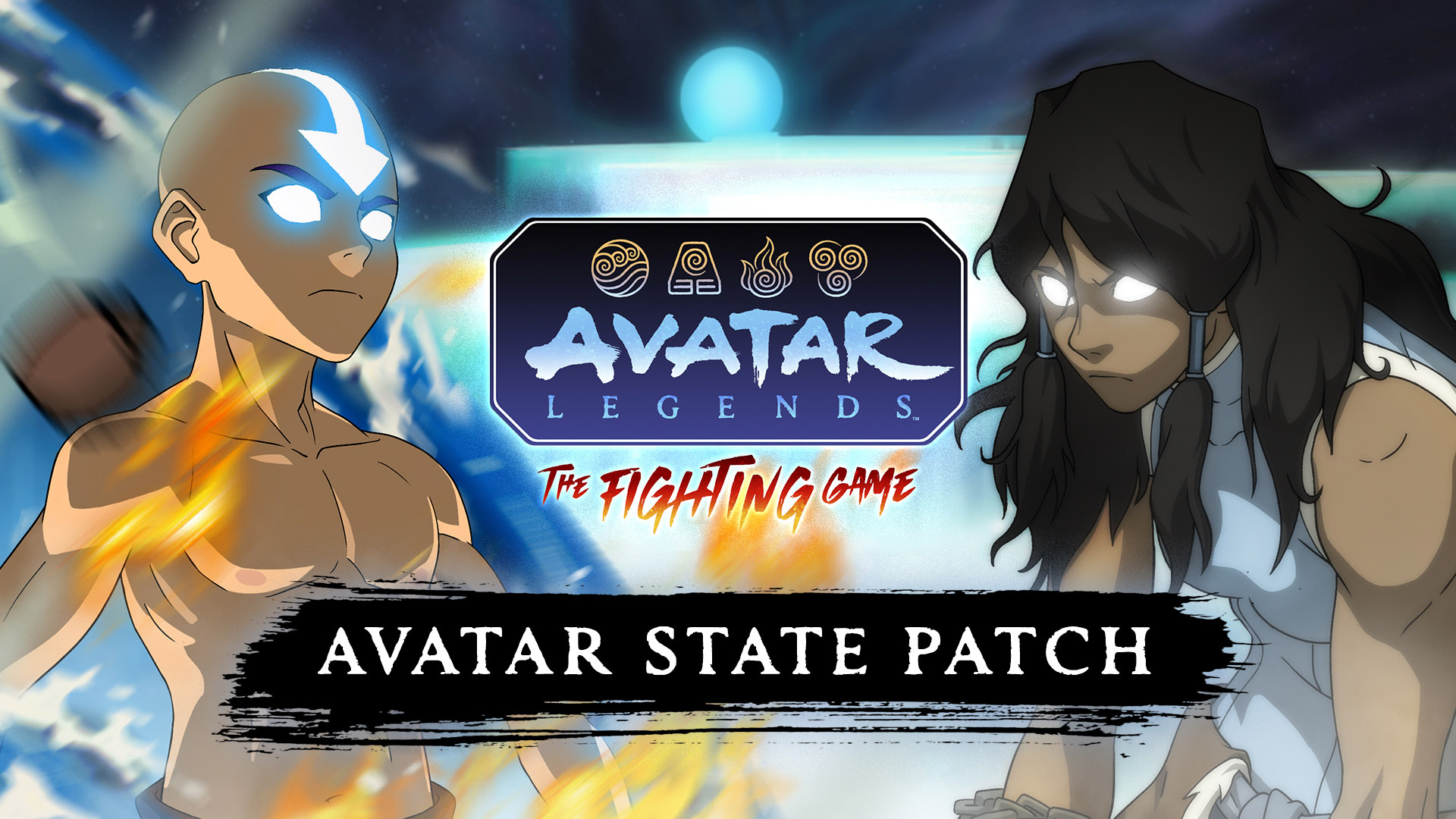
The Avatar State Patch is available today for Avatar Legends: The Fighting Game on XBOX Series X|S, and it’s the biggest update the game has seen. It brings a fresh new look for the game’s menus and in-match displays, two totally reimagined fighters, Ranked Mode 2.0, quality-of-life upgrades for story, versus, and online play, plus balance changes for every character on the roster.
Since the game launched earlier this year with 12 characters from “Avatar: The Last Airbender” and “The Legend of Korra,” fighters have been putting their bending (or boomerangs) to the test, and our team has been watching closely. This patch is the result. It’s the game we envisioned from the beginning, and now it’s ready for you to play.
What’s in the Avatar State Patch:
A new look, everywhere. Menus, character select, stage select and the in-match interface have all been redesigned.
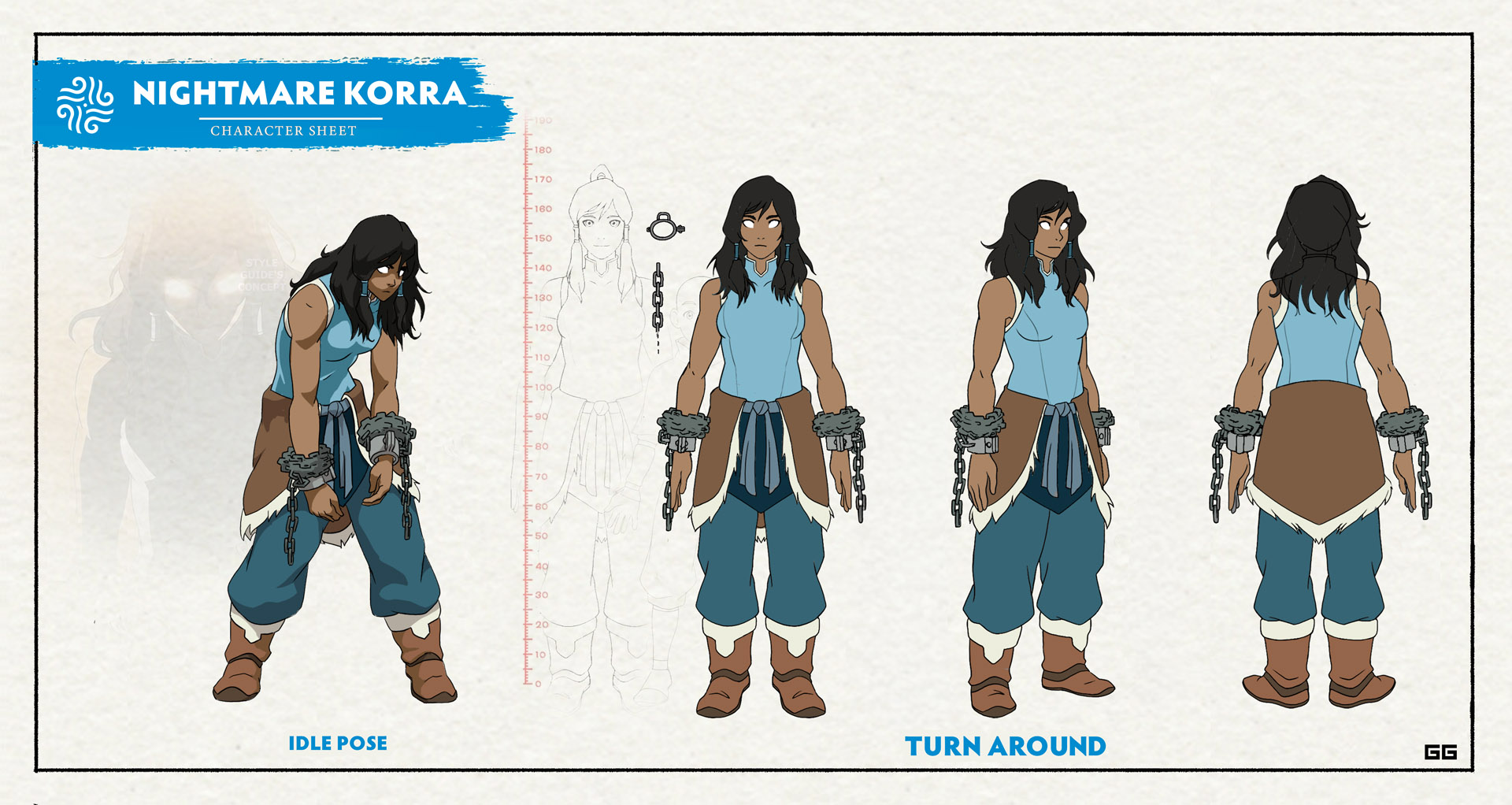
Two reimagined fighters. Avatar Aang and Nightmare Korra return with new art, new attacks and new super moves.
Every fighter rebalanced. From Aang to Zaheer, every character has been fine-tuned for fairer, more exciting matches.
More ways to play and learn. Story Mode+, Story difficulty settings, new tutorials and Combo Trials, Story stages in Versus, and more.
Reimagined Characters: Avatar Aang and Nightmare Korra
The two fighters at the heart of this patch are among the most powerful forms in the Avatar universe. Studio Art Director Giancarlo Montalbano, Art Director Santiago R. Villa, and Combat Director Young share how they brought them to life, and why they took the pair in opposite directions. “For Aang, his Avatar pose looks to elevate his presence in all ways, while for Korra it looks to diminish it. One is solemn and imposing while the other is languid and elusive.” Villa explains.
Avatar Aang
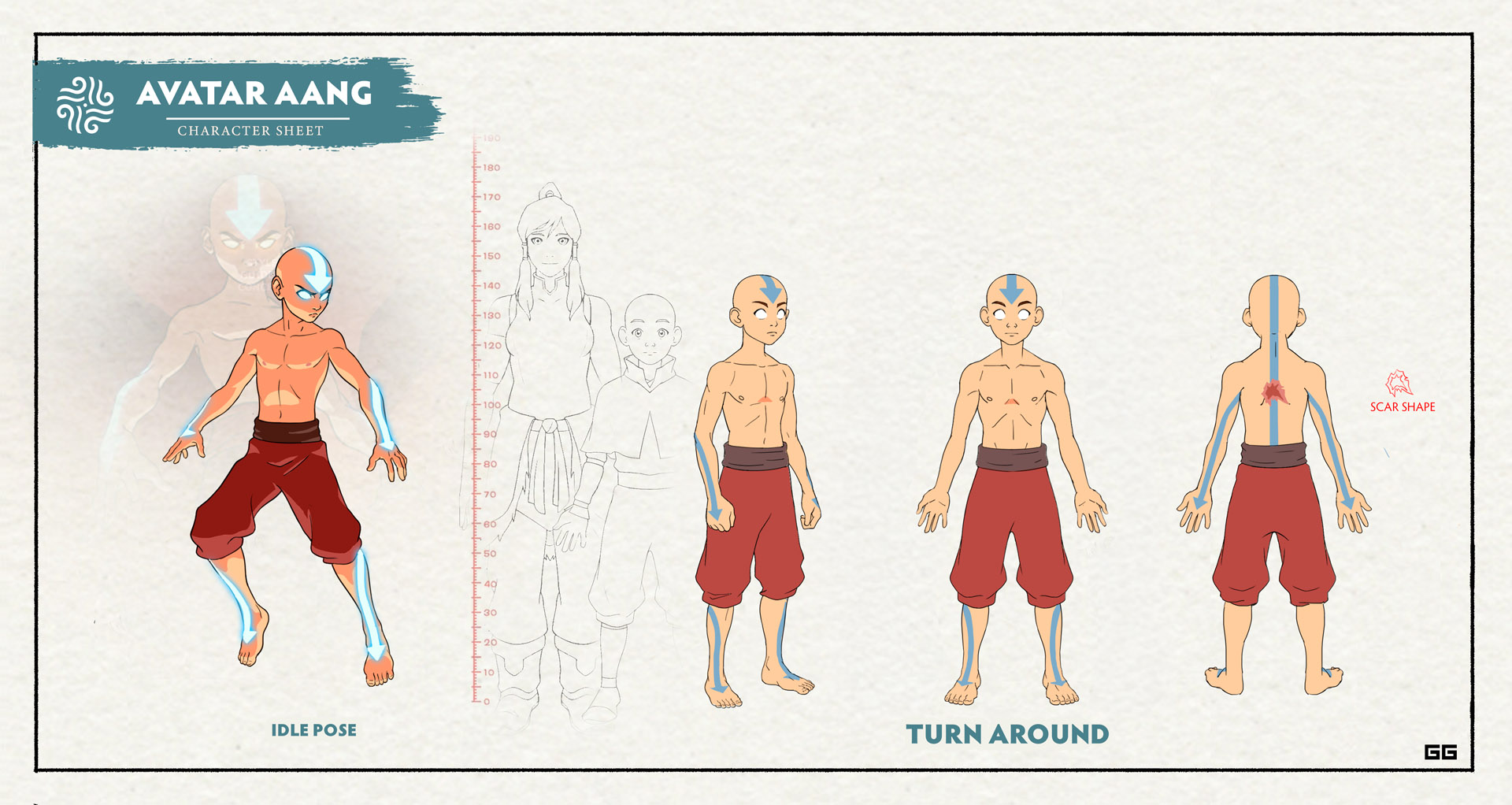
Avatar Aang’s character sheet, with his glowing Air Nomad tattoos idle pose, full turnaround and the lightning scar on his back.
In the Avatar State, Aang taps into the power of every Avatar who came before him. Young points to his final showdown with Fire Lord Ozai as the biggest touchstone, along with Avatar State moments across the series, from channeling Kyoshi on Avatar Day to facing the Sandbenders. While regular Aang is playful, Young describes this version as pure, overwhelming power, landing precise elemental attacks with the smallest movements. Villa adds that he’s the only fighter in the game lit from below, a deliberate choice to make him look mysterious and boss-like. Young’s favorite move is his signature special, Avatar’s Ascension, which lifts him into an air sphere packed with callbacks to the Ozai fight.
His new Level 4 super, his most powerful attack, brings in a special guest: Avatar Roku, straight out of the Winter Solstice two-parter. “Aang’s direct manifestations of prior Avatars ended up being something very unique to him,” says Young, “so we felt like we had to include it!”
Montalbano admits Avatar Aang was the trickier of the two, since his arm tattoos had to read correctly from every angle. Villa shares another hard call: Aang’s foot scar is missing, because with fighters switching sides, it would have been on the wrong foot half the time.
Nightmare Korra
Nightmare Korra’s character sheet. Her hunched idle pose, chains on both wrists, and menacingly glowing eyes set her apart from Korra.
Young explains that Nightmare Korra is the dark reflection that haunted Korra in “The Legend of Korra” episode Korra Alone, with her final fight against Zaheer at the end of Book 3 as another influence. “She’s a manifestation of that berserk state…alongside being a kind of spooky, ghost-like entity so we wanted to try and hit both of those angles pretty sharply. So you’ll see big contrasts between her slowly dragging her feet, then suddenly exploding into big chain swings or teleports.” Villa notes that she now wears chains on both wrists instead of one, a nod to how much weight they carry in her story.
Her visual effects are some of the wildest in the game. Montalbano highlights the mercury in her super moves and a victory pose that zooms through a fish-eye lens into her transformation into Vaatu, which he calls “very unique compared to a lot of other stuff in the game.” For Young, the standout is her Final Technique, Eternal Nightmare, a big team effort that looks just as striking when it misses as when it lands.
Young also shared a fun fact: early prototypes had her health constantly draining to represent mercury poisoning. It didn’t make for interesting play, so she simply starts with less health instead.
What’s new in battle
Battle Balance
There’s a lot to dig into, but here’s a closer look at two of the biggest shifts.
Azula’s Ambition’s Spark, her Focused Stance exclusive move, has vastly improved to allow much more variety in gameplay. It now automatically tracks much closer to your opponent’s position. Its detonation is a much greater hitbox and can also be flow cancelable.
Sokka’s sword special techniques, under certain circumstances using his Master Piandao support, can now directly cancel into a boomerang toss! Upon having at least 10 stacks of successful sword hits, Sokka permanently unlocks that ability for the rest of the match!
You can find the full patch notes on the Paramount Games site when the patch goes live.
Nightmare Korra: a new moveset to match
Nightmare Korra’s new look goes deeper than just that. Her kit has been rebuilt to match her haunting presence.
Avatar Aang: enter Roku!
Roku’s Inferno is Avatar Aang’s new Super Technique. Aang communicates with the spirit world, temporarily transforming him into Roku who engulfs the entire battlefield with a scorching flame.
Character Vote: You Pick the Next Fighter
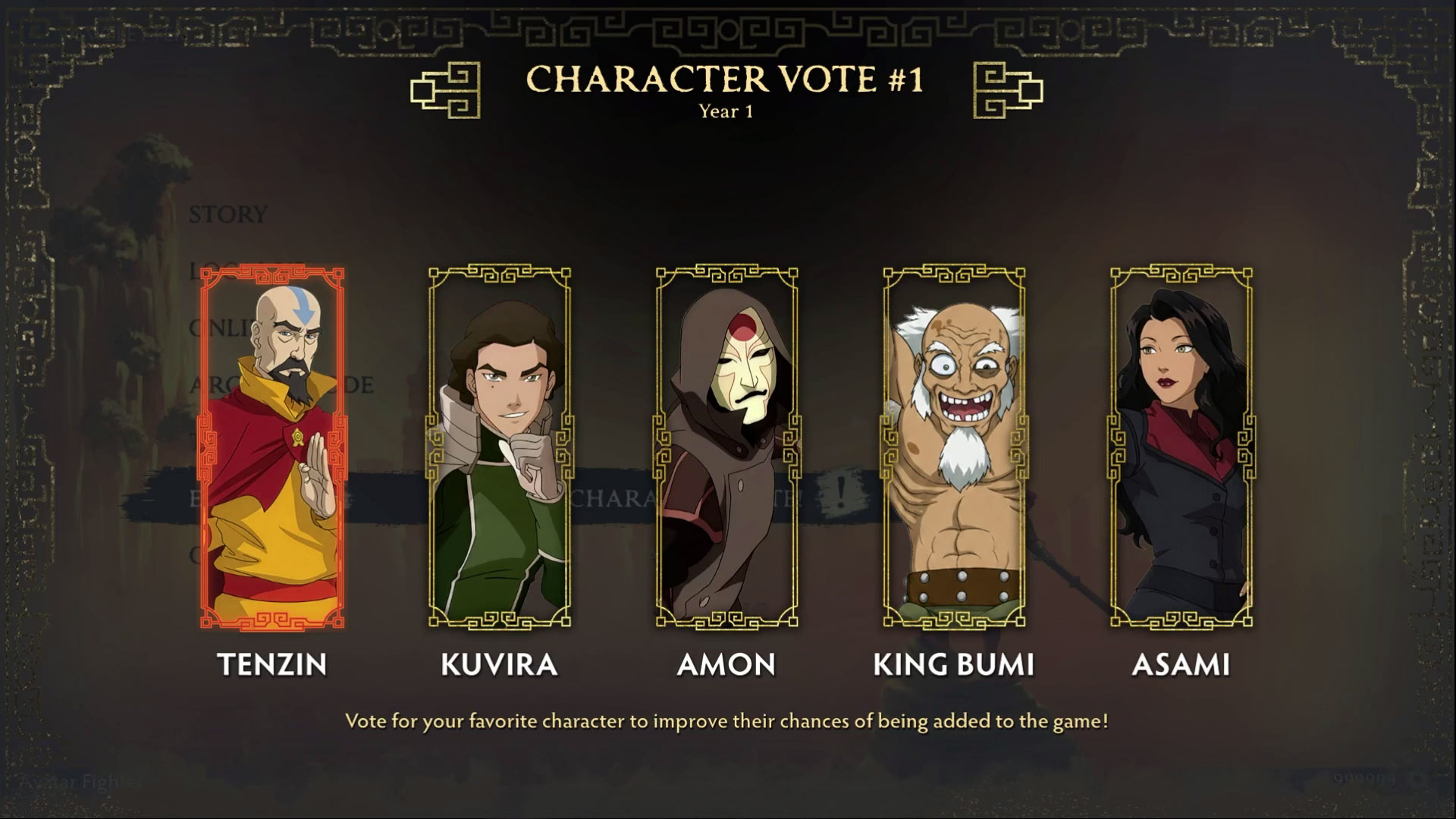
If you pre-ordered Avatar Legends: The Fighting Game or upgraded to the Deluxe Edition, you get a say in who completes the Year 1 Pass, the set of five extra characters included with the Deluxe Edition. Iroh, Ty Lee, Lin Beifong and Bolin are confirmed, and the fifth spot is up to you. Standard Edition pre-orders get one vote, Deluxe Edition comes with an extra vote for Year 1 Pass. (For example: If you have two votes, you can either submit a new voting ranking, or duplicate the first vote). Upgrading to Deluxe (even without pre-order) will also entitle you to a vote. Voting runs for one month. Just look for the voting option on the main menu. The candidates are:
Tenzin
Kuvira
Amon
King Bumi
Asami Sato
The Avatar State Patch for Avatar Legends: The Fighting Game is available now on XBOX Series X|S. The Standard Edition is just $29.99, and the Deluxe Edition, which includes the Year 1 Pass, is $49.99. Thanks for fighting alongside us. The Avatar State Awaits.
Avatar Legends: The Fighting Game – Digital Deluxe Edition
PM-Studios, Inc.
☆☆☆☆☆ 68
★★★★★
$49.99
Water. Earth. Fire. Air.
Master the elements and clash as legendary characters in Avatar Legends: The Fighting Game.
Featuring hand-drawn 2D animation faithful to the series’ roots, Avatar Legends: The Fighting Game lets you experience the world of Avatar like never before. Choose from 12 playable characters and go head-to-head across a variety of modes, including Offline & Online Versus, Story, Arcade, Training, Spectator, and an Art Gallery.
Deluxe Edition:
The Deluxe Edition builds on the Standard Edition with premium content inspired by the game’s iconic art, music, and fighters.
The Digital Deluxe Edition includes the full game, plus:
● Year 1 Pass
Adds five iconic characters over the season: Iroh, Ty Lee, Lin Beifong, Bolin, and the winner of the Year 1 Character Vote.
● Original Digital Soundtrack
Explore the music of Avatar Legends: The Fighting Game with the soundtrack.
● Digital Artbook
A curated collection showcasing the hand-drawn style of Avatar Legends: The Fighting Game through character art, stages, and more.
Avatar Legends: The Fighting Game
PM-Studios, Inc.
☆☆☆☆☆ 63
★★★★★
$29.99
Water. Earth. Fire. Air.
Master the elements and clash as legendary characters in Avatar Legends: The Fighting Game.
Featuring hand-drawn 2D animation faithful to the series’ roots, Avatar Legends: The Fighting Game lets you experience the world of Avatar like never before. Choose from 12 playable characters and go head-to-head across a variety of modes, including Offline & Online Versus, Story, Arcade, Training, Spectator, and an Art Gallery.
Standard Edition:
● Hand-Drawn 2D Animation
Hand-drawn 2D animation faithfully brings characters and their unique fighting styles from Avatar: The Last Airbender, The Legend of Korra, and the expanded universe to life.
● A Wealth of Game Modes
Includes Story Mode, Arcade Mode, Offline & Online Play, Training Mode, Spectator Mode, an Art Gallery featuring never-before-seen concept art.
● Story and Arcade Mode
Experience an all-new original story outlined by show creators Michael Dante DiMartino and Tim Hedrick. Shape the fate of time and space in the main story mode, then dive into arcade runs featuring storylines for every playable character.
● Robust Training Mode
A Training Mode equips players of all skill levels with advanced tools, including hitboxes, frame data, save states, and more.
● Art Gallery
Explore never-before-seen original artwork from the show, honoring the history, characters, and world of Avatar.
● Easy to Pick Up, Impossible to Put Down
Anyone can start bending with simple, intuitive controls, perfect for quick matches with friends and family. Beneath the surface lies a deep fighting system rewarding technical prowess and creativity.
● Seamless Online Play
Battle players worldwide with rollback netcode and crossplay across multiple platforms. Ranked and Casual matches, lobbies, spectator mode, replays, and more ensure a competitive experience no matter where you are or who you’re fighting.
Gameplay Features
• Master Flow and Energy Points
Control the fight by using Flow to dash, evade, and outmaneuver opponents with high-speed mobility, then build Energy Points through skilled play to unleash enhanced special moves and powerful cinematic Super Arts that can turn the tide of battle.
• Support Characters
Choose from three support characters to accompany your fighter, each providing unique abilities that enhance different strengths and open up new strategic possibilities. Experiment with combinations and discover the partnership that best fits your style.












 Note: MacRumors is an affiliate partner with some of these vendors. When you click a link and make a purchase, we may receive a small payment, which helps us keep the site running.