Relay, an AI-powered workflow automation tool built as an alternative to Zapier, shut down entirely in August. The product let users automate email and task workflows using AI agents, but as OpenAI, Google, and other larger platforms built similar automation directly into their own tools, five-year-old Relay struggled to hold on to a reason to exist as a stand-alone product.
More recently, chatbot platform Character.ai filed for bankruptcy just five years after launching.
Aside from Character.ai and Relay, plenty of AI bets never even survive inside the companies that build them. According to S&P Global Market Intelligence, about 42% of AI initiatives are ultimately abandoned by their corporate parents. The reasons vary: insufficient funding, technical challenges, competition, difficulty scaling, or just weak user demand.
The result is a growing AI graveyard. Below is a look at some of the most notable AI products, startups, launches, and bets that have shut down, pivoted, or significantly missed expectations. Think of it less as a scorecard of flops than as a record of what these attempts can (hopefully) teach the rest of the industry.
Even the biggest players aren’t immune. OpenAI, one of the most valuable private companies in the world, has had its own share of casualties and missteps. One of the more recent examples was its attempt to turn ChatGPT into a broader “super app.” On July 9, OpenAI updated the app to combine several experiences, including separate “Chat,” “Codex,” and “Work” modes, while renaming the traditional, familiar version “ChatGPT Classic.”
The redesign quickly drew criticism from users who found the new interface confusing and cluttered, and OpenAI rolled back the change soon after, bringing the familiar ChatGPT interface back.
That wasn’t OpenAI’s only attempt to pull everything under one roof. The company has also shut down several stand-alone apps and folded their features directly into ChatGPT — a strategy that’s worked out better than the redesign did. ChatGPT Atlas, a stand-alone AI-powered web browser, lasted less than a year before being discontinued on August 9, with its most useful features absorbed into ChatGPT.
The company did the same thing with Operator, an AI agent that could browse the web and complete tasks on a user’s behalf, and OpenAI has increasingly built image generation directly into ChatGPT, shrinking the role of DALL-E as its own separate destination for creating images.
We also can’t forget its video-sharing platform, Sora, which struggled with high operating costs and user-retention challenges and shut down in March 2026.
Apple’s Siri AI
Image Credits:Artur Widak/NurPhoto / Getty Images
When Apple unveiled Apple Intelligence in 2024, an improved Siri was one of the highlighted features. The pitch promised a Siri that could understand context, know what was happening across apps, and get tasks done effectively.
However, Apple repeatedly pushed back the release of the new Siri, citing various reasons like engineering issues and bugs. This delay eventually contributed to a $250 million settlement over claims regarding how Apple marketed the AI capabilities of the iPhone 16.
Siri AI finally appeared in the iOS 27 beta this past July, with the new AI-powered version rolling out to English-language users first this month; support for other languages is expected to follow.
Microsoft’s Recall
Announced at its 2024 Build developer conference, Microsoft’s Recall feature was pitched as an AI-powered “photographic memory” for Windows PCs, periodically taking screenshots of what a user was doing so they could later search back through their own digital history.
Predictably, the announcement triggered an immediate backlash over privacy and security. Critics argued that Recall could create a searchable archive of highly sensitive information, including passwords, private messages, financial details, and other activity. Microsoft delayed the feature for nearly a year, giving the company time to rethink its security and privacy protections.
Even after a redesign, the controversy hasn’t gone away. A cybersecurity researcher recently built a tool that could extract and display data that Recall had captured, reviving questions about whether Microsoft has actually fixed the underlying problem.
Notion Mail
Image Credits:Notion
Notion Mail launched in April 2025 as an AI-focused email product designed to help users organize and automate their inboxes. However, the company noticed its users were using separate AI agents to handle their email inboxes instead. As a result, Notion Mail is scheduled to shut down on September 22.
Humane AI Pin
Image Credits:Brian Heater
The Humane AI Pin is probably one of the most well-known failures in AI hardware. Designed to provide AI features through a wearable device rather than a traditional smartphone, Humane raised $230 million from investors and garnered significant attention.
But the product struggled mightily with performance, and the situation worsened when Humane warned customers to stop using its charging case because of a potential battery fire risk. Humane then shut down its AI Pin business in February 2025, with most of the company’s assets acquired by HP for $116 million.
Rabbit R1
Image Credits:Rabbit
The Rabbit R1 was another heavily hyped AI device. Unveiled at CES in January 2024, the AI companion was designed to perform tasks on behalf of its owner. Rabbit said it had sold 100,000 units shortly after launch.
However, strong initial sales didn’t mean it was a strong product. Early reviews described the device as unfinished, with unreliable performance and a limited number of useful integrations.
The company hasn’t given up, though. It has continued updating the R1, positioning it as a computer controller capable of performing agentic tasks. It also recently announced a new hardware project, dubbed “Project Cyberdeck,” aimed at creating a portable device built for vibe-coding.
Huxe
Image Credits:Huxe
Huxe was an AI audio app, built by former developers of Google’s NotebookLM, that turned written information into conversational, podcast-style audio.
The company shut down in May 2026, partly as larger platforms began offering similar experiences to large existing audiences. For instance, Spotify has been expanding its own AI-powered audio tools.
Yupp
Image Credits:Yupp
Yupp was an interesting AI product: a free playground that allowed users to compare responses from hundreds of AI models side by side. Users could also vote on responses and earn cryptocurrency through the platform.
At its peak, the platform let users test more than 800 models, including from companies such as OpenAI, Google, and Anthropic. But according to its founders, Yupp never achieved strong enough product-market fit to survive. The platform shut down in March 2026.
Figgs AI
Figgs AI operated from 2023 to 2024, letting users create and interact with customizable AI characters for role-play and storytelling. The platform reportedly drew more than 1 million users, but its developers said keeping the service free became too expensive to sustain, and they shut it down.
When you purchase through links in our articles, we may earn a small commission. This doesn’t affect our editorial independence.
Welcome to Kernel Panic,a weekly newsletter by Lily Hay Newman and Matt Burgess from inside the new world of privacy and digital security. To receive this newsletter in your inbox each week, sign up here.
As security teams and web admins scrambled this week to patch newly public PHP bugs, criminal hackers quickly attempted to exploit the flaws in the wild. Millions of exploitation attempts hit within hours of the vulnerabilities being published, according to analysis from Cloudflare—unsurprising given broad access to AI tools that can make it easier for attackers to quickly exploit flaws.
So far, the nightmare scenario of mass victim takeovers and breaches hasn’t come to pass. The PHP Foundation says it hasn’t seen any successful exploitation of the bugs, collectively dubbed PHP2Shell, and many publicly circulating potential exploits appear to beineffective. However, perhaps the most interesting role of AI amid the chaos this week is how advanced models helped researchers uncover practical exploitations for the vulnerabilities, which were known about, at least in part, for years. In other words, AI helped turn historic vulnerability into a current crisis.
So are we all about to be walloped by a wave of critical vulnerabilities that have been kicking around for decades?
Researchers at security company Calif were the first to identify the PHP2Shell vulnerabilities and create exploits in early August—partially using frontier AI tools as part of OpenAI’s Patch the Planet program, but also using expert human knowledge of PHP, its dynamics, and its weaknesses. Some of the underlying issues were identified in 2024 but were deemed too complex to exploit at the time. Following Calif’s discovery, researchers at OpenAI and the Google-owned security firm Wiz independently discovered PHP2Shell flaws using AI tools.
“The vulnerability had been known to the PHP team for years, but because it could not be leveraged by an attacker—at least, not a human one—it was not addressed,” says Sagi Tzadik, a security researcher at Wiz.
No software is perfect. There are inevitably flaws in even the most critical, foundational digital tools, but the expanding capabilities of AI models have made it faster to analyze and potentially exploit vulnerabilities. This puts even more pressure on under-resourced IT teams, developers, and admins to keep up. Microsoft’s security updates included a record 1,453 security vulnerabilities this month alone. Meanwhile, Bank of America recently hired 1,000 consultants to fix flaws discovered by Anthropic’s Mythos. Security researchers emphasize, though, that AI is ultimately not doing anything new, but rather magnifying existing dynamics of vulnerability discovery and coordinated disclosure.
For startups that are planning to scale up their product development, they struggle to decide whether to hire an in-house team or outsource CAD design services. Both have their pros and cons. The deciding factor depends on the priority and the conditions the startups are in. The decision outcome affects costs, speed, and long-term growth. This guide will help startups make a decision. Platforms like Cad Crowd help startups connect with vetted CAD designers, making their outsourcing a lot simpler and more efficient.
#
Deciding Factors
Outsourced CAD Design Services
In-House Team
1
Initial capital constraints
Low upfront cost, pay is per project
High salaries, benefits, equipment costs, overhead costs
2
Speed to market
Immediate access to large pool of talent
Slow hiring + onboarding process
3
Project scope variability
Can easily scale up/down depending on demand
Fixed payroll regardless of workload
4
Technical specialization
Access to global specialists
Limited to local/internal skill set
5
IP sensitivity
NDA + contract-based protection
Full internal control
6
Roadmap clarity
Best for uncertainty
Suitable for stable long-term
7
Culture building
Limited cultural integration
Strong internal culture development
8
Quality control
Requires structured review process
Direct supervision and oversight
9
Communication speed
Scheduled communication, possible difference in time zones
Instant collaboration possible
10
Tools &software costs
No licensing or hardware fees
High upfront software + hardware investment
11
Training needs
No training required
Continuous training required
12
Management overhead
Low management effort
High managerial workload
13
Talent access
Global talent pool
Geographically limited hiring
14
Cost predictability
Variable project-based cost
Fixed predictable salaries
15
Industry expertise
Immediate access to niche experts
Takes years to build internally
16
Scalability
Highly scalable workforce
Slow scaling via hiring
17
Prototyping speed
Parallel freelancers increase speed
Limited by internal capacity
18
Design consistency
Requires strong documentation
Naturally consistent internally
19
Compliance knowledge
Access to specialists
Must be trained internally
20
Risk of bad hire
Low commitment, easy exit
High cost of hiring mistakes
21
Collaboration needs
Structured coordination required
Natural team collaboration
22
Iteration frequency
May incur additional cost per revision
Internal revisions easier
23
Documentation
Must be explicitly defined
Internal standards applied
24
Emergency workload
Requires prior arrangement
Immediate availability
25
Manufacturing coordination
Must be explicitly managed
Direct ongoing coordination
26
Cost geography advantage
Strong cost savings globally
Higher localized salaries
27
Investor perception
Lean, flexible structure
Strong in-house capability
28
Legal complexity
Simple contractor agreements
HR + employment law overhead
29
Knowledge retention
Needs documentation discipline
Built into team memory
30
Peak workload
Easily expandable capacity
Limited by team size
31
Software standardization
Must be specified per project
Standardized internally
32
Client deliverables
Requires clear specs
Easier internal alignment
33
Design reviews
Requires scheduling
Natural integration
34
Prototype expertise
Access to specialists
May require training
35
Budget flexibility
High flexibility
Fixed financial commitments
36
Handoff process
Must be documented clearly
Internal continuity
37
Team morale
Reduces burnout risk
Risk of overload
38
Competitive risk
Higher exposure risk
More controlled environment
39
Hiring pipeline
Trial-to-hire opportunities
Direct hiring only
40
Hybrid optimization
Easily integrated into hybrid model
Forms core of hybrid system
1. Initial capital constraints
Most startups have limited valuable resources. Pursuing in-house or hiring a full-time CAD designer isn’t just about affording their salary. Companies must also account for and consider employee benefits, devices, software licenses and subscriptions, training, and other overhead costs. These costs, when added up, would be too much to handle for a company that has just started growing. Outsourcing is a flexible option. In here, there’s no need to pay for other overhead costs. Startups would just focus on paying for the service they need. This becomes more manageable for startups. By hiring a freelancer, startups can take on more projects without worrying about operational costs. It allows founders and owners to have access to more professional design projects without the long-term commitment.
RELATED: What Files and Specifications Do You Need for a Successful Freelance CAD Project?
2. Speed to market requirements
For startups, speed is important, especially when planning a product launch. The faster the product can reach the market, the better the chances are of gaining customers. This is one of the goals of startups: to secure market share. If the startup company decided to opt for in-house, it would take a long time to build and establish. The process would be long and tedious and may not be practical. A proactive approach is to let outsourcing bypass the delays. Outsourcing an experienced freelance CAD drafting designer can easily start to work without having to do the training. They can move without much supervision and guidance. This way, startups can focus more on marketing and planning instead of dwelling on the technical process.
3. Project scope variability
Startups don’t usually have a consistent lineup of projects. There are months when little to no workload can occur. Despite minimal workloads, full-time employees would still receive a consistent salary. This can be challenging for a startup company, especially if the downtime is long. It could reach a point where its resources can’t cover operational costs. In outsourcing, it resolves the changing demands of work. It offers flexibility. When there’s an increase in workload, an additional freelancer can be hired. The same way, after the project is done and there’s no need for a designer, the partnership ends. There’s no commitment to pay for the time when there’s no work or service.
4. Technical specialization needs
CAD offers a wide range of specialties. It includes diverse specialized disciplines, each requiring a certain level of expertise, skills, industrial experience, and software knowledge. One specialist of a certain discipline, say mechanical, wouldn’t perform well in architectural design services. This is the limitation of in-house team members. Access to other specializations is limited. On the other hand, outsourcing challenges this limitation by providing a diverse pool of talent. Startups wouldn’t have to settle for their own specialists, and instead, they can work with more experienced designers. This allows them to have confidence in taking more projects.
5. Intellectual property sensitivity
Usually, startup companies work on developing proprietary products. Because of this, protecting intellectual property is one of the company’s priorities. They can’t afford to risk sensitive information they tried so hard to build. Startups don’t have the privilege to lose their design data to external parties or competitors. Building an in-house team member would be the safer approach since the company can monitor them closely. It is simpler to control and manage. That said, outsourcing does not automatically mean compromising the safety and security of IP. There are still precautionary measures that can be taken to avoid unauthorized access. An NDA can be done, or secure file-sharing platforms can be used. In 2026, there are a lot of software features that add an additional layer of security for sensitive files.
When a startup company already has a clear long-term roadmap and a multi-year development plan, this calls for investing in building an in-house team. Having a clear long-term goal means deciding to commit to a clear vision for the next several years. With a steady pipeline, they can invest in a product design team that’s fitted for the ongoing projects. Meanwhile, there are some startups that aren’t certain yet about what path to take. They don’t necessarily waste time, but their expertise is more diverse and is in the exploration stage. When uncertain, the flexible approach is to go for a freelance designer. This eliminates the risks of commitments and ensures that the company is only paying for the services offered.
7. Company culture development
One important decision factor is company culture. Employees set the culture. They contribute to team dynamics daily. It helps the organization grow and have personality. Every team member contributes to and influences communication styles, decision-making, and work habits. Outsourced employees don’t work closely with the team. They work on their terms, as long as they deliver the assigned task. The interactions are limited and sometimes scheduled. This is mostly because of location, time zones, and language barriers. Even when they have strong communication and collaboration skills, it is still not the same as working with them on a day-to-day basis.
8. Quality control mechanisms
It is always important to integrate quality control into the project process. Managing quality control for in-house and outsourcing differs. An in-house CAD design team allows direct monitoring and supervision. Seniors or managers can regularly review and check the work of the designers. Here, feedback is immediately provided and resolved. For outsourcing, it requires a more structured approach when it comes to managing quality. The hired freelancers have to be experienced in working independently. The startups should be aware of this and establish clear expectations when it comes to milestones and progress. Check-ins can be scheduled, and approvals can be scheduled to ensure they’re aligned with the timeline.
9. Communication efficiency
One driver of success for CAD projects is smooth communication. Design decisions are made by multiple industries, which can make it hard to be connected. In-house teams are at an advantage when it comes to speedy and immediate discussions. Conversations can be easy and done in real-time. This solves issues early, whenever there are. Communication with outsourced designers is structured. Most of the time, the communication is more about email exchanges or scheduled meetings. It could also be in the form of feedback and documentation. The lead time is much longer and requires careful planning and coordination. The good thing is that everything is documented, so whenever an issue arises, there’s a reference to check on.
CAD designs run on quite expensive work equipment and software licenses. For some specializations, it is required for the workstations and hardware to be powerful enough to run the application. Software licenses are also costly since they are to be paid per user and renewed annually. These fees may be too much for a project that would last for just weeks or months. In outsourcing, there’s no need to worry about paying for expensive devices and software. This is because the freelance CAD modeling designers already have their own. They provide their own tools to produce the deliverables. Hiring them means just paying for the services. This significantly helps startups cut costs.
11. Training and skill development
For the in-house team, training is regularly practiced. Software continues to evolve and update, and so a training roll-out is to be conducted to introduce the new features. The fees do not end with just paying subscriptions. It extends to training to keep skills aligned with the trends. It costs not just money but time. Freelancers do the training themselves. They manage their own skill set and development. Most freelancers undergo certification training to stay competitive in the market. It is important for them to upskill to be more visible. Outsourcing lets startups have access to developed and specialized talent without internal training programs.
12. Management bandwidth availability
When the startup companies begin to grow, it will be harder for the higher-ups to manage employees. It becomes a struggle to handle different responsibilities simultaneously, being involved in marketing, sales, accounting, operations, and management. Most of the time, it would be a huge stretch for them to still handle onboarding and recruitment tasks. Outsourcing can help in reducing management overheads. It limits the need for supervision since they work independently. This reduces the burden for the management. This way, the higher management can just focus on their other responsibilities while designers work on the technical tasks.
13. Geographic talent pool access
One struggle in CAD work is finding the right talent to do it. When a startup opts for an in-house 3D designer, the talent pool is limited geographically. The right person for the job may not be residing in the same city but rather in another country. Local hiring limits the possibility of finding the best candidate for the job. Outsourcing eliminates the geographic limitations. It gives access to a wide range of talents globally. This allows startups to freely choose the most suitable talent for the task. This way, they wouldn’t have to settle for less. They can work with a designer who matches the project requirements.
One driver of decision-making is cost. Startups have limited resources, which means all costs have to be anticipated, planned, and justified. Considering the overhead costs an in-house team member will bring can be hard to justify, especially if the project pipeline is not stable. It would be challenging for the startups to compensate for the downtime. Working with a 3D rendering freelancer allows startups to breathe from the expensive overheads and only think of the service payments. This way, they can easily predict the needed costs for a project. There are still other costs that come with a freelance designer, but they are limited and still depend on the terms and agreements.
15. Industry-specific expertise need
Not all projects and industries have the same requirements. Each industry has its unique standards and compliance requirements. For instance, mechanical industries have manufacturing requirements, and medical devices would need regulatory compliance knowledge. This limits startups from working on other industries and settling with what the in-house member practices. In outsourcing, startups can enter other industries. They can explore and develop an expertise that’s outside of their own. This is a more flexible approach for those who want a quick entry to a specific niche or industry. Startups can work directly with specialists and learn valuable insights and workflows to help improve project outcomes.
16. Scalability during growth phases
When the startup begins to grow and expand, there are a great many demanding requirements. The hiring process may not be able to catch up with the rapid growth. This could lead to bottlenecks and delays in the project timeline. Outsourcing offers a more scalable resolution to this challenge. Instead of waiting to fill the position, training, and such, the hired product modeling freelancer can start immediately and do the work. This flexibility allows the startups to be more efficient in their project workflows and eliminates slow growth. It helps the startups to match the demand without compromising quality.
17. Prototyping speed requirements
For most startup companies, speed prototyping is important. The quick turnarounds allow them to gain feedback faster and make design changes to help improve the product. Faster iterations mean being close to a successful launch. This is why outsourcing can be a good option for them. It offers accelerated prototyping. Instead of having to wait for a designer to complete tasks, several prototype design teams can work simultaneously. This removes waiting and development time. It improves the overall project efficiency and productivity.
As startup companies start to grow, it is important to maintain consistency in their products and services. Brand identity matters in order for customers to recognize their offerings. To help strengthen and maintain the brand identity, consistency in improving product recognition and image is important. The in-house team has a natural, deep understanding of the company’s products and services. This allows them to easily visualize and apply what the brand’s identity is and apply it to the design. The familiarity helps them maintain consistency.
Outsourcing, on the other hand, doesn’t have the same level of understanding. They have to be informed of what’s supposed to be the design intent. References can be provided to help them visualize and internalize what should be incorporated into the design to align it with the company’s product line.
19. Regulatory compliance knowledge
When the startups work in regulated industries, the work involves more than just 3D modeling design services and creating a functional product. For industries like aerospace, medical, automotive, and other industrial sectors, compliance with strict documentation and regulatory standards is required. Building such a level of expertise can be quite taxing for internal teams, especially for startups. It would generally take years of practice before it is fully developed. Having access to specialists with that level of technical expertise is possible by outsourcing. Platforms like Cad Crowd can help in connecting with vetted specialists who have knowledge and experience in a particular sector. This helps in significantly saving time and money while reducing the risks of rejected submissions and delays.
20. Failure risk tolerance
New hires, even screened and carefully selected, may sometimes not work out. It could be because of a mismatch with the current project requirements. Terminating and replacing the member may involve legal complexities and costs. This is why it is still a huge risk in deciding who to hire. The risk can be reduced with outsourcing. When the outsourcing fails to deliver expected deliverables, there are platforms that can hold the payment, and the contract can end. This helps in protecting the startups from failure without complexities. There’s no commitment, so the startups can decide when they don’t want to work with the designer anymore.
21. Collaborative design process needs
In CAD projects, it is often normal to have collaborative work among multiple disciplines throughout the entire design process. Collaboration is smooth and easy for the in-house 3D design team since it is one of their daily and regular requirements. They’re used to discussing with engineers and project stakeholders to help with decision-making. This helps a lot in reducing conflicts and misunderstandings. Outsourcing can still support collaboration, but it is structured. They can work with other disciplines and manage clear communication through agreed channels. Meetings are scheduled to discuss and do regular check-ins. This helps in keeping the team aligned.
Not all design works can pass on one try. The initial design receives feedback from clients and thus will undergo revisions. A startup’s product development may involve multiple iterations before it is accepted and finalized. It is important to understand how revisions are handled and managed to keep the workflow smooth. The in-house design team is monitored and supervised by managers. Because of this, they work with revisions on a regular basis. They’re also already familiar with the feedback format, so there’s a lower risk of misunderstanding and conflicts. Outsourcing can handle revisions but should be governed by the agreed contract terms. There’s only a fixed number of revisions set, and what revisions can be done. It’s important to set expectations and communicate early to prevent issues in outputs.
23. Documentation and file management
It is important to manage and keep an organized documentation. Version control matters to keep tracking simpler and easier. Structured file management can help in future modifications and renovations. An in-house 3D CAD design team can naturally follow the company’s internal guidelines. They know how files should be stored and the required naming conventions to make it easier to track. There would be less risk of misplacement of files. Outsourcing may require extensive documentation requirements just to make sure the files are handled correctly and that access is limited to authorized individuals only.
24. Emergency response capability
There are projects that require emergency response capability. This means that whenever there’s an issue, it should be responded to and resolved as quickly as possible. In these instances, it is important that the designer can be reached out to easily or that the company has direct contact with them to apply necessary changes. The speed is critical since it may have an impact on the project timeline and costs. An in-house team can provide immediate action and response because they’re dedicated team members. They’re already familiar with the products and services of the company. They’re valuable in terms of the level of accessibility they can offer. Meanwhile, outsourcing can still provide immediate support, but it is not guaranteed. They may have other projects, so there are times when they can’t accept immediate requests. For them, It’s best to discuss availability first.
25. Manufacturing partnership coordination
In CAD work, it’s not limited to modeling and 3D CAD design services. It also includes relevant requirements as per industry standards. For instance, there’s a need for manufacturing partnership coordination. This is about ensuring a proper and smooth transition when working with multiple industries. It ensures that tolerances, material specifications, and design methods are considered and accounted for. In-house CAD designers have already developed working relationships with manufacturers. They are already in talks over time, developing a deeper understanding and communication. This familiarity is one valuable pro in having in-house. In outsourcing, these relationships do not exist at first but can be developed. This can be done by establishing clear channels between manufacturers and designers.
Salary costs vary depending on the location. There are cities that may demand higher salaries due to living expenses. It would be hard for a startup to match its budget to an employee who expects higher compensation, especially if the project is still in the early stages. Outsourcing is a more cost-effective option since it gives access to a wider range of talents. It allows startups to connect with skilled new product design freelancers, developing quality deliverables at a more affordable rate. Its benefit is not just about being low-cost but also about having the opportunity to find a perfect candidate for the task.
27. Investor perception considerations
When investors review a company, they look at and analyze how it runs its teams. It reveals the company’s strategies, priorities and capacities. This is one of the decision factors in choosing between in-house and outsourcing services. Having a strong in-house team can reflect the company’s commitment and long-term vision. The investors may see it as the company’s dedication to executing a long-term roadmap. They may also value capital efficiency. This means that practical choices are encouraged to reflect how a company manages its capital and expenditures. It all depends on how the company can reflect its priorities and management skills, which can make an investor commit.
28. Legal employment complexity
When hiring a designer, it’s more than just finding a competent CAD designer. Startups would have to dig in and navigate through employment laws, tax requirements, mandated benefits, employment contracts, and any other obligations they have to comply with. It can vary depending on the location, so it is something that takes time to prepare. Freelancing is more of a friendly structure. It just requires a proper and clear contract and generally a few legal administrations. It does not require HR expertise, and so it would be simpler to handle. It reduces the burden for the startups and minimizes administrative work.
29. Knowledge retention concerns
One of the most overlooked decision factors is knowledge retention. Over time, designers accumulate lessons learned from all the projects they have encountered. All the information about it and how it has developed. These experiences and knowledge are important and valuable as the company grows. An in-house member can naturally retain that knowledge. However, the catch is that this member can still leave the company. Once the member leaves, the valuable knowledge can still leave unless properly retained through documents. Freelancers are known for being temporary members, so documenting everything is natural. This way, histories, versions, feedback, and all valuable information are documented in an accessible manner.
Not all startups have a steady pipeline of projects. A startup may experience downtime and sometimes peak workload. During these times, a startup company may struggle to catch up with the high demands. It could lead to missed deadlines and employee burnout. An in-house product rendering and design team can lessen the burden but may not be practical. This is because the peak period may be temporary. In downtime, the costs remain even if there’s less workload. Outsourcing to a freelancer can resolve this struggle as it is flexible. A startup company can scale up and down depending on the workload. It reduces the pressure on the company without compromising quality.
How Cad Crowd can help
Deciding between building an in-house team member and outsourcing really depends on the startup’s circumstances, priorities, and goals. There’s no universal right answer on what’s best. The factors are just a guide in narrowing down the decision. Most startups follow a hybrid approach in their projects. If you’re decided and ready to outsource, Cad Crowd offers wide access to experienced CAD designers to help you complete deliverables more efficiently. Contact us for a free quote.
MacKenzie Brown is the founder and CEO of Cad Crowd. With over 18 years of experience in launching and scaling platforms specializing in CAD services, product design, manufacturing, hardware, and software development, MacKenzie is a recognized authority in the engineering industry. Under his leadership, Cad Crowd serves esteemed clients like NASA, JPL, the U.S. Navy, and Fortune 500 companies, empowering innovators with access to high-quality design and engineering talent.
Ads showing up on a Samsung phone usually come from three different places: Samsung’s own marketing tools, a rogue app you installed at some point, or your browser. You can turn off Samsung ads by disabling Marketing & Ads in your Samsung account settings, cleaning up notification permissions for individual apps, and blocking pop-ups in Samsung Internet or Chrome. Each source needs its own fix, which is why the same ad sometimes keeps reappearing even after you think you’ve shut it off.
Every Samsung phone, whether it’s an older model or a newer Galaxy S24 or Galaxy Z Fold, ships with built-in promotional features baked into One UI. Samsung uses these to advertise its own apps, services, and Galaxy Store content. On top of that, third-party apps installed from the Google Play Store can add their own pop-ups, banners, and lock screen ads if you granted them broad permissions without noticing.
Getting a Samsung Galaxy device fully ad-free takes a bit of settings work across a few different menus. None of it requires rooting the phone or installing anything sketchy. Once you know where each ad type comes from, shutting it down takes a few minutes per section.
How Do You Stop Samsung Promotions and Notification Ads?
Samsung’s own promotional messages come from three sources: marketing settings tied to your Samsung account, the Galaxy Store app, and Samsung Push Service notifications. Turning off each one separately clears out most of the “official” ads you see on a Samsung phone, including shop deals, feature suggestions, and Samsung Global Goals prompts.
Turn Off Marketing Notifications in Samsung Apps
Go to Settings > Accounts and Backup > Manage Accounts > Samsung Account > Marketing & Ads. Disable Personalized Ads, Marketing Notifications, and Product Recommendations. This single menu controls a large share of the promotional content Samsung pushes directly to your device.
Review Galaxy Store and Samsung Global Goals
Open the Galaxy Store app, tap the menu icon, then go to Settings > Notifications and turn off promotional alerts. Samsung Global Goals, a charity step-tracking feature bundled into some Samsung apps, can also generate its own reminder notifications; check its in-app settings if you’ve enabled it before and want those alerts gone.
Adjust Samsung Push Service Notifications Without Losing Useful Alerts
Samsung Push Service handles background delivery for system messages, and some of those messages are promotional. Go to Settings > Apps, tap the three-dot menu, select Show system apps, find Samsung Push Service, and adjust its notification permissions. Turning off only the promotional categories (where the app breaks them out) keeps important system alerts intact.
Why Are Ads Appearing on the Home or Lock Screen?
Ads on your home or lock screen almost always trace back to a third-party app you installed, not to Samsung itself. Samsung does not place native advertising directly on the lock screen; apps with permission to “appear on top” or send pop-up notifications are the usual culprit, and in rarer cases the cause is adware.
Find Recently Installed or Updated Apps
Think back to when the ads started and check which apps you installed or updated around that time. Go to Settings > Apps > Special Access > Appear on Top to see which apps have permission to draw over other screens, a common trick used by ad-injecting apps.
Use Safe Mode to Check for a Problem App
Restart your phone into Safe Mode (hold the power button, then press and hold “Power off” until Safe Mode appears) to temporarily disable all third-party apps. If the ads disappear in Safe Mode, one of your installed apps is the source, and you can uninstall suspects one at a time after rebooting normally.
Remove Suspicious Apps and Check for Adware
Uninstall any app you don’t recognize or no longer use, especially ones installed outside the Google Play Store. If ads persist after removing obvious suspects, run a scan with a reputable mobile security app to catch adware that hides its app icon or renames itself to avoid detection.
How Do You Block Pop-Ups in Samsung Internet and Chrome?
Browser pop-ups come from website scripts and notification permissions you granted while browsing, and both Samsung Internet and Chrome have built-in tools to shut them down. Fixing this at the browser level stops most redirect ads and fake “you’ve won a prize” pop-ups without needing a third-party app.
Enable Pop-Up Blocking in Samsung Internet
Open Samsung Internet, tap the menu (three horizontal lines), then go to Settings > Useful Features and turn on Block Pop-Ups. This stops most sites from opening unwanted new windows or tabs automatically.
Disable Pop-Ups and Redirects in Chrome
In Chrome, tap the three-dot menu, go to Settings > Site Settings > Pop-Ups and Redirects, and toggle it off. This setting blocks sites from forcing redirects or spawning extra tabs while you browse.
Check Website Notifications If Ads Still Appear
Some sites you previously allowed to send notifications will keep sending promotional alerts even with pop-ups blocked. In either browser, go to Site Settings > Notifications and remove permissions for any site you don’t recognize or no longer want alerts from.
How Can You Limit Ad Targeting and Block More Ads?
Ad targeting on a Samsung Galaxy device runs through two separate systems, Samsung’s own advertising ID and Google’s, and turning off both cuts down on how personalized (and how frequent) the ads you do see become. Third-party ad blockers add another layer of protection, though they come with real trade-offs in what they can and can’t filter.
Turn Off Personalized Ads in Samsung and Google Settings
For Samsung: Settings > Accounts and Backup > Manage Accounts > Samsung Account > Marketing & Ads > Turn Off Personalized Ads. For Google: Settings > Google > Ads > Delete Advertising ID (on newer Android versions) or Opt Out of Ads Personalization on older ones. Both changes reduce targeted ads without stopping ads from appearing entirely.
Choose a Reputable Ad Blocker for Your Browser or Device
Third-party ad blockers like AdGuard, Blokada, and Adblock Plus filter ad traffic before it reaches your screen, working across apps and browsers rather than just one. Install these directly from the Google Play Store and review the permissions each one requests before enabling it, since ad blockers need fairly broad access to filter traffic effectively.
Ad Blocker
Works Across
Setup Complexity
AdGuard
Apps and browsers
Moderate
Blokada
System-wide (VPN-based)
Moderate
Adblock Plus
Browser only
Low
Know the Limits of Background Data Restrictions
Restricting background data for a specific app (Settings > Apps > [App Name] > Mobile Data > Allow Background Data Usage, toggled off) can reduce how often that app fetches new ads. It won’t stop ads that load while the app is actively open, since that traffic isn’t “background” data.
Keep the Right Fix in Place
Samsung ads come from more than one place, so a lasting fix means checking Samsung account settings, browser pop-up controls, and app permissions on a recurring basis, not just once. A phone that’s clean today can pick up a new ad-injecting app or a re-enabled notification permission after a system update or fresh app install.
Revisit the Marketing & Ads menu, Galaxy Store notification settings, and browser pop-up blockers every few months, especially after major One UI updates, which sometimes reset notification preferences. Keeping an eye on newly installed apps’ permissions catches most problems before they turn into a lock screen full of pop-ups.
Frequently Asked Questions
Can I turn off all ads on my Samsung phone?
You can eliminate the large majority of ads by disabling Samsung’s marketing settings, Galaxy Store notifications, and browser pop-ups, plus removing any ad-injecting apps. A small number of in-app ads inside free third-party apps (games, utilities) are controlled by that app’s developer, not Samsung, so those require either upgrading to a paid version or uninstalling the app.
How do I stop ads on my Samsung phone’s lock screen?
Check Settings > Apps > Special Access > Appear on Top and revoke permission from any app you don’t trust, since lock screen ads almost always come from an installed app rather than Samsung itself. If you can’t identify the source, boot into Safe Mode to confirm a third-party app is responsible, then uninstall it.
Why do ads keep popping up after I close my browser?
This usually means a site you visited was granted notification permissions, which let it send alerts even when the browser is closed. Go to your browser’s Site Settings > Notifications and revoke access for any unfamiliar sites; if the pop-ups continue outside the browser entirely, an installed app is the more likely source.
Is a virus causing pop-up ads on my Galaxy phone?
It’s possible, though adware is more common than a traditional virus on Android devices. Booting into Safe Mode and uninstalling recently added apps resolves most cases; a scan from a reputable mobile security app can confirm whether adware is present.
Do Samsung ad blocker settings work in every app?
No single setting blocks ads everywhere. Samsung’s built-in controls (Marketing & Ads, pop-up blocking) cover Samsung’s own apps and browsers, while ads inside third-party apps depend on that app’s own settings or a system-wide ad blocker like AdGuard or Blokada.
Musk, the 225-minute feature documentary from director Alex Gibney about the world’s richest man, is apparently winding down its theatrical run after just two weeks on screens—so says industry news site Showbiz411.
The sprawling doc earned praise from critics on the festival circuit. Its limited four-theater release in New York and Los Angeles on October 9 had a respectable opening weekend gross—each screen earning an average of $17,225 for a $68,900 total. Expanding to more theaters in more markets was the logical next step, which its distributor Bleeker Street Films did last Friday, raising the number of screens to 472. But Musk’s wider-debut was an unmitigated flop, netting a paltry $614 per screen, for an abysmal second weekend total of $290,000. Box Office Mojo has the film’s to-date total up to $571,902, as of this article’s publication.
Though there’s a constant push-and-pull from both sides, the industry has more-or-less settled on giving most films typically a 45-day theatrical window. Some blockbusters with legs will go even longer, upward of 90 days. Once pulled from big screens, a film moves on through the secondary market stages of its life cycle (Premium VOD, streaming, cable). Musk getting pulled after only two weeks would be a rare occurrence, but not the most far-fetched or unreasonable decision, particularly given its lackluster performance and that massive run time cannibalizing its own profit potential or that of a film that could screen in its stead.
But here’s where things get weird.
Showbiz411’s post claims the doc is “gone from almost every theater in America,” save “one or two odd places that didn’t get the memo.” It attempts to substantiate its case by saying the list of theaters on Bleeker Street’s website for Musk showtimes “shows that all 472 were listed as playing the movie today. But no more.” There’s no elaboration as to what that means. The only sort of receipt we’re offered is a blurry, unzoomable screenshot below of… the list of theaters showing the doc prior to the purported change.
The blog also has an unsourced line that “online, people started commenting earlier this week that shows they’d bought tickets for were canceled without warning.” I was able to find a Reddit post backing that up.
But no other outlet of good or ill repute is saying Musk’s been pulled. Furthermore, when I went to the Bleeker Street site, they had a full list of theaters showing Musk, with today, October 23, as the release date. Frustratingly, the list also notes it was last updated three days earlier on the 20th. I took to Fandango, randomly selecting theaters from the list and checking their showtimes for today and tomorrow. No Musk.
While Gizmodo is typically reluctant to publish a story this unconfirmed and from such a source, we’re making an exception here, with caveats, primarily due to a few crucial extenuating circumstances. The documentary has been embroiled in a fair amount of controversy. Mostly, these have come top-down from Musk himself—calling it a “psyop,” threatening the filmmakers with lawsuits, and banning ads for it on X. But earlier this week, TikTok suddenly suspended the documentary’s promotional ad account, only to reinstate it after user backlash, citing “an error” as the cause of the initial ban.
On top of all that, Bleeker Street was purchased on October 15 by the media investment firm Outerlight Entertainment, which is backed by the billionaire founder or eBay, Pierre Omidyar. But don’t assume this is a clear-cut case of class solidarity between two billionaire bros. Omidyar is actually regarded as something of an Elon “foe” in MAGA country for his Resistance-funding charities in opposition to Trump and the Tesla CEO. Even if this acquisition has nothing to do with the doc’s sudden departure from screens, the timing is too bizarre to leave unsaid.
I adore the movie theater experience. I love long movies. And documentaries. Heck, a three-hour doc is a serious frontrunner for my (and many others’) film of the year. I was also one of the coastal elites who watched Musk its opening weekend. I didn’t love every choice Gibney made within it or glean much new info about its subject guy, but it was an undeniably comprehensive exploration of the guy’s life story and grifts. People who don’t spend their days buried in the news might get more out of it than I did.
Regardless of how I rated Musk, I’ll be the first to cry foul if this was pulled for political reasons and to placate the film’s subject. As we may never know if that’s what happened or this was simply a case of a bomb clean-up crew working hastily, what else is there to do but check it out for yourself once it’s undoubtedly streaming in the coming weeks. And during its nearly four-hour runtime, make sure you take advantage of that pause button and enjoy the bathroom breaks us theater-goers never had.
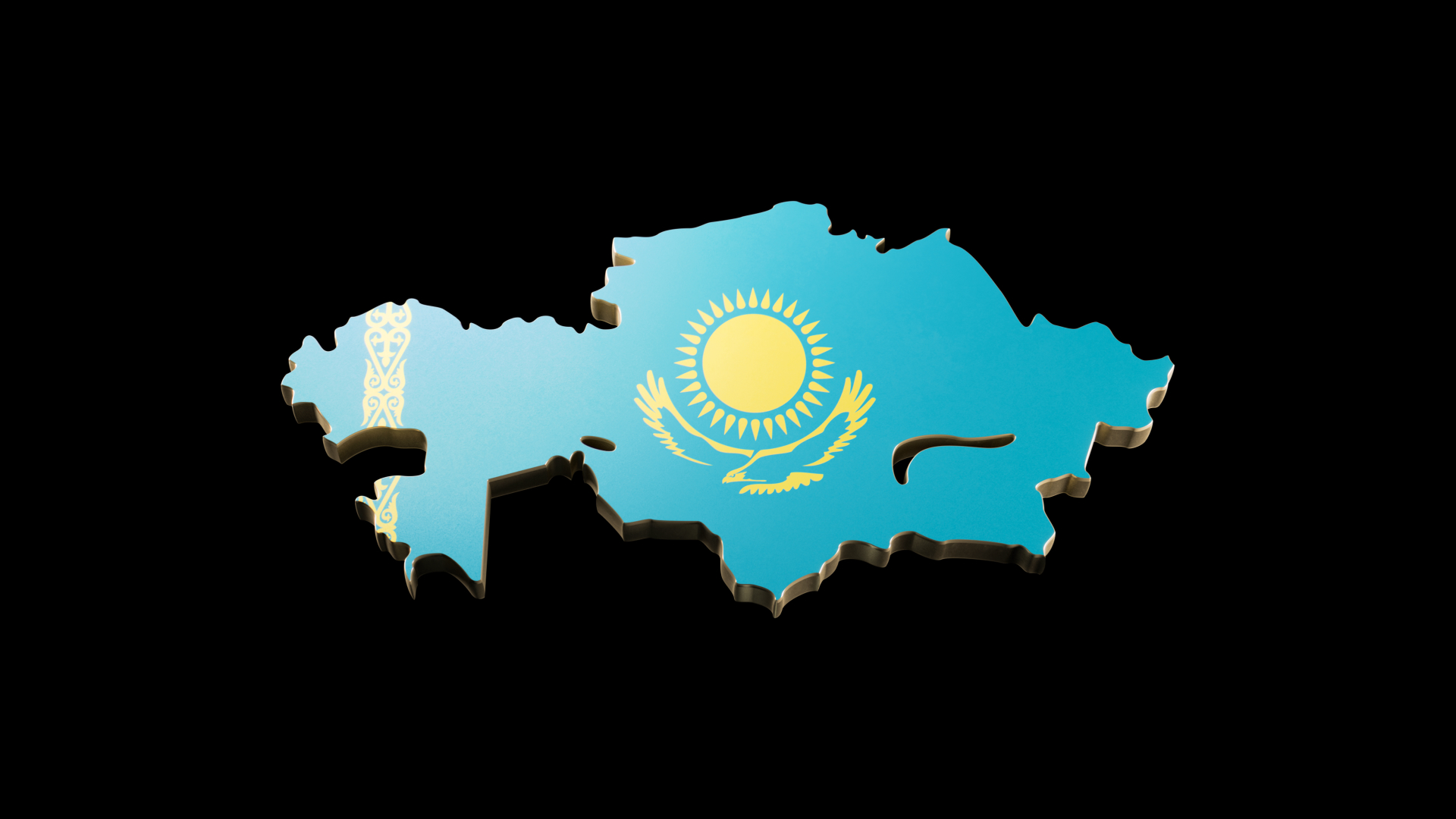
Kazakhstan’s AI ecosystem is moving from infrastructure plans to deployment.
The shift is visible across the full AI stack — from infrastructure to models to applications.
The announcements below — coinciding with a visit to Astana by NVIDIA founder and CEO Jensen Huang — point to the nation’s increasing supply of accelerated computing, along with its growing demand for what comes next.
On Friday, Oct. 23, NVIDIA founder and CEO Jensen Huang visited Astana, meeting with President Kassym-Jomart Tokayev at the Akorda Presidential Palace and joining Deputy Prime Minister Zhaslan Madiyev — Kazakhstan’s minister of AI and digital development — for a public fireside chat at the Alem.AI program.
Jensen Huang and Kazakhstan’s AI Minister Speak at Alem.AI
In their fireside chat at Alem.AI, Kazakhstan’s international center for artificial intelligence, Madiyev and Huang discussed the country’s push to become an AI nation — building the energy and computing infrastructure to support homegrown AI and applying it across the economy.
Madiyev said Kazakhstan wants AI that reflects its language and culture. “We want AI that understands and speaks Kazakh and captures cultural contexts and cultural specifics,” he said, describing the country’s work on Kazakh-language models.
Huang said Kazakhstan could turn its energy resources into a foundation for AI production — and a new kind of export. “Instead of just exporting energy, in the future, you could transform energy into intelligence and export intelligence,” he said.
He also argued that local data is central to that ambition: it embodies a country’s culture, history and values. “Your country’s data is your natural resource. It belongs to you.”
The conversation also turned to physical AI. Madiyev pointed to Kazakhstan’s factories, mines, agriculture, transport and logistics as potential areas for development, asking how the country could become a hub for training models for robots and other physical systems.
Huang called the idea “fantastic,” saying physical AI could transform industries from mining and mineral processing to agriculture.
Huang said AI and robotics can help people do more, but ambition will shape how fully they seize that opportunity. He applied the idea to Kazakhstan, saying AI could help lift the country and its people.
“If you have ambition, and I believe you do, AI will lift your nation,” Huang said. “AI will lift your people.”
Huang also praised the founders of Higgsfield AI, the Kazakhstan-founded startup, and it was announced NVIDIA is making an investment into the startup during the event. “The first thing and the last thing is you invest in people, not companies,” he said, describing the founders as visionary and pointing to their effort to compete globally.
Asked about AI security, Huang said the technology must be developed and deployed responsibly. He described NVIDIA’s OpenShell as a way to contain AI agents by limiting their access to files and tools and monitoring their activity.
For young people entering a fast-changing field, Huang recommended learning how AI works — not just how to use it. He said aspiring AI programmers should understand the technology’s principles, strengths and weaknesses, combining technical knowledge with the ability to work effectively with AI.
“I envy being 18 years old today… because the world is changing so rapidly, and there’s a complete reset because of technology.”
The Infrastructure Layer Is Scaling
The visits coincided with a signing ceremony marking Firebird’s investment agreement with the government of Kazakhstan, held at the presidential palace.
Building on its first AI factory in Armenia, Firebird is expanding into Kazakhstan, where it has secured a U.S. export license for 45,000 NVIDIA Grace Blackwell GPUs. The first phase is under construction with Kazakhtelecom at Data Center Valley, targeting commercial launch in the third quarter of 2027.
A planned second phase would bring Firebird’s total potential AI infrastructure capacity in Kazakhstan to approximately 500 megawatts. Firebird also plans to establish Firebird Labs Kazakhstan to support local AI startups, research and talent development through funding, access to compute and research partnerships.
Firebird cofounder and CEO Razmig Hovaghimian attended the signing ceremony at the Akorda Presidential Palace alongside government officials.
“What began as a seed of an idea 180 days ago has grown into a major investment in Kazakhstan’s AI future,” said Razmig Hovaghimian, co-Founder and CEO of Firebird. “President Tokayev’s vision gave us the confidence to think bigger about what we can build together. With Jensen Huang here today, that ambition feels more tangible than ever. We’re building the infrastructure for Kazakhstan’s talent and ideas to reach the world.”
Kazakhtelecom, the nation’s largest telecommunications company, has already deployed 400 NVIDIA H200 and 480 NVIDIA B300 GPUs in Astana and Almaty.
Next year, the company plans to deploy more than 1,000 GPUs in the Data Center Valley, along with more than 1,000 NVIDIA Vera Rubin GPUs in the Ekibastuz region, serving diverse workloads with infrastructure that enterprises, developers and institutions can use at scale.
An Honorary Black Belt for Huang
Later that day, also at the Akorda Presidential Palace, President Kassym-Jomart Tokayev presented Huang with an honorary black belt in Judo. The belt, embroidered in gold stitching, was a special thanks from President Tokayev for Huang’s support of Kazakhstan’s AI ambition and for leadership aligned with the spirit and rigor of the martial art.
At the end of their meeting President Tokayev had another honor for Huang, presenting him with the Order of Dostyk, First Class, for Huang’s contribution to the development of artificial intelligence in Kazakhstan. Dostyk means friendship and the Order honors peace, friendship and cooperation.
AI-Native Companies Scale With Compute
And that development is accelerating. The nation’s AI-native companies are also building out their compute capacity — and the applications that run atop them.
Higgsfield is expanding its AI infrastructure with NVIDIA Vera Rubin running on cloud service providers, giving the company additional capacity as models, products and customer demand for its generative media applications grow.
inDrive and Pony.ai are also collaborating to explore robotaxi services in Kazakhstan, with Astana as the first deployment city. The companies will assess the feasibility of bringing Pony.ai’s seventh-generation robotaxis to the inDrive app, supported by NVIDIA AI infrastructure, built on the NVIDIA Hyperion sensor and compute platform with the NVIDIA Halos safety system.
More local capacity gives developers and companies room to train, fine-tune and serve increasingly capable models. Successful applications, in turn, create demand for more compute.
Kazakhstan’s AI opportunity isn’t defined by GPU counts alone. Connecting that infrastructure with developers, universities, startups and industries can turn accelerated computing into useful applications.
That was at the core of the discussion the NVIDIA team had with hundreds of developers from across Kazakhstan during a reception later in the evening. The gathering in this self-proclaimed AI nation was inspiring because of the ideas shared, the clear drive to build and a collective ambition to share it with the world.
Today’s announcements represent different layers of the AI stack in Kazakhstan— infrastructure deployment, access to compute and AI-native product development — where the AI foundation is reaching new scale.
Oura and Ultrahuman find themselves in another dispute as the former sues over “patent infringements.”
Oura states Ultrahuman infringed on “design and internal component” patents with the Ring Pro.
In 2025, Ultrahuman sued Oura for “ripping off” its patented health tech.
Oura is reportedly suing Ultrahuman over its Ring Pro. The company alleges Ultrahuman infringed a few patents when it created the device.
A report by TechCrunch highlighted the lawsuit between Oura and Ultrahuman. The latter claims Ultrahuman infringed on its “design and internal component” patents with the Ring Pro. In a statement to the publication, an Oura spokesperson said, “Ultrahuman has a history of copying Oura’s innovations, as demonstrated by the 2025 ITC ruling against the company.” It adds, “Ultrahuman introduced a redesigned ring but failed to address continued infringement of Oura’s patents.”
Specifically, Oura says it’s suing Ultrahuman over the ring’s “curved battery, circuit board, magnets, and sensors.” However, as the publication notes, Oura was granted this internal-component patent (12,769,363) on October 20. The lawsuit was filed two days later.
Latest Videos FromAndroid Central
Ultrahuman has struggled to get its products to U.S. consumers. The post reminds us of an import ban it faced, which forced its presence out of the country. The Ultrahuman Ring Pro was its ticket back into the market; however, Oura wants to stop that from happening. What’s more, the company is reportedly seeking “monetary damages” in this lawsuit.
Ultrahuman’s co-founder and CEO, Mohit Kumar, told TechCrunch, “Oura has now chosen to assert different patents, including one that was issued just two days before this lawsuit was filed.” Presently, Kumar says courts have not stopped it from selling the Ring Pro to U.S. consumers, so it remains available even today.
Back & Forth
(Image credit: Ultrahuman)
These two companies have gone back and forth for years now. In 2025, Ultrahuman sued Oura. It accused Oura’s Ring 4 of “ripping off its patented smart ring tech.” The core of this dispute concerned “sleep tracking, circadian tools, and women’s health features.” Ultrahuman said it “pioneered” those features. There was also a major difference between the two companies.
While Ultrahuman offers its features without a paywall through PowerPlugs, Oura features a subscription-heavy model. Ultrahuman also clarified why it was suing Oura. It said that defending its patents wasn’t the primary goal. Instead, “positioning itself as a defender of open health data and Indian innovation on the global stage” was more important to the company.
Get the latest news from Android Central, your trusted companion in the world of Android
Ultrahuman has continued to do just that in 2026. The company partnered with HealthEx, which brings users’ official medical records into the app. You can compare your smart ring’s data against your medical records and take those insights to your doctor. Earlier in October, it rolled out Heart Scan for the Ring Pro. Heart Scan needs sixty seconds to deliver a snapshot of your heart’s condition at a moment’s notice.
Gold has become one of the most watched markets in the world. Prices have reached historic levels, central banks keep buying, and millions of retail traders now follow gold on their phones. But for newcomers, the first barrier is not the market itself. It is the vocabulary.
Spreads, lots, swaps, tickers, margin calls: the language of gold trading can feel like a different dialect. And because gold is traded across many countries, the same idea often goes by different names depending on where you are. Understanding these Gold Trading Terms can help beginners navigate the market and communicate more confidently.
Understanding a handful of core terms makes everything else, from reading a price chart to comparing trading platforms, much easier. Here are 12 gold trading terms every new trader should know, plus a quick glossary and answers to common beginner questions. Knowing these Gold Trading Terms can help new traders understand market discussions and trading platforms more confidently.
1. XAU/USD
XAU/USD is the market symbol for the price of gold in US dollars. “XAU” is the international code for one troy ounce of gold, and “USD” is the US dollar. When XAU/USD is quoted at 4,000, one ounce of gold costs 4,000 US dollars.
The symbol follows the same format as currency pairs such as EUR/USD, which is why gold is often traded alongside forex. That is also why many traders talk about “gold in forex”: on most online trading platforms, gold sits in the same list as currency pairs and trades with similar tools, order types and charts. Understanding Gold Trading Terms helps beginners recognize these symbols and understand how gold trading works.
XAU/USD is one of the most searched gold terms worldwide, often by people asking what it actually means. In many Asian markets, for example, beginners commonly search “xauusd là gì”, meaning “what is XAUUSD”, before they place their first trade. Whatever the language, the answer is the same: XAU/USD is the global benchmark price that most local gold prices, from bullion dealers to jewellery shops, take their reference from. Understanding Gold Trading Terms like XAU/USD helps new traders recognize gold price quotes across different markets.
2. Gold Ticker Symbols
Gold doesn’t appear under one universal name. Depending on the platform or exchange, you may see:
XAU/USD or XAUUSD: the standard symbol for spot gold priced in US dollars, used on most forex and CFD platforms.
GOLD: a simplified name some brokers use for the same spot gold market.
XAU/EUR, XAU/GBP, XAU/AUD: gold priced in other currencies.
GC: the symbol for gold futures on the COMEX exchange in New York.
XAUUSD247 or similar: weekend-tradable gold contracts offered by some brokers (see term 12).
Knowing these symbols helps you find the right instrument quickly and avoid trading the wrong product. Gold priced in euros, for example, moves differently from gold priced in dollars, because currency changes are built into the price.
3. Troy Ounce vs Tael
Gold prices around the world are quoted per troy ounce, a unit of weight used for precious metals. One troy ounce equals about 31.1 grams, slightly heavier than the ordinary ounce used for food and other goods (about 28.35 grams).
In several Asian markets, however, physical gold has traditionally been weighed and sold in taels. In English, “tael” is the usual name for this traditional unit, which goes by different local names across the region. A tael weighs roughly 37.4 to 37.5 grams depending on the market, or about 1.2 troy ounces. Understanding these Gold Trading Terms helps traders recognize different gold measurement units used around the world.
This matters when comparing prices. If you want to compare a local gold bar price per tael with the international XAU/USD price per ounce, you need to:
Multiply by about 1.2 to adjust for the difference in weight.
Any remaining gap reflects local premiums, taxes, dealer margins or supply conditions.
4. Spot Gold vs Gold Futures
Spot gold refers to the current market price for gold delivered almost immediately. XAU/USD is based on the spot price.
Gold futures are contracts to buy or sell gold at a set price on a future date. The best-known gold futures contract trades on COMEX in New York and represents 100 troy ounces. Futures prices usually differ slightly from spot because they include the cost of financing and storing gold until the contract expires.
Most retail traders use spot gold, often through CFDs (contracts for difference), which track the price without delivery of physical metal. Professional traders and institutions use both spot and futures markets, depending on their goals. Understanding Gold Trading Terms such as spot gold, CFDs, and futures helps beginners compare trading methods and understand how each market works.
5. Bid, Ask and Spread
Every gold price on a trading platform has two sides:
Bid: the price at which you can sell.
Ask: the price at which you can buy.
The spread is the difference between the two, and it is the most basic cost of trading.
For example, if gold is quoted at 4,000.00 bid and 4,000.20 ask, the spread is 0.20. On one standard lot of 100 ounces, that equals US$20 the moment you open the trade. You need the price to move at least that much in your favour just to break even.
Spreads are usually tightest when markets are most active, typically when the London and New York sessions overlap. They tend to widen during quieter hours, around major economic news and at the daily rollover.
6. Pips and Points
Price movements in gold are measured in small units, but brokers don’t always describe them the same way:
Some brokers quote gold to two decimal places (for example, 4,000.25), where a move of 0.01 is called a point.
Others describe a move of 0.10 as a pip.
Because definitions vary, it is often more useful to think in dollars. On a standard gold contract, a US100. Always check how your platform defines pips and points before comparing costs between brokers.
7. Lot Size
A lot is the standard unit used to size a trade. For gold, one standard lot usually represents 100 troy ounces.
That means:
00 lot = 100 oz. A US100.
10 lot = 10 oz. A US10.
01 lot (micro lot) = 1 oz. A US1.
Gold can easily move US$20–50 in a single day, and much more around major news. That makes lot size one of the most important risk decisions a trader makes. Many beginners start with micro lots so that normal price swings don’t create large gains or losses while they learn.
8. Leverage and Margin
Leverage lets traders control a large position with a smaller amount of capital. Margin is the deposit required to open and hold that position.
For example, at 1:100 leverage, a one-lot gold position worth US4,000) would require around US$4,000 in margin.
Leverage cuts both ways. In this example, a US$40 move against the position would wipe out the full margin. This is why leverage limits differ widely between regulators, and why many experienced traders deliberately use far less leverage than the maximum their broker allows.
9. Margin Call and Stop-Out
These two terms describe what happens when a leveraged account runs low on funds.
Margin call: a warning that your account equity has fallen close to the margin needed to keep positions open. Some platforms show it as a notification; others simply change your margin level indicator.
Stop-out: the level at which the platform automatically starts closing positions to prevent further losses, usually beginning with the largest losing position.
Each broker sets its own levels. For example, a broker might issue a margin call at a 100% margin level and begin stopping out positions at 50%. Check these levels before trading, because a sharp gold move can trigger a stop-out quickly on a highly leveraged account.
10. Swap (Overnight Fee)
If a gold position stays open past the daily rollover, it is charged or credited a swap: a financing cost based on interest rates and the broker’s terms. For gold, swaps are often a cost on both buy and sell positions.
A single night’s swap may be small, but over weeks or months it can add up to more than the spread and commission combined. Many platforms also apply a triple swap on one day of the week to account for the weekend. Understanding Gold Trading Terms such as swap fees helps traders calculate overnight costs and manage their trading expenses.
Some brokers offer swap-free accounts, often called Islamic accounts, which remove the interest element. They usually replace it with an administration fee after a set number of days, so it is worth reading the terms closely if you plan to hold gold for a long time.
11. Stop-Loss and Take-Profit
These are the two most important order types for managing risk:
Stop-loss: an order that closes your position automatically if the price moves against you by a set amount, limiting your loss.
Take-profit: an order that closes your position automatically when the price reaches your target, locking in gains.
For example, a trader who buys gold at 4,000 might set a stop-loss at 3,980 and a take-profit at 4,040. The trade then has a defined risk of US40 per ounce.
Note that in fast-moving markets, stop-loss orders may be filled at a worse price than requested. This is known as slippage, and it is most common around major news releases and market reopenings.
12. 24/7 Gold Trading (XAUUSD247)
Traditionally, spot gold trades almost around the clock on weekdays but closes over the weekend. Any news that breaks on a Saturday is only reflected when the market reopens on Monday, often with a price gap.
In 2026, several brokers introduced gold contracts that also trade at weekends, commonly listed under the ticker XAUUSD247. These let traders react to weekend developments in real time.
The trade-off is cost: spreads on weekend gold are typically wider than on weekdays because fewer participants are active, and contract sizes or conditions may differ from standard XAU/USD. If you see “XAUUSD247” on a platform, check its contract specifications before trading.
Bonus: How to Choose a Gold Trading Platform
Once the vocabulary makes sense, the next question is usually where to trade. A gold trading platform, sometimes called a gold exchange or gold trading floor in translated guides, usually means an online broker offering access to the gold price. When comparing gold trading platforms, look at:
Regulation: check the broker’s licence directly on the regulator’s public register, not just on the broker’s website.
Regulated entity: most international brokers operate several entities, and your protections depend on the one that onboards you.
Total cost: compare spread plus commission per lot, not just the headline spread.
Overnight costs: check swap rates, or swap-free terms if you need them.
Trading hours: check whether extended or weekend gold trading is available.
Platforms and tools: check for MetaTrader 4, MetaTrader 5, web platforms or mobile apps.
Deposits and withdrawals: check local payment methods, processing times and fees.
Availability: confirm the platform is permitted to serve residents of your country.
For example, a 0.30 spread with no commission costs US6 commission costs US$16. For a frequent trader, that difference adds up quickly.
Quick Glossary
Term
Meaning
XAU/USD
Price of one troy ounce of gold in US dollars
GC
Symbol for COMEX gold futures
Troy ounce
About 31.1 grams; the standard unit for gold prices
Tael
Traditional Asian unit of about 37.4–37.5 grams
Spot gold
Current market price for near-immediate delivery
Gold futures
Exchange-traded contracts for future delivery
Bid / Ask
Sell price / buy price
Spread
Difference between bid and ask
Lot
Trade size unit (1 standard lot = 100 oz)
Leverage
Controlling a larger position with less capital
Margin
Deposit required to hold a leveraged position
Margin call
Warning that equity is close to required margin
Stop-out
Automatic closing of positions at a set margin level
Swap
Overnight financing charge or credit
Stop-loss
Order that limits losses on a position
Take-profit
Order that locks in gains at a target price
XAUUSD247
Gold contract that also trades at weekends
Frequently Asked Questions
What Does XAU/USD Mean?
XAU/USD is the price of one troy ounce of gold in US dollars. It is the global benchmark used by traders, banks and dealers worldwide.
What Is a Tael of Gold In Ounces?
A tael is a traditional Asian unit of weight of roughly 37.4 to 37.5 grams depending on the market, which is about 1.2 troy ounces.
How Much Is One Lot Of Gold?
One standard lot of gold is usually 100 troy ounces. A micro lot (0.01) is 1 ounce.
What Is The Best Time To Trade Gold?
Gold is usually most active, with the tightest spreads, when the London and New York trading sessions overlap, and around major US economic data releases.
Can I Trade Gold At The Weekend?
The standard spot gold market closes at weekends, but some brokers offer weekend-tradable contracts such as XAUUSD247, usually with wider spreads.
Is Trading Gold CFDs The Same As Owning Gold?
No. A CFD tracks the gold price without delivering physical metal. It usually involves leverage, which magnifies both gains and losses.
Final Thoughts
Gold may be one of the oldest assets in the world, but trading it online comes with its own modern language. Understanding XAU/USD and its ticker symbols, how ounces compare with traditional units such as taels, and how spreads, lots, leverage, margin and swaps work won’t guarantee profitable trades. It will help you understand exactly what you are trading, what it costs and how much you are risking.
For any new trader, that understanding is the right place to start, long before placing a first trade.
Risk warning: Trading gold CFDs involves leverage and carries a high risk of losing money rapidly. A high percentage of retail investor accounts lose money when trading CFDs. This article is for educational purposes only and does not constitute investment advice.
In 2001, some of the top songs included Fallin’ by Alicia Keys, Ms. Jackson by Outkast and Nelly’s Ride Wit Me. When people wanted to listen to those songs and they weren’t near a car stereo or their audio equipment at home, most carried music with them on skip-prone portable CD players, boomboxes or maybe even a homemade mix cassette.
Sure, some early adopters were already carrying a small collection of songs on a portable MP3 player (MP3s: the new-new thing!) like the Diamond Rio or Creative’s Nomad Jukebox. But these weren’t common, and you didn’t see them that often; there was no ubiquitous sign yet that, musically, the times were changing.
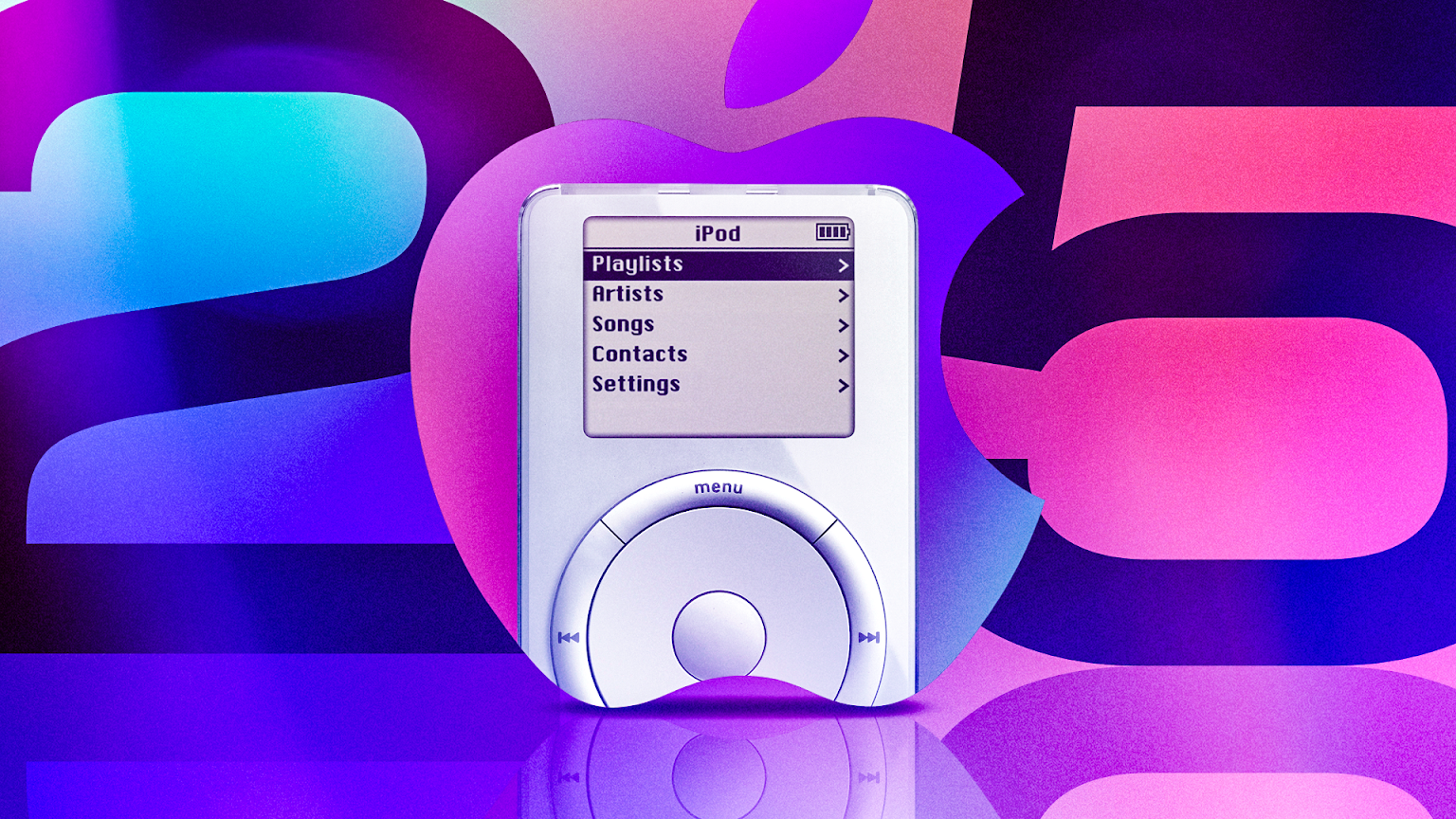
Enter Apple with its original iPod, a small hard drive encased in smooth white plastic that could stash between 1,000 and 2,000 songs, a sum that seemed godly at the time. Who would ever need to listen to 1,000 songs (or have access to that many) at their fingertips? What mortal would dare?
Apple Music’s website has an Easter egg: a first-generation iPod that works and can play music in your browser. Credit: AppleApple
The device, which was released on Nov. 10, 2001 at a starting price of $400, heralded in the smartphone era before smartphones were a thing, making portable electronics more tactile, user-friendly and information-forward. The white earbuds that were bundled with the device were the beacon of that era: Before long, it seemed everyone had white cables coming out of their ears.
For the 25th anniversary of Apple’s game-changing music player, the device’s own creators are getting nostalgic about its silver anniversary. On Apple Music’s website, you can find at its 404 Not Found page a playful mockup of the OG iPod with its pleasing-to-use scroll wheel and a selection of songs you might have had in your iPod at some time or another.
As Tony Fadell looks back, collectors and new fans are still listening
If the iPod can be primarily credited to one person — leading a team of many — it’s widely acknowledged to be Tony Fadell, who came to Apple as a contractor and ended up heading one of its most successful product divisions. These days, Fadell is thinking a lot about the future of AI assistant devices, but he took time on his LinkedIn to acknowledge the iPod anniversary this week.
“We took it from approval to shipping in less than eight months,” he wrote. “There wasn’t time for endless refinements. We had to make decisions, trust our experience and stay focused on one clear promise: 1,000 songs in your pocket.”
While Fadell says that the iPod took a few generations to really take off and eventually come in iterations like the Nano and the Touch, some music fans who still love the original iPod design have been using the device for decades. If you have any hard drive-based gadget that lasts that long, count yourself lucky.
In addition to those old enough to remember what a Hoobastank is, iPods are also getting popular again with younger generations on a nostalgia kick, many of whom would rather carry around a separate physical device for their music than stream their Spotify accounts on their phone for the millionth time. Axios reports that iPods and MP3s are back in a big way in a trend called “friction-maxxing.” You don’t have to use that term to indulge, we promise.
A cheaper route may be to keep the familiar outside trappings but replacing the guts with a new motherboard. A group called Crowd Supply promises in a YouTube video a new way to bring nonworking iPods back to life. It hasn’t launched yet, but you can keep an eye on the project at Crowd Supply’s website. Other tinkerers have had years and years to work up hundreds of iPod hacks; you can find many of them on Hackaday.
Alternatively, it may be the function that a modern MP3 enthusiast seeks, not necessarily the Apple branding or hardware. Other companies, such as Fosi Audio, have their own takes on the modern music player, like the $80 DAP Neo. CNET has a list of the best MP3 players of 2026, with devices like the Shanling M0s and the Android-based HiBy R4 coming out on top.
Lastly, if you want to relive the iPod glory days, you don’t necessarily need new (or old) hardware at all; your phone can do it with iOS apps such as RetroPod, My Classic – Retro Console or, if you’re feeling saucy on Android, ClassiPod.
Omar Gallaga has covered technology, digital culture and other topics for outlets including CNET, NPR, Wired, Texas Monthly, MSNBC, Consumer Reports, The Washington Post, the Los Angeles Times, The Atlantic and the Austin American-Statesman, where he was a longtime tech reporter, editor and podcaster. He lives in the Texas Hill Country.
See full bio
Borderlands 4 brings intense action, badass Vault Hunters, and billions of wild and deadly weapons to an all-new planet ruled by a ruthless tyrant. Hood Warfare 2
Crash into Kairos as one of four new Vault Hunters seeking wealth and glory. Wield powerful Action Skills, customize your build with deep skill trees, and dominate enemies with dynamic movement abilities.
Break free from the oppressive Timekeeper, a ruthless dictator who dominates the masses from on high. Now a world-altering catastrophe threatens his perfect Order, unleashing Mayhem across the planet.
Become an unstoppable force of battle, blasting through enemies with an all-new arsenal of outrageous weaponry. Move across the Borderlands like never before—double jumping, gliding, dodging, grappling, and more—dealing death from every direction. Explode each encounter with devastating Action Skills that unleash your Vault Hunter’s unique abilities. Craft your perfect build with branching skill trees and a deep, rewarding loot chase full of wild weapons and powerful gear.
Wreaking havoc across Kairos is awesome alone and even better with friends in 4-player online co-op.* Borderlands 4 is designed for co-op from the ground up; whether you’re hunting for loot, tackling missions, or wandering freely, level scaling and individual difficulty keeps the party together and having fun.
Freely explore a vast and dangerous world rife with warring factions. Hop on your hover bike and ride through lush fields, towering peaks, and deadly deserts full of fearsome enemies, dynamic events, and engaging quests with unforgettable characters. Unite the people of Kairos and ignite a revolution, tackling this adventure however you see fit in a seamless Borderlands experience.
How to Download & Install Borderlands 4 On Steam
Click the Download button below and you should be redirected to a Download Page, Datanode, Qiwi, GoFile, PixelDrain.
Wait 5 seconds and click on the blue ‘download now’ button in DataNode. Now let the download begin and wait for it to finish.
After Borderlands 4 is done downloading, right click the .zip/.rar file and click on “Extract to Borderlands 4” (You must have Winrar/winZip installed on your PC).
Now open the extracted folder of Borderlands 4 and launch the game by running the .exe of the game.
Have fun and play! Make sure to run the game as administrator and if you get any missing dll errors, look for a Redist or _CommonRedist folder and install all the programs in the folder.
Screenshots
SystemRequirements
Minimum Support the game developers by purchasing the game on Steam
InstallationGuide
TurnOff Your Antivirus Before Installing Any Game
1 :: Download Game 2 :: Extract Game 3 :: Launch The Game 4 :: Have Fun 🙂