Google on Wednesday launched the screen-less Fitbit Air fitness tracker in India, but is pricing at ₹13,999 (roughly $146), ostensibly positioning it as a premium device. Comparatively, the device costs $99 in the U.S.
Unveiled in May, the Fitbit Air features health and fitness tracking, like 24/7 heart rate monitoring, heart rhythm monitoring with A-fib (atrial fibrillation) alerts, blood oxygen level, resting heart rate, heart rate variability, sleep stages, and duration.
The device’s screen-less form is a bid to tap into the growing popularity of screen-less devices as people shy away from screens, opting for distraction-free health gadgets like Whoop’s fitness bands and Oura’s rings — though the new Fitbit is more pocket-friendly.
The health tracking space now has screen-less devices from Garmin, Fitbit founders’ new company, Luffu Link, as well as from Indian startups like Noise and Urban, which have been trying to undercut their Western rivals on price.
The Fitbit Air is available for purchase on the Google Store and retail partners, including Flipkart, Croma, Reliance Digital and Vijay Sales, from October 2. Google is also offering a free, three-month Google Health premium membership with the new band.
When you purchase through links in our articles, we may earn a small commission. This doesn’t affect our editorial independence.
For consultants, a strong personal brand can be one of the most valuable business assets. It helps potential clients understand what you do, why you are credible, and why they should trust you over someone else. The good news is that building a recognizable brand does not require a large marketing budget. With consistency, clarity, and smart use of free or low-cost tools, consultants can create a professional presence that attracts the right opportunities.
Define Your Niche and Message
A strong personal brand starts with clarity. Many consultants make the mistake of trying to appeal to everyone. Successful consultants like Noyan Nihat are highly specific about who they are and what they do. The more specific you are, the easier it is for people to remember and refer to you.
Start by answering a few key questions: Who do you help? What problem do you solve? What results do you create? For example, instead of describing yourself as a “business consultant,” you might say, “I help small healthcare practices improve operations and reduce administrative costs.” This kind of positioning is more memorable and more compelling.
Your message should be simple enough to use across your website, LinkedIn profile, email signature, and conversations. When people can quickly understand your value, they are more likely to see you as an expert.
Optimize Your LinkedIn Profile
LinkedIn is one of the most powerful free platforms for consultants. Your profile often acts as your digital first impression, so it should clearly communicate your expertise.
Use a professional headshot, write a headline that explains the value you provide, and create an “About” section that speaks directly to your ideal clients. Instead of listing only your credentials, explain the problems you solve and the outcomes you help clients achieve.
You should also include relevant experience, case studies, recommendations, and featured content. Even a few strong client testimonials can build trust quickly. If you do not have testimonials yet, ask former colleagues, managers, or clients to write recommendations that highlight your expertise and reliability.
Share Valuable Content Consistently
You do not need paid ads to build visibility. Sharing useful content on a regular basis can help you establish authority and stay top of mind with your network.
Start small. Post once or twice a week on LinkedIn about common client challenges, industry trends, lessons learned, or practical tips. Your content does not need to be long or overly polished. It simply needs to be relevant and helpful.
For example, you can share a short post explaining a mistake businesses often make, a checklist clients can use, or your perspective on a recent industry development. Over time, this positions you as someone who understands your field and can provide meaningful solutions.
Turn Conversations Into Content
Many consultants struggle to come up with content ideas, but the best ideas often come from everyday conversations. Pay attention to the questions clients, prospects, and colleagues ask you. Each question can become a LinkedIn post, blog article, short video, or newsletter topic.
If several people ask the same question, that is a sign your audience cares about it. By answering these questions publicly, you demonstrate expertise while helping more people at once. This approach can strengthen your personal brand for consultants by showing your knowledge in a practical wa
This approach also saves time because you are not creating content from scratch. You are simply documenting the insights you already share in your consulting work.
Build Relationships, Not Just Visibility
A personal brand is not only about being seen. It is also about being trusted. Relationship-building is one of the most effective and affordable ways to grow your consulting brand.
Reach out to former clients, colleagues, industry peers, and potential referral partners. Comment thoughtfully on their posts, congratulate them on achievements, and look for ways to be helpful. These small actions can lead to referrals, collaborations, and new client opportunities.
You can also join industry groups, attend local business events, participate in webinars, or contribute to online communities. The goal is not to sell aggressively, but to become known as a valuable and trustworthy resource.
Create a Simple Website or Landing Page
You do not need an expensive website to look professional. A simple website or landing page can be enough to support your brand. It should include who you help, what services you offer, proof of your expertise, testimonials, and a clear way to contact you.
Make sure your messaging matches your LinkedIn profile and other online platforms. Consistency helps reinforce your brand. If someone visits your website after seeing your content online, they should immediately recognize the same expertise and value proposition.
Low-cost website builders make it easy to create a clean, professional site without hiring a large agency.
Use Proof to Build Credibility
Potential clients want evidence that you can deliver results. Case studies, testimonials, data points, and client success stories are powerful brand-building tools.
If confidentiality is an issue, you can anonymize your case studies. For example, you might write, “Helped a mid-sized manufacturing company reduce project delays by 25%.” Specific results make your expertise more tangible and persuasive.
You can also share lessons from past projects without revealing sensitive information. This allows you to demonstrate your thinking process and experience.
Stay Consistent Over Time
Personal branding is not a one-time campaign. It is built through repeated actions over time. A clear message, regular content, meaningful relationships, and visible proof of results will gradually create recognition and trust.
You do not need to be everywhere. Choose one or two platforms where your ideal clients spend time and show up consistently. A focused, sustainable approach is much more effective than trying to do too much at once.
Final Thoughts
Consultants do not need a large marketing budget to build a strong personal brand. They need a clear niche, a consistent message, useful content, strong relationships, and proof of expertise. By using free and low-cost tools strategically, consultants can create a credible presence that attracts clients, builds trust, and supports long-term business growth.
Welcome to Wallpaper Wednesday! In this weekly roundup, we’ll give you a handful of Android wallpapers you can download and use on your phone, tablet, or even your laptop/PC. The images will come from folks here at Android Authority as well as our readers. All are free to use and come without watermarks. File formats are JPG and PNG, and we’ll provide images in both landscape and portrait modes, so they’ll be optimized for various screens.
For the newest walls, as well as all those from previous weeks, check out this Drive link. Want to submit your own? Head to the bottom of this article.
Wallpaper Wednesday: September 30, 2026
Another week, another set of awesome Android wallpapers for you to share! Remember that we are always looking for submissions from our readers. Head to the bottom of this article to find out how you could have one of your images featured in an upcoming Wallpaper Wednesday!
Don’t want to miss the best from Android Authority?
With that in mind, we’ve got six awesome images from our readers that would look great on your phone, tablet, or PC. As usual, we also have three images from the Android Authority team.
Editor’s note: Keep in mind that the images below have been compressed and optimized to improve website performance. This means the quality has been reduced, and these are for demonstration purposes only. To get the full-resolution files, download the wallpapers from this drive link.
We’re back with another set of great wallpapers, but which of these is worthy of your screen time? Let’s talk a bit about them and learn more about these images.
As usual, the first three wallpapers come from our team members at Android Authority. The first one comes from Bogdan Petrovan, one of our content directors. Not only is this a gorgeous image with beautiful flowers, composed in a way that will look great as a phone wallpaper, but he also did a great job with the color editing. The toned-down colors and hazy ambiance make for a very moody look. I happen to love it, and I know many of you will, too.
The second shot comes courtesy of Akshay Singh Gangwar. What a point of view, right? This is a very interesting angle, and it makes for an image that will look quite interesting as a wallpaper. The balance, busy city feeling, and composition are way too fascinating.
As for the third wallpaper, this one was captured by Jonathan Feist during his recent trip to Scotland. You’ll love this one if you’re a fan of the ocean. The pebbles, mixed in with shells and other patterns, tell a story as old as time. One you can try to decipher whenever you look at your phone!
OK, it’s time to move on to the wallpapers that matter: yours! It’s a picture of a flower against a mesmerizing sky, creating a silhouette effect. This one comes all the way from Long An, Vietnam, and it was captured by Minh Diem, using a Samsung Galaxy S24 Ultra. He also sent us the 5th image, which showcases a very interesting look at a rainy day. I can’t pinpoint exactly what I like about this image, but it really calls me. It looks like some kind of movie scene.
Next up is a very interesting look at Azerbaijan. The evening lighting, classic car, and overall look give this image a very interesting style. The moody aesthetic helps, too. This was sent in by Shaukat Hayat, who shot this using a vivo Y33S.
We seem to be in a bit of a streak! Last week, one of the highlighted wallpapers featured a dragonfly, and the interesting animal species is back this Wallpaper Wednesday! These animals are special, and Lisa C got the chance to capture an image of one, using a Motorola Signature.
Are you a moon admirer? Getting to see it during the daytime is especially unique, and Surendran managed to also get a great picture of it! He used a Google Pixel 8a.
Lastly, we have a very unique flower image, brought to you by Minenhle Msizi Dube. It was edited using Snapseed and captured during a daily forest walk. Minenhle Msizi Dube has been featured in Wallpaper Wednesday before, so welcome back, and thank you for the contributions!
These are all amazing, guys! Great work. Thank you so much for participating. Again, be sure to download these photos in their high resolutions from this Drive link!
How to submit your own Android wallpapers
We are very excited to see your own contributions to our Wallpaper Wednesdays project. Before submitting, here are the rules:
Your submissions should be your own creation. That means photos you took, digital art you created, etc. Please don’t submit other people’s work — that’s just not cool. Also, please don’t send images purely created with AI. They will not be accepted. Images you created and then augmented with AI tools are OK.
You must agree to let Android Authority share your Android wallpapers for free with anyone who wants them.
We will not accept watermarked images. You will, however, get a credit and a link in the article itself. We can link to your social media account only.
Ready to submit? Fill out the form below. You’ll need to include the highest-resolution version of the image you can provide, your name, and a brief description of what the image is. If you want us to link to a social media page you own in your credit, please provide that, too, but that’s optional.
Thank you for being part of our community. Read our Comment Policy before posting.
The word association game introduces a new Party Mode for streaming subscribers.
Netflix
Netflix has been actively building out its roster of family-friendly and party games over the past year and a half. Today, the streamer got a notable new addition to its library with Codenames Party. As with the other titles in Netflix’s party game collection, players can join the action by scanning a QR code and then playing via their mobile devices; no additional hardware or controllers are needed.
The social game of word association began on the tabletop and later migrated online for an option to take the co-op game virtual. Usually, Codenames involves two teams, each with a rotating Spymaster, who tries to pick a clue that will get their allies to guess as many of the goal words as possible. The Netflix edition includes that classic team mode and a version called Case Studies where the all players guess for pre-made word and clue sets rather than having their own spymasters.
Netflix also has a brand new Codenames option called Party Mode that takes away the team angle. Instead, each individual is challenged to come up with a single clue to connect their own unique batch of eight words from within the same set of 16 available options. Players earn points both by correctly guessing words from other gamers’ sets and by having their own code words successfully identified by the rest of the group when their clue comes around.
Fun fact: the Engadget staff used to play Codenames at our team hangouts, and getting a bunch of writers to play rounds of this game is pretty hilarious.
The old-fashioned technique of redesigning the scene of a video takes time due to several processes of cutting, compositing, resizing, masking, and visual editing that may be performed. When there are many changes to the concept, performing those tasks becomes more cumbersome. The advantage of generative AI is that it offers an innovative prompt-based approach, in which creators can simply explain visual changes in natural language. There is no need to recreate the scene from scratch; just come up with new variations by using creative instructions. Pippit’s AI video-making features can be complemented with flexible editing instruments giving unlimited possibilities to experiment with the scene in videos commercial, social, or advertising.
Scene redesign refers to the changing of the visual space, motion, composition, atmosphere, or delivery of a video without changing its overall message. It is not mere editing or rearranging; it is a change of the idea of the video. Text prompts in the Pippit AI video generator enable setting a new location, camera movement, light, or action of the subject. If the text fails to convey all the necessary information, reference images can help with the necessary visual specifications.
AI editing of videos can assist with many creative tasks as long as prompts are explicit enough. The changes in terms of motion, appearance, context, framing, and composition can be clearly described without the need to employ any problematic artistic terms. The key is to establish what to keep and what to alter. With Pippit, you can experiment easily by changing the parameters of video creation until you receive the desired result. Here are some design modifications:
Appearance: tweak any background, environment, colors, or lighting.
Motion: make the product move or make an action, use camera movement, or make dynamic transitions.
Mood: change from calm to dynamic, tense, dramatic, etc.
Composition: change the size, framing, perspective, and placement of the subject.
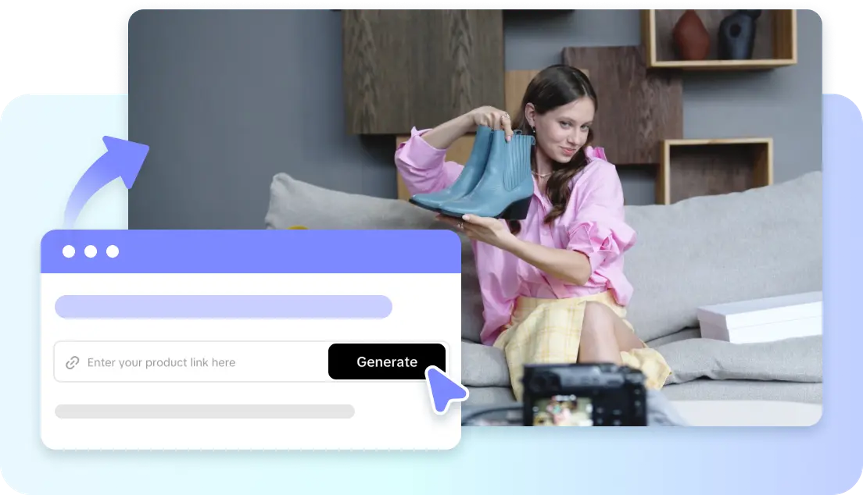
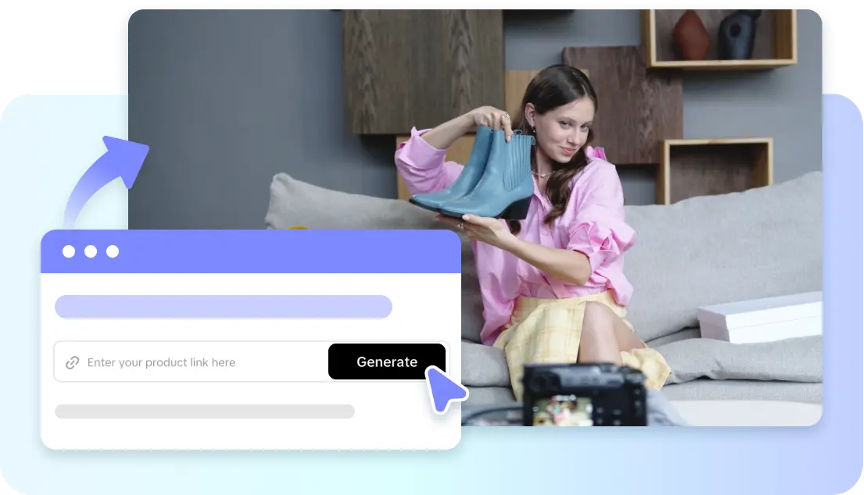
Sign up for Pippit using your account on Google, Facebook, or TikTok.
Log in to your account and click “More” on the left side of your dashboard, then choose “Video Generator”.
Select an AI model from a number of options such as Dreamina Seedance 1.0, Dreamina Seedance 2.0, Dreamina Seedance 2.0 Fast, Dreamina Seedance 2.0 Mini, or Dreamina Seedance 2.5.
Provide a detailed prompt explaining how you want to modify your scenes.
Select video language, length, subtitles, and aspect ratio.
Click “+” and upload any necessary reference images/videos saved on your computer or phone or Dropbox or a link. You can also choose already available assets.
Hit “Generate” to create your video.
Step 2: Change the Scenes Automatically
Pippit’s AI video generator will start creating your video using the prompt you input and reference materials you provided.
The AI will take care of all transitions, pacing, captions, avatars, voice, lyrics, as well as visual improvements.
Watch your generated video to see the changes.
Step 3: Finish up
Hit the “Download” button located on the top right to save your video. You may also click “Regenerate the video” for another variation or use “Edit further” at the bottom of the video to proceed with editing.
Alter the caption, add some text, adjust size, color and alignment or add different filters or effects.
Use the background music or remove the background if needed.
Once done hit “Export”.
Select “Publish” to post on TikTok, Instagram, or Facebook or use “Download” for whatever format you need.
The first step in redesigning a scene is ensuring you have a clear brief in place. This means specifying the key elements of the original scene, including subject matter, setting, settings, layout, and any notable visual features. Next, define what the envisaged alteration entails. Examples include a modified environment, physical changes, and a different visual style. Identify those elements that must still be apparent, like products, logos, people, objects, and those valuable brands. If required, specify the framework of the original scene, i.e. the impact of lighting, mood, intensity, cinematic quality, and color palette. If motion is paramount, describe how the camera and the subjects are meant to move, too. Review the changes to see if the created variation is satisfactory, and if it is not, revise your instructions accordingly.
When coming up with new ideas for a more dynamic scene, Pippit can benefit from a number of proper images. For instance, a still image of a product can serve as a starting point for a presentation, with the assistance of the camera’s motion. Special Seedance 2.5 image-to-video workflows make it possible to have regardless of the time-consuming traditional animation processes. The narrative behind a static image can also be enhanced through the use of different scripts, voiceovers, and captions. All of these methods are applicable for the creation of social posts, product releases, presentations, educational content, and storytelling.
If a scene produced is not close to the vision needed, it would be more sensible to regenerate it. Whenever the prompt, settings, action, framing, or atmosphere are incorrect, regenerating the prompt is capable of solving the issue better than making modifications to each of the elements. Thus, one can use more detailed prompts to make the subjects, settings, actions, camerawork, and visual style clearer. However, small mistakes such as writing mistakes, design, layout, or minor details can be fixed better manually. The mix of creating and editing used by Pippit makes mixing automatic change and accurate ‘tweaks’ possible.
Visual coherence throughout the project is important in the process of the scene redesign. The prompts should remain coherent regarding repeated themes, brands, color schemes, rhythms, formats, and story development. The lack of what is described above can lead to significant changes of the scene in terms of design, size, lighting, and motion of the generated elements. It can be useful to resort to reference materials in order to strengthen the common visual features of the repeated images and get more contextual information. Keeping the format also helps maintain the content’s fidelity across its sources. Pippit’s editorial tools will clean and harmonize separately created scenes to ensure the use of the same captions, effects, soundtracks, frames, and so on.
AI has changed the process of scene redesign from a series of repetitive actions to an effective creative process. Using Pippit, the creator will manage to use all the details of prompts, referrals, creating, regenerating, and refining in one process. It allows minimizing the use of standard edits but maintain control over the final product. However, one should remember that it is necessary to undertake careful steps in managing the scene.
Apple began rolling out Apple Pay in India on Tuesday, as TechCrunch first reported. Its first banking partner is Axis Bank, the country’s third-largest private-sector lender. The move brings the company’s payments service to the world’s most populous country after years of delays in a market dominated by the state-backed United Payments Interface (UPI).
The initial rollout is limited. Apple Pay supports eligible Axis Bank cards on Visa and Mastercard, but not India’s homegrown RuPay network. Acceptance will also be restricted to merchants and payment terminals that have been enabled for the service.
Unlike India’s ubiquitous Unified Payments Interface (UPI) system, which lets consumers make instant bank-to-bank payments without relying on cards, Apple Pay is card-based and requires individual issuers and payment infrastructure providers to integrate with the service. This makes a broad rollout more complex. Apple’s commercial terms have also emerged as a sticking point with some of India’s largest banks, the people said.
Apple is seeking a fee of about 20 basis points (0.2%) on transactions, according to the people, a significant bite out of the roughly 40 to 50 basis points (0.4% to 0.5%) of margin in the payments layer. The fee structure is broadly consistent with Apple Pay’s commercial model in other markets, the people said. HDFC Bank, ICICI Bank, and SBI Card are not supporting Apple Pay at launch as negotiations over commercial terms continue, one of the people told TechCrunch.
Apple, Axis Bank, HDFC Bank, ICICI Bank, and SBI Card did not respond to requests for comment on the launch. Earlier this month, Reuters reported that Apple was preparing to launch Apple Pay in India in October, starting with Axis Bank credit cards.
Apple Pay has entered a payments market that looks markedly different from the U.S. and other card-heavy economies. India’s digital payments boom has been driven largely by UPI, the state-backed system that lets consumers move money directly between bank accounts.
UPI handles the bulk of digital payments in India, where scanning a QR code to pay directly from a bank account has become commonplace. Apple Pay, by contrast, initially addresses a much smaller card payments market.
Nevertheless, Apple Pay could appeal to India’s growing base of iPhone users, who tend to be more affluent and are more likely to use premium credit cards. Those customers could make the service hard for banks to ignore, despite UPI’s dominance.
Even if Apple Pay remains a niche service, the economics could still make India meaningful for Apple. The transaction fee the iPhone maker would charge would give it another way to monetize its growing base of iPhone users in the country, the people said.
At launch, eligible Axis Bank customers can add their credit cards to Apple’s Wallet app and use Apple Pay for online purchases as well as contactless payments at supported terminals, the people said.
An Apple Pay transaction could work at a terminal operated by an independent payments provider that has enabled the service but fail at another terminal whose acquiring bank has not, one of the people said. That could make acceptance uneven during the initial rollout, even for customers with supported cards.
The launch adds another piece to Apple’s growing business in India, where it has been expanding iPhone sales, local manufacturing, and its retail footprint. Apple accounted for 28% of India’s smartphone market by value in 2025, up from 23% a year earlier, per an earlier report by Counterpoint Research.
After years in confinement at the hands of the Federal Bureau of Control (FBC), Dylan Faden emerges into a warped Manhattan at the peak of a paranatural crisis. Lawn Mowing Simulator 2 Charged with combating a mysterious cosmic entity as it alters fundamental aspects of our reality, Dylan must harness his new-found powers to take the fight to the myriad threats overwhelming Manhattan.
Join Dylan in this sequel to the multi-award-winning CONTROL to explore the expansive zones of a city overrun by the corrupting influences of the chaotic Hiss, invasive micro-organism, the Mold, and other twisted paranatural threats. On the path to unlocking the full potential of his paranatural abilities Dylan will also seek out his sister, FBC Director Jesse Faden, as he bids to comprehend and contain the dangers that have spilled beyond the confines of the Oldest House to tear our world apart.
STEP INTO A WARPED REALITY Explore multiple areas of a ravaged Manhattan in an expansive, unfamiliar, and exciting world. Traverse perception-bending locations and grapple with gravity anomalies that distort the vertical and horizontal plane, adding additional dimensions to puzzles and new tactical decisions to combat. Meet faces old and new on a path fraught with risk but rich in opportunity as the cityscape is reshaped and reality is redefined by a godlike force.
MASTER THE PARANATURAL Channel the raw experiences of Dylan’s past to help understand his present and dig deeper into the inner workings of the FBC and reveal the horrors threatening humankind. Tap into power he must learn to master and take choices to shape how his abilities manifest and grow. Explore a deep progression system to define how Dylan adapts to emerging dangers. Forge connections crucial to Dylan’s fight to retain his humanity as he journeys from former test subject to paranatural superweapon.
THE FIGHT SHIFTS. YOUR WEAPON SHIFTS WITH IT. Meet constantly evolving threats head-on, utilising the environment, deploying elemental abilities and using the raw force of Dylan’s shapeshifting melee weapon, the Aberrant. Wield the Aberrant in its many deadly forms. Deliver bone-crunching blows with a two-handed hammer and flow seamlessly into the swift precision of dual-wielded blades as this paranatural weapon morphs on demand to meet each new challenge.
Screenshots
SystemRequirements
Minimum
OS: Windows 10 / 11 (64 bit)
Processor: Intel i5-8500 / AMD Ryzen 5 3500
Memory: 16 GB RAM
Graphics: Geforce GTX 1070 / Radeon RX 5600 XT / Intel Arc A580
Storage: 120 GB available space
Additional Notes: SSD Required
Support the game developers by purchasing the game on Steam
InstallationGuide
TurnOff Your Antivirus Before Installing Any Game
1 :: Download Game 2 :: Extract Game 3 :: Launch The Game 4 :: Have Fun 🙂
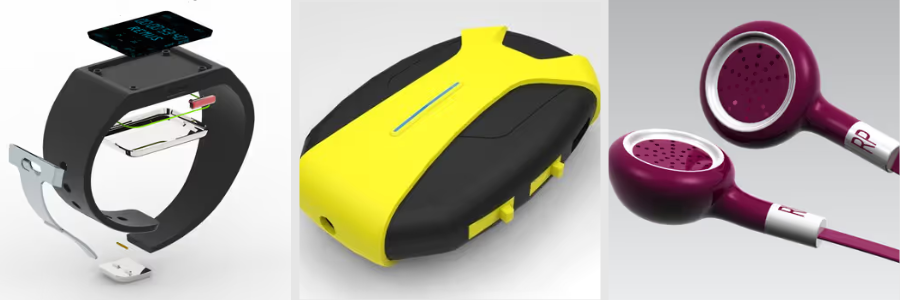
Customers often use their phone to search for a product online before they get to touch it. Their first impression comes always from the images they have seen, whether they are buying or reviewing a catalog. The use of high quality visuals can be influenced whether someone explores or moves to another product. 3D product rendering services are a crucial part of modern product development and marketing. These rendering offers to help the businesses evaluate and validate their designs, attract investors, and create marketing before the production takes place.
What Is 3D product rendering?
3D product rendering is a way of making realistic digital images or animations from a three dimensional model. It has a rendering software that can specialize in simulating a real world light, materials, reflections, shadows, to create an image that resembles a professional product photography. 3D rendering does not make use of a physical product unlike traditional photography. Every detail can be modified with the use of digitals; the utilization of rendering can offer a flexibility rather than using traditional photography. As when a product is still in a CAD model, 3D modeling designers can be able to visualize them, which makes it possible to:
Structured workflow is used when having a photorealistic rendering. Various stages are done to have a quality image.
Stage 1: Creating the 3D model
This stage is the ideal scenario to take as it all starts with a digital model. A quality of an underlying geometry has a great influence on the final output of the render. 3D artists can obtain a model in two ways:
Option 1: Using Existing CAD Files
This option is the fastest and cost effective approach to use as the rendering artist can directly import their files. If products exist and have been designed in software it will be easier and the artists can save up time in rebuilding it.
The following are the software that can be used to design a product:
SolidWorks
Fusion 360
CATIA
Creo
Siemens NX
Rhino
Inventor
The benefits of using the option of using existing CAD files includes having a higher dimensional accuracy as measurements are consistent with the engineering design, faster turnaround, lower costs since fewer hours are spent doing modeling, easier and accessible revisions as updated CAD files can easily replace the older and existing versions. For the businesses that are collaborating with the mechanical engineers or product designers having CAD files is the most effective and efficient way to have to lower the rendering costs
Option 2: Building the model from photos or drawings
Not every business has an existing CAD file available. Some of the products have been hand made, reverse engineered, acquired from another manufacturer, or have been produced for a long time already. In these situations, an artist needs to manually recreate the product using reference photographs, sketches, measurements, and technical drawings. With the utilization of these references, the artist can rebuild the product in a 3D software.
It can be time consuming for a product to turn into a 3D model, because it needs to be meticulously and carefully made, especially every feature needs to be made by hand. A curved handle, or a texture grip may require careful measurements and multiple revisions. On the other hand, even the most intricate parts such as the complex consumer electronics or machinery, the manual modeling can account for the largest portion of the project’s budget. This addresses why rendering projects that begin with engineering CAD files are usually much less expensive than those that begin with photos.
Stage 2: Materials and texturing – making the model look real
The product may appear unrealistic even if it has the correct and right shape after modeling.Since there are no material properties assigned, the models can look like smooth gray objects. The next step of the process is to add materials and textures. Some may think that choosing color is easy and as simple as it is, but a professional material creation is much more complex. Rendering software often simulates the way various materials react with light. For instance:
The chrome may generate sharp reflections
Through the brushed aluminum light is scattered producing a gentle linear reflections
More light is absorbed by the matte plastic, which creates a delicate highlight
Rubber looks soft and reflects very little light
The glass bends and reflects light while allowing it to flow through
Smooth plastic scatters light differently than leather, which has tiny surface flaws.
To be able to recreate these characteristics, the 3D rendering artists can adjust the numerous properties of materials, which includes the following parameters :
Base color
Roughness
Metallic value
Reflectivity
Transparency
Bump maps
Normal maps
Displacement maps
These settings will determine how a light behaves when it strikes the surface. An example of this is when two smartphones have an identical shape. The one has a glossy black glass with polished aluminum edges, while the other one utilizes a matte plastic and a textured rubber. Even if the geometry is identical, it will produce a different impression. A premium and high end one, as well as with the other one it will feel rugged and affordable. This depicts that the materials have a crucial role to play in interacting with the product’s quality.
Stage 3: Lighting and camera setup – photographing a digital product
A product that is modeled and appears flawless with realistic materials, the poor lighting can make it look artificial. Lighting is considered as one of the factors that distinguishes work between professional photorealistic rendering services and amateur renders. Expert rendering artists have a photographic mindset. They put virtual lights inside a digital environment rather than real lights in a studio. It is set to highlight the product’s best qualities rather than lighting it up.It is best for the artists to select the lighting style that best suits the intended use especially to a product.
Studio lighting – This is the most common set up that is utilized for e-commerce images. It utilizes soft, evenly distributed light to minimize the harsh shadows while making sure that the products are still visible. This is best to use for the customers that prefer to have precise, unambiguous product representations over artistic effects, which makes this setup especially effective for online retailers.
Dramatic lighting – This type of style is commonly best to use by the 3D design artists who want to draw attention to the product’s key design feature. This method is widely used especially in the luxury watches, smartphones, sports gear, and automobiles as it produces a high end look.
Lifestyle lighting – To have an impression that the product is used in daily life, some of the renders put the products in a location such living rooms, offices, or in an outdoor environment. The artists replicate the natural lighting by using artificial light. With the use of having the product in an authentic setting, lifestyle scenes aid consumers in developing a connection with it.
Choosing the right and best camera
The use of lighting alone is insufficient, therefore, selecting the appropriate camera is crucial. The virtual camera also influences customers’ perceptions of the product. 3D product design artists pick carefully the viewing angle, camera height, focal length, depth of field, and lastly the image composition. For instance, a close up shot showcases fine detail and craftsmanship, while the low camera angle can make the product appear larger and more powerful. Camera placement affects the perception of a consumer towards the product as similar with the professional product photography.
Stage 4: Rendering and post-production – producing the final image
Once the model, materials, lighting, and the camera have been prepared, the rendering process begins. This phase is where the software calculates how every ray of light interacts with every surface in the scene. This includes a lot of calculations as the software determines where the shadow falls, how reflections behave, how the light passes through the transparent materials, how metals reflect to their surroundings, and lastly, how indirect the light bounces between the surfaces. Rendering takes longer as these calculations become more realistic.
A highly detailed marketing scene with glass, water, reflections, and intricate lighting may take several hours or it may even take overnight rendering to produce and generate a single high resolution image, while a straightforward white background product image might be completed in a matter of minutes. After the rendering is completed, the product rendering artist can perform the postproduction. This phase is the same with editing professional photographs.
With the use of software such as Adobe Photoshop, images are fine tuned through correcting colors, improving contrast, reducing digital noise, enhancing reflections, sharpening important details, adjusting brightness and replacing backgrounds when necessary. When all of the four stages are completed successfully, the final image becomes indistinguishable from a real product photograph. A lot of cases where a customer cannot easily identify whether they are looking at an actual photograph or into a computer generated photo, which exactly is the goal of having a high quality photorealistic rendering.
Types of product renders and their business uses
Every product rendered has its own function. A business that is introducing a new product may require a different kind of render than one that sells goods on Amazon. A new product design startup that is looking to impress investors has different visualization needs than a manufacturer that produces an assembly guide. Having to choose the right type of render makes it easier for the businesses to communicate effectively with the target market. There are different goals that a render aims such as focusing on providing accurate product information, or creating excitement, telling a story, or demonstrating how a product works.
The following are the most common types of product renders and the best time to use each one:
White-background e-commerce renders
When browsing online marketplaces such eBay, and Amazon, a customer can notice that the product images have one thing in common which is that the products are featured in a clean white background. This is known as a white-background e-commerce render, and it is the most used type of product visualization. Distractions are eliminated and the customer’s focus is maintained on the product itself with a simple white background. Most of the e-commerce platforms require several product images rather than only using one. The business often creates a complete image set which includes the front view, back view, side view, top and bottom angles, close up shots of key features, packaging images, and images that show the accessories or the components.
Marketing hero shots
Hero shots usually focus on emotion. A hero shot acts as the main promotional image for a product. It shows up on a business’s homepage, in commercials, on social media, or when a new product is introduced. Rather than recording every detail, it generates excitement and enhances the reputation of the brand. A product development artist makes use of dramatic lighting, camera angles, and a premium looking background to make the product stand out. A hero shot allows the company to strengthen its identity. A luxury brand might employ tasteful lighting and straightforward compositions, whereas an outdoor equipment company might highlight harsh settings that highlight toughness and adventure.
A customer does not buy the products alone but they buy the experiences. Lifestyle renders makes customers imagine how a product fits to their daily lives by having it in a realistic environment rather than in an isolated studio setting. An example of this is a desk lamp inside a stylish home office, and a sofa that is a part of a designed living room. A Lifestyle render provides a visual response to the question of how a product will appear in a customer’s home, office, or workplace. It also conveys an important detail about scale, size, and purpose.
360-Degree product spins
When in a physical store, customers pick up products, rotate them, and examine them from every angle, and an online shopper cannot easily do it unless a business gives an interactive product experience. This is where 3D 360 degree panorama rendering services are invaluable. A 360 degree product spin allows the customer to rotate a product on their smartphones rather than viewing in one or two static images.
360-Degree Product Spins provide a customer a better understanding of the shape and design of the products and have trust by giving details that might remain hidden in a standard photograph. As well as, the customers can know exactly what to expect before making a purchase, reducing the chance to return the product. A company that makes use of 360 degree product spins is usually seen in products such footwear, sporting goods, automotive accessories, where visual inspection plays a crucial role in buying decisions.
Product animations
Product animations solve a problem by showing a movement. Rather than displaying a simple image, animations demonstrate how a product works, how the components fit together, and how a customer should use it. Businesses usually use animations to show the moving components, present exploded views, explain assembly instructions, and create promotional launch videos.
One of the applications for 3D product visualization that is expanding the fastest is augmented reality (AR) rendering services. Businesses can benefit a lot from the AR ready models such that customers are able to assess a product’s size, appearance, and a placement before making a purchase, which gives them greater confidence. Higher customer satisfaction and fewer returns are frequently the results of this.
Understanding 3D product rendering costs
Before rendering a project a business first question is “How much will it cost?” The answer to it depends on a lot of factors, which includes the product’s complexity, number or images required, the level of realism, and if the 3D rendering artist must start from scratch when creating the 3D model. A simple render requires less time than a detailed visualization of an industrial machine. Rather than thinking of rendering as a fixed price service, it is important to think of it as a combination of tasks. In every project it can include a lot of modeling, lighting, material creation, revisions, and the postproduction. The more in depth a product works in every stage, the more it becomes costly.
A small consumer product with simple materials is more inexpensive than a complex device. Rather than choosing the lowest quote, the businesses should evaluate the artist’s portfolio, technical expertise, and the ability to understand both the data and marketing goals.
The easiest way to lower the rendering costs is to provide clean and organized CAD files. By providing a clean CAD files offers benefits such as it reduces a modeling time, preserves the product’s engineering accuracy, lowers the overall labor costs, shortens the project timelines, and makes the future design revisions easier.
Batch multiple views from one model
Once the product designer has finished building the model, it becomes much more efficient to generate an additional view. Rather than having to repeat the entire process, they simply alter the camera angle, lighting, or environment to produce new images. An example of this is one product model can generate a hero shot for advertisement, close up an image that highlights the important features, white background images for the e-commerce listings.
How AI is changing product rendering
Artificial intelligence has become a part of the product visualization workflow. It enhances the existing 3D models, and generates product images in a short span of time.
Sketch-to-render
It converts the hand drawn concepts or the digital sketches into polished product images. It is often used in the early stages of product development to visualize styling ideas before having a 3D model.
Model-to-render
Model-to-render tools to enhance lighting, materials, backgrounds, and overall realism from an existing 3D model use AI. Rather than using a manual style of adjusting the visual elements, a 3D modeler can produce concept images in a short period of time. When a team wants to compare the various visual styles before committing to intricate rendering work, these tools can save time.
AI can accelerate the development but it has its limitation that is to control the revision. As artists work with editable 3D scenes, these revisions are simple when using traditional rendering software. However, whenever users make even a minor alteration, AI-generated images frequently regenerate significant portions of the image. It also struggles with dimensional accuracy. AI generated images can distort the proportions, and the features. It can be problematic when a business needs to have accurate marketing visuals for the final manufactured product.
Why work with Cad Crowd?
Photorealistic 3D product rendering services are an essential part of modern product development and marketing. By understanding the rendering process, it makes it easier for the businesses to make smarter decisions. By having a CAD Crowd, it would be easier to have realistic and compelling visuals that creates confidence, and helps the innovative product designs into a commercial success.
Cad Crowd allows to connect and partner with companies to skilled industrial designers, CAD specialists, and 3D rendering experts who can turn technical models into an eye catching marketing materials. Whether you may need a clean commerce images, or a premium hero shots. Cad Crowd matches every project needs with experts that have the knowledge and experience in doing it.
A lot of Cad Crowd’s CAD design professionals have the knowledge to understand engineering and product development work. They have the ability to deliver visuals that represent the final product as well as have manufacturing ready CAD files. Businesses can streamline collaboration, cut down on revisions, and confidently launch products easily. Contact us for a quote today.
MacKenzie Brown is the founder and CEO of Cad Crowd. With over 18 years of experience in launching and scaling platforms specializing in CAD services, product design, manufacturing, hardware, and software development, MacKenzie is a recognized authority in the engineering industry. Under his leadership, Cad Crowd serves esteemed clients like NASA, JPL, the U.S. Navy, and Fortune 500 companies, empowering innovators with access to high-quality design and engineering talent.
World of Warcraft: Forever’s new take on classic Azeroth is opening the door to all kinds of new ideas in the old-school version of Blizzard’s MMORPG, and new classes look to be one of them.
Blizzard, of course, has added a total of four new classes over the last two decades to the modern version of WoW: Death Knight, Monk, Demon Hunter, and Evoker. But an alleged leaked survey pushed to select WoW players via Blizzard’s Battle.net launcher is now asking about potential new classes for WoW: Forever, the recently revealed third version of the MMO that will introduce new quests, zones, and content to the “vanilla” version of WoW.
It’s not the first time Blizzard has conducted a survey this way, and while Blizzard asks participants not to disclose the survey’s details, their contents almost always find their way online. That’s the case here, as players were quick to share information about 11 potential new classes listed in the survey, and content creators like Bellular have gone as far as to provide a full breakdown. Information contained about each of these potential classes includes basic lore, what types of weapons they would be able to use, the armor class they would wear, the resources they would use, what roles they would fill, and even signature abilities. The classes listed in the survery are:
Bard
Death Knight
Demon Hunter
Illusionist
Monk
Necromancer
Metalborn/Runemaster/Runeknight
San’layn
Tinker
Warden
Witch
Three of the new classes would essentially be “new,” old-school versions of existing WoW classes like Demon Hunter, Monk, and Death Knight. Considering how fast-paced classes like Monk and Demon Hunter are in the modern version of the game, their Forever counterparts would likely feel significantly different.
It’s the eight “new” classes that are the most exciting, however. Some of these are ideas that have existed in WoW lore for ages or ones that Blizzard even originally toyed with during the game’s early development. The Tinker, for example, is a class many expect to come to the modern version of WoW at some point but is listed in the survey. They would be the ultimate engineer, capable of using mech suits and gadgets to tank, deal damage, and support other players.
Another potential class, the Necromancer, was an idea Blizzard originally had planned for vanilla WoW, only for it to eventually be scrapped. In Forever, Blizzard is proposing a version of the class that seems like it’s taking some inspiration from Diablo 2’s class of the same name, with abilities like Bone Spear and Corpse Explosion. The survey additionally lists the San’layn, a group of vampires who broke free of the Lich King’s domination. This class seems like it would lean fully into the vampire fantasy, with a number of blood-based abilities that could make them similar to retail WoW’s Blood Death Knight specialization.
Two other classes steeped in WoW lore proposed in the survey are the Warden and Runemaster. Wardens are the iconic Night Elf faction famous for hunting down and imprisoning Azeroth’s greatest threats. How exactly that would work when it comes to Horde players is unclear, but the survey notes that the Wardens would open their ranks “out of necessity” in order to deal with greater threats.
Runemasters, on the other hand, are beings infused with power by the Titans who use a rune system that sounds similar to that of modern WoW’s Death Knights to heal and fight. That rune system itself was originally for an early version of the Runemaster class that was later scrapped and its core mechanic repurposed. This class appears to have been listed by multiple different names in various versions of the survey, also appearing by the name Metalborn and Runeknight.
Other classes seem almost entirely new. The survey lists classes like Bard, Witch, and Illusionist among potential additions. The Bard sounds about like what you would expect, a healer and support class capable of buffing allies, while the Witch and Illusionists are two new flavors of spellcasters. Illusionists would summon and conjure creatures and objects to aid them in battle, while the Witch uses dark powers like blood rituals and even the power of the old gods to buff allies and destroy their foes.
Whether or not any or all of these potential new classes will eventually make their way into Forever remains to be seen, but Blizzard does have, well, forever to make them a reality. In the meantime there’s plenty new for WoW: Forever players to discover, including over 1,000 new quests, four new zones, an account-wide Legacy perk system, and more. WoW: Forever’s beta is currently live until October 21, with Forever’s full launch set for November 4.