Pronto, an Indian instant house-help startup, is finalizing a funding round led by tech investor Lachy Groom that would value the fast-growing company at about $200 million after investment, TechCrunch has learned.
The deal is expected to bring in about $20 million in fresh capital and would mark a sharp jump from the $100 million valuation at which the company raised $25 million in a Series B round led by Epiq Capital in early March, doubling its valuation in a matter of weeks, two people familiar with the matter said.
Bengaluru-based Pronto completed about 500,000 orders last month and is currently handling around 24,000–25,000 orders daily, up from about 18,000 daily bookings in March and roughly 1,000 last year.
Founded in 2025, Pronto connects households with on-demand domestic help for services such as cleaning and chores, promising quick turnaround times through a managed network of workers.
In March, Pronto founder Anjali Sardana told TechCrunch the startup had expanded from one city to 10 — including Delhi NCR, Bengaluru, and Mumbai — and from five to more than 150 micromarkets. However, much of its activity remains concentrated in a handful of markets, with the National Capital Region accounting for about half of total bookings.
The startup has over 4,500 active professionals on its platform, around 99% of whom are women, Sardana said last month, adding that demand continued to outpace onboarding of new workers as bookings grew about 20% week over week.
Before this funding, Pronto had raised about $40 million in total. Its investors include Epiq Capital, Glade Brook Capital, General Catalyst and Bain Capital Ventures.
Techcrunch event
San Francisco, CA | October 13-15, 2026
Pronto and Groom did not respond to requests for comment.
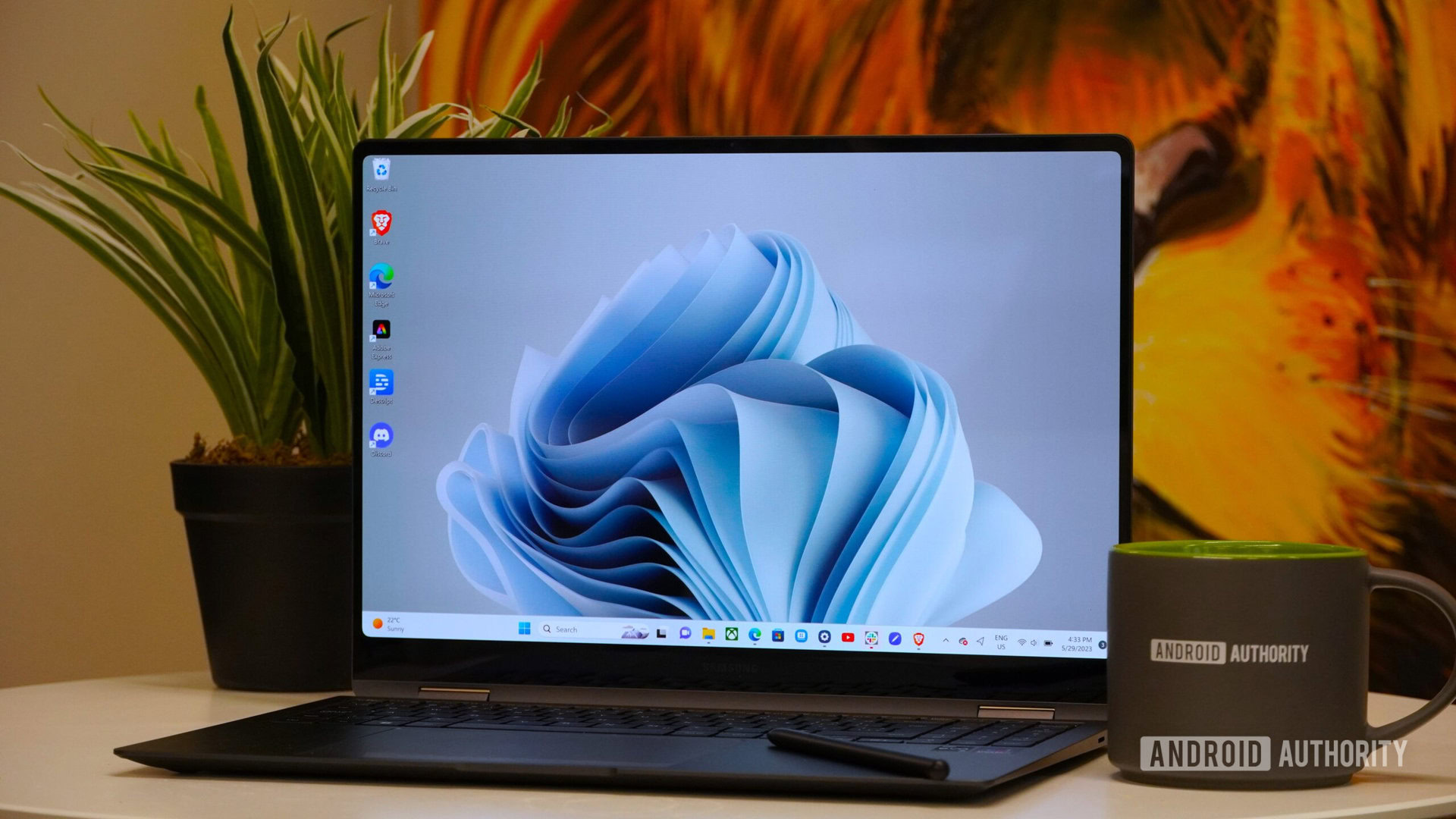
Earlier this year, I completed my Samsung ecosystem with a Galaxy Book 4 Edge — and one of the things I loved most about the experience was the features Samsung had added on top of Windows 11. Specifically, all of the deep integrations it offered with my Samsung phone.
Having tested this new version of Galaxy Connect myself, I couldn’t be happier with it.
Are you going to download Galaxy Connect?
2 votes
Galaxy Connect’s two best features
Zac Kew-Denniss / Android Authority
Once you’ve downloaded Galaxy Connect onto your PC, you’ll see four features contained within: Continue on other devices, Storage Share, Multi Control, and Second Screen. The first two are included with the initial Galaxy Connect download, whereas Multi Control and Second Screen require additional downloads to use.
Of the features Galaxy Connect brings to Windows, Multi Control and Second Screen are by far my favorites. Multi Control is similar to Apple’s Universal Control. You can connect to your Samsung phone or tablet and position it as you would a secondary monitor. The difference is that instead of mirroring Windows to the device, your phone will continue to show Android. When you move your mouse from your main display, it will appear on the phone’s screen and let you control it with your mouse and keyboard as if they were connected directly to the phone.
There are a ton of things you could use this for, but I’ve narrowed it down to two things I do every day. I always listen to music while working, and instead of faffing around with pairing my earbuds to my PC, I keep them connected to my Fold 7. I have YouTube Music and Telegram in split-screen so I can control my music and message my wife without either app taking up space on my monitors. It’s also a convenient way to use apps that are better on mobile. I prefer the Android version of Google Keep versus the website, and now I can use my mouse and keyboard to quickly make notes while still using the mobile app.
Zac Kew-Denniss / Android Authority
Second Screen lets you use a Galaxy tablet as a wireless display for your Windows computer. This isn’t technically new (you’ve been able to do this via the Windows+K menu for years now), but the Second Screen app fixes one of the biggest annoyances with it: lag. When you connect to your tablet via this app, you’ll get a prompt on the computer that says, “Disconnect tablet Wi-Fi to reduce latency.” Clicking this disconnects the tablet from your Wi-Fi and connects it directly to your PC, eliminating the lag issues that prevented me from using it in the past. Now I can use my Galaxy Tab S10 Plus as a secondary monitor and use the S Pen with my PC without infuriating latency.
Share files and sync your clipboard
Zac Kew-Denniss / Android Authority
The other two features are undoubtedly useful, but I don’t use them as often.
Storage Share, as the name suggests, lets you access all the files on your Samsung phone or tablet from File Explorer on your PC. If you want to access your photos or anything else stored on your device and can’t be bothered to mess around with cables, this is a great solution. You can drag and drop files into a folder on your PC, or drag them directly into the app you need. The screenshots from my Fold 7 that were used earlier in this post were dragged from the phone’s storage right into our site’s media library.
Continue on other devices syncs your clipboard. One area where this has been handy is using two-factor authentication. I use the Google Authenticator app, which isn’t available on Windows. Usually, I have to manually enter my 2FA code after reading it from my phone screen. Now I can just tap the code to copy it to my phone’s clipboard, then paste it into the relevant field on my PC without waiting. It’s a small thing, but it can save a lot of time. If you use Samsung Internet, you can sync tabs across your devices as well, but I prefer Chrome, so I haven’t tried it myself.
Zac Kew-Denniss / Android Authority
Things aren’t perfect. ARM-based PCs are left out, which is weird given that my Galaxy Book 4 Edge is ARM-based and has all these features built in. Likewise, some users whose computers don’t have Intel network adapters report that Galaxy Connect doesn’t work at all.
Aside from those strange limitations, this is one of my favorite things Samsung has done in a long time. Multi Control and Second Screen have made working from my desktop better than ever, especially now that I can use the same workflows as I have on my Galaxy Book.
Don’t want to miss the best from Android Authority?
Thank you for being part of our community. Read our Comment Policy before posting.
AI agents have revolutionized developer workflows, and their next frontier is knowledge work: processing information, solving complex problems, coming up with new ideas and driving innovation.
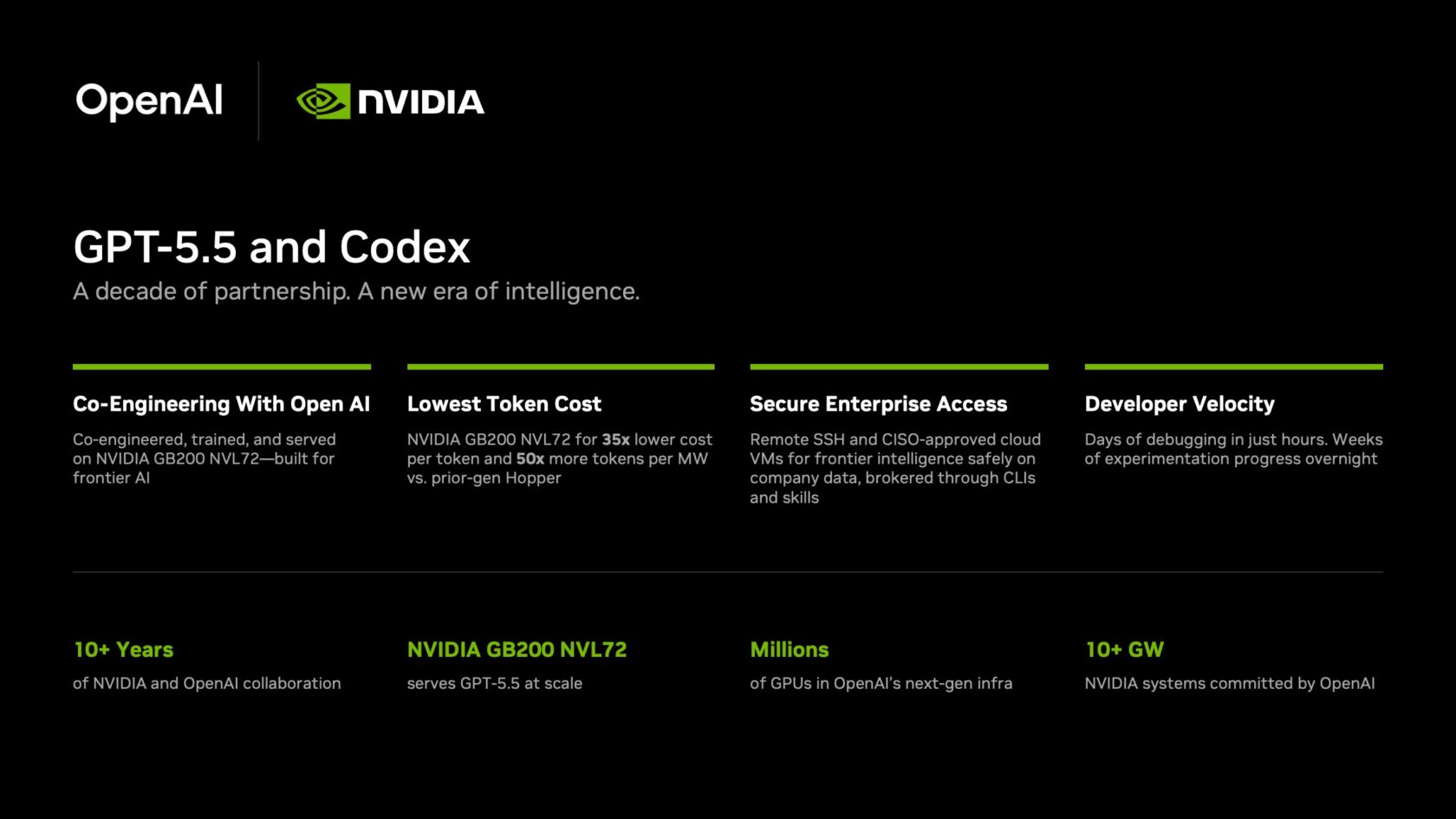
Codex, OpenAI’s agentic coding application, is enabling this new frontier. It’s now powered by GPT-5.5, OpenAI’s latest frontier model, which runs on NVIDIA GB200 NVL72 rack-scale systems.
Over 10,000 NVIDIANs — across engineering, product, legal, marketing, finance, sales, HR, operations and developer programs — are already using GPT-5.5-powered Codex to achieve, in their words, “mind-blowing” and “life-changing” results.
NVIDIA engineers have had access to GPT-5.5 through the Codex app for a few weeks, and the gains are measurable. Served on GB200 NVL72, which is capable of delivering 35x lower cost per million tokens and 50x higher token output per second per megawatt compared with prior-generation systems — economics that make frontier-model inference viable at enterprise scale.
Debugging cycles that once stretched across days are closing in hours. Experimentation that previously required weeks is turning into overnight progress in complex, multi-file codebases. Teams are shipping end-to-end features from natural-language prompts, with stronger reliability and fewer wasted cycles than earlier models.
OpenAI’s stunning progress is just the latest example of NVIDIA’s work with every frontier model company — not just to accelerate the use of AI agents inside NVIDIA, but to help the company’s partners build the world’s best, lowest cost and most power efficient models for everyone.
As NVIDIA founder and CEO Jensen Huang told employees in a company-wide email urging everyone to use Codex: “Let’s jump to lightspeed. Welcome to the age of AI.”
A Deployment Built for Enterprise Security
Just like humans, every agent needs its own dedicated computer.
To ensure seamless operation within secure enterprise environments, the Codex app supports remote Secure Shell (SSH) connections to approved cloud virtual machines, allowing agents to work with real company data without exposing it externally.
So to ensure maximum security and auditability, NVIDIA IT rolled out cloud virtual machines (VMs) for every employee to run their agent safely. This provides a dedicated sandbox for the agent to operate at its maximum capabilities while maintaining full auditability. Users can control the Codex agent running in the cloud VM from a user interface that every employee is familiar with.
A zero-data retention policy governs NVIDIA’s deployment, and agents access production systems with read-only permissions through command-line interfaces and Skills — the same agentic toolkit NVIDIA uses to run automation workflows across the company.
A Decade of Full-Stack Collaboration
The GPT-5.5 launch and the Codex rollout reflect more than 10 years of collaboration between NVIDIA and OpenAI. The partnership began in 2016, when Huang hand-delivered the first NVIDIA DGX-1 AI supercomputer to OpenAI’s San Francisco headquarters.
Since then, the two companies have worked closely across the full AI stack.
NVIDIA was a day-zero partner for OpenAI’s gpt-oss open-weight model launch, optimizing model weights for NVIDIA TensorRT-LLM and ecosystem frameworks including vLLM and Ollama.
OpenAI has committed to deploying more than 10 gigawatts of NVIDIA systems for its next-generation AI infrastructure — a buildout that will put millions of NVIDIA GPUs at the foundation of OpenAI’s model training and inference for years ahead.
And OpenAI and NVIDIA are early silicon and codesign partners: OpenAI provides feedback that informs NVIDIA’s hardware roadmap, and in turn gains early access to new architectures. That relationship produced a concrete milestone — the joint bring-up of the first GB200 NVL72 100,000-GPU cluster. The cluster completed multiple large-scale training runs and set a new benchmark for system-level reliability at frontier scale.
GPT-5.5 is the product of that infrastructure running at full strength.
Honor is rolling out a massive April update for the Magic 8 Pro this week, bringing 200x focal length to its telephoto and Honor Connect.
Users can send files through Connected Files to their Mac from their phones; however, you will need Honor WorkStation on your Mac for this to work.
Several home and lock screen updates come through, making it easy to manage folders and one-tap actions for widgets.
Honor’s latest flagship phone, which boasts major features for mobile photography, is receiving a major MagicOS patch.
Late this week, Android Central’s Nicholas Sutrich spotted an April 2026 security update rolling out for the Honor Magic 8 Pro. Sutrich has provided a changelog of the incoming changes, and they are plentiful. Honor states the update is 1.2GB, and leads off with a few camera refinements. While in PHOTO mode, the Magic 8 Pro’s telephoto focal length has been extended to 200x. Additionally, the “shooting effect” for the camera has been optimized.
Honor Connect is another area that’s getting focused on in this patch. Users can access Connected Files to “view and download images, videos, and other files from your phone directly to Mac.” Users will need to install Honor WorkStation on their Mac and follow the on-screen procedures to link up. Elsewhere, if you’ve linked your Honor and iPhone together, Easy Hotspot turns the latter into a hotspot for the former.
Article continues below
The home screen gets a quick dismiss option for folders and the ability to uninstall multiple apps at once. For the lock screen, Honor details customized one-tap actions for widgets for frequently used features. Users can now set their preferred fingerprint icon and animation.
The remainder of the changelog is as follows:
AI button enables one-touch access to a variety of features, including quick services, sound modes, and flashlight.
After lighting up the lock screen, you can swipe down to access the Control Center. This provides quick access to frequently used features without unlocking the phone.
Screenshot editing now features AI edit, allowing you to add text and perform Magic ReTouch with a single tap.
Notification center allows you to pin notifications to the top.
Making it magic
(Image credit: Nicholas Sutrich / Android Central)
The patch notes end with system stability improvements, fixes for occasional stuttering, and optimizations for the phone’s battery life.
Photography is a major part of the Honor Magic 8 Pro, which was a key talking point for the brand during Snapdragon Summit 2025. Honor introduced the world to its Dual Engine approach for on-device AI. Magic Color is the company’s new path ahead, an AI engine that helps users in their day-to-day when taking photos and making edits. Honor also deployed a photography kit for the Magic 8 Pro, which makes it feel like you’re holding a traditional mirrorless camera (but it’s a phone).
Get the latest news from Android Central, your trusted companion in the world of Android
Android Central’s Take
Aside from the useful camera updates, I think it’s interesting to see Honor furthering its collaboration with Apple for Android to iPhone (or Mac) file transfers. This is a trend going on in the industry, with other OEMs doing the same for their devices. It feels like this all started when RCS finally hit iPhones. Jokes aside, Honor’s latest flagship Pro model also debuted in the U.K. earlier this year, bringing stronger AI and photography to our friends across the pond.
Managing public-facing spaces is a growing challenge for businesses that want to maintain a safe, clean, and welcoming environment. Whether it’s preventing vandalism, reducing noise, or finding ways to stop rough sleeping, modern technology offers effective, low-conflict solutions. Below are five of the most reliable tools, including leading anti-loitering device options and smart security sound deterrent systems.
1. Mosquito Loitering Solutions – A Proven Anti-Loitering Device
Mosquito Loitering Solutions stands out as one of the most recognised and effective tools for managing public spaces. This anti-loitering device works by emitting a high-frequency sound that is uncomfortable to those within range, encouraging people to move along without confrontation.
It’s particularly useful for businesses dealing with repeated loitering near entrances, walkways, or car parks. Because the sound is directional, it targets specific areas without affecting the wider environment. This makes it ideal for maintaining control while still offering a positive experience for customers.
In addition to discouraging antisocial behaviour, it can also play a role in helping to control public areas and stop rough sleeping, as it reduces the appeal of certain areas for prolonged stays. It’s a simple, hands-off solution that delivers consistent results.
2. Ultrasonic Antisocial Behaviour Deterrents
Ultrasonic deterrents are a popular category of security sound deterrent devices. These systems emit high-frequency tones that are typically more noticeable to younger individuals, making them effective at dispersing groups without disrupting day-to-day business operations.
They’re often compact, weather-resistant, and easy to install, which makes them suitable for outdoor areas such as shopfronts, alleyways, and loading bays. Businesses favour these devices because they operate continuously without requiring staff involvement.
Their discreet nature means they blend into the environment while still playing a key role in preventing loitering and maintaining order.
3. High-Frequency Directional Sound Systems
For businesses facing more persistent challenges, high-frequency directional sound systems offer a stronger form of security sound deterrent. These devices cover larger areas and produce more intense output, making them ideal for open spaces such as forecourts or multi-level car parks.
They can be precisely aimed, ensuring that only targeted zones are affected. This level of control is particularly valuable in busy environments where businesses need to balance deterrence with customer comfort.
As an advanced anti-loitering device, this option is well suited to locations that experience repeated disturbances or require a more robust solution.
4. Motion-Activated Lighting
Lighting plays a crucial role in shaping how public spaces are used. Motion-activated lighting systems are a straightforward yet highly effective way to discourage unwanted behaviour. When someone enters a monitored area, bright lights switch on instantly, removing the cover of darkness.
This approach is especially helpful for businesses trying to stop rough sleeping in sheltered or low-visibility areas. It also enhances overall safety by improving visibility for customers and staff.
Because these systems are energy-efficient and low maintenance, they offer a practical long-term solution for businesses of all sizes.
5. Smart CCTV with Audio Intervention
Modern CCTV systems have evolved into proactive security tools. Many now include built-in speakers that allow for automated or live voice warnings when movement is detected. This adds an extra layer of deterrence beyond simple surveillance.
By combining visual monitoring with audible alerts, businesses can address loitering before it escalates. This makes CCTV a valuable companion to any anti-loitering device, creating a more comprehensive security strategy.
These systems are particularly effective in high-traffic areas where constant monitoring would otherwise require significant staff resources.
Final Thoughts
Businesses today need solutions that are effective, discreet, and easy to manage. From advanced security sound deterrent systems to lighting and surveillance, there are plenty of ways to maintain control over public areas without confrontation.
By investing in the right mix of technology, businesses can reduce disruption, improve safety, and create a more positive experience for everyone using the space.
Palantir has helped the Internal Revenue Service’s Criminal Investigations office probe a variety of financial crimes in the U.S. for much of the last decade, The Intercept reported.
The IRS has paid the firm $130 million since 2018 to use its data analysis software to pore over financial records for investigative purposes, the outlet reported, citing public records detailing Palantir’s IRS contract that were obtained by the nonprofit watchdog group American Oversight.
It was previously known the IRS was using Palantir’s products, and that the agency sees the software as a way to automate and modernize audits. Last summer, it was also reported that Palantir was assisting DOGE, the “government efficiency” initiative launched by President Trump’s executive order with a project designed to access IRS records. However, the extent of the agency’s use of the company’s tools had not been previously reported.
The software, Palantir’s Lead and Case Analytics platform, is being used to aggregate and analyze data across a variety of federal agencies. The software can find “connections from millions of records with thousands of links” between various databases, and the tool is particularly good at mapping human relationships and communications, according to the outlet.
Earlier this week, American Oversight sued the Trump administration for public records related to numerous federal agencies’ use of Palantir tools, including the IRS. TechCrunch has reached out to Palantir for more information and will update the article if the company responds.
SimplePlanes is back! Build planes, cars, or anything else using powerful procedural parts! Explore detailed environments with friends in multiplayer, cause chaos, or download 1,000,000 community crafts for free.
BUILD PLANES Build planes using enhanced wing and fuselage parts. It’s easier than ever to build the plane of your dreams! Reshape the airfoil of your wings using real NACA profiles with overhauled flight physics, or use improved fuselage editing to create an endless variety of shapes. Then grab your input device of choice (mouse/keyboard, controller, and HOTAS are all supported) and fly!
BUILD ANYTHING Build anything else you can imagine using a host of new parts. With the new suite of procedural powertrain parts, you can build cars, propeller aircraft, forklifts, and so much more, with detailed physics. If you’re overwhelmed by the idea of building something from scratch, there are tons of stock crafts available from the start that you can load, tune, and reverse engineer, with an extra 40+ hidden around the map waiting to be discovered! Pratfall
CUSTOMIZE IT Make your crafts your own with paint texturing and engine tuning. Once you’ve put your craft together, you can use the improved paint tool to give it colour and texture. Then when that’s done, you can get into the nitty gritty with engine customization, tweaking the size, cylinder count, transmission, and more to get your craft running exactly the way you want it.
PLAY WITH FRIENDS (OR ENEMIES!) Cause chaos in a variety of activities in multiplayer, or just hang out. With multiplayer, you can play with up to nine other players (or even more in a private lobby) and finally test your crafts on something other than bots. Race each other, kill each other, co-operate with each other, and more! And with our new playable mascot, Major Chad, you can get out and stretch your legs with other players as well!
From Reactive to Ready: A 90-Day Supply Chain AI Roadmap for Mid-Market Ops Leaders
Most supply chain AI conversations stall in the same place. The ops leader knows the problem. The case for doing something is clear. The question that does not have a clean answer is: what does the first 90 days actually look like?
This is the roadmap USM Business Systems uses with mid-market manufacturing and logistics clients who are moving from interest to implementation. It is designed for organizations that do not have 18 months or a seven-figure platform budget. It is designed for teams that want to start, measure, and expand.
Before You Start: The Three Inputs That Determine Your Roadmap
A 90-day AI roadmap for supply chain is only as good as the three inputs that shape it. Get these clear before any build decision is made.
Input 1: The Problem With the Clearest Cost
Every mid-market supply chain operation has multiple AI opportunities. The teams that move fastest pick one. The one with the most direct and measurable cost attached.
Supplier lead time visibility. Inventory coverage calculation speed. Demand signal latency. Pick the one where someone can tell you what a miss costs in dollars, hours, or margin. That is where you start.
Input 2: Your Current Data Access Points
The roadmap is shaped by what you can connect the agent to. ERP API access. WMS data exports. Supplier EDI feeds. Order management integrations. You do not need all of these to start. You need the ones relevant to the problem you are solving.
A two-week scoping engagement with USM maps your data access reality and builds the agent architecture around what exists, not what would be ideal.
Input 3: The Success Metric
Before build begins, define what success looks like at 90 days. A number. Coverage calculation time reduced from 6 hours to 45 minutes. Near-misses surfaced with 72 hours of lead time instead of 24. Report generation recovered from Thursday manual build to automated Monday delivery.
That metric drives scope. It also drives the conversation about whether to expand.
Days 1-14: Scoping and Architecture
This is not a sales process. It is a working session.
Data environment mapping: what systems exist, what APIs are accessible, what exports are available
Problem prioritization: identify the one or two problems with the clearest ROI and the fastest measurement cycle
Agent architecture design: what the agent will connect to, what it will monitor, what it will surface
Success metric definition: specific, measurable, and agreed upon before build begins
At the end of day 14, you have an architecture document, a build scope, a timeline, and a defined metric.
Days 15-60: Build and Integration
The build phase runs in two tracks simultaneously.
Track one is data integration. The agent connects to your existing systems and begins ingesting live data. This phase surfaces the data quality issues that need to be addressed before the agent can produce reliable outputs. Those issues are resolved here, not discovered after go-live.
Track two is agent logic development. The monitoring rules, the exception thresholds, the scenario modeling logic, and the reporting templates are built and tested against real data from your operation.
By day 45, a test version of the agent is running against your data. The supply chain team begins evaluating outputs. Feedback shapes the final configuration before go-live.
Days 61-90: Go-Live and Measurement
Go-live is not a launch event. It is a transition. The agent moves from test to production. The team begins using it as the primary source for the problem it was built to solve.
The measurement cycle starts at day one of production. The success metric defined in scoping is tracked weekly. By the end of day 90, you have six weeks of live data showing the impact on decision time, report generation, near-miss visibility, or whatever metric was set.
That six weeks of measurement data is what drives the conversation about what to build next.
The Expansion Path
The teams that get the most out of supply chain AI do not deploy a platform across the entire operation on day one. They solve one problem, measure it, and expand.
After a successful first deployment, the common expansion paths are:
Adding supplier performance monitoring to an inventory visibility agent
Expanding from lead time tracking to landed cost scenario modeling
Connecting demand signal inputs from a second channel or geography
Integrating logistics lane performance data into coverage calculations
Each expansion is scoped and built with the same 8-12 week discipline. The architecture from the first deployment is designed to support expansion from the start.
The supply chain leaders who move fastest on AI do not have bigger budgets or cleaner data than their peers. They pick one problem, run a contained build, and measure it. That is the entire edge.
USM’s POC Commitment
For qualified supply chain and logistics engagements, USM fronts the proof-of-concept cost. You identify the problem. We scope and build the initial deployment. You measure the output before making a larger commitment.
The engagement starts with a scoping conversation. If the architecture is sound and the ROI case is clear, we move to build within two weeks.
Ready to scope your first supply chain AI deployment? Start with a 30-minute conversation at usmsystems.com. No pitch deck. Just the architecture conversation.
To paraphrase some lyrics from my mispent youth pining for a Hot Topic, ‘this ain’t a scene, it’s a goddamn AI arms race’. The preview of DeepSeek V4 is now live, and given that the AI giant was reportedly not so keen to grant Nvidia and AMD early access to the new model, the American AI industry has been equally keen to outpace China-based businesses any way it can. Case in point, Nvidia is really pushing OpenAI’s GPT-5.5.
DeepSeek wouldn’t give Nvidia the sneak peek, so 10,000 of its employees got an early look at OpenAI’s latest frontier model instead. The company went with a widespread rollout of Codex, specifically, which is OpenAI’s agentic coding application powered by GPT-5.5. This has apparently resulted in big efficiency wins. “Debugging cycles that once stretched across days are closing in hours,” says Nvidia.
The Nvidia blog continues in a similarly effusive tone: “Experimentation that previously required weeks is turning into overnight progress in complex, multi-file codebases. Teams are shipping end-to-end features from natural-language prompts, with stronger reliability and fewer wasted cycles than earlier models.”
As with anything agentic, security was top of mind for the rollout. So, to “ensure maximum security and auditability” (and presumably to stop Codex from getting into anything it shouldn’t), all participating Nvidia employees were given a cloud-based virtual machine to run the AI agent from. From there, Codex can read company data but can’t directly edit it (or indeed, delete). To oversimplify, they locked the bot in a virtual plexiglass box.
The blog post also surfaces similarly gushing praise from employees, with choice quotes calling Codex’s results “mind-blowing” and “life-changing”. Codex was rolled out across plenty of company departments besides engineering and development, with folks working in “product, legal, marketing, finance, sales, HR, and operations” also getting to grips with the application (personally, I would love to hear the honest Codex thoughts of a grumpy office admin).
We tried a new thing with NVIDIA to roll out Codex across a whole company and it was awesome to see it work.Let us know if you’d like to do it at your company! pic.twitter.com/Xjn6ShrRuqApril 23, 2026
Second, GPT-5.5 runs on Nvidia GB200 NVL72 rack-scale systems. This set-up is apparently “capable of delivering 35x lower cost per million tokens and 50x higher token output per second per megawatt compared with prior-generation systems,” making it an economically appealing enterprise model. Company head Jensen Huang quipped to OpenAI CEO Sam Altman over email, “Fire up those Blackwells. We need more tokens!”
Keep up to date with the most important stories and the best deals, as picked by the PC Gamer team.
A few years back now I started shooting videos for my wife who wanted to start her own YouTube channel.
Up until that point I was mainly involved in editing videos and as far as shooting them went, it was strictly “point and shoot” family and friends stuff for me!
So the style of video that I was going to be learning and shooting for YouTube was a single person in front of the camera in maybe medium shot or medium close up.
To light something like that all the advice I came across was to just slap up a three point arrangement and we are all good to go.
The reality proved to be something entirely different!
Available lights, how much space is there, what are you shooting with, what is the focal length of the camera lens, how can you position the person in that available space to light them… I mean the variables seemed to just go on and on!
Each one of those variables meant some kind of compromise in some other aspect of the overall activity.
So in light of that I came across this video from Gabriel VIP that covers this exact subject in great detail taking all of those variables into consideration.
3 Steps to Turn Any Idea into a Story
When it comes to anyone achieving any sort of success in the world of online video I tend to see one set of factors pushed while one simple one falls away.
What gets pushed are the technical aspects of optimizing videos, recording them and uploading a certain way, understanding search algorithms and the list goes on… and on!
The one that gets missed is one of the most basic points of video creation and that point is story.
We humans just loves us some story and if you give us story, we will wait around till the end to find out what happens.
I’m sure I am not alone in saying that I have watched some pretty awful movies in my day and while watching them have said to myself and others, man, this is a really crappy movie!
Yet despite that… I watched until the end because once I am following the story, I have to see it through to find out what happens!
And even if the ending was just as crappy, I still feel correct in having persevered through to resolution.
So in light of that here’s what I think is a very good walkthrough on working out what the story is for any video.
How to Crop a 16×9 Video and Save the Output in a 9×16 Format
Converting a 16:9 (landscape) video to a 9:16 (portrait) video is a relatively simple process these days but there are a few things you need to keep in mind.
First up is that often when you add 16:9 footage to the timeline, your editing software assumes you want to operate at 16:9 from start to finish.
So you have to let it know that’s not what you are doing!
The other thing to keep in mind is that often as you go from 16:9 to 9:16, when you crop the video you may also have to zoom in on it to fill the new frame size.
That zoom-in may be minimal with no real effect on your footage or it may be extreme resulting in loss of quality (resolution).
It always helps to record your video if you can at the highest possible resolution available to you in order to preserve quality.
As an example I shoot my wife’s videos at 4K widescreen all the time on the understanding that at some point I may re-use that footage in a short form 9:16 video..
Often she will want portions of those long form videos cut into pieces for YouTube shorts, Instagram Stories etc.
In that case I set up projects that are at 1080p resolution in 9:16 and using the 4k footage I can zoom in and crop easily with no real loss of quality.
How to Use Speed Ramp Like a Pro (Filmora Editing Tips)
Last week I added a tutorial from the guys at Movavi showing a few tips on how to speed ramp effectively.
This week the folks at Wondershare posted their own speed ramping tutorial and have added what I think are some great points to the conversation.
The key point they are pushing is that if your footage has not been shot with speed changes in mind, you may not get the results you imagined!
For example if you shoot at 30fps and want to slow the footage down, the motion is going to get very blurry in the process.
On the other hand if you are shooting with the intention of speeding the motion up, then your camera movement and even the movement in the frame has to be really smooth.
Any sudden movements or jerkiness within the shot will only be accentuated in fast motion.
Check out the video for some well considered tips related to speed ramping.
How to Cut a Video Simply
For anyone just starting out in the world of video editing, even the simplest action can seem like a bit of a nightmare!
Let’s face it, all video editing software user interfaces are unbelievably confusing in the beginning because of one key reason.
Video editing software can not mimic anything familiar to the new user from the real world.
Microsoft Word looks like a piece of paper in a typewriter, the drawing tools in Canva look like a sheet of paper with some pens and stuff.
There is nothing like that for video editing so… it’s all a bit confusing!
In the video below from the folks at Movavi you can see how to at least make those first basic cuts without chopping everything to pieces, losing it all (and your mind!) and starting again!
The (Real) Secret to Getting Beautiful iPhone Cinematography
Whether you want to go with Theodore Roosevelt saying, “Comparison is the thief of joy” or Mark Twain’s, “Comparison is the death of joy” the result is always the same.
And trust me when I say no-one understands that concept better than your average marketing guy in just about any company anywhere!
The reason I say this is because of the video below created by Zac Ramelan who has been producing videos at a pro level for years now.
In that video he points out that yes, you can create a fully cinematic, Hollywood level video with an iPhone.
All you really need on top of that is a million dollar budget and you are good to go!
When you compare those results with an iPhone to your own results I think we can safely say that any joy has made its way down the toilet!
So in the video he strips away that million dollar budget to make his own short movie but in the process delivers the real lesson.
The phone he uses to record the video is not the make/break point of the process.
The real driver of that process is the technical skill and creative ideas the person making the video brings to the table.
DaVinci Resolve 21 Quick Tip: Fix Your Audio Levels Fast
Over the past year or so I have been using various A.I driven tools to correct or enhance the audio on some of the projects I have been working on.
One thing that I have noticed very clearly is that as far as most of those solutions go, the better the quality of what you input, the better the output will be.
For example I have one client who sometimes finds himself recording video well away from any studio scenario.
Usually that means audio recorded though the onboard microphone of his smartphone and on top of that he is often either outside or in a noisy environment somewhere.
If I feed that audio into an A.I. tool like Adobe Podcast, I will get pretty decent results.
However, if I clean that audio up just a little in DaVinci Resolve or similar by taking out some background noise, adjusting levels, maybe doing a little Eq work before I send it off, the results are way, way better!
Here’s a little video from Jason Yadlovski showing how to clean up and level an audio track fast.
DaVinci Resolve 21 Can Now Animate Anything to Audio (No Plugins)
This is a preview of one of the features inside the new version of DaVinci Resolve to be released… soon?
However the official “latest version” is still Resolve 20.
Black Magic have generally followed this release path where they create the new version, test it, release as a beta to the public for a few months, go back to the drawing board for bug fixes then finally release the full version.
Anyhoo, a few brave souls (not me!) have installed the beta and are posting their experiences online.
Here’s one from Jason Yadlovski showing one of the new features.
Amazing Effects in Classic Films – How Did They Pull It Off?
This episode 12 in a regular series (irregularly posted!) by the folks at Film Riot.
These days it is becoming more and more a matter of being able to write a precise SFX prompt into an A.I. video model to create astounding SFX.
So I like to go back in time to when dinosaurs roamed the earth and the special effects department did not have things like A.I or even CGI!
A time when some really smart thinkers used a comprehensive knowledge of their craft to think up effects techniques all done with their human brains!
Key Takeaways
This week’s Friday Roundup covers various aspects of creating and editing videos for YouTube, starting with a lighting setup masterclass.
It emphasizes the importance of storytelling in video creation, suggesting that a compelling story keeps viewers engaged.
Readers can learn how to convert 16:9 videos to 9:16 format while maintaining quality by using high-resolution footage.
Additionally, the article discusses effective speed ramping techniques and basic cutting methods for beginners.
Finally, it highlights new features in DaVinci Resolve 21 for audio animation and quick audio level adjustments.