7 things your next phone needs if you want it to last for years


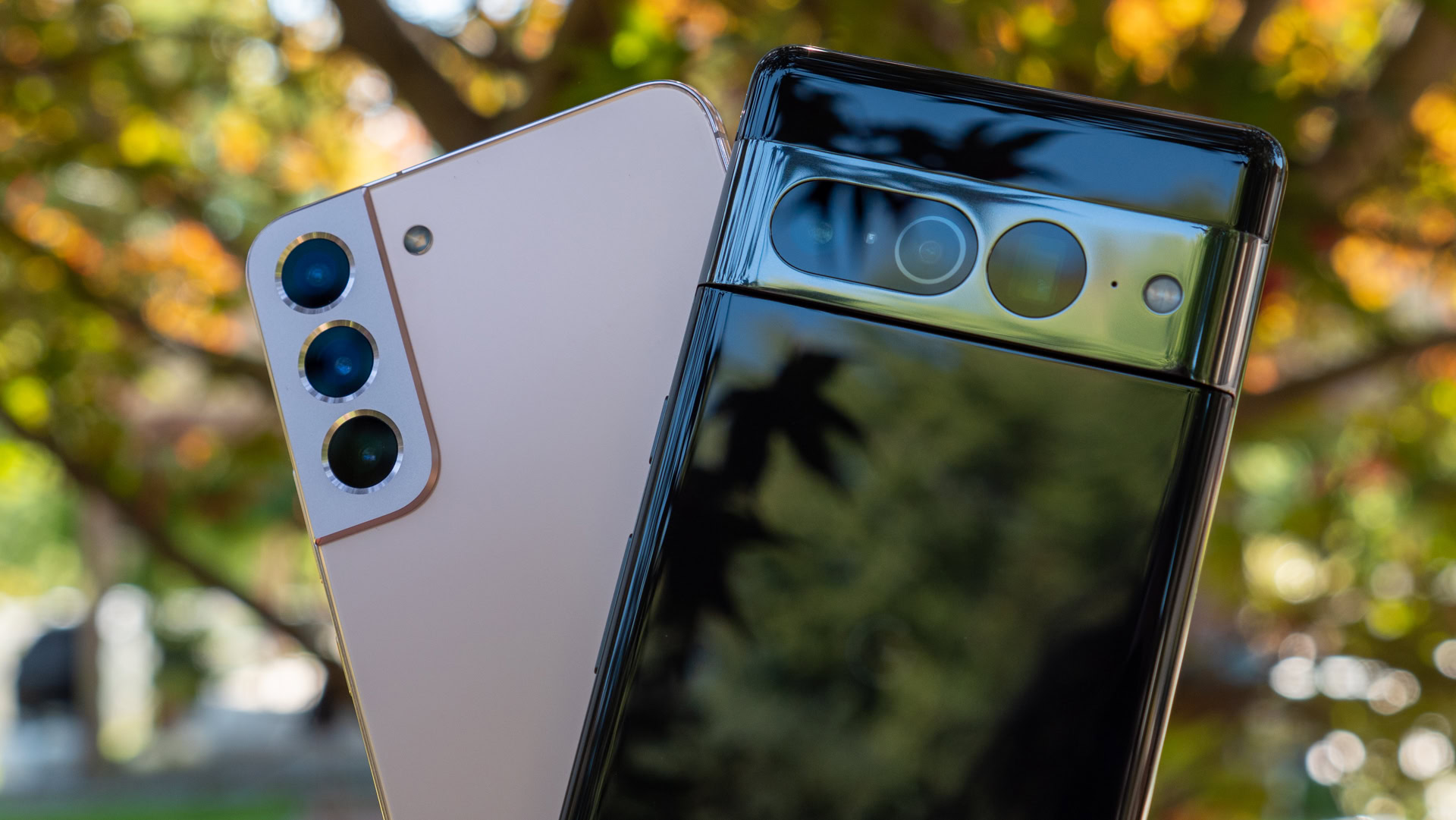
google pixel 7 pro vs samsung galaxy s22 plus cameras

Ryan Haines / Android Authority

Most people are no longer upgrading their Android phones every two years. It’s now the norm for consumers to replace their devices every three or four years. It also doesn’t hurt that carriers have embraced 36-month or even 48-month contracts.

As such, I totally understand if you’re buying a phone with the intention of keeping it for three or more years. But before you put your money down or sign that contract, I’ve got some tips to keep in mind if you want to buy a phone that will last for years and years.

What’s the best tip if you’re buying a phone to keep for a long time?

238 votes

1. Look for a long update policy

Samsung Galaxy S24 in hand homescreen

Robert Triggs / Android Authority

My first tip when buying a smartphone for the long haul is to ensure it has a long update policy. This means that the phone will receive software upgrades for many years to come, bringing new features and keeping the device secure.

Google, Samsung, and HONOR’s top-end phones all offer seven years of OS and security upgrades, making these the best performers in this regard. Meanwhile, high-end phones from the likes of Xiaomi and OnePlus often come with four major OS upgrades and six years of security patches. On the other end of the spectrum, cheap Motorola phones usually only get two OS updates and three years of security patches.

In other words, if you plan to keep a cheap Motorola phone for five years, it will stop receiving updates just after the midway point. This means your device won’t be protected against newfound vulnerabilities. The lack of Android OS upgrades after two years also means you won’t receive many new features down the line.

2. Get a phone with great long-term battery health

The Samsung Galaxy S25 Ultra laying outside with its display on.

Joe Maring / Android Authority

All smartphone batteries degrade over time, effectively losing 20% of their capacity after a set number of charging cycles. It’s why your new phone lasts for ages compared to the same phone two or three years later. However, phone batteries don’t degrade at the same rate.

Some phones have batteries rated for 800 charging cycles (i.e., roughly two years) before they’ve essentially lost 20% capacity. Google and Apple’s phones are rated for 1,000 charging cycles. Samsung is the top dog, though, as its flagship phones are rated for 2,000 cycles (more than four years) before effectively losing 20%. That means if you’ve got a Samsung phone and a Pixel device with the same battery capacity, the Pixel will see a more severe drop in battery life after a few years.

Needless to say, you should check how many charging cycles your next phone is rated for if you don’t want its battery life to fall off a cliff after a couple of years. Manufacturers sometimes post this info on their product pages, but they can also be cagey about it. I’d also recommend you visit the EU’s EPREL database to find these details.

3. Or get a phone with a big battery

OnePlus 15 charging photo

Mishaal Rahman / Android Authority

There’s more to a smartphone’s long-term battery life than charging cycles, though. The actual battery capacity also plays a major role if you want to keep a phone for ages. After all, who cares if the phone’s battery ages very slowly when it’s a small battery capacity anyway?

I’d recommend buying a phone with a large battery (5,000mAh or higher), as this softens the blow of degradation. A phone with an average-sized battery will effectively turn into a device with a small battery owing to that ~20% capacity loss over time. However, a phone with a large battery will turn into one with an average-sized battery.

Of course, you ideally want a phone with both a huge battery and slow degradation. But a huge battery can help offset typical degradation. Furthermore, a phone with a large battery doesn’t need to be charged as often as one with a small battery, so it won’t accrue charging cycles as quickly. However, even a phone with a big battery will see a noticeable decline in endurance after five or six years.

4. Get the phone with more storage (or a microSD card)

Samsung Galaxy S26 series showing screens

Hadlee Simons / Android Authority

You’ll accrue a ton of files as you use your phone over the years. This includes photos, videos, documents, downloaded podcasts, offline music playlists, and WhatsApp-related data. I therefore recommend buying a phone with plenty of storage if you plan to keep it for the long run. This way, you’re unlikely to run out of storage after a year or two. It also means you don’t have to constantly clean up files to claw back space.

I’d suggest buying a phone with at least 256GB of storage in 2026, as 128GB can fill up pretty quickly with captured media, downloaded music, and more. The good news is that the latest flagship phones from Apple, Samsung, and most Chinese brands offer 256GB of base storage. However, Google’s Pixel phones and many mid-range devices still start at just 128GB. This isn’t bad if you don’t use the camera much, or if you frequently offload photos and videos to cloud storage, but it’s better to be safe than sorry.

Another option is to find a phone with a built-in microSD card slot, allowing you to expand your storage with a memory card. Unfortunately, this feature is largely limited to budget Android phones and Sony’s high-end Xperia devices.

5. Make sure the phone has good performance

samsung galaxy z fold 7 open lying flat

Ryan Haines / Android Authority

Many smartphones slow down over time, so it’s worth considering a phone that has good performance. Because much like battery degradation, a phone with mediocre performance on day one might be a stuttering mess four or five years later. But a phone with good performance out of the box should still be relatively smooth, or at least satisfactory, down the line. The big difference is that you can always replace your battery, but you can’t replace your phone’s processor.

Don’t skimp on performance if you want your next phone to last for years and years.

Furthermore, manufacturers and Google constantly bring new features to their phones with each major update. Some of these features require a relatively powerful phone, leaving you in the lurch if your device has no horsepower. You should also consider device performance if you’re a mobile gamer, as a phone with disappointing performance in 2026 is less likely to support the most demanding games a few years from now. My rule of thumb is to buy phones with Snapdragon 8 series chips, recent Snapdragon 7 series processors, Dimensity 8000 or 9000 chips, Samsung’s Exynos 2×00 series, or Google’s Tensor line.

Some Chinese brands like OPPO, vivo, and OnePlus also make interesting claims about long-term performance. For example, OnePlus asserts that the Nord CE 6 Lite will maintain its smoothness for five years, while vivo made the same claim for its V50. I imagine that if these phones have middling performance on day one, this promise just means they’ll have the same middling performance five years from now. I’d still prioritize a good chip and a decent amount of RAM (8GB or more) over these claims, though. But it’s something else to keep in mind if you want to keep your phone for three or more years.

6. Keep durability in mind

A side view of someone holding the Samsung Galaxy S25 Ultra.

Joe Maring / Android Authority

Another important consideration is the phone’s durability. After all, you don’t want your new device to break after its first drop. There are several durability-related factors worth knowing.

Perhaps the most important consideration is the type of protective glass on the phone’s display. Gorilla Glass is the most popular protective glass solution on the market, but there are many versions. Some cheap phones use old Gorilla Glass versions (i.e., Gorilla Glass 3), but you should really look for the Gorilla Glass Victus series and Gorilla Glass 7i if you want more robust protection. Some of the most durable phones on the market use ceramic-based protective glass, such as Gorilla Glass Ceramic, HONOR NanoCrystal Shield, and Gorilla Armor, for improved scratch resistance. Does the phone you’re eyeing have a glass back? Then you should also make sure that the rear cover is protected by Gorilla Glass.

You should also check your phone’s IP rating, which is expressed as two digits (e.g., IP53, IP68). The first digit refers to dust resistance, while the second refers to freshwater resistance. That means a phone with an IP53 rating can resist dust and splashes but can’t be dunked in water. Meanwhile, a phone with an IP67 rating or higher is sealed against dust and can be immersed in water. Some phones don’t have prominent IP ratings at all, but might have “water-repellent” designs. Translation: You can probably use the phone in the rain, but that’s it.

7. Also consider repairability and spare parts

fairphone 5 deconstructed upper module

Rita El Khoury / Android Authority

Another key tip when buying a phone for long-term usage is to make sure that repairs won’t be a problem. Phones officially sold in your country will often have official or authorized repair centers, but it’s a good idea to double-check this.

If you don’t mind DIY repairs, you should find out how easy it is to repair your future smartphone. The iFixit platform often posts written articles and videos detailing a phone’s repairability, complete with a score out of 10. The JerryRigEverything and PBKReviews YouTube channels also deliver great teardown videos. Otherwise, Fairphone is the undisputed king of repairable phones, while HMD has also released a few repairable phones in the last couple of years.

Even if you don’t plan to fix your own phone, you should still find out how easy it is to get spare parts for your prospective phone. Some brands sell spare parts via their website or repair centers, while others might partner with iFixit. The likes of Google and Samsung both sell spare parts in the US, with Google also confirming it’ll offer them for seven years, matching their phone update policy. That’s good news and means you won’t be left in the lurch if you need a new screen or battery five years from now. This also means you can buy spare parts and then take both the parts and your broken phone to an alternative repair store if you’d like.

Thank you for being part of our community. Read our Comment Policy before posting.

The only AI glossary you’ll need this year


Artificial intelligence is rewriting the world, and simultaneously inventing a whole new language to describe how it’s doing it. Sit in on any product meeting, pitch, or panel these days, and you’ll hear people toss around LLMs, RAG, RLHF, and a dozen other terms that can make even very smart people in the tech world feel a little insecure. This glossary is our attempt to fix that: pain-English definitions of the AI terms you’re most likely to actually run into, whether you’re building with this stuff, investing in it, or just trying to keep up by reading TechCrunch or listening to related podcasts. We update it regularly as the field evolves, so consider it a living document, much like the AI systems it describes.


Artificial general intelligence, or AGI, is a nebulous term. But it generally refers to AI that’s more capable than the average human at many, if not most, tasks. OpenAI CEO Sam Altman once described AGI as the “equivalent of a median human that you could hire as a co-worker.” Meanwhile, OpenAI’s charter defines AGI as “highly autonomous systems that outperform humans at most economically valuable work.” Google DeepMind’s understanding differs slightly from these two definitions; the lab views AGI as “AI that’s at least as capable as humans at most cognitive tasks.” Confused? Not to worry — so are experts at the forefront of AI research.

An AI agent refers to a tool that uses AI technologies to perform a series of tasks on your behalf — beyond what a more basic AI chatbot could do — such as filing expenses, booking tickets or a table at a restaurant, or even writing and maintaining code. However, as we’ve explained before, there are lots of moving pieces in this emergent space, so “AI agent” might mean different things to different people. Infrastructure is also still being built out to deliver on its envisaged capabilities. But the basic concept implies an autonomous system that may draw on multiple AI systems to carry out multistep tasks.

Think of API endpoints as “buttons” on the back of a piece of software that other programs can press to make it do things. Developers use these interfaces to build integrations — for example, allowing one application to pull data from another, or enabling an AI agent to control third-party services directly without a human manually operating each interface. Most smart home devices and connected platforms have these hidden buttons available, even if ordinary users never see or interact with them. As AI agents grow more capable, they are increasingly able to find and use these endpoints on their own, opening up powerful — and sometimes unexpected — possibilities for automation.

Given a simple question, a human brain can answer without even thinking too much about it — things like “which animal is taller, a giraffe or a cat?” But in many cases, you often need a pen and paper to come up with the right answer because there are intermediary steps. For instance, if a farmer has chickens and cows, and together they have 40 heads and 120 legs, you might need to write down a simple equation to come up with the answer (20 chickens and 20 cows).

In an AI context, chain-of-thought reasoning for large language models means breaking down a problem into smaller, intermediate steps to improve the quality of the end result. It usually takes longer to get an answer, but the answer is more likely to be correct, especially in a logic or coding context. Reasoning models are developed from traditional large language models and optimized for chain-of-thought thinking thanks to reinforcement learning.

(See: Large language model)

This is a more specific concept that an “AI agent,” which means a program that can take actions on its own, step by step, to complete a goal. A coding agent is a specialized version applied to software development. Rather than simply suggesting code for a human to review and paste in, a coding agent can write, test, and debug code autonomously, handling the kind of iterative, trial-and-error work that typically consumes a developer’s day. These agents can operate across entire codebases, spotting bugs, running tests, and pushing fixes with minimal human oversight. Think of it like hiring a very fast intern who never sleeps and never loses focus — though, as with any intern, a human still needs to review the work.

Although somewhat of a multivalent term, compute generally refers to the vital computational power that allows AI models to operate. This type of processing fuels the AI industry, giving it the ability to train and deploy its powerful models. The term is often a shorthand for the kinds of hardware that provides the computational power — things like GPUs, CPUs, TPUs, and other forms of infrastructure that form the bedrock of the modern AI industry.

A subset of self-improving machine learning in which AI algorithms are designed with a multi-layered, artificial neural network (ANN) structure. This allows them to make more complex correlations compared to simpler machine learning-based systems, such as linear models or decision trees. The structure of deep learning algorithms draws inspiration from the interconnected pathways of neurons in the human brain.

Deep learning AI models are able to identify important characteristics in data themselves, rather than requiring human engineers to define these features. The structure also supports algorithms that can learn from errors and, through a process of repetition and adjustment, improve their own outputs. However, deep learning systems require a lot of data points to yield good results (millions or more). They also typically take longer to train compared to simpler machine learning algorithms — so development costs tend to be higher.

(See: Neural network)

Diffusion is the tech at the heart of many art-, music-, and text-generating AI models. Inspired by physics, diffusion systems slowly “destroy” the structure of data — for example, photos, songs, and so on — by adding noise until there’s nothing left. In physics, diffusion is spontaneous and irreversible — sugar diffused in coffee can’t be restored to cube form. But diffusion systems in AI aim to learn a sort of “reverse diffusion” process to restore the destroyed data, gaining the ability to recover the data from noise.

Distillation is a technique used to extract knowledge from a large AI model with a ‘teacher-student’ model. Developers send requests to a teacher model and record the outputs. Answers are sometimes compared with a dataset to see how accurate they are. These outputs are then used to train the student model, which is trained to approximate the teacher’s behavior.

Distillation can be used to create a smaller, more efficient model based on a larger model with a minimal distillation loss. This is likely how OpenAI developed GPT-4 Turbo, a faster version of GPT-4.

While all AI companies use distillation internally, it may have also been used by some AI companies to catch up with frontier models. Distillation from a competitor usually violates the terms of service of AI API and chat assistants.

This refers to the further training of an AI model to optimize performance for a more specific task or area than was previously a focal point of its training — typically by feeding in new, specialized (i.e., task-oriented) data. 

Many AI startups are taking large language models as a starting point to build a commercial product but are vying to amp up utility for a target sector or task by supplementing earlier training cycles with fine-tuning based on their own domain-specific knowledge and expertise.

(See: Large language model [LLM])

A GAN, or Generative Adversarial Network, is a type of machine learning framework that underpins some important developments in generative AI when it comes to producing realistic data — including (but not only) deepfake tools. GANs involve the use of a pair of neural networks, one of which draws on its training data to generate an output that is passed to the other model to evaluate.

The two models are essentially programmed to try to outdo each other. The generator is trying to get its output past the discriminator, while the discriminator is working to spot artificially generated data. This structured contest can optimize AI outputs to be more realistic without the need for additional human intervention. Though GANs work best for narrower applications (such as producing realistic photos or videos), rather than general purpose AI.

Hallucination is the AI industry’s preferred term for AI models making stuff up — literally generating information that is incorrect. Obviously, it’s a huge problem for AI quality. 

Hallucinations produce GenAI outputs that can be misleading and could even lead to real-life risks — with potentially dangerous consequences (think of a health query that returns harmful medical advice).

The problem of AIs fabricating information is thought to arise as a consequence of gaps in training data. Hallucinations are contributing to a push toward increasingly specialized and/or vertical AI models — i.e. domain-specific AIs that require narrower expertise — as a way to reduce the likelihood of knowledge gaps and shrink disinformation risks.

Inference is the process of running an AI model. It’s setting a model loose to make predictions or draw conclusions from previously seen data. To be clear, inference can’t happen without training; a model must learn patterns in a set of data before it can effectively extrapolate from this training data.

Many types of hardware can perform inference, ranging from smartphone processors to beefy GPUs to custom-designed AI accelerators. But not all of them can run models equally well. Very large models would take ages to make predictions on, say, a laptop versus a cloud server with high-end AI chips.

[See: Training]

Large language models, or LLMs, are the AI models used by popular AI assistants, such as ChatGPT, Claude, Google’s Gemini, Meta’s AI Llama, Microsoft Copilot, or Mistral’s Le Chat. When you chat with an AI assistant, you interact with a large language model that processes your request directly or with the help of different available tools, such as web browsing or code interpreters.

LLMs are deep neural networks made of billions of numerical parameters (or weights, see below) that learn the relationships between words and phrases and create a representation of language, a sort of multidimensional map of words.

These models are created from encoding the patterns they find in billions of books, articles, and transcripts. When you prompt an LLM, the model generates the most likely pattern that fits the prompt.

(See: Neural network)

Memory cache refers to an important process that boosts inference (which is the process by which AI works to generate a response to a user’s query). In essence, caching is an optimization technique, designed to make inference more efficient. AI is obviously driven by high-octane mathematical calculations and every time those calculations are made, they use up more power. Caching is designed to cut down on the number of calculations a model might have to run by saving particular calculations for future user queries and operations. There are different kinds of memory caching, although one of the more well-known is KV (or key value) caching. KV caching works in transformer-based models, and increases efficiency, driving faster results by reducing the amount of time (and algorithmic labor) it takes to generate answers to user questions.   

(See: Inference)  

Model Context Protocol, or MCP, is an open standard that lets AI models connect to outside tools and data — your files, databases, or apps like Slack and Google Drive — without a developer building a custom connector for every single pairing. Think of it as a USB-C port for AI. Anthropic introduced MCP in 2024 and later handed it over to the Linux Foundation, and it’s since been adopted by OpenAI, Google, and Microsoft, making it one of the fastest-spreading standards in recent AI history.

Mixture of Experts is a model architecture that splits a neural network into many smaller specialized sub-networks, or “experts,” and only activates a handful of them for any given task. Rather than routing every request through the entire model — like calling in your whole office for every question — an MoE model has a built-in “router” that picks just the right specialists for the job. This makes it possible to build enormous models that stay relatively fast and cheap to run, since only a fraction of the network is doing work at any one time. Mistral AI’s Mixtral model is a well-known example; OpenAI’s newer GPT models are also widely believed to use some version of this approach, though the company has never officially confirmed it.

(See: Neural network, Deep learning)

A neural network refers to the multi-layered algorithmic structure that underpins deep learning — and, more broadly, the whole boom in generative AI tools following the emergence of large language models. 

Although the idea of taking inspiration from the densely interconnected pathways of the human brain as a design structure for data processing algorithms dates all the way back to the 1940s, it was the much more recent rise of graphical processing hardware (GPUs) — via the video game industry — that really unlocked the power of this theory. These chips proved well suited to training algorithms with many more layers than was possible in earlier epochs — enabling neural network-based AI systems to achieve far better performance across many domains, including voice recognition, autonomous navigation, and drug discovery.

(See: Large language model [LLM])

Open source refers to software — or, increasingly, AI models — where the underlying code is made publicly available for anyone to use, inspect, or modify. In the AI world, Meta’s Llama family of models is a prominent example; Linux is the famous historical parallel in operating systems. Open source approaches allow researchers, developers, and companies around the world to build on top of one another’s work, accelerating progress and enabling independent safety audits that closed systems cannot easily provide. Closed source means the code is private — you can use the product but not see how it works, as is the case with OpenAI’s GPT models — a distinction that has become one of the defining debates in the AI industry.

Parallelization means doing many things at the same time instead of one after another — like having 10 employees working on different parts of a project at the same time instead of one employee doing everything sequentially. In AI, parallelization is fundamental to both training and inference: modern GPUs are specifically designed to perform thousands of calculations in parallel, which is a big reason why they became the hardware backbone of the industry. As AI systems grow more complex and models grow larger, the ability to parallelize work across many chips and many machines has become one of the most important factors in determining how quickly and cost-effectively models can be built and deployed. Research into better parallelization strategies is now a field of study in its own right.

RAMageddon is the fun new term for a not-so-fun trend that is sweeping the tech industry: an ever-increasing shortage of random access memory, or RAM chips, which power pretty much all the tech products we use in our daily lives. As the AI industry has blossomed, the biggest tech companies and AI labs — all vying to have the most powerful and efficient AI — are buying so much RAM to power their data centers that there’s not much left for the rest of us. And that supply bottleneck means that what’s left is getting more and more expensive.

That includes industries like gaming (where major companies have had to raise prices on consoles because it’s harder to find memory chips for their devices), consumer electronics (where memory shortage could cause the biggest dip in smartphone shipments in more than a decade), and general enterprise computing (because those companies can’t get enough RAM for their own data centers). The surge in prices is only expected to stop after the dreaded shortage ends but, unfortunately, there’s not really much of a sign that’s going to happen anytime soon.  

Like AGI, recursive self-improvement is a threshhold for how smart AI can get, and how little it may rely on humans. In the RSI scenario, AI models start improving themselves without human intervention, leading to a huge acceleration in capabilities and autonomy. In some tellings, this would be a cataclysmic moment akin to the singularity, a moment when AI models become immune to outside intervention. But RSI also describes a basic capability — can an AI model design its own successor? — which makes it much easier for engineers to try to build it. A number of recent AI startups have set out to build recursively self-improving models, but most of them dismiss the apocalyptic implications, presenting RSI as simply the next frontier for research.

Reinforcement learning is a way of training AI where a system learns by trying things and receiving rewards for correct answers — like training your beloved pet with treats, except the “pet” in this scenario is a neural network and the “treat” is a mathematical signal indicating success. Unlike supervised learning, where a model is trained on a fixed dataset of labeled examples, reinforcement learning lets a model explore its environment, take actions, and continuously update its behavior based on the feedback it receives. This approach has proven especially powerful for training AI to play games, control robots, and, more recently, sharpen the reasoning ability of large language models. Techniques like reinforcement learning from human feedback, or RLHF, are now central to how leading AI labs fine-tune their models to be more helpful, accurate, and safe.

When it comes to human-machine communication, there are some obvious challenges — people communicate using human language, while AI programs execute tasks through complex algorithmic processes informed by data. Tokens bridge that gap: they are the basic building blocks of human-AI communication, representing discrete segments of data that have been processed or produced by an LLM. They are created through a process called tokenization, which breaks down raw text into bite-sized units a language model can digest, similar to how a compiler translates human language into binary code a computer can understand. In enterprise settings, tokens also determine cost — most AI companies charge for LLM usage on a per-token basis, meaning the more a business uses, the more it pays.

So again, tokens are the small chunks of text — often parts of words rather than whole ones — that AI language models break language into before processing it; they are roughly analogous to “words” for the purposes of understanding AI workloads. Throughput refers to how much can be processed in a given period of time, so token throughput is essentially a measure of how much AI work a system can handle at once. High token throughput is a key goal for AI infrastructure teams, since it determines how many users a model can serve simultaneously and how quickly each of them receives a response. AI researcher Andrej Karpathy has described feeling anxious when his AI subscriptions sit idle — echoing the feeling he had as a grad student when expensive computer hardware wasn’t being fully utilized — a sentiment that captures why maximizing token throughput has become something of an obsession in the field.

Developing machine learning AIs involves a process known as training. In simple terms, this refers to data being fed in in order that the model can learn from patterns and generate useful outputs. Essentially, it’s the process of the system responding to characteristics in the data that enables it to adapt outputs toward a sought-for goal — whether that’s identifying images of cats or producing a haiku on demand.

Training can be expensive because it requires lots of inputs, and the volumes required have been trending upwards — which is why hybrid approaches, such as fine-tuning a rules-based AI with targeted data, can help manage costs without starting entirely from scratch.

[See: Inference]

A technique where a previously trained AI model is used as the starting point for developing a new model for a different but typically related task — allowing knowledge gained in previous training cycles to be reapplied. 

Transfer learning can drive efficiency savings by shortcutting model development. It can also be useful when data for the task that the model is being developed for is somewhat limited. But it’s important to note that the approach has limitations. Models that rely on transfer learning to gain generalized capabilities will likely require training on additional data in order to perform well in their domain of focus

(See: Fine tuning)

Validation loss is a number that tells you how well an AI model is learning during training — and lower is better. Researchers track it closely as a kind of real-time report card, using it to decide when to stop training, when to adjust hyperparameters, or whether to investigate a potential problem. One of the key concerns it helps flag is overfitting, a condition in which a model memorizes its training data rather than truly learning patterns it can generalize to new situations. Think of it as the difference between a student who genuinely understands the material and one who simply memorized last year’s exam — validation loss helps reveal which one your model is becoming.

Weights are core to AI training, as they determine how much importance (or weight) is given to different features (or input variables) in the data used for training the system — thereby shaping the AI model’s output. 

Put another way, weights are numerical parameters that define what’s most salient in a dataset for the given training task. They achieve their function by applying multiplication to inputs. Model training typically begins with weights that are randomly assigned, but as the process unfolds, the weights adjust as the model seeks to arrive at an output that more closely matches the target.

For example, an AI model for predicting housing prices that’s trained on historical real estate data for a target location could include weights for features such as the number of bedrooms and bathrooms, whether a property is detached or semi-detached, whether it has parking, a garage, and so on. 

Ultimately, the weights the model attaches to each of these inputs reflect how much they influence the value of a property, based on the given dataset.

This article is updated regularly with new information.
When you purchase through links in our articles, we may earn a small commission. This doesn’t affect our editorial independence.

Wordle today: The answer and hints for July 4, 2026


Today’s Wordle answer should be easy to solve if you’re a foodie.

If you just want to be told today’s word, you can jump to the bottom of this article for today’s Wordle solution revealed. But if you’d rather solve it yourself, keep reading for some clues, tips, and strategies to assist you.

Where did Wordle come from?

Originally created by engineer Josh Wardle as a gift for his partner, Wordle rapidly spread to become an international phenomenon, with thousands of people around the globe playing every day. Alternate Wordle versions created by fans also sprang up, including battle royale Squabble, music identification game Heardle, and variations like Dordle and Quordle that make you guess multiple words at once

Wordle eventually became so popular that it was purchased by the New York Times, and TikTok creators even livestream themselves playing.

What’s the best Wordle starting word?

The best Wordle starting word is the one that speaks to you. But if you prefer to be strategic in your approach, we have a few ideas to help you pick a word that might help you find the solution faster. One tip is to select a word that includes at least two different vowels, plus some common consonants like S, T, R, or N.

What happened to the Wordle archive?

The entire archive of past Wordle puzzles was originally available for anyone to enjoy whenever they felt like it, but it was later taken down, with the website’s creator stating it was done at the request of the New York Times. However, the New York Times then rolled out its own Wordle Archive, available only to NYT Games subscribers.

Is Wordle getting harder?

It might feel like Wordle is getting harder, but it actually isn’t any more difficult than when it first began. You can turn on Wordle‘s Hard Mode if you’re after more of a challenge, though.

Here’s a subtle hint for today’s Wordle answer:

An Italian staple.

Does today’s Wordle answer have a double letter?

The letter Z appears twice.

Meet The Mashable 101: Our list of the content creators shaping the internet today

Today’s Wordle is a 5-letter word that starts with…

Today’s Wordle starts with the letter P.

The Wordle answer today is…

Get your last guesses in now, because it’s your final chance to solve today’s Wordle before we reveal the solution.

Drumroll please!

The solution to today’s Wordle is…

PIZZA

Don’t feel down if you didn’t manage to guess it this time. There will be a new Wordle for you to stretch your brain with tomorrow, and we’ll be back again to guide you with more helpful hints. Are you also playing NYT Strands? See hints and answers for today’s Strands.

Reporting by Chance Townsend, Caitlin Welsh, Sam Haysom, Amanda Yeo, Shannon Connellan, Cecily Mauran, Mike Pearl, and Adam Rosenberg contributed to this article.

If you’re looking for more puzzles, Mashable’s got games now! Check out our games hub for Mahjong, Sudoku, free crossword, and more.

Not the day you’re after? Here’s the solution to yesterday’s Wordle.

Google DeepMind Unionization Talks Are Off to a Rocky Start


Negotiations between Google DeepMind and its London-based employees over the possibility of unionization stumbled this week, after initial talks left union representatives feeling they had wasted their time, WIRED has learned.

In May, DeepMind employees asked Google to recognize the Communication Workers Union and Unite the Union as joint representatives. The company later denied that request, but agreed to participate in negotiations arbitrated by a third-party body.

An initial meeting on Wednesday was attended by union officers, DeepMind employees involved in the unionization push, the third-party arbitrator, and DeepMind HR representatives. Those advocating for unionization were left frustrated by the absence of DeepMind leadership figures.

“Recognition talks not being attended by senior management at the opening stage is a leading indicator that a company isn’t engaging in good faith. It’s just a time-wasting exercise,” claims John Chadfield, a CWU officer, who attended the meeting. “Negotiations have stalled at an early stage.”

DeepMind denies that negotiations have stalled. “The first step in the process is to define who the unions want to represent and the parties agreed on next steps to do this,” says Al Verney, a Google DeepMind spokesperson. “The appropriate representatives attended this initial meeting.”

During the meeting, a DeepMind employee read out a prepared letter on behalf of colleagues that support unionization, reviewed by WIRED. “Instead of having meaningful dialogue with its employees about our concerns, Google DeepMind workers have been treated as a problem handed off to HR,” the letter states. The employee reading the statement was interrupted on two occasions by DeepMind HR representatives, according to multiple sources with knowledge of the meeting.

The letter goes on to allege that Google has attempted to quash open dialogue between DeepMind employees and crack down on dissent, by shutting down or reconfiguring internal chat venues, and preventing staff from responding to company-wide communications about the unionization bid. Employees that sought to dance around restrictions were “reprimanded” by HR, the letter alleges.

“The intention was to intimidate,” claims a DeepMind employee involved in drafting the letter, who asked to remain anonymous because they are not authorized to speak to the media. “These are well-established union-busting techniques.”

“We’ll continue to engage constructively in the…process and have open dialogue with employees,” says Verney. “For topics outside of this, we continue to offer employees a variety of other channels and opportunities to discuss their views.”

The push to unionize at DeepMind began in February 2025, when Google’s parent company Alphabet removed a pledge not to use AI for purposes like weapons development and surveillance from its ethics guidelines, WIRED previously reported.

“Those principles were a big part of why I joined DeepMind,” says a second DeepMind employee, who asked to remain anonymous for the same reason. “We basically just got rid of them all.”

‘Gachiakuta’ Star, Director Explain Why Its Hero’s Fall From Grace Is When the Anime Became Peak


In less than no time at all, Bones Film’s adaptation of Kei Urana’s Kodansha manga, Gachiakuta, shot up the ranks as a promising anime, with every fan champing at the bit to see how its second season will further cement its legacy as the next big thing. While we’ve still got a little bit of a wait before we see how Rudo and crew will further exceed expectations as the stylish new battle anime on the block, we’ve got the inside scoop with the Japanese creatives who were vital in making its first season a smash hit. And we’re giving (get it?) you a peek at how peak was made, too.

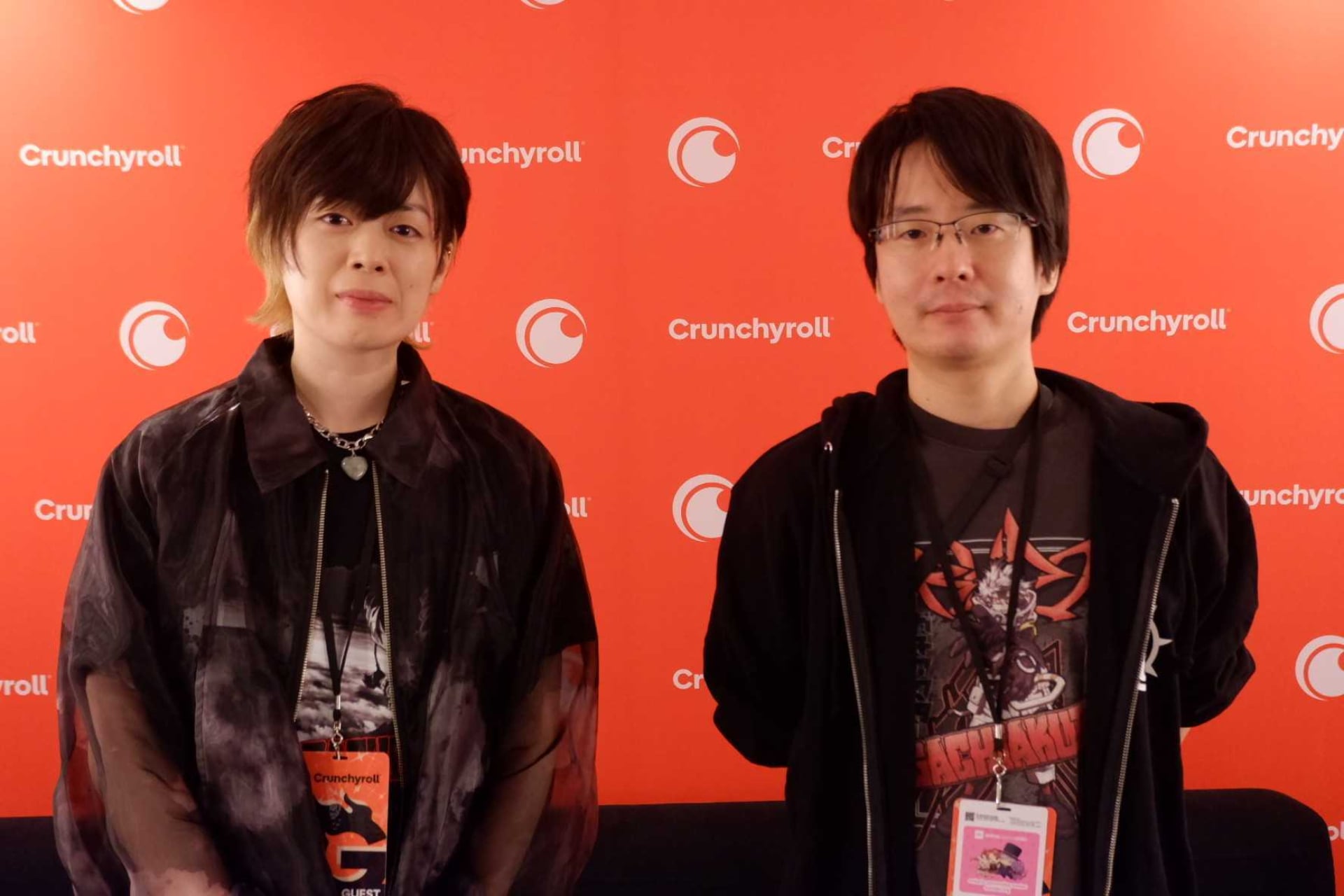
At Anime Expo, io9 spoke with Gachiakuta director Fumihiko Suganuma and Rudo voice actor Aoi Ichikawa about what sparked their interest in bringing the series to life as an anime, their creative approach to handling tricky, sensitive scenes, and their thoughts on its growing fandom. 

Gachiakuta Aoi Ichikawa Fumihiko Suganuma
Left: Aoi Ichikawa, right: Fumihiko Suganuma © Isaiah Colbert/io9

Isaiah Colbert, io9: What initially resonated with both of you about the world and themes of Gachiakuta that made you want to be a part of the anime?

Aoi Ichikawa: I would have to say a bit of resonance with Rudo’s character because he’s just the embodiment of anger. It’s what makes him him. All that emotional explosiveness is kind of fueling his life, and I feel like I resonate with those very heated emotions.

Fumihiko Suganuma: It’s likely that the power from the original manga’s art is what drew me to it because it’s slightly different from popular art styles in Japan. It’s very original, and it’s not really bowing to fit the current manga art trend. I really feel that the art has so much power that I was drawn to it.

io9: During production, was there a particular scene or moment that was especially challenging, and that made it all the sweeter to finally see it brought to life?

Ichikawa: The first episode was really challenging because of how [Rudo] falls from grace… without that, you can’t really show his anger and the motivation behind Rudo’s character. Therefore, that was the peak of his anger. And to be able to express that was really, really hard. But without being able to express that falling scene, Rudo can’t exist for the rest of the series, because that was his origin point.

When I sat down and watched the completed footage during the broadcast of episode one, I really felt like this was where Gachiakuta was finally starting. And I really felt accomplished watching it because it really moved me. It was a very heartwarming moment, like, “This is where it all begins.”

Suganuma: The latter half of anime corrections is always a battle against time. I felt a little hesitant, but I made a lot of very hard requests upon my staff, including a lot of corrections, and the staff really, really worked hard and helped me out a lot in that front. So, the fact that every episode made it to broadcast on time was very fulfilling. And I am really grateful for my entire staff that we pulled it off.

io9: One moment that resonated strongly with viewers was Amo’s storyline, especially the way the anime depicts her suffering and her heart-to-heart conversation with Rudo about their conflicting ideals. From your perspectives, what went into approaching that scene with the sensitivity it required, and how did each of you ensure it was handled with the care it deserved?

Ichikawa: I noticed the emotional flow by reading the script and reading the manga. But I feel like Rudo and Amo’s hearts are not completely connected. They have one-sided emotions going towards each other, and it’s not a proper dialogue. So I really felt that I should not actually resonate for this situation because I feel I needed to cut off my emotions and resonance towards the scene as me, the person—the actor—because Rudo is not going to go through that.

Suganuma: The whole Amo arc was pretty sensitive material. It’s my style—my policy—to do it a bit matter-of-factly and not make it too sensational because the dialogue in those scenes really needs to be heard by the audience. Because what they say is very important. I didn’t want the visuals to obstruct what they’re saying, so I made sure to do the stage production in a way so that the dialogue is brought out to be first and foremost.

io9: Gachiakuta has a very specific tone and energy within the shonen space, thanks in no small part to the series’ mix of graffiti art and a hip-hop-influenced soundtrack, which has led the show to be celebrated online as a cultural exchange between Japan and Black culture in America through memes, fan art, and cosplay. What does that significance mean to you as artists who helped bring this adaptation to life?

Ichikawa: I’m very happy about it because we’re enjoying the series together. And it’s inside the love for Gachiakuta—whether it be cosplay or fanart, whatever—everyone is expressing their love and trying to build up the community as a whole. So I really am very happy about that.

Suganuma: First of all, ditto. I’m very happy to see the reception. I wasn’t too versed in the realms of graffiti and hip-hop. The fact that it was so widely accepted made me feel like I really need to learn more about these cultures so that I can do even better.

io9: Since Gachiakuta’s magic system explores the emotional weight objects can carry, what everyday item from your own life would make the most fitting “giver” object for you within the anime’s world?

Ichikawa: My Gachiakuta object would be my script. Because without it, I wouldn’t be Rudo. That is my world, so that has to be my item.

Suganuma: I would have to say manga because I really love reading manga. It kinda even makes me think, “Imagine if I became a manga artist.” It’s most likely because I love manga so much that I wanted to be able to take one step back and have a job that has something to do with it, but I can still enjoy it as a reader.

Gachiakuta season 2 is in production.


io9 is on the ground at Anime Expo 2026. We’ll be bringing you updates on all the biggest panels, screenings, and announcements, plus exclusive one-on-one interviews with the people behind some of the best and most popular anime around. You can check out all of io9’s Anime Expo coverage here.

Want more io9 news? Check out when to expect the latest Marvel, Star Wars, and Star Trek releases, what’s next for the DC Universe on film and TV, and everything you need to know about the future of Doctor Who.

Popular Potato Chips Face FDA’s Most Serious Recall: What to Know


A voluntary potato chip recall has been classified as a Class I recall by the Food and Drug Administration due to possible salmonella contamination. Class I is considered the health agency’s most serious recall level and means there’s a “reasonable probability” that the item “will cause serious adverse health consequences or death.”

Utz Quality Foods announced the voluntary recall in early May after discovering that a seasoning powder used in the chips, supplied by a third party, may have been contaminated with salmonella. The recalled chips were distributed nationwide, but no illnesses have been reported to date. 

A representative for Utz Quality Foods did not immediately respond to a request for comment.

What items are recalled?

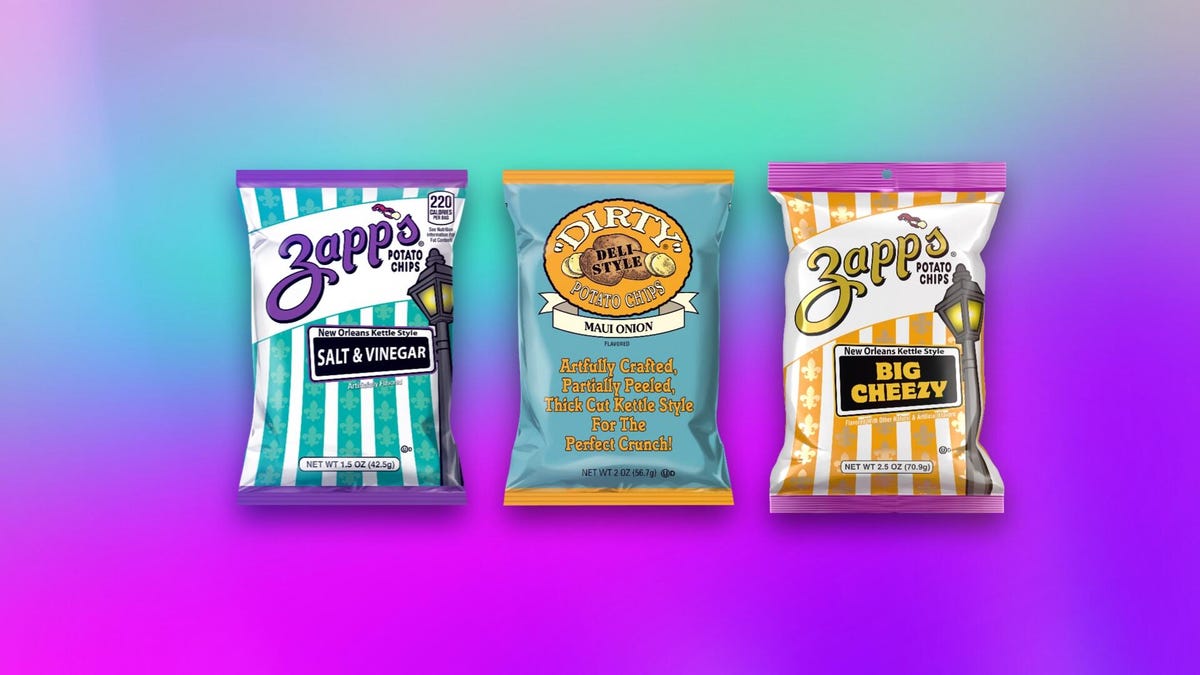
The following flavors of Zapp’s chips have been recalled: 

  • Bayou Blackened Ranch Potato Chips (1.5 oz, UPC: 83791272917; 2.5 oz, UPC: 83791272924; 8 oz, UPC: 83791272931)
  • Salt and Vinegar Potato Chips 60 ct (1.5 oz, UPC: 83791010144)
  • Big Cheezy Potato Chip (2.5 oz, UPC: 83791192208; 8 oz, UPC: 83791192246)

The following flavors of Dirty chips have been recalled: 

  • Salt and Vinegar Potato Chips (2 oz, UPC: 83791520148)
  • Maui Onion Potato Chip (2 oz, UPC: 83791520162)
  • Sour Cream and Onion Potato Chips (2 oz, UPC: 83791520094) 

If you have a recalled product, do not eat the chips. You can call Utz Customer Care at 1-877-423-0149 for a refund. 

What are the signs of salmonella poisoning?

Salmonella poisoning can cause stomach pain, diarrhea, nausea and fever. 

According to the FDA, salmonella infection can be especially serious for young children, older adults and those with compromised immune systems. 


OpenAI Reportedly Wants All AI Companies To Give The US Government A Stake In Their Businesses


Sam Altman is in talks with the US government in a bid to clear political hurdles, says the Financial Times.

OpenAI’s Sam Altman has reportedly been in talks with the US government to ensure his company’s path towards achieving its goals remains free of political hurdles. According to the Financial Times, Altman has suggested giving the government a five percent stake in the company, in order to share the spoils of the AI boom with the public. But his idea doesn’t only involve OpenAI: Under his proposal, other top AI companies like Google, Anthropic, xAI and Meta would have to agree to give the government a similar stake in their businesses.  

AI companies like Anthropic and OpenAI have recently encountered roadblocks from the US government when it came to releasing their latest AI models. Anthropic had to block all access to its Mythos and Fable cybersecurity models after being ordered to do so by the Trump administration. It was only recently granted permission to restore users’ access to them. Meanwhile, OpenAI had to roll out a limited preview of its GPT-5.6 model to government-approved partners, as requested by the administration, as well. 

In June, Trump had signed a scaled-back executive order, which asks AI companies to share their most powerful models for voluntary government review 30 days before making them available to the public. Politicians, including Trump’s allies, as well as organizations like the UN, however, are calling for more stringent AI policies. 

As the Times notes, giving the government part ownership worked for another firm before. President Trump used to call for Intel CEO Lip-Bu Tan to resign until his administration took a 10 percent stake in the chipmaker. Trump even recently boasted that “America’s stake [in Intel] is now over 60 billion dollars” from $8.9 billion in 2025. 

Altman and other OpenAI executives reportedly floated the idea of having leading AI developers give a five percent equity to sovereign funds, such as the Alaska Permanent Fund, which pays dividends to the state government and residents. Talks between OpenAI and the government are in their very early stages, though, and the Times says any deal would still require Congress approval.

I wore the Oura Ring 5 for a month, and it’s an even bigger upgrade than expected


Oura Ring 5 on hand

Nina Raemont/ZDNET

Follow ZDNET: Add us as a preferred source on Google.


ZDNET’s key takeaways

  • Pros: The brand’s slimmest smart ring yet, 40% smaller than the last gen. Extra day of battery life. Useful app add-ons and GLP-1 insights.
  • Cons: Besides the slimmer physical form, it’s largely the same as the Oura Ring 4. However, it is around $50 more expensive with the same annual subscription.

After a few weeks of wearing Oura’s skinniest Oura Ring 5 around my finger, I was riding the subway when I spotted a girl’s hand donning the not-so-slim Oura Ring 4. The ring’s chunkiness caught my attention, and I spent several seconds focused on that thick piece of wearable technology. It looked huge on her finger and instantly noticeable — ugly, even.

Also: I dug deeper into my Oura Ring data using this free app – here’s what I found

Maybe I wouldn’t have noticed that prior to the Oura Ring 5, but as soon as Oura’s latest smart ring launched with a substantially slimmer design, every other smart ring in my view became obsolete.

It’s funny how quickly we become accustomed to the newest thing, and how fast technology from a year or two ago becomes outdated in the advent of a worthy upgrade. Nowhere is that more evident than in Oura’s latest (and smallest) smart ring. 

As I’ve worn the Oura Ring 5 over the past few weeks, I’ve thought a lot about this idea. Like Apple unveiling the iPhone Air, the biggest upgrade to this smart ring is simply the size and slimness of the device itself; not too much else has changed. 

Sure, the Oura Ring 5 arrives with a few software updates that hint at Oura’s greater mission as a health technology company, but you’re really buying it for its discreet build — the software is a lovely add-on. 

Also: Oura Ring 5 vs. Oura Ring 4: I compared both smart rings for health tracking – you should buy this one

I’ve worn the Oura Ring 5 everywhere these past few weeks, and the latest generation is a worthy upgrade for a few reasons. Here’s what I found.

Two big upgrades

image-20260603-224120-756

Oura Ring 4 on left and Oura Ring 5 on right. 

Nina Raemont/ZDNET

40% is the big number with the Oura Ring 5. It’s 40% smaller than its predecessor, and, as someone who has worn the Oura Ring 4 since it came out, I can confirm it’s noticeable. It seems like other users notice the difference as well: one Reddit user said they thought they forgot about the ring around their finger, only to notice that it was there — just less bulky than the previous generation. 

Also: Google’s Fitbit Air is a $99 screenless wearable that I can actually take seriously

Oura also says it added an additional day of battery life to the new ring, even despite the smaller size. This is thanks to optimized signal pathways, a new battery, and improved AI, the company says. That upgraded battery claim might be true, but it’s heavily dependent on the size of smart ring you’re wearing. I wear a size 6 ring, for example, and I haven’t experienced that much of a change between my first few weeks using the Oura Ring 4 and Oura Ring 5.  

I tested the battery life of the Oura Ring 5 by wearing it and recording its percentages each day to see just how quickly the smart ring’s battery depletes. Because battery capacity is dependent on ring size, and I have one of Oura’s smaller rings, I was expecting a shorter battery life already. Here’s how the battery fared over a six-day period. 

On June 9, Oura notified me that I had around seven hours of battery left before it would run out. If I had let it fully die, it would have gone to 0% at 1 a.m. on June 10, making the total battery life of this smart ring, on its first-ever battery run, around six days and a few hours. 

During my first test run with the Oura Ring 4 around a year ago, I wrote that the Oura Ring 4 gave me about five and a half days of battery life. With the 5, I got around one day more of battery life during my first week. Not too bad. 

About that software… 

screenshot-2026-07-01-at-11-13-19am.png

Nina Raemont/ZDNET

When Oura launched the Oura Ring 5, it announced a few new software add-ons that make the smart ring a little bit more useful and relevant for modern-day health tracking. In the last few software updates, Oura added a live activity tracker widget for your smartphone and a location feature for when you’ve misplaced your ring or its charging case. 

There also were some special features for women: Oura members could log their symptoms along their pregnancy or perimenopausal track to contextualize their condition, providing deeper insights into a user’s health during a pivotal moment. Oura continues this ethos with its latest feature, available now on the Oura app. 

Also: I tracked 3,000 steps on my Apple Watch, Google Pixel, and Oura Ring – this one was most accurate

Something that will resonate with a new demographic is the GLP-1 insights feature, which aggregates your health data as you begin taking weight loss medication. Dosing, weight, and side effects are connected to biomarkers Oura already measures, such as sleep, stress, key vitals, and readiness. I didn’t test out this feature, since I’m not on a GLP-1, but I can imagine it being useful for someone starting the drug and wondering whether their symptoms are normal or concerning.

Another feature in development is Health Radar, Oura’s extension of Symptom Radar, the near-magical feature that successfully predicted an illness days before I fell ill. Health Radar will track cardiovascular strain and overall blood pressure health, along with nighttime breathing over a 30-day period. This will arrive in the Oura app by July 8, 2026, and it’s opt-in only. 

ZDNET’s buying advice 

If you’re planning to upgrade from an earlier-gen ring to the Oura Ring 5, you’ll do so for the thinner design, first and foremost. That’s the greatest draw of this update, and one that has made wearing the ring more enjoyable, more discreet, and more like actual jewelry. 

Also: Why your Oura Ring battery is dying quicker (and what Oura is doing about it)

You’ll probably get another day of battery life with this update as well, though we’ll see just how long that battery decides to last, as the Oura Ring 4 had a few battery issues of its own that caused diminishing returns on battery over a year of use. Oura has replaced that battery with a new one for the fifth generation ring, so I hope the Oura Ring 5 will have a longer-lasting battery than its predecessor. 

As far as the usual stuff goes, the Oura Ring still excels at sleep, stress, and symptom tracking. I’d recommend it to anyone looking for the best health or sleep tracker on the market, especially if they want a smart ring over a fitness band or watch. 

Why the Oura Ring 5 earns an Editors’ Choice Award

The best health trackers can still be a hassle to wear, and even smart rings still feel like technology disguised as jewelry. The Oura Ring 5 is the first smart ring I’ve tested that feels like jewelry first and technology second. 

Its smaller design makes a big difference for everyday wear, and it’s the most comfortable smart ring I’ve tested. Oura matches its improved physical design with its signature, insights-driven software with the Oura Ring 5.  


Sony is shutting down the PS3 and PS Vita stores after a very long run


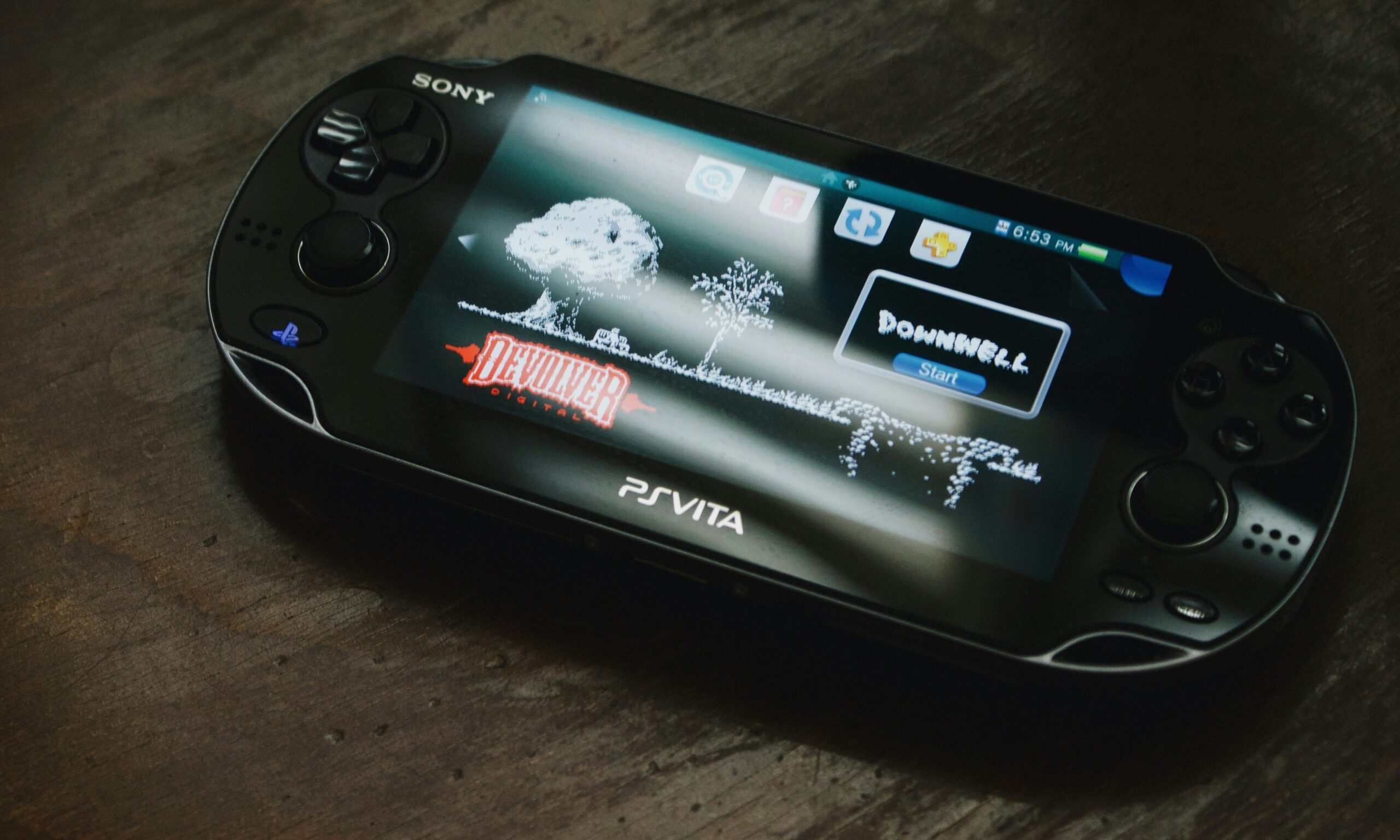
Sony is closing the PlayStation Store on PS3 and PS Vita, ending new digital purchases on two of its most beloved older platforms after a remarkably long run.

The PS3 launched in 2006 and 2007, depending on the region, while the PS Vita arrived in Japan in late 2011 before reaching North America and Europe in February 2012. By the time the final closures happen in July 2027, Sony will have supported PS3 store purchases for nearly two decades, and PS Vita purchases for more than 15 years.

When will the stores shut down?

The shutdown will happen in phases. PlayStation Store on PS3 will close first in Mexico, Honduras, and Nicaragua starting in August 2026. More Latin American and Middle Eastern countries will follow in late 2026.

For the rest of the world, PlayStation Store on both PS3 and PS Vita will close in July 2027. After that, players will no longer be able to buy new digital games, DLC, or other content on those devices.

Sony says previously purchased content will remain available to download “for the foreseeable future.” The company says the decision comes down to modern commerce systems and updated payment processing standards that PS3 and PS Vita can no longer support at the required level.

The preservation concern is hard to ignore

For many players, the frustration is not only about losing old storefronts. Some PS3 and Vita games still have no modern ports, no physical versions, and no easy way to buy them elsewhere.

One X user summed up that concern by saying many games exclusive to PS3 and Vita will no longer be purchasable, including Sony’s own games that have not been ported or added to its cloud gaming service.

theyre also shutting down the ps3 and vita stores, so many games exclusive to those platforms will no longer be purchasable, INCLUDING sonys own games they havent ported or dropped onto their could gaming slop service

— . (@ConnahDC_) July 1, 2026

Sony tried to close the PS3 and Vita stores in 2021, then reversed course after strong backlash from players. This new plan gives people more time to buy what they want, but it still leaves the same long-term problem. Once these stores close, a large part of PlayStation’s older digital catalog becomes harder to access legally.

MacBook Ultra: Everything We Know About Apple’s OLED Touchscreen Mac


Apple is working on a high-end MacBook Pro that could be called the “MacBook Ultra.” The device will have several firsts in a Mac, including an OLED display and a touchscreen.

The “Ultra” name isn’t a sure thing, and Apple could also continue to call the device the ‌MacBook Pro‌. It will be a “Pro” device in the ‌MacBook Pro‌ line.

Design

Apple hasn’t redesigned the ‌MacBook Pro‌ since it added Apple silicon chips in 2021, so the device is due for a new look. The MacBook Ultra could feature some design changes, including a thinner chassis.

Apple could get rid of the notch on the MacBook Ultra, replacing it with an iPhone-style Dynamic Island. A ‌Dynamic Island‌ would unify the way Siri AI behaves across the iPhone and the Mac with iOS 27 and macOS Golden Gate.

Size Options

The MacBook Ultra will be available in both 14-inch and 16-inch size options.

Display

Apple’s upcoming MacBook will be the first with an OLED display. OLED display technology is already used for the iPhone, Apple Watch, and iPad Pro, but it has taken time for larger-sized OLED screens to come down in price.

OLED will be an upgrade over the current mini-LED display technology in most cases, bringing deeper colors and a higher contrast ratio with true blacks. In an OLED display, individual pixels turn off instead of dim when not activated, so there’s less light leakage. OLED displays tend to have better HDR than mini-LED, but sometimes don’t match the overall mini-LED brightness levels.

Along with OLED technology, the MacBook Ultra is expected to have the first touchscreen display on a Mac. Users will be able to use their fingers for tapping and interacting with items on the Mac’s display, similar to an iPad.

Touchscreen capabilities will be used alongside the trackpad and keyboard, and so Apple may be viewing them as more supplementary than a main control method. Apple is rumored to be adapting ‌macOS Golden Gate‌ for touch input.

Apple plans to add a reinforced hinge to the MacBook Ultra’s display so that it doesn’t wobble when it’s tapped.

M5 Pro and M5 Max Chips

The current ‌MacBook Pro‌ models are equipped with M5 Pro and M5 Max chips, and Apple plans to use the same chips for the rumored MacBook Ultra.

Apple is planning to introduce the M6 chip as soon as late 2026, but Bloomberg says Apple isn’t going to release any other chips in the M6 series. Apple’s chip plans have changed in recent months, and there won’t be an M6 Pro or an M6 Max. With no M6 Pro or M6 Max, Apple will need to use the M5 Pro and M5 Max so it doesn’t have to wait for the M7 series.

A second-generation MacBook Ultra will use the M7 Pro and M7 Max chips.

With the MacBook Ultra set to use the same chips that are in the existing ‌MacBook Pro‌, it’s unclear if it will replace the existing 14-inch and 16-inch ‌MacBook Pro‌ models or be sold alongside them as a higher-end option.

MacBook Ultra Hints

There are features in ‌macOS Golden Gate‌ that hint at a future touchscreen Mac. Apple added direct touch input to Sidecar so users can tap and interact with macOS elements when using the ‌iPad‌ as a Mac display.

‌macOS Golden Gate‌ supports an iPhone-style pull-to-refresh option, and it can be used across apps like Safari, Mail, News, Podcasts, and Calendar. A pull-to-refresh option makes the most sense on a touch display.

Pricing

Apple’s OLED MacBook is expected to be a premium product, with a price tag higher than current ‌MacBook Pro‌ models. Apple raised the prices of all Macs in June, and so the MacBook Ultra will likely be even more expensive than expected.

The higher-end 14-inch ‌MacBook Pro‌ with M5 Pro chip starts at $2,499, while the 16-inch ‌MacBook Pro‌ starts at $2,999. The OLED MacBook will be priced even higher.

Launch Date

Rumors suggest the MacBook Ultra will launch in late 2026 or early 2027, with mass production to start in late 2026. If the MacBook Ultra comes in 2026, it could be released sometime between October and December, but it won’t be unveiled at Apple’s September iPhone event.

If it launches in 2027, it could come early in the year at Apple’s first 2027 event.