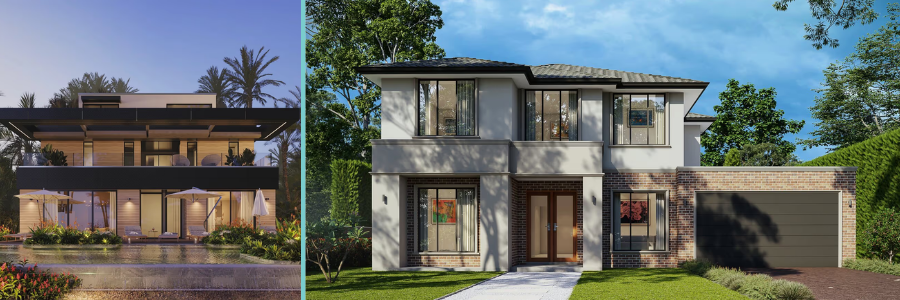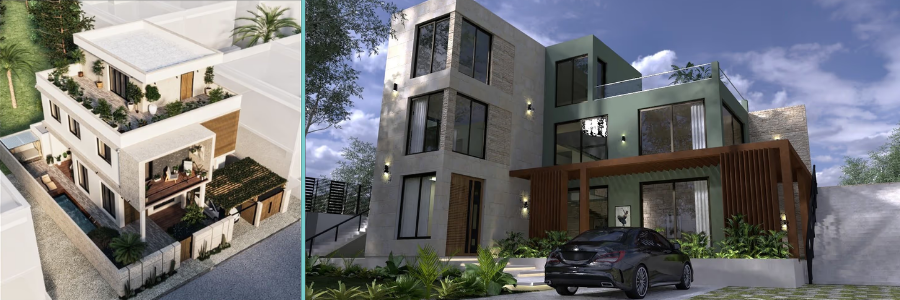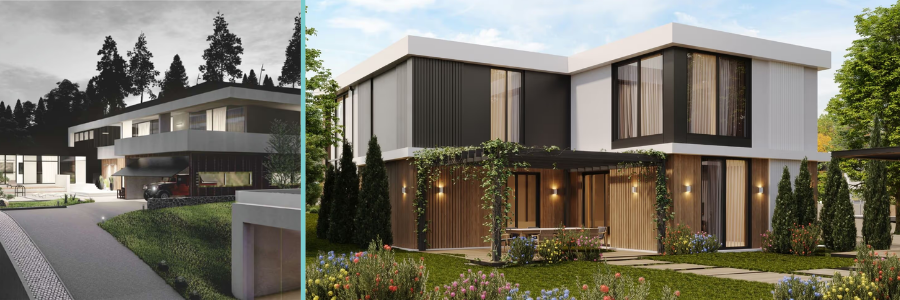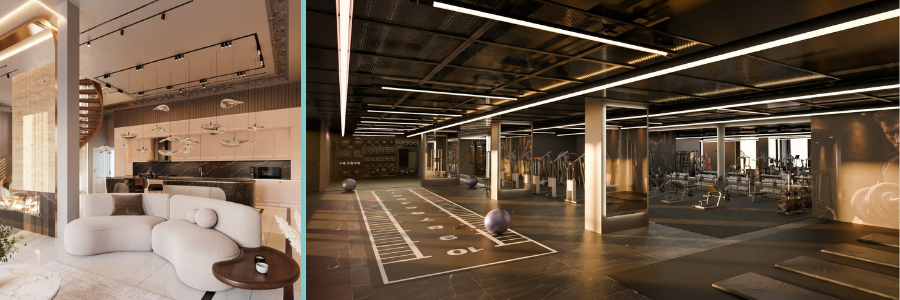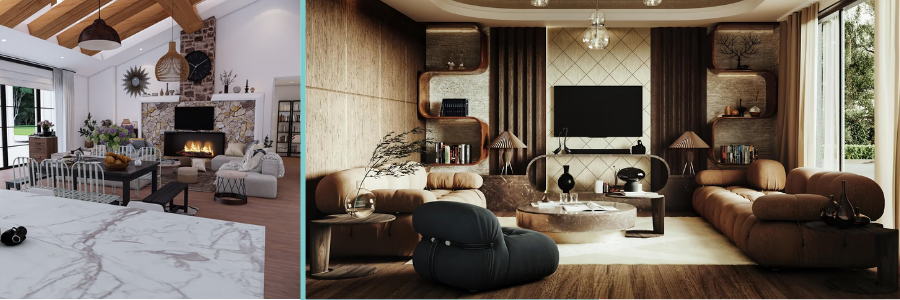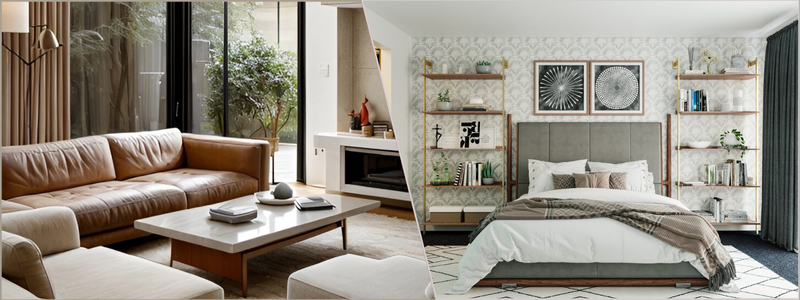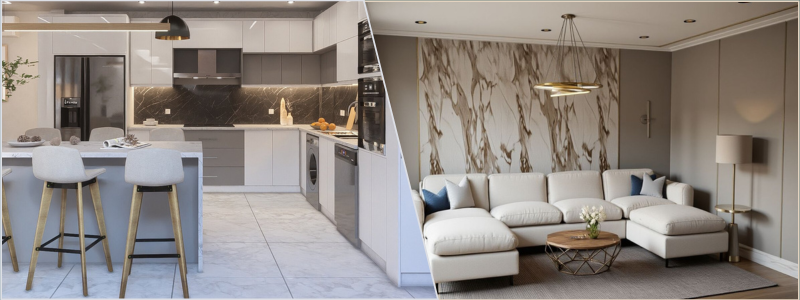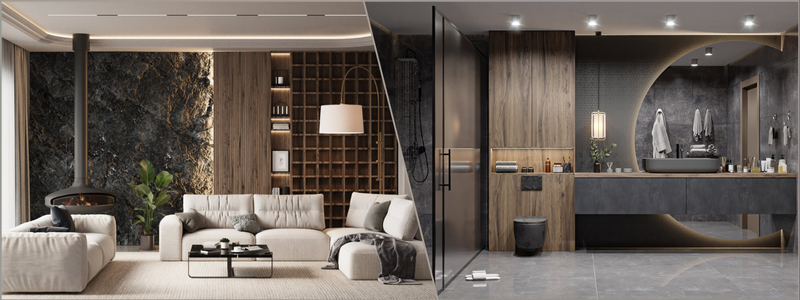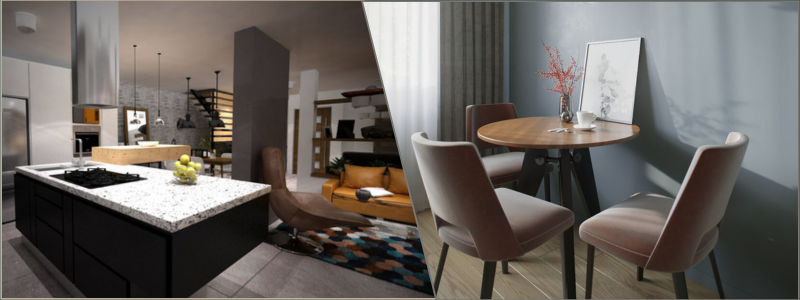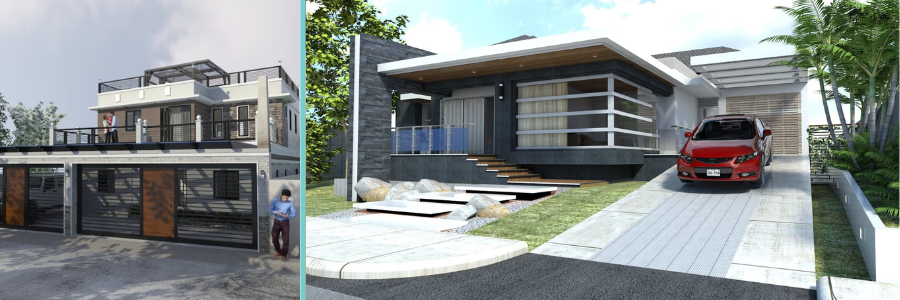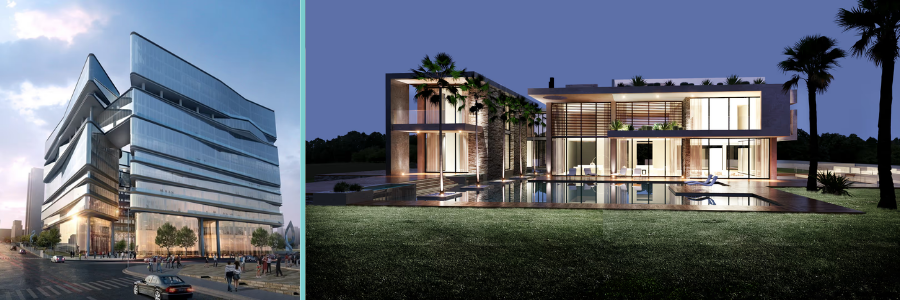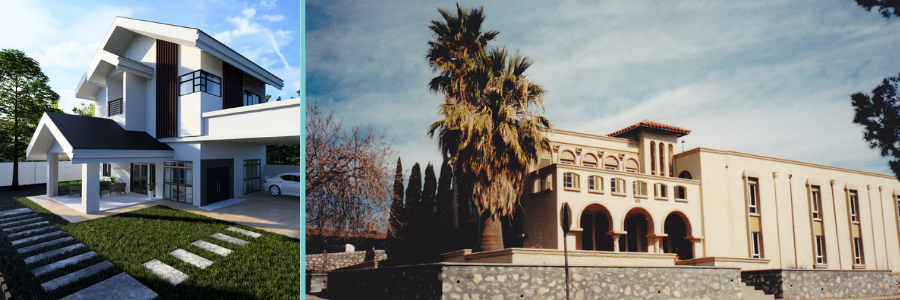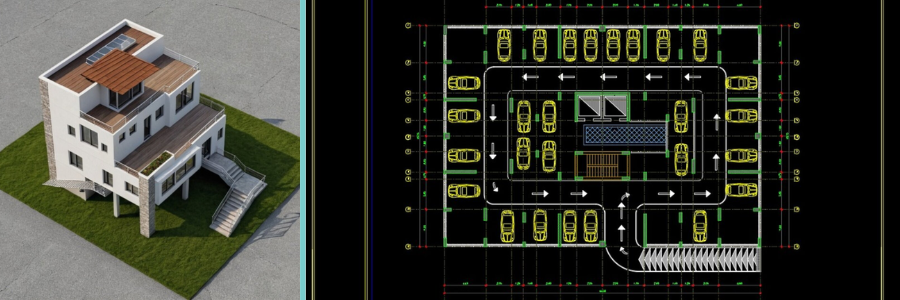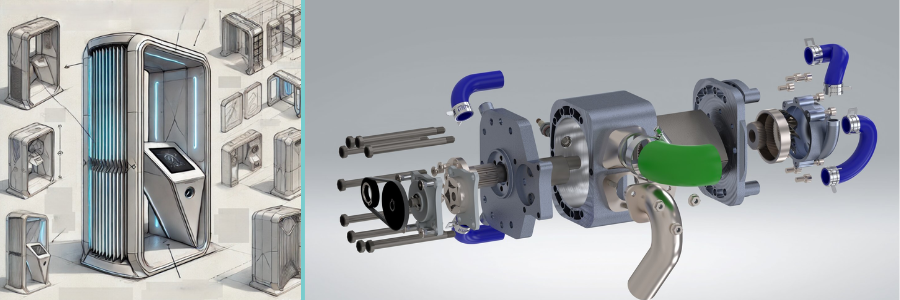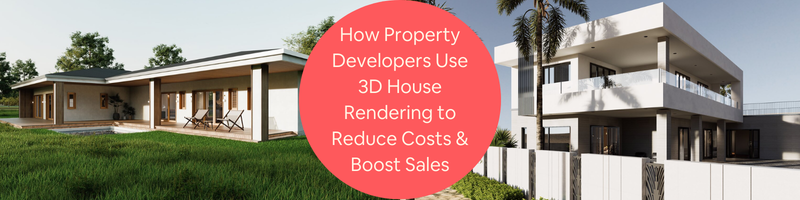
From large-scale massive projects to services of freelance architects offering custom design, communication of designs in a manner that effectively transmits spatial relationships, lighting, materials, and overall ambiance becomes quite important. Ray tracing has totally revolutionized the presentation of architecture, improving the quality of the image and showcasing the capabilities of architectural design services. A result impossible to integrate into architectural visualization before.
As a leading agency connecting design firms with the best freelance 3D visualization, Cad Crowd has learned the ins and outs of 3D and architectural visualization. This article focuses on the significance of ray tracing for architectural visualization and its potential for future projects.
🚀 Table of contents
What is ray tracing?
It is a rendering technique used in architectural visualization to demonstrate the effect of light rays on a specific environment, whether it’s sunny or shady, among other things. From the word ray tracing, it traces paths for rays traveling through a 3D environment, reflecting off surfaces, and scattering in all directions. It is used to generate high-quality images based on very complex behaviors like reflection, refraction, and shadows—a method integral to architectural visualization services.
Unlike traditional rendering, where approximations are used to simulate the lighting behavior, ray tracing traces direct light rays passing through a scene, producing high accuracy results, and may be applied in architectural visualization and details such as natural light play and interplay of shadows or characteristics of materials.
Why is ray tracing needed in an architectural design firm?
Architectural design firms need clearly communicated design ideas, where usually architects illustrate their designs using 2D objects such as drawings or hand-drawn sketches. Designs like these are too simple to represent the design clearly. With ray tracing, architects’ work can now be more dynamically represented with architectural drafting services in 3D visualization and rendering because of its realistic outputs.
This is how ray tracing takes 3D visualization to the next level, with a realistic level that is appropriate for internal decision-making purposes as well as for client presentations. The following are some reasons why it is sure to be a game-changer for architectural design firms:
Ray tracing comes with an unmatched realistic rendering, which is used for presenting architectural designs and is a key part of CAD design services. It enables architects to show the geometrical interpretation of their designs and how they will look in real life. For instance, how much light will pass through the windows, what the reflection of the wood, glass, or stone might look like, and where the shadows will fall inside a room. This very important thing is to present designs before clients because that gives people an idea of how the final product looks.
2. Better representation of materials
Materials often play a crucial role in design and thus should be represented accurately. Ray tracing allows precise approximations of glossiness, transparency, roughness, and even reflection properties. For example, the behavior of light, when it bounces off a shiny marble floor vs a concrete matte floor, is different. These functions of ray tracing make the design more helpful in presenting the actual design, therefore affecting decision-making for architects and clients.
The lighting factor of architectural design sets the mood and functionality of a place, with a strong association with energy efficiency. Ray tracing simulates real light, including direct, indirect, or reflected light, and simulates accurate lighting analysis needed in studying the effect of space from dawn till dusk, as well as how lighting in the space will be performed using 3D rendering services. Whether it is the display of how sunlight will illuminate a room in the morning or how artificial lights will brighten a corridor during nighttime.
4. Design iteration and decision-making
Trying different design options and customizing them in real-time allows the designer to receive instant feedback about material and lighting object placement, which can be used in optimizing the whole design process.
Freelancers and Professional designers can handle everything from innovative design to technical work. Even if the firm is not large in size, freelancers also gain experience with the use of ray tracing because of its ability to render photorealistic visualizations without requiring large infrastructure.
1. Leveling the playing field
Freelancers, as independent designers, have the chance to be on equal footing with the use of ray tracing and CAD design services. However, freelancers need to invest in high-quality hardware and software to be able to compete with large firms that have the budget to generate realistic visualizations and advanced effects.
2. Broader impressive portfolio and marketing
A freelancer’s portfolio is his most prized possession. With the aid of ray tracing-based high-quality renderings, there can be a big difference in making a portfolio that may impress the clients you are marketing to. Whether marketing or pitching to a future client, if you make your visualizations photo-realistic, this changes the game significantly in terms of attracting new business.
It enables freelancers to produce final product designs similar to those of established design firms, which can help enlighten clients on the intended result. Ray tracing also helps minimize misunderstandings about designs, leading to fewer design alterations before the end product. With this, a more satisfactory client response is achieved by leveraging architectural CAD services.
4. Improved cost estimate
Ray tracing allows freelancers to give more precise estimates of the costs involved in a certain project. This is because freelancers can simulate the interaction between the light and material with a space, therefore giving them an idea as to whether there are some materials or changes in design that may be required to be included in the budget. Such a head-of-time study may save them more hours and money, thus helping the freelancer provide cost estimations upfront with a higher degree of accuracy.
5. Diversity in services
Architectural visualization freelancers who would apply ray tracing technology can offer much more extensive services by integrating 3D animation services. Freelancers shall be able to offer further services like voluminous 3D renderings that create virtual tours or even interactive walkthroughs, which add value to their service. Thus, they increase and diversify their business prospects and can serve all kinds of clients, from real estate developers and architects to interior designers and the like.
Future of ray tracing in architectural visualization
The future of ray tracing in architectural visualization is endless. The ability to simulate real-world lighting and materials with increasingly high accuracy means rendering can achieve photorealism even better in the future. Furthermore, ray tracing will still be used in the design process, using improved augmented (AR) and virtual reality (VR) to achieve immersive architectural experiences. Design firms, freelancing professionals, and even other professionals will continue with this technology to push the bounds of what can be accomplished in architectural visualization.
Architectural visualization, which was once a sketchy guess, is now revolutionized by ray tracing to become a very accurate, photorealistic, and worthwhile tool for every design firm and freelancer. The incredibly detailed mimicking of the way light behaves, interacts with materials, and computes space makes this tool indispensable in the design process.
Ray tracing in architectural visualization has now become an integral tool for design firms and freelance services. Here at Cad Crowd, we can help you find the best expert for you if you wish to set yourself apart from your competitors. Don’t hesitate to reach out to us, and we will be more than happy to help. Get a free quote today.
MacKenzie Brown is the founder and CEO of Cad Crowd. With over 18 years of experience in launching and scaling platforms specializing in CAD services, product design, manufacturing, hardware, and software development, MacKenzie is a recognized authority in the engineering industry. Under his leadership, Cad Crowd serves esteemed clients like NASA, JPL, the U.S. Navy, and Fortune 500 companies, empowering innovators with access to high-quality design and engineering talent.
An architectural visualization, more specifically, a rendering based on a BIM file, isn’t just a pretty picture to please the eyes. In the context of a large-scale industrial project, such as the construction of a brand-new production facility or a major renovation of an old factory, a visualization is supposed to be an accurate depiction of the structure and a precise representation of all the manufacturing and utility systems in the building. The visualization also serves as the foundation for crucial decisions, such as stakeholder approvals and budget allocations.
3D rendering services and data-rich BIM files walk hand-in-hand to give a better understanding of the factory layout along with all its equipment and machinery, offering a level of insight that no conventional 2D blueprint can deliver. The ability to get a clear grasp of the spatial relationship of the entire building and an automated clash detection prior to construction improves the chances of efficient design, including for future-proofing purposes.
🚀 Table of contents
Why production facility visualization matters
High-fidelity visualization requires familiarity with the works of architectural design and a strong knack for artistic touches. Similarly, a comprehensive BIM file needs 3D modeling proficiency and industry knowledge. All those might seem hard to come by in this day and age, but not in Cad Crowd. As a freelancing platform specializing in the AEC industry, Cad Crowd acts like a massive hub that connects clients of all backgrounds with the most capable industrial project visualization services. And when the rendering and BIM file are left in the hands of the platform’s best-qualified professionals, expect nothing less than the following 10 advantages.
Early detection of errors
Let’s start with the most obvious, an advantage that photorealistic rendering services can give to architectural projects of any kind: pre-construction error detection. Construction work, whether a brand-new building or a renovation, is often an expensive undertaking, and even more so if you’re talking about such a complex structure as a factory. A manufacturing facility isn’t supposed to be luxurious or fancy, but designed to be as efficient as possible and conducive to productivity. And the truth of the matter is that ensuring efficiency often requires a pretty substantial upfront investment. Every mistake, no matter how small it may seem, can swell the budget to an unfriendly extent.
Factories are most likely dense environments. In addition to all the structural support steel, chances are you’ll also find heavy machinery, complex utility grids, overhead cranes, various office spaces, and sometimes a massive warehouse under the same roof. Everything has to coexist and fit in a relatively limited space. A traditional 2D blueprint can probably represent the entire factory, along with all the equipment and structural elements, on one big page. It’s practical, but the visualization format makes it easy to overlook a “clash,” for example, a load-bearing beam that obstructs a stretch of fire sprinkler pipe. Because you can’t clearly see the mistake on a two-dimensional blueprint, the error is only discovered during the construction phase. The next thing you know, the project is put on hold until you find a workable solution.
An architectural rendering, especially when integrated with BIM (Building Information Modeling), allows you to run an automated clash detection before construction begins. A clash can be many things, from a simple mismatch between logistics and construction schedules to poor clearances and object interference.
In a complete render, all the components of the factory are properly visualized as interconnected 3D objects to give a clear view of how they interact with each other. The result is little to no risk of a stop-work order. Any spatial conflict in the construction plan is identifiable in the BIM file when the project is still in the digital phase, and corrections are nowhere as resource-demanding as onsite modifications. Since most construction projects suffer from budget overrun due to change orders, architectural visualization services make things cost-efficient. Also, it’s possible to “virtually” install any equipment on the factory floor in the rendering, allowing you to verify that everything has enough clearance for operation and maintenance.
Still on the subject of clash detection, a high-quality factory rendering allows for a comprehensive planning of the facility as a whole rather than as separate systems combined into one. Other than that, you’ll see not only a flat image as if you’re looking at a floor plan, but the spatial relationships among all the objects. And this is particularly important in the case of MEP (Mechanical, Electrical, and Plumbing) systems.
A manufacturing facility is, in essence, one big machine housed in an extensive structure. And like every machine, they need a proper electrical system, water inlets and outlets configuration, chemical piping, specialized HVAC components installation, and compressed air circulation, among other things. Just about everything is substantially more complex than what you typically find in residential buildings. Designing all these systems in isolation increases the likelihood of clashes. You don’t want to find that the ventilation duct is planned to be installed exactly at the same coordinate as a crane rail or structural steel support, leading to an untimely delay that costs thousands of dollars. The problem is that you can’t just move the parts to another spot because it may cause another series of clashes. Chances are, you have to dismantle a lot of interconnected parts and redo the process.
One of the best ways to ensure construction efficiency is zero conflict. Once again, architectural BIM services emerge as a reliable savior, providing a sort of “X-ray” view of the factory plan. BIM may not produce a photography-like visualization, but it can give you a clear outline of the building’s internal systems, which in turn allows for an overview of how the ducts, wiring, and piping integrate with the facility itself.
Stakeholders’ investment approval
Constructing a factory is an industrial project, and that’s capital-intensive. It may take tens, if not hundreds of millions of dollars, to build a new manufacturing facility capable of high-volume mass production. Like the vast majority of big industrial projects, it takes funding and approval by multiple stakeholders, which may include individual venture capitalists, the company’s boards of directors, or perhaps government agencies.
One of the biggest challenges in securing the approvals of investors isn’t the technicalities of the construction itself, but the presentation. Not every stakeholder is trained to read a blueprint in the same way that an architect or engineer is. As a matter of fact, most people struggle to visualize a fairly simple 2D floor plan, let alone the construction plan of a gargantuan factory from a flat drawing.
You probably won’t need a sophisticated BIM file for this, as a photorealistic rendering would suffice to communicate a design for the less-technical audience. Throw in an animated walkthrough for the immersion effect, and you have a complete package of high-quality visualization to transform an otherwise complex architectural plan into an easily understandable view of a design. Add complex details when necessary, such as a showcase of the warehouse workflow or production line, for an extra touch of realism.
Investors are more likely to approve a big project when they’re confident in the design. Photorealistic rendering affords them the opportunity to take a glance at the foreseeable future when the construction reaches its final stage, and the factory building finally stands with all its industrial prowess. Visual clarity reduces the sense of risk and, therefore, speeds up the approval cycle for manufacturing design companies.
Safety compliance simulation
A factory is designed for productivity and efficiency, without sacrificing the health and safety of all the people populating the facility. Health and safety aren’t just moral obligations, but mandatory (as in, they’re required by law) and often have everything to do with financial concerns because non-compliance is a big liability. The problem is that most safety-related equipment and designs are built based on various “what if” scenarios, such as in the cases of fire, potential workplace injuries, occupational burnout, machinery-induced noise pollution, and more.
Static two-dimensional images cannot reliably visualize the hypothetical scenarios in which accidents happen. Photorealistic rendering, on the other hand, can make use of animation to showcase “imagined” incidents where individuals’ health and safety are at risk in work environments. A 3D rendering expert may frame the animation in such a way that the audience can see from the perspective of an employee or a worker on the factory floor to understand the situation better. The simulation should be helpful for sightline analysis, emergency response training, and ergonomic optimization.
Efficient logistics
Forming the foundation of productivity in a manufacturing facility is a well-planned workflow, which can only happen when backed by efficient logistics. Think of it this way: if a forklift has to travel just one meter longer than necessary for every journey back and forth, the factory loses money in fuel, tires, maintenance, and time. A crane that takes a few seconds longer to carry raw material from the warehouse to the production line may cause a chain reaction of delay across the factory floor, leading to poor productivity and a loss of potential profit.
There’s no easy way to perceive the idea of congestion with static two-dimensional blueprints, such as when movements (whether of humans or machines) are hindered by some obstacles. Blueprints can’t visualize the possibility of crowding in heavy-traffic lanes during busy hours on the factory floor.
Animated rendering removes all the guesswork. By formatting the visualization as a spaghetti model (often used to explain the flow path of storms during hurricane season), you should be able to see with clarity how all the forklifts, cranes, trucks, materials, finished products, and people move about inside the facility. This is how you identify potential “traffic jams” or bottlenecks on the factory floor and plan for buffer spaces wherever necessary.
Just about every construction project appears to always happen in a rush. Heavy construction vehicles carry raw materials to the next processing station, while workers stay busy installing all the parts and assemblies in a seemingly random fashion. They’re all over the site, working on rebars with the help of rebar design services, steel structural supports, concrete, wooden beams, nuts and bolts, roofing components, and utility systems. But what looks like chaos really is a managed project, where everyone has a well-defined job description and carries out their duties as expected.
Another thing to mention is that long before the construction happens, there is usually a long process for design proposals, reviews, verifications, bidding, and approvals. The old way of doing architectural projects is linear and often slow. In the event of misunderstanding between the architect, engineer, or contractor, the construction schedule gets pushed back, and this adds to the project completion timeline. There’s also the problem with creating pages of 2D drafts just to plan for one specific location on the site. Each draft must be properly evaluated and approved by the stakeholders before the project can move forward. So if they have to do the same process dozens of times throughout the entire project, it can take months, if not years, to get the job done.
This is not to suggest that the old way is bad in any way. After all, people have been building production facilities for centuries before the proliferation of CAD or 3D rendering. That said, modern technologies, including photorealistic visualization and BIM, can improve efficiency a great deal. In the case of BIM, for example, the entire project plan is contained within a single file stored in a centralized database accessible by all stakeholders. Architects, engineers, and designers can update the plan simultaneously, and every modification is visible to everyone who has access to the file. Design reviews and approvals have become streamlined processes that happen in real-time.
A BIM file contains not only an imagery of a structure, but detailed specifications of the materials, dimensions, geometries, tolerances, installation instructions, and manufacturer information of every component. The contractors understand the assignments well, component fabricators know exactly what to build, and the investors enjoy the comfort of knowing where the money goes. It even has scheduling information with automated clash detection to avoid conflicts with the construction timeline. Thanks to BIM, the entire project becomes predictable, more manageable, and highly efficient to expedite construction. And the sooner you get the facility up and running, the quicker you get to kick off production.
Thermal and lighting analysis
Every manufacturing facility should be well-lit in all areas. Great visibility is even more important in the actual production line. But it shouldn’t be all about installing the brightest lamps every few meters throughout the factory because they also generate heat. LEDs produce much less heat than the conventional incandescent type, so they’re a preferable choice for manufacturing design experts. If you have to use hundreds of LEDs, however, the increase in temperature would still be pretty noticeable. Let’s not forget that machinery, whether internal combustion or electric, also generates heat.
A lot of manufacturing facilities suffer from either hot zones or dark spots (sometimes both) due to poor air circulation, inefficient positioning of skylights, or improper placement of heat-generating equipment. This might not have been an issue in the old days when no better option existed, but now that architects and engineers are armed with modern rendering engines, an uncomfortable work environment and poor machine longevity because of excessive heat should be problems of the past. Advanced rendering engines offer many useful features for this purpose, such as Radiosity (which is an application of Finite Element Analysis) and Ray Tracing, to predict with great accuracy how light behaves in an environment to minimize dark spots. ThermoAnalytics can also visualize thermal data in high-fidelity graphics to help you get rid of hot zones. l
It’s worth mentioning that both Ray Tracing and Radiosity are capable of simulating natural lights as well. The visualization showcases the areas inside the facility that might be penetrated by natural light during daytime, so the engineers can then use the data to reduce/optimize the use of LEDs for energy efficiency. At the same time, the data gathered from thermal analysis reveals a clear view of how heat rises and accumulates in different spots, which offers an insight into how the HVAC system may mitigate the issue.
Environmental impact study
Anybody who’s been in the construction business, especially on industrial projects, is perhaps perfectly aware of the whole “NIMBYism” movement. It’s actually a pretty common phenomenon where residents oppose a new development in their local area, mostly out of fear that the new industrial infrastructure and industrial design services will negatively affect the surrounding environment. Sometimes, they also express concern for the possibility of noise pollution, an increase in traffic jams, or a decrease in their property value.
It can be difficult to dismiss the opposition unless you can provide an easy-to-understand visualization to inform the protesters that none of those concerns are actually true. Photorealistic renderings, both static and animated, give a clear explanation about how the factory handles its byproduct (if any), treats wastewater, implements a government-approved energy efficiency system, and manages noise. An aerial rendering of the facility should showcase the presence of green buffer zones, too. An accurate depiction of the facility and how it affects the environment fosters trust from the nearby community and helps de-escalate tensions in times of protest.
People might not be entirely interested in the actual environmental study conducted on the facility and what the data can tell them. However, you can produce some renderings based on that data to try to convince the community that everything is safe and runs in accordance with the regulations.
A good number of industrial constructions aren’t actually greenfield projects (facilities built from scratch), but brownfield (renovations, retrofitting, or expansions). When old buildings are supposed to integrate with modern equipment and utilities, many things can go wrong, from incompatibility issues that lead to performance inefficiency or even weakened structural strength. The existing pillars, low ceilings, waste treatment systems, old electrical wiring, and even the roof structure can be engineering nightmares.
Photorealistic 3D visualization services can help, for example, by converting the old blueprint into a 3D model or BIM file. However, an old building might have undergone multiple changes over the years, so the original construction documents are no longer accurate. Let’s not forget that many of the structural components suffer from degradation as well. Another option is LiDAR, which basically scans the old facility as it stands today and transforms the data into a 3D model. All of these require manual inspection, but modern visualizations are still better than relying on outdated blueprints.
Once you have the 3D models ready, planning for a brownfield project is no longer as complex as it used to be. Don’t get this wrong: Brownfield is almost always more difficult than greenfield, but at least the visualization helps you draft the project in a virtual environment, allowing for greater efficiency and accuracy. At the very least, the digital models afford the architects an opportunity to experiment with different factory floor layouts that facilitate efficient placements and installations of new production tools, heavy machinery, electrical wiring, lighting, HVAC components, and even routing for AGVs. The idea is to create a perfect fit, with zero interference, no compatibility issues, and enough spatial tolerances.
Scalable factory
Perhaps the greatest advantage of all is that photorealistic rendering opens the door to value engineering in preparation for growth. Manufacturing facilities may start with a single production line or hands-on assembly process, but they’re constantly looking to welcome emerging technologies, such as full automation and robotics. And with the current pace of development and competition, companies have no choice but to consider such growth an impending necessity, perhaps in the next 5 or 10 years.
From the perspective of infrastructure, it only makes sense to pour some additional resources upfront to make the building more scalable, or futureproof, if you please. In other words, a manufacturing facility built today must be able to adapt to the forthcoming industrial landscapes of the foreseeable future. If you build the factory by emphasizing only its usability for the current manufacturing systems and technologies, every major upgrade to the equipment and utility systems is likely cost-prohibitive.
Accurate visualization of the current structure enables the architectural design experts and engineers to plan for a flexible infrastructure designed to undergo changes and improvements without sacrificing the present-day functionality. For instance, the visualization may show a time-lapse animation that showcases how a new production line is added while keeping the current systems intact; the installation of solar panels on top of the roof structure without disrupting workflow; the integration of automated driverless robots with the crane equipment in the warehouse to achieve lean logistics, and so forth.
The advantages of visualization services for manufacturing facilities go beyond pre-construction planning and budgeting, but reach far into scalability and futureproofing the infrastructure itself. You can even say that photorealistic rendering pushes the boundary of what’s possible with architectural drafting to allow stakeholders to have a sneak peek at the future. This will then enable them to develop a comprehensive measure and devise strategies to be prepared for every new technological development in the manufacturing sector. Although it’s actually impossible to make a perfectly accurate prediction of what the future may hold, visualization services can at least give you educated assumptions and informed estimates so that what you build today helps you gain competitive advantages in the future.
Not every factory rendering is created equal, however. As much as advanced software plays a factor in determining accuracy and overall quality, the professionals tinkering with object geometry, composition, lighting, shadows, textures, patterns, and post-processing details are the real defining factors. It takes skills, experience, and artistic touches to produce a high-quality rendering of a small-scale building, let alone a gigantic production facility.
That being said, BIM professionals and render artists capable of translating the file into photorealistic imagery remain scarce at this point. Cad Crowd is your best bet to find and connect with the right talent to get the job done. The platform places heavy emphasis on the AEC industry and is largely populated by experienced professionals of related trades, including BIM and architectural visualizations. Request a quote today.
MacKenzie Brown is the founder and CEO of Cad Crowd. With over 18 years of experience in launching and scaling platforms specializing in CAD services, product design, manufacturing, hardware, and software development, MacKenzie is a recognized authority in the engineering industry. Under his leadership, Cad Crowd serves esteemed clients like NASA, JPL, the U.S. Navy, and Fortune 500 companies, empowering innovators with access to high-quality design and engineering talent.
Visualization and rendering are the most commonly used words in architecture, and also the most confusing. Are they the same animal, just differently dressed, or do they serve entirely different purposes? If you’ve ever found yourself scratching your head as you flick through a design portfolio, then this guide is for you. You’ll learn not just what each service entails but how to find the right talent for your next architectural project, and why Cad Crowd is a great place to come looking for seriously skilled freelance professionals in this area.
Setting the scene: You are an architectural design expert, a designer, or even a client with this really ambitious dream of turning a plot of land into the next iconic skyscraper or chic residential complex. Your mind is filled with ideas, like confetti being thrown in a parade. However, unless you are able to show someone else that idea stays in your brain, like some rare Pokémon that nobody knows about. That’s where architectural visualizations and renderings come into play. They translate imagination, bridge concept and reality, and sometimes even rescue client presentations that would be adrift in some muggy waters of misunderstandings.
🚀 Table of contents
Understanding architectural visualizations
Architectural visualization is a medium that expresses highly detailed, often three-dimensional depictions of designs. Consider this as a kind of crystal ball through which the architect, client, and stakeholders are granted permission to look into the future. This can range from the simplest 3D model showing space and scale to complex photorealistic scenes that make one question whether the building already exists.
Indeed, it is in the beauty of architectural visualization that it can be so versatile: from interior layouts to exterior facades, from lighting effects to landscaping details-everything could be shown within one single visualization. If ever you experienced admiration for some sort of computer-generated image, which felt so real you could almost feel the sunlight beating on your face, chances are high you were looking at an architectural visualization.
Well, here is where things get very interesting: now, architectural visualization services have not only become technical but have also become a storytelling device, enabling architects to actually talk about the space experience. With the ability to virtually walk through a hotel lobby in the future and notice how the sun filters through skylights or how shadows dance on textured walls, it shows you what it looks like in reality and goes beyond being more than a drawing to an experience that can delight, persuade, and inspire.
It’s not about slapping shapes and textures together to make a visualization. It requires knowledge of software, lighting, materials, and spatial perception. Among professionals, 3ds Max, SketchUp, Blender, and Revit are common; additional rendering engines like V-Ray or Corona bring the finished image to life. A good visualization artist takes that blueprint and develops an exciting digital model that is often colored enough to sometimes be mistaken for a photograph when it crops up.
But probably the most important, and least talked about, aspects of visualization come in problem-solving for designs well before a single brick has been laid. Such is the case, for example, when an office building visualized in 3D shows that certain windows are oriented to the street at an awkward angle, with considerable glare inside offices. Being able to catch this in a visualization allows architects to make adjustments in the design much earlier in the process, and saves a great deal of time and money, and quite a fair share of frustration at the construction phase.
These visualizations are priceless in the case of complex structures, too. Think about a modern museum where swooping curves cross planes; any flat blueprint can only begin to give a sense of what it’s like to walk through such a space. A good visualization captures human movement through galleries, light and material interactions, and a realistic sense of scale that drawings alone can’t provide.
The other interesting application involves virtual walkthroughs whereby an architect can afford a client an opportunity to see deeply into his or her potential building and get a feel of the inside as if it were currently standing. It would prove more useful in residential work, such as for 3D residential rendering services, when clients want to feel the flow of rooms, or in commercial developments, when the impact of such areas as a lobby, an atrium, or a public area needs to be fully grasped.
By contrast, architectural renderings are the final presentation in relation to a particular building or structure. Though renderings could use 3D models, they can also be made as 2D illustrations or digital paintings. Briefly put, a rendering is just the finished and presentable version of any design showing style, materiality, and atmosphere.
You can sort of think about renderings as the Instagramworthy architecture; it’s done with considerations of composition and lighting, even sometimes an artistic flourish. Other than flat visualizations that may have their focal point on technical accuracy and spatial understanding, renderings are to amaze, absolute emotional drums beating. Renderings can be realistic, semi-realistic, or even stylized, depending on the formality you wish to portray.
Renderings are crucial during the pitching for a client or stakeholder who is not used to reading architectural drawings. One well-rendered image can tell them about the scale, function, and aesthetic appeal in one glance, perhaps difficult with a floor plan or wireframe model. In other words, renderings are a kind of secret weapon when you want someone to fall in love with a project they have never seen physically.
Renderings also provide artistic license that the visualizations sometimes cannot. Emphasis can be given to certain elements of the design, colors can be changed based on mood, or the light effects can be exaggerated to help show architectural features. This is particularly useful within marketing materials where the purpose is to grab attention and communicate a sense of quality and desirability that is especially relevant for photorealistic rendering services.
While creation often goes along with the process of visualization, the mindset differs. Where it is to understand and explore a design through the process of visualization, rendering revolves around presentation and persuasion. It’s the difference between walking through rehearsal and performing the final show. Both have their place, but knowing when to use each service is key to communicating your vision effectively.
There are key differences between renderings and visualizations.
By now, you might say to yourself, aren’t these two terms twins separated at birth? The best answer would go both ways: yes and no. Though alike in some ways, visualizations and renderings are used for different purposes in the architecture workflow.
By nature, visualizations are exploratory. It’s one way the architect can test an idea, play with spatiality, lighting, and material to anticipate certain problems in design. They are sort of the blueprint of imagination-a sandbox where creativity and practicality meet.
Renderings, however, are persuaders. They take the output of visualizations and make from it clear, evocative images that speak effectively to clients or investors. Rendering concerns mood, color, material, or flavor, and where the design affects an emotional sense. They are made to artfully sell a vision and not just to illustrate.
Another point of differentiation would be the degree of polish. Visuals can range from raw models and technical viewpoints to even schematic visuals. The most refined ones are usually renderings, with advanced lighting, real textures, and surroundings such as landscaping, sky, and people through HDR rendering services.
Also, timing and purpose essentially distinguish the two. Visualizations are commonly done at the design stage of a project when architects do quick iterations to explore options, while renderings are used either at the culmination of a project or at presentations, whereby the intent may be to impress, communicate, and get approvals or investments.
Analogically, that would be: Visualization would be the bridge tested by an engineer under virtual loads, just to make sure everything stands strong and sturdy, whereas the rendering would be a photo of that bridge at sunset, with light displaying it softly and with pedestrians walking down and birds flying over. Both are important, but they serve entirely different functions.
Why both services are valuable
It may be that one of the services is enough or that one overcomes another. But in fact, both architectural visualization and rendering make their contribution to the process in their own way. That is where visualizations help architects and designers to make decisions sooner in the design process. This reduces the risks associated with expensive mistakes, improves the understanding of clients, and drives innovation. The renderings communicate a final vision that is engaging, in which the clients, investors, and other stakeholders are on track with the direction of the design.
Combined, they are the architectural dynamic duo of sorts. While the ability to visualize takes one on a tour around the city before it is built, a rendering allows them to show it at its best. In that respect, both help each other in the design process to make it easier, better performed, and much more engaging.
By applying views and renderings, architectural design firms can establish that the project is structurally sound while at the same time visually and emotionally stimulating. The renderings act as a bridge between technical precision and aesthetic values, allowing appreciation of function and beauty alike in design.
The role of freelance talent
And therein lies the interesting plot. With the recent mushrooming of freelance marketplaces, like Cad Crowd, how architects and developers gain access to such skill sets has been redefined. Instead of being at the mercy of in-house talent tied down by geographical location or availability, firms today can connect with skilled freelance artists around the world. Visualization and rendering can be outsourced to freelancers, and more often than not, they bring fresh insights and creative solutions that your in-house team might have missed.
Cad Crowd lets you easily access portfolios, read reviews, or hire experts in just the kind of architectural service you need. Be it an ultra-detailed work by interior visualization services, exterior renderings, or full 3D walkthroughs, this platform connects you with a deep pool of experienced talent that will make your vision come alive in the best possible way.
Freelancers are more productive and budget-friendly than employees. You will have to pay only for the required expertise that may fall within a certain period of time and without additional costs for maintaining permanent staff. What’s more, a lot of freelance artists have broad experience in new software, trends, and techniques that will keep your visualizations and renderings qualitative, competitive, and up-to-date.
Both visualizations and renderings require advanced software; however, the approach can be different. In architectural visualization, programs such as SketchUp, Rhino, and Revit enable the creation of detailed models, while tools like Lumion and Twinmotion allow architects to create realistic walkthroughs. In cases involving renderings, 3ds Max, Blender, V-Ray, or Corona are common for making something quite polished. Other professionals even use Adobe Photoshop to refine the textures, lighting, and details in a presentation.
Of course, mastering these tools is a matter of time, experience, and artistic feeling. A skilled visualization or rendering artist would know not just the software but also composition, lighting, color theory, and perspective. They can take that abstract and turn it into compelling, immersive experiences.
More so, such skills can be outsourced to freelancers who let architectural design and drafting firms focus on the core aspect of design and have the technical and artistic heavy lifting done by professionals. This can help speed up project execution, raise the quality of the output, and please clients who can quite literally see and understand the designs being proposed.
Congratulations if you have made it this far! By now, you understand the basics of both architectural visualizations and renderings, understand the differences between them, know their roles within the design process, and why both are indispensable tools for modern architects and clients alike. But here is the thing: knowing the theory is one thing; understanding how to put it into practice is where the real magic happens. Let’s proceed further with practical applications, benefits of hiring freelancers, common pitfalls, and tips that can make your next architectural project amaze everybody who is involved.
When to use visualisations
Think of architectural visualization as a creative laboratory where one can conduct as many experiments as one wants, keep checking on ideas, and test any concept without real-world consequences. If you have done a visualization, you have designed a residential complex, experimenting with layouts and natural light at different times of day, and observing how furniture is placed to maintain continuity across the flow of space. You can instantly tweak a wall here or move a window there and see its impact-all this without a single swinging hammer.
These are particularly helpful for complex or unconventional projects. Think of a museum with undulating walls, asymmetrical staircases, and huge open spaces. The classic blueprint will only get you so far. A 3D visualization lets architects, clients, and contractors understand the spatial relationships and foresee and plan for any challenges before ground is even broken. You are giving your team X-ray vision, allowing them to see not just the structure but how people will move through it, how light will interact with the surfaces, and how materials will interact in a three-dimensional context, which may be exemplified even further through 3D animation services.
Other major benefits of visualizations are versatility: It is not just a question of what a building will look like, but how it will feel. It can be a walkthrough, panoramic views, or even an interactive model that the client themselves can walk around. Participation of this kind turns observers from passive to active participants in the design process, and that, simply stated, makes decisions easier and faster.
When to use renderings
Renderings are about persuasion and presentation. Where the visualizations help you experiment, renderings will help you sell the idea. Think of them as the red-carpet version of your architectural project: polished, detailed, and designed to impress. Rendering tends towards mood, style, and aesthetic qualities in a design. These images show investors, clients, or the public how to fall in love with a building they’ve not yet stepped inside of.
With this, the difference in marketing material for a luxury apartment complex comes in with raw visualization and fine rendering. The rendering may then be able to show how sunlight actually flows in through the glass from floor to ceiling, how shiny floors are polished, and greenery surrounds this place, for example, by utilizing HDR rendering design services. Even with people enjoying space, one could create an impression of life and action inside. Such a level of detail creates excitement while emotionally engaging potential buyers or investors closer with the project.
This will be especially helpful for regulatory approvals and public presentations. Indeed, one well-composed image often conveys your design intent much more effectively than any technical drawing. It helps the nonspecialist understand the vision in an instant when they are baffled by plans and elevations. A rendering is far more than a picture; it’s a story, a narrative that summons people to imagine the space, feel the ambiance, and picture themselves therein.
Combining visualizations and renderings
Now, this is where all the real fun begins. Visualizations and renderings are not mutually exclusive; using them in concert could be a game-changer. Take advantage of the visualizations in order to explore ideas, test configurations, and refine designs. Once an idea is finalized, render the visualizations to present the final vision to clients and stakeholders in a compelling way.
Think of it as cooking: visualization is your rehearsal, tasting, adjusting the seasoning, and perfecting the recipe. Rendering is an art to plate up nicely, garnish, and make it ‘Instagram-ready’. Without one or another, your project will just never bloom into success and impress or satisfy everyone involved.
Taken all together, all these services ensure efficiency. You will not have to make guesses at what might work and just hope your final images turn out right; you do your iterations in the visualizations. By the time you actually get to rendering, you know your design is solid, and your polished images reflect the final structure accurately.
Several traps related to visualizations and renderings that even the most seasoned architects and interior design experts fall into include general reliance on renderings too early in the process. Sure, an elaborate rendering looks great, but if problems are in the underlying design, issues will only reveal themselves later in the process, which can lead to costly revisions. The answer is relatively simple: use visualizations first for exploration and save renderings for final presentations.
Another trap is avoidance of context. Buildings aren’t space ships; they relate to the environment. A rendering of a cool skyscraper might look great on a blank void, but when it faces the cityscape with surrounding buildings, roads, and natural elements, it just doesn’t blend in as well. It is context-things like surrounding structures, landscaping, and lighting-that make visualizations and renderings believable-think about the ground below.
On the other side, there is another trap in over-complicating the models. Indeed, it is almost very tempting to include in a model every imaginable detail, from intricate furniture to several dozen decorative elements. While that may sound impressive, doing so can most definitely make render times longer, iterations cumbersome, and sometimes distract from the core design. It is all about that one thing: getting a balance where enough detail is included to get the point across, not so much to lose the message.
Finally, the power of collaboration is underestimated, hindering results. Architects, designers, and visualization artists should collaborate early in a project; this also includes rendering specialists. The rendering artist brought in late to the project might not grasp exactly that mood or context intended by the design. This will make sure the visualizations and renderings early support the design intent and technical constraints to meet client expectations.
It pays to hire freelancers
That is where Cad Crowd really comes out on top, because not every firm is in a position to invest in an in-house visualization and rendering team. CAD design freelancers offer a flexible, cost-effective means: you get access to specialized talent, pay for what you need, and benefit from fresh ideas from professionals who are often working on a wide range of projects.
Freelancers bring years of experience, too. Some of them could have taken years to amass experience on a host of software platforms, styles, and types of projects. They know how to use light, perspective, and composition in such a way that it transforms this complex architectural concept into a visually brilliant image.
It is not going to be hard to hire through Cad Crowd, as you can see their portfolio of work, verify previous work, and find those artists whose style best fits your idea. Cad Crowd does make it really easy for you to connect with freelancers who are professionals in architectural visualizations and renderings, it an interior perspective, exterior shot, or immersive 3D walkthroughs.
Besides, if you work with freelancers, then it goes much faster. You scale up or down depending on your needs to avoid bottlenecks. This way, you focus on the core of your design and pass on the heavy technical and artistic lifting to experts.
Working with freelancers tips
Communication really is the key to getting the most from freelancers. Give clear, concise briefs, reference images, and any technical specifications. Be transparent with deadlines and expectations, and keep up a routine check-in to review progress. The more information provided, the more a freelancer can take a vision and create compelling visualizations and renderings.
The other tip is to let some creativity in. You might have a clear vision, but 3D rendering freelancers always offer insight into ideas and suggestions that add to the finished product. Their collaboration will yield higher returns; it brings into play your excellence in design and their mastery of visualization and rendering techniques.
Of course, it always makes a lot of sense to start off with a small project or test job if this is the first time you work with a particular freelancer. At least that way, you can get a sense of his style, his responsiveness, and his ability to meet your expectations before you commit him to a larger assignment. If you find a freelancer whose work meets your standards, you have the potential for a long-term, fruitful partnership.
Practical applications
It has also been established that visualizations and renderings are not confined to high-budget projects alone. They have something to say in residential development, areas of commercial importance, public infrastructures, and even in the planning aspect of the city. Through visualization, architects can test zoning regulations, sunlight studies, and traffic flow while communicating the proposal to the public through renderings.
This could also mean visualization of a city planning project by simulating how a new park or building is going to interact with the current cityscape, including shadows, pedestrian traffic, and spatial relationships. These renderings take those concepts and develop them into visually appealing renderings that stakeholders, residents, and officials can understand and rally behind.
Even small projects benefit from the visualization: renovation for a single-family house can be visualized to test furniture layout, lighting, and materials by interior design firms. Then, a final design rendering is communicated to the homeowners so they can confidently make decisions without costly changes during construction.
The future of architectural visualization and rendering
Indeed, the future is bright. Advances in software, VR, AR, and AI-powered tools are wholly reinventing the game in developing visualizations and renderings. Today, and increasingly so, architects and designers do have the ability to offer real-time walkthroughs, full immersion into virtual experiences, and even interactive presentations that allow clients to see every aspect of the project well before laying the first brick.
Freelancers within Cad Crowd networks have so far been the early adopters wanting to push state-of-the-art techniques on projects, so design work is not only visually stunning but also technologically forward-thinking.
Conclusion
Architectural visualization and rendering go way beyond images; they are enabling instruments between imagination and reality. It helps in the exploration, experimentation, and refinement of the design, while rendering communicates, persuades, and inspires. Blended, they ensure projects are technically sound and visually stimulating.
Thanks to freelance marketplaces like Cad Crowd, access has never been easier to a pool of expert talent. Detailed interior visualizations, exterior renderings, or immersive 3D walkthroughs- whatever your client needs, rest assured that there are skilled pros prepared to bring ideas into action. Freelancers enable architects and developers to free up precious time and limit costs, while improving the quality of the project.
Look through Cad Crowd and hire some of the most exceptional freelancers of 3D architectural visualization and rendering artists who help bring your ideas alive in stunning, compelling, highly professional presentations. The right mix of visualizations and renderings done by expert freelancers can actually take architectural projects from concept to reality with clarity, impact, and style. Request a quote today.
MacKenzie Brown is the founder and CEO of Cad Crowd. With over 18 years of experience in launching and scaling platforms specializing in CAD services, product design, manufacturing, hardware, and software development, MacKenzie is a recognized authority in the engineering industry. Under his leadership, Cad Crowd serves esteemed clients like NASA, JPL, the U.S. Navy, and Fortune 500 companies, empowering innovators with access to high-quality design and engineering talent.
Architecture, as a practice in itself, has always been a tightrope walk in that it is always balancing art and commerce. On one hand, they are so visionary because what they do is take a white empty canvas, which is a space, and make it what makes your eyes pop.
On the other side, of course, the clock is ticking, reminding these visionaries that clients don’t await excellence but a deadline. This, in itself, has always been an age-old struggle, per se. Lately, however, because of the need for high-quality architectural 3D imaging, a different situation has been brought into this tightrope walk, where clients want to see the result even before the construction of the first brick.
Companies are spending a pretty penny on learning internal staff, on the best software that dates faster than bread, or on a strategy that is slowly becoming a rule rather than an exception, outsourcing architectural 3D rendering services to competent freelancers. Once, it used to be a competitive advantage. It is just a strategic advantage that distinguishes adapting businesses from non-adapting ones, which are bound by outdated strategies.
🚀 Table of contents
The permanence of outsourcing & its future
Others might go further with the idea that outsourcing, in a way, is no more than ‘skimping on labor’ with fancy semantics. This, of course, is simply not true. In outsourcing, when it is properly performed, it is a thoroughly thought-out plan that is chock-full of freedom, efficiency, and the brightest and best personnel with no correlation with headcount, rather than people in a permanent employment capacity. The level of skill one employs in regard to architectural 3D rendering is, quite literally, staggeringly specific: from textures, lighting, to a subtle degree concerning the physics of textures.
For such an occasional need to provide a service, in what way would a full complement of personnel be retained when it would really be the same as having a sports car to drive to the grocery store every week, because, yes, it is possible, but is it really a sound solution?
Such freelancer resources, such as Cad Crowd, are basically a network forum that helps pre-approved, highly competent 3D artists in the realm of architectural visualization. The companies will therefore be at an advantage in terms of people who are experts in the realm of space, lighting, and textures, and hence all the work is going to be performed with the utmost possibility of highest speed and accuracy, given the fact that they would not be concerned with recruitment, training, and benefits-all this literally turns into a superpower to unleash when needed.
Now, here are a number of obvious benefits that come with outsourcing architectural design services. The first advantage that this service provides is scalability. Not all businesses require a similar amount of 3D rendering hours. Mostly, when a small house is undergoing renovation, the 3D rendering hours are not similar to the number of offices and shops that are accumulated in a single giant structure. It therefore means that with outsourcing, businesses are capable of scaling with minimal effects on the cost of human resources.
The second reason is innovation advantage. The freelance 3D artist is generally faced with a situation where they are forced to work with different clients from different parts of the globe, hence giving them a chance to be introduced to different designs, software, and even different creative thoughts from other freelance 3D artists. The innovation advantage that the freelance 3D artist brings to your design is that when they are working on your project, they tend to bring a fresh perspective, which has the potential to refresh your projects that might not be fresh anymore in your design office. This is practically the same thing as looking out of the window to see what the best the entire world has to offer.
Thirdly, cost efficiency is an issue that should never be overlooked. This is because of the consideration that a full-time rendering professional would have factors such as cost of labor, employee benefits, equipment, as well as training that need to be considered, but with outsourcing, now such costs are variable, which is always cost-effective, especially taking into consideration the fluctuating workflow that is within the business. In most cases, most freelancers come along with state-of-the-art computers, rendering software, as well as rendering pipes, which means that the business would not have to spend a lot on infrastructure.
Timing is everything
Time is the most non-forgetting part, even when things are going in a positive manner. The clients always ask for wow presentations, sometimes to be produced in a record-breaking short span of time. There might be a team that has a couple of projects, other than some meetings, other than some other boring tasks, which are part of the admin work, that keeps putting things on the back burner. A freelancer can only work on a single project, hence the tight deadlines and faster speeds.
Consider the following example: a presentation to a high-value client with an attractive design but a flat, lifeless rendering. This presentation can be upgraded to a work of art presentation through photorealistic rendering services, a presentation that shifts from good to unforgettable, a presentation that strategic outsourcing is far more concerned with, convenience, and the competitive advantage.
Quality without compromise
This list of outsourcing-related fallacies may also include a concession regarding the quality of service to be delivered. Nothing is less true, especially when the best freelancer is involved. This is what is known by the top 3D artists. It’s not a matter of pretty pictures; it’s a matter of storytelling. The messages that are being told are the following: scale, light, material, function, sense of space, journey from the lobby, and effect of sunlight on a façade during golden hour.
Cad Crowd is where the businesses are linked with the artists who have such skills to a professional level. The freelancers are restricted to either residential design, commercial design, or urban design. The subtlety, whether it is in one space or the other, is known at a profound level. It is, therefore, implied that when a professional is hired, it is because the aim is to improve such subtlety as opposed to sustaining it.
Skill-based risk reduction
All construction projects have inherent risks. The lack of communication, design problems, and cost overruns that come with such a state are still bound to affect the concerned construction project. The outsourcing of 3D rendering tasks to professional freelancers is associated with the reduction of risks that might affect a construction project, to a certain extent. Even before the construction process starts, a professional graphic artist is able to identify design discrepancies, a reasonable interpretation, and design errors.
For instance, if the case is critical, say, in a process that needs acceptance from the regulatory bodies, there are cases in which visualizations are needed even when pitching proposals to potential investors. The process of architectural visualization services is supposed to identify problems in design, ensure design solutions are creatively reached, and also ensure that the entire team is on the same page. The activity can be subcontracted to detail-oriented individuals with the aim that potential problems are not experienced when the process is smoother than expected.
The outsourcing organizations are also capable of enjoying such benefits from the diversity of cultures. Freelance 3-D artists may come from different parts of the globe. This is because they thus make contributions that are regarded as being linked with different models of architecture, which might exist far away from the outsourcing firms. Such synergies are required for a particular firm that might wish to research models that might never have been considered by the outsourcing firms.
Global talent adds a belief component, a futurism component, to the theme. Manpower on a global scale essentially increases the belief component, the futurism, and the scope of the talks. The client is seeking law firms that possess the talent to speak to a certain amount of innovation, a certain amount of familiarity with what is going on on a global scale, and a certain amount of gesturing with the limits of conventional design.
Banning software because of a learning curve
The software used in architectural rendering is all about being complicated. Even the friendliest of software platforms takes several years to master, with some updates taking place more frequently than a coffee break that a human is given in a day. Freelance renderers are most probably very experienced people who know a number of platforms. The learning curve is never a problem with outsourcing. They learn extensively about the most complicated software, such as ray tracing, real-time rendering, photorealistic textures, etc.
Freelancers have been known to make use of creative software/plugins that may not have been used in the said company, thus giving the architectural design freelancers a sense of experimentation that easily gives them a chance to produce a technically correct graphical presentation that is aesthetic, thus ensuring excellence in presentations and winning in customer competitions.
Global collaboration
It is somewhat intimidating even to think about working with people who are literally thousands of miles away, but with collaboration software, it is now second nature. The outsourcing strategy is used as a collaboration tool since cloud project management software, instant messages, and video conferencing are available. Freelancers now work entirely with office personnel.
This portability further extends into the labor pools. The skills that a company possesses are no longer constrained to the skills available in the locality. If the best 3D graphic artist in the world is somewhere, this is no longer a problem. This outsourcing gives a firm the best talent, irrespective of its source.
Competitive advantage in bidding
It is known that the visual attributes of the presentation have the potential to make or break a tender, especially when it is a competitive market. The application of 3D visualizer services in tendering appears to have an edge, especially when it is a competitive market, as it gives a competitive advantage to the concerned firms. The fact that outsourcing is capable makes small businesses competitive against other big businesses, which have a team of experts working for them. In this way, the small business is actually capable of providing similar photorealistic visualizations that are offered by the giant, but at a cost that is considered exorbitant to maintain a team of experts.
It is literally the difference between winning a position that has been forfeited. It’s not merely a cosmetic issue, a matter of a pretty face; it’s a matter of life and death, a matter of success in a particular industry.
Critical situations where outsourcing pays off
A number of architecture projects are confronting high cost, tight schedules, and zero tolerance. The identified imperative environment has made it very clear that the outsourcing of 3D rendering design services is a need rather than a luxury. The following are the points to be noted:
There is pre-approval that may be necessary in major construction projects, which are basically linked to trade, as well as urban development. Most states, especially different regulatory systems, may require visual aids that are highly detailed in order to evaluate the possible impact that the said development may have on the environment, with consideration of factors relating to light, shade, and aesthetics. The application of poorly prepared visual aids might, in most cases, result in difficulties in interpretation, delays, and failure. Freelancers are able to produce visual aids that are easy to interpret in relation to the purpose of the structure, hence easy to approve.
Dealing with presentations when it comes to potential financiers is also an environment full of pressure. Potential financiers would hardly be in a position to interpret the technological diagrams and the floor plans, but a photorealistic 3D image somehow provides them with a kind of “test drive” within the development. It is this that gives them a feeling that they have experienced it before, actually investing money in the development, which, again, may be all that there is to make a difference in securing a tender against competition. An overlook on precision is a possibility when set against highly competitive financial conditions.
The changes that might come from the poor clients might literally mean complete chaos. For instance, they might need different changes concerning lighting, matter, finish, or even changes concerning landscaping. The in-house team might not be grounded enough to tackle changes that have to be submitted within a short while, but the freelancer, who might work best in such a project environment, can easily tackle the changes.
For instance, when a mid-size architectural design firm handling the task of designing a high-rise residential skyscraper in an urban area lacked the skills for rendering, the architecture firm thought of outsourcing the skills for the necessary 3D rendering from freelancers on the website of Cad Crowd. The particular architecture firm had the potential to finish a project with photo-realistic images of the whole construction project, with incredible lighting effects, on time, with clients going wild with joy.
The other design project that the designer might have worked on is a design boutique shop for a resort hotel. The client made several passes before they came up with a conclusion on how the villas that would be on either side of the pool, as well as the spa, would look in the design. The freelancers were sought to carry out a high volume of requests for rendering. The job entailed a number of passes on the images, experiments on lighting effects at different times of the day, as well as the use of materials that played a huge part in ensuring the success of the rendering.
This situation is being utilized even by giant firms. Giant architecture firms are literally dealing with a dozen projects, with some of which they might need to visualize simultaneously. This outsourcing of such a job has a positive consequence on giant firms, which now invest more in the design and planning development, and outsource the minute details of the job to freelancers.
Risk management & outsourcing
The architecture design projects are vulnerable to high amounts of risk. This is because of the cost escalation, lack of understanding of design plans, and lag in the completion of a particular project. Outsourcing services for 3D rendering is devoid of risks. This is because one gets highly experienced people who are very much aware of design difficulties.
This 3D rendering freelancer would be in a position to indicate the flaws that are in the design, look for areas that require improvement, and check whether the design meets the technological specification, thereby ensuring there are fewer faults that affect the construction industry, thereby conserving resources. Freelancers, in most cases, have a whole list of clients, thus are subjected to standards and best practices, with a huge amount of irreplaceable information that is pricelessly invaluable in order to avoid costly mistakes.
Outsourcing is a mechanism that ensures potential risks, which are involved when one is in business, are minimized. Full-time employment means a business commits obligations entailing the spending of capital on labor, equipment, and similar costs. Freelancers carry out business on a project-by-project basis; hence, a business spends capital on what it wants when it wants, irrespective of the cost of financial risks.
Strategies for outsourcing for efficiency
Efficiency is the level of speed, but it is also concerned with the use of resources, for which optimum results are obtained with minimum wastage. Outsourcing the service of architectural 3D rendering is going to make it easy for the company to apply the plan of efficiency on different dimensions.
It helps the teams inside concentrate on the core competencies. This is because it states that the architects, designers, etc., are going to concentrate on designs, discussions with clients, and plans because they are not going to be involved in rendering. This is known as the division of labour, which results in increased productivity because, in this way, every part of the project is treated with importance.
Outsourcing has another advantage, involving parallel workflows. The development of workflow within the structure of the business can be carried out simultaneously with freelancing CAD outsourcing, which involves working on rendering processes with the aim of ensuring that the workflow pipeline will remain full at all times, especially in large projects that have different stages that always need visualization.
Thirdly, outsourcing enhances the availability of specialty equipment and software with no capital investment whatsoever. This is because the freelancers are basically equipped with high-performance workstations, rendering software, and plugins. In this regard, the business is capable of accessing modern equipment with no capital investment in high-performance software, as well as the cost of keeping such software.
Finally, scalability, which is scalable upwards or downwards, happens to be one of the sectors that largely helps in making sure that efficiencies are offered. This is mainly because most of the projects are known to have variability in the requirements of rendering. This is because, when outsourcing is considered, businesses are known to have the potential to scale services upwards when the demand is high, but when the amount of work is reduced, they are known to have the potential to scale services downward.
Creative collaboration beyond the constraints of geography
Where the whole idea of this outsourcing era is now past, and the trend would be to make an outsourcing process some sort of a separated, fragmented process when it comes to accomplishing tasks. This is because, with modern means of communications, the outsourcing process is now seamless, really collaborative. The outsourcing process isn’t a sort of separated, fragmented process when it comes to accomplishing tasks.
Talent searching is not location-specific anymore. That would mean when a business entity is set up in New York, it can acquire a rendering expert from London, Mumbai, or even from São Paolo, which gives them a list of potential talent that might or might not be available to them even in their own locality. The best part is that it brings different perspectives to the table. It results in innovation, even more so in the case of HDR rendering design services.
Another issue is that the problem with the time zone will contribute to increasing the rate of progress of the project. This is because even during a break of the locals, freelancers from different time zones are going to continue with the rendering.
Supply management
Apart from this, outsourcing may also imply that there would be no loss of control. This is why, assuming there is proper communication, other than regular reviews, outsourcing has the potential to ensure that high standards are met. Freelancers are charged with tasks such as preparing drafts, editing, and making changes in renderings within the client and/or firm guidelines specified.
There are websites such as Cad Crowd that make it easy with the portfolios, reviews, and ratings that the freelancers have. The company can see the freelancers who have work that meets the standards of quality that are demanded, and also that which is required for the project. It is easy to warrant that outsourcing is a quality improvement.
Ambiguity in contracts, as well as project briefs, is a highly needed component when considered from the point of view of the management of the project expectations, the definition of a project deliverable, and miscommunication. It is pretty easy for a business to assimilate a freelancer into the organizational process.
Cost-benefit analysis
It is worth noting that outsourcing 3D architectural visualizer services is a highly cost-effective proposal. This is because, in a way, when a business decides on whether it is going to have a whole department dedicated to the service, it has to consider spending on salaries, benefits, equipment, software, as well as training, which is clearly not worth spending, especially when such businesses are regularly confronted with fluctuating demands. On the aspect of freelancers, they charge on a project, an hourly rate; this means fixed costs are now variable costs.
Outsourcing is saving money in the business, but over and above that, it helps eradicate all the other hidden costs that are being generated due to overtime, project procrastination, as well as inefficient designs that need to be rebuilt. The best freelancers are used to get the best results on a timely basis. Resource scalability here would mean that the scaling of resources within projects would be easy for businesses, as per the projects undertaken according to need. This, in a way, would imply that this helps businesses to undertake more projects, thereby increasing profitability.
Innovation through outsourcing
Despite that, with 3D architectural visualization freelancers, apart from the challenges, there are risks that come with exposure to worldwide trends, best practices, and innovations. Most of the experiences that are acquired from different projects, as well as different markets, tend to result in solutions that would most probably have been overlooked.
For instance, a freelancer with design skills that are environmentally sustainable would bring value in terms of how to highlight environmentally sustainable design aspects, which may include lighting, within a design rendition that would make such a development attractive to potential clients who are concerned with environmentally sustainable practices.
On the other hand, artists who have been involved in urban development designs would indicate how a design rendition of a complex urban environment is supposed to be highlighted. It is this use of the external source for knowledge, innovation, and creativity that leads to the optimization of businesses, making them the best in a competitive marketplace.
Despite this, the outsourcing of 3D rendering is even more valuable to a business when taking a long-term perspective, as opposed to the short-term return on investment. This is because outsourcing is valuable to a business. After all, it helps a business to come up with a list of freelancers who are reliable, making it easy for a business to call such freelancers when the business is involved in other tasks.
This helps in ensuring that it is easy for the companies to respond to the changes that are taking place within the marketplace. In this regard, it is easy for the companies to grow because of the increased demand for high-quality rendering, without necessarily needing to increase the permanent employee members. This helps in ensuring that the business is more sustainable.
The human factor
Of course, it is the effect of technological advancements on 3D rendering for architectural planning and design firms, but there is no way that it can surpass the power of human creativity. It is the whole team of artists who know how to use the software but also know the psychology of art, storytelling, and space psychology that are included in the entire outsourcing process. The dynamic effect derived from the enthusiasm that freelancers bring to the business, with a fresh perspective that they bring to their work, gives design an enhancement. It is the human element in rendering that gives such tasks a certain allure that is emotionally compelling and touching and convincing that the vision and not the sight is assuring to the client.
Cad Crowd and talent unleashed
It is not a luxury anymore to consider outsourcing the 3D rendering of architectural designs; rather, it is now a plan that will make it possible for them to come up with stellar work within a tight deadline, with a close eye on cost, and with the requisite aptitude to be adaptable. Indeed, from the stages of approval to the stages of presentation before the investors, the massive importance considered is about high-level visual presentation, and it is experienced freelancers who can show ways to make a hundred experiences out of a project.
Cad Crowd is another platform that aids in connecting the company with professional freelancers who are 3D rendering artists. For this company, the freelancers are imperative as they bring professionalism, art, and diverse viewpoints from different quarters of the globe, which would be extremely hard to find in common employees. Outsourcing has been pretty helpful to businesses in making them realize how they can develop, progress, and maintain standards high, thus making them go beyond the standards set by the clients.
To those businesses that wish to develop the design of architecture, it is a wonderful approach to take into consideration of the potential help that can be derived from consulting with Cad Crowd. It is high time you explore the website, contact the best freelancers, and your design should be photorealistic, making it 3D. Request a quote today.
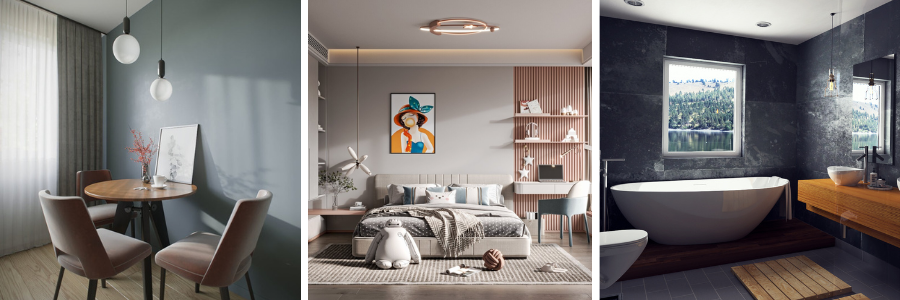
MacKenzie Brown is the founder and CEO of Cad Crowd. With over 18 years of experience in launching and scaling platforms specializing in CAD services, product design, manufacturing, hardware, and software development, MacKenzie is a recognized authority in the engineering industry. Under his leadership, Cad Crowd serves esteemed clients like NASA, JPL, the U.S. Navy, and Fortune 500 companies, empowering innovators with access to high-quality design and engineering talent.
The ever-changing world of architecture makes firms look for innovative ways to stand out in the crowded marketplace. One of the best ways of achieving this is by including 3D animation in your design presentations.
With these times behind us, where clients could only rely on static images or very complex blueprints to make them understand a project, technological advancements have made it possible for architectural firms to use 3D animation, leveraging 3D architectural animation services, where designs come to life, providing an immersive, dynamic experience that enhances communication and decision‑making.
Cad Crowd is the industry’s top agency for 3D animation, with over 94,000 experts you can choose from to help you turn your idea into a tangible one. Whether you’re looking for innovative solutions, strategic insights, or top-tier execution, CAD Crowd has the expertise and the talent to bring your vision to life.
This blog post discusses how your firm can utilize 3D animation to present architectural designs and services, leveraging 3D AR/VR architectural services, improve client engagement, streamline project approvals, and ultimately deliver better results. 3D animation creates moving images that simulate an environment with three dimensions. In architecture, that means taking a three‑dimensional model of a building or a structure and then animating it to simulate how the whole thing would appear from all sides, or with lighting, and how a person would actually interact in it. They can make everything from how the outer walls of the building appear to the small details within the interior.
In a very broad sense, what one intends to present or materialize can also mean a kind of design process, different stages of construction, and what is supposed to be built. Materials, functions, and all these together, then the overall functionality. As 3D animation is used in exhibiting a project, even more, the thought of this decision in mind with clients before taking, could be compiled together now with firms through presentations.
Communication is the key to any architectural project, and the clearer you can express your design idea, the better your chances of a project’s approval and successful completion. The traditional architectural presentation, often relying on drawings and blueprints with static images, might confuse clients in some way or leave the vision untold, which is why many firms now leverage architectural presentation services to bring clarity and engagement to their proposals.
You can create detailed, dynamic visualizations that will make it easier for clients and stakeholders to understand complex designs with 3D animation. Animations can display the flow of spaces, the relationship between different areas, and even how the building interacts with its environment over time. This is really useful when dealing with large-scale projects, such as urban developments or mixed-use buildings, where understanding the overall context is essential.
For instance, provide an animation of a proposed building and how to walk clients through the design. It can start with an aerial view of the project site and then zoom in on the exterior of the building. Then it can transition to reveal the interior, perhaps focusing on key areas such as the lobby, offices, or residential units. Animation of how the building will interact and have natural light at different points in the day, combined with energy-efficient design components. An immersive experience lets a client conceptualize what it will really feel like there, which becomes easier for the client to make decisions and adjustments before construction.
Expedite the approval of the design
Among the major challenges in architecture is getting a consensus on the designs from the client and other stakeholders, like government authorities. Most of the time, approval can be held up since stakeholders are not able to interpret static images or technical drawings. When there are different changes or revisions that require a visual representation, the process gets complicated, which is why many firms now rely on BIM modeling services to provide interactive, data‑rich models that streamline revisions and ensure everyone stays aligned.
The process of approval becomes smoother if the design is presented clearly and in a more interesting manner in 3D animation. When all parties concerned get to see the project come alive with animation, it tends to be faster all the way. This is especially so when working with governmental bodies or other regulatory agencies, where animated presentations help in demonstrating compliance with zoning regulations, environmental impact assessments, and other criteria.
In addition, 3D animations make it easier to correct mistakes. In case one wants to alter the design, modifying the animation to express the changes is much faster and more efficient compared to redoing static images or blueprints. This flexibility saves time, but most importantly, prevents the possible occurrence of any misunderstanding among all parties concerned, especially when leveraging 3D architectural rendering services to rapidly iterate and update visuals as the design evolves.
With the competitive market today, architectural firms have to be unique and come up with ways to capture new clients. Perhaps one of the most effective ways of doing so is by using different marketing materials. With 3D animation as part of your firm’s marketing strategy, you will create interactive, high-quality presentations that will awe your potential clients and enable them to imagine your designs. For instance, you can send an animated video of how you design to the potential client instead of just a simple brochure or a few still images. This will provide a much more memorable and impactful experience, giving your firm an edge over competitors who are still using the traditional approach.
The third advantage of 3D animation is that it can be very suitable for online marketing campaigns, including social media marketing, website presentations, and digital advertisements. The videos can go viral or catch people’s attention on YouTube, Instagram, or LinkedIn, hence reaching more people. You can tell clients with the marketing material that you created with the help of 3D virtual reality rendering. You are even saying that you’re one of those who will be at the helm of modern design, close to the world being innovative with technology.
Another significant advantage of using 3D animation in architectural presentations is that it brings out the finer details of your design. Clients normally face problems with visualizing how materials, finishes, and textures are going to be combined in the final product. Using animation, you can model how different materials will appear under different lighting conditions and thus enlighten the client on how his or her choices will be represented in the final product.
For instance, you can have a commercial building with glass, steel, and wood elements, which you would like to show different parts of the structure by an animation of how these materials will look when put together, leveraging 3D flythrough design services. Animation can be used to show how light plays with glass facades during the day, shadows play on the steel framework, and what the texture of wooden surfaces will be; this may help clients better visualize the tactility of materials.
For better exposure of details, such depth may have to be shown for a rich selection of materials, perhaps mainly on high-end residential or even commercial projects that would require a lot of the design process. The 3D animations of such details might provide better decision-making information to clients, so maybe fewer requests for revisions and more satisfaction with their final result.
Virtual reality integration for immersive experiences
Over the last few years, virtual reality and 3D animation for architectural presentations have really taken the latter to new heights, especially when combined with architectural 3D modeling services. It totally immerses clients and other stakeholders in a virtual building before it is actually built. You can mix 3D animation with virtual reality to offer your clients an interesting presentation. From every side, clients are allowed to walk around and discover different layouts, designs, and environments. The immersive ability makes them relate to the design on a more concrete level, which they have always wanted.
Virtual reality integration can also be done in collaboration with others, such as contractors or even interior designers. They can walk through their design virtually and give input to be made in real-time. This kind of engagement may lead to a much more cohesive design process within which all parties actively come together to form the end product.
Cost and time efficiency
Although 3D animation would appear to add an extra cost, it can save your firm time and money in the long run when you integrate 3D construction rendering into your workflow. Providing the client with a more accurate, detailed visualization of the project reduces the likelihood of misunderstandings and costly design revisions on‑site. The clarity animations provide can also prevent miscommunication with contractors, and everyone will be on the same page from the very start.
Furthermore, the procedure that includes 3D animation also eliminates the requirement for consecutive build cycles of a model or radical changes in current sketches. A 3D model created once can therefore easily be amended to change circumstances or revised according to modifications as the work continues from its production point.
In an architectural design presentation, 3D animation is a powerful means to elevate the services offered by your firm and to communicate better with clients and stakeholders. The ability to present the design dynamically, showcase materials and details, and engage clients through immersive experiences can be a competitive edge in speeding up approvals, streamlining decision-making, and raising client satisfaction.
This will enable your company to present the final product and, at the same time, display more transparent, interactive, and efficient design processes using 3D animation. Thus, such an innovative approach toward architectural presentations positions your firm as a forward-thinking industry leader, attracting more clients with success in your projects, especially when supported by design for manufacturing and assembly services that ensure the feasibility of your concepts from the earliest stages.
The future of architecture is a visual one, and through 3D animation, your firm can lead the way in making designs that will inspire, engage, and excite. At Cad Crowd, we have over 125,000 members waiting for you to choose from to help you present the most engaging and enticing architectural designs and services. Get a free quote today.
MacKenzie Brown is the founder and CEO of Cad Crowd. With over 18 years of experience in launching and scaling platforms specializing in CAD services, product design, manufacturing, hardware, and software development, MacKenzie is a recognized authority in the engineering industry. Under his leadership, Cad Crowd serves esteemed clients like NASA, JPL, the U.S. Navy, and Fortune 500 companies, empowering innovators with access to high-quality design and engineering talent.
The modern home isn’t always sprawling, but that doesn’t mean it has to feel like a sardine tin. In fact, there’s something oddly satisfying about a space that just works – where every corner has purpose, every shelf is intentional, and you never feel like you’re walking through an obstacle course of clutter. Maximizing space for functionality isn’t about having less – it’s about doing more with what you already have. And no one’s doing that better right now than today’s sharpest interior design firms, who’ve basically become magicians when it comes to reimagining modern living.
Designing a home today is like playing a real-life version of Tetris, but with furniture, storage, and flow. The trick is knowing where to pull off the perfect twist or rotate that couch 90 degrees so the whole layout clicks into place. Whether you’re living in a sleek city condo or transforming an awkward guest room into a zen office, these tricks aren’t just trendy – they’re transformative. And with Cad Crowd leading the charge in custom interior and 3D home layout design, homeowners have never had more power to turn tight spots into stylish, streamlined sanctuaries.
So if you’re wondering how designers make it look effortless – keep reading. Spoiler: it’s not effortless, but it can be fun (and wildly rewarding).
🚀 Table of contents
Open concept, but smarter
The open concept isn’t a trend anymore-it’s practically a lifestyle. But the smartest homes don’t just knock down walls for the sake of it. Today’s modern layouts are embracing a more refined take: spatial layering. That means creating a sense of openness while still giving each area its own character. A kitchen might flow into a dining space, but that doesn’t mean it has to disappear into it. Thoughtful design ensures each zone has its moment.
Designers now treat zone definition like an art form. They use layered lighting to spotlight transitions, area rugs to anchor specific zones, and clever dividers-like see-through shelving or partial walls-to subtly signal a shift in function without cutting off the vibe. It’s not about segmenting; it’s about storytelling. Each space gets to say something unique, while still contributing to the bigger picture.
This is where Cad Crowd steps in. Their interior design pros don’t just sketch ideas-they craft entire spatial experiences. With custom CAD drawings and immersive 3D visualization services, they help homeowners strike the perfect balance between openness and purpose. Whether it’s defining a reading corner within a living room or giving your kitchen just enough edge to stand out, Cad Crowd’s experts turn open concept into a cohesive journey. It’s not just design-it’s choreography for your space.
Where do you stash all your stuff without making your living room feel like a warehouse? Welcome to the world of clever storage, where design doesn’t just meet function-it hides it in plain sight. Modern interiors have evolved past clunky cabinets and obvious bins. Today, storage is all about blending in, sometimes so seamlessly you might forget it’s even there.
Think floating sideboards that double as art pieces, under-bench drawers you’d never notice, and beds with hidden lift-up compartments worthy of a magician’s nod. Behind what looks like a simple mirror panel might lie a wall of shelves or even a closet. This isn’t just a trend-it’s the new standard for thoughtful design.
Interior designers are taking things up a notch with dual-purpose furniture. Ottomans secretly hoard your mess, staircases morph into drawer systems, and desks tuck away to become Murphy beds. Nothing is safe from a storage upgrade.
And if you’re dreaming beyond off-the-shelf options, Cad Crowd makes it real. Their freelance interior CAD designers are wizards at modeling customized solutions that fit your space and style like they were meant to be there all along. Want a walk-in pantry that vanishes into the wall? Or a bar that pops out from under the stairs like a Bond movie reveal? With Cad Crowd, your “what if” becomes a buildable plan.
Smart storage isn’t about hiding mess. It’s about designing smarter-and with the right help, you won’t have to sacrifice a single square foot of style.
Vertical space: The forgotten frontier in modern home design
Everyone seems fixated on floor plans and square footage, but the real unsung hero of small-space living is vertical space. When you can’t stretch out, it’s time to think tall. Interior design firms have caught on in a big way, and what used to be an afterthought – a tall bookshelf, maybe a wall-mounted TV – has evolved into an entire design philosophy.
Today, it’s all about going beyond the floor and into the stratosphere of your living room. Think lofted sleeping areas that free up ground-level real estate, mezzanines that turn dead space into functional square footage, vertical gardens that double as air purifiers, and wall-to-wall pegboard systems that serve as customizable storage stations. Even home offices are going sky-high with elevated workstations and ladder-access libraries.
Modern design is no longer content with a one-dimensional approach. You’ll find kitchens with full-height cabinets that use clever pull-down mechanics, or living rooms with modular shelves that transform based on your mood, your bike, or even your ever-growing vinyl collection.
But if you’re wondering how to bring this high-flying design concept into your own home, you don’t have to go it alone. Cad Crowd makes it easy to work with interior design pros who specialize in small-space and vertical CAD planning. With custom 3D rendering design services, you get a crystal-clear picture of how your ceiling-to-floor setup will look before you ever lift a hammer. No surprises. No regrets. Just smart, space-savvy design that makes the most of every inch – even the ones above your head.
Furniture that folds, slides, and transforms: The new standard in stylish living
Whoever said furniture has to be static clearly hasn’t seen what today’s designers are doing. Modern interior design is having a full-blown love affair with transformable furniture – and not in a quirky, college-dorm way. This is polished, Italian-engineered, multi-purpose brilliance. Imagine a coffee table that rises to become a dining table, a sectional sofa that splits into individual lounge chairs, or a wall-mounted desk that folds neatly away after your Zoom call. This isn’t just space-saving. It’s lifestyle-enhancing.
The appeal? Flexibility without sacrificing aesthetics. With square footage at a premium and hybrid lifestyles becoming the norm, interior designers are reimagining what a single room can do. Take the classic guest room. Instead of letting it sit unused 95% of the year, designers now outfit it with Murphy beds, closet-desk combos, and modular lighting so it easily transitions from guest suite to home office to quiet yoga studio.
Behind these elegant solutions is smart planning – and smart modeling. That’s where platforms like Cad Crowd come in. Homeowners can connect with CAD designers who specialize in custom furniture that moves with you. Want your kitchen island to convert into a workbench? Dreaming of a chic sofa that hides your treadmill? Cad Crowd’s professionals can model your vision and engineer it to fit your space like a glove.
Transformable furniture isn’t just a trend – it’s a mindset. It’s about making every square foot work harder, look sharper, and adapt beautifully to modern life.
Light, mirrors, and illusion tactics: Interior designers’ secret to expanding space
Space isn’t just about square footage – it’s about how a room feels. Interior designers know this better than anyone, and they’ve long used clever visual tricks to make even the tightest spaces feel larger and lighter. One of their favorite tools? Mirrors. But not just any mirror stuck on the wall – today’s designs are all about placement, shape, and lighting.
Oversized round mirrors are especially popular, often teamed with soft, wall-washing LED strips. Together, they create a tranquil glow that expands the room visually, adding a sense of depth and calm. Glossy surfaces – think lacquered cabinets or polished stone – catch and reflect light in subtle ways, blurring edges and boosting brightness. Even a carefully chosen satin paint finish can help light bounce just enough to open up a space.
Natural light plays a starring role in the illusion of spaciousness. Designers often incorporate clerestory windows, hidden skylights, or narrow light wells to draw in daylight from unexpected angles. These features create a weightless, airy vibe without the need to knock down walls or add square footage.
For homeowners hesitant to make bold design moves, Cad Crowd offers a smart solution. With photorealistic 3D rendering services, it’s easy to preview exactly how light, mirrors, and materials will interact in your home. You can test that dramatic hallway mirror or a glossy white finish in your kitchen – all before lifting a hammer. It’s a game-changing way to design with confidence and clarity.
Outdoor spaces, reimagined: Tiny patios with big personality
Not all usable space is indoors – and modern design firms are getting seriously creative with small outdoor areas. From petite balconies to narrow side yards, these often-overlooked zones are being transformed into lush mini-retreats and alfresco extensions of the home. With the right design moves, even a six-foot-wide space can serve up big style and function.
Designers are embracing fold-away café tables, vertical herb gardens, and bench seating with built-in storage to make every square inch count. Textiles like outdoor rugs, layered lighting, and weather-resistant cushions add that extra layer of coziness, while planters provide privacy and greenery in one go.
Cad Crowd designers can render outdoor transformations in stunning 3D detail, helping you envision the perfect lounge-ready patio before you break out the power drill. From built-in seating with hidden coolers to compact outdoor kitchens, the right plan can make your outdoor square footage just as functional as what’s inside.
Hallways and transitional spaces: The most underrated design opportunities
Hallways, landings, and entryways often get treated like afterthoughts – but interior designers know these transitional zones are ripe for functionality and flair. With a little creativity, that awkward stretch of wall or pass-through can become a hardworking part of your home.
Design pros are outfitting hallways with narrow console tables that double as drop zones for keys and mail, gallery walls that add personality without bulk, and recessed shelving that turns dead space into book displays or utility storage. Even stair landings are seeing upgrades with built-in benches or quiet reading corners.
Cad Crowd makes these overlooked spots shine with precise CAD detailing. 3D interior rendering designers can model a hallway mudroom nook or floating shelf system with millimeter accuracy, ensuring your tight spaces look clean, intentional, and fully utilized. Transitional areas no longer need to be dull. With smart planning, they become the connective tissue that makes your home feel unified and complete.
Ceilings are often referred to as the “fifth wall” in a room – and modern interior designers are taking that idea and running with it. Whether you’re in a compact studio or a spacious home, a well-designed ceiling can change the entire feel of a space.
From coffered and tray designs to exposed beams and wood slats, ceilings add depth and texture without stealing floor space. Designers also experiment with paint to create optical illusions – a dark painted ceiling can add drama and coziness, while a soft blush or sky-blue hue can elevate the space and draw the eye upward.
Cad Crowd’s 3D renderings are invaluable for visualizing bold ceiling concepts before committing. Their design experts can test lighting interplay, map texture effects, and help you determine how much height you can visually “borrow” using clever finishes. When space is limited, the ceiling becomes the perfect place to play.
Nooks, crannies, and built-ins: Making the most of quirky architecture
Every home has its quirks – oddly shaped corners, uneven walls, or little recesses that seem impossible to furnish. But these are exactly the spots where custom design can shine. Interior firms are embracing the challenge, turning tricky architecture into design features with personality and function.
Sloped attic ceilings? Turn them into cozy reading nooks or slide-out closet systems. That tiny under-stair void? Perfect for a built-in dog bed, a compact wine rack, or even a powder room. And alcoves once considered unusable now host mini offices, floating desks, or art installations.
Cad Crowd’s freelance 3D interior rendering design talent thrives on challenges like these. Using CAD tools, they craft custom built-ins that honor the architecture instead of fighting it. These clever additions feel like they were always meant to be there – a true testament to the power of bespoke design thinking.
Textures and materials: Layering for depth in small spaces
When you can’t add more square footage, you can still add dimension – and that’s where textures and materials come in. Designers are layering different surfaces to add visual interest without overwhelming the room. In tight spaces, texture becomes a way to create a sensory experience that makes the area feel richer and more expansive.
Think smooth matte walls next to woven textiles, or polished wood set against raw concrete. Even a single accent material, like a fluted wood panel or ribbed glass, can create a focal point that draws the eye and adds sophistication. It’s subtle, smart, and space-savvy.
Cad Crowd’s 3D design process allows clients to play with textures digitally, so you can see how combinations will look and feel before committing. Want to see how a brushed gold faucet pairs with a terrazzo backsplash? Or how velvet cushions would contrast with a rattan headboard? With Cad Crowd, every texture decision becomes confident and intentional.
The psychology of space: Designing for flow and feeling
Interior design experts don’t just look at what you see – it’s about how you feel. Designers today are tuning into the emotional side of space planning, creating layouts that reduce stress, encourage movement, and support everyday habits. It’s part science, part art.
Clear circulation paths, for instance, can reduce anxiety and make a home feel more breathable. Thoughtfully placed furniture encourages social interaction or creates peaceful solitude, depending on what the room calls for. Colors, acoustics, and even furniture height play a role in how comfortable a room feels.
Cad Crowd designers apply psychological design principles in their CAD drawings, balancing visual harmony with ergonomic flow. Through immersive walkthroughs and precision modeling, homeowners can experience a space before it’s built – and make tweaks based on how it makes them feel, not just how it looks.
Kitchens and bathrooms: The new frontier for functional luxury
The kitchen has come a long way from being just a place to prep dinner. It’s now the social hub of the home – a space where design meets lifestyle. Think of kitchens today as stylish living rooms that just happen to have a stove. Open shelving puts your personality on display, while ambient lighting creates a cozy glow for both late-night snacks and early-morning coffee runs. Multi-functional islands are doing more than ever: meal prep, homework stations, wine tastings, even serving as a backdrop for Zoom meetings.
Interior design are also paying attention to the unseen. Behind the sleek finishes lie smart layouts that make use of the classic work triangle – stove, sink, and fridge – ensuring that cooking feels intuitive. Small appliances? Hidden in custom cabinetry so countertops stay clutter-free and clean.
And bathrooms? They’re no longer forgotten corners of the home. These once-functional-only spaces are being reimagined as private sanctuaries. Floating vanities and frameless showers bring a sleek, modern vibe, while recessed wall niches and wall-hung toilets help you save space without sacrificing style. Even in smaller bathrooms, the right design can make it feel like a five-star spa through great use of home design services.
The key to pulling all of this off? Precision and customization. That’s where Cad Crowd comes in. Their freelance CAD designers can help tailor every inch of your kitchen or bathroom layout, from optimizing plumbing routes to ensuring cabinetry fits like a glove. You get high-end, tech-powered design expertise without the high-end price tag that traditional firms often demand. It’s the future of functional luxury – and it’s within reach.
Seamless tech integration: Living smarter, not just smaller
Modern living isn’t just about maximizing square footage – it’s about enhancing every inch with purpose. As cities get busier and homes become more compact, interior design is getting a high-tech upgrade. The smartest homes aren’t only stylish; they’re responsive, intuitive, and incredibly efficient. Technology has evolved from being an accessory to becoming the backbone of innovative home design.
Imagine walking into your home, and the lighting adjusts to your mood, the blinds tint automatically based on sunlight, and your favorite playlist flows gently from ceiling-mounted speakers you can’t even see. This isn’t a scene from the future. It’s happening now – and it’s all by design.
Design firms today are weaving tech right into the structure itself. Think voice-activated thermostats, smart mirrors that double as information hubs, and countertops with built-in wireless charging stations. Even window glass can shift from transparent to frosted with a single tap. It’s no longer about adding gadgets after the fact. It’s about embedding intelligence into the very walls, surfaces, and furniture.
Cad Crowd is one of the leaders at the forefront of this revolution with their home design freelance experts. They’re empowering homeowners and developers with custom CAD solutions that integrate smart technology directly into the design plans. Their experts model hidden charging docks in furniture, place pop-up outlets exactly where you need them, and ensure every IoT element fits perfectly into the aesthetic.
It’s not just about programming devices – it’s about programming the entire space. With Cad Crowd’s help, homes are becoming as thoughtful as they are beautiful, proving that with the right design partner, living smarter doesn’t mean sacrificing style.
Customized over cookie-cutter
When it comes to making the most of your home, there’s no magic formula or one-size-fits-all hack that works for everyone. The secret? It’s not a secret at all – it’s personalization. Every home has its quirks, and every homeowner has their own rhythm of life. That’s why top interior design firms are moving away from cookie-cutter solutions and embracing fully customized strategies that reflect real-life needs.
Think about it: a remote worker doesn’t need the same setup as a family of five. One might crave a quiet nook that doubles as a productivity powerhouse, while the other needs creative storage that hides toys, gear, and all the daily chaos. Great design isn’t about copying trends – it’s about listening to people and translating their lifestyle into a functional, beautiful space.
That’s where Cad Crowd shines brightest. Unlike platforms that spit out generic templates, Cad Crowd connects clients with expert freelance designers who treat your home like the one-of-a-kind canvas it is. Their team of CAD drafters, 3D modeling experts, and interior pros collaborate with you to capture your vision from the ground up.
Whether it’s a sleek AR walk-through, a detailed mood board, or a smart layout that solves ten problems at once, Cad Crowd turns the design process into something enjoyable, approachable, and refreshingly human. No gimmicks – just personalized, functional design that fits your life perfectly.
If you want a home that actually works for you, don’t settle for one-size-fits-all. Go custom. Go Cad Crowd.
Conclusion: Your home deserves to work as hard as you do
Modern living is fast-paced, multifaceted, and – let’s be honest – sometimes a little chaotic. Your home shouldn’t add to the chaos. It should calm it. Support it. Elevate it.
Maximizing space for functionality isn’t about sacrificing comfort or style – it’s about enhancing both. With the right tricks and the right team, even the smallest studio or the quirkiest split-level can become a highly efficient, incredibly livable, and downright gorgeous space.
Interior design firms have never had more tools or talent at their fingertips. But when you want truly custom solutions – built for the way you live – Cad Crowd is the name to trust. Their global network of CAD experts and designers can turn your Pinterest dreams into buildable plans faster than you can say “mid-century minimalist industrial farmhouse chic.”
So whether you’re rethinking your living room layout, eyeing a kitchen remodel, or finally tackling that weird hallway nook – don’t just wing it. Design it. And let the space you live in finally start working for you. Get a free quote today.
MacKenzie Brown is the founder and CEO of Cad Crowd. With over 18 years of experience in launching and scaling platforms specializing in CAD services, product design, manufacturing, hardware, and software development, MacKenzie is a recognized authority in the engineering industry. Under his leadership, Cad Crowd serves esteemed clients like NASA, JPL, the U.S. Navy, and Fortune 500 companies, empowering innovators with access to high-quality design and engineering talent.
Among the many advantages of working with a residential freelance architect, as opposed to a major architectural firm, is the possibility to attain a higher level of personal service. Freelancers will typically describe their endeavor as a small business, hire a few professionals to help with the operation, and work on behalf of a limited number of clients as well. They don’t have too many things on their plate at any given time, allowing them to focus better on every single task at hand. In many cases, freelancers might not even be able to delegate essential tasks to employees simply because they can’t afford to hire a full team of professionals to begin with.
Choosing the right architect for a residential project can be quite cumbersome, and even more so if you’re looking to hire a freelancer rather than an architectural firm. Depending on the particulars of the project, it might mean entering a months-long relationship, if not more. Not only does Cad Crowd give you the option to choose from hundreds of freelance architects that suit your style and preferences, but it also offers the kind of affordability that homeowners everywhere can appreciate as the leading agency in providing professional services from freelancers, including architectural drafting services.
🚀 Table of contents
What to look for
Of course, not every single residential freelance architect provides an equal level of services. With a little due diligence, however, you have every chance to work with the best Cad Crowd can deliver for a reasonable price. Everyone has their own preferences and expectations, and you have to make sure that the architect you hire can meet and probably exceed those expectations.
License
Don’t get ahead of yourself and think that, because the architect offers the services as a freelancer, a license is unnecessary. Every architect, whether a freelancer or any other kind, needs to be licensed by the state where they practice professionally. Also, there isn’t an all-inclusive license because each state has its own requirements. You’ll be surprised to know there are plenty of home designers who advertise similar services as architects; the services might sound more or less the same, but the people behind them are not at all similarly qualified. A licensed architect has undergone rigorous education and a series of examinations specific to the profession. It also means that a licensed architect has the experience and knowledge that home designers simply do not have. There’s a big gap in training, expertise, and mastery of the trade between the licensed and the unlicensed ones, so be sure to look for freelancers offering 3D modeling services.
In an architectural firm or studio, it’s standard practice that at least somebody in the firm has a knack for 3D modeling software or perhaps BIM. Now, this person might not be the head architect, but the important thing is that they can communicate the design with you through clear visualization. It wouldn’t be particularly strange to see a firm having another person or two to handle other business matters, such as building codes and regulations, as well. On the other hand, a freelance residential architect probably doesn’t have the luxury of hiring a team of professionals to take care of all of those. Instead, the architect often opts to take a hands-on approach to everything, including the design visualization tasks.
Proficiency in such design software as SketchUp and AutoCAD is an essential skill for a freelancing architect. Bear in mind that visualization is much more than a presentation of design ideas because it also demonstrates how well the architect understands local building regulations and functions as an action plan to help avoid issues with the construction process down the line. Visualizations, especially those kept in the portfolio, also function as documentation of past projects to tell you the kind of quality you can expect to receive, should you decide to hire the freelancer, including BIM services.
We don’t suggest limiting your search to your local city, but a freelance architect based in the same area as the project doesn’t sound like a bad idea, either. If you’re looking far and long enough, chances are you’ll find quite a lot of competent architects from every city and state who offer their services at competitive rates. That being said, hiring a local freelancer means you have easy access to the office and that the architect likely has established a record with the city officials in charge of issuing the necessary building permits. An architect who understands the local permitting process will be a huge advantage, as the person already knows the zoning code requirements without additional research; fewer tasks save money.
Direct point of contact
Effective communication plays a major role in determining how well the project goes. An in-person meeting should help you gauge the architect’s communication skills, but this might not be possible if you’re doing the search online. Freelancing sites typically allow you to engage in a discussion with an architect through their built-in messaging feature. It won’t be as insightful as a direct conversation, but at least you don’t have to make the hiring decision right away, either. But if the architect is local, you always have the option to schedule an in-person follow-up.
Don’t take the issue with communication skills lightly; working with a freelance architect means you’ll be talking directly to the person in charge of the project most of the time. The architect will be your point of contact for the sake of simplifying workflow. In a larger architectural firm, you’ll probably end up talking with a project manager instead of the actual architect designing your home. With a freelancer, you know that the person answering all your questions is indeed the architect offering interior design services.
This is a pretty obvious one, and true whether you’re hiring a freelance architect or a firm. In any kind of residential project, you want the architect to have a somewhat similar aesthetic taste as you do. There can be many challenges throughout a project–not just technical hurdles but design issues as well. Technical issues are not uncommon, and yet a good architect will usually find a good workaround to every problem. Differences in aesthetic taste, on the other hand, have every possibility of putting a project to a grinding halt. A design preference conflict between the architect and the client can be a big problem; the best way to deal with the conflict is to prevent it from ever coming up in the first place.
A big architectural firm probably has two or more architects ready to take on any upcoming residential project. This doesn’t mean a group of architects will work on the same tasks, but at least the firm can offer different perspectives while approaching your choice of design. If one opinion doesn’t seem to align with your taste, there’s another ready to jump in. Once again, a freelance architect probably doesn’t have the benefit of getting thorough professional advice from a peer unless an additional fee is involved, so consider freelancers offering concept design services. You should be able to get an idea of the architect’s aesthetic style preference by looking at the design visualization samples and past projects. If you don’t like what you see or have any objections to the designs, raise your concerns clearly.
It’s not a good idea to pick any freelance architects solely based on the appearance of their websites or online profiles. Still, how they manage their online presence can be a good indicator of their quality of service. The non-professionals probably don’t care much about industry news and current architectural trends, but the good ones will want to follow industry trends and the latest updates on technology to stay ahead of the competition. It’s also a sign that the freelancer is passionate about the profession and well-engaged with how the industry develops. An active, properly-maintained online presence often includes some documentation of recent projects as well.
If possible, get in touch with current and past clients to talk about their experience working with the architect. While you probably won’t get a detailed explanation about every single thing, it will at least help you make an informed decision. Don’t hesitate to ask about the architect’s communication style, how the person handles issues with construction, what happens when revisions are necessary, and whether the client is involved in the entire design process.
To get a better understanding of the design process, ask the architect to take you to an ongoing project, if possible. Visiting a project that’s still under construction will give the architect a chance to walk you through the design process. It would be an ideal place to ask questions about concept development, who else is involved in the project, engineering matters, final plans, and so forth. At the same time, you can gauge how flexible the architect is when it comes to accommodating changes and how collaborative the process will be—so look for freelancers offering structural engineering services.
A lot of freelance residential architects choose to work in their local areas. Because they don’t usually have a full team of professionals to assist with the jobs, they mostly work on small-scale projects. With that in mind, it only makes sense to hire an experienced freelance architect, even if it will cost you a bit more money. Armed with extensive experience in the business, you can expect the freelancer to know their way around managing every task in the project well, including residential planning, architectural detailing, dealing with contractors, and getting the jobs done on time, so look for freelancers offering new residential design.
How can Cad Crowd help?
When hiring residential architect freelancers, it’s crucial to prioritize licensed professionals skilled in 3D software and familiar with regulatory standards. The ideal candidate should demonstrate clear communication, aligned aesthetics, and proven residential experience. Freelancers not only offer competitive rates but also deliver personalized service and direct involvement throughout your project.
Challenges are inevitable, but working closely with your architect ensures smoother outcomes. Cad Crowd connects homeowners with qualified freelance architects who provide professional expertise and personal attention, ensuring your vision comes to life efficiently. Get a free quote today —post your project and receive tailored proposals from top architects!
MacKenzie Brown is the founder and CEO of Cad Crowd. With over 18 years of experience in launching and scaling platforms specializing in CAD services, product design, manufacturing, hardware, and software development, MacKenzie is a recognized authority in the engineering industry. Under his leadership, Cad Crowd serves esteemed clients like NASA, JPL, the U.S. Navy, and Fortune 500 companies, empowering innovators with access to high-quality design and engineering talent.
There are those times in the life of an architecture or engineering design firm when the universe throws up a challenge that feels curiously uncomplicated on the surface. You enter a building thinking that everything inside will be as the drawings that someone approved many years prior showed. You assume the walls will be exactly where the plans say they should be. You expect the plumbing and wiring to be exactly where they are shown on the blueprint, as if whoever built the place followed a recipe. It feels like a basic expectation. It feels like something that should never surprise anyone. But then reality reveals itself, and you realize that the structure is different from your expectations in those early documents.
The painful epiphany often comes when you realize that as-built drawings exist for a reason: they were constructed to clarify the real story. They tell the truth about where the walls really went, where utilities really ran, and how the final project really took shape. They give you a version of the building you can rely on, not an assumed one where everything still might be the way someone once imagined it to be.
That’s where architectural design teams and engineering firms shake their heads in frustration and fascination, because buildings evolve, plans change, and construction teams make adjustments on site for a whole gamut of reasons that range from very practical to just plain mysterious. The result is physically real but seldom identical to the pages that first defined it.
As-built drawing services avoid such shock. These provide the firm with a real-life reference that will support planning, renovation, and maintenance, apart from future upgrading. They help reduce project confusion, get rid of unnecessary delays, and support clear communications across all project stakeholders.
Cad Crowd is a great avenue to look for freelance professionals to deliver high-quality ‘as-built’ drawings. The wide range of experts has experience in architecture and engineering, right down to the accurate site measurement. This is one of the good places where you will be connected with professionals who take messy or outdated documentation and turn it into something that finally reflects reality.
Having that in mind, let me outline the reasons why as-built drawing is a must for architectural and engineering firms: You would be surprised to know that investments in their creation are not just one of the options of being helpful, but indeed are one of those strategies that avoid headaches, surprises, and unnecessary reworks in future projects.
🚀 Table of contents
Reason 1: They give the real story behind a building.
Somewhere, there is something peculiarly comical in the contrast between the ideal world of architectural plans and real-world conditions on the job site. In plans, you see walls of perfectly straight geometry, duct runs angling neatly into neat corners, and utility lines presented as if they politely agreed to align themselves in predictable routes. Then, construction starts, and in comes the reality that guests who didn’t read the dress code.
Interference requires changes to structural framing on a whim. Electric lines get rerouted because their original path ran into some obstacle along the way that no one foresaw. Plumbing lines move because the on-site measurements conflict with theoretical dimensions. Each trade makes the change. Time passes, and little changes add up to a layout that does not look exactly like the original documents.
This planned-versus-built disconnect is one that quickly becomes very real to architectural design firms when renovation, addition, or maintenance projects have to be done. Without ‘as-built’ drawings, assumptions are usually made from old documents by the teams involved. That is the kind of decision leading to surprise demolition, unexpected delays, and those odd moments of disbelief.
That uncertainty is nullified because it is correct on the as-built drawing. These are the drawings of structures that outline what the building really looks like today, not what it looked like at times when the paper design was done. They enable the engineer to understand, with a lot of clarity indeed, the structure. They let architects confidently plan renovations instead of making plans based on outdated assumptions.
Knowledge of the right things right from the start of the project makes everything else easier. No more wasted time in guessing where your missing utilities. Unknown conditions behind walls wouldn’t cause unnecessary confusion. Instead, teams just have a sound foundation on which to start planning.
That is one of the many reasons companies want professional as-built drawing specialists. You want those people who go out in the field, take down all the measurements, document every system that’s on site, and give you a drawing with accuracy. Cad Crowd prides itself on CAD design freelancers with domain expertise. They are well-qualified to support architectural and engineering teams in the documentation of existing structures-accurate to realistic drawings, not theoretically exact drawings.
Reason 2: They prevent costly surprises in future projects.
Now, imagine you are walking onto a renovation job site with complete confidence, knowing the existing drawings are going to drive your decisions. You break out the old documents and start planning. Absolutely everyone thinks the information is correct. Then comes demolition: a wall comes down, and utilities appear that aren’t supposed to be there. A conduit emerges from someplace where nothing was supposed to exist. The ceiling opens up, and ductwork nobody expected to find stares at you. That is when you can tell that someone back in history changed things and never fixed the drawings.
These discoveries cause delays and force crews to stop work. Meanwhile, architectural design experts are forced to revise their specifications, engineers to redesign components, and the whole team is compelled to readjust its thinking in conformance with the realities of the newly encountered site conditions. Time is wasted, costs increase, and frustration mounts.
It’s the as-built drawings that reduce these headaches, documenting what’s really there. With accurate documentation, renovation planning can be a whole lot easier and predictable. The team knows the layout before a single hammer swings. There is real awareness of what systems are in place. Architects can make informed decisions. Engineers can calculate loads and connections with confidence. Contractors can develop more accurate estimates and schedules.
Just one surprise behind the wall can send half a project phase off the rails. That is where accurate as-built drawings help you avoid the surprises. In avoiding these surprises, firms save money from costly redesigns, unexpected demolition adjustments, and emergency solutions.
It is far easier to correct things at the planning stage, rather than trying to fix problems once construction has started. The planning stage, therefore, with accurate as-built drawings, becomes far more reliable. This is one of the reasons why so many firms find themselves reaching out for skilled professionals who have experience in these types of projects. Cad Crowd connects you with architectural planning and design services that understand these challenges and know exactly how to properly document a building, knowledge that will prevent architectural and engineering teams from costly catastrophes because of poor documentation.
Reason 3: They widen and normalize the communication between participants.
Perhaps one of the most undervalued aspects of as-built drawings has to do with communication. Most projects in architecture and engineering involve a huge number of stakeholders, whether it be the clients, contractors, consultants, or facility managers, each with different needs, perspectives, and priorities. Clear documentation aligns everybody with the same information on the same page.
These drawings become obsolete as they get passed around the group and lead to misunderstandings. One vague detail is interpreted one way by the contractor and another way by the structural engineering experts. An architect assumes certain dimensions that no longer apply. Facility managers make decisions based on documents that no longer depict the configuration of a building. Inaccurate information becomes a silent source of misunderstandings.
That, however, takes a complete turn for the better with as-built drawings. They unify the understanding wherein, at the same time, with accurate data, while working on it, it gets a lot easier, and the conversations get more productive. The team reduces confusion, cuts back-and-forth clarifications, and collaborates confidently while looking at a reliable representation of the structure.
The customers are equally pleased when they see the drawings clearly, especially when they have a mental picture in mind, like setting up a document for future improvements. Such documents give them an overview of their building. They thereby benefit, in the process, from a much better understanding of their place and its deficiencies. They can be involved as well with the design team once they grasp the information being presented
As-built drawings are the universal language among project teams. Translating the physical building into a reference that everyone can follow is important. Generally speaking, where the documentation is correct, the general workflow improves, and what might seem complex proves manageable.
Cad Crowd freelancers would also tell you that clarity is everything in terms of documentation. Most professionals understand well that a good drawing is not only a technical document but also one more way of communication, which develops teamwork and collaboration.
Reason 4: They help in smoother renovation planning and facility management.
There’s a certain kind of headache that appears only when a person tries to plan a renovation without proper documentation. It starts with mild confusion, grows into concern, and finally matures into full-blown unbelievability. You know the feeling: You walk through a building holding a set of drawings that someone insisted were reliable. You confidently examine the pages, glance at the space around you, and think everything is straightforward. Then you begin measuring. Suddenly, nothing lines up. The walls that appear perfectly aligned on paper show strange angles in real life. A room that is supposed to be rectangular has a tiny slant that no one ever mentioned. A column appears where the drawings insist there is open floor space. It’s a situation that turns an otherwise ordinary project into a puzzle that feels almost taunting.
That is where the value of the as-built drawing experts comes in: they eliminate guesswork from future planning. When architects begin redesigning a space, they have to have accurate reference material. They must know where the existing walls are. They need to know how the mechanical and electrical systems are laid out, and they have to see how the building has changed over time. Renovations cannot function based on speculation; they need certainty.
As-built drawings provide that certainty. They represent today’s reality, not some idealized drawing from yesteryear. That allows architects to design renovations that truly respect the structure, while engineers can adapt mechanical and structural systems without surprises. The contractor has confidence that the plans he receives for construction align with real conditions. In fact, the whole renovation process could be that much more efficient if preparation is based on accurate information.
It is equally high on the facility managers’ side because they operate the building, troubleshoot the systems, replace equipment, and adjust layouts. All these jobs become exploratory missions if the changes or updates are not properly documented. Many times, they have to open the walls, ceilings, or even the floor, just to find systems set up differently than what older drawings might say they should be – costly, time-consuming, and entirely avoidable.
Suppose the facility manager is to replace a mechanical unit. The old drawings depict that the route of the duct is perfectly accessible, while actually, this ductwork splits into two different directions because a contractor working in the past had changed things during installation. Consequently, there is no as-built drawing to be had; confusion and delay are felt by the facility manager, while it would have been predictable if the documentation had been there.
Correct ‘as-built’ drawings assist the facility manager and engineering design experts in planning preventive maintenance; this is because when the mechanical systems are correctly documented, teams can find the intervals when replacements are to be made with great ease. They can monitor ageing components and understand the actual conditions of the building they maintain. Surprises are fewer that way, and with better performance, the equipment will last longer.
All these benefits amount to smoother operations and fewer budget complications. From architectural firms to engineering teams, from contractors to facility managers, clarity is provided by accurate drawings. This is where it matters that professionals who can specialize in ‘as-built’ documentation are hired. The freelancers at Cad Crowd pretty well understand the technical challenges that come with field measurement and the analysis of buildings. They will be able to assist in the development of drawings to serve as reliable references for a number of years.
Reason 5: They reduce liability and improve compliance.
Liability is one thing any architectural and engineering firm has to face. There are just so many technical decisions about construction projects, structural integrity, code requirements, and safety standards. If that documentation becomes outdated or wrong in some respect, that risk goes through the roof. A small mistake in a drawing can leave room for a bad assumption, which may lead to a design decision creating an unsafe or non-compliant feature, and no firm wants that.
Accurate as-built drawings support the documentation of compliance with a building’s final configuration. Architects and engineers will refer to what actually exists on a site when investigating code requirements relative to future renovations. Systems-fire protection, electrical distribution, and ventilation systems-will more easily be checked against regulations, especially for MEP drafting services.
Consider the architect who redesigns an exit route. If, in fact, the original drawings show an existing hallway to be wider than it actually is, the new design may not meet egress requirements. In that case, of course, the possible problem is unidentified now, and risk arises. With accurate as-built drawings, dimensions can be verified, and the design team has the capability to know at the outset whether something will comply.
The latter relies on the calculations to check for load paths, structural connections, and mechanical routing. Where the drawings show a displaced beam or a duct that no longer has any part of the original path, the calculations shift accordingly. This is one fear: just one wrong reference point might turn upside down all the structural assumptions, which is not something any professional wants to find out after construction has already started.
As-built drawings also facilitate the process of permitting: renovation plans filed with local authorities can require showing specific documentation with regard to existing conditions. The accuracy of as-built drawings makes the whole approval process much easier and faster because it shows the regulators that the company is working with reliable information. This greatly limits the need for supplementary explanations or resubmissions.
Liability further extends to client expectations. Each time firms go on-site, with renovation plans based on obsolete drawings, surprises are bound to happen. Those surprises are the changed orders for cost and timeline extension, and moments when clients rightfully question the process. The more accurate the as-built drawings are, the fewer disruptions will occur; it thus helps in sustaining trust between the firm and its clients through transparency by the architectural design and drafting company.
Another big factor is that so many owners now expect proper documentation at the conclusion of a job. In truth, through experience, owners have caught on to just how important precise drawings are to use in planning the future. They also realize that these protect their investment when architectural and engineering firms do not provide this value. This then represents a lost opportunity to deliver comprehensive service.
Accurate as-built drawings require skilled professionals, and a great deal of attention to detail, technical knowledge, and site measurement experience are needed for such work. Cad Crowd can provide this level of professionalism; it’s where firms can locate those specialists who take the time to document structures correctly. It reduces liability in return, while code compliance is maintained along with professional integrity.
How as-built drawings improve workflow efficiency
The five reasons outlined above depict most of the major benefits, but a more general theme can be elaborated from them, too; namely, as-built drawings smooth out the workflow of each phase of the project. In other words, when true information is at hand, each team member is able to work better: planning gets more organized, communication gets clearer, construction goes smoothly, and maintenance gets predictable.
Think of how project delays normally start: a team hits an unexpected condition, the condition requires a redesign through architectural remodeling design services, the redesign requires new approvals, the approvals require clarifications, and the next thing you know, what should have been a two-month project stretches out to four. More accurate as-built drawings can prevent many of these delays by at least reducing the variables unknown to them.
They also support digital workflows. Many firms today work with advanced modelling tools, including BIM platforms. These systems are very dependent upon accurate base drawings. If the starting model is wrong, then all of the workflows built upon it will carry those same inaccuracies. As-built drawings enable the creation of digital models that actually represent existing conditions for better, more reliable simulations and analyses.
This will also enable better coordination among the trades. The mechanical, electrical, plumbing, and structural teams all need good background information upon which to base their work plans. When they start with correct drawings, then more effective conflict detection means there are fewer clashes during construction. That saves time for everybody.
Scheduling even improves: with few unexpected discoveries, the contractor can plan the activities more precisely; equipment can be ordered on time, labor can be assigned with efficiency, and workflows will continue to get more predictable and cost-effective.
All these enhancements culminate in better relations amongst project partners. Greater trust develops when the documentation is reliable. The teams also start working much more smoothly with one another, and the clients stay assured about the process of all those involved. Accurate ‘as-built’ drawings bring stability, and everybody profits from that.
The human side of as-built drawings
Notwithstanding all the technical aspects involved in the as-built drawing, there is a quite amusingly human side to this too. Since people make decisions out in the field, not many buildings have been built just exactly according to plan. Construction workers adapt to real-world challenges, structural engineering experts quickly adjust in order to resolve conflicts, and contractors work around space limitations not anticipated by drawings. Each decision was made because of practical realities entailing working with actual material and existing structures.
These human decisions are documented in the as-built drawings. They show where the contractor made that smart adjustment to avoid an obstruction, and how the plumber moved a line to allow space for a support member. They capture the unscripted nature of construction.
There is something peculiarly attractive about that. The important message is that buildings are never some abstract theoretical construct but a result of people solving real-time problems. As-built drawings contain this history. They give that direct link between the idealized vision of design and physical manifestation in completed form.
Firms in architecture and engineering that invest in proper documentation pay homage to this very human side of building: real conditions, real challenges, real decisions molding the building. These are things they acknowledge.
Why Cad Crowd is a great resource for as-built specialists
By now, it should be a foregone conclusion that as-built drawings support long-term planning in terms of accuracy, efficiency, communication, and even safety, but Cad Crowd will be where the firm has to have experts who know how to produce them.
Cad Crowd is the community marketplace of specialist freelancers with knowledge in architecture, engineering, CAD drafting services, site measurement, and building documentation. In such a way, firms can reach professionals in field verification, measurement capture, and production of accurate drawings. Such freelancers understand how critical precision is-they understand how to capture that information that truly matters. Their drawings are those assisting confident decision-making throughout future projects.
It helps firms to find specialists within their budget, timeline, and project needs. Whether it’s firm needs for drawings of a small renovation, a large commercial upgrade, or a full building survey, Cad Crowd has experts for it. The whole process is flexible, efficient, and relatively simple.
Such documentation is outsourced, especially useful in firms that may not want to keep in-house staff for work that is not that frequent. Cad Crowd helps the firms by highly qualified and experienced freelance professionals hired on demand without long-term commitments.
Conclusion
The as-built drawing is so much more than a technical document; it serves as the foundation for informed planning, correct renovation, and effective facility management. It engenders better communication and lessens liability. As-built drawings bring clarity to architectural and engineering firms, leading to confidence in taking on work. It documents the real story of a building and supports every future decision it makes.
These benefits are realized, however, only when highly qualified as-built documentation experts can be found. Cad Crowd is an excellent place to peruse portfolios and compare skills with the intention of finding that perfect freelance as-built drawing artist. Scroll through and find those professionals who can deliver to your firm the dependable documentation it deserves for smoother, smarter projects with more efficiency.
Take a look around Cad Crowd today, and find an ideal professional to suit your needs for your next project. Request a quote today.
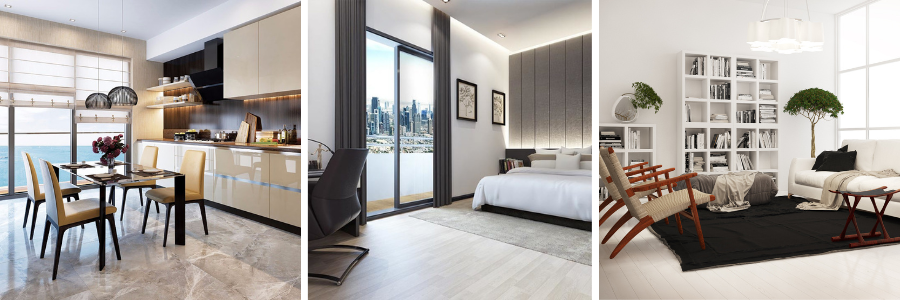
MacKenzie Brown is the founder and CEO of Cad Crowd. With over 18 years of experience in launching and scaling platforms specializing in CAD services, product design, manufacturing, hardware, and software development, MacKenzie is a recognized authority in the engineering industry. Under his leadership, Cad Crowd serves esteemed clients like NASA, JPL, the U.S. Navy, and Fortune 500 companies, empowering innovators with access to high-quality design and engineering talent.
This post provides a guide for interior design services and how it’s used to create beautifulo room renderings. Interior rendering, as a trade within the architectural industry, refers to the production of design visualization to showcase how a room is supposed to look before it’s constructed. The visualization is typically used as a presentation tool to communicate design concepts and ideas to clients and stakeholders for reviews and approval.
Gone are the days when architectural designers and design firms rely solely on the traditional 2D drawings to make sales pitches. While the industry hasn’t reached a point of complete transformation from conventional drafts to the more advanced 3D renderings, it’s pleasing to see how professionals and clients alike no longer treat photorealistic visualization as an expensive add-on but a necessity in the design process.
The primary goal of a room rendering process is to make the final image as photorealistic as possible. In other words, the computer-generated imagery needs to look as if you’ve taken a photograph of the room using a professional-grade camera and add some final edits to it. All that sounds simple on the surface, but in reality, photorealistic rendering services are a pretty intensive process that requires not only technical precision and understanding of camerawork but also artistic touches.
It takes skills and experience to turn a design draft, whether a floor plan or an interior sketch, into an accurate, lifelike image. Familiarity with a range of 3D modeling and rendering software packages is a must; otherwise, you might miss out on specific features, tools, or functionalities required to achieve the level of detail needed for the work. A high-quality render isn’t just a snapshot of a design translated from a draft; some might say it should be nothing short of artistic expression to evoke emotional responses from the audience.
Photorealistic rendering isn’t exactly a new thing, but looking for a professional and experienced 3D render artist for a project can still prove to be quite a challenge these days. Cad Crowd appears to be the safest bet for now. The AEC-focused freelancing platform is home to hundreds, if not thousands, of the world’s most talented render artists, offering their services at reasonable prices. In any case, every render artist has to start from a place where they almost have no idea what they’re doing before they get to a professional level. It’s not going to be a quick jump, but the following guides should help you get a grasp of the essentials a little bit better.
Practical guides to interior rendering
Photorealistic visualization of an architectural project can be a daunting subject. But the good thing is that, sometimes, a deeper understanding of the basics goes a long way to improve your skills. What you’ll see below won’t be much of a deep dive into the intricacies of interior rendering services, but it might just be enough to lead you in the right direction toward visualization fluency.
Just because rendering doesn’t come with exactly the same workflow as photography, it doesn’t mean you can’t use images captured by cameras as references. Even for a project brief that’s uniquely specific, there’s a good chance that you can find photos online that at least partially meet one of the requirements. For instance, if the client wants an interior with an industrial style that uses furniture from a particular brand, the Internet is a good place to start hunting for some inspiration. You might not be able to get any image that ticks all the boxes, but even in the worst-case scenario, you’ll bump into one or two images usable as points of reference.
If photographs are hard to come by, you can always resort to online libraries for rendering. Websites like DeviantArt and Behance have loads of samples to explore and observe. ArchDaily and Divisare also offer curated selections of interior visualizations by well-known designers and render artists. Even Pinterest should be good enough to get you started. There’s nothing wrong with using the works of others for inspiration, so long as you don’t produce an exact copy, which is highly unlikely anyway because their project briefs can’t be identical to yours either.
References allow you to “indirectly” learn from other render artists and 3D designers. All those images might tell you which color combination works best for a small room, what visual style conforms with a home office, how to present a corporate office render, and so forth. Every little detail you see is a lesson to remember.
3D modeling design services are the underlying work of an interior rendering. You can’t have a proper render without making sure that you have all the correct models to represent objects in the scene. Remember that you’re not actually capturing photos of physical objects, but generating a visualization of those objects in a digital environment using specialized software. Accurate 3D models are a prerequisite for high-quality rendering. Many things can make your visualization look unrealistic, and poorly-built 3D models are among the worst of them all.
One of the main problems with high-end interior rendering is that you can’t always source quality models from just about any 3D model marketplace online. Let’s assume the client wants the visualization to include objects (furniture, ornaments, fixtures, etc.) from specific brands. In many cases, it’s perfectly fine to model those objects yourself, but make sure that you get clearance from the clients. Some furniture design companies actually sell high-poly 3D assets of their patented design or products, so make time to discuss the matter with the clients to avoid any legal issues.
If you have to model some objects from scratch, remember the following key principles:
Respect the real-world dimensions: it’s best to model an object according to its actual measurements. If possible, look for the manufacturer’s specification.
Clean geometry: overlapping meshes aren’t the best solution to achieve a shape or design. They can result in unwanted artifacts in rendering or shading issues.
Avoid low-poly: any object, whether you plan to use it in the foreground, mid-ground, or close-up view, should be modeled as a high-poly 3D asset. Even if you want to use it as a background object and blur the color for a realism effect, it’s better to have a detailed object converted into a low-poly one than the other way around.
Be that as it may, modeling from scratch is usually not the priority for efficiency reasons. 3D modeling is a time-consuming task, especially considering the fact that you have the option to source premium assets from online marketplaces. Such platforms as TurboSquid, RenderHub, BlenderKit, and CGTrader, to name a few, have thousands of ready-made 3D models used for architectural rendering services. Assets include furniture, decorations, ornaments, lamps, doors, windows, stairs, and more.
Map the project brief
Reading the brief over and over again does seem like a waste of time and effort, but it’s advised against simply combing through the instructions for the obvious reason that you can easily miss something crucial. To avoid the hassle, make the effort to “map” or outline the brief during the first re-read. This is where you answer questions like:
What is the intended visual style? Is it minimalist, industrial, contemporary, classic, or something else?
Is there any particular color combination that best complements the style?
Does the instruction mention anything specific about the furniture design, brands, ornaments, decorations, wall paints, or other objects and elements?
What should be the focal point? Is there any object to highlight?
What time of day will the rendering be? If the 3D visualization design depicts the interior at nighttime, how many light sources are there in the room?
Does the client provide images or photos for references? If so, what makes the references stand out?
There are no right or wrong answers to any of those questions. Take another look at the client’s references (if any) or other images you’ve already collected to gather ideas and develop a design concept. It’s important to have a clear style direction early on in the process; otherwise, you’ll be doing everything seemingly at random without a well-defined objective.
Unsurprisingly enough, 3D CAD render artists are prone to falling into the trap of repetition. This is when they unknowingly use the same design ideas and visual styles over and over again. Everything looks just fine for the first dozen or so renderings, but then the portfolio shows very little variation in terms of perspectives, composition, lighting effects, color, etc. It’s understandably difficult to come up with a fresh design concept each time, and that’s why everyone needs to take inspiration from other designers and render artists at times.
The hallmark of a high-quality render is when the audience cannot seem to tell if what they see is a computer-generated visualization or a photograph. In other words, you need to try to render like a photographer. Remember that the virtual camera (this is the camera position that gives you the viewing angle for the rendering) essentially follows the same optical principles as an actual DSLR. As a 3D architectural visualization designer, to produce professional-grade images, you shouldn’t stick to the default setting, then do the routine point-and-shoot. There are plenty of settings to configure, including object placements within the frame (composition), to get the best results.
A typical challenge with interior rendering is space limitation. Field of View (FOV) and focal length matter the most here. An easy solution is to use a wide-angle perspective to cover the entire room and therefore fit every object in the frame. But an easy solution isn’t always the best available. If you include everything in the frame, the image most likely ends up with poor composition, with a weak focal point. The sweet spot for interior visualization is a focal point between 28mm and 35mm, or the “prime lens” shot. The viewing angle from these lenses closely mimics the human natural field of view, making the image look realistic.
Detailed shots or vignettes are best when captured using a medium telephoto or “portrait” lens. This allows you to focus on or highlight specific objects or areas while compressing the background at the same time. Experiment with the Depth of Field option for more dramatic blur effects. The next in line is composition, or the arrangement of objects in the scene. Some of the most common composition techniques for interior visualization services include:
Rule of Thirds: placing the focal point or highlighted features of the room slightly to the right or left of the center.
Framing: the use of objects such as windows, doorways, ornaments, or even furniture to frame the key features.
Leading Lines: utilizing noticeable lines (from the objects) in the scene to guide the viewers’ eyes toward the key features.
Asymmetry: introducing too much symmetry to the scene makes the image look generic, so a touch of imbalance is good.
Don’t be afraid to explore the different options of camera angle, height, focal point, and composition. You can’t really see what’s the most effective solution until you compare at least two or three finished renderings. It’s best to do the exploration in the “grayscale render” stage. Also commonly referred to as “white box rendering,” this is the stage where the 3D models are still devoid of color and textures. Professionals use the technique to experiment with camerawork without the need to do full-scale rendering each time.
Mind the lights
The way the 3D modeler set the lighting effects can make or break the rendering. Different times of day have a huge impact on how the room looks and feels. A lot of times, it has everything to do with the kind of room you want to visualize. For example, a bedroom is best encapsulated with artificial light sources during the night, whereas a home office appears to have its most energetic atmosphere during broad daylight. If you decide to use the sun as your primary light source, make sure it’s dispersed enough across the room to maintain a comfortable level of brightness without making everything too dim.
Artificial lights are a little more complicated, as the 3D interior rendering designer have to work with three different types of them, including ambient, accent, and statement. Ambient lights are the base illumination (this is the brightest lamp in the room), accent lights are complementary in nature, such as desk lamps or LEDs behind the TV, whereas statement lights are only for style purposes, like a chandelier. Each type serves its own functions to contribute to the realism effect.
As mentioned earlier, interior rendering is a little bit of both technical mastery and artistic expression. The mastery portion of the equation calls for software know-how, understanding of the physics of lighting, and material realism. On the other hand, the artistic part is all about visual storytelling; it’s how you convey messages and trigger emotional responses from the audience with imagery. Utilize lighting effects to build an atmosphere, explore different viewpoints to create a narrative flow, or use a specific color scheme to introduce a specific mood within the frame.
In many respects, interior rendering is like product development services, where prototyping is an iterative process. Through subtle yet continuous improvement and structured practice, every image should come out better and more refined than the previous one. More attentiveness to details, combined with valuable lessons from yesterday’s mistakes, can really turn pencil sketches and simple illustrations into emotionally resonant visualizations. Every room and its unique design present their own rendering challenges, but that’s how you afford the chance to try and explore different methods for a visual storytelling that communicates design concepts, lifestyle, or perhaps brand identity.
Whether you’re generating a visualization for a small kitchen or corporate office, every instance is an opportunity to experiment with ideas. This kind of “experiment” will mostly revolve around using more tools and features in the rendering software, but the truth is that you can only improve by being more familiar with the software you have. It’s how you hone your skills in creating different visual styles, not just to get to know the intricacies of each, but to understand which style does best for any given project brief.
Some ideas will work and others won’t, but mistakes are as effective at giving valuable lessons as success. The point is that experimenting with software tools, lighting effects, perspectives, composition, textures, materials, patterns, colors, and everything else related to rendering will broaden your knowledge. It’s all part of a creative process, and the experience you gain over time can only serve you well.
Takeaway
Apart from skills and experience, high-quality interior rendering from expert 3D photorealistic rendering artists also demands patience on your part. It’s almost an interdisciplinary field that requires technical understanding of lighting physics, the vision of a professional photographer, the artistic expression of a storyteller, and 3D modeling know-how. Chances are, you can’t have all of those overnight. Even a quick learner can take months, if not years, to feel comfortable with the complexities of interior rendering, beyond learning about software tools and understanding what every feature does. Creating a photorealistic visualization forces you to think like an architect and designer while trying to stand in the client’s shoes.
Now that 3D modeling and rendering software have become smarter and faster, the barrier to entry has also gotten lower. Modern software can automate geometry calculations, read textures and patterns, predict light behaviors, and even offer instant color balance correction. However, there’s always the artistic barrier. No software has the power to determine the best light source position to evoke a sense of comfort, energetic lifestyle, or joy. Software can’t replace human touch because it doesn’t have artistic expression.
A professional render artist bridges the gap between a design concept and its eventual materialization. Rendering should be an extension of the designer’s idea – an extension that allows the audience to picture themselves living in a place that doesn’t yet exist and make a buying decision long before construction begins. At Cad Crowd, the focus of architectural rendering isn’t just on realism, but also on believability through artistry. The professionals on the platform have undergone strict screening and vetting processes to maintain high-quality standards and make sure that every client gets the chance to work with the best in the trade. Get a free quote today.
MacKenzie Brown is the founder and CEO of Cad Crowd. With over 18 years of experience in launching and scaling platforms specializing in CAD services, product design, manufacturing, hardware, and software development, MacKenzie is a recognized authority in the engineering industry. Under his leadership, Cad Crowd serves esteemed clients like NASA, JPL, the U.S. Navy, and Fortune 500 companies, empowering innovators with access to high-quality design and engineering talent.
The practice of architecture is nearly as old as human history itself. Admittedly, the first humans probably didn’t bother themselves with building complex houses with proper indoor plumbing. Still, at least they had nests, huts, or some other kind of dwellings to stay warm and protected from other carnivores. Humans then learned how to use and craft tools, which enabled them to build more complex structures like semi-sedentary dwellings and wooden houses later on.
Fast-forward a couple of thousand years, and they figured out that building a proper home required planning, and that’s when architectural drawings came into existence. It turned out the drawings were found to be useful, and that modern civilizations all around the world still use the same practice now. Of course, ancient architectural drawings from the bygone millennia were nothing in comparison to construction plans created in today’s digital age in terms of clarity or complexity. What started as relatively simple illustrations and hand-drawn blueprints has now become sophisticated data-rich visualizations generated on computers.
We now rely on CAD software to ensure precision, perfect geometry, and error-free structural engineering calculations. And more recently, the advent of 3D architectural visualization services has introduced a massive improvement in how we plan, perceive, and execute construction projects. Instead of seeing a project plan as a complex two-dimensional image, 3D hyper-realistic rendering allows you to visualize just about every single detail of the construction process (especially with BIM) and how the final building should look and feel, even before the actual construction happens.
Creating two-dimensional construction drafts is one thing, but transforming the plans into a realistic imagery of the structure is another matter. In fact, 3D architectural visualization has become a trade of its own. You need skilled professionals with the right tools to generate realistic imagery that accurately represents architectural designs. But renderings can be expensive.
One of the best places to look for those experts is the AEC-focused freelancing platform, Cad Crowd. Populated by hundreds if not thousands of experienced 3D render artists from every corner of the world, Cad Crowd is your one-stop shop to discover and connect with some of the most talented freelancers specializing in architectural renders, whether for residential, commercial, industrial, or civil projects – at affordable rates.
How accurate visualizations enrich the design process
Having realistic 3D architectural visualizations can improve the construction workflow and design process by leaps and bounds. Not just on the technical level, but the benefits touch on the communication process and collaboration, too.
All-around better clarity
In principle, 3D renderings transform construction drafts and two-dimensional design illustrations into photorealistic imagery of the finished structure. All the lines and shapes you see in a conventional 2D drawing are no longer there, and instead, you get an image that looks as if somebody has captured a photograph of the structure when construction hasn’t started at all. To some extent, the client gets to see how the project should materialize early on in the design process. If the rendering also includes 3D interior visualization services, taking a look at the imagery can feel like having a quick walkthrough inside a building that still only exists as a design plan.
Conventional 2D architectural drawings are tricky to understand. The walls, doors, windows, appliances, and furniture pieces are outlined together on a two-dimensional plane visible only from a bird’s eye perspective. Unless you pay close attention to the symbols and annotations, it can be difficult to tell a table from a tub, because both are observed from a top-down view. There is no sense of height from the walls, and the drawing for the roof is probably on an entirely different sheet. In short, it takes some serious mental translation to have a good grasp of the design.
Architects, engineers, designers, and contractors are trained to build structures from 2D drawings, so they have no problem understanding all the details and visualizing the design at a glance. For the non-technical people, on the other hand, making a correct interpretation can be a monumental challenge. Photorealistic 3D architectural visualizations make such a cognitive barrier disappear in an instant. You can clearly see where the walls stand, the placement of furniture, the positions of doors and windows, and how every room is connected to the others. A 3D exterior rendering also clearly visualizes the roof, the facade, the wall paint, and even the landscape and the surrounding environment.
Architectural visualizations come in several different forms, including floor plans, aerial views, interior design, and more. Each of them provides an immersive view of design, allowing you to gain a clear understanding of the structure’s spatial relationships from a human-friendly, comfortable viewing angle. High-end visualizations even render the lighting, shadows, material textures, and surface patterns. Everything appears crisp, detailed, and yet completely natural to the point where you might think that you’re looking at a photograph. Advanced rendering software can simulate the position of the sun and artificial light sources along with light intensity and direction adjustment for contextual accuracy as well.
Render firms use 3D models (as opposed to photographs of physical artifacts) as objects in the final render. This allows architects and designers to experiment with practically limitless combinations. The configuration and specification of load-bearing components might not be as flexible, but everything else can be modified without altering the structural integrity. Suppose the design of a house features a sizable living room with a large glass window on the east-facing wall; because the homeowner isn’t fond of the idea of a single massive glass panel for sunlight, the architect decides to use two smaller windows instead.
Making this kind of change in a digital environment is easy (in the hands of professionals, of course), quick, and definitely inexpensive. 3D rendering for architectural projects cannot happen without 3D architectural modeling services first. In the best-case scenario, the rendering process happens only when the 3D models of the design have been finalized and approved by the clients. Unfortunately, this isn’t always the case because without the photorealistic render, there’s no hint at how the lighting works or if the furniture pieces blend well with the overall color accents. But even with the back-and-forth of reviews and revisions, making changes to the rendering is still much cheaper and quicker than altering an already constructed design.
This kind of rapid design iteration puts 3D visualization way ahead of traditional 2D drawings. Clarity has everything to do with this advantage. When clients can see and understand how the proposed design will materialize in the end, they feel eager to provide feedback and propose modifications if necessary. The architectural designer can also provide multiple design options to begin with, allowing the client to explore variations in interior layout, facade treatments, material options, rooflines, and more. But then again, everything can be modified to cater to every client’s specific requirements on a computer screen for design process efficiency.
Keep in mind that expensive redesign and rework can happen because the client only understands the design concept after the structure, or at least parts of it, have been constructed. When things don’t look exactly like what the client imagines in the first place, modifications are likely expensive. Photorealistic rendering moves this hassle (if any) to the design process, where corrections remain within the confines of digital space and are cheap.
Engineering and design coordination
There might be multiple instances of disagreement between the engineers and designers in the project. However, this is exactly what you should expect in a carefully put-together team of professionals, where all the members perform their roles to the best of their ability. For example, a designer may propose an intricate room layout for the interior or complex geometry for the roof and facade. While all of those ideas are far from impossible, they might be an engineering nightmare due to resource limitations. 3D rendering isn’t all about aesthetics, but it’s also a tool for objective technical review where an interdisciplinary team can coordinate and make educated design decisions.
Let’s say the windows in the living room are supposed to be made of stained-glass because the client requires a unique lighting effect when the morning sunlight shines through. There are many different types of stained-glass (opalescent, streaky, flashed, iridescent, etc.), and the client gives the freedom to the architecture designer to determine what’s best. Instead of physically testing every type of glass, it is much easier and cheaper to simulate the lighting effect using the PBR (physically based rendering) feature in the software. The architect can then show the client how each type produces its own lighting effects in the room in broad daylight.
Simulation isn’t limited to lighting effects only. Engineering software with an FEA (Finite Element Analysis) tool can simulate how materials behave under real-world conditions, including mechanical and environmental stresses. FEA isn’t actually a rendering tool, but a construction project can take advantage of the analysis to accurately predict how the physical characteristics of specific materials change over time. It can tell you whether the structural strength will degrade or remain intact after long-term exposure to real-world conditions.
Furthermore, the combination of 3D rendering and BIM (building information modeling) facilitates early clash detection in construction design. BIM is essentially an accurate visualization loaded with detailed specifications of every element that forms the structure, including mechanical, electrical, and plumbing. The software can handle even the most complex structures and the interactions among the various systems in the building. Clashes may include improper placement of structural elements, the lack of geometric tolerance, construction scheduling conflicts, and more.
Permit approval
In most, if not all, countries around the world, the process of acquiring construction and building permits still requires the use of conventional 2D architectural drawing services. That being said, it doesn’t mean that 3D visualizations have no place in the procedure. Quite the contrary, photorealistic rendering can be a significant factor in the approval decision. Most large-scale projects require approval from local authorities like the planning commission, the city council, or community boards. Each of those bodies needs to scrutinize certain aspects of the architectural drawings to determine if they warrant a permit. Much of the approval process relies on the information provided by the 2D drafts, but 3D renderings might serve as invaluable additions.
One of the best things about photorealism is the lack of ambiguity in the image it represents. It tells the reviewing parties how the new structure will look after completion, where the external lights illuminate the property boundaries at night, and if the new building integrates well (doesn’t break any zoning law, for example) with the existing neighborhood. Imagine a scenario where a brand-new house is being built in a city or area that imposes strict requirements focused on eco-friendliness and sustainability. It’s either a green building or none at all. Photorealistic visualization designers have what it takes to showcase important features like natural ventilation, solar panels, and rainwater harvesting systems.
Not only does the visualization highlight the “green” features, but it also illustrates how everything works with pleasing visuals. For example, the ventilation design displays arrows and other symbols to show the direction of airflow in and out of the building, the drainage diagram shows where wastewater goes, and the solar panels include a diagram specifying their average efficiency year-round. Regulatory approval isn’t exactly an integral part of the design process, unless disapproval calls for design modification, in which case the building must be redesigned, remodeled, and re-rendered.
As mentioned earlier, 3D modeling is the underlying process that makes photorealistic rendering possible. In fact, you can say that 3D modeling designers provide the most important building block of modern construction planning because it also opens the door for parametric and generative designs. Visual design tools such as Dynamo and Grasshopper enable architects to explore and experiment with complex geometries and see the results through rendering. The method is usually intended for the design and construction of customized elements.
Both the visual programming and rendering tools allow verification that the addition of any unique element or design will not affect the structural integrity of the building. No matter how you put it, there’s no way you can do this with conventional 2D drafting, unless you’re willing to risk an expensive rework. 3D architectural modeling services are also useful for the off-site manufacturing of prefabricated components. Although most fabricators still use traditional shop drawings as standard documentation, rendering helps visualize how the final product should look and perform.
Things like custom millwork, sheet metal, and curtain wall systems are likely fabricated off-site. And the fabricators rely on shop drawings to build the elements as specified. Even if the realistic renderings have little technical information, they can at least provide visual hints to the aesthetic details of the finished products. Many large-scale projects use BIM software not only to render structural elements but also to digitally capture and preserve material technical specifications, such as reinforcement bar detailing.
3D rendering isn’t just a trend in the architectural sector. Given the benefits of accurate visualization for the architectural design process, it appears the AEC industry at large is ready to adopt the technology as the next big change from conventional 2D-based construction drafts. A large chunk of the industry still cannot make the transformation right away; 2D construction drafts, including as-built and shop drawings, remain the standard used for construction permit applications, component prefabrication, and archiving, among others. But the future is bright for 3D visualization companies, partly thanks to the rapid development of computer technologies as well as the growing number of professionals specializing in the field.
Architects, engineers, and designers can also benefit from the faster iteration cycles and clear communication with clients. Accurate visualization improves the chances of the final structure being more closely aligned with the initial design plans, while reducing the risk of construction mistakes along the way. Cost-efficiency is also a big part of the equation here. Architects have the freedom to experiment with the design in a digital environment, meaning there’s no need for a physical model at all.
In architectural projects, especially the complex and expensive ones, there might be a big time gap between ideation and execution. From the moment the initial design idea comes up, it can take quite a while before the actual construction begins. It is within that gap that the design is scrutinized for possible flaws and errors, analyzed for cost estimation and completion timeline, and reviewed for approval by the project owners. Also taking place during the gap is a series of feedback loops to bring about design improvements.
Proper integration of 3D architectural visualizations by expert 3D visualization designers both simplifies and accelerates progress significantly, without sacrificing accuracy. Realistic visualization ensures that clients and architects are on the same page throughout the design process. There’s practically no more language barrier; the client isn’t bewildered by the complexities of conventional 2D drafts, and the architects can explain every design decision without resorting to jargon. That being said, you don’t want the 3D renderings to be nothing but pretty pictures to impress clients.
How Cad Crowd can help
Renderings must serve a practical purpose of illustrating a structural design as accurately as possible. It has to be an effective tool that allows everyone involved in the project to accelerate the design process and make informed decisions. Precision is of the utmost importance, and Cad Crowd is loaded with just the right professionals to help you achieve that very objective. Get a free quote today!
MacKenzie Brown is the founder and CEO of Cad Crowd. With over 18 years of experience in launching and scaling platforms specializing in CAD services, product design, manufacturing, hardware, and software development, MacKenzie is a recognized authority in the engineering industry. Under his leadership, Cad Crowd serves esteemed clients like NASA, JPL, the U.S. Navy, and Fortune 500 companies, empowering innovators with access to high-quality design and engineering talent.