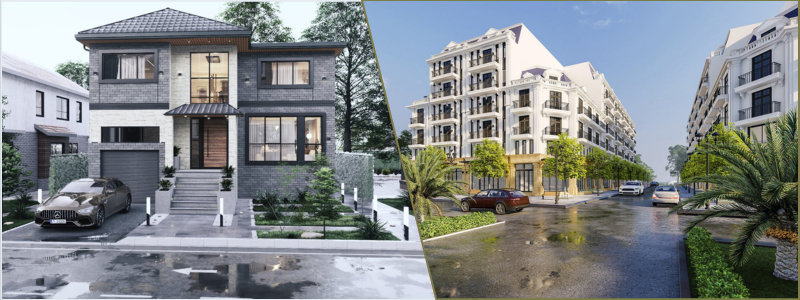
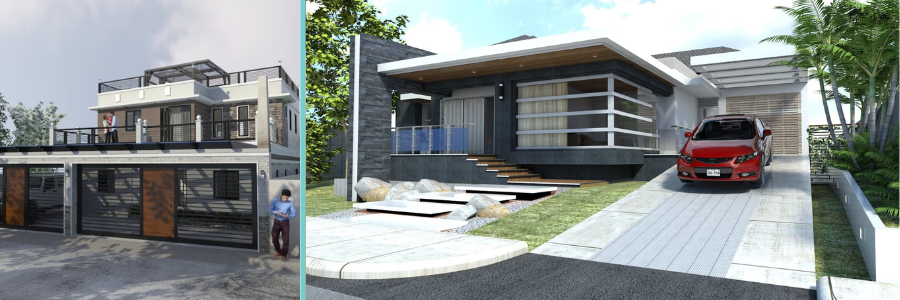
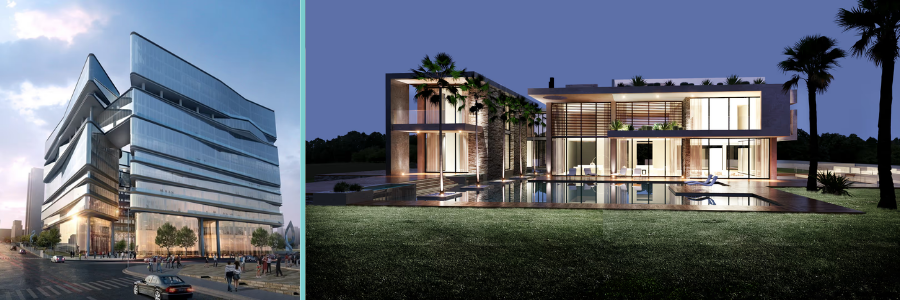
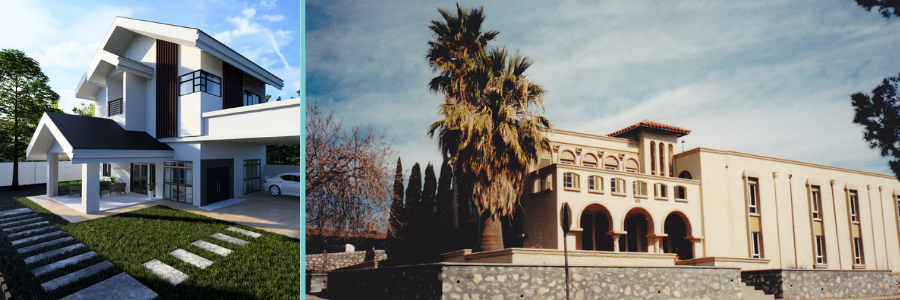
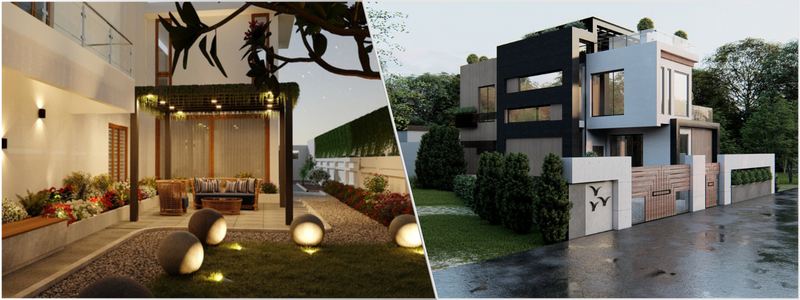
Drawing and exterior rendering services may be called an art. When creating a design, every brick must have a story. It should not be a mere picture only, but a group of bricks with a memorable story to tell. No matter what your profession is, a building design has a great impact on how a person decides, perceives, and invests in something. A design that is so simple can be enhanced by using the right angle, making it more attractive and useful. The right choice of technicalities on one hand and creativity on the other hand makes it even more perfect. Here, we will present to you the best 5 angles for architectural exterior rendering that will surely improve your projects and make you stand out from the rest.
1. The hero shot
Behind every great design is a good architect. The outside view may be compared to the protagonist in a film. It is the one behind the exposure of the building, giving access to everyone who wants to see, and making a distinct difference. There is a frame, and the design most typically shows an elevation that gives the viewers a great picture while not overwhelming the frame. Apart from the picture itself, the shadows as well as the kind of lighting that architectural designers use contribute to the overall beauty of the picture. The light coming from the sun makes it more beautiful; you just have to choose between the afternoon or the morning sunlight. It adds a story to the architectural design. What is a hero shot? Is it all about beauty? The answer is no.
It has the power to tell stories, and as such, you will be confident that the architectural design is better than before. As such, when your clients try to look at the designs, they will have no other option but to avail themselves. One good thing about exterior designs is that the building must complement its neighbors around it. Not only the neighbors, but it also complements the other living things around it, like trees, plants, and all. Surely, your proposal will be successful if you use the hero shot. In every design, there will always be a challenge. In this hero shot, the challenge is not to make it stagnant. It should not look so formal and old. As such, you only need to have some shifts in the designs. Other elements should be included in the shot, such as cars and other people. As I mentioned above, lighting is a very good point. It makes a normal picture attractive, and it gives it life as well. It is not just a shot, but a shot with a story.
We do not just see the buildings with our naked eye. Instead, we see ourselves living in them and experiencing life through them; they are just there around us. We see buildings using our eye-level angle, and it is so important because there is no excess or lack when we use the eye-level walkthrough. This is vital consideration that the exterior design expert must keep in mind. There is a natural way of experiencing a particular home, working environment, and even public spaces. It can be compared to imagining what is inside when we have never opened the door. The design makes itself personal and up close.
The hero shot is so dramatic, as discussed above. This makes the difference because the eye-level walkthrough talks about connection. It does not make an impressive goal; rather, it speaks to inviting people to see through their eye level and makes it feel real-life rather than a hero shot. It is as if when you look at it, it has this natural approach. From walking to entering the building, to the beautiful façade and gardens, these are the aims of the eye-level walkthrough. In the render, if you include natural elements like children playing and laughing, children, passerby on the road ahead, and a lot of bikers, surely, it will have a natural touch.
If we are talking about flexibility, it will be the eye-level view because it works better for streets, parks, and other public spaces. Through this architectural design, the walkthrough designer must show the connection between the shops, houses, and walkways. Because it is eye-level, it gives people the best view when they are already inside the building, living there, walking there, and exploring inside. Marketing teams and design viewers will surely love it because of the natural feeling it has and how it is people-focused. If you want to get the right shot, it takes a lot of planning as well. The camera placement plays a vital role. For example, if you put it too close, the building may be overwhelmed.
On the other hand, if you put it too far, the connection you are trying to create will be lost to the surroundings. There must be a see-saw-like balance, wherein on the one side, there is a focus on the building, and on the other side, it shows that the environment still has other details like humans, playing children, and something that makes it relatable. Again, as opposed to the hero shot, the eye-level view suggests more emotion in the picture, which connects the hearts of the viewers and the picture they are looking at. Meaning, it does not stay as far as before; it shows a clearer view of what the building is showing.
3. The bird’s eye view
When it comes to 3D architectural rendering services, aside from the hero shot and the eye-level view, one of the best views to understand the entirety of a building is a view using a drone. This is called the bird’s eye view, and it offers a combination of scope on one hand and context on the other hand. Imagine looking from above like a bird, you can see the surrounding materials, the entirety of the building, and the layout itself. This is perfect for a big landscape with a building at the center. There are things that are best captured from an aerial view compared to the first two views discussed. When you look from the top view, you see how the traffic flows, you see gardens, the walkways, and everything that you cannot see from the ground-level views.
By using the bird’s eye view, you will definitely be thoughtful of the designs and the strategies used in conveying the story to the clients. Lighting is very important for this kind of view. The building may be emphasized using the shadows, particularly its form and how firm it looks. On the other hand, the light coming from the sun gives a perfect view for the client to see how delicate and perfect the design is. It is a cinematic view when you incorporate the formations of the clouds as well as the skies that complement them. If, for example, you want to convey an exaggeration when it comes to telling a story, you use a different scale. If you want a simpler one, you may use a simpler scale.
A view may be impressive, like this bird’s-eye view, but you need to be precise. You need not only a camera, but also a perfect height, the length, the surrounding circumstances, and, of course, the lighting. If anything is missing, particularly an important detail, the perfect scene you are imagining will not be attained. With architectural visualizations, when you add people, cars, and other natural details in a small scenery of a picture, that will be great and even better to convey the story you are trying to tell. This kind of view does not mean the building’s view only, but instead, it also shows the perfect place where that building belongs.
Ordinarily, the side views or even the center views are good. Apart from that, when you try to look at the viewpoint of a bird, you will see the difference and every angle as well. But if you try the low-angle position view, particularly if the camera is placed on the ground, you will be able to realize that it gives emphasis on the height and the vertical lines of a building. This one is a better choice for buildings to make it appear taller than it actually is. The angle is so powerful, and the lighting as well. It gives an impression of tallness and stiffness. Good lighting also exudes perfection in a picture; added to the exaggeration of height, it becomes attractive to viewers and clients.
Aside from the angle, I would like to emphasize the kind and the choice of lighting to use. If it is a little darker, it creates an illusion of mystery. If it is a little brighter, it creates an illusion of hope and beauty. The side lighting emphasizes the texture. If the rendering artist includes things naturally surrounding the building, it will create a good impression on the clients. The only bad thing or kind of negative thing about a low-angle view is that it does not create distortion. Sometimes, if you take a picture from the ground floor view, there will be a slightly distorted portion of the subject of the picture. Like, if a building, for sure, there will be a portion of the building that may look sideways or distorted. The key is balance. Balance of the lighting and the angle used.
5. The contextual panorama
The last view or angle is the so-called contextual panorama. Through this, the picture does not only focus on the building itself, but also on the relationship of the building to the surrounding elements like people, trees, walkways, and others. With 3D 360 degree panorama rendering services, you can create an illusion that the building is unbreakable enough to be linked with the surrounding things nearby. This kind of view is not about the technicalities of the view, of the picture, and of the building. It is about the connection, the relationship, and the story of the building in connection with the things surrounding it. It is like a story in a movie wherein the protagonist is the building and the antagonist is either the streets or the bystanders. But it may be a combination of two protagonists because, through the lighting, it conveys a story.
In a picture, choosing the perfect angle or view is a difficult task. Even if difficult, it must be done correctly to achieve perfection in your picture. Aside from that, the proper lighting is a plus factor. When combined, it creates a good picture, if not the best, and it conveys a story even without words in it. Thinking about choosing only one is not good. The 3D rendering designer must choose a combination of 2 or more because it has a complete set of elements when taken. The kind of views that modern people are using has evolved over the years. Before, it was all simpler. Now, it becomes a little complex to get that perfect picture in mind. Although it is a little complex, modern cameras and other techniques learned through workshops make the image become the perfect picture in mind.
Final thoughts
The purpose of architectural design or exterior design is not only for aesthetic purposes. The truth is, it is about telling a story, communicating with the viewers or clients. Every view has a purpose, such as the hero shot view, which has the purpose of creating dominance above all. On the other hand, the eye-level view creates a connection between the viewer and the picture. Another one, the bird’s eye view, creates a wide coverage. The dramatic low angle creates an impression of exaggeration when it comes to height and scope. Also, the contextual panorama creates an integration between the building and the elements surrounding it.
How Cad Crowd can help
Cad Crowd has an extensive network of exterior rendering designers to help you create the perfect design. Talk to our design experts for a free quote.
MacKenzie Brown is the founder and CEO of Cad Crowd. With over 18 years of experience in launching and scaling platforms specializing in CAD services, product design, manufacturing, hardware, and software development, MacKenzie is a recognized authority in the engineering industry. Under his leadership, Cad Crowd serves esteemed clients like NASA, JPL, the U.S. Navy, and Fortune 500 companies, empowering innovators with access to high-quality design and engineering talent.
When you let loose your imagination on how the exterior face of a building is created, you’d think it may start from a sketch, a photo taken during a walk, or an idea from a meeting. This may be different in the world of architecture, as imagination will not be enough to build the concept. There are different factors to be considered to complete the design: precision, lighting, materials, and audience perspectives. That’s where realistic exterior rendering services come in. It turns an idea in your head into something you can actually see and almost feel, like it’s real.
Realistic exterior rendering is more than just about making something look pretty on a screen, but it also shows how everything comes together, taking in the geometric aspects of the building, its textures, lighting, and the environment around it as well. It gives the audience an idea of what it looks like in the real world. A well-executed render can give life to abstract ideas to concrete ones, be it an office, a residential, or a commercial building. This article will explore everything behind the renders, how it is done, the techniques, and even the most detailed ways to make a render stand out above average, so it looks realistic.
Understanding the purpose of realistic exterior renders
It is important that we understand first the purpose a realistic render exists in order to appreciate it. This is all about communication. Architects, developers, and marketing teams often need to show their ideas to clients, investors, or regulatory boards who can’t fully understand technical drawings or floor plans. A 3D exterior render turns those complicated plans into a visual that helps stakeholders understand what the building looks like, how it fits into its surroundings, and even the kind of mood it sets.
But showing how a structure looks is not really the only goal of rendering. Realistic exterior renders also aim to impress and bring the project’s vision to life and can further help in selling the idea, lifestyle, or brand it delivers. In a competitive market, the way a project is presented could really make a difference. A strong render may help in securing funding and permits and could also improve a company’s image. It blends technical accuracy with creative storytelling, which makes exterior rendering feel both an art and a science.
Starting with the blueprint: The importance of accuracy
A strong understanding of the basics can establish precise exterior rendering. Everything is built from a blueprint or architectural drawing services, and this serves as the foundation. A 3D drafter depends on these plans as the reference for the structure’s dimensions, shape, and layout for it to look accurate. The reference must be correct and aligned so that the 3D model will be too, as even advanced software can’t make up for the mistakes the original one has. Conflicts such as misalignment of walls, misplaced windows, and awkward roof angles can instantly make a render look unrealistic.
After doing the main model, drafters often do final touches, such as adding details that may not be present in the original drawings but can significantly improve the realism of the structure. Details like including exterior fixtures and drainage, as well as adding textures that could react to light and shadows, could show how a professional mindset is delivered, since paying attention to these subtle touches can make the building feel real to the viewer.
Material selection: More than just texture
One of the key elements of making an exterior render real is the materials. There’s a huge gap between a realistic render and a cartoonish one, and that’s how the surfaces are shown. In reality, various materials react to light differently, like how concrete can scatter light while glass reflects it, and how wood absorbs it. Even the metal may look dull or shiny depending on how the finish is. These are some things a cartoonish model can’t showcase, since most of them are just colors with no texture at all. A skilled 3D drafter pays attention to these details and recreates them in the software.
Textures may play a big role in this process as they define how a material simulates in real life. Drafters combine different texture maps to control color, surface roughness, and the way light reflects off a material. Scaling is also important and considered for each material. For instance, a rendered brick wall could appear too big or small and may impose an awkward appearance on the structure. Also, the materials should make it look like it’s affected by its surroundings, adding in weathering and aging. These surface adjustments can contribute to making the façade not look too flat under a natural setting.
Lighting the scene: The silent narrator
An accurate model can still feel lifeless if combined with poor lighting. That is why lighting design services are undeniably one of the most influential factors in rendering. It’s not only for the technical aspect, but it can also add to the artistic side. It sets the mood by defining shadows, highlights, and textures. Adjusting the lighting by setting it bright mid-day can highlight the sharp structures of the building, while making it into warm sunset lighting could make the structure feel inviting.
In order to achieve realistic lighting, HDRI is often used to replicate how light behaves in real outdoor environments. This helps simulate natural lighting and reflects details such as shadows, reflections, and sometimes other color changes that the light may influence. Some drafters or artists even add artificial lighting, if needed. This could include street ornaments and interior lighting inside glazing and windows. It is deemed believable to feel real when shadow, reflection, and brightness adjustments are all incorporated into the model, which is why it plays such a big role in the process.
Camera angles and composition: Guiding the viewer’s eye
How we view and see a building is influenced by composition and camera angles. Our perception can be shaped in any way a 3D drafter aims it to be, since they have full control over the viewpoint. They can choose angles; they emphasize it to be. They can highlight some key features or walk through the scene. The purposes of choosing an angle may differ, like how an artist sets it too low to make a building somehow feel imposing, and a high angle helps show its placement and layout in its surroundings.
Choosing a lens matters too, since wide-angle views may tend to exaggerate depths and emphasize more of its surroundings, while a telephoto view could compress and give focus to certain details. Oftentimes, several camera set-ups were done before picking the final scene of the building, knowing how certain angles could impose a different mood or atmosphere of how a building may feel. Mindful selection of scenes or framing is practiced to ensure that the render tells the story the architect or client wants to share.
Integrating environment and context
Every building does not exist on its own. Its surroundings, including the external landscaping and neighboring structures and streets, shape how it’s positioned in our viewpoint. Architectural drafting experts often add these details and elements to the model to give a true sense of place. Mindful placement and scaling of hardscape, softscape, trees, and planting, and even vehicles, could make the scene feel lived in rather than staged.
Aside from all of that, integrating outdoor conditions like fog, rain, or any reflections on a wet surface could further enhance the scene to make it feel real. However, just adding elements without careful judgment could make it look distracting or lacking. Realistic references should still be represented to get a correct simulation of the setting. Weather and seasonal changes, subject to project goals, can also be incorporated into the scene to make it feel authentic.
After applying materials, lighting, and some environmental elements, a render can be further completed with some post-processing. This is about tweaking things such as contract, color grading, sharpness, and other visual details meant to make the scene feel even more realistic. Subtle adjustments like correcting the exposure or applying a vignette can give a render a cinematic touch without taking the focus away from the structure. It just adds some dramatic feeling to it.
Post-processing is also where the drafters or artists often add little touches like some moving trees, water reflections, and a soft glow of the windows in the dusk. These details enhance the atmosphere of the scene and make it feel alive. Integrating all of it together shapes the emotions of a viewer. It is important to note that even though it makes everything feel alive, it still should be controlled because enhancements like these are for support and not to overshadow the building.
The role of software and tools
In every refined render lies a set of professional software tools. For 3D modeling design services, programs such as 3ds Max, Maya, Blender, and Cinema 4D are often used, while for heavy rendering, V-Ray, Corona, and Lumion are utilized. Each software is used according to its strengths and functions, which differ uniquely. Artists usually pick which one to use based on the project’s needs, the workflow required, and client preferences.
Certainly, these softwares keeps evolving, with frequent updates and even version changes, making the renders even closer to realism. And now, real-time rendering gives immediate feedback, making it even easier to alter and refine the scene. Software alone doesn’t mean you’d have an instant great render; it still depends on skill, creativity, and judgment of the drafter, who turns all those resources and information into something both accurate and visually compelling
Collaboration between artists and clients
Even though the 3D drafters or artists are the ones creating the model, rendering is not something done by themselves only. It is still a collaboration among 3D artists, architects, designers, and clients. These stakeholders are working closely to ensure that the render is aligned with the project’s vision. Setting clear communication and deliverables helps the team to set a smooth flow among the team. This process often circles around artists sharing the draft along the way, tweaking and refining based on feedback.
This approach can also serve as a risk mitigation process that helps during the pre-construction stage. A render can reveal conflicts in design, lighting issues, and other element clashes. From this, adjustments can be made without being costly. In this way, a good render serves not only as a marketing tool but also reduces risks, apart from adding value beyond just looking good.
Maintaining realism without overloading detail
What separates a seasoned professional from any other is how these artists are able to convey what they want to deliver, which may somehow look like they’re telling a story to their viewers, which is essential for architectural design firms. Anyone can present how technically skilled they are and may be showy about the techniques they have integrated into the model, but a professional one can balance both realism and clarity, giving only the context and not overwhelming the people.
Advanced techniques for enhanced realism
In basic modeling, we have understood that the render starts with the materials and lighting. To be more detailed, advanced techniques can be applied to enhance the model. One useful technique is photorealistic texturing, as the name implies, it’s an almost perfect picture of the real-world surfaces. It convinces the viewers that it is real. For materials like stone, wood, and brick, procedural textures can be used aside from texture maps. Procedural textures generate patterns that allow infinite variety even without all that stiff repetition, which can be very helpful to make the texture realistic to the eye and not too staged.
In real life, we can observe how light interacts beneath the surfaces. For materials like frosted glass, thin concrete panels, or any other translucent glazing, real-life light penetration can be significantly simulated by using an advanced technique such as subsurface scattering. This is a technique that plays with light and how it is simulated in the environment. This subtle touch can dramatically improve the realism of the materials.
Another technique related to lighting is photometric lighting. This is more of an accounting accuracy of light sources, such as lumens or candelas. This technique is used by architects to verify that the design is compliant with the standards and can perform in real life as well. This just shows how architects and designers are mindful not only to appeal to the audience with the aesthetics but also to show how well it can function in real life setting.
The exterior renders would feel like they were lacking if the surrounding environment is not well-incorporated. Adding in natural elements such as planting, water features, and even slope variations can definitely make the scene even more complete for architectural design & drafting companies. To do this, it does not mean just adding elements to the model. It still needs to be properly done. Scaling is one way to make it right since inappropriate sizes may disrupt the perspective and view. This is why it is very important to do the scaling first and carefully check the elements’ placement so it won’t feel like just being added to complete a picture, but rather simulate its alignment to the surroundings.
Adding water features can enhance further realism, but it needs to be done carefully since water reacts differently according to its type. For instance, a calm pond can feel like it reflects nearby structures and the sky, while a fountain can show full motion play in the environment. To be able to demonstrate the same outcome, experienced artists control and sometimes involve physics simulation.
Integrating natural elements into their appropriate placement helps the final render achieve a realistic design. This meant importing geographical data or drone imagery to shape how it can be perceived in real life. The position and layout of the building with the roads and other infrastructure should be placed in a way that makes sense, so the render looks good and feels realistic.
Human interaction and scale
When you see a perfectly rendered building, you could feel emptiness by seeing it. One subtle way to give life is by bringing in human elements. These may include occupants, walking neighbors, pets, and even cars. These features not only add life to the scene but also help the audience understand the proportional reference of the building, whether in comparison to the environment or to other structural elements. Integrating human activities like walking, talking, or driving in the scene can also feel inviting, as it helps to suggest how the place is meant to be used.
Still, these details are to be handled with care. The added elements should always complement and support the functionality of the building, how the people shown were dressed, their body languages and even the interaction can influence the atmosphere of the building. An example of this is how corporate buildings are often introduced with people dressed formally, carrying briefcases in surroundings with busy cars, and how 3D residential rendering services are simulating warm homes and friendlier neighborhood interactions. These details matter in determining the function and lifestyle of how the building is set to deliver.
Embracing weather and seasonal variations
Natural touches, such as weather and seasons, help in making the render feel even more alive. The mood of the scene changes with the use of elements such as sun, rain, clouds, and fog. Imagine how a building can look sharp and detailed when it’s in bright sunlight, but looks so soft with shadows if in a cloudy setting. The rain could show reflections, and how fog can create depth simply by making distant objected faded.
The seasonal setting is sometimes used for more of a marketing approach, showing how the structure fits in year-round. It could show a warm and cozy autumn or a cold winter, depending on what mood they are trying to portray. It could also give an idea of how cherry blossoms or summer can brighten up the neighborhood. A skilled renderer can recreate all these while keeping lighting, materials, and texture consistent and making them feel realistic.
Optimizing render time without sacrificing quality
While realism is the ultimate goal, there are still limitations that can influence the outcome. To achieve a certain level of quality, time and resources should be accounted for. Aiming for a high-quality render can be costly since there would be a lot of frames and elements, and this can take a lot of time to work on. With these, professional 3D artists came up with techniques to balance both quality and efficiency without compromising either.
Artists often simplify details for objects that are far from the camera, using fewer elements and lower resolution material textures, since they may be too small or too far for the audience to notice. This common technique is called level of detail (LOD) management. Additionally, artists also practice the utilization of render passes, which is done by breaking it down to shadows, reflections, and lighting. This allows easy and convenient adjustment and alteration to certain parts if needed, without the need to undergo rendering again, saving quite a lot of time.
Demanding projects are a lot more demanding, and to manage this, artists rely on render farms or cloud-based systems. This meant spreading the whole workload among multiple devices. This can aid and support high-resolution images, animations, or virtual reality content. These approaches and strategies aim to not only rely on technical skill, but also practice working efficiently and follow a smart workflow.
The psychology of perception in exterior renders
Interestingly, realism isn’t all just about the visuals or what our eyes can see, but about how we perceive it. Experienced artists notice how people notice and observe light, texture, and materials, and they use that to walk through with the viewer’s experience and relate it to the model. Shadows and contrasts can create depth, while brightness can set the mood. These things influence our brain, so whenever small mistakes are noticed, it can make the render feel fake, especially for HDR rendering design services.
Human perceptions are what make the artist decide on the technique they use, and this is how they trick the audience to make it feel real. The tones, materials, and textures are adjusted in a way that the artist thinks relates to how it will be perceived in a certain scene. They’d adjust positions and align reflections and shadows to highlight important features. Doing all these adjustments to make it relative to a human experience and perception can actually be convincing and engaging, which makes the render look natural.
Not all professional 3D artists can really perfect exterior rendering; there are still struggles and challenges being encountered. One of the most common challenges is overloading the scene. It is indeed tempting to include a lot of details and elements in a scene, like some tree, or another passerby, or a cute cat that can liven up the atmosphere, but having a lot of things happening in the scene can distract the audience and may stray from what the building is all about. It is better to be selective and focus on the main subject first and work your way around it than to show everything around it.
Another frequent error is inconsistent lighting and misalignment of materials. It could be how reflections do not really match the nearby structures, or that the textures are of the wrong scale, or a shadow falls in the opposite direction. These things, individually, may look small but can subtly make the render feel off. These errors are sometimes observed during draft reviews, which is why continued communication is needed for review and quality checking.
Finally, overlooking the context can make a render fall flat. It is important to take into account the relationship of the building to its surroundings, considering its terrain, landscaping, or any cultural context. Knowing its function and the role it plays in the surroundings can make the render feel like it belongs there and not feel disjointed. A successful 3D rendering design service should make the structure blend seamlessly into the environment, respecting the physical setting and the context of the project.
The value of iteration and feedback
Not all renders are successful at first try. It is still a series of adjustments, tweaking, refinement, and multiple applications of feedback. This iteration allows the final render to align with its respective vision and project goals, all while ensuring it still feels realistic.
Feedback is what makes the render real. It gives the stakeholders chances to check and suggest subtle changes, whether it’s for the perspective, lighting, materials, or any other elements in the model. These feedbacks are incorporated and applied into the model without losing its overall look. Iteration gives room for improvement and exploration of creativity, and sometimes it can be time-consuming and tedious, but this adds depth and variety to the project.
Rendering for marketing, planning, and visualization
And while renders are often an aid to support marketing, their function is not just for promoting the structure, as it also serves planning support and helps the design team foresee possible construction clashes and conflicts, assess material selection, and coordinate with the engineering team. 3D architectural rendering services also function as a medium for engagement among stakeholders, giving access to understanding the discipline behind the technical side of modelling.
As marketing support, renders in this function focuses with the visual and emotional appeal to the audience. It is meant to be relatable and resonate with the audience, inviting them and having a warm welcome feeling that will make them enjoy the ambiance, be it a residential or corporate building. Still, a combination of technical accuracy and creative story is what’s needed and has to be balanced.
Keeping up with industry trends
Exterior rendering keeps advancing quickly as time goes on. New technology and techniques are constantly being introduced, such as real-time rendering, virtual reality, and even artificial intelligence. These tools are reshaping how artists create visuals. Convenient and on-the-spot adjustment and tweaking of lighting, camera angles, and such are now possible with real-time engines. AI tools have become a support in generating finishes, optimizing scenes, and improving post-processes, making it easier to streamline workflows without sacrificing quality.
Professional 3D artists keep on being adaptive to current trends, trying to keep up even if it means learning something way out of their usual. Upskilling helps the artists stay updated and aligned with the current standards of efficiency, realism, speed, and engagement. It is important to be flexible, especially for companies that not only want the aesthetics but also want them to be technically accurate and appealing to modern times.
Styling and aesthetic considerations
Certainly, realism is obviously important, but style matters just as much. It is crucial to balance technical accuracy, project intent, and the visuals it is meant to portray. There are some projects that may need to opt for hyper-realistic renders, which show every crack in the walls or pavement, or a cloud reflection in the glazing. Others could try to explore styles depending on their brand instead of copying reality perfectly.
Colors can also influence how everything ties up together. When not thought of, the colors may feel random and not put-together. A consistent color scheme can emphasize a building’s important features. Styles can really vary, and it is okay as long as there’s consistency and it is still aligned with the project’s intent.
Measuring success in exterior rendering
Success in exterior rendering isn’t just about how the model looks; functionally, it matters too. Sure, the building can look real, convincing, and be perfectly aligned with the project’s objectives, but it should also be functional. In a way, it should be able to communicate proper scale, context, materials, and influence people in their decisions to approve designs. After all, a successful render could serve as a tool to simultaneously aid design, marketing, and planning.
To determine the success of render, it can be measured with feedback from the client expressing their satisfaction, approval from authorities, engagement in marketing, and how well it can secure investors. Professionals pay attention closely to feedback to improve their approach. This shows how rendering is not just an art but a form of result-driven discipline.
High-quality visuals are costly but can offer a strategic advantage, especially for companies. This is because investing in professional exterior rendering can make a brand look stronger. It builds confidence in both the team and client, knowing that they’re in the right hands. From this stage, potential risks and conflicts in the design can be spotted, so it is really a great risk-mitigation asset. On top of that, renders are considered a great marketing tool because they can make a project appealing, adding value, speeding up approvals, and securing funding and sales.
In the competitive market, what sets the standard architectural drawings apart from the render is how one can grab the attention of the viewers. Renders can give an edge to the company, combining both technical accuracy and visual context that leaves a remarkable impression.
Conclusion: Bringing your vision to life
Realistic exterior rendering is more than just making a digital model to show how a structure looks. It is a discipline of translating architectural drawings accurately into a compelling narrative. Using necessary tools and software, as well as tweaking lighting, environmental elements, and applying human perception, professional 3D artists make renders that are accurate and engaging.
From planning up to the final marketing presentation, the renders turn imagination into reality. It all started with planning, drawing, scaling, material selection, and aesthetics, all of which allowed all stakeholders to communicate their preferences and understand the project vision fully. And through careful and mindful styling, applying advanced techniques and thorough iteration, all these preferences and feedback were turned into a single visual story that resonates not only with the developer but most importantly with the audience.
Working with professional 3D artists has always been the key to getting the most out of professional exterior rendering. On Cad Crowd, you can find experienced freelancers who specialize in high-quality exterior visualization. Partnering with experts who know both the creative side and the technical side of rendering lets your vision come to life in a way that’s clear, realistic, and aligned with your project goals.
Check out Cad Crowd today, and you’ll discover top-notch 3D artists who can turn your ideas into visuals for your project and branding. With the right talent, your imagination, design, and concept can go beyond blueprints and sketches. Request a quote today.
MacKenzie Brown is the founder and CEO of Cad Crowd. With over 18 years of experience in launching and scaling platforms specializing in CAD services, product design, manufacturing, hardware, and software development, MacKenzie is a recognized authority in the engineering industry. Under his leadership, Cad Crowd serves esteemed clients like NASA, JPL, the U.S. Navy, and Fortune 500 companies, empowering innovators with access to high-quality design and engineering talent.
Today’s post covers how 3D artists convey emotions with beautiful architectural rendering and visualization services. Architectural visualization has taken a huge leap forward with the proliferation of 3D rendering software capable of generating lifelike imagery of a building before even the first brick is put in place. However, an effective visualization shouldn’t just be a mere illustration of a structure. It needs to convey a story, deliver a message, and form a cohesive narrative that may evoke emotions from the audience. In the same way that a photograph can elicit memories, imaginations, and perhaps inspirations from the viewers, an architectural visualization has the power to grow a strong emotional connection between the project and the client.
For the visualization to trigger a positive impact on the viewer’s perception, a render artist has to explore all the multifaceted aspects of a CGI (computer-generated imagery), including but not limited to composition, perspective, artistry, and lighting. Strategic use of colors and such photography principles as the rule of thirds, negative spaces, and leading lines also matter a lot to influence the viewer’s impression of the imagery. All those elements must work together in harmony to produce an emotionally resonant visualization without undermining design clarity.
Take, for example, using 3D interior rendering services for a home office – just because you want to highlight the presence of a massive desk right in the middle of the room, it doesn’t necessarily mean you have to direct all the lights toward the center and leave the corners unnaturally dark. It might work well as far as artistic expression is concerned, but the lack of balance in lighting makes the imagery ineffective for architectural visualization purposes. The article discusses the numerous factors that determine the efficacy of an architectural visualization, and the way a render artist can utilize them to foster or enhance communication among stakeholders.
Considering how the demand for photorealistic renderings has soared in the last few years, an in-depth understanding of those factors and a strong technical 3D CAD know-how are crucial skills in the trade. And for an unmatched expertise in architectural visualization, Cad Crowd is the one-stop shop where you can connect with the world’s most talented and experienced architectural render artists. The AEC-focused freelancing platform offers robust screening and a secure payment process to ensure that you receive nothing but the best for your money.
Storytelling with architectural visualization
Technology has changed the way stakeholders and clients communicate in the architectural industry. The old methods of using physical scale models and two-dimensional illustrations are still around, but they’re slowly going away, partly thanks to the rapid development and adoption of 3D renderings. The market is getting more saturated by the day, with more CAD companies and CAD design professionals offering architectural services at sensible prices. Potential clients, including homebuyers and real estate developers, are always in search of comprehensive information about houses and building designs, whether for immediate purchase, renovation projects, or even brand-new constructions.
With hundreds, if not thousands, of design agencies, firms, and freelancers competing in the market, one of the keys to establishing a place among the best 3D architectural rendering firms is to incorporate storytelling in the visualization. And of course, good storytelling is an effective way to elicit emotions. An architectural visualization isn’t just about showcasing the looks of a structure. It should convey a series of messages about design intent and purpose, be it efficiency, luxury, comfort, eco-friendliness, affordability, elegance, simplicity, and so forth. The narrative expressed by the imagery is expected to bridge a form of communication that surpasses conventional engagement and instead triggers positive emotional connections.
Storytelling can happen in a lot of ways. Apart from the conventional spoken and written forms, you can convey a meaningful narrative through signs, symbols, motions, expressions, fashion, or, in the case of architectural designs, lifelike visualizations. Using an immersive form of imagery where every visual element adds to important details, you can elevate an otherwise typical design presentation into an effective narrative tool that describes concepts, speaks values, and triggers emotional responses. The visualization from an expert visualization designer can then become a medium to bring about constructive communication among clients and stakeholders alike. Every single object and visual element visible in the imagery must serve as a building block to craft a compelling story.
When put together properly, you’ll be presenting not just a visualization, but a whole package of a virtual world in which the audience can immerse themselves, and potentially entertain the idea of living inside that world. In many cases, it all comes down to the atmosphere depicted in the 3D visualization, whether it is minimalistic, industrial, luxurious, practical, high-tech, or tranquil. And the visual elements have to become integral parts of the intended atmosphere. An architectural visualization has the potential to be both a technical exploration of ideas and a powerful narrative art, meaning it can deliver emotional resonance while still being an accurate depiction of the design. You want the audience to have the full imaginative experience of the building just by looking at the imagery, and you can do that by strategic use of the following elements.
Just like in photography, the world of 3D architectural visualization services has everything to do with composition. The arrangement and placement of objects within the frame create a specific look and feel that may guide the viewers’ eyes as they observe the visualization. Composition is intertwined with perspective; principles like the rule of thirds and depth of field are powerful tools to help the audience interpret the unspoken message the image tries to tell. How the objects relate to each other, where you put the focal point, what atmosphere is created by the color scheme, and the viewing angles play important roles in influencing individual interpretation, which ultimately leads to emotional responses.
The “rule of thirds” has been a prominent guiding principle in visual art for centuries, because it’s an effective method to keep the audience engaged. In general, you want the viewers to observe the image for quite a few moments so they can construct their opinions about it. Since the rule of thirds breaks down monotonous lines and symmetry in the frame, there’s an additional yet effortless tension to generate interest among the viewers. You don’t have to place the main object right in the center of the image, and instead let the viewers explore the asymmetrical composition to look for more details. Furthermore, you can enhance the impact by experimenting with perspectives such as linear, vanishing point, diminishing scale, or aerial views.
Every perspective offers a different kind of perception of the relationship between the objects in the image. With some exterior renderings, the exterior design expert uses an eye-level point of view for clarity. By putting the camera at a human’s eye level, the viewers can see the main object and everything else around it in a natural fashion. It offers a clear idea of the scale of things and is generally regarded as a comfortable perspective. Others use aerial views to showcase the dominance or the grandeur of a structure. The good thing about an aerial view is how it reveals details not normally visible from eye-level perspectives. An aerial view architectural rendering speaks not only about the structure itself, but also where it stands in the broader landscape.
Let’s also not forget about “close-up” shots of objects. When you move the camera closer to a particular object or area, you may have to sacrifice (basically remove) quite a lot of useful elements from the scene. This is why close-up is most often used by interior rendering designers, where panoramic atmosphere isn’t a major concern. The good thing about close-up is that it allows you to focus on elements typically obscured in a wide shot, such as details on patterns and textures on fabrics, material finishes, furniture designs, functional ornaments, or any other intricate elements.
Details like the unique aesthetic of the granite kitchen countertop or the elaborate craftsmanship of the stained-glass window might be overlooked without close-up views to enhance the immersive visual experience. Regardless of the perspective in use, it’s crucial to incorporate guiding lines to lead the viewers’ attention back to the focal point. Guiding lines bind the composition and perspective together into unity to create the flow of a visual narrative, naturally taking the viewers to always circle back to the main object in the scene.
For design process
As mentioned earlier, architectural renderings can be an excellent medium for design exploration. In addition to showcasing the aesthetics and functionality of a structure, detailed visualization allows the architects, engineering designers, and designers to test various concepts on screen. It helps them identify design issues and implement changes early on in the design process. Changes might be as simple as wall paint and flooring materials or complex structural-related matters like window placement, solar panel installation, etc.
Clear graphics certainly help understand the design intent, especially for non-technical stakeholders (which may include homeowners and investors) in the project. Detailed visualization makes sure that everyone involved shares a common understanding and contributes to every design decision.
An architectural rendering is a technical representation of a project as much as it is a visual art. It should convey the technical portion as well as the artistic expression of the design. If the rendering is only intended as a technical illustration, the visualization may come across only as a construction document that has little regard for emotional connections. At the same time, an architectural rendering that leans too heavily toward evocative purpose might not give technical accuracy enough consideration.
The 3D architectural designer must take both aspects into account, not just for the sake of balance, but also to make sure that whatever emotional responses are triggered by the imagery are authentic and have practical value. In other words, inaccurate architectural visualization may give a false impression. The good thing is that you can still incorporate some artistic inputs without compromising accuracy. It’s not impossible to introduce some touches of uniqueness that can actually improve (rather than diminish) the design visualization. Here are just a few examples.
Motion Blur
In animated media like video games from the bygone decades, motion blur exists to hide imperfections by giving the perception of smooth frame-to-frame motion. When used (strategically) in static architectural rendering, it brings about a sense of subtle movement in an otherwise motionless image. For example, an interior rendering of a living room that features a large window, a motion blur on leaves or trees in the backyard can effectively introduce the idea of a relaxing space alongside nature. An exterior rendering of a commercial building may also feature motion blur for the traffic in the street to suggest a bustling activity in a place full of life. In general, motion blur can bring a touch of realism to a lot of different objects, such as doors, water, clouds, cars, toys, window blinds, paper, and more.
The idea of a photograph is to capture an image or a moment and present an exact representation of how we saw and experienced it. Because the moment is captured within seconds (sometimes a fraction of a second), every single imperfection in the scene is also well-preserved. Imperfections come in all kinds of shapes and forms; clutter on the table, scattered pillows on the bed, dirty shoes, stains on porcelain tile, and so forth. Imperfections don’t make the photograph bad. On the contrary, they’re evidence of life and effective agents of storytelling. Photorealistic rendering services isn’t that much different from photography. The presence of a forgotten toy in the children’s room, droplets of water on the kitchen counter, leaves in a swimming pool, or scribbles on the desktop can be an excellent narrative tool.
Viewing angles
Finding the right point of view in architectural rendering is akin to choosing the right camera placement in photography. It determines what the viewers can see and therefore affects their emotional response. Ideally, you set the viewing angle in such a way that highlights the interplay between lights and shadows, the juxtaposition of patterns or textures, depth of field, motion blur, and imperfections. All those elements must be presented as naturally as possible, so the viewers aren’t overwhelmed by the bombardment of details.
Keep in mind that every element carries information that contributes to the narrative. For example, if there are people in the scene, the types of clothing they wear and activities they do may suggest whether they’re in a relaxing home environment or in an office setting; the objects visible from windows can indicate if the building is located in an urban neighborhood or the outskirts of a town; a cup of hot coffee with visible plume of steam implies that someone is in the room, even when the person isn’t in the scene. All these visuals work together to build a context, and as an architectural modeling expert you can experiment with them to craft a coherent story revolving around the design, the location, or even the lifestyle associated with the structure. This “association” will, in turn, create an impression and invite emotional responses.
The notion of the psychological impacts of color shades may seem trivial, but it is important nonetheless. In its most basic form, warm hues like oranges and red evoke vibrancy or vigor, whereas cool tones such as green and purple imply serenity or calmness. Every good render artist needs to have a good grasp of the application of hue and understand how each color tone is associated with specific emotions. Many people think of colors as nothing more than a superficial aesthetic aspect of an object, even in real life. For example, a red balloon is no different in functionality and purpose from the green, black, or orange ones.
While this is true to some extent, especially when you see a color as an individual element, a mixture of two or more colors within the same scene may offer hints to the intended context of the image. Suppose you have two renderings of the same room with identical layout, composition, and viewing angle. They even have the same objects positioned at the same spots. The objects in one room have dark hues, whereas you see bright colors in the other. When you’re presented with such a direct comparison, what immediately comes to mind is that the room with bright colors is more playful and lively compared to its darker counterpart.
Pretty much the same practice applies to exterior rendering services, where a serene landscape is best pictured with muted soft hues to depict a sense of peace and quiet, while busy urban streets should use bold shades to illustrate exuberance. In short, a clever use of colors in architectural visualization helps create context that communicates the nature and story of the structure.
Sometimes, the best way to achieve the correct color combination is by experimentation. Try using different shades of colors for the same visualization and see which version works better for the purpose. There’s no scientific formula to give you the right combination and ratio of colors, which means there’s no single best solution for every image. It all depends on how you want the viewers to emotionally connect with the visualization.
The most powerful narrative tool in visual art is lighting. Just about every other element in an architectural visualization is heavily influenced by the lighting effects you use. They contribute the most to the atmosphere of the scene and the expression of mood. Whether the cool glow of moonlight, the warmth of sunset, or the brightness of high noon, the lighting effects are of the utmost importance to set the stage for emotional resonance. Imagine an aerial rendering of an urban market square. In many instances, render artists opt for daytime visualization to showcase the liveliness of the structure populated by busy sellers and buyers.
The green trees around the main building, the white clouds, and the blue sky add to the narrative. Some may say that daytime rendering is preferable because of its clarity and inviting mood. But it doesn’t mean nighttime rendering can’t achieve similar results, or perhaps surpass the daytime ones. While the trees should at least partially appear dark and the sky isn’t going to contribute much to the narrative, nighttime rendering affords you the opportunity to experiment with artificial light sources. You can use various shades of light, be playful with neon signs, try different placements for the lamps and lanterns, etc.
Like lighting effects, weather conditions can dramatically change the whole atmosphere of an architectural visualization. Imagine an exterior rendering of a log cabin set during broad daylight in the summer. The front doors and windows are open to let the cool breeze flow through the structure, and natural light is reflected by the shiny floor. Trees look crisp against the backdrop of empty blue sky. Now, in another version of the same visualization, the weather is set to depict the height of winter during a snowy day.
The open doors and windows don’t seem to be welcoming, and instead, they make the cabin look deserted. Each image evokes a different emotion. When the 3D architectural animation firm includes lighting and weather effects, it play major storytelling functions in the scene. You can even say that they lead the direction of the narrative and can somehow dictate the viewer’s perception.
Takeaway
Every architectural visualization wants to tell a story, but whether or not the audience can capture and understand the concept is a different matter entirely. A great number of exterior and interior renderings out there are aesthetically pleasing and technically sophisticated, but the lack of artistic touch and ineffective use of perspectives diminishes their storytelling power. And when the audience fails to experience a connection of any sort with the visualization, they express no emotional connection and quickly move on to the next image without a second thought. People want to see architectural renderings that awaken their imaginative mind, create a strong impression, and drive them to an envisioned life in or around the structure.
How Cad Crowd can help
An effective architectural visualization can connect with the audience on an emotional level. It takes a render artist skillful enough in optimizing the intersection between the various visual elements to produce a visualization that conveys a clear narrative and resonates with viewers. Cad Crowd is the place where you can discover and collaborate with the world’s most talented render artists experienced in residential, commercial, and industrial projects. Whether you need a rendering of a simple, straightforward exterior or a highly complex interior visualization with unmatched details, there’s always a professional on the platform ready to meet and exceed your expectations.
MacKenzie Brown is the founder and CEO of Cad Crowd. With over 18 years of experience in launching and scaling platforms specializing in CAD services, product design, manufacturing, hardware, and software development, MacKenzie is a recognized authority in the engineering industry. Under his leadership, Cad Crowd serves esteemed clients like NASA, JPL, the U.S. Navy, and Fortune 500 companies, empowering innovators with access to high-quality design and engineering talent.
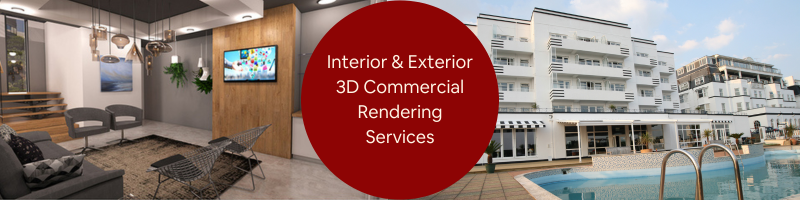
3D commercial rendering is a form of art that crafts realistic visual depictions of commercial spaces or buildings with the help of state-of-the-art 3D computer graphics software. The meticulously made renderings serve as excellent tools to help clients envision the designs of proposed interior spaces or buildings before their actual physical construction. These renderings are extensively used these days in interior design, real estate, and architecture. These are often used to showcase designs to investors, regulatory bodies, and clients.
The finished project is often used for design development, marketing purposes, and to help acquire planning permission for a particular development. The quality and level of intricacy of 3D commercial renderings can also be customized to cater to specific requirements and needs of every project to ensure that the final product will resonate well with the target audience. This article discusses everything you need about interior and exterior 3D commercial rendering services.
What are interior and exterior 3D commercial rendering services?
Interior 3D commercial rendering services are an integral part of commercial projects. These renderings offer a complete view of indoor spaces and areas within business establishments and centers. The main purpose of interior 3D commercial renderings is to come up with top-notch images that provide prospective buyers with a good insight into the potential layout and functionality of the building.
This glimpse helps them during the process of reaching their final decision. Instead of merely showing the windows, walls, and restrooms, comprehensive interior 3D commercial rendering services can go further into illustrating the numerous possibilities of the space. Render resolution, for example, which is an integral aspect of commercial rendering, is critical to producing high-quality images that serve as an accurate representation of the space and its fullest potential. On the other hand, 3D exterior rendering firms form a critical part of today’s commercial projects.
They offer a comprehensive representation of the façade of the building. These renderings allow business clients to envision the suggested structure and its future appeal effectively. For instance, a 3D rendering of an office building helps clients visualize the exterior surface materials, height, doors, windows, and roofing. However, more than showcasing the façade alone, exterior 3D commercial renderings can also illustrate the rest of the key elements of the design.
These may include signs, parking spaces, outdoor pathways, and other features crucial to the client’s site plans. Exterior renderings, in general, whether for real estate or commercial projects, can provide lifelike portrayals that offer a complete image of the project before the start of the construction. With this approach, concepts can come to life to facilitate better alignment and communication between clients and builders.
Who should use interior and exterior 3D commercial rendering services?
The following groups should take advantage of the potential of interior and exterior 3D commercial rendering services:
Commercial architects
Aside from visual aesthetics, a building’s thoughtful design and functionality are crucial to offering visitors a more positive experience. These aspects help ensure smooth movement on the premises and an overall enjoyable experience. This is where 3D interior visualization companies and exterior 3D commercial rendering services serve as indispensable tools for architects. These renderings allow the identification of potential flaws in the design and offer insights on the best ways to improve the design to improve the experience of visitors by offering 3D visualizations of the layout of the building.
Interior and exterior 3D commercial rendering services can also help elevate the marketing efforts of commercial architects. They can incorporate these renderings into websites, marketing campaigns, and social media to add a more captivating and dynamic visual element. These renderings can also showcase a building’s distinct selling points and features. They help attract potential investors or clients, allowing more effective and engaging marketing efforts.
It is important for hotel designs to effectively convey an outstanding guest experience and showcase the hotel’s functionality. This isn’t something that can be achieved with 2D drawings and floor plan design services alone. This is where interior and exterior 3D commercial rendering services can be of big help. Interior and exterior 3D commercial rendering services can also guide designers in identifying potential flaws in design or other areas that need further improvement in the overall design of the hotel. Aside from emphasizing the unique experiences that await guests, these services are also powerful marketing tools for promoting the hotel to future investors and guests, whether it is on social media, websites, or brochures.
Interior designers
Every single detail in interior design matters a lot in highlighting your artistic touch. Meticulously crafted interior 3D commercial renderings can capture décor, reflections, shadows, and lighting to perfection. Aligning the design with desired aesthetics and modern trends is also critical. These renderings, which showcase your talent as 3D rendering designer, can improve your portfolio and take your marketing game to a whole new level. Interior 3D commercial renderings can bring your indoor spaces to life.
Urban designers
Interior and exterior 3D commercial rendering services can also offer a powerful tool for visualizing projects, regardless of their complexity. These are great for urban designers working on public buildings, outdoor spaces, monuments, or neighborhoods. Realistic images can also be used to effectively communicate design ideas and concepts to the major stakeholders. Acquiring planning permission is often a bit difficult for urban design projects.
Advantages of interior and exterior 3D commercial rendering services
Interior and exterior 3D commercial rendering services have become an invaluable tool from the initial concept to the final marketing. They reshape how professionals approach the development and construction of commercial projects. The following are the top benefits of these services to convince you to start using them sooner rather than later:
1. Cost reduction and management
One of the biggest perks of interior design services and exterior 3D commercial rendering services is their ability to reduce and manage costs. These services allow a comprehensive pre-visualization of projects that identifies more opportunities to save on costs right from the beginning. This ability to cut down unexpected expenses will ensure that the project remains within budget.
2. Ensure client approval and communication
Exterior and interior 3D commercial rendering services have also changed interactions among clients. With the help of these services, clients can go on virtual walks around the property to make it easier for them to secure swift and confident design approval. Direct visual communication reduces misunderstandings and speeds up the approval process, ensuring that the projects stay on schedule.
3. Facilitate better project management and planning
3D renderings from 3D architectural rendering experts can have seamless integration with tools for project management to provide construction teams with a clear roadmap. This level of clarity can help predict potential issues and devise solutions ahead of time. These renderings can help stakeholders visualize the final result under various lighting conditions to allow better planning of window placements and electrical layouts.
4. Improve design efficiency and accuracy
The rising popularity of interior and exterior 3D commercial rendering services has significantly enhanced the accuracy of designs. You can see all the details of a project before laying the first brick. The level of precision not only saves time but also significantly reduces the risk of expensive errors.
5. Ideal for presales and marketing strategy
3D commercial renderings are not only handy for construction and design because these are also powerful tools for marketing. These 3D rendering service companies can produce top-of-the-line renders that are useful for marketing materials and attracting potential buyers and tenants early on during the construction phase. Using 3D commercial rendering in presales materials consistently boosted investment and interest in projects before their actual completion.
Sustainability is now a major concern in the construction industry. 3D commercial rendering services are critical in the planning and implementation of green building designs, which affect everything from energy efficiency to material choices. For projects that aim for LEED certification, for example, 3D commercial rendering services allow experimentation with different sustainable options to help choose the most environmentally friendly and effective solutions.
What does the future hold for interior and exterior 3D commercial rendering services?
The future of interior and exterior 3D commercial rendering services is very bright with the continuous advancements and developments in technology paving the way for more informative and realistic renders. Incorporating 3D AR/VR architectural services into 3D renderings is expected to further improve the immersive experience to provide a richer and more complete understanding of projects even before their actual construction.
Wrapping it up
Interior and exterior 3D commercial rendering services not only changed the commercial construction industry but also set a brand-new standard for project design, presentation, and marketing. With the future hovering on the horizon, embracing these new technologies is not only recommended but also important for everyone who wants to stay successful and competitive in the changing world of architecture, real estate, and construction.
How Cad Crowd can help
Get in touch with Cad Crowd today to help you find the best interior and exterior 3D commercial rendering services for your projects!
Architects consider 3D exterior rendering services important tools that help them convey their design concepts and ideas. However, the big question is how and where to get high-quality 3D exterior renders. Outsourcing is the best answer at this point.
10 Factors that influence pricing: 3D exterior rendering services for companies
As a client, you need to understand the factors that influence pricing for 3D exterior rendering services. This is the only way to ensure you will make the most out of your investment.
1. The project’s specific architectural style
The 3D exterior rendering service will increase the workload if the artists use more complex decorations and forms. Even though the specific style doesn’t directly impact determining the number of details, there are several apparent tendencies here. In general, the easiest to model is Modernist architecture. The more laborious is the more detailed Classicism and High-Tech with Baroque following it. The general rule is that Neo-Gothic requires even more effort and time because of the abundance of ornamentation. Your design’s style also affects the pricing of 3D exterior rendering services.
Minimalist and modern designs are comparatively easy for 3D architects to recreate with the help of 3D rendering and 3D exterior rendering services. On the other hand, more complicated styles, such as Baroque or Gothic, need more intricate details. This can further increase the necessary effort and time, affecting the entire pricing. It’s important to talk about the style of the project with the CGI team to understand the implications of the cost and make adjustments as needed.
The complexity of your 3D exterior design’s surroundings is another critical factor affecting the pricing of 3D exterior rendering services. Meticulous vegetation, landscapes, and other environmental elements can substantially add to the workload of a 3D exterior design expert. Thus, it is only natural that it will lead to higher costs. This is the reason why it’s important to strike a balance between managing the project’s overall cost and coming up with a visually rich environment.
You can cut down the cost of building a 3D environment if ever you require aerial exterior views. This can be done by providing pictures taken from above of the actual place. This method is known as photo matching. With this, the 3D artist just needs to create the building’s 3D model and blend this into the photo seamlessly. Doing so can drastically reduce the price.
The environment and background can also make a big difference in pricing 3D exterior rendering services. The price will be higher if the 3D exterior rendering designer has to do more work. The following are the three primary types of environment, from the least complex to the most complex.
Photos are the cheapest way to capture surroundings. These are great for showing the difference the project will make. You can find photos online, take them using a drone, or capture them from the ground. The resulting render will look excellent without taking too much time.
As far as the 3D visualization world is concerned, ghost buildings are a diaphanous low-poly model. These ghost buildings are fast and easy to make, putting the project in an inconspicuous context where nothing distracts the architect’s vision.
Photoreal environment rendering can leave the audience mesmerized. The most presentable environment will accompany the project (i.e., an intricate neighborhood of realistic buildings or a jaw-dropping landscape). As expected, this kind of background needs an additional amount of texturing and modeling work to create the highest wow factor. It’s no surprise that architects usually opt for a realistic environment. The presentation absorbs the viewers, so the cost pays off.
The environment, as you can see, affects the pricing of 3D architectural rendering companies, and there is always a choice for different budgets and goals for the project.
Revisions during the run of the project are inevitable when changes are necessary, and new ideas pop up. However, the complexity and amount of these revisions can significantly affect the total cost of 3D exterior rendering services. Maintaining open, clear, and regular communication with the 3D exterior rendering designer is essential to reduce costs.
This will guarantee that everyone understands the changes and that these are implemented efficiently as well. Aside from this, consolidate all revisions and give comprehensive feedback. It will be a great help for the team to help them work better and eliminate unwanted expenses.
5. Requirement for custom models
Custom modeling is another factor that can significantly impact the pricing of 3D exterior rendering services. Custom 3D assets may be necessary if the design requires intricate or unique elements. It is more expensive and time-consuming compared to using pre-existing models. You can manage costs by using readymade elements offered by the 3D design company. It’s the best way to get top-notch exterior renders that won’t break the bank.
Although extra views are often cheaper than the 3D exterior rendering, these will still add to the final cost. Balancing the overall budget and the number of required views is essential. So be careful of your specific requirements and discuss them with the 3D exterior rendering designer. Doing so will help you determine the best number of views suitable for your project.
7. Post-production requirements
The primary purpose of the post-production phase is to make the render more lifelike and organic. Its minuteness may also lead to differences in the pricing of the 3D architectural visualization services. Including details such as cars driving into a garage, pets playing, and people walking by can further increase the price. However, these can tremendously affect the image, seemingly having a life that entices the client to want to belong or be part of that scene. Various weather conditions can also change the atmosphere of the visualization, whether dramatic or funny, playful or solemn.
8. Project brief
The project brief is probably one of the most important factors that influence the pricing of 3D exterior rendering services. This is because it’s essential to have a well-detailed assignment that provides a concise and clear understanding of all project requirements. If no project brief is in place, the CGI team will find it difficult to deliver accurate results before the agreed deadline.
Vague or incomplete assignments may also cause misunderstandings, which will soon lead to increased costs because of revisions and rework. Thus, investing enough time to develop a comprehensive assignment is essential. A 3D exterior rendering project brief must include drawings, a 3D model, mood, lighting, environment, and material references.
3D rendering designers may need several hours or a few days to complete a 3D model depending on the area that will be occupied by the building, even more so for high-rise constructions. Exterior visualizations may come in various sizes and shapes, from one detached house to an entire row of townhouses, an idyllic cottage to a towering skyscraper, or a shiny business center to a massive power plant. Whatever the size of the project, all of these require separate considerations regarding the price of the exterior rendering.
10. Views
Every building looks best from a distinct perspective, and certain architectural designs should be viewed from various angles to appreciate their full splendor. For example, an angle or front view is an excellent choice for a porch or balcony. The angle view needs some surroundings, which will increase the cost of the 3D rendering service. Similarly, the general 3D exterior rendering view will increase the cost, with the aerial view following close behind as it covers the most extensive area.
Even though the general view is the most popular option in 3D exterior rendering, a single bird’s-eye view animation or several aerial perspectives can showcase the perks of the exterior design more effectively because they can present it from different points of view. It is also more impressive due to its contrast with how people typically experience their lives without viewing things from high above as if gliding or flying.
The windows may have a mild shine or reflect the surroundings. They can also throw beams of light on the ground. You can also put some blinds over them or show off the interior with 3D interior visualization services. This latter option can give your project more value because it shows that the structure is not only a house but a home that people can live in. On the other hand, interior design elements also contribute to the 3D modeling work, which may increase the cost.
How Cad Crowd can help
Cad Crowd can link you with the best and most trusted freelance 3D exterior rendering designers offering 3D exterior rendering services to help cut down your company’s costs.