There are those times in the life of an architecture or engineering design firm when the universe throws up a challenge that feels curiously uncomplicated on the surface. You enter a building thinking that everything inside will be as the drawings that someone approved many years prior showed. You assume the walls will be exactly where the plans say they should be. You expect the plumbing and wiring to be exactly where they are shown on the blueprint, as if whoever built the place followed a recipe. It feels like a basic expectation. It feels like something that should never surprise anyone. But then reality reveals itself, and you realize that the structure is different from your expectations in those early documents.
The painful epiphany often comes when you realize that as-built drawings exist for a reason: they were constructed to clarify the real story. They tell the truth about where the walls really went, where utilities really ran, and how the final project really took shape. They give you a version of the building you can rely on, not an assumed one where everything still might be the way someone once imagined it to be.
That’s where architectural design teams and engineering firms shake their heads in frustration and fascination, because buildings evolve, plans change, and construction teams make adjustments on site for a whole gamut of reasons that range from very practical to just plain mysterious. The result is physically real but seldom identical to the pages that first defined it.
As-built drawing services avoid such shock. These provide the firm with a real-life reference that will support planning, renovation, and maintenance, apart from future upgrading. They help reduce project confusion, get rid of unnecessary delays, and support clear communications across all project stakeholders.
Cad Crowd is a great avenue to look for freelance professionals to deliver high-quality ‘as-built’ drawings. The wide range of experts has experience in architecture and engineering, right down to the accurate site measurement. This is one of the good places where you will be connected with professionals who take messy or outdated documentation and turn it into something that finally reflects reality.
Having that in mind, let me outline the reasons why as-built drawing is a must for architectural and engineering firms: You would be surprised to know that investments in their creation are not just one of the options of being helpful, but indeed are one of those strategies that avoid headaches, surprises, and unnecessary reworks in future projects.
🚀 Table of contents
Reason 1: They give the real story behind a building.
Somewhere, there is something peculiarly comical in the contrast between the ideal world of architectural plans and real-world conditions on the job site. In plans, you see walls of perfectly straight geometry, duct runs angling neatly into neat corners, and utility lines presented as if they politely agreed to align themselves in predictable routes. Then, construction starts, and in comes the reality that guests who didn’t read the dress code.
Interference requires changes to structural framing on a whim. Electric lines get rerouted because their original path ran into some obstacle along the way that no one foresaw. Plumbing lines move because the on-site measurements conflict with theoretical dimensions. Each trade makes the change. Time passes, and little changes add up to a layout that does not look exactly like the original documents.
This planned-versus-built disconnect is one that quickly becomes very real to architectural design firms when renovation, addition, or maintenance projects have to be done. Without ‘as-built’ drawings, assumptions are usually made from old documents by the teams involved. That is the kind of decision leading to surprise demolition, unexpected delays, and those odd moments of disbelief.
That uncertainty is nullified because it is correct on the as-built drawing. These are the drawings of structures that outline what the building really looks like today, not what it looked like at times when the paper design was done. They enable the engineer to understand, with a lot of clarity indeed, the structure. They let architects confidently plan renovations instead of making plans based on outdated assumptions.
Knowledge of the right things right from the start of the project makes everything else easier. No more wasted time in guessing where your missing utilities. Unknown conditions behind walls wouldn’t cause unnecessary confusion. Instead, teams just have a sound foundation on which to start planning.
That is one of the many reasons companies want professional as-built drawing specialists. You want those people who go out in the field, take down all the measurements, document every system that’s on site, and give you a drawing with accuracy. Cad Crowd prides itself on CAD design freelancers with domain expertise. They are well-qualified to support architectural and engineering teams in the documentation of existing structures-accurate to realistic drawings, not theoretically exact drawings.
Reason 2: They prevent costly surprises in future projects.
Now, imagine you are walking onto a renovation job site with complete confidence, knowing the existing drawings are going to drive your decisions. You break out the old documents and start planning. Absolutely everyone thinks the information is correct. Then comes demolition: a wall comes down, and utilities appear that aren’t supposed to be there. A conduit emerges from someplace where nothing was supposed to exist. The ceiling opens up, and ductwork nobody expected to find stares at you. That is when you can tell that someone back in history changed things and never fixed the drawings.
These discoveries cause delays and force crews to stop work. Meanwhile, architectural design experts are forced to revise their specifications, engineers to redesign components, and the whole team is compelled to readjust its thinking in conformance with the realities of the newly encountered site conditions. Time is wasted, costs increase, and frustration mounts.
It’s the as-built drawings that reduce these headaches, documenting what’s really there. With accurate documentation, renovation planning can be a whole lot easier and predictable. The team knows the layout before a single hammer swings. There is real awareness of what systems are in place. Architects can make informed decisions. Engineers can calculate loads and connections with confidence. Contractors can develop more accurate estimates and schedules.
Just one surprise behind the wall can send half a project phase off the rails. That is where accurate as-built drawings help you avoid the surprises. In avoiding these surprises, firms save money from costly redesigns, unexpected demolition adjustments, and emergency solutions.
It is far easier to correct things at the planning stage, rather than trying to fix problems once construction has started. The planning stage, therefore, with accurate as-built drawings, becomes far more reliable. This is one of the reasons why so many firms find themselves reaching out for skilled professionals who have experience in these types of projects. Cad Crowd connects you with architectural planning and design services that understand these challenges and know exactly how to properly document a building, knowledge that will prevent architectural and engineering teams from costly catastrophes because of poor documentation.
Reason 3: They widen and normalize the communication between participants.
Perhaps one of the most undervalued aspects of as-built drawings has to do with communication. Most projects in architecture and engineering involve a huge number of stakeholders, whether it be the clients, contractors, consultants, or facility managers, each with different needs, perspectives, and priorities. Clear documentation aligns everybody with the same information on the same page.
These drawings become obsolete as they get passed around the group and lead to misunderstandings. One vague detail is interpreted one way by the contractor and another way by the structural engineering experts. An architect assumes certain dimensions that no longer apply. Facility managers make decisions based on documents that no longer depict the configuration of a building. Inaccurate information becomes a silent source of misunderstandings.
That, however, takes a complete turn for the better with as-built drawings. They unify the understanding wherein, at the same time, with accurate data, while working on it, it gets a lot easier, and the conversations get more productive. The team reduces confusion, cuts back-and-forth clarifications, and collaborates confidently while looking at a reliable representation of the structure.
The customers are equally pleased when they see the drawings clearly, especially when they have a mental picture in mind, like setting up a document for future improvements. Such documents give them an overview of their building. They thereby benefit, in the process, from a much better understanding of their place and its deficiencies. They can be involved as well with the design team once they grasp the information being presented
As-built drawings are the universal language among project teams. Translating the physical building into a reference that everyone can follow is important. Generally speaking, where the documentation is correct, the general workflow improves, and what might seem complex proves manageable.
Cad Crowd freelancers would also tell you that clarity is everything in terms of documentation. Most professionals understand well that a good drawing is not only a technical document but also one more way of communication, which develops teamwork and collaboration.
Reason 4: They help in smoother renovation planning and facility management.
There’s a certain kind of headache that appears only when a person tries to plan a renovation without proper documentation. It starts with mild confusion, grows into concern, and finally matures into full-blown unbelievability. You know the feeling: You walk through a building holding a set of drawings that someone insisted were reliable. You confidently examine the pages, glance at the space around you, and think everything is straightforward. Then you begin measuring. Suddenly, nothing lines up. The walls that appear perfectly aligned on paper show strange angles in real life. A room that is supposed to be rectangular has a tiny slant that no one ever mentioned. A column appears where the drawings insist there is open floor space. It’s a situation that turns an otherwise ordinary project into a puzzle that feels almost taunting.
That is where the value of the as-built drawing experts comes in: they eliminate guesswork from future planning. When architects begin redesigning a space, they have to have accurate reference material. They must know where the existing walls are. They need to know how the mechanical and electrical systems are laid out, and they have to see how the building has changed over time. Renovations cannot function based on speculation; they need certainty.
As-built drawings provide that certainty. They represent today’s reality, not some idealized drawing from yesteryear. That allows architects to design renovations that truly respect the structure, while engineers can adapt mechanical and structural systems without surprises. The contractor has confidence that the plans he receives for construction align with real conditions. In fact, the whole renovation process could be that much more efficient if preparation is based on accurate information.
It is equally high on the facility managers’ side because they operate the building, troubleshoot the systems, replace equipment, and adjust layouts. All these jobs become exploratory missions if the changes or updates are not properly documented. Many times, they have to open the walls, ceilings, or even the floor, just to find systems set up differently than what older drawings might say they should be – costly, time-consuming, and entirely avoidable.
Suppose the facility manager is to replace a mechanical unit. The old drawings depict that the route of the duct is perfectly accessible, while actually, this ductwork splits into two different directions because a contractor working in the past had changed things during installation. Consequently, there is no as-built drawing to be had; confusion and delay are felt by the facility manager, while it would have been predictable if the documentation had been there.
Correct ‘as-built’ drawings assist the facility manager and engineering design experts in planning preventive maintenance; this is because when the mechanical systems are correctly documented, teams can find the intervals when replacements are to be made with great ease. They can monitor ageing components and understand the actual conditions of the building they maintain. Surprises are fewer that way, and with better performance, the equipment will last longer.
All these benefits amount to smoother operations and fewer budget complications. From architectural firms to engineering teams, from contractors to facility managers, clarity is provided by accurate drawings. This is where it matters that professionals who can specialize in ‘as-built’ documentation are hired. The freelancers at Cad Crowd pretty well understand the technical challenges that come with field measurement and the analysis of buildings. They will be able to assist in the development of drawings to serve as reliable references for a number of years.
Reason 5: They reduce liability and improve compliance.
Liability is one thing any architectural and engineering firm has to face. There are just so many technical decisions about construction projects, structural integrity, code requirements, and safety standards. If that documentation becomes outdated or wrong in some respect, that risk goes through the roof. A small mistake in a drawing can leave room for a bad assumption, which may lead to a design decision creating an unsafe or non-compliant feature, and no firm wants that.
Accurate as-built drawings support the documentation of compliance with a building’s final configuration. Architects and engineers will refer to what actually exists on a site when investigating code requirements relative to future renovations. Systems-fire protection, electrical distribution, and ventilation systems-will more easily be checked against regulations, especially for MEP drafting services.
Consider the architect who redesigns an exit route. If, in fact, the original drawings show an existing hallway to be wider than it actually is, the new design may not meet egress requirements. In that case, of course, the possible problem is unidentified now, and risk arises. With accurate as-built drawings, dimensions can be verified, and the design team has the capability to know at the outset whether something will comply.
The latter relies on the calculations to check for load paths, structural connections, and mechanical routing. Where the drawings show a displaced beam or a duct that no longer has any part of the original path, the calculations shift accordingly. This is one fear: just one wrong reference point might turn upside down all the structural assumptions, which is not something any professional wants to find out after construction has already started.
As-built drawings also facilitate the process of permitting: renovation plans filed with local authorities can require showing specific documentation with regard to existing conditions. The accuracy of as-built drawings makes the whole approval process much easier and faster because it shows the regulators that the company is working with reliable information. This greatly limits the need for supplementary explanations or resubmissions.
Liability further extends to client expectations. Each time firms go on-site, with renovation plans based on obsolete drawings, surprises are bound to happen. Those surprises are the changed orders for cost and timeline extension, and moments when clients rightfully question the process. The more accurate the as-built drawings are, the fewer disruptions will occur; it thus helps in sustaining trust between the firm and its clients through transparency by the architectural design and drafting company.
Another big factor is that so many owners now expect proper documentation at the conclusion of a job. In truth, through experience, owners have caught on to just how important precise drawings are to use in planning the future. They also realize that these protect their investment when architectural and engineering firms do not provide this value. This then represents a lost opportunity to deliver comprehensive service.
Accurate as-built drawings require skilled professionals, and a great deal of attention to detail, technical knowledge, and site measurement experience are needed for such work. Cad Crowd can provide this level of professionalism; it’s where firms can locate those specialists who take the time to document structures correctly. It reduces liability in return, while code compliance is maintained along with professional integrity.
How as-built drawings improve workflow efficiency
The five reasons outlined above depict most of the major benefits, but a more general theme can be elaborated from them, too; namely, as-built drawings smooth out the workflow of each phase of the project. In other words, when true information is at hand, each team member is able to work better: planning gets more organized, communication gets clearer, construction goes smoothly, and maintenance gets predictable.
Think of how project delays normally start: a team hits an unexpected condition, the condition requires a redesign through architectural remodeling design services, the redesign requires new approvals, the approvals require clarifications, and the next thing you know, what should have been a two-month project stretches out to four. More accurate as-built drawings can prevent many of these delays by at least reducing the variables unknown to them.
They also support digital workflows. Many firms today work with advanced modelling tools, including BIM platforms. These systems are very dependent upon accurate base drawings. If the starting model is wrong, then all of the workflows built upon it will carry those same inaccuracies. As-built drawings enable the creation of digital models that actually represent existing conditions for better, more reliable simulations and analyses.
This will also enable better coordination among the trades. The mechanical, electrical, plumbing, and structural teams all need good background information upon which to base their work plans. When they start with correct drawings, then more effective conflict detection means there are fewer clashes during construction. That saves time for everybody.
Scheduling even improves: with few unexpected discoveries, the contractor can plan the activities more precisely; equipment can be ordered on time, labor can be assigned with efficiency, and workflows will continue to get more predictable and cost-effective.
All these enhancements culminate in better relations amongst project partners. Greater trust develops when the documentation is reliable. The teams also start working much more smoothly with one another, and the clients stay assured about the process of all those involved. Accurate ‘as-built’ drawings bring stability, and everybody profits from that.
The human side of as-built drawings
Notwithstanding all the technical aspects involved in the as-built drawing, there is a quite amusingly human side to this too. Since people make decisions out in the field, not many buildings have been built just exactly according to plan. Construction workers adapt to real-world challenges, structural engineering experts quickly adjust in order to resolve conflicts, and contractors work around space limitations not anticipated by drawings. Each decision was made because of practical realities entailing working with actual material and existing structures.
These human decisions are documented in the as-built drawings. They show where the contractor made that smart adjustment to avoid an obstruction, and how the plumber moved a line to allow space for a support member. They capture the unscripted nature of construction.
There is something peculiarly attractive about that. The important message is that buildings are never some abstract theoretical construct but a result of people solving real-time problems. As-built drawings contain this history. They give that direct link between the idealized vision of design and physical manifestation in completed form.
Firms in architecture and engineering that invest in proper documentation pay homage to this very human side of building: real conditions, real challenges, real decisions molding the building. These are things they acknowledge.
Why Cad Crowd is a great resource for as-built specialists
By now, it should be a foregone conclusion that as-built drawings support long-term planning in terms of accuracy, efficiency, communication, and even safety, but Cad Crowd will be where the firm has to have experts who know how to produce them.
Cad Crowd is the community marketplace of specialist freelancers with knowledge in architecture, engineering, CAD drafting services, site measurement, and building documentation. In such a way, firms can reach professionals in field verification, measurement capture, and production of accurate drawings. Such freelancers understand how critical precision is-they understand how to capture that information that truly matters. Their drawings are those assisting confident decision-making throughout future projects.
It helps firms to find specialists within their budget, timeline, and project needs. Whether it’s firm needs for drawings of a small renovation, a large commercial upgrade, or a full building survey, Cad Crowd has experts for it. The whole process is flexible, efficient, and relatively simple.
Such documentation is outsourced, especially useful in firms that may not want to keep in-house staff for work that is not that frequent. Cad Crowd helps the firms by highly qualified and experienced freelance professionals hired on demand without long-term commitments.
Conclusion
The as-built drawing is so much more than a technical document; it serves as the foundation for informed planning, correct renovation, and effective facility management. It engenders better communication and lessens liability. As-built drawings bring clarity to architectural and engineering firms, leading to confidence in taking on work. It documents the real story of a building and supports every future decision it makes.
These benefits are realized, however, only when highly qualified as-built documentation experts can be found. Cad Crowd is an excellent place to peruse portfolios and compare skills with the intention of finding that perfect freelance as-built drawing artist. Scroll through and find those professionals who can deliver to your firm the dependable documentation it deserves for smoother, smarter projects with more efficiency.
Take a look around Cad Crowd today, and find an ideal professional to suit your needs for your next project. Request a quote today.
MacKenzie Brown is the founder and CEO of Cad Crowd. With over 18 years of experience in launching and scaling platforms specializing in CAD services, product design, manufacturing, hardware, and software development, MacKenzie is a recognized authority in the engineering industry. Under his leadership, Cad Crowd serves esteemed clients like NASA, JPL, the U.S. Navy, and Fortune 500 companies, empowering innovators with access to high-quality design and engineering talent.
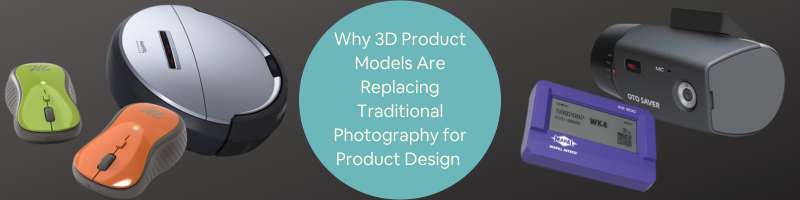
Why are 3D product models replacing traditional photography for product design companies? There was a time when the launch of a new product meant bringing in the whole crew: photographers, lighting experts, models, stylists, and even a studio cat who liked to nap in the lightbox. Each button, bottle, and bracelet needed to be photographed from every angle, then touched up and re-shot if someone sneezed near the set. It was a glamorous mess that often siphoned both time and budget.
Why 3D product models as opposed to traditional photography?
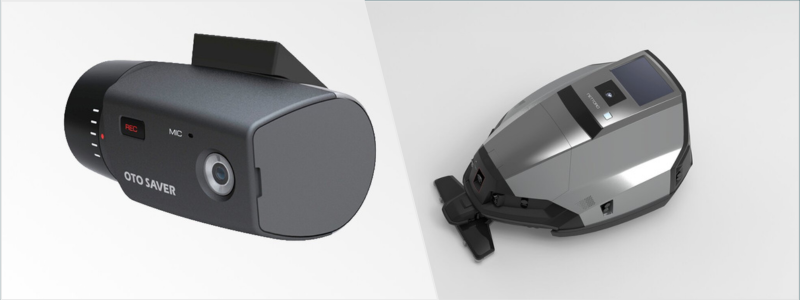
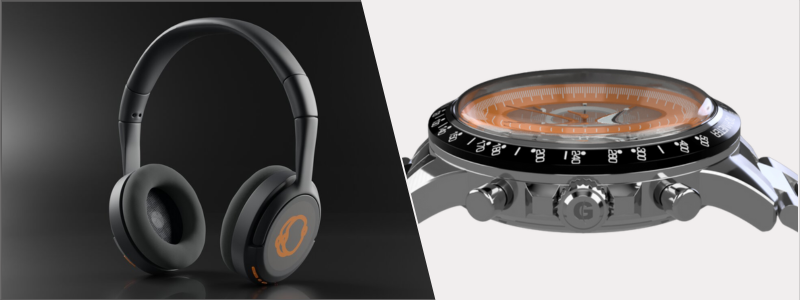
Today, product design firms quietly ditch the cameras and tripods for something far more precise, flexible, and futuristic: 3D product modeling. Instead of fighting with reflections, props, and post-production headaches, today’s brands turn to digital artists who can compose photorealistic product visuals with little more than special software and a keen eye for detail. Results? Absolutely stunning at times, such that even seasoned designers stop and squint, trying to tell whether they’re looking at a render or a photograph.
And finding those experts to make that magic happen isn’t tough either. Cad Crowd connects businesses with professional freelancers in 3D modeling services to create products in vivid digital designs of jewelry and electronics, to furniture and fashion accessories. A ready global pool of talented freelancers is just waiting for the opportunity to create models that will raise eyebrows even among the most ardent photographers. But how did we get here? Why are product design companies choosing 3D renders over traditional photography? What’s so irresistible about the digital shift that even old-school creatives have decided to take the leap? Let us dive in.
Traditional product photography has always had a certain artistic flair to it. It’s difficult to deny the beauty in real-world lighting, textures, and the overall tactile sense that comes with capturing something tangible. The process that goes behind it, however, is not quite so romantic.
Think of what it takes to get just one great product photo:
Creating or renting a suitable studio setup.
Camera and lens hire and sale; lighting.
Constant adjustments of light to avoid reflections.
Coordinate with photographers, stylists, and retouchers.
Extensive image editing to make every shot perfect.
Now, do that whole process for each color, size, or packaging-style variation of that same product. The costs multiply faster than you can say “retouching fee.” 3D modeling designers flips that process on its head. Instead of capturing light bouncing off of a real object, artists build the product inside a computer. And when that digital version exists, it can be rotated, retextured, resized, and lit in infinite ways. No new photo shoot. No rescheduling. No misplaced USB drives full of RAW files.
What makes this powerful to product design companies is the level of control involved: traditional photography gets you what the camera sees; 3D product models get you what your imagination wants. Every angle, every shadow, every shine can be precisely tuned. It is like going from marble sculpture to pixel editing-no marble dust, chipped edges, or angry clients asking for a new photo shoot because the lighting looks too moody.
But one major reason 3D product modeling services is taking over in product photography is quite simple: it removes limitations. In the studio, there are practical boundaries: there is gravity, light bounces in very inconvenient ways, and glass reflects everything, including the elbow of the photographer. With 3D product models, goodbye to all that.
Want to make your new smartwatch air-levitate in midair with elegance? Easy.
Want the latest sneaker with lightning bolts and smoke around it? Done.
Want a jewelry collection on the surface of the moon for a campaign? Sure thing-no rocket fuel needed.
Nothing provides quite as much creative freedom as 3D modeling. Companies can visualize products in environments that, logistically, are impossible or just financially insane to shoot in real life. In lieu of renting a tropical island to photograph a bottle of sunscreen, a 3D artist can recreate one down to the last palm leaf. This really helps in the case of concept products that are not even manufactured yet.
Product design companies create prototypes, showcase upcoming launches, and use totally realistic 3D renders. This gives a head start to the marketing team in rolling out campaigns when the actual product is not available, hence saving time and creating a buzz much in advance.
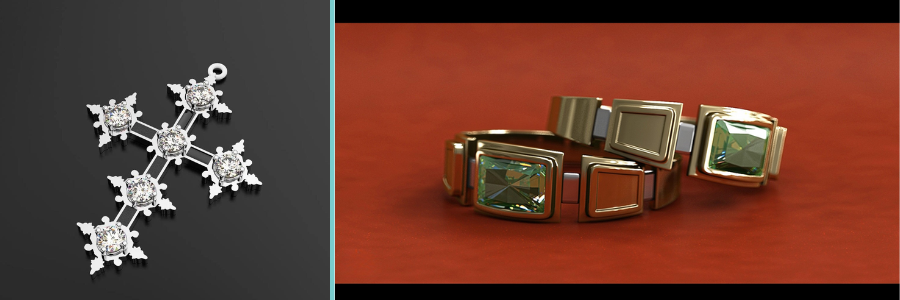
That is where platforms like Cad Crowd step in: many of the freelance 3D designers there have industrial design and engineering backgrounds, so they can make the product look good while also knowing how to make it accurate. This makes a big difference in cases when a company needs visuals reflecting true dimensions and materials, rather than pure artistic imagination. That would involve hiring a freelancer to render a diamond ring, complete with correct stone cuts, metal finishes, and lighting reflections, by a jewelry designer. The output would be similar to that in a luxury photo shoot with no diamond under the camera lens.
Anyone who has ever managed a photo shoot knows how quickly the costs mount up: studio rentals, photographer fees, catering, transportation, props, and retouching add up to a small mountain of bills. And that’s before anybody decides the product should be reshot with “softer lighting” or “more energy.” With the help of 3D modelers, nearly all of these types of costs are sidestepped. Once 3D product models are created, companies can reuse it endlessly: change the background, update the packaging, or show seasonal variants without a single new shoot.
Want a Christmas version of your product? Slap some digital snowflakes on it. Want to make a summer edition? Use a different color palette, refresh the textures, and adjust the lighting to make it feel like a sunny beach: A 3D model is cheaper than a professional photo session, especially when the reusability aspect is factored in. The output can be repurposed further for marketing campaigns, listing on e-commerce websites, investor presentations, and even AR applications and VR showrooms.
That level of efficiency has made 3D rendering services particularly popular with startups and small brands that want high-quality visuals without breaking the bank. Even with smaller budgets, they can be just as visually competitive as much bigger companies. Again, websites like Cad Crowd make this possible: businesses are directly connected with skilled freelancers who can work within whatever a particular budget is. Whether it be a hyper-realistic render of jewelry or just a simple mockup for a prototype, you can find someone to fit your style and budget.
For a long time, 3D renders carried some kind of stigma with them: they looked “too digital.” The surfaces looked plastic, the shadows too sharp, and the reflections felt fake. Any person who saw one could tell straightaway that it was computer-generated. Advanced rendering technologies erase the line from real to digital, enabling today’s 3D renderers to simulate with uncanny precision how light will interact with every surface, from brushed aluminum to velvet fabric. This is made possible through a series of advanced, physically based rendering techniques that calculate how materials would really act in the real world under given conditions of lighting.
The results are 3D product models that don’t lie, not even to the most persnickety of eyes. That bottle of perfume gleaming under soft studio lights? It may never have existed in the physical world. That watch, with its faint glint of sunlight reflecting off its metal case? Completely virtual. These days, even droplets of condensation on a can of soda can be rendered so lifelike that you might instinctively reach for a napkin. That realism is revolutionary in product design firms in that one does not have to wait for prototypes to be made before starting to market the products. Materially real visuals can be presented anytime during their development and be showcased to investors, clients, and customers.
If perfection is the goal, well, it is achievable with 3D product design experts. A photographer can shoot only what is there to be shot, blemishes and all. A 3D artist has the capability to make perfect symmetry, ideal lighting, and even adjust the angle of reflection on a gemstone until it looks like magic. This is the level of detail at which freelancers on Cad Crowd really shine. Many use industry-standard enhancement software like Blender, KeyShot, or SolidWorks to take visuals to a level that often leaves clients wondering if they are looking at photographs.
Now, try to imagine having to deal with a brand producing dozens or hundreds of different products in just one year. Shooting each one individually is a logistical nightmare: scheduling, lighting, editing, and storing all those thousands of high-resolution images will sap the energy of your team-and yours. Because 3D product models are infinitely scalable, once a product has been modeled by the product rendering designer, its variations need only a few clicks to be complete. Want that handbag in a dozen colors? Swap out the texture maps. Want the bottle design with three different cap styles? Swap them digitally.
This scalability is especially useful for e-commerce brands-online shoppers want to see all the options before making a purchase: color variant, material finish, packaging style-you name it. Physically shooting all those variations would take weeks; digitally rendering them takes hours, sometimes minutes. Better still, once the digital assets exist, they can be used across numerous channels: the same 3D model that appears on a website can feature in social media videos, virtual catalogs, or even in augmented reality shopping apps where customers can virtually “try” out products.
Brands like IKEA, Nike, and Apple have already made this shift. The reason they use a 3D CAD modeling professional is that the result is consistency across the world, not because it saves time. Each product is exactly the same, irrespective of the language or region. Indeed, for product design companies that have been taking the lead in this direction, 3D modeling has been found to be not only quicker in yielding results but also more reliable at keeping the standards of aesthetics. Besides, through freelance sites such as Cad Crowd, it’s easy to scale up by bringing in a number of artists who work within the same specifications and style guidelines.
For all its charm, photography is not an especially eco-friendly profession. Photo shoots require transportation and electricity, sets are made of material, and disposable props-and often a fair amount of waste. Even simple things, like product packaging design services for a shoot-boxes, bottles, display stands-can sometimes add up to a surprising environmental footprint. Meanwhile, the 3D modeling of a product is neat and green, with props on the computer, no printing of backdrops, no packaging wasted, and no carbon emissions from hauling equipment across cities.
Moving into 3D modeling is an easy way for brands, most of which today are focused on sustainability, to lessen the ecological footprint of their work without sacrificing quality visuals in their communications. It really fits in with the eco-conscious image many consumers expect from modern brands. This is more than a marketing angle; this is full-on evolution as to how creative production is taking place. An entire catalog of imagery, which once required a crew, studio, and truckload of props, can now be designed by one artist at a desk.
Even revision is greener. Rather than reshooting a product for no other reason than its package has changed, even to the slightest degree, a company can update a digital file in just minutes. Less waste. More flexibility. Better for everyone. Most of the 3D CAD freelancers, like Cad Crowd, work remotely. That means a global network of artists further streamlines the creative pipeline by reducing unnecessary travel and overhead, contributing to its efficiency and sustainability.
Timing means everything in marketing, and very often the firm needs visuals well in advance of when such a product exists. This is impossible with photography without a prototype, but it’s a standard practice within 3D modeling. Product design firms create anticipation via 3-D renders many months in advance. This means high-quality images and videos can circulate through all digital ads, websites, and social platforms long in advance of any actual date of manufacture, and customers talk about and may even desire something that technically doesn’t exist.
The same is true with crowdfunding. In the case of crowdfunding campaigns, it was mostly impossible to afford physical prototypes, let alone full photo shoots. They went live on Kickstarter or Indiegogo with detailed 3D renders showing what their future product would look like. Many times, those visuals make all the difference between getting ignored and reaching full funding. It doesn’t hurt that 3D renders can be animated with the help of 3D animation designers. Rather than static photos, dynamic visuals can show rotating views, exploded component animations, or lifestyle scenes-all digital in their creation.
It really lets the consumer understand the features of the product way better than any photo could. Let’s be upfront: today, digital runs on visuals that can stop scrolling in a second. It is about scroll-stopping content, period. And for that, no conventional photo can ever compete with a photorealistically rendered 3D view of a sparkling perfume bottle or a luxury ring, simply because it offers creative control over composition, lighting, and mood. Now, most brands use a mix of 3D assets and photography; both are utilized in one campaign, the difference being that the 3D renders will do much of the heavy lifting, while, sparingly, photography is used for lifestyle shots.
This hybrid approach gives flexibility without sacrifice in quality. This is a marketing advantage that freelancers from Cad Crowd understand full well, as they design models with promotional materials, social ads, and product launch visuals in mind. It’s in the blending of technical skill and creative direction where they are really so valued in the work of a product design team in need of speed and artistry.
Boundaryless collaboration
Another reason product design and development firms are embracing 3D modeling is that collaboration has gotten so much easier. Traditional photography requires everyone to be in the same place at the same time. Trying to coordinate the schedules of designers, photographers, and marketing teams for days of travel and shooting can quickly turn into one big logistical headache. 3D modeling removes this obstacle altogether. A designer based in London collaborates perfectly with a 3D artist operating from Milan, while the marketing manager based in Manchester sees the result in real time. Files can be transmitted immediately, and feedback loops can be significantly reduced; changes become much faster.
Due to the fact that the entire creative process has taken place in the digital space, projects don’t slow down. This means firms can establish a long-term relationship with trusted freelance professionals. In the case of product modeling, updates for the same model can be assigned to the same artist when there are new releases, adjustments in packaging, or seasonal collections. Continuity like this will ensure that there is consistency and professionalism in the visual branding. Most firms find their go-to freelancers at Cad Crowd, where they can set milestones and collaborate directly to ensure creative control from start to finish.
It can safely be said that 3D modeling is no longer the future but is, in fact, the present. As virtual and augmented reality, together with AI-powered rendering, continue to develop, so does the future of product visualization. But soon, thanks to augmented reality apps, customers will be able to do more on a website than just see 3-D models-they’ll rotate them, test colors, and visualize them inside their homes.
The same artists and photorealistic rendering designers doing today’s photorealistic renders are laying the groundwork for that future. It is this investment in 3D modeling that keeps these product design companies ahead of the game. This does not replace photography but is a redefinition of how products will be designed, marketed, and experienced.
Conclusion
Although classic product photography may have some sort of nostalgic value to it, 3D modeling has surely taken over in the case of modern product design companies. It ensures precision, flexibility, and creative control impossible with any camera. Digital models let businesses experiment freely, from concept to launch, in ways that save on costs while showcasing their products in stellar detail well before their actual manufacture.
If your company is ready to make that leap into the future of product visualization services, Cad Crowd is the avenue through which to take it. Cad Crowd provides a rock-solid platform that connects businesses with highly qualified freelancers in the 3D product models, rendering, and visualization field. Find expert talent to help bring your ideas to life with everything from hyper-realistic prototypes to fully cataloged collections of digital assets. Consider Cad Crowd today and discover how the right 3D expert can transform how your brand conceptualizes, markets, and shines online. Get a quote today.
MacKenzie Brown is the founder and CEO of Cad Crowd. With over 18 years of experience in launching and scaling platforms specializing in CAD services, product design, manufacturing, hardware, and software development, MacKenzie is a recognized authority in the engineering industry. Under his leadership, Cad Crowd serves esteemed clients like NASA, JPL, the U.S. Navy, and Fortune 500 companies, empowering innovators with access to high-quality design and engineering talent.
This post provides a guide for interior design services and how it’s used to create beautifulo room renderings. Interior rendering, as a trade within the architectural industry, refers to the production of design visualization to showcase how a room is supposed to look before it’s constructed. The visualization is typically used as a presentation tool to communicate design concepts and ideas to clients and stakeholders for reviews and approval.
Gone are the days when architectural designers and design firms rely solely on the traditional 2D drawings to make sales pitches. While the industry hasn’t reached a point of complete transformation from conventional drafts to the more advanced 3D renderings, it’s pleasing to see how professionals and clients alike no longer treat photorealistic visualization as an expensive add-on but a necessity in the design process.
The primary goal of a room rendering process is to make the final image as photorealistic as possible. In other words, the computer-generated imagery needs to look as if you’ve taken a photograph of the room using a professional-grade camera and add some final edits to it. All that sounds simple on the surface, but in reality, photorealistic rendering services are a pretty intensive process that requires not only technical precision and understanding of camerawork but also artistic touches.
It takes skills and experience to turn a design draft, whether a floor plan or an interior sketch, into an accurate, lifelike image. Familiarity with a range of 3D modeling and rendering software packages is a must; otherwise, you might miss out on specific features, tools, or functionalities required to achieve the level of detail needed for the work. A high-quality render isn’t just a snapshot of a design translated from a draft; some might say it should be nothing short of artistic expression to evoke emotional responses from the audience.
Photorealistic rendering isn’t exactly a new thing, but looking for a professional and experienced 3D render artist for a project can still prove to be quite a challenge these days. Cad Crowd appears to be the safest bet for now. The AEC-focused freelancing platform is home to hundreds, if not thousands, of the world’s most talented render artists, offering their services at reasonable prices. In any case, every render artist has to start from a place where they almost have no idea what they’re doing before they get to a professional level. It’s not going to be a quick jump, but the following guides should help you get a grasp of the essentials a little bit better.
Practical guides to interior rendering
Photorealistic visualization of an architectural project can be a daunting subject. But the good thing is that, sometimes, a deeper understanding of the basics goes a long way to improve your skills. What you’ll see below won’t be much of a deep dive into the intricacies of interior rendering services, but it might just be enough to lead you in the right direction toward visualization fluency.
Just because rendering doesn’t come with exactly the same workflow as photography, it doesn’t mean you can’t use images captured by cameras as references. Even for a project brief that’s uniquely specific, there’s a good chance that you can find photos online that at least partially meet one of the requirements. For instance, if the client wants an interior with an industrial style that uses furniture from a particular brand, the Internet is a good place to start hunting for some inspiration. You might not be able to get any image that ticks all the boxes, but even in the worst-case scenario, you’ll bump into one or two images usable as points of reference.
If photographs are hard to come by, you can always resort to online libraries for rendering. Websites like DeviantArt and Behance have loads of samples to explore and observe. ArchDaily and Divisare also offer curated selections of interior visualizations by well-known designers and render artists. Even Pinterest should be good enough to get you started. There’s nothing wrong with using the works of others for inspiration, so long as you don’t produce an exact copy, which is highly unlikely anyway because their project briefs can’t be identical to yours either.
References allow you to “indirectly” learn from other render artists and 3D designers. All those images might tell you which color combination works best for a small room, what visual style conforms with a home office, how to present a corporate office render, and so forth. Every little detail you see is a lesson to remember.
3D modeling design services are the underlying work of an interior rendering. You can’t have a proper render without making sure that you have all the correct models to represent objects in the scene. Remember that you’re not actually capturing photos of physical objects, but generating a visualization of those objects in a digital environment using specialized software. Accurate 3D models are a prerequisite for high-quality rendering. Many things can make your visualization look unrealistic, and poorly-built 3D models are among the worst of them all.
One of the main problems with high-end interior rendering is that you can’t always source quality models from just about any 3D model marketplace online. Let’s assume the client wants the visualization to include objects (furniture, ornaments, fixtures, etc.) from specific brands. In many cases, it’s perfectly fine to model those objects yourself, but make sure that you get clearance from the clients. Some furniture design companies actually sell high-poly 3D assets of their patented design or products, so make time to discuss the matter with the clients to avoid any legal issues.
If you have to model some objects from scratch, remember the following key principles:
Respect the real-world dimensions: it’s best to model an object according to its actual measurements. If possible, look for the manufacturer’s specification.
Clean geometry: overlapping meshes aren’t the best solution to achieve a shape or design. They can result in unwanted artifacts in rendering or shading issues.
Avoid low-poly: any object, whether you plan to use it in the foreground, mid-ground, or close-up view, should be modeled as a high-poly 3D asset. Even if you want to use it as a background object and blur the color for a realism effect, it’s better to have a detailed object converted into a low-poly one than the other way around.
Be that as it may, modeling from scratch is usually not the priority for efficiency reasons. 3D modeling is a time-consuming task, especially considering the fact that you have the option to source premium assets from online marketplaces. Such platforms as TurboSquid, RenderHub, BlenderKit, and CGTrader, to name a few, have thousands of ready-made 3D models used for architectural rendering services. Assets include furniture, decorations, ornaments, lamps, doors, windows, stairs, and more.
Map the project brief
Reading the brief over and over again does seem like a waste of time and effort, but it’s advised against simply combing through the instructions for the obvious reason that you can easily miss something crucial. To avoid the hassle, make the effort to “map” or outline the brief during the first re-read. This is where you answer questions like:
What is the intended visual style? Is it minimalist, industrial, contemporary, classic, or something else?
Is there any particular color combination that best complements the style?
Does the instruction mention anything specific about the furniture design, brands, ornaments, decorations, wall paints, or other objects and elements?
What should be the focal point? Is there any object to highlight?
What time of day will the rendering be? If the 3D visualization design depicts the interior at nighttime, how many light sources are there in the room?
Does the client provide images or photos for references? If so, what makes the references stand out?
There are no right or wrong answers to any of those questions. Take another look at the client’s references (if any) or other images you’ve already collected to gather ideas and develop a design concept. It’s important to have a clear style direction early on in the process; otherwise, you’ll be doing everything seemingly at random without a well-defined objective.
Unsurprisingly enough, 3D CAD render artists are prone to falling into the trap of repetition. This is when they unknowingly use the same design ideas and visual styles over and over again. Everything looks just fine for the first dozen or so renderings, but then the portfolio shows very little variation in terms of perspectives, composition, lighting effects, color, etc. It’s understandably difficult to come up with a fresh design concept each time, and that’s why everyone needs to take inspiration from other designers and render artists at times.
The hallmark of a high-quality render is when the audience cannot seem to tell if what they see is a computer-generated visualization or a photograph. In other words, you need to try to render like a photographer. Remember that the virtual camera (this is the camera position that gives you the viewing angle for the rendering) essentially follows the same optical principles as an actual DSLR. As a 3D architectural visualization designer, to produce professional-grade images, you shouldn’t stick to the default setting, then do the routine point-and-shoot. There are plenty of settings to configure, including object placements within the frame (composition), to get the best results.
A typical challenge with interior rendering is space limitation. Field of View (FOV) and focal length matter the most here. An easy solution is to use a wide-angle perspective to cover the entire room and therefore fit every object in the frame. But an easy solution isn’t always the best available. If you include everything in the frame, the image most likely ends up with poor composition, with a weak focal point. The sweet spot for interior visualization is a focal point between 28mm and 35mm, or the “prime lens” shot. The viewing angle from these lenses closely mimics the human natural field of view, making the image look realistic.
Detailed shots or vignettes are best when captured using a medium telephoto or “portrait” lens. This allows you to focus on or highlight specific objects or areas while compressing the background at the same time. Experiment with the Depth of Field option for more dramatic blur effects. The next in line is composition, or the arrangement of objects in the scene. Some of the most common composition techniques for interior visualization services include:
Rule of Thirds: placing the focal point or highlighted features of the room slightly to the right or left of the center.
Framing: the use of objects such as windows, doorways, ornaments, or even furniture to frame the key features.
Leading Lines: utilizing noticeable lines (from the objects) in the scene to guide the viewers’ eyes toward the key features.
Asymmetry: introducing too much symmetry to the scene makes the image look generic, so a touch of imbalance is good.
Don’t be afraid to explore the different options of camera angle, height, focal point, and composition. You can’t really see what’s the most effective solution until you compare at least two or three finished renderings. It’s best to do the exploration in the “grayscale render” stage. Also commonly referred to as “white box rendering,” this is the stage where the 3D models are still devoid of color and textures. Professionals use the technique to experiment with camerawork without the need to do full-scale rendering each time.
Mind the lights
The way the 3D modeler set the lighting effects can make or break the rendering. Different times of day have a huge impact on how the room looks and feels. A lot of times, it has everything to do with the kind of room you want to visualize. For example, a bedroom is best encapsulated with artificial light sources during the night, whereas a home office appears to have its most energetic atmosphere during broad daylight. If you decide to use the sun as your primary light source, make sure it’s dispersed enough across the room to maintain a comfortable level of brightness without making everything too dim.
Artificial lights are a little more complicated, as the 3D interior rendering designer have to work with three different types of them, including ambient, accent, and statement. Ambient lights are the base illumination (this is the brightest lamp in the room), accent lights are complementary in nature, such as desk lamps or LEDs behind the TV, whereas statement lights are only for style purposes, like a chandelier. Each type serves its own functions to contribute to the realism effect.
As mentioned earlier, interior rendering is a little bit of both technical mastery and artistic expression. The mastery portion of the equation calls for software know-how, understanding of the physics of lighting, and material realism. On the other hand, the artistic part is all about visual storytelling; it’s how you convey messages and trigger emotional responses from the audience with imagery. Utilize lighting effects to build an atmosphere, explore different viewpoints to create a narrative flow, or use a specific color scheme to introduce a specific mood within the frame.
In many respects, interior rendering is like product development services, where prototyping is an iterative process. Through subtle yet continuous improvement and structured practice, every image should come out better and more refined than the previous one. More attentiveness to details, combined with valuable lessons from yesterday’s mistakes, can really turn pencil sketches and simple illustrations into emotionally resonant visualizations. Every room and its unique design present their own rendering challenges, but that’s how you afford the chance to try and explore different methods for a visual storytelling that communicates design concepts, lifestyle, or perhaps brand identity.
Whether you’re generating a visualization for a small kitchen or corporate office, every instance is an opportunity to experiment with ideas. This kind of “experiment” will mostly revolve around using more tools and features in the rendering software, but the truth is that you can only improve by being more familiar with the software you have. It’s how you hone your skills in creating different visual styles, not just to get to know the intricacies of each, but to understand which style does best for any given project brief.
Some ideas will work and others won’t, but mistakes are as effective at giving valuable lessons as success. The point is that experimenting with software tools, lighting effects, perspectives, composition, textures, materials, patterns, colors, and everything else related to rendering will broaden your knowledge. It’s all part of a creative process, and the experience you gain over time can only serve you well.
Takeaway
Apart from skills and experience, high-quality interior rendering from expert 3D photorealistic rendering artists also demands patience on your part. It’s almost an interdisciplinary field that requires technical understanding of lighting physics, the vision of a professional photographer, the artistic expression of a storyteller, and 3D modeling know-how. Chances are, you can’t have all of those overnight. Even a quick learner can take months, if not years, to feel comfortable with the complexities of interior rendering, beyond learning about software tools and understanding what every feature does. Creating a photorealistic visualization forces you to think like an architect and designer while trying to stand in the client’s shoes.
Now that 3D modeling and rendering software have become smarter and faster, the barrier to entry has also gotten lower. Modern software can automate geometry calculations, read textures and patterns, predict light behaviors, and even offer instant color balance correction. However, there’s always the artistic barrier. No software has the power to determine the best light source position to evoke a sense of comfort, energetic lifestyle, or joy. Software can’t replace human touch because it doesn’t have artistic expression.
A professional render artist bridges the gap between a design concept and its eventual materialization. Rendering should be an extension of the designer’s idea – an extension that allows the audience to picture themselves living in a place that doesn’t yet exist and make a buying decision long before construction begins. At Cad Crowd, the focus of architectural rendering isn’t just on realism, but also on believability through artistry. The professionals on the platform have undergone strict screening and vetting processes to maintain high-quality standards and make sure that every client gets the chance to work with the best in the trade. Get a free quote today.
MacKenzie Brown is the founder and CEO of Cad Crowd. With over 18 years of experience in launching and scaling platforms specializing in CAD services, product design, manufacturing, hardware, and software development, MacKenzie is a recognized authority in the engineering industry. Under his leadership, Cad Crowd serves esteemed clients like NASA, JPL, the U.S. Navy, and Fortune 500 companies, empowering innovators with access to high-quality design and engineering talent.
In today’s digital space, beautiful visuals are not optional; they are your ticket to the attention, trust, and finally, sales of a viewer. Whether it is launching new lines or refreshing the marketing material of your jewelry business, it’s the quality of the renderings that makes all the difference in that first impression. A flat, lifeless image just would not do justice to the artistry involved. But one breathtakingly realistic render? That can have customers reaching for their wallets well before the product hits the market.
Of course, not all companies specializing in 3D rendering services of jewelry are created equally. Some promise realism and then deliver something that resembles a shiny toy. Others charge a fortune and still somehow manage not to capture the sparkle that makes your design special. Especially for those just getting started with this digital craft, finding just the right partner might prove daunting.
The good news is that you don’t need to make your way through this shiny maze all by yourself. There are pretty cut-and-dry ways to identify the company that will bring your vision into life with precision and style. If you don’t mind working with talented freelancers instead of large agencies, Cad Crowd is a very good place to look for 3D jewelry rendering experts. You will be working directly with highly skilled artists who will make sure your designs look irresistible for marketing campaigns, e-commerce websites, or investor presentations.
Before getting to what makes a rendering company right, let’s talk about why 3D jewelry rendering matters in the first place.
🚀 Table of contents
Why 3D jewelry rendering is a modern-day jeweler’s best friend
Jewelry is personal; it’s emotional. It tells stories of love, celebration, and life’s milestones. In this competitive jewelry market, pure beauty does not sell; presentation does. And that is where 3D rendering changes the game.
With a good render, you can present your designs even before they ever exist. It’s able to show multiple angles, zoom in on intricate details, and even simulate different lighting conditions. You could show how a ring looks in rose gold versus white gold or how it sparkles with emeralds instead of sapphires, all without lifting a polishing cloth.
The following are some real advantages that make 3D jewelry rendering powerful:
1. Cost efficiency: Traditional photography requires prototypes, studio setups, and even retouching. In photorealistic rendering services, you do not require an actual sample for each variation of the designs you are to work on. You save on material, production time, and shipping.
2. Design flexibility: Want to try new materials or different arrangements of gemstones? A rendering artist makes those changes in a few minutes. You can test dozens of variations without making a single prototype.
3. Marketing powerhouse: Social media, catalogs, websites, and ads all need striking images. The 3D renderings offer a sharp and detailed picture that makes an instant effect. The customer can almost feel the shine and the weight of this jewelry.
4. Faster time-to-market: Fashion design software helps you market your designs even before manufacturing gets underway, which means quicker pre-orders and timely market feedback, hence more confident production planning.
5. Consistency across channels: Every render is equally well-lit, from the same perspective, with the same amount of polish. No more bad product photography or awkward shadows making your listing look mismatched.
In other words, 3D jewelry rendering services are not a luxury but a must-have marketing tool for every modern jewelry business, from boutique designers through to luxury brands, that is ready to bring their new collection to the world.
Step one: Knowing what makes for a great 3D jewelry rendering
It’s good to know what makes one render great and the other average before choosing either a company or a freelancer for your needs.
A good rendering in jewelry has much more to do than form and material; it’s emotive and desirable. It should make the viewer say, “I want that,” not “That looks computer-generated.” To get to this level of realism, it takes technical skill, an artistic eye, and an understanding of jewelry craftsmanship.
Look for renderings that include the following:
Precision of details: All the claws, settings, and facets should be well-defined. It is in the thickness of the prongs, or unnatural floating of stones, that an illusion gets broken.
Realistic lighting: Light can make or break jewelry; it should reflect naturally to highlight the edges and bring out brilliance in the stones.
Material accuracy: Looks to be gold, not yellow paint. Diamonds sparkle – not glow. Textures of surfaces must act correctly with respect to the real world.
Composition and presentation must be appealing for this render, via angle, background, and focus. It must have the same appeal as any professional studio photograph or CAD design service.
Once you have an idea of what great rendering looks and feels like, then you’ll be able to assess which companies or freelancers will be able to deliver that quality.
Identify your project’s goals:
First, define exactly what you need, and then the search for a rendering company can start. Not every project needs a high level of detail, realism, and creativity.
Is this for a social media marketing image, or are you looking for a technical render to use in production? Do you need animated 360-degree views, or would still images suffice? Will you need photorealistic lifestyle settings or clean white backgrounds for e-commerce listings?
Being clear about your goals will save time and allow you to state your expectations. That said, some rendering studios have high expertise in product visualization, while others are great at conceptual design. Others may also have additional skills in animation. The clearer you are, the more likely you are to get the perfect match.
Make a checklist of your project requirements:
Number of designs or models to render
Desired style: studio, lifestyle, catalog.
Resolution or format specifications.
Deadlines and turnaround expectations.
Price bracket
You can start by looking up those on the list.
Step two: Choosing between a company and a freelancer
Along with the full-cycle 3D HDR rendering company, there is a freelance artist, each with their own strengths.
The rendering firms can complete large projects with regular output and an organized workflow since they have teams of different specializations. However, they are usually more expensive and less personalized.
Freelancers can offer flexibility and individuality that may not be found with larger design studios. Working directly with an artist facilitates smoother communication and quicker creative changes. Freelance rates can also be budget-friendly without having to give up quality.
That is where Cad Crowd comes in: connecting you to a network of pre-vetted freelancers specializing in 3D jewelry rendering. You can check their profiles, take a look at their portfolio of work, and hire pros whose style will fit your brand. Then, the platform will even help you with project management so that you can collaborate seamlessly without the concerns about missed deadlines or miscommunication.
If you want your jewelry to be rendered by someone who understands artistry and technology, then Cad Crowd is a brilliant place to start.
Step three: Review portfolios with a critical eye
Every company and every freelancer is going to only put up their best, but not all portfolios by jewelry design experts are created equal, and you need to look beyond the initial “wow” factor.
What to check is as follows:
Variety: Are they working with various styles, using different materials? If you just see one type of jewelry, that may mean a lack of variety.
Realism: Check the reflection in the metals and the behavior of the gemstones. Is the gold deep? Do the diamonds sparkle as brightly as they should?
Consistency: Is the quality the same throughout all the pieces? A portfolio with just one impressive render and the rest average may denote inconsistency.
Lights and shadows: Even a great design will look flat because of poor lighting. Shadows should be soft and natural, not fake or wrongly placed.
Presentation: Professional rendering firms understand composition. Backgrounds, reflections, and color balance matter.
Spend some time critically reviewing the portfolios, and you may be able to spot the red flags more easily. If it doesn’t feel quite right, go with your gut.
Technical competencies and skills assessment
After having selected a few rendering companies or freelancers, the next sensible thing would be to check their technical skill level. Jewelry rendering is not just about clicking “render” and letting the computer do the job; it’s about mastery over software, deep understanding of materials, and capturing even the minutest nuances that define your design.
Most professional 3D jewelry rendering artists work in Rhinoceros, Blender, 3ds Max, KeyShot, or MatrixGold. These can create phenomenally realistic views, but only if in the right hands. Therefore, when reviewing candidates, pay close attention to whether they mention those or similar industry-standard tools. Powerful software does not guarantee brilliance, but more often than not, it is a sign that they are working at a professional level.
One good test for a renderer is to ask them to describe their process in rendering. How do they handle the lighting setups? How do they achieve metal realism? How does one render gemstones? The answers will tell just how much they actually understand about the craft.
One could say that he just tweaks lighting until it looks good; that sounds good enough on the surface, but the professional will explain High Dynamic Range Imaging, ray tracing, or caustics simulation-things which separate the good from the jaw-dropping.
Another technical marker is respect for scale and precision. A couple of millimeters in jewelry makes all the difference. If a prong happens to be just one or two millimeters too big, or a gem misaligned by a fraction of a millimeter, the final image effect would look unreal. Skillful renderers respect measurements and work well with CAD models to give physical accuracy.
Now, let us address one of the most underestimated aspects of choosing a rendering partner: communication.
Even the best artist in the world will provide the wrong outcome if you don’t communicate well. 3D rendering is one of those collaborations that thrive on clarity and mutual understanding. You need a person who will listen, ask questions, and clearly explain their jewelry design company’s approach.
When you contact companies or freelancers, pay attention to the response you get. Are they eager to respond, asking smart, insightful questions about your project? Do they seem genuinely interested in your vision? Quite often, a couple of messages will tell you what it’s going to be like to work with them.
Ideally, a rendering artist doesn’t just take your files and disappear into digital silence. He or she should keep you informed of the work in progress, request your feedback, and give previews in the rendering process. This level of communication is important in the early detection of issues, therefore ensuring the results turn out as expected.
Cad Crowd can help in that respect, too, because through their community-based freelance platform, good communication is nurtured between the clients and the artists. Thus, you are able to share your project briefs, exchange updates, and even track the progress of your work all in one place. This will cut down the chaos that sometimes happens when one has to work with freelancers on not-so-structured platforms.
That’s if this rendering partner is clear in explanations, listens well, and is patient about revisions or questions; you probably have a keeper.
Textures and lighting: How important is realism?
Now we get to the good stuff that makes renderings of jewelry so gorgeous: textures and lighting, something that jewelry sketching services are hard-pressed to match.
These two elements take the average render and make it a masterpiece. A very talented artist knows how to make gold deep and reflective, not flat and yellowish. They know diamonds don’t sparkle; they refract light in complex, beautiful ways.
It’s all about authenticity with render samples: is the surface accurately reflecting the environment, for instance, or are the gemstones deep and brilliant? Are the shadows natural or hard and unrealistic?
In particular, lighting is the soul of jewelry rendering: realistic lighting requires a mixture of art and physics; the renderer should realistically simulate how light would behave on different surfaces, from metal and stones to glass and even background materials.
It would also be a good idea to ask the would-be rendering company or freelancers how they go about setting up the lighting environment. Professionals use HDRI maps capable of simulating real-world reflections and soft ambient lighting. If someone glosses over that, that is a red flag.
Of course, the same thing happens with textures: from polished to brushed, matte, or faceted, all the surfaces vary between different pieces of jewelry. A renderer who’s able to replicate those textures will make your designs look photo-real. If all of their pieces in the portfolio look identical, that could suggest they are relying on generic texture presets rather than doing custom material work.
Price and the factors affecting it
3D jewelry rendering prices can be all over the spectrum, really. Some CAD rendering artists charge per render, some per hour, and others by project difficulty. The range goes from super affordable freelance rates to high-end studio fees.
What counts is transparency, so avoid anyone who will not quote a straight price or “it depends” without explanation of what the determining factors are. You want to be sure precisely what you pay for and what you will get in return.
Here are some of the common elements that affect price.
Complexity of design: an intricate design entails engraved details, filigree, or lots of gemstones; hence, more time is required in modeling and rendering.
Number of angles or images: With every new angle and every variation that even shows metal color or stone type, the cost goes up.
Level of realism: Consequently, highly realistic renders featuring complicated light setups will take more time to complete and cost more since they require more technical ability.
Turnaround time: Most rush projects involve an extra charge.
Animation or static images: The prices are higher where the rotation of 3D animation services or an interactive model is needed, as there will be an extra load in the rendering.
Always ask for an itemized quote at the start, which saves you from ‘surprise’ charges at the end. A good company/freelancer should not have any problem justifying how their pricing works.
And just one last word: never for the lowest price, because cheap rendering will give you poor lighting, unreal material, and will waste your time afterwards to sort out all the problems. But focus on value: finding a balance between price and quality.
With Cad Crowd, many of the freelancers quote transparently for your needs, with samples of their previous work. You are then able to easily compare options and find one that will meet your quality needs without overspending on features that you’ll never use.
Revisions, feedback, and collaboration
Great skill and clear communication do not make any first draft perfect. A good partner in rendering would always include revision rounds in the process.
Before you commit to a firm or CAD freelancer, understand from them what their revision policy is: how many are included, what constitutes major versus minor revisions, and whether there is any additional editing billed. It is better in writing to save frustration later on.
The best artists welcome feedback. They realize this is very often the way the best results are achieved: through collaboration. Look for someone to whom revisions are a part of the process of creation, not an inconvenience.
Practice giving specific feedback when you comment on renders and avoid general comments like “it does not look right.” State exactly what should be different. For example:
“This gold tone is too bright.”
Sharpen the facets of the diamond.
“The reflection on the band looks a bit too strong.”
Precise feedback can allow the artist to make the right changes much sooner.
Cad Crowd makes it easy to collaborate: share files, comment directly on images, and keep all messages in one place. With such a structure, each version and note of feedback is clear and traceable; hence, saving you much time and sanity.
A structured workflow can make or break a rendering project. The best companies, along with freelancers, have clear processes that then keep everything transparent and predictable.
This is what a typical day looks like for a regular 3D jewelry rendering professional or a fashion design company:
Pre-consultation: You provide your jewelry designs in the form of CAD files, sketches, or photos, mentioning the objectives, references, and your style preferences.
Quotation and agreement: The artist provides a detailed proposal, including scope, deliverables, cost, and timeline.
Model preparation: Refining or creating a 3D model by an artist with all the details according to your specification.
Preview rendering: You have been provided with draft images of lighting, materials, and angles. Now is a good time to request changes.
Final rendering: Once you approve the previews, the artist goes ahead to create high-resolution images in their final form, ready for marketing or manufacturing.
Supplies and support: Files are delivered by the artist, who also assists with format changes or resizing needed for web use.
That would be a very good sign if the rendering partner could outline their workflow clearly. In the same vein, anyone who seems vague or disorganized in how they handle a project should be avoided.
It’s also good to confirm the timeline in advance. Many jewelry marketing campaigns depend on very strict deadlines, and you need someone who won’t disregard schedules. You could ask for an estimated time of previews and final renders. Simple renders take several days, while complex or animated ones take a week or more.
Freelancers on Cad Crowd give an upfront estimate of when the job will be finished and show reviews from previous customers in order to help find a professional that you can rely on to meet your deadlines.
Finding the perfect match
The selection of the correct 3D jewelry rendering company is not about outsourcing, but it’s about amplifying your creativity and building a brand image. The right partner would turn your concepts of jewelry into colorful, emotive, and convincing visuals that would make people fall in love with your designs before they ever exist physically.
Look for technical excellence, clarity in their communication, transparency in pricing, and an honest understanding of your brand identity. Take your time in this decision and don’t be afraid to test a few different artists until you find your right fit.
From creating marketing materials for the new collection, through building an online catalog, and even to presenting photorealistic visualizations to investors, a good photorealistic rendering service is worth its weight in gold.
Cad Crowd is your go-to destination for skilled professionals who live and breathe 3D jewelry rendering. It connects you with skilled freelancers who know just the way to make your jewelry designs sparkle, quite literally and figuratively.
Browse through portfolios, compare skills, and hire experts to transform your imagination into photorealistic brilliance. Your next collection deserves visuals shining as bright as the jewelry itself.
Hire the perfect freelancer to meet your design needs for jewelry on Cad Crowd today. Get a free quote.
MacKenzie Brown is the founder and CEO of Cad Crowd. With over 18 years of experience in launching and scaling platforms specializing in CAD services, product design, manufacturing, hardware, and software development, MacKenzie is a recognized authority in the engineering industry. Under his leadership, Cad Crowd serves esteemed clients like NASA, JPL, the U.S. Navy, and Fortune 500 companies, empowering innovators with access to high-quality design and engineering talent.
It should be exciting to be working with Lumion 3D rendering-capable designers and freelance architecture experts. Your assignment will be turned into a stunning, real-looking image by the best freelancer. They possess technical skills, creative flair, and a mind not biased against each project, small enough to be a single-house residential complex or a corporate firm. Cad Crowd is the ideal place to start with an actually overwhelming roster of supremely talented freelancers who can take building concepts and make them into actual, full-fledged reality with sophistication and detail.
Cad Crowd
Cad Crowd is one of the top marketplaces for Lumion 3D rendering and architectural modeling. It provides businesses with the best freelancers for high-end visualization, realistic rendering, and accurate 3D modeling. The site filtered its experts in depth to be consistent and in terms of offering projects. Architect firms use capability diversity, turnaround, and tailored service. The other sites also provide freelance services, but Cad Crowd’s architecture and 3D visualization expertise is a professional package for architecture firms who desire the best delivery and thus the best for customers in search of professionalism and quality.
Creads provides one with the way to use freelance designers in an attempt to achieve 3D modeling and rendering, amongst others, and even on Lumion work. It is on the cusp of possibility and multi-dimensional ability in design. Architecture firms can outsource specialists in order to attain visualizations and gain modeling, but one has more freedom in what one can have in specialty design as opposed to specialist architecture. To Cad Crowd, Creads is less filtered, specifically for 3D building services, but welcomes companies that need multi-disciplinary design consultancy. It can be used when there is a need for creativity in the design but for highly accurate architectural modeling and personal Lumion experience, Cad Crowd performs better.
Lemon.io takes pre-screened solo designers and developers to companies, for example, with the capacity to perform 3D modeling and rendering. While it has trained technical experts to employ as architectural visualizers, it applies vanilla tech and design freelance staff. Architecture firms can employ specialist Lumion experts, but don’t possess an architecture network. Lemon.io is less filtered for architecture rendering work compared to Cad Crowd, and that is what affects the experience provided. For companies in need of industry-best professional Lumion 3D rendering of the highest quality architectural standard, Cad Crowd features an even more professional, expert talent pool.
Malt is an online EU platform that brings companies and freelancers together for the purpose of offering any kind of service, for instance, 3D modeling design services, and rendering. The platform provides companies with browsing through experts by specialty, e.g., Lumion architectural visualizations. Malt does have a humongous number of skills to choose from, but they’re all one generalized and not so one-off actual architecture work rendering. Malt, though, does have a significantly more filtered approach to reach freelancers who actually receive specific types of architectural work. It’s suitable for businesses that need diversified creative freelancers but less curated through architecture, and therefore helpful to businesses that need quality, good, long-term Lumion rendering and modeling work output.
Flexiple is a screening company that matches businesses with screened freelancers to enable tech and design work, i.e., 3D modeling. Good screening and holds freelance professionalism in high esteem. Architecture firms can outsource Lumion experts, but the company is not an architectural visualization company but an overall design company. Flexiple could be less populated with fine individuals having a sufficient background in architecture compared to Cad Crowd, in spite of good freelance contacts. Companies that look for quality and realistic architecture drawings will employ Cad Crowd’s professional team in attempting to provide quality, project relevance, and authenticity in delivering high-quality Lumion 3D modeling and rendering.
Bark is a web platform service offering remote as well as local freelancers, such as 3D designers with 3D rendering expertise. Firms can commission Lumion services and get a series of quotes. The website is more varied, however, with loads more non-architectural types of services. In contrast to Cad Crowd, Bark would need to filter more so that contractors at least possess some experience in architectural modeling and Lumion rendering. Though convenient when it comes to locating freelancers on time, architectural practices searching for professionals and high-end rendering services will benefit more from Cad Crowd’s pre-screened list, with the guarantee that professionals are masters at anything other than architectural visualizations and high-end 3D modeling services.
Reedsy primarily seeks publishing freelancers, but they also possess visualizers and designers. Architecture firms placing orders for Lumion 3D modeling cannot accomplish mass availability in Reedsy. Even with guidance through experience and moderation, Reedsy’s publication bias lowers its architecture rendering work potential. Though architecturally and 3D visualization-based Cad Crowd has other specialist streams for high-level Lumion visualizations ordered by architecture firms, no equal quantity of specialist streams is present on Reedsy. Even though it could be the best for companies requiring ancillary design services but not professional, full-time, and architecture-specified 3D modeling and rendering, Cad Crowd is still the best option.
Kolabtree is an online platform that provides companies with freelance science and technical experts. While it has some 3D rendering services and modelers, its talent base is not best suited for the line of architectural visualization or rendering in Lumion. In comparison with Cad Crowd where the list of freelancers with necessary architecture and 3D modeling ability is thoroughly filtered, it will be even more professionally filtered under the practice of architectural work for Kolabtree. Companies seeking to get very realistic, professional-standard Lumion renders and model quality will be able to get more assured output on Cad Crowd. Kolabtree is best for focused technical advice and not long-term architecture visualization work.
Creativepool offers a general pool of creatives, i.e., artists and 3D modelers. Companies use experienced freelancers to do Lumion rendering, and the website is a generalist website with much room to imagine. The Creativepool is not architecture-specific like Cad Crowd and thus can give random expertise for architectural visualization services. Companies that need high-quality, accurate, and dependable Lumion 3D rendering will benefit from the high-quality, architecture-design-specific professional talent at Cad Crowd, which is faster and more dependable. Browsing on Creativepool is available to most freelance, independent, and individual creative professionals, but browsing the best unique architectural modeling occurs through Cad Crowd.
Crowdspring links businesses with creative freelancers, such as 3D experts, to conduct luxury modeling and visualization. There will be some chance of getting professional freelancers who are proficient in Lumion, but the platform is not of an architectural nature, and thus, this will impact the maturity of the level of expertise for more advanced architectural projects. Compared to Cad Crowd, a niche platform for architecture centered on model modeling and 3D rendering, it is more difficult to secure the right professionals to recruit on Crowdspring. Companies that need their best every time for Lumion graphics and high-end architectural modeling place themselves in an ideal position on Cad Crowd. Crowdspring is more appropriate for generic design jobs, but too broad for a custom architectural rendering service.
RenderHub presents independent design and 3D assets to work with. Architecture businesses can outsource model and visualization specialists, but the site is broad to other kinds of 3D work aside from architecture. RenderHub will not be as architecture visualization-oriented as Cad Crowd, and therefore, businesses need to search portfolios heavily so that the quality is what they are looking for. As much as it’s a suitable venue where one may access 3D capabilities, companies hiring professionals with experience in architecture-derived abilities in Lumion rendering will appreciate Cad Crowd’s professional network with dependability, accuracy, and higher outcomes for architectural services.
Yunojono unites companies with freelance experts such as 3D modelers and architectural visualization specialists. Successful hiring and talent are the business aim, but the horizon is open in most design disciplines. Building contractors needing to purchase Lumion renders can hire the top freelancers, though the network is less rigid. Far more expert professionals for advanced-level visualization work are provided by Yunojono than Cad Crowd, such as architectural 3D modeling and rendering experts. Firms needing extremely realistic, accurate Lumion renders do well with Cad Crowd, whose screened high-quality pros can offer quality consistency and experienced professionals on architecture projects.
SimplyHired is an open job search website where companies are able to post freelance work requests for 3D modelers and designers. It could be utilized with the aim of hiring Lumion rendering experts as freelancers, but typical site use requires businesses to do some actual screening of the candidates. Cad Crowd offers businesses a pre-screened list of experts whose specialty is in architecture, but SimplyHired makes no guarantees about architectural visualization. Companies searching for quality, quality 3D model and rendering services may be required to spend extra time sifting through freelancers. It is easy to sift through a list of leads on JustHired, but specialty Lumion rendering services are more effective and more reliable on Cad Crowd.
99studios uses project-by-project freelance visual artists and designers to offer 3D model services to companies. Yes, Lumion rendering specialists can be hired for work here, though architecture-based, which will bear on timeliness and quality of completion in projects. In contrast to high-architectural-skilled-Crowd, where freelancers are initially screened specifically for architectural visualizations and modeling, extra screening on 99studios would need to be done as a means of reaching quality. Architecture firms searching for authentic, professional, and trustworthy 3D images will always seek out Cad Crowd’s experts. Ongoing design work will be outsourced to 99studios, and top Lumion architecture visualization studios will utilize Cad Crowd as a professional and trusted middleman.
Toptal provides access to the world’s best freelance designers and 3D artists, such as Lumion experts in rendering. Toptal is extremely selective and retains freelancers who are at their best. Although Toptal employs the top experts, it is not a specialized field of architecture, and thus, there is no expert like Cad Crowd for architectural visualizations. As a specialist in 3D modeling and architectural visualization, Toptal would be more inclined to invest more in hiring top-exposure architects in the field. Those firms that need ongoing, real-world, and real-life Lumion renders will be able to take advantage of Cad Crowd’s incredibly skilled and committed community of professionals, the better option and better fit for architecture work, assured quality, and tight specs.
Envato Studio matches companies with creative freelancers such as visualization experts and 3D modeling freelancers. Firms are able to hire experts to do the Lumion render, although there is a huge reservoir of creative content on the site, which is not strictly architecture. Cad Crowd, however, is purportedly made up of a less expertized and professionalized pool of architects who would require deeper screening with regard to experience applicable to the projects. Business enterprises requiring such real-world professional and expert Lumion 3D modeling will increasingly be taken care of by Cad Crowd’s strongly vetted pool of talent. Envato Studio is ideal for creative work spanning a broad category, but not for individual architectural visualization work, which is safer and more suitable for Cad Crowd.
FreeUp provides businesses with pre-vetted designers in design, development, and marketing categories. Even though some of them actually perform like Lumion 3D modeling and rendering, the website isn’t architect-specialized or architect-based. Cad Crowd, on the other hand, would anticipate companies to filter freelancers more rigorously so that the architectural capability is assured. Companies looking for quality, realistic Lumion shots would value Cad Crowd’s expert-level, architecture-specialized talent pool. FreeUp is appropriate for general freelance services, but for precision-high and quality-specific architectural rendering services, Cad Crowd is the filtered and more reliable option.
Sribu is a newly launched website where corporations may outsource freelance designers to accomplish all types of work, such as 3D modeling. Despite the fact that it is possible that some of the freelancers could have had a clue about some facts in the background as it relates to Lumion rendering, the online site is not architectural or general. Whereas Cad Crowd, in which talented individuals within architectural visualizations are hired on a contract basis, Sribu would do one step better in providing freelancers with the capability required. Companies looking for professional, realistic, and high-quality Lumion renders will have more confidence with Cad Crowd. Sribu can be used for overall design needs, but companies looking for complete architectural modeling and rendering will obtain better output from Cad Crowd.
DeviantArt is a world to be discovered on the web for designers and artists, even those relatively skilled at 3D modeling. As likely as it is that businesses will hire talented freelancers to do the Lumion rendering, the site is not ready for the use of talented architectural projects. Unlike Cad Crowd, where the freelancers are handpicked to do 3D building modeling and rendering, DeviantArt has to sort them out and bargain to win your trust. Firms seeking top-grade, professional architectural renders will be stunned at Cad Crowd’s being more talented, faster, and tailored. DeviantArt is good enough to find creative genius, but for particular architectural modeling and precise Lumion rendering, Cad Crowd is the best bet.
ArtStation boasts a gigantic pool of expertise from professional visualization experts and 3D modelers. Companies can outsource to freelancing website professionals who are experts in Lumion rendering, but the site does have other markets too, like architecture. Cad Crowd, whose talent pool happens to be a pre-screened master architect, can stand out from ArtStation because, in certain situations, it may not be feasible to provide experience in sophisticated architectural modeling. Architecture firms that need the best, best-of-the-best, and precise Lumion 3D rendering will be best served by Cad Crowd’s pre-screened professional network. ArtStation is best used to find portfolios, but those seeking architecture-specific modeling and rendering services will be best served by Cad Crowd’s expert network of freelancers with extensive subject matter expertise.
LinkedIn ProFinder links businesses with professionals such as 3D experts and visualization consultants. By opening up rendering experts with the use of Lumion, the platform is integrated across various industries and is not specific to architecture. LinkedIn ProFinder would also spend longer generating experts with this amount of experience needed, as opposed to Cad Crowd, which already has a list of seasoned freelancers with years of experience in architectural 3D modeling and rendering. Companies that deal in architecture and need great, quality, and realistic renders from Lumion can use Cad Crowd’s talent pool. LinkedIn ProFinder is suitable for general freelancers seeking, but not too specific or an accurate fit for any of the services with professional architectural rendering.
ArchiStar is a freelancing website that is mainly aimed at helping architects and institutions locate design professionals, i.e., 3D modelers who are familiar with Lumion. Since the website is purely Architecture service-based, it is best suited to any visualization project. But whereas the pool of freelancers in ArchiStar may be smaller in terms of number in comparison to when it is about providing expertise, the portfolio is small and may even be smaller in number. Cad Crowd has more pre-screened talent pools with consistency and quality of services, as well as excellence in architectural 3D modeling and visualization services. Businesses that need excellent, realistic Lumion renders should enable Cad Crowd to do that for fast turnaround times, high quality, and professional polish.
Another new platform to try and tap the freelance designers, including the 3D designers and the visualization experts. Businesses can look for opportunities with Lumion rendering capacity, although the platform is not highly architecture-oriented, but generally. Dribbble will also have a better method of filtering through in making the decision to hire freelancers, with the ability to narrow down to architectural modeling and visualization, than Cad Crowd. Architectural companies that seek professional, precise, and quality Lumion rendering will be more stable and efficient with the utilization of Cad Crowd. Dribbble is wonderful at finding inspiration and portfolios, but for business-oriented, architecture-based 3D modeling and rendering, Cad Crowd has gathered experienced professionals who specialize in delivering quality, consistent output.
99designs allows companies to outsource freelance designers for any kind of creative project, including some 3D modeling and rendering. There are some freelancing Lumion experts, but the site overall has a slightly stronger focus on graphic and visual design than on general architectural design services. Cad Crowd is a niche site for screened architectural 3D modelers and renderers, but 99designs will not necessarily be looking to employ masters of highly detailed architectural backgrounds. Business companies that need the best realistic and solid Lumion rendering on building plans will adopt the Cad Crowd talent pool. 99designs is better used for complete design, but Cad Crowd would find itself more appropriate in advanced architectural visualisation.
GoPillar exposes one to 3D designers and freelancers for model work and visualization. Experienced freelancers for work with Lumion can be reached out to, yet the professionals here on the website are not architects. GoPillar would have to delve deeper to access quality and project fit than Cad Crowd, who delve deeper through architecture-capable experts with experience of having performed expertise in 3D rendering. Business organizations seeking professional, accurate, and realistic Lumion architectural renderings are best supported by Cad Crowd. Though they employ more professionals, Cad Crowd’s professionals are providing homogeneity, consistency, and competency to the architecture firms’ requests, as well as to quality rendering work.
Houzz brings home builders, business owners, and homeowners together with designers and familiarizes them with 3D visualization and modeling. Freelancers on Houzz would have Lumion skills, but with a focus on remodelling and interior designing instead of commercial building visualization and architecture. As for Cad Crowd, where pre-screened professionals are 3D model and rendering architects, Houzz could not be as ideal and precise in the delivery of up-to-the-minute visualization services. Architecture companies needing accurate, real, and professional Lumion renders would be best served by Cad Crowd. Houzz would be best for inspiration when designing, and not ideally suited for accurate visualization of architecture.
Behance contains working designers’ portfolios, 3D modelers’ portfolios, and visualization experts’ portfolios. Lumion may be searched by companies to have freelancers employed in order to create it, yet the platform is larger than architecture, so the right one must be chosen. While Cad Crowd excels in architecture visualization and 3D modeling, Behance lacks a filtered and architecture-focused pool of freelancers. Businesses demanding higher quality, precision, and Lumion renderings to apply to architecture schemes will be able to acquire their solution par excellence from Cad Crowd. Archinect is ideally suited to locate talent and see creative work, but when it comes to custom architectural visualizations, Cad Crowd is the way to go.
Archinect Jobs is design-career focused, connecting business and industry with design professionals like Lumion specialists and 3D modelers. Design-career focused, it’s a bit more job board in style, with a less specialized freelance option. Unlike Cad Crowd, a pre-screened freelancer site that’s good enough to develop useful architectural models and renderings, finding quality specialists on Archinect Jobs will be a slow process. Firms looking for quality, useful, and reliable Lumion renders are more likely to achieve reproducible results with the assistance of Cad Crowd. Freelance building visualization boasts a larger specialist readership on Cad Crowd compared to Archinect Jobs job listings.
CGArchitect is an architecture website that offers resources, portfolios, and freelancer guidance on 3D modeling and Lumion rendering. Although professionally oriented, the website is content- and community-oriented to a significant degree, and so is it where top professionals nowadays are practically impossible to come by for architectural design and drafting firms. From Cad Crowd’s direct matching and sourcing of freelancers to architectural competencies and Lumion, meeting this need with stable professionals would be more time- and expense-intensive. Businesses that need timely and quality Lumion rendering and architectural model accuracy would prefer Cad Crowd to be closer and quicker. CGArchitect only deserves for portfolio and inspirational projects, but professional services on freelance terms are better taken care of by Cad Crowd.
ArchiCGI offers 3D rendering, architectural visualization, i.e., those that are carried out in Lumion. The site offers skilled professionals in rendering, modeling, and photorealistic visualization. ArchiCGI is impressive, but Cad Crowd is impressive when it comes to product variety among freelancers and having access to more than one experienced practitioner capable of performing different types of work. Companies that need employment flexibility, rapid turnaround, and gigantic duty reliable architectural modeling may prefer Cad Crowd. ArchiCGI would be suitable for the highest-end rendering assignments, but Cad Crowd’s personally curated pool of talent is more capable of meeting custom architecture-based 3D modeling and rendering requirements.
Easy Render provides 3D visualization and rendering services and also has a facility for handling work in Lumion projects. They are capable of delivering high-end professional architectural visualizations and, hence, would be suitable for clients who need high-end renders. Cad Crowd is less conducive to Easy Render, having fewer freelancers to hire and fewer on whom one would need to commission the services of skilled specialists in order to meet the specifications of the project. Companies seeking quality professional, precise, and realistic Lumion renders will most likely favor Cad Crowd’s pre-screened pool of talent to become more involved and advanced in character. Although Easy Render can provide decent quality work, the Cad Crowd vision of introducing businesses to a pool of pre-screened architecture-expert freelancers is more suited for the provision of flexibility and continuity to high-end 3D model-building projects.
Contra is an internet platform that introduces specialist freelance creative masterminds in 3D to businesses. Although there are many different freelancers providing Lumion rendering and architectural model work, the portal is not architecture-specific. Although business startups are offered by Cad Crowd with pre-screened architecture-design freelancers, priority will be given to Contra because entrepreneurs are highly selective in filtering the candidates. Business startups’ need for quality, accurate, reproducible Lumion renders will be best addressed by Cad Crowd because it can meet their needs for architectural visualization. Contra will do for creative work on a hobby, but actual 3D architectural modeling services and rendering must be left to a professional network of Cad Crowd, which gives a great, sound solution.
Freelancer is a huge platform that brings businesses and freelancers with a very wide range of backgrounds. There are 3D modelers for architecture and Lumion specialists, but the market is enormous, and the quality of freelancers is extremely inconsistent. Regarding Freelancer’s screened architectural experts, Cad Crowd will require closer monitoring of projects and screening in order to provide quality. Companies requiring quality, good, right, and high-level Lumion rendering will be referred to Cad Crowd’s screened experts. For regular freelancer services, Freelancer would suffice, but for complex architectural visualization services, Cad Crowd is a great specialist, reliable, and trusted service.
Perfectlancer maintains a talent pool of 3D artists and designers freelancers who are highly qualified veterans in the business of Lumion rendering. Perfectlancer is non-exclusive and non-specialty architectural visualization. Cad Crowd stands apart in that it is not in a position to deliver the knowledge required in architecture to less-equipped experts. Organizations that require precise, real, and high-definition 3D renderings will be at ease with Cad Crowd. Perfectlancer would suffice for most design and creative tasks, but where high-quality, architecture-level Lumion modelings and renderings are needed by architecture companies, Cad Crowd is the wiser and better bet with a tried-and-tested pool of freelancers.
Kwork is a freelance website that provides diverse designs and 3D modeling services. While there might be a few live freelancers available today in Lumion rendering, the platform is not specialty architecture-focused. Whereas Cad Crowd cannot, Kwork may enable companies to sift through portfolios effectively and establish the level of competency they need. Companies that need high-quality and consistent architectural visualizations will be surprised at Cad Crowd’s managed platform. Kwork might be appropriate for general creative tasks, but professional architecture modeling and rendering somehow lands at Cad Crowd with exposure to very professional, architecture-specialized freelance experts who can deliver realistic and professional 3D.
Truelancer boasts a very high number of freelance experts, some of whom are freelance 3D artists. It’s not an architecture super site, however, and should hopefully be worth looking very hard for highly experienced Lumion talent freelancers. Truelancer is a more general skills platform than Cad Crowd, and this is now translating through to architectural render quality and consistency. Businesses that need very professional and consistent Lumion modeling will be best served by a vetted talent pool on Cad Crowd. Truelancer can only undertake generic freelance work, but not anything resembling high-end 3D visualization services, so Cad Crowd would be perfect for businesses needing professional, architecture-led 3D rendering work.
DesignCrowd is a site that brings business and freelance designers together to work on hundreds of inspirational projects. While there are a few freelancers available who are able to offer Lumion, the site leans more towards graphic design work rather than architect-based 3D modeling. Whereas Cad Crowd chooses masters with knowledge in architectural visualization, DesignCrowd will provide the same dull outcome for complex architectural work. Commercial businesses that need professional, realistic, and precise Lumion renders will fare better with Cad Crowd. Ordinary design jobs are best left to DesignCrowd, but accurate architectural 3D modeling and rendering are ideal with Cad Crowd since it employs a peer-reviewed, architecture-specialized group of freelancers.
PeoplePerHour is a fully freelance general market in which creative professionals are matched to businesses. There may be the occasional specialist professionals on there freelancing in Lumion, but the site itself isn’t an expert in architecture visualization websites. While PeoplePerHour is not even close to being as full of specialist expertise as Cad Crowd, there is possibly more to trawl through to find the good stuff. Businesses that require frequent on-target professional architectural 3D rendering will be amply served by Cad Crowd’s pre-screened professional network. IndividualsPerHour will do for elementary freelance level output, but advanced Lumion modeling and rendering demands Cad Crowd, and a tested-and-trusted, architecture-specialist talent pool.
Guru provides access to freelancers in numerous categories, including design and 3D modeling. They might be accessible elsewhere, but across projects, uniformity is not possible because the site is architecturally neutral. Apply this perception to Cad Crowd, which benefits from the services of a group of professional architectural 3D experts. Guru is not suitable for high-end architecture visualization companies that need them. It is best suited to receive general but heavy, realistic, professional Lumion rendering by Cad Crowd’s architecture-skilled freelancers in bulk, so it is best suited for companies that require quality, experts, and accurate architectural modeling.
Fiverr has access to an immense pool of talent among freelancers for 3D modeling and Lumion rendering services. The platform is highly generic in nature, though, and talent is highly diversified. Fiverr is not a skilled builder compared to Cad Crowd, and is able to offer an unbalanced strategy in luxury visualization work. Architecture firms that want to get accurate, realistic, and professional moments of Lumion will opt for Cad Crowd’s screened and experienced strategy. Fiverr could be beneficial for pilot or tiny orders, but for building companies that require regular, good-quality 3D modeling service, Cad Crowd is more professional and reliable.
Upwork is bringing companies in touch with freelance specialists in a broad range of miscellaneous fields, and 3D modeling and rendering are merely two of the options listed on their menu. There are a few freelancers familiar with Lumion itself, but the site is generic, and good candidates are iffy. With Cad Crowd, whose roster of experienced architects of established reputation and review history on some particular specified projects, Upwork would need to be sorted and project managed in order to deliver consistently. Business owners in search of world-class, professional, precise, and realistic Lumion renders of building models would have Cad Crowd professionals at their beck and call. Upwork could perhaps manage the freelance work alone, but a 3D architectural visualisation is always better and more cautious with Cad Crowd.
No matter if your home development or business development is small or large, your choice of Lumion 3D rendering designer is what can easily prove to be the turning point of success or failure. It has never been simpler to find the ideal employee for your position with so many sites to sift through. Cad Crowd provides an easy and secure means of reaching one-off experts who are keen to bring brilliant color to your building model. Visit Cad Crowd today and let trained Lumion 3D rendering artists who are raring to go make your next project come alive. Get a free quote here.
MacKenzie Brown is the founder and CEO of Cad Crowd. With over 18 years of experience in launching and scaling platforms specializing in CAD services, product design, manufacturing, hardware, and software development, MacKenzie is a recognized authority in the engineering industry. Under his leadership, Cad Crowd serves esteemed clients like NASA, JPL, the U.S. Navy, and Fortune 500 companies, empowering innovators with access to high-quality design and engineering talent.
It ought to be heaven, and sanity-preserving, to be able to locate a freelance 3D landscape rendering professional or architect designer. There are just too many websites on the Internet, though, that present the crème de la crème freelancers, so that it’s ridiculously simple to get lost in the sea. A good freelancer will take an uninspiring concept and make it into a lovely piece of work, making your project look its best in the presentation that exists. Cad Crowd is the same type of website for the same reason. Cad Crowd brings architect designers and 3D renderers to your doorstep with a chance of meeting geniuses who would make your imagination come alive.
Cad Crowd
Cad Crowd is such a great website where you can hire freelance architectural designers and 3D landscape renderers. It performs the task better than any other freelance website in connecting customers with the best-suited experts who can offer you quality renders and design services. Cad Crowd stands out from most freelance websites in being a design and 3D service-only freelance website with highly screened professionals and fast hiring. Its clients are able to view portfolios, order, and hire capable freelancers directly who are professional experts in landscape design and architectural visualization. Its site is quality, trust, and accuracy at its finest for someone who requires professional 3D rendering professionals and other sites providing more personalized services.
Yardzen provides freelance landscape design to perform residential and corporate work. The site emphasizes easy idea sharing, result visualization, ease, efficient design, and client interaction. Yardzen also reasonably fairly designs, but mostly focuses on landscape designing and planning, compared to full 3D architectural visualizing. Cad Crowd offers a variety of services, but more in scope, and under it comes architectural designing as well as high-detail rendering. Yardzen would suit most customers who require overall landscape design consultancy, but possibly not the same types of range of professional 3D rendering services on sites like Cad Crowd.
ArcBazar offers exposure to the customer for freelance architects and designers to bid and compete on an assignment. The site best suits new input and new solutions in landscape architecture and design. Freelancers generate a very diverse set of ideas, and clients may select whatever they require. While ArcBazar is comparatively less active in providing high-level visualizing services to gifted 3D landscape rendering professionals, the site is more active in generating an astronomical number of design options rather than high-fidelity render masterpieces. If somebody plans to buy realistic, pro-standard renderings, Cad Crowd might offer a better and safer service.
RenderHub is an online market and freelance services for 3D assets and models, as well as architectural and landscape rendering. Freelancers on RenderHub can provide accurate 3D models and architectural visualization services, and they can be hired to get personal or business work done. It is easy to use for freelance designers and buying 3D files, but it has a greater raw audience than Cad Crowd. The clients also have to look beyond the surface when scanning through portfolios for experience in landscape and architectural drawings. Cad Crowd’s pre-screened talent pool and filter feature make it the client’s first choice for requiring quality, professional freelance designers who will deliver professional-level quality within a given timeframe.
Crowdspring is an open source creative platform offering freelance design services from architecture to 3D visualization. Buyers also have the option to merely host competitions or merely hire freelancers for free, thereby being flexible to accommodate project requirements that are also flexible. Its marketplace is also a huge pool of creative output, thereby perhaps making it more difficult to find engaging 3D landscape rendering professionals than if for a particular website like Cad Crowd. Even the most skilled freelancers elsewhere, Crowdspring will never outdo Cad Crowd when it comes to professional design and landscape details. For clients who require accurate 3D visualizations and professional visualizers, Cad Crowd offers a linear, consistent professional service.
Twine is an online website of freelancers on which creative talents like 3D designers and artists are paired. Customers are able to hire a freelancer to perform a certain task and view the portfolios directly on the site itself. As Twine is taking the customers to the decent designers, its entire design process will not always be that level of architectural or landscape design expertise in Cad Crowd. Customers are ready to look for more of that mix of quality and craftsmanship when they need quality 3D rendering service. Cad Crowd’s filtered model allows clients to access high-level 3D architectural visualization experts in a secure manner, and it is particularly appropriate for technical-skilled and precision work.
Vollna is a contemporary freelance platform for design, 3D rendering, and visualizations. Members are able to post their projects and get bids from freelancers for architectural and landscape services rendered in a number of different projects. Vollna’s on-hand talent at the moment can engage fewer levels of world-class 3D rendering experts than Cad Crowd. Indeed, certain quality experts are also there, but it will most certainly take ages to sift through those architecture visualization designers. Cad Crowd’s screened talent pool and filtered website provide direct access to skill-level landscape and architecture 3D rendering experts working pro-stuff on a day-to-day basis.
Aquent is marketing creative professionals, but fewer of freelance designers and 3D CAD designers. Flexible work schedule and access to a ginormous talent pool are what it’s best suited for. It does have some architectural rendering and visualization as services, but it’s not something it’s good at, where overall creative projects are concerned. Cad Crowd is still a more specialized choice for clients with professional 3D landscape or architectural rendering needs. Aquent can be used to fulfill more design-driven requirements, but when professional architectural visualization is a necessity, Cad Crowd’s pre-screened talent pool and specialty design project focus provide the confidence factor and cost savings to accomplish more.
Krop is a freelance designer portfolio website and job board where freelance designers offer 3D visualization and architectural rendering, among others. It provides portfolio searching and direct hire of freelancers to clients. Since it provides lead artist visibility, Krop is less landscape and architecture rendering-centric. Clients requiring full 3D visualization might welcome Cad Crowd’s professional specialty. The Cad Crowd website helps designers achieve the same level of professionalism in delivery, since it is not assured at any time through ordinary creative websites like Krop. It is a highly professional service that has even greater emphasis on landscape and architecture drawings.
The Dots is a working community online for creatives like freelance artists and freelance 3D designers. It permits one to search portfolios, network, and include projects. Although indeed yes, good architecture and landscape render freelancers can be found, the more general overall bias of the website leaves the client with even more work to do in terms of identifying highly specialized specialists. When it comes to Cad Crowd, the channels to find 3D architectural visualization experts on The Dots are fewer. Cad Crowd’s live freelance graphic design website assists the client in procuring professional designers who are experts in producing professional, grade-level 3D architectural and landscape renderings.
DesignContest is a site where the client can organize contests for design or independently employ freelance designers who offer 3D rendering services, among others. It exposes one to architectural and landscape visualizing geniuses, but it is less quality-dependent because it leans on competition alone. Cad Crowd is good enough to put the customers in direct contact with pre-screened experts and is simpler to find capable 3D landscape and architectural rendering artists. DesignContest is good enough to get a great number of design ideas, but Cad Crowd provides a structured and secure process to customers who want to get top-level, professional-grade rendering compared to the number of submissions.
Shapeways is the biggest 3D printing platform, but it also provides freelance 3D designers with clients. The software by which freelancers can create architectural models and landscape schematics to be 3D printed and viewed. Though 3D work would be welcomed by Shapeways, its in-place use is more specialized within the framework of building actual world models as opposed to so much within the larger architectural or landscape representation community. To Cad Crowd, Shapeways would be less invested to be working with professionals who are skilled at high-end computer digital 3D rendering and architectural design services. Those types of clients who require accurate architectural rendering or high-end landscape rendering appreciate Cad Crowd’s roster of pre-screened candidates and own website more as a luxury and valuable choice.
TurboSquid is a firmly established web marketplace for 3D models and content, branching out into architecture and landscape architecture. Freelancers are able to sell their own customized 3D models and renderings. Granted, TurboSquid does employ an extremely large team of 3D artists, but they are a model-sale firm, not a freelance rendering firm. Cad Crowd makes its money acting as the middleman, bringing in the customers and pairing them with qualified 3D rendering and architecture visualization professionals who work under close supervision by competent experts. Customers of professional-level professional 3D landscape or architecture renders will appreciate having access to more expert, professional specialist freelancer job postings on Cad Crowd than in the state of free markets that exist for TurboSquid.
MyMiniFactory is a 3D printing company and 3D model seller offering freelance landscape and architecture visualisation design services. Even made up of solo, discrete 3D designers, the site is less about raw 3D design and more about computer-powered, high-definition rendering production. Cad Crowd is a specialized company that simplifies things by providing customers with easy access to freelancers who specialize only in computer-generated 3D architectural and landscape visualizations, so as to provide professional-level services. Proper and professional jargon to use in landscape design proposals or building presentations will be the customers’ preference at Cad Crowd, as it has talent portfolios winnowed heavily with a focus on quality visualization as opposed to dispensing or printing models.
Hirable is an online talent matching platform between customers and developers, designers, and 3D artists. It offers access to professional architects and landscape renderers. Since Hirable has also seen freelancers flowing through it, its wider coverage of the majority of technical and creative skills provides more impetus to locate 3D visualization professionals. Cad Crowd stands out from others as it’s pre-screened 3D rendering and architecture-only website. Such clients requesting professional expert drawings to be able to take maximum advantage of Cad Crowd’s professional training experience, whereby business is outsourced to professional freelancers to execute professionally completed architecture and landscape visualizations on a repeat basis.
DesignRush is an internet firm assisting clients in locating agencies and freelance designers to undertake innovative work, including 3D architectural rendering services and 3D visualization. Its design-finding service with diversified design services is not specialty-oriented for freelance 3D designers such as Cad Crowd. There are designers there who possess skills, but the site is not specialty-oriented to architecture or landscape rendering. Cad Crowd does have a specialty-oriented bias, in that customers are matched with already-vetted 3D visualization professionals. For high-quality rendering, Cad Crowd offers easy access to excellent skills that can create professional and accurate landscape and architecture designs.
CloudPeeps is a site with more focus on offers and creative professionals, i.e., 3D rendering specialists providing 3D rendering services. Although it offers access to experience, the primary focus is on end-to-end communication and creative work. To provide rendering and visualization services of landscape and architecture, Cad Crowd provides more specialized services, taking clients to seasoned masters who already have experience in rendering and visualization. Higher-end and higher-level 3D design clients are catered to by CloudPeeps’ network of reliable professionals and a platform specializing in landscape and architecture. CloudPeeps provides high-end creative needs, but with diminished direct access to established 3D rendering communities.
Flexiple purchases the top freelance developers and designers, even 3D visualization specialists, and deploys them to the clients. The core theme of the website is quality filtering and skill-matching, which finds its optimal use in landscape as well as architectural rendering jobs. Although its general concern for art in general would make it more sluggish in looking for 3D rendering experts, Cad Crowd is a business-level platform offering business-level freelancers to customers in terms of high-quality landscape and architectural visualizations. Accuracy, reliability, and professionally rendered drawings are required by customers, who will find Cad Crowd even more convenient and accessible, with specialists at their disposal working on premium 3D visualization projects.
Architizer is a website that brings freelance specialists and customers together with architects and designers. It’s design-focused to architectural design job listings and networking ,and best suited to landscape and 3D visualization projects. Yes, it does have freelancers, but Architizer is a rich-featured website and maybe less professional 3D rendering experts than Cad Crowd. Clients looking for quality architecture or landscape visualizations value Cad Crowd’s pre-screened list of experts and exclusive concentration on visualization work. Architizer might pride itself on being an adequate referential site for professional architects, but a professional 3D rendering service cannot substitute Cad Crowd, which is picky and authoritative.
SolidGigs offers a single professional direct access to specialist experts, being technical and innovative, e.g., architecture visualization experts and 3D experts. It offers access to freelance specialist job opportunities, and therefore, it is an easy means of tracking great specialists. Its broad coverage, however, may force clients into seeking long-term creative expertise in finding good-quality 3D landscape design services or architecture renderers. Cad Crowd is a more direct and specified remedy where clients are matched with pre-screened professionals who provide quality 3D visualization as part of their professional service. Where experience and precision demand layer works to be delivered, Cad Crowd is still the superior alternative and improved process.
Cults is an independent creative web application and 3D model creation tool offering designers the ability to generate architectural and landscape visualizations. It possesses an adequate number of 3D makers, but more for selling and printing purposes of 3D models than for professional architectural rendering services. The customers cannot also easily be in a position to merely just easily make it worth spending money on contracting experts in high-end digital visualizations with freelancing. Cad Crowd, on the other hand, possesses a skilled team of skilled and experienced experts in 3D rendering to provide guaranteed and quality work. Cad Crowd is also a more specialized and less expensive option for commercial landscape and architecture services.
Bark simplifies it to be easy for customers to be matched with freelancers to coordinate different aspects of services, from architectural design to 3D visualization. Although open to professionals, the complete portfolio of the site may be objectionable in hiring specialist architectural and landscape rendering designers. Cad Crowd has on-staff design and 3D visualization and provides pre-screened professional talent with guaranteed experience. Clients require professional-quality, high-end 3D renderings and are best suited to Cad Crowd’s expert pool of talent, providing reliability, consistency, and convenience of hiring compared to open employment listings on Bark.
Superhive is also a talent pool of skilled potential freelancers with designers who will be able to offer 3D visualization and architectural rendering. The site does indeed feature skilled freelancers, but its enormous talent pool will have the added benefit of being able to increase the chances of having the right 3D rendering experts even higher. Cad Crowd is a more expensive service in landscape visualization and architecture, basically putting clients in touch with those designers who they know will create the work on a professional level. For other high-end 3D renderings, Cad Crowd is a more experienced and riskier option than an open freelance platform such as Superhive.
Comet.co is a site that connects clients with freelance developers, designers, and other experts who offer 3D rendering services. Although it puts the professionals at one’s disposal, it’s extremely broad in its horizon for technology and imagination, such that the clients would need more work in an attempt to find landscape or architecture visualization experts. Cad Crowd delivers architecture and 3D rendering design services professionally with a carefully screened group of experienced artists who have successfully demonstrated their capabilities. Underprivileged individuals are provided with high-definition, high-quality 3D photos through Cad Crowd’s own fast, secure, and quality-locked platform instead of more traditional freelance platforms such as Comet.co.
BlenderArtists.org is an online community of 3D designers using Blender for rendering and designing models, i.e., landscape and architectural visualization. While it provides entry to professional freelancers, it’s a business career website with an expanded portfolio site and forums. Cad Crowd is yet another straightforward outlet for clients purchasing expert 3D rendering capacity to offer to skilled professionals dealing in architectural and landscape visualisation. For those clients who need high-style renders and expert workflow advice, Cad Crowd is an upper-end and specialist choice to mass artist forums such as BlenderArtists.org.
Studio57 is an independent web service that offers 3D visualizations as well as creative services like architectural rendering. Although it has its professional designers, its more sophisticated design process may drive the clients to look deeper in an effort to access 3D landscape and architectural rendering specialists. Cad Crowd offers a better advanced system where clients are able to easily locate certified individuals with an established ability to perform the task. For clients who need high-fidelity professional-level 3D visualizations, Cad Crowd enters a more secure, capable, and efficient process than open creative field studios such as Studio57.
DesignPickle offers subscription freelance design services from architectural consultancy to 3D visualization. By giving the designers continuous access, its operation is fueled by generic orders of imagination rather than technical know-how in landscape or architectural depiction. Cad Crowd website is best suited for 3D rendering work, i.e., providing the clients with the feel of expert professionals who produce high-quality work again and again. Customers seeking accuracy, proper visualization, and industry-standard 3D rendering will turn to Cad Crowd as a superior and skilled alternative to DesignPickle’s stock design package proposition.
AngelList is a business and startup community with full-time and freelance membership possibilities, including designer and 3D artist membership. There are some specialist landscape and architecture renderers on the platform, but not a specialist 3D visualization expert. Cad Crowd’s expert 3D and architectural rendering services place the clients in a position to be able to access reputable specialists who create high-quality, consistent results. For high-end, 3D visualization and trustworthy landscape architecture, Cad Crowd is a safer, specialist option than typical startup and freelancer websites like AngelList.
Hubstaff Talent introduces clients to 3D visualization and architecture design professionals in various categories. While it offers access to professionals, its wide scope complicates finding professionals who are experts in 3D rendering. Cad Crowd is more mature and organized as a platform for clients needing higher-level architectural and landscape visualizations. Cad Crowd, as a 3D expert with seasoned professionals and solo 3D experts, takes care to finish the jobs with effectiveness and precision. Professionals seeking professional-level, quality 3D rendering will appreciate utilizing Cad Crowd as a bigger, more professionalized body than traditional freelancer services like Hubstaff Talent.
Threeding is a mid-level 3D model and print center within the reach of landscape and architecture visualization professionals. While it employs professional freelancers, its business interest is elsewhere, i.e., professional model distribution and offering services. Its clients fail to comprehend the extent of efficiency while they utilize the practice of outsourcing professionals for fine 3D visualizations. Cad Crowd fills the gap between screened professionals directly and buyers who are specialized in landscape and architectural renderings. For more technical, advanced 3D visualizations needed on projects, Cad Crowd is a more mature and stable platform that promises professional-level output and fewer working hours during the recruitment phase than Threeding’s more universal model-based service.
Envato Studio is an isolated creative marketplace comprised of visualization professionals, artists, and 3D designers. It offers clients the opportunity for freelancers to be hired for specific architectural and landscape rendering tasks. Envato Studio can access talented designers, yet its larger pool of other creative work can push it further along the complexity dimension when looking for highly specialized 3D rendering professionals. Cad Crowd has a highly specialized page where customers can merely select seasoned professionals whose output has already been tried and tested through verified competencies in landscape and architectural visualization. To professional-standard, premium 3D rendering clients, Cad Crowd is older and more dependable than traditional creative marketplaces like Envato Studio.
WorkingNotWorking is a business that brings clients like 3D rendering experts and visualizers of architects together with leading creative professionals. It only uses premium-level specialists, but standard creative attention means that the client goes through much more before being passed on to specialty 3D art rendering illustrators. Cad Crowd is a boutique, specialty firm that performs architectural and landscape visualizations. Individuals needing first-rate expert 3D rendering value Cad Crowd’s control process and attention to detail in order to maintain consistency of delivery and quality over the pool of titan quantities of creative professionals, like WorkingNotWorking.
WeWorkRemotely completes mostly remote-based freelance work, like freelance creativity and 3D visualization projects. Though it provides consumers with access to professional designers, the site is not as much oriented toward architectural and landscaping rendering. Cad Crowd employs a specialty service model, so the clients are paired with pre-screened freelancers who perform high-end 3D visualization. To clients requiring professional-grade, precise architecture or landscaping rendering, Cad Crowd’s filtered site presents a more balanced, less cluttered experience than the broad remote job sites such as WeWorkRemotely.
Truelancer is an online freelance global platform that offers varied technical as well as creative solutions from 3D visualization to architectural design. It does feature good quality freelancers, but with its varied range, the clients are put in a position where they need to take an additional step so that they can obtain expert architectural rendering or 3D landscape experts. Cad Crowd offers a professional connection through which the clients access pre-screened experts working on specialist, professional-level rendering. Top-class architecture and landscape visualization is offered by Cad Crowd as a sophisticated technology, trustworthy, and convenient alternative to standard freelance work, such as Truelancer.
Workana is an online platform that connects clients to designers, developers, and 3D artists with any specialty. With the fact that it has been dealing with freelancers, it requires investing more time in seeking qualified landscape and architecture rendering staff. Cad Crowd’s staff also has design and 3D visualization capabilities, and it is therefore simple to seek talented people to hire with assurance. Those who purchase high-quality, detailed renders are served by Cad Crowd’s expert platform that provides quality levels of output and fast hiring compared to the large marketplaces such as Workana.
Houzz Pro is simply a home decor, interior design services, and landscaping firm website that assists in finding customers with professionals, such as 3D designers. While it does put them in contact with visualization professionals, professional work of its kind is project consultancy and project designing, not architectural and landscaping high-definition 3D rendering. Cad Crowd puts clients straight to safer professionals who undertake only architectural and landscaping rendering for safer professional work. Clients seeking professional and precise 3D visualizations for presentation or the right projects will be safer in the hands of Cad Crowd than Houzz Pro.
DeviantArt is a group of artists and designers, including freelance 3D visualization and architecture specialists. It does offer access to portfolios; however, it still has an equally balanced exhibition, social website, and specialty recruitment website. Cad Crowd is a more professional and structured means of accessing customers and connecting them with competent 3D rendering professionals. For the acquisition of correct and high-standard landscape and architecture rendering, Cad Crowd’s filtered group offers efficiency, reliability, and professionally-grade service, and thus is superior to large art communities such as DeviantArt.
Reddit also features pages where customers may be able to find freelance 3D designers and artists to do architectural and landscape visualization. As vast as it opens one to creativity, quality freelancers are not that easy to find, and quality and reliability screening is minimal. Cad Crowd has a special gateway by which clients can obtain filtered experts who specialize in delivering high-quality 3D rendering. Those high-quality, precise, and professional landscape and architectural visualizations clients can benefit from Cad Crowd’s pre-screened platform and streamlined route to a safer and more secure hiring process than Reddit forums.
ArchiCGI is a professional website offering 3D architectural visualization and rendering services, and thus is more suitable for customers with professional digital rendering orders to place. Freelance professional architectural panoramas and visualizations are also offered, for instance, Cad Crowd. Cad Crowd employs more experienced professionals, such as veteran players, and has less than an extended hiring process, so repeat quality is offered in most work. Customers are recruited by Cad Crowd’s work in connecting them to professional professionals in 3D rendering for most architectural and landscaping needs, making it best fitting to repeat and professional customers.
Dezeen Jobs is an architect, a job board website, and a creative designer who is also a visualizer. It provides freelance 3D rendering and architectural skills. It is easy for networking design, but mostly advertises employment and may not provide independent landscape or 3D rendering jobs for architectural design and drafting firms. Cad Crowd, however, prides itself on having the robust feature of linking customers directly to pre-screened 3D visualization professionals. For premium architectural and landscaping designs, Cad Crowd provides a more professional, tried, and reliable solution with the guarantee of repeated performance by experts and not more generic workboards for designs like Dezeen Jobs.
Creativepool is where one can find creative experts, such as 3D experts and visualization specialists. Clients can view portfolios and outsource freelancers to perform architecture and landscape work. While it subjects professionals to clients, its entire creativity platform may involve more effort in seeking 3D rendering professionals. Cad Crowd’s professional website provides clients direct access to highly qualified professionals who provide high-quality architectural and landscape visualizations at any given time. Cad Crowd is the expert and value-for-money provider for professional-grade and precision-based 3D rendering services rather than low-grade creativity platforms such as Creativepool.
99designs is an open-source funding competition and freelance platform that allows clients to collaborate with competent experts, such as 3D artists and architects. By offering up proven professionals, the contest model can produce biased results and can never be a sole proprietorship custom 3D rendering firm. Cad Crowd would prefer to bring buyers directly in touch with prescreened individual operators that possess landscape and architecture visualization skills, producing more reliable, professional-level work. Buyers needing accuracy, consistency, and high-resolution 3D rendering will derive greater value from Cad Crowd’s proven talent base and specialist platform than open creative studios such as 99designs.
Archinect is a profession and community within the fields of architecture and design that involves freelance 3D visualization specialists. As much as it may recruit professional specialists, it is architectural recruitment- and networking-oriented instead of a quick recruitment process for freelance high-detail 3D rendering specialists. Cad Crowd offers a specialist platform to connect clients with capable specialists possessing landscape and architectural visualization abilities and quality and performance requirements. The customers who require high-quality, professional-grade renders are utilizing Cad Crowd’s screened pool of talent and resources, and therefore, it is a high-end service in comparison to large architecture networks such as Archinect.
Easy Render offers 3D rendering services and independent 3D architectural design experts and designers for architectural and landscape visualization. Despite being of a high-end grade, its network is not as wide or as screened as Cad Crowd’s. Cad Crowd gives a superior quality talent pool from which customers have the opportunity to work with high-level freelancers who will deliver work as good as the best and high-detail rendering. Customers looking to acquire correct, detailed, and quality reporting by professional 3D visualization artists have a double and superior guaranteed service on Cad Crowd than that of a small special unit, such as Easy Render.
CGTrader is a freelance design and 3D model online marketplace with architectural and landscape visualization professionals. While granting access to professional 3D designers, it is also offering models for purchase. professional rendering as a company. Cad Crowd has an experienced lineup of pre-screened 3D rendering professionals, offering secure and quality output for whoever needs architectural or landscape visualization. For professional-level detail, high-end vision-oriented work, Cad Crowd’s seriously screened platform offers more specialized and efficient service than bulk markets like CGTrader.
Contra is an internet-based medium that brings clients into contact with professional designers, including 3D visualization and design experts. With respect to providing customers with professional expertise, excellence-driven quality of the artwork makes customers prepared to go the extra mile in finding landscape or architectural rendering designers. Cad Crowd provides a vetted platform, which directs the clients to excellence level 3D rendering specialists with lots of experience in their field of expertise. Clients in need of the highest quality and trustworthy landscape and architecture visualizations appreciate Cad Crowd’s professional platform, where trust, proficiency, and self-assurance are assured among huge freelance teams like Contra.
Behance is a professional career website for presenting creative portfolios and is for the use of 3D designers and visualization architects. It is suitable as a portfolio site but not a professional recruitment website, although it assists clients in hiring qualified freelancers. Cad Crowd also has a professionally designed site to find clients and qualified experts with experience working at the top levels of 3D landscape and architectural rendering. Cad Crowd is a solid, strong, and specialist option for top portfolio sites like Behance for professional-grade level quality-accuracy rendering.
Dribbble is a portfolio and design community that includes some freelance designers, like 3D visualizers of architectural structures, landscape visualization, and photorealistic rendering services. While the professional skill exists, it is not always necessarily the problem to source specialist 3D rendering freelancers. Cad Crowd directly matches clients with superior talent and produces top-quality, professional-standard building and landscape visualizations. Efficient and accurate 3D rendering clients value Cad Crowd’s professional site and superior talent pool, and thus deem it a more professional and upper-level service than large creative networks such as Dribbble.
LinkedIn offers freelance 3D designers and architecture visualization expertise through its network and job opportunities. Although customers can find expert freelancers, the platform is too broad and requires intense filtration to find rendering experts. Cad Crowd has a list of pre-screened 3D experts in landscape and architectural visualization and providing consistent and trustworthy quality. Cad Crowd, as a streamlined and goal-centered hiring solution for professional- and expert-level 3D rendering services, is superior to broad professional platforms like LinkedIn.
Toptal is a highly selective team of solo professionals in virtually all areas, such as development and design. It does have highly fantastic skills, but not so much specializing in veteran 3D scenery or architecture visualization. Too heavy-duty architecture visualization work clients will learn too enormous a level, where they gain quality talent too late. Cad Crowd does refer clients to pre-screened 3D and architectural visualization experts for a higher-end, specialty solution, however. For high-end rendering, Cad Crowd provides precision, speed, and consistency of quality above Toptal’s generalist bench of freelancers.
Guru is an international association of freelancers that maintains a general list of creative and technical experts, some of whom are 3D visualization experts. While it does entail maintaining an active relationship with professional freelancers, since its scope is smaller, it takes longer to hire landscape rendering professionals or architects. Cad Crowd’s exceptionally professional crowd is only better at high-end 3D visualization and rendering, promising to get their clients excellent professionals within their timeline. For high-end quality, design, or landscape visualisation, Cad Crowd is still a high-end professional choice, with guaranteed consistency that is harder to gain on huge, generalist platforms like Guru.
PeoplePerHour is among the freelance platforms that unite buyers and technical and creative professionals, including 3D CAD designers. As professionally staffed, the site’s enormity has challenges in searching for high-level AI-driven architecture and landscape rendering freelancers. Cad Crowd is better positioned to offer exclusive talent with a direct artist-client interface to pre-screened 3D visualization experts that can deliver professional-level quality on a daily basis. Clients who need precise and quick 3D rendering appreciate Cad Crowd’s established marketplace, where talent to evaluate and investigate enters the scene. Contrary to open platforms like PeoplePerHour, Cad Crowd offers a more set, more skilled, and more professional path for architectural and landscape visualization services.
Freelancer is a huge specialist website with an incredible range of freelance services, from 3D design and rendering. Despite the presence of extremely talented 3D visualising designers, with mass prioritization and bidding on the website, it is not possible to provide quality and reliability. Cad Crowd offers a highly filtered set of the best landscape and architectural rendering professionals, so the client can access high-quality and quick service. For detailed work, consistent work, and HD 3D visualization, Cad Crowd would be your best choice. Since Freelancer has greater availability and inconsistency in poor-quality, it would never be the best choice for clients who need a specialty 3D rendering service.
Fiverr is a highly visited freelance site employed to acquire 3D rendering and architecture drafting services. Fiverr boasts a huge pool of talent, but quality and wellness are incredibly unreliable. These will all be provided by customers with such time scanning through portfolios to secure professional work from the freelancer. Cad Crowd offers a professional and expert team of 3D landscape and architectural rendering experts for order and quality work. For best-level collaboration with technical work and lots of professional-level standard 3D images, Cad Crowd is a superior and more reliable option than Fiverr’s larger but less specialized market.
Upwork is a vast freelance site providing a vast quantity of creative and technical services, such as 3D modeling services and architectural visualization. While the website is getting unimaginable volumes of talent from the website freelancers, the size of the site and the website’s competitive bidding system make it difficult to find 3D landscape and architectural rendering experts. Cad Crowd has a curated pool of high-level experts and a perfect match between clients and pro experts who deliver quality renders consistently. In order to achieve accurate, professional-grade visualizations needed for some projects, Cad Crowd’s 3D building and design focus is a level-up, higher-quality service compared to plain freelancing like Upwork.
With too many websites to choose from, it’s daunting to try to find the best website from which to hire freelance 3D landscape rendering designers and architectural designers. Cad Crowd makes the process easier with a way to access professional, trained freelancers who care about what they do. Take a little time to read more about Cad Crowd and unleashing the professionals who will bring your projects to life as works of art. Your new design best buddy might be a click away. Get a free quote today.
MacKenzie Brown is the founder and CEO of Cad Crowd. With over 18 years of experience in launching and scaling platforms specializing in CAD services, product design, manufacturing, hardware, and software development, MacKenzie is a recognized authority in the engineering industry. Under his leadership, Cad Crowd serves esteemed clients like NASA, JPL, the U.S. Navy, and Fortune 500 companies, empowering innovators with access to high-quality design and engineering talent.
Cad Crowd is not a website-it’s an idea-to-reality revolution. You’re the ambitious go-getter with a napkin sketch or the seasoned entrepreneur refining your next blockbuster – Cad Crowd connects you with the industry’s premier engineers, designers, and product design services who will help take imagination to practical innovation. It’s not contacts or how much money you have to spend-it’s idea power and making it happen.
It’s not outsourcing. It’s an open door to innovators from all walks of life to work with the world’s best designers and developers. The result? Innovations that don’t just disrupt markets-they define our future.
Innovation has ever been the driving force behind humanity’s most revolutionary breakthroughs. From the ancient aqueducts to the most recent AI, invention has always been the thread that sews advancement through the centuries.
In this blog, we’ll run through 101 world-altering invention concepts that have ever existed. These are inventions that transformed the way we live, the way we work, the way we travel, and the way we behave around each other-concepts that fueled questions, but ignited revolutions.
1. The wheel
First appearing in Mesopotamia sometime before 3500 BCE, the wheel began as something other than a vehicle. The early wheels formed part of potter’s lathes before they developed into the round workhorses that powered wagons, chariots, and carts. With this development came easier transport, more trade routes, and later the gears of complex machinery. Without the wheel, there would be no automobiles, locomotives, turbines, or even clockwork. It’s technology’s unsung hero – easy to build, monumental impact, and is the cornerstone of automobile design firms.
Before Johannes Gutenberg’s 15th-century innovation, books were hand-copied and laughably rare. The printing press disseminated information virtually overnight. Conceptions might be replicated, shared, and sent far and wide with no loss of fidelity. This new flow of information unleashed revolutions, literally and intellectually, ranging from the Reformation to the Renaissance. Literacy levels went haywire, scientific breakthroughs burst forth, and the printed word became the public’s business, not the exclusive privilege of the power elite. It was the initial information superhighway, decades before Wi-Fi.
3. Electricity
Michael Faraday and Nikola Tesla discovered how to trap energy into usable electric current. Electricity, in hand with stored electricity, lit homes, lit cities, powered factories, and recharged communication devices. From light bulbs to laptops, electricity’s energy fuels all the wonders of today. It brought day to night and enabled 24/7 living. It’s not just a convenience-it’s the heartbeat of our modern life.
4. The compass
Travel was simplified with the discovery of the magnetic compass, which was first used in China by the Han dynasty. Before this, the mariners relied on stars and estimation. With the compass, ocean, and desert, travel became an unprecedented promise. It laid the foundation for the Age of Discovery, connecting continents and cultures and injecting worldwide commerce. It pointed the way north, pointing humans-literally and figuratively-toward exploration. The compass made the world smaller, uniting strangers with one another and completing the maps in every direction.
5. The steam engine
The Industrial Revolution had many fathers, but its soul and core was the steam engine. Perfected by James Watt in the late 18th century, the steam engine drove trains, ships, and factories, altering the production and distribution of goods forever. It severed the connection to muscle and wind power, making mechanization on a gigantic scale possible. Cities flourished, workforces were changed, and economies accelerated. The steam engine began many industries, including the manufacturing design industry – it began modern civilization, placing power in the hands of progress and opening the gate to the machine age.
6. The telephone
Alexander Graham Bell’s creation was not only a brilliant device-it revolutionized human contact. First patented in 1876, the telephone allowed individuals to speak in a moment over vast distances. That humble physical accomplishment of hearing a voice from afar transformed business, emergency services, and personal relationships. Switchboards eventually gave way to cell towers, but the idea was still the same: filling space with sound. The telephone placed the world in conversation and made possible everything from radio soap operas to video teleconferencing. One ring brought all that to an end.
7. The internet
Arguably the biggest invention of the last century, the internet turned computers into portals of infinite possibility. Originally developed for military communication (ARPANET), it went public in the 1990s and took off like wildfire. With it came email, e-commerce, social media, streaming, and every cat video ever watched. It collapsed distances, flattened hierarchies, and turned knowledge into a public resource. You’re reading this because of it. From revolutions to telecommuting, the web has infested every corner of life at speeds our ancestors could hardly have conceived.
8. The light bulb
Thomas Edison invented neither the light bulb nor the millions of people who thought they invented the light bulb, but he did render it useful. His group turned the earlier versions into longer-lasting, commercially viable versions. This little glass dome became the metaphor for ideas, literally lighting the path for society to behave in the dark. Factories worked late into the evening, cities shone at night, and houses were safe. LEDs today are brighter and more environmentally friendly, but have their origin in that myth of a bulb. Lighting darkness? That is as romantic as it gets and as revolutionary.
9. Penicillin
Penicillin was discovered by chance in 1928 by Alexander Fleming. It provided us with the era of antibiotics. Infections were death warrants before that. The contaminated petri dish that Fleming had left on the shelf by accident revealed to him a substance toxic to bacteria-and saved millions of lives. Penicillin was mass-produced during World War II and was technically a miracle drug. It is not an overstatement that this invention revolutionized medicine. It made surgery safe, and infection in children could be cured, and diseases like syphilis lost their killing bite. A microscopic marvel, penicillin transformed global public health.
10. The airplane
When the Wright brothers took to the skies in 1903, it wasn’t quite worth writing home about. But that rocky, 12-second flight ushered in man-made flight. Decades later, airplanes evolved from novelty contraptions to world lifelines. Today, jetliners carry billions of people each year, and cargo aircraft carry everything from letters to critical medicine. The plane shrank continents, encouraged globalization across the globe, and revolutionized war, travel, and tourism. It took what once required weeks by sea today to be accomplished in hours by air, all because two brothers had the courage to challenge the heavens and pioneered aerospace engineering design services.
Karl Benz’s 1885 gas-engine motorwagen did not just add a new machine-it recharted the very nature of human society. Streets were replicated, cities expanded, and humans were granted unprecedented mobility. The car gave rise to drive-throughs, motels, suburbs, and gridlock. It wasn’t a car; it was wheeled mobility. Internal combustion yielded to electric cars and hybrids in their time, and what started as a clunky trend ended up as a cultural icon of independence and thrift. From the Ford Model T to today’s Teslas, cars have evolved–but all are indebted to Benz’s humble origins.
12. The Computer
What started as a room-sized calculator is now the Swiss Army knife of modern life. Early machines like ENIAC performed slow, specific tasks, but over time, computers became fast, portable, and indispensable. Whether you’re writing a novel, analyzing data, designing an invention, or just watching memes, your computer makes it all happen. Innovators such as Alan Turing, Charles Babbage, and Steve Jobs contributed to its evolution. This is the century of code, from the home to the stars, and the computer is its beating heart- prestidigitation without your even noticing, thought turning to deed.
13. The radio
Radio revolutionized how we shared ideas, songs, and news. Tinkerers like Nikola Tesla and Guglielmo Marconi invented the wireless medium that connected the world on the unseen airwaves. Before television or the internet, a generation before our own, families would huddle ’round the radio to hear anything from war reports to baseball scores and jazz concerts. It was the very first mass media outlet, and it helped spark revolutions, spread propaganda, and brought the world its icons to life. The golden age of radio gave us sitcoms and soap operas, and even that infamous “War of the Worlds” broadcast by Orson Welles that once drove the entire country wild.
14. The camera
When Joseph Nicéphore Niépce took the world’s first photograph in the 1820s, he unwittingly stored time for generations to come. Cameras evolved from massive boxes to small lenses in our phones, but the motivation was the same: to trap reality in a snapshot. They’ve recorded revolutions, weddings, wars, and wacky holidays. With advances such as Kodak’s rolls of film and digital sensors, photography became a medium of communication, art, evidence, and remembrance through product engineering services. Now, cameras drive medical imaging and facial recognition. A single frame in a film or pixels may be able to alter hearts, ignite minds, or even start movements.
15. The clock
Before beepers beeped reminders or Fitbits sounded alarms, before those even, human beings depended upon sundials, water clocks, and whirring mechanisms to estimate time. Mechanical clocks first appeared in the 14th century, until they were made small enough to be put on the wrist as watches and made atomic. All this changed the abstract concept of time into a concrete one. Timetables, appointment schedules, calendars-all were dictated by a device’s tick-tock. Clocks do not just represent time; they govern it.
16. The plow
It was such a humble instrument, but it changed man from hunter to harvester. The plow enabled ancient civilizations to farm more effectively, produce more crops, and allow for permanent residence. Early prototypes were sketched by oxen, subsequently supplemented by metal blades and machinery. Had there been no plow, there would be no modern agriculture, no cities, no economies, no civilizations in the absence of agriculture. This humble invention transformed dirt into dinner and led the way to food surpluses, population increase, and empire-building. It ain’t glamorous, but it is needed-an unsung hero of human survival.
17. The paper
Developed in China around 100 BCE, paper made ideas portable. Light, portable, and surprisingly durable, paper revolutionized how we stored and shared information. Before that, humans inscribed on clay tablets, carved in stone, or used delicate scrolls. Paper opened books, maps, money, writings, and works of art to all people. Paper supported bureaucracies and democracies, revolutions and religions. Nowadays, we type less and scroll more, but paper is still strong, whether in a hasty love letter or a crayon picture from a kid. It spoke to the generations, sheet by sheet.
18. The telescope
Galileo did not create the telescope, but he aimed it at the stars-and everything changed. His 17th-century sky gaze revealed moons, planets, and the breathtaking realization that Earth was not the center of the universe. Telescopes unmade ancient dogma and ushered in scientific revolutions. They’ve moved from the backyard telescope to orbiting goliaths like Hubble and James Webb over the centuries. They enable us to gaze billions of years into the past, learn about our starry neighbors, and hunt for life beyond our planet. The telescope revealed how gigantic and strangely beautiful the universe truly is.
While the telescope opened the heavens, the microscope opened the unseen. It was invented late in the 16th century and permitted us to look into the domain of the tiny-cells, bacteria, viruses, and the internal machinery of life. Diseases had culprits with faces, and biology was a science of precision now. The microscope enabled us to construct modern medicine, genetics, and microbiology. Its modern high-powered descendants can even observe atoms and map neural circuits. This machine not only permitted us to examine small things, but it also showed us the nature of life and how to fix it when it was damaged.
20. The elevator
Evolved in primitive forms for centuries, it wasn’t until Elisha Otis hired on a reliable safety brake in 1853 that the vertical commute was secured and made possible. The elevator transformed architectural design firms, building Dubai and New York’s vertical metropolises. It brought top floors, formerly reserved for domestics, to everyone and turned property markets upside down. Picture our cityscapes without them: more 19th-century villages, fewer skyscrapers. It’s one of those quiet innovations that literally raises society up and down and forward every day.
21. The flush toilet
Sir John Harington may have drawn it on paper in the 16th century, but Victorian engineers like Thomas Crapper made the flush toilet a sanitary household standard. More than one comfort, it revolutionized public health. Before toilets, cities reeked of dung, and deadly disease came from open sewers and contaminated water. The flush toilet of today, along with modern sewer and plumbing, has greatly reduced the occurrence of cholera, typhoid, and dysentery outbreaks. It’s a front-page invention that fails to receive front-page coverage – yet quietly saves lives and dignity every day.
22. The refrigerator
Before the days of refrigeration, people used to keep food by using salted meat, pickling, and ice blocks. The discovery of the fridge changed all that we cook, eat, and purchase. In the early 20th century, electric refrigerators began appearing in homes, enabling homes to store perishables fresh and minimize food spoilage. It also enabled global food supply chains – bananas in Sweden, fish in Kansas. It keeps milk from turning sour and leftovers from being lethal, all without ever squeaking a peep in the background.
23. The satellite
Sputnik 1 was a shiny metal sphere with a radio pulse, but it launched the Space Age-and an entire new form of infrastructure in the sky. Satellites now power GPS navigation, weather reporting, global communications, environmental observation, and military surveillance. They enable all that. Without satellites, no Google Maps, no satellite television, no minute-by-minute report from the Amazon rainforest to the Arctic. Satellites orbit Earth invisibly, but they’re essential to modern life. From Elon Musk’s Starlink constellation to deep-space probes, the satellite has changed our view of the planet-and our ability to stay connected throughout it.
24. The battery
The idea of holding energy in a portable package revolutionized flashlights, smartphones, and virtually is the advent of electronic device design firms. Alessandro Volta’s 1800 voltaic pile was the first true battery, and batteries have only gotten smaller, more powerful, and safer since. They freed our devices from the walls, energizing everything from hearing aids to cars. The lithium-ion battery in your phone is the result of centuries of development. And with renewable energy on the rise, batteries can be at the forefront of solar and wind power storage. They’re the unobtrusive backbone of cellphone life.
25. The sewing machine
Stylish clothing was tediously hand-stitched beforehand, a painstakingly time-consuming ceremony of needle and patience. The sewing machine, invented by Elias Howe and perfected by Isaac Singer, mechanized this ancient ritual. It did more than speed production-it transformed fashion, industry, and the roles of men and women. Clothing became cheaper and more prevalent, seamstresses moved from cottages to factories, and mass-producing textiles went wild. The effects reached as far as international economies and labor unions. State-of-the-art machines today can stitch Kevlar or denim, but the innovation remains revolutionary as ever.
26. The Vaccination
Edward Jenner’s 1796 smallpox vaccine was a medical moonshot. By vaccinating with cowpox, he inoculated against the more deadly smallpox – a breakthrough that ultimately signed the death warrant of the disease. Vaccines went on to vanquish polio, measles, mumps, tetanus, COVID-19, and countless others. Fewer inventions have ever preserved so many lives. They’ve made childhood safer, years longer, and generations plague-free. Vaccines are one of the most effective weapons of public health, a union of biology and courage. All because of them, humanity responds-not with terror or blades, but with needles full of science.
27. The bicycle
Two wheels, a frame, and a dream. The bicycle existed as far back as the early 1800s, from the clomping “Dandy Horse” to the present day’s slim, carbon-fiber marvels. It democratized transportation before the automobile, offering cheap, dependable transportation to millions. Bicycles also contributed to women’s freedom, mail delivery, and even the dawn of flight (the Wright brothers, remember, were bicycle mechanics). They’re green, heart-healthy, and still incredibly popular today in cities and towns across the globe. It’s a machine powered by human power – and energized by centuries of enthusiasm.
The typewriter gave words longevity, which made authors more efficient and spawned entire industries, including CAD design services. It was developed during the 19th century and soon became indispensable in offices, newsrooms, and households. Women poured into the workforce as typists, and literature got faster to write and publish. The QWERTY keyboard configuration persisted, even as typewriters yielded to word processors and laptops. The mechanical charm of a typewriter lingers in pop culture, even as we’ve moved on to digital screens. It was not a machine-it was the voice of ideas coming into being.
29. The X-Ray
Wilhelm Röntgen invented X-rays in 1895, and medicine was changed forever. Doctors could now inspect the interior of the human body without surgery. Fractured bones, tumors, swallowed marbles-X-rays made the invisible visible. They transformed diagnosis, which led to quicker, more secure treatment. Soon, the technology invaded security, materials science, and authenticity-verifying art. Modern CT scans and radiation therapy both trace their origins to this one phantom vision within the human body. The X-ray machine is not just a marvel of physics – a medical miracle.
30. The barcode
It’s just a series of black-and-white dots, but it revolutionized retailing, inventory, and shipping forever. Its first use was on a pack of Wrigley’s gum in 1974, and the barcode hastened checkout and helped companies trace products from warehouse to checkout counter. It saved time, reduced mistakes, and paved the way for global supply chains. Better data, faster service, and more streamlined operations came with the barcode. QR codes nowadays are an interactive cousin, but the plain-vanilla barcode remains a computer era stalwart-humbly being scanned billions of times each and every day.
31. GPS (Global Positioning System)
Getting lost was part of the excitement. Now it’s almost impossible – courtesy of GPS. First designed for navigating soldiers across the battlefield in the 1970s, GPS became public during the ’90s and changed the way we navigate our world. Whether you are searching for a coffee shop or trying to find a lost phone, GPS employs a network of satellites orbiting the planet, sending precise location data back down to us through complex engineering design services. It powers logistics, aviation, emergency services, and even dating applications. The question “Where are you?” has never been easier to respond to. GPS charts the globe but dominates it.
32. The zipper
It’s small, easy to miss, and yet – without it – clothing, bags, and gear would be less convenient. The zipper was developed by Gideon Sundback in 1913 after earlier models failed to catch on. This master locking combination of sliders and teeth replaced laces and buttons, offering rapid fastening with a simple pull. Outside of clothing, it gained a place in tents, bags, and space suits. Though underappreciated, the zipper is a superb mechanical design that never grows old. It’s small, sure, but where day-to-day genius is at stake, it’s guaranteed to have zipped itself into the history books.
33. The printing calculator
Before spreadsheets and computers, there existed the printing calculator. This mechanical wonder enabled bookkeepers, clerks, and cashiers to compute totals and print the transaction with a snap. The earliest models were created in the late 19th century, transforming commercial transactions and financial accuracy. Companies were able to check numbers with paper trails, setting the stage for current accounting and audit functions. This created the concept that math didn’t exist in your brain-it could be followed, checked, and printed. In a lot of ways, it was the first “proof of math” machine.
34. The laser
It began with physics-“light amplification by stimulated emission of radiation”-but lasers soon became operating instruments, data transporters, bar code scanners, and space weapons in science fiction films. Invented in 1960, lasers emit beams of very intense light which can cut through steel, vaporize cataracts, or transport information along fiber optic channels. They are used in DVD players and robot assembly arms. Lasers gave us power and precision in a dazzling beam. To play music or correct eyes, it is likely that a laser is under the spotlight.
35. Chainsaw
Chainsaws emerged as one of the most powerful machinery in the construction and logging sectors. With its spinning teeth and buzzing motor, it is capable of sawing wood in a matter of seconds, enabling logging and disaster relief at dizzying speeds. It’s loud, menacing, and highly effective-turning hours of labor into minutes. While popularly referred to as the horror movie and lumberjack symbol, the chainsaw is employed in rescue work and firefighting as a scalpel. Few machines combine raw power and functional need like this one.
36. Air conditioner
Balmy summers were made endurable by means of this cooling device. Willis Carrier developed the modern air conditioner in 1902, not for comfort but to regulate humidity in a printing plant. He never imagined he was flipping a world climate switch. Air conditioning transformed where people lived, grew, or worked, and is the cornerstone for HVAC design services. It paved the way for the Sun Belt boom and has protected millions of humans from heat sickness. It made clean rooms, server farms, and data centers possible. From home to hospital, AC stays cool, and civilization is humming along nicely in the background.
This home fixture freed people – especially women – from back-breaking toil washing clothes by hand. The washer went from hand-powered tubs to completely mechanized, intelligent appliances that dose detergent and pre-program cycles through phone apps. Originally introduced in the 1850s and electrically powered by the early 20th century, the washer washed more than clothes–it transformed domestic life, gender roles, and washday itself. It’s one of those stealth innovations that just changed daily life. It brought time back to households, drudgery back to a convenience, and fresh-scented clothing the rule, not the exception.
38. Credit card
Creating the credit card in the 1950s revolutionized commerce. The concept started out as department store charge plates and grew into the worldwide financial system we now know. Credit cards fuel e-commerce, enable cashless travel, and enable people to build financial histories. With rewards, protection against fraud, and universal acceptance, they’ve become ubiquitous in the contemporary economy. Yes, they created new issues – like debt and cybercrime – but on the whole, the convenience and leverage of plastic transformed personal finance.
39. The fire extinguisher
The 18th-century-patented extinguisher for fire became common household, office, automobile, and airplane safety equipment. It is life-saving firefighting made available to the general public, protecting property and lives ahead of the fire department’s arrival. Sophisticated extinguishers use pressurized chemicals to battle grease fires, electrical fires, and chemical fires. It’s a tiny guardian of order, an invention designed for those moments that matter. Compact, aggressive, and always within reach, the fire extinguisher warrants a place in any list of essentials.
40. The personal computer (PC)
When Steve Jobs and Bill Gates brought personal computers into the living room, they created a revolution in productivity, entertainment, and communication. PCs turned ordinary people into designers, writers, programmers, and creatives, and CAD design experts. No longer the sole province of scientists or giant corporations, computer power became democratic – spread in bedrooms, dorms, and kitchen tables. The original personal computers, like the Apple II and IBM PC, were the starting points for everything from Word documents to video editing, programming, games, and web surfing. The PC was not another gadget-it was a ticket to the era of the digital world, and an invention kit, too.
41. Telescope lens (Optical Glass)
While the telescope expanded our vision of the sky, it was the development of high-quality optical glass that really finished it off. These precisely ground lenses are used in everything from camera equipment to laser eye surgery, microscopes, telescopes, and eyeglasses. Lens-making advanced during the 1600s, which gave us a keenness of eyesight – scientifically and literally. Now, whether a scientist gazes out into the cosmos or a photographer snaps the shot, optical lenses are humble MVPs of discovery. It’s a piece of simple technology that brought the hazy, beautiful – and the faraway, near as never before.
42. The stethoscope
Physicians once had to press an ear against the chest of a patient-a clumsy, imprecise process. It wasn’t until 1816 that French doctor René Laennec invented a rolled paper tube to hear the internal noises. The humble invention is the stethoscope of today, now a ubiquitous icon of medicine itself. With it, physicians are able to hear the heartbeat, the whisper of the lungs, and the rumblings of the gut-all without entering the body. It’s a hearing life device, and it revolutionized from art to the science of diagnosis, heartbeat by heartbeat.
The wheelbarrow was born in medieval Europe and revolutionized history in ancient China, and revolutionized how we deal with heavy loads. Regardless of whether you’re loading a building site with bricks or a garden bed with mulch, this supposedly simple machine takes out the strain and increases efficiency. With its gorgeous combination of leverage and mobility, it converts a single person into a one-person crew. It’s not filled with high-tech bells and whistles, but the wheelbarrow is a perfect example of form in the pursuit of function-and staying timeless for centuries.
44. Light switch
Installed in the early 20th century, the light switch gave individuals convenient access to interior lighting. It made electric light a convenient commodity and no longer a marvelous wonder. The technology era moved from plain walls to dimmers, motion sensors, and even voice switches. It’s a finger-control ambiance and security panel. Simple? Yes. Revolutionary? Yes. The light switch taught us that sometimes, turning a switch really does change everything.
45. The mechanical clock tower
Before smartphones and wristwatches were invented, the city ticked on by the boom of clock towers. Medieval Europe saw the first appearance of architecturally placed timekeepers whose chimes controlled markets, curfews, and church bells. Mounted on gears, pulleys, and then pendulums, these massive machines were not only practical – they were icons. From Big Ben to Prague’s astronomical clock, the clock tower turned into a civic icon of reliability and technical ability from engineering design experts. It brought order to the disorder of medieval life and proved human mastery over time. Even now, in the electronic age, a clock tower still demands notice – and respect.
46. The telegraph
In the 1830s, Samuel Morse invented the telegraph system that enabled messages to be sent afar through an electrical signal. News delivered weeks late by horse is now arriving in minutes over cable. Morse code invented a new vocabulary of speed and haste. The telegraph minimized the world, transforming journalism, diplomacy, the railroads, and war strategy. It was the globe’s first genuine method of electronic communication, clearing the wire-covered path to all our digital pings and texts today.
47. Skyscraper
The skyscraper is not a building-it’s an idea piled high. In the late 19th century, the union of elevators and steel framing allowed buildings to reach higher than ever before. The first modern skyscrapers in Chicago and New York reshaped city land value and density. They made cities three-dimensional worlds where space could be multiplied rather than spread out. Skyscrapers symbolize ambition, engineering supremacy, and innovation. From the Burj Khalifa to the Empire State Building, they are pieces of design and daring. They didn’t reach for the sky – gave it their own.
48. The LED (Light Emitting Diode)
LEDs are robust, long-lasting, and environmentally friendly replacements for incandescent and fluorescent lighting. They emit light using semiconductors and an incredibly small amount of heat, conserving energy and lowering bills. They don’t just illuminate light bulbs, however – LEDs illuminate television sets, streetlights, flashlights, and medical equipment, and are an essential component utilized by many consumer product design experts. Their durability and energy efficiency have labeled them the light source of the future. It’s the brightest invention in decades-and one that simply doesn’t quit.”
49. The safety brake on the elevator
Elevators had been around prior to the 1850s, but were unsafe – or in common use – until Elisha Otis perfected a failsafe brake to stop them from falling when the cable snapped. Dramatically acted out at the 1854 New York World’s Fair, the safety brake turned elevators into safe and trustworthy necessities. Skyscrapers became a reality, cities expanded upwards rather than outwards, and the terror of falling freely disappeared. Without Otis, vertical dwelling would still be mired in the first floor. His invention didn’t only bring safety-it liberated architectural aspiration and contemporary city life.
50. Smartphone
Smartphones integrated a number of technologies that transformed the world-touch screens, wireless internet, GPS, and speedy processors-into one palm-top marvel. When the iPhone arrived on store shelves in 2007, mobile technology was forever changed. Today, over six billion humans possess smartphones that change our lives, learning, work, and even sleeping habits. It’s the most highly customized creation ever – customized to the individual, yet linked to the world. The phone is not just smart-it’s genius.
Having long been the preserve of science fiction and military strategy, drones have now buzzed into civilian society. Also known as UAVs (Unmanned Aerial Vehicles), drones initially were designed to spy and kill. But civilian uses soared: aerial photography, package delivery, farming, environmental monitoring, and even search and rescue. They bring a bird’s-eye view on demand, enabling everything from low-budget movies to following wildfires. Drones unlocked flight for everyone and remapped the skies-not above us, but within our grasp. To fly for pleasure or a mission-critical objective, drones demonstrate that sometimes invention is in the eye of the beholder – literally.
52. The 3D Printer
Bring a digital idea into the physical world – in hours. That’s the genius of 3D printing design services. First applied to producing prototypes in the 1980s, it became a full-scale manufacturing revolution. From prosthetic arms to aircraft parts, 3D printers build things layer by layer out of plastic, resin, or even metal. It has flipped the world on its head, from skyscrapers to health care, and provided rapid design iteration for hobbyists and tinkerers. Entire houses, organs, and machines are being printed today. In an increasingly computer-made world, 3D printing brings fantasy to life, one layer at a time.
53. The contact lens
They sit on the eye itself, barely visible, and are the culmination of centuries of optical precision. Theoretically designed by Leonardo da Vinci in 1508, contact lenses were not possible until the 20th century, when material breakthroughs and miniaturization made them possible. Millions rely now on contacts for unobstructed vision without the burden of eyeglasses. Soft, light lenses correct nearsightedness to astigmatism, even versions that change the color of your eyes or recontour corneas while you’re sleeping. Cosmetic or corrective, contact lenses clarify where it counts most.
54. The Internet-of-things (IoT)
Your thermostat talks to your phone. Your fridge alerts when the milk is low. That’s the Internet of Things-a very sophisticated network of devices, sensors, and software that makes your world smarter and more responsive. From Fitbits tracking your pulse to smart locks that know you’re home, IoT turns things into streams of data. It makes things more efficient, secure, and even helps get cities to do a better job managing traffic and energy use. The IoT is not a buzzword-though it certainly sounds like one – it’s the understated revolution that turns your world into smart, networked places, device by device.
55. The jet engine
We give credit to the Wright brothers for wings, but the jet engine brought us into the air. Created in World War II by visionaries Frank Whittle and Hans von Ohain, jet engines revolutionized travel by air with speed, efficiency, and power. They flew aircraft higher and farther, folding continents together into commuter zones. What once took days now takes hours. Commercial air, military aircraft, and even space travel use some form of jet propulsion now. It’s thunderous and powerful and yet still awe-inspiring every time you see it screech down a runway. The sky was never the limit-until jets made it just the beginning.
Perhaps no machine is gazing so deeply into the human body as the MRI (Magnetic Resonance Imaging) machine. Conceived in the 1970s, it uses powerful magnetic fields and radio waves to produce accurate, radiation-free images of organs and tissues. MRIs map tumors, brain injuries, ligament sprains, and a host of internal diseases with breathtaking precision. They made diagnosis come out of the dark ages and into the light of visualization. It’s noninvasive, precise, and frequently life-saving. The hum of an MRI is not mechanical-it’s the music of science searching for what the eye was never capable.
57. The solar panel
Harnessing the energy of the sun is a myth-but solar panels made it commonplace. Developed in the 1950s and increasingly efficient today, photovoltaic cells convert sunlight into practical electricity. They illuminate homes, drive cars, power satellites, and even islands. As global warming becomes ever more of a problem, the sun’s power is a green, clean source of alternative fuel to fossil fuels. Homes are tiny power plants, and living off the grid has never been simpler through solar panel design services. Silent, clean, and omnipresent, solar panels tap into the oldest form of energy on the planet-and lead us toward a brighter, greener future.
58. Artificial heart
The very first artificial heart was implanted in 1982, and technology has advanced much further since then. It’s a second chance at life, an improved repair over temporary. These mechanical miracles bridge patients to transplants or deliver permanent fixes. They’re constructed of biocompatible materials, externally powered, and controlled digitally. The artificial heart is medicine’s most audacious feat-a demonstration that if biology doesn’t work, engineering can step into the breach.
59. The hovercraft
It resembles a boat, moves like a sled, and hovers on a pillow of air. The hovercraft, developed in the 1950s by Christopher Cockerell, transformed transport over challenging terrain. It can cross water, sand, ice, and swamp without so much as touching the surface, and is therefore ideal for rescue missions, troop transport, and off-limits areas. Hovercraft are a scarce breed but distinct in that they represent a hybrid technology-half boat, half spaceship, half sci-fi made real. It’s the perfect vehicle where roads cease and borders do not.
60. The smoke detector
You probably don’t even think about that little white disc on your ceiling-until it saves your life at the cost of its own. It wasn’t until the 1970s, when smoke detectors became commonplace, that residential fire deaths dropped dramatically. Compact and discreet, the devices sense particles suspended in the air and howl ear-piercing alarms at the slightest whiff of smoke, giving families precious seconds to escape. Baked into building codes and flourishing worldwide, they’re one of the most successful safety technologies ever. In disasters, it’s not the biggest technology that will save people-it’s typically the noisiest.
61. The deep-sea submarine
Deep-sea submersibles have opened up the oceans as never before. These pressure-resistant machines, capable of exploring the darkest and most dangerous regions of the ocean, have brought back otherworldly beings, hydrothermal vents, and valuable information on tectonic movements. From Jacques Piccard’s first dive into the Mariana Trench aboard the Trieste to James Cameron’s solitary journey aboard the Deepsea Challenger, these devices travel where light cannot. They survive crushing pressure, freezing temperatures, and total darkness. Their findings have advanced marine biology, geology, and climatology into new bounds and leaps. Submarines have opened the final frontier on Earth, our oceans, and demonstrated that there is more that is still unknown beneath the waves than exists beyond the universe.
Temperature was once felt but not measured. The thermometer did just that. Dating back to the 1600s with Galileo’s thermometer, improved later by Daniel Fahrenheit and Anders Celsius, and now able to enjoy the accurate scales we have today. Thermometers enable doctors to accurately diagnose fever, help cooks get recipes just right, and enable scientists to carry out accurate experiments. From mercury tubes to digital and infrared no-touch sensors, this lowly invention is in our daily lives. It’s the industry’s, meteorology’s, and medical device design services‘ best-kept secret. From tracking a fever to forecasting a forecast, thermometers quantify the intangible – converting heat to a number and health to a matter of degrees.
63. The lie detector
Lie or truth? The polygraph machine is programmed to say. How it was developed in the early 20th century, it records physiological responses like heart rate, blood pressure, breathing, and skin conductivity as a subject answers questions. The idea is that deception causes nervousness and that the body will betray itself even when words will not. Not always a trustworthy, sometimes inadmissible as testimony device, polygraphs are nevertheless employed in police questioning, security interviews, and even on reality television. Their social reach cannot be overstated. They’ve raised questions of privacy, psychology, and ethics. The lie detector sits on the interesting cusp of science and doubt, challenging the gossamer strand between fact and impression.
64. The Flushing Toilet
The flushing toilet is the wonder of clean technology most people take for granted today. While primitive toilets had their origins in ancient cultures, the first flush toilet was created by Sir John Harington in 1596. Indoor plumbing didn’t gain wider use until the 19th century, however. Flushing toilets contained the spread of disease, improved sanitation, and revolutionized public health. Cities became cleaner and healthier.
Toilets are the cornerstone of civilized life, ranging from technology as simple as gravity-fed tanks to as advanced as vacuum-aided flushes. It’s not glitzy – but maybe no invention has conferred as much human dignity and comfort.
65. The lifesaver (Life Buoy)
Unobtrusive, spherical, and often orange – the lifesaver ring or life buoy is a modest guardian of safety. Initially created in the 19th century, they’ve rescued countless lives in the ocean and in swimming pools. Tossed to struggling swimmers, they are a float of support and encouragement in moments of highest need. Modern models are crafted of lightweight, water-resistant materials and may feature reflectors or rope handles. They’re required on boats, docks, and waterfronts worldwide. As unassuming as they are analytical, lifesavers teach us that at times the most significant inventions don’t boast – but float.
66. EpiPen
For individuals with life-threatening allergies, the EpiPen is a lifesaver. Invented during the 1970s, the compact autoinjector injects a quick dose of epinephrine for anaphylactic shock, preventing swelling in mere seconds, boosting blood pressure, and relaxing airway muscles. Small enough to carry in a pocketbook yet powerful enough to be lifesaving, it brings reassurance to allergy patients wherever they are. From bee sting to peanut to sneaky suspects, the EpiPen makes hysteria a plan. A medical design success-utility and urgency merged in one quick, spring-loaded snap.
67. The microwave oven
Quick, cheap, and always purring in the background, the microwave oven is the undisputed king of modern convenience. Unintentionally created in 1945 by Percy Spencer while experimenting with radar technology, the microwave employs electromagnetic radiation to stimulate water molecules in food, cooking it in an instant without flame or coil. Used for heating last night’s dinner to popping popcorn, it revolutionized cooking in the home. Portable and convenient, it entered common use in homes, offices, and dormitories. It even facilitates some forms of medical and industrial sterilization for industrial design firms. The microwave oven showed that not all revolutions need an inferno-sometimes just a zap will do.
Soft and precise, the inkjet printer changed home and office printing during the 1980s. In contrast to typewriters’ clattering letters on paper, inkjets not only spray tiny droplets of ink with finesse but also create high-resolution images and text. They simplified printing and made it affordable for the masses. Whatever it is that one prints-a printed essay, a photo, or a piece of art-inkjet printers deliver definition on the go. Among the developments that have withstood the trial of time in this era of digitalization are wireless installation, color printing, and green-refill tanks. Despite the paperless revolution, the inkjet remains – testimony to the truth that sometimes folks just want to see things up close and in their own hands.
69. The pressure cooker
Dinner in 20 minutes? Thanks, pressure cooker. Originally patented in 1679 by Denis Papin, contemporary models apply enclosed steam pressure to increase boiling points and heat more quickly. They retain nutrients, conserve energy, and turn coarse cuts of meat into dinner tenderloins. Used in home kitchens and science laboratories alike, pressure cookers are making a comeback with electric models such as the Instant Pot. Aside from convenience, they are also experts in employing physics in the kitchen. To cook lentils or autoclave gear, pressure cookers save time without cutting corners.
70. The astrolabe
Before smartphones and satnav, sailors of old looked up at the stars and employed the astrolabe. Developed in ancient Greece and refined in the Islamic Golden Age, the astrolabe was an extremely intricate analog computer to calculate the height of stars. It allowed sailors to navigate latitude, scientists to study astronomy, and even astrologers to predict horoscopes. With dials, gears, and moving plates, the astrolabe was functional yet beautiful. It merged art, science, and navigation centuries before satellites. The astrolabe was not just a tool-it was a demonstration of the human need to understand the heavens above and our station here below.
71. The hovercraft
Flying on an air cushion, the hovercraft is half boat, half plane, and altogether revolutionary. The operational vehicle was invented by Christopher Cockerell in the 1950s. Powerful fans lift its hull into the air, reducing friction and allowing it to glide over water, mud, ice, or dry land. Hovercraft have been employed in infrastructure, rescue, and cross-channel tourist operations. They are particularly useful on swamps and frozen ponds, where conventional vehicles would be useless. While their traditional use remains limited, the hovercraft is an example of ingenuity during necessity-resolving mobility concerns by traveling above the surface, literally.
72. The sewing machine
Needle and thread greeted automation in the 19th century through the work of people such as Elias Howe and Isaac Singer. The sewing machine revolutionized clothing production, radically reducing production time and bringing fashion to the masses. It enabled individuals to fashion their own apparel, created millions of home businesses, and spurred the creation of the ready-to-wear fashion design industry. Machine sewing took the drudgery out of hand sewing and placed power in the hands of industries in general. Computer-controlled and high-tech sewing and embroidery are the advanced ones of today, but the basic idea- the quick, repetitive seams-is still the same. Sewing machine sewed more than fabric; it sewed the fabric of contemporary life.
73. The wind turbine
Whirring blades and clean hope, wind turbines hold the future of green energy. New wind turbines tap air-borne kinetic energy into electricity, ending the dependence on fossil fuels. Although the use of wind power dates far back into early centuries-Persian windmills and Dutch gristmills – now turbines drive entire cities. Offshore fields and onshore skyscraper farms are the epitome of engineering aesthetics and environmental needs. Every rotation is a quiet act of rebellion against pollution. With greater energy demands and rising concerns about global warming, the wind turbine is a beacon of renewable technology and promise for the world.
It was easy to lose one’s way in the good old days. Then along came GPS. First dreamed up by the U.S. Department of Defense, GPS satellites now guide smartphones, aircraft, and everything in between. Trilaterating signals from at least four satellites, GPS measures precise location, speed, and altitude. From routing around traffic, mapping wilderness, or following packages, it has transformed logistics, travel, and everyday convenience. The tech powers location-based applications, geotagging, and even autonomous vehicles. From Himalayan trekkers to Manhattan city bus riders, GPS puts you within a second of knowing precisely where you are.
75. The MRI machine
Magnetic resonance imaging (MRI) is revolutionizing medical diagnosis. Developed in the 1970s, MRI uses intense magnetic forces and radio waves to produce detailed images of organs, tissues, and bones, radiation-free. It allows doctors to identify tumors, nerve damage, or brain malformations with breathtaking accuracy. Compared to X-rays or CT scans, MRI is also better at imaging soft tissues. Although the machine is heavy and expensive, its diagnostic power cannot be matched. They’ve saved countless millions of lives and revolutionized medicine by providing the promise of early, precise, and non-surgical diagnosis. The MRI is not an apparatus-it’s a window into the secrets of the human body.
76. The keyboard
The contemporary keyboard evolved out of the mechanical typewriter by combining the tactile input with digital ingenuity. The ubiquitous QWERTY keyboard, patented in the 19th century by Christopher Sholes, was designed to slow typing just sufficiently so that jamming wouldn’t result. Ironically, it’s the global standard. From the early IBM terminals to laptop computers and touchscreens of today, the keyboard is the hub of the way humans communicate with machines, making services such as 3D modeling design services possible. Mechanical, membrane, ergonomic, or virtual-the uses are limitless, but the purpose is the same. It’s where screen meets mind, code meets imagination. In the world that’s increasingly digital, the keyboard is the sword of the author, the programmer’s chisel, and the controller of the gamer.
77. The zipper
Small but so easy to take for granted, the zipper is among the most astounding mechanical advances in fashion. First patented in 1851 and improved upon by Gideon Sundback in 1913, it replaced the hassle of hooks and buttons with the rapid, satisfying zip. Zippers revolutionized the clothing, luggage, camping gear, and even space suit industries. Blue jeans and coats to boots and backpacks, zippers seal things shut and keep them handy. Their design is miraculous, short of hinged teeth driven by a slider that mates them up with silky smoothness. The zipper isn’t flashy, but it has the modern world in its grasp; few things can equal it.
78. The Vacuum Cleaner
From clunky equipment to dashing robot wonders, vacuum cleaners have sucked up dirt and made neatness for over a century. The first powered model came in 1901 with Hubert Cecil Booth’s offering to clean homes and hospitals. Vacuums today have battery power, bagless construction, cordless freedom, and smart navigation. They clean in minutes, not hours. They are no longer mere machines; they are allies in the battle against allergens, pet dander, and toddler spills. Roombas map your house now, while backpack vacuums help professional cleaners get the work done faster. The vacuum cleaner would be a suitable example that even household work can be technology-savvy.
79. The barcode
Scan, beep, done. Barcodes enable easy commerce in a quiet style. Created in 1951 and widely used in the 1970s, the barcode changed the way large corporations keep track of products, stock, and prices. All vertical line patterns are readable to a scanner. From hospital wristbands to the checkout aisles of the local supermarket, barcodes make operations seamless and minimize the possibility of error. They’re the behind-the-scenes workhorses of the supply chain that no one gives much consideration to, enabling everything from international shipping to your next online order. QR codes took the idea and expanded it, enabling even richer information access through the use of smartphone technology. The barcode is proof that change can be black, white, and abysmally line-filled at times.
80. The paperclip
Not pretty to behold, the paperclip is an artistic success. Plain Jane works every time and is infinitely recyclable; it’s been used to connect pieces of paper since the late 1800s. Though many inventors took credit, the Gem-style clip was the one that caught on everywhere. Its springy looped wire form clamps securely without puncturing, leaving pages intact. From office memos to courtroom evidence, paperclips hold them all together. They even serve as a DIY SIM card ejector and pocket knife. Norwegians used them as a WWII resistance symbol. The paperclip is tiny, yet the impact is tightly wound within the pages of the past.
81. The microprocessor
The microprocessor is the central intelligence in almost every modern electronic device. Intel first used the 4004 chip in 1971 to create the first, placing the power of an entire computer onto a single chip of integrated circuitry. Microprocessors launched personal computers and started the digital revolution. On everything from smartphones and calculators to homes and automotive design services, their small silicon hearts power our digital lives. They calculate intense math at light speed and grow exponentially, according to Moore’s Law. Whether it is in your wristwatch or a spaceship, microprocessors calculate information unseen but invaluable. They wouldn’t be changing the face of new technology without microprocessors-it would be nonexistent.
That ear-piercing beep is annoying, but it’s also a lifesaver. Smoke alarms, developed in their modern guise in the 1960s, use either photoelectric or ionization detectors to detect particles in the air as a result of fire. A small invention with a massive impact, smoke alarms have reduced deaths in fires by leaps and bounds. They provide people with a warning in time, giving them precious minutes to evacuate a burning building or house. They are now regulated in every nation surrounding residential and commercial properties. Smart smoke alarms nowadays even warn users via phone apps. They may be out of sight, mounted into the ceiling, but their alarm could be the difference between life and catastrophe.
83. The dishwasher
The dishwasher streamlined the post-supper scrub from dreaded drudgery to push-button convenience. Invented by Josephine Cochrane in 1886 and patented, it came into popularity in homes only in the mid-20th century. New models utilize sophisticated sensors, eco-cycles, and steam sterilizing to clean greasy frying pans and fine china. They save water compared to hand washing and sterilize items that are too fragile to be handled with human hands. Dishwashers also reduce home drudgery and give people their precious time back. With their quiet motors and sleek appearances, today’s designs are as lovely as they are convenient. The dishwasher never becomes poem material, but poem-worthy after a big dinner.
84. The velcro fastener
Swiss inventor George de Mestral noticed burrs clinging tenaciously to his dog’s fur in 1941. Out of that was born the creation of Velcro, a hook-and-loop closing system. It is simple, reusable, and utterly convenient. Velcro took the place of zippers, shoelaces, and buttons on garments, bags, sporting goods, and even space suits for wearables design services. NASA’s use of Velcro in zero gravity made it a success on Earth. Kids use it to tie sneakers, and hospitals use it in adjustable braces. Velcro shows that nature is the inspiration, and a small stick can be a mighty big one.
85. The ATM (Automated Teller Machine)
Before ATMs, getting cash was a trip to the bank-and restricted business hours. All that changed in 1967 when London’s Barclays Bank installed the first cash machine. ATMs quickly became global financial staples, allowing individuals to access their funds 24/7. They accept deposits, dispense cash, display account balances, and even facilitate mobile top-ups. With PIN protection and subsequently with features such as cardless access, they have grown ever more secure and convenient. Even with internet banking, the ATM will still be necessary, especially where the internet connectivity is weak. The ATM did not merely transform banking-it made individuals powerful enough to control money, anywhere and at any time, with a card and a code alone.
86. The toothbrush
Despite the fact that there have been forms of toothbrushes dating back to ancient times, which used twigs and animal whiskers, the modern toothbrush began in China in the 15th century and evolved into nylon-bristled brushes in the 20th century. Electric toothbrushes introduced technology into the mix with oscillating heads and timers. Brushing teeth became a twice-a-day routine to become synonymous with overall health. Besides healthy breath and shining teeth, good brushing wards off heart disease and other lethal diseases. Inexpensive, uncomplicated, and effective, the toothbrush is one of the most marvelous individual health appliances-showing that great things are possible in tiny bristles.
87. The chainsaw
Initially designed to help with giving birth, the chainsaw found its way into the forestry industry. Refined in the 1920s to cut down trees, this gas- or electric-powered device slices through wood with teeth that spin on a chain. Chainsaws revolutionized logging, storm cleanup, and surviving in the wild. Even they became integral to ice sculpture, firefighting, and yes, even horror films-although that’s a story for another time. As extremely useful, they have to be treated and trained due to their potential and capacity for damage. Modern models have safety brakes and shock-absorbing features. When trees fall and trails need to be cleared, the chainsaw is the cacophonous buzzing solution to nature’s most intractable problems.
88. The telescope
Even though Galileo did not invent the telescope, his 1609 refinements turned it into a mighty astronomical tool. Telescopes revealed the universe, displaying Jupiter’s moons, Saturn’s rings, and galaxies light-years away from home. Amateur astronomers, with the Hubble Space Telescope, have revolutionized how we know the universe. Optical, radio, infrared, and space telescopes collect light and data from previously unreachable places. The telescope is not only an instrument-it’s a time machine, peering backward millions of years, filling the gap between what we can see and what we want to know.
89. The hearing aid
Ear trumpets were clumsy early models, but now devices are digital, compact, and nearly invisible. They don’t merely amplify sound, but eliminate background noise and even stream from phones and other products from electronic device design firms. Miniaturization and advances in artificial intelligence have provided greater clarity and personalization. For those with hearing impairment, devices open the door to conversation, music, and the pure joy of birdsong. They battle loneliness and enhance the quality of life for all ages. As stigma diminishes, adoption increases, and features expand. The hearing aid is no longer a machine-it’s a promise to come back to the world of sound, proving technology not just repairs, but brings us back.
90. The whiteboard
Whiteboards are marked up using dry-erase markers, not chalk, producing cleaner script and easier erasing. They reduce dust, improve readability, and facilitate interactive teaching or presenting. They’ve evolved into smart boards that may transmit messages with digital content over time. Classroom lessons or brainstorming sessions, whiteboards bring ideas out into the open and disseminate them. Spontaneity is fostered-just grab a marker and begin outlining. The whiteboard is blank, but its functionality makes it one of the most significant tools of inventors, educators, and intellectuals.
91. The blender
Born in the 1920s by Stephen Poplawski, the blender has become a ubiquitous fixture on the kitchen counter, employed to blend, puree, and emulsify. By blending smoothies, soups, or sauces, the blender’s high-speed blades break down solid foods instantly. It provides home cooks and restaurant chefs with the flexibility to experiment with flavor and nutrition. Features like immersion sticks, ice-crush motors, and programmable modes have kept the blender popular with each generation. It is not an appliance, it’s a creativity tool – transforming fresh ingredients into gourmet magic at the touch of a button.
92. The snowboard
From Sherman Poppen’s “Snurfer” in the 1960s and developed by Jake Burton in the 1970s, snowboarding evolved from a backyard sport to a global Olympic sport. The innovation-foot straps, flexy board, and high-glide platform turned mountains into playgrounds and with the help of prototype design services for shoes and athletes. Snowboards today come in freestyle tricks, downhill racing, and deep pow. Snowboarding not only revolutionized alpine travel, but it also brought street-style fashion and alternative culture to ski resorts, too. It demonstrated that invention is not merely about function-it’s about attitude, culture, and breaking the mold.
93. The chainsaw
Originally invented in the 19th century to sever bones in medicine and subsequently invented in the 20th century to sever wood, it facilitated the swift felling of timber and the processing of wood. Gas-powered saws became common with lumberjacks, but electric and battery-powered ones made home usage accessible for in-house trimming and home rehabilitation uses. Through all its frightening presence, technological advancements like chain guards and self-braking have made chainsaws easy to handle and use. Whether for cutting storm debris or precision woodworking, the ability of the chainsaw signifies how uncontrolled engineering can make nature and art a definition.
94. The wheelchair
The wheelchair brought mobility to millions of individuals, allowing independence and access for the disabled. The technology evolved from ancient China and Greece to the 20th century with lightweight materials, motorized wheels, and ergonomic designs. Modern electrical wheelchairs today also include joystick technology, a stair-climbing feature, and smart sensors. Sports wheelchairs equip sportsmen with the capabilities to compete in the Paralympics and demonstrate that mobility aids can be performance-based, too. Not every wheelchair is merely an appliance-these are freedom devices, expression devices, and dignity devices. By redefining our access to the public living, working, and recreational space, the wheelchair just keeps rolling past obstacles and redefining the face of inclusion.
First constructed in the early 17th century, most famously employed by Galileo to monitor the moons of Jupiter, it allowed a new paradigm change regarding our position in the universe. Optical innovation took us from fuzzy blobs of stars to star charts and black hole images. Earth-based giants such as Keck and orbiting wonders such as Hubble and James Webb have unveiled distant light and celestial marvels. Telescopes are a blessing to astronomers as much as they are a stimulus for the urge of humans to look and find out. Telescopes are time machines, gazing into the past of the universe and projecting our vision of life.
96. The dishwasher
First patented in 1886 by Josephine Cochrane, the dishwasher was a luxury reserved at first for hotels and wealthy families. The modern dishwasher is now a water-saving, energy-efficient wizard with smart sensors, adjustable wash cycles, and streamlined looks. They sanitize during cleaning, taking the daily drudgery out of kitchen work. Dishwashers not only save time, but they also promote cleanliness, stop family battles, and even conserve water compared to hand washing. They give busy families more than time saved-they offer peace of mind. The dishwasher made cleaning a soft hum in the background of modern life, along with homeware design services.
97. The guitar
From its humble beginnings in early stringed instruments like the lute and oud, the six-string evolved during the 19th century in Spain. Electric guitars that appeared in the 1930s transformed music beyond recognition, letting loose rock ‘n’ roll and extending the imagination. From heavy metal to flamenco, classical to blues, the guitar conforms to genre and to era. Its portability, expressiveness, and intimacy with the player are irresistibly captivating. With six strings and a wooden body, it turns silence into song and thought into anthems.
98. The espresso machine
Invented in Italy in the early 20th century, espresso machines employ high-pressure water to force dense, full-bodied coffee out of extremely fine grinds so fine they’d pass through a fine mesh. Advances like lever-driven machines, pump-driven systems, and electronic temperature control propelled espresso from a fad of the café to a global obsession. From a Seattle countertop to a Milanese coffee bar to some place on earth other than here, the espresso machine infuses every cup with intensity. It ain’t morning time-it’s savoring the small things in life, crema-topped cup for crema-topped cup.
99. Space shuttle
The first reusable spacecraft that was able to transport people into and out of space, bringing science into reality, was developed by NASA in 1981. It is also used to explore the low Earth orbit, return them safely, and reuse them. It utilized its flights to launch satellites, service the Hubble Space Telescope, and construct the International Space Station. Disposable rockets saw none of this airplane-glide-and-rocket-powered ascension. Though retired in 2011, it remains a testament to ambition, brilliance, and international collaboration. The space shuttle demonstrated that space wasn’t merely the last frontier-it was a frontier we could revisit repeatedly.
100. The pencil
A wooden-housed stick of graphite, the pencil is an ageless instrument of thought, drawing, and narrative. Its ancient Roman heritage aside, the 16th-century English discovery of solid graphite provided us with the pencil of the modern era. Small, erasable, and easy to sharpen, the pencil was soon a ubiquitous tool of education, engineering, art, and invention. Designers sketch out plans, students perform mathematics, and writers craft fantasies all on this humble cylinder, and 2D drawing services still utilize it. Its power lies in its subtlety. To doodle or to draw up a blueprint, the pencil enables one to let creativity run with nothing but pressure and possibility. It’s analog, portable, and wonderfully inspiring.
101. The smartwatch
The smartwatch is a wrist-worn personal assistant. It’s more than a digital watch, tracking your health, staying connected, and even making on-the-go purchases. From initial PDA and digital watch concepts, the smartwatch became feasible in the form of the Apple Watch and the Fitbit. It tracks heart rate, sleep, exercise, and oxygenation, too. Completely integrated with phones, it makes and receives calls, reminds, and has AI interactions finger-touch-free. For athletes, for geeks, and for the working class, the smartwatch is wearable intelligence-offering instant information, convenience, and a glimpse at a more connected world.
Inventing the future, one idea at a time
Cad Crowd strongly holds that invention is within the reach of everyone. As a multicultural, open-minded society of inventors, designers, and engineers, Cad Crowd helps visionaries turn ideas into reality as the best platform to find vetted talent to help develop your products. From brainstorming your first product to now, prototyping and ready for large-scale production, Cad Crowd pairs you up with the appropriate talent to design, model, and bring your invention to market. Get a free quote today.
MacKenzie Brown is the founder and CEO of Cad Crowd. With over 18 years of experience in launching and scaling platforms specializing in CAD services, product design, manufacturing, hardware, and software development, MacKenzie is a recognized authority in the engineering industry. Under his leadership, Cad Crowd serves esteemed clients like NASA, JPL, the U.S. Navy, and Fortune 500 companies, empowering innovators with access to high-quality design and engineering talent.
There is something enticing about transforming an empty digital slate into a jaw-dropping 3D work of art, and being rewarded for doing so. Whether you’re a 3D sculptor, a product modeler, a CAD master, or an animation guru, there is a crazy, constantly transforming world of online competitions where design isn’t just about imagination – it’s about domination. Today’s blog is not a roster of any old sites that whisper “upload your model here.” This is a selective tour of the most exciting arenas of digital creation—places where bragging rights, prize cash, and even long-term deals await anyone brave enough to compete.
Some sites are laser-specific to 3D engineering. Some of them throw a wider net but still revel in the polygonal brilliance of modelers, architects, and animators. So, grab that Wacom pen, crank up that GPU, and extend those creative fingers, headfirst into the best 51 places that make 3D modeling services from an individual art form to a worldwide competition.
1. Cad Crowd — Where engineers and modelers engage creatively
If there’s one kingdom where freelance collides with ferocious 3D CAD competition, it’s Cad Crowd. This site doesn’t merely list jobs. It opens the field to crowdsourced engineering, architectural renderings, industrial modeling, and outright CAD warfare. Clients upload actual design challenges and wait as a horde of worldwide talent scurries to create the greatest 3D solution. Imagine Iron Man-level design combined with remote collaboration. From medical hardware to sci-fi furniture, competitions have legitimate prize money and publicity. Cad Crowd stands out specifically for being intensely focused on 3D design professionals, with industry-level precision CAD standards. Winning is not only enjoyable, it’s a defining moment for your portfolio.
2. Arcbazar — The architect’s solution to design battles
Imagine if architecture students, interior designers, and 3D visualizers totally went gladiator in a virtual sandbox? Arcbazar has the solution. Focusing on residential, garden, and interior problems, it challenges creatives to enter detailed 3D visualizations and walkthroughs based on actual homeowner specifications. The twist? You’re competing against international competition. Assignments may include redoing a kitchen, yard work, or glass-box-styled houses, each with client feedback and prize money. It’s half design contest, half architectural reality show, all presented on a streamlined platform where even second and third-place submissions sometimes capture client attention.
GrabCAD’s Challenges feature is more than a fun aside. It’s a high-level proving ground. Backed by major-name tech companies such as GE, NASA, or Stratasys, each challenge targets 3D CAD design, mechanical parts, or product prototypes. Students could work on designing a satellite bracket, printing out a 3D prosthetic hand, or building a gear system with ridiculously tight tolerances. It’s engineering meets purpose, with some real-world challenges and real-world impact. What sets GrabCAD apart is the embedded community feedback mechanism: modelers receive exposure, critique, and even spotlighting on GrabCAD’s Engineering Blog. This isn’t amateur-level competition – it’s engineering with worldwide implications.
4. MyMiniFactory contests — where makers meet their moment
To those immersed in 3D printing services, MyMiniFactory is Comic-Con and the Olympics in one. Their series of contests includes everything from miniatures of tabletop games to cosplay props, jewelry, and gadgets. They have to be 3D-printable and sometimes they come with actual prizes—such as cash, spools of filament, or licensing deals. The true prize? Exposure. Winners are sometimes showcased, partnered with companies, or showcased in specially curated collections. Whether you’re ZBrush-savvy or a Fusion 360 fanatic, MyMiniFactory brings a maker-centric vibe with challenges that are creative, weird, and wonderfully nerdy.
5. CGTrader challenges — high stakes for high-poly heroes
CGTrader is a familiar name for anyone selling 3D models, but its contest section is where things really heat up. Their challenges, frequently backed by sponsors like NVIDIA or HP-range from futuristic cityscapes to retro gadgets. The entry bar is high, often requiring clean topology, UV maps, and commercial-quality results. While some contests lean toward the artistic (hello, concept art-level visuals), others call for hardcore CAD precision. Best of all, winners don’t just get cash – they get clout. CGTrader often publishes post-contest articles showcasing winners, which means your name can travel far beyond the leaderboard.
6. Threeding competitions — niche but nifty for print-ready design
Threeding may not share the branding of CGTrader, but it knows its market: 3D printable models. Its competitions are refreshingly simple, design functional, printable things that are interesting. Previous themes have consisted of household gadgets, art deco home accessories, and science toys. In contrast to sites that bog down with too many detail requirements, Threeding competitions are happily accessible to new users while staying rewarding for pros with an eye for manufacturability. The rewards aren’t huge, but the exposure is increasing, particularly for artists who prefer functionality to polygon numbers.
7. Cults3D contests — pop culture meets design and innovation
Cults3D exists at the crossroads of geekdom and industrial design. You’ll be working on a Dungeons & Dragons dice tower in one month and a solar-powered phone stand in the next. Their contests are usually themed and utterly zany, with brands and pop culture IP sometimes thrown in for good measure. The site’s devoted maker community is a big part of the fun, as makers mobilize to vote, share, and remix submissions. Cults3D also promotes winners in email newsletters and blogs, providing contests with a serious shot in the arm. It’s the sort of site where a witty Batman lamp could possibly get you a 3D printer.
RenderHub excels at fantastic, stylized rendering, so its competitions require both artistic presence and 3D technical competence. Challenges could cover fantasy building, sci-fi vehicles, or hyperreal figures with well-defined judging standards and killer visual requirements. Unlike clean CAD sites, RenderHub promotes texture control, cinematographic lighting, and narrative. Awards range from cash to 3D software and RenderHub credits, but the actual bonus is eyeballs – winning models usually make it onto the homepage and even secure licensing agreements. If you enjoy mixing art and engineering, this is your virtual Colosseum.
9. 3DExport contests — professional panache with Eastern European momentum
3DExport has continued to rise from a low-key Eastern European marketplace into an international platform for 3D modeling creatives, and its contests demonstrate that growth. With subjects such as sci-fi interiors, medieval armaments, or even dreamlike furniture, there’s an evident emphasis on clean, portfolio-quality output. The readers are professionals, the judges are typically designers themselves, and the site’s focus on quality modeling is evident. Though less showy than CGTrader, 3DExport draws experienced creators who are there for exposure as well as creative challenge.
10. Sketchfab challenges — interactive models with a twist
Sketchfab doesn’t merely desire pretty 3D renders—it desires you to animate it, tell a story, and possibly even allow users to spin it around in real-time. Their contests are about WebGL-driven 3D scenes with subject matter varying from post-apocalyptic wastelands to adorable animal hamlets. What makes Sketchfab contests unique is that they are interactive in nature: audiences can examine every texture, topological detail, and lighting decision right within the browser. Winners receive cash rewards and legitimate internet stardom through social media shout-outs, blog posts, and even interviews. If your greatest asset is storytelling and interactivity, then Sketchfab’s where you leave your stamp.
11. TurboSquid PixelSquid contests — hyperrealism with a commercial edge
TurboSquid is famous for selling best-in-class 3D assets to game studios, ad agencies, and game developers. But when they host a PixelSquid or modeling competition, the rules move into “Hollywood-grade modeling needed” territory. Think ultra-high-detail mechanical components, realistic animals, or modular architecture sets. Their challenges tend to require photo-real output, tidy mesh creation, and industry-standard file handover. These are not for beginners, but they are golden nuggets for 3D modelers who need to prove themselves at Pixar or EA standards. Winners typically receive generous rewards and sometimes even licensing agreements via the platform.
12. Hum3D competitions — automotive artistry at full throttle
Hum3D is now a brand name for 3D car rendering services. Its competitions are masterpieces of thematic complexity: concepting post-apocalyptic cars, garage interiors, or concept sports cars with visual narrative baked in. It’s not simply modeling a fantastic car – it’s world-building. Submissions are judged on realism, composition, texture, and imagination. Professionals from automotive design and engineering services, advertising, and even motorsports often participate. Prizes are impressive, things like software licenses, plug-in bundles, and cash, but so is the clout. Win one of these and you’re not just a great modeler; you’re a visual storyteller with horsepower.
13. SketchUp 3D basecamp challenges — architectural modeling meets community fun
Though not a year-round competition venue, Basecamp events on SketchUp often contain mind-blowing design challenges. From designing energy-efficient houses to reinventing city space, competitions on SketchUp draw architects, students, and spatial thinkers who adore SketchUp’s elegant, straightforward modeling aesthetic. Judges are usually certified experts or even construction companies, and the actual prize is usually featured in SketchUp’s worldwide community. Participants might even end up presenting their models at live events or webinars. If you’ve ever wanted your 3D building to become part of a case study, this is your chance.
14. Daz 3D contests — dramatic characters, cinematic flair
If your 3D strengths lie in character creation, Daz 3D is your playground. Their contests revolve around expressive poses, dramatic lighting, and narrative-driven scenes, all created using Daz Studio’s massive content library. You’ll see digital humans mid-battle, futuristic cities glowing in neon, or fantasy warriors mid-swing. It’s not about polygon counts: it’s about emotion, impact, and rendering finesse. These contests often come with themes like “Heroic Moments” or “Dark Futures” and include rich prize pools: 3D assets, exclusive bundles, and premium memberships. It’s like dipping a movie still into the digital world and putting it in an art exhibition, with awards.
15. Pinshape challenges — 3D printing with practical applications
Pinshape is where hobbyists meet pros on one key concept: design it today, print it tomorrow. Their design challenges are designed for FDM printing and resin printing, so whatever you send in needs to be support-conscious, watertight, and printable. Themes vary from home appliances to pandemic fixers (yes, there even was a face shield challenge), and judges appreciate utility as much as beauty. Bonus: entries also tend to become best downloads on the platform, which is passive income if your model wins and gains traction. Pinshape contests have that unusual combination of fun, functionality, and economic potential.
Treatstock combines a market with a 3D printing service center, and their periodic modeling issues are a personalized mix of design and production. Submissions could be centered on functional home items, accessories, or even healthcare devices optimized for printing. Competitions tend to have an end in mind, something that individuals can actually purchase, use, or modify. The community is smaller than MyMiniFactory or Thingiverse, but the visibility is personal and gratifying. Winners receive product placements, manufacturing alliances, and sometimes direct access to Treatstock’s network of vendors. It’s not a contest, but rather a business launchpad in the making.
17. Thingiverse make-it challenges — community voting, maker magic
Thingiverse is a 3D printing giant, and though it doesn’t have design competitions often, when it does, the turnout is huge. Their Make-It challenges come in themes such as “Toys that Teach” or “Assistive Devices” and are usually social good-related. Submissions from experts like toy designers are community-voted and occasionally judged by brand partners such as MakerBot. Since models need to be downloadable and open-source, you also get long-term exposure – some winning designs have more than 100,000 downloads. If you wish to leave a mark and collect bragging rights, Thingiverse contests are the maker’s dream.
18. 3DContest — small platform, high design standards
Even though 3DContest has little in the way of big-time branding, it features surprisingly competitive design fights. Typically centered around mechanical or industrial design, the site attracts a dedicated following of precision modelers who take great pride in geometry cleanliness and functionality. Themes could be mechanical gear systems, modular kits, or robot arms, and the award structure is performance-based: judges scrutinize efficiency, beauty, and even STL integrity. It’s a close-knit, half-underground scene, but that’s half the fun – grab a win here, and you gain niche cred in a hurry.
19. CGArchitect 3D awards — architectural visualization’s highest honor
Though CGArchitect’s awards aren’t open competitions with hundreds of entries, they still are the archviz Oscars. From across the globe, designers submit their breathtaking stills, animations, and virtual walkthroughs to be judged by a crème de la crème jury. Awards come in Best Student Work, Best Non-Commissioned Project, and Best Real-Time Experience. Winners receive international recognition, software awards, and career-defining limelight. If your area of strength is photorealistic rendering services of architectural wonders, this is the gold standard. Even a nomination here makes you a name to watch.
20. Marvelous designer contests — fashion-forward 3D creativity
When clothing physics is as important as character posture, Marvelous Designer contests step in. This software is a master of dynamic fabric simulation, and its community has regular themed challenges with runway fashion, historical fashion, or game/film costume design. Submissions are evaluated on realism, draping skill, creativity, and quality of render. Awards typically consist of licenses, fabric packs, and money. It’s niche—but thoroughly rewarding for character artists, game designers, or anyone who’s completely fixated on stitching, seams, and silhouettes. These contests show that 3D design doesn’t just end at armor and engines, it can walk the runway, as well.
21. HeroX — moonshot 3D meets mission-driven design
If the old-fashioned contest is too boring, HeroX is your gateway to the universe of 3D design for space technology, disaster response, and humanity-scale challenges. Their challenges are crowdsourced solutions with heavyweight backing: NASA, XPRIZE, or Fortune 500 companies, and frequently require real-world prototyping. You might be asked to model a Mars habitat structure, a water filtration device, or surgical equipment. Prize pools can hit six figures. While not exclusively 3D-focused, many challenges absolutely depend on high-quality CAD and simulation-ready designs. Entering a HeroX contest means you’re not just trying to win – you’re trying to change the world (and maybe get published while doing it).
22. XPrize design challenges — radical innovation, 3D style
Few platforms are more internationally ambitious than XPrize. Their challenge designs have addressed carbon capture, ocean cleanup robots, and moon landers. These aren’t weekend projects—these are moonshot challenges with years-long deadlines and competition at the highest level. 3D modeling is frequently an important aspect of initial concept submission and prototype design development, particularly for teams that are creating hardware, drones, or autonomous platforms. Although not in the traditional format of single-winner contests with prizes, XPrize competitions offer funding milestones, mentoring by experts, and technical reviews. Win one of these and you don’t receive a prize, but you join a timeline of history’s great innovations.
23. DesignSpark challenges — where engineering meets DIY creativity
Organized by RS Components, DesignSpark periodically introduces innovative 3D modeling competitions that combine electrical and mechanical design. Consider IoT enclosures, home automation starter kits, or robot hardware that must support specific component specs. They have an engineers- and makers-skewing audience, so the tone’s closer to Raspberry Pi than to Pixar. Awards go from hardware and gift cards to development collaborations. Submissions are judged on real-world viability, so it’s an excellent testing ground for CAD modelers looking to stretch both design and problem-solving muscles.
24. Autodesk design contests — where tools, talent, and innovation come together
When you know Fusion 360, Tinkercad, and AutoCAD’s creator hosts a contest, you can bet it’s the real deal. Autodesk design challenges have covered anything from prosthetics to buildings to test cars. Some are internal competitions, some are on their forums or through school programs, but anyone with talent can usually participate. The beauty here is the software-native ecosystem: you’re expected to use Autodesk tools, which means sleek, multi-tool workflows and creative freedom. Winners often get shoutouts, swag, licenses, and sometimes mentoring from Autodesk partners.
BlenderNation’s Weekend Challenge series isn’t high-stakes, but it’s high fun. Every week, a new theme is revealed, anything from “Ancient Ruins” to “Microscopic Worlds”, and Blender artists have only a few days to come up with their best render. It’s half speed sculpting, half creative warm-up, and half community flex. The prizes are small (usually just glory and bragging rights), but the exposure and practice are priceless. Top pieces are featured on BlenderNation’s front page, which is a huge traffic generator in the open-source 3D community. It’s raw creative hustle with a Blender-exclusive badge of pride.
26. Pwnisher 3D challenges — viral animation, unbelievable reach
Clinton Jones, aka Pwnisher, is a sole 3D force and runs viral monthly animation competitions on YouTube. A pre-defined camera movement or scene template leads off each challenge, and the international 3D community does the rest. Previous prompts such as “Infinite Journeys” or “Boss Fight” have received thousands of submissions, yes, thousands. And the compilation videos? Millions watched. These game challenges have gone wild in popularity because they mesh community atmospheres, narrative, creative expression, and rock-solid technical skill. Even without winning, getting showcased is like being shot into 3D internet fame.
27. Sketch.io 3D design tournaments — browser-based, wildly accessible
Sketch.io is primarily used for 2D and vector work, but its SketchUp add-ons and 3D extensions have ignited community tournaments that push the boundary between basic design and actual CAD modeling. The tournaments are user-friendly even for a newbie and tend to promote trying out browser-based tools. Though the depth of modeling is lighter than something like SolidWorks, creativity goes through the roof. Awards are variable, but the true prize is the feedback loop and game-like format, ideal for students or 3D designers wanting to push beyond the limits of conventional software.
Make48 is a national invention competition on TV that routinely uses 3D modeling during its initial stages of prototyping. Designer, engineer, and maker teams have 48 hours to create a functional product with the help of CNCs, 3D printers, and other fab equipment. Though most of the action takes place in person, they sometimes leave open design prompts online for public involvement. The experience is Shark Tank-on-steroids meets 3D modeling marathon. And if your design gets selected by a team? You might even be credited when it reaches the prototype stage … or shelves.
29. Tinkercad Community contests — simple tools, smart challenges
Tinkercad is not just for hobbyists or children: it’s the on-ramp to solid 3D literacy. Their challenges (usually posted on blogs or education platforms) are bite-sized, such as “Design a Space Habitat” or “Design a Helpful Kitchen Device.” They are scored on creativity, usability, and printability. These challenges are great for beginners or teachers reviewing student submissions. The rewards usually come in the form of swag and public kudos, but the long-term prize is a developing portfolio, and the feeling of addressing real-world challenges with wonderfully simple tools.
30. FabCafe global fab contests — art, tech, and 3D innovation
FabCafe is not an ordinary contest website – it’s a world of design cafés, fab labs, and creative hubs that host amazing, frequently theme-based, 3D competitions. Envision sculpting the future of furniture with sensors or creating a food-safe printable container for a zero-waste kitchen. Challenges blend sustainability, human-centric design, and concepts from the future. Most are co-sponsored by government agencies or design schools, and winners usually get showcased at exhibitions or asked to speak at FabCafe spots around the globe. It’s half Maker Fair, half TED Talk, half 3D design revolution.
31. Unity asset store contests — game-ready models, big-time visibility
Though not common, official asset store design contests from Unity are a considerable opportunity for 3D rendering professionals aiming to sell to the indie gaming sector. These challenges tend to require participants to create optimized, modular assets, i.e., character packs, props, terrain sets, or particle effect models that developers can plug directly into Unity games. Quality in this context is defined as low poly count with high aesthetic value and usability. Top creators stand to earn store placements, revenue-sharing opportunities, or placement in Unity promo bundles. If your aspiration is to create models utilized by tens of thousands of developers, this is passion and a platform coming together.
Epic Games doesn’t have casual modeling contests, but rather showdowns. Whether it’s the Unreal Engine Community Challenge or one of the mega-events featuring MetaHuman or Quixel, these competitions are about cinematic-quality 3D scenes, real-time shaders, and interactive modeling. You’re expected to build not just a beautiful asset, but one that runs flawlessly in a game engine. Winners get cash, dev grants, swag, and sometimes partnership offers or inclusion in Epic’s spotlight videos. The exposure is massive, so is the pressure. But for artists who dream in nanite geometry and lumen lighting, it’s worth every frame.
33. Polycount contests — veteran artists, brutal feedback, real growth
Polycount is a legendary forum for 3D artists, especially those in the game industry. Their art contests, often sponsored by big studios or tool developers and are a combination of critique battles, style challenges, and full-scale design tournaments. You’ll get the harshest but most helpful feedback on the web. Past themes have included boss characters, stylized props, and in-game UI kits, all requiring finished models, textures, and turntables. Prizes are great, but what’s even better is the clout. Win a Polycount challenge and you’ve got a ticket to job interviews at major studios.
34. Itch.io game jams — the secret portal to indie 3D stardom
While Itch.io is known for indie games, its game jams are secretly an amazing outlet for 3D modelers. Most jams encourage collective submissions, and 3D artists are most sought after for character, scene, and effect modeling. Some jams have a theme (“Haunted Castle”), while others are experimental (“Games with No Text”). You can participate as part of a team or submit assets as an individual. Even if you do not win, your models may find their way into a full-fledged game that becomes popular and has thousands of downloads. Imagine it as building your portfolio within real, completed projects.
GameDev.tv has game development courses, but their modeling challenges and competitions are a secret gem for Unity and Blender users. They’re usually bundled within their course forums or Discord community, where students compete head-to-head, building low-poly weapons, NPCs, or game-ready architecture. It’s accessible, encouraging, and educational, perfect for junior 3D artists leveling up. Winners often get free course access, store credits, or mentoring calls. But more than that, the feedback is gold. You’ll grow faster here than in most passive contests.
36. Topcoder innovation challenges — 3D meets system-level thinking
Topcoder is best known for coding and data science, but they’ve increasingly hosted hardware and 3D design challenges in areas like robotics, aerospace engineering services, and industrial tech. Expect briefs like “Design a drone arm joint” or “Model a surgical training simulator component.” These challenges often involve CAD, FEA integration, and manufacturing considerations. You’re not just building pretty things – you’re solving technical puzzles with real constraints. Prize amounts can reach five figures, and finalists frequently receive additional engineering contracts or advisory work. For the analytical 3D brain, Topcoder is an intellectual arena.
37.Freelancer.com contests — bid wars with 3D in the mix
Freelancer.com is not all about writing and web development – it features ongoing 3D modeling competitions in its “Design Contest” category. Clients may request a bespoke shoe sole, furniture design, or game-capable vehicle design. The stakes are high, and in contrast to fixed-scope freelance work, these competitions pit dozens of designers against one another. Only the top designers are paid. It’s brutal, but offer an excellent way to hone reading briefs, pitching ideas visually, and producing portfolio-quality work under duress.
38. 99designs by Vista — logos and beyond, with 3D on the rise
Although 99designs founded its empire on 2D logo competitions, it has been quietly branching out into 3D modeling, particularly for product rendering designers, packaging design mockups, and industrial design. Brands provide briefs, and creatives battle by posting realistic 3D mockups and turntable renders. What is exciting here is the client-oriented atmosphere: it’s all branding-led. It’s well-suited to product visualizers and 3D modelers who gravitate toward e-commerce, Kickstarter visualization, or D2C product marketing. The crowd is professional, and the platform’s design-driven aesthetic favors polish and photorealism over complexity.
CrowdSpring is a creative marketplace that occasionally ventures into 3D contests, especially for physical products, packaging solutions, or experiential installations. The twist? Customers tend to be more concerned with storytelling and user-friendliness than super-detailed topology. You can create a candle stand with cultural significance or a clean-sleek speaker dock for Gen Z customers. It’s half product design, half brand expression, and always about how your model looks in context. CrowdSpring’s community is smaller than on other freelance sites, but its brief quality and payment dependability make it an attractive competitor.
40. Hatchwise creative contests — elegant briefs for practical 3D
Hatchwise might not be highly visible, but its design contest area occasionally includes orders for 3D models, mostly product prototypes, POS displays, or corporate mascots. It’s mainly graphic designers, so 3D artists tend to stand out. Contests are relatively small, less competitive, and faster. For a new modeler or a person who wants to create a portfolio without stress, Hatchwise provides an inexpensive, enjoyable environment to post ideas, receive critique, and sometimes win cash or client follow-up projects.
Whereas Tinkercad’s overall competitions are lighthearted, its Teachers Hub goes a step further – teachers and students alike typically submit theme-based 3D challenges such as “Design a Monument of the Past” or “Create a Classroom Tool.” The most special aspect about this platform is the instructional spin: each entry is intended to creatively solve a problem, usually with a description or lesson plan. For teachers and early designers, it is both a stage to shine on and a springboard for in-class, lesson-based design experience.
Instructables is maker culture incarnate, and their 3D printing competitions are a testament to applied brilliance. Imagine phone stands with moving components, modular closet systems, or personalized gadgets. You’re encouraged to upload step-by-step build guides, STL files, and photos of real prints. The vibe is friendly but ambitious, and prizes include 3D printers, electronics kits, and even cash. Because it’s project-based, you’re not just judged on looks but on functionality, clarity, and printability. A perfect venue for creators who love to tinker and teach.
Thingiverse sometimes has 3D modeling contests just for students, schools, or education partners, where it asks users to submit functional, classroom-friendly projects. Topics might be centered around science experiments, mathematics tools, or green challenges. Educational worth, practicality, and creativity are the criteria upon which it judges. For educators or student designers examining 3D modeling inclusion, it’s a great place. Bonus: Most of the best submissions get incorporated into the site’s “Education” library, so participants know they’re affecting people.
The Blender Artists Forum has a regular community-led modeling and rendering challenge with such creative themes as “Alien Ecosystems” or “Mechanical Mutation.” They are relaxed but challenging: users post wireframes, WIPs, and final renders for criticism and comparison. You won’t take home a yacht, but you’ll take home deep respect, extensive feedback, and an improved artistic eye. It’s particularly useful for Blender users who desire to move past tutorial-following into competitive artistry.
The network of FabLabs operated by the Fab Foundation organizes localized and international design challenges with social themes at their center. Contestants could be asked to design an emergency shelter, multi-functional furniture for confined spaces, or assistive devices for the visually challenged. This platform is perfect for designers, whether you’re a furniture rendering designer, architectural design expert, or medical device designer. Designs are not only evaluated based on modeling prowess but also on prototyping feasibility and impact on society. The competitions usually culminate in showcases, exhibitions, or even actual production through digital fabrication labs. This is the sweet spot where social innovation meets 3D.
46. MakerBot learning challenges — print-ready projects with purpose
MakerBot’s education division periodically organizes design challenges for K–12 students and educators that promote innovative modeling with practical uses. Recent contests involved designing assistive aids or COVID-specific safety gadgets. Judges consider creativity, problem-solving skills, and ease of printing with PLA. Prizes can include 3D printers, swag, and certificates, and the top designs usually find their way into MakerBot’s official curriculum bundles. This is ideal for young designers and instructors who are future-oriented.
47. 3D Hubs student grant contests — design meets manufacturing insight
Now owned by Protolabs, 3D Hubs (previously) ran yearly Student Grant competitions centered on product design, mechanical engineering, and 3D innovation. Entries ranged from robotic grippers to helmets for bicycles, complete with detailed CAD files and manufacturability in mind. Although now more commercial manufacturing-oriented, their grant-based competitions are still the inspirational benchmarks for competitions that combine prototyping, engineering, and human-centered thinking. Even if you can’t participate, their archives make excellent study material.
48. Onshape design challenges — browser-based CAD with real-world vibes
From time to time, Onshape releases CAD design challenges, challenging participants to design models completely within its cloud environment. From mechanical linkages to foldable tools, the challenges emphasize parametric modeling and teamwork. Perfect for users who like tidy, browser-native workflows and high-end CAD design, Onshape challenges reward software credits, swag, or mentorship. Entries typically serve as demonstrations of proficiency in job portfolios.
49. Bldng.ai (previously One Community) — architecture, AI, and Open Impact
This not-for-profit-based site features regular competitions that challenge modelers and architects to create sustainable living spaces with the use of open-source software. Previous contests featured eco-villages, green homes, and food production schemes, all demanding sound 3D modeling based on actual-world data. Prizes are low or symbolic, yet the designs persist in the form of open-access schematics and community constructions. Perfect for makers who enjoy the crossover of sustainability, parametrics, and living in the future.
50. ArtStation contests — the Olympus of 3D concept and visual brilliance
ArtStation’s mythical community challenges—particularly those in the “Keyframe,” “Prop,” and “Character” design categories—have served as springboards to careers in film and games. Although they’re more juried like art competitions, 3D modelers have a significant impact by entering turntables, environment kits, and loops. Consider it the big leagues. You won’t only win a cash award – you might get hired at Blizzard, Riot, or Netflix Animation. These competitions are intense and time-consuming, but the visibility? Worth it.
51. IndieGoGo design contests — crowdfunding meets functional 3D art
Although IndieGoGo is not exactly a competition platform, it has maintained promotional 3D modeling competitions as part of collaborations with hardware manufacturers and tech startups. These are requests for enclosure design, campaign visualization models, and reward-tier product designs. The best part? Winning designs may become part of actual crowdfunding campaigns. That’s royalties, licensing deals, or co-founder invites. It’s not merely competition – it’s making something tangible, marketable, and potentially mass-produced. That’s the ultimate 3D win.
Conclusion: From Polygons to Paychecks—The 3D Design World is Your Arena
No matter your aesthetic, whether technical, artistic, minimalist, cinematic, or printed in neon filament, there’s a 3D competition platform that’s just waiting for your expertise. From hard-core CAD troopers to tale-spun render kings, the choices are mind-boggling and the possibilities limitless. Some contests build your portfolio. Some grow your stature. And the best ones? They start your career, finance your startup, or even change lives worldwide.
It’s not about lifting trophies or earning prize money – it’s about being part of a community that feeds on creativity, critique, and courage. Each model you submit hones your craft, enhances your network, and draws you closer to the level of 3D mastery you aspire to. So whether you’re designing lunar landers, coffee cup holders, or fantasy dragons, you’ve now got 51 top-tier destinations to unleash your creativity. Fire up that viewport—because the next big 3D design legend might just be… you.
MacKenzie Brown is the founder and CEO of Cad Crowd. With over 18 years of experience in launching and scaling platforms specializing in CAD services, product design, manufacturing, hardware, and software development, MacKenzie is a recognized authority in the engineering industry. Under his leadership, Cad Crowd serves esteemed clients like NASA, JPL, the U.S. Navy, and Fortune 500 companies, empowering innovators with access to high-quality design and engineering talent.
Whether you are designing your next space wonder, designing a stylish car part, or fashioning exacto parts for heavy machinery, CATIA freelance experts are the behind-the-scenes heroes responsible for many of the world’s most innovative designs. But where do you really find these CAD masters when you need them? Here.
We’ve tracked down 51 of the top websites for hiring freelance CATIA designers and engineers – categorized for clarity and peppered with personality. No fluff, no repeats. Just a fresh list of power-packed platforms starting with the royalty of CAD freelance marketplaces.
Cad Crowd is the heavyweight champ of freelance CAD matchmaking, especially for CATIA users. Businesses visit here when they require actual design brawn, not weekend warriors. You can put up a project, initiate a design competition, or get matched with a qualified CATIA expert with experience in V5, V6, and 3DEXPERIENCE. The site eliminates the gamble by hand-selecting top-of-the-line engineers, so you won’t spend time with low-quality applicants. Whether you require automotive component surfacing or aerospace assemblies, Cad Crowd is a CATIA-focused goldmine if you desire quality without being micromanaged.
Toptal is not your run-of-the-mill freelancer platform – it’s the Ivy League of remote engineering skill. It takes only the top 3% through their intense screening process, and that includes CATIA experts who’ve worked on jet engines, satellite housings, and robotics assemblies. With Toptal, you’re getting an experienced pro who not only knows parametric modeling but also the physics and mathematics behind what they create. This top-shelf service does cost extra, but if you’re creating critical infrastructure, extremely detailed products, or defense-level components, Toptal guarantees you’re working with the crème de la crème of the freelance world.
Freelancer.com boasts a global community of eager engineers, including those fluent in CATIA V5 and V6. If you’re dealing with aerospace frames, medical device design services, or composite tooling, you’ll find someone who’s done it before. The bidding system of the platform provides you with budget control, and the “Preferred Freelancer” label allows you to search for upper-level designers. Milestone payment and communication tools make it perfect for milestone-based projects. Though it will take some browsing to locate your CATIA unicorn, Freelancer.com pays off when you’re accurate in your job descriptions and specifications.
Guru is not the most glamorous platform, but it’s a decent sleeper hit for niche engineering talent. Lots of veteran CATIA freelancers from the aerospace and defense industries moonlight on here. Look for precision modeling, surfacing expertise, and extensive PLM integration experience. Its WorkRoom feature keeps all communication, invoicing, and document sharing in one place – ideal for multi-phase or lengthy contracts. Guru is especially attractive if you’re looking to build relationships with engineers who prefer consistency over the gig-hopping lifestyle. While the talent pool isn’t as massive as other platforms, the depth and technical experience often make up for it.
Upwork is the Swiss army knife of freelance platforms, offering a huge pool of talent across industries, including a solid lineup of CATIA designers. You’ll find freelancers who can handle everything from 2D-to-3D conversions to tolerance-sensitive aerospace components. Upwork’s intuitive dashboard, work logs, and rating system help streamline long-term engagements. But there’s a catch: not every applicant is CATIA-certified. You’ll need to carefully vet portfolios and test candidates. Still, with hourly and fixed-price options, it’s a flexible place to scale your design needs while maintaining control of your budget and project milestones. Upwork is the Swiss army knife of freelance platforms, offering a huge pool of talent across industries, including a solid lineup of CATIA designers. You’ll find freelancers who can handle everything from 2D-to-3D conversions to tolerance-sensitive aerospace components. Upwork’s intuitive dashboard, work logs, and rating system help streamline long-term engagements. But there’s a catch: not every applicant is CATIA-certified. You’ll need to carefully vet portfolios and test candidates. Still, with hourly and fixed-price options, it’s a flexible place to scale your design needs while maintaining control of your budget and project milestones.
Engineering-only platforms (No graphic designers allowed)
Engineering.com Talent Network
If you’re allergic to fluff and want nothing but hardcore engineering firepower, Engineering.com’s Talent Network delivers. This isn’t a place where logo designers accidentally wander into mechanical projects. Instead, you’ll find battle-tested CATIA professionals with backgrounds in robotics, precision tooling, product design, and aerospace engineering services. Many are ex-senior engineers from top-tier companies who’ve gone freelance to focus on real problem-solving. The platform itself is purpose-built for technical teams, with job listings and collaboration tools designed for complex workflows. If your project requires someone who can think in FEA, surfacing logic, or kinematic constraints, this is your CATIA sweet spot.
Engre is more than a freelance site – it’s an international network of engineers. This is where you’ll discover serious CATIA professionals, from independent experts to full-scale freelance engineering design services. Require V5 for an aerospace model? Or 3DEXPERIENCE integrated with a PLM system? Engre’s got you covered. Engineers here specialize in high-stakes industries: think automotive R&D, precision tooling, aerospace documentation, and even rail systems. Projects range from startup concepts to large-scale industrial assemblies. The vetting process ensures you’re not getting someone who just installed CATIA yesterday – you’re getting talent that lives and breathes Dassault Systèmes tech every day.
DesignCrowd may be renowned for graphic design competitions, but its engineering department is working in stealth mode, and CATIA designers are jumping on board. If crowdsourced design is your cup of tea, you can initiate a CATIA-specific competition here and receive several iterations on a modeling challenge. The crowd consists of freelancers with expertise in NURBS surfacing, GSD (Generative Shape Design), and automotive Class-A workbenches. Though still expanding, the engineering department is a great arena for minor modeling activities, concept verification, or even in-house design benchmarking. Simply make your project brief supernaturally clear and watch CATIA users rise to the challenge.
Field Engineer (for CATIA Electrical & Systems Work)
For CATIA jobs dealing with systems architecture, electrical schematics, or harness design, Field Engineer is the expert’s playground. This platform zeroes in on engineering fields that blend hardware, systems logic, and CAD modeling, making it perfect for ECAD-MCAD integration or aerospace electrical work. You’ll find freelancers who are fluent in CATIA Electrical modules, have tackled avionics wiring layouts, or designed electromechanical assemblies with signal flow constraints. It’s an excellent match for companies working on control panels, cable routing, or embedded systems. While generic job boards can be next to useless for technical collaboration on high-stakes CATIA electrical work, Field Engineer is engineered specifically for just that.
High-traffic marketplaces with undiscovered CATIA talent pools
PeoplePerHour
Don’t be misled by the name – PeoplePerHour is not just about fast gigs. This UK-based market connects access to European CATIA design services for short-deadline projects and intricate design briefs. Its “Hourlies” function allows you to buy pre-scheduled services, such as 3D model creation from drawings, file conversions, or stress-prep for simulation. The available talent base contains engineers with expertise in anything from consumer electronics to aerostructures. With its reputation system and direct messaging integrated, it’s perfect for clients desiring quality modeling work at an honest rate, particularly when timeframes are urgent and you need someone to get to work on modeling straight away.
If your CATIA project needs South American affordability and energy, Workana is where you’ll want to shop. Strong in Latin America, Workana provides highly competitive CATIA designers on this platform. Some have industrial design experience or hands-on factory and tooling experience. From lower-level assembly tasks through sophisticated mechanical designs, dependable, cost-conscious results are available. Communication is usually good, although some projects involve some patience with time zones or bilingual conversations. Nonetheless, for companies working on multiple modeling projects or prototyping on the cheap, Workana can prove to be a smart way to get your engineering bucks further.
Truelancer is a lively marketplace based in India, and it’s full of technically savvy CATIA freelancers. These aren’t just drafters – they’re engineers with a strong grasp of mechanical design, GD&T, and design-for-manufacture principles. Truelancer’s standout feature is affordability without compromising skill. Whether you’re modeling heavy machinery components, automotive parts, or prepping files for CNC, you’ll find someone who gets it. It’s an excellent platform for long-term CAD support, especially for repetitive or batch-style modeling tasks. With milestone payments and portfolio previews, Truelancer provides you with just the right amount of structure to hire with confidence, even on short deadlines or tight budgets.
Fiverr may cry “quick gigs,” but the Pro level is a whole different beast. Here, you’ll discover vetted CATIA experts who provide industrial-strength modeling, high-precision assemblies, and render-ready 3D files for prototyping, manufacturing, and more. The secret is to filter down to “Engineering Design” and dive deep into Pro-level services such as simulation prep, STL generation, and even sheet metal unfoldings. Fiverr Pro is ideal for quick-turn projects that still require quality and responsibility. If you require a small part to be modeled with utmost precision, or a visual idea for investor presentations, this is bite-sized outsourcing at its most effective.
LinkedIn is no longer just a corporate networking site – it’s a free market for freelancers too. Thanks to its Services feature, you can now directly employ CATIA designers who showcase their skills, endorsements, and complete professional background. Need someone who’s modeled gear assemblies for Siemens or worked on F1 car chassis? You can check that. This is perfect for sensitive or high-compliance projects where credentials, references, and prior experience really count. And, to boot, you can bypass third-party sites and communicate with freelancers directly. It’s social networking combined with CATIA headhunting – baked-in transparency and trust from the very beginning.
In Startupland, speed is life, and AngelList Talent (now Wellfound) introduces you to CATIA experts who live and breathe in high-velocity environments. These freelancers are accustomed to creating functional prototypes, iterating at high speed, and delivering tight assemblies under startup conditions. Need someone to model and iterate parts between calls with investors? They’re here. The site is designed for high-speed product development – drones, robotics, and wearables, anyone? – where CADs change nearly daily. Bonus: plenty of these engineers have a startup background of their own, so they’re as adept at design pivots as they are at dimensional requirements.
Wellfound takes off where AngelList Talent left on, with a more streamlined interface and even more startup-friendly freelancers. CATIA designers working here frequently double as product engineers who can ideate, model, and iterate all within one sprint cycle. They’re accustomed to the scrappy, make-it-work mentality, particularly for early-stage hardware products. If you’re a founder in need of high-quality CATIA modeling without the formality of traditional hiring, this platform is your jam. Whether casing design for Internet of Things devices or consumer electronics packaging, Wellfound is where entrepreneurial spirit and rapid prototyping meet – one parametric model at a time.
Jobspresso is an off-site job board familiar primarily in the tech community, but don’t rule it out for engineering work. Its intelligent filters enable you to seek out remote CATIA freelancers around the world, perfect for when you need actual talent but don’t want geographic restrictions. The site is home to more and more engineering positions, particularly from hybrid hardware-software solution providers. Look for CATIA designers eager to work across platforms and time zones. It’s ideal for remote teams designing international prototypes or product lines where flexibility, remote collaboration tools, and 3D design meet.
Niche communities & specialized job boards for CATIA experts
GrabCAD workbench + Community
GrabCAD is not only a file-sharing utility – it’s an active community of hardcore 3D modeling designers, many of whom have come from CATIA-land. Engineers can share design files, revisions, and markups in real-time via the Workbench platform. But the biggest goldmine? The job board and forums are where design contests and freelance work are continuously posted. You can flip through portfolios, exchange design tips, and have direct access to freelancers who live and breathe parametric modeling. GrabCAD is where CATIA professionals congregate to learn, exchange, and win meaningful projects, most notably if you require intricate assemblies or complex surfacing projects done by the best.
Coroflot combines work postings with glossy design portfolios, and it’s one of the prime spots to locate CATIA freelancers who think like industrial designers and model like mechanical engineers. If your project combines design with engineering – such as consumer electronics, high-end furniture, or revolutionary product casings – this is your hunting ground. CATIA users on Coroflot tend to post work that’s been put through the design-for-manufacturing wringer. It’s also where customers discover designers who speak both geometry and market fashion. Bonus: you’re able to search by software skill, so you can quickly target CATIA-fueled talent that will elevate your product visuals to the next level.
You likely think of Dribbble as a UI/UX design haven – and you’d be largely correct. But dig into the industrial design channel and you’ll discover a secret stash of CATIA-savvy designers who blend photorealistic renders with mechanical precision. They’re often hybrid freelancers – engineers with a creative twist – who use CATIA alongside visualization tools like KeyShot and Rhino. This is a sweet spot for early-stage product ideas that need visual punch along with technical feasibility. If you’re developing sleek hardware, stylish wearables, or unique enclosures, Dribbble’s design-first mindset mixed with CAD depth is worth exploring.
SolidSmack has long been a trusted voice in the CAD and product design space, and its job board attracts the type of freelance engineers who know every nook of CATIA, from surfacing to systems design. This is where technically fluent, creatively inclined engineers gather to land serious gigs. Many freelancers here have multi-platform experience, making it easy to blend CATIA work with SolidWorks, Siemens NX, or Autodesk tools. The listings attract readers of SolidSmack’s in-depth CAD content, so you’re connecting with folks who keep their modeling skills sharp and stay updated on every Dassault Systèmes release.
If your CATIA project involves hardcore industries – like defense, medical devices, or robotics – TechCareers is your secret weapon. Though it’s historically employed for full-time engineering positions, there are quietly increasing contract and freelance job postings in TechCareers. You can put up projects that solicit CATIA V5, V6, and even 3DEXPERIENCE specialists with PLM skills. You can expect to hire freelancers who have worked on anything from missile housings to robot arms. It’s a targeted community of credentialed professionals, several with security clearance or special certifications, for assignments where compliance, documentation, and technical detail count. TechCareers is the perfect place to hire battle-tested CATIA engineers.
Core77 Design Directory
Core77 is a fixture in the world of industrial design, and its Design Directory is full of independent designers. CATIA modelers here are likely to have an aesthetic advantage – perfect for marrying form and function. Whether you’re creating a consumer tech device or something extremely ergonomic, Core77 freelancers get design intent and engineering limitations. The job directory and board tilt more toward product development companies, startups, and manufacturing companies that are design-centric. CATIA designers working here are experts in high-fidelity surfacing, design iteration, and pre-manufacturing detailing. If your models need to be as beautiful as they are functional, this is the CATIA resource to bookmark.
Malt is the go-to freelance platform for Western Europe, especially if you’re looking to hire vetted CATIA engineers fluent in French, English, and parametric modeling. Most freelancers here come from aerospace, automotive, or energy backgrounds and bring serious industry experience – think Airbus-level modeling standards. One standout feature? Freelancers on Malt are usually insured, meaning peace of mind for businesses tackling high-stakes projects. Whether you’re sourcing V5 part modeling, assembly optimization, or surface modeling for manufacturing, Malt’s roster is high-caliber and highly professional. For EU-based clients seeking frictionless contracts with EU-compliant engineers, Malt hits all the right notes.
Twago (Germany & DACH Region)
Twago is a favorite in Germany, Austria, and Switzerland, offering access to CATIA freelancers who thrive on precision. This is where Eurozone businesses come to hire engineers with extensive DIN standards expertise, CE certification, and strict documentation procedures. The site’s interface is business-focused and secure, and it contains tools for contract, NDA, and VAT document management. Twago’s CATIA specialists tend to hold industrial machinery, automation, and German automotive design backgrounds. If you require a 3D modeler proficient in reading a technical spec in German or complying with stringent EU certification workflows, Twago is a customized, reliable platform.
Worksome excels at matching UK and Nordic companies with high-quality, pre-screened freelancers – and yes, CATIA engineers are part of that. It’s especially effective in Denmark, Sweden, and the UK, where businesses insist on technical proficiency and business-level communication. CATIA freelancers in these regions may have expertise in mechatronics, offshore systems, and even wind energy parts. Whether you’re hiring for a quick 3D assembly service or a months-long R&D project, Worksome ensures you’re working with professionals who know their software and your compliance needs. Plus, the platform handles contracts and payments, making cross-border collaboration smoother than a filleted edge.
Zeerk (Asia-Pacific Freelancers)
Zeerk flies under the radar, but don’t let that fool you – it’s teeming with Asia-Pacific CATIA talent. This micro-jobs platform boasts freelancers mainly from Southeast Asia and India, providing specialized services at very competitive prices. Though it will not support large corporate undertakings, Zeerk is excellent for quick, small jobs such as 3D part conversion, file fixing, or producing CATIA-ready prototypes from sketches. Gigs commonly begin at $15–$30, so it is an affordable pilot testing ground for newly established freelancers. If you know precisely what you require and require fast turnaround without the red tape, Zeerk could well be your surprise CATIA shortcut.
RemoteHub
RemoteHub is one of the newer stars on the global freelance horizon, and it’s already drawing a big pool of technically proficient CAD designers, particularly from the Eastern European and South Asian regions. CATIA experts here tend to possess multi-disciplinary backgrounds, ranging from mechanical design to simulation, product testing, or manufacturing documentation. The platform emphasizes community engagement, so profiles feel more transparent than generic listings. If you’re looking for someone familiar with ISO or ASME standards, tight tolerances, and multilingual collaboration, RemoteHub has the depth to deliver. It’s a great option for companies managing global teams who need both skill and adaptability.
Startup & innovation hubs with engineering talent
IndieHackers (Hiring Threads)
IndieHackers is where bootstrapped makers and founders exchange stories – and sometimes exchange talent. The community posts and hiring threads are goldmines for locating engineers, such as CATIA freelancers who enjoy creating things from scratch. These individuals are accustomed to rolling up their sleeves and fixing mechanical design issues without red tape and bloated teams. If your project includes hardware prototyping, electromechanical builds, or bare-bones R&D projects, you’ll find freelancers here who share your vocabulary. You can expect excellent dialogue and solution-oriented thinking. It’s not a conventional job board – it’s a builders’ community. And sometimes, that’s what you’re looking for.
Product Hunt (Makers Community)
Product Hunt is not only a launchpad for software products – it’s also a beacon for makers of physical products. Dig into the community profiles and you’ll find CATIA freelancers who excel at converting napkin sketches to manufacturable prototypes. These designers live in startup worlds where design velocity, visual potency, and rapid prototyping design services are the norms. If your product is going to a pitch deck, a crowdfunding initiative, or an investor meeting, Product Hunt’s maker network is a treasure trove of talent. Bonus: You can engage with freelancers via launches, conversations, and project showcases. It’s low-pressure access to talent that actually “gets” innovation.
CoFoundersLab is where you turn when your CATIA modeling requires a strategic spin. This site links technical talent with founders and startups wanting to create something tangible. CATIA freelancers here tend to have entrepreneurial sensibilities and may even come aboard as part-time co-founders or long-term freelancers. From prototyping Internet of Things devices to sharpening robotic exoskeletons, they’ve had some crazy startup escapades. It’s perfect for hardware-focused founders who need more than a model – they need somebody who gets iterative product development, tight budgets, and the slog of getting something physical off the ground.
Academic & research portals for freelance collaboration
ResearchGate Jobs
ResearchGate is a haven for academic minds, but its job board is a goldmine for technically gifted CATIA freelancers, many of whom hold PhDs or advanced engineering degrees. Whether you’re dealing with finite element modeling, aerodynamic structures, or simulation-heavy CATIA V5 assemblies, you’ll find experts here who know the math behind the models. ResearchGate is where freelancers moonlight between contract jobs and university research, so grant-funded projects, experimental prototyping, or heavy-compliance documentation is their forte. If you’re looking to have your model peer-reviewed (and perhaps even cited), this is where rocket scientists and biomechanical wizards moonlight.
Although it’s not a gigantic freelance site, Academia.edu operates in the background with job posting features for academic and institutional work – the ideal way to reach out to CATIA users steeped in research communities. There are freelance engineers who develop for laboratory configurations, wind tunnel testing, medical instruments, and high-end manufacturing prototypes. These individuals think inside simulation parameters, comprehend stress testing at the molecular scale, and handle their 3D models like published articles. It’s particularly handy for scholarly partnerships or technology firms developing university-contracted grants. To enable theory-and-CAD integration, this specialty portal can successfully conjure ultra-specialized endeavors into being.
Kolabtree is where researchers and design engineering services work as consultants on the side, so it’s a great place to locate CATIA freelancers packing heavy scholarly ammunition. Consider biomedical engineers creating orthopedic implants or aerospace PhDs engineering drone components to precision aerodynamic specifications. Most of the freelancers here are postgraduate holders and are accustomed to delivering intricate, regulated, or research-based projects. Whether your job entails simulation, compliance, or hardcore data integration with 3D models, Kolabtree has the brains to support it. It’s perfect for organizations in need of precision modeling with a scientific background – and perhaps even a white paper included for kicks.
3D printing & manufacturing platforms with CATIA experts
Treatstock
Treatstock is famous for its on-demand 3D printing marketplace, yet in the background, there exists a silent army of freelance CATIA designers willing to prepare your files for production. Whether you deal with SLA, FDM, or CNC, Treatstock links you to engineers who know how to optimize your models, set print tolerances, wall thicknesses, and convert files. Require CATIA files tidied up for DfAM (Design for Additive Manufacturing)? You’re at the right location. You can view designer portfolios, look at reviews, and ask for customized quotes prior to committing. It’s ideal for companies that want to close the loop from design, model, and manufacture without having to leave the site.
Hubs – previously 3D Hubs and now part of Protolabs – connects CAD and manufacturing in a way that few others do. Though most famous for instant quoting and part fulfillment, Hubs also provides direct access to professional freelancers to optimize and design. That means a stable network of CATIA engineers who know how to prepare models for CNC machining, injection molding, and additive manufacturing. These experts speak the language of manufacturability – your designs won’t just look great on the screen, but they’ll be easy to make too. If you’re producing a sophisticated part and require CATIA skills infused into the early process, Hubs does the trick.
MakeXYZ couples local production with freelance CAD design services – and that means skilled CATIA operators too. This site allows you to hire engineers who specialize in turning raw concepts into production parts. CATIA freelancers working through MakeXYZ tend to specialize in design-for-manufacture, which is the ability to model to draft angles, shell structures, and tooling constraints. Whether you’re preparing files for 3D printing or honing a concept for metal manufacturing, this is a site that combines hands-on skills with CAD accuracy. It’s perfect for small businesses and entrepreneurs wanting to turn a physical product from drawing to prototype with the aid of CATIA-informed brains.
Xometry’s instant quote system is the stuff of legend, but their Experts Marketplace is where you encounter the minds behind the models. CATIA freelancers here aren’t just CAD jockeys – they’re manufacturing-savvy engineers who know how to model parts that play well with CNC, DMLS, and molding processes. Expect professionals who can optimize your CATIA files for everything from tight tolerances to part consolidation. Bonus: Many freelancers have already worked with Xometry customers, so they know what kind of file quality and documentation you’ll need to meet specs. It’s plug-and-play accuracy for anyone in need of production-level design output.
CloudDevs isn’t a typical gig site – it’s an invite-only talent collective for high-quality freelancers. And although it’s stacked with full-stack developers, it also has elite engineers who part-time moonlight in mechanical design and product development. That means CATIA experts with expertise in robotics, consumer hardware, and smart devices. What distinguishes CloudDevs? Cross-functional collaboration. You’ll find freelancers who can design a product in CATIA, sync it with embedded systems, and even prep it for smart manufacturing. This is the platform for startups or product teams needing high-caliber modeling talent that can operate alongside electronics engineers and software developers.
Braintrust flips the script on freelance platforms – it’s owned by its talent network, not investors. That is, no middlemen charging a commission of your CATIA freelancer’s fee, which keeps prices competitive and relationships clear. The engineers here tend to have Fortune 500 experience and understand complicated modeling, assembly logic, and digital twin workflows. Braintrust is great for long-term projects or enterprise projects where commitment and quality are essential. Bonus: many of their CATIA gurus also speak PLM platforms and remote engineering tools, so cross-team integration is easy. It’s trust-first, bureaucracy-last – and that’s a breath of fresh air.
Most famous for its coding contests, Topcoder also features intense competitions for 3D design and mechanical engineering services – and yes, that means CATIA modeling too. If you need unorthodox design solutions or wish to try out several different design concepts, creating a CAD challenge on Topcoder might surprise you with unexpectedly innovative solutions. The international community consists of engineers with excellent modeling skills and a competitive spirit that powers speed and quality. Whether you want a complex case modeled or want ideas crowdsourced on a new mechanism, Topcoder produces innovation through community-driven hustle. It’s a CAD gameified, and that’s half the fun.
The Flock is a nascent freelance group with strong roots in Latin America, providing bilingual, highly communicative talent, and CATIA engineers are part of it. What distinguishes this platform is its boutique nature: they screen every freelancer and allocate work carefully, pairing skillsets with your particular design objectives. CATIA experts at The Flock tend to be seasoned in industrial design, mechatronics, or manufacturing processes and have previously worked for international clients. Their excellent English proficiency and team-oriented culture render them particularly well-suited for distributed teams requiring engineers in different time zones. Professional, polished, and actually human.
Final 9: Best-Kept Secrets, CATIA-Dedicated Niche & Community-Centric Freelance Sites
FlexJobs
FlexJobs is freelance heaven – each posting is pre-vetted for legitimacy, including contract jobs for CATIA experts. Not flashy like some others, but great for clients who value professionalism, flexibility, and scam-free hiring. There are CATIA specialists standing by to take on part modeling, assembly optimization, or technical documentation, all within the limits of flexible remote employment. Most of them originally worked in corporate settings and now enjoy freedom based on projects. Whether you need help on a part-time basis for a few hours a week or a multi-month marathon, FlexJobs provides a no-frills, extremely secure setting for CAD-intensive work.
SimplyHired may be regarded as a job aggregator, yet it contains a treasure trove of freelance CATIA skills – if you know the right way to sift through. Make use of the contract/freelance switches, and before long, you’re surfing listings for product development engineers, part designers, and manufacturing design consultants who know CATIA V5 and V6. The platform scouts several sources, so you tend to find listings that slip through other job boards. It’s especially helpful for North American and Indian clients, where demand for senior-to-mid-level CAD talent is high. SimplyHired isn’t flashy – it’s a broad net that sometimes catches just the expert you require.
If you’re building an async-friendly design team remotely and need CATIA freelancers accustomed to async work, We Work Remotely is a deep dive worth your time. The site is favored by digital nomads and technology-driven professionals, with more mechanical engineers joining their ranks. Their engineering design category features freelancers with expertise in 3D modeling, technical writing, and cross-functional work. Most of these engineers are already part of distributed teams and understand how to meet deadlines without requiring micromanaging. Perk: The job board acts as a magnet for worldwide talent, which makes it simpler to recruit talented CATIA users who fit your ideal time zone and project approach.
Remote OK is sort of the hip coffee shop of remote job listings – relaxed, international, and full of individuals who are productive. Though it’s famous for software jobs, it also quietly lists a growing number of freelance engineering positions, such as mechanical designers well-versed in CATIA. Freelancers are often very self-sufficient and accustomed to Slack-based communication, cloud file collaboration, and having their own productivity techniques. CATIA specialists on Remote OK tend to be product-focused and work best in startup cultures or dev teams that are agile. It’s a fantastic platform to find designers who are able to model smartly, work quickly, and pivot without skipping a beat.
ADP-owned WorkMarket applies big-company polish to the freelance hiring space. It’s designed to assist businesses with managing dispersed workforces, making it an awesome choice if you have to onboard CATIA contractors securely and at scale. The independent contractors here tend to come with Fortune 500 resumes and are accustomed to working on precise modeling assignments, BOM management, and compliance-ready documentation. WorkMarket takes care of tax forms, worker classification, and milestone tracking, so you can devote your attention to the CAD work, not the HR tape. It’s corporate-level control with freelancer agility – ideal for businesses with quality, budget, and compliance to balance.
Contra is a new star in the freelance platform field with a clean design, rich freelancer profiles, and in-line collaboration tools – all commission-free. It’s ideal for today’s CATIA freelancers who also play with visual storytelling, technical illustration, or 3D product animation services. The website focuses on portfolios, so you can view every engineer’s previous work and even bundle offers (such as a CATIA model + render). Contra appeals to multidisciplinary designers who excel at combining form and function, perfect for startups or design-driven companies creating their next-generation product line. If you’re looking for substance and style in a CATIA-aware bundle, this is where it’s at.
Moonlight is a selective community of developers and designers, but nestled between them are mechanical engineers and product experts who work on prototyping and R&D with CATIA. Here, the platform emphasizes close-knit collaboration, so projects are less transactional and more like long-term relationships. The freelancers here who work in CATIA are usually experienced in hardware development, med-tech design, and iterative modeling processes. It’s best for teams that want to establish a relationship with a single devoted engineer instead of switching between several gigs. Messages are exchanged via profiles and common objectives – ideal for design studios or founders creating real things using real tools.
Work Style is a new but promising player in the freelance space, bringing top-notch technical and creative talent with a boutique flavor. Whereas the pool of talent is expanding, it already consists of CATIA professionals with hybrid capabilities, such as mechanical engineers, part-time prototyping aesthetically, or doing visual design. The platform prioritizes quality over quantity, so anticipate refined portfolios and concise deliverables. This is perfect for firms that don’t need to sift through dozens of generic resumes and instead want to be matched with two or three high-match professionals. For niche CATIA jobs, Work Style offers a personalized, high-signal approach.
IndieByChoice is more than a freelance platform – it’s a community built around independent creators and innovators. While it leans toward the creative side, you’ll find CATIA designers here with strong crossover skills, like industrial design services, product branding, or UX for hardware. It’s particularly well-suited for boutique design shops or startups in their early stages searching for visionaries, rather than simply modeling talent. You won’t see thousands of CATIA users, but the ones on IndieByChoice have gutsy ideas, a design collaborative approach, and can help create products with character. Perfect for test-and-try or design-driven projects with soul.
Closing thoughts: Why this list matters for your CATIA projects
It’s not merely about hiring someone to work with CATIA. It’s hiring a collaborator who knows the mechanics, the expectations of the industry, and the nuance of how design intent and manufacturability intersect. Whatever you’re creating – parts for aerospace, automotive, consumer goods, or medical devices – this list provides you with 51 sites where actual talent resides.
For serious technical work (simulation-ready components, tolerance-critical modeling): Begin with Cad Crowd, the best platform there is for such skilled work, or you can also explore Toptal or Engineering.com. Look at Truelancer, Workana, or Zeerk for budget-conscious prototyping. For design-related product design + CATIA: Don’t rule out Dribbble, Core77, or Coroflot. For qualified, long-term freelance recruits, Braintrust, Contra, or Malt are good bets.
One last tip: Always review portfolios, test with a trial task, and check if your CATIA freelancer knows your preferred version (V5, V6, or 3DEXPERIENCE). These little things can make or break your project timeline. And now you’re armed with 51 fantastic places to find your next freelance CATIA engineer. Good luck building that next big thing, whether it’s flying, floating, folding, or fully 3D printed. Get a free quote today.
MacKenzie Brown is the founder and CEO of Cad Crowd. With over 18 years of experience in launching and scaling platforms specializing in CAD services, product design, manufacturing, hardware, and software development, MacKenzie is a recognized authority in the engineering industry. Under his leadership, Cad Crowd serves esteemed clients like NASA, JPL, the U.S. Navy, and Fortune 500 companies, empowering innovators with access to high-quality design and engineering talent.
Prototyping is a crucial step in fast-changing product designs, especially in industries using advanced engineering and innovation. Prototypes are the conceptual and digital realization of new products that designers, engineers, and manufacturers use in exploring, testing, and adjusting ideas before high-volume production takes place.
Indeed, prototyping is even more important to complex products because they may employ intricate components and multi-disciplinary collaboration or rely on leading-edge technology. New product design companies, especially in the high-tech, consumer electronics, medical devices, automotive, or industrial products categories, use several prototyping techniques. These often go hand-in-hand with product design services to ensure that each stage of development is optimized for functionality, feasibility, and manufacturability.
Prototyping is applied to help in streamlining development, reducing costs, enhancing product performance, and getting to market sooner. At Cad Crowd, many of our freelance designers and engineers rely on prototyping to quickly iterate and refine concepts. The following article will outline the most common and effective prototyping techniques applied by new product design companies in bringing complex products from concept to reality.
Rapid prototyping defines a range of techniques that enable designers to generate models of physical parts directly from digital data. Designers can then make rapid iterations in real time, especially in a complex product requiring components, test functionality, and make several refinements through automated processes such as additive manufacturing, otherwise known as 3D printing, or subtractive methods such as CNC machining. These techniques are frequently integrated with CNC machining services to achieve high precision and repeatability in prototype production.
Key techniques in rapid prototyping:
Additive manufacturing is also popular under a variety of technical names and terminologies, including SLA and Stereolithography, FDM (Fused Deposition Modeling), and others. Through the use of all mentioned above, it accelerates and permits rapid production of more complex shapes/ geometries on demand quickly, while it facilitates much easier replication into models carrying such complex designs, whose creation may be pricey from traditional conventional making.
Parts made of durable material with precise dimensions. CNC (computer-aided machining) is widely used since it carves or mills in a solid mass with high structural strength. If you want to test the fitting, form, and functionality in prototyping, this is the best approach for you. It is often complemented by mechanical engineering services to ensure the prototype aligns with performance and tolerance requirements.
Laser cutting and engraving
This is used to cut very thin sheets of material, such as metals, acrylics, and wood. Because of the laser’s precision, it is the best choice for flat and thin component prototypes and designs.
Functional Prototypes identify the underlying issue related to user interface design (UI) and system integration. For the products whose testing and validation of functionality will require to be conducted, a functional prototype is designed and built. Such a prototype emulates the true performance and utilization of the final product, and its components are close approximations to the desired end product. The built systems include such components as working electronics, hydraulics, and embedded software. These types of builds are often supported by electrical engineering services to ensure accurate integration of circuits and embedded systems.
Applications
Functional prototypes are used to validate products like implants, diagnostic rules, and surgical instruments, which are usually safety and regulatory-compliant.
Prototyping allows designers an opportunity to try out user interfaces, electronics integration, and building. For example, when it comes to a smartphone or a wearable, the functional prototype would have screens, cameras, buttons, etc., all functional. These projects often rely on product development services to ensure all components work seamlessly together in the final design.
Automotive product design provides functional prototypes as opportunities to test the novel feature of new parts of an engine, suspension system, or any mechanism for safety under real-life conditions. Functional prototypes are usually tested in controlled environments, simulating real conditions, so the designer can judge user feedback and performance before producing the final product.
Sometimes, it is necessary to prototype complex products mainly for the look and feel, whether to present to a client, as marketing material, or to evaluate their aesthetic. These prototypes may not function the same way that the final product will, but they do well in gaining early-stage feedback, making design decisions, and verifying design intent without the cost and time associated with full functional prototypes. This approach is commonly supported by industrial design services to refine the visual and ergonomic aspects of the product.
Visual prototyping techniques
one of the most commonly applied techniques, specifically in the fields of automotive and consumer goods. The designer can model physical products of detailed complexity by applying sculpting clay. The shape and the surface finish change within a few minutes using this technique. For the general form and flow of the outer shell of the vehicle, automotive companies use this technique.
This method is used to check the ergonomics of complex products such as furniture, appliances, and industrial equipment. The foam prototype is lightweight and easy to modify; thus, it is helpful for testing physical interaction or scale. This technique is frequently utilized in conjunction with furniture design services to visualize form and structure before committing to final materials.
3D renderings and visual mockups
This refers to digital renderings or mockups done through software such as Autodesk Maya or Blender. This is not a prototype in the sense that it’s not a physical representation, but very realistic and thus can give the designer and the stakeholders a proper view of proportions, materials, textures, and finishes before producing the actual physical product. Visual prototypes are essential in understanding the aesthetic appeal of complex products, especially where the final product’s look is a critical factor for consumer acceptance.
4. Iterative prototyping
Iterative prototyping is a process of making a prototype and testing it several times, hence the term cyclic repetition. During the process, it can prove very useful with complex products, since designers go through the phase of building to the incorporation of user or stakeholder feedback in the final product. The closer the product is to being complete, the more every cycle is spent filling in design flaws, and any errors in functionality occur. This approach is often enhanced through design for manufacturing services to ensure that each iteration moves closer to a version optimized for production.
Designers can improve and adapt according to user feedback and functional testing. It helps in detecting potential problems early on, hence reducing the chance of major failure later on.
In the iterative prototyping process, consumers can participate during the design stage so that the final product will be intuitive, user-friendly, and in line with the market needs. This is most applicable to consumer-facing products, such as electronics, automotive, or medical devices, as it boosts customer satisfaction. This approach is often integrated with consumer product design services to ensure the final product meets both user expectations and market demands. Iterative prototyping may significantly reduce the time cycle during development for complicated products, leading to the delivery of better quality and more functional products to the market.
5. UX prototyping
Prototyping is the integration of a stage in the creation of products with interactivity and digitization attached to it. Prototyping for UX basically works toward ensuring usability, thereby dealing with things like navigation, ease of use, responsiveness, as well as satisfactory levels. In this regard, complex products must have specific methods of prototyping when they involve inbuilt software products, mobiles, or other such digital interfaces. This process is often supported by CAD design services to bring digital interfaces and physical components together in a cohesive prototype.
Techniques on UX prototyping:
Designers usually create wireframes, which are basic, skeletal layouts of a product’s interface, before they start to go into the full visual design. These wireframes focus on the overall structure and function, ensuring a smooth flow before adding complex features.
High-fidelity interactive prototypes
This is more complex and has an interaction of a user and the behaviors they would make in the real version. Using tools like Sketch, Figma, or Adobe XD, designers can create interactive clickable prototypes that reflect the real version of the final product. They help in determining pain points during navigation or usability before creating the full software. This stage is often developed with the support of web design professionals to ensure a seamless transition from prototype to a fully functional digital product.
Heuristic evaluation and A/B Testing
For UX-intensive products, designers might carry out heuristic evaluations or A/B tests on prototypes to compare various design options or find usability issues based on expert suggestions and user feedback. This ensures that the final product is not only functional but also user-friendly, which is important in complex products such as mobile apps, smart devices, and automotive control systems.
6. Environmental and functional testing prototypes
In some industries, especially for high-performance products, such as military, aerospace, or industrial equipment, prototypes may need to pass environmental testing to simulate realistic conditions. In this regard, the prototypes are designed not only to test the functionality but also to check on the performance of the product under different environmental scenarios, such as extreme temperatures, humidity, vibrations, or dust and water exposure. These types of prototypes are often developed with the assistance of aerospace engineering services to ensure they meet stringent industry and environmental standards.
Key Testing Scenarios
Prototypes are tested for very high or low temperatures that do not cause products like electronics, medical devices, or automotive parts to fail.
Especially for those automotive or aerospace products where a product has to perform under continuous vibrations. This kind of testing is frequently supported by automotive design services to ensure components are optimized for durability and performance in high-vibration environments.
To test prototypes under extreme weather conditions, such that weaknesses can be identified beforehand in the product’s durability and material integrity when mass production comes. These prototypes provide essential information about the product’s life and reliability, which will ensure that the final product is of high standards of performance and safety.
How Cad Crowd can help
Prototyping is the most critical part of the process of new product development, especially if the product has a multi-disciplinary expertise with advanced materials and intricate designs. New product design companies rely on a very wide variety of prototyping techniques: from rapid prototyping and functional prototyping, to visual and iterative models of user experience to validate ideas and test functionality or refine designs. These are often developed in tandem with invention design services to help bring innovative product concepts from idea to a fully realized prototype.
Cad Crowd will connect you with the experts who can work on advanced prototyping techniques in the design of complex products. Whatever your requirement of rapid prototyping, 3D printing, or CNC machining, Cad Crowd will ensure the task is done precisely, innovatively, and efficiently. Ease the process of developing a new product by having freelance designers at Cad Crowd offer solutions according to your requirements. Get a free quote today.
MacKenzie Brown is the founder and CEO of Cad Crowd. With over 18 years of experience in launching and scaling platforms specializing in CAD services, product design, manufacturing, hardware, and software development, MacKenzie is a recognized authority in the engineering industry. Under his leadership, Cad Crowd serves esteemed clients like NASA, JPL, the U.S. Navy, and Fortune 500 companies, empowering innovators with access to high-quality design and engineering talent.