6 Reasons To Hire CAD Drafting Companies & Design Services Firms


Not all ideas begin with a sweeping architectural scheme or a well-refined engineering drawing. It begins sometimes with a crude sketch on a napkin or with a head full of ideas. But making that vision into a tangible, usable blueprint—now that is where CAD (Computer-Aided Design) drafting businesses from industry giant Cad Crowd enter like unheralded heroes.

Whether you’re introducing a new product, renovating a commercial facility, or implementing technical manuals for a factory installation, hiring CAD drafting professionals can be the best, most strategic decision you ever make. Why? Because these individuals don’t merely draw. They think, they optimize, and they bring clarity to complexity.

Let’s take a stroll through six ways that partnering with a CAD drafting service firm or design services business is not only a convenience—it’s a competitive advantage.

Accuracy, clarity, and no guesswork

Let’s admit it—inaccurate drawings mean costly errors.

Consider a structural detail that’s a few millimeters short. Now extend that discrepancy to the entire floor plan. The outcome? Squandered materials, rework nightmares, irritated contractors, and skyrocketing costs. CAD drafting companies eliminate this type of nightmare entirely.

These companies specialize in crafting precise, standards-based, and extremely detailed drawings. 2D floor plan services, mechanical assemblies, electrical schematics, or piping diagrams—whatever the drawing, it’s never fuzzy. The ambiguity margin? Zero.

More significantly, these drawings are communicated to all contractors, engineers, manufacturers, and stakeholders alike—eliminating errors in communication on all fronts. Clean layers, accurate scales, and industry-standard formats all mean everybody understands. Literally.

RELATED: Ten questions to ask a structural engineer before hiring an architectural design firm

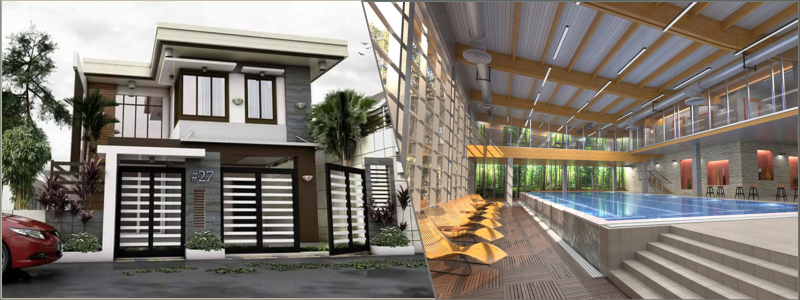
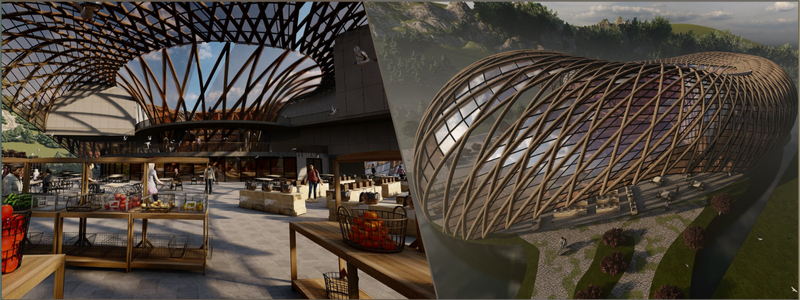
3D design of an amphitheatre and mall

Time is money—And CAD firms save you both

A full-time in-house drafter might sound sensible to hire—until projects fall behind deadline and project scopes are adjusted.

One of the greatest benefits of contracting with a CAD design company is flexibility. You need a group to work on several revisions in a hurry? No problem. Do you need to ramp up for a large development phase and then back down again? Not an issue. You have talented professionals without the commitment to payroll.

Most businesses now outsource CAD drafting for exactly this reason. A specialized drafting company can finish the same project in half the time—without compromising quality. They have tried-and-true workflows, seasoned drafters, and state-of-the-art software at their disposal, and they’re designed for speed.

You don’t need to train anyone. You don’t need to install software. You simply give them your idea, and they produce.

Plus, most reputable CAD companies work around the clock with global teams—so while you sleep, your drawings get done. Talk about a time zone advantage.

Access to top talent and high-end tools (Without the overhead)

CAD design software isn’t cheap. AutoCAD, Revit, SolidWorks, Inventor, MicroStation—the list goes on. Not to mention the powerful workstations required to run them effectively.

When you hire a drafting service company, you’re not simply paying someone to click a mouse. You’re accessing sophisticated software, expert operators, and maybe years of expertise in many different fields—architecture, civil engineering, MEP, aerospace, furniture design services, manufacturing, and many more.

And they don’t simply know how to operate software—they know which tool is best for your particular project. That makes all the difference.

Even better, you have the advantage of a team approach. CAD companies will typically have several professionals work on a project—drafters, design engineers, quality checkers—all coordinated together. This multi-layered system guarantees that each drawing is reviewed and matched to your specifications.

So, rather than have a single generalist who is competent in some areas, you have an entire group of specialists.

RELATED: Wearable product development: 6 key challenges for product development companies

Ability to scale for projects of any size or complexity

Startups, builders, product designers, architects—whether your business or project is large or small, a CAD drafting company can grow with you.

Need a single part drawing done? They can do it. Need a whole hospital floor plan BIM modeled? They can handle that.

What’s more astonishing is that these firms integrate seamlessly with your workflow. Want to collaborate with your engineers in real-time? Most 3D rendering firms are compatible with cloud-based CAD programs and can implement shared drives or project dashboards. Want PDF markups translated into fully editable DWGs? No issues.

And when the situation becomes critical—as it tends to in manufacturing and construction—you’ll value that these companies can call in additional personnel, get jobs done quickly, and remain committed to quality. You can scale up or down without having to hire, fire, or reorganize staff.

Cost savings that extend beyond labor

Let’s analyze a popular myth: hiring someone externally is more expensive. Reality? Hiring a CAD firm generally costs much less than maintaining an internal staff, particularly in the long term.

Here’s why:

  • You don’t pay for software licenses and hardware upgrades.
  • You don’t pay for benefits, training, sick days, or startup time.
  • You pay only for completed work—nothing more.
  • You remove the cost of rework due to inexperience or hurried drawings.

Most CAD companies also offer package pricing or long-term contract discounts. With either hourly or flat-rate billing, predictability is useful for budgeting. And because you’re working with experts who do it right the first time, you eliminate the expense of delays for your construction or manufacturing company.

The outcome? A slimmer project pipeline, improved financial control, and fewer unexpected expenses in the future.

RELATED: How to Improve product development for your company with engineering firms & design consultants

Future-proofing through digital transformation

You may assume that CAD drafting is all about drawings. But more and more, it’s about data, collaboration, and intelligent documentation.

Forward-thinking companies today offer such services as:

  • 3D modeling and visualization, so stakeholders can “see” the completed project prior to its start.
  • As-built documentation for facility management and retrofitting.
  • Scan-to-CAD conversion from 3D laser scans of existing structures.
  • BIM (Building Information Modeling) services well beyond lines and layers—ones that mimic actual in-place performance.
  • File standardization and cloud documentation so you can have a virtual library of editable assets to reuse for successive projects.

Employing a CAD company places you on the road to digital integration. Your blueprints are living documents, simply updated and easily shared. And when your business or your team grows, you won’t be saddled with a paper-filled drawer or a stack of illegible files.

This is where CAD drafting services begin to feel like a part of your digital strategy, not just your drawing staff.

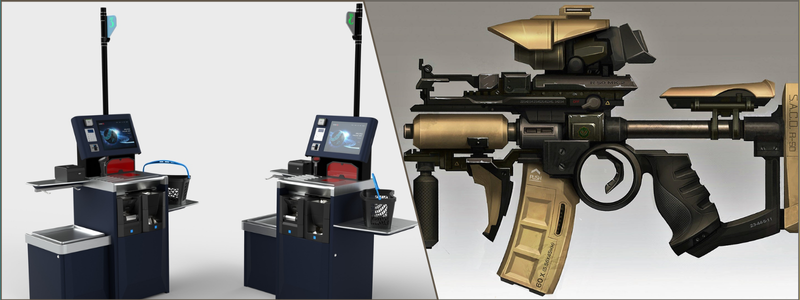
Self-service counter and AR 15 for an in-game weapon

RELATED: The impact of photorealistic rendering on design services: 10 key benefits for firms & 3D freelancers

When should you actually hire a CAD drafting firm?

You may be wondering: “Do I really need to hire a CAD drafting company? Is that only for huge corporations or massive construction projects?” Not so.

In fact, CAD drafting experts are not only for the skyscraper builders or multinational product manufacturers. Small companies, solo architects, and local contractors can benefit—and frequently in ways that save time and money.

Consider this: you’re a startup entrepreneur with an excellent product concept, perhaps you’ve even doodled it on a napkin. That’s a great beginning, but it won’t take you to production. A CAD drafting company can translate those rough drawings into accurate, professional technical drawings that manufacturers can work with.

Or suppose you’re a contractor who does kitchen remodels or home additions. You may be flying along with your hand-drawn drawings, but when permit plans need to be submitted or you need to work with structural engineers, the amateur hour drawings may not be adequate. That’s where CAD experts enter the picture.

So how do you know that it’s the time to hire one? Here are some obvious signs:

  • You’ve got the vision but need official construction or permit-ready drawings.
  • You’re tired of juggling between engineers, contractors, and vendors without clear communication—CAD files help everyone stay on the same page.
  • You’re spending more time editing drawings than actually designing or building. That’s not efficient.
  • You’re ready to move to 3D modeling or BIM but have no idea where to begin.
  • Your team’s CAD standards are in disarray, and you need to get everyone on the same page.

If any of these resonate, you’re likely ready to get some professional drafting assistance. It’s not about relinquishing control—it’s about equipping yourself with the tools and support you need to work smarter, not harder.

Whether you’re building a prototype or breaking ground on a house, having clean, consistent, and accurate drawings isn’t a luxury. It’s a necessity.

Need help turning ideas into action? That’s exactly what CAD drafting firms are built for.

A final word: Your vision deserves better than “good enough”

Your vision counts. Whether you’re building a multi-level business building, designing ergonomic office equipment, or creating a specialty component for a drone for your engineering company, you should have drawings that honor your vision.

It’s not about outsourcing for the sake of outsourcing when you hire a CAD drafting firm. It’s about getting the right tools, teams, and strategies to create work that’s more precise, more efficient, and more flexible to your changing needs.

The bottom line? When your business is at stake, you require more than a minimum set of plans. You require the assurance that each line, each angle, and each annotation stands in favor of your success.

So why compromise on guesswork or mediocrity when you can have excellence—at your beck and call?

Considering hiring a CAD drafting firm or design services business? Ask yourself this: What would be different if your next project debuted with accurate documentation, expert knowledge, and scalable resources at your fingertips?

That’s not a drafting improvement—it’s a strategic jump ahead. Get in touch with Cad Crowd and get your quote for free!

author avatar

MacKenzie Brown is the founder and CEO of Cad Crowd. With over 18 years of experience in launching and scaling platforms specializing in CAD services, product design, manufacturing, hardware, and software development, MacKenzie is a recognized authority in the engineering industry. Under his leadership, Cad Crowd serves esteemed clients like NASA, JPL, the U.S. Navy, and Fortune 500 companies, empowering innovators with access to high-quality design and engineering talent.

Connect with me: LinkedInXCad Crowd

Why Architects Outsource 3D Modeling Services and the Benefits for Your Design Company


Outsourcing 3D modeling design services is at the center of an evolving and technology-driven architectural industry with a lot of niches and specializations that could be equally as important as any, depending on the project.

It changed the way we interact and plan for spaces and objects, their hierarchy, and function within a structure – but even more, by outsourcing these services, we allow ourselves to tap many of these niches and specializations without breaking the bank. Architects and design companies realized this long ago: leveraging external expertise to enhance or execute their ideas is a boon that can elevate the design and streamline the process.

Cad Crowd has worked for over a decade to deliver the best outsourced 3D modeling talent to reputable architectural, design, and engineering companies. Here’s why you should outsource your 3D modeling services for your project.


🚀 Table of contents


3D modeling and its importance in architecture

Truly an indispensable tool in modern architecture, 3D modeling allows architects to create many designs and projects with unparalleled detail, providing accurate representations of their designs to facilitate better visualization, communication, and decision-making – there’s nothing that offers the same versatility to be certain. Traditional 2D drawings don’t even compare; 3d models provide a more immersive experience, enabling clients, stakeholders, and construction teams to understand the project’s scope and intricacies more clearly while giving you and your clients a very easy way to modify, replace, and re-do designs quickly. This is hard to do without something concrete or tangible to work with.

Primarily through the rise of Building Information Modeling services, virtual reality, and augmented reality, there is a noted increase in demand for high-quality 3D models. These newer technologies rely heavily on accurate 3d modeling; this puts pressure on architects and design firms to be able to produce top-tier 3D models and to be creative in their approach, not just in terms of the design.

RELATED: How to create captivating 3D commercial rendering architecture designs for companies

jet engine enclosure examples

Why architects outsource 3D modeling services

Outsourcing 3D modeling services is attractive for architects and design companies because it offers many compelling advantages. Not to mention, these advantages can now be considered as standards, especially in specific niches wherein an expertise or specialization can make or break the project.

  • Access to specialized expertise

The possibilities are endless when you’re able to tap into pools of specialized expertise with extensive experience in many aspects of 3D modeling and design. These professionals are often experts in the latest software, tools, and techniques, ensuring that their models are of the highest quality. More notable, though, is that these experts tend to specialize areas in design, logistics, or even rare applications that are usually not immediately available without training or preparation, even in larger design firms.

If you choose to outsource certain tasks and 3D modeling services, you’ll not only save in terms of costs but you’ll be able to leverage specialized knowledge without having to waste a lot of time and resources training someone or investing in expensive software that you might never use again.

One of the most significant benefits of outsourcing 3D modeling services is cost efficiency. Maintaining an in-house team of 3D modelers can be expensive, especially when you factor in training, benefits, and software costs. So unless your company or team is specifically tailored to create 3D models of any variety, outsourcing is a more flexible and cost-effective solution that ensures you only pay for the services when you need them. It also eliminates many overhead costs associated with maintaining a team, such as office space.

  • Scalability and flexibility

The best thing about outsourcing 3D modeling services is the high degree of flexibility and scalability. You only have to hire for what you need, and most of the time, the most skilled professionals are able to work on many project demands in high quality. Design companies can easily scale up or down their 3D modeling needs based on project demands. Whether working on a small residential project or a large commercial development, outsourcing allows companies to adjust their resources accordingly. This flexibility is particularly beneficial for companies that experience fluctuations in project volume or have seasonal peaks in demand.

The architectural outsourcing industry has been a saving grace for many companies facing many types of challenges. External 3D modeling experts’ teams often work around the clock, leveraging global time zones to deliver projects faster. Additionally, outsourcing allows architects to focus on other critical aspects of the design process, such as client communication, project management, and creative development, while experts handle the 3D modeling work.

RELATED: Proven advantages of contracting architectural CGI services for real estate marketing firms

  • Access to the latest technology

Naturally, you would want you and your team to be on top of a rapidly evolving field – often updating and developing newer and newer tools and software. It’s inevitable that keeping up with these advancements would be challenging and potentially costly for you. Fortunately, there isn’t a need to be on top of everything. In fact, it’s more prudent to hire external experts when you are faced with bespoke projects.

Outsourcing 3D modeling services gives you instant access to their skill sets and expertise without breaking the bank. The more important thing to note here is the reliability of their work as their years of experience working with peculiar software, tools, or techniques that would usually take years for anyone to learn.

  • Improved focus on core competencies

Outsourcing 3D modeling services allows design companies to focus on their core competencies, such as architectural design, project management, and client relations. By delegating the time-consuming task of 3D modeling to external experts, architects can concentrate on what they do best, ultimately leading to higher-quality designs and more satisfied clients.

Outsourcing can help mitigate the risks associated with in-house 3D modeling. External providers often have established quality control processes, ensuring that the models they deliver meet the highest standards. Additionally, outsourcing reduces the risk of project delays caused by in-house resource constraints, such as employee turnover or equipment failures. By partnering with a reliable 3D modeling service provider, 3d rendering design companies can ensure that their projects stay on track and meet client expectations.

  • Access to a global talent pool

Outsourcing 3D modeling services opens the door to a global talent pool, allowing architects to collaborate with professionals from different parts of the world. This diversity of talent can bring fresh perspectives and innovative ideas to architectural projects, resulting in more creative and unique designs. Additionally, outsourcing to international providers can be cost-effective, as labor costs may be lower in certain regions.

3d modeling of a rolex and engine

RELATED: Why 3D rendering and retail store design services for commercial spaces are important

What are the benefits of outsourcing 3D modeling services for design companies?

Outsourcing 3D modeling services offers numerous benefits for design companies, enhancing their overall efficiency, creativity, and profitability. Here’s how outsourcing can benefit your design company:

Enhanced design quality

By outsourcing 3D modeling to specialized experts, design companies can ensure that their projects are of the highest quality. High-quality 3D models enable architects to visualize their designs better, identify potential issues early in the process, and make informed decisions. This leads to more accurate and refined designs, ultimately resulting in higher client satisfaction.

Increased productivity

Outsourcing 3D modeling services allows design companies to increase productivity by freeing up internal resources. Architectural firms and designers can focus on their core tasks, such as conceptualizing and developing designs, while external experts handle the technical aspects of 3D modeling. This division of labor leads to more efficient project workflows and faster completion times.

Cost savings

Outsourcing 3D modeling services can lead to significant cost savings for design companies. By eliminating the need to hire and maintain an in-house team, companies can reduce their overhead costs and allocate their budget more efficiently. Additionally, outsourcing allows companies to pay for services on a project-by-project basis, ensuring that they only incur costs when necessary.

Improved client communication

High-quality 3D models are invaluable tools for client communication. They provide clients with a clear and realistic representation of the final design, making it easier for them to understand the project’s scope and make informed decisions. Outsourcing 3D modeling services ensures that design companies have access to the best tools and expertise, allowing them to present their ideas more effectively and build stronger client relationships.

Faster project delivery

Outsourcing 3D modeling services can significantly reduce project turnaround times. External providers often work on tight schedules and have the resources to deliver projects quickly without compromising quality. This speed can give design companies a competitive edge, allowing them to take on more projects and meet client deadlines more effectively.

RELATED: What are the main types of 3D modeling, and how do companies use them?

Access to diverse skills and perspectives

Outsourcing opens the door to a diverse range of skills and perspectives that may not be available in-house. External 3D modeling providers often have experience working on various projects across different industries, bringing unique insights and approaches to architectural design firms. This diversity can lead to more innovative and creative solutions, setting your design company apart from the competition.

Scalability for large projects

Outsourcing provides the scalability needed to handle large and complex projects. Design companies can quickly ramp up their 3D modeling capabilities by partnering with external providers, ensuring they have the resources to tackle even the most demanding projects. This scalability allows companies to take on more significant projects without the burden of expanding their in-house teams.

Reduced risk of errors

Outsourcing 3D modeling services to experienced professionals reduces the risk of errors in the modeling process. External providers often have robust quality control measures to ensure that the models they deliver are accurate and error-free. This level of precision is crucial in architecture, where even minor mistakes can lead to costly delays and revisions.

Increased innovation

By outsourcing 3D modeling services, design and drafting companies can tap into cutting-edge technologies and innovative techniques that may not be readily available in-house. External providers often stay updated with the latest advancements in 3D modeling, offering access to new tools and methods that can enhance the design process. This access to innovation can give design companies a competitive advantage and help them stay ahead of industry trends.

Focus on client satisfaction

Outsourcing 3D modeling services allows design companies to prioritize client satisfaction by delivering high-quality, accurate, and visually compelling models. When clients can see a realistic representation of their project, they are more likely to feel confident in the design and make informed decisions. This level of client engagement can lead to stronger relationships and repeat business.

Outsourcing 3D modeling services offers many benefits for architects and design companies. From cost savings and increased productivity to access to specialized expertise and the latest technology, outsourcing is a strategic choice that can enhance the quality of your projects and drive business growth. By partnering with a reliable 3D modeling service provider, your design company can stay competitive, deliver exceptional results, and exceed client expectations.

How Cad Crowd can help

Outsourcing 3D modeling services can transform how you approach architectural design, offering you the tools and expertise needed to bring your vision to life. If you’re ready to experience the benefits of outsourcing, Cad Crowd is here to help. We have over 10 years of experience assisting companies to find a team of skilled 3D modelers dedicated to delivering high-quality, accurate models tailored to your unique needs. Contact us today to request a quote and take the first step toward elevating your design projects.

author avatar

MacKenzie Brown is the founder and CEO of Cad Crowd. With over 18 years of experience in launching and scaling platforms specializing in CAD services, product design, manufacturing, hardware, and software development, MacKenzie is a recognized authority in the engineering industry. Under his leadership, Cad Crowd serves esteemed clients like NASA, JPL, the U.S. Navy, and Fortune 500 companies, empowering innovators with access to high-quality design and engineering talent.

Connect with me: LinkedInXCad Crowd

How 3D Product Design, Rendering, and Animation Services Can Benefit Companies and Increase Sales


In today’s fast-paced and more digital world, businesses are always looking for innovative approaches to differentiating themselves from the competition and reaching their target audience. One of the most capable tools available to accomplish this is 3D product design, rendering, and animation. These technologies enable businesses to create visual representations of products, simulate functionality, and bring them to life in ways that other forms of photography and design cannot.

From product development enhancement to improved marketing strategy, 3D rendering and animation services have had a significant hand in boosting sales and the engagement of customers. From this perspective, it would be important to explore how 3D product design and rendering and animation services can benefit any company involved in almost any form of business across different forms of industries for more sales.


🚀 Table of contents


The power of 3D product design and rendering

In the modern consumer experience, product design and rendering serve as the core. Companies can now produce high-definition digital models of products using 3D design, allowing for easy changes and improvement during the development process. This accuracy and flexibility in development accelerates not only the creation of prototyped products but also the final designs shared with stakeholders, partners, or potential clients.

RELATED: How much do prototypes cost to make in 2025? Pricing insights from proven CAD product design firms

Cost-effective prototyping

Physical models for almost every iteration of a product are sometimes tedious and expensive to produce. 3D rendering of products allows a company to see the full details of a product before production, which thereby reduces the reliance on physical models. This low-cost approach not only shortens the development cycle but also enables companies to manage their resources in a more efficient way.

Faster design iterations

3D rendering is an iterative process. Thus, it allows business people to carry out the design of a new product and to see what modifications will be forthcoming from those changes. Iterations are usually quicker and cheaper than the traditional way of prototyping with physical mock-ups or hand-drawn sketches. This makes iterative 3D design quite handy for product development expert teams, whereby they can refine ideas without the costly and time-consuming protocols associated with traditional prototyping.

Product visualization

A key benefit of 3D product design and rendering services is the ability to visualize the product before it has been created into a physical state. For companies, therefore, it offers an opportunity to test concepts, change colors, textures, and materials, and even see how a product would look in a real environment without costly investments in actual prototypes. With high-quality 3D rendering, companies can represent their products to potential customers in photorealistic detail, thus helping them envision how the product will fit into their lives or business operations.

3D furniture product design and render

Role of 3D animation in product marketing

While 3D product rendering focuses on the creation of static images, 3D animation takes the whole process a level higher with its movement and interactivity. The world of marketing is rapidly finding product animation as an essential tool for engaging customers and showcasing products in action. Whether it is related to a product’s functionality, features, or just an immersive brand experience, 3D product animation has the power to convey complex ideas in an easy-to-understand and visually engaging manner.

Interactive presentations

Static product images through conventional photography have few but static ways of relating the vastness of the features. This is contrary to 3D animation, where products come alive in an active manner and are shown from every angle, with key functions demonstrated. Animated product videos allow customers to interact with a product virtually by showing how a product can move, change, or act. This is particularly useful for products that cannot be described with static images alone, like intricate machinery, gadgets associated with the world of technology, or new consumer product companies.

For example, an animated product video could explain the inner machinery of an industrial machine or illustrate step by-step how a consumer electronic device was assembled. These animations offer a clear, visually rich way to communicate value and functionality that may prove much more compelling than some traditional images or written descriptions.

RELATED: How do companies benefit from excellent 3D modeling services for engineering designs?

Greater customer understanding

The visual nature of 3D animation services makes it an ideal tool in simplifying complex concepts of a product. It shows customers how a product actually works through easily digestible visual elements made possible by animating the breaking down of a product’s features and functionalities. This is especially relevant to sectors such as technology, manufacturing, and engineering, where products often come with many complex features that confuse potential buyers.

As a matter of fact, research has demonstrated that consumers are more likely to buy after seeing an animated demonstration because it facilitates better understanding and increases confidence in the quality and usability of the product. When presenting products in motion, 3D animation eliminates any ambiguity, allowing the customer to visualise how the product will actually work in their daily life.

Product customisation and interactivity

Interactivity in a product animation adds another dimension of engagement. For example, an animated 3D model of a car or furniture piece may allow users to customize the product by changing colors and materials or even viewing it from different angles. Such an interactive experience reproduces what kind of personalization customers are seeking in today’s marketplace – easier for them to vividly imagine owning the product. Customization also creates a sense of intimacy with the product and, consequently, a higher possibility of actually making a purchase.

Benefits to different fields

There are various ways through which different fields can benefit from the use of 3D product designing, rendering, and animation. These are particularly useful for the development, marketing, and sales processes.

Consumer electronics and technology

In the case of tech companies, 3D product rendering and modeling services and animation have become a good way to show people how gadgets and devices work and what they are able to do. Animated videos can better demonstrate how features work in a product, for example, how a smartphone camera works, the quality of the computer’s gaming, or how easy it is to use a wearable device. Such visual demonstrations are particularly effective in marketing tech products and converting leads into sales.

Furniture and home goods

For companies in the furniture or home goods sector, 3D rendering and animation is an important marketing tools when it comes to showing products to customers. Furniture designs can be visualized in different rooms under various lighting conditions and color schemes. Consumers will get a good view of how the product will look in their homes and also have an option to “place” furniture inside their own space using the use of augmented reality (AR). This type of engagement empowers customers to be more confident about the decisions they are making on their purchases.

RELATED: How can companies use 3D Rrenders to showcase custom beautiful furniture designs?

Industrial sector

In mass manufacturing in the automotive or aerospace industries, where products are large, complex, and expensive to prototype, 3D animation is ideal for demonstrating product performance under various conditions, testing functionality, and demonstrating key features. For instance, in industrial equipment, animations can illustrate how different parts of the machine work, how they interact, and then, finally, how the product will perform in real environments. This could help engineering firms identify any flaws before the beginning of production, making the process more time- and cost-effective.

3D product of a jewelry and gourd example

Increasing sales and enhancing customer experience

The most compelling reason companies opt for 3D product design, rendering, and animation is to increase sales. Here is how these technologies can directly impact a company’s bottom line:

More effective marketing campaigns

Now, commercial rendering experts can create material that can be put across marketing channels, running from the website to social media, print ads, and email marketing. More so, product videos can be published on social media, where visual content does better than text, thereby assisting businesses in enlarging the customer circle more rapidly. In this case, businesses can create different marketing assets by using one product model, taking full advantage of the ROI.

Improved customer retention

3D product design and animation also enhance firms’ ability to secure enduring relationships with customers. Since the experience of viewing a 3D model is highly engaging and interactive, companies are able to make an enduring impression. Customers who feel familiar with a product will likely buy it again or pass it along, so sales and brand loyalty increase.

Improved conversion rates

The chances of conversion become high when a business provides its customers with detailed and interesting visual content. If a customer has a clear and realistic impression of the product or service, then he would buy it. Now, 3D animations and renders offer customers an immersive, interesting experience, making them believe in the product, hence increasing the chances of high conversion rates.

Wrap up

Companies that use 3D product design, rendering, and animation services have a decisive advantage in today’s competitive marketplace. It is not only increased development and customization opportunities but also the ability to interact with customers in innovative ways.

Companies can make customers better understand their products, increase sales, and increase brand loyalty by offering transparent and well-detailed visualizations and interactive demonstrations.

How Cad Crowd can help

3D rendering and animation have become a necessity for contemporary business corporations that are seeking to cope with the dynamically changing market. If you’re having a hard time increasing sales, now might be the perfect time to take advantage of this tool and exploit its potential. Cad Crowd is here to help. Request a quote today.

author avatar

MacKenzie Brown is the founder and CEO of Cad Crowd. With over 18 years of experience in launching and scaling platforms specializing in CAD services, product design, manufacturing, hardware, and software development, MacKenzie is a recognized authority in the engineering industry. Under his leadership, Cad Crowd serves esteemed clients like NASA, JPL, the U.S. Navy, and Fortune 500 companies, empowering innovators with access to high-quality design and engineering talent.

Connect with me: LinkedInXCad Crowd

5 Powerful Tips for Sculpting with 3D Modeling Freelancers and Services Companies


As digital design rapidly improves, 3D modeling freelancers and sculpting services has emerged as a mandatory tool for enterprises in industries such as gaming and movies, product design, and architecture. As a new enterprise wanting to develop a novel product or an existing enterprise wanting to improve more aesthetically pleasing narration, partnering with 3D model freelancers and service firms can be a turning point in your projects.

Cad Crowd is an industry leader providing a talent pool of over 94,000 3D modeling freelancers and sculpting-specialized service firms. Following are five powerful tips to optimize this collaboration and make your 3D sculpting process efficient and effective.

What is 3D sculpting?

3D sculpting is a dynamic process where three-dimensional models are built with the help of complex digital software. In contrast to sculpting with clay or stone, which was done physically in the past, artists and engineers work with virtual clay in a virtual world, using fine-tuned tweaking, high-level texturing, and intricate structural shapes. 

RELATED: 3D Modeling Techniques Used in Video Games

Virtual manipulation allows for the creation of models from simple geometric shapes to very intricate anatomical shapes, where all surfaces of the model are tweaked to the highest level of detail and accuracy. Fundamentally, 3D sculpting services is based on high-end software that mimics actual sculpting techniques. The software enables users to push, pull, smooth, pinch, and otherwise mold the virtual material to the shape required. 

The diversity of digital sculpting provides undo function, symmetry tools, and layering capability, which enhance effectiveness and creativity immensely. This degree of control is critical in creating very detailed models that are highly predictive, and 3D sculpting has become an essential technique that is used in animation, gaming, movies, architecture, and manufacturing. With the improvement of technology, 3D sculpting is now a part of contemporary design processes. Sculpting software in animation and game development is used to produce real-world characters and engaging worlds. 

In medicine, it is applied in the making of prosthetics and anatomical models for learning. Even in product design and manufacturing, 3D sculpting enables fast prototyping, and designers can quickly iterate and translate their innovative ideas into a real-world solution. One of the best things about 3D sculpting is that it hand-in-hand with 3D printing. Once a model is sculpted digitally, the model needs to be prepared for production. This means taking the model and making it ready to be read by a 3D printer, with sometimes further processing steps like hollowing, support structures, and scaling. 

RELATED: 3D Scan Cleanup – Top Reasons Your Company or Firm Should Use This Service

The 3D printer then prints the digital file and builds the object layer upon layer with media such as plastic, resin, or metal. The precision of the printed object is largely based on the precision of the digital one, so highly accurate sculpting and calibration must be done.

For starters, free materials are available on the internet. Websites such as YouTube, learning sites, and forums provide tutorials for both experienced and new users. These vary from simple navigation using sculpting software to sophisticated techniques for modeling super-realistic models. Having access to such information makes 3D sculpting an art form that is democratized, meaning that anyone who has the will and drive can learn.

3d modeling services

Test prints enable artists to assess the structural integrity and visual appeal of their models in physical form. Information from test prints is used to determine areas that require improvement, including thickness adjustment, surface detail enhancement, or design modification. Through repetition of test prints, 3D sculptors provide work of professional standard, and the end product will be both aesthetically pleasing and functional.

RELATED: 3D Character Modeling Guide: Creation Process, Tips & Insights for Companies 

Finally, 3D sculpting is no longer computer art; it is an inherent process that fills the void between computer design and tangible making. Due to its adaptability, accuracy, and usability in 3D printing, it has evolved to become a critical tool across industries. As technology advances, 3D sculpting knows no bounds, leading to new ways of imagination and innovation.

Now that you know what 3D sculpting is  all about, check out the tips that you need to keep in mind:

1. Define clear objectives and detailed project requirements

The core of any successful 3D sculpting work is about having well-defined goals. Prior to contacting freelancers or service agencies, determine what you wish to accomplish. That entails defining:

Project Scope: Whether you need a high-poly model for movie making or a low-poly optimized model for use in real-time scenarios such as VR or game development.

Design references: Add sketches, mood boards, or ref images so your idea is relayed appropriately.

Technical specifications: Specify polygon limits, texture resolutions, file types, and software of choice.

Deadlines and milestones: Establish practical project schedules with obvious checkpoints to gauge against.

Open communication eliminates miscommunications, minimizes revisions to a bare minimum, and delivers the final product to your expectations.

RELATED: All you need to know about 3D Character Animation and Modeling Services for Companies, Cost Rates, and Pricing

2. Select the proper talent for the task by area of expertise and style match

All 3D modelers have different areas of proficiency in digital sculpting. Some specialize in organic modeling including as characters and creatures, while others do hard-surface modeling of machinery parts and buildings. While hiring freelancers or service providers:

Evaluate portfolios: Look at previous work to gauge their capability and style fit with your work.

Verify Technical Skills: Ensure they are skilled in the software applicable to the project i.e. ZBrush, Blender, Maya, or 3ds Max.

Measure industry skills: Industry knowledge is a valuable asset. For example, a modeler with experience in game asset modeling will be aware of optimization methods that are essential for real-time rendering.

Obtain referrals and endorsements: Customer referrals will tell you about punctuality, communication, and professionalism.

Spending time on screening talent means you are collaborating with 3D design professionals who have the skill set to turn your concept into amazing 3D sculptures.

3d character modeling firm

3. Utilize best-practise sculpting methods and equipment

3D sculpting is an evolving field, with new tools and methods to achieve maximum efficiency and creativity. To enjoy maximum benefit out of your collaboration:

Be current with the latest software updates: Promote the use of newer versions of software, which also have the advantage of performance improvements in addition to new features.

Embrace procedural workflows: Procedural workflow-oriented software like Substance Painter and Houdini provides non-destructive editing, which assists in applying simple changes to models without the necessity of reconstructing them from scratch.

Apply high-resolution texturing: Lightweight textures can provide additional realism to a model, particularly in rendering at near distance.

Use retopology methods: In projects focused on animation, ensure correct topology is maintained so smooth rigging and deformation can occur.

Discuss these techniques with your 3D artists to maximize creative potential and output.

RELATED: 3D Character Modeling and Design Process: Top Tips for Your Company or Business

4. Encourage collaboration through constant feedback loops

Success depends on productive collaboration while giving world-class outputs for 3D sculpting jobs. Being open with ideas and supporting communication-driven workflow with ongoing feedback minimizes errors. Watch out for these habits on your team:

Plan regular meetings: Bi-weekly or weekly catch-ups or reports keep the project schedule and provide room for readjustments at the right time.

Employ visual feedback tools: Providing feedback through screenshots with redlined comments or sharing projects on a common site provides more accurate feedback than describing verbally only.

Foster iterative reviews: Divide the project into stages—blocking, detailing, texturing—and review one stage before advancing to the next.

Foster a culture of feedback: Feedback should be clear, actionable, and aimed at the work, not the person.

A productive process of feedback makes common understanding simpler, decreases revisions, and improves the overall quality of the 3D models.

5. Make efficiency a priority without sacrificing quality

Swapping speed and quality is a typical dilemma in the case of 3D sculpting work. To achieve both:

Prioritize task: Identify priority areas that require great detail and apply resources to fit.

Optimize utilization of resources: Utilize available assets wherever possible, and leverage modular design techniques to save time.

Streamline the pipeline: Incorporate tools that allow easy transitioning from modeling to applying texture and rendering stages.

Implement time-saving approaches: Techniques like kitbashing (reusing existing model parts available) can effectively speed up the modeling.

RELATED: 5 3D Modeling Techniques for Freelance CAD Designers

Efficiency is not about shortcut methods; it is all about wise utilization of resources and streamlining the processes to achieve world-class outcomes within a given time frame.

The Bottom line

Working with freelancers and service providers of 3D modeling can redefine the limits of creativity and technical perfection for your projects. 3D sculpting is no easy stuff, and it is something best left and entrusted to the hands of actual skilled professionals who know what to do and how to do it. 

With well-defined objectives, choosing the optimum skill, using the optimal tools, developing team-based workflows, and prioritizing efficiency, you can ensure your 3D sculpting projects are not just meeting but surpassing expectations. 

Cad Crowd is here to help

Follow the above tips to transform your concepts into stunning and technically flawless 3D models that will promise success in any field. Yet, if you are after way better results and your goal is to be the best in your field, don’t hesitate to contact Cad Crowd to request a quote for our services and learn further details on our packages.

author avatar

MacKenzie Brown is the founder and CEO of Cad Crowd. With over 18 years of experience in launching and scaling platforms specializing in CAD services, product design, manufacturing, hardware, and software development, MacKenzie is a recognized authority in the engineering industry. Under his leadership, Cad Crowd serves esteemed clients like NASA, JPL, the U.S. Navy, and Fortune 500 companies, empowering innovators with access to high-quality design and engineering talent.

Connect with me: LinkedInXCad Crowd

A Guide to 3D Environment Design & Concepts with Freelance 3D Modeling Companies


The ever-growing demand for super-accurate 3D environments in both gaming and cinema, architectural and virtual reality has assumed a rather imposing proportion. 3D environment design services is the expression of art imbued with high technicality with the purpose of creating a desirable virtual world. Let’s delve deeper into the art and science of designing 3D environments and their core constituent elements, procedures, and deployments.


🚀 Table of contents


The building blocks of 3D environments

Concepting: The blueprint of the virtual world

Every great 3D environment begins with a good idea. Concepting is close collaboration between designers and creative teams to sketch out the visual style, narrative context, and functionality requirements of the environment. This stage may include mood boards, conceptual sketches, and detailed storyboards so that all parties share a clear vision.

3d environment rendering examples

Modeling: shaping the landscape

3D modeling services use modeling software to create models that fill up the space. These models can be as big as skyscrapers and large landscapes or as small as props. Some of the key techniques used are:

  • Polygonal modeling: This is the most popular technique, which involves creating surfaces using interconnected polygons.
  • Sculpting: Ideal for organic shapes like terrain and foliage, sculpting provides great detail.
  • Procedural modeling: Algorithmically produces complex structures like cities or forests very efficiently.

Texturing and material creation

Textures are the feature of the model, giving color and pattern to the models. The artist uses UV mapping to wrap a 2D texture over a 3D object, and it has to look seamless. Advanced shaders and materials provide real-world properties like reflection, transparency, and surface roughness.

Textures are the feature of the model, giving color and pattern to the models. The artist uses UV mapping to wrap a 2D texture over a 3D object, and it has to look seamless. Advanced shaders and materials provide real-world properties like reflection, transparency, and surface roughness.

Lighting: setting the mood

Lighting design services can make and break the atmosphere of a 3D environment. It could be a warm sunset or simply a cold industrial glow from a collection of fluorescents, as lighting leads the eye and strengthens the narrative that takes place within that 3D space. More realism is added using global illumination, dynamic lighting, and volumetric effects.

Optimization: balance between quality and performance

The environments of interactive applications such as video games are optimized, which allows running smooth and smooth graphics on devices. Techniques applied in balancing the performance and visual fidelity of such designs include LOD, efficient asset management, and optimized shaders.

RELATED: 3D exterior rendering services for companies: 10 important factors that affect pricing

Tools and technologies shaping the industry

Much of the evolution of 3D environment design is because of new developments in software and hardware that occur all the time. Powerful tools have become part of the art process. Software like Blender, Autodesk Maya, and ZBrush can model and sculpt details with much complexity. Texturing tools, which are specialized to create convincing and photorealistic textures, will help designers catch the life-likeness of realistic 3D models such as Adobe Substance Painter and Quixel Mixer.

Top-of-the-line game engines, namely Unreal Engine and Unity, are able to close the gap between static design and immersive experiences with real-time rendering. Such technology can be applied in fields such as architecture, automotive design, and virtual reality.

Virtual production tools for the film are game changers. Techniques such as combining LED walls and real-time rendering engines allow dynamic environments to be created instantly without the need for traditional green screens and post-heavy workflows.

On the hardware side of things, there is much improvement in the quality and realism of renders with ray tracing-capable GPUs, which allows for simulations of light and shadow that really approach real physics. VR headsets provide designers as well as end-users with highly immersive ways to engage with 3D environments that also significantly enhance the creative process and user experience.

These tools and technologies collectively push the boundaries of what’s possible through 3D environment design professionals, shaping the future of industries ranging from entertainment to engineering.

RELATED: The role and benefits of CGI rendering in architecture: Why service providers and freelancers rely on it

Applications across industries

The use of 3D environments has dramatically revolutionized many industries to provide innovative solutions and enhance the user experience in unique ways.

Gaming: immersive worlds

In video games, 3D worlds are the basis for an immersive experience. Players adventure through imaginative places or hyper-realistic environments. A very good example of this is in open-world video games, where the player is given expansive, detailed landscapes, giving way to both exploration and interaction. These environments blend gameplay, storytelling, and visual art so that the final experience is deeply immersive and keeps a player’s attention.

Film and animation: storytelling in 3D

The film and animation industries use 3D environments to bring impossible or cost-prohibitive scenes to life. Filmmakers can build an entire world – a bustling, futuristic city or a serene fantasy landscape – using the help of CGI. Digital environments enhance storytelling and allow live-action footage to be seamlessly integrated with fantastical elements, giving cinematic experiences an eye-catching appearance through photorealistic rendering services.

Architecture and real estate: visualization of spaces

Architects and real estate individuals use 3D environment design to create highly photorealistic models of projects when they are only in the initial stages of completion. These 3D models can be explored interactively by those stakeholders to deeply understand spatial relationships and the aesthetics involved. It promotes higher collaboration and information-based decisions at the beginning stage of the process.

Virtual reality and simulation: experience the unreal

Virtual reality is highly dependent on 3D environments to immerse users in alternative realities. From realistic professional training simulations to virtual tourism experiences, 3D VR environments unlock limitless possibilities that integrate entertainment with practical applications for different sectors.

RELATED: 9 ways you can use 3D rendering for marketing your company’s products

3d environment plan example

Trends that will shape the future of 3D environment design

The field of 3D environment design is highly dynamic because of emerging technologies and changing industry needs. Some of the key trends shaping its future are photogrammetry, AI-powered tools, metaverse development, and sustainability in virtual design.

Photogrammetry and scanning

3D model services feature photogrammetry as the creation of models from real-world photographs. It’s the revolution of design with a reality that’s never been possible before. It captures textures and geometry directly from reality, bridging the gap between the physical and digital worlds. It is highly useful in gaming, film production, and architectural visualization, where lifelike accuracy is needed.

AI-powered design tools

Artificial intelligence is changing workflows in 3D designing. AI eliminates repetitive tasks, generates procedural content, and suggests enhancements to creative projects. Thus, designers are freed to focus on innovative design. AI-powered tools also democratize 3D design services and open access to creators at various skill levels.

Metaverse development

With the increasing popularity of the metaverse, there is a massive demand for vast, networked 3D spaces. Virtual worlds that replicate or surpass the complexity and interactivity of real worlds can now offer the opportunity for immersion in games, social interaction, and commerce.

Virtual design sustainability

Sustainability is rapidly becoming the core focus of 3D design. The virtual production methods, such as digital twins, reduce the need for sets, props, and travel, thus lowering environmental impacts. These advancements also match global trends toward greener practices in creative and industrial sectors.

These trends altogether hint at a prospect of making virtual 3D environments much closer to realness, efficiency, and sustainability than ever before.

RELATED: How to create captivating 3D commercial rendering architecture designs for companies

3d environment examples

Issues with designing 3D environments

3D environment design is a field full of potential, but certainly not without its share of hardships. One such major challenge that exists is the balance between realism and creativity. A designer has to create some really immersive, lifelike settings while at the same time fitting these environments within the story or gameplay. That can be very tricky since a highly realistic design can sometimes dominate imaginative or narrative elements.

Technical constraints are also a barrier. The demand for high-quality graphics often clashes with hardware limitations, long rendering times, and the need for compatibility across diverse devices and platforms. Such issues can limit the creative freedom of a 3D designer and require compromises to maintain performance and accessibility.

In addition, interdisciplinary collaboration is important but also difficult. Projects usually require artists, engineers, and narrative designers to work together, sometimes from different time zones and cultural backgrounds. It is not easy to coordinate such a diverse team.

Finally, the field’s rapid evolution means designers must constantly stay updated. Emerging tools, software, and techniques demand continuous learning to remain competitive. This necessity for ongoing skill development can be both time-consuming and demanding, making adaptability a crucial trait for success in 3D environment design.

The role of education and practice in 3D environment design

Mastering 3D environment design demands a combination of formal education and practical application. There are courses in game design, animation, and digital art offered in universities, thus enabling them to be better equipped with foundational knowledge. Even self-taught designers may not go wrong since they can acquire much knowledge using online tutorials, forums, and even mentorship.

A diversified portfolio of varied environments, ranging from busy urban spaces to serene natural landscapes, is important for career growth. Participating in collaborative projects like game jams or short films will boost skills as creativity and teamwork take center stage in these experiences. Technical ability is honed, yet this activity is sure to connect with important people in the field.

Conclusion

3D environment design is an art that will forever evolve with a touch of beauty and technology. From a busy game city to a serene meadow in a virtual reality experience to a future movie world, the vision of designers brings people into places they never thought possible.

How Cad Crowd can help

As the tools and techniques advance, the frontiers of what can be done in 3D environments are forever being expanded. Mastering basic principles and taking risks with innovations can help a designer create timeless virtual worlds that resonate within the audience’s psyche. Cad Crowd will connect you with the top freelance 3D modeling companies you can count on for your 3D environment design and concepts. Request a quote today.

author avatar

MacKenzie Brown is the founder and CEO of Cad Crowd. With over 18 years of experience in launching and scaling platforms specializing in CAD services, product design, manufacturing, hardware, and software development, MacKenzie is a recognized authority in the engineering industry. Under his leadership, Cad Crowd serves esteemed clients like NASA, JPL, the U.S. Navy, and Fortune 500 companies, empowering innovators with access to high-quality design and engineering talent.

Connect with me: LinkedInXCad Crowd

Improve Furniture Catalogs with CGI to Market Your Products with Design Service Companies


As the furniture business becomes increasingly competitive, making products memorable is essential to success. CGI (computer-generated imagery) offers a potent solution that makes it possible for design service organizations to create sophisticated, high-end images of your furniture.

In collaboration with highly advanced 3D rendering services, organizations have the ability to transform product catalogues into 3D realms that highlight insignificant details and become more engaging.

Platforms like CadCrowd offer an array of expert freelance designers waiting to help craft stunning CGI imagery that highlights your products to their full potential, meeting your own personal requirements with precision and subtlety.

With the fast-paced business landscape of furniture design and sales currently in play, it’s more or less equivalent to attempting to scale a peak to stand apart from the pack. From online e-commerce sites to physical retail display rooms, manufacturers and designers continuously seek new methods to capture consumers’ attention and push sales.

Among the strong weapons in attaining this is incorporating computer-generated imagery (CGI) into furniture catalogs. CGI has quickly changed from a specialty marketing tool to an industry standard, revolutionizing product marketing across digital and print channels.

In this section, we are going to elaborate on how CGI can be used to the maximum in revolutionizing furniture catalogs and how interior design service companies can play a major role in it. From increasing visual beauty to extending accessibility, CGI has added new dimensions to presenting furniture products that were out of the imagination in the past.


🚀 Table of contents


furniture cgi rendering of coffee tables

What is CGI and how does it work

Before delving into the advantages of CGI for furniture catalogs, let’s learn first what Computer-Generated Imagery (CGI) is and how it works. CGI refers to the application of dedicated computer software to generate images or animations. Whereas conventional photography is the act of recording real objects through a camera lens, CGI builds up digital models of objects from scratch. This is what allows an unprecedented level of accuracy, control, and imagination.

So, what does CGI do? Essentially, CGI involves 3D modeling, texturing, lighting, and rendering. It starts with designing a 3D version of the furniture item using tools such as Blender, 3ds Max, or Cinema 4D. The computer model is the virtual equivalent of the real object, sculpted with exact dimensions and internal structure.

Once the 3D model is ready, the second phase is texturing, where designers apply real-world surface materials such as wood grain, fabric weave, or metallic finish. Through this process, the model imparts depth and realism since it mimics real-world materials.

RELATED: A guide to 3D environment design & concepts with freelance 3D modeling companies

Lighting design services play a significant role in making CGI images look realistic. Just like in a commercial photo studio, virtual lighting setups are adjusted to achieve the best possible appearance of the product. Shadows, highlights, and reflections are finely adjusted to mimic real-world lighting conditions so that the furniture piece looks as realistic as it can be.

Finally, rendering ties it all together. The process of rendering all the computer-created elements turns them into a quality picture or animation. Rendering software, which may be V-Ray or Arnold, calculates the way light behaves when it hits surfaces, bringing forth an image that is seamless from a real-to-life photograph.

The appeal of CGI is in the fact that it provides never-before-possible flexibility. Furniture designers can ask and place their products in ways that are impossible with conventional photography. Need to have a chair in five colors? No problem—CGI allows you to switch color and material at the click of a button. Want to show a sofa in a stylish living room setting? No studio booking is required, and no clunky props are needed to set up. Just create a virtual environment with the perfect ambiance.

This ability to produce product variations without the expense of manufacturing design services or photography makes CGI a useful tool for furniture catalogs. Whether launching a new line or updating an existing one, CGI enables companies to represent their furniture successfully, appealingly, and economically.

The benefits of CGI for furniture catalogs

Quality images

One of the most glaring advantages of CGI is that it can create breathtaking, high-definition visuals that make furniture pieces come alive. Conventional product photography is constrained by the limitations of lighting, camera position, and location. Although these limitations tend to yield less-than-desirable depictions of a product, CGI makes it possible to have full control over all aspects of the scene. Lighting, shadows, and reflections can all be finely tuned to produce the ideal image.

Furniture design service firms that specialize in CGI can produce images that are as realistic as photographs, showing even the minute details of an item. From the grain of a wooden table to the feel of fabric upholstery, CGI makes it possible to show your products accurately and attractively, allowing prospective buyers to see them in their own homes.

Cost efficiency

Producing high-quality photography can be expensive, especially when dealing with a large catalog of products. You’ll need to rent professional studios, hire photographers, pay for props, and potentially bring in models to show the furniture in use. When changes need to be made, such as altering product colors or designs, the costs can add up quickly.

Conversely, CGI is much more economical through 3D modeling design services. Once the 3D models of the furniture are constructed, they can be produced differently without incurring the same ongoing expenses. Furniture catalogs can be updated with new styles, colors, and configurations at a small fraction of the expense of traditional photo shoots. CGI can also be used to create virtual models, keeping the costs of pricey studio space and repeated photography shots to a minimum.

RELATED: How user-centered design improves product design & new prototypes of your company

Flexibility in customization

The largest advantage of CGI is its flexibility. Furniture catalogs have often demanded exposure of a wide range of product choices, from different finishes to multiple sizes, configurations, and accessories. Traditional photography struggles to shoot every variant of a piece of furniture without significant cost and time.

With CGI, design service companies can simply adjust the models to fit any changes or new product lines. If you must show how a specific chair would appear in different materials, fabrics, or colors, CGI can create each version without extra cost. Not only does this allow for the presentation of numerous styles, but it also allows for the creation of interactive catalogs where customers can browse customization options in real time.

3D modeling of a wooden cabinet and work table

Realistic and engaging interactions

Modern furniture catalogs are not solely static images. Customers desire more interactive and richer experiences where they can actually see the furniture in their own houses. With the use of CGI in your catalog, CAD design service companies can create interactive 3D models that customers can rotate, zoom, and view from various angles. This makes the catalog more user-friendly and far more like an imitation shopping experience.

Those interactive features are particularly helpful in online catalogs, where potential buyers can put furniture items into their own homes via AR technology. Buyers can view how a couch, dining table, or chair will look in their living room with CGI-driven AR apps prior to making the purchase.

No geographic restrictions

In furniture design, the geographic reach of your marketing materials can sometimes be a limiting factor. Traditional photography requires visiting locations or studios, which is costly and time-consuming. Moreover, photographing in varying environments (e.g., indoors, outdoors) or simulating the furniture in varying environments can be challenging.

With CGI, design services businesses can create any type of visual without being geographically limited. Whether it’s demonstrating a high-end chair within a sparsely furnished Scandinavian living room or a distressed coffee table in a hip New York loft, CGI provides unlimited options. What’s so wonderful about CGI is that all of these various settings can be created virtually without having to move products or photography gear.

RELATED: 3D product visualization: elevating your online shopping experience and service for modern consumers

Environmental impact and sustainability

Sustainability is becoming a concern in most sectors, including furniture design services and manufacturing. Most conventional product photography entails the movement of furniture pieces to other locations, which can have a considerable carbon footprint. Furthermore, when the furniture catalog needs to be updated or new products need to be included, more physical samples are produced, thus generating waste.

CGI is an environmentally friendly choice. Because no tangible products need to be shipped or replicated, CGI minimizes waste and the environmental impact of catalog printing. A green alternative, it can be sold as a choice to those who are concerned about the environmental sustainability of their purchases.

How design service companies enhance CGI in furniture catalogs

While CGI has numerous benefits, its real potential can be achieved only when the job is carried out with skilled design service companies. These companies are involved in designing photorealistic 3D models and rendering them into shapes that draw out the very essence of the furniture while complementing the imagery of the brand. Let us find out how the role of photorealistic rendering services becomes imperative:

Professional 3D modeling

Creating CGI photos is far more than just running a 3D computer program. Furniture needs to be modeled accurately, and this requires a deep knowledge of design, proportion, material, and texture. Design firms engage their expertise into the battle by having each item of furniture accurately and nicely represented.

Through high-tech 3D scanning techniques, these companies can scan real furniture pieces and create models for them in the virtual world. This is used to model every piece accurately, making the final CGI output replicate the original product.

Personalized lighting and texturing

A significant part of making CGI images look realistic is lighting and texture detail. Design firms can make lighting conditions that simulate natural or artificial light and how the furniture will look in various environments. Ranging from filtered daylight through a window to cozy evening lighting, lighting can impart a mood or atmosphere to a piece of furniture.

Textures are also very significant. Starting from the grain of wood and the texture of fabric, every detail has to be executed so that observers would get a tactile sense of touch of the object. Architectural design service companies know how to add slight details, such as reflections, gloss, and surface imperfections, to allow the furniture to have a tactile sense of existence.

Branding and consistency

When creating a furniture catalog, consistency in all the images is important to portray the brand identity. Branding matters to service design firms, and they can incorporate your company’s style guide into the CGI process. In this manner, each image will harmonize perfectly in your catalog, with the same lighting, color palette, and product placement.

Additionally, design service businesses can curve to your design idea for your brand, whether minimalist, luxury, or eclectic images. Having the flexibility to fit the CGI to a specific brand style is at the core of creating a catalog that resonates with your target market.

Efficient workflow

Furniture manufacturers often need to produce several catalog images within a limited timeframe, sometimes under time pressure. Design service businesses can ease the process by offering existing templates for best-selling furniture models so that they can be manufactured quickly without affecting quality. They can also take care of the entire process flow, from architectural model-making services to rendering, so that the catalog creation process is seamless and streamlined.

By taking the technical responsibility of CGI production off your hands, design service companies free up your personnel to focus on other aspects of your business, such as sales and marketing.

RELATED: Furniture business sales: roles of 3D product rendering from CAD design services provider

3d modeling of luxury chairs

Conclusion: revolutionizing furniture catalogs with CGI

In a world where images are worth more than ever before, the addition of CGI in furniture catalogs is a godsend that regular photography cannot match. From taking high-quality images to offering customization features and promoting sustainability, CGI allows you to present your furniture products in the most favorable light for your consumer product company.

It is through collaboration with competent design service companies that you get to enjoy the maximum advantage of CGI and have your furniture catalog not only be visually appealing but also convey your brand message and goals clearly. With the use of CGI, furniture makers and designers can enhance their advertising campaigns in ways that make the user have fun and engage in an interactive experience, which increases sales and enhances brand loyalty.

Cad Crowd is here to help

Expanding your furniture catalogs with CGI is a powerful way of displaying your products visually attractive and in painstaking detail. Using state-of-the-art 3D rendering technology, design service companies can create beautiful, realistic images that highlight the elegance and characteristics of your furniture much more effectively than traditional photography.

By choosing to collaborate with talented freelancers from Cad Crowd, you will be able to tap into an international talent pool of experienced CAD designers who will be in a position to bring your vision to life with precision and imagination.

Whether it’s taking your catalogue pictures to a whole new level or including product specifications with dynamic 3D models, the work of the right professionals can benefit your business as a key differentiator in the global economy. Hire a freelance designer now and take your furniture catalogue to a whole new level with CGI. Request a free quote today.

author avatar

MacKenzie Brown is the founder and CEO of Cad Crowd. With over 18 years of experience in launching and scaling platforms specializing in CAD services, product design, manufacturing, hardware, and software development, MacKenzie is a recognized authority in the engineering industry. Under his leadership, Cad Crowd serves esteemed clients like NASA, JPL, the U.S. Navy, and Fortune 500 companies, empowering innovators with access to high-quality design and engineering talent.

Connect with me: LinkedInXCad Crowd

Concept Design Strategies for Successful Product Development Companies & Firms


Concept design is an extremely complex and iterative process of product development requiring creativity as well as strategy. The best companies and firms in this business use successful strategies of concept design to take an idea and develop it into a realized product.

Concept design is the most critical component of the process of product development. This process converts the vision of a product into concrete concepts that can be tested, refined, and eventually marketed.

Cad Crowd is an industry leader in outsourced concept design services for product design companies and beyond. This article will discuss the strategies of concept design adopted by product development professionals for successful completion. Here, methodologies, key factors, and best practices define the journey from idea to finished product.


🚀 Table of contents


claw gripper concept design

RELATED: How to make your company’s new concept design more effective

Understanding concept design in product development

Concept design is a fundamental stage in product development. It serves as the foundation for innovation and is where ideas for new products are first generated, evaluated, and refined. This stage is concerned with turning abstract ideas into tangible concepts that may eventually result in a finished product.

The first process in concept design professional will commence is ideation. This involves thinking of as wide a range of possible solutions to the problem the product is set to solve as possible. Sometimes, brainstorming sessions are employed, and research and collaboration with several teams ensure that a broad range of ideas are considered. At this stage of ideation, creativity is necessary because one needs to think outside the box and brainstorm as many possibilities as possible.

Once ideas are generated, they should be developed into more defined concepts. These are conceptualized ideas based on preliminary thoughts but will be developed into prototypes. This is the most important phase because it involves fine-tuning the concept to ensure that it becomes workable, effective, and accomplishes what the problem set was supposed to solve.

A feasibility study is also required during the concept design stage. This basically checks if the product is feasible to be developed within the bounds of budget, time, technology, and market demand. This step ensures that the ideas proposed are more than just innovative but also practical and sustainable within the parameters given.

Although the details of concept design services might differ from industry to industry, the bottom line is the same: to create a solid foundation on which to base a successful product that is market-ready.

Cross-disciplinary collaboration

One of the fundamental principles of effective concept design is cross-disciplinary collaboration. Companies launching new products often pool together individuals with various specialties: designers, engineers, marketers, and product managers, to mention a few. The combination of various skills is essential because it will stimulate creative ideas and cover the numerous aspects of product development at the outset of the process. For example, designers are more concerned with the aesthetic appeal and user experience. Instead, engineers focus their efforts on design and functionality.

Using design thinking in concept design

Design thinking is an inspiring and human-oriented concept design way that is highly relevant to a strategy for conceiving concepts. The entire process is based on a user’s needs and innovative abilities to solve any problem. The step is divided into five basic ways:

  • Emphasize: This involves letting the users observe what they will experience.
  • Define: This clearly states the problem or challenge requiring solving.
  • Ideate: Generate a wide range of ideas and solutions to the problem.
  • Prototype: Create tangible representations of the ideas to explore how they work.
  • Test: Test the prototypes with real users to gather feedback and refine the ideas.

By using design thinking, product design firms will ensure that product concepts are indeed aligned with the real needs and desires of the users, thereby increasing the chance of the product’s success in the market.

RELATED: Key signs it’s time to reach out to outsourcing companies to improve your engineering business

linear track concept design with prototype

Prototyping and iteration: Testing the concept

Prototyping services are very crucial in concept design. Prototyping refers to the process where a tangible and often scaled-down version of the product is built to test various design concepts or to identify some potential issues earlier on. It can be of low fidelity-for example, through sketches or cardboard models, it can be a high-fidelity model, either 3D printed or actually functional.

That’s where the key part of the iterative approach comes into play. Promising a final design too soon can be avoided through successful development firms that conduct tests, modify, and have iterations of a prototype based on feedback from such internal stakeholders or likely users. Thus, under the iterative approach, risks will be mitigated, and the improvement of the design will eventually lead to the final good product.

Focus on market research

The proper execution of a concept design is only guaranteed with a well-thought market research strategy. A consumer product firm should gain a deep understanding of the market, the customer target base, and the competitive environment. Market research helps understand users’ needs, pain points, and desires as the basis for product concept development.

Some essential aspects of market research are the following:

  • Customer segmentation: Identification of distinct user groups that differ based on demographics, behavior, and preference.
  • Competitive analysis: Finding out the relative strengths and weaknesses of existing products in the marketplace.
  • Trend analysis: A watch on emergent trends and technologies that will impact the success of the product.

Market research at the conceptual design stage is integrated to make sure that the product concept satisfies market demand and can be built to meet customers’ expectations.

Balancing creativity with practicality

Concept design is where creativity is really shown, but it’s also where practicality has to be considered. A successful product development company knows that the most creative concepts have to be feasible as well. That is, this must consider:

  • Manufacturability: The product can be made using the available technologies and materials within the cost constraints. Consider design for manufacturing and assembly services, especially if this is your first product.
  • Scalability: Design it in a manner that allows its production in significant quantities once its viability is proved.
  • Sustainability: Keep in mind the environmental impact of the product and ensure that the product is developed to meet sustainability standards, be it material-based or process-based.

The only way to turn an idea into a workable product is by balancing creativity with practicality. A brilliant idea may be brilliant, but if it cannot be manufactured or is too expensive, then it will fail.

RELATED: Designing prototypes: 3D design services for inventors and companies

Feedback loops

In the use of feedback on the concept design, it should be ensured that the product meets the customers’ expectations as well as fulfills market needs. It should be generated from various sources:

  • Internal feedback: Source from cross-functional teams within the company
  • User feedback: Source from potential customers or end-users as gathered through user surveys, interviews, or testing.
  • Stakeholder feedback: Contributions of investors, partners, or key stakeholders involved in product development.

This approach of establishing structured loops of feedback will enable product design firms to collect different perspectives and make informative decisions at each phase of design and development. This enables reducing the opportunity of creating a product that is not channeled to accord with users’ or stakeholders’ expectations.

Definition of success metrics

wmake wheelchair concept design

The success metrics defined during the concept design phase enable the firms to measure objectively whether their product concepts are in the right direction. Success metrics may include:

The success metrics defined during the concept design phase enable the firms to measure objectively whether their product concepts are in the right direction. Success metrics may include:

  • User satisfaction: The extent to which the product addresses the user’s problems or satisfies his needs.
  • Cost efficiency: The ability to manufacture the product within the budget set while maintaining -quality.
  • Market viability: The success of the product in the market is based on demand and competitive factors.
  • Innovation: The novelty and differentiation level of the product as compared to existing solutions.

These metrics should guide decisions throughout the development process and be used as a benchmark for the success of the concept design phase.

RELATED: Important reasons to add 3D modeling to company product design, manufacturing, and development

Use of advanced technologies

In today’s fast-changing technological environment, successful product development companies use advanced tools and technologies to improve the concept design phase. Some examples include:

CAD software: Computer-aided design (CAD) tools help create precise, digital representations of product concepts, enabling efficient iteration and testing.

3D printing: Rapid prototyping through 3D printing makes fast and cost-effective physical prototypes possible.

Virtual reality (VR) and augmented reality (AR): These technologies enable teams to experience an immersive, interactive design process so that concepts can be visualized and tested in virtual environments before a physical prototype is built.

With these technologies, firms can rapidly accelerate the concept design process, reduce costs, and improve collaboration among team members.

Clear communication

It is a very important concept design phase with clear and transparent communication. Whether it is an idea-sharing session within the design team or communication with external stakeholders, effective communication ensures that everyone is on the same page and working toward the same goals.

Successful prototyping services use project management software, collaborative platforms, and regular check-ins to keep everyone informed about progress, challenges, and changes in direction.

RELATED: 3D CAD: 3D product modeling services cost, rates, and pricing for companies and firms complete breakdown

Conclusion

This is the design stage of concept creation in a product development cycle that lays down the foundation of the entire project. Concept design is all about creativity and research, teamwork, and practical considerations from which product development firms can bring to life efficient and effective designs of concepts for the products developed.

By applying different approaches such as design thinking, prototyping, and market research while employing advanced technologies, firms may get through product development complexities with great success.

How Cad Crowd can help

Concept design strategies, therefore, allow for the development of innovative and user-centered products that are planned and executed carefully, hence fitting market demands and outwitting the competition in the marketplace. We at Cad Crowd are fully committed to ensuring the success of your company’s next product development projects as the leader in the industry. Let us connect you with the best concept design teams from all over the world. Request a quote today.

author avatar

MacKenzie Brown is the founder and CEO of Cad Crowd. With over 18 years of experience in launching and scaling platforms specializing in CAD services, product design, manufacturing, hardware, and software development, MacKenzie is a recognized authority in the engineering industry. Under his leadership, Cad Crowd serves esteemed clients like NASA, JPL, the U.S. Navy, and Fortune 500 companies, empowering innovators with access to high-quality design and engineering talent.

Connect with me: LinkedInXCad Crowd

Revolutionary 3D Prosthetic Design Services for Companies to Consider for Accessibility


Prosthetic design has a very long history, and few advanced technologies have changed as much as 3D printing does. It brings access, affordability, and personalization on a global scale for revolutionizing prosthetics. Companies who service the healthcare sector or serve consumers who are vulnerable to accessibility are embracing 3D prosthetic design services as key factors that positively impact the lives of limb-different individuals.

The article breaks down the innovative aspects of 3D prosthetic design services and why companies should consider these services within their operations and how they impact accessibility for millions around the world.


🚀 Table of contents


The emergence of 3D printing in prosthetics

Traditionally, prosthetics manufacture is a long and expensive process. It involves custom molds, huge amounts of manual labor, and expensive materials. Thus, prosthetic devices were highly expensive for a large part of the population, especially in developing countries. Here again, 3D printing technology services has totally shaken the model by permitting the rapid and affordable manufacture of prosthetics, which are functional and tailored to specific needs.

3D printing, or additive manufacturing, is a use of CAD software that creates highly detailed, three-dimensional objects layer by layer. This enables the production of custom-made limbs that fit precisely to measurement and mobility requirements in prosthetics, resulting in a more comfortable, functional, and far more affordable prosthetic than traditional ones.

This is where 3D prosthetic design comes into play. These services are leveraging the possibilities of 3D printing to create, develop, and manufacture on-demand customized prosthetic limbs, unlocking a life-changing opportunity for users in this field. For business innovators looking to disrupt the industry in the health sector, 3D prosthetic design services open opportunities to participate in a revolution changing accessibility.

RELATED: Designing prototypes: 3D design services for inventors and companies

prosthetic design services

Key benefits of 3D prosthetic design services

Customization and personalization

One of the most important advantages 3D-printed prosthetics can offer is extreme customization. No two limb differences are alike, and no two individuals are alike for mobility, comfort, or a little bit of both. Traditionally made prosthetics could only have a few “standard” configurations with very little room for personalization, but 3D designers make prosthetic limbs tailored precisely for the body dimensions of the user, thus enabling a more comfortable fit and better functionality.

3D prosthetic design services includes detailed consultations in which scans of the residual limb or affected area are taken. Digital models can then be imported into CAD software to allow the designer to alter the prosthetic to the user’s exact requirements. The result is a prosthetic that feels much more natural and is greatly more user-friendly than those off the shelf.

Decreased costs and increased affordability

Traditional prosthetics can be very expensive, reaching in some cases as high as tens of thousands of dollars. Such costs are often simply unaffordable to the populations in many lower-income regions; hence this meant that many people remained without access to prosthetic devices needed for everyday living.

These costs are drastically cut through 3D printing since the production of such prosthetics saves on material and labour costs. In fact, material cost has been largely brought down through the use of light weight yet strong material such as polylactic acid, a biodegradable plastic, and other plastics, while their production process has saved on so many labor hours.

The cost of high-quality prosthetics continues to fall as more people are utilising 3D printers, which are becoming easier to access. Having adopted 3D prosthetic design services, companies can make a meaningful contribution to accessibility while providing a more accessible and affordable solution for those who really need it, so it opens up the market and expands their social responsibilities to larger scales.

Faster turnaround time

The turnaround time for a custom limb can be weeks to months in traditional prosthetic-making processes. Such a long period of waiting may become very exasperating for users who rely on prosthetics in everyday life for mobility and dependence.

A clear benefit of using 3D prosthetic design services is the drop in waiting time. From the point of having a digital model, a prosthetic can be printed in hours or days, depending on the detail of the design. It makes the prosthetics delivery much faster because a person can get back to their feet and start life as soon as possible.

Companies that offer swift, 3D prosthetic service can look forward to this speed as an advantage of differentiating them from their competitors who are still dependent on the most traditional and slow ways. This is one such scenario where a limb needs to be readjusted or should be changed periodically, like in case of medical emergencies or for children who grow faster.

RELATED: What are the main prototypes used by companies in industrial design prototyping?

Lightweight but rugged materials

Many traditional prosthetics, particularly those made from metal or heavy polymers, are notorious to be extremely heavy and clumsy. This can be inconvenient for a long time wear and thus give the user limited mobility and even strain other parts of the body.

3D design for prosthetic lightweight is very durable. Advanced composites such as carbon fiber or flexible polymers are frequently used to make prosthetics offering comfort and durability against the common wear and tear of everyday life. Their application also allows for more ergonomic designs, decreasing wear and tear fatigue, and thus raising the overall satisfaction level of users.

3D hand prosthetic prototyping

The state-of-the-art functionality and aesthetics

Besides limb replacement, 3D prosthetics are now opening up entirely new and different capabilities both in functionality and aesthetics. With 3D design, even the complex, multi-jointed designs that closely mirror natural movement can be included. For example, very newly prosthetic hands made via 3D printing can now add independently moving fingers for giving the user higher dexterity as well as control.

Aesthetically, 3D rendering design services enable users to personalize prosthetics in ways unimaginable before. Users can customize according to color, texture, and design elements that they can turn a prosthetic into an extension of their personality. In fact, some companies have prosthetics resembling superhero or futuristic motifs, designed to be fun and empowering for the users, particularly the children.

Industry adoption of 3D prosthetic design solutions

Most companies with diversified business lines have recognized their prospects in 3D prosthetic design solutions and are now embracing the solutions into their business lives. Not even governmental agencies, health care organizations, and other charities can resist the advancement as it will enhance accessibility of health care facilities and improve the quality of life among people with disabilities.

Healthcare organizations

Hospitals and healthcare organizations are the biggest users of 3D prosthetic design services. It enables healthcare organizations to quickly make suitable prosthetic devices for patients within a short and much cheaper time frame. Medical practitioners have also been shocked to discover that a more comfortable, functional design leads to better patient outcomes, including greater patient satisfaction and fewer long-term complications.

Non-profit organizations

Non-profit organizations, which are generally non-profit organizations with the mission to deliver medical relief in poor nations, would employ 3D printing technology in order to provide prosthetics to the less privileged. In liaising with 3D prosthetic design services, these organizations can deploy low cost yet very high quality prosthetic limbs to people who are otherwise unable to get them.

Government and public policy

Governments worldwide are gradually becoming aware of the extra benefits that 3D prosthetic design services have with regard to accessibility and public health. Some governments initiate policies that promote the use of 3D-printed prosthetic aids in public healthcare services, providing financial incentives to organizations and businesses in the form of subsidies or grants to adopt this technology in their provision.

RELATED: Freelance rapid prototyping costs, pricing, and rates for companies and inventors: All you need to know

Needs of companies entering the market

For businesses that want to offer 3D prosthetic design services, here are a few considerations that should be taken into account before doing so. First of these would include investment cost, the potential need for technical and/or specialized skills and software, and working closely with healthcare professionals to deliver the best possible outcomes for patients.

Investment in equipment and expertise

Although 3D printing has minimized prosthetics costs, its startup cost for equipment and expertise is high. First of all, the companies will have to invest in high-quality 3D printers that can print medical-grade devices. They will also have to educate their employees on how to use CAD software in making custom prosthetic

Collaboration with healthcare professionals

Organizations offering 3D prosthetic design must have a close association with health care providers who may include doctors, physical therapists, and prosthetists. The last will be responsible for assessing the patient’s needs and ensure that the prosthetic is fit appropriately and thus serves its purpose correctly. In addition, they offer support after the rehabilitation process.

Compliance with standards requirements

As prosthetics fall under the umbrella of medical devices, it requires that companies do not heed lax regulations but rather meet the very stringent regulatory requirements enforced to ensure these products’ safety and efficacy. This may involve certification, for instance, ISO standards governing medical devices, and others such as laws governing healthcare at the local level.

The future of accessibility with 3D prosthetics

The 3D prosthetic design service is changing the face of prosthetics, making them more accessible and affordable and personalized than ever. Companies looking to innovate in the healthcare and accessibility markets will find an opportunity to touch lives, at the same time tapping into the growing market, by embracing the services. The benefits of 3D printing technology can really help fill in the gaps between accessibility and affordability through custom, high-quality prosthetics, hence improving mobility, comfort, and independence for millions.

How Cad Crowd can help

Accessibility is now a must-have for companies, and if you want to stay ahead of the game, taking advantage of revolutionary and breakthrough 3D prosthetic design services can help you achieve just that. Cad Crowd will help you find the most suitable services for your budget and requirements. Request a free quote today.

author avatar

MacKenzie Brown is the founder and CEO of Cad Crowd. With over 18 years of experience in launching and scaling platforms specializing in CAD services, product design, manufacturing, hardware, and software development, MacKenzie is a recognized authority in the engineering industry. Under his leadership, Cad Crowd serves esteemed clients like NASA, JPL, the U.S. Navy, and Fortune 500 companies, empowering innovators with access to high-quality design and engineering talent.

Connect with me: LinkedInXCad Crowd

What to Consider in Developing the Enclosure Design of Your Company’s Electronic Products


For the post today, you will learn about what to consider when developing the enclosure design of your company’s electronic products. When developing electronic products, the enclosure design plays a crucial role in ensuring the product’s success.

The enclosure is more than just a protective shell; it’s a critical component that influences the product’s durability, usability, aesthetics, and overall market appeal. A well-designed enclosure can make the difference between a product that thrives in the market and one that struggles to gain traction.

Cad Crowd is an industry leader in connecting engineering and design companies with the best designers and engineers. Here are key considerations when looking for the best electronic enclosure design service to develop your company’s electronic products to ensure that you will be getting the results you’re after.


🚀 Table of contents


Material selection

The choice of materials for the enclosure is foundational. The material must provide adequate protection for the internal components while also meeting aesthetic and ergonomic requirements. Common materials used by product design companies include:

Widely used for their versatility, plastics like ABS, polycarbonate, and polypropylene offer good impact resistance, flexibility in design, and cost-effectiveness. However, considerations around thermal management and electromagnetic interference (EMI) shielding must be addressed when using plastics.

Aluminum and stainless steel are two major types of metals that are popular for their strength, durability, and superior heat dissipation properties. They are often used in products that require robust protection against external forces or that generate significant heat during operation.

Composite materials combine the benefits of plastics and metals, offering strength, lightness, and thermal management properties. They are ideal for products that require a balance of strength and weight.

When selecting materials, engineering firms consider factors such as the product’s operating environment, regulatory requirements, and cost constraints. For example, a product intended for outdoor use may require UV-resistant materials, while a medical device may need to meet strict regulatory standards for biocompatibility.

RELATED: What are the costs for new hardware product design, PCB prototyping rates, and services pricing?

Thermal management

Effective thermal management is crucial to ensure the reliable operation of electronic components. Excessive heat can lead to component failure, reduced performance, and shortened product lifespan. The enclosure design must facilitate heat dissipation through natural or forced convection, conduction, or radiation.

Incorporating heat sinks, vents, and fans into the enclosure can enhance airflow and heat dissipation. The placement of these features should be carefully planned to avoid dust ingress or moisture, which could compromise the product’s performance.

The material’s thermal conductivity plays a vital role in heat management. Metals like aluminum are excellent conductors of heat and can help in dissipating heat from internal components. Plastics, on the other hand, are poor conductors and may require additional thermal management solutions.

Utilizing thermal simulation tools during the design phase can help predict how the enclosure will manage heat. This allows for the optimization of design features by design engineering professionals before moving into the prototyping stage, saving time and costs.

laser enclosure examples

Ergonomics and usability

The enclosure design should enhance the product’s usability and user experience. Ergonomics is a critical consideration, especially for handheld or wearable devices. The concept design service should take into account how the product will be used, who will use it, and under what conditions.

The size, shape, and weight of the enclosure should be designed for comfort and ease of use. For example, a handheld device should have a form factor that fits comfortably in the user’s hand, with controls that are easy to reach and operate.

Consider how the enclosure will be assembled and disassembled, particularly for products that require regular maintenance or battery replacement. Features like snap-fits, screws, and latches should be designed for easy access without compromising the enclosure’s integrity.

  • User interface integration

If the product includes buttons, screens, or other interface elements, the enclosure must be designed to accommodate these components seamlessly. The placement and tactile feedback of buttons, as well as the visibility and durability of screens, should be carefully considered.

RELATED: Guide to new electronics prototyping for hardware startups & design companies

Aesthetics and branding

A well-designed enclosure contributes significantly to the product’s visual appeal and brand identity. The enclosure is often the first thing a customer notices, so it should reflect the brand’s values and target market.

The enclosure design should align with the brand’s design language, whether that’s sleek and modern, rugged and industrial, or minimalist and elegant. Consistency in design across different products helps reinforce brand recognition and loyalty, as any consumer product expert designers would attest.

The choice of color and finish can affect the product’s perception. Matte finishes, glossy surfaces, or textured coatings can all convey different messages about the product’s quality and intended use. Color choices should also consider the product’s use environment; for instance, bright colors might be preferred for safety equipment to enhance visibility.

Incorporating logos, trademarks, or other branding elements into the enclosure design can enhance the product’s marketability. Techniques such as laser engraving, pad printing, or embossing can be used to add these elements to the enclosure.

jet engine enclosure examples

Durability and protection

The enclosure must protect the internal components from environmental factors such as dust, moisture, and physical impact. Durability is particularly important for products used in harsh environments, such as industrial or outdoor settings.

  • Ingress protection (IP) rating

The IP rating system measures the enclosure’s ability to resist dust and water ingress. Products intended for outdoor or industrial use may require a high IP rating to ensure they are protected from environmental hazards.

  • Shock and vibration resistance

The enclosure should be designed to absorb shock and vibration, which can damage sensitive electronic components. Materials like rubber or foam padding can be used inside the enclosure to cushion components and reduce the impact of shocks.

In some applications, the enclosure may be exposed to chemicals or corrosive substances. In such cases, the engineering firm should determine the material chosen for its chemical resistance properties to prevent degradation over time.

RELATED: How to develop a new electronic hardware prototype & products for your company

Regulatory compliance

Electronic products are subject to various regulatory standards, depending on their intended use and market. The product design firm must comply with these regulations to ensure the product can be legally sold and used.

The enclosure should be designed to minimize electromagnetic interference or EMI and ensure electromagnetic compatibility or EMC. This often involves the use of shielding materials, grounding, and careful placement of components within the enclosure.

Depending on the product’s application, it may need to comply with safety standards such as UL Underwriters Laboratories, CE, or Conformité Européenne. These standards often include requirements for the enclosure’s material, design, and labeling.

  • Environmental regulations

Products sold in certain markets may need to comply with environmental regulations, such as RoHS or Restriction of Hazardous Substances or WEEE or Waste Electrical and Electronic Equipment. These regulations may limit the use of certain materials or require specific labeling and recycling instructions.

Manufacturability and cost efficiency

The enclosure design should be optimized for manufacturability to ensure it can be produced efficiently and cost-effectively. Consideration should be given to the manufacturing process, tooling costs, and material waste.

  • Design for manufacturing (DFM)

DFM principles should be applied during the design phase to simplify the manufacturing process. This includes minimizing the number of parts, using standard components where possible, and designing for easy assembly.

  • Tooling and production costs

The choice of materials and manufacturing processes will impact the tooling and production costs. For example, injection molding requires an upfront investment in tooling but is cost-effective for high-volume production. CNC machining, on the other hand, maybe more suitable for low-volume or custom production runs.

The enclosure design should aim to minimize material waste during production. This can be achieved by optimizing the design for the chosen manufacturing process, such as minimizing the number of cuts or using nesting techniques to reduce material waste in sheet metal fabrication.

enclosure example

RELATED: Consumer electronic product design services: All you need to know about costs, rates, and prices for freelancers

Prototyping and testing

Before moving to full-scale production, it’s essential to prototype and test the enclosure design. Prototyping allows for the validation of design assumptions, identification of potential issues, and refinement of the design.

3D printing services are excellent tools for rapid prototyping, allowing for the creation of physical models to test fit, form, and function. This can be done quickly and cost-effectively, enabling iterative design improvements.

The prototype should undergo functional testing to ensure it meets all performance requirements. This includes testing for thermal management, durability, ingress protection, and user interface functionality.

Involving end-users in the testing process can provide valuable feedback on the product’s usability and ergonomics. This feedback can be used to make design adjustments before finalizing the enclosure design.

The enclosure design of your company’s electronic products is a critical factor in determining their success. Through a proper and careful consideration of material selection, thermal management, ergonomics, aesthetics, durability, regulatory compliance, manufacturability, and prototyping, you can develop enclosures that not only protect and enhance your products but also contribute to their market appeal and user satisfaction. Investing time and resources in the enclosure design process will pay off in the form of a more robust, user-friendly, and competitive product.

How Cad Crowd can help

Do you want to take your enclosure design to a whole new level this time? Don’t hesitate to get in touch with Cad Crowd today to request a quote and find out how we can connect you with expert designers who can help you create the perfect enclosure for your electronic products. We have over 14 years of experience as an industry leader that can help you find the right talent for your project today. Contact us for a free quote.

author avatar

MacKenzie Brown is the founder and CEO of Cad Crowd. With over 18 years of experience in launching and scaling platforms specializing in CAD services, product design, manufacturing, hardware, and software development, MacKenzie is a recognized authority in the engineering industry. Under his leadership, Cad Crowd serves esteemed clients like NASA, JPL, the U.S. Navy, and Fortune 500 companies, empowering innovators with access to high-quality design and engineering talent.

Connect with me: LinkedInXCad Crowd

How 3D Printing & CAD Services Will Revolutionize New Product Development at Your Company


3D printing and CAD services are changing new product development across industries. From quick prototyping to low-cost manufacturing, businesses adopting these technologies are experiencing faster time-to-market, better design accuracy, and more innovation possibilities.

As a certified professional industry expert, Cad Crowd is well aware of the requirement for good quality 3D printing and CAD services, particularly for businesses whose products are being manufactured. These businesses are brought into contact with the finest talent on the platform that can bring back results and give more than expected.

Whether you have just started a business or are an established company, the collaboration of CAD services and 3D printing can enhance product development efficiency greatly, lower the cost of production, and provide customized solutions with ease.

Here, we will see how 3D printing and CAD services are revolutionizing product development, what the main advantages of their implementation are, and how they will mold the future of manufacturing and innovation.


🚀 Table of contents


The role of CAD in product development

CAD software is no longer a tool but an integral component of the entire design and manufacturing process in the current product development age. CAD is at the forefront of producing new products that are efficient, precise, and viable from idea creation to production finish. Designers and engineers use CAD to envision, design, and finalize their concepts before they are ever real prototypes. Its influence is felt across industries as diverse as automotive and aerospace, consumer electronics, and furniture design.

RELATED: Benefits of AutoCAD for electrical drawings with freelance engineering services & companies

Improved design capabilities

One of the greatest advantages of CAD is that it can produce intricate and detailed designs that would be practically impossible—or at least highly impractical—to do manually. Traditional drafting methods, while helpful, cannot compete with the flexibility and precision provided by CAD software. Designers can easily change dimensions, modify ratios, and make design changes with parametric modeling without having to redo from scratch.

Furthermore, CAD technology has high-end simulation capabilities that enable designers to see the finished product in a virtual environment prior to actual production. This capability eliminates guesswork and enhances creativity through rapid checks on various design parameters. From an ergonomic tweak in a chair to a structural reinforcement in an aircraft part, CAD experts enable every single design change with precise digital models.

Better collaboration

Product development is seldom a solo effort. There are numerous stakeholders, including engineers, industrial designers, marketers, and manufacturers, who need to collaborate to take a product from idea to reality. CAD tools, particularly cloud-based tools, have revolutionized collaboration between teams.

With access to design files in real-time, remote teams are able to see, modify, and improve models without the lag normally seen through email conversations or paper reports. Changes are immediately apparent, cutting down on miscommunication and version control problems. This integration allows for a more streamlined workflow, enabling companies to cut development times and respond faster to design feedback.

RELATED: Essential product design checklist when working with freelance experts & services companies

3D printing and CAD of a robotic arm and control valve example

Design validation and optimization

After a product is already being tested during production, however, it would have already been subjected to durability, performance, and accuracy tests of how it would fare in actual conditions. CAD software can include simulation tools and analysis programs that would enable its users to conduct virtual stress tests, thermal analyses, and movement simulations. These tests enable these companies to detect and correct faulty designs before manufacturing results in heavy financial losses through errors or defects.

This design validation ahead of time conserves material, reduces the cost of production, and leads to a better-quality end product. Whether it’s evaluating the aerodynamics of a new car design or the ability of a bridge component to handle loads, CAD-based analysis markedly enhances design trustworthiness.

Seamless interfacing with 3D printing

3D printing design services have changed the game when it comes to product prototyping, and CAD is its foundation. The CAD models can be easily converted into 3D-printable files, enabling us to obtain rapid prototyping with a precision hitherto unmatched. It enables the designers to convert their digital models into physical prototypes within hours instead of weeks.

By marrying CAD with 3D printing, businesses have the ability to prototype form, fit, and function early on in the design process and fix prior to scale manufacturing. Virtual design coupled with physical prototyping speeds up innovation and shortens the time to market.

CAD has revolutionized product development at its core by offering increased design accuracy, encouraging collaboration, allowing proper verification, and seamlessly integrating with newer manufacturing technologies such as 3D printing. As the world of industries continues to explore newer horizons in innovation, CAD will be at the forefront, charting the path for the future of product conception, making, and realization.

How 3D printing aids product development

3D printing or additive manufacturing has transformed the environment of product development experts. The technology has opened the door for companies to prototype, test, and produce products faster and more flexibly than ever before.

A product that takes weeks or months to develop now can be achieved in days or hours. Aside from speed, 3D printing is also cost-effective, supply chain resilient, and can produce geometries that are difficult or even impossible to produce using conventional manufacturing techniques. Let us explore further how 3D printing affects product development in concrete, industry-changing ways.

Related: How much does PCB assembly cost? 5 expert tips to reduce rates and pricing for design companies

product CAD examples of 3D printed parts ofa ski and valve joints

Rapid prototyping: speeding up innovation

Prototyping is a critical phase of product development, where concepts are brought into physical existence to test and audit. In conventional manufacturing, making a prototype entails sophisticated tooling, machining, and molding, an expensive and time-consuming affair. With 3D printing, businesses are able to circumvent all these limitations by making a functional prototype in weeks, not months.

For instance, imagine a startup firm creating a new shape for a smartwatch. With 3D printing design experts, the design team can print out a functional prototype overnight, try it on, check its ergonomics the following day, and make design adjustments a little while after that. This quick iterative process reduces development cycles by a great deal, allowing firms to get products to market sooner and keep their competitive advantage.

Second, 3D printing allows it to produce many iterations without necessarily spending too much. If there is a prototype that requires minimal adjustments, then the computer file can be edited and then reprinted afterward, avoiding retooling time and costs in conventional processes. This is highly beneficial in industries that require design accuracy to be at the top, including medical devices, car parts, and wearable technology.

Economical production: minimizing overheads and waste

Production costs can be the killer of a product’s profitability. Conventional technologies have the propensity to involve expensive molds, tooling, and high-volume runs to make an effort to amortize expenses. 3D printing reduces most of the drivers of cost by enabling businesses to create parts from computer models without requiring specialty molds or sophisticated assembly lines.

One of the largest benefits of 3D printing is that it minimizes material waste. Conventional subtractive manufacturing technologies, such as CNC machining, remove a shape from a material block, resulting in great volumes of scrap material. Additive manufacturing, by contrast, layers up products in layers, only consuming the material that is needed. This saves waste, minimizing both environmental impact and material expense.

Moreover, low-run productions become more economical. Small firms and start-ups, not being able to place minimum order quantities in conventional manufacturing design services, are able to produce small batches of customized or niche products at affordable costs without shelling out the big bucks.

Customization & personalization: meeting individual needs with ease

One of the most important characteristics of 3D printing is that it has the ability to create fully personalized products with no extra expense. Conventional manufacturing is a principle of mass production in which prices are established on economies of scale. If an individual needs a personalized modification, this typically implies expensive retooling or independent lines of manufacture. In 3D printing, customization is only a matter of changing a digital file prior to printing.

Consider the healthcare sector. Patients requiring prosthetics, orthotics, or implants in the teeth usually need customized-fit solutions to their physiology. With 3D printing, doctors can now create custom-fit dental crowns or prosthetic limbs that fit absolutely a patient’s specific requirements to enhance comfort and functionality at pennies rather than conventional costs.

In the same way, 3D printing is also useful in the automotive design industry. From personalized dashboard components to bespoke tools for mechanics, automobile manufacturers can create individual designs or batches at reasonable prices. Even domestic items and the fashion industry have started using 3D printing to design unique footwear, frames, and other accessories according to an individual’s personal style and size.

a shaft coupling assembly of three parts

RELATED: The role of human factors engineering in product design for CAD companies and freelance services

Simplification of supply chains: increasing efficiency and agility

The COVID-19 pandemic exposed the vulnerabilities of global supply chains, with manufacturers struggling to secure essential components due to shipping delays and supplier disruptions. 3D printing presents a solution by enabling localized production and reducing reliance on complex supply networks.

Rather than waiting weeks for a part that is imported from overseas, a business can print the component on-demand at a local factory or even in-house. This reduces lead times and provides a more resilient supply chain. Furthermore, businesses don’t have to keep huge inventories of spare parts, as they can just have digital files on hand and print as required.

For organizations such as defense and aerospace, where supply chain integrity is most critical, 3D printing is a strategic strength. Aerospace engineers and defense organizations can manufacture replacement parts in-house with no loss of production time, enhancing their readiness for operations. Likewise, industrial machinery makers can offer on-site replacement parts for obsolete components, extending the lifespan of machines and lowering maintenance.

Complex geometry and lightweight structures: reducing new design freedom

The most thrilling feature of 3D printing is the capacity to create complex, organic shapes that are not possible or hard to produce using conventional manufacturing methods. In contrast to conventional methods involving cutting, molding, or casting, 3D printing has the capacity to create complex internal structures, lattice structures, and hollowed-out parts without loss of strength or durability.

This is especially useful in the automotive and aerospace industries, where weight needs to be kept to a bare minimum. The lighter the component, the greater the fuel economy, reduced emissions, and improved power. For instance, airplane manufacturers can fabricate 3D-printed engine parts and brackets with lattice structures inside them that have equivalent strength but substantially reduced weight.

With 3D printing in consumer electronics design services, it is possible to build thin, high-performance devices with material positioning for the best performance. Laptop housings, heat sinks, and cooling systems may be designed with fine details that enhance efficiency without an increase in size. Even sporting equipment is made possible by designing lightweight but extremely resilient bicycle frames, golf clubs, and protective equipment.

3D printing is no longer the domain of hobbyists and engineers; it has become a must-have innovation enabler across multiple industries. Through rapid prototyping, low-cost manufacturing, easy customization, lean supply chains, and unfettered complex design ability, 3D printing is transforming product ideation, product development, and product launch.

As technology advances, we will only see more efficiencies, better materials, and further applications from industry to industry, from medicine to construction. Having the capacity to print as one needs, create complex and thin structures, and tailor products on a mass level will continue to increase, solidifying 3D printing as a cornerstone in contemporary product manufacturing.

To businesses that need to remain on top of their game, investment in 3D printing technology is not only an option—it’s a strategic imperative.

RELATED: Why additive manufacturing is the future of CAD and 3D modeling services for engineering firms

Industries that profit from CAD and 3D printing

Aerospace & defense

The aerospace and defense industries make widespread use of CAD (Computer-Aided Design) and 3D printing for innovation and efficiency. The technologies allow manufacturers to produce light yet durable components, reducing airplane weight and fuel usage. Aerospace engineers create intricate geometries that are impossible with traditional manufacturing. In addition, 3D printing enables quick prototyping and the creation of customized parts for aircraft, spacecraft, and military applications. It also reduces assembly time and the risk of mechanical failure since intricate parts can be produced in a single print.

Automotive

Automotive firms and suppliers incorporate CAD design experts and 3D printing in the manufacturing and design process to make it more efficient. CAD computer applications allow designers to visualize new models of cars with stunning precision, and 3D printing streamlines the process of making test prototypes for assessing aerodynamics, safety, and performance. It saves a great deal of time and money when it comes to verifying designs. 3D printing also facilitates the economic creation of customized auto parts, especially for sports and high-end cars where one-off parts are required.

Healthcare & medical devices

The medical field has embraced 3D printing since it is capable of creating patient-specific treatments. Prosthetics and implants can be tailored to the individual anatomy of a patient, which makes them more functional and comfortable. Surgeons also use CAD-based 3D models to plan complex surgeries, reducing risks in surgery and improving patient success. Aside from implants and prosthetics, bioprinting is revolutionizing medicine, allowing researchers to create artificial tissues that could one day lead to functional organ transplants.

Consumer goods & electronics

Consumer electronics and home appliances firms use CAD and 3D printing to minimize product development time. Rapid prototyping design services enable designers to experiment with different shapes of a product before mass production, ensuring high quality and functionality. 3D printing also facilitates the easy production of small batches or bespoke products, like personalized phone accessories, wearables, and even apparel. This provides companies with the option to cater to niche markets without having to commit to mass production.

Architecture & construction

CAD and 3D printing are employed by architects and construction companies to transform building design and manufacturing. Scaled models of buildings enable stakeholders to visualize projects prior to the start of construction. 3D printing facilitates the production of prefabricated building parts, minimizing waste and accelerating construction timelines. Companies are even testing the production of entirely 3D-printed buildings, which offer affordable and sustainable options for housing and infrastructure construction.

Ultimately, CAD and 3D printing are changing businesses across numerous markets with increased precision, reduced manufacturing costs, and degrees of customizability unseen before.

RELATED: Enhancing parts design and engineering with 3D scanning: A guide for company services & freelancers

industrial air blower and electrical air blower cad and 3d printing examples

Difficulties and considerations

Although CAD and 3D printing bring much to the business, organizations do have some issues to get around when utilizing them:

  1. Initial investment expenses: Industrial-level 3D printers and software of the highest quality come with some initial investment costs. Still, long-term returns on the savings and efficiency can usually absorb the initial outlay.

  2. Technical expertise requirement: Experts are needed to operate CAD and 3D printing technology. Businesses might be forced to train staff or employ experts in a bid to maximize the application of such technology.

  3. Material limitation: While 3D printing material has improved, certain applications still call for conventional production because of requirements for the strength or durability of materials.
  4. Intellectual property concerns: Due to the ease of dissemination of digital files, the secrecy of proprietary designs and intellectual property is still a worry for firms that embrace 3D printing and CAD services.

Emerging CAD and 3D printing trends in product development

  1. AI-based design optimization: Artificial intelligence is utilized in CAD tools to optimize designs automatically for performance, material use, and design for manufacturability services.
  2. Multi-material & advanced 3D printing: Future 3D printing technologies will provide the ability to print in multiple materials, producing very functional and integrated components.
  3. Eco-friendly materials & sustainability: In the future, more recycled and biodegradable materials will be utilized for 3D printing to minimize environmental problems.
  4. On-demand & distributed manufacturing: Localized production is facilitated by 3D printing, minimizing supply chain dependency and providing opportunities for decentralized models of production.

RELATED: Using 3D printed injection molds and prototyping for high quality company product design ideas

The bottom line

The combination of CAD services and 3D printing is revolutionizing new product development through the improvement of the functionality of the design, cost reduction, and faster time-to-market. Organizations that adopt such technologies can gain a competitive advantage, improve innovation, and shorten their manufacturing cycle. By leading through barriers and being on the cutting edge of the next trends, organizations can leverage the full benefit of 3D printing and CAD to transform their product development approaches.

Cad Crowd is here to help

Companies now need to invest in these emerging technologies and leverage their potential to shape the future of manufacturing and innovation. Cad Crowd is an industry leader that can get you the talent you need to foster better products. Reach out to Cad Crowd today to discover more about our 3D printing and CAD solutions.

author avatar

MacKenzie Brown is the founder and CEO of Cad Crowd. With over 18 years of experience in launching and scaling platforms specializing in CAD services, product design, manufacturing, hardware, and software development, MacKenzie is a recognized authority in the engineering industry. Under his leadership, Cad Crowd serves esteemed clients like NASA, JPL, the U.S. Navy, and Fortune 500 companies, empowering innovators with access to high-quality design and engineering talent.

Connect with me: LinkedInXCad Crowd